Category: dawn news

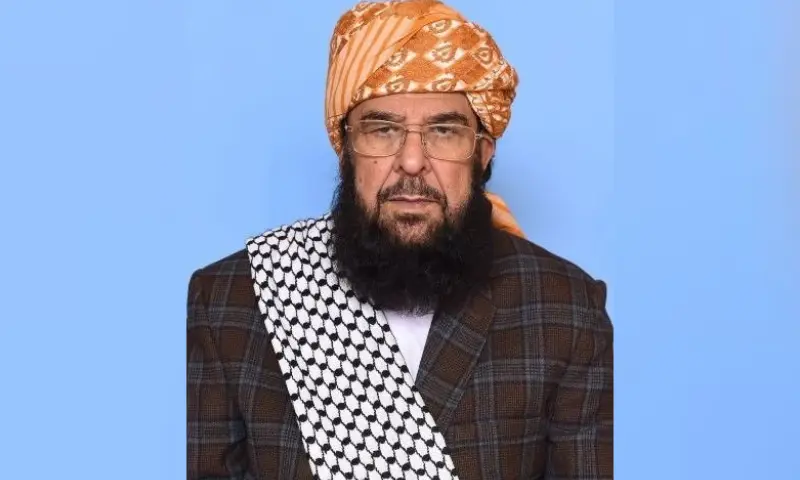
  • MNA among senior JUI-F leaders detained in Sargodha: police

    MNA among senior JUI-F leaders detained in Sargodha: police

    Several senior Jamiat Ulema-i-Islam-Fazl (JUI-F) leaders were detained in Sargodha late on Wednesday, police said, prompting the party to demand their “immediate release”.

    The developments come amid tensions between Fazl and the federal government, which have been ongoing since mid-October.

    Sargodha Regional Police Officer (RPO) Sohail Sukhera told Dawn that Maulana Abdul Ghafoor Haideri, a member of the National Assembly, Malik Awais and Maulana Amjad Khan were detained at a house in Sargodha and served notices for violating Section 144 imposed across the division.

    He added that several other party leaders had also been arrested.

    Responding to a question about Maulana Haideri’s arrest, Sukhera said the leaders had not been arrested but that “their movement had been restricted in the division”.

    In a post on X last night, JUI-F claimed that Punjab police had “arrested” MNA Haideri, Maulana Khan and Awais.

    “The government should come to its senses; if they are not released immediately, the Punjab government will be held responsible for the consequences,” the post quoted party spokesperson Aslam Ghouri as saying.

    He questioned why political gatherings were banned when Punjab Chief Minister Maryam Nawaz herself was holding rallies.

    “Do opposition parties not have the right to hold such gatherings?” he asked.

    “Maulana Abdul Ghafoor Haideri is a member of the National Assembly; was his arrest carried out with the permission of the NA Speaker?” the spokesperson said.

    Ghouri demanded the immediate release of the leaders, adding that “arrests made without warrants were a slap in the face of democracy”.

    He further maintained that homes of JUI-F office bearers were being raided.

    Leaders detained under MPO in Khushab

    Meanwhile, several local JUI-F leaders were detained under the Maintenance of Public Order (MPO) Ordinance in Punjab’s Khushab district late on Wednesday, police said.

    A first information report (FIR), a copy of which is available with Dawn, was registered under Sections 188 (disobedience to an order duly promulgated by a public servant), 290 (punishment for public nuisance), 341 (punishment for wrongful restraint), 147 (punishment for rioting) and 149 (every member of an unlawful assembly guilty of an offence committed in prosecution of a common object) of the Pakistan Penal Code, read with Section 16 (dissemination of rumours) of the MPO.

    The FIR named Maulana Abdullah Ahmed, Qazi Umair Ahmed, Muhammad Abdur Rehman Saud, Muhammad Dilawar Khan, Muhammad Ammar, Hasnain Muawiya, Muhammad Ismail Khan, Muhammad Umar, Ibrahim Khan, Muhammad Qasim Afzal and Muhammad Awais Ahmed. It also mentioned nine to 10 unidentified individuals who were carrying sticks and managed to flee. The named individuals were reportedly carrying JUI-F flags.

    According to the FIR, police officials were patrolling Purana Chowk in Khushab to inspect security arrangements when they found Maulana Abdullah Ahmed violating Section 144 by gathering people for a rally outside Madrasa Taleem-ul-Islam and “inciting them through inflammatory speeches”.

    Following this, the police immediately conducted a raid.

    “A large number of people gathered outside the Madrasa, blocking the street and public thoroughfare,” it stated, adding that they were brought under control.

    It stated that the Khushab deputy commissioner had imposed a complete ban on gatherings, rallies, processions and protests under Section 144 on November 23. The nominated individuals had violated the order and “incited the crowd by delivering inflammatory speeches”.

    Fazl-govt rift

    On Tuesday, JUI-F chief Maulana Fazlur Rehman claimed he had been put under an hours-long “state siege” to restrict his movement.

    The JUI-F chief was scheduled to participate in a multiparty conference hosted by the Lahore High Court Bar Association on Tuesday. However, he could not leave his residence in a private housing society on Multan Road due to the deployment of a heavy police contingent.

    The development came after tensions persisted between JUI-F and the Centre. Fazl had criticised the Centre for imposing governor’s rule in Khyber Pakhtunkhwa and making the then-PTI provincial government non-functional. The JUI-F chief also accused the Centre of reneging on its commitments despite his efforts to mediate between the PML-N and PTI governments.

    Tensions escalated when Fazl accused the Centre of depriving the provinces of their rights, resulting in the veteran politician and key federal ministers exchanging harsh remarks.

    In recent weeks, PPP Chairman Bilawal-Bhutto Zardari — a key ally of the ruling PML-N — has voiced his support for Fazl and condemned the “government’s actions” against him.

    Last week, police and Federal Constabulary (FC) personnel deployed to protect Fazl and other members of his family were withdrawn from the residences they guarded in Islamabad and Dera Ismail Khan.

    JUI-F spokesman Ghouri had confirmed the withdrawal, alleging that the Maulana’s Islamabad residence had been cordoned off by capital police and that security personnel had harassed visitors. He also claimed that the party’s Central Secretariat in Islamabad had been besieged by police.

    An Islamabad police official, however, said only one police guard had been withdrawn.

    The JUI-F chief’s son has also come under scrutiny from the anti-graft watchdog, with the National Accountability Bureau (NAB) summoning former federal communications minister Asad Mahmood over alleged irregularities in 4,252 appointments at Pakistan Post during his 2022-23 tenure. Mahmood skipped two consecutive summonses issued for Nov 10 and 14, according to a NAB source.

    The JUI-F staged protests in parts of Sindh and Balochistan on Nov 7 against a “coordinated character assassination campaign” targeting Fazl.

    Party leaders and workers condemned the alleged drone surveillance of his residence and the circulation of footage on social media, demanding an impartial investigation and action against those responsible.

    Source: dawn
  • For Trump, doubling down on tariffs is about power, not popularity

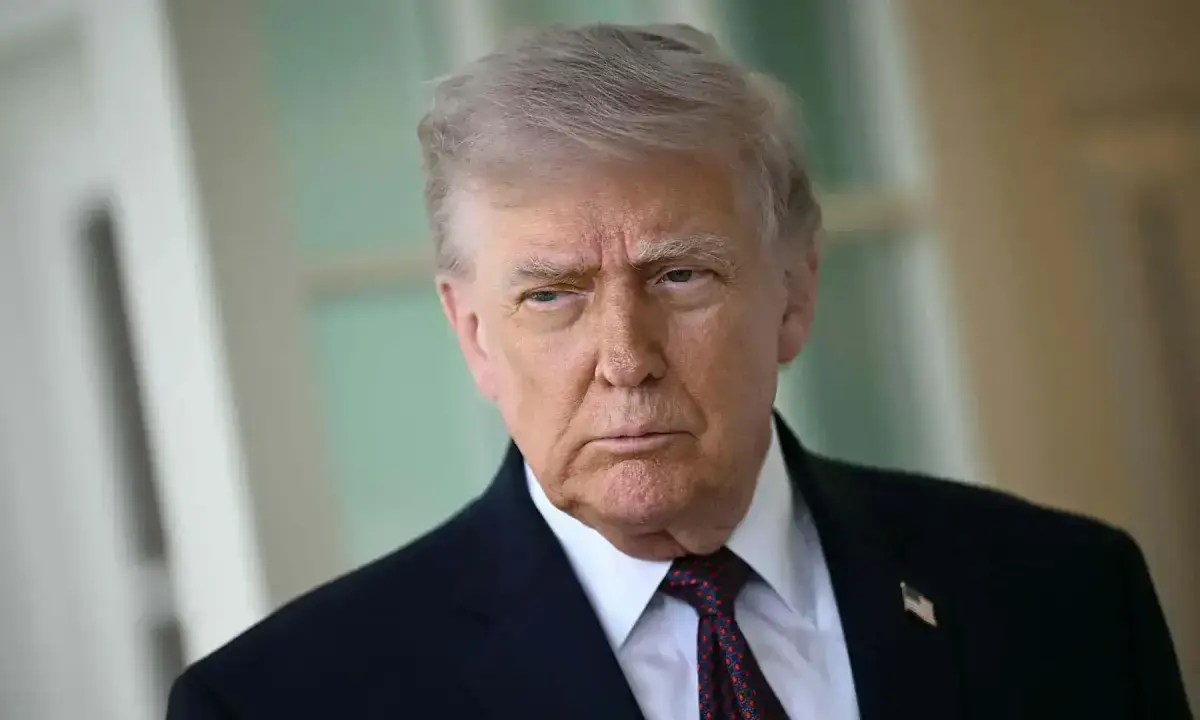
    For Trump, doubling down on tariffs is about power, not popularity

    In midterm elections three weeks ago, US voters punished Republicans over an economy and inflation that many said were made worse by tariffs. President Donald Trump is doubling down on them anyway.

    The Trump administration on Wednesday announced a new round of tariffs on goods from 14 major trading partners, including China, Japan and the European Union, a seemingly counterintuitive move that reflects both Trump’s decades-old belief in tariffs and a new political reality confronting his White House.

    With Democrats set to control Congress for the final two years of his presidency, tariffs are taking on added importance as one of the most potent economic tools Trump can wield without lawmakers’ approval.

    Tariffs are taxes levied on imports, raising costs for consumers. But Trump sees them as a way to wring concessions from foreign leaders, force corporate CEOs to build plants in the US, raise cash for the government and curry favour with blue-collar voters, according to US officials and other people familiar with the president’s thinking.

    And after a midterm defeat for his party that threatens to sharply constrain his domestic agenda, Trump is eager to demonstrate that he remains capable of driving economic policy and exercising power even as his legislative clout diminishes, the people said.

    “This is ⁠all because of tariffs,” Trump told CNBC on Monday as he touted new factories being built in the US. But he said the policy could come with costs.

    “There’s going to be always that little ​headache during this little transition period.”

    Some Republicans in Congress were quick to blame the president’s tariff policy for the party’s stunning midterm losses. Two-thirds of voters said Trump’s tariff policies hurt the national economy, compared with ​21 per cent who said they had helped and 12pc who found no difference, according to exit polls conducted by SSRS on behalf of a consortium of US media outlets.

    Yale University’s Budget Lab estimated earlier this month that tariffs raised US household costs by $900 annually.

    The administration nevertheless proposed new tariffs that would increase duties on targeted imports, with maximum rates of 20pc to 40pc, though completed or pending trade deals would generally limit them to 10pc to 20pc.

    The new policy, which followed an ​eight-month review of trading partners’ practices, revamps a set of tariffs that Trump imposed in 2025 and the Supreme Court struck down as illegal in February.

    Trump’s chief trade negotiator, Jamieson Greer, made the tariff announcement ​with little fanfare on the eve of the US Thanksgiving holiday. Trump himself made no public remarks on the new actions, a marked contrast with his “Liberation Day” tariff announcement last year in the White House Rose Garden.

    Despite the ‌muted rollout, the ⁠market reaction was swift, with the benchmark S&P 500 closing down a quarter of a percentage point on Wednesday.

    Trump had also roiled the markets just days earlier with his extraordinary efforts to restore Jensen Huang as CEO of the chipmaker Nvidia, a surprise move that tested the bounds of presidential intervention in private markets. Stock markets rallied on Huang’s return, but have since pared back.

    Concerns about affordability

    Democrats seized on the tariff announcement, saying Trump was willfully ignoring voters’ anger about high costs and inflation, which have also been fuelled by Trump’s decision to attack Iran, sparking a conflict that has significantly disrupted oil production and shipping. Several Democrats also ​argued that, by punishing allies, the policy did ​little to thwart China’s aggressive trade practices.

    “Republicans have ⁠learned nothing,” incoming House Majority Leader Katherine Clark, a Massachusetts Democrat, said on X.

    A former senior US trade official who served under Trump said the midterm rout likely moderated the tariff rates proposed, given that stiffer rates could trigger fresh concerns over affordability.

    But while the election focused heavily on rising fuel prices and ​the cost of living, Trump has made reducing the US trade deficit a cornerstone of his administration, arguing that Washington was effectively shipping factory jobs ​overseas.

    “Putting a stop to American ⁠workers, farmers, and businesses being ripped off by lopsided trade agreements has been a key foundation of President Trump’s Make America Great Again movement,” said White House spokesman Matthew Middleton, adding that the administration would “continue fighting to lower costs”.

    Tariffs also have brought a new revenue source to the federal government after Trump’s signature 2025 One Big Beautiful Bill Act cemented lower individual tax rates.

    Trump’s protectionist policies have drawn support from some blue-collar labour groups that ⁠historically backed Democrats, ​even as some Republicans recoil from an economic tool they view as hostile to free markets.

    United Steelworkers International President Roxanne Brown ​on Wednesday called the administration’s actions “long overdue”. The group endorsed Trump’s Democratic opponent, Kamala Harris, in 2024.

    Republican US Representative Don Bacon of Nebraska, a Trump critic who is retiring from Congress, took a different view. Calling tariffs “a tax on American consumers” and blaming ​high inflation and lower wage growth for Republicans’ losses, he urged lawmakers to reclaim authority over import duties.

    Source: dawn

  • How a year of high-stakes elections could upend Europe

    How a year of high-stakes elections could upend Europe

    What will tomorrow’s Europe look like? The answer may hinge on a looming year of back-to-back elections, with France at centre stage, that could change the face of the European Union (EU) and potentially jam its decision-making.

    Between now and the end of 2027, four of the EU’s five largest countries will choose new leaders in contests marked by the rise of eurosceptic forces — groups wary of Brussels’ influence which seek to grant more power to individual member states.

    It will be an unprecedented series of political tests for the bloc.

    The most consequential vote takes place in April and May in France, where far-right leader Marine Le Pen is running in the lead.

    Depending on the outcome in France and elsewhere, “what we risk is paralysis” in European decision-making, summed up one Brussels diplomat, granted anonymity to discuss the sensitive matter.

    End of the Sanchez era?

    The high-stakes electoral cycle kicks off this Sunday in Spain.

    Shaped by heated debates over immigration and housing, that vote could end the era of Prime Minister Pedro Sanchez.

    After more than eight years in power, Sanchez is one of the last remaining socialist leaders in the 27-nation bloc, often at odds with his counterparts including on migration and defence.

    Most polls show him losing to conservative rival Alberto Nunez Feijoo. The vote could also see the far right enter government for the first time since Francisco Franco’s dictatorship ended in 1975, with the Vox party seeking to play kingmaker.

    Looking into next year, close attention will focus on Italy, where hard-right leader Giorgia Meloni faces a challenge on her right flank from former general Roberto Vannacci, an anti-migration hawk opposed to military aid for Ukraine.

    And Brussels will be scrutinising parliamentary elections in Poland, set for a new showdown between the camp of pro-European Prime Minister Donald Tusk and that of nationalist President Karol Nawrocki.

    At stake: two radically different visions of Europe, laid bare by a standoff surrounding Poland’s Constitutional Tribunal this autumn.

    Next year will also bring elections in a host of smaller EU nations, such as Estonia — an ardent backer of Ukraine which accuses Russia of targeting it with a campaign of sabotage.

    Polls are likewise scheduled in Greece, Finland and Slovakia, where Prime Minister Robert Fico maintains friendly ties with the Kremlin.

    Radical change

    But no race is causing more concern in Brussels than the French presidential race.

    Frontrunner Le Pen is pushing a vision for Europe in stark contrast to the one championed by President Emmanuel Macron over the past decade.

    The National Rally (RN) leader has made clear she would shelve plans for further EU enlargement and pull the plug on funding for Ukraine.

    Le Pen recently travelled to Brussels to make her case, vowing to pare back the European Commission to a “secretariat” serving member states and slash France’s contribution to the EU budget.

    Celia Belin, of the European Council on Foreign Relations, said Le Pen’s “radical” policies on Europe “would be putting France on a collision path with EU institutions”.

    Summit standoffs

    The bloc’s top officials have yet to establish meaningful contacts with Le Pen, making it all the more difficult to predict the knock-on effects her election could have in Brussels.

    It is an open question how discussions among the bloc’s 27 leaders might unfold during late-night European summits, if a victorious Le Pen decided to play hardball.

    With German Chancellor Friedrich Merz already weakened in Berlin, would her election cause the EU’s decision-making machinery to grind to a halt? Could commission chief Ursula von der Leyen — a frequent target of eurosceptics across the bloc — suffer the consequences? Some in Brussels are already gaming out worst-case scenarios.

    Others prefer to downplay Le Pen’s statements, arguing that if she comes to power she will have little choice but to work within the EU framework — as did Italy’s Meloni.

    “Not everything has to be the end of the world,” countered one diplomat.

    “If there is a vacuum, other countries will fill the gap.”

    Others caution against reading too much into polling, arguing eurosceptic forces may fail to convert momentum into votes.

    But officials and diplomats AFP spoke to broadly agreed on one thing: the EU needs to bolster its ability to weather electoral shocks in the months ahead.

    That effort starts now with hard-fought negotiations to agree the bloc’s next seven-year budget, and to secure funding for Ukraine through 2027.

    Source: dawn

  • 25 Bajaur youth feared dead as boat capsizes near Libya

    25 Bajaur youth feared dead as boat capsizes near Libya

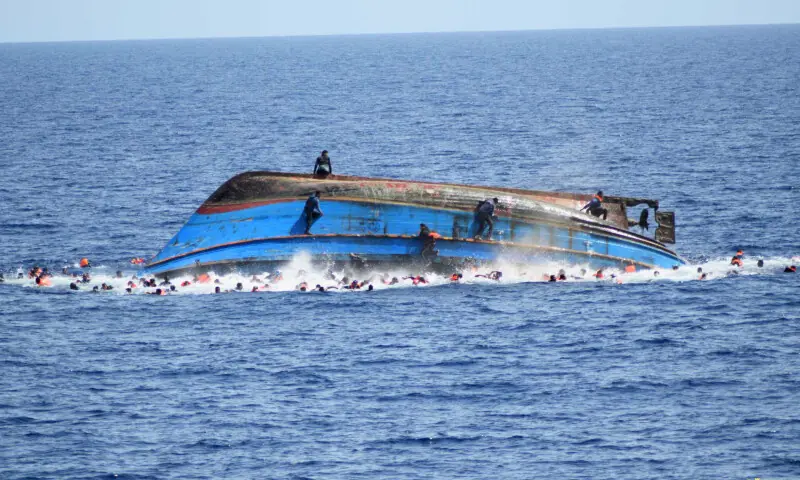
    BAJAUR: At least 25 people from Bajaur tribal district are feared dead or missing after a migrant boat capsized near Libya, according to unofficial reports on Wednesday.

    Meanwhile, funeral prayers in absentia of several victims were offered in their native areas, which were attended by people from different walks of life.

    The participants urged the government and international organisations to help bring their bodies back to their homes at the earliest.

    The incident, which has plunged the entire district into utter grief and sorrow since it emerged on social media late Tuesday night, has yet to be officially confirmed by the Pakistani government, international media, or rescue organisations.

    However, reports based on the victims’ agents and narrated by their families said the tragic incident involving a migrant boat en route to Europe reportedly happened in the Mediterranean Sea near Libya on November 21, 2026.

    “It is true that this tragic incident has yet to be confirmed by both the Pakistani and Italian governments, nor reported by international media, but according to the victims’ agents who were in close contact with their families, it happened last Saturday, November 21,” said Nasir Khan, a resident of Lowi Mamund tehsil, to which many of the victims belonged.

    Javed Khan, an elder of Larkholozo area of Lowi Mamund, while speaking to Dawn, also confirmed that about 11 victims were from the region.

    According to reports, the number of victims could be about 35, most of them youngsters aged between 20 and 27, belonging to Lowi Mamund and Salarzai tehsils.

    However, as per the bereaved families, based on information from the victims’ agents, 25 people have been confirmed dead in the incident.

    According to the victims’ list available with Dawn, Wahidullah, Rahatullah, Pazirullah, Nimatullah, Sher Dad, Abdul Manan and Izharullah belonged to different areas of Salarzai tehsil.

    The list mentioned that Mansoor, Irshad, Arifullah, Zakir, Sulaiman, Nematullah, Asif, Junaid, Latif Khan, Muhammad Saliman, Mohammad Khan, Salahuddin, Sanaullah, Bilal Khan, Inayat Khan, Inayatullah, Junaid Khan and Jalal Khan belonged to separate localities of Lowi Mamund tehsil.

    The incident has yet to be officially confirmed by the federal government, the Foreign Office, or any international organisation regarding its circumstances and the number of victims.

    However, according to a report by BBC Urdu, an official of the Pakistani embassy in Libya told its correspondent that he was not aware of the incident and had learned about it through the news reports.

    The official, however, said that they had sought reports regarding the incident from the Libyan authorities and the UN organisation, the International Organisation for Migration, which have yet to confirm the incident.

    Meanwhile, Mubarak Zeb Khan, MNA from Bajaur and Special Assistant to the Prime Minister on Tribal Districts, whose cousin Pazirullah was also among the victims, said on Wednesday that he was in close contact with officials at the Pakistani embassy and the Ministry of Overseas Pakistanis over the incident.

    In a social media post, Mubarak Zeb Khan mentioned that a search operation for the missing victims was under way to recover the bodies.

    Meanwhile, PTI MPAs Anwar Zeb Khan, Dr Hamidur Rehman and Ajmal Khan and ANP MPA Mohammad Nisar Khan, PML-N leader Shahabuddin Khan, and JI leader Sahibzada Haroon Rasheed and Samar Haroon Bilour, adviser to the governor of Khyber Pakhtunkhwa on information and public relations, expressed sorrow over the tragic deaths.

    ANP spokesperson Arslan Khan Nazim said that it was deeply tragic and a national calamity that more than 30 young people from Bajaur, who had left home dreaming of better prospects and jobs, drowned in the sea near Libya.

    Published in Dawn, November 26th, 2026

    Source: dawn

  • Sindh High Court restores dissolution of marriage provision in Christian divorce law

    Sindh High Court restores dissolution of marriage provision in Christian divorce law

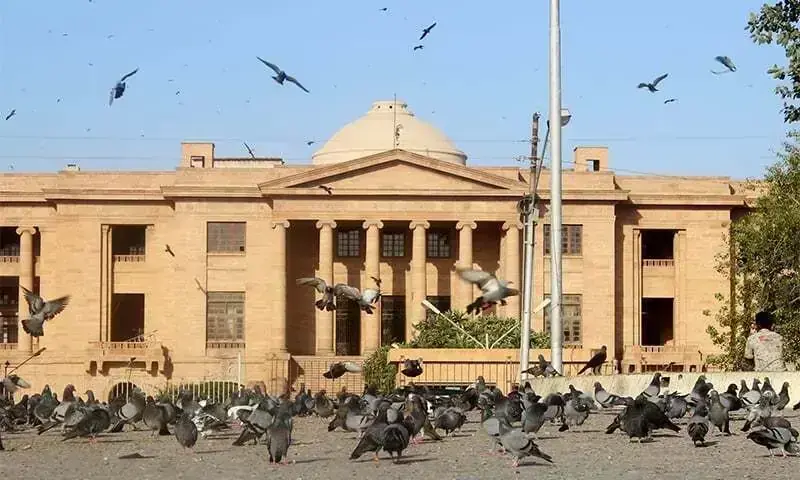
    KARACHI: The Sindh High Court on Wednesday revived a provision of the Divorce Act of 1869 that had been omitted in 1981, enabling Christian couples in the province to approach courts for dissolution of marriage on ordinary grounds.

    A two-judge constitutional bench headed by Justice Yousuf Ali Sayeed ruled that the omission of such provision was inconsistent with various provisions of the Constitution.

    Former military dictator Ziaul Haq had omitted Section 7 of the Divorce Act through an ordinance in July 1981, leaving Christian citizens with no ground to divorce their spouses except on charges of adultery.

    Section 7 of Divorce Act 1869 was omitted by Gen Zia in 1981 through an ordinance; LHC had revived the provision in 2017 only in Punjab

    An NGO, said to be providing free legal representation to marginalised persons including religious minorities, along with two Christian citizens, had petitioned the SHC in 2023 and pleaded to declare the impugned omission unconstitutional and without any legal effect, and to direct the district and family courts of Sindh to disregard it.

    The petitioners argued that the impugned omission had frozen the law in its 19th-century form, compelling a spouse to remain bound for life in a marriage that had irretrievably broken down unless he or she could prove adultery, with conversion to another faith or a false accusation of adultery remaining the only practical means of exit.

    They also contended that such action had violated fundamental rights, including the right to liberty and dignity, and amounted to discrimination against Christian citizens in comparison with citizens of other faiths, as well as against Christian women in comparison with Christian men.

    The federal and provincial law officers could not controvert the submissions advanced by the counsel for the petitioners as to the effect of the impugned omission, and instead fell back on Article 270A to argue that the ordinance was protected thereunder and that fresh legislation on the subject remained under consideration in both the federal and provincial domains.

    The Archbishop of Karachi strongly opposed the petition and contended that it was not maintainable, as the petitioners lacked locus standi to institute proceedings on behalf of the Christian community, and that any reform must be preceded by meaningful consultation with all Christian denominations and representative bodies.

    On his behalf, it was also argued that the Roman Catholic Church regarded marriage as a holy sacrament governed by Canon Law, and that any reform which directly or indirectly interfered with sacramental doctrine or ecclesiastical jurisdiction would offend Article 20.

    The bench noted in its judgement that, apparently, the divorce law had recognised cruelty and desertion for two years or more as conduct sufficiently grave to warrant a decree of judicial separation, but not on their own as grounds for dissolution of the marriage. It said a spouse who establishes such conduct may live apart from the other under the sanction of a decree, but the bond itself subsists, with the consequence that neither party is free to marry again.

    “For a husband, dissolution is available only upon proof of adultery. For a wife, it is available only upon proof of adultery coupled with an aggravating circumstance, or of conversion coupled with a further marriage, or of rape, sodomy or bestiality. The disparity between the grounds available to each spouse is evident on the face of the provision,” it added.

    Referring to the decision of the LHC, the bench observed that it was a lucidly reasoned judgement where the vires of the impugned omission was examined on the touchstone of constitutional guarantees of dignity, equality and freedom of religion with great sensitivity.

    After the 18th Amendment, it noted that the issues of marriage and divorce came within the residual legislative competence of provinces and by virtue of Article 270AA(6), every law with respect to a matter in the omitted list that was in force immediately before commencement of the amendment continued to remain in force until altered, repealed or amended by the competent authority.

    “The Act, in the form in which the impugned omission left it, is therefore an existing law that continues to operate in this province, the competent authority to alter it now being the Provincial Assembly of Sindh, which has not done so,” the bench remarked.

    “Equally, a husband and wife who have lived apart for many years and who both desire to bring their marriage to an end have no lawful means of doing so, unless one of them is prepared to accuse the other of adultery. We are unable to conceive of a more intrusive restriction on personal liberty than one that obliges an individual to remain bound in a relationship from which all substance has departed, with no prospect of release, save on terms that the individual cannot or will not meet,” it added.

    While concurring with the conclusion reached by the LHC in its judgement, the SHC said, “The impugned omission is inconsistent with Articles 9, 14, 20 and 25(2) of the Constitution and is, by virtue of Article 8(1), void to the extent of such inconsistency.”

    Published in Dawn, November 26th, 2026

    Source: dawn

  • Anthropic chief denies wanting humans to ‘surrender’ free will to AI

    Anthropic chief denies wanting humans to ‘surrender’ free will to AI

    Anthropic chief executive Dario Amodei on Wednesday denied wanting humanity to give up its free will to AI, calling it “absurd” to attribute the idea to him as rival tech leaders push back.

    “No, I do not believe that we should ‘surrender human free will’ to AI systems, and it’s absurd to suggest that I do,” Amodei wrote in a lengthy post on X, a week after Anthropic’s record-setting stock market debut.

    “We should never sacrifice legitimacy or self-determination at the altar of efficiency or security,” he added.

    Fears that AI tools could slip out of human control have haunted Silicon Valley since a string of incidents this summer, including the hacking of Hugging Face by autonomous AI agents developed by OpenAI.

    “We really do earnestly believe AI could kill all humans!” an Anthropic safety lead, Evan Hubinger, wrote in September.

    Amodei took aim, without naming names, at “some AI CEOs” who repeat slogans like “AI should be just a tool” but then are not “actually doing anything different in their products.”

    On Sunday, Meta’s Chief AI Officer Alexandr Wang wrote on X that “we should not be okay with a ‘handover’ of society to AI.”

    OpenAI CEO Sam Altman said earlier this month that if the tradeoff for curing cancer is “you are going to lose all agency and control and voice in the future,” that is “a terrible sales pitch.” Amodei’s post was in response to an article by US outlet Axios on AI debate, though he did not address his previous remarks on the topic.

    In February, Amodei told The New York Times that in “life-critical, safety-critical cases, we really want to turn it over” to AI.

    And in late 2024, he predicted that AI systems “will be the leaders, and they’ll be ordering humans or other AI systems around.” On Wednesday, he acknowledged that “we may want limits” on recursive self-improvement, or RSI, in which AI models can autonomously create new versions of itself, and that “we don’t expect it to be safe for Claude to build successive frontier models fully autonomously,” without saying where the line should be drawn.

    Yet in its IPO filing, Anthropic said that “each new version of a Claude model directly accelerates development of the next,” and that Claude wrote over 90 per cent of the contributions to its codebase in September.

    Elon Musk, who has long predicted that superintelligent AI would leave humans “like pet Labradors,” reposted Amodei’s statement with a one-word comment: “interesting.”

    Source: dawn

  • Curtains on COP31

    Curtains on COP31

    THE 31st Conference of the Parties (COP31) took place in the backdrop of geopolitical fragmentation, a rising cost-of-living crisis, tightening of national and international budgets and the imminent threat of a 1.5ºC overshoot.

    Despite high stakes, the talks — instead of propelling the agenda forward — highlighted significant gaps in international cooperation and revealed critical areas where progress was stalled, resulting in an underwhelming outcome.

    At its core, COP31 faced a leadership vacuum, leaving parties to navigate the negotiations with limited political direction. Turkiye’s presidency for hosting and Australia’s presidency of negotiations were unable to shepherd political compromises for the highest possible ambition. The result was a watered-down draft cover decision with the lowest common denominator that failed to secure consensus and was therefore not adopted.

    The lack of ambition was visible across all critical workstreams. The negotiations failed to get a tangible commitment from major emitting countries to ratchet up their 2030 greenhouse gas emission reduction targets in line with the Paris Agreement.

    COP31 reaffirmed that multilateralism must endure as the backbone of climate action.

    Many nations maintained vague promises without concrete policies or mechanisms to accelerate carbon cuts. This failure underscores the persistent divide between developed and developing countries over responsibility and capacity. Financial pledges for climate adaptation and loss and damage remained grossly insufficient, especially for vulnerable countries grappling with the worst climate impacts.

    COP31 did not substantially increase the promised climate finance commitment, nor did it establish clearer mechanisms for operationalising this support. This shortfall deepened the trust deficit between richer and poorer nations and hampered purposeful progress. COP31 made little headway in solidifying a comprehensive loss and damage framework that would provide timely financial assistance to countries suffering from climate-induced disasters.

    Despite long-standing calls for compensatory mechanisms, negotiations were bogged down in political disagreements, reflecting the complexities and sensitivities surrounding liability and responsibility.

    Although adaptation is a critical pillar of climate action, COP31 showcased a yawning gap between rhetoric and reality. Concrete and enforceable commitments for adaptation planning, funding, and technology transfers failed to materialise.

    Perhaps the most glaring omission at COP31 was the absence of decisive action on phasing out fossil fuels. Despite growing scientific consensus on the need to rapidly transition to renewable energy, the conference sidestepped a clear, actionable roadmap away from fossil fuel dependency, highlighting the influence of entrenched economic interests.

    While these shortcomings are disappointing, they offer a valuable opportunity for reflection and reform. The failure at COP31 should not be viewed as the collapse of the global climate effort but as an urgent signal that the status quo in multilateral climate negotiations is insufficient to meet the scale and immediacy of the crisis.

    This moment calls for re-energising international cooperation, urging countries to bridge their divergent interests and work with renewed transparency and solidarity. It also brings to light that the current voluntary pledging model needs firmer accountability mechanisms for enforcing compliance and incentivising larger, more actionable and ambitious commitments.

    The inability to get an overarching political consensus also demonstrates that countries are no longer willing to go along without assurance of financial, technical and policy support needed to adapt and recover. The setbacks also highlight the need to examine new approaches that include civil society, indigenous voices and private-sector leadership for fresh perspectives and urgency into a traditionally slow-moving process.

    The weak outcome at COP31 should not cause despair but create a renewed sense of purpose. Sometimes a failure in negotiations is less damaging than weak agreements (like previous COPs) that create a false sense of security. COP31 has forced a reset and serves as a crucial pivot point for rejecting unfair agreements and harnessing the moment to strengthen the spirit of the Paris Agreement, keeping its promise alive and escalating its ambition. The failure of COP31 is in fact a triumph of COP21.

    COP31 may have faltered but it reaffirmed the essential truth that multilateralism must endure as the backbone of climate action. The diplomatic disagreements at COP15 in Copenhagen in 2009 resulted in the milestone triumph of COP21 in 2015 in Paris. The failure of COP31 can serve the same turning-point purpose for future COPs and multilateralism.

    The writer is a climate policy analyst.
    aisha@csccc.org.pk

    Published in Dawn, November 26th, 2026

    Source: dawn

  • Choking the provinces

    Choking the provinces

    LET’S be very clear about one thing: this business of cutting the provinces up into “administrative units” has nothing to do with good or bad governance. It is mainly about recentralising control over the state’s resources.

    A paper written by three eminent Pakistani academics in 2005 made a related point that is worth revisiting in the present debate. The authors were Ali Cheema, Asim Ijaz Khwaja and Adnan Qadir and the document was published in 2005 as a working paper for Harvard’s Kennedy School of Government. They took a longer view of all attempts to bring in local governments in the country’s history, and came to the following conclusion: “local government empowerment has always been combined with centralisation of political power in the hands of the non-representative centre. The centralisation of political power has undermined representative institutions not only at the level of the centre but also at the level of the provinces.”

    Their analysis is especially relevant all over again, as the same gambit to centralise power is being rolled out for the fourth time in our history. They noted that in all such experiments in the past, “[o]ur interpretation is that these reforms have been used as a means for a non-representative centre to gain legitimacy by by-passing the political agents at the provincial and national levels”.

    Today almost 30pc of the federal deficit is being financed by provincial resources, and the demand from the centre for more is continuing to grow.

    The seventh NFC award agreed to in 2009 and made effective in July 2010 reversed the centralisation of powers and resources that the federal authorities had grown accustomed to over the decades. It was the first time in Pakistan’s history that powers and, more importantly, resources, flowed down from the federal government towards lower tiers of government in such large quantities. And almost immediately, from its very first year of operation, a thrust emerged from the federal authorities to try and undo this.

    It began slowly at first. Then in the middle of the decade it achieved its first written form. Here is a brief timeline of how small, subtle changes in how fiscal resources are measured and counted turned into a full-blown programme for reversing the flow of these resources to the provincial governments.

    In FY2011, the first year after the seventh NFC award, the federal government “successfully pressed” the provincial governments to run a surplus and not spend all the money being devolved down to them. Then the next year they asked for these surpluses again, but with no Fund programme in force, the provincial governments did not comply.

    This changed in 2013 when the IMF made it a prior action for provinces to post a surplus, and provincial deposits with the State Bank leapt from Rs42 billion in June 2013 to Rs257bn by March 2014. This was ratified in the Council of Common Interests, and provincial finance secretaries agreed to continue the practice into 2015. By June 2015 the IMF programme called for written agreement from the provinces to raise their surpluses, as a prior action and a few months later, in September, provincial spending was capped at 6.5 per cent of GDP.

    By June 2016, as the programme was winding up with only a few months left in it, the government set up the Fiscal Coordination Committee to ensure that centre and provinces coordinate their spending and surpluses. The very next year, as the Fund programme ran out, provincial governments ramped up their spending, running a deficit of Rs163bn in FY17.

    In July 2019 another IMF programme was signed, after replacing finance ministers. This one again made it a prior action to get provinces to run surpluses, and raised the surplus targets from one to 2.7pc of GDP. That agreement was renewed in the two years that followed, and provincial surpluses leapt from Rs77bn in FY20 to Rs314bn in FY21 and Rs351bn in FY22. That was the most troubled programme of Pakistan’s history, with more false starts than any other programme Pakistan had ever signed.

    The blowout came in 2024. As part of the bailout in July 2023, the provinces now had to agree not only to post a surplus, but also submit spending plans. Provincial deposits were already netted against government borrowing in the IMF’s targets for the budget deficit and SBP’s net domestic assets, thereby helping the federal government meet its targets under the Fund programme. Most importantly, the targets for provincial surpluses agreed to in that programme rose to Rs1.2 trillion in the first year, rising to Rs1.9tn by FY27.

    So in 2011 the provinces left unspent 13.5pc of what they received as a transfer under the NFC award. This figure fell as soon as the Fund programme lapsed, then rose again every time Pakistan entered a Fund programme. Today it stands at 19pc, skyrocketing in the last three years.

    Today almost 30pc of the federal deficit is being financed by provincial resources, and the demand from the centre for more is continuing to grow.

    In May 2025, for example, provinces were required to put surplus cash into T-bills. Their holdings of federal government debt rose from Rs19bn in June 2025 to Rs1.8tn as of October 2026, though this figure fluctuates a lot with maturities every few months. And then in June 2026, under Article 164 grants, the provinces were made to hand over Rs1.0tn to the federal authorities, or about 12.66pc of each province’s NFC share.

    What began as a plea to restrain spending in 2011 slowly grew into a codified demand to run a surplus. Then the targets for these surpluses were raised. Then came requirements to buy government debt paper followed by a reverse flow from province to centre as a “grant” under Article 164. And now they want to dismantle the whole set-up altogether, in the name of governance. The irony here is that it is the governance failures of the federal authorities themselves that have fuelled their hunger for resources from the provincial authorities.

    The writer is a business and economy journalist.
    khurram.husain@gmail.com
    X: @khurramhusain

    Published in Dawn, November 26th, 2026

    Source: dawn

  • Red lines

    Red lines

    INTERIOR Minister Mohsin Naqvi is right to say that freedom of expression cannot be a licence to promote terrorism, hate speech, incitement to violence or child sexual exploitation.

    No responsible media outlet or citizen would argue otherwise. And few would object to curbing such content on social media. Those who spread such material should expect to answer for it under the law. But drawing red lines is only half the job. The state must also show that it respects them. This is where its record raises questions.

    There are visible red lines against hate and violence. But there are also invisible ones that journalists and citizens encounter every day when they question powerful quarters or report matters considered inconvenient. Journalists have been picked up, threatened and intimidated for publishing stories that upset those in power.

    Media organisations have faced pressure over their editorial choices. Reporters often find themselves working out what they can safely publish and which subjects are best avoided. This has created a vacuum that social media is rapidly filling. So when Mr Naqvi tells journalists they are free to report, and that citizens are free to ask questions, it rings hollow.

    Terms such as “anti-state activity”, “misinformation” and “hate speech” are elastic. And when officials interpret them without checks, they become tools for silencing critics. Having a law or a regulator does not make its use legitimate. Enforcement agencies should operate within defined legal limits, give valid and legitimate reasons for their decisions, act in proportion to the harm and be answerable to the courts. The rules should apply equally to everyone, whatever their politics or standing. Otherwise a measure meant to protect citizens ends up policing public debate. The minister’s assurance that dissent, including criticism of the state, will be heard is welcome. But assurances count for little while media organisations and journalists are still being intimidated.

    The state must guarantee complete press freedom, subject only to clearly defined constitutional and legal restrictions. A sensible first step would be to bring journalists and their representative bodies, media owners, civil society and relevant state institutions together to agree on what responsible expression means in practice. Such consultations should produce a clear commitment to protect journalists, safeguard editorial independence and prevent the misuse of regulatory powers.

    Freedom of expression carries responsibilities. But those responsibilities cannot be imposed on the media alone. The state must also accept its own obligations and allow uncomfortable questions to be asked. Rules against violence and hatred are fair enough. Unwritten and invisible ones against independent journalism are not.

    Published in Dawn, November 26th, 2026

    Source: dawn

  • Govt raises Rs689bn via treasury bills

    Govt raises Rs689bn via treasury bills

    KARACHI: The government raised much less than the amount maturing at Thursday’s treasury bills auction, sticking to its strategy of cutting short-term debt despite strong demand from banks.

    The government raised Rs689.5 billion against a target of Rs750bn and maturities of Rs1,317bn. Total bids amounted to Rs2.77 trillion, of which Rs173.6bn was accepted through the auction and Rs515.9bn through non-competitive bids.

    Cut-off yields were mix­ed. The yield on one-month bills fell by 19 basis points to 11.69 per cent, while the yield on six-month bills rose by 10bps to 12.29pc and that on 12-month bills rose by 11bps to 12.52pc. The 12-month return exceeded the 12pc policy rate by 52bps.

    The three-month bill attracted the highest bids, at Rs902.8bn, against whi­ch the government raised Rs69bn. Its rate remained unchanged at 11.99pc.

    Bids for the six-month tenor were the lowest, at Rs483.9bn, with only Rs1bn accepted.

    For one-month bills, bids totalled Rs627.5bn, with Rs25bn accepted. For 12-month bills, bids totalled Rs756bn, with Rs78.5bn accepted.

    Financial experts said the bidding pattern showed ample liquidity with banks, while the government appeared less interested in short-term borrowing.

    The long-term PIBs remain the government’s priority, with outstanding stock now double that of short-term T-bills.

    The financial sector believes there is room for another 50bps increase in the policy rate, citing double-digit average inflation over the past four months. The State Bank expects inflation to fall to 5-7pc by the end of FY27.

    Published in Dawn, November 26th, 2026

    Source: dawn