Category: dawn news

  • Roads blocked, traffic congested in several parts of Karachi

    Roads blocked, traffic congested in several parts of Karachi

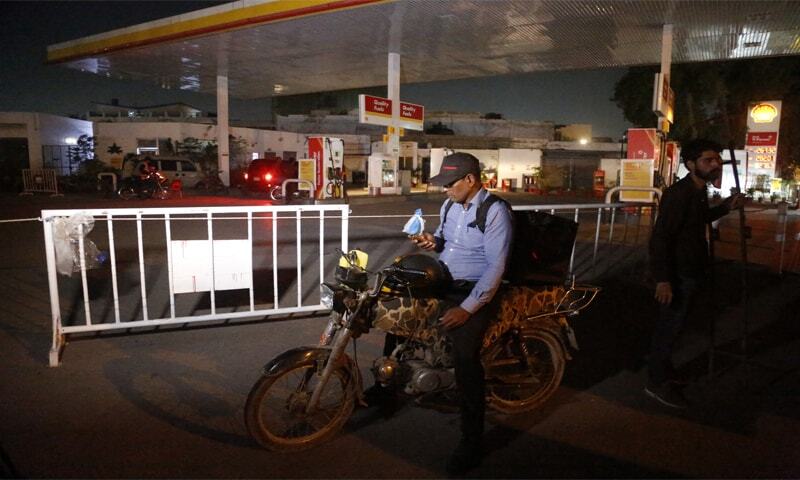
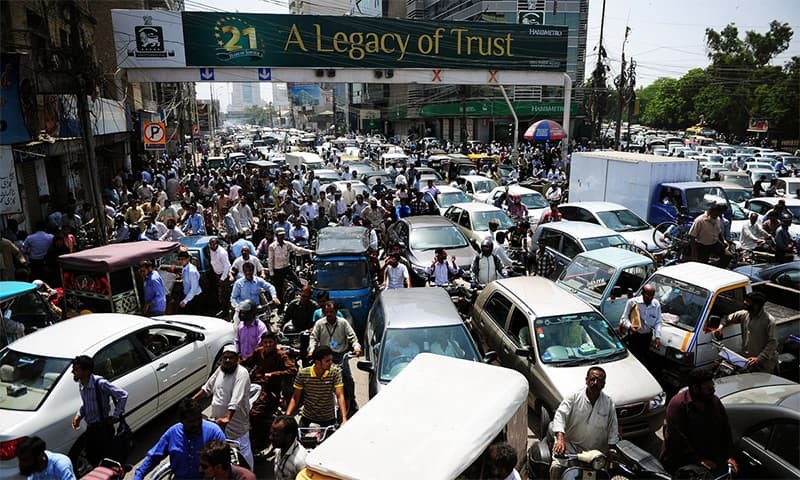
    Residents of Karachi faced difficulty in commuting on Thursday due to road blockages and traffic congestion.

    Karachi Traffic Police (KTP) said that Superhighway, near Al Asif Square, had been closed due to a protest.

    “Both inbound and outbound roads are closed for traffic due to a protest,” police said, without elaborating.

    It said that those coming from Hyderabad to Karachi should use Punjab Adda, Total Pump and Faria Chowk as an alternative route.

    In updates issued at around 9:30pm, KTP said that the roads on both sides of the Hub River Road remained closed to traffic, as well as the roads on both sides of the Superhighway near Al Asif Square.

    “The heavy traffic coming from Hub River Road to Karachi has been lined up, and light traffic is being diverted from Rais Goth towards the inner area,” it said in one Facebook post, adding that the traffic from Karachi towards Hub was also being diverted towards Hamdard University near Northern Bypass.

    KTP assured commuters that its personnel were “taking necessary measures” to ensure traffic flow.

    In another post, KTP said traffic coming from Shahrah-i-Pakistan towards Al Asif Square was being diverted via Adil Shah Ramp towards Gulshan through Rashid Minhas Road.

    It reiterated that the alternative route for those coming from Hyderabad was to use Punjab Adda, Total Pump and Faria Chowk heading towards Mubina Town police station.

    Meanwhile, heavy traffic was being diverted to Northern Bypass from near Burraq fuel station, it added.

    “Traffic police officers and personnel are present at the site and are taking necessary measures to maintain traffic flow,” the advisory said.

    In another post, KTP said both roads linking Ghaghar Phattak near Sassi Toll Plaza at the National Highway have been closed to traffic due to a protest.

    Providing the alternative route, it said light traffic coming from Thatta was being diverted from ICI Chowk towards the FFC Factory Area, Steel Mill and Steel Mill Chowrangi.

    On the other hand, vehicles heading from Steel Mill to Ghaghar Phattak could proceed towards Thatta via Superhighway after using a link road from the T-junction before Sassi Toll Plaza.

    At 8:30pm, the traffic police issued an alert about heavy traffic congestion at Abu Al-Hasan Isfahani Road, Madras Chowk and its surroundings; Maskan Chowrangi towards Superhighway; and Nipa towards Mausamiyat and its surroundings.

    It noted that the traffic flow was slow due to the incoming and outgoing roads being shut to vehicles near Al Asif Square, adding that traffic police personnel were present and managing the flow.

    Earlier in the day, KTP also said that both incoming and outgoing roads at Lucky Pahari, Hub River Road had been closed to traffic due to a protest.

    “Heavy traffic on both roads is backed up. Small vehicles are being diverted through inner areas,” it said.

    Around 5pm, traffic police said that Sharea Faisal near Baloch Colony flyover had been closed to traffic due to a protest. Later, it said that the protest had ended and traffic was back to normal.

    Meanwhile, traffic police said that personnel were present on Natha Khan Bridge to keep traffic flowing toward the airport, adding that effective measures were being taken to ensure uninterrupted traffic flow.

    Source: dawn
  • Rana Irfan whitewashes Asif to win IBSF Men’s World Cup in Muscat

    Rana Irfan whitewashes Asif to win IBSF Men’s World Cup in Muscat

    Rana Irfan produced a flawless 5-0 whitewash of Mohammad Asif on Thursday to claim the IBSF Men’s World Cup title at the Active Oman Sports and Entertainment Hub in Muscat, avenging his defeat to the same opponent in the National Championship final in January.

    In January, Irfan had fired century breaks of 112 and 141 against Asif in the national final, yet still walked away empty-handed, losing 6-3 to the three-time IBSF world champion.

    On Thursday, he made sure history would not repeat itself, wrapping up the final with breaks of 56, 46 and 68 en route to a 96(56)-46, 67-48, 64-1, 91(68)-12, 69-06.

    Irfan, visibly emotional, hugged his compatriot before spreading his arms in triumph amidst applause.

    “I am really delighted to win,” Irfan told Dawn after his triumph. “Yeah, I got a bit emotional after the win, as when you get rewarded for your struggles, it’s only natural to react this way, I guess.”

    It was the first time Irfan was representing Pakistan in an international tournament, and he lamented the lack of exposure.

    “There aren’t many opportunities in snooker, but again you have to avail any opportunity, and I am happy that I was able to win here.”

    The marathon day began with the quarter-finals, where Irfan dispatched compatriot Mubashir Raza 4-2.

    Asif, meanwhile, was in imperious form against England’s Harvey Chandler, winning 4-1 with a composed 58 break. Asjad Iqbal also advanced, defeating Iran’s Amir Sarkhosh 4-2 with a stunning 105 break.

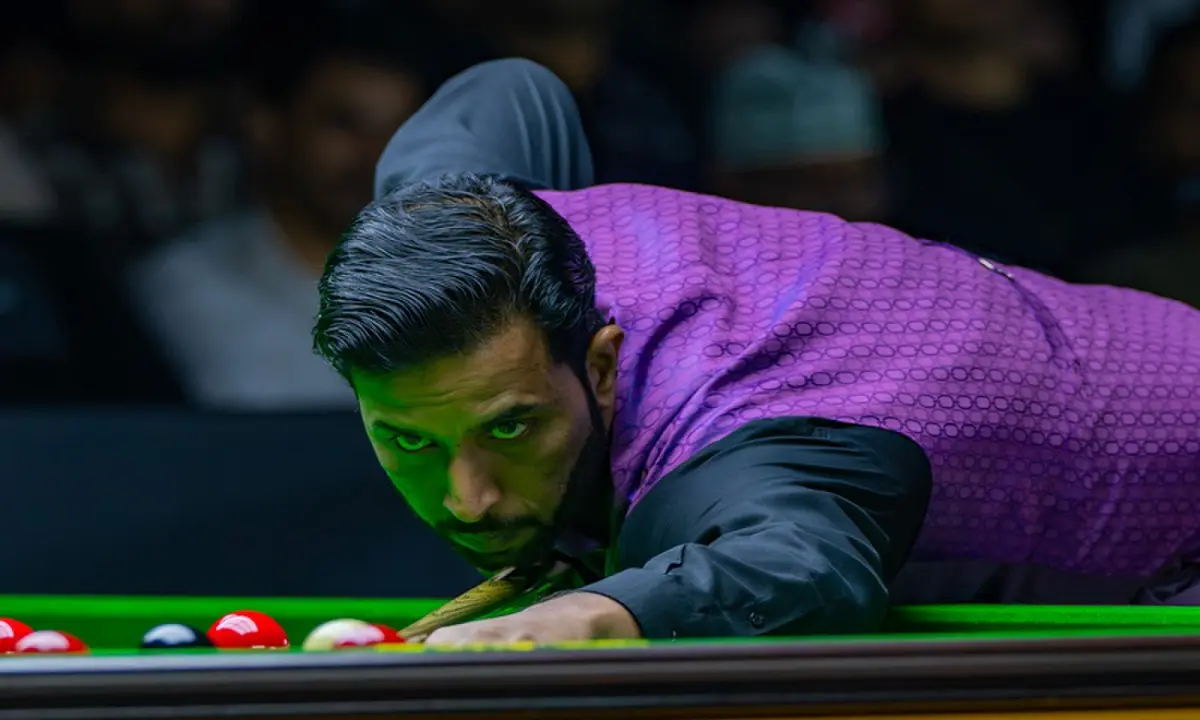
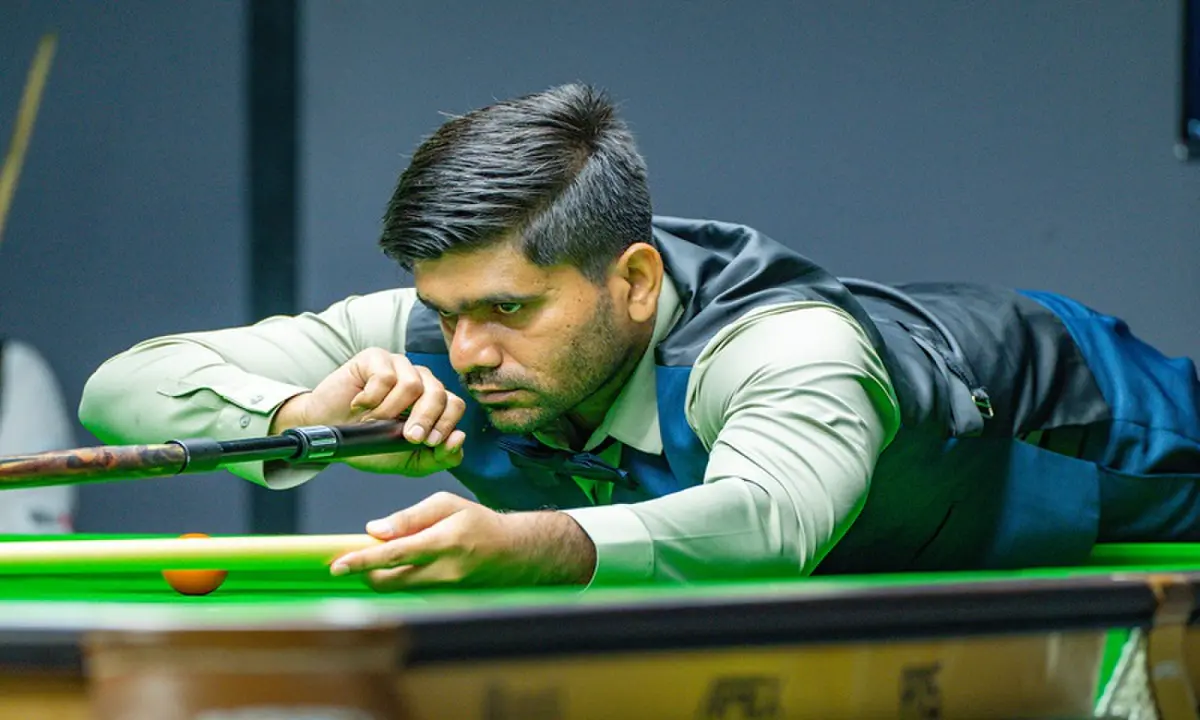
    Pakistan cueist Mohammad Asif in action during the IBSF Men’s World Cup final against compatriot Rana Irfan at the Active Oman Sports and Entertainment Hub in Muscat, Oman, on November 26, 2026. —Courtesy PBSA
    Pakistan cueist Mohammad Asif in action during the IBSF Men’s World Cup final against compatriot Rana Irfan at the Active Oman Sports and Entertainment Hub in Muscat, Oman, on November 26, 2026. —Courtesy PBSA

    The semi-finals brought a dramatic all-Pakistan clash between Irfan and last-year finalist Asjad.

    Asjad opened with a 66 break to take the first frame, but Irfan responded with a 51 to level. The match swung back and forth, with 36-year-old Asjad firing a stunning 123 break in the sixth frame to force a decider.

    Irfan held his nerve, closing it out 69-15 to book his place in the final. In the other semi-final, Asif comfortably dispatched Afghanistan’s Mohammad Rais Senzahi 4-1.

    The final itself began with early nerves from Irfan. He opened the first frame with two fouls, which cost at least four points each, to gift Asif an eight-point lead.

    Asif went for a long red, but the ball rattled the jaws and stayed out. Irfan pounced, stitching together a break of 56 that ended when he underpowered a shot, leaving the red on the cusp of the pocket.

    Asif clawed back with a break of 38 before being forced to play safe, a defensive shot that leaves the opponent no easy pot. Irfan then potted a tricky red after a brief safety battle and wrapped up the frame, 96-46, with a break of 40.

    The second frame was a cagey affair, with both players showing their long-potting skills. Asif drew first blood with five points but could not build on it.

    Irfan responded with a 19-point break, brilliantly executing a cannon on the bunch while potting the blue, and even fluked a red to keep the break alive. He moved into the 40s before missing a straightforward red, and Asif punished him with 43 points to take a narrow lead.

    A safety battle on the yellow ensued, and when Asif erred first, Irfan closed out the frame, 67-48, with a break of 20.

    With the momentum firmly on his side, Irfan raced to a 17-point lead in the third before Asif, surprisingly, missed a simple follow-up pot on the brown.

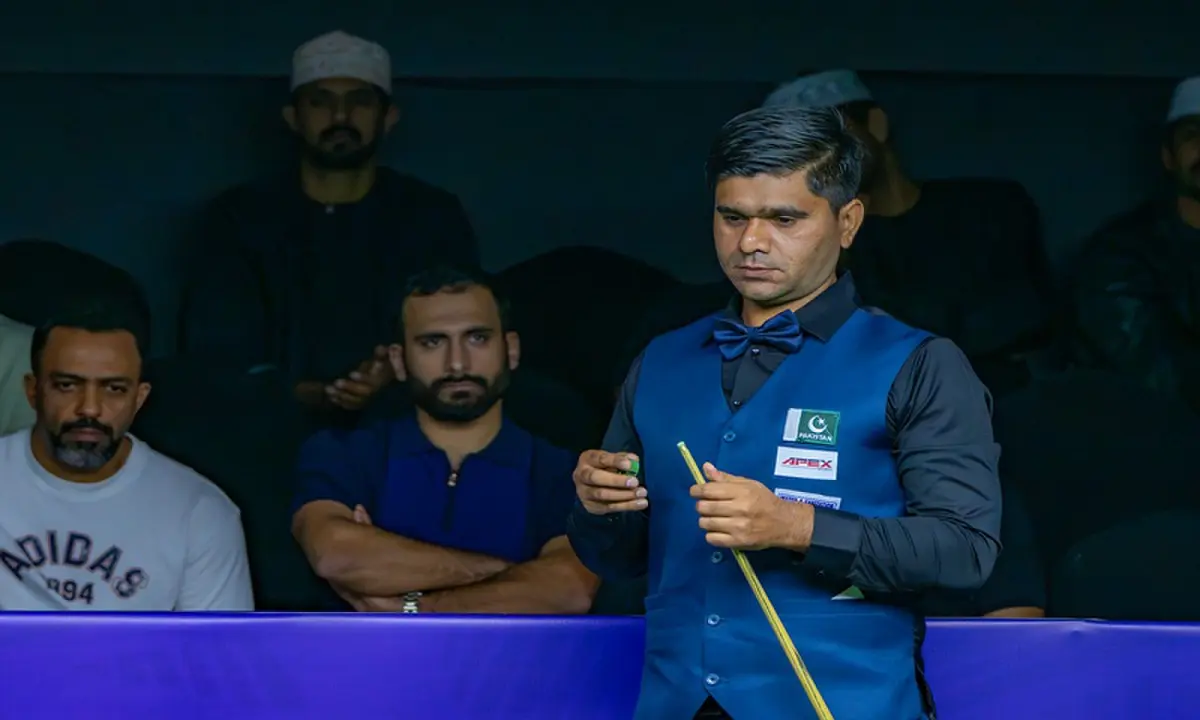
    Pakistan cueist Rana Irfan looks on during the IBSF Men’s World Cup final against compatriot Mohammad Asif at the Active Oman Sports and Entertainment Hub in Muscat, Oman, on November 26, 2026. —Courtesy PBSA
    Pakistan cueist Rana Irfan looks on during the IBSF Men’s World Cup final against compatriot Mohammad Asif at the Active Oman Sports and Entertainment Hub in Muscat, Oman, on November 26, 2026. —Courtesy PBSA

    Irfan built a 63-point advantage through two mini breaks, and Asif conceded the frame, 64-1, rather than engage in a prolonged safety battle.

    The fourth frame saw Irfan again take control, though he potted the cue ball attempting a cannon off the pink. Asif briefly edged ahead after a safety exchange, but Irfan seized his next chance and raced away with a break of 68 to win it 91-12 and move one frame from the title.

    In the fifth, Asif’s frustrations deepened. He opened the scoring but missed an easy blue, looking at the table in disbelief.

    Irfan made a break of 39. Asif tried to fight back but missed a shot with the rest, the cue extension used for awkward stretches, and luck continued to desert him when a trick shot on the red left the ball on the cusp of the jaw.

    Irfan added 22 points to stretch his lead to 63, and with only one red remaining, Asif conceded, 69-6.

    The tournament was a resounding success for Pakistan, who swept all three medals in the men’s singles event. Asjad took home the bronze.

    The team World Cup begins on Friday, with Pakistan arriving as defending champions: Asif and Asjad beat Hong Kong in the final in Muscat last November.

    Source: dawn

  • Govt reduces petrol price by Re1 per litre, diesel by Rs2 per litre

    Govt reduces petrol price by Re1 per litre, diesel by Rs2 per litre

    The government reduced the price of petrol by Re1 per litre and that of diesel by Rs2 per litre, according to a notification by the Oil and Gas Regulatory Authority (Ogra).

    Following the revision, petrol will retail at Rs313 per litre and high-speed diesel (HSD) at Rs346 per litre on Nov 27 (Friday).

    The prices of HSD and petrol have gone below the July 18 rate of Rs354.35 and Rs316.15 per litre, respectively, as of price reductions made to both on Wednesday.

    The government continues to levy Rs114 per litre in taxes and duties on petrol and Rs100 per litre on diesel.

    Under an arrangement announced on Nov 2, for 30 days, oil refineries will contribute to the petroleum levy by bearing a cumulative impact of Rs15 billion, according to the government. This allows a Rs14.71 reduction in the petrol price at the consumer end.

    On Sept 17, the government rolled out the Prime Minister’s Fuel Relief Scheme across the country to ease the public’s burden amid rising fuel prices due to the Middle East situation.

    The subsidy scheme applies to owners of motorcycles, rickshaws and vehicles of up to 800cc.

    Rise in fuel prices

    The price of HSD has come down from a peak of Rs520.35 recorded on April 3. Its price had started rising from Rs281 per litre after the US-Iran war broke out on Feb 28.

    The petrol price had peaked at Rs458.41 on April 3 after beginning its upward trajectory from Rs266 in the first week of March.

    Meanwhile, the government has reintroduced a raft of austerity measures in response to rising fuel prices amid the ongoing Middle East conflict. Under these measures, markets are required to close by 9pm, and fuel allocations for official vehicles have been cut by 50pc for three months.

    Since July 17, the government has been revising fuel prices on a near-daily basis due to fluctuations in international market prices following renewed hostilities between Iran and the US.

    The petroleum minister stated that the cabinet and the prime minister had decided to give Ogra the responsibility of deciding fuel prices on a daily basis based on international market trends.

    Prior to this, the government had been announcing weekly revisions to fuel prices since early March, alongside measures for the conservation of fuel amid possible oil supply disruptions due to the conflict. The federal government had also announced targeted relief measures in April to provide subsidised fuel.

    Petrol is mainly used in private transport, small vehicles, rickshaws and two-wheelers, and changes in its price affect the middle and lower-middle classes.

    Similarly, changes in diesel prices also impact the public at large, as it is mainly used in the heavy transport sector, power plants and large generators.

    Petrol and HSD are the major revenue earners, with monthly sales of about 700,000 to 800,000 tonnes, compared to just 10,000 tonnes of monthly demand for kerosene.

    Source: dawn

  • Achakzai’s proposal of national govt only solution to political, constitutional crisis: TTAP

    Achakzai’s proposal of national govt only solution to political, constitutional crisis: TTAP

    ISLAMABAD: The Tehreek-i-Tahafuz-i-Ayin-i-Pakistan (TTAP) on Thursday maintained that forming a national government is the only solution to the country’s ongoing political and constitutional crisis.

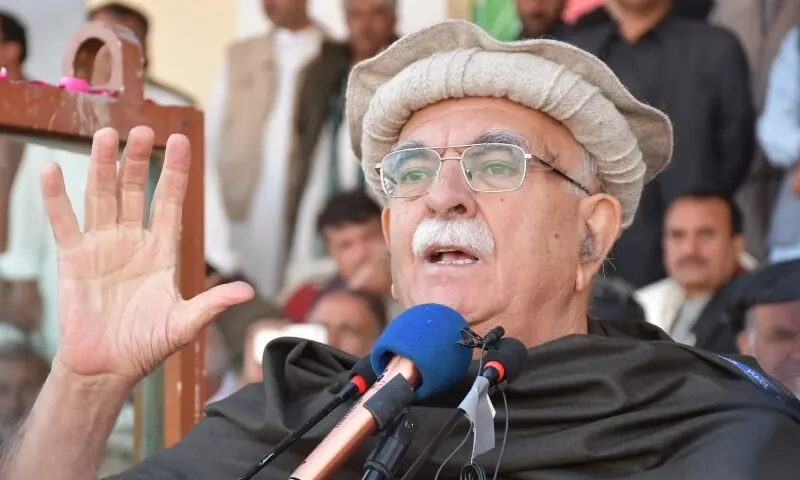
    Earlier this week, TTAP Chairman and National Assembly Opposition Leader Mahmood Khan Achakzai had called for the formation of a national government and comprehensive constitutional and political reforms to steer the country out of the mounting crises.

    However, the main opposition party, the PTI, has distanced itself from Achakzai’s proposal. A joint meeting of its parliamentary groups discussed the matter, and a majority of the members opposed the idea, according to one participant.

    Speaking to Dawn on Thursday, TTAP spokesperson Akhunzada Hussain Ahmed Yousafzai argued that a national government would pave the way for the release of PTI founder and former prime minister Imran Khan, who has been in prison since Aug 5, 2023.

    However, Yousafzai made it clear that the proposed arrangement could not be imposed or negotiated behind closed doors.

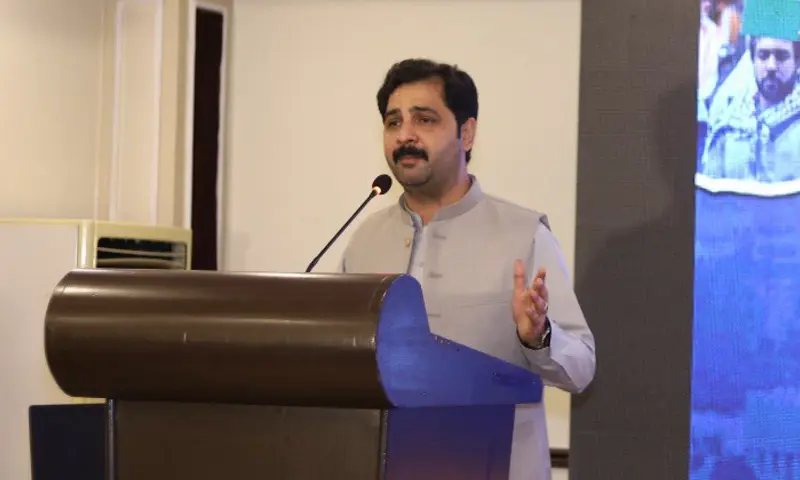
    TTAP spokesperson Akhunzada Hussain Ahmed Yousafzai. — Photo via X/File
    TTAP spokesperson Akhunzada Hussain Ahmed Yousafzai. — Photo via X/File

    He stressed that all political forces, particularly PTI and its founder, must be part of consultations before any decision on the formation of a national government.

    However, he warned that excluding any political force would undermine the democratic legitimacy of a possible national government.

    “The political uncertainty cannot be overcome through political victimisation or unilateral decisions, but requires serious and meaningful dialogue among all political parties, democratic stakeholders and the establishment,” the TTAP spokesperson stated.

    “The proposal for a national government is neither directed against any political party nor intended to provide political advantage to any particular group,” he affirmed, describing it as an effort to restore public confidence in democratic institutions and end political polarisation.

    Under the proposed framework, the first priority would be restoration of a democratic environment in which “fundamental rights, constitutional freedoms, freedom of expression and political activities” are protected, Yousafzai said.

    He added that such an arrangement would allow all the parties to participate in peaceful political activities without discrimination.

    The TTAP spokesperson also called for making the Election Commission of Pakistan (ECP) independent under a mutually agreed, credible and non-partisan chief election commissioner who enjoyed the confidence of all major political parties.

    Yousafzai said the proposed national government should ensure free, fair and transparent general elections across the country in accordance with the Constitution so that the people’s actual mandate was reflected in the composition of the elected government.

    He also called for a multi-party conference to be convened before the formation of the proposed government.

    The meeting, he said, should focus exclusively on reaching a consensus over the mechanism, framework and necessary arrangements for holding credible elections and establishing a genuinely representative government.

    The TTAP spokesperson cautioned that the national government must not become an alternative to the people’s mandate or a permanent political arrangement. Its sole purpose should be to facilitate elections and transfer power to representatives chosen by the electorate, he emphasised.

    “Pakistan needs neither an imposed political arrangement nor a government established through political expediency,” he said, adding that the authority to govern must flow exclusively from the free and fair vote of the people.

    He said the ultimate objective should be a country governed under one Constitution, an independent electoral system and a government that genuinely represented the will of the people.

    Source: dawn

  • JI, govt to form committee to further deliberate, implement recommendations on public relief

    JI, govt to form committee to further deliberate, implement recommendations on public relief

    The federal government and Jamaat-i-Islami (JI) on Thursday agreed to form a committee to further deliberate on and implement the latter’s recommendation to improve the economy, hoping for “positive outcomes”.

    On Nov 11, the government and the JI had agreed on the “basic outlines” of a proposed agreement as the two sides held their 10th round of negotiations on petroleum levy relief.

    A final decision was expected after a meeting between Prime Minister Shehbaz Sharif and JI chief Hafiz Naeemur Rehman, which took place on Thursday, a month after their previous one.

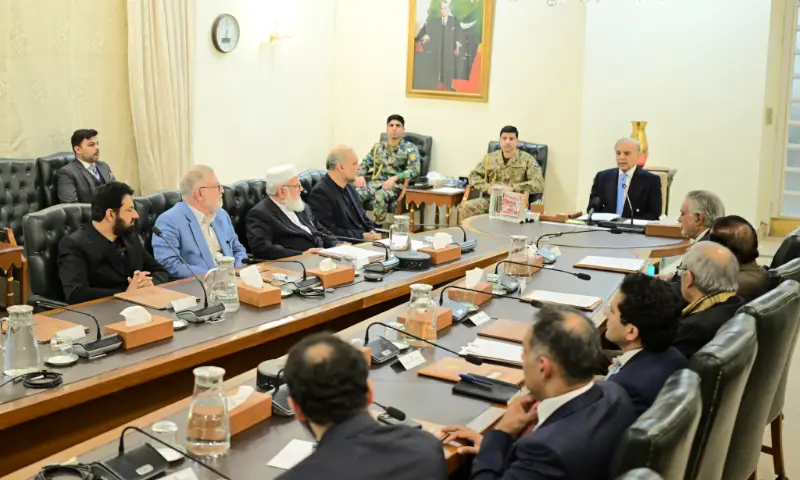
    The Rehman-led JI delegation, including Vice Emir Liaqat Baloch and other leaders, called on PM Shehbaz at the PM House in Islamabad.

    Deputy Prime Minister and Foreign Minister Ishaq Dar, Petroleum Minister Ali Pervaiz Malik, Information Minister Attaullah Tarar, PM’s political adviser Rana Sanaullah and other government officials were also present.

    “We have considered the recommendations by the JI chief by all means,” PM Shehbaz said while addressing the meeting.

    He noted that all consultations between the two sides were held with “sincerity and honesty”.

    “For the betterment of the economy, it has been decided that a committee will be formed to further deliberate on and implement the recommendations by the Jamaat-i-Islami,” the premier stated.

    He expressed hope that the committee would result in “positive outcomes” and affirmed that the recommendations would be implemented “speedily, with sincerity and honesty”.

    The prime minister thanked the JI leadership and appreciated the party’s efforts to seek relief for the common citizen as fuel prices had skyrocketed due to the Middle East crisis.

    He also praised JI for maintaining contact with the government and discussing measures to provide maximum possible relief.

    PM Shehbaz recalled the government’s efforts to provide relief to the public, including allocating over Rs128 billion from the development budget soon after the US-Iran war erupted.

    Moreover, the government in September launched the Prime Minister’s Fuel Relief Scheme to give targeted relief to two-wheelers and vehicles up to 800cc, the premier noted.

    He underscored that 20 million people had benefitted from the scheme.

    Speaking on the occasion, the JI chief said his party believed “there has been a positive development” in the talks on public relief.

    Appreciating the government for holding consultations over the public’s problems, Rehman emphasised that the JI would keep making efforts for further relief and engage with the government on issues facing the people.

    He contended that the JI had introduced a culture of peaceful resistance and still had the right to stage demonstrations to demand further relief for the public.

    Rehman noted that his party delegation had held more than 10 meetings with the government team.

    He appreciated the accessibility of the government’s fuel relief scheme, but also termed it insufficient and called for drastic measures to mitigate rising inflation.

    The JI has been demanding for about three months that the Centre abolish petroleum levies, as fuel prices have skyrocketed due to conflicts in the Middle East since March.

    The Centre and JI agreed to form committees in early September — when the latter had planned a nationwide strike — to recommend measures to reduce the levy.

    On Sept 20, the party launched a protest march towards Islamabad, warning that if the government failed to abolish the petroleum levy, the protest could turn into one to oust the government.

    On Sept 22, the JI emir said his party, whose convoy had reached Multan, was postponing its long march at the request of PM Shehbaz, who had assured the other side of a meeting to discuss the matter.

    When PM Shehbaz and Rehman finally met about a month later, they agreed to form a joint committee to recommend proposals for expanding the fuel relief scheme and for a phased reduction in the petroleum levy for the next budget.

    The committees then held multiple rounds of discussions on practical measures to provide relief to low-income citizens from petroleum prices.

    Source: dawn

  • Makkah pact nations to discuss conflict between Saudi Arabia and Yemen’s Houthis in Islamabad meeting, Asif says

    Makkah pact nations to discuss conflict between Saudi Arabia and Yemen’s Houthis in Islamabad meeting, Asif says

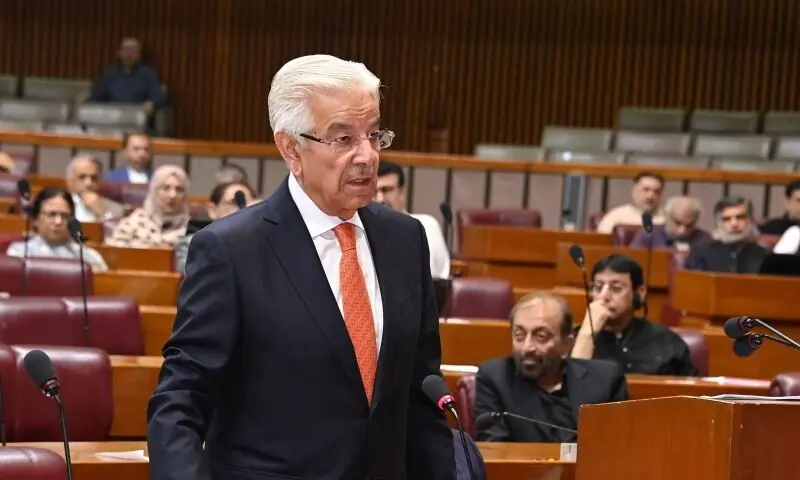
    The Makkah pact nations will discuss the conflict between Saudi Arabia and Houthi fighters in Yemen when officials from the mutual defence agreement meet in Islamabad on Thursday, Defence Minister Khawaja Asif told AFP.

    Asif said the “continuous turmoil south of Saudi Arabia will obviously be one agenda point in the meeting and it is very important”, confirming that defence and foreign ministers from the Gulf kingdom, Turkiye and Pakistan would attend.

    Pakistan, Saudi Arabia and Turkiye signed the pact in August, with the three Muslim nations pledging to come to each other’s aid in the event of an attack.

    Saudi Arabia has faced repeated barrages by the Houthis in Yemen, with the group targeting cities, oil facilities and shipping since fighting in Yemen’s civil war intensified in July.

    “Any threat to Saudi Arabia is a threat to Pakistan and Turkiye according to the pact, which is absolutely clear,” Khawaja said on Wednesday, praising Riyadh’s handling of the conflict with the Houthis, who hold swathes of territory in Yemen, including its capital Sanaa.

    He said the pact, which was formed during the expansion of the war in the Middle East following US-Israeli strikes on Iran in February, was still at a “nascent stage”.

    “Initially, we need to have frequent meetings to steer what is being formulated, in a way that in the next couple of months we have everything in place so that we can move forward,” he added.

    Khawaja declined to comment on how the pact would react to a direct attack by Iran on Saudi Arabia and identified Israel as a possible threat to other countries in the region.

    “The possibility of some conflict, or aggression from the Israeli side exists, so we need to close our ranks, the countries of this region,” he said.

    Pakistan brokered a June accord that led to a brief halt in fighting between the US and Iran and set a roadmap for further agreement on reopening the crucial Strait of Hormuz and for negotiations on Tehran’s nuclear programme.

    But the truce collapsed, with Washington and Tehran accusing each other of violating the agreement, prompting months of shuttle diplomacy to resuscitate the ceasefire, led principally by mediators Qatar and Pakistan.

    Khawaja said Pakistan had played “a very, very constructive role” between Washington and Tehran, but the outcome of ongoing mediation was “still fragile” and peace was “not yet embedded in a way people were expecting”.

    Source: dawn

  • Security breach case: IHC seeks replies from parties on Imaan, Hadi’s appeals against their conviction

    Security breach case: IHC seeks replies from parties on Imaan, Hadi’s appeals against their conviction

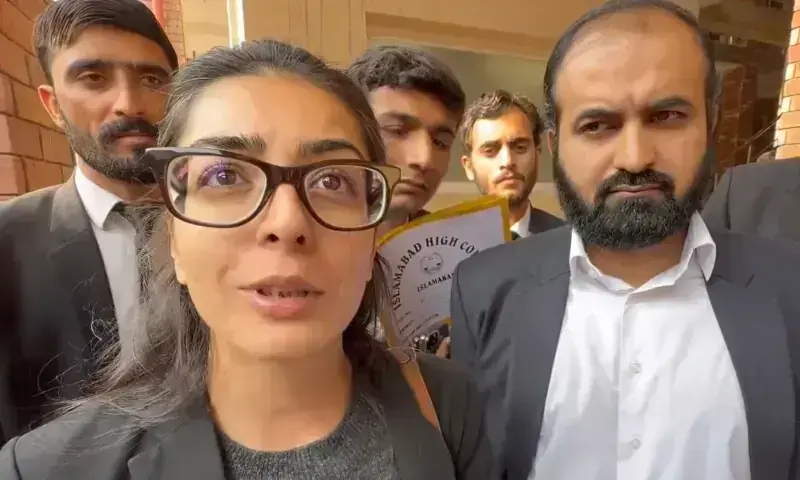
    ISLAMABAD: The Islamabad High Court (IHC) on Thursday issued notices and sought replies from parties on appeals filed by lawyers Imaan Zainab Hazir-Mazari and Hadi Ali Chattha against their convictions in a security breach case.

    An anti-terrorism court (ATC) sentenced the husband-wife duo to 10 years in prison each, besides imposing fines on them, on Oct 29 in the 2024 case pertaining to the removal of security barriers, disruption of an international cricket team’s security route and incitement to public unrest.

    Imaan and Hadi filed appeals in the IHC against their convictions on Nov 7. They also sought the suspension of their sentences and release on bail pending the outcome of their appeals.

    A division bench comprising Justice Inam Ameen Minhas and Justice Ayaz Shaukat took up their appeals today and issued the notices to the parties through a written order.

    The court also issued notices and sought responses from parties on separate applications filed by both appellants for the suspension of their sentences.

    Advocates Riasat Ali Azad, Zainab Janjua and Asif Ali Tamboli represented Imaan and Hadi at the hearing today.

    Jailed, sentenced, re-arrested

    They have been in jail since their arrest on Jan 23 in a case registered against them for protesting outside the IHC and allegedly manhandling the IHC Bar Association president. The arrest prompted criticism by rights bodies, politicians and journalists, who stressed the couple’s right to a fair trial.

    Just a day later, a sessions court sentenced them to 17 years on multiple charges under the Prevention of Electronic Crimes Act in the controversial social media posts case. The convictions were widely condemned by lawyers and United Nations (UN) experts.

    On September 17, following months of litigation before the courts, the SC suspended their sentences in the case. The SC ordered their release pending the IHC’s final verdict on their appeals against the trial court’s decision.

    However, the reprieve was short-lived as hours later, Islamabad police arrested the couple again in connection with another case and produced them before an ATC, which sent them to jail on judicial remand.

    The fresh case in which the two were arrested was registered at the federal capital’s Kohsar police station on March 22 last year on the complaint of City Magistrate Ghulam Murtaza Chandio.

    Imaan and Hadi were accused of chanting anti-government slogans and blocking roads and were nominated by name in the FIR. However, at the time of registration of the case, no section of the Anti-Terrorism Act (ATA) had been added.

    The FIR included sections 188 (disobedience of an order lawfully promulgated by a public servant), 341 (wrongful restraint), 506 (punishment for criminal intimidation), 353 (assault or use of criminal force to deter a public servant from discharging their official duty) and 186 (obstructing a public servant in the performance of official duties).

    While they remain imprisoned, their trial in the security breach case was conducted in jail. They were indicted in the case on Oct 7, despite their objections that they had not received copies of case documents and had not been allowed to meet their lawyers.

    On Oct 26, they had also approached the Supreme Court challenging the IHC’s refusal to stay their jail trial.

    On Nov 11, the Supreme Court disposed of a petition filed by the couple as infructuous, observing that the matter had become infructuous following the conclusion of the trial and their conviction.

    The Supreme Court directed the IHC to decide on the petition filed by the couple in the case.

    Source: dawn

  • Local holiday announced in Islamabad, Rawalpindi on Nov 27

    Local holiday announced in Islamabad, Rawalpindi on Nov 27

    A local holiday has been declared in the Islamabad Capital Territory (ICT) and Rawalpindi for Nov 27 (Friday).

    A notification issued by the Islamabad deputy commissioner stated that Nov 27 “has been declared a local holiday within the revenue limits of ICT”.

    It noted that all essential services would remain operational during the holiday, including the Metropolitan Corporation Islamabad, the Capital Development Authority, the ICT administration, Islamabad police, the Islamabad Electric Supply Company, the Sui Northern Gas Pipeline Limited and hospitals.

    Separately, the Rawalpindi deputy commissioner shared a notification on X stating that a local holiday had been declared in the district for Nov 27. He said that all schools, colleges and offices would remain closed.

    The notification said that all “emergency dealing departments/institutions/authorities shall remain operational”.

    “Moreover, all annual and supplementary examinations shall be conducted as per the approved schedule in all education institutes of Rawalpindi district,” it said.

    Both notifications did not provide a reason for the holiday.

    Meanwhile, a notice of expected partial closure was issued for the Rawalpindi-Islamabad metro system from Nov 26-28, as a result of expected “VIP movement”.

    The notice warned of a possible suspension of the line from Kashmir Highway to the Pak Secretariat stations and said the closure of the last four stops was also under consideration.

    The metro service from Saddar to Faiz Ahmed Faiz would remain operational, it added.

    Source: dawn

  • Meta battles political storm in India as Congress party sues, stages protests

    Meta battles political storm in India as Congress party sues, stages protests

    India’s main opposition party, the Indian National Congress, has sued Meta and the federal government, saying that an automated content-removal system is blocking political posts and images of ​opposition leader Rahul Gandhi ahead of state elections.

    The filing takes a week-long Congress campaign against Meta from the streets to the courtroom, and highlights Prime Minister ‌Narendra Modi’s automated takedown mandate, under which the Facebook and Instagram parent has restricted more than 5.4 million posts in the first half of 2026, up from about 70,000 in all of 2025.

    In a court filing dated Nov 25 in the Delhi High Court, seen by Reuters, Congress’s youth wing social media head Manu Jain said the rules have become “an instrument for the suppression of lawful political expression”.

    The case leaves Meta’s operations ​in India, the company’s biggest market, caught between a government whose rules strip platforms of legal protection if they fail to comply, and an opposition demanding it ​push back.

    Congress argues that Meta’s system is blocking posts that are not “exactly identical” copies of content previously ordered removed, including birthday greetings, tributes ⁠and a wedding invitation featuring Gandhi. Meta says it moderates content in India in accordance with the law.

    Meta declined to comment. India’s IT and home ministries, which are named as co-respondents ​in the lawsuit, did not immediately respond to Reuters requests for comment.

    Modi’s government has maintained that such laws are essential to prevent the proliferation of illegal and harmful content online in ​a market of over 1.1 billion internet users.

    Congress is urging the court to strike down the mandate for automated takedowns and also order Meta to restore the posts, as well as disclose blocking criteria.

    Hearings are expected to begin in the coming days.

    ‘Automated tools’ mandate

    India amended its IT rules in February to require large platforms to use technical measures “including automated tools” to find and block any post “exactly identical” to content already removed ​under a court order or a written government notice. Before that, platforms were asked only to “endeavour” to use such tools.

    To comply, Meta has been restricting “100 per cent identical copies of content, at ​scale and in country” under India’s amended IT rules, its transparency report shows. The company says it is still testing and refining the system given the “unprecedented nature of this effort”.

    Meta says it is required ‌to automatically ⁠restrict content at scale in only a “limited” number of countries, which it says explains the higher volumes.

    Congress says the automated system is catching far more than exact duplicates. It is blocking birthday greetings, tributes and even a wedding invitation because they carry the photograph or name of opposition leader Gandhi, while “no order, notice, reason or even a ‘legal request’ has been disclosed,” the petition said.

    In one case cited in the petition, a Nov 8 birthday greeting from a youth wing leader to a colleague, showing the colleague standing beside Gandhi, was blocked the same day.

    “We ​restricted access to this content through an automated ​system implemented pursuant to legal requirements,” ⁠the notice to the user read.

    India is also one of seven markets, including Brazil and Hong Kong, where Meta does not tell users which government authority sought a restriction, citing “legal obligations and regulatory considerations”, its transparency report shows. Elsewhere, it does so in most cases.

    Wider offensive by Congress

    The automated takedown system “distorts the level playing field” needed for a free and fair election, especially as party workers rely on Meta’s ​platforms to reach voters ⁠ahead of state polls due early next year, the petition says.

    Facebook and Instagram have 400m and 515m users respectively in India, according to research firm DataReportal.

    Congress has put up large hoardings in several cities depicting Meta CEO Mark Zuckerberg in the traditional uniform of the Rashtriya Swayamsevak Sangh, the ideological parent of Modi’s party.

    Congress’s youth wing has protested near Meta offices and clashed with ⁠police in ​several cities in recent days. The BJP has accused the protesters of vandalising the offices of private companies.

    At ​a closed-door meeting this week reported by Reuters, Congress told Meta to push back against first-instance takedown orders, as Elon Musk’s X has done, a source told Reuters. X is currently engaged in a legal battle against the government over ​its content-removal system.

    Meta told Congress at the meeting that it was neutral towards all political parties and bound by local laws.

    Source: dawn

  • Other realms

    IT was a moment of pride for Pakistan when PAF officer Muhammad Zeeshan Ali blasted off into space yesterday morning alongside his Chinese colleagues, astronauts Tang Hongbo and Wu Yi. As the Shenzhou-24 spacecraft entered orbit soon after lift-off, Wing Commander Ali became Pakistan’s first orbital astronaut, carrying with him “the hopes of 250 million Pakistanis”.

    Three-and-a-half hours later, the Shenzhou-24 capsule docked with China’s Tiangong space station, where the crew from an earlier mission warmly greeted the arriving astronauts — especially their first foreign guest. Wing Commander Ali, who has been designated a payload specialist, will spend about a week in space working on four experiments covering radiation protection, space food security, oxygen-producing microorganisms, and self-healing carbon fibres.

    With the successful launch of Shenzhou-24, Pakistan joins the ranks of around 50 countries that have sent their citizens into orbit. For years, China and Pakistan have worked closely in several sectors, ranging from defence and security to energy and infrastructure development under CPEC. As 2026 marks 75 years of Pakistan-China diplomatic relations, it is only fitting that spaceflights should be the next sphere of cooperation.

    However, while a significant beginning has been made, it will be years before Pakistan can take the same strides in space technology as China. This moment of celebration must therefore give way to something more permanent — economic stability, greater investment in R&D, international collaborations in science and technology, and above all, a sound STEM education base.

    With a large youth population comes a strong talent pool. But governments here have left it untapped. Instead, they have given free rein to illiteracy, poverty, and poor schooling, closing many doors to opportunity. Contrast this reality with a space flight by one man from the same country that has brought hope to millions — a fleeting triumph that could acquire permanence if the state prioritised people’s welfare.

    “To every child who is watching while I am in orbit, just look up at the sky and remember that I am up there with your dreams,” was Zeeshan Ali’s message to youngsters as he set out to explore realms beyond Earth. Pakistan should not allow its children’s dreams to fade away.

    Published in Dawn, November 26th, 2026

    Source: dawn