Category: dawn news

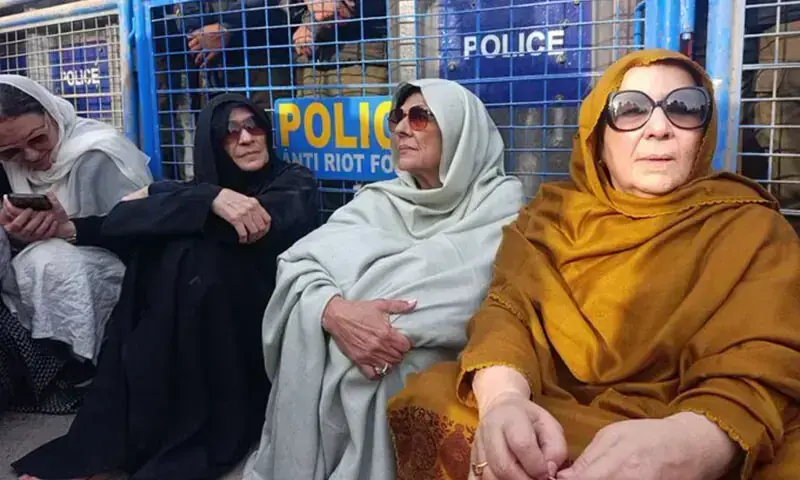
  • Imran’s sisters Uzma, Noreen released from jail after extended detention orders withdrawn, says lawyer

    Imran’s sisters Uzma, Noreen released from jail after extended detention orders withdrawn, says lawyer

    LAHORE: Dr Uzma Khan and Noreen Niazi, sisters of incarcerated PTI founder Imran Khan, were released from Kot Lakhpat jail following the withdrawal of their extended detention orders, PTI legal counsel Rana Mudassar Umer told Dawn on Thursday.

    In a post on X, he said the two — who were detained in September under the Punjab Maintenance of Public Order Ordinance (MPO) along with their sister Aleema Khan — had returned home “safely”.

    PTI lawyer Taimur Malik also said on X that the two women had been released upon the withdrawal of the “unlawful MPO detention order”.

    “Everyone else detained under these MPO orders should be released as well,” he said.

    Noreen’s son, Wali, also said on X that his mother and his aunt had been released from jail.

    “For 53 days they were held under Section 3 of the MPO. No charge. No trial. Two weeks ago, Noreen, in her seventies, was taken to a cardiac hospital. No one told us. Today they were let out. No reason given,” he said.

    He called for a judge to “explain both decisions”, but added: “No one can, because neither decision rested on law. Their jailing was arbitrary and so is their release.”

    Imran’s three sisters — Noreen, Aleema and Uzma — have been in jail on the Lahore deputy commissioner’s (DC) orders as the PTI geared up for a protest march towards Islamabad. Their detention was initially ordered for 30 days.

    Their detention was then challenged in the Lahore High Court after the 30-day period lapsed last month, following which the Punjab government informed the court that it had been extended for another 30 days.

    Aleema, who was the first to be detained, still remains in jail.

    On Oct 28, Noreen was moved from Kot Lakhpat jail to the Punjab Institute of Cardiology (PIC) due to high blood pressure. At the time, her lawyer claimed that no family member had been informed about her deteriorating health.

    The PTI had also condemned Noreen’s transfer to the PIC without informing her family, expressing grave concern over her health and the treatment of “political prisoners”.

    However, the government had insisted that she was “fine” after being provided medical treatment.

    “As per the information available, she is fine and all her medical tests are normal,” the adviser to the prime minister on political affairs, Rana Sanaullah, had informed the Senate on Oct 29.

    Source: dawn

  • China’s Xi says Taiwan ‘reunification’ must happen as history cannot be stopped

    China’s Xi says Taiwan ‘reunification’ must happen as history cannot be stopped

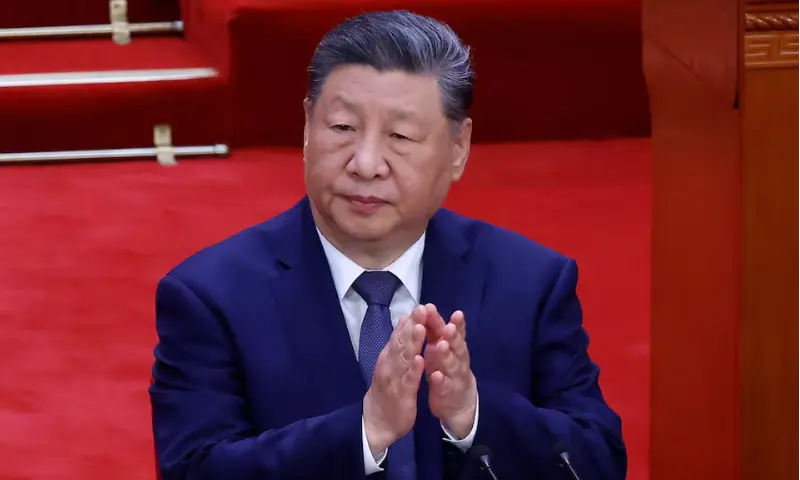
    The tide of history cannot be stopped, Chinese President Xi Jinping said on Thursday, ​while urging peaceful “reunification” with Taiwan and making no mention of using force, though he still drew a firm rebuff from Taipei.

    China views democratically-governed ‌Taiwan as its own territory, despite Taipei’s strong rejection of that claim, and has repeatedly offered a “one country, two systems” model of autonomy not supported by any major Taiwanese political party.

    Resolving the Taiwan question is an “unwavering historical mission” of China’s Communist Party, Xi said in a speech in Beijing’s Great Hall of the People.

    “The tide of history cannot be stopped,” Xi added. “The complete reunification of ​the motherland must be realised, and it will certainly be realised.”

    Taiwan’s government dismissed the remarks.

    Its Mainland Affairs Council said neither the government nor Taiwan’s people ​could accept “one country, two systems,” which would ultimately mean submitting to the Communist Party’s authoritarian rule.

    “As for the wording on Taiwan ⁠unification, it isn’t much different from the past,” council spokesperson Liang Wen-chieh told reporters.

    Xi’s comments came in a speech on the 160th birthday of revolutionary hero Sun ​Yat-sen, who helped lead a 1911 revolt that ended centuries of rule by emperors and empresses and ushered in the Republic of China.

    Xi said China adheres to “peaceful reunification ​and the policy of ‘one country, two systems’” and is willing to talk to Taiwan while upholding the “one-China principle”, or Beijing’s position that both sides of the Taiwan Strait are one country.

    All Chinese, including those in Taiwan, should join hands to jointly oppose Taiwan independence “separatist” forces and strive for peaceful development of cross-Strait ties, Xi added.

    Despite Xi not mentioning the use of force, which China ​has never renounced for Taiwan, its military operates around the island on a daily basis and is extending its reach further into the Pacific.

    Taiwan’s defence ministry said it ​had detected 29 Chinese military aircraft, including J-16 fighter jets and drones, carrying out a “joint combat readiness patrol” around Taiwan in conjunction with Chinese warships, starting on Thursday.

    Taiwan tells people to stay away

    Xi’s ⁠speech comes a week ahead of the APEC summit in China’s southern tech hub of Shenzhen, where he is due to again meet US President Donald Trump, and also a little more than two weeks before important local elections in Taiwan.

    Last month, Taiwan called on its people to steer clear of any of China’s events to mark the Sun anniversary, saying China had a distorted view of him and his legacy.

    Beijing calls Sun a great national hero and patriot, as well as the forerunner of the 1949 communist ​revolution that forced the defeated Republic of ​China government to flee to Taiwan, ⁠where it remains to this day.

    Xi said Sun was a great national hero, a great patriot and a “great pioneer of China’s democratic revolution”.

    “Mr Sun Yat-sen consistently upheld the unity of the country and the solidarity of the nation, and he firmly opposed ​all words and actions that split the country or the nation,” he added.

    ‘Father of the nation’

    In Taiwan, Sun is officially ​considered the “father of the ⁠nation” and his portrait hangs in the presidential office, though his political philosophy, “Three Principles of the People”, is no longer a required text for schoolchildren.

    While Taiwan President Lai Ching-te and his ruling Democratic Progressive Party champion Taiwan’s separate identity from China, they have been striking a tougher tone with Beijing on the role of the Republic of China.

    Taiwan has ⁠been particularly upset ​by Beijing’s effort to claim credit for the victory in World War Two, saying it was the ​Republic of China government that fought alongside the allies, as the People’s Republic of China did not exist at the time.

    China says Lai is a “separatist” and has refused to speak with him. Lai says only ​Taiwan’s people can decide their future.

    Source: dawn

  • At COP31, PM Shehbaz calls for grant-based finance, resilience funding for climate-vulnerable countries

    At COP31, PM Shehbaz calls for grant-based finance, resilience funding for climate-vulnerable countries

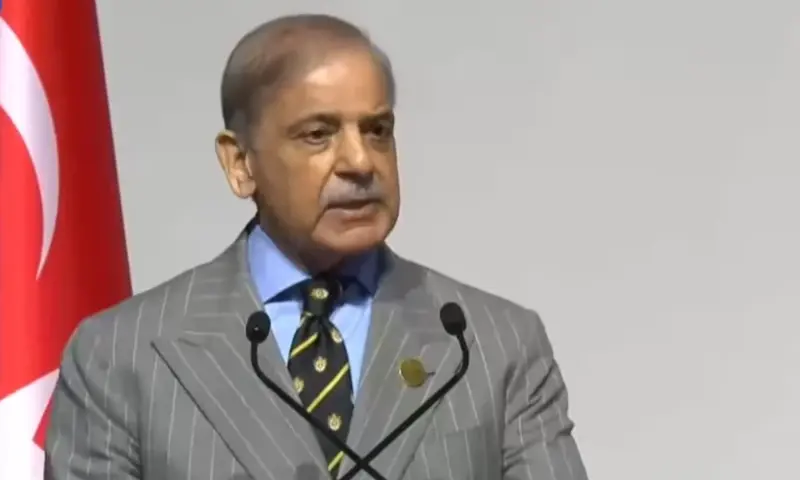
    Prime Minister Shehbaz Sharif on Thursday called for grant-based finance and improved resilience and adaptation funds for climate-vulnerable countries at COP31, being held in Turkiye’s Antalya.

    This year’s summit focuses on transitioning toward a low-carbon future.

    Delegates from nearly 200 countries are meeting in the Mediterranean resort city of Antalya as global greenhouse gas emissions show little sign of falling, while wars, inflation and other crises compete for political attention.

    Addressing the summit, Prime Minister Shehbaz Sharif highlighted Pakistan’s efforts to promote clean energy but warned that “national effort cannot replace a fair and just global response”.

    “When climate disasters strike, vulnerable countries need timely help and finance that does not deepen their debt,” Shehbaz said, adding that Pakistan called for “grant-based finance, including public-private partnerships, alongside a significant increase in resilience and adaptation funds, which amount to survival funds, especially for struggling economies”.

    He said clean energy sources accounted for nearly 55pc of Pakistan’s energy needs, adding that the country was advancing electric mobility and had set a target of reducing projected emissions by about 50pc by 2035.

    Recalling the 2025 floods in Khyber Pakhtunkhwa’s Buner district, the prime minister said: “In August 2025, a young man in Buner was just two days away from his wedding when flash floods swept through his village. A home preparing for celebrations became a house of mourning.”

    “Their grief was personal, yet the warning signs were global,” the prime minister said, noting that this was the story of “millions of people in Pakistan and across the developing world”.

    “People who have contributed the least to climate change bear its heaviest consequences,” he added.

    Addressing the summit, PM Shehbaz also recalled the 2022 floods in Pakistan, noting the economic damage and mass displacement the catastrophe caused.

    More than 1,700 people lost their lives, and economic losses exceeded $30bn,” the prime minister said.

    PM Shehbaz recalled his speech at the UN General Assembly in 2022. “I had warned that what is happening in Pakistan will not stay in Pakistan, and unfortunately, that warning has become a stark reality.

    “The future we feared has become the present we are living,” he said.

    Underscoring the need for global solidarity, the premier remarked, “Climate change knows no borders and no nation can face it alone. Solidarity must mean real action.”

    He then expressed gratitude to Turkish President Recep Tayyip Erdogan for his country’s support for Pakistan during the 2010 and 2022 floods.

    Addressing the summit, PM Shehbaz also warned against the weaponisation of water.

    “No nation should be allowed to put the lives and livelihoods of people downstream at risk. Water-sharing agreements must be honoured in letter and spirit,” the premier said.

    Concluding his address, PM Shehbaz said world leaders had gathered at the summit to “shoulder a shared responsibility to protect life on this earth.”

    “Let our success be measured not by promises we make here but by the families we protect, the resources we deliver, and the meaningful action we sustain,” he hoped.

    On Tuesday, PM Shehbaz addressed a high-level dialogue on clean energy transition, titled ‘35 by 35: Powering the Future’, where he highlighted Pakistan’s solar power boom.

    “In just two years, Pakistan has added nearly 22 gigawatts of rooftop solar capacity — a quiet revolution by ordinary citizens seeking affordable power and a cleaner, more predictable future.”

    He had affirmed that Pakistan fully supports the ‘35-by-35 Global Electrification Pledge’, wherein countries agree to aim to increase electricity’s share of total final energy consumption to around 35 per cent by 2035 in line with global climate objectives. The prime minister also held several bilateral conversations with world leaders and international organisations on the sidelines of the summit on Wednesday.

    Dozens of leaders are speaking during the “high-level segment” taking place on Wednesday and Thursday, including Erdogan, Iran’s President Masoud Pezeshkian and Brazilian President Luiz Inácio Lula da Silva, whose country hosted last year’s climate talks.

    “Nature — no less than people — is also paying a heavy price for armed conflicts. The starkest example of this is Gaza… what has taken place in Gaza is not only a genocide, but it is also an ecocide,” Erdogan said to applause on Wednesday.

    The United States, the world’s largest historical emitter, has skipped the talks for the second year in a row after President Donald Trump — who has called global warming a hoax — withdrew the US from climate cooperation following his return to office in 2025.

    Negotiators from nearly 200 countries are seeking agreement on a plan to increase the share of electricity in global energy use and revive stalled efforts to move away from fossil fuels.

    On Wednesday, the UN chief told world leaders at the summit that the slow international response to climate change so far had placed the world on a path to destruction.

    Governments must fight harder to preserve the planet for future generations, he said, in comments that set the tone for two days of rapid-fire speeches by world leaders.

    “The brutal truth is that the climate crisis is outrunning us. This is the path to mutually assured destruction,” Guterres said, pointing to rising emissions, global temperatures and worsening climate-driven disasters.

    “But science is not telling us to surrender. It is telling us to fight harder.”

    Source: dawn
  • China says US using spy claims to justify technology ‘blockade’

    China says US using spy claims to justify technology ‘blockade’

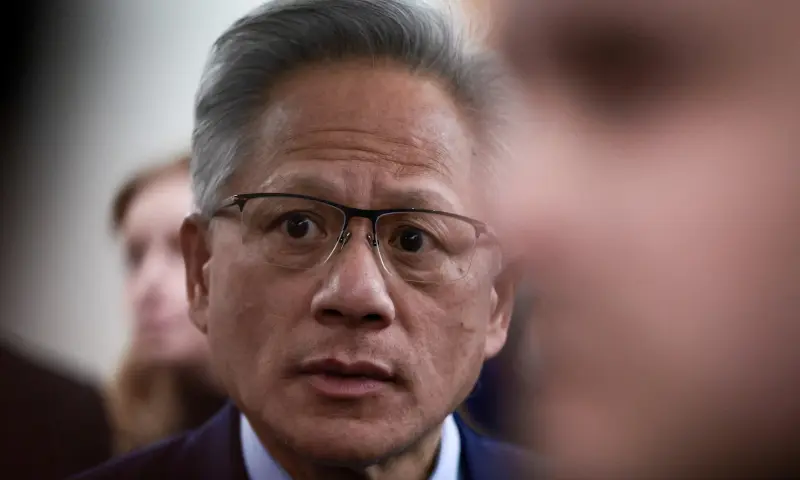
    Beijing accused the United States on Thursday of using spurious spying claims as a pretext to impose a technological “blockade” on China, following claims that Nvidia boss Jensen Huang was the victim of a Chinese espionage plot.

    “China’s technological progress is driven by independent innovation and open cooperation. The US side should stop fabricating such ‘spy’ narratives as a pretext for imposing a technological blockade,” foreign ministry spokeswoman Mao Ning told a regular briefing.

    Huang, who co-founded Nvidia and turned it into the world’s leading supplier of the chips that power AI, has admitted to having an extramarital affair, reportedly with Alice Huang.

    She is a reported to be a former executive at Singapore-based Megaspeed and is thought by US officials to have worked for Chinese intelligence.

    The Nvidia boss has spent years lobbying against curbs on sales of advanced chips to China.

    US President Donald Trump last year cleared Nvidia’s H200 chips for export there over objections from hawks in both parties who fear Beijing winning the race to dominate in AI technology.

    China has dismissed the claims about spying on Huang as “groundless speculation” and “an attempt to smear China”.

    The furore comes ahead of a meeting next week between Trump and President Xi Jinping at the APEC gathering in Shenzhen in southern China.

    Source: dawn

  • Democrats seek bipartisan action to curb Trump’s immigration drive

    Democrats seek bipartisan action to curb Trump’s immigration drive

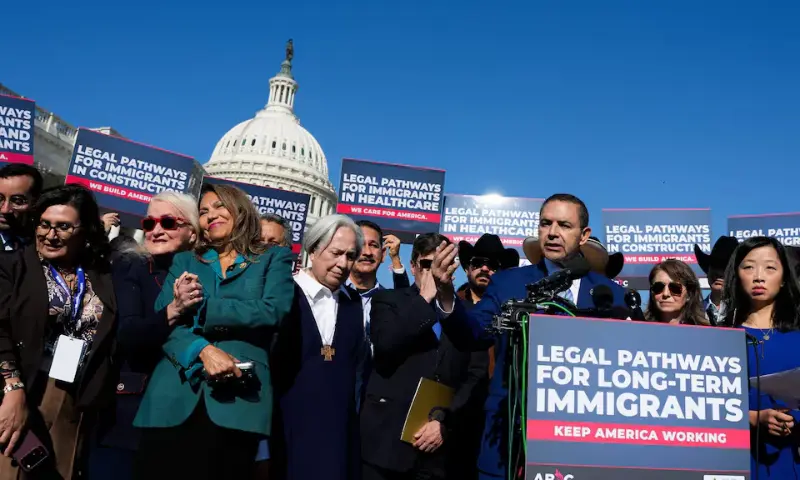
    WASHINGTON: Democratic lawmakers have called for a bipartisan immigration deal, seeking changes to President Donald Trump’s enforcement policies and legal status for long-settled immigrants.

    The appeal came as Democratic officials in several states and cities moved to limit their agencies’ role in federal immigration operations.

    Members of the House and Senate, including lawmakers elected last week, held a news conference outside the US Capitol.

    The group included progressive and centrist Democrats who said the election results offered an opportunity to revisit an approach that had become politically costly for Republicans.

    Representative Veronica Escobar, whose Texas district includes the border city of El Paso, said she wanted far-reaching reform but recognised that legislation could not pass without Republican support.

    “As we continue to have Donald Trump in the White House, and without a supermajority in the Senate, we need Republican support,” she said, adding that comprehensive reform would therefore have to be bipartisan.

    Senator Ruben Gallego of Arizona urged both parties to pursue an agreement before the current congressional session ends, or continue negotiations in the next one.

    Republicans had long made immigration reform conditional on securing the border, he said.

    “We have that right now. We did the job. Now let’s figure out how to right-size our immigration issue. Let’s figure out how to keep families together.”

    Representative Sylvia Garcia of Texas proposed starting with the Dream and Promise Act, saying it could provide a basis for broader changes after Democrats assume control of Congress in January.

    The lawmakers’ appeal for federal legislation coincided with efforts by Democratic state and local administrations to narrow the role of their police and detention agencies in enforcing federal civil immigration rules.

    In Houston, Mayor John Whitmire has also issued an order barring city police from contacting Immigration and Customs Enforcement (ICE) about administrative immigration warrants during routine traffic stops and minor, nonviolent violations.

    Police may still contact ICE when a person is being booked into jail for a new offence carrying possible jail time and also has an administrative immigration warrant.

    The order also removes earlier provisions requiring officers to wait for extended periods for ICE agents to attend traffic stops or detention scenes.

    Whitmire said he had consulted Texas’s newly elected governor, lieutenant governor and comptroller before acting. He described the move as an attempt to ease anxiety in immigrant communities and said he hoped other cities in the state would follow.

    “This is the right thing to do at the right time,” he said. “I do this to begin a healing process.”

    Whitmire opposed a 2017 Texas law prohibiting sanctuary-city policies when he was a state senator. Houston’s move follows major Democratic gains in the state: Gina Hinojosa defeated Republican Governor Greg Abbott, while James Talarico won a Senate seat.

    Abbott had earlier threatened to hold back more than $110 million in public safety grants from Houston over its limits on cooperation with ICE. Austin and San Antonio are also reviewing their arrangements with federal immigration authorities.

    Similar changes are underway elsewhere. Virginia Governor Abigail Spanberger has ordered state law-enforcement agencies to end their agreements with ICE under the 287(g) programme, which authorises participating local and state officers to carry out specified immigration enforcement duties.

    Maryland Governor Wes Moore has signed legislation ending formal 287(g) partnerships between ICE and state or local law-enforcement agencies.

    The change requires nine sheriffs’ offices to withdraw from their agreements.

    In New York, legislation signed by Governor Kathy Hochul requires existing arrangements involving local detention facilities and federal civil immigration detention to end by November 25.

    California, meanwhile, continues to apply its California Values Act, which restricts the use of local police resources for federal civil immigration enforcement.

    In January, Democrats are expected to use their new congressional committee leadership to scrutinise the Department of Homeland Security, which oversees ICE, investigate enforcement practices and detention conditions, and seek testimony and records.

    But a Democratic majority will not by itself enable lawmakers to undo the president’s central immigration policies. Trump can veto legislation, while Senate rules will make it difficult to pass major measures without broader support.

    Trump conceded after the Republican losses that his administration had been “too tough” on immigration in some respects. Yet his appointment of Stephen Miller, a leading architect of the crackdown, to a senior White House post points to continued resistance to a substantial change in direction.

    Vice President JD Vance, seen as a possible Republican presidential candidate in 2028, has suggested that enforcement tactics could be adjusted, including through a greater focus on businesses that hire undocumented workers.

    His comments indicate that debate over how the administration applies its immigration policy may continue, even as Trump retains its central objectives.

    Source: dawn

  • Israeli strike kills 6 at southern Gaza hospital: civil defence

    Israeli strike kills 6 at southern Gaza hospital: civil defence

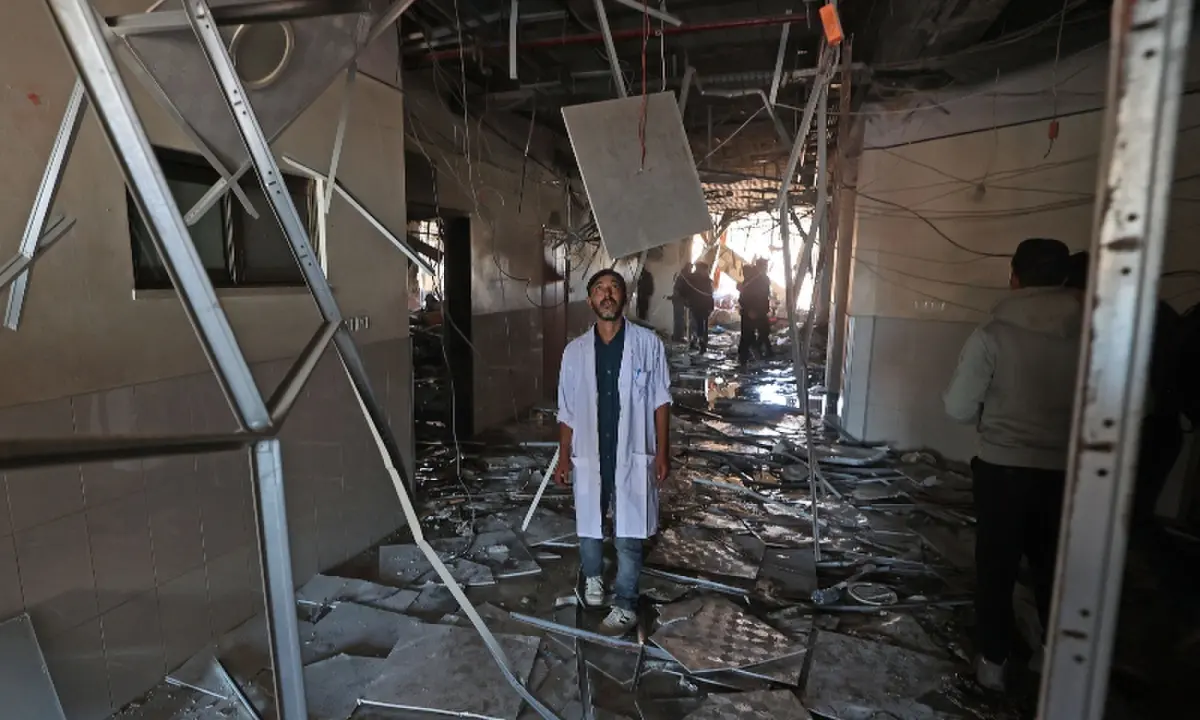
    An Israeli strike killed six people and wounded around 20 at Nasser Hospital in southern Gaza, a civil defence official told AFP on Thursday.

    The Israeli military confirmed the strike. Gaza’s civil defence agency said the bodies of those killed and more than 20 people wounded in the strike had been recovered from a building at the medical complex.

    “The death toll from the Israeli strike inside Nasser Medical Complex, west of Khan Younis in southern Gaza, has risen to six,” civil defence spokesperson Mahmoud Bassal told AFP.

    Nasser Hospital confirmed the six deaths in a statement.

    The Israeli military claimed it carried out an “aerial strike to eliminate the threat they posed, after the Hamas had established a presence within the hospital complex and used it as a command centre”.

    Hazem Qassem, spokesman for Hamas, called the strike on Nasser a war crime, adding that he held the US-backed Board of Peace in charge of overseeing Gaza’s ceasefire plan responsible for failing to prevent the strike.

    A seventh person was killed by Israeli fire in central Gaza’s Al-Bureij camp Thursday, Bassal said.

    Nearby Al-Aqsa hospital confirmed receiving the body and said the man was shot dead by Israeli forces. Israel’s military said it was looking into the death.

    Israel and Hamas have accused each other of violating the ceasefire that came into effect in October 2025, after two years of an Israeli offensive in Gaza triggered by an attack of unprecedented scale carried out by the Palestinian group against Israel on October 7, 2023.

    On Tuesday, Israeli forces killed seven people, including a 13-year-old boy, in the Gaza Strip, according to local emergency services, while the Israeli military claimed it had targeted “military operatives”.

    More than 1,590 Palestinians have been killed since the start of the ceasefire, according to the Gaza Ministry of Health. During the same period, the Israeli military has reported the loss of seven soldiers, as well as one civilian contractor.

    Source: dawn

  • ‘Significant evidence’ of placer gold in Punjab rivers, says CM Maryam at minerals investment forum

    ‘Significant evidence’ of placer gold in Punjab rivers, says CM Maryam at minerals investment forum

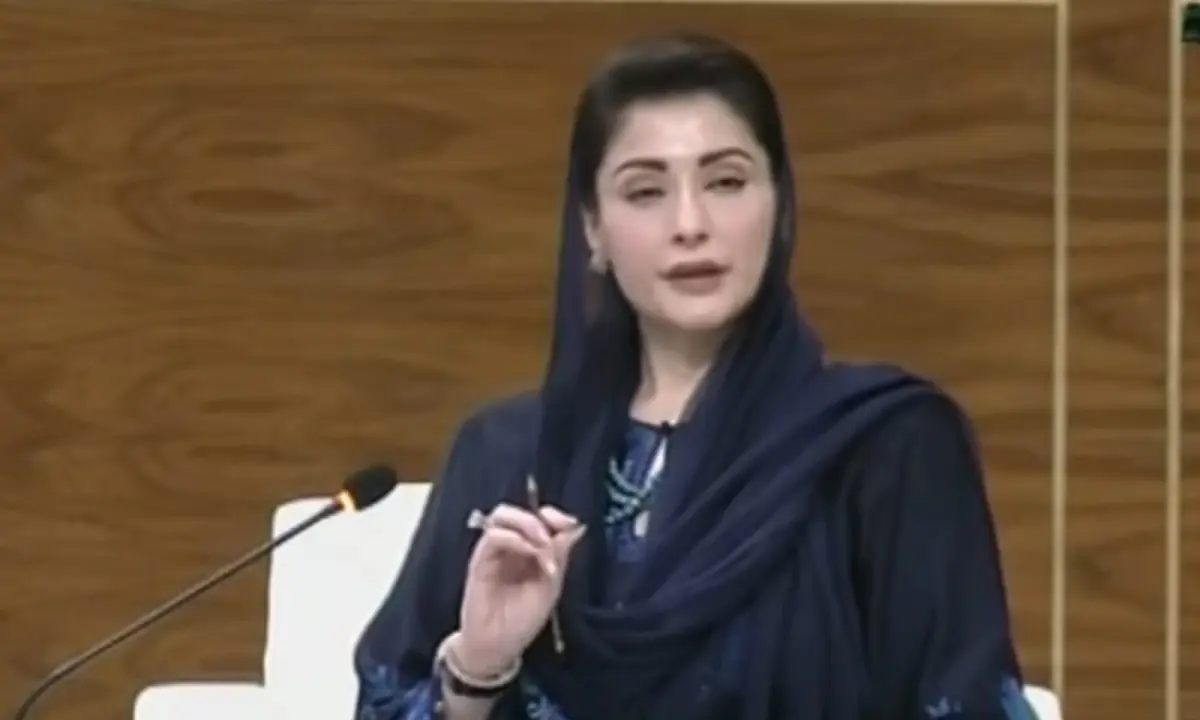
    Punjab Chief Minister Maryam Nawaz said on Thursday that there was “significant evidence” of “sufficient quantities” of placer gold flowing in the province’s five rivers.

    She was speaking at the Pakistan Minerals Investment Forum in Islamabad, an initiative aimed at harnessing the country’s mineral resources and attracting domestic and foreign investment in the mining sector.

    The chief ministers of Balochistan and Sindh, as well as KP Governor Faisal Karim Kundi, also attended the forum.

    Maryam said Punjab was the land of five rivers and that gold was “literally flowing” in all five, particularly in the areas of Mianwali and Attock.

    She described Pakistan as a “pot of gold”, saying its wealth lay both above and beneath the ground and needed to be explored and turned into tangible wealth.

    “The wealth beneath Punjab was never a problem, never a problem, just like the whole of Pakistan, just like all four provinces and the federating units. The chaos above ground was the actual problem,” she said.

    Maryam said revenue generated by the provincial Mines and Minerals Department had increased from Rs10 billion to Rs40bn in two and a half years.

    “And it is just the beginning,” she added.

    She said the provincial government was also taking steps to facilitate investment in the mining sector and create an enabling environment for investors.

    She said her role as chief executive of the country’s most populous province was to facilitate investors and create an enabling environment by eliminating red tape, bureaucratic delays and unnecessary hurdles.

    The provincial government was offering one-window facilitation to ensure investors did not have to run from pillar to post to complete procedures, she added.

    Maryam said the government was also making substantial capital investments to lower capital expenditure and prevent investors’ finances from being tied up in purchasing expensive land.

    Additionally, the government was offering concessional financing of up to Rs5 billion and would provide solar-based energy solutions to investors to help offset high energy and fuel costs.


    More to follow

    Source: dawn

  • US marine guard appears to rebuke Hegseth’s delegation at Tomb of the Unknown Soldier

    US marine guard appears to rebuke Hegseth’s delegation at Tomb of the Unknown Soldier

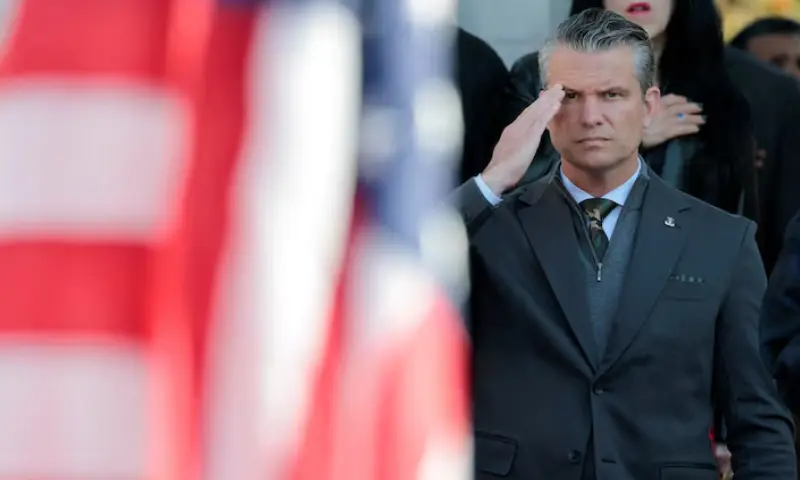
    A US Army sentinel guarding the Tomb of the Unknown Soldier appeared to rebuke Defence Secretary Pete Hegseth’s delegation on Wednesday after laughter could be heard as they climbed the steps of the solemn site, according to a video of the incident.

    Hegseth, his wife and senior aides could be seen taking pictures and speaking to each other on the steps of the memorial at Arlington National Cemetery following a Veterans Day event.

    Immediately after the laughter, the sentinel moved toward the group and, from a distance, shouted toward them: “All visitors will maintain an atmosphere of silence and respect at all times.”

    Sitting at the heart of Arlington National Cemetery, the Tomb of the Unknown Soldier is a sacred site and the grave of three unknown American service members, including one from World War One. It is widely known as a place for mourning and for reflection on military service, and sentinels guard the site 24 hours a day.

    Asked about the incident, which was first reported by CNN, chief Pentagon spokesperson Sean Parnell said in a statement: “The secretary and the entire department have always honoured and will always honour the sacrifices our military men and women have made to keep America safe.

    “While commemorating this solemn day, a soldier correctly and respectfully reminded everyone to maintain decorum.”

    Hegseth, a former Army National Guard soldier who served in Iraq, prevailed this week after the House of Representatives rejected a Republican lawmaker’s effort to impeach him.

    At a rare Pentagon press conference on Tuesday hours before the vote, Hegseth called the impeachment effort a farce and defended his record, which includes championing the unpopular war on Iran, launching strikes on suspected drug vessels in Latin American waters and firing senior military officers.

    Democrats who won control of both chambers of Congress last week have promised to investigate Hegseth for his stewardship of the US military and have not ruled out another impeachment effort.

    Source: dawn

  • Trump to flex muscles on Asia tour after midterms losses

    Trump to flex muscles on Asia tour after midterms losses

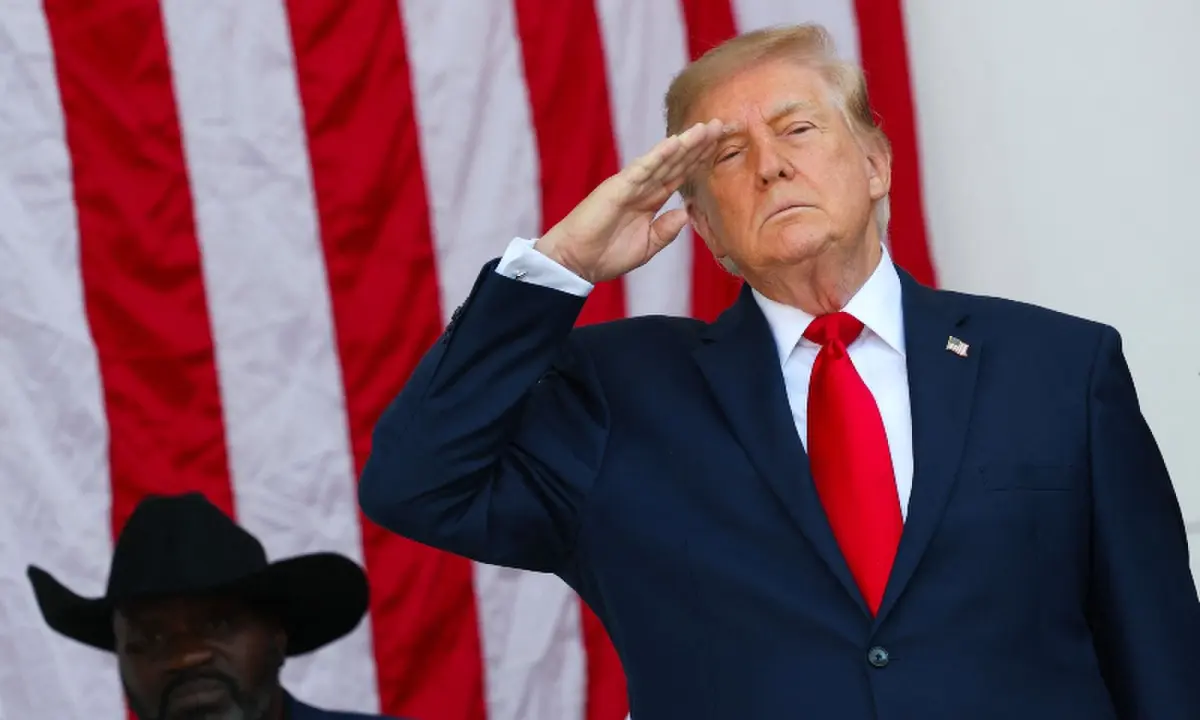
    After his party suffered a midterms hammering, President Donald Trump faces a new challenge: proving he is still the boss of US foreign policy on the global stage.

    With Trump politically hamstrung as he enters the remaining two-year ‘lame duck’ period of his White House tenure, world leaders may be quietly wondering how to leverage the new balance of power in Washington.

    The 80-year-old Republican heads to the ASEAN summit in the Philippines and APEC summit in China from a radically transformed and hostile political landscape at home after the Democrats seized both the House of Representatives and the Senate.

    Constitutionally banned from seeking a third term in the 2028 presidential race, the unpredictable billionaire could be all the more inclined to focus his energy on the international stage.

    “After bad midterms, this is how presidents reset,” Edgard Kagan, an expert at the Center for Strategic and International Studies (CSIS), told a news briefing.

    Iran, trade, China

    That is especially true for Trump on his Asian tour, where he is unlikely to be pressed publicly on domestic politics.

    China has described the midterms as an “internal affair” and said it is “willing to continue working” with the United States after Republicans lost control of both chambers of Congress.

    But the power shift in Washington will still be on leaders’ radars, said Joshua Kurlantzick, an expert in Southeast Asia and South Asia at the Council on Foreign Relations.

    “In private, many (Asian) leaders are relieved,” Kurlantzick wrote in an article this month.

    “The Iran war has been particularly challenging for the United States’ Asian partners and allies, and they hope that after the midterm results US President Donald Trump’s decision-making on the issue will become more predictable.” Trump has said several times since the midterms that renewed fighting between the US and Iran is unlikely.

    A Democratic-controlled Congress could also take a tougher stance towards China, Kurlantzick added, backtracking on the Trump administration’s “soft approach” to Beijing that has sparked unease among US allies in Asia.

    Leaders in the world’s largest continent are also hoping to see Democrats push back on Trump’s barrage of tariffs on trading partners, which have stung Asian economies heavily reliant on exports.

    Democratic House leader Hakeem Jeffries has urged Congress to reassert its authority over US trade policy.

    The Democrats will not get an easy ride in undoing Trump’s policies, though.

    The president enjoys broad authority over trade and holds veto power over congressional legislation — which he has vowed to use.

    High-profile meeting

    Trump relishes dramatic gestures and foreign policy provides an ideal arena for high-profile meetings, such as with Chinese and Russian leaders Xi Jinping and Vladimir Putin.

    Trump told reporters this week he expects to meet Xi and Putin at the APEC summit in Shenzhen, China, scheduled for November 18-19.

    The president said “denuclearisation” and ending the war in Iran would be on the agenda.

    But the bigger goal for Trump may well be a single photo of himself standing with the two other leaders he views as his great power equals, said Kurt Campbell, chair of The Asia Group and a senior diplomat during the Biden administration.

    “I think in many respects this could be ‘the meeting is the message’,” Campbell said.

    Ukraine’s President Volodymyr Zelensky, who watched in horror as the White House appeared to pivot towards Moscow this year, has warned against a “Yalta 2.0,” referring to Western leaders dividing Europe with the Soviet Union in 1945.

    Victor Cha, president of geopolitics and foreign policy and Korea chair at CSIS, said the Republicans’ midterm defeat meant a high-profile meeting was all the more likely.

    “One that he (Trump) has personally staked a lot of time over two terms has been on North Korea,” Cha said.

    “There’s nobody else in the US government that makes policy on North Korea except the president, so I think that he’ll be focused on that sort of legacy issue”.

    Source: dawn