Microsoft services such as Outlook and Teams were disrupted for about 10 hours on Friday as the tech giant struggled to fix issues with some servers, hitting businesses and government agencies globally that use the popular platforms.
In its latest update, Microsoft said efforts to improve serviceability were not progressing as expected.
“Were identifying alternate workstreams that can be applied to increase capacity in the face of sustained traffic management imbalances,” it said.
Downdetector, which tracks outages by collating status reports from a number of sources, showed more than 25,000 reports of Outlook problems in the US at 9:30 p.m. ET (0230 GMT). It also showed outages for several Microsoft services in the Asia-Pacific region, including India, Australia and Japan, early Friday local time.
At its peak, Downdetector showed more than 130,000 reports of Outlook problems in the US around 1 p.m. ET on Thursday.
In a service health notice, Microsoft said features of Microsoft 365 services that depended on Exchange Online and email were affected, while elements that did not rely on Exchange Online remained functional. Exchange Online is the company’s cloud-based messaging platform that delivers email, calendar, contacts, and tasks.
Impact on email systems
Australian Home Affairs and Cyber Security Minister Tony Burke said that Microsoft believed it was not dealing with a cyberattack.
“They believe they are dealing in some ways similar to what we saw with respect to CrowdStrike where there is an update that has gone awry,” Burke said at a press conference.
“The impact that they are dealing with … is very much on email systems,” the minister added.
Australia’s spy agency and federal police were among organisations caught up in the outage on Friday.
The CrowdStrike malfunction of 2024 was one of the largest internet disruptions, hobbling technology systems in hospitals, banks, and airports, highlighting the vulnerability of the world’s interconnected technologies.
The US House of Representatives said the outage impacted its users and its engineers were working with Microsoft.
The company had earlier in the day pointed to a number of servers being unexpectedly unavailable and said it was not driven by an increase in traffic.
Microsoft had then said the restored servers remained stable so far and that it was shifting traffic to alternate routes wherever possible while streamlining the process to bring the remaining impacted servers back online.
“As capacity is restored, users may experience a gradual recovery as their clients reconnect,” Microsoft said in a previous statement. At 6 p.m. ET (2300 GMT), Microsoft had said it observed limited recovery as users gradually reconnected.
Businesses feel the impact
OpenAI said it was investigating an issue with Microsoft connectors in which new connections may be broken and tools are not working as expected.
Anthropic said it had identified an issue with an upstream provider affecting its Microsoft 365 connector.
Microsoft last month reported an outage of its Azure cloud platform that impacted the tech giant’s suite of productivity software, and a range of industries worldwide.
Electric truck maker Workhorse Group, which was expected to report third-quarter results on November 12, rescheduled it to November 16 citing business disruptions caused by the global Microsoft outage.
“Trust takes years to build, seconds to break, and forever to repair.” Anonymous
THIS observation aptly describes Pakistan’s relationship with one of its most important international health partners.
Since 2003, the Global Fund to Fight AIDS, Tuberculosis and Malaria has disbursed more than $1.1 billion to Pakistan’s HIV, tuberculosis and malaria programmes. In August 2020, however, it invoked its Additional Safeguard Policy (ASP) on Pakistan.
Behind this bureaucratic terminology lies an extraordinary decision: the Global Fund no longer had sufficient confidence in the country’s arrangements for managing its grants and implementing disease-control programmes.
More than six years later, this decision deserves serious public scrutiny.
Established in 2002, the Global Fund is one of the most successful innovations in international health financing. It mobilises resources to support countries fighting these three diseases and has helped save an estimated 72 million lives globally. Pakistan has been a significant beneficiary.
The Global Fund normally operates through a partnership model in which national stakeholders identify priorities, nominate implementing organisations and oversee grants through a Country Coordinating Mechanism (CCM). The underlying philosophy is country ownership: international resources should strengthen national institutions, not substitute for them.
The Global Fund’s observations point to serious weaknesses in governance & institutional accountability.
In 2004, the Global Fund Board adopted ASP to address situations where normal funding arrangements could not adequately protect its investments. It permits oversight and direct involvement in selecting principal recipients and implementing partners. In effect, decisions normally taken by national institutions can be assumed by the international financing agency.
This is an exceptional, temporary arrangement, reflecting serious concerns about governance, institutional capacity, accountability or programme implementation. Since its introduction, it has been invoked in around 30 countries but revoked in only three: Cuba, Myanmar and Côte d’Ivoire. This shows that entering ASP is easier than exiting it.
Why was Pakistan placed under ASP? The answer lies in a candid letter dated Aug 6, 2020, from the Global Fund to the Pakistan government.
It expressed serious dissatisfaction with Pakistan’s response to HIV and TB, noting stagnating or declining TB notifications and an almost unchecked increase in HIV incidence. Significantly, it stated that public-sector principal recipients had failed to translate domestic and external financing into effective programmes.
The letter specifically criticised the performance of the Common Management Unit (CMU), responsible for coordinating the three disease programmes, and identified inadequate leadership in managing challenges arising from devolution.
These observations point to serious weaknesses in governance, leadership, coordination and institutional accountability. Consider this: Between 2020 and 2022, Pakistan changed the national coordinator of the CMU 10 times in three years. Many appointments were political.
The epidemiological consequences are equally troubling. While many states have reduced new HIV infections, Pakistan has moved in the opposite direction. According to WHO and UNAIDS estimates reported in Dec 2025, annual new infections increased from approximately 16,000 in 2010 to 48,000 in 2024 — a 200pc increase.
ASP’s implications extend beyond these programmes. For a country seeking international investment, development assistance and credibility in global institutions, its inability to demonstrate satisfactory governance of externally financed health programmes sends a deeply damaging message.
But ASP should not be viewed merely as an international embarrassment. Its more serious implication is the erosion of national ownership. When external partners increasingly determine arrangements, domestic institutions risk becoming less accountable for results.
Pakistan must therefore develop a credible, time-bound roadmap for exiting ASP.
The Aug 2020 letter identified the conditions for its revocation: timely provincial budget disbursements for HIV and TB; satisfactory programme performance and financial risk management; demonstrated political commitment; compliance with audit recommendations, etc.
These are not unreasonable demands.
Federal and provincial governments must jointly establish a high-level mechanism to monitor progress against each condition through independently verifiable indicators.
Civil society and affected communities must also be meaningfully engaged.
There is another dimension requiring urgent attention: financial sustainability.
For over two decades, Pakistan has depended heavily on the Global Fund for essential components of its HIV, TB and malaria responses. In 2024, 90pc of HIV financing came from the Fund. This assistance has been invaluable. But indefinite dependence on external financing is neither desirable nor realistic, particularly as international development assistance comes under increasing pressure.
Pakistan needs a carefully planned transition towards greater domestic financial responsibility. This does not mean abruptly replacing Global Fund resources or imposing unaffordable obligations on provincial governments overnight.
The FCDO-financed, Oxford Policy Management-implemented Global Fund Accelerator Programme is providing valuable analytical support and recommendations. Federal and provincial governments must make optimal use of this opportunity.
They should negotiate a gradual increase in domestic financing. Public financing should progressively assume responsibility for recurrent expenditures, while increasingly covering medicines and prevention services.
Crucially, exiting ASP and transitioning from donor dependence are related but distinct processes.
The Global Fund has stood by Pakistan through successive health emergencies and institutional challenges. Its continued engagement, even after invoking ASP, demonstrates that its objective is not to abandon Pakistan but to protect investments and improve results. Pakistan must respond with the seriousness this partnership deserves.
Ultimately, the most compelling argument for reform is not the restoration of international prestige. It is the right of millions of Pakistanis to effective prevention, diagnosis and treatment. The real achievement will be transforming a constrained partnership into a confident, accountable and genuinely country-owned response to three preventable and treatable diseases.
The writer is a former health minister, adjunct professor of health systems and population health, president of Pakistan Association of Lifestyle Medicine and convener of Lok Sehat.
PAKISTAN’S newly announced Auto Policy 2026-31 promises cheaper vehicles, higher localisation, exports, employment, improved safety and cleaner transportation. These are worthy objectives. But can they be achieved simultaneously in an industry constrained by limited scale, proliferating makes and models, and the absence of competitive upstream steel, petrochemical and aluminium industries?
More importantly, does the policy risk undermining one of the few enduring achievements of decades of automotive protection: the engineering capabilities developed by component manufacturers, with applications in agriculture, defence and other industries?
The policy deserves credit for recognising that protection has not delivered internationally competitive vehicles. Gradual tariff reductions, export targets and electric-vehicle incentives signal change. But reducing tariffs without addressing high energy, taxation and financing costs risks weakening domestic manufacturers before they become competitive.
Previous auto policies have produced an insufficiently recognised benefit: the engineering capabilities developed by component manufacturers. Guided by international assemblers, Pakistani firms have acquired expertise in precision machining, sheet-metal pressing, plastic moulding, rubber products, glass, wiring and numerous other components. Industrial clusters around Port Qasim, Lahore-Sheikhupura and elsewhere demonstrate capabilities extending beyond automobiles. Losing them would erode an industrial foundation that Pakistan needs for manufacturing diversification and import substitution.
Competition among brands is desirable, but proliferation of incompatible platforms undermines supplier competitiveness.
Support for technological upgrading, testing and certification is welcome. However, indiscriminate tariff reductions could expose these firms to overseas competitors operating at vastly greater scale, before domestic cost disadvantages are addressed.
Protection should neither be indefinite nor unconditional. A differentiated, time-bound approach should preserve engineering capabilities with demonstrable competitive potential, linking support to productivity, quality, scale and exports.
Mandatory localisation targets require scrutiny. Components manufactured locally using imported steel, polymers, machinery and tooling cannot reasonably be counted as entirely indigenous. Pakistan lacks integrated automotive-grade steel, petrochemical and aluminium supply chains. The appropriate measure is domestic value addition after deducting imported inputs, including those embedded in locally purchased components.
Higher local procurement does not necessarily deliver equivalent foreign-exchange savings. Policy must measure genuine indigenous value addition, technological upgrading and net foreign-exchange contribution separately.
Pakistan’s limited vehicle market is increasingly divided among manufacturers, models and variants. Each additional platform can require separate moulds, dies and tooling. Small production runs raise costs and discourage sophisticated manufacturing.
Competition among brands is desirable, but proliferation of incompatible platforms undermines supplier competitiveness. Common components, platform sharing, contract manufacturing and supplier consolidation should be encouraged.
Pakistan’s motorcycle industry offers an instructive parallel. Standardised designs, large volumes, extensive vendor networks and a substantial replacement market have enabled component manufacturers to develop capabilities while making transportation accessible to millions.
Cars require more demanding standards and higher tooling investment, but the lessons of affordability, standardisation and scale remain relevant.
Pakistan should encourage one or more safe, fuel-efficient, affordable small-car platforms through collaboration with established international manufacturers. Shared components and higher volumes could support meaningful domestic value addition, strengthen vendors and eventually create export opportunities.
Encouraging electric vehicles is appropriate, particularly motorcycles, three-wheelers, small cars and public transport. However, concessional imports of completely built-up vehicles and completely knocked-down kits may accelerate adoption without developing domestic engineering capabilities. The transition should include a roadmap enabling existing component manufacturers to enter EV supply chains.
The policy envisages approximately $6 billion in cumulative automotive exports over five years. But who will buy these vehicles?
Complete-vehicle exports depend on foreign principals allocating production and overseas markets to Pakistani operations. Such decisions are scale-dependent and cannot be mandated. Potential African and other markets present additional challenges. Pakistan generally lacks preferential trade agreements with these destinations, leaving its vehicles exposed to tariffs while competing against established Asian manufacturers.
Export incentives introduce another risk. WTO rules restrict subsidies contingent on export performance, while importing countries can impose countervailing duties following investigations establishing subsidisation and injury.
Export targets need identifiable customers, commercial commitments, market access and demonstrated net foreign-exchange earnings.
The proposed Automotive Development Levy, expected to raise Rs232bn over five years, raises another question. Pakistan’s experience with the Export Development Fund offers a cautionary lesson. Financed through a levy on exports, it supported various initiatives, but its effectiveness in delivering sustained competitiveness remains debatable. The government’s subsequent decision to review its utilisation, audit its accounts and abolish the surcharge raises legitimate questions about establishing another dedicated levy.
Public funding for shared testing facilities, technology transfer and skills development has merit. But taxing consumers to subsidise exports that remain uncompetitive risks replacing tariff protection with another permanent support mechanism.
Ultimately, Pakistan must distinguish between assembling vehicles, manufacturing competitive components and providing affordable mobility. These are related but different objectives.
The writer is a former CEO of Unilever Pakistan and the Pakistan Business Council.
THE poisonous smog blanketing Punjab is an immediate threat to public health, but it also points to a larger environmental crisis that Pakistan can no longer address through piecemeal measures. Lahore’s air quality index stood at a hazardous 358 on Wednesday, while other cities struggled under the same toxic haze.
Punjab’s government says better monitoring and enforcement have brought improvements over previous years. That is welcome, but the air remains dangerous. While pollution from India compounds the problem, Pakistan must also confront domestic emissions.
Moreover, smog is not the country’s only warning. Our climate crises are deeply interconnected. Repeated floods, punishing heatwaves and mounting water stress show how exposed Pakistan is to climate shocks, and how urgently it needs lasting solutions.
At COP31, PM Shehbaz Sharif outlined a cleaner energy future that deserves support. He pointed to nearly 22 gigawatts of rooftop solar capacity added in two years, much of it driven by households seeking relief from expensive electricity.
Pakistan has backed a pledge to increase electricity’s share of energy use to 35pc by 2035 and aims for electric vehicles to account for 30pc of new vehicle sales by 2030. These shifts could help reduce fossil-fuel dependence and, especially through cleaner transport, cut harmful emissions. But an energy transition is not, by itself, a climate policy.
Pakistan also needs to protect communities from floods and extreme heat, safeguard water supplies and adapt agriculture to changing conditions. The PM rightly called for concessional finance and affordable technology. Rich industrialised countries bear much of the responsibility for global warming and must help vulnerable nations cope. Yet appeals for international climate justice must run alongside serious action at home.
That action requires more than ambitious targets or seasonal restrictions. Authorities must enforce vehicle and industrial emission standards, expand public transport, support farmers in ending crop burning and make clean technology accessible beyond affluent households. Cities must be better prepared for floods and extreme weather, while rural communities need help coping with rising temperatures and water shortages.
Federal and provincial governments must work together and ensure that environmental regulations are properly enforced. Businesses, too, must reduce their environmental impact, while citizens have a responsibility to conserve resources, avoid polluting their surroundings and demand action from the state.
None of this will be easy in a country facing serious fiscal constraints. But the cost of delay is already being paid in illness, damaged livelihoods and repeated disruption. Pakistan cannot afford to confront its climate crises one disaster, one season and one international summit at a time.
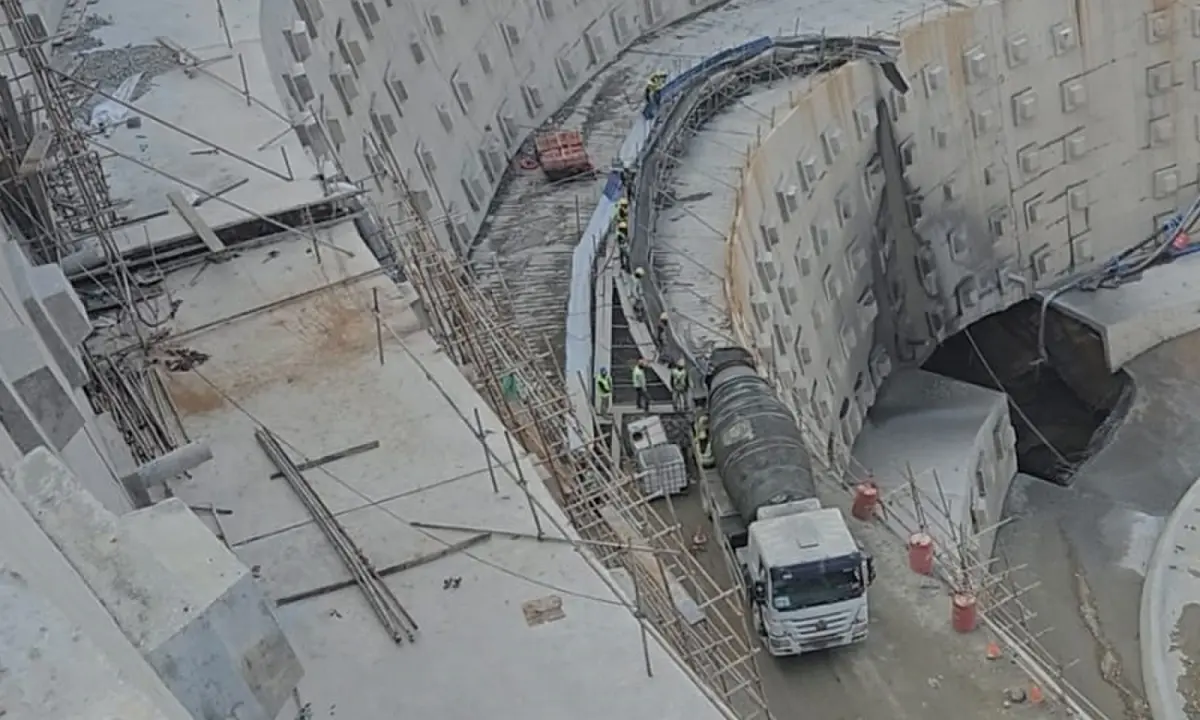
HARIPUR: The civil work, meant to plug the crater caused by the collapse of a weak rock mass in the intake pit area of the Tarbela Dam 5th Extension Hydropower Project (T-5), is in full swing.
Engineers and project workers are busy round the clock to ensure the project is commissioned according to schedule, according to an official source at the project site.
On Monday morning, a weak rock mass collapsed during excavation of the 2nd Bench Connecting Tunnel, causing water from the intake pit to enter the tunnel and the powerhouse area of the T-5 project, said an official handout.
It added that all workers engaged in routine activities were immediately evacuated safely.
Official sources and Haripur district administration said water from the intake pit had been completely drained; no further water was entering the downstream work sites, and dewatering of the under-construction powerhouse had started.
They said the rock mass collapse caused no damage to the main tunnel, the under-construction powerhouse, the tailrace culvert or the switchyard.
Likely to be completed within a week
A source at the project site said that following the immediate dewatering of the intake pit, the consultants, contractors and Wapda team initially assessed the incident before starting the concrete work to plug the hole, which continued until this report was filed.
“The project staff has shifted its focus from routine work to the incident site and is busy 24/7 plugging the hole,” he said.
The source said dewatering of the under-construction powerhouse was under way using heavy-duty pumping machines.
He said completion of the civil work to fill the hole with concrete and dewatering of the powerhouse were likely within a week, facilitating the project staff’s return to work.
“Reports are being compiled every six hours for submission to stakeholders by teams from the seismology and geology departments, contractors, consultants and Wapda officials,” he said.
The source said the initial incident report had already been submitted to the Wapda chairman and the Ministry of Water Resources.
He added that the final report assessing the causes and losses was likely to be submitted to the Prime Minister’s Office, the Ministry of Water Resources and other stakeholders in the next few days.
The source said geologists from Wapda and the contractors, who had compiled the initial assessment report, denied any disruption or damage to the tunnel before or after the incident.
He added that the plug, which would be used to divert water from the intake pit to the tunnel, was also 100 pc intact.
“Only a weak rock mass situated some distance behind the plug somehow got damaged, but there was no human error or engineering flaw involved,” he claimed.
This correspondent WhatsApped questions to general manager of T-5 project Umair Manan about the timeline for completion of civil work, dewatering of the under-construction powerhouse and the detailed assessment report.
He responded with a brief statement: “The time is too soon to answer your queries. Hope for the best from Allah Almighty, Ameen.”
When contacted, general secretary of the Awami Labour Union at the Tarbela Extension Projects 4 and 5 Aslam Adil said work to fill the hole in the intake pit and dewater the powerhouse continued day and night without interruption.
He said the majority of the 3,000 workers engaged in the T-5 project had been asked to stay home until further notice.
“Currently, the contractors have called only dumper and crane operators to work,” he said.
• Wedding halls, hotels warned against hosting such gatherings • CCPO cites gun culture, clashes and hefty charges as reasons behind instructions
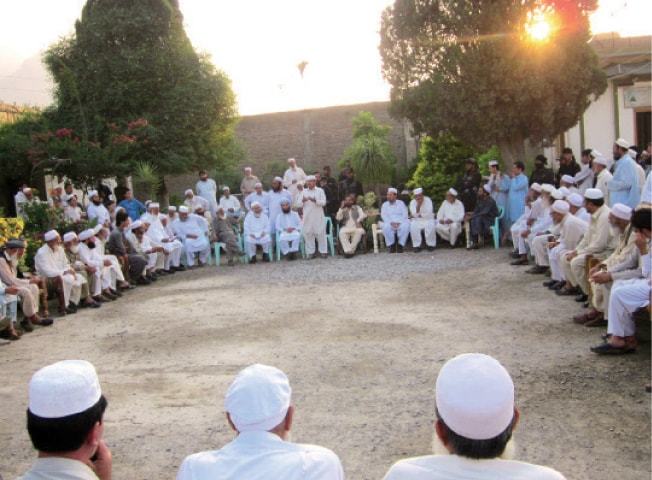
PESHAWAR: Police have imposed a ban on private jirgas (informal dispute-resolution gatherings) and warned wedding halls and other venues against allowing such meetings on their premises, cautioning that violations would invite legal action.
According to senior police officials, the decision was taken following a number of complaints and several incidents reported during private jirgas.
The complaints and incidents highlighted problems associated with such gatherings, prompting the police to impose the ban, they said.
They said that with Dispute Resolution Committees (DRCs) already in place and actively resolving disputes under police supervision, there was no need for private individuals to form their own groups and hold jirgas. They added that no one could exert influence over the DRCs, which operated independently.
They also said that although the holding of private jirgas had previously been discouraged and people had been asked to refrain from organising them, the department was now compelled to impose a formal ban.
When contacted, Capital City Police Officer (CCPO) Dr Mian Saeed Ahmad confirmed the development.
“One of the most important reasons identified by locals for taking action against private jirgas is that they promote gun culture. Besides, the parties are asked to deposit hefty amounts as surety,” he told Dawn, adding that such gatherings often ended in clashes between the disputing parties, sometimes at the venue itself.
The CCPO said the government had already established DRCs, whose members were known to the public and whose activities were monitored by the police. He added that the committees did not charge the parties for resolving their disputes.
“Private jirga members charge both parties for their services. Such jirgas are held at hotels and restaurants, where lavish meals are served, placing an additional financial burden on the parties, who are also required to pay the bills,” he said, adding that if a body was already in place to resolve disputes free of charge, there was no need for private groups.
The CCPO said that in several cases, the police had arrested those involved, recovered the money and returned it to the disputing parties.
He added that such disputes were often resolved under the threat of firearms, as jirga members first asked both parties to authorise them to decide the matter. Once a verdict was announced, both sides were bound to accept it.
He said the DRCs provided an alternative mechanism for dispute resolution, but private jirgas had turned into commercial enterprises, with many jirga members eventually becoming involved in land grabbing.
“We have made it clear to everyone. We will not only take action against jirga members but also against those who provide them space to hold such gatherings,” the CCPO said.
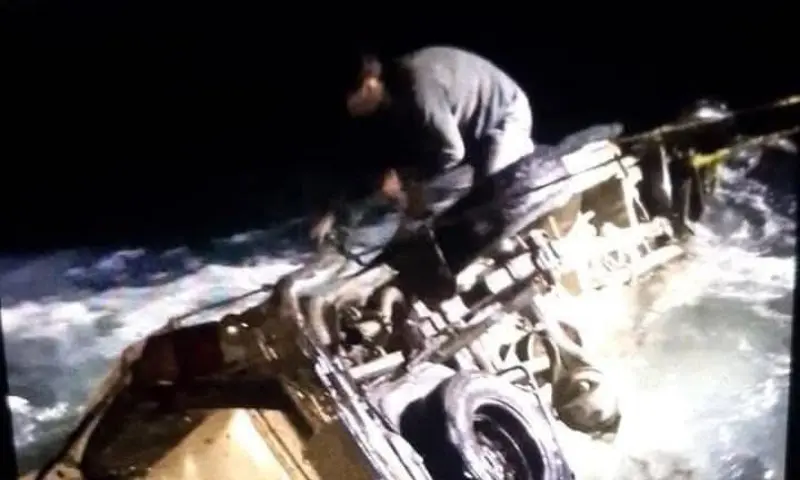
GILGIT: Eleven people were killed and two injured when a passenger vehicle plunged into a river in Gilgit-Baltistan’s Ghizer district on Thursday.
According to local police, a passenger van was en route to Ghizer’s Yasin Valley from Gilgit on Thursday evening when the driver lost control near Morkah Bridge, causing the van to plunge into the Yasin river.
Police initially said rescue teams retrieved the bodies of 10 passengers, including two women. They also rescued three injured passengers, including a child, who were taken to the Gupis Civil Hospital for treatment.
In an update, police said the death toll had risen to 11, including an infant, while two were injured.
Police said the deceased and injured were residents of Yasin Valley, adding that an investigation was under way to identify the cause of the incident.
GB Chief Minister Amjad Hussain expressed deep grief and sorrow over the loss of lives in the accident.
He directed the district administration, rescue agencies, and relevant health department officials to ensure the injured were immediately transported to nearby hospitals and to utilise all available resources to provide the best possible medical facilities.
He also instructed the administration to ensure that no negligence occurred during rescue operations, and that the medical treatment and care of the injured were carefully monitored.
Expressing heartfelt condolences and sympathies to the bereaved families, Hussain said the loss of human lives in the tragic accident was “deeply distressing”.
He prayed for eternal peace for the deceased and strength to their families to bear the loss, while hoping for the speedy recovery of the injured.
Three people were killed and 13 others injured in a collision between a coach and a motorcycle in Khyber Pakhtunkhwa’s Dera Ismail Khan on Wednesday, according to Rescue 1122.
Last week, eight people were killed and 30 others injured when a passenger bus travelling from Gilgit to Islamabad collided with a dumper truck near the Havelian Interchange on the Hazara Motorway.
The day before, a collision between a passenger bus and a truck claimed the lives of 11 people and left 33 others injured near Punjab’s Pakpattan.
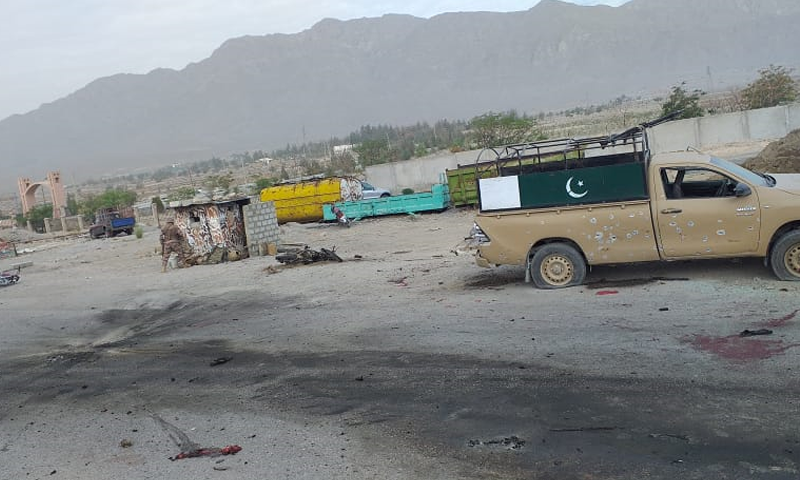
Security forces killed three terrorists on the N-25 highway in Balochistan’s Mastung district while repelling an attack on Kandawa Post, state broadcaster Radio Pakistan reported on Thursday, citing police.
According to a spokesperson for Balochistan Police, terrorists belonging to Fitna al Hindustan attempted a “cowardly attack at Kandawa Post on National Highway N-25 using an explosives-laden vehicle”.
The state has designated Balochistan-based terrorist groups as Fitna al-Hindustan to highlight India’s alleged role in terrorism and destabilisation across Pakistan.
Security forces repulsed the attack through timely and effective action, the police statement said.
However, two civilians lost their lives in the incident, while at least 13 others were injured, according to a list of names in the police statement.
Three Frontier Corps personnel were also injured in the incident, the statement added. “The explosion caused damage to nearby houses and a mosque.”
In the ensuing retaliatory operation, three terrorists were killed, the police said.
The injured people were taken to medical centres for treatment.
“The attack demonstrates that these terrorists have no connection with the people of Balochistan,” the police stressed.
“Operations against elements seeking to undermine peace, development, and prosperity in Balochistan will continue, and the protection of the lives and property of the people will be ensured under all circumstances,” it affirmed.
Balochistan has witnessed an increase in terrorist activities in recent years, prompting security forces to intensify counter-terrorism operations.
Earlier this month, a soldier was martyred and 17 terrorists were killed in two intelligence-based operations (IBOs) in Balochistan’s Kachhi and Kharan districts, Inter-Services Public Relations (ISPR) said.
In early October, security forces killed five terrorists belonging to Fitna al-Hindustan in Mastung, Pakistan TV reported.
Pakistan witnessed a significant improvement in several key security indicators during October, with terrorist attacks declining by 37 per cent compared with September, according to the Pakistan Institute for Conflict and Security Studies (PICSS).
Balochistan recorded one of the most significant improvements, with terrorist attacks declining by 46pc, from 132 in September to 71 in October.
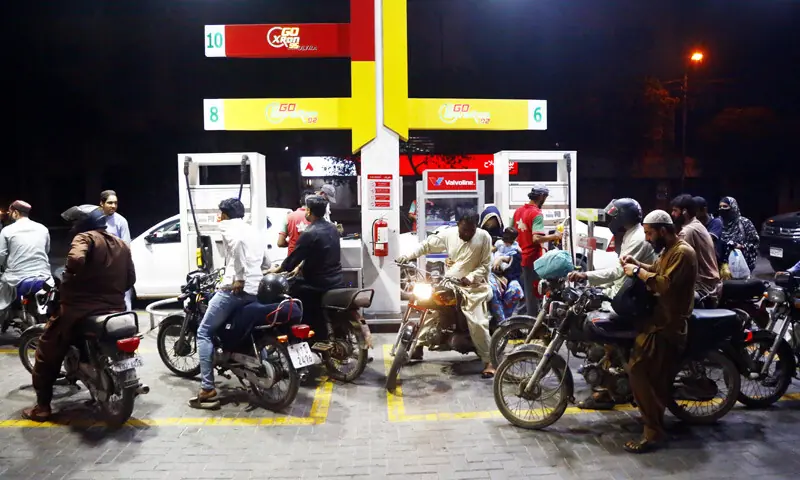
The government on Thursday reduced the price of petrol by Rs3 per litre and that of high-speed diesel (HSD) by Rs4, marking the eighth consecutive decrease.
Following the revision, petrol will retail at Rs332 per litre, while HSD will cost Rs360 on Nov 13 (Friday), according to a notification by the Oil and Gas Regulatory Authority (Ogra).
The government continues to levy Rs114 per litre in taxes and duties on petrol and Rs100 per litre on diesel.
Under an arrangement announced on Nov 2, for 30 days, oil refineries will contribute to the petroleum levy by bearing a cumulative impact of Rs15 billion, according to the government. This allows a Rs14.71 reduction in the petrol price at the consumer end.
On Sept 17, the government rolled out the Prime Minister’s Fuel Relief Scheme across the country to ease the public’s burden amid rising fuel prices due to the Middle East situation.
The subsidy scheme applies to owners of motorcycles, rickshaws and vehicles of up to 800cc.
Oil prices edged higher on Thursday after earlier losses, as persistent geopolitical tensions in the Middle East and Russia offset pressure from rising crude output.
Brent futures were up 65 cents at $93.40 a barrel at 7:25pm PKT. US West Texas Intermediate crude was up 1 cent to $86.54; both contracts fell more than $1 per barrel in early Asian trading. They were also headed for a weekly fall.
Rise in fuel prices
The price of HSD has come down from a peak of Rs520.35 recorded on April 3. Its price had started rising from Rs281 per litre after the US-Iran war broke out on Feb 28.
Meanwhile, the government has reintroduced a raft of austerity measures in response to rising fuel prices amid the ongoing Middle East conflict. Under these measures, markets are required to close by 9pm, and fuel allocations for official vehicles have been cut by 50pc for three months.
Since July 17, the government has been revising fuel prices on a near-daily basis due to fluctuations in international market prices following renewed hostilities between Iran and the US.
The petroleum minister stated that the cabinet and the prime minister had decided to give Ogra the responsibility of deciding fuel prices on a daily basis based on international market trends.
Prior to this, the government had been announcing weekly revisions to fuel prices since early March, alongside measures for the conservation of fuel amid possible oil supply disruptions due to the conflict. The federal government had also announced targeted relief measures in April to provide subsidised fuel.
Petrol is mainly used in private transport, small vehicles, rickshaws and two-wheelers, and changes in its price affect the middle and lower-middle classes.
Similarly, changes in diesel prices also impact the public at large, as it is mainly used in the heavy transport sector, power plants and large generators.
Petrol and HSD are the major revenue earners, with monthly sales of about 700,000 to 800,000 tonnes, compared to just 10,000 tonnes of monthly demand for kerosene.
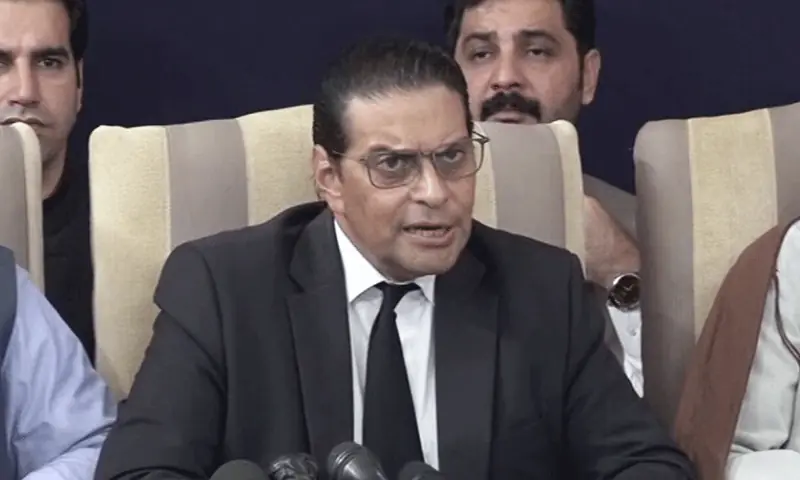
Incarcerated PTI founder Imran Khan wants his party leaders to “stick firmly to the ideology” of the party, PTI Secretary General Salman Akram Raja said on Thursday.
Following the Islamabad High Court’s order to jail authorities to facilitate meetings for legal consultation, lawyers Barrister Salman Safdar and Advocate Latif Khosa were able to meet Imran and his wife, Bushra Bibi, at the Adiala jail on Wednesday.
According to both lawyers, the meeting lasted at least three hours and mainly focused on the couple’s legal and health issues. However, they did not divulge further details; the government often objects to lawyers using such meetings to make political statements.
Speaking on Geo News programme ‘Capital Talk’ on Thursday, Raja said that he had multiple detailed conversations with Barrister Safdar following the latter’s meeting with Imran.
“Imran Khan’s fundamental message was to stick firmly to the ideology,” the PTI secretary general said, conveying details he heard from Safdar.
“I have also been directed to stick to [our] ideology,” Raja added, noting that Imran’s “fundamental message is not to bow”.
He further said Imran reiterated his support for National Assembly Opposition Leader Mehmood Khan Achakzai and Senate Opposition Leader Allama Raja Nasir Abbas, whom the PTI founder had picked for their respective roles.
He quoted Imran as saying that Achakzai and Abbas were not individuals who would “bow down or be sold”, and he had nominated them after deep contemplation.
“Imran Khan sahib’s directives will be acted upon,” the PTI secretary general declared.
He added that Imran had also issued instructions on the issue of the formation of new provinces during his meetings with Safdar, including the one on Nov 2.
“Imran Khan is not ready to step back from his ideology of democracy and public welfare […] the rule of the people is the foremost priority of Imran Khan,” Raja stated.
He said that Imran considered concerns related to his well-being as unnecessary; however, the party was concerned about his health, as Imran’s blood pressure was not stable.
Raja claimed that Imran had also reported in yesterday’s meeting about his blood pressure “reaching 193 on Saturday”.
Asked whether this message could be considered political and thereby hinder chances of future jail meetings, Raja contended that although a handful of matters were discussed during the three-hour-long huddle, everything was monitored and recorded via microphones.
He noted that Khosa, who was also an MNA, has made several statements after the meeting, which “compelled Safdar to clarify matters”.
Regarding himself, the PTI secretary general said Imran had issued instructions to him regarding standing with the principles and reorganisation of the party.
He acknowledged that there was a small faction in the PTI which is displeased with him. However, he emphasised that Imran’s directives conveyed to him were different.
“Imran Khan’s message for me is to create space while upholding the principles and move forward,” Raja said, denying other notions coming from different circles within the PTI.
Regarding directives issued by Imran on a possible 28th constitutional amendment, the PTI secretary general said he would put this matter before the party leadership first.
The directions were related to standing with democratic principles and the rights of small provinces, he said, adding that the PTI founder had always supported the creation of new administrative units.
However, Raja noted that there had been some concerns related to the “context” behind the formation of new administrative units and stressed the importance of the public’s opinion.