One person was killed and four were wounded in a shooting at and outside a fitness center in an upscale residential neighborhood of downtown Washington on Thursday, police said.
Jeffery Carroll, Washington’s interim police chief, told reporters the suspect in the shooting had been found with a self-inflicted gunshot wound after barricading himself in his nearby apartment unit.
Carroll said the man, who was not identified, was apparently in “some sort of a conflict” with the homeowners association of the apartment building, which is located in the Logan Circle area of the nation’s capital, about a mile north of the White House.
The police chief said the person who died had been shot inside a fitness centre and that one of the four wounded was in critical condition, while the injuries to the others did not appear to be life-threatening.
The condition of the gunman was not immediately known.
Earlier, DC Council member Brooke Pinto said in a post on X that the shooting took place “at and outside” a VIDA fitness club and that multiple people had been shot.
One person who described himself as having witnessed the incident told Reuters that he heard gunshots and saw one man run to another man who had apparently been struck by a bullet.
“Blood was pouring immediately, and he said, ‘He’s dead,’” the witness said. “We didn’t know if the gunman was still on the premises, so we just ran frantically.”
He said he heard more gunshots after running away from the gym.
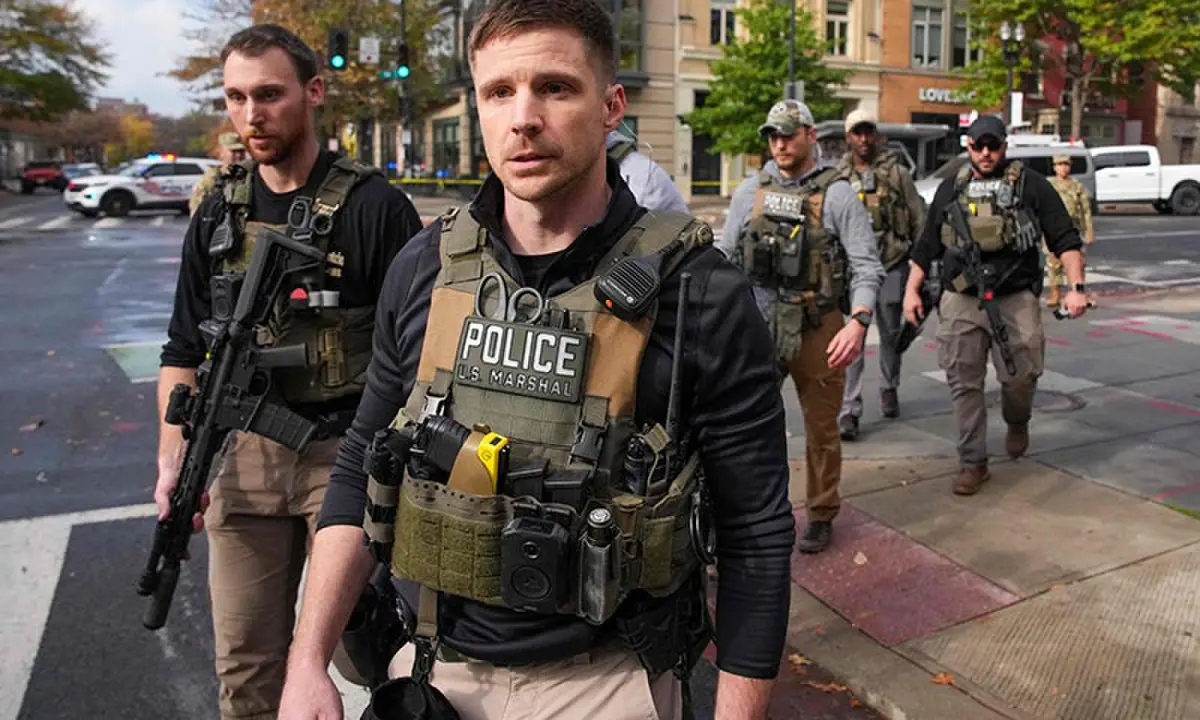
Members of the National Guard respond to the scene of a shooting in Logan Circle on November 12, 2026 in Washington, DC, the US. — AFP
The incident was unfolding in the Logan Circle neighbourhood, about 1.6 kilometres northeast of the White House. Officers with rifles could be seen positioned atop buildings nearby, while dozens of police vehicles shut down the area.
Multiple law enforcement agencies could be seen at the scene of the shooting and police helicopters were hovering over the area.
Some residents were being evacuated from the area by police, while others were being urged to shelter in place. Some gathered on a nearby rooftop to watch the police response.
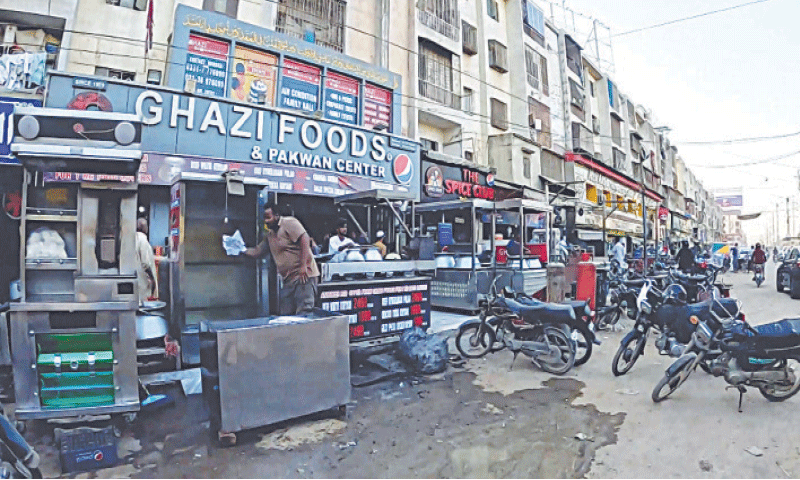
The Sindh government decided on Thursday to launch a large-scale crackdown to remove encroachments from major roads in Karachi.
According to an official handout, the decision came during a meeting chaired by Sindh Senior Minister Sharjeel Inam Memon.
“According to the decision of the Sindh government, in the first phase, an operation will be carried out on a priority basis on major roads of the city, including University Road, as well as various routes of the People’s Bus Service,” the statement said.
“It was decided that the police, city administration and transport department would jointly take action against encroachments,” it added.
According to the statement, the concerned departments were directed to take “immediate measures” to remove established encroachments along the bus service routes as well as illegal encroachments that blocked traffic flow.
It was also decided that measures would be taken to shift illegal bus terminals established in various parts of the city, including Sohrab Goth, to outside the city.
The senior minister said that encroachments on the roads and bus routes caused “serious difficulties for citizens and passengers”.
“Illegal occupations and obstructions on roads affect the smooth flow of traffic, increase fuel expenses and also create difficulties in the movement of public transport,” Memon was quoted as saying.
“To provide better travel facilities to citizens, it is necessary to make major roads and bus routes free from encroachments,” he said.
He directed the concerned departments to take action against illegal encroachments under a joint strategy, and to launch an operation against illegal bus terminals “so that traffic pressure on the city’s roads could be reduced and citizens could be provided with ease in their daily commute”.
According to the statement, the meeting also discussed establishing modern bus terminals outside Karachi under a public-private partnership and the project for the expansion of the Karachi Bus Terminal.
Memon directed the concerned officials to accelerate efforts for the establishment of a logistics park, saying that “all relevant departments should work together to improve traffic flow in the city and organise the transport system”, the statement concluded.
University Road, a main thoroughfare in the metropolitan city, faces severe traffic congestion due to the construction of the Bus Rapid Transit Red Line project, which was launched in March 2022 and estimated to complete within 30 months after its ground-breaking.
In September, Memon said that the difficulties faced by the commuters on University Road were “almost over”. Earlier in August, the minister had promised that the government would make University Road “100 per cent motorable” by Sept 15.
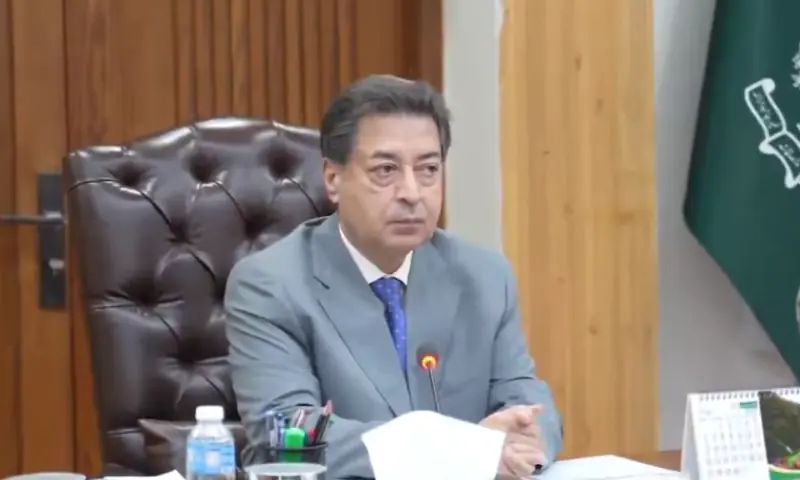
ISLAMABAD: Chief Election Commissioner (CEC) Sikandar Sultan Raja on Thursday accused the federal government of trying to sabotage the local government elections in Islamabad, clarifying that the polls would be held as scheduled.
The Election Commission of Pakistan (ECP) has scheduled the polls for Dec 20. The last LG term expired in Feb 2021, and the ECP was supposed to conduct elections within 120 days. However, the federal government and the ECP spent the last several years carrying out delimitations and announcing election schedules, only to postpone the polls later.
Raja mentioned that the federal government has ordered that teachers would not be assigned duty in the Islamabad LG polls.
“Where will the [ECP] bring staff from?” he asked.
“The [ECP] issues directions to the prime minister and the government; directions do not come from them to us,” the election commissioner said.
Taking notice of the Centre’s order, the CEC claimed: “The federal government wants to sabotage the Islamabad local government elections.
“I make it clear that local government elections will be held in Islamabad,” Raja clarified.
During the hearing of the code of conduct violation case, ECP Secretary Omar Hamid recalled that a candidate of the Pakistan Markazi Muslim League (PMML) had filed an application with the district returning officer, stating that Information Minister Attaullah Tarar and Farooq Tarar had visited NA-77.
Special Secretary Zafar Iqbal said the application stated that the information minister had visited the constituency and violated the code of conduct.
“Attaullah Tarar can be sentenced to two years for violation of the code of conduct. The [ECP] should take strict action. MNAs and ministers holding office kept roaming in the constituency,” he said.
The CEC asked where the information minister was, as he had been summoned in his personal capacity.
Counsel for Tarar, Sajeel Swati, said the minister was currently on an official foreign visit, referring to him accompanying the prime minister to Turkiye.
“These are serious allegations. The Commission is held in great respect,” the counsel said.
CEC Raja remarked that the information minister only “had to do media coverage on the visit; what else was he to do”.
The CEC then addressed PML-N MPA and office-bearer Asma Naz, saying she kept roaming inside a polling station.
“Your position as MPA can go. Such tactics do not increase votes; they decrease them. You are smiling; it seems you have no remorse. A notice of contempt of the [ECP] can be issued to you,” he warned.
MPA Qudsia Batool, who had also been accused of violating the election code, said she was in her car and about to leave when the video was made.
The Gujranwala deputy commissioner appeared and said they had no information about Tarar’s visit to the constituency.
The CEC observed that the minister had come by helicopter, so a helipad must have been prepared. “How are you a DC that you do not even know that a minister is coming?”
The DC replied that the helicopter had landed in the cantonment, which was not in their jurisdiction. The CEC then said the DC did not know what his powers were in the cantonment. “Go and read the law. We have also held these offices.”
Raja said a fact-finding inquiry had been conducted on the violation of the code of conduct in the by-election, a copy of which would be given to all.
“You will all be given that order. You respond to the report; the commission will pass an appropriate order against you, DC. Action will be taken against all three, the DC, the [returning officer] and the [district monitoring officer].”
On the request of Tarar’s counsel, the CEC said, “We give you 10 days. On the next hearing, all members will appear in person.”
The hearing was then adjourned till Dec 1.
ECP issues updated list of registered parties
Meanwhile, the ECP issued an updated list of 160 political parties registered with it.
The names of the heads of the Muttahida Qaumi Movement-Pakistan (MQM-P) and the Pashtunkhwa Milli Awami Party (PkMAP) — Khalid Maqbool Siddiqui and Mahmood Khan Achakzai — have been removed from the list.
In April, the ECP had given MQM-P time till Oct 15 to hold its intra-party elections as it heard a case on the matter.
A senior ECP official explained to Dawn that MQM-P had not been delisted as of yet. He said the ECP had issued a show cause notice to MQM-P over failure to hold intra-party elections, with directives to respond within 14 days.
He said a reply has been received, and if it fails to satisfy the commission, the case will be fixed for hearing and the matter will be decided accordingly.
The PkMAP chief’s name has also been removed, as the case of its intra-party elections and an amendment to its constitution remains pending before the ECP.
PTI, which lost its bat electoral symbol in January 2024 as the Supreme Court upheld the ECP’s decision in the case of its intra-party polls, also remains registered without the name of its party head.
The Pakistan Sunni Tehreek is also listed without the name of its party head.
Tehreek-i-Labbaik Pakistan, which was declared a proscribed organisation a year ago, is included among registered parties, but the name of its head has been removed.
The name of Awaam Pakistan, headed by former prime minister Shahid Khaqan Abbasi, which had already been delisted by the ECP, is also on the list.
The list also includes Islami Jamhoori Ittehad (IJI), a nine-party alliance formed in 1988 and dissolved over 33 years ago.
The list also mentions some less popular political parties, including Ittehad-i-Ummat Pakistan, Jamaat-i-Suffah, Labour Qaumi Movement, Awami Democratic Party, Pakistan Qabail Movement, and Tehreek-i-Tarraqi o Kamal, without naming their party heads.
ISLAMABAD: The National Electric Power Regulatory Authority (Nepra) on Thursday notified a Rs25.30 per unit revised incremental consumption package (ICP) for industry and agriculture to encourage higher consumption.
The order comes despite dissenting notes from two of its four members on Friday, when the authority made the announcement, and protest from industrial consumers.
The revised ICP replaces the previous rate of Rs22.98 per unit, which was introduced in December last year for six months to encourage industrial and agricultural consumers to consume more electricity at a marginal cost of Rs22.98 on additional consumption, instead of their normal rate that stood at Rs34.50 per unit last month.
In a statutory regulatory order (SRO) issued in the Gazette of Pakistan, Nepra said it notified the authority’s decision dated Nov 6, along with dissent notes from Nepra members Amina Ahmed and Maqsood Anwar Khan; as well as an additional note and casting vote of Nepra Chairman Waseem Mukhtar in the matter of the “semi-annual review of the ICP for industrial and agricultural electricity consumers of XWDiscos and K-Electric”.
The decision, opposed by the industrial sector, is likely to have a negative impact on all electricity consumers, including those served by K-Electric and other distribution companies (Discos).
Industrial consumers complained that the Rs25.30 per unit revised ICP — against the actual marginal cost of Rs31.83 or Rs29.65 per unit calculated by Nepra —resulted in higher monthly fuel cost adjustments (FCAs) and burdened all consumer categories across the country.
This was despite the fact that the ICP announced in December last year on the prime minister’s instructions was based on the commitment that any additional costs arising from the package would remain ring-fenced, and that the difference between consumer-end tariff and ICP would not be shifted to any other consumer category except the ICP beneficiaries, the consumers said.
Nepra members’ observations
In the determination issued on the ICP last Friday, all four members of the regulator unanimously held the Power Division and its subordinate entities responsible for failing to fulfil their legal obligations within the prescribed timelines, pushing Nepra into an unprecedented deadlock and potentially increasing costs for electricity consumers across the country.
Nepra chairman Mukhtar fully endorsed the written arguments and positions taken by the dissenting members, but subsequently exercised his special casting vote to approve the revised rate of Rs25.30 per unit. The authority was divided 2-2 on the matter.
Member (Tariff and Finance) Amina Ahmed and Member (Development) Maqsood Anwar, in a joint dissenting note, had maintained that even the proposed revised rate of Rs25.30 per unit was a “random number” unsupported by evidence. They said that Nepra’s own institutional calculations put the marginal cost at Rs31.83 per unit.
“The revised incremental rate of Rs25.30 per unit proposed by the Ministry of Energy (MoE), and allowed by the honourable chairman and Member (Law), is based on the generation mix apparently assumed at the design stage of the package, with updated fuel prices,” the two members observed.
They called for the immediate suspension of the ICP until authentic data became available.
The dissenting members argued that compliance with the federal cabinet’s decision and Nepra’s own directives required a reassessment of the existing rate of Rs22.98 per unit to determine whether it should be retained, revised or suspended. However, this exercise had not been carried out, resulting in the continuation of the package at a rate below the actual cost of supplying incremental electricity.
“The resulting misalignment has had implications for consumers in two ways. First, to the extent incremental consumption increased the system’s average fuel cost, the resulting impact was recovered from all consumers through the FCA mechanism. Second, because incremental units are excluded from quarterly tariff adjustments, the exclusion of such units increases the quarterly adjustment borne by consumers not availing the package,” they said.
They questioned how a package based on the principle of cost-reflectivity could continue without a validated cost-reflective rate, arguing that since the alternative rate had no credible link with the actual marginal cost, continuation of the package was no longer justified.
They said other consumers should not be made to bear the cost of a review that the MoE was required to submit five months ago but had yet to provide.
In his casting vote, Mukhtar observed that the dissenting members’ conclusions “need serious consideration”. However, he said suspending the package at this stage would not be appropriate and that the MoE should be given another opportunity to provide the information repeatedly sought by the regulator, including in its latest determination.
All four members agreed that the Power Division was required to submit revised calculations six months ago but had failed to do so, despite repeated reminders from Nepra. They also regretted that the ministry had not responded adequately to the questions and queries raised by the regulator.
“The marginal price, in proper form, was not provided to the regulator by either the Independent System and Market Operator (ISMO) or the Power Planning and Monitoring Company (PPMC), which were duty-bound to do so. Since the ISP is a flagship project of the ministry, it should give due consideration to the observations of Nepra and the lack of inter-agency coordination among the entities working under the ministry,” the members observed.
The determination also sets deadlines for the relevant entities to provide the required information. The four members warned that failure to meet these deadlines could lead to an adverse outcome in the review of the programme, including its suspension or termination.
“Furthermore, any entity that fails to provide the required information within the stipulated timeline shall lead to initiation of legal proceedings under the applicable legal framework,” they stated.
Explaining his decision, the chairman said: “I hereby exercise, in due and faithful discharge of the functions of the authority, my second and casting vote envisaged and entrusted to me under the Nepra Act in favour of the first opinion, thereby breaking the deadlock in relation to the aforesaid issues. Accordingly, the first opinion constitutes the order of the authority.”
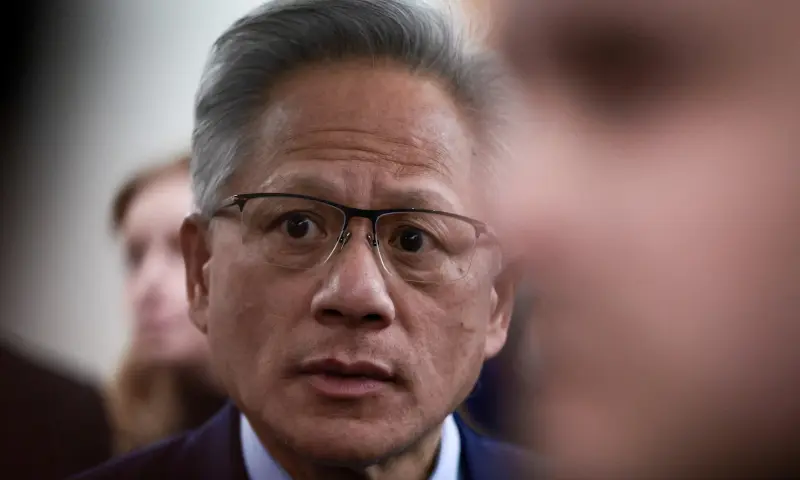
Jensen Huang resigned as chief executive of Nvidia on Thursday, ending his 33-year run at the helm of the AI giant he co-founded after revelations that he had two extramarital affairs, including with a woman accused of spying for China.
The company’s board said Huang had stepped down as president, chief executive and board member, effective immediately.
Chief financial officer Colette Kress will serve as interim CEO while keeping her finance role, and the board will consider internal and external candidates for a permanent replacement.
It named former Synopsys CEO and board member Harvey Jones as its first-ever board chairman.
Huang, who co-founded Nvidia and is its fourth-largest investor with a stake of about 3.61 per cent, will exit the board as well.
Nvidia shares fell more than 10pc in premarket trading, and weighed on the broader market.
Pressure had been mounting on Huang in recent days after reports said the 63-year-old, who is married, had an affair with a Chinese businesswoman who US authorities suspect of spying for Beijing.
Nvidia’s board met on Wednesday to consider his ouster, a person familiar with the matter said, after reports earlier in the day that Huang also had an extramarital affair with a senior company executive who reported to him.
Huang’s exit plunges the $4 trillion company into uncertainty and threatens to disrupt an AI ecosystem that he helped bankroll by pouring Nvidia’s swelling cash pile back into cloud providers, suppliers and the industry’s biggest labs.
“The risk is not that Nvidia suddenly loses its technology roadmap … that roadmap is largely visible for the next several years. The risk is execution. Jensen has been the chief conductor of an extraordinarily complex system,” said Michael Feldman, portfolio manager at ClearBridge Investments.
“In a world with real bottlenecks, that coordination is a competitive advantage in itself.”
Investor sentiment toward AI stocks has already been shaky as soaring cash burn and rising debt at traditionally cash-rich tech giants fuel doubts over whether the AI boom will pay off.
The departure could also have far-reaching consequences for US chip export policy, given Huang’s push to preserve access to the Chinese market and his close ties with US President Donald Trump.
Trump said on Sunday that Huang had “done an amazing job for our country” and that the Nvidia chief had told him he had no idea the Chinese woman he had an affair with was a spy.
Huang’s rockstar status
For years, Nvidia was best known to gamers chasing top-tier graphics. But its chips’ ability to perform many calculations at once has made them the oil of the AI boom and a strategic prize in the US-China race to dominate the technology. It also made Nvidia the world’s most valuable company.
That turned Huang into a rockstar CEO, mobbed by fans in Taiwan and South Korea who ask him to sign books, posters and sometimes even their bodies. Such is his pull that stocks moved at his mere mention of company names at events.
But scrutiny of his conduct has intensified in recent days after reports of his relationship with Alice Huang, a former executive at Singapore-based cloud company Megaspeed, who US authorities have concluded was a Chinese intelligence asset.
The two, who have been photographed together in Taiwan, Singapore and California, are not related.
Washington has also investigated Megaspeed, a coveted official Nvidia cloud partner with priority access to its chips, over suspicions it helped China obtain advanced AI chips restricted under US export controls, according to media reports. Beijing has denied Alice Huang is a spy.
Earlier this month, Nvidia’s board launched a probe, led by independent directors with outside legal counsel, into whether Jensen Huang had been targeted by a foreign intelligence operation. It also expressed confidence in him at the time.
The controversy escalated on Wednesday when the New York Timesreported Huang also had an affair with Kimberly Powell, Nvidia’s vice president of healthcare, who reported to him.
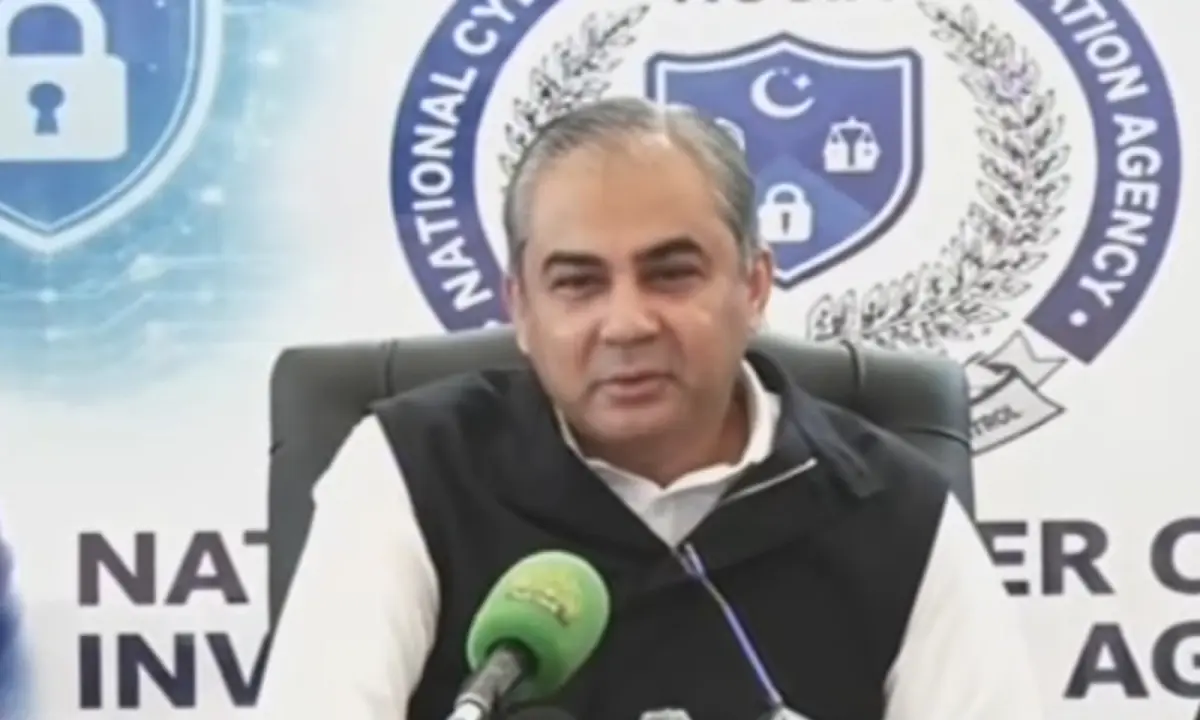
Interior Minister Mohsin Naqvi on Thursday suggested that political parties hold a referendum to gauge the public’s opinion on the creation of new administrative units or provinces, terming it the “solution” to the ongoing debate.
The security czar has whipped up a political storm over the past few months since he called for the formation of new administrative units in the country, saying the current “system” of governance had “collapsed” and needed a “reset”.
Replying to a media query at the National Cyber Crime Investigation Agency (NCCIA) in Lahore on Thursday, Naqvi noted that each political party had a right to disagree with another party or individual.
At the same time, he observed that all parties stressed democracy and the supremacy of the people. Therefore, he said: “My only request to all political parties is that this is such an issue […] so they should hold a referendum.
“Whatever the public’s opinion in the referendum is; if the public says [new units] should not be created, I am 100 per cent with them that they should not be created. [But], if the public says they should be made, then they should.”
Naqvi noted that political parties had varying stances on the debate, with the PPP “having its own stance [and] some parties having their own stance while not saying anything officially”.
He again stressed that the solution was to take public opinion into account, suggesting that if there was a proposal for a “better solution”, that should also be presented to the people.
Acknowledging the importance of allies in the ruling coalition, he said: “Everyone is a part of this government, and nothing will happen against their will. And if something does happen, then it will be after taking everyone’s consensus.”
“My only recommendation is that if we were to conclude this debate, then we should just take the people’s opinion,” he said.
The minister had also affirmed in September that any new administrative units would only be formed with the public’s consent, while also doubling down on his call for new provinces.
Naqvi claims he and Bilawal ‘nearly on same page’
Responding to another question, Naqvi recalled recent remarks by PPP Chairman Bilawal Bhutto-Zardari, wherein he had called for a “political reset” and encouraged unity among political parties.
The security czar contended that he and Bilawal were “nearly on the same page”.
“He (Bilawal) said that political matters are about to be reset, while my suggestion is that overall matters are about to be reset,” Naqvi elaborated.
In his remarks on Tuesday, the Bhutto scion had called for a “political reset”, wherein all political parties must unite for the sake of the country, rather than indulge in “unnecessary debates”.
His call for political unity followed exchanges of harsh remarks in recent weeks between federal ministers and veteran politician Maulana Fazlur Rehman, who has now decided to strengthen his ties with the opposition.
The PPP chairman also questioned the need for “new experiments” when the country was confronted with much bigger challenges, particularly the economic crisis arising from the Middle East tensions.
The same day, PPP’s Punjab chapter also strongly rejected any move towards the creation of new provinces, asserting that doing so will neither address soaring inflation nor rampant unemployment.
While Naqvi said he and Bilawal largely shared the same views, the PPP chairman in September had called for a parliamentary debate on the creation of new provinces.
“So instead of [speaking at] business forums, Mohsin Naqvi should visit [Parliament],” he had remarked, an apparent reference to the first instance of Naqvi stressing the need for more administrative units while speaking at the Pakistan Economic Summit 2026 in July.
PPP, which rules Sindh and is also an ally of the PML-N government at the Centre, has strongly opposed the creation of a new province within Sindh. It has also maintained that any decision on the subjectmust be taken through the constitutional and parliamentary processes with political consensus.
Defence Minister Khawaja Asif’s recent statement regarding the creation of 12 more provinces has also added to the debate on administrative units started by Naqvi.
‘Corruption exists across entire Pakistan’
In his talk with reporters, Naqvi was also asked about federal minister Chaudhry Salik’s recent remarks over alleged corruption in Punjab.
In reply, he said, “If someone is saying that no corruption is taking place in Pakistan, then apologies but corruption exists across the entire Pakistan, and it is our (state’s) responsibility to end it.”
The interior minister stressed the importance of highlighting corruption where it was present.
The conversation on corruption started after PML-Q’s Salik criticised the incumbent Punjab government led by PML-N, alleging that he regularly heard complaints of corruption.
Incensed by his remarks, Punjab Chief Minister Maryam Nawaz sent a Rs5 billion defamation notice to Salik for levelling allegations of corruption against her government and demanded that he retract his remarks.
Naqvi was also asked about a Capital Development Authority (CDA) notice issued in relation to the residence of the JUI-F chief, which he defended, stating, “This (CDA) campaign has been ongoing for months, and it is not against a certain individual.”
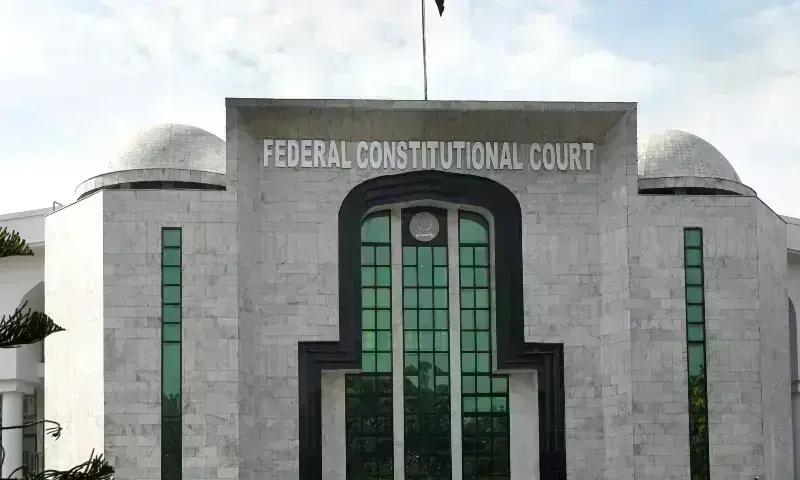
ISLAMABAD: PTI lawmaker Shandana Gulzar on Thursday approached the Federal Constitutional Court (FCC), seeking the immediate release of Sohail Afridi, the non-functional Khyber Pakhtunkhwa chief minister, the provincial assembly speaker and other party workers.
Afridi has not been seen since the Centre imposed governor’s rule and emergency in KP on Oct 11. The very next day, a federal minister confirmed that he and some of his cabinet members were in preventive custody.
While the government has transferred powers to KP Governor Faisal Karim Kundi, the PTI has asserted that Afridi “remains and shall continue” to serve as the KP chief minister with the “confidence and support” of party founder and ex-premier Imran Khan.
In the petition filed with the FCC on Thursday, Gulzar — who is a member of the National Assembly — sought directives for producing Afridi, Swati, PTI KP President Junaid Akbar and other party workers before the court.
The federal secretaries of interior and defence, the KP chief secretary, the KP Home and Tribal Affairs Department secretary, the KP inspector general of police, the Peshawar capital city police officer, the Peshawar deputy commissioner and the Federal Investigation Agency (FIA) director general were named as respondents.
The petition requested the FCC to order the respondents to “immediately disclose before the court their whereabouts, the identity of the authority exercising custody, the legal instrument and statutory provisions invoked as well as the grounds of detention and the date and circumstances of their taking into custody”.
The petition urged the court to order the production of the PTI’s provincial leadership in person so that their present condition, liberty and legal status be ascertained and the “legality of any such restraint upon their liberty be examined judicially”.
Gulzar also sought a declaration from the FCC that Articles 232, 234 and 245 of the Constitution do not confer any authority to arrest, detain, confine or conceal the whereabouts of any person in disregard of the Constitution and applicable law.
“Such exercise of state power remains subject to constitutional safeguards and judicial review,” the petition argued.
It pleaded before the FCC to order that the exercise of executive authority during any constitutional arrangement under Article 234 or in the context of deployment under Article 245 cannot lawfully be used to circumvent the fundamental rights guaranteed under Articles 4, 9, 10, 14, 17, 19 and 19-A of the Constitution.
It prayed that the FCC should order the provision of access to legal representation as well as family members to the detained party leaders, in addition to necessary medical examination and treatment as well as protection against “torture, coercion, intimidation or any form of cruel, inhuman or degrading treatment”.
“The FCC should declare that any action undertaken by the respondents if found to be motivated by political considerations or intended to frustrate the exercise of constitutional and democratic rights will amount to abuse of public authority or violation of the fundamental rights guaranteed under the Constitution,” the petition said.
In her petition, Gulzar requested the FCC to order the immediate release of the detained PTI leaders subject to any lawful order passed by a competent court in accordance with the Constitution and the law.
On Oct 13, Afridi’s brother, Muhammad Amir, had approached the Peshawar High Court (PHC) to trace his whereabouts, filing a petition seeking his recovery and an investigation into his alleged “illegal detention” and “abduction” from the Chief Minister House on Oct 11.
The petition claimed he was taken away by “unidentified armed and masked individuals in the presence of the capital city police officer”. The PHC on Nov 3 referred the plea, including those against the alleged abduction of Swati and Akbar, to the chief justice for the formation of a larger bench.
Meanwhile, the PHC on Oct 31 granted interim bail to scores of PTI activists detained under the Maintenance of Public Order Ordinance following the imposition of emergency.
However, the FCC on Nov 5 restrained the high court from hearing cases concerning the arrests of scores of PTI activists detained under the ordinance.
Subsequently, the PHC removed around 105 petitions from its Nov 10 cause lists, including those challenging the imposition of emergency and governor’s rule as well as the alleged illegal detention of Afridi, Swati, Akbar and scores of lawmakers.
PTI chairman moves FCC
Meanwhile, PTI Chairman Barrister Gohar Khan also approached the FCC on Thursday to seek his impleadment in the case pertaining to the PHC being restrained from hearing the cases regarding the detention of PTI activists.
Through the miscellaneous application, he stated that he was a petitioner before PHC in a case in which he had challenged the imposition of governor’s rule and proclamation of emergency.
The application requested FCC to order his impleadment so that he could become an intervenor in the pending matter and advance his arguments and present his point of view or submit written statement.
The petition has also pleaded before FCC to modify its Nov 5 order to the extent that the petitions challenging governor’s rule and state of emergency in KP before the high court should not remain suspended.
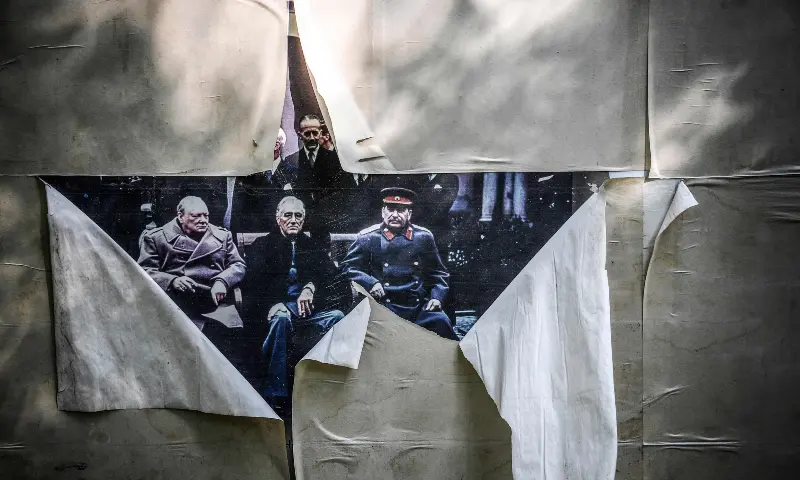
A possible China-US-Russia summit has prompted alarm of a modern-day Yalta Conference, with three powerful men carving up the world — with little regard for Ukraine, Europe and Taiwan or anyone else.
But apart from an historic photo opportunity, the meeting between Presidents Xi Jinping, Donald Trump and Vladimir Putin at the November 18-19 APEC summit in Shenzhen will likely achieve little, analysts say.
Spheres of influence
When then US president Franklin D. Roosevelt, Britain’s Winston Churchill and Soviet leader Joseph Stalin met in Yalta in February 1945, they laid out the post-WWII settlement and new territorial boundaries in Europe.
That meeting in Yalta, then in the Soviet Union and now in a part of Ukraine annexed by Russia in 2014, laid out the foundations for the Soviet domination of Eastern Europe and the Cold War.
Ukraine’s President Volodymyr Zelensky has raised alarm that Shenzhen could be a Yalta-like “redistribution of spheres of influence” for the 21st century.
At talks in Abu Dhabi this week — the first since February — Russian negotiators rattled Ukraine and its European supporters by pushing a review of the continent’s security architecture as part of any peace deal, with the US also floating a new framework.
Russia’s delegation chief in Abu Dhabi, Vladimir Medinsky, fanned such fears by questioning the inclusion of Europe in further talks.
The trilateral rankles because it signals “the idea that a few great powers can decide the security and future of other countries over their heads”, according to Tsiporah Fried at the Hudson Institute.
The format alone “would already send a message about who counts, and whose interests can be negotiated by others”, she told AFP.
Divergent interests
Beyond the symbolism, however, divergent interests make the creation of a new world order in Shenzhen unlikely.
Even the agenda reportedly remains contentious: Russia has suggested the meeting focus on Ukraine, Trump has pushed for talks on nuclear weapons and the Iran war, and China has remained tight-lipped on both.
“The three parties have vastly different demands, making the management of expectations difficult. There is a high probability that talks could end without a breakthrough,” according to Wang Wen, dean of the Chongyang Institute for Financial Studies at Renmin University in Beijing.
There are also few issues where input from all three leaders could bring progress.
The main points of contention between Beijing and Washington are trade and the AI technology race, for instance.
Beijing — which presents itself as a champion of multilateralism — has repeatedly said that Europe should be part of peace negotiations over Ukraine.
German President Frank-Walter Steinmeier said that in a recent meeting, Xi showed “irritation” when the idea of the trilateral talks covering Ukraine came up.
“He explicitly pointed out that this is a European conflict, in which the Europeans must also be at the table,” Steinmeier told ARD.
On nuclear disarmament, China has long insisted that the US and Russia reduce their own giant nuclear arsenals before it agrees to talks on its own stockpile.
The summit therefore is more likely to produce minor outcomes such as crisis hotlines or some cooperation on counter-terrorism, public health, or climate change, Wang told AFP.
“There is no single enemy to unite all three great powers the way that the fight against Nazi Germany united Roosevelt, Churchill, and Stalin,” said Wen-Ti Sung, a political scientist at Australian National University.
“It follows that piecemeal horse-trading is in; a grand bargain is out.” However, Taiwan — which China claims — will still be watching the meeting closely, Sung said.
“If the Trump administration is open to abandoning one partner (Ukraine) out of convenience, then it can abandon another,” he said.
A post-Shenzhen world
The Trump administration has sought to reassert US dominance over the “Western hemisphere” — including by capturing Venezuelan President Nicolas Maduro in January — but splitting the world among great powers like it’s 1945 may not guarantee security.
China has opposed the logic of Yalta — the clandestine division of spheres of influence and major powers determining the fate of other nations — “from the very beginning”, according to Renmin University’s Wang.
China could allay fears of a second Yalta by using the summit to “emphasise the defence of sovereignty and support for multilateral organisations”, Wang said.
If Beijing uses the meeting to insist on European inclusion in talks regarding the continent’s security, it “could, in fact, open a new window for communication between China and Europe”, he said.
“The original Yalta opened the path to the Korean War and Indochina Wars in addition to various conflicts and insurgencies across Asia, Africa, and Latin America,” said Chong Ja Ian at the National University of Singapore.
Any Yalta 2.0 agreement “will almost certainly run into the same kinds of issues”, Chong said.
Rain and bad light hit the first Test between Pakistan and Sri Lanka after pacer Saqib Khan took seven wickets on debut to lead the home team’s fightback on Thursday.
Saqib grabbed an impressive 7-130 on an overcast morning in Rawalpindi to spark a Sri Lankan collapse which saw the tourists slumping from their overnight 404-4 to 446 all out.
Pakistan, who conceded a slender first innings lead of 12 runs, were 57-1 when bad light and then rain stopped play 45 minutes into the second session.
Opener Azan Awais and Mohammad Taha were the unbeaten batters with 22 and 24 respectively, with the home team now leading by 45 runs with nine wickets intact.
Pakistan had lost opener Tayyab Arif just before lunch, skittled lbw by Asitha Fernando for 11.
With more rain forecast for Friday, the Test is heading for a draw, leaving the series result on the second and final match, also in Rawalpindi from November 17.
It was Saqib who shone in the overcast morning session.
He started the collapse in the first over of the day when he bagged the prize wicket of centurion Dhananjaya de Silva, caught behind by Ghazi Ghori without adding to his overnight 167.
De Silva hit 20 fours in a 405-minute marathon knock and was soon joined back in the pavilion by Sri Lanka captain Kusal Mendis, who had also reached his hundred on day three.
Kusal, who added 249 runs for the fifth wicket with De Silva, fell to Saqib for 119 in the fifth over after adding just two to his overnight score. He hit 10 fours and four sixes in five hours at the crease.
Sri Lanka lost their last six wickets for 42 runs and Saqib took his fifth when Sonal Dinusha (20) edged to slip.
Saqib then mopped up tail-enders Lahiru Kumara (0) and Asitha Fernando (four) to become only the fourth Pakistani to take seven wickets in an innings on debut.
The others were pace bowler Mohammad Zahid (7-66), off-spinner Mohammad Nazir (7-99) and leg-spinner Abrar Ahmed (7-114).
THE State Bank of Pakistan (SBP) has successfully rebuilt foreign exchange reserves over the last three years. Much of this success, however, has been purchased by drawing liquidity directly out of the forex market. It attributes its purchases to improved market liquidity and describes their purpose as strengthening external buffers and the capacity to meet external obligations. These are legitimate considerations. Yet the extent to which dollars have been siphoned from the market to accumulate reserves raises concerns for the wider economy.
When the central bank becomes a persistent and dominant buyer of dollars in the market, it effectively crowds out some private businesses, which must compete with an institution that enjoys an informational advantage. While Pakistan is familiar with the crowding out of the private sector through large and persistent government borrowing to finance budget deficits, crowding out in the foreign exchange market is unprecedented.
If the forex market has sufficient depth, it can smoothly accommodate both the central bank’s purchases and the private sector’s requirements. But where the market is constrained, the adjustment has to take place somewhere. It may appear in the exchange rate, transaction spreads, delays in opening letters of credit (LCs), or restrictions on access to foreign currency. In effect, private sector buyers are either priced out of the market or pushed into waiting queues.
There have been several media reports of import payment delays and dollar rationing by some banks. Concerns about these practices have also surfaced in official trade assessments. The US National Trade Estimate Report 2026, for instance, records stakeholder concerns about delays in banks’ issuance of LCs, reportedly resulting from informal SBP limitations on commercial banks’ borrowing of foreign currency through the interbank market. The report also highlights that corporations and foreign equity holders have encountered administrative delays, documentation hurdles, and informal queuing systems when seeking to repatriate their profits, dividends, and royalties in dollars.
The SBP must reassess its market interventions.
Such restrictions carry consequences. Central banking, in essence, is not an accounting exercise and balance sheet management. Every action has microeconomic and macroeconomic repercussions for resource allocation, business costs, investment decisions, and, ultimately, economic growth. Thus, a policy intended to strengthen the country’s external position can, paradoxically, undermine investors’ sentiments and the productive capacity to generate future foreign exchange.
A further paradox concerns the exchange rate signal. Despite extensive purchases, the exchange rate is not responding. Conventional macroeconomic models offer limited help in explaining such interventions. Instead, an exchange rate microstructure approach, built on order flow, may offer a better explanation of exchange rate determination. Order flow refers to the buying and selling pressure generated by market participants. This approach recognises the importance of participants’ identities, information and trading behaviour in influencing exchange rate movements. A study by Evans and Lyons, published in the Journal of Political Economy in 2002, shows that order flow has substantial explanatory power for exchange rate changes.
When a central bank, which also issues licences to the market participants, enters the market, its order flow may convey its preferences about price as well as quantity. Forex dealers, observing this institutional order flow, may adjust their quotes and inventory positions accordingly. Consequently, the exchange rate may increasingly reflect the central bank’s institutional preferences rather than the underlying balance of forex demand and supply.
Granular level data can explain forex dynamics on the basis of the order flow model. The SBP has both the technical capacity and the high-frequency data required for such analysis. It could examine import payment delays, outstanding foreign exchange requests, transaction spreads, interbank turnover, and the daily pattern of its own purchases. A range of forex market data is already covered by IMF monitoring and reporting requirements on a daily basis. Greater transparency and wider dissemination of this data may also allow independent researchers to apply an order flow model to exchange rate formation in Pakistan.
Reserve accumulation is a necessary but not sufficient condition for stability, which ultimately depends on the economy’s ability to generate foreign exchange through exports, investment, and productive activity. The SBP must, therefore, assess its market interventions within a robust analytical framework and develop an exit strategy for its dollar purchases for reserve accumulation.