Category: dawn news

  • War, poverty, repression stalk Yemen’s ancient capital

    War, poverty, repression stalk Yemen’s ancient capital

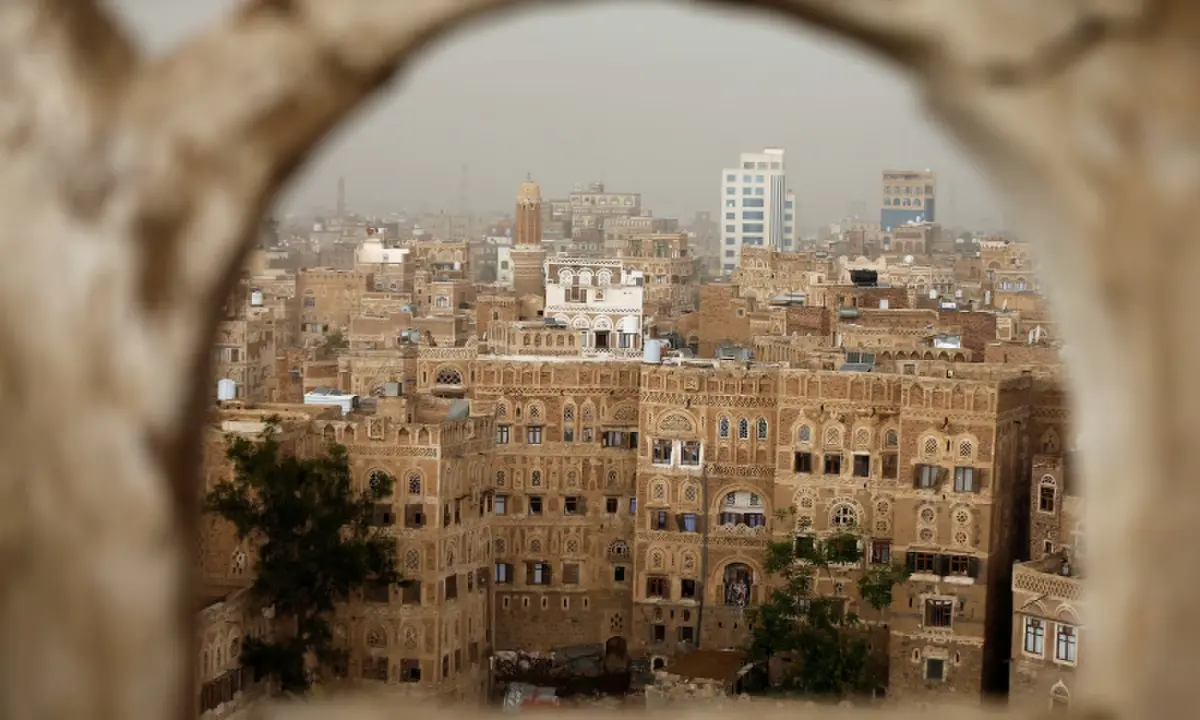
    Beset by poverty, war and repression, the residents of Yemen’s ancient capital Sanaa, under Houthi control for over a decade, struggle to survive.

    The Houthi movement seized the city in 2014, forcing the government to flee south and sparking a brutal civil war in one of the world’s poorest countries.

    In Sanaa, said to be one of the world’s oldest continuously inhabited cities, residents say they long for the pre-war days and a measure of prosperity.

    “Before the war, salaries were paid in full on a regular basis,” Ammar, a 24-year-old university student who asked not to use his last name for security reasons, told AFP by phone.

    “Today, the Houthis have divided salaries into categories,” he said.

    “My father is a civil servant; he falls into the category that receives half a monthly salary once every three months. My mother is a teacher and receives half-a-salary each month.”

    The Old City, with some buildings dating back nearly a millennium, bustles with life as vendors display foodstuffs including grains and spices in large sacks, and restaurant owners grill meat over charcoal.

    Unesco added the Old City to its World Heritage in Danger list in 2015, after it was damaged in fighting between the Houthis and a Saudi-led coalition backing the government.

    The historic alleys between tall, decorated mud-brick buildings are crowded with passers-by filing beneath banners reading “Boycott American and Israeli goods”.

    But many residents struggle to afford basic necessities.

    Two electricity bills

    “We are a family of six, and my siblings are still in school. What our parents earn is not enough to cover basic needs,” Ammar said, adding that “prices have risen sharply”.

    He recently lost his job at a private school, which helped him pay his university tuition fees, amid layoffs.

    Alongside the struggle to secure basic necessities, residents of Sanaa complain of constant power cuts.

    Residents pay two electricity bills, one to the authorities and another to private generators that fill in the gaps during the many blackouts.

    “We try to ration our electricity use as much as possible. Water is also cut off in our neighbourhood, so we have to buy water from trucks at high cost,” Iman, a mother of two, told AFP by phone.

    “Inflation and the soaring cost of living are not matched by any change in salaries. My husband works in the private sector and has not received a raise in three years, and there are no other job opportunities.”

    Living conditions have worsened in recent weeks with Saudi Arabia intensifying its airstrikes on Sanaa, according to Houthi media and officials.

    Since a 2022 truce between the two sides collapsed in July this year, fighting has only escalated.

    Forty-four people were killed in the outlying village of Al-Sharia in Sanaa province on Saturday, the Saba news agency said, citing a spokesperson for the Houthi Ministry of Health.

    ‘Uneducated generation’

    Under the weight of poverty, the education system in Yemen has largely collapsed, and many of Sanaa’s youths have dropped out of school.

    Bilqis Abu-Osba, a former political science lecturer at Sanaa University who now lives outside the city, said dropouts have become endemic. Her colleagues have had to find new ways to make ends meet, like selling cakes out of their houses.

    Meanwhile, “the battlefields have become a refuge for young people to earn a scrap of bread”.

    “Poverty has played a very significant role in changing Sanaa,” she said, especially in eroding the formerly salaried middle class.

    She said the quality of education has also declined, not least because the Houthis have modified curricula to suit “a sectarian ideology that serves their political project”.

    “A new uneducated generation is now growing up, which will affect Yemen both in the present and in the future.”

    “Sanaa used to be a city that was culturally, politically, and socially diverse, but it is now witnessing systematic exclusion to change its identity… into a Houthi ideological identity,” Abu-Osba added.

    “Everyone is afraid to speak, as they can be arrested or severely punished,” she said.

    “There is intense terror about expressing any political opinion, even a simple one, within the city, and silence has become the norm.”

    Above an archway in the Old City a banner flutters with the Sarkha, the Houthis’ ubiquitous slogan: “Death to America, death to Israel, curse the Jews, victory to Islam.”

    Source: dawn
  • President, PM condole martyrdom of 10 policemen in Kohat, vow to continue fight against terrorism

    President, PM condole martyrdom of 10 policemen in Kohat, vow to continue fight against terrorism

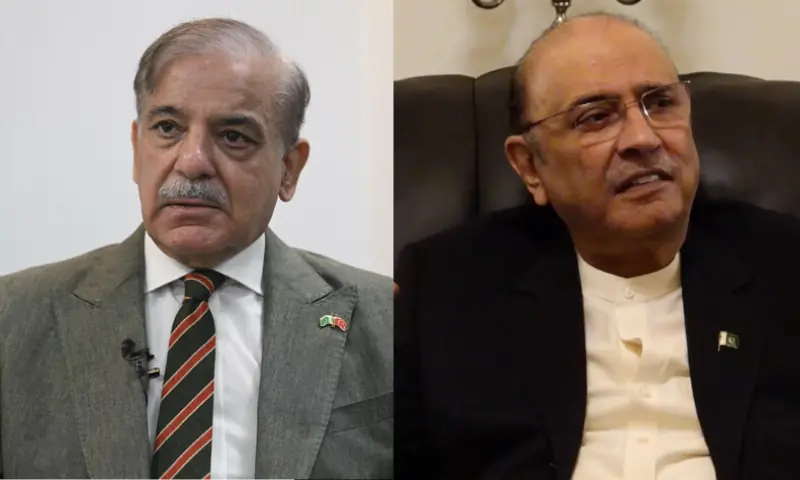
    President Asif Ali Zardari and Prime Minister Shehbaz Sharif on Thursday expressed grief over the martyrdom of 10 police personnel in a terrorist attack on a police team in Khyber Pakhtunkhwa’s Kohat district.

    Eighteen terrorists were killed and 10 police personnel were martyred on Wednesday when a police team came under attack while returning from an operation against elements involved in illegal gold mining.

    In his message, the president said the sacrifices of the KP police in the fight against terrorism were a source of pride for the entire nation.

    The president extended his heartfelt condolences to the families of the martyred personnel and expressed solidarity with them.

    He said cowardly terrorist attacks could not weaken the nation’s resolve, which remained unwavering in its commitment to eliminating terrorism from the country.

    President Zardari said police personnel and other law enforcement agencies were making sacrifices to protect the lives and property of the people.

    He also prayed for the speedy recovery of those injured in the attack, saying the sacrifices of those who laid down their lives for the peace, stability and security of the country would always be remembered.

    Prime Minister Shehbaz reiterated the government’s resolve to eradicate terrorism from the country.

    The prime minister, who is currently in Turkiye on a three-day official visit to attend the COP31 summit, strongly condemned the attack and paid tribute to the martyred KP police personnel.

    Calling them national heroes, he said the brave officers and personnel of the provincial police force had set an example of devotion to duty and courage by laying down their lives for the peace and security of the country.

    The premier also extended his heartfelt condolences to the families of the martyrs and prayed for the elevation of the ranks of the departed souls and strength for the bereaved families.

    He said the killing of 18 terrorists during the operation demonstrated the professional capabilities, courage and unwavering resolve of the KP Police in the fight against terrorism.

    He also described the “nexus between criminal elements and Fitna al-Khawarij” as a nefarious attempt to spread unrest in the country, vowing that such elements would not be allowed to succeed in their designs under any circumstances.

    Fitna-al-Khawarij is a term the state uses for terrorists belonging to the banned Tehreek-i-Taliban Pakistan.

    PM Shehbaz also reiterated that no compromise would be made on Pakistan’s peace and stability.

    The prime minister further said the courage and steadfastness shown by police personnel and other law enforcement agencies in the fight against terrorism were commendable, adding that the entire nation stood shoulder to shoulder with the country’s security forces.

    In a statement released yesterday, the KP Police said police personnel were conducting a joint operation with the local civil administration in the Darabukach locality near Kohat city.

    “When the police party was returning after completing the operation, Fitna-al-Khawarij attacked the police party at the behest of criminal elements,” the statement read.

    “Police personnel fought the attackers with great bravery and courage, as a result of which 18 khawarij were sent to hell,” it noted, adding that 10 personnel of KP Police “embraced martyrdom while fighting bravely”.

    KP Governor Faisal Karim Kundi has sought a detailed report on the incident.

    According to images shared by KP Police on their X account, the martyred cops included Deputy Superintendent of Police Haidar Zaman.

    KP has been facing security challenges for long.

    According to Pakistan Institute for Conflict and Security Studies, the country’s security environment continued to show considerable volatility from Oct 30 to Nov 5, with renewed terrorist activity in parts of KP and the former tribal districts, alongside intensified counterterrorism operations and changing patterns of militant violence.

    It is worth mentioning that KP has been under governor’s rule and emergency since Oct 11, when the federal government took the measures, citing the PTI-led KP government’s “deliberate disengagement” from the counterterrorism fight.

    Source: dawn

  • Power shutdown at Dhabeji to cause Karachi-wide water shortage tomorrow

    Power shutdown at Dhabeji to cause Karachi-wide water shortage tomorrow

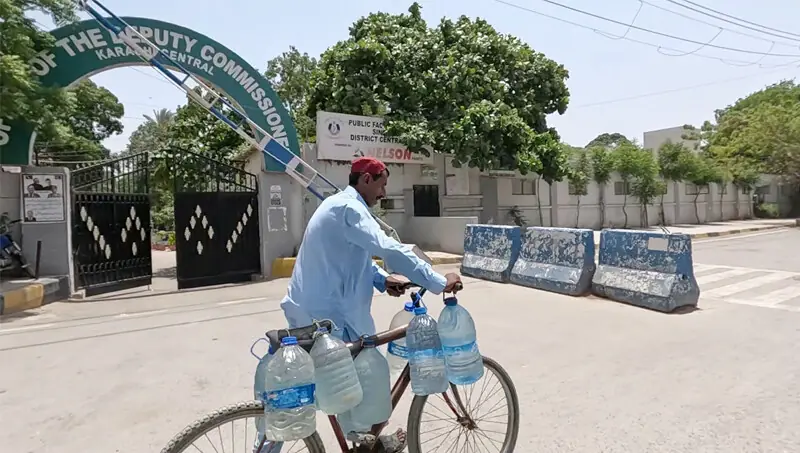
    KARACHI: The city will face a shortfall of around 130 million gallons of water per day (MGD) on Friday (tomorrow) as K-Electric (KE) and the Karachi Water and Sewerage Corporation (KWSC) carry out annual maintenance work at the Dhabeji Pumping Station.

    The city normally receives around 650 MGD but supply will drop to 520 MGD during the shutdown.

    According to a KWSC spokesperson, KE has formally notified the water utility of the scheduled power shutdown. “Electricity supply to Dhabeji Grid Station will remain suspended on Nov 13 for annual maintenance,” he said.

    The power shutdown will last 14 hours, from 10am to midnight on Nov 13. During this period, nine of the 21 pumps at Dhabeji will remain non-operational, the spokesperson added.

    He said the power outage would affect water supply to Landhi, Korangi, Malir, Shah Faisal, Gulshan, Clifton, Saddar and Lyari. Supplies to various towns including Jinnah, Chanesar, Liaquatabad and North Karachi would also be affected.

    Water supply to Nazimabad and Gulberg towns would be partially disrupted while the Landhi and Sherpao hydrants would remain closed during the shutdown.

    The spokesperson said that once KE completed its annual maintenance, six of the nine affected pumps at Dhabeji would be made operational. With these pumps back in service, water supply would return to normal in all affected areas except Landhi, Korangi, Malir and Shah Faisal.

    He added that the KWSC’s annual maintenance work would continue for another 22 hours after KE’s shutdown ended. During this period, only three pumps at Dhabeji would remain non-operational, resulting in a partial disruption of water supply to Landhi, Korangi, Malir and Shah Faisal.

    Meanwhile, a KE spokesperson said the scheduled maintenance shutdown at Dhabeji Grid Station would take place on Friday and that advance notice had been shared with the KWSC.

    The work would include testing and servicing the grid’s power transformer, as well as testing and maintaining its vacuum circuit breaker (VCB) switches. Technical faults would also be addressed while cleaning the relevant substation, the spokesperson added.

    The maintenance activities are essential to ensuring a continuous and reliable power supply, he said.

    Published in Dawn, November 12th, 2026

    Source: dawn

  • PPP has no objection to creation of new provinces, except in Sindh: CM Murad

    PPP has no objection to creation of new provinces, except in Sindh: CM Murad

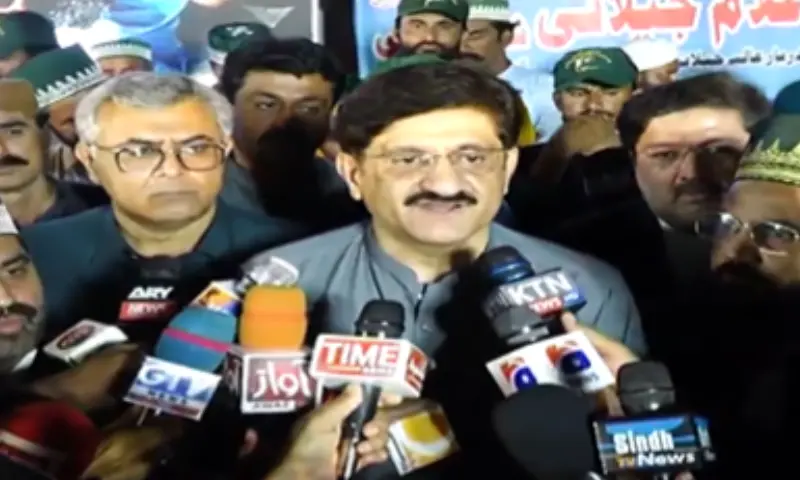
    THATTA: Chief Minister Syed Murad Ali Shah said on Wednesday that, except for Sindh, the Pakistan Peoples Party (PPP) had no objection to the creation of new provinces in other parts of the country if their people so desired.

    He said this while talking to the media after attending the urs of Pir Syed Ghulam Jilani Shah Jilani in Makli on Wednesday evening.

    He made it clear that the division of Sindh was “neither legally nor politically acceptable, as the people of the province had repeatedly rejected the idea through their elected representatives”.

    The chief minister said the people of Sindh had repeatedly expressed their opposition to the division of the province through their elected representatives.

    CM says no referendum can override Constitution as final decision rests with assemblies

    “Constitutionally, the boundaries of a province cannot be altered unless its people want such a change,” he said, adding that the Punjab Assembly had already passed several resolutions seeking the creation of new provinces.

    “If Punjab wants to create new provinces, we have no objection,” he said.

    Mr Shah said the Constitution also provided a mechanism for holding a referendum, but maintained that a referendum could only be held on an issue where there was ambiguity. “Even after a referendum, the final decision would rest with the assemblies, as no referendum could override the Constitution,” he said.

    He categorically stated that the division of Sindh was not possible, either legally or in terms of public opinion.

    Speaking about the water-sharing issue, the chief minister said Sindh’s case for distribution of water in accordance with the 1991 Water Apportionment Accord was already before the Council of Common Interests.

    He rejected the notion that the downstream province was responsible for water shortages, saying it was unfair to blame Sindh for the problem.

    “How can Sindh be accused of stealing water when water does not reach the province in the first place,” he asked.

    He said Sindh was still facing a severe water shortage and that the provincial government had taken up the matter with the federal government.

    Visit to Makli

    Earlier, the CM visited Jilani House, Makli, accompanied by party MNA Sadiq Memon.

    He was received by Pir Ghulam Rizwani, Pir Ghulam Haqqani, Pir Ghulam Rehmani, Zain-ul-Abideen, provincial minister Muhammad Ali Malkani, Riaz Shah Shirazi and members of the provincial assembly.

    The chief minister attended the urs of Pir Syed Ghulam Jilani Shah Jilani and addressed the gathering at the shrine.

    He said Sindh was the land of Sufis, whose teachings had promoted peace, tolerance and brotherhood in the province.

    The teachings of Sufi saints encouraged people to respect one another and live with love, harmony and mutual understanding, he said.

    Mr Shah said Sindh would remain strong and secure as long as the PPP continued to stand with the people of the province. “No one can dare cast an evil eye on Sindh,” he said.

    Published in Dawn, November 12th, 2026

    Source: dawn

  • BJP accuses Sonia Gandhi of ‘camouflaging Congress sins’ in memoir

    BJP accuses Sonia Gandhi of ‘camouflaging Congress sins’ in memoir

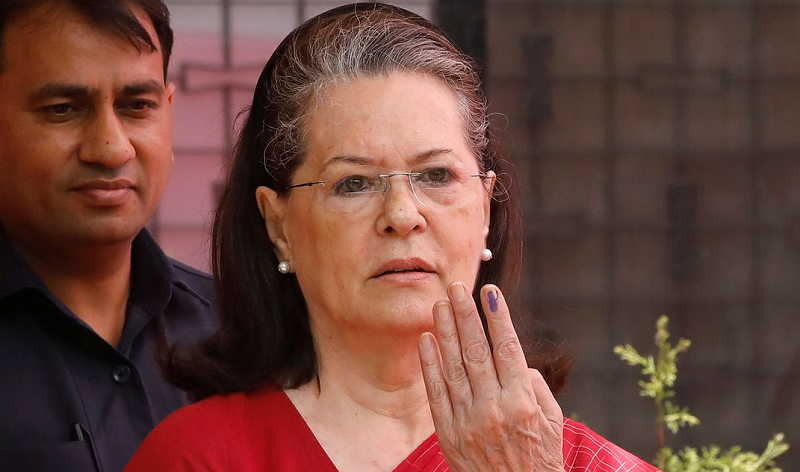
    NEW DELHI: India’s ruling Bharatiya Janata Party has accused opposition leader Sonia Gandhi of whitewashing historical wrongs by her Congress party in a memoir, sparking a new faceoff between the two sides ahead of key state elections.

    Congress party leaders have in turn accused Prime Minister Narendra Modi’s BJP of trying to create a spectacle and give the book a “political spin”. Titled Belonging and released on Tuesday, the memoir captures Italian-born Gandhi’s journey from her student days in England, where she met her husband and Nehru-Gandhi dynasty scion Rajiv, to her integration into India’s most powerful political family that gave the country three prime ministers.

    Gandhi, 79, herself turned down the prime minister’s job in 2004, but her family continues to control the party that has ruled India for periods totalling nearly 55 years since independence from British colonial rule in 1947. “Sonia Gandhi could have titled her memoir ‘Whitewashing’, instead of ‘Belonging’ because the motive of this book appears to be sugar-coating the historical wrongs perpetrated by the Nehru-Gandhi family, and camouflaging the cardinal sins committed by the Congress party,” BJP spokesperson C.R. Kesavan said in a video statement.

    Kesavan cited the anti-Sikh riots of 1984 which erupted after then-prime minister and Sonia’s mother-in-law Indira Gandhi was assassinated by Sikh bodyguards. Nearly 3,000 people were killed. Rights activists accuse Congress of turning a blind eye and say that some party leaders helped orchestrate the carnage.

    Personal memoir

    In the book, Sonia describes the riots as a tragic and shameful chapter, accusing some officials of looking the other way or even fuelling the violence. She defends husband Rajiv who succeeded his mother as prime minister against allegations of complicity, while acknowledging failures of governance and delayed justice.

    Kesavan accused Sonia of trying to “normalise and justify” the notorious Emergency imposed by Indira.

    The 21-month state of Emergency in 1975 involved suspending civil liberties, censoring the press and jailing opposition leaders in one of the most controversial periods of India’s history.

    Sonia writes that Indira felt increasingly isolated and politically cornered before imposing the Emergency. She says Indira was never entirely comfortable with it but felt compelled to continue it amid the prevailing political turmoil.

    Although Sonia has herself not responded to the accusations, she said in the book’s prologue that it is a “personal memoir, one for which pol­itics is the background, a kind of framework”.

    Bestseller book

    The release comes at a time when Congress is leading the charge against Modi’s government over a controversial revision of voter lists, with Sonia’s son Rahul at the helm. The street protests have emerged as the worst political crisis for Modi since he came to power in 2014, and ahead of elections in the key states of Uttar Pradesh and Sikh-majority Punjab early next year.

    The book has dominated social media conversations with posts praising and criticising it in equal measure, mirroring the country’s political divide. The book has also been covered extensively by newspapers, with many publishing excerpts about major events over the last half a century. On Wednesday, the book considered expensive at $14 topped Amazon India’s bestseller list.

    Published in Dawn, November 12th, 2026

    Source: dawn

  • US midterms put pro-Israel AIPAC on defensive

    US midterms put pro-Israel AIPAC on defensive

    WASHINGTON: For years, the pro-Israel lobbying group AIPAC was a US political juggernaut, but deepening voter disillusion over US-Israeli ties and wins by openly Israel-sceptic candidates in last week’s midterm elections have left it reeling.

    Candidates of all stripes long courted the American Israel Public Affairs Committee’s support. But what was once an asset has become a liability in many races, as favourable opinions of Israel plummet over civilian deaths in Gaza and the costly Iran war.

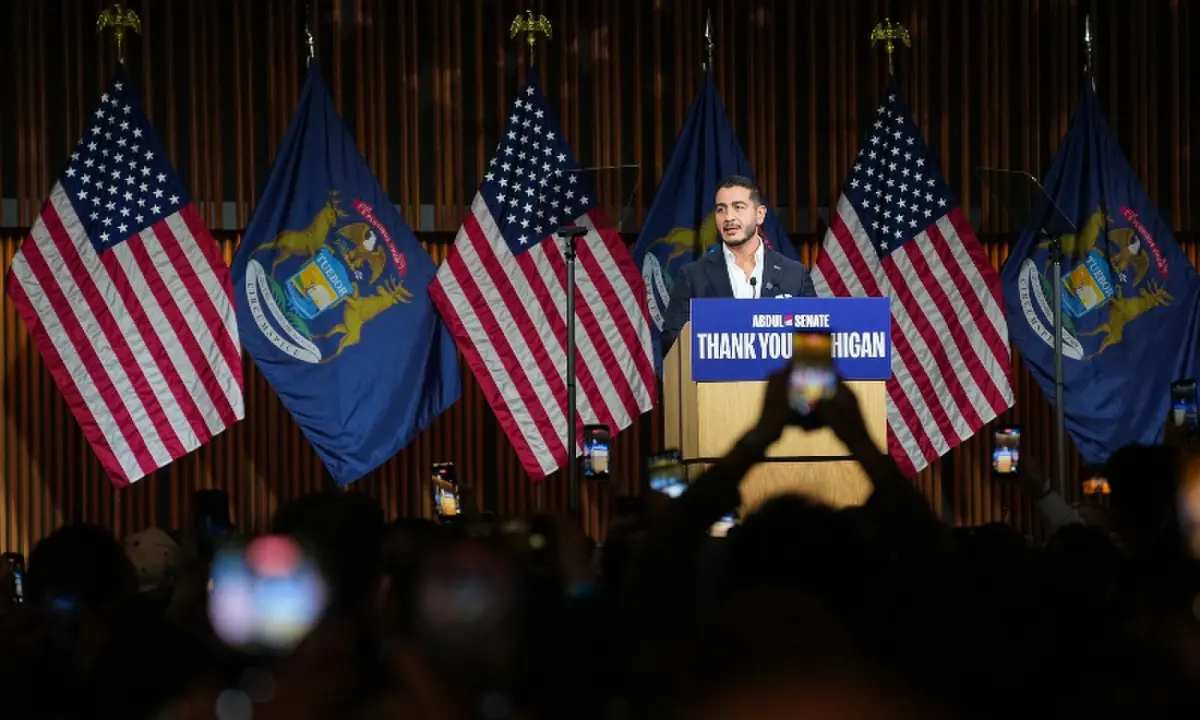
    In the Michigan Senate race, AIPAC’s once irresistible force ran into an immovable object. Demo­crat Abdul El-Sayed — who tapped into anger over US funding for Israel’s military — faced AIPAC-supported candidates in both the primary and general election, but emerged victorious to become the first Muslim senator.

    The tens of millions of dollars spent by an AIPAC-affiliated group, the United Democracy Project, not only failed to beat El-Sayed — they helped him boost his own messaging. “To AIPAC… Thank you for giving me the opportunity to beat you twice,” the Michigan politician taunted in his victory speech.

    The tables flipped so completely that allies of El-Sayed’s Republican opponent, Mike Rogers, reportedly even asked the group to stop spending on him at one point. “They definitely have become a liability,” Adam Wood, a veteran Democratic campaign strategist with City & State Public Affairs, said, noting several campaigns he worked on in years past “coveted” AIPAC’s support.

    Another Democratic Senate success story, James Talarico, won in Texas with a similar message of ending US funding for Israeli offensive weaponry and keeping distance from AIPAC. “I’ve never taken money from AIPAC, and I’m not taking money from AIPAC in this campaign,” Talarico said early in his bid.

    Israel support plummets

    Officially, AIPAC is nonpartisan. It has traditionally supported candidates from both the left and the right.

    According to its website, it only accepts money from Americans and its board is composed exclusively of Americans. But the group has become a byword in US politics for Washington’s tight ties with Israeli governments, including the outgoing far-right coalition of Benjamin Netanyahu.

    The Chicago Council on Global Affairs has asked Americans to rate their favourability of Israel on a scale of 0 to 100 regularly since 1978 and this year marked a record low: an average score of just 44.

    That’s down from 58 in 2022, when the previous midterms were held. And for Democrats, the numbers are all the starker: a drop in favourability from 52 in 2022 to just 30 today.

    “Democrats started to really tank on Israel,” Dina Smeltz, a former State Department official who is now a managing director at the council, said.

    Leftist Democratic star, Representative Alexandria Ocasio-Cortez, has branded AIPAC as “a right-wing organization that undermines democracy.” But support also appears to be faltering on the right.

    On election day, President Donald Trump dialed into his favorite morning program, Fox & Friends, and made the surprising announcement that the US would be ending a major annual aid package to Israel — something El-Sayed and others on the left have repeatedly demanded.

    Vice President JD Vance said he’d been told by a trusted pollster that his party’s road to recovery after the midterms annihilation will require, in part, changing “our relationship to Israel.” And other right-wing voices, including broadcaster Tucker Carlson and libertarian Representative Thomas Massie, have openly criticized Israel in recent years in ways unimaginable in the 2000s and 2010s.

    Pro-Israel lobbyists are not going to go away of course. AIPAC already has competition from the left-leaning pro-Israel J Street as well as the recently formed pro-Palestine American Priorities super PAC.

    The aftermath of elections in Israel, with the possible political eclipse of Netanyahu, could also help AIPAC to find its feet again. “It has been around for a long time, it has a lot of money,” Smeltz said.

    Published in Dawn, November 12th, 2026

    Source: dawn

  • History and leadership

    History and leadership

    HISTORY is never linear or monolithic. It may progress in leaps and bounds, or falter and regress. It may appear calm and seamless, but be restive and roiling beneath the surface. No wonder, a small trigger can lead to a cataclysm.

    Historians have long debated whether historical dialectics shape human destiny, or human agency lights up the darkest epochs of history. There’s no definite answer as yet. But there is a broad consensus among them on two requisites of a historical ‘development’ — ripe ‘objective’ conditions, and an intelligent leadership that can transform a conducive environment into, at the very least, meaningful change.

    Interestingly, the modern era manifests both trends. We see countries and societies long affected by broken governance, endemic corruption, political instability, economic meltdown, civil strife, and regional and global conflagrations. Significant parts of the Middle East, North Africa, and South and West Asia are a dismal reflection of failed or failing states ruled by autocrats or absolutist dynasties — largely without popular mandate and without accountability.

    Yet there are countries once dismissed as ‘basket-cases’ that have turned themselves around — such as Singapore, Malaysia, Vietnam, Turkiye, South Korea, and China. Over the years, they have taken tremendous strides in terms of political stability, socioeconomic progress, scientific and technological advancement, and human-resource development. They have carved out a large share for themselves in international supply chains and productivity.

    Much of the credit for their phenomenal achievements goes to their visionary, upright, and courageous political and institutional leadership. True, some of them did not begin as ideal democracies. Yet they built robust, efficient institutions, along with enabling infrastructure, to ensure continuity, stability, peace, and development, and to facilitate a gradual transition to democracy.

    In contrast, our state has been stuck in a time warp for decades. Every generation has suffered gross ‘elite capture’ characterised by authoritarianism, disenfranchisement, misgovernance, instability, inequality, impoverishment, and never-ending conflicts. In dialectical terms, although the objective conditions for radical sociopolitical change have long been ripe, the desired agency of change — the political and institutional leadership — has remained elusive.

    No wonder the state continues to exist and function in colonial and neocolonial moulds. Authoritarian governance, a compromised and complex legal order, an extractive and iniquitous social structure, the dominance of the security and administrative apparatuses, and a pro-elite neoliberal policy framework remain among its key features.

    Our state has been stuck in a time warp for decades.

    But has this state worked? Never. The founding ideal of a democratic republic itself has been upended. Instead, a security and administrative juggernaut has been forged on the pretext of guarding national security and ‘ideology’. In fact, the state has been virtually detached from its constitutional and democratic controls. It seeks to draw its power, legitimacy, and even sustenance not from the people’s mandate, but from its coercive powers and capacity to control. Hence, it does not need to worry about citizens’ rights or welfare.

    However, this mindset has drawn an ever-widening wedge between the state — controlled and exploited by a small club of security, bureaucratic, political, landed, industrial, and financial elites — and the people, more than half of whom are classified as ‘poor’ or ‘very poor’. Yet, instead of correcting this perilous course, already scarce resources are being further drained for security obligations — arguably, not so much at home as abroad.

    This raises a disturbing question: for how long can this behemoth, guided by colonial notions of governance and built around failed politico-legal machinery, sustain itself on the proverbial feet of clay — an ever-brittle economy compounded by worsening security and governance failure? This question has arisen in every post-colonial state where elites have captured power, stolen resources, disenfranchised people, and eventually pushed society into chaos and conflict. But in many instances, upright, visionary, and courageous leadership provided the answers — convincingly — by steering the country out of the woods.

    Do we have such leadership that can also provide convincing answers — by transforming public angst and alienation towards dysfunctional state structures into a force for building state and political institutions that are democratic, equitable, accountable, and, especially, peace-loving?

    Ironically, much of the mainstream political leadership — the PPP, PML-N, PTI, and others — has long forsaken its distinct agenda, and even its identity. Rhetoric aside, they have offered little in the way of ‘answers’ to the many problems afflicting the state and governance. Instead, over the decades, they have tended to outrun one another in their efforts to be more ‘compatible’ with the demands of an extractive state toeing the colonial model.

    The PPP-PML-N duo’s joining hands with non-political elements to weaken the judiciary, election commission, and media, and the PTI’s eagerness to mend fences with the powers that be instead of the release of its leader are some recent instances of crass political opportunism and historical compromises on the part of our ‘popular’ leaders.

    So, the causes of our recurrent sociopolitical tragedies and the decline of democracy should not be traced to history’s apathy in the face of ominous lengthening shadows. It is the frayed moral fabric of much of our leadership — political and institutional — that gives preference to personal, political, and institutional interests over democracy and the good of the people — the real masters. Under these hopeless circumstances, a new class of self-led movers of history — a sort of Gen-Z — is needed to change our collective destiny.

    The writer is a lawyer.

    shahabusto@hotmail.com

    Published in Dawn, November 12th, 2026

    Source: dawn

  • External sector turning points

    External sector turning points

    THE slight increase in workers’ remittances reported for October prompted a host of questions directed to me. Here are the responses.

    The rise is too small to matter. In fact, it falls far short of what it needs to be to serve its purpose: helping plug the trade deficit. There is no reason in the world for celebration based on one data outturn. What matters is the trend that a series of data points describe; most often, that trend is intelligible only when seen in its proper context.

    So what is the proper context for remittances? First, remittances are traditionally how Pakis­tan’s economy finances its trade deficits. The trend is cyclical and reveals itself when you take a 12-month average of the total trade balance plus remittances, then plot that on a month-to-month basis. You will notice something. A wavy line emerges. From a low point in 2015, it rises slowly until it briefly turns positive — around $40 million — in November 2015. Then it plunges back below the X-axis, before bottoming out in July 2018 at around negative $1.45 billion.

    This is trade balance plus remittances, mind you, so a negative value means remittances can’t plug the trade deficit, and the balance is being financed from reserves or borrowing. If you don’t see the reserves plunging by the same amount in that month, then you can be sure the balance is being financed by new borrowing, and that data will show up in the balance-of-payments whenever the next release comes along.

    From July 2018, the line rises sharply again until it hits a fresh peak in November 2020 at around $100m. It then plunges again until it hits its second trough in July 2022 at negative $1.14bn. This is when another attempt to stabilise Pakistan’s economy by choking its imports began — abortively, as it turned out.

    At least since June, the trade deficit’s growth has outstripped remittances.

    After that, the next peak — $780m — was in March 2025; it has stayed above the X-axis for the most part, barring one or two months. But if the trend so far is anything to go by, the line has been falling since March, reaching $480m by September. This is the 12-month average. For September alone, the figure is closer to $150m. The October trade data has not yet been released, so we don’t know where the figure will be for that month. But given the pace of increase in imports, and the relative stagnation of export growth, grounds for excess optimism are conspicuous by their absence.

    This is entirely in sync with the long-run trend of how Pakistan’s external sector behaves. It heaves and ebbs in cycles. Take the earliest low point of the trade deficit in some month and trace it forward. What you see is the trade deficit growing as imports outstrip exports each month, but remittances cover the gap. Hence, the overall current account in the balance of payments remains above zero. Then the trade deficit starts to grow beyond the ability of the remittances to cover. The current account falls into deficit. Borrowing increases during these months to cover the deficit.

    As the required pace of borrowing increases, the government is unable to fetch dollars in quantities sufficient to pay for the deficit, and the reserves start to fall. Once that fall begins, it becomes very difficult to contain the situation. Eventually, the reserves drop to a level that necessitates a return to the IMF for a bailout. That bailout requires taking steps to choke imports and kill the fiscal deficit as well, and eventually normalcy returns, but at the cost of choking economic activity in the country.

    Take four indicators and plot them from 2014 onwards (you can start earlier if you like). Plot exports, imports, remittances, and external payment obligations over a 12-month period from that year onward. For external obligations, use the total figure for “predetermined drains” given in the International Liquidity sheet released every month by the State Bank. What you’ll see is that exports are the slowest to grow over the years, while external obligations are the fastest. Here is what the numbers look like: exports have grown by 1.4x since 2014, imports by 1.6x, remittances by 2.7x, and external obligations by 4.6x.

    This is the real long-run trend that needs to break before any indicator can mean anything. This year alone, for example, the trade deficit has grown faster than remittances. There are a few different ways to measure this growth, and each gives you slightly different numbers. But all of them show that, at least since June, the trade deficit’s growth has outstripped remittances. If this trend continues, then it shows we have already passed the peak that historically defines the turning point from growth to bust.

    And there is little reason today to believe that the trend will turn around on its own. In past periods, governments had a story to tell at this point, even if the story held little water. In both past peaks, when the trade deficit began yawning and eating up all current inflows, both governments in power at each peak said their period had seen a large inflow of machinery that, once installed, would lead to export growth and reverse the trend.

    That story failed to pan out both times. But at least it was there. What is the story now? What is this government’s plan for containing the trade deficit, which is only a few months away from outstripping remittances’ ability to plug it? The only story they’re running with these days is some urgency to see dramatic improvements in the country’s credit rating by June 2027. What is that in preparation for? More borrowing? If so, then welcome to the old world.

    The writer is a business and economy journalist.

    khurram.husain@gmail.com

    X: @khurramhusain

    Published in Dawn, November 12th, 2026

    Source: dawn

  • Iran status quo

    THE current ‘no war, no peace’ situation in the US-Iran conflict is unsustainable. While the immediate fear of a new US-Israeli strike on Iran — and a greater regional conflagration — may have passed, thanks mainly to the drubbing the Republicans received in the American midterm elections, the Gulf will not return to normal unless there is stable long-term peace.

    True to form, President Donald Trump has been oscillating between claiming that more attacks are not needed and issuing new threats. After talking to the Qatari prime minister, he said that the US would maintain the “status quo” vis-à-vis Iran, while his secretary of state has asserted that economic pressure on Tehran will continue. Iranian President Masoud Pezeshkian, meanwhile, has slammed America’s “diplomacy through threats”.

    The fact is that the US and Israel have failed to subdue Iran on the battlefield, and while the economic sanctions are hurting the Iranians, there are few signs that the pressure will make them yield to America. If anything, the feeling in Tehran is that if Iran is made to endure economic pain, the entire region, and in fact the wider international community, will feel it as well, as the over eight-month blockade of the Strait of Hormuz has shown.

    The Iranians have said their seven-point proposal is on the table if the Americans want to consider it, though the US has termed these conditions “absurd”.

    The US status quo is unlikely to hold, and may, in fact, further inflame matters, which is why Washington’s energies should be directed towards a negotiated settlement. As American academic John Mearsheimer told the Margalla Dialogue in Islamabad on Tuesday, “there is no way the US can defeat Iran”. For the sake of peace in the region and for global economic stability, the status quo needs to end, and give way to a sustainable peace.

    The US cannot hold the world hostage in order to find an honourable exit from a disastrous war for which it has only itself — and Israel — to blame. Iran’s demands may appear maximalist at the moment, but if Tehran is approached with respect, and given guarantees of no more attacks, it may soften its approach.

    The American people have made their displeasure with Mr Trump’s war clear in the midterms. Instead of dragging this matter on, he should find ways to quickly wrap things up.

    Israel is obviously unhappy about any cessation of hostilities; as per the Israeli media Mr Trump and the Zionist state’s prime minister had a tense phone call on the matter recently. The US leader should remember that it was questionable Israeli advice that got him into this predicament. He would be better off ignoring Tel Aviv’s toxic persuasion, and working with regional states to find a solution to permanently end hostilities with Iran.

    Published in Dawn, November 12th, 2026

    Source: dawn

  • Parliament must protect judicial independence, says Justice Mandokhail

    Parliament must protect judicial independence, says Justice Mandokhail

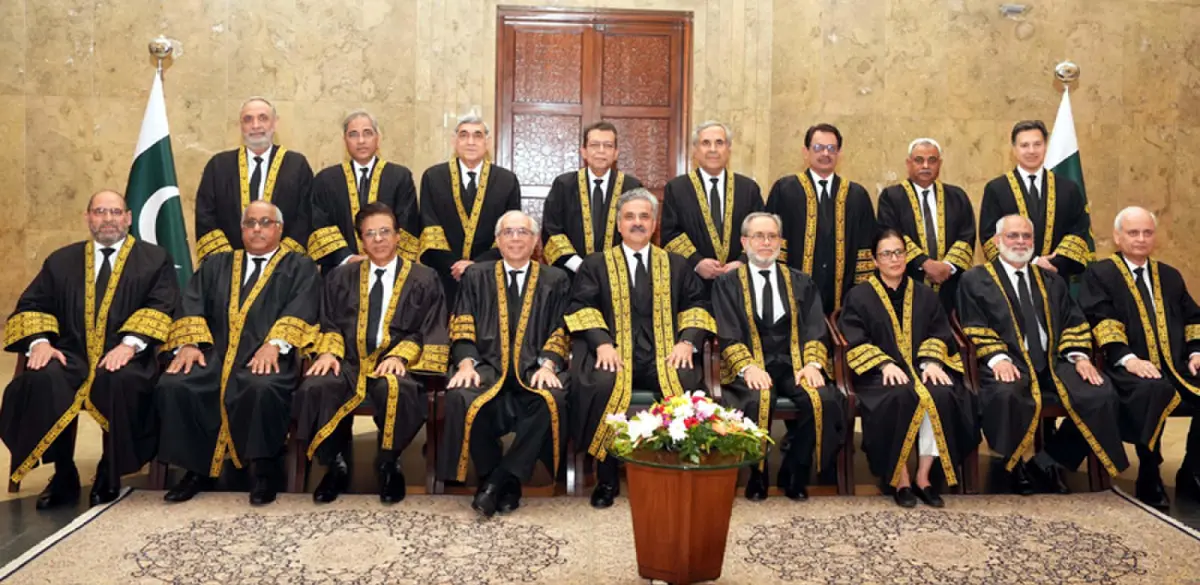
    ISLAMABAD: Justice Jamal Khan Mandokhail on Wednesday said parliament, which represents the sovereign will of the people, must never undermine judicial independence, as only an independent judiciary can protect citizens’ fundamental rights.

    “Compromising or disregarding judicial independence has serious consequences for the state, parliamentarians and society,” Justice Mandokhail said in his address at a full court reference held in his honour on his retirement at the Supreme Court.

    He warned that when courts became subservient to political or executive pressure, the law was replaced by the will of the powerful and applied selectively rather than impartially.

    Outgoing judge warns of anarchy if citizens lose faith in justice system

    Safeguarding judicial independence was therefore the collective responsibility of Parliament, the judiciary and the executive, he observed, adding that citizens would otherwise lose faith in the justice system.

    The reference was attended by Chief Justice of Pakistan (CJP) Yahya Afridi, Attorney General for Pakistan Mansoor Usman Awan, Pakistan Bar Council Vice Chairman Pir Muhammad Masood Chishti, Supreme Court Bar Association President Syed Amjad Shah, senior law officers and members of the legal fraternity.

    Justice Mandokhail said that in the absence of an independent judiciary, political dissenters and critics could be targeted, while systematic corruption, human rights abuses and illegal actions by state officials would go unchecked.

    In such circumstances, citizens might resort to their own means of seeking justice, potentially leading to anarchy, he cautioned.

    The outgoing judge emphasised that the Constitution was both a source of authority and a reminder of its limits. It prescribed what Parliament, the judiciary and the executive must and must not do, he said, adding that the judiciary’s constitutional role was to keep the other organs of the state within their limits.

    The judiciary’s authority lay in interpreting and applying the Constitution faithfully. Serving the Constitution meant recognising that power was entrusted, not owned, that constitutional rights were not favours and that the law must remain equally accessible to ordinary citizens and the powerful, he said.

    Justice Mandokhail also underscored that the judicial oath demanded impartiality, integrity and unwavering adherence to the Constitution and the law, without fear, favour or external influence.

    Paying tribute to Justice Mandokhail, Chief Justice Afridi lauded his distinguished judicial career and commitment to the administration of justice. Recalling his professional journey from the bar in Balochistan to the Supreme Court, he acknowledged his contributions to constitutional jurisprudence, judicial administration and institutional development. He particularly highlighted Justice Mandokhail’s efforts to strengthen the district judiciary and judicial infrastructure during his tenure as chief justice of the Balochistan High Court.

    The CJP also appreciated his thoughtful advice, candid counsel and steadfast support, observing that his presence had contributed significantly to the collegiality and harmony of the court.

    Emphasising that the bench and the bar were integral to the administration of justice, the CJP stressed the need to maintain harmony, mutual respect and constructive engagement within the legal fraternity.

    He reaffirmed his commitment to preserving cordial relations between the two and said transparent and uniform procedures had been institutionalised through comprehensive standard operating procedures (SOPs) to ensure consistency, fairness and accountability in judicial administration.

    Highlighting the provision of free legal aid at various levels, the CJP reiterated that no person should be denied legal representation merely because of financial constraints.

    Published in Dawn, November 12th, 2026

    Source: dawn