Category: dawn news

  • Judges must speak

    Judges must speak

    A JUDGMENT is a public document, written in the name of the Constitution and delivered in open court. The people may read it, praise it and criticise it, and the academy, bar, press and civil society should do so freely. Criticism is not the enemy of judicial authority; it is its source. A judiciary whose judgments are never read critically will never grow.

    One voice is largely missing from that conversation: the judge who wrote the judgment. In Pakistan, judges mostly retire into silence. That must change. Retired judges must come out among the people, above all into the law schools, and explain their reasoning, or say, with hindsight: “I think I got that one wrong.” Such candour teaches the profession and builds public trust and confidence in the institution. A sitting judge who knows retirement means facing the public will brush nothing under the carpet.

    A judgment open to criticism falls into one of three kinds. The first plainly violates the Constitution and the law. The second was legally permissible when given, but its consequences proved damaging. The third is the judgment in which the judge was complicit, bending the law to reach an outcome decided elsewhere.

    To assess one, read it whole and in context: the moment, the circumstances, the law as it then stood. Then ask whether it was permissible, plainly wrong, or the judge simply listening to power.

    Let me test three of my own.

    In Pakistan, judges mostly retire into silence. That must change.

    In the 2023 case on Punjab and Khyber Pakhtunkhwa elections, Justice Jamal Khan Mandokhail and I wanted the high courts to decide first: Lahore had already ordered elections, with appeals pending, and Peshawar was seized of the petitions. Law and practice both counselled that restraint. We read the outcome as four to three, because two colleagues who had already voted to dismiss could not, in our view, be dropped from the count; Justice Athar Minallah, one of them, recorded as much.

    In hindsight, the mistake, I believe, was the chief justice’s hurried leap in; hearing the matter in appeal, the court could have spoken with one voice. Had we set the count aside and presented a united court, whether that would have produced elections is anyone’s guess. Later, the chief justice’s own bench rejected the four-three objection and fixed May 14 for Punjab polls, yet could not enforce it. The date passed, contempt was never pursued, and the court fell silent.

    The larger lesson is that a court must stand united, and the chief justice’s strength is the real spine that holds it together. The Supreme Court as it stands today shows how much rests on that spine.

    In the Justice Qazi Faez Isa case, the court unanimously quashed the reference, the majority for malice in law; I held it malicious in fact as well. The majority directed the FBR to examine the family’s properties and report to the council; three of us held that no direction was needed, the FBR being free to act under the tax law. On review, that view prevailed.

    No one is above the law, and no one below its protection: a judge’s spouse answers under the tax law, a judge under the Code of Conduct, only in accordance with law. I am often asked whether we saved the wrong man. We saved due process and the independence of the judiciary, and in doing so we saved a man. What people thought of him later was not our concern then. A judgment is not a character certificate.

    In the Practice and Procedure case, I believed, and still believe, that the court had to become collegial rather than be run by one man. Opening the door was not itself the mistake; so long as the court stood united, no one could have walked through it. What we failed to see was that the court was weak within, and weakness inside invites those outside. And it did: a 2024 ordinance gave the chief justice’s nominee a seat on the bench-forming committee. Had earlier chief justices brought in the collegial model through the full court, that door need never have opened from outside. This is a lesson, not an accusation.

    Each choice was made in good faith, within the law. In hindsight, wiser choices may have been available, but choosing in the moment is the judicial function, and there the judge must be trusted. Unless a judge was complicit, there is nothing to apologise for, only lessons to share.

    What must worry us most is complicity. It is not an error of judgment but a surrender of it, and it has hollowed out our courts. A judgment bent to power may be overruled, but the betrayal stays on the record. Error is part of judging. Capitulation is not. And complicity has a way of showing its face, in the promotions, benefits and advantages that later reward it. Today, that trail must be made visible.

    A word to the critics. Those quick to call out judicial error must be as open-hearted in acknowledging courage. Dissent, refusal of oath and resignation are the building blocks of an independent judiciary. Ask what a judge gained by resigning when a simple yes would have secured everything. Nothing, except the honour of the institution. Criticism that records every failure and never that courage leaves the next generation no one to look up to.

    So let the conversation begin, and let it be honest. Let judges speak: give the context of their decisions, own their errors without fear and explain their choices without apology. And let complicity be named for what it is.

    Judicial independence has never been absolute. Sadly, there has always been a chink in the armour, a door left ajar, and someone willing to push it open. No single judgment or judge will close that door. But an honest and open conversation, carried from one generation to the next, can. That will be the real victory: not a court that never errs, but a court with no door through which power can enter.

    The writer is a professor of practice at SAHSOL, Lums, and currently a distinguished visiting fellow at Yale University.

    Published in Dawn, November 15th, 2026

    Source: dawn
  • ANALYSIS: An unLucky bet

    ANALYSIS: An unLucky bet

    WHEN Lucky Motor Corporation (LMC) began assembling the Peugeot 2008 in the year 2022, it was launched with much fanfare. Here was a European name in a market long dominated by Japanese, Korean and, more recently, Chinese brands.

    Today, fresh bookings for the SUV have been suspended. At least one of its dealerships now sells Chinese vehicles, and dealers speak cautiously about the model’s future. The company says production has not stopped.

    Petrol prices shot up after the Middle East conflict began in February, forcing buyers towards various types of electrified vehicles. A petrol-only 1,200cc European SUV now finds itself on the wrong side of that move.

    Other petrol models have also struggled. Honda Atlas Cars recently discontinued the Honda BR-V. LMC’s own hybrids have felt the pressure too. On Nov 3, the company cut the prices of the 1.6T FWD Kia Sportage L HEV and the 1.6T AWD HEV by Rs700,000 and Rs800,000, respectively.

    The Peugeot’s prices have also been cut sharply. LMC’s website lists the 2008 Active at Rs5.799 million, down from Rs6.999m. The 2008 Allure is listed at Rs6.499m, down from Rs7.799m. Both offers are subject to terms and conditions.

    Lucky Motor’s Peugeot 2008 arrived in 2022 as Pakistan’s only locally assembled European SUV. Four years later, high petrol prices and a move by buyers to electrified cars have left it out of step with the market.

    LMC Chief Executive Muhammad Faisal confirmed to Dawn that the company has stopped taking new orders, but denied claims that the assembly line has also been shut down.

    ‘Only bookings closed’

    “We are not taking fresh bookings at the moment and are delivering those vehicles which have been booked earlier. We still have orders for Peugeot which we are serving and therefore have not stopped production,” he said.

    According to Mr Faisal, LMC has assembled more than 6,000 Peugeot vehicles at its plant in the Port Bin Qasim Industrial Park since the first quarter of 2022. He said all Kia service centres can provide after-sales service to Peugeot customers. “We still have parts in stock for Peugeot,” he added.

    Not everyone in the market tells the same story, though. Some industry sources claim that production was quietly halted a few months ago. They say this has worried owners about future after-sales service and the supply of expensive parts.

    Dealers upcountry gave Dawn differing accounts. Some said only fresh bookings had been suspended, while others said production had been discontinued, but LMC denies this.

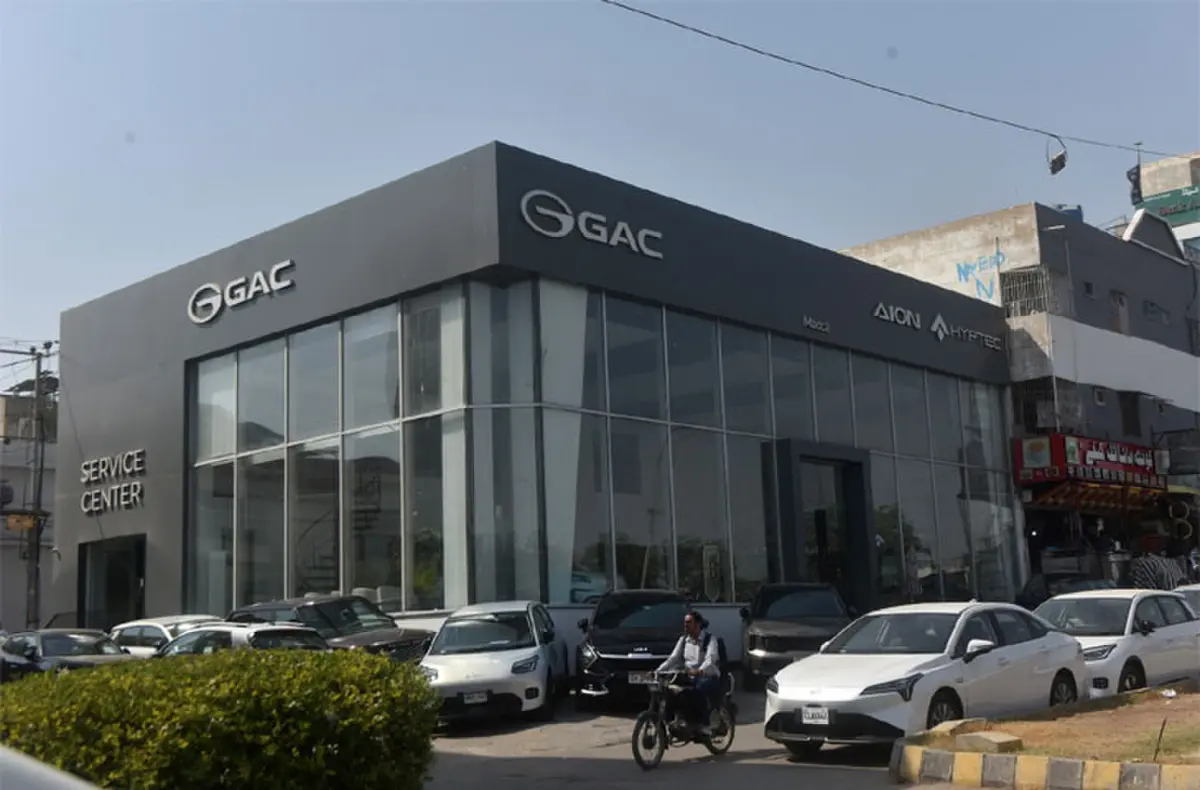
    Dawn visited Rashid Minhas Road in Karachi and found that Macca Motors, once an authorised Peugeot showroom, now displays vehicles from the Chinese brand GAC. A showroom employee also confirmed that bookings for the Peugeot had been suspended.

    Good car at the wrong time

    LMC’s website still lists five dedicated Peugeot showrooms: one each in Islamabad, Sialkot and Karachi, and two in Lahore. Market sources, however, claim the dedicated outlets are no longer operating as such.

    Dawn also surveyed the Sunday Car Bazaar in Sector 11-D, North Karachi, which is considered the city’s main used-car market, but no Peugeot was on offer.

    Owners who spoke to Dawn had a lot of praise for the vehicle’s looks, driving experience, comfort, suspension, and durability, which they said put it ahead of its Japanese, Korean, and Chinese rivals.

    Their main concerns were about running costs, parts availability and poor resale value.

    One owner said the car’s fuel economy of 8 to 8.5 kilometres per litre was a serious drawback. Petrol prices are now easing, he said, but the mileage still puts buyers off.

    “I purchased it for Rs7.5m two years back, but the new model is now priced at Rs6.5m. I am getting only Rs5.5-5.7m if I sell,” he said.

    Another owner said LMC had not told existing customers anything about the model’s future. It had also not assured them that parts would remain available, which was hurting the reputation of a good SUV.

    LMC’s partnership with Peugeot began in mid-2019, when it signed an MoU and expression of interest with Groupe PSA, now part of the Stellantis Group.

    The pivot towards China

    The company was then known as Kia Lucky Motors. In 2021, it signed a Licence and Technical Assistance Agreement with Stellantis to assemble and distribute Peugeot vehicles in Pakistan.

    Earlier this year, it signed an agreement with China’s Guangzhou Automobile Group (GAC) to launch and assemble them in Pakistan.

    Mr Faisal said the Kia Sportage was “going strong” and could compete with other models in its segment. He said the Picanto had completed its lifecycle. The company is studying whether its new-generation model is feasible, and for now the new Stonic 1.4 serves as a replacement.

    Published in Dawn, November 15th, 2026

    Source: dawn
  • Parliament’s nod deemed a must for referendum

    Parliament’s nod deemed a must for referendum

    • President, prime minister insist any move to create new provinces must follow Constitution
    • Zardari reiterates PPP’s opposition to division of Sindh
    • Naqvi’s ‘message’, Imran’s situation also discussed

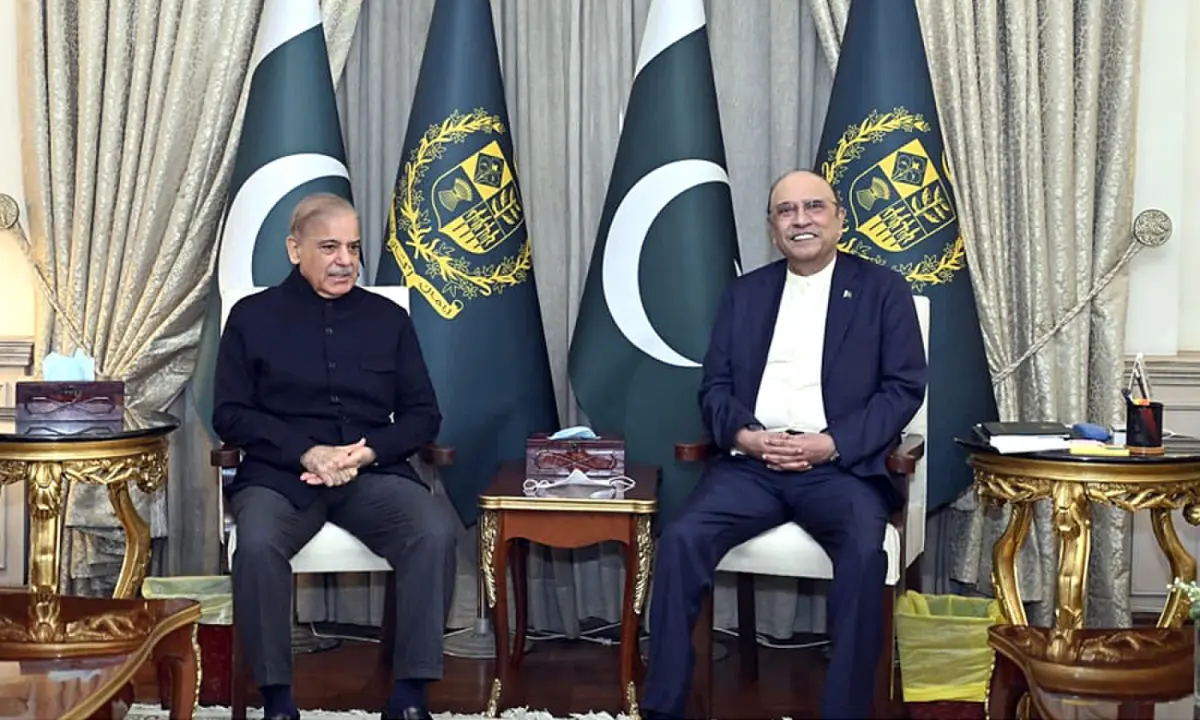
    LAHORE: President Asif Ali Zardari and Prime Minister Shehbaz Sharif on Saturday agreed to “strictly adhere to constitutional provisions” governing the creation of new provinces or administrative units, with any proposed referendum on the contentious issue also requiring parliamentary approval.

    Official sources privy to the development told Dawn that the understanding was reached during a meeting between the two leaders at the prime minister’s Model Town residence, amid a fresh debate over the creation of additional provinces and a proposal by the interior minister to seek public opinion through a referendum.

    President Zardari, who was accompanied by former prime minister Raja Pervez Ashraf and Senator Saleem Mandviwalla, made it clear that the PPP’s position remained aligned with the Sindh Assembly’s resolution opposing the creation of new provinces.

    He stressed that any move in this direction must strictly follow the procedure prescribed by the Constitution, a position endorsed by PM Shehbaz, the sources said.

    PM’s Adviser on Political Affairs Rana Sanaullah, Law Minister Azam Nazeer Tarar, National Assembly Speaker Ayaz Sadiq and the prime minister’s sons Hamza and Suleman were also present at the meeting.

    The two leaders also agreed that parliament could not be bypassed in deciding whether a referendum should be held and what questions should be put to the public, according to the sources.

    “The majority in parliament will decide whether a referendum is to be held and what its question(s) should be. Without consensus, the matter cannot move an inch. Parliament cannot be bypassed,” an official source quoted the meeting as agreeing.

    The discussion came two days after Interior Minister Mohsin Naqvi floated the idea of holding a referendum to gauge public opinion on the creation of new provinces or administrative units, arguing that the exercise could settle the debate once and for all.

    He had also assured political parties that they would be taken on board before any decision was finalised.

    However, the PPP leadership appears unwilling to soften its position, particularly on Sindh.

    The party has consistently invoked a unanimous resolution passed by the Sindh Assembly opposing the province’s division, maintaining that it reinforces its position against any such move.

    PPP Chairman Bilawal Bhutto-Zardari, Sindh Chief Minister Murad Ali Shah and other senior party leaders have repeatedly declared that the division of Sindh is neither legally nor politically acceptable to the party.

    The debate has also highlighted differing positions within the ruling coalition.

    Defence Minister Khawaja Asif recently argued that Pakistan could have as many as 12 provinces if the exercise was guided by administrative requirements rather than linguistic, ethnic or political considerations.

    He maintained that the country’s growing population necessitated smaller administrative units capable of delivering public services more efficiently.

    However, the PML-N has so far refrained from articulating a formal policy, saying it would present its position when the matter came before parliament.

    Naqvi’s message, Imran’s issue

    The sources said President Zardari and PM Shehbaz also held a brief one-on-one meeting to discuss a message reportedly conveyed to the president by Interior Minister Naqvi during his recent visit to Nawabshah.

    The issue of incarcerated PTI founder Imran Khan also came under discussion.

    According to the sources, the meeting was informed that Mr Khan’s recent hours-long interaction with his lawyers and the release of his two sisters from jail were not linked to any particular behind-the-scenes deve­lopment.

    Meanwhile, a statement issued by the Prime Minister’s Office said the two leaders held detailed discussions on the country’s overall political, economic and security situation, emphasising coordination among the ruling coalition partners.

    The official statement did not specifically mention the discussion on new provinces or the proposed referendum.

    PM Shehbaz also briefed President Zardari on his recent visit to Turkiye, where he attended the 31st Conference of the Parties (COP31) and highlighted Pakistan’s efforts on climate action.

    The two leaders exchanged views on cooperation among allied parties, continued consultation and progress on public welfare initiatives. They reaffirmed their commitment to working together to accelerate economic stability and development, the statement added.

    Published in Dawn, November 15th, 2026

    Source: dawn
  • US flight chaos caused by repair of old copper wiring: Trump admin

    US flight chaos caused by repair of old copper wiring: Trump admin

    Weary travellers endured more flight disruptions as service resumed at US airports after an hours-long total stoppage, with officials saying the situation should return to normal on Sunday.

    The Trump administration blamed the mess that began Friday on a botched replacement of old copper wire communication lines.

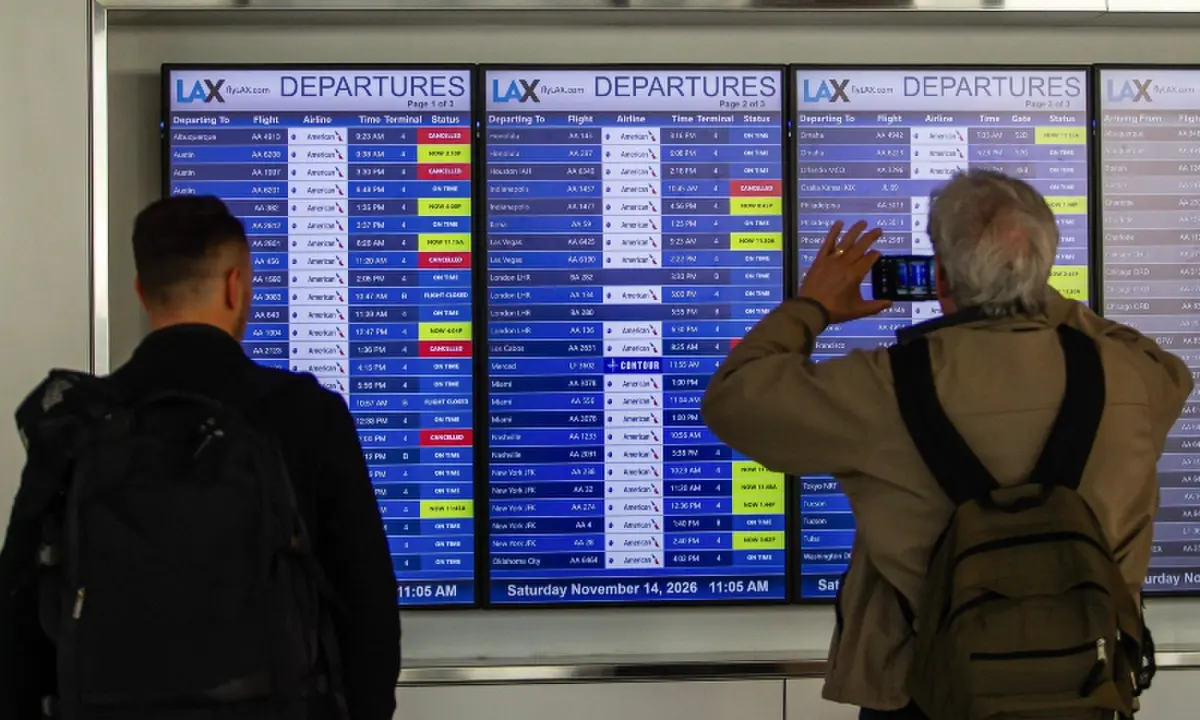
    The nationwide ground stop — meaning no planes can take off — sparked widespread chaos and left hundreds of thousands of passengers in limbo, with some pulled off planes moments before they were due to depart by airline staff who appeared in the dark about unfolding events.

    “Tired. Exhausted. Frustrated. Yeah, you know, it’s just a mess, right?” Lisa Beraid, 48, who works for an insurance company, told AFP as she waited for a flight Saturday morning at New York’s La Guardia airport.

    Federal Aviation Administration (FAA) chief Bryan Bedford said that 12,000 flights were cancelled on Friday and between four and five thousand flights out of 41,000 scheduled for Saturday were likely to be cancelled as well.

    But as of Saturday evening, the tracking website FlightAware had recorded more than 6,200 cancelled flights.

    Speaking at a news conference in Washington, Bedford offered a “sincere apology to the American travelling public.” He predicted a full resumption of flight schedules by “close of business on Sunday.”

    Transportation Secretary Sean Duffy said Friday’s four-hour ground stop was declared after maintenance work to upgrade an old copper wire to a high-speed fiber cable had caused “issues” with communication with airplanes and radar feeds.

    “Either through contractor error or a faulty piece of equipment… it started flooding other routers in our air traffic control system,” Duffy told reporters.

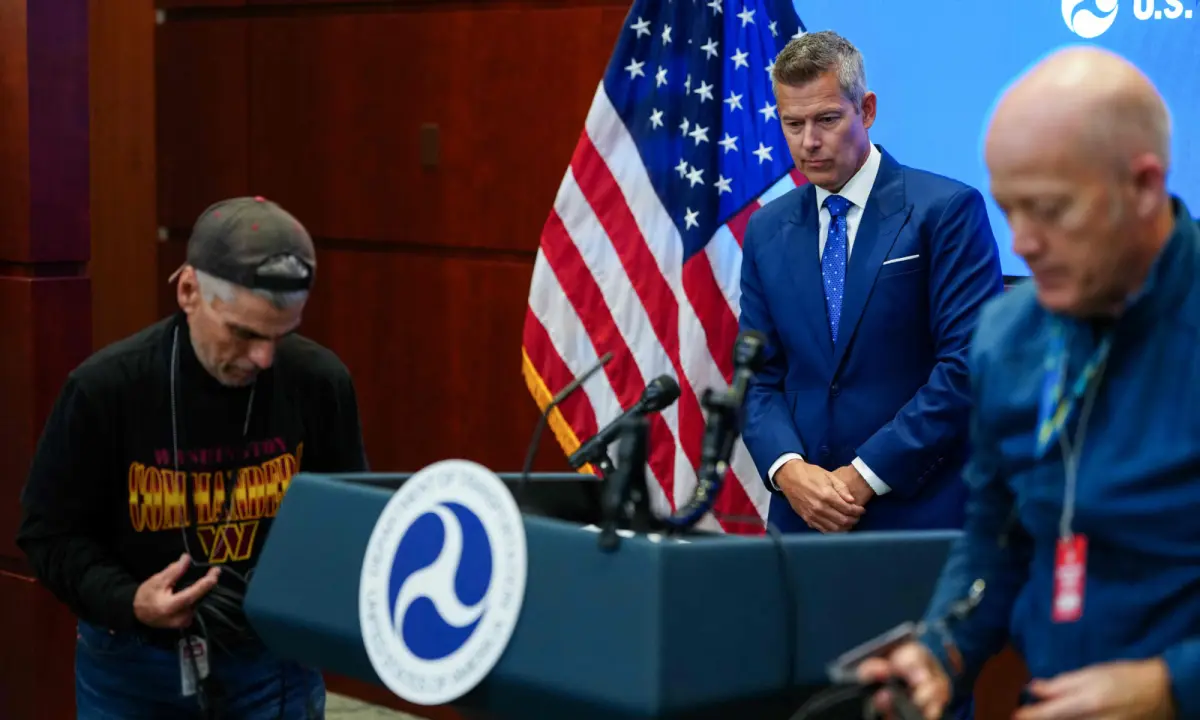
    In another embarrassment, Saturday’s news conference — where administration officials also appealed for more funds to upgrade outdated systems — was delayed due to technical problems with the audio feed.

    Returning to normal

    Friday’s disruption was only the second time such a ground stoppage had been issued in US airspace — which is among the busiest in the world — since the 9/11 attacks.

    The nationwide halt was lifted at 8:15 pm Eastern Time Friday (6:15am PKT Saturday).

    During the outage, footage from airports showed gates full, with planes waiting on taxiways and passengers thronging concourses, desperate for information.

    FAA officials reopened the airspace “after restoring full functionality” at air traffic control facilities, according to Duffy.

    Tim Johnson, consumer director at the UK Civil Aviation Authority, said although US flights have resumed, there could be “some follow-on disruption” as airlines re-book passengers and get all services back to normal.

    At La Guardia airport, some travellers were more sanguine than others about the continued disruption of their flights.

    “We’re stuck here for the next, I don’t know, 36 hours,” said Pat Curlett, a 62-year-old Ford worker.

    “No one expects the whole airline system to go down,” said 77-year-old traveler Steven Rathe, who was waiting to embark on a four-leg trip from New York to Albuquerque.

    “We’re lucky it wasn’t longer. So they’re flying today and for that I’m grateful.”

    Ageing infrastructure

    The ground stop not only plunged US air travel into chaos — it also raised serious concerns about the country’s ageing infrastructure.

    Duffy appealed for $50 billion in funds to upgrade and modernise the air traffic control system, and called for Congress, which controls the purse strings of the US government, to “meet this moment.”

    “Cut the crap,” retorted Illinois state governor and prominent Democrat, JB Pritzker, on X. “Trump and Republicans have controlled Congress and could have funded the system.”

    New York Governor Kathy Hochul called on Duffy to resign or be fired by Trump, writing on X: “We’re fortunate no lives were lost.”

    US lawmakers called for investigations into what caused the massive disruption and whether the country is adequately secure from cyber criminality.

    “If today proves anything, it’s that we need to update our air traffic control system & rebuild our airport infrastructure,” Republican Senator Eric Schmitt said on X.

    President Donald Trump was uncharacteristically quiet about the outage that had knock-on effects for international flights to and from the United States, making no public statement about the ground stop as of Saturday night.

    Source: dawn

  • World Bank okays $300m for Sindh’s water, sanitation services

    World Bank okays $300m for Sindh’s water, sanitation services

    ISLAMABAD: The World Bank has approved $300 million in financing to expand access to safe water, sanitation and hygiene services for 1.5 million people in selected rural areas of Sindh.

    The financing will support the Sindh Trans­formational Accele­rated Rural Water Supply, Sanitation, and Hygiene Services Phase 1 Project (STAR WASH-1), the World Bank’s resident mission in Islamabad announced on Saturday. The project is expected to generate more than 14,000 jobs and support the formalisation of the Sindh People’s Housing for Flood Affectees as a rural water, sanitation and hygiene (WASH) utility company.

    “Stunting is among Pakistan’s most severe and persistent human capital challenges, and unsafe water, sanitation and hygiene is a major underlying driver. By expanding access to these services for 1.5m people in rural Sindh, this project will help address one of the root causes of child stunting,” said Bolormaa Amgaabazar, the World Bank country director for Pakistan.

    Unsafe water and poor sanitation expose young children to repeated bouts of diarrhoea, impairing nutrient absorption and limiting their physical and cognitive development. More than half of children under five in rural Sindh are stunted.

    STAR WASH-1 aims to provide 1.5m people with access to safe drinking water and safely managed sanitation and hygiene services.

    The project will finance climate-resilient infrastructure, including solar-powered water supply systems and improved sanitation facilities.

    Published in Dawn, November 15th, 2026

    Source: dawn

  • Pakistan guidebooks author dies at 83

    Pakistan guidebooks author dies at 83

    GENEVA: Isobel Shaw, an Irish-born travel writer whose guidebooks introduced thousands of visitors to Pakistan, died on Wednesday (Nov 11) at her home in St-Cergue, Switzerland. She was 83.

    Ms Shaw first came to Pakistan in 1978, when her husband, Robert Shaw, was posted to Islamabad as the Ford Foundation’s representative. During her three years in Islamabad she learnt Urdu and, with Hilary Adamson, wrote A Traveller’s Guide to Pakistan, published in Islamabad in 1981 and one of the first modern guidebooks to the country.

    Her Pakistan Handbook (1989) was shortlisted for the Thomas Cook Travel and Guide Book Awards, and her illustrated guide to Pakistan ran to five editions. With her son, Ben Shaw, she wrote the Pakistan Trekking Guide (1993) and a trekking guide to the Karakoram and Hindu Kush, published in Lahore in 2013. Other writers on the region recommended her as the best guidebook writer on Pakistan.

    During the 1990s she worked as a tourism consultant to the government of Pakistan and gave the keynote address at the Pakistan Tourism Convention in Karachi in 1993.

    After the 2005 earthquake she gave talks to raise funds for orthopaedic care for survivors. The same year, the Pakistan Society in London honoured her for advancing public knowledge and understanding of Pakistan in Britain.

    Her last book, Trekking Guide to the Karakoram and Hindu Kush of Northern Pakistan, was published by Vanguard Books in Lahore in 2013. She returned to Chitral that year, at the age of 70.

    Born Isobel O’Beirne in Meath, Ireland, in 1943, she studied at Newnham College, Cambridge.

    She had lived near Geneva since 1981 and is survived by her three children, nine grandchildren and a great-granddaughter.

    Published in Dawn, November 15th, 2026

    Source: dawn
  • Broken record: Quaid’s visit, an RSS cell, and Dawn under attack

    Broken record: Quaid’s visit, an RSS cell, and Dawn under attack

    As refugees continued to pour into Pakistan, often surviving unspeakable violence en route, Quaid-i-Azam Mohammad Ali Jinnah, in a true display of leadership, met with the frazzled masses, urging them to keep hope alive. This, along with the busting of an RSS cell in Karachi, and a violent mob attack on Dawn’s Delhi press, marked some of the prominent stories from Sept 15 to 21, 1947.

    Soothing words

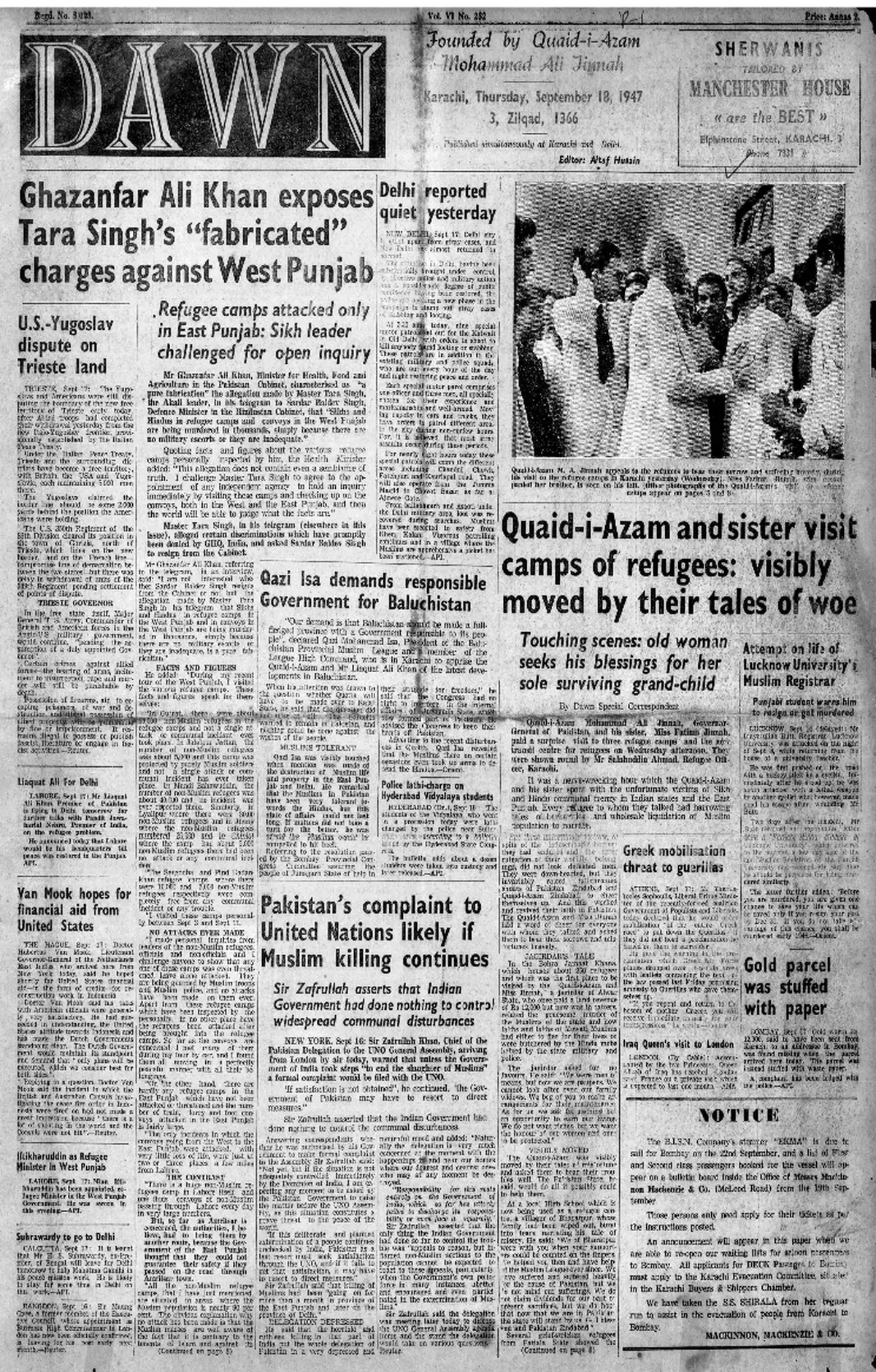
    Many among the millions that had crossed over into Pakistan at the time of Independence had literally been through hell. They had witnessed murder, arson and communal frenzy on their way to what was supposed to be the promised land. In such delicate times, leaders are supposed to put aside protocol and mingle with the masses in order to empathise with them. The Quaid did just that, as a news report from the Sept 18 issue shows.

    Titled ‘Quaid-i-Azam and sister visit camps of refugees’, it details his visits to three refugee camps and a transit centre. “It was a nerve-wrecking hour that the Quaid-i-Azam and his sister [Ms Fatima Jinnah] spent with the unfortunate victims of Sikh and Hindu communal frenzy in Indian states and the East Punjab. Every refugee to whom they talked had harrowing tales of barbarities and wholesale liquidation of Muslim population to narrate.”

    Broken record: Quaid’s visit, an RSS cell, and Dawn under attack

    Yet despite the horrors they had witnessed, the spirits of the men and women who came to Pakistan remained high, as they “raised full-throated shouts of Pakistan Zindabad and Quaid-i-Azam Zindabad to cheer themselves”.

    It was also a fact that many who had left behind land and wealth in their ancestral towns and villages were reduced to penury after crossing the frontier. “A jagirdar of Alwar State [now in Rajasthan], who once paid a land revenue of Rs12,000 but now was in tatters, related the gruesome murders of the Muslims of the state and how lakhs and lakhs of Mewati Muslims had either to flee for their lives or were butchered. …”

    Mr Jinnah was clearly overwhelmed by these accounts of sorrow and savagery, but, in his capacity as governor-general of the dominion, told his people not to lose hope. “The Quaid-i-Azam was visibly moved by their tales of misfortune and asked them to bear the troubles well. The Pakistan State, he said, would do all it possibly could to help them.”

    Today’s rulers could do much to learn from the empathy and leadership qualities the founder and maker of this nation displayed.

    The Balochistan question

    Today, Balochistan is wracked by separatist violence and under-development. The sad truth is that over the past many decades, the province has witnessed many insurgencies, with the rulers unable to progressively resolve its issues, and bring permanent peace to Balochistan.

    At the time of Independence, Baluchistan, as it was then known, was not one singular entity. In fact, it was divided into so-called British Baluchistan, and four princely states. The latter joined Pakistan in 1948. But early on, there were demands for representative rule, and affiliation with Pakistan.

    Qazi Mohammad Isa, president of the Baluchistan Provincial Muslim League, was in Karachi to apprise the Quaid and Prime Minister Liaquat Ali Khan of the demand that “Baluchistan should be made a full-fledged province with a Government responsible to its people.”

    According to Qazi sahib, the people of the province were eager to join Pakistan. “When his attention was drawn to the question whether Quetta will have to be made over to Kalat State [which had not yet joined Pakistan], he said that the question did not arise at all. The Baluchis wanted to remain in Pakistan, and nothing could be done against the wishes of the people.”

    The Sangh in Sind

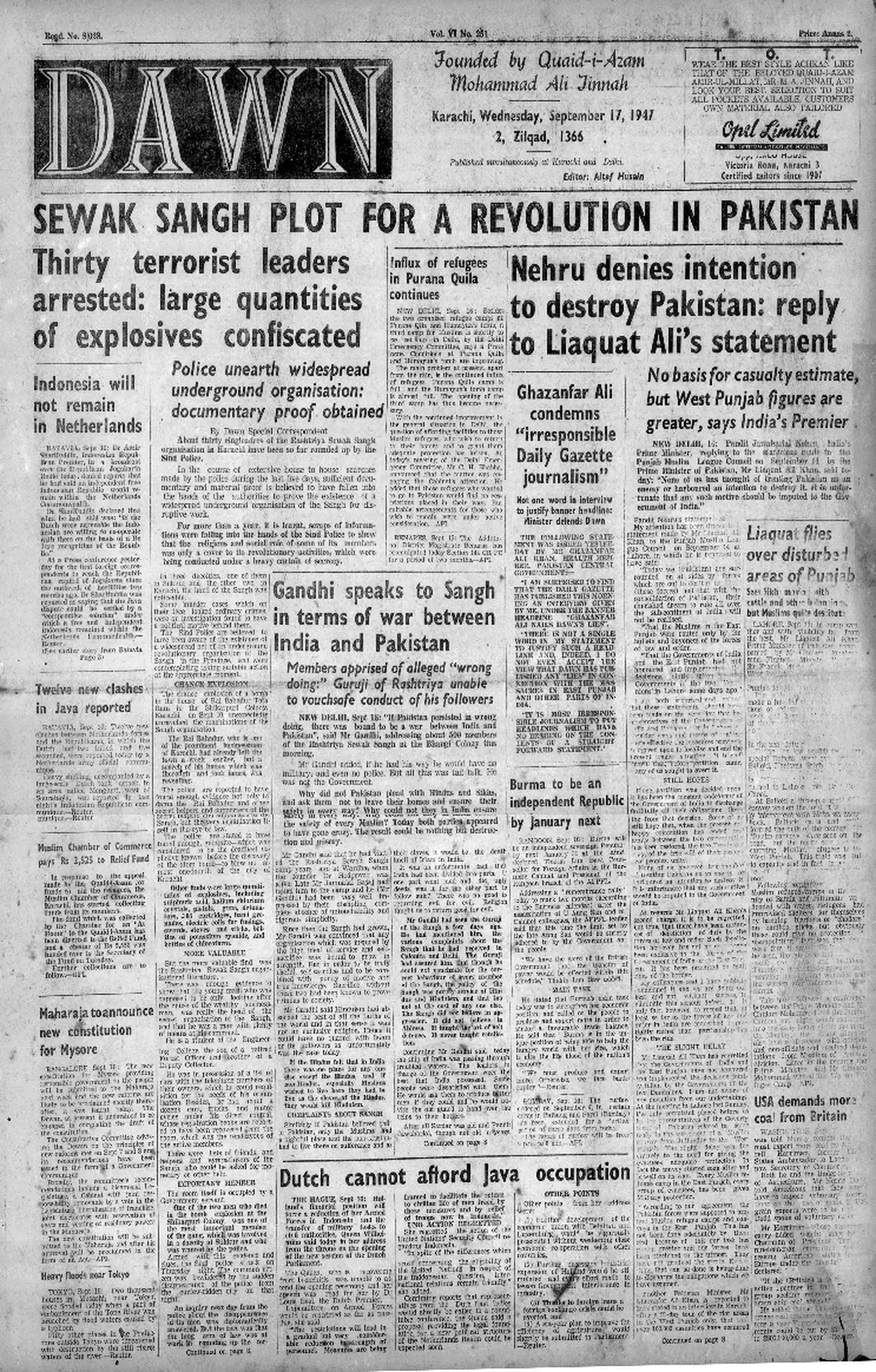
    The Sangh Parivar — as the stable of far-right Hindu organisations in India are known — has made life for Muslims, Christians and other minority communities in that country very difficult. While the ruling BJP is the political arm of the Sangh, its ideological fountainhead is the Rashtriya Swayamsevak Sangh (RSS). Once upon a time, the Sangh was active in what is now Pakistan, and in fact, as the Sept 17 edition shows, an RSS cell in Karachi was busted for apparent involvement in terrorist activities.

    Broken record: Quaid’s visit, an RSS cell, and Dawn under attack

    ‘Sevak Sangh plot for revolution in Pakistan’, the headline read, with the subheadings noting that “thirty terrorist leaders arrested: large quantity of explosives confiscated”. The story went on to say that during house-to-house searches, “sufficient documentary and material proof is believed to have fallen into the hands of the authorities to prove the existence of a widespread underground organisation of the Sangh for disruptive work.”

    Though the authorities were on the trail of the Sangh extremists for some time, “the chance explosion of a bomb in the house of Rai Bahadur Tota Ram in the Shikarpuri Colony, Karachi [which is located not too far from where the Quaid’s mausoleum now stands] on Sept 10, unexpectedly unravelled the machinations of the Sangh organisation.”

    Though the RSS leaders and cadres eventually left for India, they were soon replaced by extremists ‘of our own’.

    Dawn under siege

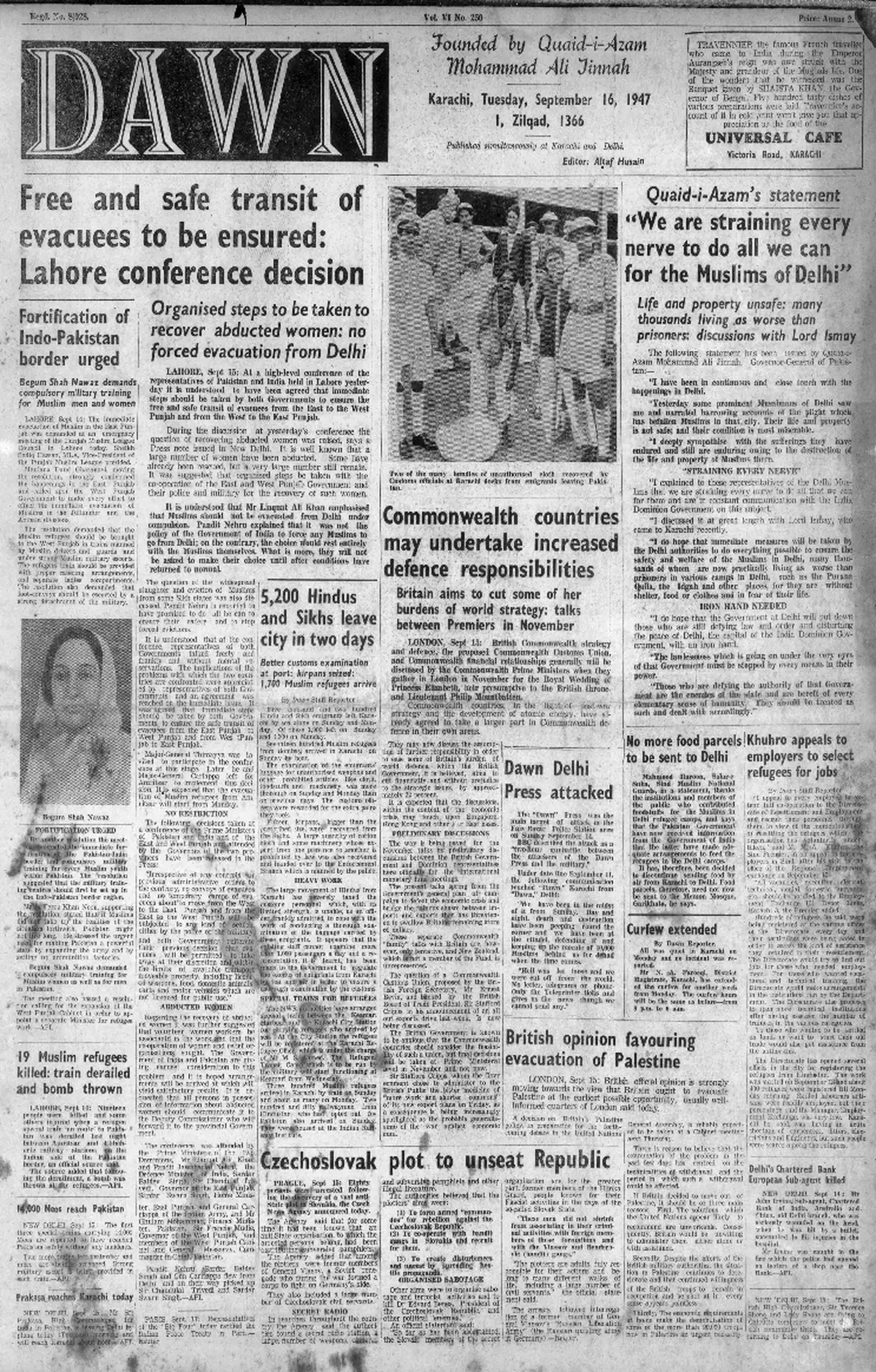
    It has always been an uphill struggle for the media to speak the truth in Pakistan. But these curbs, attacks and violent episodes are not new; in fact they go back to the time of Partition. As mentioned in the Sept 16 issue, the Dawn Delhi Press came under attack on Sept 14.

    Broken record: Quaid’s visit, an RSS cell, and Dawn under attack

    As Dawn was considered the voice of the Muslim League, and therefore the voice of the subcontinent’s Muslims, it was an easy target for extremists who opposed Pakistan and the Quaid’s grand old party. The news report, quoting the BBC, said that the attack was a “two-hour gun battle of the Dawn press and the military.”

    The staff at Dawn Delhi sent the following communication to their colleagues in Dawn Karachi: “We have been in the midst of it since Sunday [Sept 10]. Day and night, death and destruction have been peeping round the corner and we have been at the citadel. … Hell was let loose and we were cut off from the world.”

    From those harrowing days to the present, the struggle to speak the truth continues.


    With the advantage of hindsight, one has the opportunity to study the historical cycles in a nation’s life. Thanks to this newspaper’s unique, extensive archive of back issues, one can examine the major political, economic and social trends that have shaped Pakistan and the world over the last seven decades and counting. Cliched as it may sound, history repeats itself, and we — as a state and as a polity — largely refuse to learn from it.

    Through this platform, we will look back at the ‘big’ stories that made it to the front pages of Dawn, as well as significant developments tucked away in the inside pages, from the birth of Pakistan onwards, and try to put them in perspective. We will study the critical issues of the week, starting from Aug 14, 1947 and examine the major themes and issues that made it to the paper.

    Source: dawn

  • Thousands rally in Antalya to demand climate justice as COP31 talks hit midpoint

    Thousands rally in Antalya to demand climate justice as COP31 talks hit midpoint

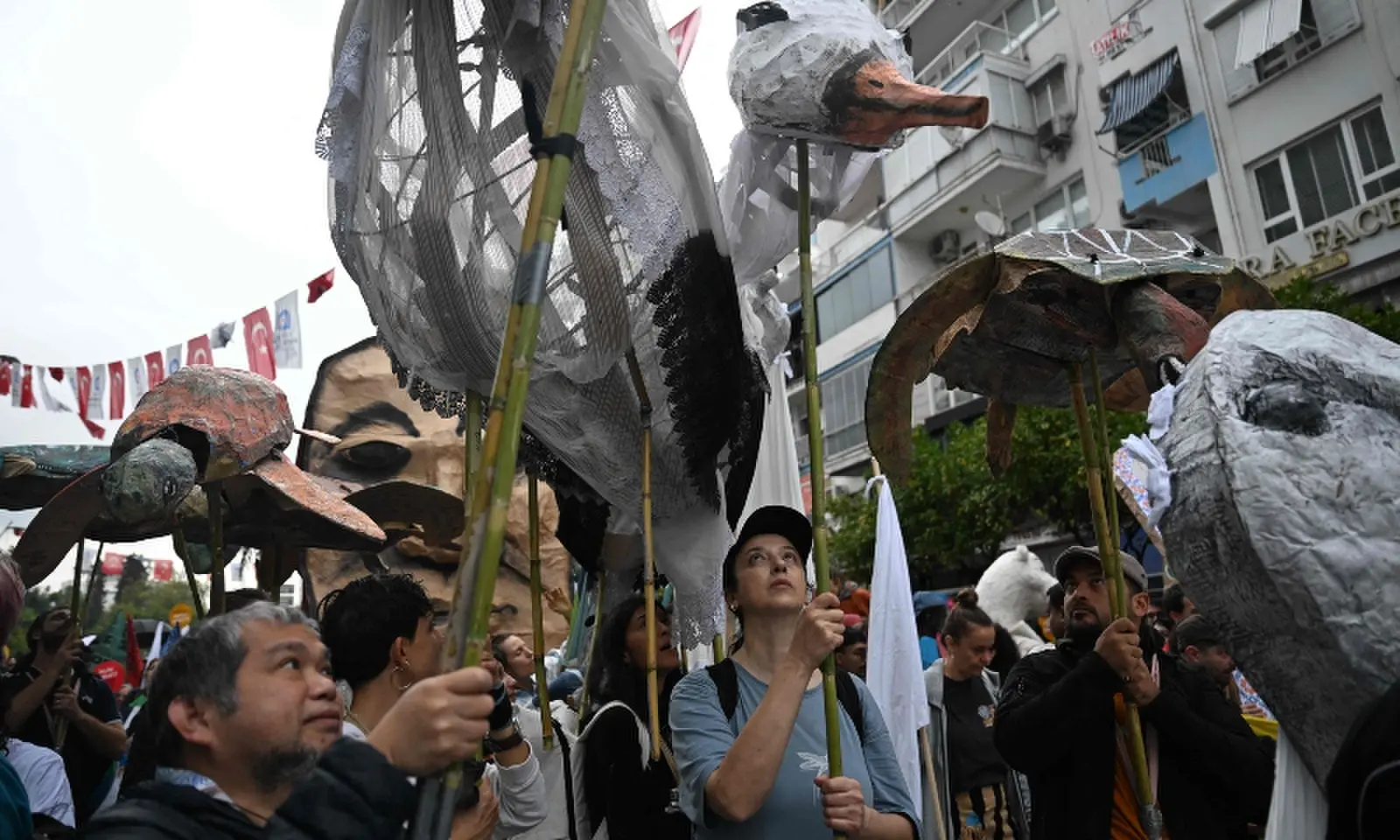
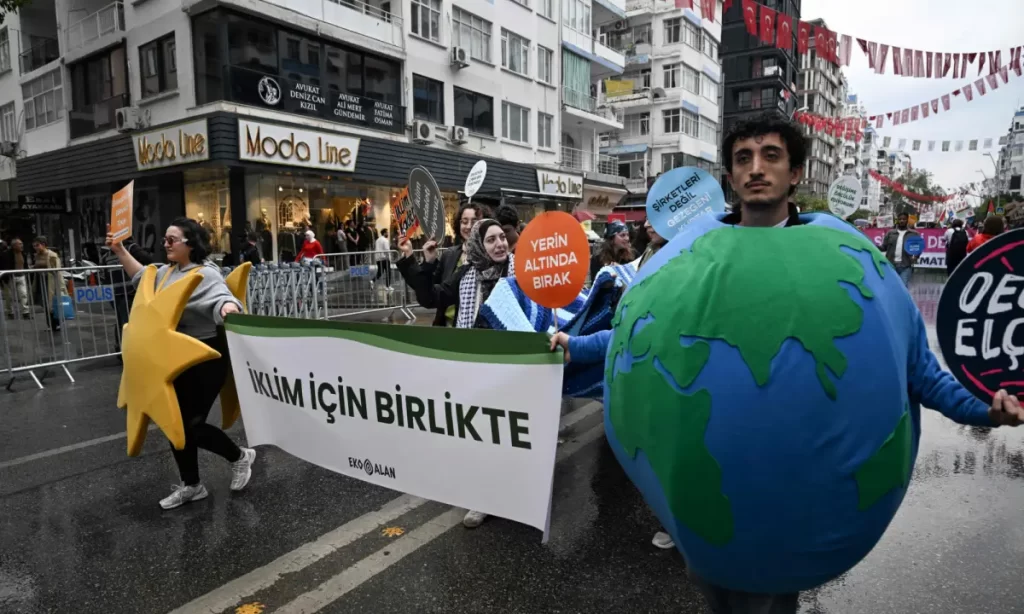
    Thousands of protesters on Saturday took to the streets in the Turkish city hosting COP31 to accuse the climate summit of failing those bearing the brunt of environmental destruction.

    The show of dissent comes as negotiators approach the crunch final week of global climate talks in Antalya, with nearly 200 nations scrambling to strike a deal by Friday.

    The summit is not expected to produce a major breakthrough, frustrating activists demanding tougher curbs on planet-warming fossil fuels and fresh pledges to help poorer countries adapt to climate impacts.

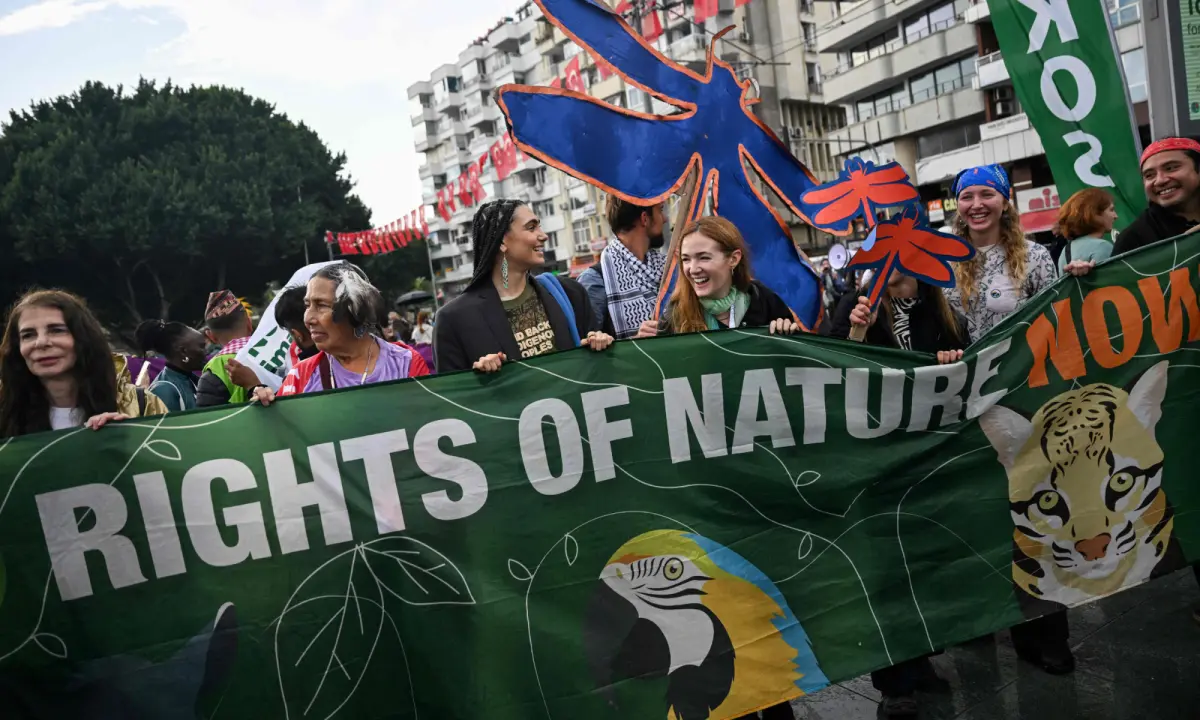
    In downtown Antalya, under rainy skies, thousands of protesters dressed in costumes and shouting slogans marched under close police supervision in the largest demonstration since COP31 began on Monday.

    “We are suffering the consequences of climate injustice, yet our voices are never heard at the COP,” said Halime Saman from the People’s Climate Summit platform, one of the groups behind the rally.

    “Turkiye is the co-chair of COP31 but still has no roadmap for phasing out fossil fuels. New power stations and coal mines are being opened,” she told AFP.

    Yasar Gokoglu, a 78-year-old demonstrator, travelled nearly 600 kilometres from Adana in southern Turkiye to denounce what he called “a masquerade sponsored by monopolies”.

    Protesters hold bird effigies during a demonstration organised by climate activists on the sidelines of the 31st United Nations Climate Change Conference (COP31) in Antalya on Nov 14, 2026. — AFP
    Protesters hold bird effigies during a demonstration organised by climate activists on the sidelines of the 31st United Nations Climate Change Conference (COP31) in Antalya on Nov 14, 2026. — AFP

    Police estimated that more than 7,000 people attended the protest, which was organised by environmental groups, trade unions and rights organisations, and proceeded without any major incident.

    Civil society activists had raised safety concerns ahead of COP31 after Turkiye embarked on a crackdown on the LGBT community in September. Some LGBT protesters waving rainbow flags participated in the march.

    Demonstrators were only allowed to join the rally after being searched by police.

    ‘No quick fix’

    Much smaller demonstrations inside the COP31 venue this week, including one attended by Swedish activist Greta Thunberg, have been mounting pressure on political leaders to act faster on the climate crisis.

    The negotiations hit the halfway point Saturday, but countries remain far apart on contentious issues including financing adaptation measures in developing nations, defending climate science, and shifting from fossil fuels to clean energy.

    Australia’s climate minister, Chris Bowen, who is chairing the formal negotiations, said there had been “really good and positive conversations” but some issues required more time.

    Outside the negotiations, Turkiye is urging countries to join a voluntary pledge to raise the share of global final energy demand met by electricity.

    The summit, which closes on Nov 20, takes place against a difficult backdrop, with a conflict-driven energy crisis and geopolitical tensions tempering expectations.

    “There’s no climate quick fix. No single COP can magic this crisis away, but each must drive progress,” UN climate chief Simon Stiell told reporters on Saturday.

    MNA presents five parliamentary recommendations

    At the Pakistan Pavilion at COP31, Parliamentary Secretary for Information and Broadcasting Barrister Danyal Chaudhry addressed a high-level dialogue and stressed that the world needs to acknowledge the economic cost of climate inaction, according to a press release.

    At the dialogue, titled ‘Adapting Under Austerity: Delivering Paris Commitments in Debt-Stressed, Climate-Vulnerable Economies’, he stated that Pakistan’s core needs to ensure that the pursuit of fiscal sustainability does not compromise Islamabad’s capacity to protect people from severe climate impacts.

    “He noted that past policies introduced in the name of fiscal consolidation increased taxation and discouraged climate-resilient development — an approach the Government of Pakistan believes directly undermined its climate objectives,” the press release said.

    Chaudhry emphasised that the world must “function as one global village and one global family”. The secretary further noted that addressing the climate crisis requires collective action on a shared planet and there cannot be separate standards for wealthy and developing nations.

    He presented five key parliamentary recommendations for climate-vulnerable and debt-stressed nations.

    “First, he called for climate-proofing fiscal and taxation policies by mandating climate impact assessments for major financial decisions so they do not drive up the cost of sustainable development,” the statement said.

    Second, he stressed the need to safeguard the transition to renewable energy through stable, predictable policies that do not penalise households or businesses investing in clean energy.

    Chaudhry also called on governments and lenders to treat adaptation as an investment rather than an expense, stressing that investing in climate-resilient agriculture, water management, early warning systems, and disaster-resistant infrastructure reduces future recovery costs.

    Next, he advocated for reforming global debt architecture through debt-for-climate swaps, climate-contingent clauses, concessional financing and extended repayment schedules, so disaster-prone countries are not forced to “sacrifice essential development”.

    Chaudhry went on to call for strengthening parliamentary oversight of climate financing by requiring annual reports on climate-related taxes, subsidies, budget allocations and measurable adaptation outcomes, the press release said. He added that national fiscal frameworks must remain fully aligned with Pakistan’s Nationally Determined Contributions (NDCs) and National Adaptation Plan.

    Thousands rally in Antalya to demand climate justice as COP31 talks hit midpoint

    Source: dawn

  • ‘Check, one two’: Technical glitch hits US presser on air travel chaos

    ‘Check, one two’: Technical glitch hits US presser on air travel chaos

    Trump administration officials were left red-faced on Saturday when their public effort to address the massive tech disruption that grounded thousands of US flights was itself hit with embarrassing technical glitches.

    Secretary of Transportation Sean Duffy took the podium and began addressing a much-anticipated and televised press conference a day after a disastrous nationwide ground stop across US airspace — one blamed on ageing technology — when a deep, echoing hum began to emanate from the microphones and speakers.

    “Check one two, three four, five six seven?” Duffy said into the mic.

    As cameras rolled, he paused, looked around, and stepped away.

    “[I] apologise for that,” he said, as technicians scrambled to replace microphones and adjust cables.

    Duffy soon resumed, but brittle feedback hit the room seconds later and his demeanour shifted, presumably all-too-aware that the symbolism of an on-camera tech meltdown after such a major flight disruption was not going unnoticed.

    “This is not operational? OK,” said Duffy, appearing deeply irritated.

    “This is our kind of, uh, day.”

    Duffy was speaking to reporters with the head of the Federal Aviation Administration, Bryan Bedford, and, ironically, with the FAA’s chief technology officer Rebecca Guy, who he said was doing a press conference with him for the first time.

    Duffy and Bedford repeatedly pointed to ongoing systemic issues with transitioning from ageing air traffic control technology from the 1970s and 1980s to more modern equipment.

    As technicians scrambled, US networks carried the awkward pause — lasting an excruciating three minutes — live on the air.

    Source: dawn

  • Abdul Samad’s late strike sends Pakistan into historic SAFF Championship final

    Abdul Samad’s late strike sends Pakistan into historic SAFF Championship final

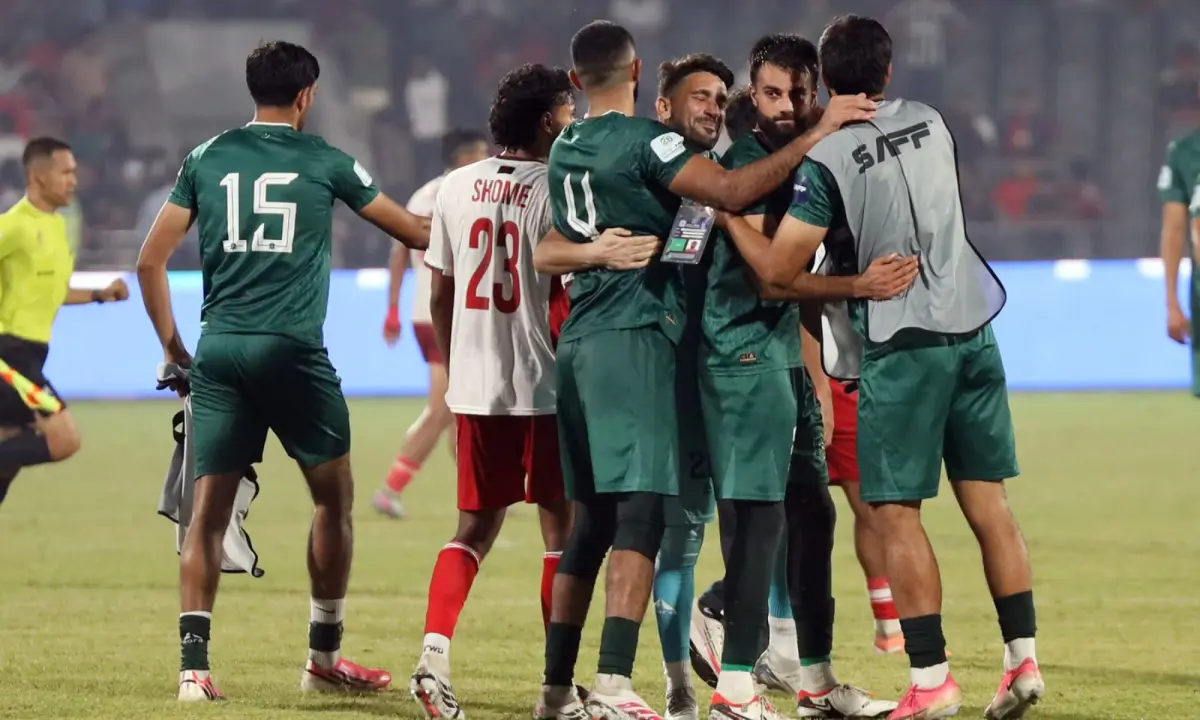
    Abdul Samad Arshad struck a sensational late winner to guide Pakistan into their first-ever SAFF Championship final, as Nolberto Solano’s side held off sustained pressure from hosts Bangladesh to secure a dramatic 1-0 semi-final victory at the National Stadium on Saturday.

    With Bangladesh dominating possession and looking the more likely side to break the deadlock, Samad produced a moment of individual brilliance in the closing stages to silence the home crowd and make history for Pakistan football.

    The Denmark-based forward collected the ball on the right, skilfully shifted it between his feet to create space before unleashing a powerful left-footed drive that beat goalkeeper Mehedi Hasan Srabon with around five minutes of regulation time remaining.

    The victory marks another significant milestone in a remarkable year for Pakistan football, with the national side now just one win away from claiming its first regional title.

    Bangladesh enjoyed around 62-64 per cent possession and looked to make the most of home advantage, but Pakistan remained disciplined and organised defensively, frustrating the hosts while posing a threat on the counter-attack. Despite having considerably less of the ball, the visitors registered more shots and efforts on target.

    Bangladesh, who had topped Group ‘A’ unbeaten with victories over Bhutan and Sri Lanka, pressed for an equaliser in the closing minutes.

    Frustrated home supporters even threw a flare onto the pitch, briefly interrupting play, but Pakistan held firm to secure a famous victory.

    The result also ends a long history of semi-final disappointment for the Shaheens, who had reached the last four on four previous occasions without managing to progress to the final.

    Solano’s men had reached the semi-finals as Group ‘B’ runners-up after opening their campaign with a 3-2 defeat to India, despite a spirited late fightback, before responding with a convincing 3-0 victory over the Maldives.

    The arrival of several overseas-based players, including Samad, for the knockout rounds provided a timely boost, with the group-stage fixtures having fallen outside the FIFA international window.

    Pakistan will now face arch-rivals and defending champions India in Tuesday’s final after the latter defeated Bhutan 2-1 in the other semi-final.

    Solano’s side will be aiming to cap their historic campaign by overcoming India and securing Pakistan’s first-ever SAFF Championship title.

    Source: dawn