Tech giant Microsoft said on Saturday it has “restored service” to customers, effectively drawing a close to a massive outage that caused chaos and disrupted public services and business around the world.
“We have completed our efforts to address the underlying issue of the incident and restored service to the remaining impacted customers and regions,” the US-based company said in an X post.
Microsoft had already reported a “broad recovery” for Outlook email and other services the day before, stating the major disruption was due to a technical issue and “not related to cyber or AI/agents”.
The outage swept the globe on Thursday, taking the company’s products offline in at least 74 countries and territories across the Americas, Europe, Asia and Africa, according to the monitoring site Downdetector.
Microsoft had attributed the disruption to “elevated load” on its infrastructure.
It said the stoppage affected its Outlook email service, as well as Microsoft’s Teams communication platform and the company’s Copilot AI assistant.
Microsoft on Friday apologised for the global outage as it reported a “broad recovery” for Outlook email and other services.
The company ruled out any malicious “cyber or AI” activity as the cause of the outage, which affected several Microsoft products and disrupted health care services, delayed corporate earnings reports and left schools struggling to communicate.
“We are deeply sorry for the disruption this incident has caused our customers and partners,” Microsoft said on X, adding that full services were still being restored after the outage started on Thursday.
Elon Musk said on Saturday that chipmaker Nvidia would lose “critical” deals without its now-ousted chief executive officer (CEO) Jensen Huang.
Huang stepped down on Thursday after revelations of extramarital affairs, including one involving a suspected Chinese spy, plunging the chipmaker into crisis and sending shockwaves across an AI industry he helped bankroll.
In a post on X, Musk said that while Huang drove the supply chain “brilliantly” at Nvidia, many such deals were “a handshake with Jensen, not a written contract”.
“Without Jensen, at least some of those critical deals will be lost.”
The SpaceX boss went on to praise the former Nvidia CEO: “If Jensen gave me his word about compute delivery or I asked for components to be accelerated, he always came through.
“Sure, we’d put together a purchase order at some point later, but I never for a second thought it wouldn’t happen.”
The billionaire has separately said on X that a petition was underway to reinstate Huang and that he would sign it. It was not immediately clear whether Musk was referring to the internal effort reported by Wired.
Nvidia declined to comment on the Wired report as well as Musk’s post. Reuters could not independently verify the reports.
Pressure had mounted on Huang after reports said the 63-year-old, who is married, had an affair with Alice Huang, an unrelated former executive of Singapore-based company Megaspeed, who US authorities had been investigating.
Nvidia then said its board was probing whether its then-CEO “has been the target of a foreign intelligence effort”.
On Thursday, CNNreported that the US intelligence community was still working to understand the relationship between Alice Huang and the Chinese government, with multiple sources telling CNN that the intelligence collected on her to date does not prove that she was acting as a spy for Beijing.
The report said there was “disagreement among US officials about the strength of the evidence that Alice Huang was recruited by the Chinese Ministry of State Security (MSS)” to spy on Jensen Huang.
Insiders and tech titans in the running
Huang’s exit plunges the $4 trillion company into uncertainty and threatens to disrupt an AI ecosystem that he helped bankroll by pouring Nvidia’s swelling cash pile back into cloud providers, suppliers and the industry’s biggest labs.
Nvidia’s board has approached British chipmaker Arm Holdings CEO Rene Haas in its search for a potential successor to Jensen Huang, the Financial Times reported on Friday, citing people familiar with the matter.
Haas’s name has been making the rounds among analysts since Huang’s exit. He spent seven formative years at Nvidia, rising to vice president and general manager of its computing products business, before joining Arm in 2013.
Nvidia’s finance chief Colette Kress is currently interim CEO.
Nvidia’s board said it was in the process of selecting a search firm for the CEO role and had not formally engaged any potential candidates.
Some analysts expect the next CEO to break from Huang’s three-decade reign as the hands-on “chief conductor” who personally steered engineering roadmaps, geopolitical negotiations over exports to China and massive investments across the AI ecosystem.
A potential shift toward a more institutional leadership structure would come as Nvidia faces heightened regulatory scrutiny and a growing consensus among US lawmakers to further restrict the company’s chip exports to China.
Analysts view Kress as a steady financial authority, while veteran engineer Ian Buck is seen as a top candidate after leading development of CUDA, the software platform that powers Nvidia’s AI chips.
Apart from Haas, external names discussed by analysts include AMD chief Lisa Su, who has navigated the key China market, and Micron chief Sanjay Mehrotra, whose memory chips power Nvidia servers.
Other candidates cited by industry watchers include Marvell head Matt Murphy and Apple hardware chief Johny Srouji, who oversaw the iPhone maker’s in-house silicon development.
Former Apple chief Tim Cook was floated by US President Donald Trump, as Nvidia’s board evaluates whether to prioritise financial continuity, deep technical expertise, or experience running a global tech heavyweight.
Former Gulistan-i-Jauhar station house officer (SHO), Kamran Qureshi, was dismissed from service on Saturday over charges of misconduct in the Mir Raza Ali murder case.
Last month, a joint investigation team (JIT) constituted by the Sindh government recommended an inquiry against Qureshi, who was suspended from duty, over the possible facilitation of the destruction of evidence.
According to the dismissal order seen by Dawn, Qureshi failed to secure the crime scene where Ali’s body was found and did not call in the Crime Scene Unit (CSU) as per regulations.
“As a result, the crime scene could not be processed promptly, which caused [a] delay in forensic examination and possible loss of important circumstantial evidence which [is] tantamount to gross misconduct, inefficiency [and] dereliction of duty. Thus, you have rendered yourself liable to be awarded one of the major punishment[s] under the Sindh Police (E&D) Rules, 1988,“ the order read.
The order further noted that an inquiry was conducted by Central Senior Superintendent of Police (SSP) Muhammad Imran Khan, who observed that Qureshi not only failed to discharge his duties in securing the crime scene and evidence, but did not even visit the site. The Central SSP recommended major punishment.
The order said that Qureshi also failed to submit a reply to a show-cause notice.
“He was called in [the] orderly room and heard in person on Nov 13. His oral explanation has been considered and found unsatisfactory, as he could not add any cogent reason to repudiate the allegations levelled against him,” the order read.
“Therefore, agreeing with the recommendation of [the] inquiry officer, he is hereby awarded major punishment of dismissal from service,” the order said.
The case
Ali, a 25-year-old businessman, had gone missing on July 28 after leaving his home in PECHS, and his body, bearing a gunshot wound, was found in the bushes in Gulistan-i-Jauhar a day later.
Initially, the police built the case around suicide on the basis of the first autopsy, which indicated a bullet entry wound on the chest, and by pointing out business losses and money borrowed by the victim.
Police surgeon Dr Summaiya Syed had disputed the findings of the first post-mortem conducted by medico-legal officer Dr Osama Sheikh.
The second post-mortem report termed the findings of the first report “inconsistent” with suicide as the manner of Ali’s death. It said the Exhumation Board was of the unanimous opinion that the death was caused by a gunshot wound to the back.
Last month, a judicial commission formed to probe the case had pointed out the police’s “epic failure” in their investigation of the case. In its 62-page report, the commission, while severely criticising the police investigation, came to the conclusion that it was a “murder”, and made a host of recommendations, including formation of a joint investigation team (JIT) to probe the case.
The report was made public by the Sindh government.
Sindh Home Minister Ziaul Hassan Lanjar announced on Oct 22 that a JIT would be formed in accordance with the recommendations of the judicial commission.
Day later, the government formed the JIT, led by DIG Irfan Baloch, and asked the Inter-Services Intelligence, Intelligence Bureau, Pakistan Rangers and National Cyber Crime Investigation Agency to nominate senior officers to join the team.
Earlier this week, the JIT seized the licensed pistol of Ali’s business partner and said that the North Nazimabad branch of the deceased’s food chain had also been sealed for further investigation.
ISLAMABAD: The National Cyber Crime Investigation Agency (NCCIA) on Saturday warned that loopholes in the existing system are being exploited by illegal call centres, online betting operators and international fraud networks to launder money and trap victims.
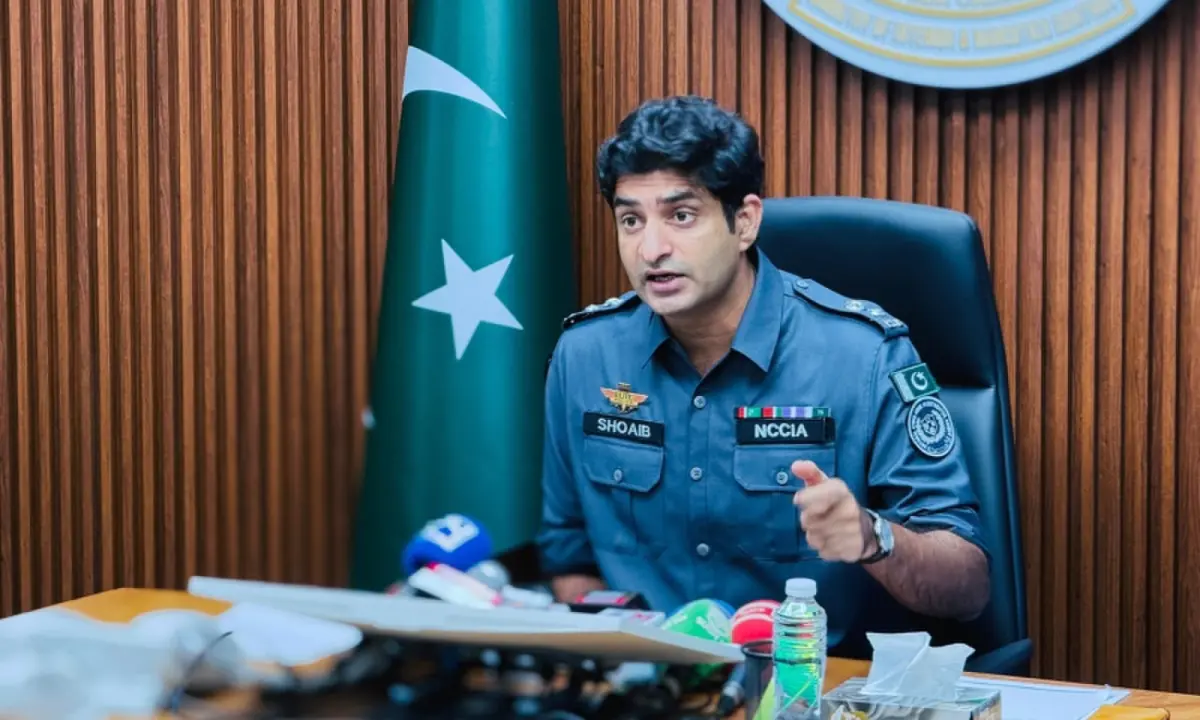
Addressing a press conference, NCCIA (Islamabad/Rawalpindi) Additional Director Muhammad Shoaib Khan said fake companies were being registered with weak verification, after which bank accounts opened in their names were integrated with loan apps, betting and gaming portals to receive and transfer illicit funds.
Therefore, he called for stricter rules on company registration and bank account verification.
The press conference was primarily called to warn educated youths against becoming involved in cybercrime by joining illegal call centres in pursuit of lucrative salaries, urging those seeking jobs with call centres to ask their employers where they are registered and appealing to parents to check whether their children were working at an illegal call centre carrying out scams, fraud or other illicit activities.
“Ask them what documents the company has, what registration it operates under, which company they work for, which company is providing the loans, where the money is coming from and who is putting money into these applications,” Khan said.
Acknowledging that young people and university students were engaging in such jobs because the salaries were higher than average, he noted that they risked ending up becoming part of the entire trap and operation.
“If your son or daughter is arrested in such an operation, the FIR (first information report) becomes part of their record. Tomorrow, when they need a character certificate or apply for a government job, that record can affect them,” the NCCIA officer warned.
He said the issue concerns merchant accounts provided by banks and the accounts into which money is deposited. A bank account is linked to a company that may already have been registered despite weaknesses in proper verification, standard operating procedures or the Know Your Customer (KYC) process.
“After the company has been registered, the bank opens an account for it. The operators then take that company’s bank account and integrate it with their online betting or gaming portal,” Khan said, adding that the NCCIA team is working on recommendations to these institutions so that they improve their checking systems.
The additional director said the agency already raised the issue with senior officials at the policy level, and loopholes identified during investigations and interrogations are brought to light so they can be addressed.
He said the NCCIA wants to address cases where one-person companies or similar companies were registered and their bank accounts were subsequently used in this way.
Meanwhile, Khan said that the NCCIA identified the role and other details of each individual involved: who used which computer, what their role was, the extent of their involvement, who trapped victims, made the calls and edited the material.
“We do not treat everyone as having played the same role. After establishing those roles, we prepare the proper FIR and proceed accordingly,” he explained.
The NCCIA additional director noted the agency raided two call centres in the Islamabad-Rawalpindi Zone over the past three days.
In the Rawalpindi raid, 11 people, including 10 women, were arrested, while in the Islamabad raid, 143 people were arrested, including 43 women. He said the centres were carrying out transnational scams and fraud, targeting countries in South Asia.
Modus operandi
Explaining the modus operandi, he said the two centres in the latest raids worked differently.
At the Rawalpindi centre, an elaborate setup posing as the police had been created. The operators would offer loans, and when it was time to recover the loans — or when they had trapped someone and wanted to extract money — they would call and scam that victim.
The suspects would tell a person that they were either being surveilled or on a hit list. Once someone fell into their trap, they would transfer the person to a setup made to look like the police in Bangladesh, put the victim in contact with someone posing as a police officer and then extort money.
At the Islamabad centre, they worked in layers; first, they trapped the victim and convinced them to install an application on their mobile phone. Once it was installed, they obtained access to the person’s photo gallery.
After accessing the gallery and obtaining a selfie, they would issue a loan for a minimal amount. But their real target was to collect the person’s credentials: mobile number, personal information and other data.
They also obtained information about close family members whom the borrower had identified as guarantors, such as a wife, father, brother, cousin or other family members named as next of kin.
Once they had collected all these credentials, the case would be passed to senior members. When they had extracted all of the money they could from someone, they would wipe out that person’s account and close the case.
The second method was to take a person’s selfie and other pictures from their phone gallery and edit them into pornographic material, using the person’s face in what appeared to be a professional manner. They would then start threatening, harassing and blackmailing the victim.
“Even though the resulting pictures might have been fabricated, the threats were still effective. The victim would be under tremendous pressure, fearing that the images would reach their community or family. Under that pressure, the person would start paying money,” Khan said.
He said the scammers extracted personal information in the name of loans, manipulated it and used it against the victims, or created sexual content depicting the victim and extracted money through harassment and blackmail.
Responding to a question about alleged masterminds, Khan said they were present at every call centre and also arrested. After that, the agency would investigate local facilitators, including whoever rented out the building, those who made the arrangements and connections and those who set up the operation through a fake company.
“We also trace the people who pay the bills and pursue those involved. Then we work at the transnational and international level. We have liaison arrangements with different countries. If a handler or operator belongs to another country, we communicate through embassies and our international contacts,” he noted.
A global problem
The additional director further stated that international cooperation was being strengthened because such call centres had become a global problem.
The NCCIA would handle investigations in Pakistan, while the relevant agencies in the United Kingdom, the United States, China and other countries would handle such matters in their respective jurisdictions.
Khan added that in a previous Rawalpindi call centre case, foreign nationals were arrested and are in jail, and will face trial according to Pakistani law.
On the changing methods of call centres, he acknowledged that they were no longer necessarily operating in large plazas. In one house, 10 to 12 people gathered with a computer setup and connected their applications and websites to bank accounts.
Someone may be sitting in another country while the people here trap the victim, the NCCIA official pointed out. Once the victim starts depositing money into the account, the person in the other country receives the money.
He noted that the Rawalpindi centre had been operating for about a month, while the Islamabad facility had been established only 15 or 20 days earlier. The floor managers and overall HR managers at both centres were locals, he added.
“We will investigate and interrogate further to establish who is connected to the back-end operation. We need to find out in which country the application was developed, who developed it and who is handling it,” Khan stated.
Staying safe
Speaking about how the youth could tell which call centres are legal, Khan said the first thing is common understanding.
“If an entire floor is generating sexual content, you know that is illegal. That is a matter of common sense.”
Khan added that when applying for a job, young people should ask which organisation the business is registered with, who approved it and what approval it received from the Securities and Exchange Commission of Pakistan.
Moreover, he said many loan applications were operating legally because they have proper permission and follow a lawful procedure. The NCCIA inspects their whole system, including whether the applications are accessing people’s photo galleries, and examines their loan-recovery mechanism. If a borrower does not pay, there are legal channels and procedures for recovery.
On foreign nationals allegedly involved in cybercrime, Khan said he did not have an exact number, but acknowledged that there have been many deportations.
“The number in prison is in the hundreds. When the agency raids one call centre alone, it may find between 150 and 250 people on average,” he added.
Khan also rejected attributing call-centre crime to one nationality, saying there are people of multiple nationalities who come to Pakistan and become involved in this work.
The agency had also arrested 37 suspects allegedly involved in harassment and blackmail cases over the past two to three years, the official added. The suspects had extracted money from women through harassment and blackmail, and the victims had endured this for the past two or three years.
On online betting and gambling, Khan said operators initially give users profits deliberately, enticing people to put more money into these portals. They then assess the victim’s financial capacity and, once convinced that the victim has invested their savings, they wipe out the money and cut off contact.
“We are working on this issue and, God willing, will take further action soon. We are making every effort to address fraud involving millions and billions in the name of online betting and gaming,” he stressed.
Appealing to young people and businesspeople, including major business owners, Khan urged them against putting business money into buying tokens online and depositing money into gaming applications, gaming websites or betting platforms.
“Initially, they may even be allowed to withdraw their money, but essentially the operators are giving them time, playing with their mind and encouraging them to keep depositing more money,” he explained.
Khan said the cyber-patrolling teams work around the clock, 24 hours a day, seven days a week.
Mohit Ulva and Venkata produced a decisive unbeaten ninth-wicket stand to snatch a thrilling one-wicket victory for India over Pakistan in the U-19 Asia Cup final, chasing down a daunting 338-run target off the final delivery of the match in Muscat on Saturday.
With India struggling at 252 for eight, Ulva and Venkata joined hands to turn the game around, taking the contest into the final over with eight runs required.
Ulva, who remained unbeaten on 49 off 26 balls, struck the winning boundary off Ahmed Hussain’s final delivery to take India to 339 for nine. Venkata remained not out on 11.
India had appeared to be out of contention after losing eight wickets for 252, despite a solid start to their chase. Manal Chauhan’s aggressive 47 and the subsequent lower-order resistance kept India in the hunt before Ulva and Venkata completed the remarkable recovery.
Earlier, Pakistan had posted 337 for nine after being put into bat, with Usman Khan leading the charge with a commanding 107, his fourth century at this level. Abdul Qadir smashed 80 off just 54 balls, while captain Farhan Yousaf added 63 as Pakistan looked set for a total in excess of 350.
Pakistan were cruising at 204 for two after 30 overs, but India’s bowlers staged a strong comeback in the closing stages.
Kavya Paresh Patel claimed four for 68, while Chigurupati Venkata, who replaced the injured Ishan Sood, took three for 40. Pakistan managed only 63 runs in the final 10 overs while losing six wickets.
India’s chase began on a positive note, with Aaryavir Sehwag and Lakshya Raichandani providing a solid opening stand. However, regular wickets in the middle overs put the asking rate under pressure and left India needing a remarkable recovery in the closing stages.
The dramatic finish capped a high-scoring final, which featured the highest aggregate in India-Pakistan U-19 ODIs.
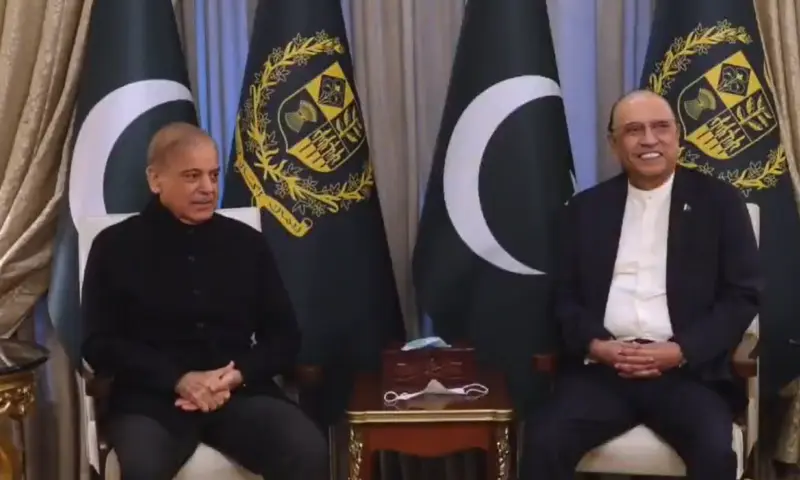
President Asif Ali Zardari and Prime Minister Shehbaz Sharif on Saturday discussed the country’s political, economic and security situation in detail, the premier’s office said.
PM Shehbaz warmly welcomed the president upon his arrival at the former’s residence in Lahore’s Model Town, the Prime Minister’s Office (PMO) said.
The premier briefed the president on his recent visit to Turkiye, where he participated in the 31st Conference of Parties to highlight Pakistan’s efforts in climate action.
Both leaders exchanged views on “cooperation among allied parties, continuation of consultation and progress on public welfare projects”, PMO said.
It added that the two leaders also reaffirmed their commitment to working together to accelerate economic stability and development in the country.
National Assembly Speaker Ayaz Sadiq Khan, Law Minister Azam Nazeer Tarar, PM’s Adviser on Political Affairs Rana Sanaullah, ex-PM Raja Pervez Ashraf, Senator Saleem Mandviwalla and MNA Hamza Shehbaz were also present during the meeting.
President Zardari’s meeting with the premier comes just two days after Interior Minister Mohsin Naqvi called on the president.
After media reports emerged claiming that Naqvi and the president had discussed the possible formation of new provinces during their meeting in Nawabshah, the President House clarified that “no such discussion” took place.
The Presidency explained that “matters concerning national security and the regional situation” were discussed during the meeting.
The last publicly reported meeting between President Zardari and PM Shehbaz was on Oct 10, where the two discussed the country’s security situation just a day before the federal government imposed emergency and governor’s rule in Khyber Pakhtunkhwa.
In August, the prime minister had called on the president and briefed him on the Makkah defence pactsigned days earlier between Pakistan, Saudi Arabia and Turkiye.
Pakistan and 16 other countries,on Saturday condemned the Israeli airstrike on the Nasser Hospital in southern Gaza, calling on Tel Aviv to protect civilians and medical facilities and ensure the sustained and unimpeded delivery of humanitarian aid to the Palestinian enclave.
The deadliest single strike since Israel’s elections last month hit the surgery ward of Nasser Hospital in Khan Yunis early on Thursday, killing at least six Palestinians, including a 13-year-old boy, and wounding nearly 30 others.
The Israeli military claimed it carried out an “aerial strike to eliminate the threat they posed, after the Hamas had established a presence within the hospital complex and used it as a command centre”.
According to a joint statement issued by the Foreign Office (FO) on Saturday, the foreign ministers of Pakistan, Algeria, Djibouti, Egypt, Indonesia, Jordan, Kuwait, Lebanon, Libya, Mauritania, Oman, Qatar, Saudi Arabia, Somalia, Sudan, Turkiye and the United Arab Emirates condemned in the Israeli strike in the “strongest terms”
The statement said that strike “caused casualties among patients and medical personnel, in violation of international humanitarian law, which affords special protection to medical facilities and healthcare workers”.
It also condemned continued Israeli attacks on Palestinian civilians, including strikes on tents and other sites sheltering displaced persons.
“These attacks undermine the ceasefire and efforts to restore security and stability in Gaza and are inconsistent with US President Donald Trump’s Comprehensive Plan,” the joint statement said.
It expressed grave concern that “continued Israeli restrictions on humanitarian aid, shelter materials including tents, caravans and mobile homes, as well as medical supplies” were “deepening Gaza’s humanitarian catastrophe as winter approaches”.
“Inadequate shelter and deteriorating water, sanitation and healthcare services put civilian lives at grave risk, particularly those of children and infants, who could once again die from exposure to freezing temperatures,” it said.
The statement called on Israel to heed appeals from the international community and the Board of Peace for increased aid and to fulfil immediately and in full its obligations under the Sharm El-Sheikh Agreement.
“Israel must uphold the ceasefire, protect civilians and medical facilities, and ensure the safe, sustained and unimpeded delivery of humanitarian aid in sufficient quantities, including shelter and early recovery supplies and equipment to restore essential infrastructure.
“It must also allow United Nations agencies and humanitarian organisations to carry out their mandates without obstruction,” the joint statement said.
These first-phase commitments were due to take effect upon signature, it added.
“Israel must implement them without further delay or additional conditions, including political and security conditions, that impede humanitarian access,” the statement said.
“Urgent humanitarian assistance must proceed independently of progress on subsequent phases,” it said.
Per the statement, the foreign ministers called on the US and the Board of Peace to “intensify their efforts to ensure Israel’s full implementation of these commitments and the lifting of all restrictions on the entry of humanitarian aid, thereby preserving the credibility of the agreements and consolidating the ceasefire”.
The foreign ministers reaffirmed their determination to work with regional and international partners to consolidate the ceasefire, implement all phases of the plan and scale up humanitarian assistance to alleviate the suffering of the brotherly Palestinian people, the statement concluded.
Earlier this month, the Trump’s “Board of Peace” said that Israel needed to act immediately to help war-battered Gaza cope with impending winter, saying measures ahead of deadly floods had been insufficient.
Meanwhile, Prime Minister Shehbaz Sharif on Nov 9 said he had directed the foreign ministry to pursue all possible means to urgently “escalate humanitarian assistance” to Gaza amid heavy rainfall.
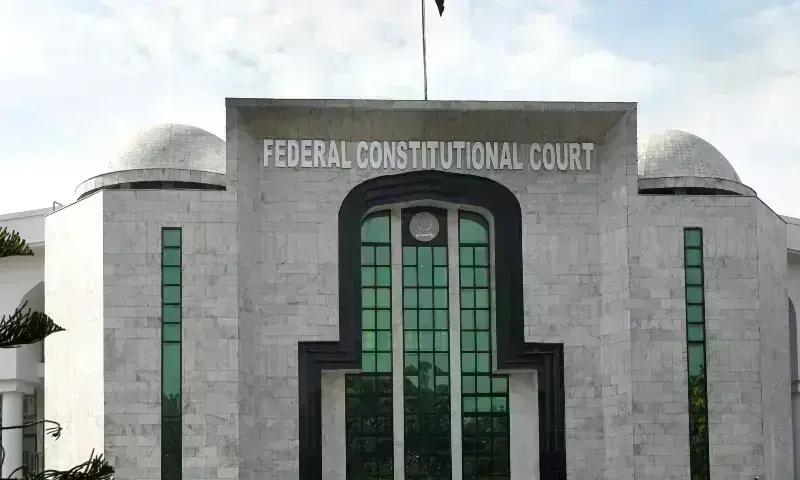
ISLAMABAD: The leaders of the opposition in both Houses of Parliament on Saturday approached the Federal Constitutional Court (FCC), seeking the immediate release of Sohail Afridi, the non-functional Khyber Pakhtunkhwa chief minister, along with eight other elected members of the provincial assembly and six members of the National Assembly.
Afridi has not been seen since the Centre imposed governor’s rule and emergency in KP on Oct 11. The very next day, a federal minister confirmed that he and some of his cabinet members were in preventive custody.
While the government has transferred powers to KP Governor Faisal Karim Kundi, the PTI has asserted that Afridi “remains and shall continue” to serve as the KP chief minister with the “confidence and support” of party founder and ex-premier Imran Khan.
On Saturday, National Assembly Opposition Leader Mehmood Khan Achakzai and Senate Opposition Leader Raja Nasir Abbas jointly filed a petition before the FCC.
The petition sought the enforcement of fundamental rights and constitutional protections against the alleged unlawful arrest, detention and confinement of Afridi, KP Assembly Speaker Babar Saleem Swati, Fazal Shakoor Khan, Dr Amjad Ali, Sultan Room, Yameen Khan, Abdus Salam Afridi, Muhammad Azam Khan and Ikram Ghazi, as well as six members of the National Assembly — Junaid Akbar Khan, Dr Amjad Ali Khan, Iqbal Khan Afridi, Fazal Mohammad Khan, Zubair Wazir and Maulana Naseem Ali Shah.
The petition said it raised substantial questions of public importance concerning the supremacy of the Constitution, the sanctity of the democratic mandate, constitutional limits on executive authority under Articles 232, 234 and 245, and the protection of fundamental rights guaranteed under Articles 4, 9, 10, 14, 17 and 19-A of the Constitution.
The petition also sought disclosure of the places of detention, production of the alleged detainees before the FCC, a declaration that their custody was unlawful and without lawful authority, and appropriate constitutional relief in the interest of justice and the rule of law.
The federal secretaries of interior and defence, the KP chief secretary, the secretary of the KP Home and Tribal Affairs Department, the provincial inspector general of police, the Peshawar capital city police officer, the Peshawar deputy commissioner and the Federal Investigation Agency (FIA) director general were named as respondents.
The petition raised the question of whether the constitutional mandate conferred upon members of the National Assembly and provincial assemblies through the electoral process carried with it enforceable constitutional protection against arbitrary state action designed to obstruct, frustrate or undermine their participation in representative governance.
“Whether the arrest, intimidation, coercive restraint or other unlawful interference with elected legislators, in circumstances affecting their ability to represent their respective constituencies, amounts to an indirect disenfranchisement of the electorate and an impairment of the constitutional scheme of representative democracy?” it stated.
The petition questioned the selective or collective targeting of elected representatives on account of their political affiliation, parliamentary position or participation in opposition politics and contended that these constitute discriminatory treatment, political victimisation and an abuse of public authority contrary to Articles 4, 14, 17 and 25 of the Constitution.
It also prayed that the FCC declare that the Constitution was the supreme law of the land and that no proclamation of emergency, assumption of provincial executive authority, deployment of the armed forces or other extraordinary governmental measure could confer upon any state authority unfettered power to disregard fundamental rights, constitutional safeguards or the democratic mandate of the people.
The petition further requested the court to declare that the “liberty, dignity, political association and representative functions of elected members were constitutionally protected, and that any arrest, detention, confinement, restriction of movement or coercive action against them was unlawful, unconstitutional and without legal effect”.
“Moreover, the electoral mandate of the affected elected representatives cannot be defeated, neutralised or rendered ineffective through arbitrary executive action, political victimisation or the misuse of state machinery.
“The people of KP are constitutionally entitled to effective representation through their duly elected representatives.”
It also requested the FCC to order the production before the court of the members in custody. It further pleaded that Articles 232, 234 and 245 of the Constitution must be exercised strictly within their respective constitutional parameters and cannot be invoked to justify the suppression of political dissent, disabling of elected representatives, interference with parliamentary functions or circumvention of the fundamental rights guaranteed under the Constitution.
The petition argued that the exercise of executive and administrative authority under governor’s rule does not suspend the constitutional obligations of the state, displace the supremacy of fundamental rights or place the actions of public functionaries beyond the scrutiny of the FCC.
On Thursday, PTI lawmaker Shandana Gulzar also approached the FCC, seeking the immediate release of Afrid, the provincial assembly speaker and other party workers.
The petition requested the FCC to order the respondents to “immediately disclose before the court their whereabouts, the identity of the authority exercising custody, the legal instrument and statutory provisions invoked as well as the grounds of detention and the date and circumstances of their taking into custody”.
It further urged the court to order the production of the PTI’s provincial leadership in person so that their present condition, liberty and legal status be ascertained and the “legality of any such restraint upon their liberty be examined judicially”.
Separately, Abbas and Balochistan National Party Chairman Sardar Akhtar Jan Mengal also approached the FCC on Saturday, seeking their impleadment in the case concerning the restraint imposed on the Peshawar High Court (PHC) from hearing petitions relating to the detention of PTI activists, which is likely to take up on Monday (Nov 16).
The PHC on Oct 31 granted interim bail to scores of PTI activists detained under the Maintenance of Public Order Ordinance following the imposition of emergency. However, the FCC on Nov 5 restrained the high court from hearing cases concerning the arrests of scores of PTI activists detained under the ordinance.
Through a miscellaneous application, the applicants through their counsel Sardar Latif Khosa, pleaded that they were the necessary and proper party to the proceedings since the FCC’s Nov 5 order of restrained the high court rom hearing cases concerning arrest of scores of PTI activists detained under Section 3 of the Pakistan Maintenance of Public Order Ordinance following the imposition of governor’s rule in KP.
The application said the FCC’s Nov 5 order directly affected their constitutional rights. It contended that if the applicants were not impleaded, they would suffer irreparable loss and would be condemned unheard, in violation of Article 10-A of the Constitution.
“That the applicants being proper and necessary party to the proceedings and matter in hand seeks impleadment to assist the FCC and also to seek clarification/modification/recall of the Nov 5, order to the extent that it suspends petitions challenging the proclamation/governor’s rule itself, and to plead that Article 245 cannot be used to oust jurisdiction of the high court to examine whether the preconditions for invoking Article 245 itself existed,” the application said.
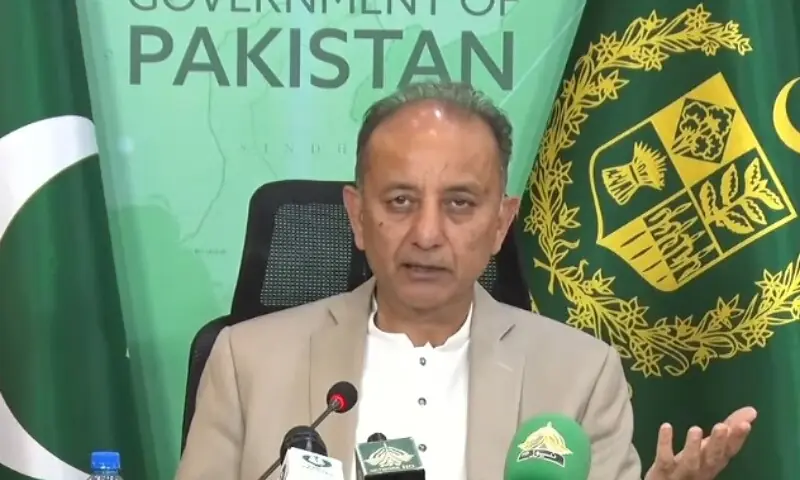
The Foreign Office (FO) said on Saturday that Climate Change Minister Musadik Malik had been nominated to represent Pakistan at the Shanghai Cooperation Organisation (SCO) Civilisational Dialogue in New Delhi from Nov 20-22.
In a statement, the FO said the gathering would bring representatives from SCO member states to discuss issues related to civilisational dialogue and cultural understanding.
“The government of Pakistan remains committed to promoting dialogue among civilisations and fostering people-to-people contacts within the SCO framework in a spirit of mutual respect,” the statement said.
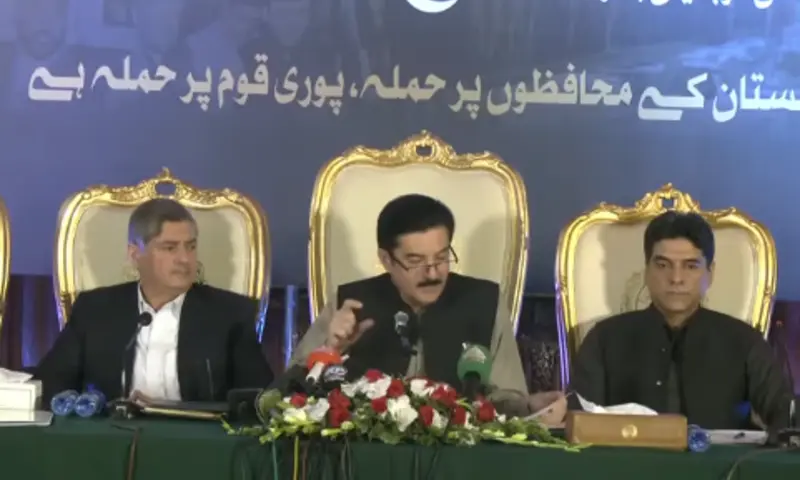
Khyber Pakhtunkhwa Governor Faisal Karim Kundi on Saturday announced a ban on gold mining across the province and the revocation of all mining leases as part of measures to curb illegal mining.
Addressing a press conference in Peshawar, Governor Kundi condemned the attack in Kohat that claimed the lives of 10 police personnel returning from an operation against illegal mining in the region.
He said an exemplary operation would be launched against those responsible for the attack, as well as their facilitators, as part of the government’s future strategy.
“There will be zero tolerance for those involved in this,” he said.
The governor also directed mining leaseholders to remove heavy machinery from the relevant areas within a week, warning that they would be held responsible for any losses incurred otherwise.
“After one week, the machinery, if not removed, will be seized,” Governor Kundi said, adding that the fines imposed this time would not be limited to Rs25,000 or Rs30,000, as had been the case under magistrates, but could reach Rs2 million under the law.
“We are also investigating why fines were not being imposed in accordance with the law,” he said.
The governor added that any politicians or individuals from other institutions found to be involved in illegal mining would be punished in accordance with the law.
On October 11, 2026, the federal government imposed an emergency and governor’s rule in KP following the President’s approval of the federal cabinet’s recommendations. It cited KP government’s “deliberate disengagement from the fight against terrorism” and the deteriorating security situation in the province.
An 11-member technocratic KP Advisory Council was formed to assist the governor in running the province, and a new chief secretary was appointed.
He said police personnel were targeted by Fitna al-Khawarij while returning from a successful operation.
“Fitna al-Khawarij and illegal miners had a nexus. The miners used to pay extortion money to the terrorists and, in return, received protection from them,” the governor said, adding that this nexus was responsible for the martyrdom of the police personnel.
Fitna al Khawarij is a term the state uses for terrorists belonging to the banned Tehreek-i-Taliban Pakistan.
He also shared a list of illegal mining equipment and machinery operating in Kohat. Mining was under way in two blocks — C and D — he said.
“Some 8,350 trucks, 3,660 excavators, 1,730 tractor trolleys with dynamos, 1,600 dumpers, 200 heavy loaders and between 49,000 and 51,000 labourers were involved in the mining activity,” Governor Kundi said, adding that illegal mining was worth Rs4.92 billion a month.
“Eighty per cent of the profits were being sent to Afghanistan and used for terrorist activities against Pakistan,” he said.
The governor further stated that during the tenure of the PTI government, a ‘Youth Committee’ was formed in February 2026 under the chairmanship of a Taliban leader, Naimatullah alias Commander.
“The purpose of this Youth Committee was to collect extortion money from locals and non-locals — Rs800,000 from locals and Rs110,000 from non-locals every week,” he said.
The money was being used by Fitna al-Khawarij against Pakistan, its security forces and police, he added.
The governor assured that there would be no political victimisation, adding that anyone found involved in the nexus would be held accountable.
“If there is no system of reward and punishment, neither this province nor this country will move forward. This country can no longer run under the doctrine of necessity,” he said.
He said anyone found guilty, whether a politician, bureaucrat or police officer, would have to face the consequences, regardless of how influential they were.
Governor Kundi also shared a list of people allegedly involved in illegal activities across KP, including 12 politicians: Aftab Alam of PTI, MNA Sheheryar Afridi of PTI, Senator Khurram Zeeshan of PTI, former Gambat town nazim Sajid Iqbal, former Lachi town nazim Ehsan, former MNA Amjad Afridi of PPP, former district mayor Seth Saifullah of JUI-F, Naseem Afridi, former JUI-F candidate Advocate Hammad Azam, Sohail Afridi’s brother Naveed, Azhar Bukhari and Nazir Afridi.
He also shared a list of local residents allegedly involved in the illegal activities.
The governor announced the establishment of a task force, named after martyred Deputy Superintendent of Police Haider Zaman, to formulate a “comprehensive and lasting” strategy for gold mining activities in KP within three weeks.
“We are bringing in a comprehensive system governing mining leases, related laws and security for mining workers under future leases,” he said.
Governor Kundi also announced that a judicial commission, headed by a retired Peshawar High Court (PHC) judge, would be formed by the following week to investigate the Kohat attack.
“We hope that the report will come soon so those responsible can be held accountable,” he said.
The governor also urged members of the KP Advisory Council to investigate all those involved in illegal gold mining and examine how large numbers of mining licences had been granted.
At the outset of his press conference, the KP governor said more than a month had passed since the imposition of emergency and governor’s rule in KP. “We will try to move in the right direction,” he said.
He said action had been taken in certain areas and the administration had received positive feedback.
“However, our topmost priority is to restore peace in the province and protect the rights and lives of the people,” he said.
Governor Kundi said the provincial administration had also decided to protect KP’s resources and would not allow anyone to plunder them.
Referring to the recent two-day minerals conference, the governor said the province was keen to enter into joint ventures to utilise its resources. However, he added, protecting the people and their rights would come first.
“For the past 13 years, the resources of our province have been looted,” he said.
He said that whenever the provincial government invited international investors and national companies to invest in KP’s natural resources, some people opposed the move, claiming that the province’s resources were being sold off.
“We are not selling your resources. Above all, the interests of the people of the province will be protected,” he said.
Governor Kundi alleged that those raising objections to the initiative were themselves responsible for plundering KP’s resources.
Jamiat Ulema-i-Islam-Fazl (JUI-F) chief Maulana Fazlur Rehman had alleged that the imposition of governor’s rule and emergency in KP in October 2026 was linked to the federal government’s motive to take control of the province’s resources.
“We are fighting a war against terrorism and we have burnt our boats. Accepting defeat is not a choice for us,” Kundi said, reaffirming his commitment to winning the fight against terrorism and bringing peace and development to the province.
The governor reiterated his call for an effective system of reward and punishment, vowing that no one who had plundered the province’s resources would be spared, regardless of their position or status.