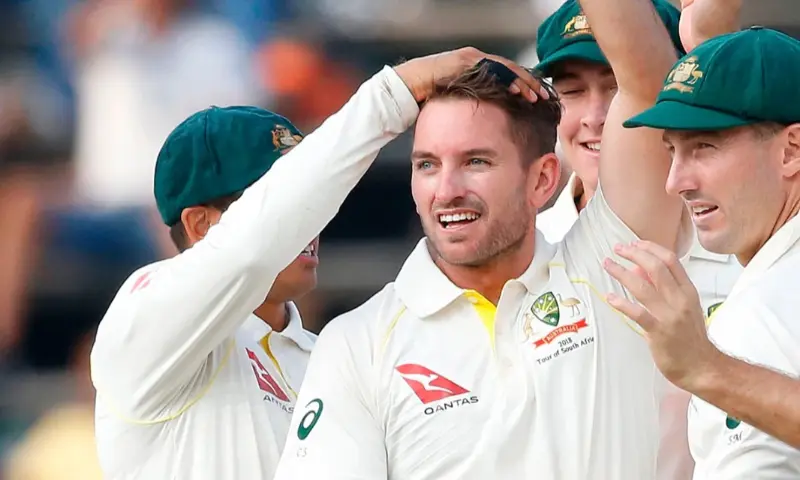
Former Australian Test bowler Chadd Sayers backed Usman Khawaja over his “Sandpapergate” claims on Sunday, contradicting Pat Cummins’ denials that he knew nothing about the ball-tampering plot.
Sayers was on the tour of South Africa but did not play in the third Test at Cape Town in 2018, where sandpaper was used to help make the ball swing.
A Cricket Australia (CA) probe concluded only then-skipper Steve Smith, his deputy David Warner and Cameron Bancroft were in the know, with all sent home and banned.
But Khawaja alleged in his autobiography last week that the whole team was aware, a claim strongly backed by Warner and now Sayers.
“I believe that everyone in that side knew what was going on and what was being used,” the retired Sayers, who played in the fourth Test at Johannesburg, told SEN radio.
Khawaja also alleged sandpaper was used in the second Test at Port Elizabeth, with Sayers saying he was the one who took it from the field.
“It (sandpaper) was given to me to take off, so that wasn’t planned or anything. I was just the player who took the drinks out at the time,” he said.
“It was used in two Test matches and there was discussions in the change rooms of how we were going to get the ball to reverse and what was going to be used.”
Cummins, now the Test captain, held a lengthy press conference on Friday to rubbish Khawaja’s allegations, calling them “100 per cent wrong”.
The bowling group of Mitchell Starc, Josh Hazlewood, Nathan Lyon and Cummins all denied publicly in a 2021 statement that they were aware of the plan.
Warner on Saturday accused the governing body of “a cover-up”, saying that “as far as he knew” they did not interview Hazlewood, Starc or Lyon at the time.
“If that’s correct then how can CA push the idea that the bowlers didn’t know?,” he said.
After numerous media reports confirmed the bowlers had indeed been interviewed, Warner on Sunday posted another statement on Instagram.
“Just to clarify ‘As far as I am aware’ was the POINT,” he wrote.
“I was never told the bowlers had been interviewed or provided statements. That information would’ve been pretty useful when I was forced to make decisions back in 2018.
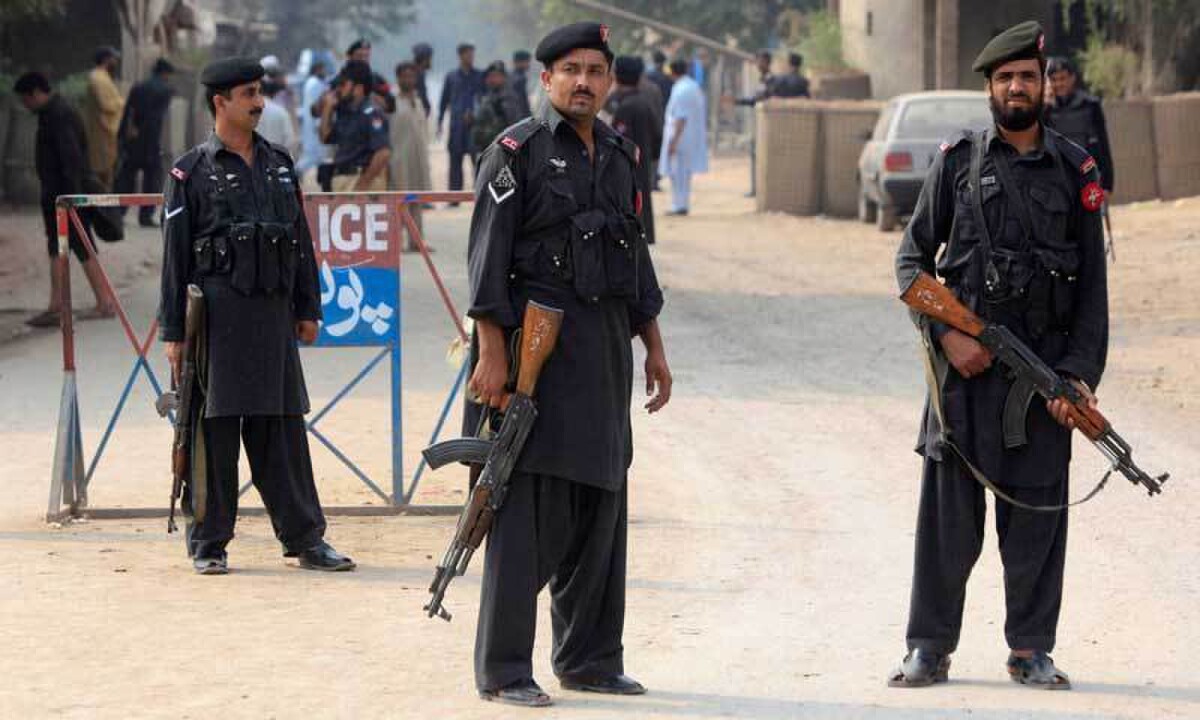
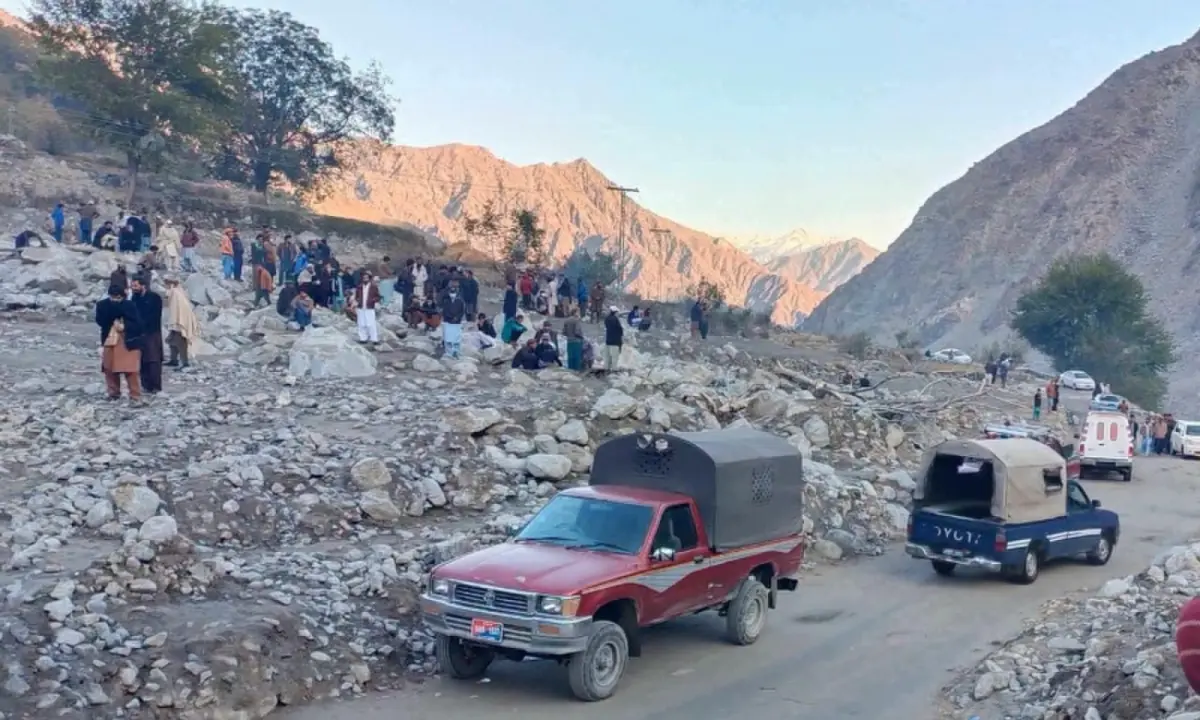
BAJAUR: The district administration on Sunday imposed a ban on all kinds of political gatherings, “hate speech” against the state and the display of arms and weapons in Khyber Pakhtunkhwa’s Bajaur for 30 days, invoking Section 144 of the Code of Criminal Procedure (CrPC) owing to the prevailing law and order situation.
The notification formalising the restriction, seen by Dawn, said Bajaur Deputy Commissioner Adnan Farid Afridi approved the restrictions in view of the prevailing law and order situation, citing the need for additional measures to safeguard public life and property and maintain peace in the district.
The notification further stated that law enforcement agencies were required to remain more vigilant to avert any “unpleasant mishaps” while also enhancing security at the district’s entry and exit points and discouraging and disallowing “unauthorised gatherings” in public places.
“Sufficient grounds exist to believe that immediate preventive measures are required to be taken,” the notification added.
The notification stated that the order would come into force on Sunday (November 15) and remain in effect until December 15, unless modified or withdrawn. It warned that anyone found violating the order would be punished under Section 188 of the Pakistan Penal Code (PPC).
In October, authorities banned pillion riding in Bajaur for 10 days, citing the security situation back then as well.
KP, including Bajaur, has been witnessing terrorist attacks and security challenges for a long time.
Last month, a police officer was martyred after terrorists attacked a police post in KP’s Bajaur.
On Friday, the miliatry’s media affairs wing said 74 terrorists had been killed in intelligence-based operations in KP and Balochistan. It said 43 terrorists were killed during operations (IBOs) conducted over 48 hours in KP, including 35 in North Waziristan’s Mir Ali and eight in Orakzai district. Another 31 terrorists were killed in Balochistan during an operation launched on Nov 3.
The next day, it said four troops, including a major, were martyred while 24 terrorists were killed in multiple IBOs in Balochistan and KP’s North Waziristan.
South Korean police said Sunday they had launched an investigation after the top scorer in a national tax accountant exam admitted to using artificial intelligence to cheat.
The candidate, who ranked first in both rounds of the qualification exam held in April and July, confessed through his lawyer that he used AI to obtain answers during the tests.
His score of 397.5 out of 400 points in the first round, with only one wrong answer out of 160 questions, had sparked accusations that he cheated using smart glasses, which he initially denied.
“We received a written confession through the test taker’s lawyer this morning regarding cheating on the tax accountant exam,” the Seoul Metropolitan Police Agency said, adding the case had been assigned to investigators.
In a video posted on his lawyer’s YouTube channel, the candidate said he “deeply regretted” what he had done.
“I used a miniature camera to photograph the exam questions and sent them to AI, then checked the answers on my smartphone,” he said.
The individual said he had struggled financially after leaving his job to start a business.
“I wanted to make money, and I hated seeing myself disappointing my parents after quitting a good job,” he said.
His lawyer said further details would not be disclosed over concerns other cheaters could copy the method.
The examination is administered by the Human Resources Development Service of Korea (HRDK), which said two supervisors were present when the candidate sat the test.
HRDK president Lee Byung-hoon apologised for the incident and said the agency would file a criminal complaint against the test-taker for obstruction of business.
With the highly competitive annual college entrance test, known as the “Suneung”, due to take place on November 19, the presidential office said it was treating the issue seriously.
At a meeting held Sunday, officials decided to comprehensively investigate all suspected cases of cheating involving AI across national qualification examinations, according to the presidential office.
Authorities have recently stepped up efforts against cheating involving smart glasses.
The HRDK said Sunday an “AI inspector” caught a test taker wearing smart glasses during a gas engineer certification exam last month.
In October, the government announced plans to file criminal complaints against students caught using such devices in the national university entrance exam.
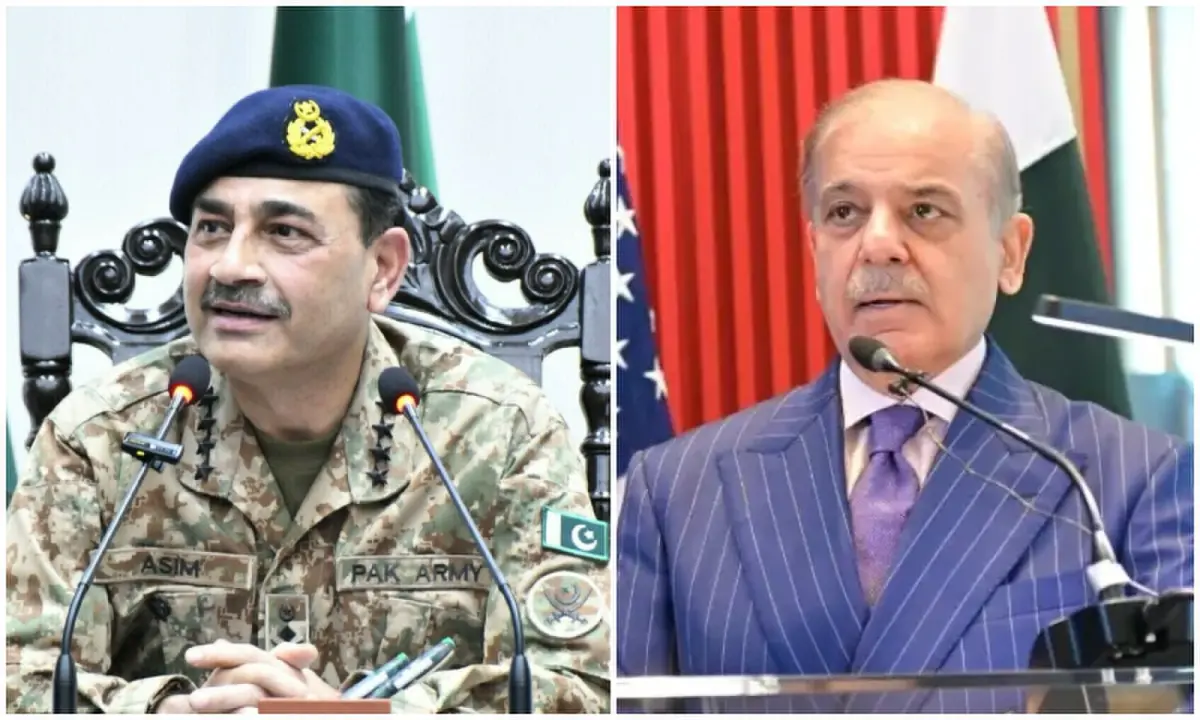
Prime Minister Shehbaz Sharif and Chief of Defence Forces and Chief of the Army Staff Field Marshal Asim Munir have shared the top spot in the latest edition of the world’s 500 most influential Muslims, alongside the Saudi king and crown prince and the Turkish president.
The rankings have been compiled by the Royal Islamic Strategic Studies Centre (RISSC), a research institute based in Amman, Jordan. It has been publishing an annual report titled “The 500 Most Influential Muslims” since 2009, recognising and highlighting individuals who have made significant contributions to Muslim communities.
This is the first time that the list features multiple names for the top rank, recognising the Makkah Joint Defence Agreement between Pakistan, Saudi Arabia and Turkiye, according to the edition.
“While this unified top spot features five individuals, it is actually divided into three shared entries that represent a massive shift in how Muslim nations are working together to protect one another. The main reason for this historic decision is the Makkah Joint Defence Agreement,” the edition said.
It added, “This mutual-defence pact unites the immense wealth of Saudi Arabia, the advanced tech and manufacturing of Turkiye, and the powerful military strength of Pakistan into a collective alliance.
“Modelled on a ‘one for all, all for one’ approach to security, this pact has completely reshaped regional politics.”
At the fourth and fifth place are Iranian Supreme Leader Ayatollah Mojtaba Khamenei and Jordan’s King Abdullah II, respectively.
Qatar’s Emir Sheikh Tamim bin Hamad Al-Thani is ranked at number six while United Arab Emirates President Sheikh Mohamed bin Zayed Al-Nahyan has been ranked at number 12. Egyptian President Abdel Fattah Saeed El-Sisi is at number 22.
Pakistani Scholar Sheikh Muhammad Taqi Usmani has been listed as the seventh most influential Muslim, while Scholar Maulana Tariq Jamil is ranked at 32.
Footballer Mohamed Salah is ranked at 39.
Palestinian President Mahmoud Abbas is listed at number 45, followed by Syrian Interim President Ahmed Al-Sharaa at the 46th place.
New York City Mayor Zohran Mamdani is listed as the 49th most influential Muslim in the list.
Honourable mentions in politics include Hamas Chief Khalil Al-Hayya, former prime minister Imran Khan, London Mayor Sadiq Khan and American Senator-elect Abdul El-Sayed.
Honourable mentions in the “Social Issues, Science, Arts & Culture, Media and Sports” category include Jordan’s Queen Rania Al-Abdullah, British composer Sami Yusuf, Palestinian journalist Bisan Owda, British-American broadcaster and journalist Mehdi Hasan and Egyptian comedian Bassem Youssef.
The report also acknowledged that “Over the past year, Pakistan has navigated an intricate set of economic stabilisation challenges, regional security pressures, and major-power diplomatic balancing acts.”
It recognised Pakistan’s diplomatic efforts in the region: “Islamabad maintains strategic partnership with Riyadh while keeping open diplomatic channels and border communication with Tehran”.
It said, “Pakistan continues to balance its engagement among major global powers.”
Every year, the RISSC also names two people as Man of the Year and Woman of the Year.
This year, Palestinian paediatrician Dr Hussam Abu Safiya has been named as the Man of the Year. He is described as “a doctor who refused to abandon his patients, buried his son and returned to the wards, and has now spent more than six hundred days in Israeli custody without charge or trial.”
Under Israel’s invasion of Gaza, he documented attacks on medical facilities and appealed to the international community to protect Gaza’s health infrastructure.
“A man with no army, no office and no freedom has done more than most governments to remind the world what courage and integrity look like,” the report says.
Minab school attack survivor Fatemeh Zahra Sheikhabadi has been honoured as the Woman of the Year. After surviving the US strikes on her school, she travelled to Geneva and addressed the UN Human Rights Council, urging world leaders to “hear the voices of the children of Minab”, the report says.
“She is honoured not as a symbol of a war, but as herself: a girl who lost her friends and her teachers on an ordinary morning, and who lived to tell their story so that it would not be lost with them.”
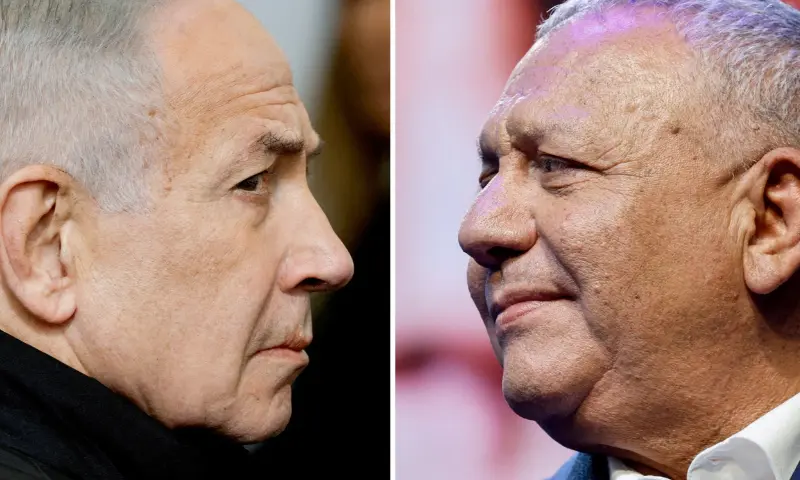
Israel’s caretaker prime minister Benjamin Netanyahu on Saturday reiterated his calls for a national unity government with his opponent Gadi Eisenkot, who in turn dismissed the appeal as a ruse.
The latest exchange comes as Eisenkot is in the midst of negotiations to form a government, after he was tapped for the post of premier last Sunday.
A meeting with Eisenkot on Thursday “only strengthened the conviction that it is essential to form a national unity government” to guarantee Israel’s security, Netanyahu said in a video statement, adding that such a government could “eliminate the Iranian threat once and for all”.
He said this government would be made up of parties that recognise Israel “as a state for the Jewish people”.
It would address security challenges, he added, most notably Iran which he claimed would “not hesitate to use nuclear weapons against us”.
The outgoing prime minister warned against Eisenkot’s plan to form a minority government, presented as a “national emergency government”.
Such a plan would see the 48 lawmakers in Eisenkot’s bloc vote in favour of his government, against the 46 Netanyahu backers. The 26 other members of parliament, from Arab and ultra-Orthodox parties, could abstain, allowing the government to be approved without an absolute majority in the Knesset, which has 120 seats.
“Instead of trying to form a weak and dangerous government … let’s meet in one room, without preconditions, put aside all our disagreements and all the boycotts, and reach agreements for the security and the future of the state,” Netanyahu urged.
Minutes later, Eisenkot responded by saying Netanyahu “knows he lost the election”, accusing him of playing “tricks” by appealing for a unity government.
“Netanyahu is calling for negotiations while they are already under way; he claims to want unity but … sows division and stokes tensions as if there were no tomorrow,” the former army chief said, adding that “these tricks don’t work on me”.
‘Break with extremists’
Eisenkot was tapped to form a new government within 28 days, with a possible 14-day extension.
Negotiations are expected to be difficult, especially as Netanyahu has waged a campaign to discredit Arab-Israeli parties, which gained a record number of seats in the election.
Netanyahu’s proposed unity government would be made up of key Jewish parties ranging from the centre to the right, while excluding the Arab parties.
Eisenkot has indicated he would be open to forming a government with members of Netanyahu’s Likud party, as well as outgoing Finance Minister Bezalel Smotrich’s Religious Zionism, provided their commitment to unity is “sincere”.
But a unity government with Netanyahu himself remains unlikely, particularly after Eisenkot denounced his “racist” campaign against Arab parties on Friday.
Eisenkot on Saturday reiterated his calls for a “break with the extremists”, notably supporters of far-right minister Itamar Ben Gvir, as a condition for any participation in a government under his leadership.
Another point of contention is the election on Tuesday of the speaker of the Knesset, a post currently held by Amir Ohana, a close Netanyahu ally. The opposition has put forward Matan Kahana, a former officer in the Israeli army who was fifth on Gadi Eisenkot’s list, to replace him.
“If they (Likud and its allies) are truly seeking a sincere political partnership, as they claim, they must allow the democratic process to unfold normally … and instruct their members of parliament to support the appointment of Matan Kahana,” Eisenkot said.
GILGIT: PPP’s Attaullah Shah and Istehkam-i-Pakistan Party’s (IPP) Imam Malik are again vying for the GBA-16 (Diamer-II) seat in Gilgit as repolling is under way at three stations.
A total of 2,780 registered voters are eligible to cast their votes.
Voting will continue until 5pm, and voters present inside the polling stations at the closing time will be allowed to cast their ballots.
Among the two candidates, Malik had contested the June elections in Gilgit-Baltistan as an independent candidate, but had later joined the IPP.
Initially, the Election Commission had declared him the returned candidate for GBA-16 (Diamer-II), but his membership was suspended in September after Shah filed a petition before an election tribunal. The plea contended that the returning officer (RO) had issued Form-49 without counting the postal ballots.
In its order on Sept 11, the tribunal directed the relevant RO to complete the verification and counting of postal ballot papers by September 16 and, meanwhile, suspended Malik’s membership.
Subsequently, the counting and verification of postal ballots for GBA-16 (Diamer-II) was held and Shah was declared the winner on Sept 14. According to the revised consolidated results issued by the GB Election Commission on Form-49, Shah secured 6,618 votes, defeating Malik by a margin of just 13 votes.
But then, Malik had challenged the tribunal’s decision before the GB Supreme Appellate Court.
On Sept 19, the appellate court dismissed his appeal against the suspension of his membership and upheld the tribunal’s decision declaring Shah the returned candidate.
Malik later again challenged the results at three polling stations and petitioned the election tribunal to order re-polling.
The tribunal accepted his plea and suspended Shah’s membership and directed the chief election commissioner to conduct re-polling at the three polling stations within 12 days of Nov 6.
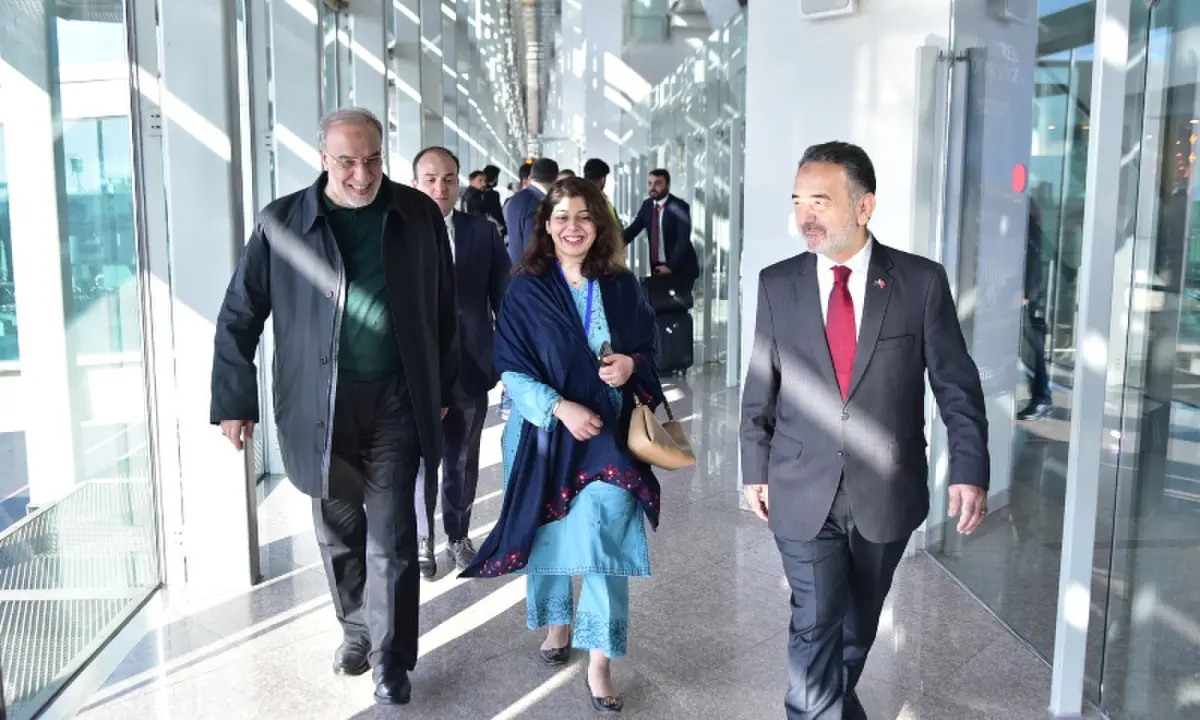
Foreign dignitaries continue to arrive in Islamabad as the capital gears up to host the two-day 30th meeting of the Economic Cooperation Organisation (ECO) Council of Ministers starting today.
Among the visiting dignitaries is Turkish Deputy Foreign Minister Musa Kulaklikaya, who was received by Foreign Office (FO) officials upon his arrival, the FO said on Sunday.
Azeri Deputy Foreign Minister Elnur Mammadov and Shanghai Cooperation Organisation Deputy Secretary General Ahmad Saidmurodzoda are also among those who have reached Islamabad for the meeting.
On Saturday, Minister of Foreign Affairs of the Turkish Republic of Northern Cyprus Tahsin Ertugruloglu also arrived in Islamabad to participate in the meeting.
The ECO’s ministerial meeting will be chaired by Deputy Prime Minister and Foreign Minister Ishaq Dar and attended by foreign ministers and heads of delegations from ECO member states, along with representatives of the organisation’s secretariat and subsidiary bodies.
It will be preceded by a gathering of senior officials from ECO member states, who will review the organisation’s activities and programmes, assess the work of its subsidiary bodies and finalise the agenda and draft outcome documents for consideration by the ministers.
Pakistan, which holds the ECO chairmanship for 2026-27, will seek to advance the organisation’s objectives under the theme “Reviving Regionalism for a Resilient ECO”, the FO said in a statement on Saturday.
It said Pakistan’s chairmanship would focus on strengthening regional connectivity and integration, deepening partnerships and promoting collective efforts for economic prosperity and sustainable development.
The chairmanship would also provide an opportunity to strengthen the ECO’s role as a platform for regional cooperation, dialogue and economic collaboration, it added.
According to the FO, Pakistan also aims to position itself as a regional connectivity hub, facilitate logistics supply chains and help shape the agenda for regional trade.
The efforts would help unlock the region’s economic potential and translate the benefits of regional cooperation into tangible improvements in the lives of people in ECO member states, the statement said.
Currently, Pakistan, Afghanistan, Azerbaijan, Tajikistan, Iran, Turkiye, Kazakhstan, Turkmenistan, Kyrgyz Republic and Uzbekistan are part of the ECO.
PESHAWAR: An anti-terrorism court here has started proceedings to declare dysfunctional Chief Minister Sohail Afridi as a proclaimed offender in the Radio Pakistan attack case as the relevant police official claimed that Mr Afridi couldn’t be traced.
In the order sheet, Judge Wali Mohammad Khan noted that the detective foot constable (DFC) of the East Cantonment police station returned the warrants issued against the accused, including Sohail Afridi and Pakistan Tehreek-i-Insaf activist Mohammad Amir Khan, with overleaf reports stating that both of them couldn’t be found or traced.
“Proclamation notices under Section 87 of CrPC should be issued against accused Sohail Afridi and Amir Khan, with notice to the DFC for recording a corroborative statement,” he said.
He fixed Nov 24 for submission of the DFC’s report and further proceedings.
Police official says dysfunctional CM remains untraced
The judge had ordered the issuance of arrest warrants for the accused on Oct 28 after a supplementary charge-sheet was submitted, naming Afridi, Amir, former provincial ministers Taimoor Saleem Khan and Kamran Bangash and PTI Peshawar president Irfan Saleem as the accused in the May 2023 ransacking and torching of the Radio Pakistan building in Peshawar.
Subsequently, the court issued warrants against Afridi and Amir on Nov 5.
The warrants issued for Mr Afridi’s arrest listed his residential address in Bara, Khyber district.
However, they didn’t describe Mr Afridi as the dysfunctional chief minister.
The other three newly nominated accused appeared before the court and were granted interim pre-arrest bail.
The dysfunctional chief minister has not been seen since the imposition of the governor’s rule and emergency in Khyber Pakhtunkhwa on Oct 11. While his whereabouts remained unknown, first a federal minister and then some other government functionaries disclosed that he and some of his cabinet members were in preventive custody.
The other accused, Amir Khan, was also reportedly taken into custody a few days ago but has so far not been produced before any court.
The alleged illegal detention or abduction of Mr Afridi was challenged by his brother, Amir Khan, in the Peshawar High Court.
However, the court halted proceedings in the matter after the Federal Constitutional Court suspended its powers to hear cases under Article 199 of the Constitution.
Section 87 of the Code of Criminal Procedure (CrPC) states: “If any Court is satisfied after taking evidence that any person against whom a warrant has been issued by it has absconded or is concealing himself so that such warrant cannot be executed, such Court may publish a written proclamation requiring him to appear at a specified place and at a specified time not less than thirty days from the date of publishing such proclamation.”
The law also provides that a proclamation issued by the court shall be publicly read in some conspicuous place of the town or village in which such person ordinarily resides; it shall be affixed to some conspicuous part of the house or homestead in which such person ordinarily resides or to some conspicuous place of such town or village. A copy must also be affixed to a conspicuous part of the courthouse.
Last month, the prosecution submitted a supplementary charge-sheet, nominating Mr Afridi and the other four PTI members as accused in the case. None of them had been named in the first information report or earlier charge-sheet.
The supplementary charge-sheet followed findings by the Punjab Forensic Science Agency and the National Database and Registration Authority (Nadra) regarding video clips purportedly showing the incident and profile pictures of the suspects.
According to a report by investigation officer Deputy Superintendent of Police Khushal Khan, Radio Pakistan Peshawar station director Tufail Ahmad recorded a supplementary statement in light of the forensic findings, nominating the five men as accused.
The forensic examination was ordered on Dec 12, 2025, on an application filed by the Pakistan Broadcasting Corporation’s counsel, Shabbir Hussain Gigyani.
The PFSA subsequently concluded that the facial features of the five men matched those of suspects allegedly seen participating in the rioting in the video footage.
A Nadra report identified CNIC numbers apparently belonging to the men and described them as probable matches for the profile pictures submitted for examination.
The newly nominated accused have challenged the authenticity of the videos, claiming that the footage doesn’t relate to the incident.
The court is currently conducting the trial of 75 accused in the case, including current and former lawmakers.
The FIR was registered at the East Cantonment police station on May 10, 2023, on the complaint of then station house officer Arbab Naeem Haider under various provisions of the Pakistan Penal Code and the Anti-Terrorism Act.
NEW YORK: “Socialism,” once considered a scarlet letter in the United States, is growing increasingly buzzy and mainstream as a slate of politicians embracing the label has gained significant ground.
In the wake of November’s midterms, members of the Democratic Socialists of America — a leftist organisation that’s made inroads within the Democratic Party — now lead cities across the country including its two largest, New York and Los Angeles.
DSA-endorsed politicians boosted their congressional seats from two to eight and won dozens of local elections, victories partly due to the Democrats’ wider battering of President Donald Trump’s Republicans.
The so-called “bluenami” of Democratic wins “would not have been possible without a socialist surge,” DSA communications chair Cara Tobe said. “People are starting to realise and learn that socialism is not a big scary word,” she said, noting that the Democrats’ focus on affordability was lifted straight from the DSA playbook. But some political scholars aren’t convinced “socialism” earned votes.
“A rising tide lifts all boats. This was a huge win for the Democratic Party across the board,” said Stephen Ansolabehere, professor of government at Harvard University. Hans Noel of Georgetown University attributed the success of Democrats — and DSA-backed candidates — to dissatisfaction with Trump.
“It’s important to remember that while DSA-aligned candidates did very well this year, that’s mostly in the primaries and in very Democratic areas,” the politics professor said.
Yet polls show a rising acceptance of socialism in the United States, a quintessentially capitalist country where politicians have long conflated the term with communism to vilify it.
The DSA, founded in 1982 with a focus on labour organising, was for years a relatively tiny left-wing pressure group. In 2015, about 6,000 supporters paid dues, but after Donald Trump’s first presidential election new membership surged.
Today, the group has more than 130,000 members and has proven an electoral force, with legions of volunteers helping elect candidates nationwide to state and local office.
Mamdani effect
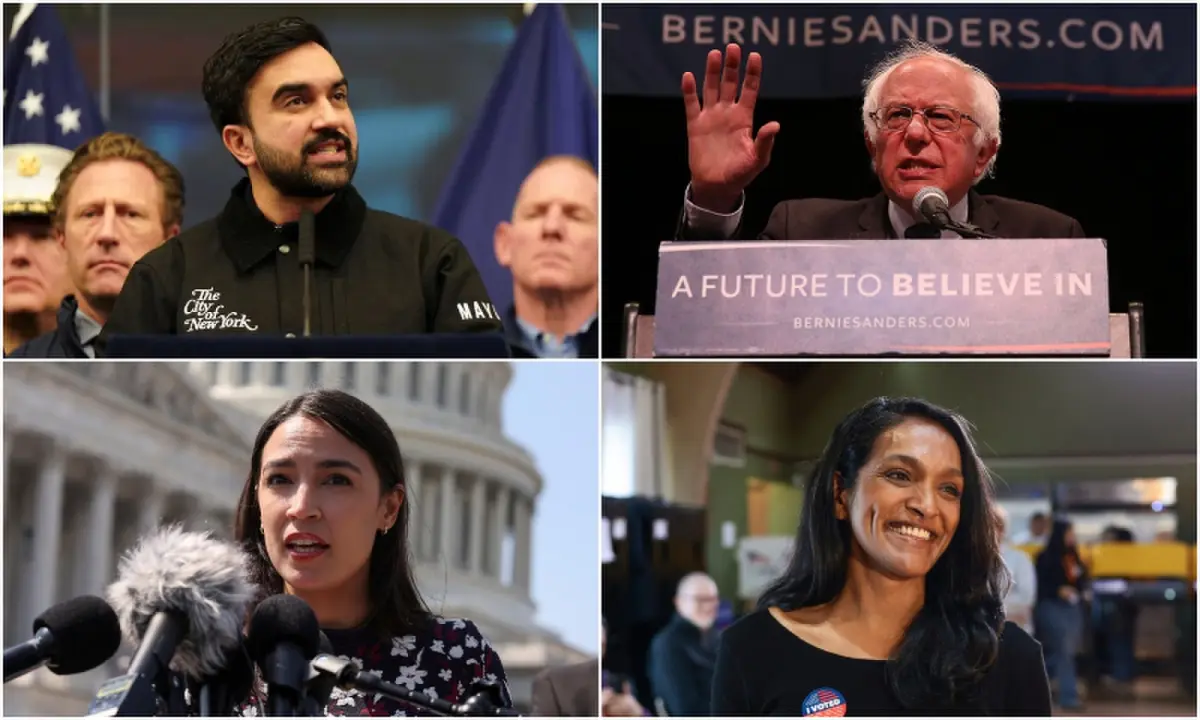
Socialism has gained visibility through the campaigns and successes of prominent left-wing political stars, including the barnstorming of self-described socialist Bernie Sanders, who twice ran for president and has elevated younger candidates nationwide. His protege Alexandria Ocasio-Cortez has posted a successful congressional career and now is rumoured to be considering a presidential run of her own.
And New York’s young and charismatic Mayor Zohran Mamdani has proven a poster child for furthering progressive politics under a socialist banner in cities, with a focus on core DSA issues including affordable housing, immigrant protections and healthcare access. It’s a model politicians elsewhere in the nation are picking up on.
Eric Blanc, a Rutgers University labour studies professor, said Mamdani’s successes have “normalised” socialism, with candidates viewing the moniker as “a net positive for them to get elected.” DSA member Nithya Raman was just elected mayor of Los Angeles on a platform of “pothole politics” — vowing to fix broken infrastructure — while harnessing the anger of younger voters over affordability.
The growing cadre of socialist mayors leading city governments are far from the first of their kind in the US. Most notably, the so-called “sewer socialists” ran Milwaukee for more than half a century through 1960, dramatically scaling up public works projects including a modern sewer system, public housing and social infrastructure. Mamdani has frequently referenced the sewer socialists as inspiration.
Raman has also pointed to the legacy as offering a vision for future success.
AS the global order shifts away from unipolarity toward fragmented multipolarity, middle powers have gained unprecedented strategic weight. In a fragmented multipolar world, middle powers serve as indispensable diplomatic bridges and economic shock absorbers that keep the international system functioning despite great-power paralysis.
Middle powers lack hegemonic ambitions, and retain the credibility to mediate active conflicts, build agile issue-specific coalitions, and maintain open trade and supply-chain corridors across rival blocs. Ultimately, these middle powers are preventing total global bifurcation of the international system between Washington and Beijing by stabilising their immediate regions and upholding international rules.
However, scholars and policymakers rarely agree on a single checklist for middle power status, largely because different states exert influence through different mechanisms. Some, such as South Korea or Australia, earn the label through thriving, high-tech economies and global trade integration. Others, like Norway or Qatar, leverage niche diplomacy and active mediation to punch above their geographic weight. Still others, such as Türkiye and Pakistan, rely primarily on formidable military capabilities and regional security projection.
Scholars generally evaluate middle power status across three core pillars including military capability, diplomatic outreach, and comprehensive national strength. National strength is largely defined by sustainable economic vitality and technological adaptation.
Over the past two years, Pakistan has demonstrated a resurgence in the first two arenas, vaulting itself back into global strategic relevance. Yet, because its third and most foundational pillar remains weak, Pakistan’s recognition as an emerging middle power rests on a fragile foundation that cannot endure without a decisive domestic economic pivot.
A credible middle power must possess the military capacity to defend its sovereignty and project stabilising influence across its neighbourhood. Between 2025 and 2026, Pakistan highlighted its hard-power credentials through both high-intensity deterrence and institutionalised defence partnerships.
History shows that hard power and ingenious statecraft cannot substitute for domestic economic strength.
During the brief but severe four-day conflict with India in May 2025, South Asia witnessed its first multi-domain confrontation integrating aerial clashes, drone swarms, and precision missile exchanges. Pakistan’s military response, culminating in Operation Bunyanum Marsoos, demonstrated modern warfare capabilities and aerial superiority. Pakistan’s swift military response compelled a rapid White House-facilitated ceasefire on May 10. By denying a larger neighbour unilateral escalation dominance, Islamabad reinforced its conventional and strategic deterrence.
Since May 2025, Pakistan translated its battlefield credibility into a web of security pacts across the Middle East and the Muslim world.
In September 2025, Islamabad and Riyadh signed the Strategic Mutual Defence Agreement, and in August 2026, Pakistan joined Saudi Arabia and Türkiye to sign the Makkah Joint Defence Agreement. These pacts not only created a formal collective deterrence network but also enhanced Islamabad’s strategic utility in the Gulf. The Badr agreement with Türkiye, Qatar, and Indonesia, has further strengthened Pakistan’s position as a net security provider of Arab Gulf states.
Beyond military muscle, middle powers distinguish themselves through niche diplomacy. Following the outbreak of direct US-Israeli military hostilities against Iran in early 2026, traditional Gulf mediators found their channels strained. Adopting a posture of active neutrality, Islamabad stepped in.
In March 2026, the US accepted Pakistan’s role as a primary conduit to Tehran, which led to the historic Islamabad peace talks in April 2026 and the subsequent June MoU that temporarily reopened the Strait of Hormuz. Even as the truce faced repeated strain through late 2026, the civil and military leadership of Pakistan continued shuttling proposals between Washington, Tehran, and European capitals. The decision to join Trump’s Gaza peace plan as a founding member also proved Islamabad could exercise diplomatic power beyond its immediate borders.
However, despite these military and diplomatic milestones, history demonstrates that hard power and ingenious statecraft cannot substitute for domestic economic strength. In this third pillar, Pakistan exhibits severe structural deficits that undermine its middle power aspirations.
Macroeconomic indicators showed surface stabilisation in FY2025-26 with inflation remaining between 7-9 per cent and GDP growth edging up to 3.7pc. However, the underlying growth model remains weak. For instance, investment hovers near 15pc of GDP, far below the 20-plus per cent threshold required to sustain the 6pc growth rates needed to absorb a booming youth population. Deindustrialisation and high energy costs continue to stifle export competitiveness. Foreign investors are largely concerned with the security situation in Balochistan and KP. Unrest in AJK has further marred prospects of foreign direct investment.
The privatisation process is critically slow, while political consensus is absent over reforms for new provinces. With a low tax-to-GDP ratio and heavy external debt servicing, state solvency still relies heavily on remittances, multilateral bailouts, bilateral rollovers (such as a $3 billion Saudi cash deposit in April 2026) rather than productive capital formation.
Hence, Pakistan today represents a textbook case of an asymmetric emerging middle power. Its disciplined military and seasoned diplomatic corps have successfully leveraged regional crises to earn Islamabad a seat at high-stakes global tables. However, geopolitical leverage built on security crises and external rent is inherently transactional. When regional wars subside or great-power priorities shift, Islamabad — lacking economic autonomy and technological innovation — will risk losing its strategic relevance.
Therefore, to cement its status as a genuine middle power, Pakistan must execute an urgent domestic pivot. This requires dismantling elite economic capture, broadening the tax base, overhauling education to build a tech-literate workforce, and enhancing an export-driven industrial base. Until Islamabad matches its battlefield deterrence and diplomatic agility with sustainable economic sovereignty, its middle power status will remain an aspiration suspended over a precarious fault line.
The writer is a strategic analyst of international security. The views expressed are his own.