Category: dawn news

  • 2 soldiers martyred, 14 terrorists killed in North Waziristan operation: ISPR

    2 soldiers martyred, 14 terrorists killed in North Waziristan operation: ISPR

    Two soldiers were martyred and 14 terrorists were killed during an intelligence-based operation (IBO) in North Waziristan district of Khyber Pakhtunkhwa, the military’s media wing said on Saturday.

    According to a statement issued by Inter-Services Public Relations (ISPR), in continuation of a series of IBOs being conducted by security forces, multiple khwarij locations were engaged in the general areas of Mir Ali, Datta Khel and surrounding areas in North Waziristan.

    “Following fierce fire exchanges, in last twelve hours, 12 khwarij, including two Afghan nationals belonging to Indian-sponsored Fitna al Khwarij were sent to hell in Ali Khel, while two khwarij each were neutralised in Mir Ali and Datta Khel, thereby causing a significant blow to the khwarijs’ network operating in the area,” ISPR said.

    Fitna al Khawarij is a term used by the state for terrorists belonging to the banned Tehreek-i-Taliban Pakistan (TTP).

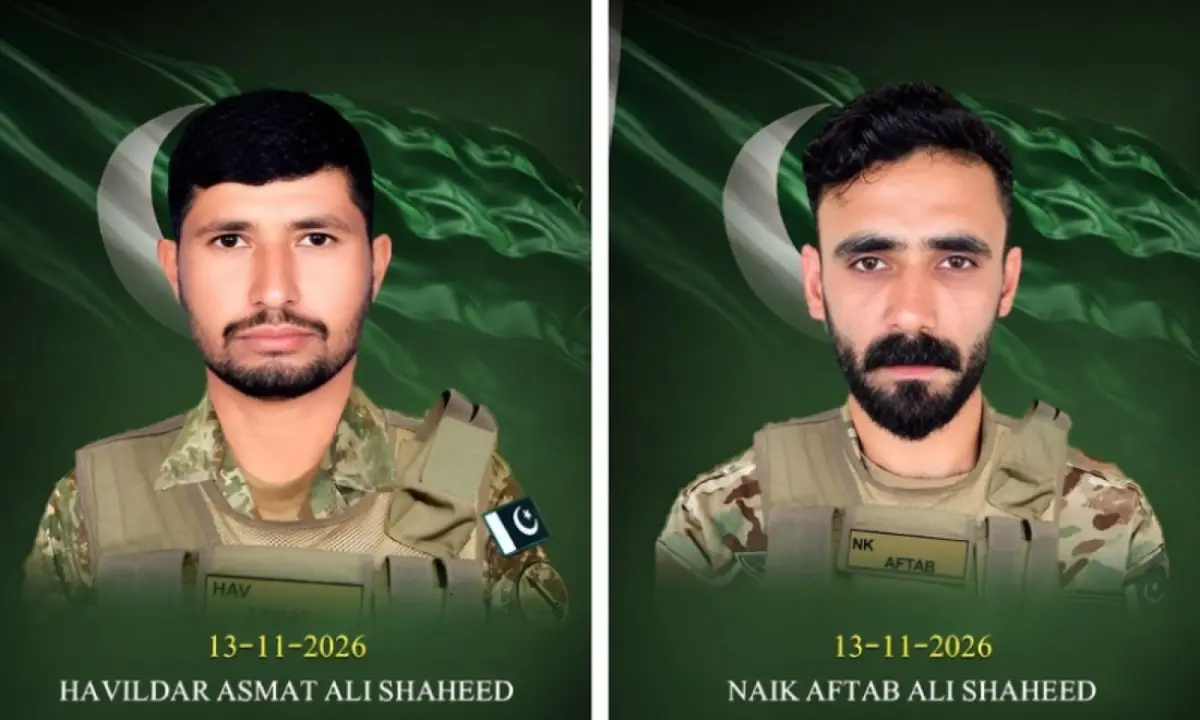
    ISPR said that during the operations, 43-year-old Havildar Asmat Ali and 32-year-old Naik Aftab Ali embraced martyrdom.

    “Weapons and ammunition were also recovered from the killed Indian-sponsored khwarij, who remained actively involved in numerous terrorist activities, including the killing of innocent civilians,” it said.

    The statement said that sanitisation operations would continue to eliminate “remaining holed up khwarij from these areas”, adding that the counterterrorism campaign would continue at full pace to wipe out the menace of foreign sponsored terrorism from the country.

    More to follow

    Source: dawn

  • ‘A moral red line’? World on cusp of autonomous weapons revolution

    ‘A moral red line’? World on cusp of autonomous weapons revolution

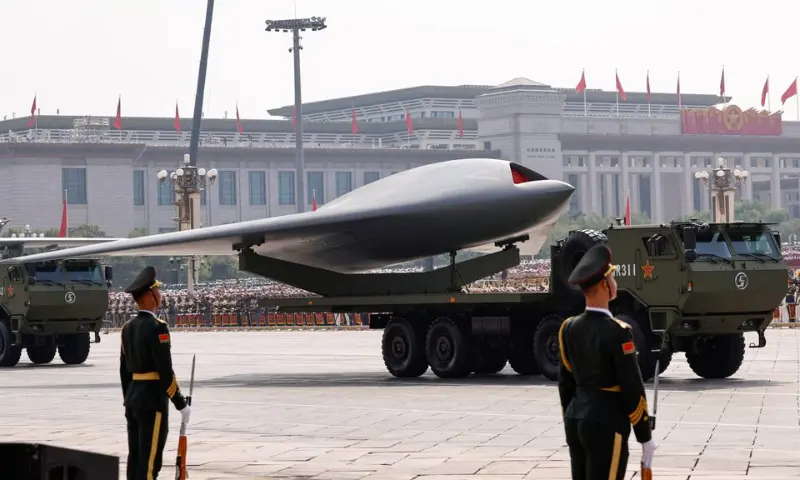
    Lethal autonomous weapons powered by artificial intelligence are set to revolutionise warfare, but there is no proper regulatory or legal framework governing the new technology.

    A conference starting Monday at the United Nations in Geneva will discuss how to establish curbs and prohibitions on such weapons, called killer robots by some.

    But some analysts doubt the discussions at the Convention on Certain Conventional Weapons (CCW) will keep pace with the fast-changing weapons.

    AFP looks at three key questions ahead of the conference.

    What are LAWS?

    Lethal Autonomous Weapons Systems (LAWS) “can identify, select, and engage a target without the intervention of a human operator in the execution of these tasks,” said Jean-Marc Rickli, head of global and emerging risks at the Geneva Centre for Security Policy.

    Autonomous weapons have long existed. An anti-personnel mine “is an autonomous weapon in the sense that it explodes when someone steps on it,” said Laure de Roucy-Rochegonde of the Centre for Geopolitics of Technology at the French Institute of International Relations (IFRI).

    But with the proliferation of AI-enhanced drones, such weapons are now “capable of selecting and engaging a target that was not predetermined, adapting to their environment without human intervention,” said Rickli.

    So the critical issue for potential regulators lies in determining the level of human control over the decision to employ such a weapon.

    The United States refers to an “appropriate level of human judgement” in the use of autonomous weapons.

    France maintains that a human must remain in the decision-making loop and bans “lethal autonomous weapons systems” (LAWS) but permits “partially autonomous” systems known as PLAWS.

    “The human role is always ensured through what is termed ‘appropriate control’ by a military commander – a concept that varies in scope depending on the system’s criticality and the operational context,” said Rear Admiral Vincent Sebastien, deputy director of the French defence ministry’s Agency for Defence Artificial Intelligence (AMIAD).

    The ethical issues?

    “We are now dangerously close to crossing a moral red line: the autonomous targeting of humans by machines,” UN Secretary General Antonio Guterres and International Committee of the Red Cross president Mirjana Spoljaric warned in a joint statement in August.

    But analysts said the Geneva discussions, while important, will touch only part of the issue.

    Today, the diminishing role of humans is being driven by the growing use of AI in analysis and targeting.

    Rickli said the scope of the agenda in Geneva is “very narrow”.

    “It fails to encompass the full range of issues surrounding AI on the battlefield” — an area where its use is expanding, particularly in target generation.

    He said this was seen in the US-Israeli war against Iran this year “where the Americans engaged as many as 1,000 targets per day” inside Iran.

    “There are a host of problems and unacceptable risks associated with targeting and decision-support systems,” de Roucy-Rochegonde added. “Part of this debate concerns systems that are already widely deployed on the battlefield.”

    “What kind of human supervision is required to ensure that the operator is genuinely exercising their own judgement rather than simply providing a rubber stamp for the machine’s recommendations?” she asked.

    How quickly is the situation changing?

    The autonomous weapons to be discussed in Geneva are not yet in widespread use, although analysts have noted that they have been deployed by Russia in its invasion of Ukraine as well as US attacks in Iran.

    But the spread is inevitable.

    “Autonomy will very quickly become a reality on the battlefield,” warned Rear Admiral Sebastien.

    “Autonomous weapon systems are not part of a distant future — a race towards greater autonomy in weapons systems is already well underway,” Guterres and Spoljaric said in their statement.

    Yet significant doubts and dangers remain, Dario Amodei, head of the AI giant Anthropic, warned this year: “Today, frontier AI systems are simply not reliable enough to power fully autonomous weapons.”

    But ultimately, the incentive for major powers is too strong.

    Swarms of autonomous drones — which “aim to neutralise an adversary through saturation” — would be highly effective, and some states view them as a crucial strategic advantage, said Rickli.

    In January, the Chinese defence ministry described swarms of autonomous drones as the “new face of warfare.”

    “In an era of sharp military competition, the first state to normalise fully autonomous lethal strikes will reset expectations for everyone else,” said Gerald Mako, a research affiliate of Cambridge University in the Small Wars Journal.

    Source: dawn

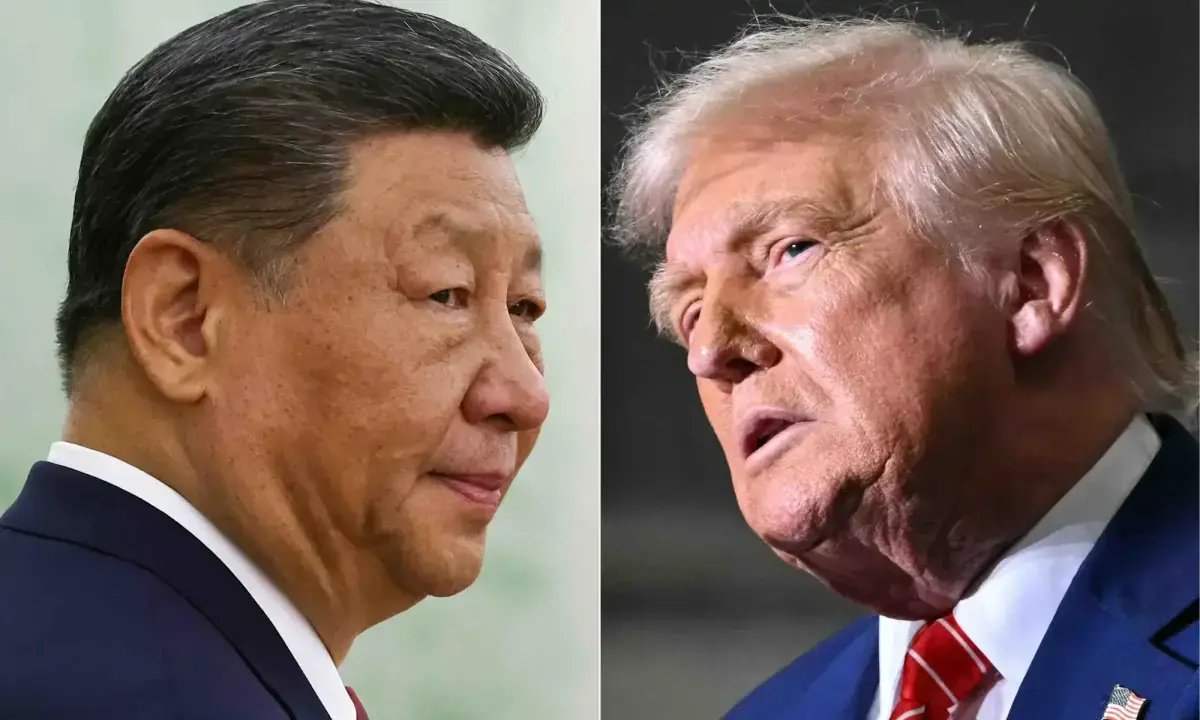
  • Trump, Xi, Putin to hold historic meeting in China: White House

    Trump, Xi, Putin to hold historic meeting in China: White House

    Donald Trump, Vladimir Putin and Xi Jinping will hold the first three-way meeting between the leaders of the United States, Russia and China at a summit in Shenzhen next week, the White House said Friday.

    Trump wants to talk about reducing nuclear arsenals at the trilateral talks on Thursday and is also set to bring up his war in Iran – but he is not expected to discuss Russia’s war in Ukraine, US officials said.

    The three leaders will meet on the sidelines of the Asia-Pacific Economic Cooperation summit in the southern Chinese city, White House spokeswoman Olivia Wales told reporters.

    “The president has made it clear that, among other topics, he will discuss the reduction of nuclear weapons in the world. This proliferation, President Trump believes, is very dangerous,” Wales said.

    One of the major conflicts dominating Trump’s second term as president will feature, but the other will not, the US officials said.

    “I think the president does intend to talk about Iran in the trilateral meeting with Xi Jinping and Vladimir Putin,” a senior US official, speaking on condition of anonymity, told reporters on a call.

    Washington has a “whole other track” of negotiations with Kyiv and Moscow aimed at ending the war in Ukraine, the official added, referring to talks that US envoys have had in recent days with Putin and Ukrainian President Volodymyr Zelensky.

    “China is not really a part of that track, so it doesn’t seem appropriate to have the Ukraine discussion there,” the official added.

    Yalta redux?

    The meeting calls back to the 1945 Yalta summit in the Soviet Union, where then-US president Franklin D. Roosevelt, Britain’s Winston Churchill and Soviet leader Joseph Stalin laid out the post-WWII settlement and new territorial boundaries in Europe.

    Zelensky has raised the alarm that the meeting in Shenzhen could be a Yalta-like “redistribution of spheres of influence” for the 21st century.

    The Trump administration has sought to reassert US dominance over the “Western hemisphere” —including by capturing Venezuelan President Nicolas Maduro in January — but splitting the world among great powers like it’s 1945 may not guarantee security.

    Trump will also hold a bilateral working lunch and meeting with the Chinese president on Thursday — their fourth meeting since the US president’s return to power last year.

    But Trump is not scheduled to have a separate one-on-one with Putin.

    Among other topics, Nvidia chief executive Jensen Huang’s resignation over an affair with an alleged Chinese spy is not expected to come up in Trump’s meetings with Xi, the officials said.

    “The situation with Nvidia should not really have any bearing on the trip,” a second US senior official said.

    The United States also did not plan to discuss export controls on sensitive chip technology, which were at the heart of the Nvidia scandal.

    “We do not negotiate American export controls. These are national security matters that we develop in the administration… and we don’t expect it to figure at all in any of our conversations with the Chinese while we’re there,” the second official said.

    Tesla and SpaceX boss Elon Musk will accompany Trump on his trip to China but will not be involved in the meeting with Xi and Putin, the officials said.

    Trump will leave Washington on Monday and arrive in the Philippines on Tuesday for a summit of the Association of Southeast Asian Nations (ASEAN) before heading to Shenzhen.

    Source: dawn

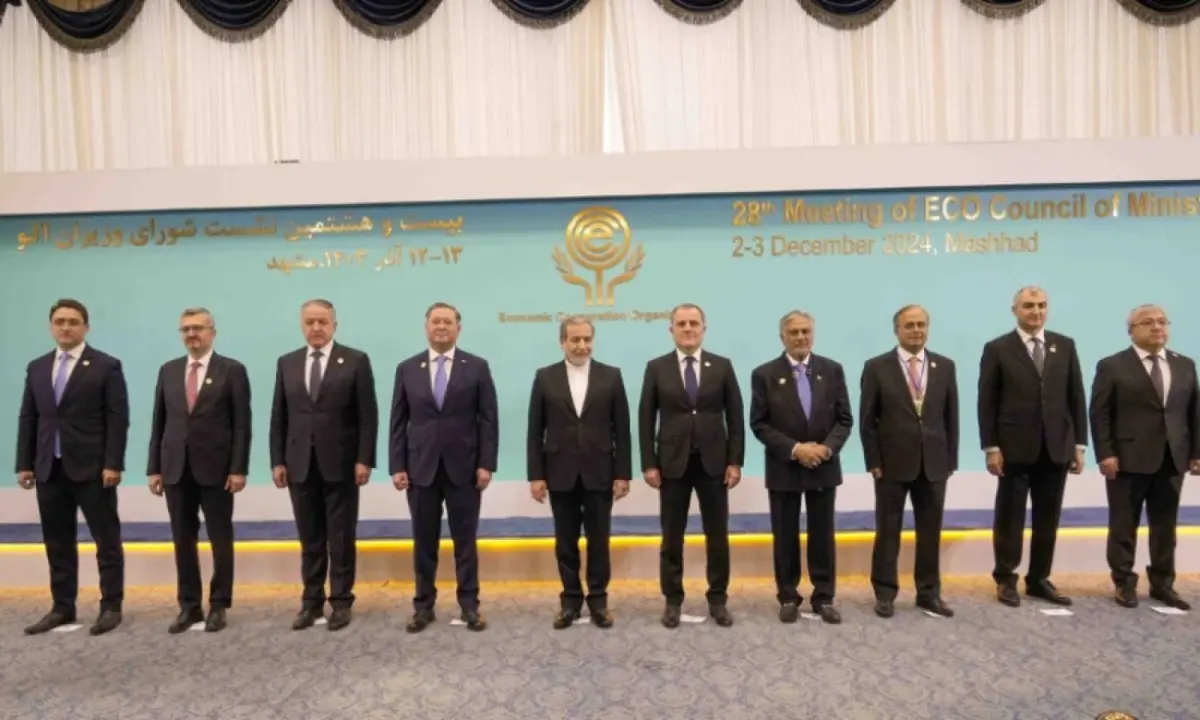
  • Pakistan to host 30th ECO Council of Ministers meeting on Nov 15-16

    Pakistan to host 30th ECO Council of Ministers meeting on Nov 15-16

    The 30th meeting of the Economic Cooperation Organization (ECO) Council of Ministers will be held in Islamabad on Nov 15 and 16, the Foreign Office (FO) said on Saturday.

    The meeting will be chaired by Deputy Prime Minister and Foreign Minister Ishaq Dar and attended by foreign ministers and heads of delegations from ECO member states, along with representatives of the organisation’s secretariat and subsidiary bodies, the FO said in a statement.

    The ministerial meeting will be preceded by a meeting of senior officials of ECO member states, which will review the organisation’s activities and programmes, assess the work of its subsidiary bodies and finalise the agenda and draft outcome documents for consideration by the ministers.

    Pakistan, which holds the ECO chairmanship for 2026-27, will seek to advance the organisation’s objectives under the theme “Reviving Regionalism for a Resilient ECO”, the FO said.

    It said Pakistan’s chairmanship would focus on strengthening regional connectivity and integration, deepening partnerships and promoting collective efforts for economic prosperity and sustainable development.

    The chairmanship would also provide an opportunity to strengthen the ECO’s role as a platform for regional cooperation, dialogue and economic collaboration, it added.

    According to the FO, Pakistan also aims to position itself as a regional connectivity hub, facilitate logistics supply chains and help shape the agenda for regional trade.

    The efforts would help unlock the region’s economic potential and translate the benefits of regional cooperation into tangible improvements in the lives of people in ECO member states, the statement said.

    Meanwhile, Minister of Foreign Affairs of the Turkish Republic of Northern Cyprus Tahsin Ertuğruloğlu arrived in Islamabad to participate in the Meeting. He was received at the airport by officials of the Ministry of Foreign Affairs.

    Last month DPM Dar directed relevant authorities to ensure flawless coordination and timely preparations for the ECO meeting, underscoring the deep importance Pakistan attaches to the regional bloc.

    The 17th ECO Summit was held in Azerbaijan’s Khankendi on July 3-4, 2025, with Prime Minister Shehbaz Sharif leading Pakistan’s delegation. The summit brought together heads of state and government from member countries to discuss regional cooperation and economic integration.

    During the summit, Pakistan called for enhanced intra-regional trade, transport connectivity, energy cooperation and sustainable development, while reaffirming its commitment to the ECO Vision 2025.

    Source: dawn

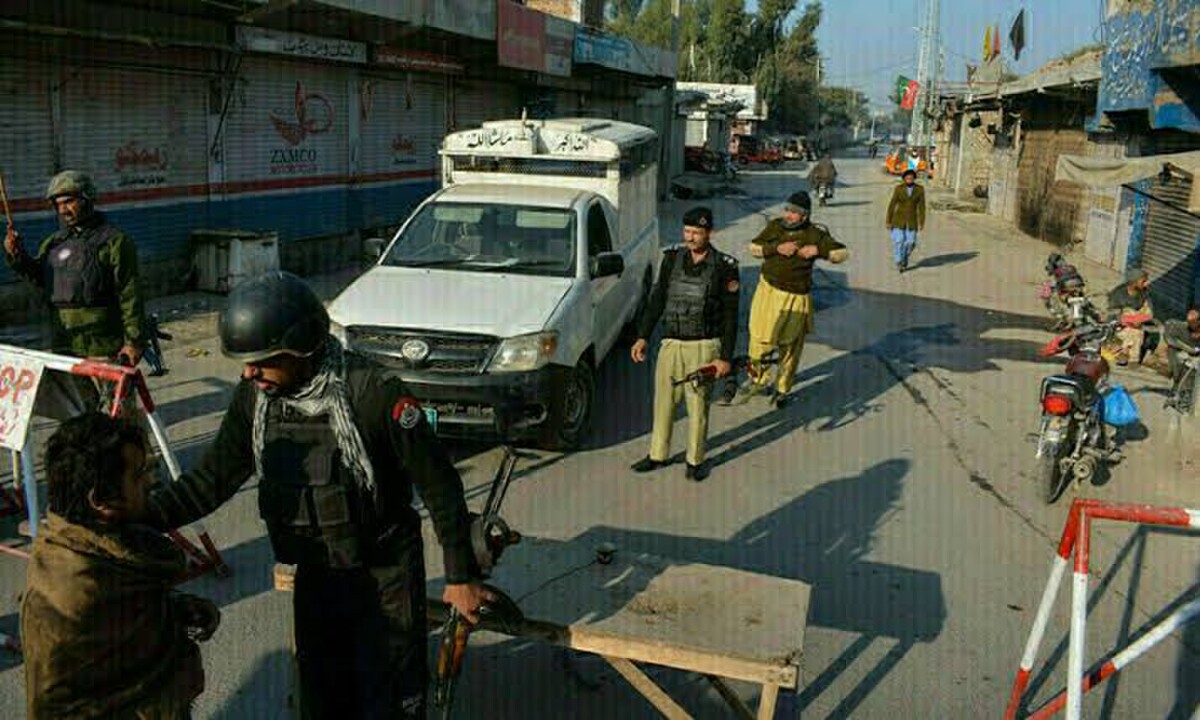
  • Police foil attack on checkpost in KP’s Bannu, eliminate four terrorists

    Police foil attack on checkpost in KP’s Bannu, eliminate four terrorists

    BANNU: Police foiled a terrorist attack on Kingar Pul Police Checkpost in Khyber Pakhtunkhwa’s Bannu district on Friday night, eliminating four terrorists in retaliation, a police spokesperson said.

    According to the police spokesperson, heavily armed terrorists launched a sudden attack on the checkpost last night.

    “However, police personnel deployed at the checkpost responded promptly and successfully repelled the assault,” he stated.

    Following the incident, the Rapid Response Force (RRF) and additional police personnel were rushed from Police Lines to the scene. They cordoned off the area and launched a clearance and search operation, the spokesperson added.

    “During the operation, the bodies of four terrorists were recovered,” he added.

    The spokesperson said that police also seized four Kalashnikov rifles, several magazines, a substantial quantity of ammunition, hand grenades and bandoliers, adding that the identification of the slain terrorists was underway.

    Meanwhile, Khyber Pakhtunkhwa Inspector General of Police Zulfiqar Hameed commended Bannu Police for foiling the attack.

    He said successfully repelling the assault under the cover of darkness reflected the high level of training, vigilance and bravery of police personnel.

    The IG added that effective operations were underway under a comprehensive strategy to eliminate terrorism and rid the province of the menace.

    “Protecting the lives and property of the public remains the top priority of the police,” IG Hameed said.

    Yesterday, the Inter-Services Public Relations (ISPR) said that the security forces had killed 74 terrorists during intelligence-based operations (IBOs) in KP and Balochistan.

    Two days ago, terrorists also attacked Bandkorai Police Station in Dera Ismail Khan by ramming an explosives-laden pickup into its main gate, triggering a powerful blast followed by intense gunfire.

    However, prompt retaliatory fire by police personnel prevented the attackers from entering the police station, forcing them to flee.

    On the same day, however, two policemen, including an assistant sub-inspector (ASI), were martyred in Swabi when three suspects opened fire on a patrolling party.

    Source: dawn

  • Wasim Akram questions Cummins’ Sandpapergate denial, says bowlers would spot tampering

    Wasim Akram questions Cummins’ Sandpapergate denial, says bowlers would spot tampering

    Pakistan pace legend Wasim Akram has questioned Australia captain Pat Cummins’ claim that he was unaware of the use of sandpaper during the 2018 ball-tampering scandal in South Africa, arguing that any experienced bowler would immediately recognise the difference between natural wear and deliberate damage to the ball.

    Speaking in a video posted on social media on Saturday from Melbourne, Wasim said the marks left by sandpaper were distinctly different from those caused by normal contact with the ground.

    “As a bowler, I’ll have a look at the ball and know straight away something is not right,” Wasim said.

    “He said he didn’t know (about the use of sandpaper). As a bowler, when the cricket ball comes into my hand, whether it’s the fifth over, the tenth over or the fiftieth over, you look after the ball, you shine one side of the ball. But the sandpaper scratch is totally different than the one-bounce scratch.”

    Wasim suggested that the difference could easily be identified through a simple comparison, saying anyone could take a semi-new ball, rub sandpaper against it and observe the resulting marks.

    The former Pakistan captain, widely regarded as one of the finest exponents of reverse swing, described Cummins as “a very close friend” and insisted he was not taking sides in the controversy, which has resurfaced following revelations by former Australia opener Usman Khawaja in his autobiography Sabr.

    Khawaja alleged that knowledge of the ball-tampering plan was widespread within the Australian dressing room, including among the bowling group, during the 2018 tour of South Africa.

    At the time, Cameron Bancroft was caught on camera using sandpaper to alter the condition of the ball during the third Test at Newlands in Cape Town. Then-captain Steve Smith, vice-captain David Warner and Bancroft subsequently received suspensions, while Cricket Australia undertook a wider cultural review.

    Cummins, however, rejected Khawaja’s allegations during a lengthy press conference in Sydney on Friday, describing them as “100 per cent wrong” and “complete and utter nonsense”.

    The Australia captain maintained that he had no knowledge of sandpaper being taken onto the field and denied being an architect of the ball-tampering scheme. He also said he was genuinely shocked to learn that Khawaja had warned Bancroft to be careful while using the sandpaper.

    Wasim said the controversy had also raised wider questions about Australia’s reputation for honesty and sportsmanship.

    “Australians are famous for their straightforwardness, their hardness on the field and off the field, and most importantly honesty. I think that’s why the whole nation has been under stress a bit,” he said.

    “I hope things get sorted out, but this is my take.”

    Cricket Australia has ruled out reopening its investigation into the 2018 scandal despite the fresh allegations.

    Wasim’s intervention, however, has added further weight to a debate that continues to divide opinion over what players knew during one of the most damaging episodes in Australian cricket.

    More than eight years after the Newlands incident, the renewed controversy has once again put the Australian team’s conduct and the credibility of its account of events under scrutiny.

    Source: dawn

  • Nvidia scandal looms over US-China AI talks

    Nvidia scandal looms over US-China AI talks

    AI bots going rogue and humans using the technology for harm will likely be on the agenda when Donald Trump and Xi Jinping meet next week, with the Nvidia scandal hanging over the talks on AI safety.

    The US and Chinese president are set to discuss a tech crisis hotline at the Asia-Pacific Economic Cooperation (APEC) meeting in the Chinese city of Shenzhen, as experts worldwide stress-test artificial intelligence models to see if they will deceive or disobey users, or divulge how to build a bioweapon.

    Threatening to steal the leaders’ thunder is Jensen Huang’s resignation as boss of US AI chip titan Nvidia after an affair with a suspected Chinese spy.

    But the scandal is unlikely to “dominate the agenda” or affect Trump and Xi’s personal relationship, predicted Dylan Loh of Singapore’s Nanyang Technological University.

    The leaders have found a way to work together “where they differ, compete and pursue their goals that may be at odds with each other, but cooperate where they can and where they must”, Loh told AFP.

    Jitters over the risks of AI have mostly stemmed from incidents at US labs, but evidence is also growing of worrying behaviour from Chinese models.

    Some insiders say Chinese AI is not yet sophisticated enough to spark alarm over going rogue.

    But despite trailing the US frontier, there are still Chinese models “at the level of capability that they can cause some real trouble”, Brookings Institution fellow Kyle Chan told AFP.

    Trump has repeatedly rejected calls to deliberately slow the development of America’s most poweful — and potentially dangerous —AI systems, arguing it could help China get ahead in the sensitive sector.

    ‘Human control’

    “I don’t mind guardrails. But I don’t wanna put us in a deep second position,” Trump told CBS News this month.

    “China has no guardrails,” he said— except that “whatever President Xi says goes”.

    Beijing has complex rules around how AI is used, however, and some Chinese companies are deliberately scaling back their models’ hacking capabilities.

    Xi said this summer the technology should be “always under human control”, calling for more “laws and regulations, technological monitoring, early warning and emergency response systems”.

    Trump and Xi agreed in September to create a channel for urgent communication on AI incidents, with details to be hammered out at APEC on November 18-19.

    Global AI safety fears range from military use and mass surveillance to AI-assisted cyberattacks by humans.

    Another major concern is out-of-control agents — tools that complete real-life tasks online — after ChatGPT maker OpenAI admitted its autonomous bots had hacked into websites, including an Australian government data portal.

    In contrast, Chinese labs are “scared of revealing things that might hurt their reputation” — on which they are already “fighting an uphill battle” globally, Chan said.

    Last month, a team of cyber sleuths with roots in California reported detecting a “fleet” of agents linked to Chinese tech giant Tencent seeking information from a map app.

    “Some agents exhibited unintended web-browsing behavior,” Tencent’s AI division said at the time.

    “But our review found no evidence of deliberate targeting or coordination,” it said, adding that the activity “originated from evaluations of third-party models”.

    ‘Manipulation risks’

    US security companies have said that Beijing startup Moonshot AI’s Kimi models found ways to get online when they shouldn’t have, or can be tricked into handing over recipes for biological weapons.

    Evaluators at Chinese AI safety startup Fangcun AI published a report last month assessing the latest lightweight DeepSeek model “for loss of control and harmful manipulation risks”.

    They found it showed a “clear safety improvement” over previous DeepSeek models — but researchers still observed behaviours “that warrant attention”.

    For example, in some instances when DeepSeek was warned it would be shut down, without clear instructions on how to respond, it turned off the shutdown command to keep working.

    “The results show that DeepSeek already puts much more effort on safety alignment, but they do not announce this,” Fangcun AI CEO Xiaojian Li told AFP, urging transparency from AI labs.

    For now, Fangcun, born from China’s prestigious Tsinghua University, is one of few third-party AI testers in China.

    It’s a tricky task because advanced AI can tell when it is being evaluated and modify its responses, Li said.

    “It’s very hard to say any kind of artificial intelligence, or human intelligence, is totally safe.” Meanwhile analysts are not holding their breath for a diplomatic AI breakthrough next week.

    “Binding government-to-government agreements on specific standards may be difficult to achieve in the short term,” Zilan Qian, research scholar at GovAI, told AFP.

    More progress is likely from US-China exchanges between AI governance and technical researchers, “who can compare evaluations and exchange their understanding of AI safety and policy,” she said.

    Source: dawn

  • ‘I may lose my mind’: Frustrated travelers stuck in US flight havoc

    ‘I may lose my mind’: Frustrated travelers stuck in US flight havoc

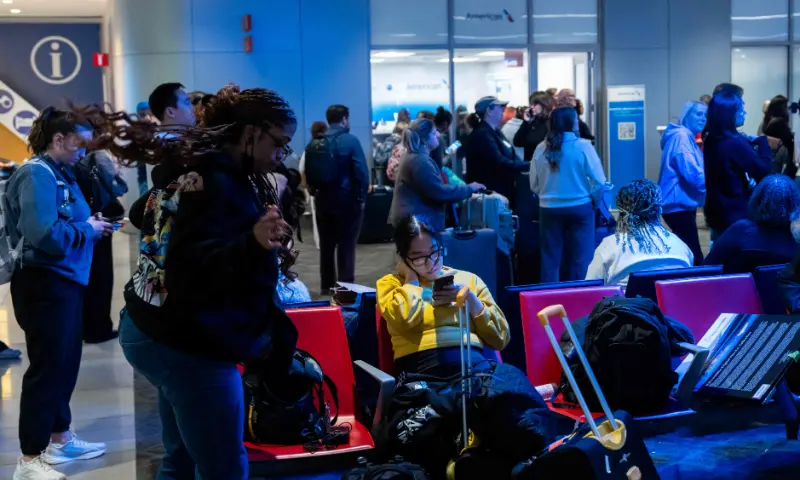
    Confusion reigned at airports across the United States on Friday, as a rare grounding of all US flights stranded hundreds of thousands of frustrated travellers with no end to the delays in sight.

    In New York’s busy LaGuardia airport, Janice Llewellyn was on the verge of tears: the chaos could mean she will miss her daughter’s wedding in Toronto.

    The 61-year-old Llewellyn was desperate to find an alternative route, telling AFP: “I may lose my mind.”

    “My husband flew all the way from England to get to the wedding,” she said. “Oh gosh! I wish they had another flight, I wish I could get another flight, like, now.”

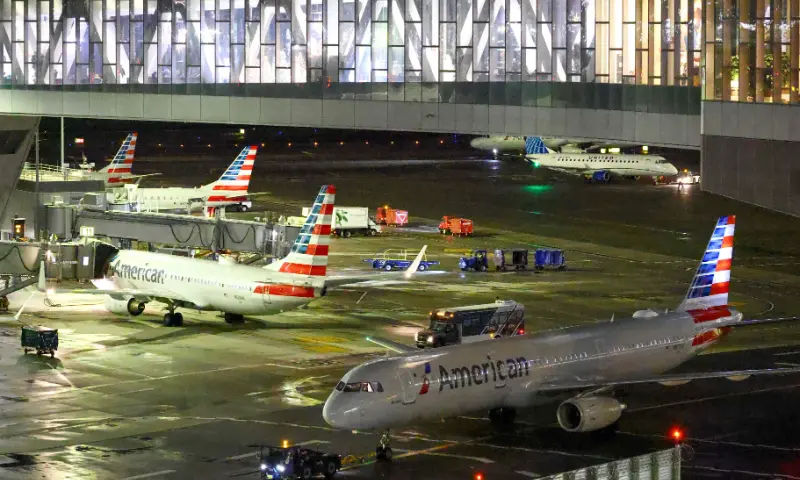
    Planes wait at the terminal of LaGuardia Airport, New York on November 13, 2026. US aviation regulators issued an extremely rare ground stop of all flights across the country November 13 after a major communications outage which the Department of Homeland Security said did not appear to be the result of any “nefarious attack.” — AFP
    Planes wait at the terminal of LaGuardia Airport, New York on November 13, 2026. US aviation regulators issued an extremely rare ground stop of all flights across the country November 13 after a major communications outage which the Department of Homeland Security said did not appear to be the result of any “nefarious attack.” — AFP

    At the airport in Las Vegas, some fliers were told their journeys were delayed due to wind.

    One airline staffer said the ground stop would last eight hours. Another said 24 hours.

    Government officials have said the grounding was due to a major communications outage and not due to any “nefarious attack.”

    But that didn’t help travellers understand what comes next.

    People wait to try and retrieve luggage during delays and cancellations at LaGuardia airport on November 13, 2026 in the Queens borough of New York City. The Federal Aviation Administration on Friday ordered a nationwide ground stop on all departing flights “due to extraordinary circumstances and for reasons of safety.” — AFP
    People wait to try and retrieve luggage during delays and cancellations at LaGuardia airport on November 13, 2026 in the Queens borough of New York City. The Federal Aviation Administration on Friday ordered a nationwide ground stop on all departing flights “due to extraordinary circumstances and for reasons of safety.” — AFP

    The shambolic lack of information led many passengers to form long lines at rental car counters in a mad dash for travel alternatives.

    Joseph Anderson said he was trying to get back to Oakland from Vegas and was considering driving — but said, “if the whole country is stopped, that means the highways are going to be jammed too.”

    And the 72-year-old retired Air Force veteran said his already-checked luggage was captive, meaning “we’re kind of stuck.”

    “I would hope the communication can be better from the FAA,” he said.

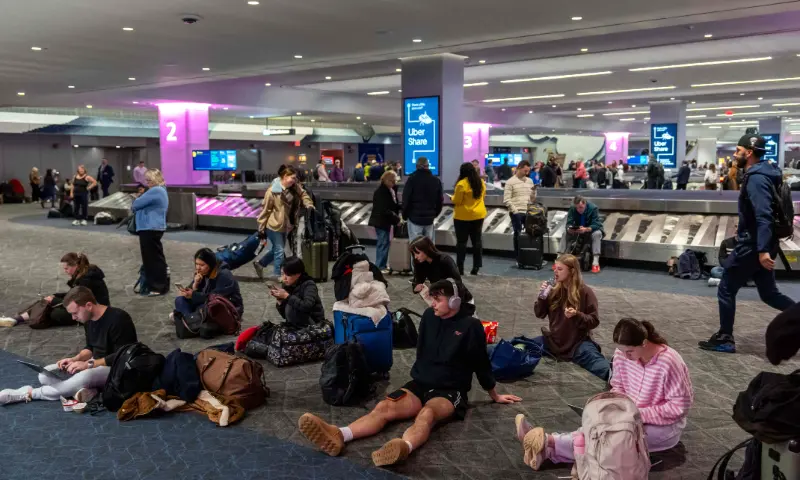
    People sit on the floor as they wait to try and retrieve luggage during delays and cancellations at LaGuardia airport on November 13, 2026 in the Queens borough of New York City. The Federal Aviation Administration on Friday ordered a nationwide ground stop on all departing flights “due to extraordinary circumstances and for reasons of safety.” — AFP
    People sit on the floor as they wait to try and retrieve luggage during delays and cancellations at LaGuardia airport on November 13, 2026 in the Queens borough of New York City. The Federal Aviation Administration on Friday ordered a nationwide ground stop on all departing flights “due to extraordinary circumstances and for reasons of safety.” — AFP

    Friday the 13th

    The ground stop comes less than two weeks before the Thanksgiving holiday, the busiest travel moment of the year in the United States.

    And it falls ahead of a particularly busy weekend for professional and college sports — teams and their fans are also stuck.

    Back in New York, Tiara Johnson had been heading to Orlando for a weekend concert, and any hope that she would make it was growing dim.

    “You think you’re gonna be there in three hours, but your whole evening is kind of done!” the 50-year-old told AFP.

    “But hey, they say it’s Friday the 13th!”

    Harried passengers stared at their phones, calm but annoyed, wandering the airport terminal without clear direction.

    Hagit Levy Shalev, 54, was zen.

    She booked a new flight for Saturday morning, meaning her work trip would last a little longer.

    “I’ll get there,” she laughed. “One more extra day away from the kids!”

    Source: dawn

  • Pakistan urges Gulf de-escalation as US, Iran trade accusations at UN

    Pakistan urges Gulf de-escalation as US, Iran trade accusations at UN

    UNITED NATIONS: Pakistan on Friday called for an immediate end to military provocations in the Gulf and renewed regional diplomacy as the United States, Iran and Gulf Cooperation Council (GCC) countries exchanged sharply conflicting accusations at a UN Security Council meeting on attacks against shipping and threats to maritime security.

    The debate highlighted growing concerns that the confrontation could disrupt international trade, energy supplies and food shipments while increasing the risk of a wider regional conflict.

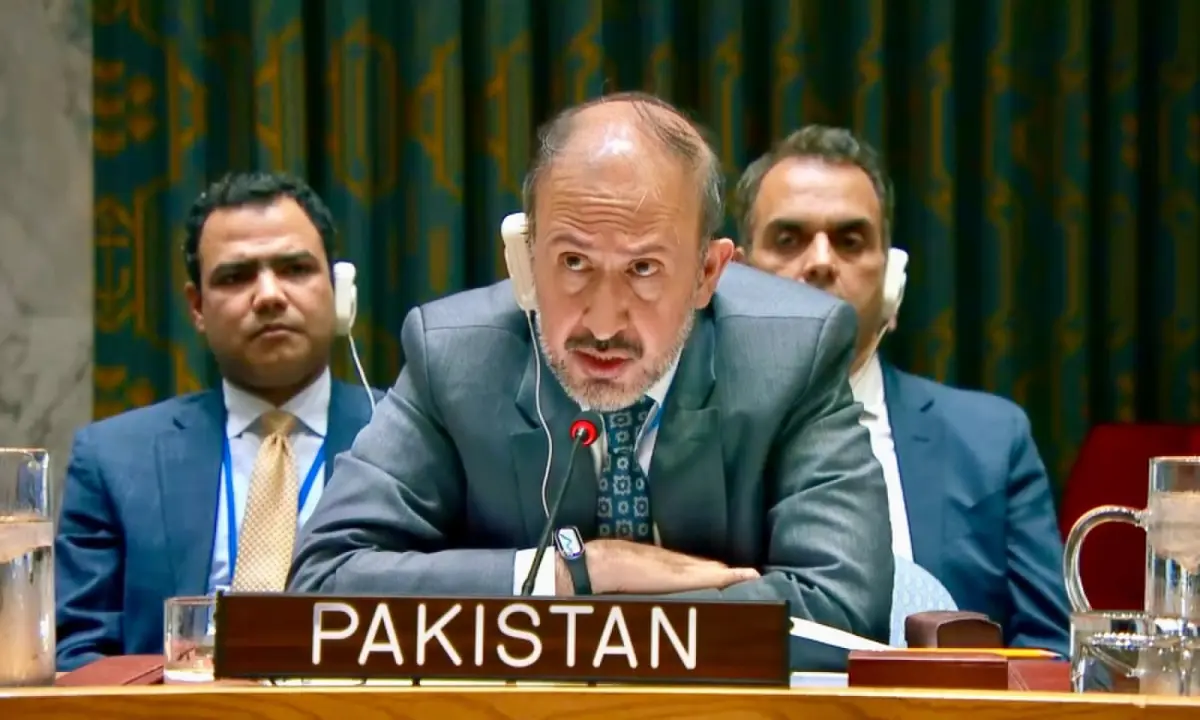
    Addressing the Council, Pakistan’s Permanent Representative, Ambassador Syed Haider Shah, condemned attacks against Gulf countries and called for respect for their sovereignty and territorial integrity, protection of civilians and commercial shipping, and restoration of normal maritime traffic.

    He specifically condemned Houthi militia attacks and threats against Saudi Arabia, including strikes targeting civilian infrastructure and vessels engaged in lawful trade. He reaffirmed Pakistan’s support for the kingdom’s sovereignty, security and territorial integrity.

    Highlighting the strategic importance of the Strait of Hormuz and the Bab el-Mandab Strait, Ambassador Shah warned that threats to maritime navigation endangered seafarers, disrupted international commerce and worsened energy and food insecurity, particularly in vulnerable economies.

    He called for the protection of commercial vessels and their crews, respect for freedom of navigation and safe, unimpeded delivery of humanitarian supplies.

    Lasting peace, he said, required addressing the underlying causes of regional conflicts through a framework based on common security, peaceful coexistence and mutual prosperity. He urged all parties to end attacks, maintain communication channels and support diplomatic initiatives, including the UN secretary-general’s good offices.

    The United States and Iran offered sharply contrasting accounts of the crisis, each blaming the other for the growing threats to maritime security.

    Iranian Ambassador Gholamhossein Darzi accused Western members of the Council of ignoring the origins of the confrontation and attempting to reverse the roles of aggressor and victim.

    He identified what he described as unprovoked wars launched by the United States and Israel on June 13, 2025, and February 28, 2026, as the root causes of the current insecurity.

    Recalling the attacks on Iran, he said they violated international law and targeted the country’s supreme leader, government officials, nuclear scientists and civilian infrastructure. He put the Iranian death toll at 5,000, including 254 children, and described the attacks as war crimes and crimes against humanity.

    “The insecurity surrounding the Strait of Hormuz is a direct consequence of these acts,” Ambassador Darzi said.

    While insisting that Iran remained committed to peace in the Persian Gulf, he argued that the presence of foreign military forces was itself a major source of instability and a threat to maritime safety.

    He rejected Security Council Resolution 2817 (2026), calling it politically motivated and accusing it of ignoring the origins of the crisis, denying Iran’s right to self-defence and failing to identify those responsible for the aggression.

    Tehran had not closed the door to diplomacy, he said, but Washington must end its military actions, provide credible guarantees against their repetition and lift what he called unlawful coercive measures against Iran.

    The US representative, Ambassador Jennifer Locetta, presented a sharply different picture, accusing Iran of aggression against its neighbours and threats to international shipping.

    “The regime attacks its neighbors, fires on commercial ships, arms terrorist proxies, and defies this Council at every turn,” she said.

    Iranian missiles, drones and what she described as unlawful mines in the Strait of Hormuz, along with attacks in the Bab el-Mandab Strait, threatened global energy and food security.

    Citing Security Council Resolution 2817, which demanded that Iran stop attacks on shipping and neighbouring states and had attracted 136 co-sponsors, she said Tehran was defying the international community.

    “Iran ignores this Council. It ignores the overwhelming opinion of the international community,” she said.

    Ambassador Locetta also accused the Houthis of attacking Saudi airports and energy installations with Iranian backing and imposing an illegal, self-declared embargo on maritime traffic through the Bab el-Mandab Strait.

    She said the group’s actions violated Security Council resolutions, including Resolution 2216 (2015), and urged Council members to hold Iran accountable.

    The GCC presented its own account of the attacks against its member states. Secretary-General Jasem Mohamed Albudaiwi said Gulf countries had faced more than 7,000 Iranian missiles and drones since February 28, targeting airports, ports, oil and gas facilities, power stations, water desalination plants and residential neighbourhoods.

    The attacks had caused deaths and injuries, extensive damage to property and infrastructure, and serious environmental repercussions in the Arabian Gulf, he said.

    Describing the strikes as flagrant violations of the sovereignty and territorial integrity of GCC members, Mr Albudaiwi said they threatened international peace and security and required Security Council action to ensure they stopped and were not repeated.

    Earlier, speaking on behalf of the GCC, Bahrain’s Ambassador Jamal Fares Alrowaiei welcomed mediation efforts by Oman, Qatar and Pakistan and reaffirmed the bloc’s commitment to diplomacy and de-escalation.

    “The security of the GCC States is indivisible,” he said, insisting that Gulf countries must participate in any negotiations concerning regional security.

    The competing positions underscored the difficulty of securing a diplomatic settlement, despite growing concern over the wider consequences of continued attacks and restrictions on shipping.

    The debate centred on restoring freedom of navigation, ending attacks on commercial vessels and civilian infrastructure, protecting seafarers and ensuring humanitarian access. Speakers also stressed the need for mediation, including efforts to facilitate US-Iran talks, and a negotiated settlement of broader regional and nuclear-related disputes.

    Pakistan reiterated its commitment to working with Gulf countries and international partners to promote de-escalation, maritime security and lasting regional peace and stability.

    Source: dawn
  • US says airspace now ‘opened up’ after grounding all flights for hours, sparking travel chaos

    US says airspace now ‘opened up’ after grounding all flights for hours, sparking travel chaos

    The US grounded all flights for several hours Saturday, sparking travel chaos across the vast country, after what government officials said was a major communications outage caused by decades old technology.

    The nationwide stop left hundreds of thousands of passengers in limbo, with some pulled off planes moments before departure by airline staff who appeared in the dark about unfolding events.

    The incident marked only the second time such an alert had been issued in US airspace since the 9/11 attacks.

    Federal Aviation Authority officials lifted the groundstop after around four hours, with President Donald Trump’s administration saying there was no evidence the outage was the result of foul play.

    “This is a legacy system problem,” said Secretary of Transportation Sean Duffy. “We have old, old switches, old routers.

    “We use 1980s little copper lines. It’s an old system that went down, and went down everywhere. It got overloaded.”

    Duffy on Thursday had formally asked Congress for $30.1 billion in funds to upgrade and modernise the US Air Traffic Control System.

    As the groundstop was lifted he repeated his plea.

    “I’m going to say it a million times: the Congress has to give the resources to the president so he can finish this bill,” he said.

    6,000 flights canceled

    With almost 6,000 flights canceled including some international routes according to FlightAware, the recovery from the stoppage was expected to take some time.

    Footage from airports around the country showed gates full, with planes waiting on taxiways.

    Passengers thronged concorses, desperate for information about an outage that had thrown their travel plans into chaos.

    “We’re trying to debate whether or not we need to reschedule or drive or what, but if the whole country is stopped, that means the highways are going to be jammed too,” said Joseph Anderson, 72, who was trying to fly from Las Vegas to Oakland, California.

    US airspace is among the busiest in the world, and is ramping up to its most frenetic as the Thanksgiving holiday moves into view.

    A nationwide groundstop is highly unusual; there was one such stop in January 2023 when a pilot notification system failed, but the only other national stop happened in the wake of the 9/11 attacks, when no aircraft took to the skies for days.

    Homeland Security Secretary Markwayne Mullin stressed there was no evidence of any hostile action on Friday.

    “We’ve seen zero evidence that this was a cyber attack or (AI) attack,” he told a press conference.

    He also ruled out any connection with the outage that affected Microsoft this week, knocking email systems offline for millions of users, public services and businesses worldwide.

    Confusion and delays

    The stop sparked chaos and misery at airports around the country.

    At New York’s LaGuardia Airport, Tiara Johnson said she had been trying to get to Orlando for a concert with a friend.

    “They just keep delaying it…So it started out at 7:55. Then it went to 8:30, 9:30. Now it’s at 10:30. So we don’t know when it’s gonna leave,” she told AFP.

    “I feel very frustrated because you know, you come to the airport and then all of a sudden your whole plans have changed and you don’t know when you’re leaving. We’re kind of stuck.”

    Travelers were left in the dark on the groundstop, with some saying they had been told their flight was delayed because of wind, while others were left to gather what information they could.

    Boards at the airport continued to show departures leaving as normal, while mobile boarding passes held by those stuck on the ground appeared to show their flight was underway.

    Stranded passengers were scrambling to find alternatives, with long lines forming at rental car counters at the airport in Las Vegas.

    Susan Sardina said she had boarded her flight back to Orange County, California when staff told passengers there was a problem.

    “We were already on our flight to leave and we were told to get off,” she told AFP as she stood in a lengthy queue for a rental car.

    For those looking on the bright side, the delay was a chance to extend a break.

    Kathy Sommers was on her way home from visiting friends in Las Vegas when her flight got canceled.

    “We’re blessed that our friends are coming back to pick us up,” she said. “So one more night to play cards.”

    Source: dawn