Category: dawn news

  • Smog diplomacy

    EACH winter, Lahore and Delhi engage in a peculiar rivalry, trading places at the top of the world’s air-pollution rankings. On Friday, Delhi was declared the world’s most polluted major city while Lahore slipped to seventh.

    For people breathing this air, the distinction offers little comfort. A change in the weather can improve a city’s ranking without removing the sources of pollution.

    The smog that settles over northern India and Pakistan comes from vehicle exhaust, industrial emissions, dust and agricultural fires, compounded by winter conditions that trap pollutants near the ground. Much of this pollution is generated locally, and both governments have work to do at home.

    In Pakistan’s Punjab, satellites detected 18,825 fires, most believed to involve crop-residue burning. Lahore exceeded national standards for fine particulate matter on all 40 days covered by a recent assessment. Punjab’s authorities report more inspections, penalties and closures targeting polluting industries and brick kilns. Enforcement is necessary, but its effects must outlast the smog season.

    There is also a regional dimension that neither government can afford to ignore. Polluted air crosses the border regardless of the state of bilateral relations. That makes the forthcoming visit of Pakistan’s climate change minister to New Delhi especially pertinent.

    He is due to attend an SCO gathering on civilisational dialogue. Air pollution is not the meeting’s purpose, but the visit offers a rare opportunity to broach practical cooperation with Indian officials. At a minimum, the two states could work towards jointly sharing air-quality measurements, forecasts, timely public health warnings and satellite information on crop fires. Their scientists could jointly examine how pollution travels across the border.

    Such efforts need not await a broader diplomatic thaw. Nor should they provide either side with an excuse to blame its neighbour for pollution it has failed to control at home.

    The SCO already provides a channel through which officials from both countries meet, despite strained relations. The minister should use that opening to make the case for sustained regular technical contact on smog. With millions enduring another winter of dangerous air, even a modest conversation would be useful.

    Published in Dawn, November 16th, 2026

    Source: dawn

  • Punjab working on first AI-run climate observatory

    Punjab working on first AI-run climate observatory

    LAHORE: The Punjab Climate Observatory will be a milestone in the province’s efforts to address climate change, Punjab Chief Minister Maryam Nawaz Sharif said on Sunday.

    Describing the under-construction facility as the first project of its kind in Pakistan, she wrote on social media platform X that the centre would conduct real-time monitoring of air quality, water, soil and weather conditions, supported by an artificial intelligence-powered climate intelligence system.

    The project was appr­oved in May 2025 following a review of its feasibility plan, covering budgetary requirements, equipment procurement and land acquisition. The Univer­sity of Engineering and Technology, Lahore, had also submitted a report on its technical aspects.

    In June, the chief minister directed the authorities to expedite work on the facility.

    In her statement, CM Maryam said the observatory would strengthen wea­­ther forecasting, early war­ning systems and flood prediction, helping impr­ove the province’s prepa­red­ne­ss for climate-related disasters.

    The facility would also house environmental data resources and research laboratories, providing young climate scientists with opportunities for learning and research, she added.

    The chief minister hoped the project would bring international scientific cooperation and research partnerships under one roof, while supporting evidence-based policymaking and public awareness.

    She said the observatory would contribute to disaster resilience, water conservation, sustainable resource management, climate-resilient agriculture and forest protection.

    “Our ambition is to empower the next generation of climate scientists and position Punjab as a regional leader and international partner in climate innovation, protecting our environment, communities and future generations,” she said.

    Published in Dawn, November 16th, 2026

    Source: dawn

  • FIA books 8 Pakistanis deported from Turkiye for violating immigration laws

    FIA books 8 Pakistanis deported from Turkiye for violating immigration laws

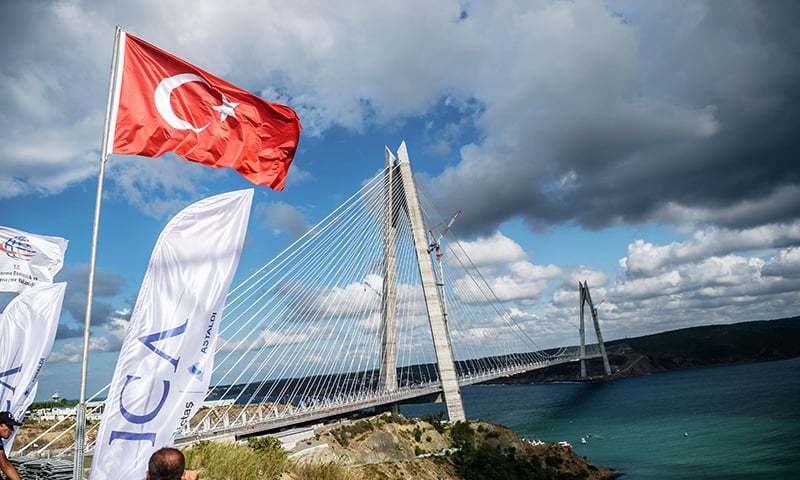
    ISLAMABAD: The Federal Investigation Agency (FIA) said on Sunday it has registered a case against eight Pakistanis deported from Turkiye for allegedly violating immigration laws.

    FIA Islamabad registered the case against the eight deportees, who had travelled to Turkiye on work visas but allegedly started working elsewhere illegally instead of joining the companies concerned. Turkish police arrested them, took them to jail and later deported them to Pakistan.

    The case has been registered under Sections 3 and 4 of the Passport Act, 1974. The involvement of other individuals or agents, if any, will be determined during the investigation.

    The FIA Islamabad Zone reiterated its resolve to continue action against those involved in human smuggling and violations of immigration laws.

    Separately, the FIA Anti-Human Trafficking Circle Rawalpindi recovered Rs3.8 million allegedly defrauded from a citizen on the pretext of providing a work permit in Portugal.

    According to the FIA, the action was taken after complainant Wajid Hussain alleged that the suspect had taken €12,000 (approximately Rs3.8m) from him on the promise of arranging employment and a work permit in Portugal but failed to fulfil the commitment.

    FIA said the full amount was recovered during the inquiry and handed over to the complainant. The inquiry was conducted by Sub-Inspector Ansa Tayyaba, under whose supervision the legal and departmental proceedings were completed.

    The agency added that action against visa agents and those involved in human smuggling was continuing without delay and interruptions on the directions of Islamabad Zone Director Syed Shehzad Nadeem Bokhari.

    Source: dawn

  • Asif hopeful of consensus on new provinces, says it will bring ‘progressive’ change in political landscape

    Asif hopeful of consensus on new provinces, says it will bring ‘progressive’ change in political landscape

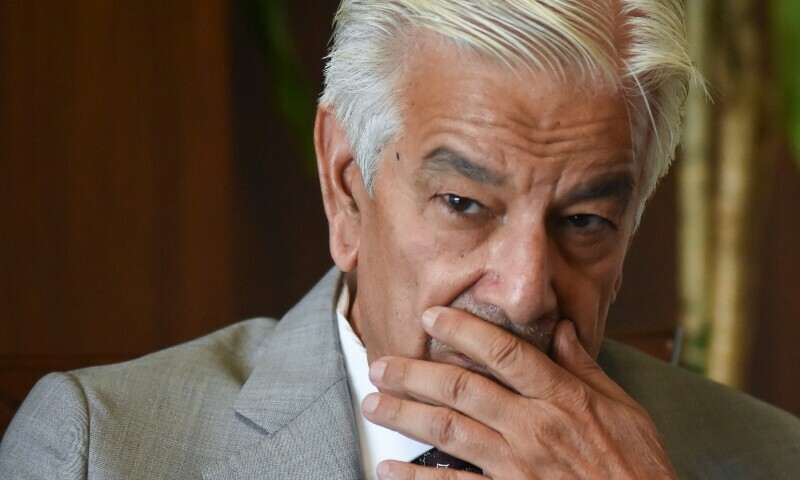
    Defence Minister Khawaja Asif on Sunday said the country’s political landscape would change in a progressive way if a consensus was reached on the matter of creating new provinces.

    The defence minister made the remarks in an interview on Geo News programme ‘Naya Pakistan’ with Shahzad Iqbal. He was asked about reports that discussions were taking place on generating a broader consensus for creating new provinces, referring to two recent high-level meetings involving the president.

    Asif replied that he had no inside information on the matter and “even if there was, obviously I cannot spill it on a show”. However, he said his personal assessment was that all the consultations were heading in the direction suggested by the anchor — consensus on new provinces.

    “Consensus is being developed on the issue,” the minister said, adding that the process had been ongoing for the past several weeks.

    “In my opinion, the political landscape will change very progressively if this consensus is built and these [new] provinces are created,” he added.

    On Thursday night, Interior Minister Mohsin Naqvi had called on President Asif Ali Zardari, who then met Prime Minister Shehbaz Sharif on Saturday. The Presidency had refuted reports that President Zardari and Naqvi spoke about matters related to provinces.

    While an official statement from the meeting between the president and premier said the country’s political situation came under discussion, official sources privy to the development told Dawn that both leaders agreed to “strictly adhere to constitutional provisions” governing the creation of new provinces or administrative units.

    The sources said President Zardari and PM Shehbaz also held a brief one-on-one meeting to discuss a message reportedly conveyed to the president by Naqvi during his Nawabshah visit.

    Speaking on Sunday, Asif said he believed it would not take long to reach a consensus and the process was “moving towards culmination”.

    He added that he did not know the method of this culmination, declining to comment on whether there was likely to be a referendum on the subject in the National Assembly as it could create “complications”.

    According to sources, President Zardari and PM Shehbaz have agreed that the Parliament could not be bypassed in deciding whether a referendum should be held and what questions should be put to the public. Naqvi, who ignited the political storm on new provinces in July, has termed holding a referendum as the solution to the debate.

    Asked about impressions that the push for new provinces was coming from certain quarters, Asif stated that this was not true as far as his advocacy for new provinces was concerned.

    “I have been saying for years that there should be a robust local governance system,” he said. “How long will we avoid this?”

    He added, “I think this will be good for all provinces, for Pakistan […] this is a very healthy thing. In all changes that have come before (in previous governments), there was never so much effort to build consensus on major changes.”

    On the lack of clarity regarding the situation, he added that until a direction on several matters was indicated, he did not want to share the details in the public realm.

    He also expressed his personal opinion that “the new year will see the new system, God-willing”, adding that the process will “take some shape in 2026”.

    When asked, Asif also alluded to the possibility that incarcerated PTI founder Imran Khan, if he were to agree to the new system, could be provided a “window of opportunity” to return to mainstream politics afterwards.

    Consensus with PPP

    Asif further remarked that there was “no need for anyone to feel politically threatened” by the idea of new provinces, as political ethos was not static and continued to change.

    He further regretted that the changes brought by the 18th Amendment regarding local governments had not been implemented.

    The PPP leadership has appeared unwilling to soften its position on new provinces, particularly in Sindh. The party has consistently invoked a unanimous resolution passed by the Sindh Assembly opposing the province’s division, maintaining that it reinforces its position against any such move.

    Commenting on this, Asif gave his opinion that consensus was still being developed on the situation and it should not be cast in a negative light.

    He also said that space would be given in minor matters to political parties in order to create this consensus in a “quid pro quo” sense and no one would have the decision “forced” on them.

    Sindh Chief Minister Murad Ali Shah has voiced opposition to the division of Sindh into smaller provinces — although, he said on Wednesday, the PPP had no objection to the creation of new provinces in other parts of the country if their people so desired.

    He stated that the division of Sindh was “neither legally nor politically acceptable, as the people of the province had repeatedly rejected the idea through their elected representatives”.

    The defence minister recently argued that Pakistan could have as many as 12 provinces if the exercise was guided by administrative requirements rather than linguistic, ethnic or political considerations.

    He maintained that the country’s growing population necessitated smaller administrative units capable of delivering public services more efficiently.

    However, the PML-N has so far refrained from articulating a formal policy, saying it will present its position when the matter comes before Parliament.

    Source: dawn
  • In call with Fazl, Bilawal condemns ‘govt actions, political vengeance’ against JUI-F

    In call with Fazl, Bilawal condemns ‘govt actions, political vengeance’ against JUI-F

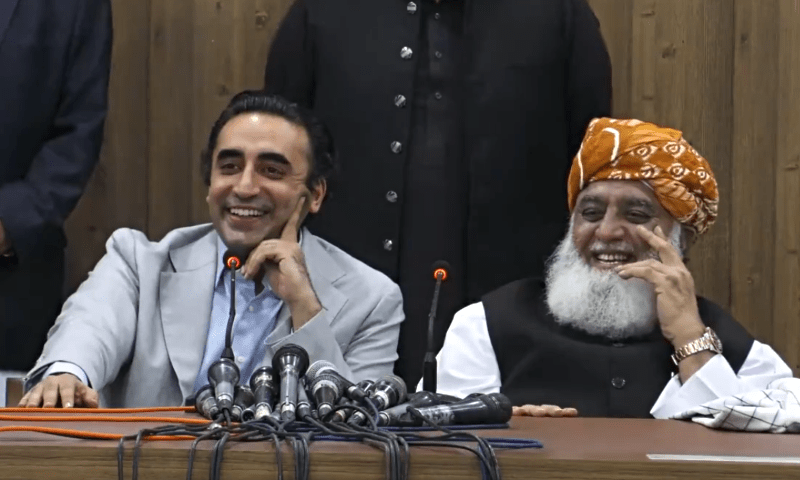
    PPP Chairman Bilawal Bhutto-Zardari on Sunday spoke to Jamiat Ulema-i-Islam-Fazl chief Maulana Fazlur Rehman and condemned the “government’s actions” against him.

    The telephone conversation comes as tensions have remained high between the JUI-F chief and the PML-N-led federal government over the past month. On Sunday, Fazl’s party also held street protests in several cities of Khyber Pakhtunkhwa against “propaganda” directed toward the party and its leadership.

    According to a statement issued by PPP, Bilawal and Fazl exchanged views on the country’s political situation.

    The Bhutto scion — whose PPP is an ally of the ruling coalition — “condemned the government’s actions and political vengeance” targeting the JUI-F.

    “The government should tolerate the opposition’s criticism,” Bilawal was quoted as saying in the statement. He highlighted that the opposition had an “extremely important role in democracy and a parliamentary system”.

    Speaking to Fazl, Bilawal said the “government should refrain from such actions that weaken democracy and the Parliament”.

    The PPP chairman has recently been calling for political unity in the country, urging the prime minister to take measures to build trust with the government’s allies and the opposition.


    More to follow

    Source: dawn

  • Taliban authorities ban cricket content on Kandahar radio

    Taliban authorities ban cricket content on Kandahar radio

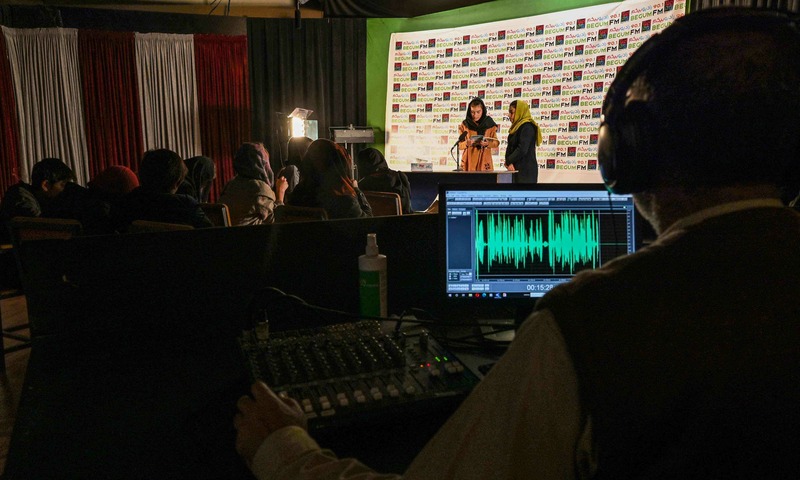
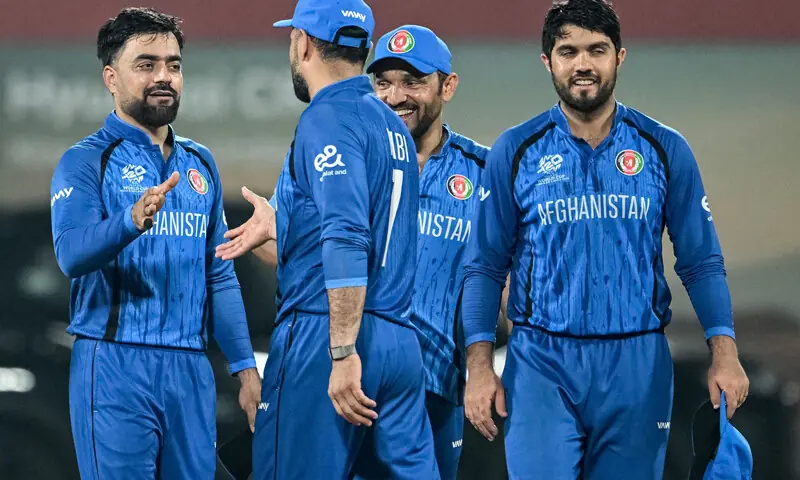
    The Taliban authorities have banned radio stations in southern Kandahar from airing content related to cricket, a rapidly growing sport in Afghanistan, two broadcasters and a provincial source told AFP on Sunday.

    The government has shown support for the game, hosting cricket matches during the August anniversary of its return to power.

    But the provincial Information and Culture Department told radio stations on Saturday that anything related to cricket is no longer allowed.

    A source from that department, who requested anonymity because he was not authorised to speak to the media, confirmed that “cricket coverage is banned”.

    “Both commentary and news coverage, or even reporting about their winning result, is also banned,” he told AFP, without providing further details.

    The head of a local radio station told AFP: “We received a call from Information and Culture, and we were told that we can’t cover cricket on the radio anymore.”

    The manager of another Kandahar radio station confirmed the directive, saying that the authorities called and said “anything related to cricket is banned for now”.

    Both broadcasters spoke to AFP on condition of anonymity for security reasons.

    Afghanistan’s cricket board did not respond immediately to an AFP request for comment on the decision in Kandahar, which is home to the country’s Taliban leader.

    The Taliban authorities have restricted some sports in Afghanistan — outlawing mixed martial arts — but have allowed men and boys to continue playing cricket.

    Women and girls, however, are banned from gyms and sport more broadly as part of rules severely limiting their access to public life.

    The men’s cricket team is currently playing the second Test against Zimbabwe in Sharjah, United Arab Emirates.

    Taliban authorities ban cricket content on Kandahar radio

    Source: dawn

  • Growing crisis

    AN emergency can be judged by the speed with which it draws an effective response. The National Population Council’s executive committee has declared rapid population growth a national emergency. But Pakistan has been warned about this crisis for decades, with little to show for it.

    People still struggle to obtain reproductive healthcare, clinics run short of contraceptives, and millions of couples lack the information and services needed to plan families. The 2023 census recorded an annual population growth rate of 2.55pc, placing further pressure on schools, hospitals, housing, jobs and water supplies. The state cannot keep announcing plans while failing to provide basic services.

    One key decision taken at the meeting was to improve the tracking of contraceptive supplies. But collecting data is only the first step. Provinces must ensure that clinics are adequately equipped, healthcare workers are trained and family planning services reach remote and neglected communities. Religious scholars can also help address misconceptions about birth spacing, particularly by explaining its benefits for mothers and children.

    Planning Minister Ahsan Iqbal has raised another important issue: the National Finance Commission formula, which gives population an 82pc weight in the distribution of provincial resources. His concern that the formula may reward population growth deserves attention.

    However, simply giving provinces more money for reducing birth rates could create fresh problems. Provinces with larger, poorer populations already face greater demands for schools, hospitals and other services. Cutting their share would only make these problems worse.

    Instead, the government should consider rewarding provinces that improve access to family planning, girls’ education and maternal healthcare, while ensuring that funding reflects their actual needs. Above all, the authorities must recognise that population planning is about helping people make informed choices, not merely bringing down numbers.

    Calling population growth a national emergency is easy. Ensuring that the response reaches the people who need it is the real challenge.

    Published in Dawn, November 15th, 2026

    Source: dawn

  • Megaspeed says Alice Huang left the company in August 2025

    Megaspeed says Alice Huang left the company in August 2025

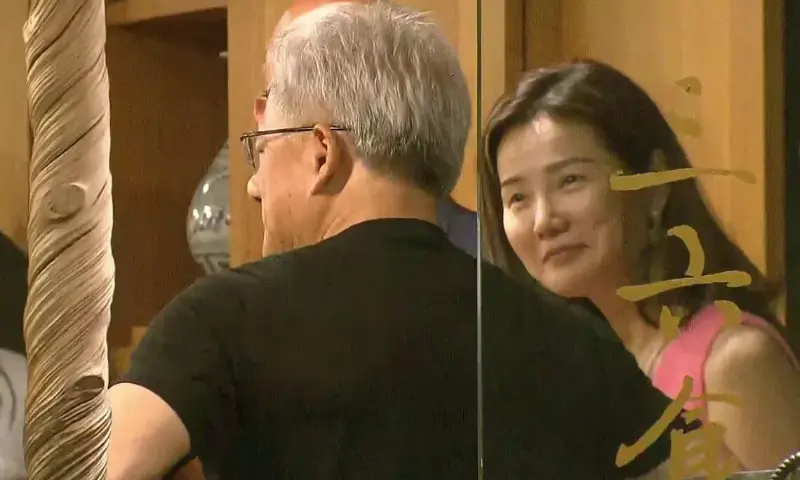
    Megaspeed said on Sunday that Chinese businesswoman Alice Huang, whose ties to former Nvidia CEO Jensen Huang have raised US national security concerns, officially left the company on August 30, 2025, and has no current role there.

    The Singapore-based cloud-computing company is an Nvidia business partner in the Asia-Pacific region and has been in the spotlight after reports that Jensen Huang had an affair with former Megaspeed executive Alice Huang, whom US authorities suspect of being a Chinese spy.

    “Megaspeed does not comment on Ms Huang’s personal and private matters,” the company’s statement added.

    In October 2025, the New York Times reported that Megaspeed was under US investigation over whether it helped Chinese customers obtain Nvidia computer chips subject to Washington’s export controls. China has denied the allegation, and Megaspeed has not been found to have violated ​the rules.

    “Megaspeed is aware of recent media reports containing assertions about our business, supply chain and global operations that are not supported by verifiable evidence,” it said in Sunday’s statement.

    The company said it conducted “legitimate and lawful business” and had retained external legal counsel to conduct a thorough internal investigation. It added that its operations and supply chain controls were designed to comply with applicable laws and regulations, including US export-control requirements.

    Alice Huang became the controlling shareholder of Megaspeed in March 2023, according to Washington-based research group C4ADS, which reviewed corporate records.

    The US government and Nvidia did not respond immediately to Reuters requests for comment on Megaspeed’s statement.

    Source: dawn

  • Blasts rattle Bahrain as Iran launches second drone attack in 3 days

    Blasts rattle Bahrain as Iran launches second drone attack in 3 days

    Blasts echoed over Bahrain on Sunday as the tiny Gulf nation was rattled by the second Iranian drone attack in three days, ending a long lull in strikes during the Middle East war.

    Sirens rang out, and authorities posted several alerts on social media urging residents to seek shelter, their first warnings since September.

    Iran’s Revolutionary Guards said they carried out a drone attack on a US radar system in the desert island state, which hosts US military facilities including a major naval base.

    Bahrain’s military said it intercepted the attacks, “preventing them from reaching their intended targets”. The foreign ministry said air defence systems shot down Iranian drones.

    “It’s exactly what I was hoping wouldn’t happen: Iranian attacks starting again, with all the worry and uncertainty that go with them,” resident Hayat Ibrahim, 65, told AFP.

    Iran also fired drones at Bahrain on Friday — the first strikes since September against countries in the energy-rich Gulf, which has been heavily targeted in the eight-month war.

    Explosions could be heard around 4am (6am PKT) on Sunday, an AFP journalist said, with residents reporting a second series of blasts around 6:30am.

    The interior ministry, posting on X, called on “residents to remain calm, proceed to the nearest safe location, and follow news through official channels”.

    Mohammed Abdallah, a shopkeeper in the capital, Manama, heard the strikes overnight. “I was hoping this period was behind us and wouldn’t happen again,” he said.

    ‘Settling scores’

    Iran’s Revolutionary Guards said the drones targeted a US radar system at a helicopter base, according to a statement carried by the Iranian state broadcaster.

    “The US air defence radar system at the Al-Riffa helicopter base in Bahrain was targeted by six drones belonging to the IRGC Aerospace Force,” the Guards said in a statement posted by the state broadcaster on Telegram.

    “The Strait of Hormuz is closed, and any aggression by the American enemy will be met with an even harsher and more forceful response,” it added.

    Bahrain “rejects turning its territory into an arena for settling scores and holds Iran fully responsible for these attacks”, a foreign ministry statement said.

    During more than eight months of war, Iran has restricted shipping through the Strait of Hormuz oil trade route and struck infrastructure including airports, seaports, energy facilities, and US assets across the region.

    The Gulf countries have weathered thousands of Iranian drones and missiles since the war began on February 28.

    On Friday, following this month’s US strikes on Qeshm island in Hormuz, the Revolutionary Guards said their forces targeted a US early warning radar system in Bahrain.

    The US military’s Central Command (Centcom) said it shot down two Iranian drones in Friday’s attack, reporting no casualties or damage.

    Centcom, which oversees American military operations in the region, said last month that it had helped Gulf countries export 1.5 billion barrels of oil since the summer via Hormuz.

    US President Donald Trump, whose steep reverse in midterm elections was partly blamed on the Iran war, plans to discuss the conflict at a trilateral meeting with his Chinese and Russian counterparts this week, an official said Friday.

    Months of diplomacy have failed to resolve the war, which began with surprise US-Israeli strikes that assassinated Iran’s supreme leader Ayatollah Ali Khamenei.

    Source: dawn

  • ‘Disgraces spirit of the game’: Indian players’ celebrations draw criticism after U-19 Asia Cup final victory over Pakistan

    ‘Disgraces spirit of the game’: Indian players’ celebrations draw criticism after U-19 Asia Cup final victory over Pakistan

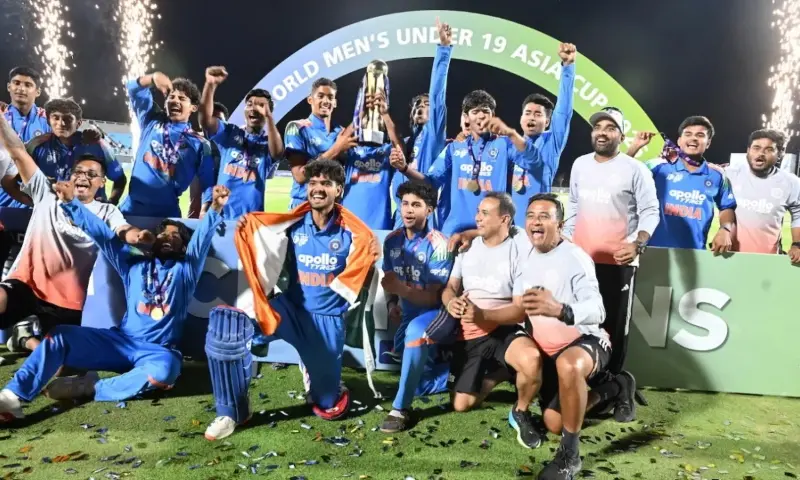
    Celebrations by Indian players following their dramatic one-wicket victory over Pakistan in the U-19 Asia Cup final on Saturday drew criticism on social media, with several videos appearing to show players making obscene gestures and directing abusive language at their opponents.

    Footage circulating online showed some Indian players making inappropriate gestures and shouting at Pakistan players after Mohit Ulva struck the winning boundary off the final delivery at the Al-Amerat Cricket Ground in Muscat.

    One video appeared to show players, including Manal Chauhan, making gestures towards Pakistan wicket-keeper-batter Hamza Zahoor, while other clips showed members of the Indian side celebrating aggressively in front of their opponents.

    There were also reports of no immediate exchange of handshakes between the teams as Indian players rushed onto the field to celebrate. A member of India’s support staff was seen attempting to calm the players.

    The footage drew criticism from social media users, with several questioning the conduct of the Indian players and describing it as contrary to the spirit of the game. Some comments criticised the celebrations despite acknowledging India’s achievement in winning a closely contested final.

    The gestures allegedly directed at Hamza also attracted attention from Pakistan supporters and former players.

    “This guy should be sent to school instead of [a] cricket ground,” former federal minister Fawad Chaudhry wrote on X.

    In response to another one of Chaudhry’s posts, journalist Fahd Hussain called the cricketer a “disgrace to more than just Indian cricket”.

    Meanwhile, cricketer Ahmed Shahzad, while congratulating the Indian team, said celebrations should reflect the joy of winning instead of turning into gestures of aggression or unnecessary hostility.

    “These are young players, and it’s important we teach them that the spirit of the game goes beyond the result,” Shahzad posted on X.

    “Unfortunately, the seniors have carried forward certain traditions that need to change. It’s time we evolve, show respect for the opposition and embrace true sportsmanship,” he added.

    Former batting maestro Mohammad Yousuf called the tournament a “great” learning platform for both teams and players with potential to become future stars.

    However, without naming anyone, he emphasised that competing in sports at any level was not only about representing one’s country, but also about reflecting one’s upbringing and the values and ethics taught by one’s parents.

    “Always remain respectful and composed, whether in victory or defeat. True sportsmanship is reflected in the way you conduct yourself, regardless of the outcome,” Yousuf said.

    Columnist Ammar Masood said the scenes involving the Indian cricket team are “not a reflection of sportsmanship” but of a “deeply disturbing mindset that has no place in cricket”.

    “Such behaviour disgraces the spirit of the game,” Masood asserted.

    Hamza had earlier scored a century in the group-stage meeting between the two sides.

    However, Board of Control for Cricket in India (BCCI) secretary Devajit Saikia defended the players, saying their celebrations were understandable given the circumstances of the victory.

    “When they win a match from such a difficult position, they certainly deserve to celebrate. That’s something we must allow,” he told reporters.

    India had recovered from 252 for eight to chase down Pakistan’s 338-run target, finishing at 339 for nine on the final delivery. Pakistan had earlier posted 337 for nine, with Usman Khan scoring a century.

    The celebrations sparked debate over the conduct of players in high-pressure contests, particularly in matches involving the two neighbouring countries.

    Source: dawn