Category: dawn news

  • Why has the drive to verify India’s billion voters put the poll body under scrutiny?

    Why has the drive to verify India’s billion voters put the poll body under scrutiny?

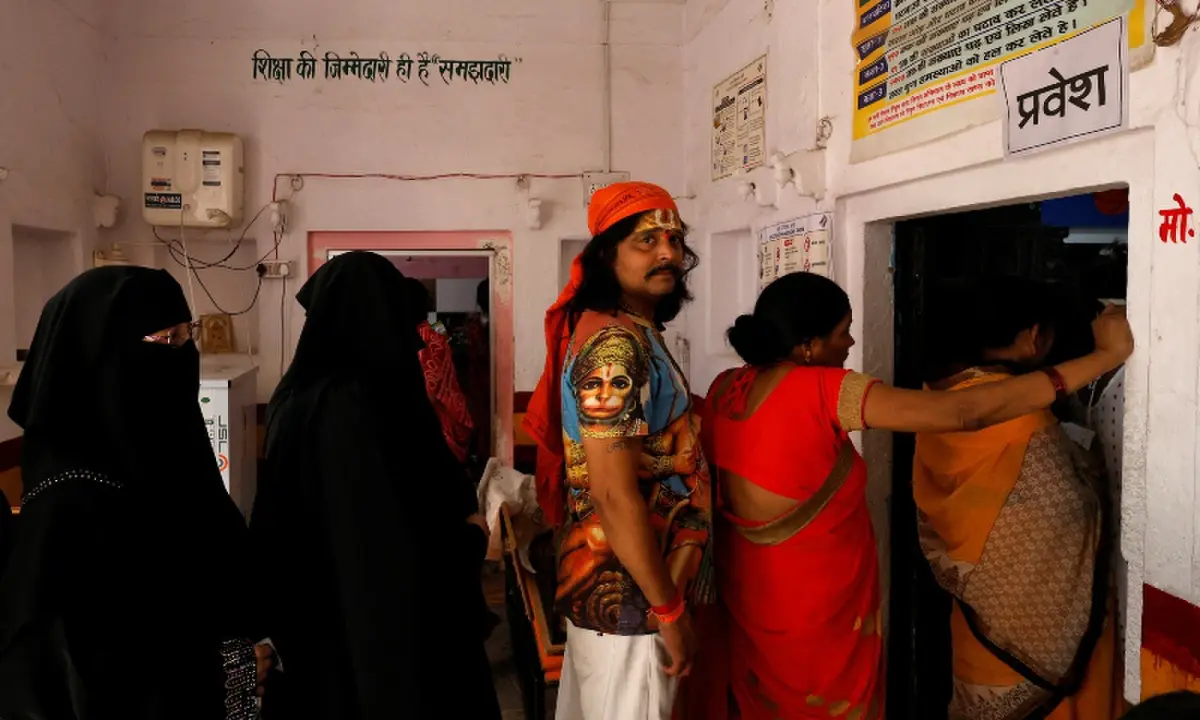
    India’s drive to verify the eligibility of roughly a billion voters has put the country’s election authority under severe public scrutiny, with opposition parties alleging the manipulation of voter rolls and exclusion of millions.

    A report published in September by the Indian Express newspaper alleged there were internal divisions within the Election Commission of India (ECI) over the lists and registration procedures, stoking further concerns about its neutrality.

    Here’s an explainer on the ongoing controversy.

    Verifying a billion voters: the controversy

    India started verification of its voter rolls last year ahead of elections in the eastern state of Bihar. The review has now covered the majority of Indian states.

    While voter roll revisions are routine, this round became controversial after large numbers of voters in states such as Bihar and West Bengal found their names missing from electoral rolls and were unable to cast ballots.

    Opposition parties including Congress have accused Chief Election Commissioner Gyanesh Kumar of bias and alleged that the process benefits Prime Minister Narendra Modi’s Bharatiya Janata Party (BJP). The poll body and the BJP denied such claims.

    The Indian Express story said two top election commissioners had expressed concerns to Kumar at least 14 times in 10 months but those concerns were not taken into consideration. The ECI said all its decisions were lawful and differing views within the commission were not unusual.

    The report prompted widespread protests last month by some opposition groups, student organisations, and the youth-led Cockroach Janta Party to demand Kumar’s resignation.

    Why does it matter?

    The verification drive resulted in about 130 million people being excluded from the first draft list, who are now required to prove their credentials before being enrolled.

    ECI data showed that about 6.5 million voters were excluded from the draft rolls during Bihar’s revision exercise last year.

    India’s Supreme Court has also raised concerns, saying notices to prove eligibility sent to some voters appeared to have been “machine generated” without human intervention, local media reported.

    What happens to voters expelled from the list?

    The ECI says names are only removed when a voter has died, is mentioned more than once on the rolls, has moved to another region or is untraceable. Officers are required to record detailed reasons why a voter is deleted.

    People whose names do not appear in draft rolls can request inclusion before final voter lists are published and also raise appeals if such requests are denied.

    Voters excluded from final rolls can also challenge the decision.

    To participate in future elections, excluded voters must succeed in their appeals or apply for fresh registration.

    Opposition parties argue that arbitrary deletions and lengthy appeals prevented millions in Bihar and West Bengal from voting and could be used as a weapon in future elections.

    Key state election due: At least seven Indian states will hold elections next year, including Uttar Pradesh, considered a bellwether state in national politics. Verification in Uttar Pradesh began in October 2025 and saw 13 per cent of names being deleted, according to local media reports.

    Poll body’s defence: The ECI has defended itself against allegations of political bias, including in a rare press conference last year by Kumar, who asked the opposition to submit their allegations under oath.

    Following the newspaper report, the poll body also announced revisions to the process including home visits by officials to collect verification documents and an extension of the deadline for final verification in some states.

    Source: dawn
  • Jay Shah re-elected unopposed as ICC chairman for second term

    Jay Shah re-elected unopposed as ICC chairman for second term

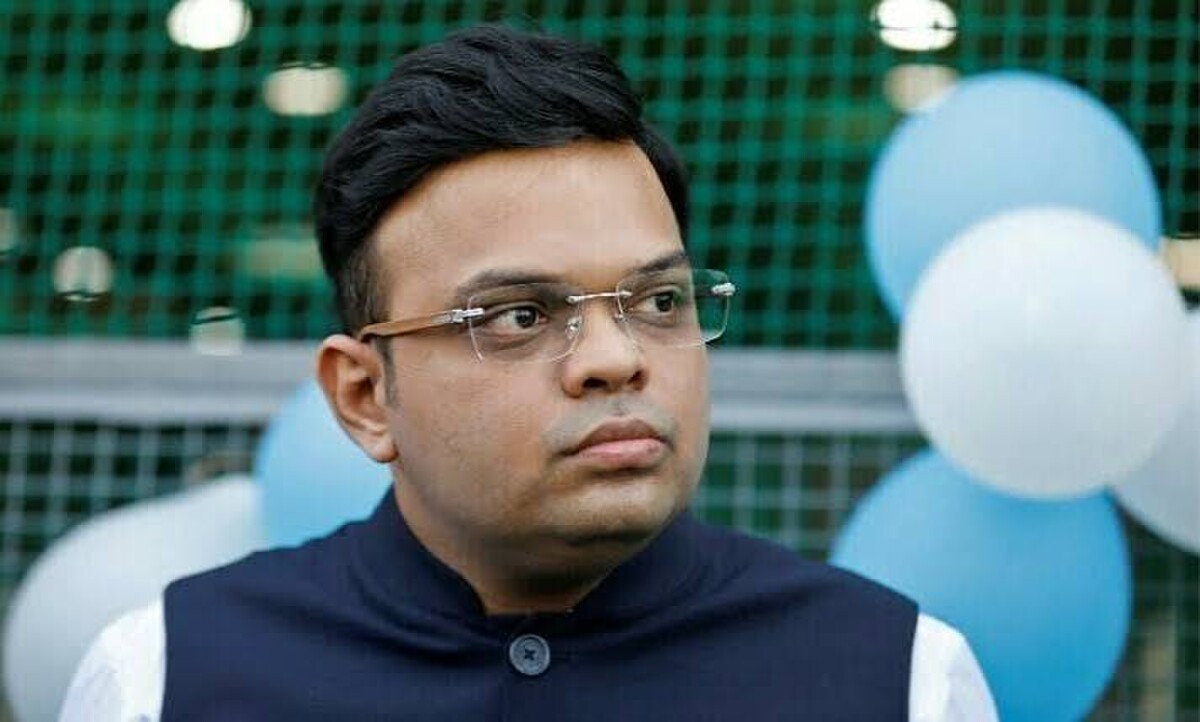
    Jay Shah was re-elected unopposed as chairman of the International Cricket Council (ICC) for a second two-year term on Monday, extending his leadership of the governing body as cricket prepares for its return to the Olympic Games at Los Angeles in 2028.

    The decision was announced following the ICC Board meetings in Bali, Indonesia, where directors proposed Shah’s reappointment.

    The 38-year-old first took charge of the ICC on Dec 1, 2024, after serving as secretary of the Board of Control for Cricket in India (BCCI). He became the youngest person to head the global governing body at the age of 35. He is the son of India’s Home Minister Amit Shah.

    Shah’s second term will cover an important period for international cricket, with the sport preparing for its Olympic return after more than a century. Cricket will feature at the 2028 Los Angeles Games, with the T20 format selected for the competition.

    His first tenure saw the ICC oversee several major developments in the international game, including the 2025 Champions Trophy, which was staged under a hybrid model after India declined to travel to Pakistan. The arrangement saw India’s matches played in Dubai, while Pakistan hosted the remainder of the tournament.

    The coming years will also include the 2027 Men’s ODI World Cup, to be jointly hosted by South Africa, Zimbabwe and Namibia, as well as further expansion of the ICC’s international competitions.

    In a statement after his re-election, Shah thanked the board members for their continued confidence and said the sport was entering an important phase of its development.

    “Cricket’s return to the Olympic Games at LA28 presents an extraordinary opportunity to introduce our game to new audiences and inspire a new generation of players and fans,” he said.

    He added that the ICC’s responsibilities extended beyond organising major tournaments, stressing the need to build a sustainable future for the game.

    The governing body said its priorities would include strengthening international cricket, expanding opportunities for Associate Members, supporting the growth of women’s cricket and protecting the integrity of the sport.

    England and Wales Cricket Board chairman Richard Thompson welcomed Shah’s reappointment, saying the international calendar and the competitiveness of bilateral cricket would remain important considerations in the years ahead.

    ICC deputy chairman Tavengwa Mukuhlani also backed the decision, pointing to the opportunities the 2027 World Cup could create for cricket across Africa.

    Shah’s second term will run through a period in which the ICC will have to balance the demands of its member boards with the commercial growth of the game and its expanding international programme.

    Source: dawn

  • Pakistan links regional cooperation with Afghanistan to action against terrorism at ECO moot

    Pakistan links regional cooperation with Afghanistan to action against terrorism at ECO moot

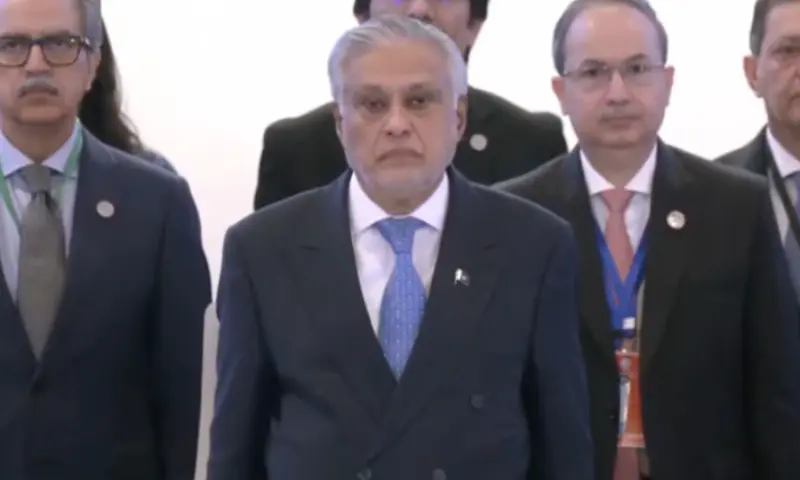
    Pakistan desires a peaceful, prosperous and stable Afghanistan, but meaningful progress towards regional cooperation requires the Afghan authorities to address the legitimate security concerns of neighbouring countries, particularly the threat of terrorism, Deputy Prime Minister and Foreign Minister Ishaq Dar said on Monday.

    Addressing the Council of Ministers meeting of the Economic Cooperation Organisation (ECO) in Islamabad, Dar said a stable Afghanistan, at peace with itself and all its neighbours and fully integrated into the ECO framework, would benefit the Afghan people as well as the wider region by opening up avenues for trade, transit and economic cooperation.

    Currently, Pakistan, Afghanistan, Azerbaijan, Tajikistan, Iran, Turkiye, Kazakhstan, Turkmenistan, Kyrgyz Republic and Uzbekistan are part of the ECO.

    “Pakistan desires a peaceful, prosperous, and stable Afghanistan, fully integrated within the ECO framework and at peace with itself and its all neighbors. Such an outcome would serve not only the Afghan people, but also the wider region, opening important avenues for trade, transit, and economic cooperation,” said the foreign minister.

    “At the same time, meaningful progress requires the Afghan authorities to address the legitimate security concerns of the neighboring countries, particularly the threat of terrorism.”

    He said a secure and stable environment was essential for sustained regional economic partnerships, adding that these considerations remained central to Pakistan’s broader connectivity agenda.

    “Regional connectivity rests on more than the routes that link us. It depends upon trust between states and confidence that international commitments will be honored. Unresolved disputes and the non-fulfillment of international obligations can erode that trust and impede economic progress,” said Dar.

    The foreign minister emphasised that respect for international law and treaties is essential to enduring economic partnerships between countries.

    Five priorities

    Outlining Pakistan’s priorities during its chairmanship of the ECO, Dar identified five key areas of focus, including expanding trade and investment, strengthening regional connectivity, advancing the ECO Trade Agreement, building regional resilience and promoting human development.

    The foreign minister said the region’s natural resources, energy reserves, agricultural potential and strategic location offered considerable opportunities for economic cooperation, but realising that potential required functioning transport corridors, efficient border procedures and predictable transit arrangements.

    He said Pakistan would work towards wider market access, stronger regional value chains and greater private sector participation, particularly by small and medium-sized enterprises, to boost trade and investment among member states.

    “Closer interaction among our business communities can help translate commercial potential into greater trade and investment.”

    On connectivity, Dar said Pakistan would seek to improve transport and transit links between Central Asia, South Asia and Pakistani ports on the Arabian Sea. Harmonised customs procedures, efficient border management and predictable transit arrangements were essential to making regional trade routes commercially viable, he added.

    The foreign minister also highlighted the need to advance the ECO Trade Agreement, saying the negotiating strategy and roadmap approved by ECO trade ministers in November 2025 provided a basis for modernising the agreement. Pakistan would support efforts to develop a more effective, inclusive and digitally enabled regional trade framework, he said.

    On regional resilience, Dar called for closer cooperation in disaster preparedness, early warning systems, sustainable water management and climate-resilient infrastructure, noting that climate change and growing pressure on water and energy resources posed serious challenges to regional economies.

    He also underscored the importance of human development, particularly in education, research, innovation and vocational training, saying greater opportunities in these areas could equip young people with skills needed by changing economies. Promoting entrepreneurship and professional exchanges would further strengthen regional integration, he added.

    The foreign minister maintained that the five priorities were interconnected and their success would depend on collective efforts by member states. He expressed Pakistan’s readiness to work with ECO members and the organisation’s secretariat on initiatives relating to trade facilitation, transit connectivity and disaster preparedness.

    He also cautioned that peace and stability were essential for economic development, warning that conflict and insecurity in the region could disrupt trade routes, energy supplies, investment and economic projects.

    Senior officials meet to finalise agenda

    Senior officials of the ECO finalised the agenda and draft Islamabad Communiqué ahead of the organisation’s 30th Council of Ministers meeting, scheduled to be held in Islamabad on Monday.

    According to a statement issued by the Ministry of Foreign Affairs (MoFA), the Senior Officials Meeting (SOM) was held on Nov 15 under the chairmanship of Foreign Secretary Ambassador Asim Iftikhar Ahmad.

    The meeting was attended by senior officials from ECO member states, representatives of the ECO Secretariat, and delegates from the organisation’s specialised agencies and regional institutions.

    The officials reviewed preparations for the ministerial meeting and finalised its agenda and the draft Islamabad Communique for consideration by the foreign ministers.

    They also reviewed the activities undertaken by the ECO Secretariat during the year, including ongoing programmes and initiatives, outcomes of sectoral ministerial meetings, and the work of subsidiary bodies and specialised institutions, the ministry said.

    Administrative and financial matters of the organisation also came under discussion, with participants exchanging views on measures to improve its effectiveness.

    The SOM serves as a preparatory forum for the Council of Ministers, enabling member states to assess progress, discuss issues of mutual interest and build consensus on proposals and draft documents ahead of ministerial-level deliberations.

    A day earlier, Dar underscored the importance of strengthening “regional cooperation, connectivity and economic integration” as a two-day meeting of the ECO Council of Ministers kicked off in the capital on Sunday.

    The Central Asian leaders will discuss and adopt ECO Vision 2035, a 10-year framework that aims to strengthen regional connectivity, economic integration, and sustainable growth.

    Pakistan, which holds the ECO chairmanship for 2026-27, will seek to advance the organisation’s objectives under the theme “Reviving Regionalism for a Resilient ECO”, the FO said a day earlier.

    More to follow

    Source: dawn

  • India, England, Australia and New Zealand to host all ICC events from 2028-31

    India, England, Australia and New Zealand to host all ICC events from 2028-31

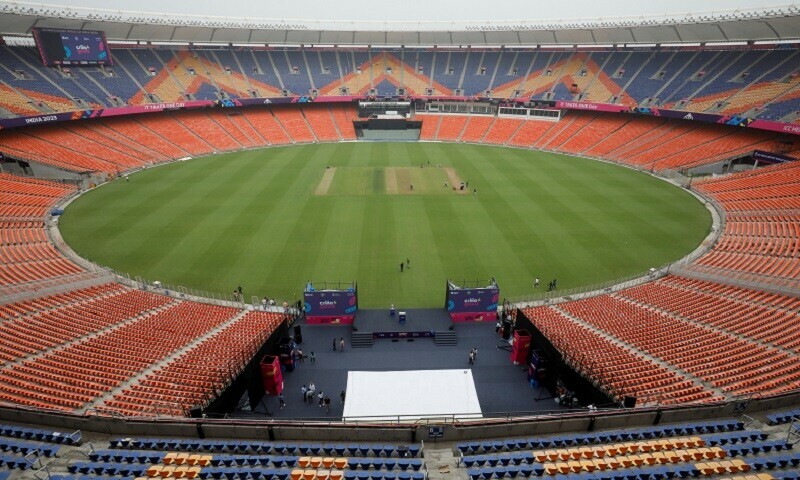
    LAHORE: Pakistan failed to get any event of the International Cricket Council (ICC) at least till 2031, as the game’s world governing body announced its activity programme for the 2028-2035 cycle on Sunday.

    According to a press release issued by the ICC, India, England, Australia and New Zealand swept all the events to be held from 2028 to 2031. From 2032 to 2035, the venues of the rema­ining events will be decided later.

    India, having a major influence in the ICC’s affairs, will host the 2029 ICC Champions Trophy and the 2031 ICC World Cup jointly with Bangladesh.

    Australia and New Zealand will organise the 2028 T20 World Cup. England will continue to host the ICC Test Championship final in 2029 and 2030, while it will also hold the 2030 T20 World Cup along with Ireland and Scotland.

    Surprisingly, Pakistan, an important stakeholder of the cricketing world which successfully hosted the eight-team Champions Trophy last year, was not given any ICC event.

    “The decisions were made with increasing opportunities for Full and Associate Members in mind, strengthening qualification pathways and enhancing competitive standards across international cricket,” the ICC said in a press release.

    Commenting on the announcement of the activity programme, Sanjog Gupta, the ICC chief executive, said: “The ICC events portfolio and schedule are critical components of cricket’s global architecture and deliver elevated context, competitiveness and consequence to the ecosystem. These tournaments serve as pinnacle moments for fans and players alike, with the associated pathways driving aspiration and access for the broader cricketing landscape.”

    MARQUEE MEN’S EVENTS SCHEDULE

    The ICC Board approved the windows for established ICC marquee men’s events until 2035. The confirmed schedule runs from the 2028 Men’s T20 World Cup in Australia and New Zealand up to the 2035 Men’s World Cup.

    The 2027 Men’s World Cup Qual­ifier, scheduled for February-March, will feature 10 teams and 23 matches. The tournament will comprise two groups of five, followed by semi-finals and a final, with the top four teams qualifying for the World Cup.

    The winners will progress directly to the 2027 Men’s World Cup Group Stage, while the three remaining teams will compete in the Super Series to determine the final Group Stage spot.

    The 16-team Global Qualifier, scheduled to be played during the first quarter of 2028, will feature 31 matches, with four groups of four competing across the group stage, quarter-finals, semi-finals and the final. A total of eight teams will qualify directly to the 2028 Men’s T20 World Cup from the event. The highest-placed team from each region will qualify, subject to minimum performance criteria, with the remaining places going to the next highest-placed teams overall.

    2028 WOMEN’S T20 WORLD CUP QUALIFIER

    With the qualification framework for the 2028 Women’s T20 World Cup approved in May 2026, regional allocations for the Global Qualifier have now been confirmed.

    The Netherlands and Scotland, having participated in the 2026 tournament without securing automatic qualification for 2028, will be joined at the Global Qualifier by eight teams from regional qualifying.

    Those eight teams will advance through five regional qualification events scheduled for 2027, with two spots each up for grabs across Africa, Asia and the East Asia-Pacific, and one more from both the Americas and Europe. The top two teams from the Global Qualifier will secure the final places at the ICC Women’s T20 World Cup 2028.

    Host nations and dates have been confirmed for the final qualification events for the 2028 Los Angeles Olympics. The men’s qualifier for LA28 will take place from Feb 5-13, 2028 in Bangladesh, prior to the ICC Women’s Qualifier, which will run from Feb 26 to March 5, 2028 in the United States.

    The events constitute the final stage of the qualification pathway for cricket’s return to the Olympic programme at LA28. They will each feature eight teams — spread across two groups of four — and 13 matches. Each team will play the other teams in their group once, with the group winners progressing to the final. The winners of the final will secure the final qualification berth for the LA28 Olympic Games.

    Published in Dawn, November 16th, 2026

    Source: dawn

  • KWSC completes maintenance work but water shortage persists in Karachi

    KWSC completes maintenance work but water shortage persists in Karachi

    KARACHI: Although the Karachi Water and Sewerage Corporation (KWSC) claimed to have restored water supply across the city after completing its annual maintenance work at the Dhabeji pumping station, many areas were still without water for a third consecutive day on Sunday.

    The utility had announced that the maintenance work that began on Nov 13 would cause a shortfall of around 130 million gallons per day (MGD) in water supply.

    On Sunday, it said in a statement that various technical and maintenance works, including the installation of valves at key locations and repairs to water pipelines, were completed during the annual maintenance operation.

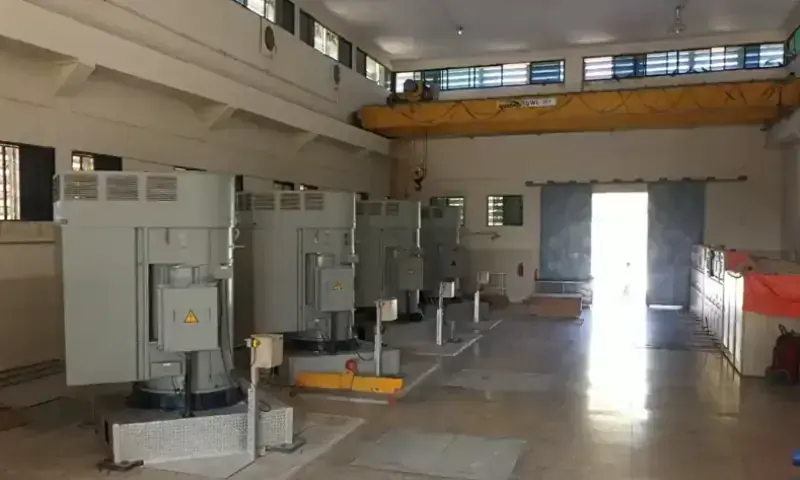
    It added all 21 pumps at the Dhabeji pumping station were now operational and water supply across the city had been restored.

    It added that water supply to some affected areas, including Landhi, Korangi, Malir and Shah Faisal towns, was being gradually brought back to normal. However, the statement did not mention any time frame for when the supply would be normalised.

    According to a KWSC spokesperson, during the annual maintenance work, repairs to water pipelines were carried out at Dhabeji, Pipri, Shahrah-i-Bhutto and the Haleji conduits to improve, stabilise and enhance the efficiency of the water supply system.

    The spokesperson added that a new 60-inch-diameter valve had been installed at the Dhabeji pumping station during the maintenance work.

    Similarly, necessary repairs were carried out at all pump houses at the Pipri pumping station. While approximately 150-foot-long water pipeline along the alignment of Shahrah-i-Bhutto was replaced, a leakage in the Haleji conduit was also repaired.

    Published in Dawn, November 16th, 2026

    Source: dawn

  • Public parks, playgrounds in Karachi becoming ‘pay-to-play’

    Public parks, playgrounds in Karachi becoming ‘pay-to-play’

    • From indoor cricket to futsal and padel courts, private operators are charging thousands of rupees for use of facilities built on public land
    • Residents question commercialisation of public spaces
    • Urge govt to bear maintenance costs instead of handing public facilities to private parties

    KARACHI: The growing commercialisation of public grounds by the Karachi Metropolitan Corporation (KMC) and Town Municipal Corporations (TMCs) across the metropolis for paid sporting activities has raised concerns about the affordability and accessibility of recreational spaces, particularly for children and young people from low-income households.

    For instance, there are four playgrounds within a radius of almost one kilometre in a Korangi locality. Yet, children living in the area have limited access to these facilities because they have been put to commercial use and anyone intending to play there has to pay a fee to private operators, raising questions about the very purpose of public recreational spaces meant to serve the needs of citizens.

    The situation is hardly different in other parts of Karachi, where either the KMC or the TMC concerned have handed over several public playgrounds and parks to private contractors, who make their facilities available to the public only against payment.

    Dawn visited several areas in different districts of the city and found that multiple public parks and grounds were being used for paid sporting activities, with private operators charging people for access to various facilities.

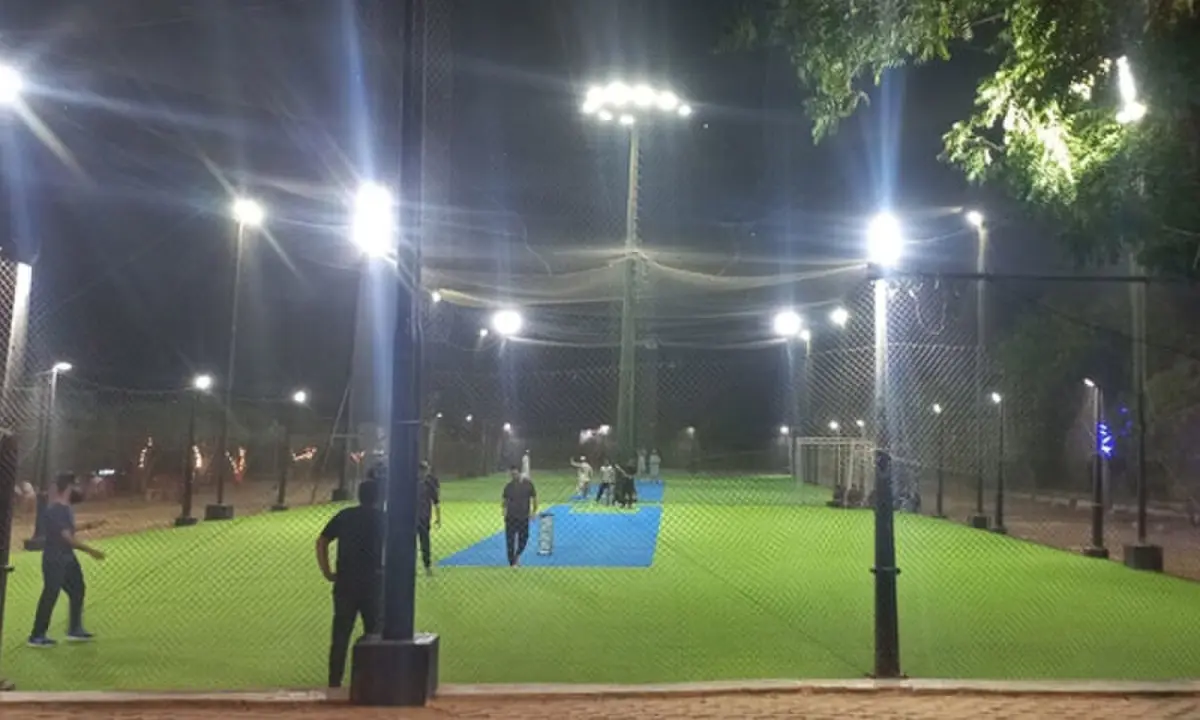
    In district Korangi, Rashid Latif Cricket Academy (RLCA) and Eidgah Ground charge Rs6,000 for a three-hour T20 match. Night matches cost around Rs5,000 an hour because generators are used to provide lighting. RLCA, which is run by Landhi TMC, also offers indoor cricket and futsal facilities for Rs3,000 an hour.

       Umer Sharif Park in Clifton. —Huzaifa Jawaid/Dawn
    Umer Sharif Park in Clifton. —Huzaifa Jawaid/Dawn

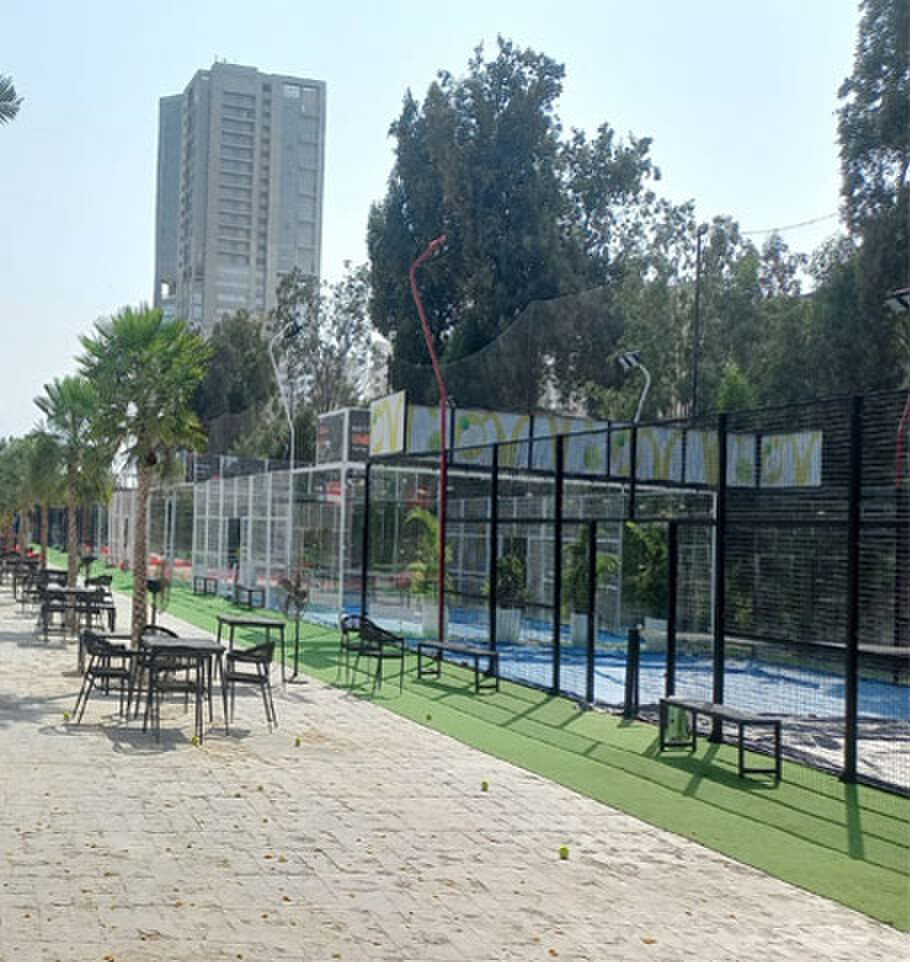
    In district South, Umer Sharif Park has eight padel courts, including two of international standard. The hourly charges range between Rs6,000 and Rs10,000 per court. The pickleball area costs Rs3,500 an hour, while the futsal court charges Rs4,000 for a 45-minute session.

    In district East, HillTop Sports Arena, located inside Hill Park, charges Rs4,000 an hour for indoor cricket and futsal. The rates go up by Rs1,000 on Fridays, Saturdays and Sundays.

    In district Central, Annu Bhai Cricket Ground in Nazimabad is operated by a private contractor under a KMC contract. A person dealing with the public at the ground said a six-hour daytime booking cost around Rs60,000, while the rate increased to Rs70,000 on Sundays. Night bookings also cost around Rs70,000, partly because of electricity and lighting expenses.

    At the Mini Sports Complex in Nazimabad No 2, a futsal facility situated on KMC land charges Rs2,500 an hour.

    At Baloch Mujahid Football Ground in district Malir, charges can reach Rs12,000 for a daytime football match and exceed Rs30,000 at night owing to the additional cost of running generators and fuel.

    Public access increasingly restricted

    Residents said the growing use of public spaces for paid sporting activities was making it increasingly difficult for children and young people to participate in sports without having to worry about the cost.

    Huzaifa Quraishi, the general secretary of Team Mohajir Pakistan, a youth committee based in Korangi, said public grounds were either in poor condition or had been handed over to private parties, leaving ordinary persons with few affordable options.

    He said providing young people with accessible sporting facilities could also help engage those struggling with drug addiction by giving them opportunities to participate in healthy recreational activities.

    A resident living near Eidgah Ground in Korangi questioned why a public facility had been developed if children from the neighbourhood could not use it freely. “What good is it when our children cannot play inside it? We could never use it,” the resident said.

    A former Pakistan national football team player termed the practice of charging people for access to public sporting facilities unethical, saying many players came from modest families and could not afford the fees.

    He said government departments should bear the cost of maintaining these facilities instead of handing them over to private parties that subsequently charged the public for their use.

    A woman living near Umer Sharif Park in the South District said residents were unhappy with the way public parks were being managed. She called for parks to be protected from what she described as a “mafia” making excessive profits at residents’ expense.

    At Hill Park, a family complained that the sporting and play areas were illuminated because they were paid facilities, while the rest of the park remained in darkness. The contrast, they said, reflected the unequal attention being given to commercial facilities and the park’s general recreational spaces.

    Dawn observed a guard at Eidgah Ground in Korangi scolding children and stopping them from entering the premises to watch a cricket match in progress. When told that it was a public facility and children should not be prevented from entering, he said: “The town chairman has not allowed it. You should ask him.”

    He added that the public was allowed to enter the ground only between 5pm and 7pm, and only for walking.

    When contacted, Korangi Town Chairman Naeem Sheikh said the Eidgah ground had been given to a private party for four days a week — from Monday to Thursday. He said the public can access the ground from Friday to Sunday by filing an application.

    He added that this partial outsourcing model has helped maintain the ground, which has remained in better condition for the past two years.

    However, he acknowledged that children’s entry is restricted during hardball matches as they could get injured.

    Authorities justify arrangements

    A KMC spokesperson said the corporation did not charge users for its facilities available for public use, adding that fees were collected by private parties operating facilities that had been handed over to them by the KMC under contractual arrangements.

    Responding to concerns about the charges, the spokesperson said contractors set their rates according to prevailing market rates in their respective areas.

    He added that the KMC was not a price regulatory authority and did not control the rates charged by private contractors.

    Landhi Town’s Sports Director Muhammad Sohail told Dawn that the charges were intended to cover maintenance and other expenses. “This is not just happening here, but it is normalised across the city,” he said.

    When contacted, the contractor running Eidgah Ground refused to comment, asking Dawn to reach out to the TMC.

    The Mini Sports Complex management said it had taken the land from the KMC under a contract and had developed the facilities with its own investment.

    The representative of Annu Bhai Cricket Ground did not respond to questions, while repeated attempts to contact those operating the facilities at Umer Sharif Park and Hill Park also went unanswered.

    Published in Dawn, November 16th, 2026

    Source: dawn

  • Separate legislative assembly in Islamabad on the cards

    Separate legislative assembly in Islamabad on the cards

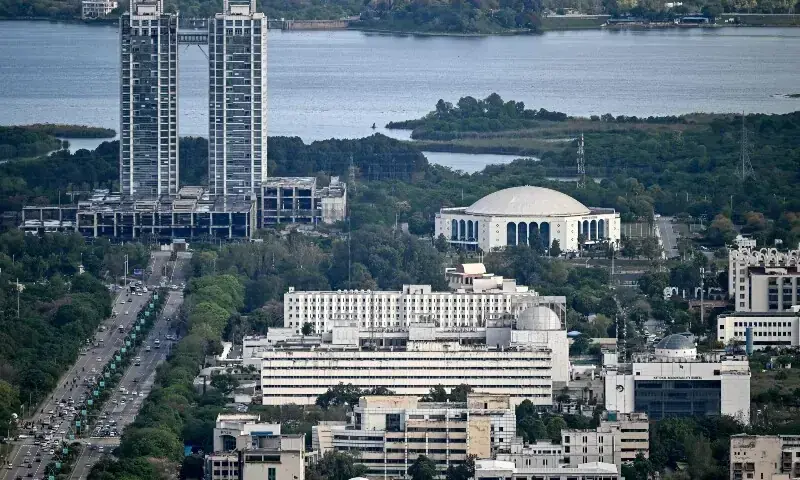
    ISLAMABAD: The government has intensified its efforts to set up a separate legislative assembly in Islamabad.

    If all goes as planned, a legislative assembly will be set up in the capital city, which will be headed by an elected mayor. Some months ago, a high-profile committee headed by Planning Minister Ahsan Iqbal had finalised recommendations, which were presented to Prime Minister Shehbaz Sharif. The recommendations proposed the devolution of powers from the federation to Islamabad Capital Territory as a federating unit, with a provincial-style government. It was stated that the proposed Islamabad Assembly would have 27 members and would be headed by an elected mayor/chief minister.

    However, new proposals are now emerging for setting up a separate legislative assembly. Some TV channels reported on Sunday that the boundaries of Islamabad would also be expanded and that there were chances that Haripur, Murree and parts of Rawalpindi would be made part of Islamabad. When contacted, a senior government officer said that it was clear that a new, separate legislative assembly would be set up in Islamabad.

    “As far as making Haripur, Rawalpindi and Murree part of Islamabad is concerned, nothing is final yet. They are part of separate provinces, and we will see if they can be made part of Islamabad or how laws passed by Islamabad will be implemented in these areas. So, again, nothing is final; these are discussions. But yes, Islamabad will have a separate legislative assembly,” he said.

    It is relevant to note here that local government elections in Islamabad have been facing inordinate delays, as the elections have been postponed at least five times during the last four years, with the government always stating that new legislation is being made for a “vibrant system”. As per the latest schedule, elections were supposed to be held on Dec 20, but the Islamabad High Court suspended the schedule on a petition which pleaded that polls could not be held until the legal status of the existing constituency delimitation was conclusively determined.

    Published in Dawn, November 16th, 2026

    Source: dawn

  • Sweeter than honey

    Sweeter than honey

    WE live in a world where tech giants like the frankly disturbing Peter Thiel rant about the antichrist and the excessively wealthy and extremely unlovable Elon Musk tries to foment racial discord via his own social media platform and names his children things like Tau Techno Mechanicus. What I’m saying is that things are weird, and getting weirder with every passing moment and so, it’s a relief to learn that (former) Nvidia CEO Jensen Huang is at least a human being who succumbed not to the desire to turn himself into a cyborg but instead to the charms of a lady who may or may not be a Chinese spy out to milk him for critical tech-related information; the jury is still out on that but the verdict will come too late for Mr Huang.

    Nevertheless, if true, he fell for what is arguably one of the — if not the — oldest tricks in the book: the honeytrap.

    The first recorded mention of this classic gambit is in the Biblical story of Samson and Delilah. Samson, as the story goes, was a superhero of the ancient world whose great strength was the bane of his enemies. Naturally wanting to somehow weaken him by learning the source of his strength and negating it, his opponents found the beautiful and seductive Delilah who inveigled her way into his confidence and, having learned that the source of his strength was his long hair, proceeded to shave his head while he slept and thus allowed his enemies to capture him.

    But the real heyday of the honeytraps was during the world wars and then the Cold War.

    Here, I must caution those who may be thinking that falling for such a ploy is exclusively a male weakness. It’s not: Roald Dahl, the famous British author, apparently also served as a honeytrap whose mission was to win the hearts and minds of influential female writers, politicians and socialites in the United States so as to build a consensus in favour of the Allied war efforts. He was perfect for the job: a ‘skilled flirt’, standing at six foot six inches in his pilot’s uniform, oozing old-world charm and chock-full of wit, Dahl blazed a path through American high society in the early forties, famously seducing oil heiress Millicent Rogers and having an affair with Congresswoman Clare Booth Luce in an attempt to soften her views towards the British Empire.

    Success has its own drawbacks, and Dahl reportedly found the liaisons with the lawmaker so physically exhausting that he begged to be relieved of this duty only to be told to close his eyes and think of England. After all, much needs to be sacrificed for the greater national interest.

    The heyday of honeytraps was during the world wars & the Cold War.

    Dahl isn’t the only ‘Romeo spy’ on record as the East German Stasi — which ran one of the most pervasive intelligence networks to ever exist — operated an entire department of handsome and charismatic male spies to target lonely and vulnerable ‘Juliets’ who worked as assistants and secretaries in West German ministries, Nato offices, Western embassies and so on. It worked like a charm, providing the Eastern Bloc a steady stream of classified information.

    Honeytraps also need to be flexible enough to cater to any predilection, as the KGB demonstrated in the 1950s with British civil servant John Vassal, who was posted in the British embassy in Moscow. Quickly realising that Vassal was a repressed homosexual in an age where this practice was illegal in both Britain and the Soviet Union, they trapped him by using a Polish man to entice him into imbibing large amounts of alcohol at an ‘underground’ party for homosexuals in which he was photographed in compromising positions with a series of young men who had been trained precisely for this purpose.

    In fact, the entire party had been arranged by the KGB. With their hooks deep in him, the Soviets milked him for information that proved to be of the highest value to the Soviet defence chiefs in their successful drive to expand and modernise the Red Navy.

    The oddest honeytrap story of all time has to be the tale of French diplomat Bernard Boursicort, which has been immortalised in the play M. Butterfly, which was later turned into a film starring Jeremy Irons. Stationed in Beijing in the 60s, Boursicort began a 20-year affair with Chinese opera singer Shi Pei Pu who claimed to be a woman forced to dress like a man so that she could satisfy her father’s wish to have a son. In due course, while pressuring Boursicort into passing on several hundred secret documents and plying him with misinformation, she also produced a child that she claimed was the fruit of their liaisons. That was of course impossible because when they were finally arrested in 1983 it turned out that Pei had been a man all along. How did he then fool Boursicort for so long, given the intimate nature of their relationship? Well, you’ll just have to look that up yourself.

    The writer is a journalist.

    X: @zarrarkhuhro

    Published in Dawn, November 16th, 2026

    Source: dawn

  • The IWT dilemma

    The IWT dilemma

    THE Indus Waters Treaty (IWT) of 1960 has long been heralded as one of the most durable water-sharing agreements in history. Despite multiple wars and decades of profound political animosity between India and Pakistan, the IWT managed to survive, providing a fragile framework for regulating the shared waters of the Indus River system.

    However, the delicate equilibrium of this treaty has been shattered. The move by India to place the IWT in abeyance is not merely a diplomatic protest; it represents a fundamental strategic pivot.

    In an era increasingly defined by climate change and existential resource competition, the suspension of the IWT signals a shift toward a new, perilous world order where water security dictates state survival, and historical norms are rapidly eclipsed by the “law of the jungle.”

    To understand the severity of the hydro-political reality of scarcity, one must look beyond the immediate geopolitical friction and consider the changing hydrology and demography of the region. Climate change is rapidly altering the cryosphere of the Himalayas, which feeds the Indus basin. Glacial retreat, erratic monsoon patterns, and severe, prolonged droughts are making water availability increasingly unpredictable.

    The World Resources Institute (WRI) provides a stark warning in its Aqueduct Water Risk Atlas, mapping a future where water becomes the most prized — and contentious — resource on the planet. According to WRI projections, vast swathes of the globe, including South Asia, face escalating levels of baseline water stress. By mid-century, trillions of dollars in GDP will be exposed to high water risk as demand drastically outstrips renewable supply. In such a landscape, water is no longer just an environmental issue; it is a fundamental driver of national security.

    As resources diminish, states are becoming increasingly inward-looking. The international order, which once placed a premium on cooperation, is giving way to a more ruthless framework where states prioritise their own existential needs above collective agreements.

    In this light, placing the IWT in abeyance is not a temporary diplomatic manoeuvre; it is a strategic preparation of the ground for an eventual unilateral withdrawal.

    As water scarcity increases, the temptation for an upper-riparian state to leverage control over water flows to secure its own agricultural and energy requirements becomes overwhelming, effectively treating the resource as sovereign property rather than a shared heritage.

    For Pakistan, the stakes are high because the Indus basin underpins agricultural production, rural livelihoods and food security.

    The intensification of India’s construction of storage dams along the Chenab River, despite the legal challenges and protests from Pakistan, is part of the strategic calculus and entirely consistent with this new paradigm. These projects allow for greater control, storage, and diversion of water.

    For Pakistan, an agrarian economy whose very existence relies on the Indus system, this is not a developmental disagreement — it is an existential threat. The Chenab-Beas link tunnel and the Salal sediment bypass illustrate the dilemma.

    Such projects may be presented as engineering responses to energy needs and sedimentation, yet transferring water between basins or modifying sediment-control infrastructure on a shared river raises both questions and concerns. The legal status and technical details of each project must be assessed individually for cumulative impact and downstream confidence.

    In August 2026 the Court of Arbitration rejected India’s unilateral abeyance of the treaty and reaffirmed that it remains in force. The court also ordered interim measures restricting specified construction at the Ratle hydroelectric project till 90 days after the Neutral Expert’s final decision expected in July 2027. India’s rejection of the court’s authority leaves a gap between legal pronouncement and practical compliance.

    The coming decision on pondage, spillways, low-level outlets and sediment flushing will matter, but the deeper question is whether both will accept a credible process for resolving disagreements. If the Neutral Expert and Court of Arbitration reach conflicting conclusions, and one or both governments dismiss the outcome, the treaty risks becoming an instrument that exists formally but no longer commands confidence.

    An institutional collapse would have consequences extending far beyond the immediate available water. It could erode hydrological data sharing, weaken flood warning cooperation, discourage investment in regional water management and intensify competition over reservoirs and infrastructure.

    A breakdown could also encourage unilateralism in transboundary river governance endangering peace at a time of growing geopolitical tensions and environmental fragility. The central danger remains the growing uncertainty in a system already under intense human pressure.

    For Pakistan, the stakes are high because the Indus basin underpins agricultural production, rural livelihoods and food security. For India, the consequences would include a more volatile neighbourhood, heightened diplomatic costs and a precedent that could complicate its own relations with other upstream countries. Neither country can insulate itself from the climatic and economic consequences of a destabilised basin.

    The gravity of the situation is exacerbated by the nuclear capabilities of both nations. The failure of the current global negotiations in limiting warming to 1.5 degrees Celsius is also ensuring that hydrological instability will only worsen and add to the fear of scarcity.

    The international community must act before the legal impasse becomes a humanitarian and security crisis. Political wisdom and environmental diplomacy can also play a major role in averting a potential catastrophe.

    A nuclear-armed upstream power and a highly water-dependent nuclear-armed lower-riparian state cannot afford to let a river become an instrument of existential threat. If water insecurity contributes to political instability, military escalation or a wider regional confrontation, the consequences will not remain confined to South Asia.

    The writer is a climate policy analyst.

    aisha@csccc.org.pk

    Published in Dawn, November 16th, 2026

    Source: dawn

  • World Bank ‘satisfied’ with $370m National Health Support Programme

    World Bank ‘satisfied’ with $370m National Health Support Programme

    ISLAMABAD: The World Bank has rated the implementation progress of its $370 million National Health Support Programme (NHSP) in Punjab, Sindh and Khyber Pakhtunkhwa as “satisfactory”, with a “moderate” overall risk rating, and expects the programme to meet its targets before the Dec 31, 2027 deadline.

    Effective since October 2022, the NHSP aims to advance universal health coverage by strengthening equitable access to and the quality of essential healthcare services at the primary level.

    The World Bank provided approximately $259m in financing, while the remaining funds came through grants and co-financing from the Global Financing Facility, the Gates Foundation, the Global Fund and Gavi.

    In its public disclosure, the Washington-based multilateral lender rated both, progress towards achieving the programme’s development objectives and overall implementation progress, as “satisfactory” while describing the overall risk as “moderate”.

    The NHSP “has sustained strong implementation momentum and continues to deliver tangible results across provinces”, the World Bank said, adding that approximately 76 per cent of total programme funding had been disbursed.

    Govt claims goods exports reached ‘all-time high’ of $11.4bn in July-October

    “Provincial governments have shown strong ownership, and the reforms introduced through the Disbursement Linked Results (DLRs) are strengthening primary health care systems. The remaining DLRs are on track, and all are expected to be achieved well ahead of the programme’s closing on Dec 31, 2027,” the bank noted.

    The World Bank has already disbursed $205m (79.3pc) of its $259m financing, while a $36.8m co-financing facility has been completely disbursed. Two other financing components of $35m and $29m have each recorded disbursements of 50pc, according to the lender.

    The programme uses a Program-for-Results (PforR) financing instrument, the first of its kind in Pakistan’s health sector, under which funding is linked to the achievement of agreed results.

    The approach builds on Pakistan’s universal health coverage reforms and improvements in implementation capacity demonstrated through the earlier National Immunisation Support Project, which included the federal health ministry and provincial governments.

    According to the World Bank, the programme’s improved health facility readiness score has reached 75pc in KP, 80pc in Punjab and 77.5pc in Sindh.

    However, the use of modern contraceptives among women of reproductive age remains relatively low at 15pc in KP, 30pc in Punjab and 20pc in Sindh.

    The NHSP complements existing investments in human capital and builds on reforms aimed at improving the quality of and equitable access to healthcare services.

    It focuses on three areas, including coverage and quality of essential healthcare services, governance and accountability and healthcare financing.

    Under the first component, the programme seeks to improve the availability of healthcare staff, supplies and essential medicines, while strengthening patient referral systems for emergency and higher-level care.

    Goods exports hit $11.4bn

    Separately, the federal government said the country’s goods exports had reached “an all-time high” of $11.4bn during July-October of the current fiscal year, registering year-on-year growth of 8.8pc from $10.4bn in the corresponding period last year, the state-run Associated Press of Pakistan reported.

    In a statement, the government attributed the performance to measures introduced in the federal budget and coordinated efforts by the finance team and relevant institutions.

    Published in Dawn, November 16th, 2026

    Source: dawn