LAHORE: The Punjab government on Monday announced plans to introduce an anti-rape law and set up “fast-track courts” to ensure speedy trials of cases involving violence against women and children, with a clear timeframe for their disposal.
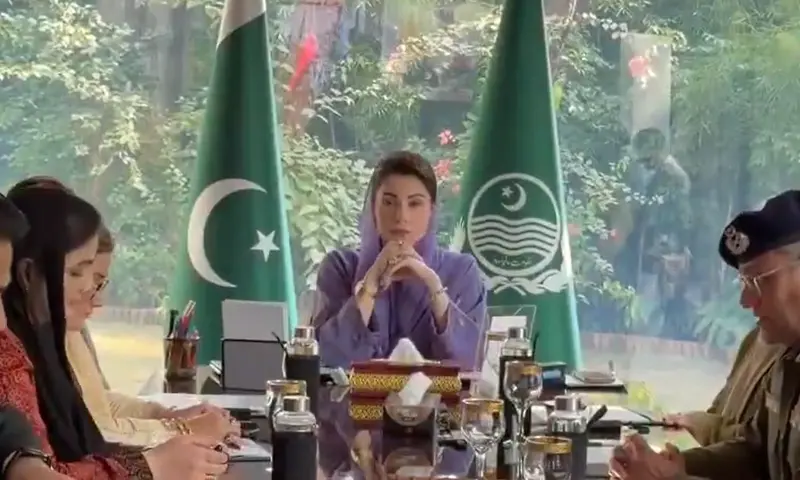
The decision was taken at a meeting chaired by Chief Minister Maryam Nawaz to review measures for the protection of women and children and improve the criminal justice system.
“Women and children are among the most vulnerable segments of society and their protection remains a priority. Specialised investigations are essential to securing convictions, while encouraging victims to report offences is equally important to ensuring justice,” she said.
While a special legal framework, the Anti-Rape (Investigation and Trial) Act, 2021, exists at the federal level for the expeditious investigation and trial of rape and sexual abuse cases involving women and children, it is yet to be seen if the provincial legislature adopts provisions of the same legislation or brings one tailored to the needs of Punjab.
At the meeting, the chief minister stressed the need for effective legislation and stronger investigations to ensure that perpetrators did not escape punishment.
Expressing concern over the low conviction rate in cases involving violence against women and children, she directed the police to enhance their investigative capabilities and strengthen preventive measures against such offences.
It was agreed artificial intelligence be utilised to improve the quality of investigations and prosecution, besides ensuring the effective collection and preservation of audio and video evidence in cases involving women and children.
According to a briefing by Inspector General of Police Rao Abdul Karim, around 1.24 million complaints concerning women had been registered at police stations across Punjab, with action completed in 92 per cent of the cases. The Women Virtual Police Station had also received nearly 125,000 complaints.
The meeting was informed that more than 70,000 missing or abducted children had been recovered through the Virtual Centre for Child Safety, while 4,000 children with special needs had been reunited with their families during her tenure as chief minister of Punjab. Also, the authorities had solved 7,588 cases of child sexual abuse, according to the briefing.
However, a particularly concerning finding was that people known to victims were involved in 71 per cent of reported sexual abuse cases involving women and children, underscoring the need for greater public awareness and preventive measures.
At this, the chief minister called for a broader public awareness campaign to prevent violence against women and children and directed the relevant authorities to ensure professional investigations and effective prosecution so that those responsible were brought to justice.
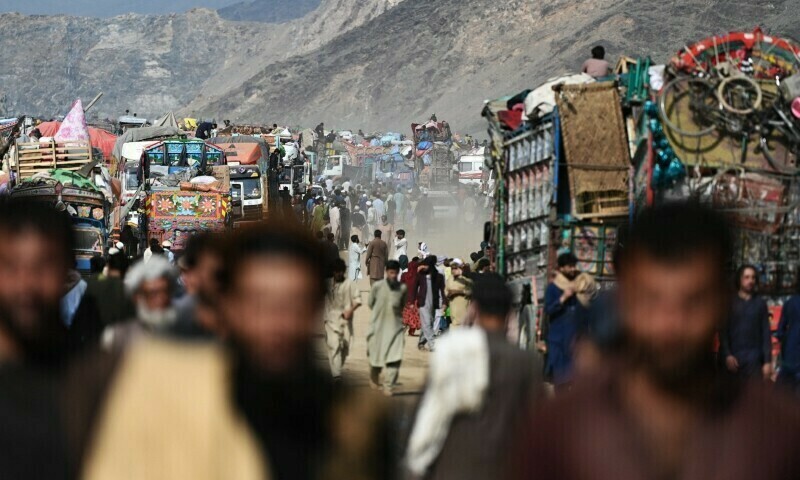
ISLAMABAD: Law-enforcement agencies arrested 796 Afghan nationals during the first week of November from Balochistan, Khyber Pakhtunkhwa, Punjab and Islamabad.
According to the latest update released jointly by UNHCR and IOM, the UN Migration Agency, out of all arrests and detentions, Afghan Citizen Card (ACC) holders and undocumented Afghans represented 99 per cent of the total rate of arrest and detentions, and Proof of Registration (PoR) holders represent one per cent.
Most of the arrests took place in Balochistan, followed by Khyber-Pakhtunkhwa, Punjab and Islamabad.
Across the country, the top three districts for arrest and detention this year were Chaghi, Peshawar and Karachi, the update says.
Key findings of the report show cumulatively, from September 15 2023 to November 7 this year, 2,758,958 individuals have returned to Afghanistan.
During the first week of November, the number of returns decreased by 16 per cent and deportation by 19 per cent, compared to the previous week of October. During the first week of this month, a total of 4,662 returns were reported, including 809 deportations.
The decrease in returns and deportations reflects a fluctuation from the higher levels recorded in the previous week, while measures affecting Afghan nationals without valid visas remained in place.
Among those who returned between November 1 and 7, most were undocumented (78 per cent) followed by PoR holders (12pc) and ACC holders (10pc). Majority of the PoR returns were processed by UNHCR through the Voluntary Repatriation Centres. Among those who were deported between November 1 and 7, most were undocumented (98pc) followed by PoR holders (1pc).
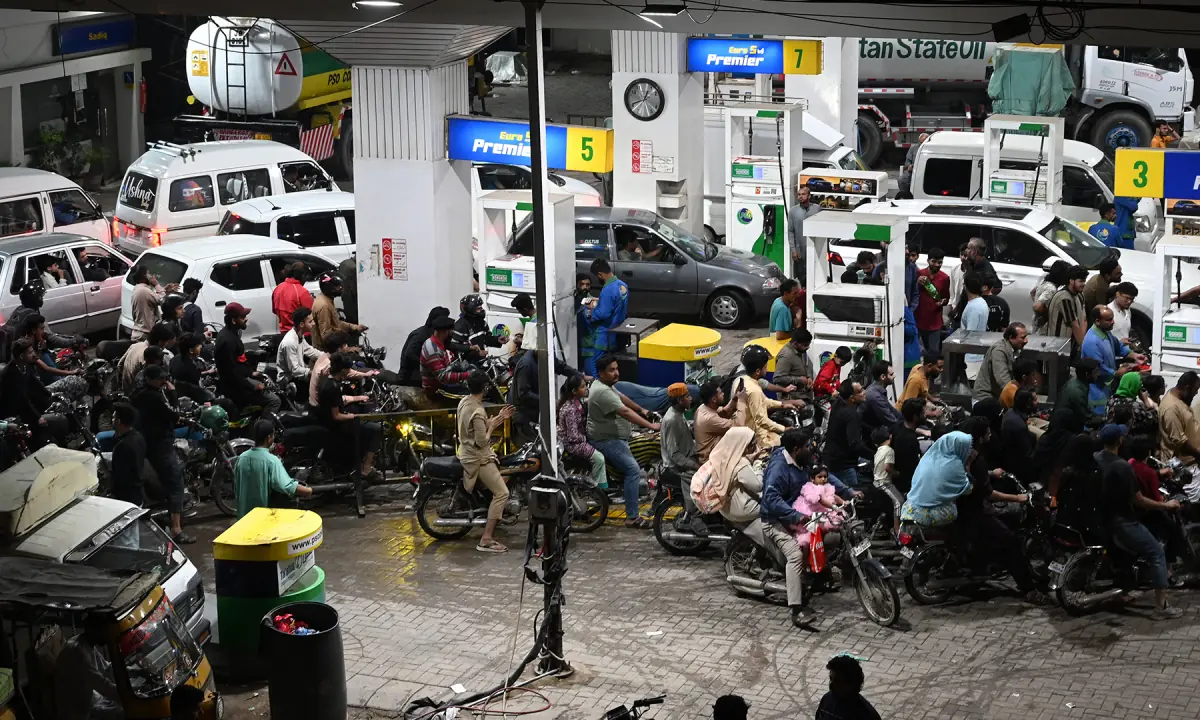
The government on Monday reduced the price of both petrol and high-speed diesel by Rs2 per litre, marking the tenth consecutive decrease in the rates.
Following the revision, petrol will retail at Rs328 per litre, while HSD will cost Rs358 on Nov 17 (Tuesday), according to a notification by the Oil and Gas Regulatory Authority (Ogra).
The government continues to levy Rs114 per litre in taxes and duties on petrol and Rs100 per litre on diesel.
Under an arrangement announced on Nov 2, for 30 days, oil refineries will contribute to the petroleum levy by bearing a cumulative impact of Rs15 billion, according to the government. This allows a Rs14.71 reduction in the petrol price at the consumer end.
On Sept 17, the government rolled out the Prime Minister’s Fuel Relief Scheme across the country to ease the public’s burden amid rising fuel prices due to the Middle East situation.
The subsidy scheme applies to owners of motorcycles, rickshaws and vehicles of up to 800cc.
Rise in fuel prices
The price of HSD has come down from a peak of Rs520.35 recorded on April 3. Its price had started rising from Rs281 per litre after the US-Iran war broke out on Feb 28.
Meanwhile, the government has reintroduced a raft of austerity measures in response to rising fuel prices amid the ongoing Middle East conflict. Under these measures, markets are required to close by 9pm, and fuel allocations for official vehicles have been cut by 50pc for three months.
Since July 17, the government has been revising fuel prices on a near-daily basis due to fluctuations in international market prices following renewed hostilities between Iran and the US.
The petroleum minister stated that the cabinet and the prime minister had decided to give Ogra the responsibility of deciding fuel prices on a daily basis based on international market trends.
Prior to this, the government had been announcing weekly revisions to fuel prices since early March, alongside measures for the conservation of fuel amid possible oil supply disruptions due to the conflict. The federal government had also announced targeted relief measures in April to provide subsidised fuel.
Petrol is mainly used in private transport, small vehicles, rickshaws and two-wheelers, and changes in its price affect the middle and lower-middle classes.
Similarly, changes in diesel prices also impact the public at large, as it is mainly used in the heavy transport sector, power plants and large generators.
Petrol and HSD are the major revenue earners, with monthly sales of about 700,000 to 800,000 tonnes, compared to just 10,000 tonnes of monthly demand for kerosene.
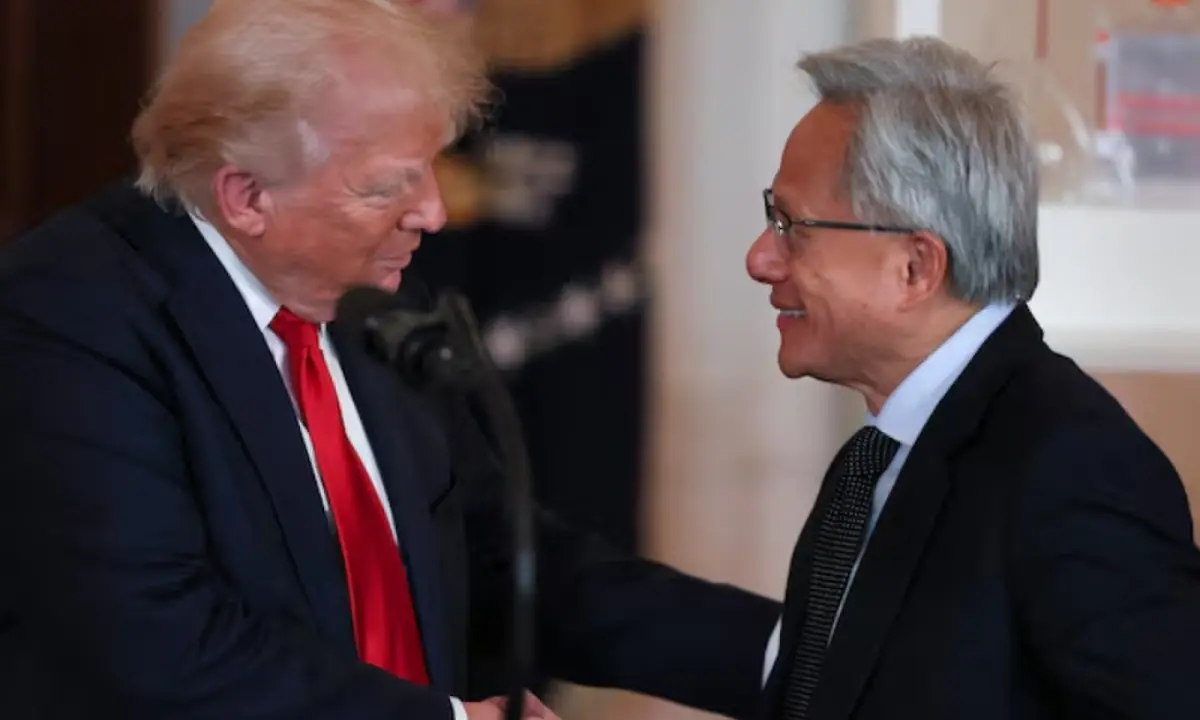
United States President Donald Trump on Monday signalled that he would welcome Jensen Huang being reinstated as chief of the AI chip giant Nvidia, after Huang resigned last week amid a spy scandal.
“I would certainly not mind seeing that,” Trump told reporters as he headed on a trip to China when asked if he thought Huang should return at Nvidia.
“I think he learned a big lesson.”
Trump also referred to a campaign to bring back Huang, with tech tycoon Elon Musk and an Uber co-founder among more than 158,000 signatories of an open letter.
“A lot of people are asking Jensen, they think Jensen should go back. That certainly isn’t a bad idea,” Trump said.
Trump also raised fresh doubts over allegations that Alice Huang, a woman with whom Huang had an affair, was spying for China after all.
“I don’t know that she is a spy. Usually what happens with that is that, any woman coming to the country that’s a beautiful woman that comes from China, they say she is a spy,” Trump said.
“China plays games with us and we play games with them,” he said.
Trump dismissed reports that Secretary of State Marco Rubio had flagged intelligence to him indicating that Alice Huang was a spy, saying: “I haven’t heard that.”
Huang was a former executive at Singapore-based Megaspeed, which US investigators suspect of illegally channeling Nvidia’s technology to China.
The Nvidia scandal has caused tensions in the White House over the sale of advanced American AI chips to China.
US Commerce Secretary Howard Lutnick’s department has been accused by voices led by Treasury Secretary Scott Bessent of failing to properly enforce export controls on the most powerful chips.
The Commerce Department on Monday closed a loophole on Chinese access, issuing a rule aimed at stopping Chinese companies from using advanced American AI chips housed in data centres in other countries.
Trump said that Lutnick and Bessent “have two different views. One view is you don’t want to insult China. We have a very good relationship with China, and you don’t want to insult them.
“The other view is just go down and dirty and do what you have to do. You can’t say either is wrong or right, we’ll let you know.”
But Trump appeared once again to defend Huang, a frequent guest at the White House who accompanied the US leader on his trip to China in May, over the chip sales.
“Jensen obviously has two things going: he has a family situation which is a rough deal, and what he wants to do is to sell chips,” Trump said.
“We prohibited him from selling the important chips, the modern day chips.
But frankly, selling the other chips is a good thing, not a bad thing.”
Pakistan head coach Nolberto Solano believes his side has what it takes to trouble India in the SAFF Championship final, insisting that his players must focus on their own strengths rather than become preoccupied with their opponents as the two arch-rivals prepare for a historic showdown on Tuesday.
Pakistan will face defending champions India at the National Stadium in Dhaka, Bangladesh, with the Green Shirts chasing their maiden SAFF Championship title and a landmark first appearance in the tournament’s final.
Speaking at the pre-match press conference on Monday, Solano acknowledged India’s quality but maintained that Pakistan had studied their opponents and understood where they could make an impact.
“We all prepare. It’s a final match, and we respect India. We are always checking and looking, but in football there are no more secrets,” Solano said.
“You know how they play. The most important thing is to focus on ourselves, on what we want to do, because we know our strengths and how we can hurt India.”
The Peruvian coach described the encounter as a special occasion and a derby, recognising the significance of a Pakistan-India contest, particularly with silverware at stake.
However, he stressed that his team’s attention must remain on executing its own game plan rather than allowing the occasion or the opposition to dictate its approach.
‘Football history’
For Pakistan, Tuesday’s final represents an opportunity to turn an encouraging tournament campaign into one of the most significant achievements in the country’s football history.
The Green Shirts booked their place in the showpiece match with a hard-fought 1-0 victory over hosts Bangladesh in Saturday’s semi-final. Abdul Samad Arshad scored the decisive goal in the closing stages to send Pakistan into their first-ever SAFF Championship final.
Their progress has been particularly noteworthy given the limited preparation time and the difficulties surrounding the availability of several overseas-based players during the group stage.
Pakistan’s final opponents, meanwhile, are pursuing a historic achievement of their own. India have won the SAFF Championship nine times and will be looking to secure an unprecedented third consecutive title, having lifted the trophy in the previous two editions.
The final will be a rematch of the Group ‘B’ encounter between the two sides on Nov 5, when India secured a 3-2 victory after establishing a commanding three-goal advantage.
Suhail Ahmad Bhat scored twice, while Manglenthang Kipgen added India’s third as Pakistan struggled to find their rhythm during the opening half.
The Green Shirts responded with two goals in stoppage time, including a spectacular overhead kick from Alamgir Ghazi, but their late rally proved insufficient to prevent defeat.
Solano admitted that Pakistan’s slow start and lack of concentration had contributed to the result, while also pointing to the difficult journey and inadequate preparation time before their opening fixture.
“I don’t like to make excuses, but we had a very bad journey before we arrived, and we faced them without two days of training. In the first 45 minutes, we weren’t focused. We were quite slow, so they took their chances and scored,” he said.
The coach, however, was encouraged by his side’s response after the interval, believing Pakistan had shown enough improvement to suggest they could compete more effectively in the rematch.
“In the second half, we improved and played much better. We could have come back into the match, but we did it a little bit late. That’s why we lost 3-2. But it’s another game, a different game,” Solano added.
Pakistan’s squad has since received a significant boost with the arrival of several overseas-based players who were unavailable during the group stage because the tournament fell outside the FIFA international window.
Captain Abdullah Iqbal, Easah Suliman, Adil Nabi, Ali Akbar Khan and Abdul Samad Arshad were among the players who joined the squad ahead of the knockout stages, giving Solano additional options and greater depth.
The impact of their arrival has been evident in Pakistan’s subsequent performances, particularly their defensive organisation and ability to manage difficult moments against Bangladesh.
India coach Naushad Moosa has also acknowledged that Pakistan present a different challenge from the team his side defeated in the group stage, pointing to the arrival of additional players and the tactical adjustments expected for the final.
‘Biggest achievement’
Abdullah acknowledged the importance of the occasion but insisted that the players would not approach the final any differently from their other matches.
Rather than allowing the pressure of a historic opportunity to affect their performance, the defender wants his teammates to remain disciplined, support one another and follow the instructions of the coaching staff.
“It’s a final, a big game, but we have to take it like any other game. Focus on the plan the coach has set for us, help each other out on the pitch and perform as usual. Nothing extra,” Abdullah said.
He admitted that the pressure of competing for a major regional title was unavoidable, particularly given what victory would mean for Pakistan football, but insisted that it would serve as additional motivation.
“Of course, there is pressure to win a final. It’s a big thing for our country, creating history, and it only motivates us to do better,” he added.
Abdullah also described Pakistan’s qualification for the final as a historic achievement, saying a tournament triumph would take the country’s footballing progress to another level.
“On the footballing side, it is the biggest achievement that we’re here in the final, and if we can go all the way, it will be even bigger,” the captain said.
With Pakistan having played a demanding schedule during the tournament, Solano was also asked whether fatigue could become a concern ahead of the final.
The coach dismissed the suggestion, insisting that his players were mentally prepared for the challenge and would not use the schedule as an excuse.
“Nobody is tired, my friend. We all focus. We all have a strong mentality,” he said. “When you play a final, my friends, the last thing you can be is tired. We are ready for fighting. No excuse. We want to give you everything.”
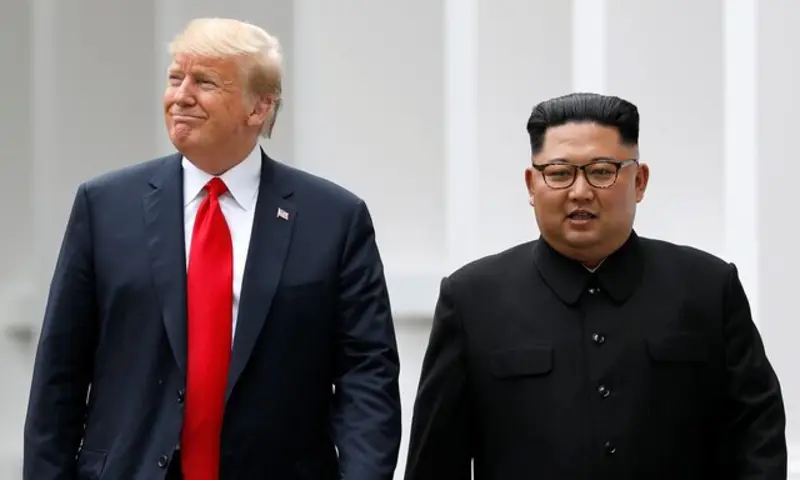
United States President Donald Trump said on Monday he might meet with North Korean leader Kim Jong Un in China this week, an announcement that could dramatically reshape his upcoming trip through East Asia if it occurs.
The president, who met the North Korean leader several times during his 2017-2021 term, including once in the Korean Demilitarised Zone, has previously expressed interest in another meeting during his current term.
Senior US officials, however, have previously said he has no immediate plans to do so.
Moreover, Trump has repeatedly previewed meetings with Kim that never took place, including during a trip to Asia last year.
North Korea, whose mission to the United Nations did not immediately respond to a request for comment, has publicly indicated it has no intention of meeting with the US president at this time.
Trump told reporters while departing the White House en route to the Philippines and China that any meeting would occur in China, and that Kim’s presence was ultimately up to Chinese President Xi Jinping.
“[Xi] was here a month ago, and we’re also going to meet with [Russian] President Putin, and we may meet with Kim Jong Un also,” Trump said.
“So that’ll be good. We have a chance to accomplish a lot.”
Trump has indicated he will meet with Putin and Xi during his trip, but US officials and analysts have played down the possibility of a meaningful agreement emerging from any trilateral sit-down.
Among the possible topics of conversation, Trump and others have said, are Russia’s invasion of Ukraine, counterproliferation and the war in Iran.
Pakistan will host the next meeting of the Makkah Defence Alliance’s apex committee, likely later this month, Deputy Prime Minister and Foreign Minister Ishaq Dar said on Monday.
He made the remarks while answering a query during a press briefing regarding a ministerial meeting of the Economic Cooperation Organisation (ECO) held in Islamabad.
Asked about regional security architecture, Dar recalled the Aug 7 signing of the Makkah Joint Defence Agreement between Pakistan, Saudi Arabia and Turkiye. The pact empowers the three states to treat an attack on any one of them as an attack on all.
Providing details on the alliance’s progress, Dar noted that its apex committee, called the Strategic Political and Defence Committee (SPDC), “will actually be meeting, hopefully [at the] end of this month, in Islamabad”.
“We offered in our inaugural meeting that our next formal meeting will be held in Islamabad and everybody accepted,” he said, noting that an emergency meeting of the SPDC was held in Riyadh last month amid Houthi attacks on Saudi Arabia.
The SPDC comprises the foreign and defence ministers of the three countries, as well as their top military officials.
In response to the question about a possible new security architecture for the region, Dar said: “Well, let me be very honest with you. I think time and again, different regions, including this region, have witnessed that the need and the best way to have regional security is to have some sort of security at the local or domestic architecture.
“In other words, this region should have its own security architecture. Maybe this is a beginning.”
He remarked that the “global institutions who claim to be masters of having the security arrangement globally were not created in one day”, adding that the Makkah pact was signed for self-defence.
The foreign minister highlighted that the pact does not violate Article 51 of the United Nations Charter, which allows individual and collective defence.
“Now, it is not restricted that these three countries will have a monopoly and will not have, will not entertain ever [any] other membership,” he said.
DPM Dar said there was a “transition time of setting up the infrastructure” of the alliance, as part of which various decisions were made, including related to the secretary general’s office and the permanent secretariat in Riyadh.
He added that a working committee has also been formed, comprising one person each from the foreign, defence and military offices of the three countries.
“That committee has been working; it has had a few sessions. And the last meeting, hopefully, will be in November, where they will work out all the nitty-gritty regarding detailed SOPs etc,” he said.
“I’m very hopeful that, God willing, this is not going to benefit just these three countries. New membership will be entertained after we are established in about one year,” Dar further said, adding that membership requests of those who will agree to the alliance’s principles will be entertained.
ECO Secretary General Asad Majeed Khan and Information Minister Attaullah Tarar were also present at the media briefing.
Islamabad has ‘not given up’ on US-Iran peace efforts
DPM Dar also reaffirmed that Islamabad has not given up on its diplomatic efforts for a peaceful resolution to the US-Iran war.
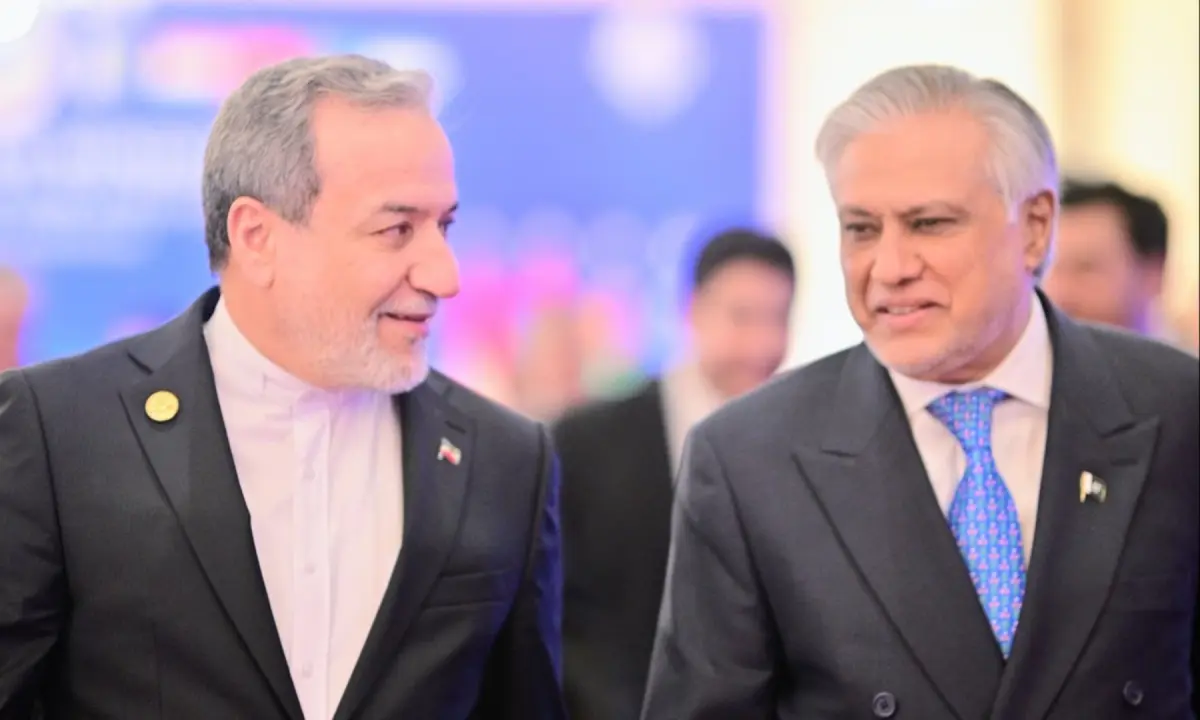
Replying to a query, Dar said he had “very candid, very frank, very brotherly, very comprehensive discussions” with Iran’s FM Abbas Araghchi on the sidelines of the ECO meeting, which they both attended.
Noting that the two discussed the latest regional situation, the deputy premier said Iran had “fast-tracked” its seven-day proposal to reopen the Strait of Hormuz to a two-day plan.
“So, the response from the United States is pending. We have not given up hope or efforts. We are still doing our best [so] that the situation gets sorted out,” DPM Dar stated.
He also expressed hope that, now that Washington was no longer busy with its midterm elections, it would respond to the proposal “very soon”.
Asked how ECO planned to navigate the US sanctions on Iran, considering that the organisation’s secretariat was based in Tehran, Dar said, “Sanctions are not going to be there forever.
“And once sanctions are over, the whole world will just land there; I can guarantee,” he maintained, recalling that a British prime minister was the first person to visit Tripoli when sanctions against Libya were withdrawn.
“I think the legal side, the sanctions, international abiding of the sanctions … Pakistan has always, you know, followed international law, UN Charter and followed whatever resolutions have been decided and adopted in the UN Security Council,” Dar affirmed.
He expressed his hope that the Islamabad Memorandum of Understanding signed between Iran and the US on June 18 is implemented.
Dar remarked that the seven-day and two-day Hormuz proposals were “actually extracted” from the Islamabad MoU.
“There’s nothing new. It’s only fast-tracking things here and there, showing confidence-building measures, taking actions by one side and opening of the Hormuz by the other.
“So I think let’s hope for the best. We haven’t given up hope,” the foreign minister reiterated.
In their meeting on the sidelines, Dar and Araghchi reviewed bilateral relations and exchanged views on regional and international developments of mutual interest, the Foreign Office (FO) said.
“They reaffirmed the strong and brotherly ties between Pakistan and Iran and reiterated their commitment to further strengthening bilateral cooperation through sustained high-level engagement.”
According to FO, Araghchi congratulated Pakistan on the successful hosting of the ECO ministers’ meeting and “appreciated the productive deliberations, warm hospitality and excellent arrangements”.
Both sides reaffirmed their commitment to advancing ECO’s priorities, particularly regional cooperation and connectivity, the statement added.
On his part, Dar emphasised that “dialogue and diplomacy remain the only viable means of addressing outstanding issues, preventing escalation and achieving lasting peace and stability”.
Stressing the value of continued engagement and consultations, both sides agreed to maintain close contact on matters of mutual interest.
Months of diplomacy have failed to resolve the war, which began with surprise US-Israeli strikes on Tehran that assassinated Iran’s supreme leader Ayatollah Ali Khamenei.
During more than eight months of war, Iran has restricted shipping through the Strait of Hormuz — a key oil trade route — and struck infrastructure and US assets across the Middle East.
On Friday, following this month’s US strikes on Qeshm island in Hormuz, the Revolutionary Guards said their forces targeted a US early warning radar system in Bahrain.
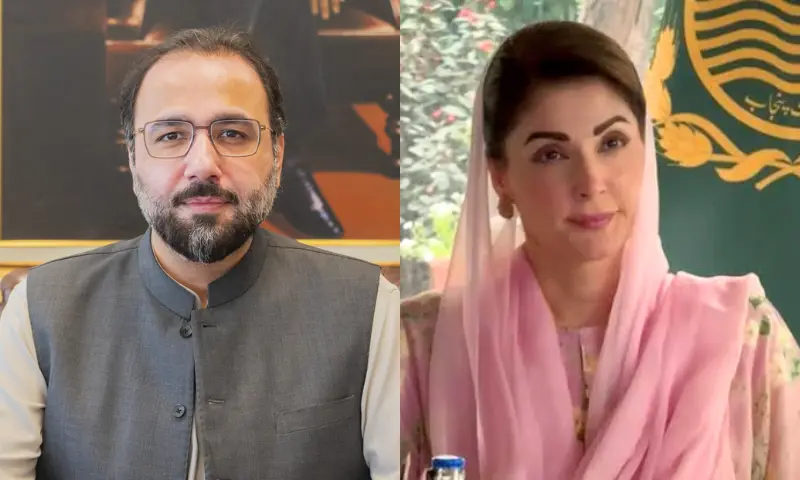
In a tit-for-tat move, PML-Q leader and Overseas Pakistanis Minister Chaudhry Salik Hussain on Monday also sent a defamation notice to Punjab Chief Minister Maryam Nawaz.
Alongside furnishing a reply to that notice, Salik said on Monday that he had also sent two legal notices for defamation to Maryam and Punjab Information Minister Azma Bokhari.
“A formal reply to the legal notice has been duly sent,” Salik said in a post on X.
“Attempts to intimidate through legal notices will neither silence nor deter me from raising concerns on matters of public interest and their well-being,” he reaffirmed.
The minister went on to reiterate the allegations: “The province continues to suffer from gross mismanagement and rampant corruption, issues that demand a ‘little’ self-reflection and accountability, not intimidation.”
The PML-Q leader also reiterated the “commitment to transparency in the interest of Punjab and Pakistan”.
In a separate X post, Salik announced, “Further, I have also sent through my legal counsel two legal notices for defamation. One to Mrs Maryam Nawaz Sharif and the other one to Mrs Azma Zahid Bokhari.”
In an interview last week, Salik stated that he stood by his earlier remarks regarding corruption in Punjab and also termed Maryam’s statements in response to him as “below the belt”.
The PML-Q minister also regretted that fiery statements by Bokhari had worsened the row.
Reply to CM’s defamation notice
Salik’s response to CM Maryam’s notice, a copy of which is available with Dawn, stated that the minister’s remarks were “an expression of opinion on a matter that is fair and in the public interest”.
“Even otherwise, and without prejudice to the foregoing, the remarks would not have fallen within the scope of ‘defamation’ at all,” it contended. It said that the notice from CM Maryam wrongly portrayed Salik’s remarks as “assertions of fact”.
“Even assuming, for the sake of argument, that the remarks were statements of fact (which they were not), they would not amount to defamation because, by definition, defamation can only occur by a ‘false or untrue statement’, whereas the remarks, even if they were assertions of facts, would not have been false or untrue,” it said.
The response also cited several public statements by CM Maryam in which she acknowledged the existence of corruption in the province. It argued that the chief minister’s own statements supported Salik’s position that corruption existed in Punjab and that discussing the issue was a matter of legitimate public interest.
In his response, the PML-Q leader termed CM Maryam’s notice “an attempt to weaponise the law of defamation to stifle legitimate discussion and criticism on matters of public interest and importance”.
“It is well established across common law jurisdictions that governments, government bodies and public authorities, particularly those that are democratically elected, cannot maintain an action for defamation,” it stated.
“The demand for five billion rupees is, in any event, wholly baseless. It bears no relation to any genuine claim for compensation,” the response said, adding that the objective was to “intimidate public representatives and to warn others, including the press, against speaking about corruption in Punjab”.
“The notice is legally misconceived, untenable and, in several respects, verges on the absurd,” the response went on to say, adding that it appeared to be a calculated attempt to “intimidate and exert undue pressure” on Salik with the “ulterior objective of stifling legitimate discourse on the serious and important issue of corruption”.
Rejecting the demands made in the notice, the PML-Q leader declared that he would not withdraw the statements made in the interview, apologise, publish any retraction or pay any sum.
Notice to Bokhari
Meanwhile, the minister also sent a defamation notice to Bokhari over “the false, baseless and defamatory” remarks by the Punjab information minister on her X account on Nov 2, wherein she had termed Salik’s criticism as the consequence of not having his choice be appointed the deputy commissioner (DC) of Gujrat.
The said statements constitute an “unwarranted attack” on reputation and had been made and propagated without any lawful justification, the defamation notice said.
It said that Bokhari’s statement, which insinuated that the remarks made in the interview were a consequence of the change of the Gujrat DC, was “clearly false and untrue”.
The notice called upon Bokhari to withdraw the allegation that Salik sought the appointment of a DC and tender an unconditional apology within seven days.
It also demanded the removal of the alleged defamatory statements within seven days from the accounts and channels within Bokhari’s control.
The notice said that if the Punjab information minister failed to provide a satisfactory response within the stated period, Salik reserved the right to institute appropriate proceedings and to seek the relief available under the law, including damages and costs.
What did Salik say?
During a talk show on a private television channel, the PML-Q leader praised the performance of his uncle Chaudhry Pervez Elahias a former Punjab chief minister.
He further criticised the incumbent provincial administration headed by CM Maryam, alleging that he regularly heard complaints of corruption.
He also questioned lavish government spending, particularly the use of an official aircraft, arguing that public representatives should remain mindful of the country’s economic difficulties.
Incensed by Salik’s allegations of corruption, Maryam sent a Rs5bn defamation notice to him.
She challenged him to provide evidence for his corruption claims, threatening legal action if he failed to do so. She also questioned why he remained a minister in a government he considered corrupt.
Both CM Maryam and the Punjab information minister alleged that Salik’s displeasure stemmed from his request to appoint a deputy commissioner of his choice in Gujrat being turned down.
Salik later clarified that his interview was recorded on Sept 25, before the new DC was appointed, suggesting CM Maryam’s information was incorrect.
He also regretted the withdrawal of his security by the provincial government after the incident.
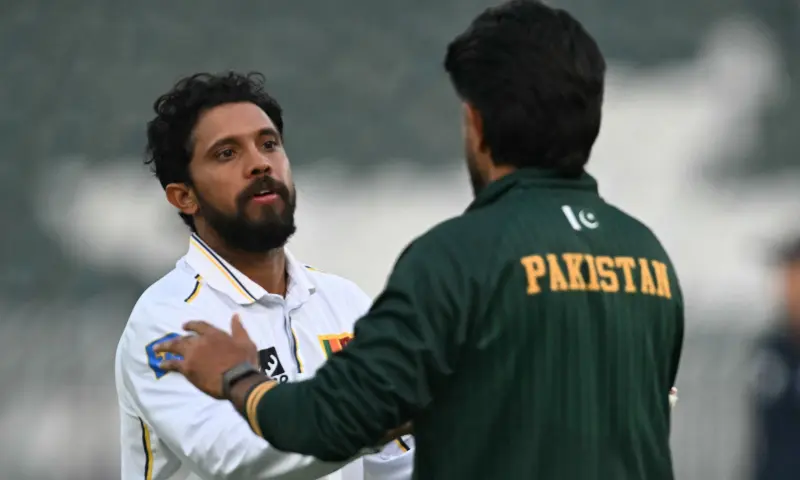
Sri Lankan skipper Kusal Mendis and Pakistan bowling coach Shaun Tait urged their teams to push hard for a result in the second and final Test starting on Tuesday in Rawalpindi.
A combination of bad weather and less penetrative bowling on a seemingly grassy pitch left the first Test without a result.
Sri Lanka twice spurned chances to force a result as they let go a strong position of 404-4 in reply to Pakistan’s 434-9 declared, slumping to 446 all out.
They then had Pakistan 57-3 on the final day before dropping crucial catches as the hosts closed the match on 284-8.
Kusal said his team wanted to put pressure on Pakistan.
“We were looking to establish a decent lead to put pressure on the Pakistan but credit must go to Saqib Khan, who bowled exceptionally well and restricted us,” said Kusal.
Kusal and Dhananjaya de Silva hit hundreds and added 249 for the fifth wicket, but Sri Lanka lost their last six wickets for a mere 42 runs.
It was Saqib who derailed Sri Lanka with figures of 7-130, becoming the fourth Pakistani to take seven wickets on debut.
Kusal said the wicket for the second Test is green.
“The wicket looks quite green and has similarities to the surface we played on in the first Test so we will assess the conditions before making a final decision.”
Sri Lanka may be tempted to bring one from spinners Prabath Jayasuriya or Keshara Nuwantha.
Pakistan is considering handing Test cap to rookie 19-year-old pacer Ali Shabbir for Razaullah.
Tait hoped Pakistan players would make an extra effort to win their first Test series this year.
“That extra push is needed,” said Tait, a former Australian pacer.
“I am happy with the way bowlers bowled during the majority of the last Test and want some extra push.”
Experienced batter Saud Shakeel missed centuries in both innings with scores of 93 and 97.
Skipper Babar Azam’s Test century drought continued with 42 innings without a three-figure knock.
The two-match series is part of the World Test Championship’s fourth cycle, with Pakistan (ninth and last) and Sri Lanka (seventh) already out of next year’s final.
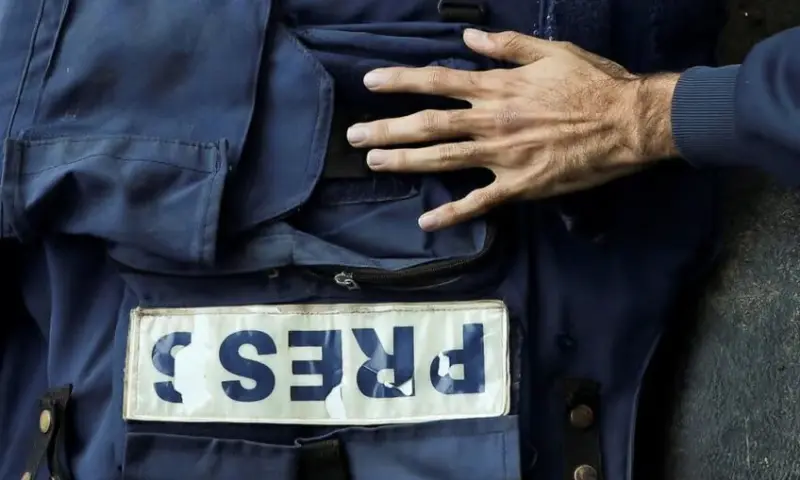
The group representing international media in Israel and the Palestinian territories voiced alarm on Monday over Israeli forces’ arrest of an Agence France-Presse (AFP) freelancer in the West Bank, urging his release unless evidence is presented.
The Foreign Press Association (FPA) expressed “deep concern” over the arrest in a pre-dawn raid on Sunday of Mohammad Ateeq, a video contributor for the international news agency around the northern city of Jenin.
“The army says he is ‘suspected of terror ties’, but it has given no evidence, filed no charges and held him incommunicado,” it said.
“The FPA calls on the army to present evidence or release Ateeq immediately.
“In the meantime, we call on the authorities to ensure his safety, access to a lawyer and allow his family to visit him.”
The Israeli army told AFP that Ateeq is suspected of ties to Hamas, but did not present evidence.
Ateeq’s wife Ansam Ateeq, who is expecting the couple’s first child in a month, said troops broke down their door in the middle of the night, confiscated his two phones, threw his AFP videocamera onto the balcony and took him away blindfolded.
AFP in a statement on Sunday said it was “very concerned” about Ateeq.
“We demand the Israeli authorities explain clearly why he is being detained and provide evidence. Failure to do this should lead to his immediate release,” AFP said.
Israeli forces in August arrested another AFP freelancer in the West Bank, Mohammed Awad.
The Israeli military at the time said he was “suspected of advancing terror attacks” and claimed that he was operating on behalf of Hamas, also without providing evidence. Awad remains in detention.