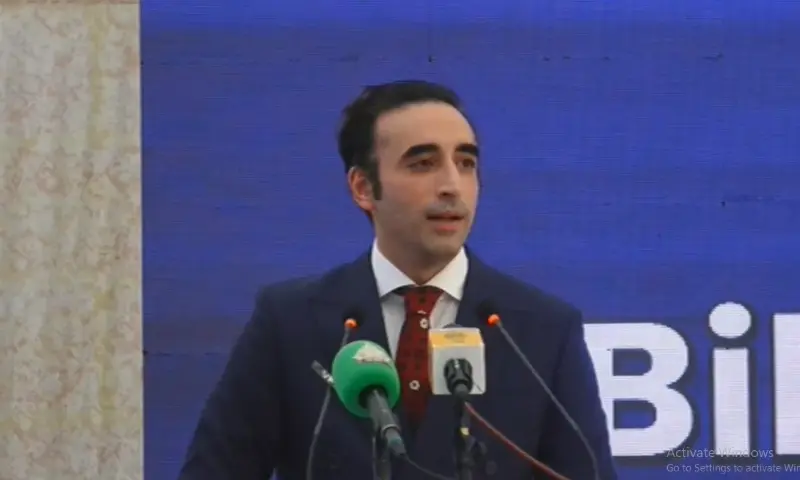
Amid debate on a “system reset” in the country, PPP Chairman Bilawal Bhutto-Zardari said on Tuesday that the governance system had not collapsed, but was rather “made to collapse”.
He made the remarks while speaking at the Karachi Press Club. Over the past few months, Interior Minister Mohsin Naqvi has whipped up a political storm since he called for the formation of new administrative units in the country, saying the current “system” of governance had “collapsed” and needed a “reset”.
Recalling Naqvi’s remarks, Bilawal said, “Nobody objects that the system has collapsed, but there is no discussion and debate on why it collapsed.”
He noted that the proposed solution “was not an actual remedy to the illness due to which we suffered a system collapse”.
“If we want to focus on resolving the issues of the public, if we want to fight poverty, unemployment, inflation, then we absolutely need to decide why the system collapsed,” the Bhutto scion said.
Bilawal asserted a reset was “definitely needed”; however, he also stressed that it should be political.
“Why political? Because politicians are the representatives of the people, and if politicians do not play their role, then these fundamental issues won’t be resolved,” Bilawal said.
“I believe the system has not collapsed, but it has been made to collapse,” he stated, while acknowledging his own role in the matter.
“Everyone makes mistakes, but there comes a time when you must fix those mistakes. How do we fix that?” Bilawal asked rhetorically.
He noted that state institutions had “lost their legitimacy”, calling for it to be restored.
Bilawal also came to Jamiat Ulema-i-Islam (JUI-F) chief Maulana Fazlur Rehman’s defence as tensions between the JUI-F chief and the government have flared in recent weeks.
In his address, Bilawal said that it was the opposition’s role in the Parliament to criticise the government.
“It is the opposition’s right to criticise you, and however he (Fazl) does it, it is their right,” Bilawal said.
Bilawal remarked that the opposition had the “most patriotic” role in the Parliament. “For any government to question the patriotism of an opposition member [..] it is not only an injustice to that parliament or to the system, but the biggest injustice to the country,” he added.
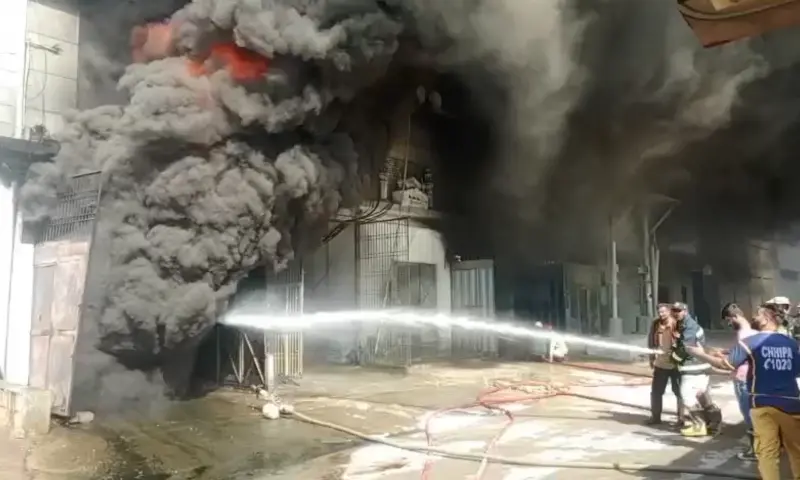
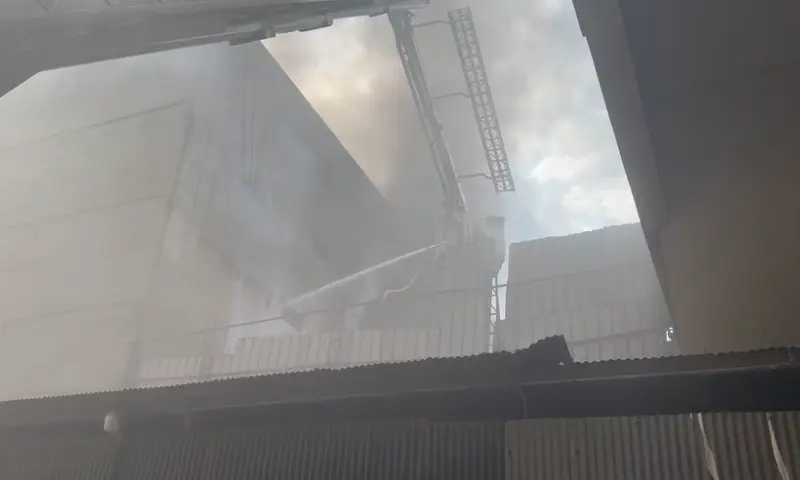
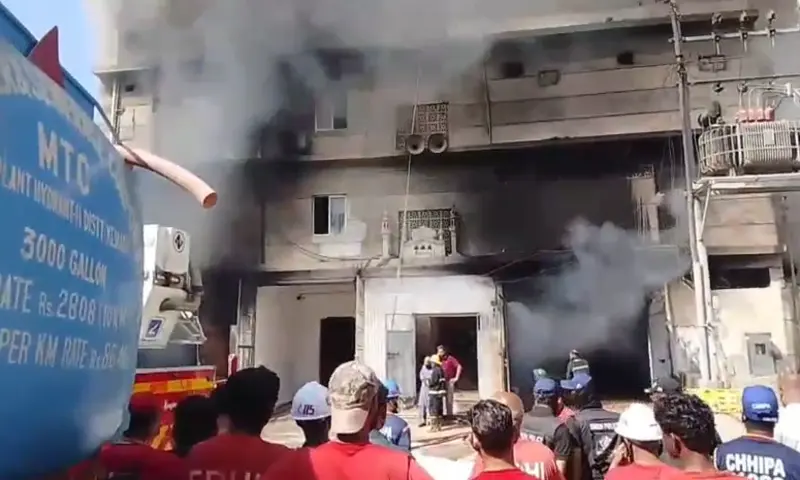
KARACHI: A massive fire broke out at an industrial unit in Karachi’s Baldia Town on Tuesday morning, reportedly during the refilling of an underground oil tank by a tanker, rescue officials said.
Rescue-1122 spokesperson Hassaanul Haseeb Khan told Dawn that the organisation’s command and control room received a report of the fire at around 10:36am.
He said two fire tenders were initially dispatched to the site, while more were called in later as the scale of the fire became apparent.
The spokesperson added that the factory was housed in a two-storey building and manufactured glass products, including windowpanes and decorative items.
Screen grab from a video of a fire in Karachi’s Baldia Town, on November 17, 2026. — Rescue 1122
“During the preliminary probe, it emerged that an oil tanker was refilling an underground oil tank when it caught fire and exploded,” the spokesperson said.
The explosion caused oil to spread both inside the factory premises and onto nearby streets, triggering panic among firefighters and residents, he elaborated.
He said 11 fire tenders had brought around 70 per cent of the blaze under control.
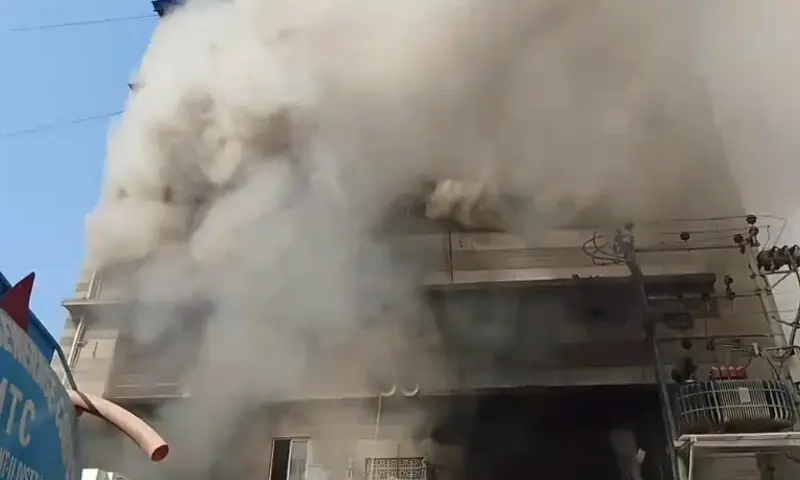
Screen grab from a video of a fire in Karachi’s Baldia Town, on November 17, 2026. — Rescue 1122
“The fire spread from the ground floor to the first and second floors.”
Regarding the exact cause of the fire, Khan opined that it would be ascertained after a thorough probe as to whether the fire was an outcome of some human error during refilling of an underground oil tank by the oil tanker.
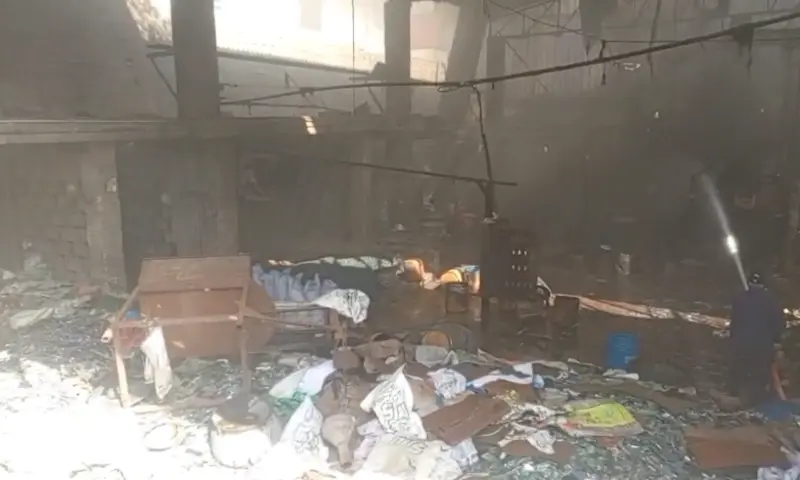
However, he said that the tanker, filling the oil in the underground oil tank, had been completely destroyed.
“It was certain that the ignition occurred in the oil tanker that spread to the whole factory building.”
Screen grab from a video of a fire in Karachi’s Baldia Town, on November 17, 2026. — Rescue 1122
No casualties or injuries have been reported in the incident, according to rescue and police officials.
In a statement, Site-B police said the fire broke out at the Al-Hamad Plastic Factory in the Rasheedabad area of Baldia Town.
Police personnel were present at the site alongside firefighting and rescue teams, the statement added.
Meanwhile, the Sindh Rangers said in a statement that their personnel were also at the site to assist in the rescue operation and manage traffic.
In late October, over 30 shops were destroyed when a blaze erupted at a furniture market in Karachi’s Gulistan-i-Jauhar.
The fire safety audit of buildings across Karachi has been initiated, with 1,369 buildings audited by November 12 in all seven districts of the city.
More than 15 million internal files. Emails from senior executives. Secret risk assessments. Suspicious transaction reports. Private information about billionaires, oligarchs, politicians and royalty. Records involving Donald Trump, Jeffrey Epstein and sanctioned businessmen. Previously undisclosed companies linked to authoritarian regimes.
Together, they add up to the largest cache of internal documents ever leaked to journalists from within a bank.
For months, more than 200 reporters from around the world examined the huge cache as part of an investigation called Inside Deutsche Bank. The records span some of the bank’s most sensitive functions and activities: anti-financial crime, sanctions monitoring, internal auditing and the units responsible for deciding whether risky clients stay or go.
When Christian Sewing became the chief executive of Deutsche Bank in 2018, after a string of scandals had tainted the bank’s reputation, he promised that the institution would be different: more stable and “a bit more boring.”
The bank has since spent years trying to convince the world that its era of scandals is over. The Inside Deutsche Bank project severely tests that narrative, laying bare a bank that built an enormous compliance machinery but repeatedly struggled to make it work.
The leak, provided via two whistleblowers, was shared with Indian journalist Josy Joseph and South African journalist Khadija Sharife. Barracuda Media, a non-profit vehicle, was established to analyse the data and share it with reporters from more than 50 global media outlets spanning over 50 countries.
The whistleblowers, whose identities are being protected, copied the files and removed them from the institution. Besides giving them to Joseph and Sharife, they also provided material to the US Department of Justice, the US Financial Crimes Enforcement Network, and the UK’s HM Revenue and Customs, their lawyer confirmed.
Photo by Ben Kuhlmann/Barracuda Media
It is evident that the whistleblowers wanted to expose Deutsche Bank’s relationships with both Russian oligarchs and Russian money.
“We are deeply committed to serving the public interest,” they said in a statement. They said the public has a right to know about the bank’s misconduct and its extensive banking of oligarchs. According to one of the whistleblowers, they believed the files contained potential criminal misconduct regarding business relationships with corrupt regimes.
The files show Deutsche Bank repeatedly missed warning signs of possible money laundering and sanctions violations. It bent its own rules for powerful clients. It allowed business considerations to override its own compliance regime. Sometimes, the bank only discovered serious failures years after suspicious money had passed through its systems.
The files also expose the intimate financial information of extremely powerful people.
Deutsche Bank accepted Epstein as a client in 2013, years after his conviction for soliciting prostitution from a minor. The leak shows the bank later identified nearly $600 million in suspicious transactions involving him and his network — more than twice the amount previously publicly known.
Besides Trump and Epstein, who both famously used Deutsche Bank after other institutions shied away, the leak holds extensive details on Vladimir Putin-allied oligarchs like Oleg Deripaska and Roman Abramovich.
Deutsche Bank’s clients included a company whose ultimate beneficial owner was a Saudi businessman named on the famous “Golden Chain” list of purported sponsors of Al-Qaeda. And as a third-party correspondent bank, Deutsche Bank helped process payments linked to the late Rifaat al-Assad, Syria’s former vice-president known as the Butcher of Hama for his role in a bloody 1982 crackdown in the Syrian city.
In 2015, despite mounting adverse media reports and its own suspicious activity reports, or SARs, surrounding Jho Low, Deutsche Bank continued to process millions in transfers linked to the Malaysian financier.
Low is a central figure in the 1MDB scandal in which more than $4.5 billion was allegedly stolen from Malaysia’s state investment fund and laundered through global banks. Deutsche Bank’s Malaysian entity Deutsche Bank (Malaysia) Berhad is now being sued by 1MDB over its alleged role in moving part of these funds.
“This matter has been resolved in 2022, as publicly disclosed. In the investigation proceedings of the public prosecutor’s office in Frankfurt in connection with two suspicious activity reports (SAR) filed by Deutsche Bank in the correspondent banking business, the bank accepted a fine of €7.01 million. The administrative penalty notice contains the allegations that the SARs were submitted too late because they should have been made in 2017 already. The bank cooperated in the proceedings.”
Deutsche Bank did not respond to questions about the individual on the Golden Chain list. The individual, who is identified in bank files only by his initials, was identified by reporters but did not respond to a request for comment.
Deripaska did not respond to requests for comment. Trump did not respond to a request for comment. Low could not be reached for comment.
A law firm representing Abramovich told reporters it is “not for our client to comment on Deutsche Bank’s internal processes and decisions.”
“To the extent those internal processes documented unfounded speculation concerning our client, he rejects that speculation,” they added. “He denies any allegation or suggestion of wrongdoing, including any allegation of criminal conduct, corruption or impropriety.”
The bank said: “We do not comment on potential, former or existing client relationships.”
On Epstein, the bank said it “acknowledges its error of onboarding Epstein in 2013 and regrets our historical connection with him. We have cooperated with regulatory and law enforcement agencies and the US Congress regarding their investigations and have been transparent in addressing these matters in parallel.”
In a response to the wide range of topics raised in the leak, Deutsche Bank said matters raised by reporters “date back many years, in some cases decades. Where relevant, the bank said, these matters were reviewed at the time and were discussed with regulators and competent authorities as necessary.
“We are a different bank today,” the bank added. “Under Christian Sewing’s leadership, Deutsche Bank has gone through a fundamental transformation.”
The bank said it had invested 7 billion euros in its control environment between 2019 and 2025, supported by significant technology investments.
“These investments have been accompanied by a reinforced approach to identify and manage risks and a fundamental shift in culture. This work has supported the remediation of legacy issues and the completion of significant regulatory milestones.”
“Our progress has been recognised by the market, key regulators and supervisory authorities, as well as clients and other stakeholders. We remain committed to ensuring continuous enhancements of our control environment and a culture of integrity.”
Secrets
Over the coming weeks, the Inside Deutsche Bank media partners will publish many more stories drawn from the files. The files hold the secrets a major global bank is meant to keep confidential, unless it wants to lose its clients’ trust. Now, those secrets are out.
Deutsche Bank has paid more than 20 billion euros in fines and settlements since the year 2000 over identified failures related to mortgage securities, interest-rate manipulation, Russian mirror trades, anti-money-laundering failures, and other misconduct. Its reputation at one point became so toxic that, according to one internal account, BMW billionaire heiress Susanne Klatten declined an invitation from the bank, citing its poor reputation. Klatten denied refusing any such invitation from the bank, or that she ever used such terms in relation to the bank.
Now, the Inside Deutsche Bank investigation raises the question of whether one of the world’s largest financial institutions — deemed “too big to fail” after the 2008 financial crisis — is too broken to be able to fix itself. The bank operates across roughly 55 countries directly, and more than 140 countries are reached by its correspondent banking network.
Photo by Ben Kuhlmann/Barracuda Media
Though the bank told reporters it is a “different bank today,” the leaked files show it has not become “boring” by any stretch of the imagination since Sewing took the helm.
In one case never before made public, the leak shows that in 2019 employees found what they believed to be a sprawling money laundering network that had moved hundreds of millions of euros, using the bank’s systems, through companies in Cyprus, Britain, Hong Kong and Ukraine.
The bank’s monitoring systems had detected pieces of the puzzle, but missed the big picture. It took roughly three years before one employee spotted the pattern, leading a manager to joke that the bank had found another “employee of the month.” The manager soon made a more important observation: “Our systems explicitly failed to detect it.”
In a response, the bank said it “takes its anti-financial crime and sanction-related obligations extremely seriously.” It said it “reviews potentially unusual activity, reports matters to the relevant authorities where required, and cooperates with lawful requests for information.”
In Colombia the bank’s own internal investigation, dubbed Project Cali, showed that in 2019 it had processed thousands of transactions for companies linked to the adult entertainment business. The money had been sent to women in Colombia through suspicious paths without the bank reporting most of the transactions to authorities.
The internal investigation flagged at least eight companies for “money laundering,” and another as “organised crime.” When the bank finally spotted the red flags it had missed across 2019, it filed 230 SARs and prohibited all payments from those companies. By that point, millions had already been transacted.
In a response on Project Cali, Deutsche Bank said it was “a historical review that led to specific remediation measures and a broader reassessment of financial-crime risks across Deutsche Bank’s correspondent- banking portfolio.”
“Decisions on suspicious-activity reporting are governed by jurisdiction-specific legal and confidentiality requirements, and we therefore cannot comment on individual reports, transactions, entities or counterparties.”
Reporters also found that beginning in 2015 Deutsche Bank facilitated transactions worth hundreds of millions of dollars involving the Singapore-based Xangbo group without spotting, or acting on, warning signs of suspicious activity.
These included transactions, made via Deutsche Bank’s Singapore branch, between Deutsche Bank’s Xangbo group clients and three companies accused of laundering alleged kickbacks for the Gupta brothers, who have been implicated in massive corruption and state capture in South Africa.
The Gupta-linked companies were allowed to move about $675 million between December 2012 and January 2017 through the Xangbo network, continuing even as South Africa erupted in public protests over the scandal that implicated the brothers. Of these movements, 30 pairs of transactions totalling $167 million were carried out across multiple accounts, often being done within a day.
It took an external whistleblower’s December 2019 allegations about unrelated, allegedly fraudulent activity in Singapore and elsewhere to finally nudge Deutsche Bank to further examine Xangbo’s transactions in more depth. Even then, records show the bank did not begin the process of exiting its relationship with Xangbo until 2021. Records further show the bank decided there were “no reasonable grounds” to file a report about a suite of convoluted transactions involving Xangbo.
In a response, Xangbo told reporters its accounts at the bank were not closed because of any dealings the group had with the Gupta-linked companies. “That is absolutely false,” a spokesperson said, adding that Deutsche Bank “continued to be our prime broker till 2022.”
The Guptas did not respond to a request for comment. They have previously said allegations against them are politically motivated.
In a response, Deutsche Bank said reporters’ findings on its dealings with Xangbo contained “several inaccuracies.” The bank said it would not comment on potential, former or existing client relationships, or on “actual or potential suspicious activity reporting.”
Meanwhile, reporters found that transactions involving suspected North Korean front companies went undetected even though some payment information contained the words “North Korea.”
“As a matter of policy, Deutsche Bank restricted dealing with North Korea and engaged with law enforcement and our regulators, as required,” the bank told reporters.
Room to manoeuvre
Sometimes, reporters found, the problem wasn’t incompetence — it was the bank’s appetite for business.
In one leaked email Sewing, who was then a member of the management board, complained that know-your-customer or KYC rules — the basic requirement that banks understand who their clients are, and where their money comes from — were affecting the bottom line. KYC bricht uns das revenue Genick, he wrote. KYC is breaking the back of our revenue.
In a response, the bank said it strongly rejects what it called “false insinuations” about Sewing’s “alleged attitude.”
It added: “Christian Sewing always emphasised that controls and risk management must be taken seriously and set as boundaries for the business. His focus on strong controls and risk management builds on a career during which he worked across all three lines of defence, spending the majority of the time in control functions.”
A recurring tension runs through the leak: People charged with controlling risk were repeatedly met with people paid to generate revenue. Amid this clash, powerful customers often had room to manoeuvre.
Take Timur Kulibayev, the billionaire son-in-law of Kazakhstan’s former president. Files show the bank acknowledging “historical concern as to the legitimacy of (Kulibayev’s) original source of wealth.”
In internal documents which identify Kulibayev as a bank “client” since as far back as 2006, it is also pointed out that in 2013, a risk analysis commissioned by the bank on Kulibayev had “highlighted a number of corruption allegations” stretching back to the early 2000s.
The bank’s anti-financial-crime department noted that he had not been convicted of corruption, and that one of his companies had provided evidence to show that criminal investigations into him in Europe had been dropped.
Yet after Kulibayev provided insufficient explanation for a January, 2020 “inflow” of $15 million into his account from a United Arab Emirates account, files show Deutsche Bank blocked the incoming funds.
Records indicate that weeks later, employees began the process of opening a Deutsche Bank account in Luxembourg under his wife’s name. Only months after that point did the bank discuss the possibility of ending the long relationship.
Kulibayev, via his law firm, denied any wrongdoing. The law firm said the bank had been made aware of his sources of income, which derived primarily from a joint ownership, with his wife, of the investment firm Almex and its shareholding in Halyk Bank of Kazakhstan.
A statement added: “Any suggestion therefore that Mr Kulibayev (or individuals working for him) concealed his source of wealth from Deutsche Bank, or knowingly provided false or misleading information about it, is categorically false.”
The law firm said Kulibayev was unable to identify the $15 million transaction based on the information provided. It added that any suggestion Kulibayev had personally banked with Deutsche Bank in the mid-2000s was false, and he “did not open a personal account until many years later.” It said reporters were appearing to “conflate the distinct personal and corporate banking relationships maintained by Mr Kulibayev and his businesses.”
Deutsche Bank said it does “not comment on actual, potential or former client relationships.”
Elsewhere, the bank can be seen choosing not to conduct a formal sanctions-risk review for subsidiaries of Bombardier, the Canadian aerospace and defence company, despite internal references to Bombardier’s doing business in prohibited, “special risk” countries. The justification given for the decision to instead perform an “informal” review included Deutsche Bank’s long relationship with the company. Bombardier revenues from these high-risk countries, it was pointed out, were low.
Bombardier did not respond to a request for comment.
The leak also exposes the flexibility of the bank’s hiring processes.
It recruited the children of influential politicians, executives and government officials, including applicants who failed aptitude tests or lacked qualifications. Alexey Storchak, the son of Russia’s deputy finance minister, was hired in 2010 and subsequently supplied colleagues with non-public information surrounding a bond issuance. As a result, files show Deutsche Bank itself subsequently investigated whether the bank itself should have ever possessed such information.
In 2019, the bank paid $16.1 million in a settlement after the U.S. Securities and Exchange Commission investigated its hiring program. An internal calculation contained in the leak found that the bank generated roughly $190 million in revenues from transactions linked to the hiring of relatives of foreign government officials.
Storchak did not respond to a request for comment.
‘Good and bad oligarchs’
Russia, and the bank’s dealings with it, were among the whistleblowers’ primary concerns when contacting reporters with their information.
After Putin annexed Crimea in 2014, Western sanctions forced banks to decide which Russian clients were still palatable. “We started making lists,” a former Deutsche Bank insider told reporters. “Good and bad oligarchs.”
The leaked documents show the bank repeatedly facilitating sanctioned or politically exposed Russians, and remaining reluctant to fully abandon its long Russian entanglement. Documents show that by May 2020, with expansion of certain Russian business being planned by bank leaders, the move was described by one anti-financial-crime specialist as akin to throwing her team in front of a train.
Russia has continued to haunt the bank; early this year, German investigators searched Deutsche Bank’s Frankfurt headquarters in an investigation involving transactions reportedly associated with the oligarch Abramovich.
In a response, lawyers representing Abramovich said they had been instructed, “that the German authorities confirmed to our client that he is not under investigation in connection with the search of Deutsche Bank’s premises by the German Federal Criminal Police Office in January 2026.”
“Neither the German authorities nor Deutsche Bank has referred to our client (whether directly or indirectly) in any public statement about the searches, or indicated that any allegation is being made against him.”
Photo by Ben Kuhlmann/Barracuda Media
Through correspondent banking, the invisible plumbing of global finance, Deutsche Bank moves money for other banks, giving them access to euros, dollars and international markets. It is lucrative and exceptionally difficult to police, and the underlying customers may be several steps removed from Deutsche Bank itself. Criminals, sanctioned entities and shell companies can disappear inside millions of ostensibly legitimate transactions.
Can a bank reliably identify money laundering, drug trafficking and human smuggling within such a system?
“No,” said Ulrich Göres, former head of Deutsche Bank’s anti-financial crime department. Why do banks do it? “For banking for high risk countries, and for high risk industries generally, higher fees can be charged.”
In one of its biggest scandals to date, Deutsche Bank was a major correspondent bank for Danske Bank’s Estonian branch. Roughly 200 billion euros flowed through Danske Bank’s Estonian branch between 2007 and 2015, much of it involving customers from Russia and other former Soviet states. Deutsche Bank helped process international payments for the branch as a correspondent bank.
In 2020, German authorities fined the bank 13.5 million euros for failing to promptly report suspicious transactions.“ Such penalties are a weak deterrent, Göres said, unless the penalty payments exceed the income generated previously.
On correspondent banking, Deutsche Bank said:
“Over the past decade, Deutsche Bank has substantially reduced its risk profile in this business, including exiting high-risk clients and countries. At the same time the bank has materially strengthened its financial crime controls and expertise … to manage the inherently elevated financial-crime risk in correspondent banking through significant investments.”
Junta warnings
Like its hiring practices, the bank’s climate aspirations proved flexible.
In 2020, Deutsche Bank promised it would no longer finance new oil and gas projects in the Arctic. Months later, it processed a 1.5 billion-euro payment connected to commodities giant Trafigura’s investment in the Arctic Vostok Oil project. The internal reasoning: Deutsche Bank was merely processing the transaction on behalf of Trafigura, they were not financing it themselves.
In a response Trafigura, which withdrew from the Vostok Oil project in 2022, confirmed the $1.5 billion transaction, made via Deutsche Bank, had taken place. Deutsche Bank did not directly address questions regarding Trafigura.
After Sewing publicly committed Deutsche Bank to a net-zero future in 2021, bankers pursued major Russian gas and petrochemical projects. When industrial chemicals multinational Linde sought the bank’s support for a huge gas complex in Ust-Luga, Russia, internal experts raised financial-crime, reputational and environmental concerns.
Photo by Ben Kuhlmann/Barracuda Media
The head of trade finance had a different priority. “Super important and we must win this.” The deal was approved.
In a response, Linde said it holds itself accountable for the environmental performance of its operations “through clear targets and transparent reporting.”
A statement added: “In response to the invasion (of Ukraine) and the impact of global sanctions, Linde deconsolidated its Russian industrial gases and engineering business entities as of June 30, 2022; the company has operated in strict compliance with all applicable global sanctions and ceased any involvement in the Ust-Luga project.”
Deutsche Bank said the suggestion that it “sought to circumvent or avoid applying its sustainability framework is incorrect. The bank applies its policies and governance processes to transactions and client activities in accordance with the standards applicable at the relevant time.”
It added: “At the time the Ust-Luga LNG project was initiated, the relevant counterparties were not prohibited under applicable sanctions.” It said the transaction “was subject to the bank’s established environmental and reputational risk review processes.”
In Myanmar, the bank’s dealings have also raised concerns.
External advocates including a group of US senators warned in 2021 that business dealings between multinational energy companies and Myanmar’s state energy company MOGE could indirectly support the military junta.
Yet Deutsche Bank emails indicate it approved an increase in a guarantee to energy giant Halliburton for work in Myanmar shortly before the European Union sanctioned MOGE in February 2022. Records show the guarantee was to cover Halliburton’s services that were provided to an oil field project that was partly owned by MOGE.
Halliburton did not respond to a request for comment. Deutsche Bank did not directly address questions related to Halliburton, Myanmar and MOGE.
‘New Order’
When Trump won his first presidential term on Nov 8, 2016, Deutsche Bank faced an almost unprecedented situation: the president-elect was also one of its most controversial borrowers. The bank created a special project around him, codenamed “Novus Ordo.” New Order.
Trump-related documents were secured. Access was restricted. Communications were encrypted. Personal contacts minimised. But there was a larger problem: Trump and his businesses still wanted things from Deutsche Bank, like changes to existing loans.
The relationship had already gone spectacularly wrong once. After Trump failed to repay a loan for his Chicago tower during the financial crisis, he sued Deutsche Bank for $3 billion, essentially blaming it for a crisis that had damaged his business (the case was settled before trial). Deutsche Bank continued doing business with him.
And then came Russia.
As American prosecutors examined alleged Russian interference in the 2016 election, leading Democrats in the US Congress wanted to know whether Russians had guaranteed Trump’s Deutsche Bank loans, and whether Trump-related entities had ever raised wider money-laundering concerns.
The bank conducted an extensive internal review. It was not aware, according to an internal email prepared by its New York branch in 2019, “of any Bank-related links between President Trump and Russia related to Mr. Trump’s business with Deutsche Bank.”
But a 2020 memo from Brian Hagerty, then the bank’s director of its US financial crimes intelligence unit, references transactions connected to two Trump companies named DT Marks Baku LLC and THC Baku Services LLC. Both companies are listed as owned by Trump in his 2015 financial disclosure report filed with the US Office of Government Ethics.
Hagerty could not be reached for comment.
The memo stated that neither company were Deutsche Bank customers. But transactions involving the companies had raised internal concerns over potential links to the Azerbaijani and Russian laundromats, two notorious money laundering schemes.
The Hagerty memo notes that in 2018, a transaction between THC Baku Services LLC and “an entity reportedly associated to the Russian Laundromat scheme” was “included in a SAR.”
Deutsche Bank would not comment on Trump. It said in general terms, “banks are legally prohibited from commenting on their discussions with supervisory authorities in the US and on Suspicious Activity Reports, including their existence or non-existence.”
Reporters also found that by 2017, with Trump well into his first term, a Deutsche Bank employee accidentally sent an outside party a link containing financial information for 1,586 customers. Three accounts allegedly belonged to the newly-inaugurated president; these were called “DT” and “DJT” internally.
Managers debated whether Trump had to be informed of the leak, but concluded he did not. One manager called it a “brilliant outcome.” Sewing approved the case’s handling with a simple, “Ok.”
Heightened scrutiny
The Inside Deutsche Bank leak comes at a particularly sensitive time for an institution already under heightened scrutiny. This year alone, its offices have been raided at least four times, and the bank has filed several self-disclosures with authorities, according to a source with insight into the investigation.
Amid this mounting pressure, the leak offers an unprecedented glimpse into what has been going on behind closed doors. Trump. Epstein. Deripaska. Abramovich. Jho Lo. Even Thailand’s King Rama X, who did not respond to a request for comment, was a client. The list of major names, and global corporations, in the leak is enormous.
For many of these clients, the story is not about any of their own misconduct. It is that Deutsche Bank possessed highly sensitive information about their finances, families, companies and internal risk classifications, and that this information escaped.
Photo by Jason Kleeb/Tamedia
The bank itself had anticipated the danger.
After a much smaller incident involving misdirected customer information in 2021, an employee warned that specialised law firms might see a potential business model in suing the bank over data breaches. Soon, the employee predicted, customers would be able to find standard legal claims online and copy them “1:1”.
The Inside Deutsche Bank leak is of an entirely different magnitude.
Potential lawsuits are only one threat. Regulators may examine the bank’s data security and compliance systems. With material now in the hands of US authorities, they can search huge troves of files for conduct they did not previously know about. Customers can decide whether they still trust the bank with their secrets.
The most damaging takeaway from the Inside Deutsche Bank investigation may not be that the bank had no rules. In reality, it employed armies of compliance officers, built extensive monitoring systems, and repeatedly promised regulators that it had, in fact, learned from past failures.
But those rules collided with big business.
Again and again, the files show the same sequence: a warning appears, compliance teams raise concerns, executives debate risk, and the bank finds a reason to continue. Sometimes the client was an oligarch. Sometimes the business involved a sanctioned market or a lucrative energy project. Sometimes, the bank’s systems simply failed to notice what was happening at all.
For years, Deutsche Bank decided what regulators, customers and the public could see. That era is over.
Additional credits:Sophia Baumann (PTM), Maria Christoph (PTM), Eva Jung (Berlingske), Michael Lund (Berlingske), Maria Fernanda Cruz (Barracuda Media), Aidila Razak (Barracuda Media), Nikita Saxena, Craig Bentley-McKune (Financial Mail), Vernon Wessels (Financial Mail), Cynthia O’Murchu (FT), iStories, Hakan Tanriverdi (PTM), Lukas Kotkamp (Follow the Money), Naish Gawen (Data Desk), Maria Teresa Ronderos (CLIP), Francisca Skoknic (CLIP), Karina Shedrofsky (DARC), Vivian Yap (Malaysiakini), Nigel Aw (Malaysiakini), Aung Naing (Myanmar Now), Amy Doffegnies (Myanmar Now,) Hala Nasreddine (DARAJ).
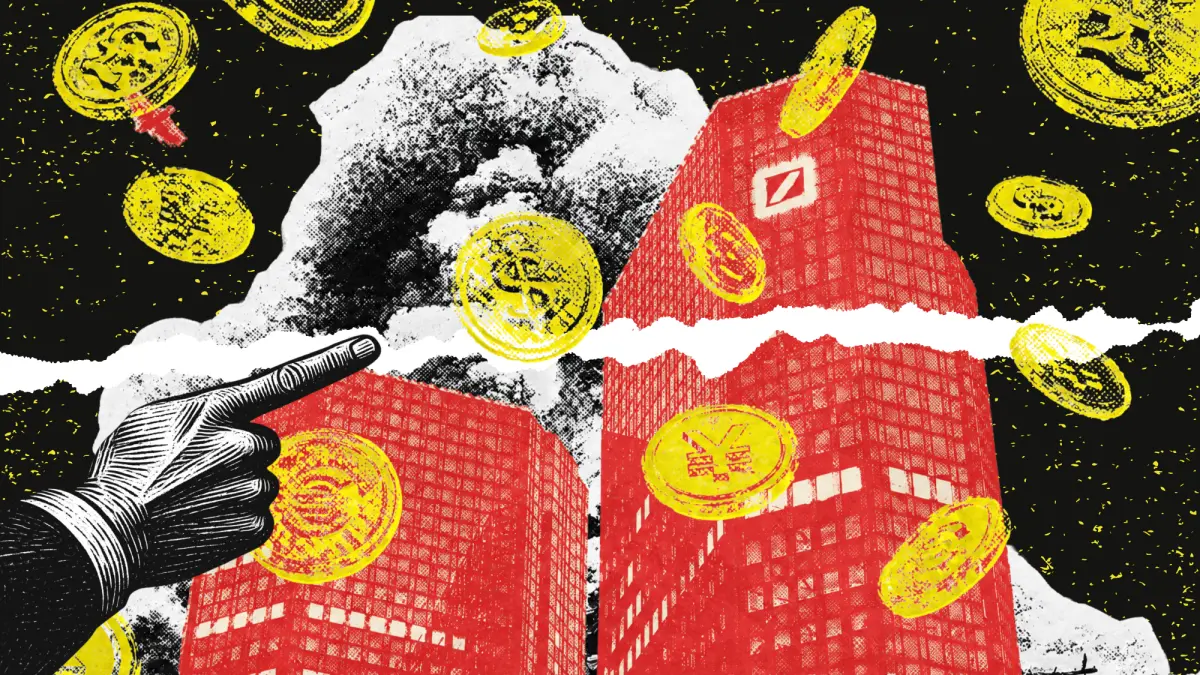
Header art by Studio Yadi
The Inside Deutsche Bank investigation was coordinated by Barracuda Media in South Africa, with technical support from the Data and Research Center (DARC) in Germany.
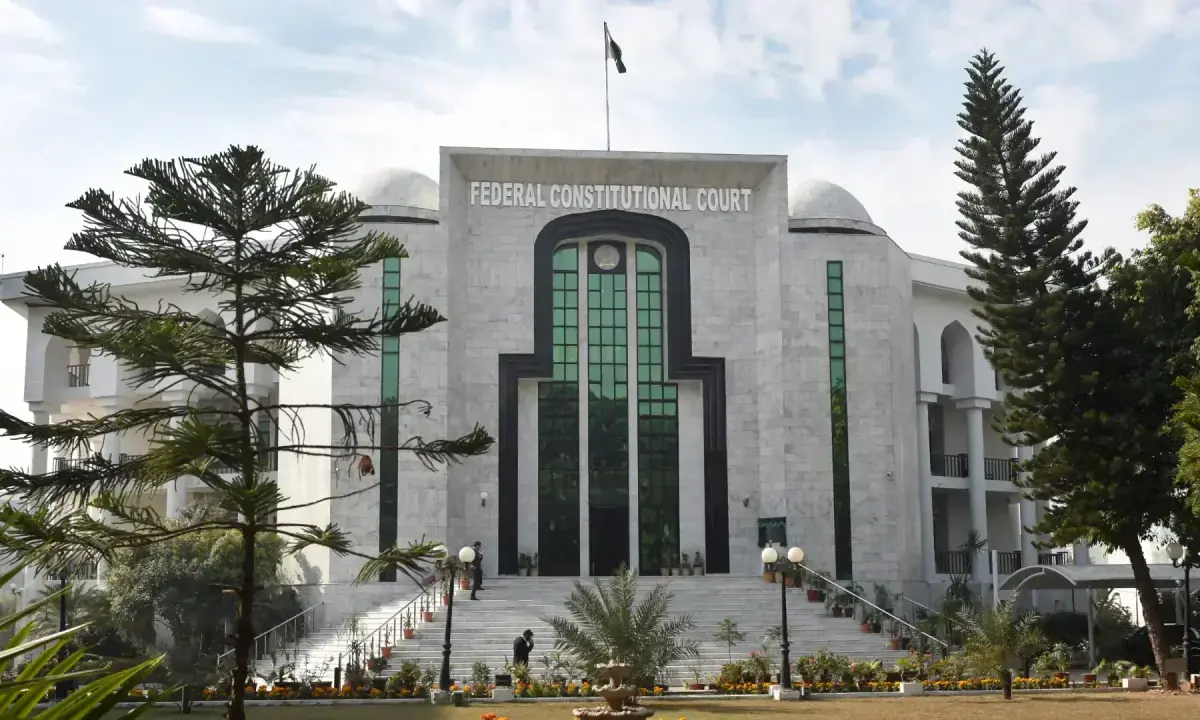
ISLAMABAD: The Federal Constitutional Court (FCC) has strongly rebuked the Lahore Development Authority (LDA) for prolonging the agony of the family of Pakistan Air Force (PAF) Pilot Officer Rashid Minhas Shaheed, recipient of the country’s highest military gallantry award, Nishan-i-Haider, and directed the authority not to squander its resources and public money on “frivolous, vexatious and obnoxious” litigation against individuals.
The observation came in a judgment authored by Justice Ali Baqar Najafi, who regretted that the LDA had continued to drag the family of the martyred officer into litigation over a property dispute.
“The family is facing the agony perpetuated by the LDA by dragging them in the courts in frivolous litigation,” the judge observed in the judgment released on Tuesday.
Justice Najafi was heading a three-member FCC bench, also comprising Justice Rozi Khan Barrech and Justice Syed Arshad Hussain Shah, which took up an appeal filed by the LDA director general against a March 5, 2018, Lahore High Court (LHC) judgment in favour of Farooq Minhas, the martyred pilot’s real brother.
The controversy stemmed from a consent decree passed in favour of Farooq Minhas, the respondent, on May 7, 2005. During subsequent execution proceedings, the LDA objected, arguing that the 14-marla plot in Gulberg-III, Lahore, was evacuee property acquired by the authority for the development of the Gulberg-III scheme.
It further maintained that its predecessor, the Lahore Improvement Trust (LIT), had paid the award amount to the custodian of evacuee property and taken physical possession of the land on Dec 24, 1955.
The authority also contended that the property fell within the boundaries specified in a notification issued on Aug 6, 1953, and that the award announced by the Land Acquisition Collector on Oct 30, 1962, had been finalised. It argued that no exemption or adjustment had been granted to the respondent’s predecessors-in-interest, Nawab Mirza and Maqsooda Begum.
The LDA further questioned Maqsooda Begum’s acquisition of the property through a sale deed dated March 7, 1976, from Nawab Mirza, son of Agha Muhammad Hussain. The latter had claimed ownership on the basis of Property Transfer Document (PTD) No. 213, issued by the Deputy Settlement Commissioner on June 8, 1966, four years after the award was announced on Oct 30, 1962. According to the authority, the transaction was against the policy.
However, the FCC noted that the LDA’s objections had consistently been rejected by the executing court, the revisional court and the LHC.
Justice Najafi observed that the appeal challenged concurrent findings of the three courts, which had dismissed the authority’s objections during the execution proceedings relating to the May 7, 2005 decree.
The court noted that the earlier decisions and the decree had attained finality, particularly as the consent decree had been passed on the basis of the LDA’s own “no objection”.
It further observed that a declaration had also been granted in favour of the legal heirs of Maqsooda Begum, while the objections raised under Order XXI of the Code of Civil Procedure (CPC) were frivolous and beyond the scope of an executing court.
The courts below had also rejected the LDA’s claim that the Central Government had transferred the evacuee portion of the land to the LIT through a notification issued on May 16, 1951, under Section 12 of the Pakistan (Administration of Evacuee Property) Ordinance, 1949. They observed that there was no evidence of such a transfer or of any payment having been made to the LIT or the custodian.
The FCC also referred to an Aug 17, 1980 decision of the Vigilance Commission, which stated that duly verified transfer orders would be honoured by the LDA and that only development charges would be recovered from the transferees. The authority had accepted and acted upon the decision, with its director general issuing the necessary directions.
The LHC had consequently directed the LDA to stop claiming ownership of the disputed land, which had already become part of the Gulberg-III scheme, the FCC observed.
The high court’s judgment was subsequently challenged by the LDA before the Supreme Court, which dismissed the petition, holding that the authority had no ownership rights over the land, as it had already been transferred by the Settlement Department to the occupants. The apex court had also found no reason to interfere with the LHC’s findings.
“We, therefore, deem it appropriate that, instead of imposing costs, we direct the Director General, LDA, to ensure that the authority does not deplete its resources or public money on frivolous, vexatious and obnoxious litigation against individuals,” Justice Najafi observed.
The FCC dismissed the LDA’s appeal, ruling that it was devoid of merit and refusing leave to appeal.
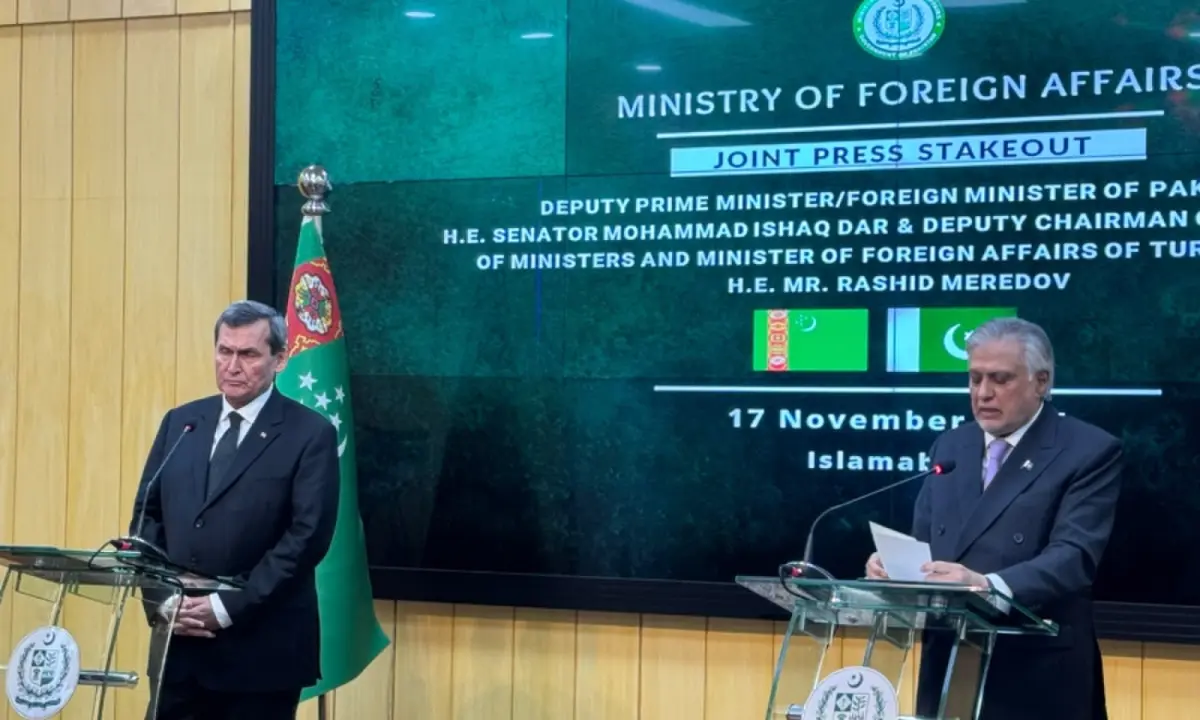
Deputy Prime Minister and Foreign Minister Ishaq Dar on Tuesday discussed the Turkmenistan-Afghanistan-Pakistan-India (TAPI) gas pipeline with a delegation led by Turkmenistan’s Foreign Minister Rashid Meredov.
The discussion took place at the 6th Session of the Pakistan–Turkmenistan Joint Intergovernmental Commission (JIC), which was held in Islamabad on Tuesday.
The two sides recognised “the importance of political engagement among the participating countries on the technical and commercial aspects of the project”, Dar said in remarks during a joint press stakeout after the talks.
Meanwhile, Meredov said that the two sides also agreed to convene a meeting of the steering committee for the project.
The 1,800-kilometre pipeline is expected to carry 33 billion cubic metres of natural gas every year from Turkmenistan’s Galkynysh — the world’s second-largest gas field — to the Indian city of Fazilka. It will pass through Herat and Kandahar in Afghanistan, and Quetta and Multan in Pakistan.
The project has two phases: a free flow phase with an estimated cost of $5-6bn and installation of compressor stations for at least $1.9bn.
In June 2023, Pakistan and Turkmenistan signed a joint implementation plan to execute the TAPI gas pipeline project.
In September 2024, Afghanistan said it would begin work on the pipeline. Progress on the TAPI pipeline had been repeatedly delayed because of security issues in conflict-ravaged Afghanistan.
Pakistan, Turkmenistan to strengthen cooperation
DPM Dar said on Tuesday that the talks between the two countries on trade, investment and regional connectivity were held in “a very cordial and constructive atmosphere, reflecting the longstanding bonds of friendship, mutual respect and goodwill that characterise Pakistan-Turkmenistan’s relationship”.
“Pakistan respects Turkmenistan’s policy of permanent neutrality and values our constructive cooperation in regional and international forums.”
DPM Dar said that Pakistan and Turkmenistan have signed the protocol of the 6th Session of the Pakistan–Turkmenistan JIC and Programme of Cooperation for the two foreign ministries for the period 2026-2030, as well as a memorandum of understanding on tourism cooperation.
“These instruments reflect the shared commitment of Pakistan and Turkmenistan to strengthening institutional cooperation, sustaining regular diplomatic engagement and promoting tourism and people-to-people ties,” the Foreign Office said in a post on X.
“Trade, investment and regional connectivity featured prominently in our discussions,” Dar said in his remarks, adding that the two sides had discussed ways to “advance work on a bilateral transit trade framework and explore commercially viable transport links”.
They welcomed closer engagement between the business communities and chambers of commerce of the two countries, he said.
The foreign ministers also talked about the proposed Turkmenistan-Afghanistan-Pakistan electricity transmission project and the associated fibre optic communications link, highlighting the need for further assessment of its technical and commercial viability.
“Our discussions also covered opportunities to strengthen cooperation in agriculture, industry, tourism, culture, higher education, information technology, health and financial services,” Dar told the media.
Meredov told the media that the two sides also considered interaction between the seaports of Chabahar and Gwadar as well as prospects for railway connections through Afghanistan. “Particular attention was paid to the rail viability of routes, tariffs and border procedures,” he said.
“I emphasised the central role of dialogue and diplomacy, respect for international law and adherence to the principles of the United Nations Charter in addressing regional and global challenges,” Meredov said.
Meredov added that Turkmenistan was planning to arrange a state visit to Islamabad next year.
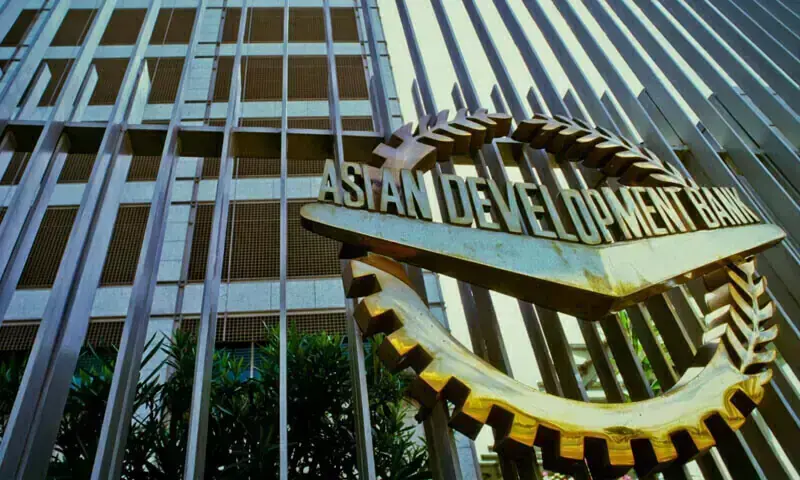
The Asian Development Bank (ADB) on Tuesday approved a $500 million results-based loan to help Pakistan reform its federal civil pension system, the Manila-based lending agency said in a statement.
The reforms will help contain rising pension-related fiscal pressures, strengthen pension system sustainability, and expand fiscal space for development and social spending, according to the statement.
It added that Pakistan’s federal pension spending has grown nearly fivefold since fiscal year 2016 and now exceeds Rs1 trillion a year.
“Its longstanding unfunded and noncontributory legacy defined benefit scheme is financed entirely through annual budget allocations, creating growing fiscal pressure as pension obligations increase over time,” the statement highlighted.
“Pakistan has taken important steps to strengthen its federal pension system, and this program will help sustain and institutionalise those reforms,” ADB Country Director for Pakistan Emma Fan was quoted as saying.
“ADB’s support will help achieve lasting results by strengthening institutions, improving transparency, and supporting a more sustainable pension system,” Fan added.
Furthermore, the financing will support the first phase of the government’s Pension Reform Implementation Plan, and the transition to the defined contribution pension scheme, in which federal civil employees appointed from July 2024 are required to participate, said the statement.
“ADB’s support will help improve pension management to reduce liabilities, boost financial transparency through digital systems, and enhance pension service delivery and financial literacy among beneficiaries,” it read.
In 2024, ADB’s senior economist Aiko Kikkawa had said the pension system in Pakistan suffered from low contribution rates, making it unsustainable in the long run.
An earlier report by the ADB highlighted Pakistan’s weak pension and insurance systems. Most government positions entail unfunded pensions, where pensions for current employees are financed through tax revenues, according to the report titled ‘Strengthening Pakistan’s Pension and Insurance Systems’.
In August, the government executed agreements with 16 pension fund managers to formally operationalise the Defined Contribution Pension Fund Scheme (DCPFS), launched a year ago for public sector employees as part of major pension reforms aimed at containing the snowballing pension burden on the budget.
It’s censored in Japan, not officially sold in China, and has floundered in Asian markets where mobile games are king, but “Grand Theft Auto” fever is sweeping the continent regardless.
Excitement among gamers in Asia for Thursday’s “GTA VI” mega-release shows how the industry has evolved since the fifth installment in 2013, and quashes the idea that cultural aversion to lawless escapades holds it back, analysts say.
“The game was part of my youth,” Yang Hauiyu, a market research professional in Beijing, told AFP, recalling playing a pirated PC version non-stop as a teen.
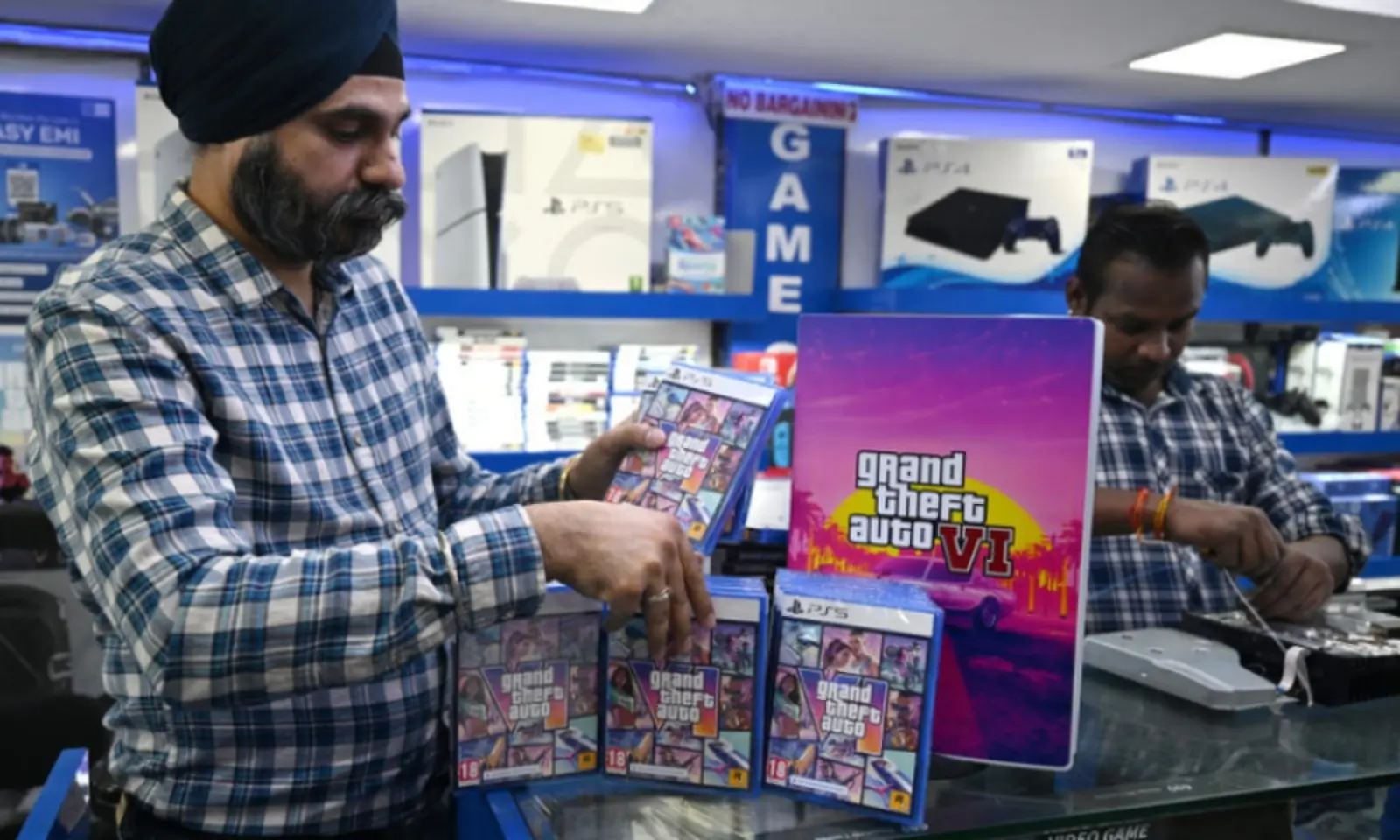
A shopkeeper in New Delhi prepares for the launch of ’Grand Theft Auto VI. —AFP
Like others worldwide, Yang, now in his 30s, pre-downloaded “GTA VI ” for his PlayStation – even though the video game is not licensed for sale in mainland China.
Playing GTA is not banned, but as with most Western-made games, the series, notorious for its violent scenarios, has never obtained government approval.
However, a large grey market for GTA exists in the world’s second-largest economy.
Fans access it via servers in Hong Kong and elsewhere while authorities turn a blind eye, even as the series’ popularity balloons, said Shenzhen-based gaming consultant Daniel Camilo.
“The console market was minuscule in China and now it’s much bigger,” he said, adding that the middle class has grown since 2013 and younger gamers are more open to global pop culture.
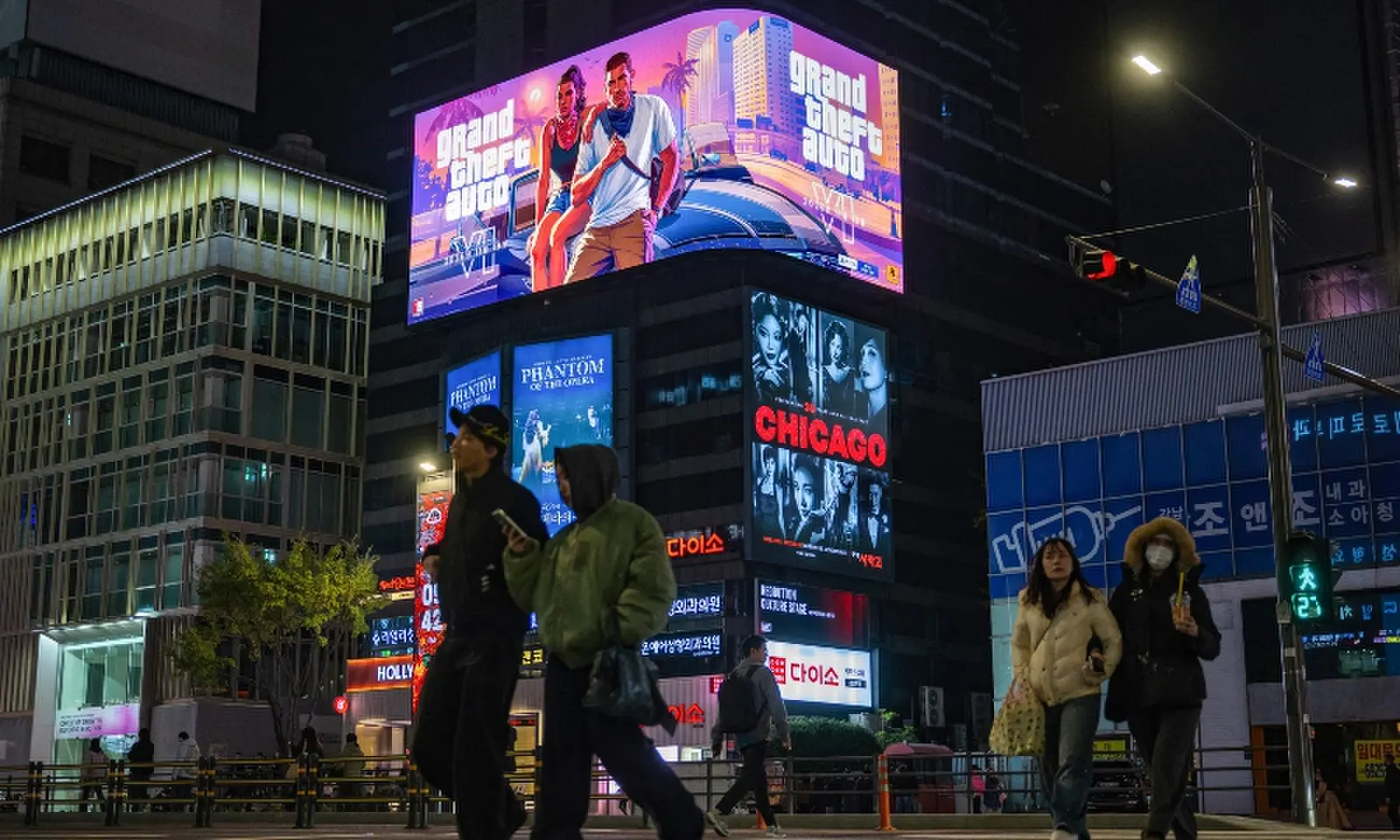
Advertising for the video game “Grand Theft Auto VI” (GTA VI) is seen in Seoul on November 10, 2026. —AFP
Camilo predicted “GTA VI” could be the first GTA game with a significant commercial impact from China — the country with the globe’s highest gaming revenues, according to industry analysis firm Newzoo.
He estimated sales of two to five million copies from the nation, a figure which is “virtually impossible to track”.
Z-rated
In Thailand, where GTA sales were suspended in 2008 after an alleged copycat murder of a taxi driver, one Bangkok gaming centre is now advertising “GTA VI ” sessions from launch day.
But for some, the heavily American themes in the US-published series are off-putting.
Donghwi Kim, a 23-year-old South Korean student, is a big fan of Nintendo’s “Zelda” games, but has not tried GTA.
“It’s focused on the United States’ culture, right?” he said. “I don’t have interest in that”.
In Japan, home of the PlayStation, “GTA V” was the seventh top-selling game in the 2013-14 financial year, below six Japanese-made rivals, gaming magazine Famitsu reported.
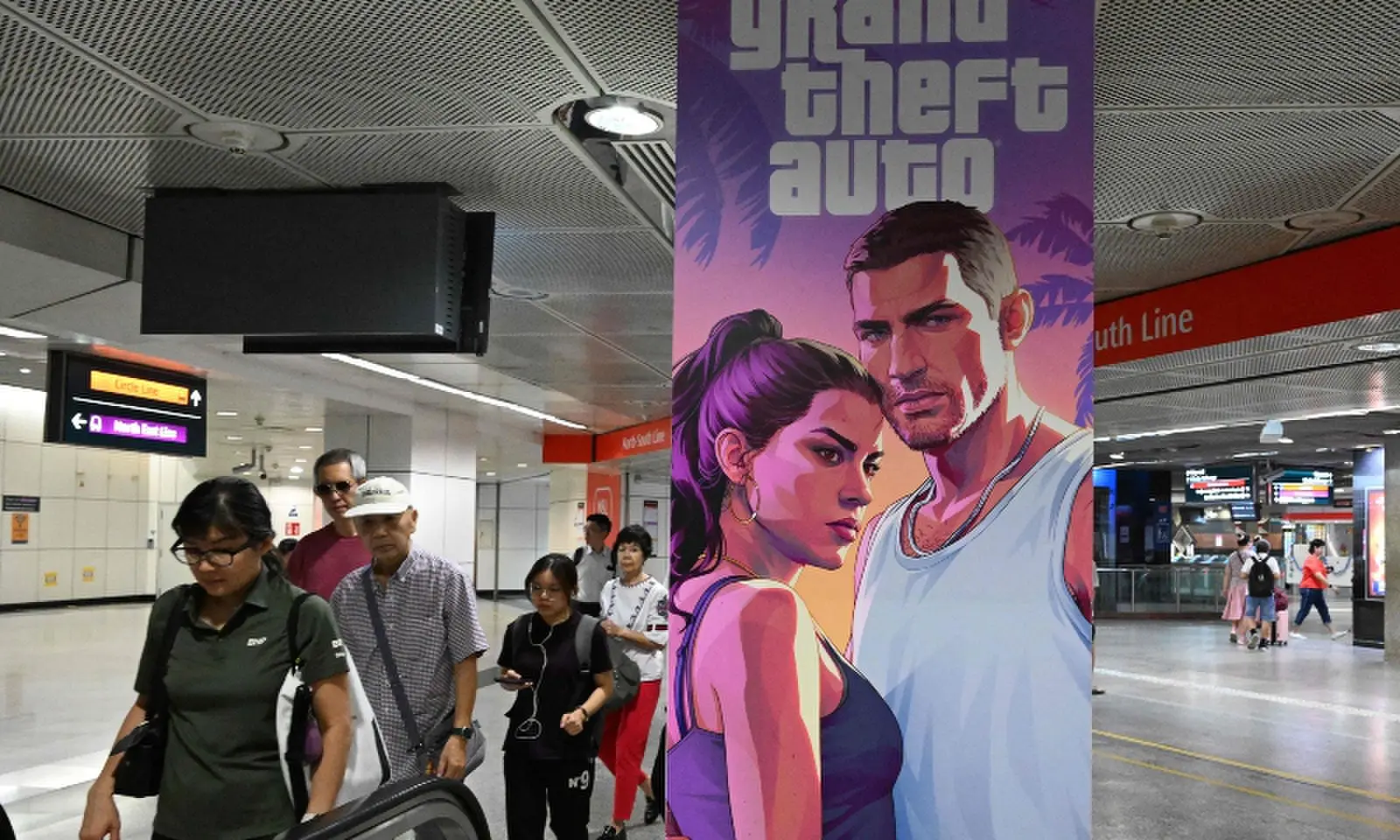
Commuters walk past advertising for the game “Grand Theft Auto VI” by US studio Rockstar Games at a train station in Singapore on November 17, 2026. —AFP
In contrast, “GTA V” was the “best-selling console video game of 2013 in North America, Latin America and Europe combined”, its publisher said at the time.
The game is censored on consoles in Japan to comply with strict explicit-content rules that refuse to classify works depicting genitals, sexual acts or prostitution in a positive light.
To obtain a “Z-rated” — adult-only — classification, Japan’s “GTA V” replaces a sexual act with smoking a cigarette, shows strippers with their breasts covered, and cuts torture scenes short.
Although nothing is yet confirmed, censorship rumours were fuelled for “GTA VI” because the Japanese version is around a gigabyte smaller than the international one.
‘Enormous’ anticipation
For Indian players used to navigating chaotic traffic, overloaded motorbikes and daredevil overtaking, the game’s high-speed chases hold a particular appeal.
India’s gaming market generated $2.7 billion in 2024, and more than half a billion people played in the past year, according to separate government and industry figures.
But more than 90 per cent of Indian gamers use mobile phones — making the console-owning audience for a blockbuster such as “GTA VI” a much smaller, more affluent group.
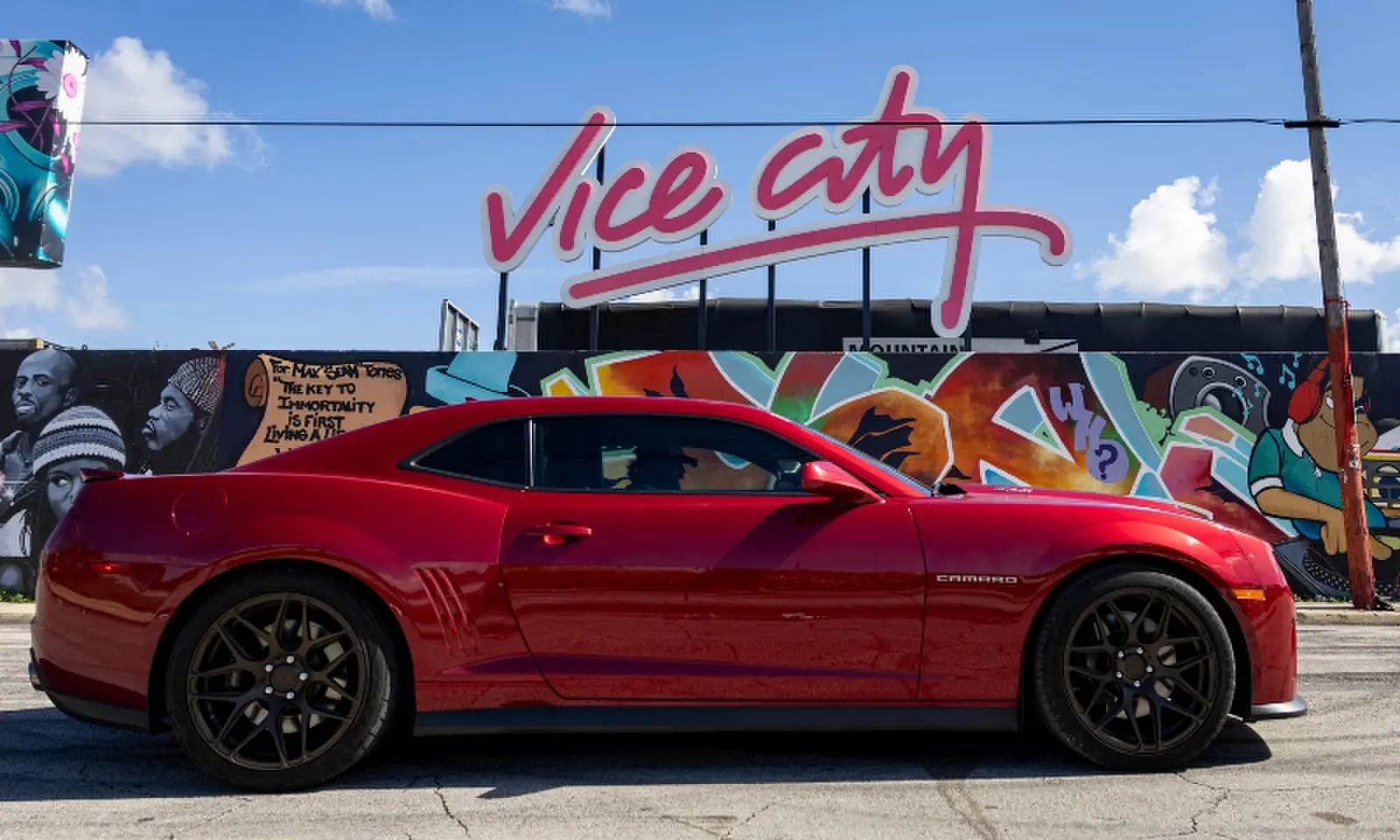
A red Chevrolet Camaro drives past a “Vice City” sign in the Wynwood neighborhood, ahead of the release of the video game Grand Theft Auto VI (GTA VI), in Miami, Florida, US, November 16, 2026. —AFP
Indian fans are celebrating the launch with gaming marathons and unofficial parties, including a Vice City-inspired night in tech hub Chennai featuring virtual-reality gaming, superbikes and live graffiti.
“The anticipation is enormous,” said party organiser Fahad Saud, 35, who grew up playing GTA’s multiple editions.
“In India, where the day-to-day struggle is so great, GTA gives us the avenue to vent the pressure, to have space and freedom.”
PC vs console
“GTA has historically had a smaller share of the overall gaming market in many Asian countries compared to North America and Europe,” said Daniel Ahmad, director of research and insights at Niko Partners.
But its popularity “is driven more by differences in gaming platforms, business models, and spending habits than cultural preferences”, he told AFP.
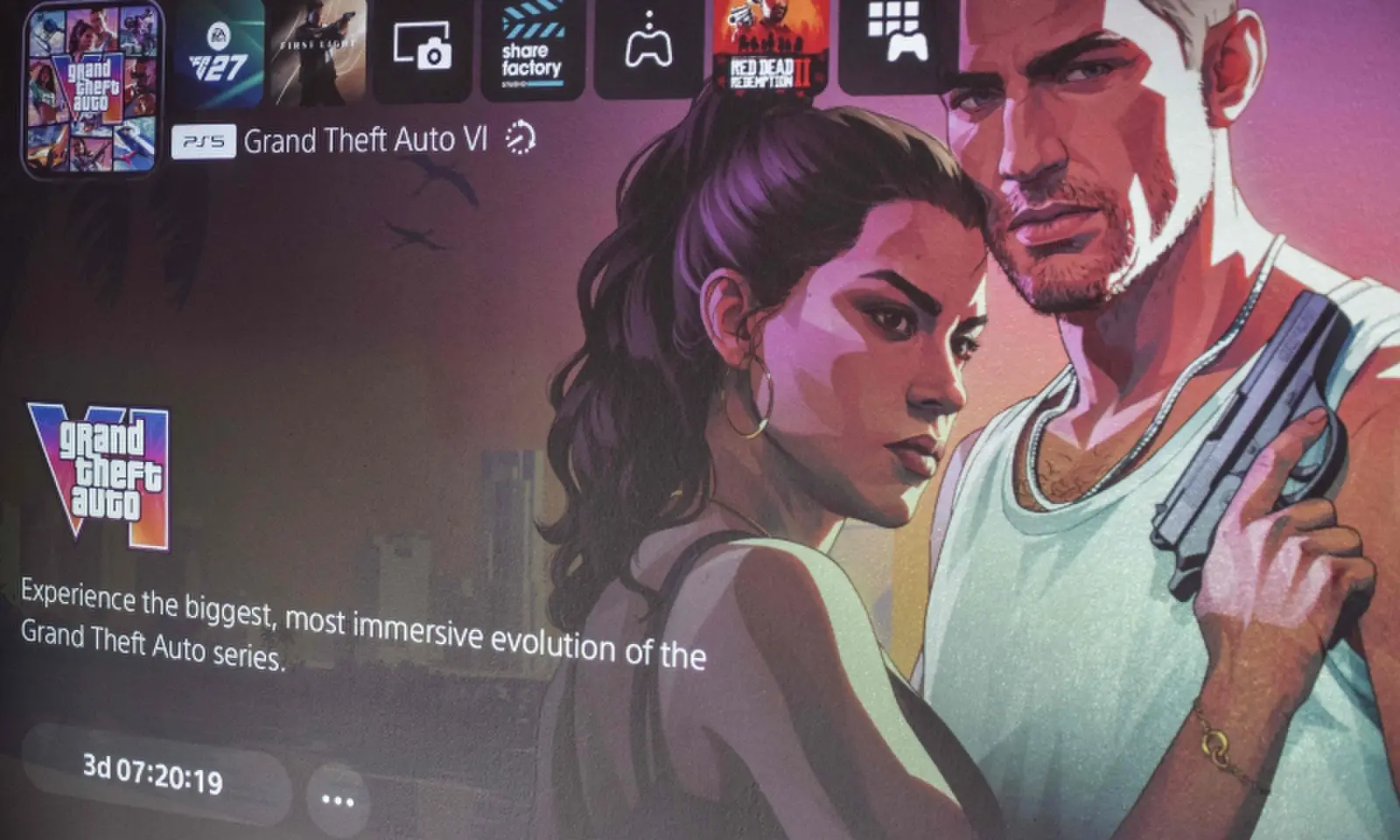
This illustration picture taken on November 15, 2026 in Bangkok shows the home menu of the PlayStation 5 (PS5) with a countdown (bottom L) for the video game “Grand Theft Auto (GTA) VI”
The high cost is a barrier, and at launch “GTA VI” is only coming to consoles — a gadget that plays a smaller role in many Asian markets.
“We expect the launch to generate significantly greater attention in Asia than previous entries in the franchise,” Ahmad said.
However, “much of the fanfare will be reserved for the PC launch, given the larger PC gaming audience”.
Indonesian Jonathan Nainggolan, 34, asked his wife’s permission to purchase the game’s “ultimate edition”, which costs around $80 in the country.
“I expect to play the game continuously… probably, until the end of the year, I will try to complete GTA VI.”
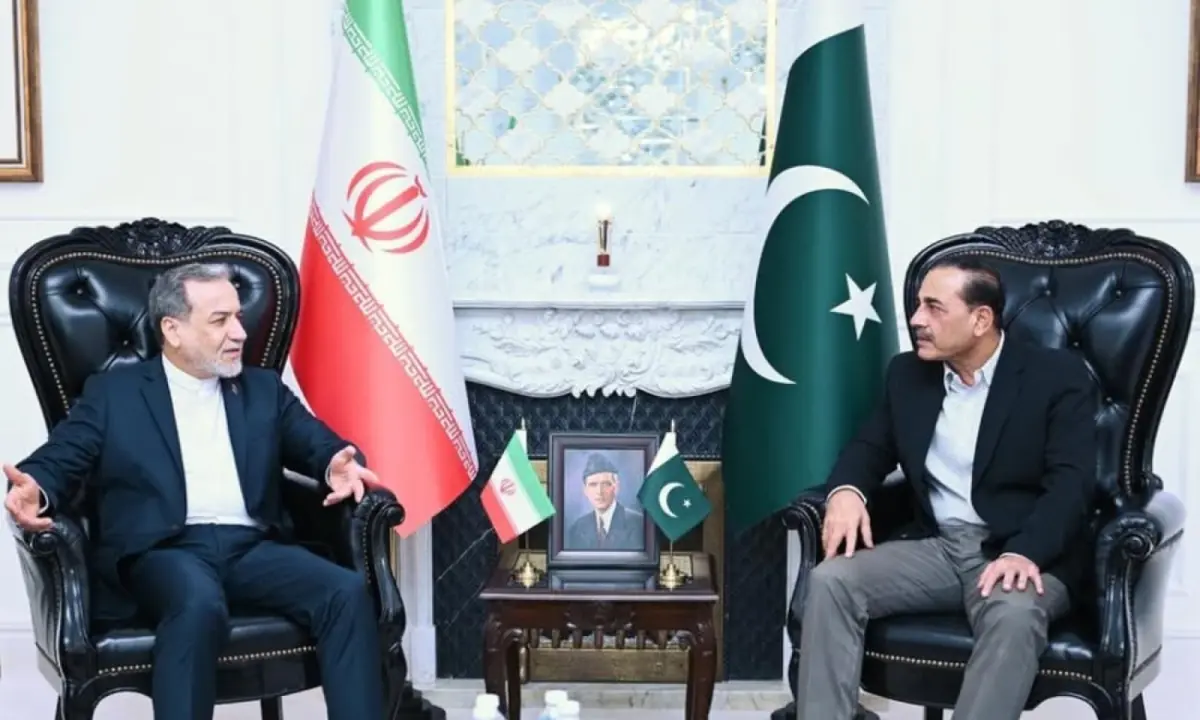
Chief of Defence Forces and Chief of the Army Staff Field Marshal Asim Munir underscored the importance of sustained engagement, mutual trust and close coordination between the two countries to promote regional peace and stability during a meeting with Iranian Foreign Minister Abbas Araghchi, the military’s media wing said on Tuesday.
According to a statement issued by the Inter-Services Public Relations (ISPR), matters of mutual interest, regional security dynamics and evolving geopolitical developments were discussed during the meeting.
Both sides also exchanged views on exploring avenues to address common security challenges, it added.
Araghchi appreciated Pakistan’s constructive role in promoting regional peace and stability and expressed his country’s desire to further strengthen bilateral relations, the ISPR said.
The meeting took place in Rawalpindi on Monday, the ISPR said.
The meeting follows Araghchi’s address to the 30th meeting of the Economic Cooperation Organisation (ECO) Council of Foreign Ministers in Islamabad on Monday, where he called for a reliable and sustainable regional energy mechanism to safeguard energy flows, ensure stable supplies and reduce external vulnerabilities amid disruptions to key fuel supply routes.
Referring to the US war on Iran, Araghchi said Tehran remained committed to diplomatic engagement and peaceful solutions, but accused Washington of pursuing a course marked by aggression, threats and economic coercion.
He also stressed that Iran had no inherent dispute with countries in the region, saying their territories, airspace and facilities should not be used as platforms for attacks against one another.
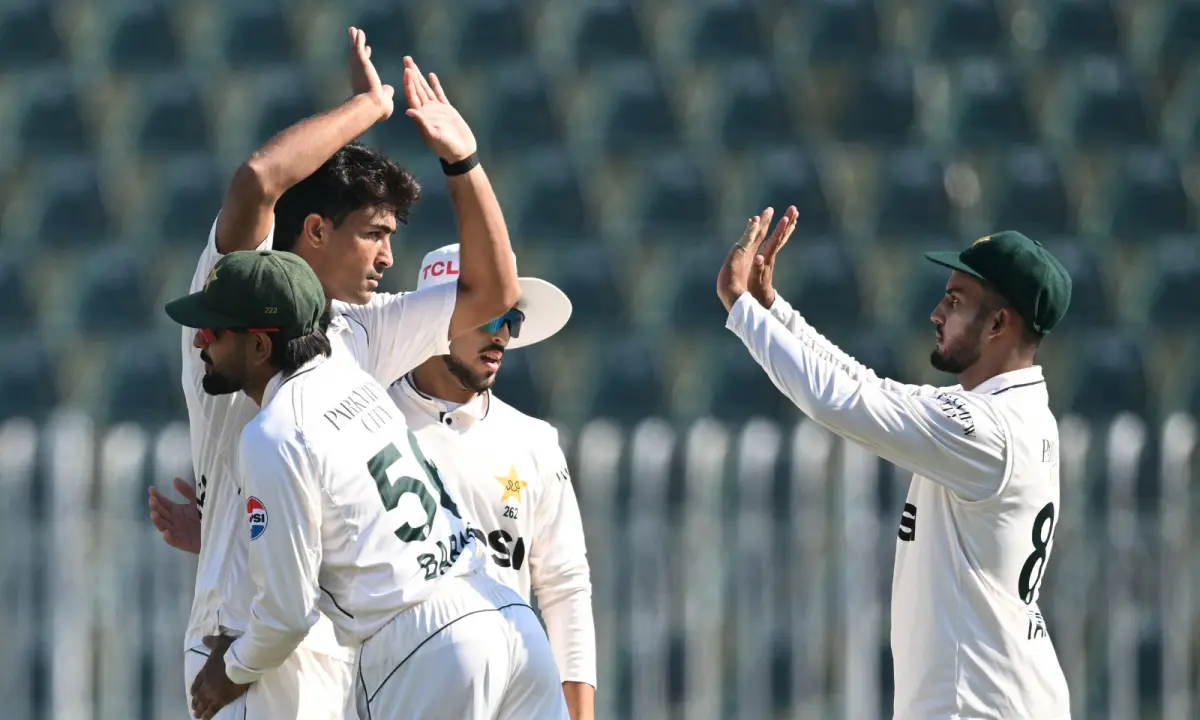
Pakistan’s pace attack ripped through Sri Lanka’s top order to leave the visitors struggling at 85-6 at lunch on the opening day of the second Test at the Rawalpindi Cricket Stadium on Tuesday.
After winning the toss and opting to field, Pakistan made the most of a green surface and the assistance on offer, reducing Sri Lanka to 36-5 before captain Kusal Mendis and Sonal Dinusha attempted to steady the innings.
The hosts, who left out spin-bowling all-rounder Arafat Minhas to bring in fast bowler Aamer Jamal, had six wickets by the interval.
Mohammad Abbas and Razaullah led the assault with two wickets apiece, while Saqib Khan and Aamer claimed one each. Abbas was particularly economical, conceding just 12 runs in 11 overs, including five maidens, as he repeatedly beat the bat with movement in both directions.
Saqib struck first, removing Pasindu Sooriyabandara for two in the fourth over when the opener edged an outswinger to wicket-keeper Ghazi Ghori. Abbas then trapped Dinesh Chandimal’s defence, with an inside edge sending the ball off his pad to short leg, where Azan Awais took the catch.
The pressure continued to build as Abbas produced another breakthrough in the 13th over. Kamindu Mendis chipped a hard-length delivery towards the off side, where Tayyab Arif held a sharp catch at short cover to dismiss him for eight.
Razaullah, operating at high pace, added two wickets to the damage. He first removed Lahiru Udara for four with a delivery clocked at 146kph that drew an edge to Mohammad Taha at first slip.
The fast bowler then dismissed Dhananjaya de Silva for one, trapping him lbw with a delivery that held its line and stayed low. De Silva reviewed the decision, but ball-tracking confirmed the umpire’s call.
Sri Lanka were 36-5, with their two most experienced batters, De Silva and Chandimal, already back in the pavilion. Kusal offered some resistance, scoring 32 from 50 balls with five fours, and shared the only substantial partnership of the session with Dinusha.
The captain struck several crisp boundaries as he tried to counterattack, but Aamer ended the 49-run sixth-wicket stand in the 28th over.
Kusal attempted to pull a delivery angled towards his pads but mistimed the shot, sending a top edge towards deep backward square, where Razaullah completed the catch.
Dinusha was unbeaten on 15 from 30 balls, while Milan Rathnayaka had yet to score. Sri Lanka reached 85-6 in 29 overs, with 16 extras contributing to the total.
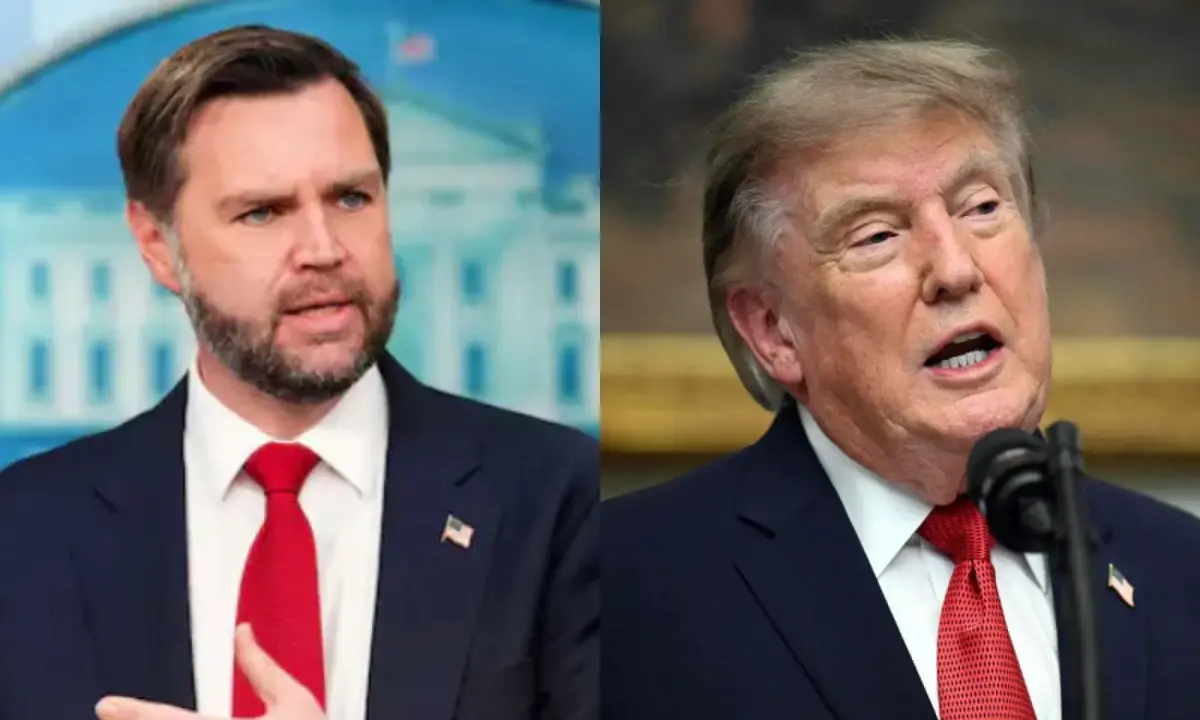
US Vice President JD Vance said on Monday that President Donald Trump will not allow the ongoing war on Iran to turn into a prolonged military commitment, rejecting calls for an extended US presence and insisting that the administration remains committed to avoiding another “forever war”.
In an interview with Fox News, Vance said there was no disagreement between him and Trump over the direction of the conflict, emphasising that the president intends to bring the war to an end rather than allow it to become a long-term engagement.
“My prediction is that whatever the president ultimately decides to do, there are going to be people who demand more, who want the war to go on indefinitely,” he said.
“What I feel quite confident about the president of the United States — and again, there’s no daylight here — is that whatever he ultimately decides to do, however he ultimately decides to bring the conflict to a close, he is not going to let this become a forever war,” he added.
Vance’s comments come as the US and Iran remain locked in a conflict while debate intensifies over it costs and duration.
“We are not going to allow this to become a 10- or 15-year commitment, or frankly, even a two-year commitment,” Vance said.
He accused some critics and foreign policy advocates of wanting the US to remain engaged indefinitely, adding that the administration had made a clear commitment to voters to avoid prolonged overseas wars.
“Despite the fact that a lot of neoconservatives and a lot of other people want us to stay there forever, we’re not going to stay there forever. We promised we wouldn’t,” he said.
Vance also expressed confidence that Trump would ultimately end the war with “great results” for the American people.
‘I’m happy to be a heat shield’ for Trump
During the interview, Vance also addressed criticism surrounding the administration’s handling of the Iran conflict and its potential political consequences for Republicans following the 2026 midterm elections.
Asked whether there were differences between him and Trump over the war, he rejected the suggestion, saying there was no disagreement among senior administration officials.
He acknowledged, however, that the conflict had carried political costs, particularly through higher gasoline and energy prices.
“Politically, yes, and I think the president himself has absolutely said this as well. There was a political cost: the higher gas prices, the higher energy prices,” he said.
The vice president also pushed back against criticism directed at him over a memorandum of understanding related to Iran, suggesting that some critics were using him as a substitute target for attacking Trump.
“I’m happy to be a heat shield for the president of the United States,” Vance said.