Category: dawn news

  • KP governor forms 8-member commission to probe illegal placer gold mining

    KP governor forms 8-member commission to probe illegal placer gold mining

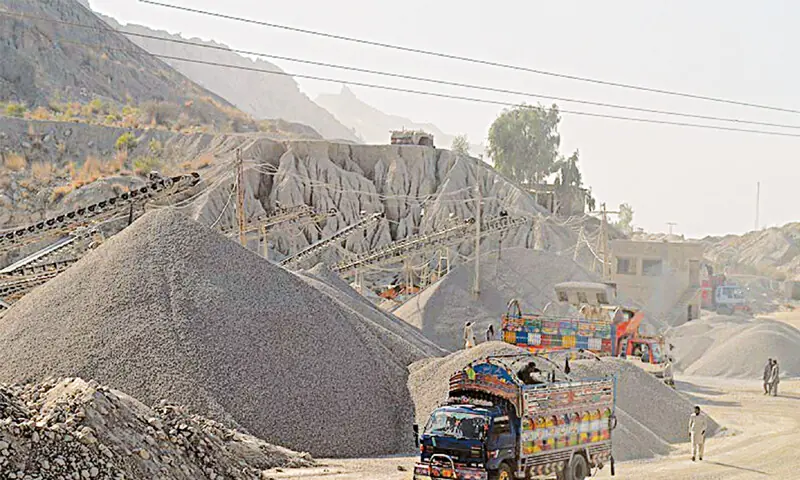
    PESHAWAR: Khyber Pakhtunkhwa Governor Faisal Karim Kundi on Wednesday constituted an eight-member inquiry commission to probe illegal placer gold mining in the province.

    The commission, according to a notification issued by the provincial home and tribal affairs department, will be headed by retired Justice Asadullah Khan Chamkani.

    It will also include as members Barrister Mohammad Yaseen Raza, legal adviser/member Sher Akbar Khan, Deputy Inspector General of Police Wasif Rahman, Health Department Additional Secretary Engineer Ziarat Khan, and representatives of intelligence agencies.

    According to the notification, the commission will inquire into the extent, history and nature of illegal placer gold mining in KP, particularly in Kohat, Nowshera, Karak and other affected districts. The inquiry includes the scale, duration and locations of illegal operations.

    In addition to this, the commission will identify persons, groups and networks involved in illegal mining, including beneficiaries, and determine their “respective roles, financial gains and individual or institutional responsibility for facilitation, corruption, negligence, abuse of authority or failure to discharge legal duties”.

    Similarly, it will also inquire into “allegations of patronage, facilitation and connivance by political figures, public representatives, government functionaries, law enforcement personnel or any other persons or institutions, including corruption, abuse of authority, deliberate inaction or protection provided to illegal mining operations”, the notification said.

    The commission will also examine the financial dimensions of illegal mining, including the estimated quantity and value of gold illegally extracted, losses caused to the public exchequer, movement of proceeds, money laundering, smuggling and possible links with organised crime, terrorist groups or terrorist financing.

    It will additionally examine the role and performance of concerned government departments, district administrations and the police in “preventing illegal mining, monitoring lease conditions, taking enforcement action, registering and investigating cases, prosecuting offenders and dealing with seized machinery, gold and other property”.

    The commission has also been tasked to determine the reasons for the continuation or recurrence of illegal mining in spite of repeated complaints, government directions, enforcement operations and criminal proceedings, including negligence, deliberate failure to enforce the law, interference or facilitation by those responsible for enforcement.

    In addition to this, it will also inquire into the circumstances surrounding the Kohat incident of Nov 11, including any links between illegal mining networks and the attack on police personnel, possible planning, financing, facilitation or support, and any relevant operational or security lapses, without prejudice to ongoing criminal investigations, the notification said.

    Eighteen terrorists were killed while 10 cops were martyred on Nov 11 when a police team came under attack on its way back after completing an operation against elements involved in illegal gold mining.

    The committee will also examine previous inquiries, reports, complaints and decisions, including those of the National Accountability Bureau (NAB), Provincial Cabinet Inquiry Committee (PCIC) and other competent authorities, assess the implementation of their findings and recommendations, and examine any fresh material or evidence warranting further inquiry.

    The commission will assess the financial and environmental damage caused by illegal mining, including loss of government revenue and damage to riverbeds and adjoining areas, while identifying persons or entities against whom recovery, compensation or other legal action may be warranted.

    It will also recommend specific action against those found responsible, including criminal investigation or prosecution, departmental proceedings, recovery of unlawful gains or public losses, and any other action warranted under the applicable laws.

    It will also recommend immediate measures, wherever necessary, for preservation of evidence, protection of witnesses and records, securing public assets and preventing interference with the inquiry.

    The commission will submit a comprehensive report containing its findings, supporting evidence and the responsibility of persons or institutions concerned, as well as specific recommendations for further action by the competent authorities.

    “The commission may examine any person, record, transaction, lease, operation or incident relevant to its mandate, irrespective of the period involved or the position or status of the persons concerned,” the notification added.

    It added that the inquiry would not be confined to any particular government, department, institution or category of persons.

    According to the notification, the commission will be given access to all relevant material, including a confidential report received from the Prime Minister’s Office vide a letter dated Aug 25, the chief secretary’s directions of Sept 8, NAB and PCIC reports, relevant cabinet decisions, departmental files, lease and auction records, complaints, first information reports, investigation and prosecution records, machinery seizure and release records, and any other material relevant to the inquiry.

    “The commission shall exercise the powers available under the West Pakistan Tribunals of Inquiry Ordinance, 1969, including summoning and examining witnesses on oath, requiring the production of records and documents, receiving evidence, calling for information from any person or authority, requisitioning public records and conducting proceedings in accordance with law,” the notification read.

    According to the notification, the KP Mines and Minerals Development Department will provide secretarial, administrative and logistical support to the commission.

    The commission will submit its report to the KP governor within 45 days of its notification.

    The probe has been set up in the aftermath of an attack that led to the martyrdom of 10 police personnel in the Gumbat area of Kohat district on Nov 11 while they were returning from an operation against illegal placer gold mining along the Indus River.

    The incident came a day after the Kohat deputy commissioner imposed a 60-day ban on parking excavators within blocks C and D of placer gold mining areas and adjoining locations. According to the order, these could easily be used for unauthorised gold extraction.

    Condemning the attack, Kundi on Saturday announced a ban on gold mining across the province and the revocation of all mining leases as part of measures to curb illegal mining.

    Source: dawn
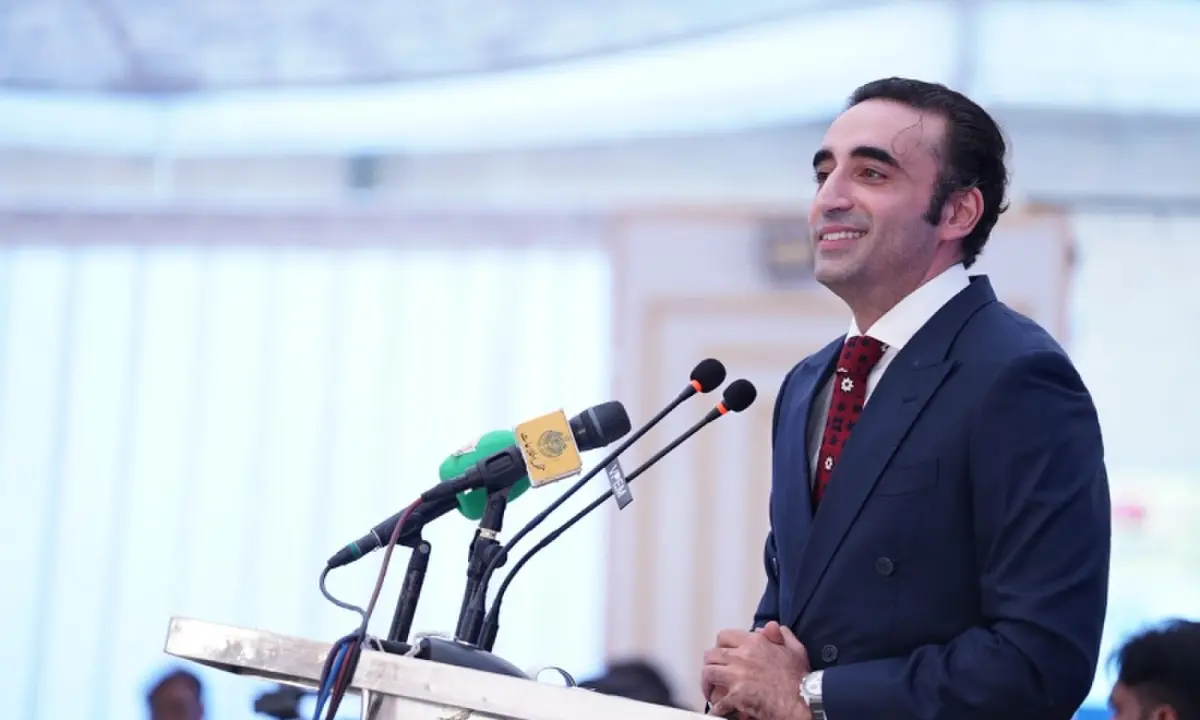
  • ‘Have the courage to listen to the debate you started’: Bilawal sticks to his guns after speaking his ‘truth’

    ‘Have the courage to listen to the debate you started’: Bilawal sticks to his guns after speaking his ‘truth’

    PPP Chairman Bilawal Bhutto-Zardari on Wednesday maintained that his recent remarks on the country’s political situation were the “truth”, urging government representatives to have the “courage” to listen to his point of view.

    Speaking in an interview on Hum News programme ‘Faisla Aap Ka’, Bilawal reiterated his stance from his Tuesday’s speech, cautioning against new provinces and calling for a “political reset” so public issues could be addressed.

    Bilawal emphasised that he spoke in the context of the US-Iran war, which has impacted economies around the world due to rising energy costs.

    “Elites do not have the idea of what kind of difficulties Pakistanis are facing,” he said, highlighting the need for politicians to set aside their partisan political perspectives and think about how to “fix the system”.

    The PPP chairman asserted it was his right to provide his perspective on what shape a “reset” should take if someone was suggesting that a reset was needed, indirectly referring to Interior Minister Mohsin Naqvi’s July remarks.

    On the fact that his PPP was part of the ruling coalition, Bilawal contended that this was the exact reason to “listen” to him as he was a “major stakeholder”.

    “These are not reasons to discount what I am saying […] I am telling you that this is the situation; these are my proposals to rectify it. You may disagree with my suggestions, but at least listen. You should have the courage to listen to the truth.”

    The Bhutto scion added, “Because I am a stakeholder, I am saying: come to your senses.”

    He further said, “Now let’s have the debate that you started. […] Have the courage to [continue] the debate that is now ongoing.”

    Noting that the conversation had not been brought to the Parliament so far, Bilawal said, “You yourself decided to hold this debate in front of businessmen. It was decided on their own that this debate would be held through touts.”

    The PPP chairman affirmed that Pakistan had not become so weak as a society that there would only be “one-sided debates”.

    Replying to a question, he remarked that he “spoke too much yesterday, which was now hard to digest”.

    Noting the ongoing “geopolitical atmosphere”, the former foreign minister wondered how many fronts the government wanted to fight on simultaneously, with India as an adversary, a near-war situation with Afghanistan and the fight against terrorism.

    “The government has been deciding that we will fight the PTI; now the new decision is that they will also fight JUI, and it seems that after my truth, they have also decided they must fight me too,” Bilawal remarked.

    “If you are going to fight everyone, and fight everyone internally as well, then who will lead Pakistan and its people out of this economic crisis?” he wondered.

    The PPP chairman said the reactions from federal ministers to his remarks were “yet another proof that Pakistan’s politicians do not have the courage to hear the truth”.

    “If you or they do not have enough courage or patience to listen to me, then what about the people of Pakistan who have no access to the prime minister, his ministers, or the National Assembly?”

    ‘Unaware of what is behind this debate’

    Bilawal said he was unaware of “what was behind this debate because till today, despite being such a major stakeholder”, neither the prime minister nor a federal minister nor a political or any other stakeholder had discussed with him or the president that they wanted new provinces to be created.

    “No attention” was being paid to the ongoing historic economic crisis, the ex-minister added.

    Reiterating that he had not started the debate on governance, Bilawal quipped whether “only the PCB chairman had the right to tell how and why the system has collapsed”, referring to Naqvi, who also serves as the cricket board chief.

    “If a reset has to happen, then has the PCB been given the responsibility that you have all powers to decide how the system will be reset, whether provinces should be divided? […] Should I go home quietly? This is not possible.”

    Asked whether his remarks meant that PPP would take the path of resistance, Bilawal refrained from terming it that, adding that he provided his voters’ perspective and did not issue any protest call.

    “I suggested to everyone that a political reset is needed, a democratic reset is needed, so that instead of politicians grabbing each other’s collars, fighting each other, we all join hands to pull the public out of this hardship,” he explained.

    The PPP chairman termed the government’s reaction to criticism by Maulana Fazlur Rehman as “completely frivolous, irresponsible conduct”. “If he criticises, the reaction is to demolish the house, arrest his son and pressure his party workers,” he added.

    Asked whether his warning regarding the division of Sindh was a threat, the Bhutto scion affirmed that his party was not one that engaged in violence.

    He referred to Sindh’s history, particularly from the 1980s onwards, adding, “Was what I said outside of a historical context or precedent? This wasn’t organic; it was orchestrated to create division in Sindh’s politics.”

    He declared, “And this risk is still present today, which is why I was warning that if Sindh is divided forcefully, I would not do such things but there will be a reaction.”

    Bilawal warned that while he would not want it, the law and order situation would worsen so much that it would be difficult to put out the “fire”.

    Source: dawn

  • Petrol and diesel prices reduced by Rs3 per litre each

    Petrol and diesel prices reduced by Rs3 per litre each

    The government on Wednesday reduced the prices of both petrol and diesel by Rs3 per litre, marking the twelfth consecutive decrease in the rate of petrol.

    Following the revision, petrol will retail at Rs322 per litre, while HSD will remain at Rs355 on Nov 19 (Thursday), according to a notification by the Oil and Gas Regulatory Authority (Ogra).

    Following Tuesday’s reduction of the petrol price to Rs325 per litre, Deputy Prime Minister and Foreign Minister Ishaq Dar highlighted the government’s “proactive measures including policy changes and structural reforms in petroleum policy” that had brought prices back down from their April 3 peak and provided relief through a fuel subsidy scheme.

    “The government of Pakistan remains committed to continue making all possible efforts to ease the financial burden on the common man amid global challenges,” he said.

    The government continues to levy Rs114 per litre in taxes and duties on petrol and Rs100 per litre on diesel.

    Under an arrangement announced on Nov 2, for 30 days, oil refineries will contribute to the petroleum levy by bearing a cumulative impact of Rs15 billion, according to the government. This allows a Rs14.71 reduction in the petrol price at the consumer end.

    On Sept 17, the government rolled out the Prime Minister’s Fuel Relief Scheme across the country to ease the public’s burden amid rising fuel prices due to the Middle East situation.

    The subsidy scheme applies to owners of motorcycles, rickshaws and vehicles of up to 800cc.

    Rise in fuel prices

    The price of HSD has come down from a peak of Rs520.35 recorded on April 3. Its price had started rising from Rs281 per litre after the US-Iran war broke out on Feb 28.

    The petrol price had peaked at Rs458.41 on April 3 after beginning its upward trajectory from Rs266 in the first week of March.

    Meanwhile, the government has reintroduced a raft of austerity measures in response to rising fuel prices amid the ongoing Middle East conflict. Under these measures, markets are required to close by 9pm, and fuel allocations for official vehicles have been cut by 50pc for three months.

    Since July 17, the government has been revising fuel prices on a near-daily basis due to fluctuations in international market prices following renewed hostilities between Iran and the US.

    The petroleum minister stated that the cabinet and the prime minister had decided to give Ogra the responsibility of deciding fuel prices on a daily basis based on international market trends.

    Prior to this, the government had been announcing weekly revisions to fuel prices since early March, alongside measures for the conservation of fuel amid possible oil supply disruptions due to the conflict. The federal government had also announced targeted relief measures in April to provide subsidised fuel.

    Petrol is mainly used in private transport, small vehicles, rickshaws and two-wheelers, and changes in its price affect the middle and lower-middle classes.

    Similarly, changes in diesel prices also impact the public at large, as it is mainly used in the heavy transport sector, power plants and large generators.

    Petrol and HSD are the major revenue earners, with monthly sales of about 700,000 to 800,000 tonnes, compared to just 10,000 tonnes of monthly demand for kerosene.

    Source: dawn

  • ICJ report sees ‘judicial capture’ in Pakistan after 26th, 27th Constitutional Amendments

    ICJ report sees ‘judicial capture’ in Pakistan after 26th, 27th Constitutional Amendments

    A report released by the International Commission of Jurists (ICJ) on Wednesday said that the 26th and 27th Constitutional Amendments led to a “systemic judicial capture” in Pakistan.

    The 26th Amendment, passed in October 2024, carved constitutional benches out of the Supreme Court, with their members chosen by a reconstituted Judicial Commission of Pakistan (JCP) in which judges no longer held a majority.

    Barely a year later, the 27th Amendment turned those benches into an entirely separate court, the Federal Constitutional Court (FCC). It also made significant changes to the judicial system, the military’s chain of command and granted immunities to government officials. Two of the SC’s senior-most judges resigned in protest the day it became law.

    On Wednesday, the ICJ released a report — titled ‘Judicial Capture: Independence of the Judiciary in Pakistan after the 26th and 27th Constitutional Amendments’.

    It said that after analysing the institutional framework governing higher courts following the two amendments, the judiciary in Pakistan no longer enjoyed institutional guarantees of independence required under international law and standards.

    “The 26th and 27th Constitutional Amendments were a decisive break from the model of judicial independence that Pakistan had built after the restoration of the judiciary in 2009,” the report noted.

    However, it observed that the “erosion of judicial independence” was done through constitutional amendments, rather than the overt removal of judges.

    The report said that while the government argued that amendments were made to “check judicial overreach, reduce the backlog of cases, end the perceived politicisation of the SC’s original jurisdiction and give Parliament a role in judicial appointments comparable to that of legislatures in other democracies”, the claims did not justify “changing the judicial structure in a manner that is glaringly inconsistent with Pakistan’s obligations under international law”.

    It also acknowledged that the Supreme Court had “encroached into roles of Parliament and other institutions”. However, it also noted that with the 26th and 27th amendments, the Parliament failed to ensure these “deficiencies” were fixed in line with judicial independence.

    “Instead, the 26th and 27th Amendments have led to systemic judicial capture by other branches of the state and the dismantling of the rule of law in the country,” the ICJ stated.

    It was found that the ruling coalition had “exploited” the public’s grievances over the functioning of courts in a “self-serving manner” to control the judiciary.

    “As a result, even the highest courts of the land in Pakistan no longer serve as a check on the executive or the Parliament and their function as avenues for redress of victims of human rights violations is seriously impaired,” the report stated.

    Call for comprehensive review

    In its recommendations, the report appealed to the government to begin a comprehensive review of the amendments and their implementation in “light of international law and standards”, particularly under the framework of Pakistan’s obligations under the International Covenant on Civil and Political Rights (ICCPR) and by holding “transparent and broad” public consultation.

    It suggested that the government engage in international cooperation, including seeking technical assistance from the UN special rapporteur on the independence of judges and lawyers and inviting them for a country visit.

    In its recommendations to the JCP, the ICJ called on it to revise the criteria for judicial appointments in accordance with international law, standards and best practices.

    It further suggested: “Ensure the published criteria are the sole basis for nomination of judges to the FCC, the SC, the high courts and constitutional benches of the high courts.”

    It also called on the commission to establish a transparent procedure for appointments and publish reasons for each appointment that “demonstrate the published criteria are being implemented in practice”.

    It also called on the JCP to refrain from transferring a high court judge without their consent.

    In its recommendations to the Supreme Judicial Council, the ICJ said: “Define ‘inefficiency’ in a manner that is consistent with international standards to only mean serious incompetence that renders judges unfit to discharge their duties.”

    For the Special Parliamentary Committee, which has the power to nominate the chief justice of Pakistan, the report called for it to adopt “clear and transparent criteria and procedures” for the appointment of the SC and FCC top judges and to publish the reasons for each selection.

    Lastly, the report urged the FCC, the SC and the high courts to “interpret and apply the provisions of the 26th and 27th Amendments, to the greatest extent possible, in a manner consistent with the independence of the judiciary as guaranteed by Article 14 of the ICCPR”.

    Source: dawn

  • PTA says submarine cable fault may cause internet connectivity issues

    PTA says submarine cable fault may cause internet connectivity issues

    The Pakistan Telecommunication Authority (PTA) said on Wednesday that a fault in one of the international submarine cable systems may result in users experiencing internet connectivity issues.

    “One of the international submarine cable systems, the SEA-ME-WE 5 (SMW5), has reported a fault at about 11km from Pakistan’s shore, which may cause some internet users to experience intermittent connectivity issues and a decline in service quality,” the authority said.

    “Transworld Associates is coordinating with the SMW5 consortium to identify the root cause of the fault and determine the estimated time for restoration,” it added.

    In the meantime, the authority said internet traffic was “being rerouted through alternative international links to minimise the impact and ensure service continuity to the greatest extent possible”.

    It added that it was in close coordination with the concerned stakeholders and will “continue to monitor the situation to facilitate the earliest possible restoration of normal internet services across the country”.

    On July 1, a fault in the SMW5 international submarine cable system caused widespread connectivity issues in Pakistan. The fault was resolved on July 3.

    Source: dawn

  • US Democrats nominate Hakeem Jeffries to be first Black House speaker

    US Democrats nominate Hakeem Jeffries to be first Black House speaker

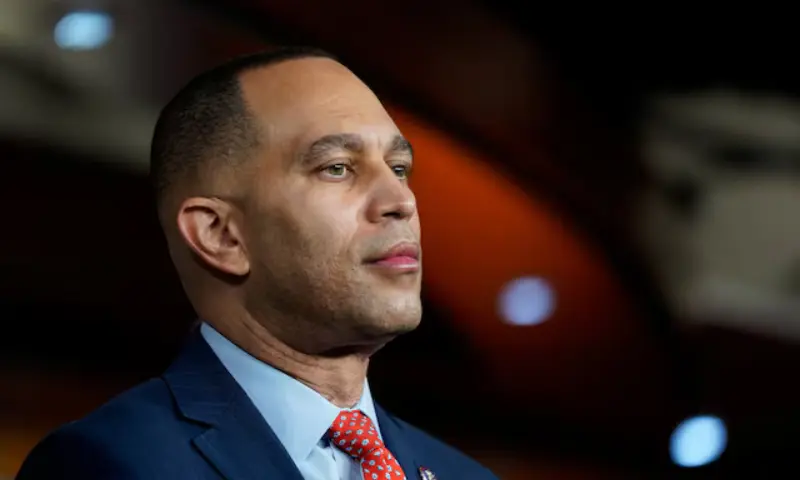
    Hakeem Jeffries is on the cusp of becoming the first Black speaker of the US House of Representatives after Democrats elected him their leader Wednesday following a sweeping midterm election triumph.

    The 56-year-old New Yorker secured 251 votes in a closed-door, secret ballot, with 11 cast against his nomination, according to US media.

    Jeffries faced no declared challenger, although opposition from some newly elected progressives had exposed divisions over how Democrats should wield their newfound power.

    His nomination puts him on course to preside over a commanding Democratic majority during the final two years of President Donald Trump’s term, as his party prepares to reverse Republican policies and investigate the administration.

    Jeffries must still win a formal vote of the full House when the new Congress convenes on Jan 3, when he would become the first Black politician to hold the powerful post. With a large Democratic majority, this is seen as something of a formality.

    Both returning Democrats and incoming lawmakers participated in Wednesday’s election, including progressives who had sought concessions on issues ranging from US military support for Israel to the influence of money in politics.

    Jeffries had requested a recorded vote rather than a nomination “by acclamation” — without a formal ballot — as some allies had hoped.

    He argued that every Democrat should have an opportunity to weigh his experience, record and vision, citing the precedent set when the party last took control of the House in 2018.

    The ballot remained secret, with the overall tally made public but individual votes kept anonymous.

    Ahead of the election, Jeffries met progressive lawmakers to discuss issues including Israel and healthcare, with proposals to lower the Medicare eligibility age and expand coverage among the topics discussed.

    The Democratic leader has also sought to shift attention to the party’s plans for governing after voters handed Republicans a crushing defeat amid anger over the Iran war and soaring fuel costs.

    “Folks are drowning in this Republican economy, and House Democrats are committed to turning that situation around, beginning on day one,” he told reporters Tuesday.

    “We’re going to relentlessly fight for an affordable America.”

    Brooklyn roots

    Raised in Brooklyn’s working-class Crown Heights neighborhood, Jeffries trained as a lawyer before entering the New York state legislature in 2007 and winning election to Congress in 2012.

    Known for his measured manner, sharp rhetoric and penchant for quoting hip-hop artists, he became the first Black politician to lead a party in either chamber of Congress when Democrats chose him to succeed Nancy Pelosi in 2022.

    He also served as a House prosecutor during Trump’s first impeachment trial in 2020.

    As speaker, Jeffries would preside over one of Washington’s most powerful institutions and stand second in line to the presidency behind the vice president.

    But he would face a formidable task in managing a Democratic coalition spanning centrists and an increasingly assertive left flank.

    His party has promised investigations into Trump and his administration, while lawmakers remain divided over Israel, healthcare and how aggressively to pursue their agenda against a president who retains veto power.

    Jeffries’s nomination contrasts with a more competitive leadership contest among Senate Democrats, where veteran party chief Chuck Schumer faces a challenge from progressive Maryland Senator Chris Van Hollen.

    Van Hollen has attracted support from prominent left-wing figures, including Bernie Sanders, but acknowledges he is the underdog. Senate Democrats will elect their leader in early December.

    Republicans chose their own congressional leaders last week, elevating Trump ally Jim Jordan in the House and retaining John Thune in the Senate.

    Source: dawn

  • Nawaz hails his govt’s ‘serious’ work on AJK development as PML-N charts 100-day plan

    Nawaz hails his govt’s ‘serious’ work on AJK development as PML-N charts 100-day plan

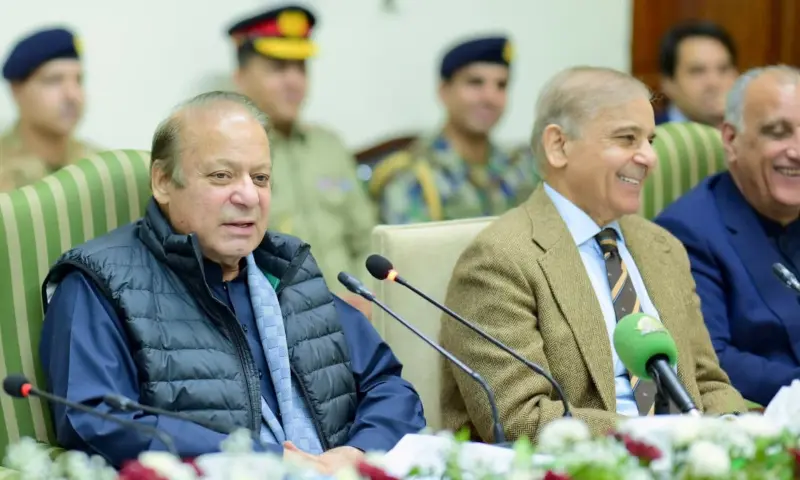
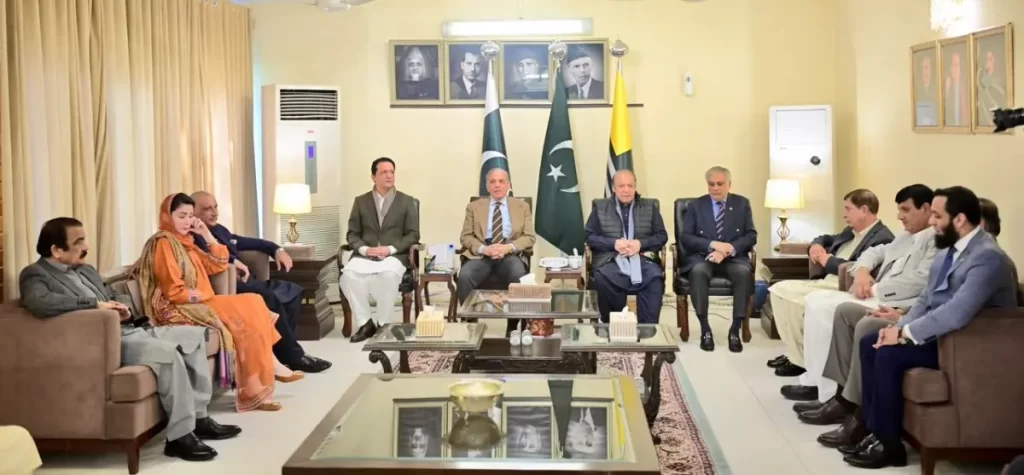
    The PML-N said its top leadership, including Prime Minister Shehbaz Sharif, discussed development and reconstruction in AJK with the region’s president and premier, both of whom belong to the PML-N.

    Addressing the meeting, Nawaz hailed the efforts of his government in the development of AJK, particularly the formulation of a 100-day programme to develop the region.

    “This is the first time, I think, that a party’s government and the party’s leadership are on the same page regarding participating in AJK’s development with such seriousness,” he said, adding, “I have never seen such enthusiasm before.”

    He highlighted Amir Muqam, Rana Sanaullah, Chaudhry Tariq and Khawaja Saad Rafique’s efforts in particular.

    He also expressed appreciation for the contributions of Punjab Chief Minister Maryam Nawaz, who he said had provided green buses for Muzaffarabad and Mirpur as well as clinics on wheels and laptops. “This is a very good spirit and we should appreciate it,” he said.

    In addition, he highlighted that PM Shehbaz had also agreed to allocate resources to the programme, calling it a “very good thing” that there was so much passion surrounding the decisions to contribute to the region’s development.

    Nawaz regretted that there were previous governments in AJK that had “not cared” about it at all and forgotten its promises to the public. He highlighted the contrast between then and the current time.

    He added that, now that Gillani had become the prime minister in the region, he felt that he himself had become prime minister.

    “The zeal that is in my heart, I see that very same zeal inside his heart,” he said, adding that he would continue to visit AJK from time to time and hold meetings to discuss development.

    Nawaz also said that while he had been premier, and Raja Farooq Haider had been AJK PM, “our sole focus used to be on development”. In particular, he noted that one project that they wanted to launch was for a motorway from Muzaffarabad to Mirpur.

    “With this, your entire Azad Kashmir interior would have opened up […] If there ever was a finest project in the history of Azad Kashmir that was ever conceived, it was that project,” the PML-N leader said, requesting PM Shehbaz to now give that project “top priority”.

    He also lamented that motorways linking major cities were unable to be completed during his premiership although they had reached the so-called “tender stage”, which if completed would have created motorway linkages all the way from Peshawar to Karachi. He expressed that he would ask for this to be completed as soon as possible.

    He recalled other highlights of his premiership, including a highway built from Gwadar to Quetta in Balochistan and a Rs50 billion motorway built from Gilgit to Skardu in the Gilgit-Baltistan region. He also called attention to the Lowari Tunnel project in Khyber Pakhtunkhwa, which he said had been left incomplete for about 50 years before he ensured its completion during his time in government.

    In contrast, he added, “for the last 15 years, a party’s government has continued to form inside KPK, and what did they achieve there?”

    Regarding the country’s progress, he said, “Once our GDP rate was 7.5 per cent, and inflation was at a minimum. The electricity tariff used to be, I don’t know, one or two rupees.”

    He also noted that during his tenure, the rupee had not broken 104 against the dollar, while the interest rate was 5.25pc and reserves had reached $24bn.

    “It has risen from 24 to 27 (billion) today. But instead of 27, had this disruption not occurred, these would have been above 50 today […] way above 50,” he added, referring to the PTI government’s tenure during which they had returned to IMF loans and hiked the interest rate to about 22 or 23 per cent.

    Highlighting that his government had also ended hours of loadshedding within three years, he also commended PM Shehbaz for having set up power plants with great speed.

    Nawaz called for a “comparison” of major political parties in TV discussions when talking about performance, saying, “The PML-N’s performance is better than the performance of all parties in the country.”

    He commended the work of PM Shehbaz, Punjab CM Maryam and DPM Dar for their “great work”, calling for all the party’s successful projects to be replicated in AJK. He added that this would benefit “the people of Azad Kashmir, its residents, the children, the elders, the poor, and all segments of society”.

    During the meeting, the party’s leadership discussed public welfare, development projects and the implementation of election promises with the AJK leadership, according to a post by the party on X.

    Punjab CM Maryam Nawaz also attended the meeting, along with federal and provincial ministers, including Planning Minister Ahsan Iqbal and Information Minister Attaullah Tarar.

    The federal and Punjab governments reaffirmed their commitment to supporting AJK’s development and prosperity, the party’s statement added.

    PM Shehbaz, AJK PM Gillani and Punjab Chief Minister Maryam Nawaz also addressed the meeting, with their remarks live-streamed on state media.

    PM Shehbaz noted that the PML-N was provided a chance to serve the people of AJK in the July elections.

    He assured Gillani that the federal government would provide “whatever financial assistance” is needed to fulfil the plans announced by the AJK PM.

    “Whatever you need from the Centre regarding this, we are here,” he said, noting that Deputy PM Ishaq Dar, Kashmir Affairs Minister Amir Muqam and others had made great efforts for AJK’s progress.

    The premier announced that a Daanish School will be inaugurated next month in Bhimber to provide good quality education to deserving children.

    The prime minister paid tribute to the “martyrs of occupied Kashmir” and those who were currently in jail there.

    “Their sacrifices will soon bear fruit,” he said, affirming that the government and the people of Pakistan will continue their political and moral support for India-occupied Kashmir.

    In her remarks, CM Maryam noted it was “good to see” that her father had begun giving practical shape to his pledge to remain involved in AJK’s journey of development.

    She said the Punjab government was ready to help in AJK’s development if needed.

    Maryam expressed confidence that the AJK premier’s government would ensure the completion of various projects, including the Apna Ghar scheme, electric buses, Cath labs and Clinics on Wheels, ahead of their schedules.

    “They have given timelines for when we are starting based on those timelines. I think they should also keep the timeline of when they will finish and deliver it in mind because that is more important,” she said.

    The Punjab CM termed skill development a “low-hanging fruit”, adding that a model was ready to train and assist people so that a person can earn their own living after six months of training.

    She highlighted her regular monitoring of projects through the Punjab Information Technology Board, stressing that 24/7 monitoring was extremely important.

    “I think you should pay a lot of attention to law and order reforms, police reforms,” Maryam said.

    She emphasised that the people of AJK should “feel that such a government has come into power that is not only doing work for their progress, for their development, but is also accessible to them”.

    “This accessibility is very important; it changes everything. Secondly, you should speak outside with the public very often and give them confidence about what you are doing and what you want to do,” the Punjab CM advised the AJK PM.

    In his address, Gillani highlighted planned development projects over the next 100 days, including the launch of Suthra Kashmir and ‘Apni Chhat Apna Ghar’ programmes in the region.

    He said that the government guest houses would be revamped completely in the next six months to promote tourism, and that beautification projects for Muzaffarabad and divisional headquarters would be completed within three months.

    He noted that Green Bus services had been launched in Mirpur and Muzaffarabad and would roll out across six cities for improved travel facilities. Additionally, he highlighted plans to launch two separate scholarships for those who could not afford higher education for their children: one for government universities and one for top private universities. He also highlighted the Daanish schools and university being built in the region, thanking the premier for his generosity in the initiative.

    “The infrastructure of three cities where Green Buses will operate — Muzaffarabad, Bagh, and Mirpur — will be completed in 100 days,” he said. “These are all the things that will ensure the people’s trust in the government is restored.”

    Later in the day, PM Shehbaz inaugurated the reconstructed Rathoa Haryam Bridge in AJK by unveiling the plaque, the PM Office said.

    Nawaz, along with the AJK president and premier, was also present on the occasion.

    On the occasion, the prime minister said the completion of the Rathoa Haryam bridge is a major milestone for development and prosperity in the region.

    He noted that the bridge would ease commuting and transportation between Mirpur and its surrounding areas.

    He further observed that the project would provide local residents with modern travel facilities and boost commercial and economic activities in the region.

    The visit comes nearly three months after the PML-N came to power in AJK in August, following phased elections in which Nawaz played an active role in the campaign.

    Speaking in Muzaffarabad during the election campaign in July, Nawaz had asserted that the city should be transformed into the most beautiful city of Pakistan. He said that whatever CM Maryam was doing in Lahore and other cities of Punjab should also be “copied” in Muzaffarabad and other cities of AJK.

    He had also promised AJK residents that every development project would be implemented and that PML-N would resolve “all the issues” if it won the elections.

    In his speech, he had also cautioned his party leadership in AJK that he would visit AJK every three months to see whether the party’s manifesto was being implemented.

    After PM Gillani’s election, Nawaz handed him a comprehensive 100-day reform agenda, stressing that essential public services, including healthcare, education, sanitation and reliable roads, were basic rights of the people of AJK and should also reach remote areas rather than remain confined to major urban centres.

    Nawaz hails his govt’s ‘serious’ work on AJK development as PML-N charts 100-day plan

    Source: dawn

  • Asean secretary general to undertake working visit to Pakistan from Nov 18-20

    Asean secretary general to undertake working visit to Pakistan from Nov 18-20

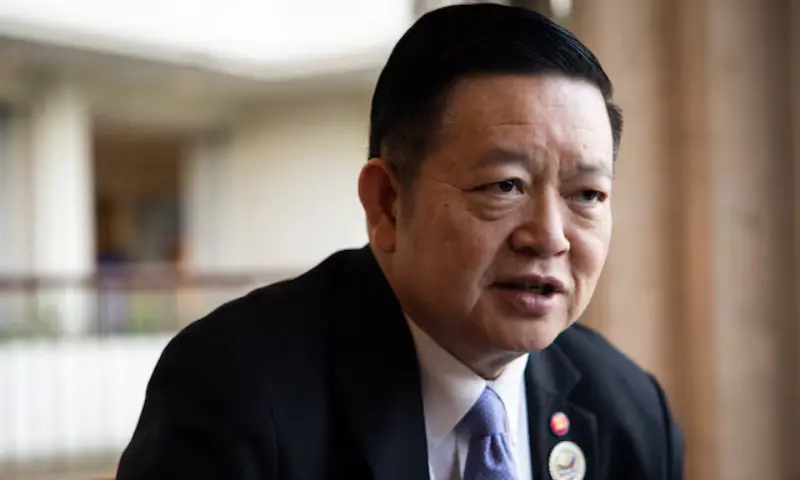
    The secretary general of the Association of Southeast Asian Nations (Asean), Dr Kao Kim Hourn, will undertake a working visit to Pakistan from Nov 18 to 20, the Foreign Office (FO) said on Wednesday.

    In a statement, the FO said that Kao was visiting the country at the invitation of Deputy Prime Minister and Foreign Minister Ishaq Dar.

    “This will be the first high-level visit to Pakistan from the Asean Secretariat in over two decades. Pakistan has been an Asean Sectoral Dialogue Partner since 1993 and a member of the Asean Regional Forum since 2004,” the statement said.

    It said that during the visit, Kao would call on Pakistan’s leadership.

    “The two sides will review the full range of Pakistan–Asean relations, explore avenues for enhanced cooperation and exchange views on regional and global developments of mutual interest,” it said.

    “The visit underscores Pakistan and Asean’s shared commitment to deepening and diversifying cooperation,” the statement added.

    Earlier this year, Dar attended the 33rd Ministerial Meeting of the Asean Regional Forum in Manila, where he drew attention to key challenges threatening peaceful coexistence and stability across the world, listing the Kashmir dispute and India’s threats to Pakistan’s share of water among them.

    Last year, seven Asean member countries held a joint meeting with Minister for Investment Qaiser Ahmed Sheikh to explore new avenues of investment and economic cooperation with Pakistan.

    Source: dawn

  • Trump’s Board of Peace faults Israel and Hamas for failure to end Gaza war

    Trump’s Board of Peace faults Israel and Hamas for failure to end Gaza war

    The body overseeing US President Donald Trump’s plan to end the Gaza war accused both Israel and Hamas of failing to meet their commitments to end hostilities, leaving the population of Gaza in dire conditions and the ceasefire in danger of collapse.

    The 12-page Board of Peace report, seen by Reuters, is the body’s second to the United Nations Security Council since the US-backed ceasefire came into effect 13 months ago. It offers a sobering assessment of progress made since then.

    The board, established and headed by Trump, is expected to present the report’s findings to a meeting of the council in New York at the end of November.

    “The distance between what has been agreed and what is happening on the ground nonetheless remains the principal risk to the process,” the report said, warning that “a ceasefire that delivers nothing visible cannot be sustained indefinitely.”

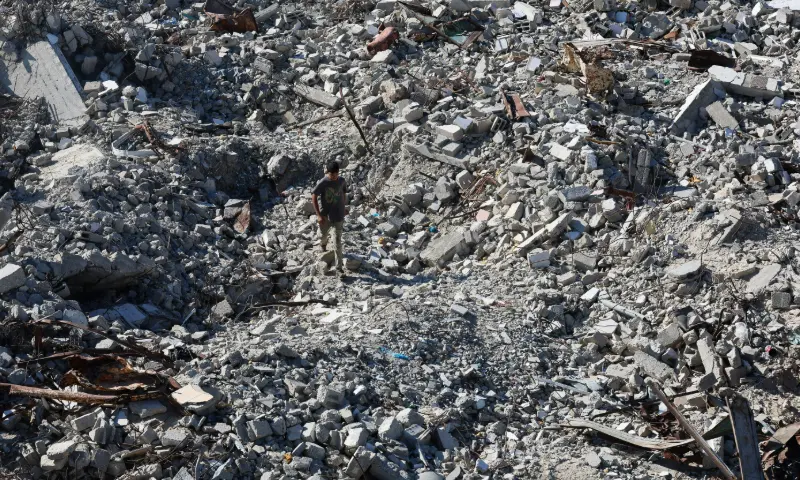
    In Gaza, witnesses said Israeli tanks advanced onto the main Salahudeen road, west of the Yellow Line that marks the boundary of the two-thirds of the Gaza Strip still under Israeli control despite a ceasefire that has lasted more than a year.

    An Israeli airstrike near the army raid killed one person, Palestinian medics said. The medics said separate Israeli airstrikes had killed two other people earlier in the day in Deir al-Balah and Gaza City.

    An Israeli military spokesperson claimed the military was carrying out an operation targeting “Hamas infrastructure” west of the Yellow Line in central Gaza and that it had struck a fighter in southern Gaza earlier on Wednesday. The spokesperson had no immediate comment on other strikes.

    Peace plan stalled

    While the ceasefire has halted major fighting, the wider plan, which calls for Hamas to disarm, Israeli troops to withdraw and reconstruction to begin, has effectively stalled since soon after it came into effect last year.

    Hamas agreed in July to a Board of Peace roadmap to surrender its weapons and transfer governance of Gaza to a civilian transitional authority, but Israel rejected the roadmap, saying it will not withdraw until Hamas is dismantled.

    Israel has carried out near-daily strikes on Gaza, while the report said Hamas fighters have also continued attacks on Israeli troops.

    “Every day that Israel continues strikes against Hamas targets, it delays putting Hamas’ agreement to the roadmap to the test,” the report said.

    “Meanwhile, Hamas militant activity continues, the commitment to cease all military activities has not been met in full by the parties, and the population faces another winter in tents and rubble.”

    Senior Hamas official Basem Naim dismissed the report as “pure disinformation”, accusing the Board of Peace of providing cover to Israel to evade its commitments under the plan to end the war and to continue its aggression in Gaza.

    The office of Israeli Prime Minister Benjamin Netanyahu and a spokesperson did not immediately respond to a request for comment.

    Israeli ‘absence of decisions’

    Gaza’s population of more than 2 million Palestinians lives confined to around a third of the coastal territory, mostly in makeshift tents and damaged buildings, under the control of Hamas fighters. Israel occupies two-thirds of Gaza that has been largely razed and depopulated.

    The report criticised Israel’s government for an “absence of decisions” on arrangements to train and deploy a civilian Palestinian police force to replace Hamas as Gaza’s law enforcement authority. It said this was impeding the full implementation of the plan.

    It said restrictions imposed by Israel on supplies and equipment, alongside funding shortfalls, had hindered the ability of Gazans to prepare for and respond to seasonal flooding. Heavy rain inundated displacement camps last week across Gaza and more rain is expected later this month.

    Hamas, for its part, was collecting taxes on goods entering Gaza that were impacting the availability of basic commodities, the report said.

    The Board of Peace was established by Trump to oversee his ambitious plan to end the war that Israel launched in response to Hamas-led attacks from Gaza in October 2023.

    Around 1,200 people were killed in Israel in the 2023 Hamas attacks, while the Israeli assault on Gaza has since killed 74,000 Palestinians. More than 1,600 Palestinians, including many civilians, and five Israeli soldiers have been killed in Gaza since the US-mediated ceasefire was struck in October 2025.

    Trump’s plan received strong international backing, though the board itself has been met with scepticism from many of Washington’s Western allies.

    Netanyahu’s right-wing coalition government remains in power in Israel in a caretaker capacity despite losing its majority in an inconclusive election last month.

    On Wednesday, Defence Minister Israel Katz said Israel would not withdraw from Gaza until Hamas was dismantled and Gaza was demilitarised.

    Source: dawn

  • UN nuclear watchdog says US-Saudi nuclear agreement ‘satisfactory’

    UN nuclear watchdog says US-Saudi nuclear agreement ‘satisfactory’

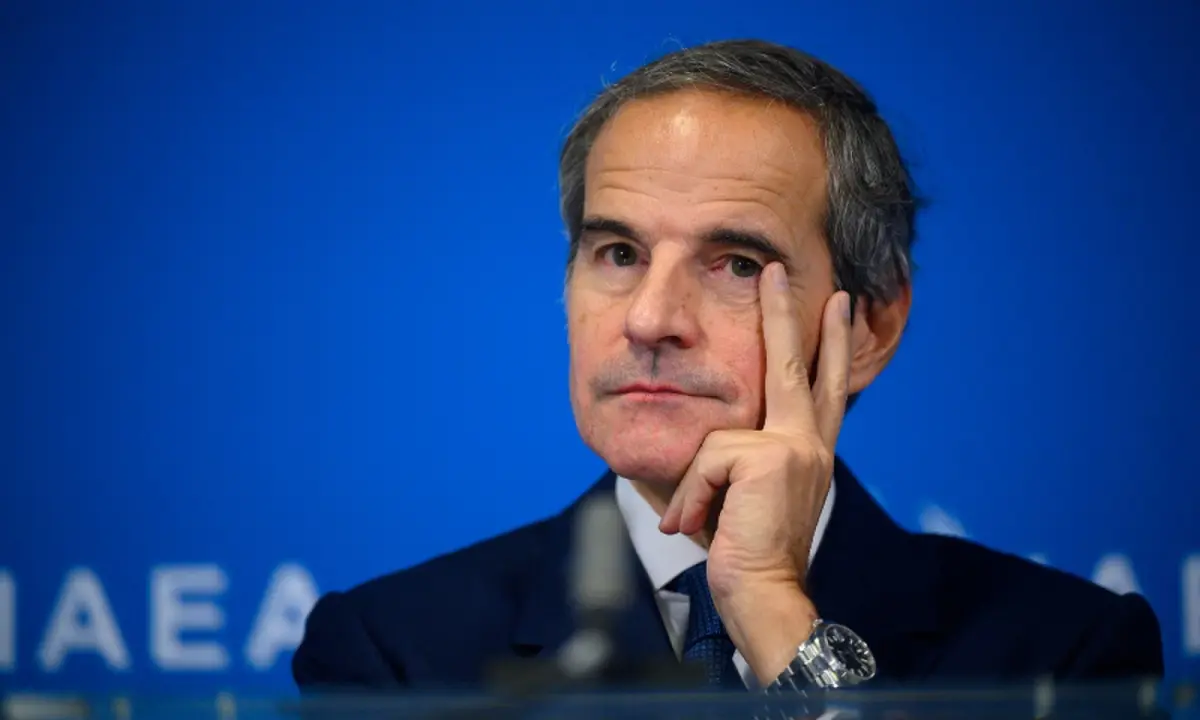
    UN nuclear watchdog head Rafael Grossi on Wednesday welcomed a deal between the United States and Saudi Arabia on equipping the kingdom with a civilian nuclear programme.

    The deal announced in July has provoked questions about the risks of nuclear proliferation.

    “It’s a very satisfactory outcome that we have with this agreement,” Grossi told reporters after opening an International Atomic Energy Agency board of governors’ meeting.

    Once nuclear power development gets under way in Saudi Arabia, “we will be there,” he added.

    In his opening statement, Grossi told the board that the US and Saudi Arabia in October requested the IAEA “to take the necessary steps to implement safeguards and verification measures” for their agreement.

    According to the accord, the IAEA “will be provided with information about, and access to any sites for conversion, enrichment, fuel fabrication and reprocessing” in Saudi Arabia, Grossi said.

    “I welcome the open, transparent approach and engagement of both governments with member states and the secretariat on this matter,” he added.

    Grossi told reporters the agreement was “fully aligned with the legal framework that we have at the IAEA”.

    He added Saudi Arabia had also agreed to “additional verification measures on a voluntary basis”.

    US media have reported the agreement would allow Washington to export technology without the usual safeguards preventing future military use.

    US President Donald Trump said just after the agreement was signed in July that it depended on Saudi Arabia recognising Israel.

    Source: dawn