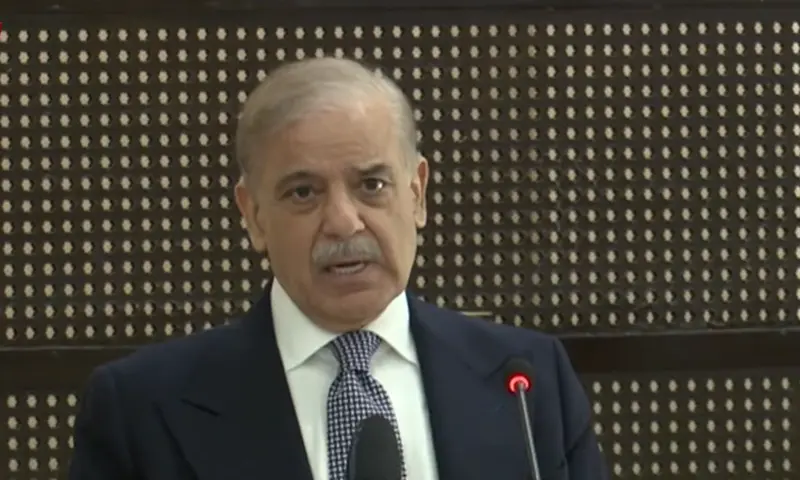
Prime Minister Shehbaz Sharif on Thursday said Pakistan’s economic achievements were the product of a “productive partnership between the military and the political hierarchy”.
He was addressing a ceremony organised by the American Business Council of Pakistan.
The premier told the business community: “I can tell you without any fear of contradiction that this and other humble achievements couldn’t have been possible without this great team and great teamwork.
“And of course, I would say, again without any fear of contradiction, when was the last time you had struck a very productive partnership between military and political hierarchy? Never in the history of Pakistan.”
PM Shehbaz said he wished there had been such a partnership in the past, contending that Pakistan “would have completely transformed long ago” if that was the case.
“We would have touched the apex of glory through this teamwork, understanding, showing flexibility to each other in the national interest, to support the national interest, to serve the national interest,” he maintained.
The prime minister said he would refrain from taking credit for himself; rather, the credit goes to his team and the “other partners in this field” — Chief of Defence Forces Field Marshal Asim Munir and his team.
PM Shehbaz recalled that the country faced a serious threat of default in 2023. He then hailed his government’s efforts so far, highlighting various statistics showing macroeconomic stability.
“Despite the Gulf crisis, which has jolted even the most powerful economies around the globe, Pakistan is still passing through a period of stability,” he said, while acknowledging that the situation is “very fragile” in terms of energy requirements.
The premier asserted that despite the country importing more than 90 per cent of its energy requirements from abroad, no panic or long queues were seen at fuel stations.
“In fact, to the contrary, we have been able to carve out a subsidy programme to shelter the most vulnerable segments of our society,” PM Shehbaz said, referring to the Prime Minister’s Fuel Relief Scheme.
“It all came through hard work, untiring efforts, and pain borne by the common man of this country.”
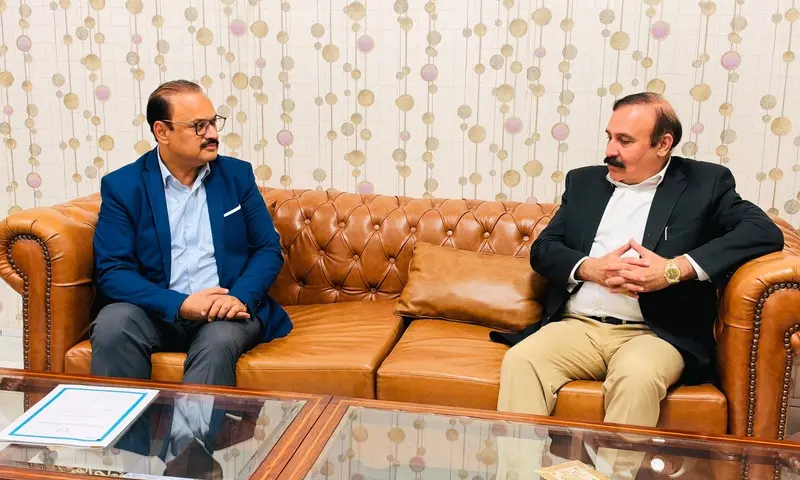
Parliamentary Affairs Minister Tariq Fazal Chaudhry on Thursday said the formation of the Parliamentary Committee on Electoral Reforms (PCER) had been delayed because the opposition had yet to submit its nominees.
He made the remarks after meeting opposition chief whip Malik Amir Dogar to discuss the committee’s formation.
In a post on X, Chaudhry said the government and its allied parties had submitted all their nominees for the committee.
“The opposition should finalise its nominees soon; the (National Assembly) Speaker will issue the notification to form the committee as soon as the names are received,” he said.
Chaudhry further said that if the PTI wanted to return to mainstream politics, it should join the electoral reforms committee and present its position there instead of expressing reservations on talk shows and in the assembly.
“PTI will have the opportunity to address its concerns about the upcoming elections in the committee,” he said, adding that the party’s “constructive proposals” would be incorporated into the final draft of the electoral reforms.
Besides the next general elections, the committee can also discuss the current political situation, said the PML-N leader.
“The government is providing PTI with a forum to present its position and electoral proposals,” he claimed.
PTI decides to hold parliamentary party meeting
PTI, meanwhile, has decided to convene a meeting of its parliamentary party to decide whether to participate in the PCER.
According to a senior party leader, lawyers Latif Khosa and Salman Safdar did not recall asking party founder Imran Khan about the matter during their three-hour meeting with him.
“If they had asked Imran about joining the committee, there would be no confusion, as PTI follows the directions of its founding chairman,” the leader said.
However, PTI believes that, as in 2017, when an electoral reform process was undertaken, the government and opposition should have equal representation in the PCER to prevent one-sided decision-making.
PTI Central Information Secretary Sheikh Waqas Akram told Dawn that a decision could not be taken because a meeting of the parliamentary party had to be held during a National Assembly session, but it had been delayed.
“We also have to take the opposition parties into confidence on the matter. A meeting of the parliamentary party will be held soon, and coalition partners such as Mahmood Khan Achakzai, Allama Raja Nasir Abbas and others will also be taken into confidence,” he said.
Akram further said Imran had directed party members not to become part of parliamentary committees of the National Assembly and Senate, but had issued no specific directions regarding the PCER. Therefore, a decision would be taken after deliberations at the parliamentary party meeting.
Earlier this month, the government, taking ownership of an initiative to bring all parliamentary parties, including the opposition, to the negotiating table on electoral reforms, formally approached its allies to join the proposed PCER.
It had contacted its key allies, the PPP and the MQM-P, seeking nominations for their representatives on the proposed committee.
The government also formally approached the opposition to seek its representation. However, the opposition had termed the formation of the committee a “futile exercise” unless its long-standing demands were met.
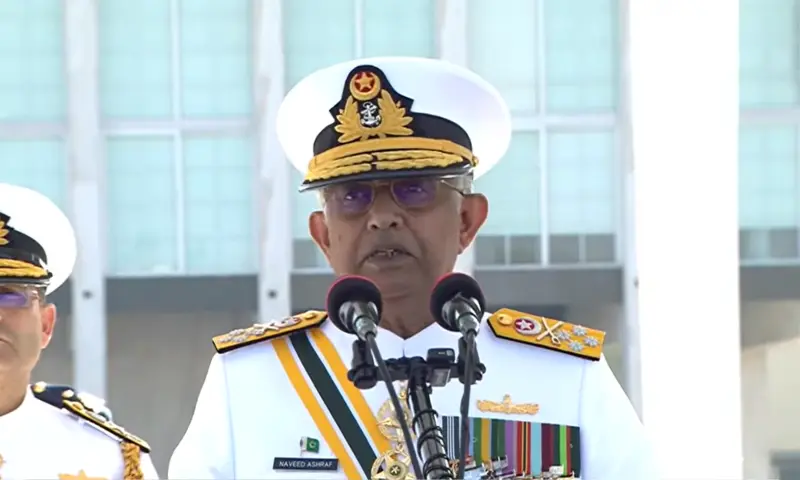
Chief of the Naval Staff (CNS) Admiral Naveed Ashraf on Thursday said the Pakistan Navy has significantly enhanced its combat capabilities across all operational domains.
He made the remarks while addressing the graduation parade of the Pakistan Air Force Academy Asghar Khan in Risalpur in Khyber Pakhtunkhwa’s Nowshera district.
CNS Admiral Ashraf stated that the Pakistan Navy was making significant headway towards modernising its fleet.
“The induction of state-of-the-art warships, Hangor-class submarines, indigenously developed long-range weapons, unmanned systems, and the establishment of Pakistan Maritime Science & Technology Park are some of the important developments taking place,” he highlighted.
The naval chief further said that the navy’s combat capabilities “have recently undergone significant enhancement and transformation across all operational domains aligned with contemporary and future warfare demands”.
CNS Ashraf noted that the character of modern warfare has altered dramatically and is “evolving at an unprecedented pace”.
“One of the key factors behind this transformation is the emergence of new technologies. As such, warfare today is closely linked with technology, leading to revolutionary changes in concepts, doctrines and organisational restructuring,” he explained.
Admiral Ashraf pointed out that conflicts were no longer restricted to traditional battlefields, and spanned the electronic warfare, cyber, space and cognitive domains.
“More so, autonomous systems, artificial intelligence, and information warfare have reshaped the very texture of how battles are fought and won,” he added.
Admiral Ashraf noted that the global and regional strategic environment has become more complex, particularly in the backdrop of heightened tensions in the Middle East.
“Geopolitical dynamics are shifting rapidly, presenting multifaceted security challenges that demand constant vigilance, strategic foresight, and remarkable operational readiness to deter conventional, as well as hybrid and asymmetric threats,” the naval chief noted.
He affirmed that the armed forces “are fully cognisant of such developments and have prepared accordingly”.
CNS Ashraf highlighted that the armed forces were “invincible and capable to deter any aggression”, recalling the May 2025 Pakistan-India conflict.
“I am sure our adversary has learned the lesson, and it would be unwise to need a second,” he remarked, lauding the air force’s “extraordinary performance”.
He added: “For the first time in the history of warfare, the Pakistan Air Force conducted multi-domain operations chiefly comprising indigenous capabilities, especially the homegrown kill chain that was the highlight of the whole conflict and the outcome of a very aggressive, innovative, and prudent strategy of modernisation and indigenisation in the past few years.”
Narrating the navy’s performance, Admiral Ashraf said the Pakistan Navy “successfully deterred the Indian Navy from any hostilities at sea and it remained at bay throughout the conflict”.
He further stated that Operation Muhafizul Bahr, initiated in March this year when the Middle East conflict sparked, was still “continuing successfully”.
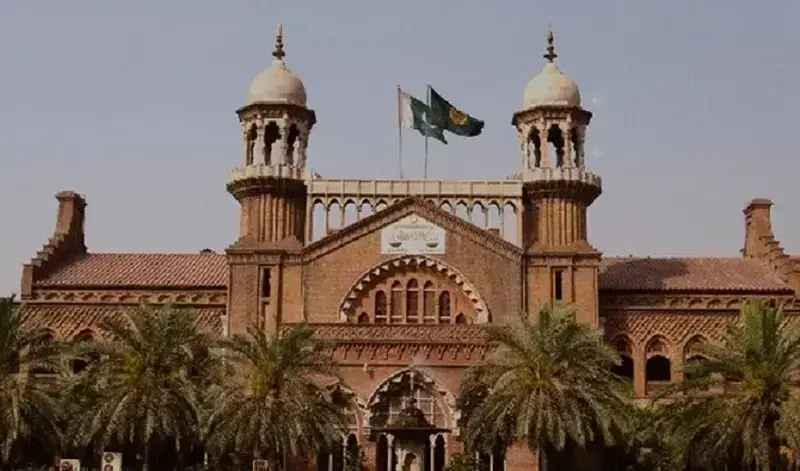
LAHORE: The Ministry of Foreign Affairs (MoFA) has informed the Lahore High Court (LHC) that two Pakistani citizens affiliated with the PTI and detained at Abu Dhabi’s Al-Wathba Jail are being held in connection with cases relating to “state security”.
The ministry said that Pakistan’s mission, bound by diplomatic norms, could not interfere in the host country’s internal affairs.
In separate reports submitted in response to two contempt of court petitions, MoFA said one of the detainees, Syed Salman Raza Zaidi, had been convicted in a “state security” case. The other, Muhammad Junaid Jahangir, was detained in connection with a case of a similar nature.
The report did not specify whether Jahangir had been convicted or was still awaiting trial.
Justice Tariq Mahmood Bajwa on Wednesday disposed of the contempt petitions in light of MoFA’s replies.
However, Barrister Abuzar Salman Niazi, counsel for the families of both citizens, expressed disappointment with the ministry’s response, saying it had failed to provide any meaningful information about the cases against them.
He said the two Pakistani citizens were detained in the UAE, but their families had received no charge sheets, details of the allegations, copies of the proceedings or disclosure of the legal basis for their detention. The only explanation provided was that it was a “state security” case.
He said the ministry had not provided any substantive information about Jahangir’s case. In Zaidi’s case, he said, the ministry claimed that he was an undertrial prisoner despite having been convicted, which was contradictory.
The counsel announced that he would file fresh petitions before the court on behalf of the families.
MoFA reports
In both reports, the ministry said it had referred the matter to the Pakistan mission in Abu Dhabi following the court’s directions, instructing it to pursue the matter with the UAE authorities.
It added, however, that the Mission’s role was subject to Article 41(1) of the Vienna Convention on Diplomatic Relations, 1961, under which diplomats are required not to interfere in the internal affairs of the host state.
MoFA said the mission had reported that Zaidi was an undertrial prisoner detained at Al-Wathba Jail following his conviction in a “state security” case. An embassy official who visited him found him to be in generally good health.
According to the report, requests for prison visits were submitted on June 25 and 30, 2025. Both were accepted by the UAE authorities, and a meeting was held on July 22, 2025.
His family filed two complaints through the Prime Minister’s Portal on Sept 25 and 26, 2025, and received “appropriate guidance” on both occasions.
The mission sent search and investigation requests on Nov 17, 2025, and Feb 3, 2026, to establish the reason for his arrest. A response from the UAE authorities is still awaited.
The ministry said it had received an email from the family on Oct 1 requesting the submission of a mercy petition to the UAE’s Royal Court through MoFA. However, the request was subsequently withdrawn.
The report also stated that the embassy had informed the family in October 2025 that a mercy petition could be pursued around the UAE National Day.
It also said the final decision on any such petition rested entirely with the UAE government. In February 2026, the embassy said it had not received any petition and could not grant relief.
In the second report, MoFA said Junaid Jahangir was arrested on Sept 24, 2024, and transferred to Al-Wathba Jail on May 12, 2025. His family was informed through the Prime Minister’s Performance Delivery Unit on Oct 23, 2025.
His first request for a prison visit, submitted on June 25, 2025, resulted in a meeting on July 8, 2025. A second request, submitted on June 30, 2025, led to another meeting on July 22, 2025.
His family filed two complaints through the portal, on Sept 24 and 30, 2025.
The Mission sent a request for search and investigation on Nov 17, 2025, to establish the reason for his arrest. However, a response is still awaited.
The ministry said a mercy petition was emailed to MoFA on Oct 1 for submission to the UAE’s Royal Court, but was subsequently withdrawn.
Earlier this month, LHC had termed a report submitted by MoFA “unsatisfactory” and summoned the relevant official at the next hearing.
On Sept 14, the LHC had directed the foreign secretary to process and decide within 15 days representations concerning the detention of the two citizens.
On Oct 22, the court issued notices to the foreign secretary while hearing two contempt pleas over the non-implementation of its order.
Parts of Bangladesh shut down as police said two ruling party members were killed and the ancestral home of former leader Muhammad Yunus set ablaze in violence ahead of former Prime Minister Sheikh Hasina’s return planned for December.
Hasina’s Awami League party called Thursday’s nationwide lockdown in culmination of a week-long campaign of protests and rallies against the government’s rejection of her request for a new passport and identity card that would allow her return.
To deter violence, 97 platoons of the Bangladesh Border Guard have fanned out across seven districts, including Gopalganj and Faridpur, considered to have many Hasina supporters, its spokesperson, Shariful Islam, said.
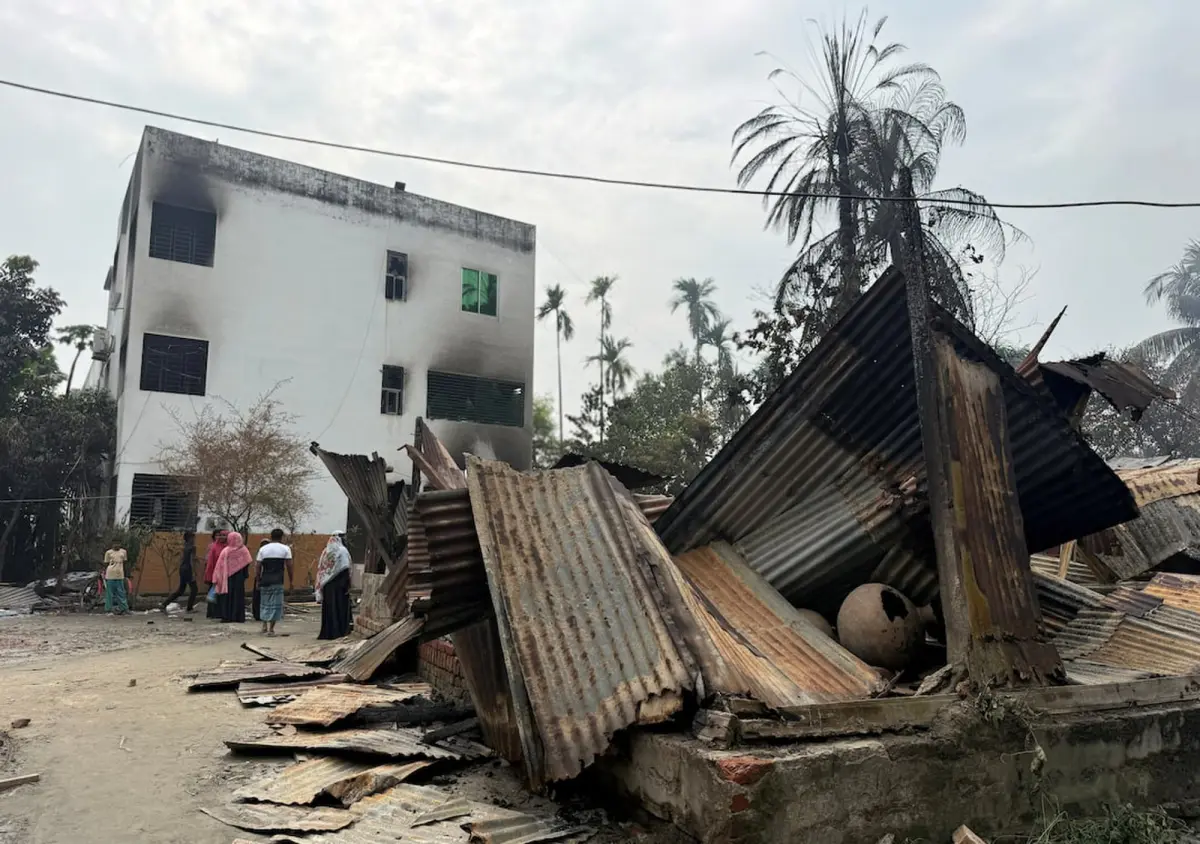
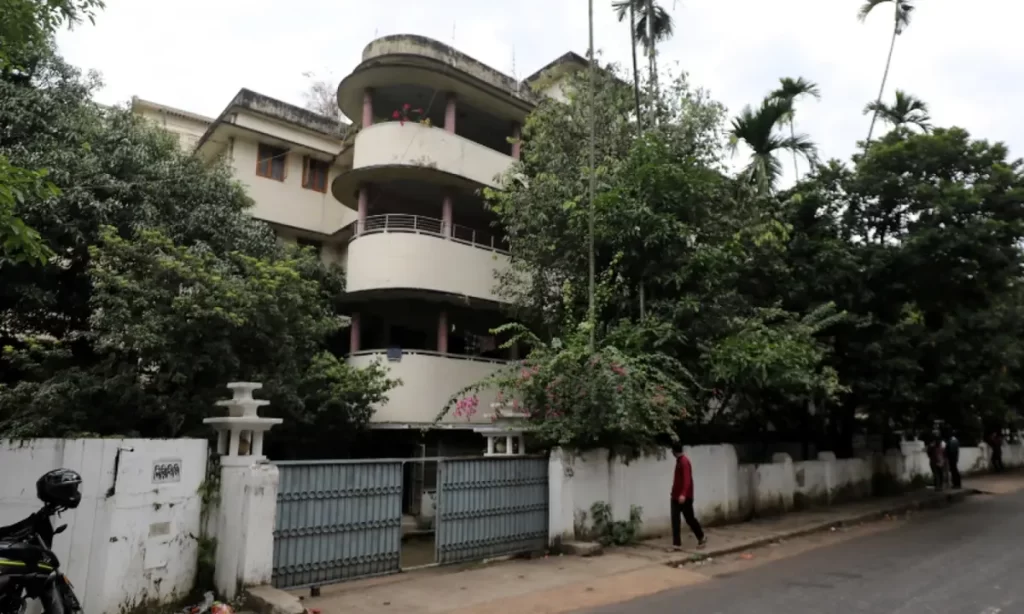
Police said former interim leader Yunus’ ancestral home in Chattogram, about 300 km southeast of Dhaka, the capital, was set on fire late on Wednesday.
It is likely that flammable substances were thrown into an unused ground-floor room, Mozammel Haque, chief of the area’s Panchlaish police station, told Reuters, but Yunus’ paternal family members, who live on the upper floors, are safe.
Reuters could not immediately reach the Yunus Centre think tank that speaks on his behalf to seek comment.
Yunus and his government, which led Bangladesh after Hasina’s ouster, have faced hostility from her supporters.
More violence
During the last 10 days of protests, police have reported dozens of crude bomb blasts and incidents of vehicles being set afire in at least 28 districts, injuring several police officials and members of the public, media have said.
Tuesday marks a year since Hasina was sentenced to death by a local court that found her guilty of ordering a deadly crackdown on a student-led uprising against her in 2024.
She has lived in exile in neighbouring India after fleeing Dhaka following violent protests demanding her resignation in August 2024.
On Thursday, authorities detained former education minister Nurul Islam Nahid, who faces charges over several killings during the 2024 protests, from his house in Dhaka, police officer Mohammad Khalid Mansur told Reuters.
At least 37 branches and offices of Grameen Bank, set up by Yunus, have been targeted in arson attacks or attempted fires since Nov 10, with 14 more attacked since midnight on Tuesday, the bank said.
On Tuesday, Home Minister Salahuddin Ahmed accused Awami League leaders abroad of inciting supporters to destabilise Bangladesh and torch property, adding that those involved in violence would be identified and prosecuted.
Awami League leaders, most of them in hiding, could not be reached for comment.
Chief of Defence Forces (CDF) and Chief of the Army Staff Field Marshal Asim Munir was briefed on counterterrorism operations during a visit to Turbat, Balochistan, the Inter-Services Public Relations (ISPR) said in a press release on Thursday.
CDF Munir received a comprehensive briefing on “the prevailing security environment, operational preparedness and successful ongoing operations against externally sponsored terrorism”, ISPR said.
He was also informed of progress in ongoing socioeconomic development initiatives in Balochistan.
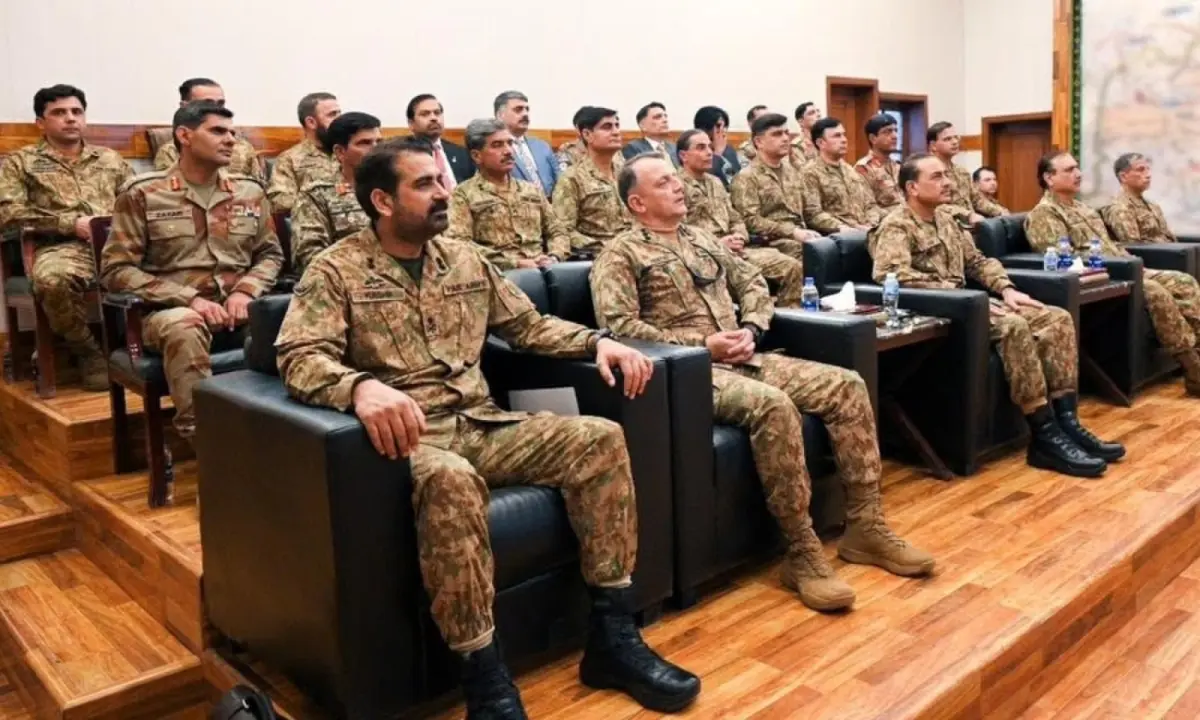
Chief of Defence Forces and Chief of the Army Staff Field Marshal Asim Munir attends a briefing in Turbat, Balochistan in this photo released on November 19, 2026. —Facebook/ISPR
CDF Munir, in interactions with the troops, “commended their high state of operational preparedness, professionalism and unwavering resolve to defend the motherland, amidst challenging operational conditions”, ISPR said.
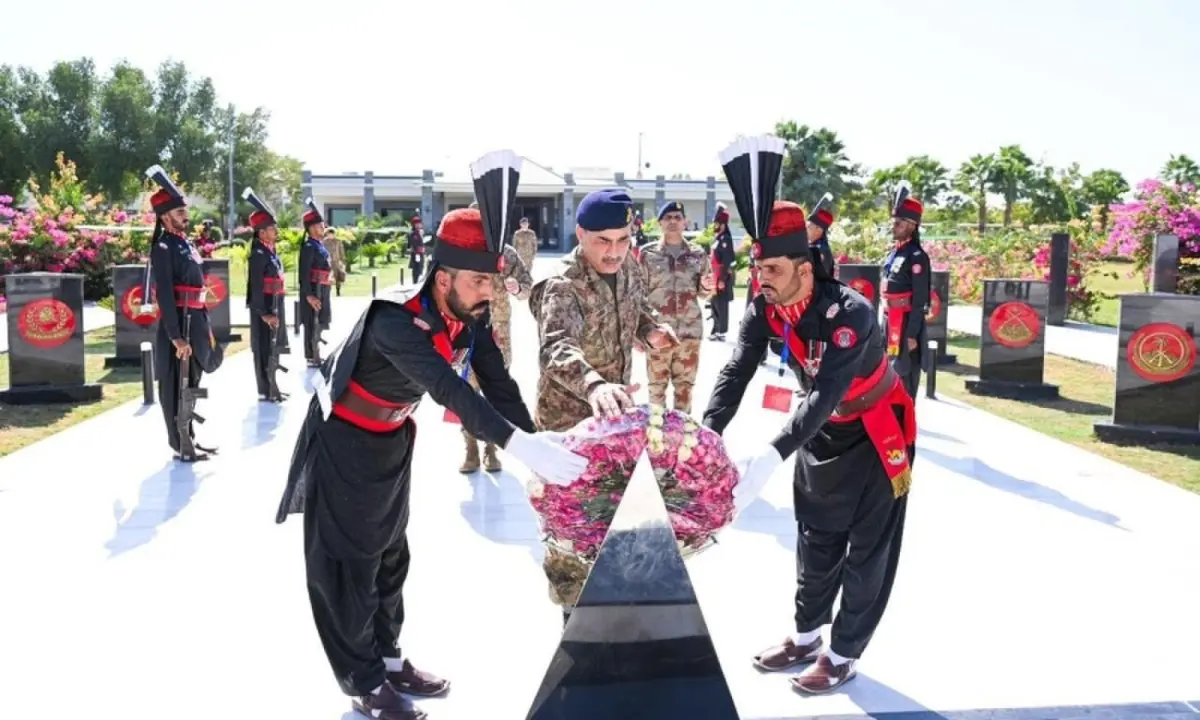
He also laid a floral wreath at the Shuhada Monument.
The army chief reaffirmed Pakistan army’s “unwavering commitment to stand shoulder to shoulder with the people of Balochistan in their continued pursuit of peace, prosperity and sustainable development”.
Upon his arrival in Turbat, the CDF was received by Corps Commander Balochistan, the ISPR statement added.
ISPR says 22 terrorists killed
In a separate statement, ISPR said security forces had killed 22 terrorists earlier this week, on Nov 16 and 17, during multiple engagements in Khyber Pakhtunkhwa.
The operations in South Waziristan, Bannu and Tank were conducted on Monday and Tuesday, the statement said, adding that 15 terrorists were killed during an intelligence-based operation (IBO) in South Waziristan.
ISPR said the slain terrorists belonged to “India-sponsored Fitna-al-Khawarij” — a term that the state uses for terrorists belonging to the banned Tehreek-i-Taliban Pakistan.
Moreover, army troops engaged terrorists in two encounters in the Bannu district, during which six terrorists were killed, according to ISPR.
Another terrorist was killed in an encounter in the Tank district, the press release said.
It added that weapons and ammunition had been recovered from the killed terrorists, who were “actively involved in numerous terrorist activities in the area”.
“Sanitisation operations are being conducted to eliminate any other India- sponsored kharji found in the area as the relentless counterterrorism campaign under the vision ‘Azm-i-Istehkam’ (as approved by Federal Apex Committee on National Action Plan) by security forces and law enforcement agencies of Pakistan will continue at full pace to wipe out the menace of foreign-sponsored and -supported terrorism from the country,” the statement said.
KP and Balochistan, where security forces continue to carry out counterterrorism action, have particularly been affected by terrorism in Pakistan.
On Saturday, ISPR said that four troops, including a major, were martyred while 24 terrorists were killed in IBOs in Balochistan and KP’s North Waziristan.
Furthermore, last week, 74 terrorists were killed in IBOs in KP and Balochistan.
The Pakistan Institute for Conflict and Security Studies (PICSS), an Islamabad-based independent think tank monitoring conflict and security developments, reported encouraging trends in the two provinces in its monthly report for October.
Pakistan overall witnessed a significant decline in terrorism-related violence during October, with attacks falling by 37 per cent, deaths resulting from these attacks declining by 57pc, and injuries decreasing by 71pc compared to September, the report said.
It added that the improvement was particularly pronounced in Balochistan and mainland KP.
“Balochistan recorded a substantial reduction in militant violence, with attacks declining by 46pc, from 132 in September to 71 in October. Deaths resulting from militant attacks decreased from 136 to 44, a reduction of approximately 68pc, while injuries declined from 63 to 37, representing a decrease of 41pc,” the report said.
Regarding mainland KP, it said a “significant decline” was witnessed in terrorism.
PICSS recorded 40 attacks during October, compared with 58 in September, representing a reduction of 31pc. Meanwhile, deaths resulting from these attacks declined from 90 to 38, a decrease of approximately 58pc, while injuries fell from 165 to 19, representing a reduction of 88pc.
The merged districts of KP recorded 30 attacks during October, compared with 34 in September, and deaths resulting from these attacks decreased from 33 to 25, while injuries increased from 11 to 13, the report said.
In the maze of Shenzhen’s neon-lit Huaqiangbei electronics market, buyers from Africa to Bangladesh buy dozens of used phones at a time — even with cracked screens — to sell back home.
“From all China, the broken mobile phones come here,” Akhtar Muhammad, 38, a Pakistani businessman, told AFP as he browsed the stacks of devices in the southern Chinese city.
“We will fix them in Pakistan.” The supply is mind-boggling. As the world’s largest smartphone producer, China discards over 400 million devices annually, the China Association of Circular Economy estimates.
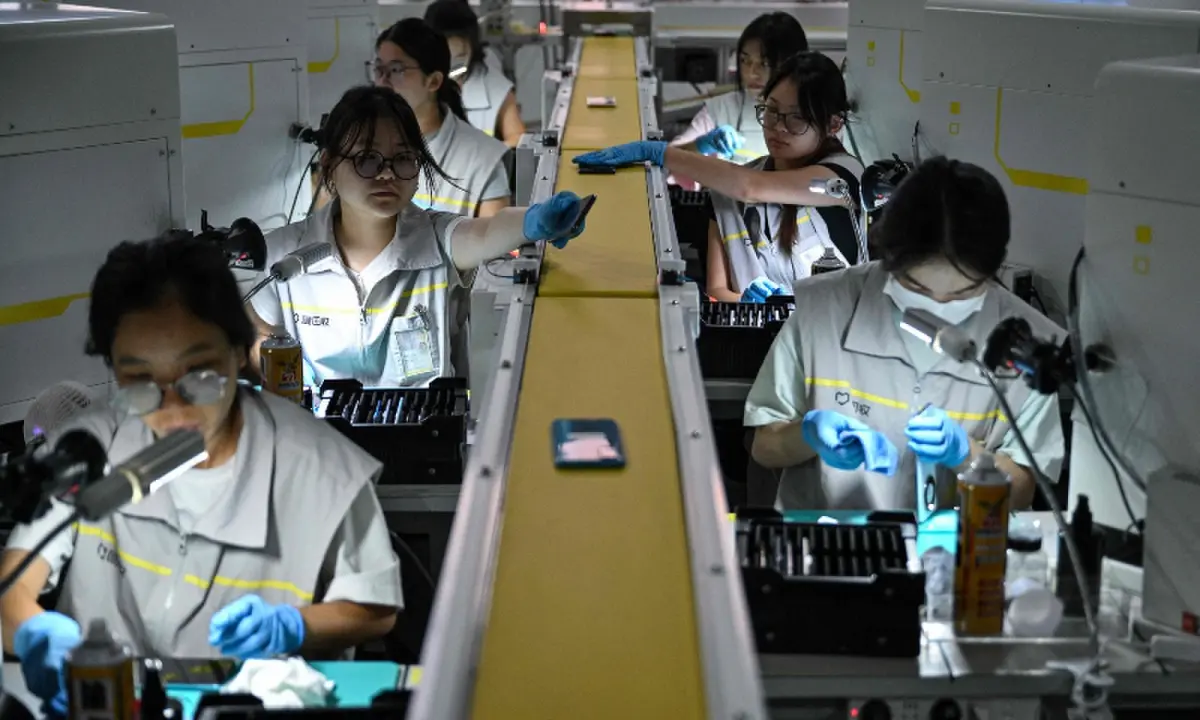
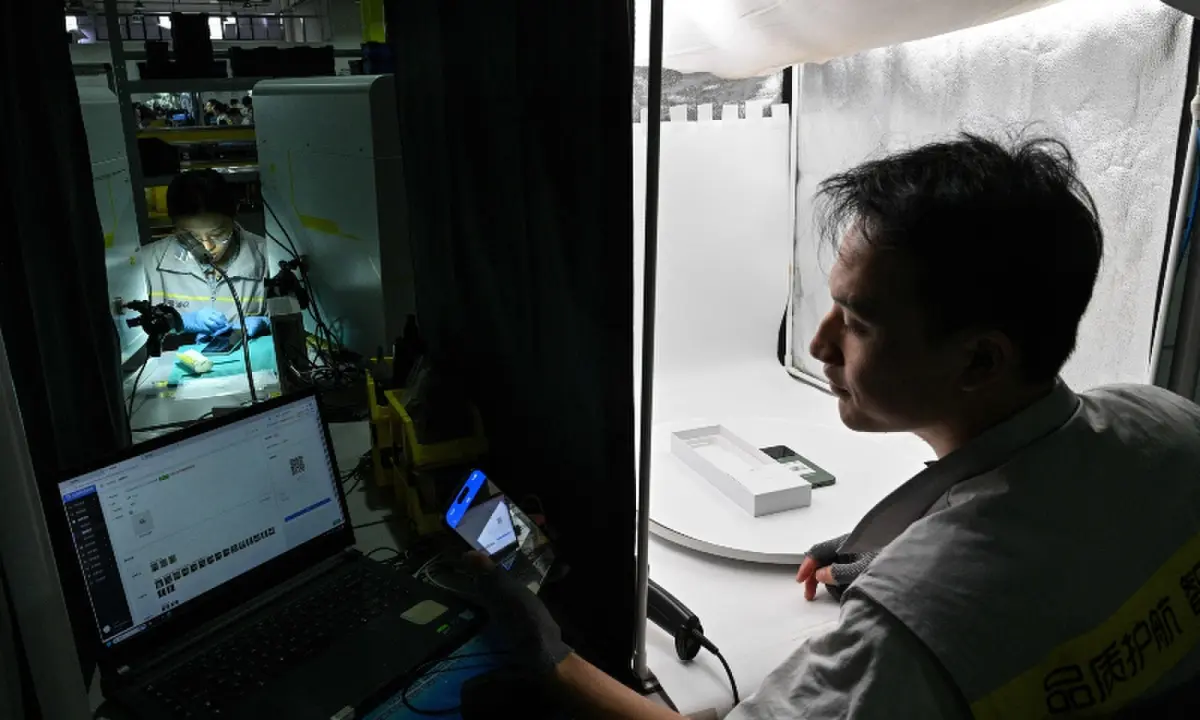
Workers are seen cleaning and taking pictures to used smartphones at ATRenew Dongguan Automation Operations Center, which recycles and processes used smartphones in Dongguan, in southern China’s Guangdong province on November 3, 2026. —AFP
As chip shortages and rising prices around the world make new devices harder to afford, the demand for pre-owned phones is also soaring.
Mama, a 24-year-old Nigerian buyer, said he had bought around 40 used phones in one day in Shenzhen, which this week hosts Asia-Pacific leaders including US President Donald Trump.
“They are more expensive in Africa because we don’t have big suppliers or markets like this one,” Mama told AFP. “If I buy and send them to my country, I get profit.” Nearby, another Nigerian buyer haggled with a stall owner. His haul included damaged iPhone 13 Pro and 14 Pro models bought for 1,000 to 2,000 yuan ($150 to $300) each.
He plans to repair their screens locally before shipping them home for a lucrative resale.
Repair not replace
In particular, people in emerging markets such as South Asia and Africa, where there is less purchasing power, are turning to used models, Counterpoint Research analyst Ivan Lam told AFP.
The global secondary smartphone market grew 13 per cent year-on-year in the first half of 2026 to 150 million units, according to Counterpoint.
In Pakistan, people often opt to repair rather than replace broken devices, said Muhammad, who has been coming to China since 2007.
“Maybe people use one mobile phone for four or five years. It’s not the same like USA, Europe. They change every year or every six months,” he said.
But outside Huaqiangbei’s crowded stalls, a more formalised alternative is taking root: PaiJiTang Mall, a self-service second-hand marketplace run by Chinese recycling company ATRenew.
A worker is seen checking used smartphones at ATRenew Dongguan Automation Operations Center, which recycles and processes used smartphones in Dongguan, in southern China’s Guangdong province on November 3, 2026. —AFP
Inside, rows of over 20,000 used phones are on display. Buyers scan QR codes for instant inspection reports and pricing, test the units and purchase in bulk.
The shop draws up to 1,000 visitors daily, with international traders making up about a third, said store manager Zhang Xiaoming.
Abdul Rahim, a 20-year-old shopkeeper who flies to China up to three times a month to stock his phone and accessory store in Algeria, capitalises on a price gap of 100 to 120 euros ($110 to $132) per device.
“It’s very easy for Algerians to get the visa to China. You put in your papers and in two or three days you have the visa in your passport,” he told AFP.
“For Europe, there just aren’t visas… So we come here.”
‘Buy, buy, buy’
Apple devices account for 70 to 80 per cent of sales, with the rest split among Chinese brands such as Huawei, Xiaomi, Oppo and Vivo, Zhang noted.
Older models like the iPhone 11, 12 and 13 — losing ground to cheap Androids in China — retain strong brand power overseas, where they find a second life, explained Jeremy Ji, ATRenew’s head of corporate strategy and overseas business.
A worker is seen taking pictures to a used smartphone at ATRenew Dongguan Automation Operations Center, which recycles and processes used smartphones in Dongguan, in southern China’s Guangdong province on November 3, 2026. —AFP
At ATRenew’s massive processing hub in Dongguan, north of Shenzhen, roughly 30,000 second-hand gadgets arrive daily and are inspected and packed by over 300 technicians.
Rising prices are also changing buying habits in China itself, with consumers opting increasingly for pre-owned models, particularly nearly new premium models, said Arthur Guo, an analyst at IDC China.
Most phones discarded in China are still sold domestically, and bulk exports via official channels have not increased significantly, Lam, of Counterpoint, told AFP.
For Mama, sourcing phones is still a hands-on process.
“If I come, I spend a month checking (phones). I buy, buy, buy,” he said. “After I have finished, I go back to my country”.
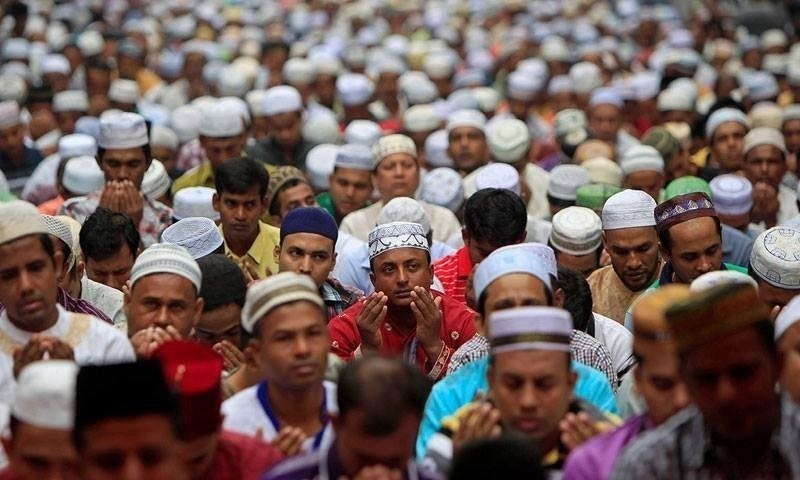
Islam is expected to surpass Christianity as the world’s biggest religion by the middle of the next decade, the Pew Research Centre projected on Wednesday.
While Christianity has ranked as humanity’s largest religion for centuries, the global Muslim population has grown much faster and is forecast to reach 2.57 billion by 2035, compared with a projected tally of 2.52bn Christians in that year, the Pew study found.
If recent trends hold, Muslims will outnumber Christians 3.6bn to 3bn worldwide by 2070, and Islam will also then account for the largest portion of the global population — 37 per cent, up from 26pc in 2020, Pew said.
Christianity, meanwhile, is expected to hold steady at around 29pc, ranking second in global proportion.
The Pew study also concluded that Pakistan’s Muslim population was expected to double from 227 million in 2020 to 461m in 2070.
“The country will rise from having the second-largest Muslim population to the world’s largest,” it said.
The study attributes the projected rise in the world’s Muslim population mostly to higher fertility rates in Muslim countries, averaging 3.1 children for each Muslim woman, compared with 2.5 children per Christian woman during the period 2020-2025.
In all other religious categories combined, the birth rate in that period averaged 1.6 children per woman, below the minimum rate of 2.1 considered necessary for a generation to replace itself.
While natural population growth — births exceeding deaths — remains the biggest factor in the changing face of Muslim and Christian demographics, religious switching will also play a role, said Pew, a non-partisan, Washington-based think tank.
Switching faiths
Based on past trends, according to Pew, both Islam and Christianity will lose more adherents from switching than they gain, but Muslims are expected to lose far fewer — 8m between 2020 and 2070, compared with 105m for Christians.
The world’s overall population is projected to increase 29pc between 2020 and 2070, with Islam and Christianity the only two religious groups forecast to keep pace with or exceed that growth rate, expanding by 80pc and 30pc, respectively.
Hindus are growing in absolute numbers but are expected to shrink slightly as a share of the world’s population (13.6pc in 2070), with Jews projected to follow a similar pattern (0.17pc in 2070). Buddhists, meanwhile, are forecast to decline in numbers and as a percentage of global population (2.5pc in 2070).
All other faiths combined — including Baha’is, Daoists, Jains, Sikhs and followers of various folk religions — are expected to see a modest rise in numbers, while collectively slipping below 2pc of all humanity by 2070, according to Pew.
Moreover, people with no religious affiliation, a category that includes those identifying as atheist or agnostic, are expected to decline sharply as a proportion of the global whole, from 24pc in 2020 to 17pc in 2070, the study found.
The geographic distribution among religions is also shifting dramatically.
By 2070, for instance, Christianity will rank as the largest religion in the United States but not its majority religion, and the Democratic Republic of Congo will surpass the US as the country with the greatest concentration of Christians, Pew projected.
The numbers of religiously unaffiliated people are expected to grow in most countries in the coming decades, but those increases will be entirely outweighed by the dwindling population forecast for China, where most of the world’s non-believers currently reside.
After 13 years and an estimated $1 billion or more in production costs, “Grand Theft Auto VI” rolled out across the globe on Thursday, gaining rapturous early reviews for the most anticipated video game release in history.
The game, which could bring in billions of dollars for its developer, Take-Two Interactive’s studio Rockstar Games, raced to the top of Metacritic’s all-time gaming leaderboard with a score of 99, a mark matched by only one other title, Nintendo’s 1998 classic “The Legend of Zelda: Ocarina of Time”.
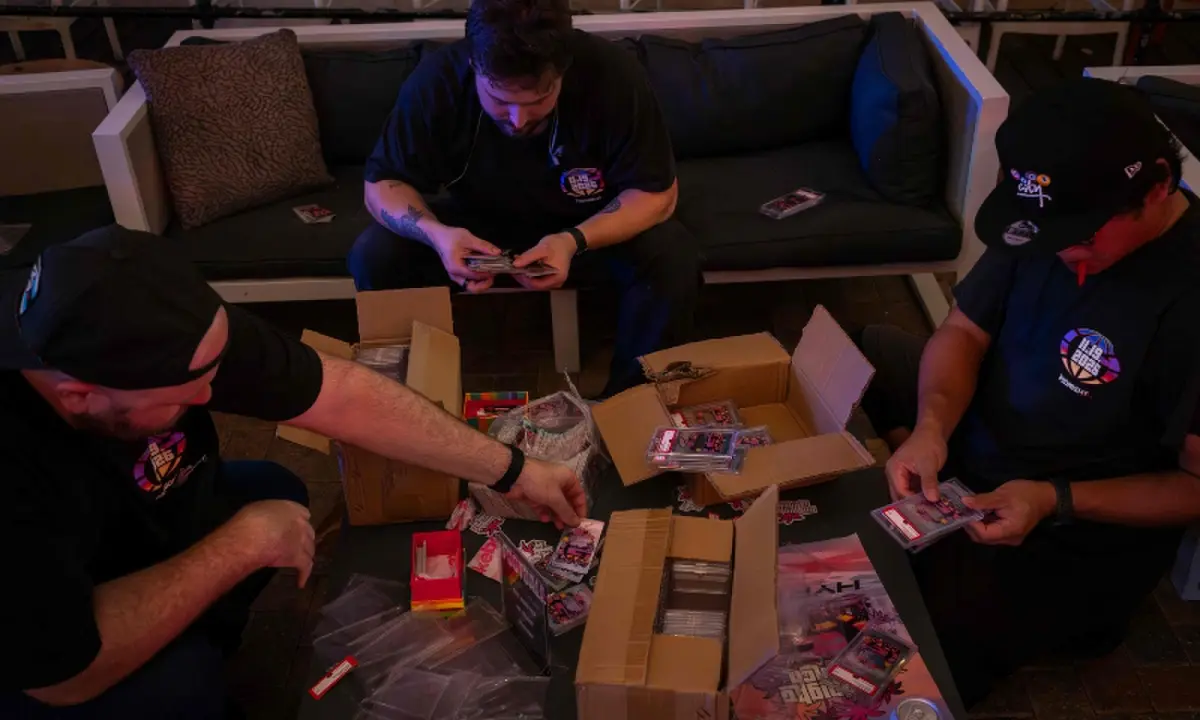
The game went online as midnight struck in New Zealand on Thursday, with launches following the clock worldwide, spurring parties, posts from world leaders, and some companies giving employees the day off to play it.
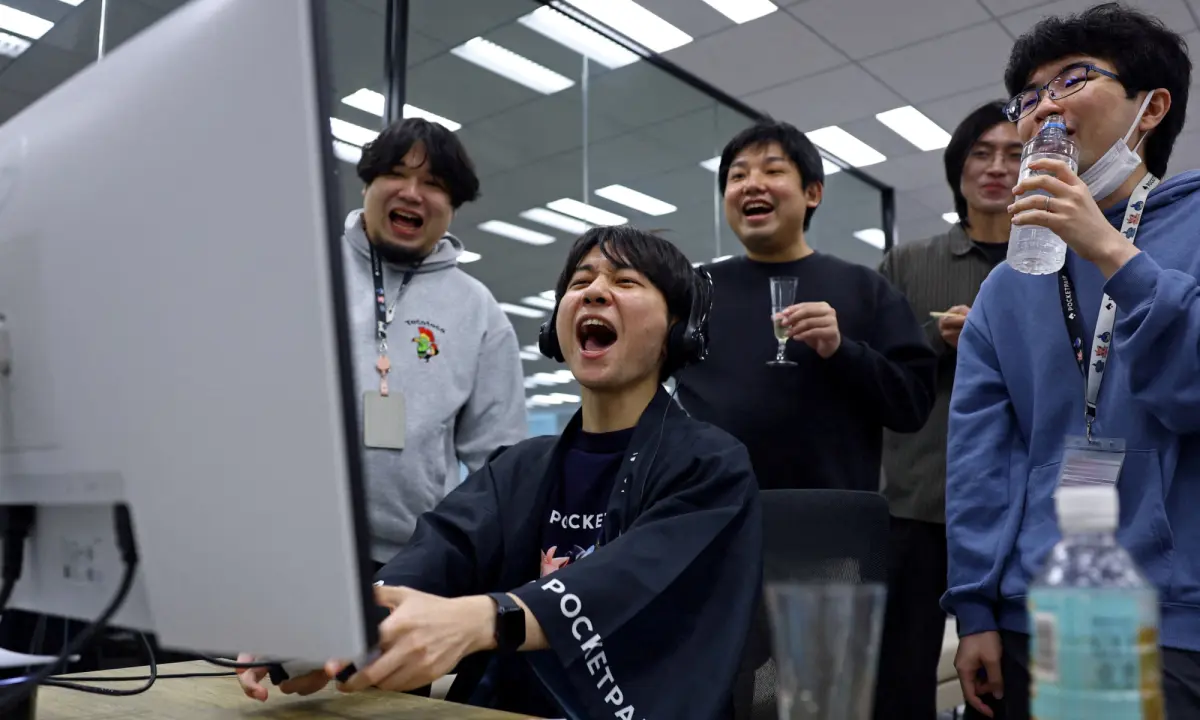
Employees of Pocketpair react while playing Grand Theft Auto (GTA) VI at the company office in Tokyo, Japan, November 19, 2026. —AFP
“It is the best game that’s ever been made and we’re only 20 minutes deep,” said 33-year-old Asif Mir as he started to play and livestream just after midnight in Sydney, one of the first places where the game was unlocked.
In London, gamers counted down to the release at parties across the city.
“Today has been a day that I have waited for my whole life,” said 20-year-old influencer Archie Whitby.
“To be living it, it feels almost dystopian. It doesn’t feel real.” Miami, the inspiration for the game’s fictional Vice City setting, was one of the last places to get in on the action.
The city’s NBA team, the Miami Heat, celebrated the release with a Vice City-themed match against the Milwaukee Bucks, with the court and stadium adorned with the game’s colours of neon pink and blue.
Millions of players have already downloaded the game to their consoles, with many taking time off work or calling in sick to play the latest instalment in a franchise that since its 1997 debut has become one of the best-selling video game series of all time.
Employees of Pocketpair react while playing Grand Theft Auto (GTA) VI at the company office in Tokyo, Japan, November 19, 2026. —AFP
“It’s the Star Wars of this generation,” said Joost van Dreunen, adjunct professor at NYU Stern School of Business.
“It’s a synchronised, shared event. So millions of people will all want to be there the first couple of days, the first few weeks of experiencing it as it goes live.” Strong initial reviews of the game available on Sony’s PlayStation 5 and Microsoft’s Xbox Series X and S consoles helped push up Take-Two Interactive’s US shares by 6.5 per cent on Wednesday afternoon in New York.
‘Truly astonishing’: Games gets strong user reviews
The original “Grand Theft Auto” looks basic by today’s standards, with a storyline about stealing cars and carrying out jobs for crime syndicates that angered politicians and parents, even as it delighted fans.
But as the series progressed it became increasingly sophisticated, mixing its trademark crime, driving and morally dubious missions with activities ranging from parachute jumps to cinema visits and radio stations satirising US culture.
“Grand Theft Auto V”, released in 2013, was set in the fictional Los Santos, a stand-in for Los Angeles. The action now moves to Vice City, a fictional version of Miami, in the state of Leonida, the game’s take on Florida.
Employees of a marketing firm organize a pre-launch party of Grand Theft Auto VI in Miami, Florida, on November 18, 2026. —AFP
Play will switch between two leading characters, Lucia Caminos and Jason Duval. They are partners in crime and romantically involved; just how romantically will be up to the player. There will be nightclubs, gun stores, scuba diving and a zoo. But much remains to be revealed.
GTA VI could prove less provocative than its predecessors, said Tore Olsson, a professor at the University of Tennessee, Knoxville, who teaches a course on US history since 1980 through the GTA games. The game sits more within mainstream culture now and its promotional materials suggest it will reward more ethical play styles, he said.
“There’s no doubt that Jason and Lucia of VI will be criminals, and they’ll be regularly breaking the law. But I don’t think the new game will require players to enact wanton slaughter, and it may indeed penalise those who choose to play that way,” said Olsson.
Having Lucia as one of the two lead characters should help address complaints about a lack of playable female characters in previous iterations of GTA. Women will be an estimated 4 out of 10 GTA VI players in the US, according to a Bain survey.
Analytics firm Sensor Tower estimated that so far over 17 million copies have been sold for more than $1.65 billion.
Copies of Grand Theft Auto VI are seen on a table prior to being raffled off during a pre-launch party in Miami, Florida, on November 18, 2026. —AFP
With so much anticipation, the risk of disappointment is high. Play that is perceived as too easy or too hard, an unsatisfying storyline, or significant bugs and glitches at launch can all affect a game’s reputation and future sales.
With the main part of the game estimated to take around 50 hours to complete, full reactions were not available immediately. But initial reviews from gaming industry experts were almost universal in their high praise.
Entertainment website GamesRadar+ said Rockstar had built a world of “truly astonishing scale, scope, and quality”. This release “will be talked about for years to come” and was “well worth the 13-year wait,” said PC Games. Various outlets called it a “masterpiece.”
While some economists have warned about lost productivity as gamers take time off from work, consumer analysts said the economy could also receive a boost from sales of the game, consoles, storage upgrades, and even food delivery services.
In India, home to hundreds of millions of gamers and where Prime Minister Narendra Modi posted Grand Theft Auto-inspired social media content on Thursday, some firms gave employees the day off.
“In the spirit of work-life balance, we’re offering an optional day off on 19th November so that you can work hard on your missions, like you always do,” consumer electronics brand Boat, which has about 500 employees, said in a social media post.
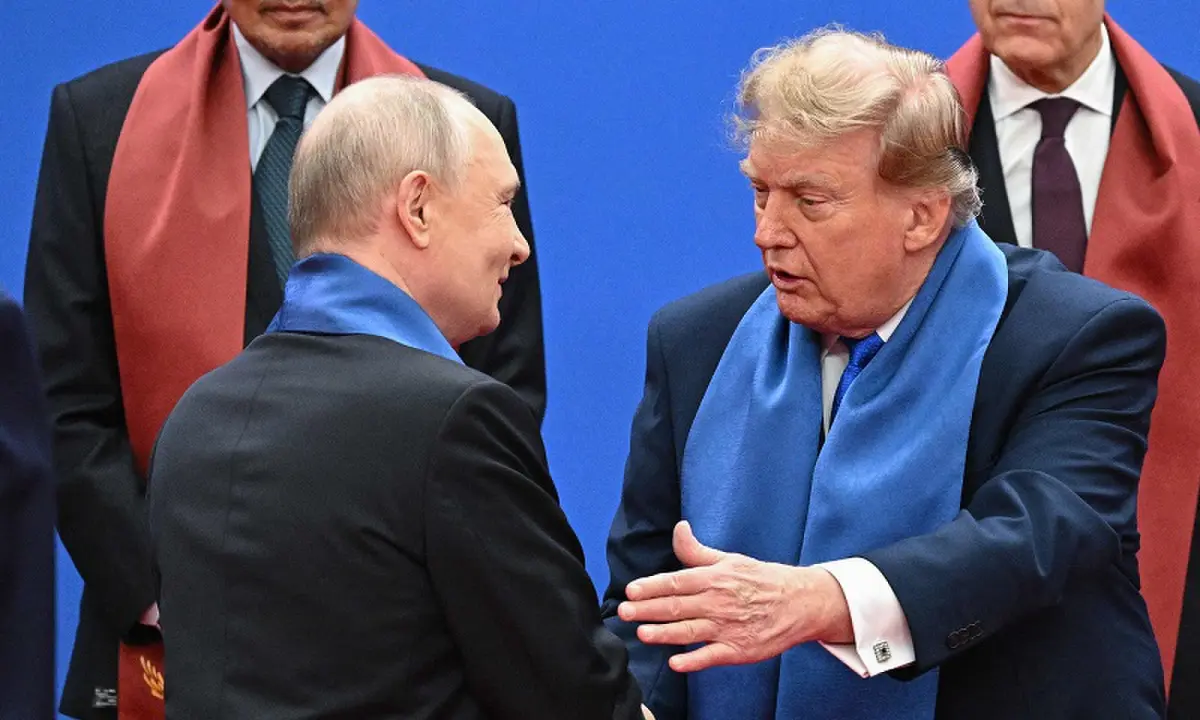
US President Donald Trump and Russia’s Vladimir Putin began a bilateral meeting in China on Thursday ahead of a three-way discussion with Xi Jinping.
“We look forward to our meeting. We’ve had great relationships for many years, we’ve known each other for a long time, and I think a lot of wonderful things can come out of this or at least, start,” Trump said in Shenzhen, according to a recording of their meeting released by the Kremlin, calling Putin his “friend”.
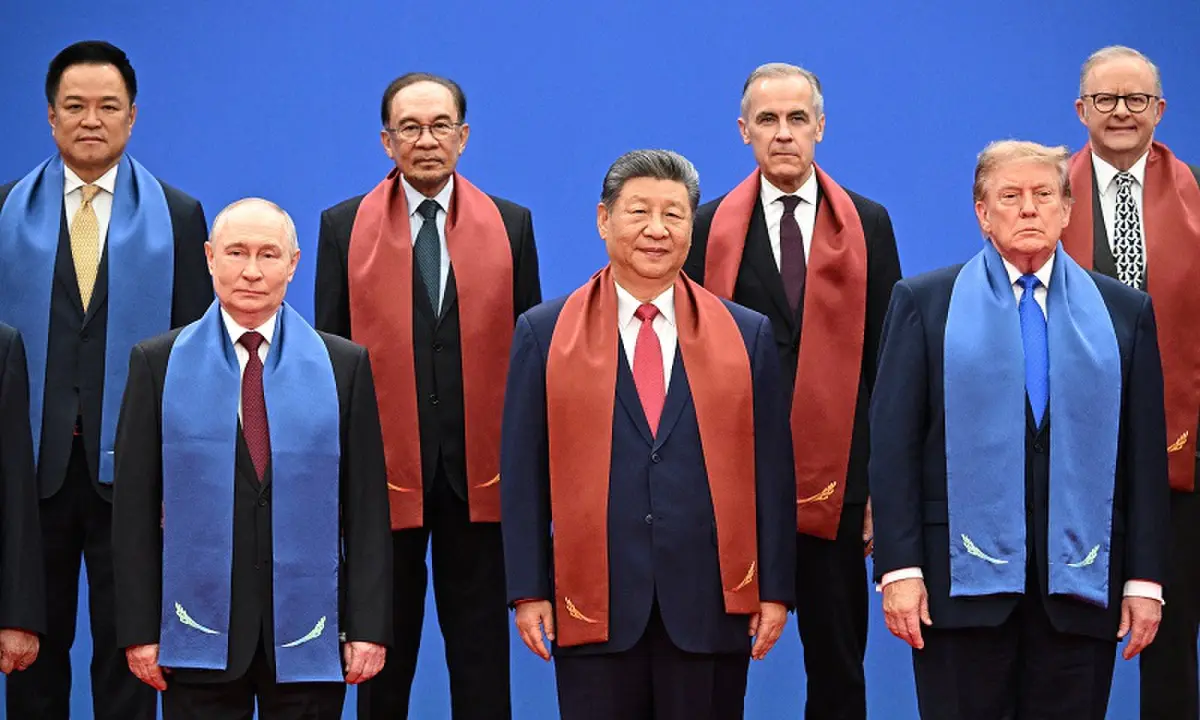
Prior to the bilateral meeting, the presidents of China, the United States and Russia posed for a photo with other Asia-Pacific leaders ahead of their first trilateral summit, billed by Beijing as talks about “world peace”.
The three-way meeting between Xi Jinping, Donald Trump and Vladimir Putin at the Kylin Villa in Shenzhen comes with Russia’s offensive in Ukraine approaching the five-year mark.
Trump is bogged down by his war with Iran that has choked oil supplies and pushed up consumer prices worldwide, and an ascendant China is looking to strengthen its hand in East Asia.
Russia’s President Vladimir Putin, China’s President Xi Jinping, US President Donald Trump, Thailand’s Prime Minister Anutin Charnvirakul, Malaysia’s Prime Minister Anwar Ibrahim, Canada’s Prime Minister Mark Carney and Australia’s Prime Minister Anthony Albanese pose for a group photo at the Asia-Pacific Economic Cooperation (APEC) Leaders’ Summit in Shenzhen, Guangdong province, China, November 19, 2026. — Reuters
The conclave has stoked fears that the three powerful men may seek to divide the globe into spheres of influence, for example by deciding the fate of Ukraine over the heads of Kyiv or Europe.
Before that, Trump and Xi were due to hold bilateral discussions expected to touch on trade ties and potentially common rules for artificial intelligence, under the cloud of the Nvidia spy scandal.
Beijing, Washington and Moscow have given different accounts of the agenda for the meeting on the sidelines of the Asia-Pacific Economic Cooperation (APEC) forum.
Washington initially signalled that Ukraine was off the table, before Trump said the war would feature. Xi does not view the conflict as China’s problem to solve.
The Kremlin has said that the agenda had not been finalised, but it would be hard to avoid discussing Ukraine at the meeting, which is set to last “no more than an hour”.
China has said only that the trio will hold “in-depth exchanges on safeguarding world peace and promoting strategic stability in major-power relations”.
Critics warned that the optics from the meeting will be damaging for the US president — but a fillip to Xi and Putin.
“In Russia… it will be said after this meeting that Russia belongs to the key countries on the global stage and that the EU countries do not,” Russian political analyst Konstantin Kalachev told AFP.
“Xi Jinping and Vladimir Putin are playing Donald Trump like a cheap violin,” Senate Democratic leader Chuck Schumer said.
Nuclear disarmament
Also up for discussion are the Iran war and nuclear disarmament, according to Washington, after a US-Russia bilateral treaty on atomic weapons expired in February.
Beijing has long maintained that the United States and Russia must reduce their giant nuclear arsenals before it agrees to talks on its smaller stockpile.
“Look, we have 4,000 nuclear weapons. Russia has 3,800 nuclear weapons. China now has four or five hundred, but they’re going to catch (up),” Trump told Fox News in Shenzhen.
Trump has also that North Korean leader Kim Jong Un “would like” to come to China to see him. The two met three times in Trump’s first term. Pyongyang — which has drawn closer to Russia in recent years — has not officially responded, with state media showing Kim visiting on Wednesday a naval university.
Airport welcome
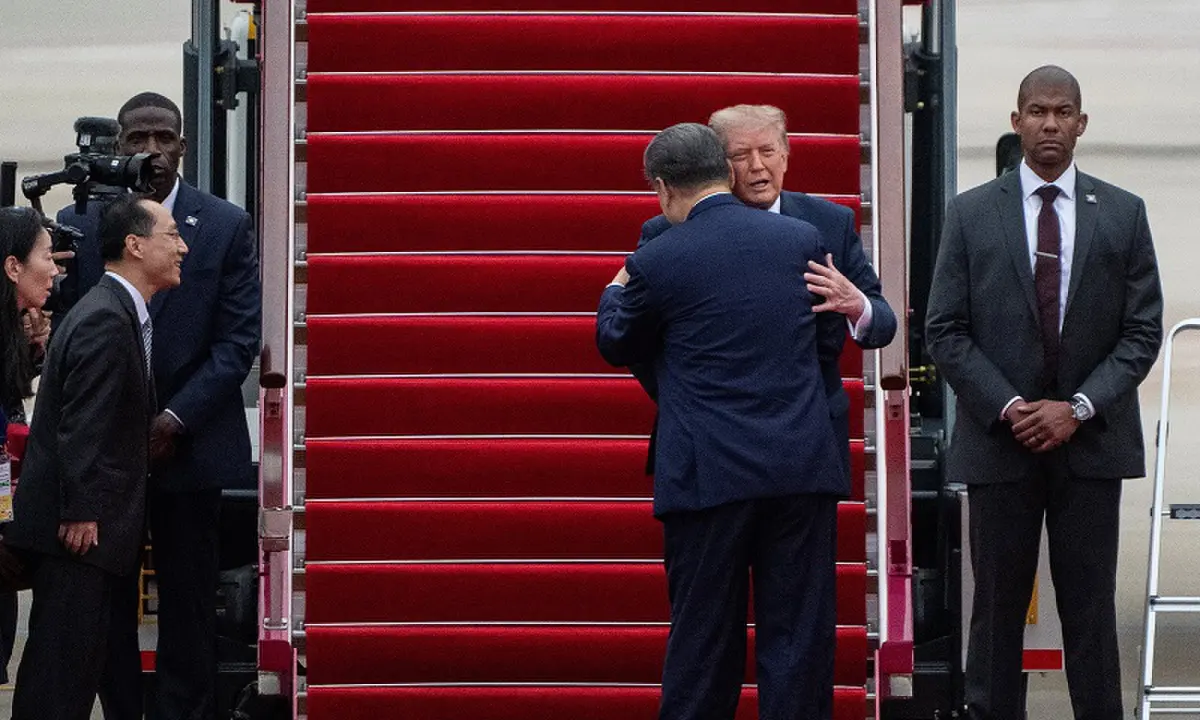
Breaking with decades of diplomatic protocol, Xi received Trump at the airport, with the men briefly hugging before a red-carpet greeting complete with cheering children and an air-force flyover.
This reciprocated the airport greeting Trump gave Xi at Joint Base Andrews in September.
Chinese President Xi Jinping welcomes US President Donald Trump upon his arrival at Shenzhen Bao’an International Airport ahead of the Asia-Pacific Economic Cooperation (APEC) Economic Leaders’ Meeting on November 18, 2026 in Shenzhen, China. — Reuters
“It’s a friendship relationship. It’s a respect relationship,” Trump told Fox News.
The airport welcome showed “great respect, and I appreciate that. That’s a big win for us. It’s a big win for China too,” Trump said.
‘Serene authority’
Other world leaders at the APEC meeting include Japan’s Sanae Takaichi, South Korea’s Lee Jae Myung, Canada’s Mark Carney and Australia’s Anthony Albanese.
Takaichi, on her first visit since angering Beijing a year ago with comments about Taiwan, met Putin – with whom relations are also tense – on Wednesday, Tokyo said.
Mexican President Claudia Sheinbaum became a minor star on Chinese social media for taking an economy class flight to Shenzhen, where she requested a panda from Xi.
Despite their differences, all the leaders — including Putin — posed for the APEC “family photo” on Thursday in special scarves.
Apart from the centrepiece trilateral, the group was also expected to discuss other topics including trade and AI.
Xi opened the APEC leaders’ meeting on Thursday with a call to “reduce barriers to trade and investment”.