ISLAMABAD: The Islamabad Food Authority (IFA), along with the capital police, recovered 800 kilogrammes of meat believed to be of different animals, including donkeys, during a raid on a house in a rural area of Islamabad.
A case has been registered under Sections 11 (selling food in violation of the law), 12 (substandard or misbranded food), 13 (unsafe food) and 14 (unhygienic or unsanitary food premises) of the Islamabad Capital Territory Food Safety Act 2021, following a complaint lodged by IFA Veterinary Specialist Dr Mohammad Shahbaz Arshad.
The raid was conducted at a house in D-14 following information about the illegal preparation and storage of meat.
The joint raiding team found evidence of donkey meat processing and storage. During the inspection, the team also recovered 800kg of meat. Besides, 12 live donkeys, a dead donkey, five live dogs, 17 live turtles, four dead turtles, a jackal and a live pangolin were found at the premises.
Furthermore, no records regarding the transportation of the meat or donkeys were found at the site, nor was there any documentation authorising the activity from the district administration.
The meat was destroyed at the site, while the live animals were handed over to the Wildlife Department in accordance with the directives of the relevant authorities.
The house was handed over to Golra police and subsequently sealed.
Documents belonging to a Chinese national were found at the premises where the meat was being processed.
However, no individual was present at the location at the time of the raid.
Following the incident, another case was registered with the police under various sections of the Islamabad Nature Conservation and Wildlife Management Act 2024, following a complaint lodged by Wildlife Guard Saqib Arif.
According to the FIR, acting on information received from the IFA, a team from the Islamabad Wildlife Management Board (IWMB) visited the house where wild animals were reportedly being kept in illegal captivity.
During the visit, 17 live and dead softshell turtles and a jackal were found.
It was suspected that the pangolins might have escaped into the nearby
forest, as the animals are native to the region.
Furthermore, during a search of the premises and their surroundings, 10 snare traps were also found and recovered.
Additionally, 10 rams were found at the premises. It was suspected that the traps were being used to capture wild animals illegally.
JERUSALEM: Israel’s parliament met under a new speaker from the anti-Benjamin Netanyahu bloc on Wednesday, as opponents of the caretaker prime minister begin a legislative offensive to roll back his divisive legacy.
In the vote for parliament speaker late on Tuesday, 66 lawmakers out of 120 voted in favour of Matan Kahana, an ally of former military chief Gadi Eisenkot who has until next month to form a government to replace Netanyahu.
The speaker is an important office given that it sets the timetable for parliamentary business and can therefore speed up or delay debates or votes on proposed legislation. With Kahana at the helm, Eisenkot’s camp has an opportunity to deal blows to Netanyahu’s legislative agenda even before a possible government is formed.
High on the list is repealing the sweeping reforms to reduce the independence of the judiciary that were advanced by Netanyahu, who has been enraged over corruption charges against him that could land him in prison if he loses power.
Lawmakers are set to hold preliminary votes on laws that expanded political control over courts and media
On Wednesday, a provisional committee in charge of organising parliamentary business began examining the possibility of fast-tracking several bills that Eisenkot wants to see adopted even before the formation of a government.
The Knesset is due to hold preliminary votes on bills designed to reverse Netanyahu-era legislation which increased political influence over the judiciary and the media. But any green light would not mean the immediate adoption of the bills, which must still clear several parliamentary stages and be put to three votes.
Kahana, a 54-year-old former special forces soldier, was elected on Tuesday with the backing of the two Arab-majority lists, who won an unprecedented number of seats in the Oct 27 election. “I intend to serve as speaker for everyone, regardless of religion, race or gender,” Kahana said during his inauguration speech immediately after the vote.
‘Not what I wanted’
The October election failed to deliver a clear majority for either Eisenkot or Netanyahu’s bloc. Netanyahu on Tuesday acknowledged the result in a rare statement free from political attacks on his opponents. “The results of these elections are not what I wanted, nor are they what others wanted, but they are what the people want,” he told journalists, calling for unity.
Netanyahu, who has reportedly been urging US President Donald Trump to resume war on Iran, has talked up the threat from Tehran as he insists on the need for a unity government with Eisenkot. As well as repealing Netanyahu’s divisive judicial reforms, Eisenkot has also vowed to quickly set up a state commission of inquiry to investigate security failures that led to Hamas’s Oct 7, 2023 raid.
Netanyahu, who has built his brand on saying he will ensure Israel’s security, has refused an independent probe, instead proposing one whose members would be chosen by politicians.
• Petrol bomb kills activist in ex-PM’s hometown • 37 Grameen Bank branches targeted in arson attacks
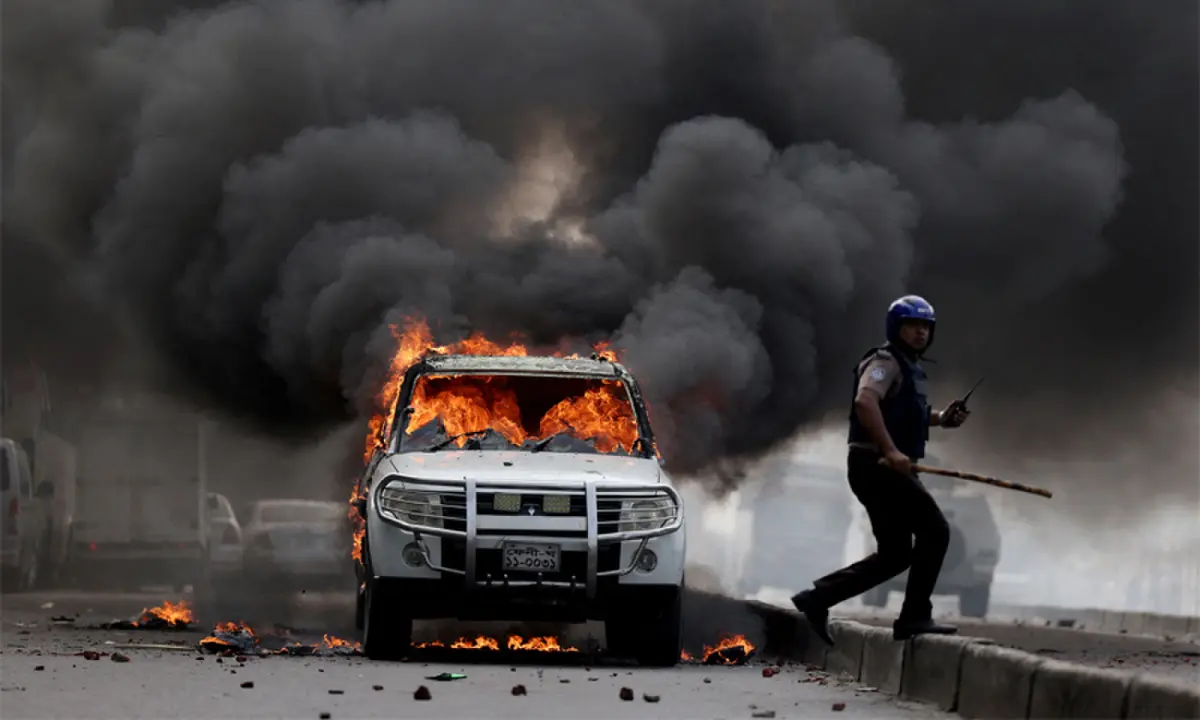
DHAKA: Bangladesh stepped up security and deployed hundreds of paramilitary troops nationwide on Wednesday as the planned return of former Prime Minister Sheikh Hasina has sparked clashes, bomb blasts and arson attacks blamed on supporters of her banned party.
Hasina, who has lived in exile in neighbouring India since she fled Dhaka following violent protests demanding her resignation in Aug 2024, has requested a new passport and identity card, saying she plans to return in December. But the government has so far rejected her request, leading to members and supporters of her Awami League party taking to the streets in protest.
Last week, the party announced a week-long programme of protests and rallies to mobilise support for Hasina’s return, culminating in a nationwide lockdown on Nov 19. Police have recorded dozens of crude bomb blasts and incidents of vehicles being torched in at least 28 districts over the last 10 days, with several police personnel and civilians injured, local media has reported.
Bombs and arson
Late on Tuesday, an activist of the ruling Bangladesh Nationalist Party (BNP) was allegedly killed by unidentified people during a protest near Hasina’s home district of Gopalganj, police said. On the same night, a crude bomb exploded outside the Dhaka residence of Cultural Affairs Minister Nitai Roy Chowdhury, and the house of a BNP lawmaker and shops belonging to BNP supporters in Gopalganj were set on fire, police added.
On Wednesday morning, a bus company helper was burnt to death in the southern district of Pirojpur after two buses were set on fire, authorities said. Tuesday marked the day on which Hasina was sentenced to death a year ago by a local court that found her guilty of ordering a deadly crackdown on the student-led uprising against her in 2024.
At least seven police personnel were injured and eight vehicles damaged, according to spokeswoman Kamarum Munira. Elsewhere in the country, a series of Molotov cocktail blasts and arson attacks have been reported in recent days.
While police have not identified suspects in the Gopalganj attacks, the government led by the Bangladesh Nationalist Party has blamed Hasina’s banned Awami League party for the violence.
Overseas conspiracy
At least 37 Grameen Bank branches and offices have been targeted in arson attacks or attempted fires since Nov 10, with 14 more attacked since midnight on Tuesday, the bank said. The bank was founded by Nobel laureate Muhammad Yunus, who led Bangladesh’s interim government after Hasina’s ouster and has faced hostility from Hasina’s supporters.
Dhaka Metropolitan Police have arrested at least 71 members of banned organisations, including the Awami League and its affiliated outfits, in the last 24 hours, police spokesperson Niaz Mehedi said.
THERE is always something a little off when economists and other experts say that a given course of action is beneficial for industrial growth in the country, but those industries directly connected with that course of action or policy direction are silent on the matter. Normally, industry is very vocal about preserving its interests and either takes the lead in advocating its preferences, or at least responds to suggestions coming from other quarters.
These days we are seeing this happen in two areas. One is the conversation around the exchange rate. All manner of articles have been written about whether the exchange rate needs to be devalued to keep exports competitive. Those advocating this are pointing to the so-called Real Effective Exchange Rate, or REER, which, they say, is overvalued, making Pakistani products expensive in export markets by comparison to our main export competitors.
The REER is a tool used mainly by central bankers and academics to measure how a given country’s exchange rate is aligned with the inflation-adjusted exchange rates of its main trading partners.
The way it works is simple. When the REER is 100 there is, in theory anyway, alignment between Pakistan and its trading partners in terms of how well the exchange rate reflects the costs of doing business in Pakistan versus its competitor countries. But if the REER rises above 100 it is considered overvalued, meaning the exchange rate no longer adequately reflects the rising price level within the country by comparison to its competitors, and keeping it at present-day levels will render exports non-competitive.
The more the REER is above 100, the more overvalued the rupee is considered to be. And if it is below 100, then the exchange rate can be considered undervalued, meaning exporters are enjoying a premium in international markets by comparison to the cost of doing business that faces their competitors in other countries.
Conditions that have historically called for an exchange rate devaluation are simply not there today.
Now here is the strange thing. The REER has been above 100 for a number of months now, and is now far enough above its equilibrium level to potentially merit a devaluation. But none among the exporter community is demanding this. Not publicly anyway. All exporter associations, and other chambers around the country, are very vocal about the direction of interest rates, about the taxation burden, about electricity and gas pricing. But not a word about the exchange rate.
So what to make of a situation where economists are saying the currency needs to depreciate to make exports competitive, but exporters themselves are making no such demand?
Another example is with the auto policy that the government has been working on for many months now. A couple of years ago they brought customs duties down on imported vehicles, and are now moving to cut import tariffs further on other manufactured goods. Despite a few years of applying this trade policy, and now moving to codify the gradual elimination of protections in a new auto policy, the auto companies themselves are silent. Sharp objections are being raised by manufacturers of auto parts, organised under an umbrella grouping called Pakistan Auto and Auto Parts Manufacturers Association (PAAPAM), who rightly argue that large investments made in the manufacture of auto parts like vehicle glass, headlights, doors, bonnets, other body parts and lots more are at risk with this new policy. So far their objections have not prevailed over the cabinet, though they have found sympathetic ears within government.
What is striking is the silence of the key stakeholders — the auto companies themselves. Why are those whose business is directly in line to be impacted by this measure not saying anything about it, at least publicly?
The answer is a little obvious: the proposed measure does not adversely impact their interests. The exporters are not asking for a devaluation and auto makers are not asking for the return of the protections behind which they grew up, because their business is not going to be as adversely or favourably impacted by the proposed measures as theory might tell us.
The auto part manufacturers are a different story. They cannot sell their parts to anybody else other than the big auto makers for whom they have been vendors for many years now. Changing that would require a deep process of retooling their plant, and figuring out where auto volumes are sufficiently mature to merit retooling the plant and producing parts at industrial scale.
Given that the auto industry is in the middle of shifting to electric vehicles anyway, such a process of obsolescence and adaptation to a changing market reality is perhaps coming anyway, regardless of how much protection the government extends to legacy manufacturers.
Regarding the exchange rate, policymakers in Pakistan have never paid much mind to the REER in deciding the level they want for the rate. The level is usually decided more with rupee cost of external debt servicing requirements in mind, first and foremost. Adjustments to the exchange rate always come when their hand is forced by market reality, which means devaluations come when the State Bank’s liquid reserves fall below the level required to keep rampant dollarisation in check. Never have they based exchange rate decisions on export competitiveness and there is no reason to suppose they are about to change now.
Conditions that have historically called for an exchange rate devaluation are simply not there today. First, there is an abundant supply of dollars by comparison to the supply of rupees in the market, and the position is only improving. Second, there is no flight into the dollar. Third, the interbank market is virtually shut, with banks told (through silent channels) to finance their clients’ import requirements from their own inflows, while the State Bank aggressively buys these inflows at a steadily appreciating rate, to fuel its own thirst for dollars.
Under these conditions, the REER is about as relevant as the daily weather forecast. There will be no devaluation in the near future, not until their hand is forced by market reality.
THE battle lines are being drawn over the creation of new provinces, as the two main partners in the ruling coalition experience a democratic reawakening. Both have recently taken to extolling the virtues of democracy — but each with their own spin.
On one side, PPP Chairman Bilawal Bhutto-Zardari is taking a hard stand against a division of the provinces “imposed by force”. He has warned it might lead to bloodshed. As an alternative, he is pushing the idea of a political reset, which would entail recognising and respecting the mandate given to opposition parties, especially the PTI.
On the other side, various government ministers, mostly from the PML-N, are lecturing anyone who will listen on the merits of a public referendum. Though the controversies that followed the general elections are yet to be resolved, they are arguing, rather earnestly, that holding a nationwide referendum on new provinces is the fairest way forward.
Mr Bhutto-Zardari made an astute observation in his Tuesday speech at the Karachi Press Club: “In our history, a referendum has always been carried out for an undemocratic act and never a democratic one.” More jarring was his revelation that “up until today, neither the prime minister nor a single member of the cabinet has brought up the issue [of new provinces] with the president of Pakistan or me”.
What is one to make of this, considering that several members of the federal cabinet, including the ministers of interior, defence and information, have been making rather forceful public statements on the topic? It suggests the issue is being litigated in the media rather than discussed among the political leadership.
Mr Bhutto-Zardari seemed frustrated with the prime minister’s silence when his ministers seem eager to discuss it. It is also strange that the president, too, has not weighed in.
Perhaps the elders in both parties, the president among them, are testing the waters by letting Mr Bhutto-Zardari and second-tier ministers lead the conversation for now.
But the issue will be taken up in some form sooner rather than later, and they cannot wait until the eleventh hour to make their official positions known.
The administrative reconfiguration of an entire country — one that ranks among the most populous in the world — is no ordinary task. It is not merely a question of drawing lines on a map: nearly every branch of the state will need to be restructured around the new configuration, and this cannot be achieved through fiat.
The Constitution already sets out the route: altering a province’s limits requires a constitutional amendment backed by two-thirds of that province’s assembly.
Rather than trading referendums for ultimatums, the political leadership should take the question to parliament and the provincial assemblies, and build consensus there.
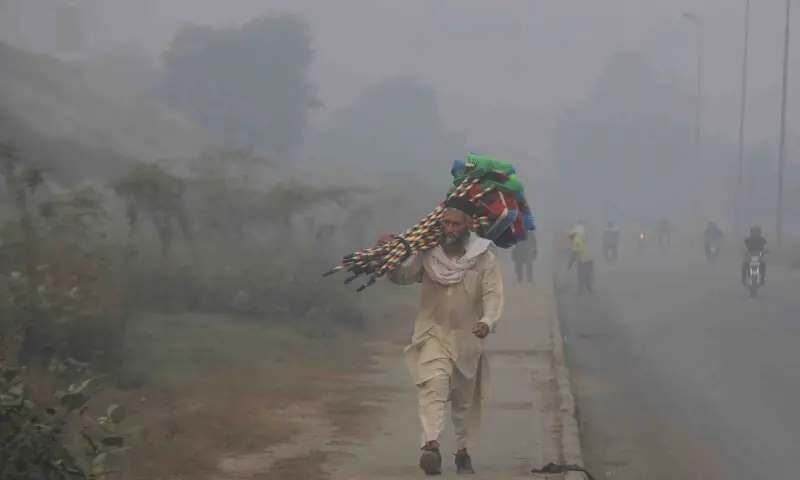
LAHORE: The Pakistan Space and Upper Atmosphere Research Commission (Suparco) has warned of worsening smog conditions across Punjab over the next three days, with satellite observations detecting 690 active fire incidents in Punjab and adjoining transboundary areas, while Lahore on Wednesday topped the list of the world’s most polluted major cities.
According to Suparco’s smog assessment for Nov 17, satellite observations recorded 386 active fire detections in Punjab and 304 in the transboundary region during the preceding 24 hours. The assessment covered 36 districts and used VIIRS and MODIS satellite observations to identify fire incidents.
The bulletin identified seven districts – Jhang, Narowal, Sheikhupura, Sialkot, Hafizabad, Gujranwala and Dera Ghazi Khan – as having high or severe smog conditions.
The mean aerosol optical depth (AOD), an indicator of atmospheric aerosol concentration, was recorded at 0.25, with the highest levels over Chiniot, Jhang and Faisalabad. Tropospheric nitrogen dioxide (NO2), however, was 21pc below the 2019-2025 average for this time of the year.
Jhang, Narowal, Sheikhupura, Sialkot, Hafizabad, Gujranwala and DGK to have high or severe smog conditions in coming days
Despite the lower NO2 levels compared with the historical average, the satellite assessment warned that atmospheric conditions were likely to deteriorate over the following three days.
The Copernicus Atmosphere Monitoring Service (CAMS) model projected PM2.5 concentrations of around 51 to 71 micrograms per cubic metre.
Suparco cautioned that model estimates were generally lower than ground-based monitoring readings during winter. Atmospheric dispersion was also assessed as very poor, indicating that pollutants were likely to remain trapped close to the ground.
The satellite-based monitoring is intended to track the geographical spread of smog, identify fire hotspots and provide an assessment of atmospheric conditions across Punjab.
Meanwhile, Lahore remained at the top of IQAir’s global major city pollution ranking on Wednesday morning, recording an Air Quality Index (AQI) of 339 during the 10am-11am period.
The city’s air quality subsequently improved, with the AQI falling to 167 at 5pm, but began deteriorating again, reaching 178 at 6pm.
In the global ranking, Lahore was followed by Dhaka with an AQI of 221, Baghdad 199, Tashkent 182 and Kolkata 178. Karachi ranked sixth with an AQI of 174.
The real-time Pakistan city ranking showed hazardous pollution levels in several other Punjab cities. Faisalabad topped the national list with an AQI of 686, followed by Gujranwala at 550, Kahna Nau at 516, Multan at 437, Kasur at 371 and Lahore at 339. Khanewal recorded an AQI of 327, Sargodha 314, Sahiwal 253 and Dera Ghazi Khan 238. Readings above 300 fall in the hazardous category.
The Pakistan Meteorological Department (PMD) also forecast fog and smog at isolated places in Lahore, Sialkot, Narowal, Sheikhupura, Okara, Kasur, Faisalabad, Jhang, Khanewal, Multan and surrounding areas during morning and night over the next 48 hours. Dry weather is expected across most districts, with no significant rainfall forecast.
Meanwhile, the Punjab Environment Protection Agency (EPA) deployed five senior directors from its headquarters across different divisions to supervise anti-stubble burning operations and coordinate with agriculture officials and district administrations.
EPA Director General Abdullah Nayyer Sheikh said the deployment was aimed at ensuring direct supervision of field operations, verifying reported fire incidents and ensuring timely action against crop-residue burning.
In Multan, the district administration has received two modern anti-smog gun vehicles on the directives of Chief Minister Maryam Nawaz.
Deputy Commissioner Dr Faisal Saleem said the vehicles would operate round the clock and spray water in different parts of the city during morning and evening hours. He said the administration was also taking action against people burning crop residues and garbage.
• Region’s SC sets aside high court’s ruling, directs government to review allocations • Orders PSC to resume and complete all pending recruitment processes • Observes refugee quotas cannot be treated as perpetual entitlements without legal justification
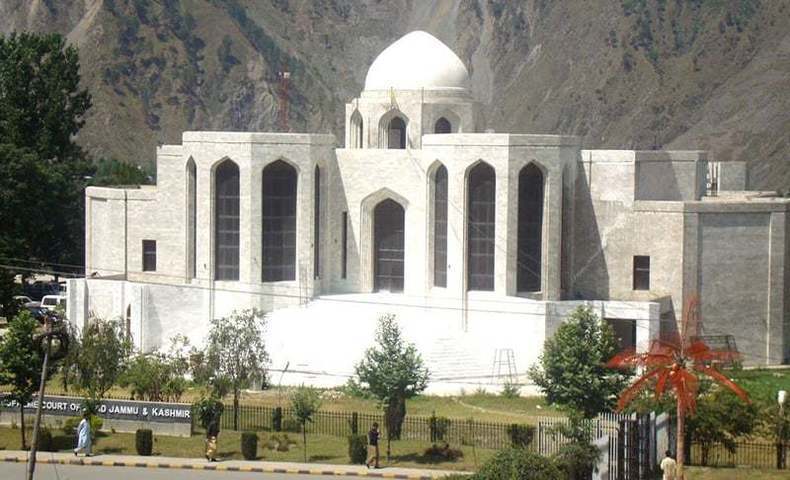
MUZAFFARABAD: The Supreme Court of Azad Jammu and Kashmir (AJK) has set aside the blanket abolition of regional and refugee quotas in public employment, ruling that geographical preferences are not inherently unconstitutional but must be supported by law and evidence of under-representation.
In a judgement announced on Wednesday, a division bench comprising Chief Justice Raja Saeed Akram and Justice Khalid Yousaf Chaudhary also directed the Public Service Commission (PSC) to resume and complete all pending recruitment processes that had been suspended following the high court’s Aug 16, 2025 verdict.
The bench, however, stopped short of restoring the decades-old quota percentages, directing the government to undertake a comprehensive review of the existing regional and refugee allocations and bring them in conformity with constitutional and statutory requirements.
The court prescribed an interim geographical recruitment framework, under which vacancies in grades 1 to 7 would ordinarily be filled through competition among candidates from the relevant constituency, while those in grades 8 to 15 would be filled at the district level.
Vacancies in grades 1-15 at divisional offices would be filled through competition among candidates from the division concerned, while posts in state-level institutions, irrespective of grade, and all posts in grades 16 and above would be filled on open merit among State Subjects.
The court clarified that selection within each geographical field would remain strictly subject to prescribed qualifications, suitability and merit. If no suitable candidate was available within the primary geographical area, the recruitment process would be extended to a wider field in accordance with the applicable rules.
Authored by Chief Justice Akram, the judgement held that the High Court had erred in treating every form of regional, area-based or refugee-related recruitment arrangement as inherently unconstitutional. It observed that the statutory framework under the AJK Civil Servants Act, 1976, and the Civil Servants Rules, 1977, recognised the government’s authority to provide proper representation to the component units of the AJK territory and refugees settled in Pakistan.
However, the bench held that such authority was not unlimited and that
historical quota arrangements could not be continued indefinitely without a rational and objectively ascertainable justification.
The bench also dealt separately with the quota reserved for refugees settled in Pakistan, observing that their status as State Subjects was independent of the continuation of any particular preferential allocation.
It held that neither the 19pc quota for refugees who migrated in 1947 nor the 6pc allocation for those who migrated in 1989 could be treated as a perpetual entitlement without a continuing constitutional and statutory justification.
On educational admissions, the court ruled that regional preferences had to be examined independently of public-sector recruitment. The bench further set aside the high court’s directives concerning federal and provincial institutions and educational seats beyond the constitutional and administrative competence of the AJK government, observing that these were governed by their respective constitutional, statutory and inter-governmental arrangements.
The SC ruled that appointments and admissions already finalised under the legal regime prevailing at the relevant time should not be disturbed solely on account of its decision.
It held that the high court was not competent to declare the quota arrangements repugnant to the injunctions of Islam, as such jurisdiction vested in the Shariat Appellate Bench under the relevant law.
• Board of Peace report blames both Israel and Hamas for failure to end war • Hamas dismisses report, accuses board of ‘protecting Israel’
CAIRO: Israeli tanks advanced in an area of the central Gaza Strip on Wednesday and the Israeli military said its forces were targeting Hamas infrastructure outside areas that Israel controls in the enclave.
Witnesses said some Israeli tanks rolled onto the main Salahudeen road, west of the Yellow Line that marks the boundary of the two-thirds of the Gaza Strip still under Israeli control despite a ceasefire that has lasted more than a year.
An Israeli airstrike near the army raid killed one person, Palestinian medics said.
The medics said separate Israeli airstrikes had killed two other people earlier in the day in Deir al-Balah and Gaza City.
An Israeli military spokesperson claimed the military was carrying out an operation targeting “Hamas infrastructure” west of the Yellow Line in central Gaza and that it had struck a Hamas fighter in southern Gaza earlier on Wednesday.
The spokesperson had no immediate comment on other strikes.
An October 2025 ceasefire halted major fighting in the Israel-Gaza war but has not stopped Israeli attacks in Gaza.
Israel, which claims Hamas has recently been regrouping and rearming, has stepped up attacks against Hamas. Hamas has accused Israel of attempting to derail the US-brokered ceasefire agreement.
Gaza health authorities say at least 1,600 Palestinians have been killed since the ceasefire went into effect, while the Israeli military claims five of its soldiers have been killed.
Palestinian authorities say more than 74,000 people in Gaza have been killed in the military campaign that Israel launched in 2023.
BoP blames Israel, Hamas for failure to end war
In a related development, the body overseeing US President Donald Trump’s plan to end the Gaza war accused both Israel and Hamas of failing to meet their commitments to end war, leaving the population of Gaza in dire conditions and the ceasefire in danger of collapse.
The 12-page Board of Peace report is the body’s second to the United Nations Security Council since the US-backed ceasefire came into effect 13 months ago. The board, established and headed by Trump, is expected to present the report’s findings to a meeting of the council in New York at the end of November.
“The distance between what has been agreed and what is happening on the ground nonetheless remains the principal risk to the process,” the report said, warning that “a ceasefire that delivers nothing visible cannot be sustained indefinitely.”
While the ceasefire has halted major fighting, the wider plan, which calls for Hamas to disarm, Israeli troops to withdraw and reconstruction to begin, has effectively stalled since soon after it came into effect last year.
Hamas agreed in July to a Board of Peace roadmap to surrender its weapons and transfer governance of Gaza to a civilian transitional authority, but Israel rejected the roadmap, saying it will not withdraw until Hamas is dismantled.
Israel has carried out near-daily strikes on Gaza, while the report said Hamas fighters have also continued attacks on Israeli troops.
“Every day that Israel continues strikes against Hamas targets, it delays putting Hamas’ agreement to the roadmap to the test,” the report said.
Senior Hamas official Basem Naim dismissed the report as “pure disinformation”, accusing the Board of Peace of providing cover to Israel to evade its commitments under the plan to end the war and to continue its aggression in Gaza.
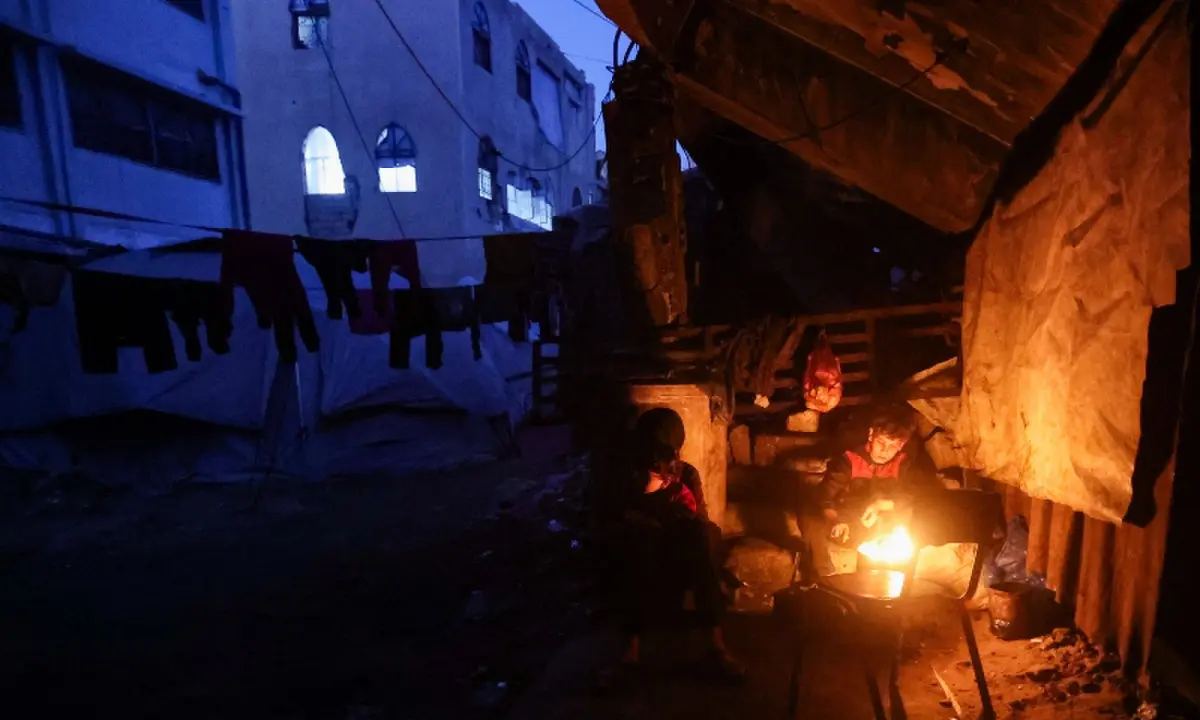
More than two million Palestinians are confined to around a third of Gaza’s coastal territory, mostly in makeshift tents and damaged buildings, under the control of Hamas. Israel occupies two-thirds of Gaza that has been largely razed and depopulated.
The report criticised Israel’s government for an “absence of decisions” on arrangements to train and deploy a civilian Palestinian police force to replace Hamas as Gaza’s law enforcement authority. It said this was impeding the full implementation of the plan.
It said restrictions imposed by Israel on supplies and equipment, alongside funding shortfalls, had hindered the ability of Palestinians to prepare for and respond to seasonal flooding. Heavy rain inundated displacement camps last week across Gaza and more rain is expected later this month.
ISLAMABAD: The Federal Board of Revenue (FBR) unveiled draft rules on Wednesday for its faceless income tax appeals system, eliminating the need for physical interaction between taxpayers and appellate authorities.
The new system will also conceal the identity of officers responsible for deciding tax disputes. The rules are expected to be finalised this week, following feedback from stakeholders.
Under the proposed system, the Commissioner (Appeals) will not be identified during hearings via video link, and their voice will be electronically modified to prevent disclosure of identity.
The draft rules were notified through SRO 2136 of 2026 to amend the Income Tax Rules, 2002, by inserting a separate chapter on faceless appeals.
The entire appeal process, from filing and submission of evidence to hearings and issuance of final orders, will be conducted electronically through FBR’s Iris portal, or any other designated automated system.
A separate appeals wing/centre will be established in Islamabad, comprising appellate units, each headed by a Commissioner (Appeals). The wing will function under the administrative control of the FBR’s Member (Legal) Inland Revenue.
However, the director general, chief commissioner or any other authority will not be allowed to exercise control over, or issue directions, to a Commissioner (Appeals) regarding the hearing or decision of an appeal.
FBR or the Centre may also transfer pending appeals from one appellate unit to another through the automated system to ensure equitable workload distribution, efficiency and impartiality.
All notices, requisitions, written submissions, arguments and evidence will be exchanged exclusively through the electronic portal. Neither taxpayers nor tax officials or their authorised representatives will be allowed to appear physically before the appellate authority.
Taxpayers will, however, have the option of seeking a decision on their appeals based solely on written submissions. In such cases, the respondent tax authorities will be allowed to submit written comments, while taxpayers will retain the right to reply.
All virtual hearings will be recorded and digitally archived as part of the electronic record of the appeal.
Pakistan’s mango exports fell 36 per cent this year as the US-Iran war disrupted shipping routes and drove up freight costs, industry figures showed on Wednesday.
According to All Pakistan Fruit and Vegetables Exporters Association, the country exported 78,000 tonnes of mangoes this year, compared with 123,000 tons last year.
Exports to the Middle East, a major market for Pakistani mangoes, dropped from 36,000 tonnes last year to 14,500 tonnes this year, the association said.
Waheed Ahmed, head of the association, told Anadolu that the ongoing conflict had reduced the country’s mango export earnings from approximately $100 million to around $60m.
He cited the months-long near-closure of the Strait of Hormuz, a key shipping route, and rising freight rates as major factors behind the decline, particularly in exports to Middle Eastern countries.
“The freight rate that was $1,000-1,400 before the US-Iran war, now stands at $8,000. Secondly, the closure of the Strait of Hormuz also increased the shipping period, which affected the exports of perishable items like mangoes,” he said.
Ahmed said the United Arab Emirates and Oman were the main Middle Eastern destinations for Pakistani mangoes, particularly the internationally acclaimed Chaunsa variety, followed by Saudi Arabia.
Kuwait and Qatar also import significant quantities of Pakistani mangoes, according to the association.
Mango exports to neighboring Afghanistan were also disrupted by frequent border closures amid strained relations between the two countries, Ahmed said.
Pakistan produced 1.9m metric tonnes of mangoes annually until 2018, ranking sixth globally behind India, China, Thailand, Indonesia and Mexico.
However, production has declined over the past four years, with the association attributing the drop to global warming.
Climate change has reduced Pakistan’s total mango production by 35pc, according to the association.