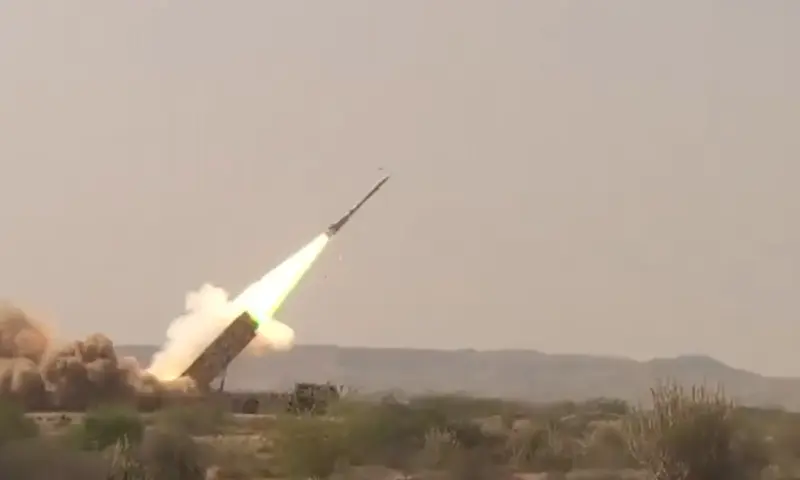
The Pakistan Army on Wednesday successfully launched the Fatah-3 supersonic cruise missile, according to the military’s media wing.
In a statement, Inter-Services Public Relations (ISPR) said, “The Pakistan Army successfully conducted the launch of the Fatah-3 supersonic cruise missile, marking another significant milestone in strengthening Pakistan’s national defence capabilities.
“The weapon system is equipped with advanced navigation and propulsion systems and is capable of engaging targets at long range with high precision and lethality at supersonic speed,” it said.
It added that the missile would “significantly enhance the operational flexibility and strike range of the Pakistan Army’s Rocket Force Command, further strengthening the country’s overall conventional deterrence and defence posture”.
According to the statement, the Army Rocket Force Command commander, senior officers from the armed forces, scientists and engineers witnessed the launch.
It added that President Asif Ali Zardari, Prime Minister Shehbaz Sharif, Chief of Army Staff and Chief of Defence Forces Field Marshal Syed Asim Munir and the services chiefs congratulated the team on the successful launch.
They appreciated the dedication and commitment of all personnel involved in achieving this significant milestone in Pakistan’s defence development, the statement concluded.
Interior Minister Mohsin Naqvi congratulated the nation on the successful launch. According to the interior ministry, he said that the launch represented a “significant advancement in the defence sector”.
“The successful test of the Fatah-3 supersonic cruise missile marks a major milestone in the country’s defence capabilities,” he said.
Earlier this month, the Pakistan Air Force performed a successful flight test of the country’s first indigenously developed air-to-air missile, Fa’az.
ISPR said that the flight test marked “another significant milestone in the advancement of national aerospace and defence capabilities”.
In October, Pakistan successfully tested two missiles; the Fatah-2 extended-range hypersonic ballistic missile was tested on Oct 13 and the indigenously developed extended version of the Fatah-IV ground-launched cruise missile was tested on Oct 6.
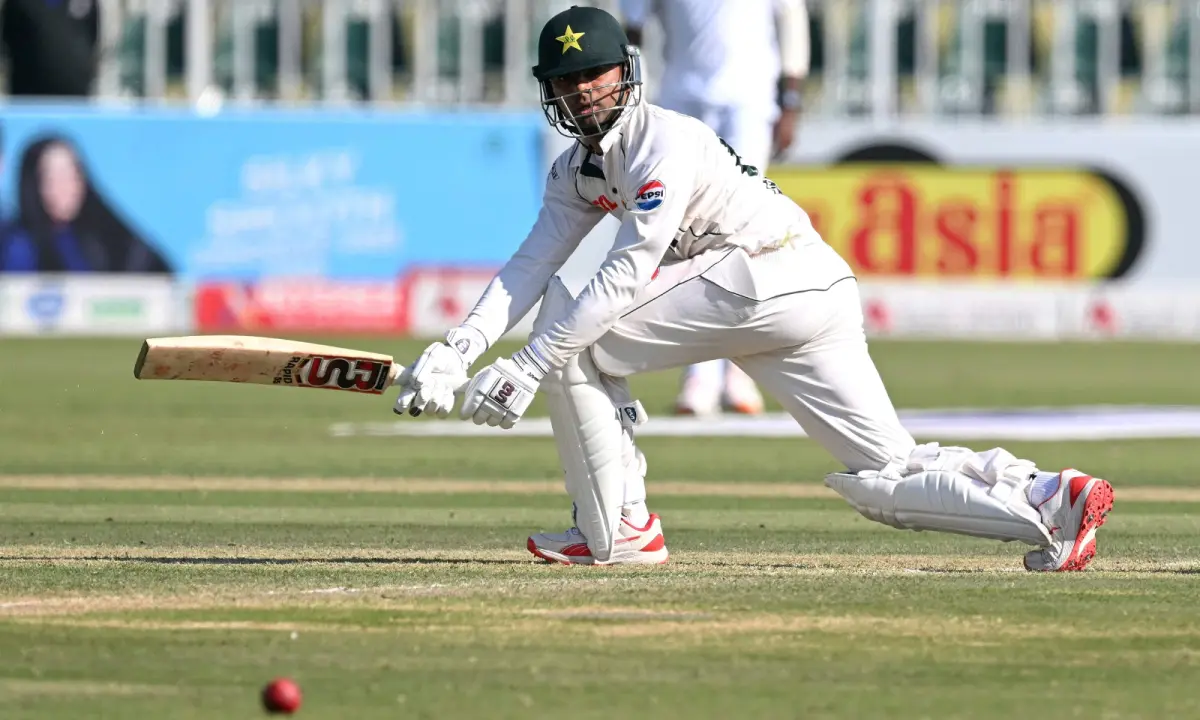
Pakistan strengthened their grip on the second Test on Wednesday, taking a commanding 227-run first-innings lead before reducing Sri Lanka to 74-3 at stumps on the second day at the Rawalpindi Cricket Stadium.
After wicket-keeper-batter Ghazi Ghori’s half-century and an explosive contribution from Razaullah helped Pakistan reach 325 all out, the hosts’ fast bowlers struck repeatedly to leave Sri Lanka facing a daunting task on day three.
The visitors, who were dismissed for 98 in their first innings, still trail by 153 runs with seven wickets remaining.
Pakistan’s innings had appeared in danger of ending with a considerably smaller advantage after Lahiru Kumara’s five-wicket haul kept the hosts in check. But Ghazi’s 54 off 90 balls, followed by Razaullah’s brisk 42 from 32 deliveries, ensured Pakistan added valuable runs in the lower order.
Resuming at 121-3, Pakistan reached 221-7 at lunch. Azan Awais, who had made 47, was dismissed without adding to his overnight score, while nightwatchman Saqib Khan contributed 37 from 78 balls. Tayyab Arif had earlier made 46 off 82 deliveries.
Kumara was Sri Lanka’s most effective bowler, removing Azan, Pakistan captain Babar Azam (eight), Saqib and Saud Shakeel (24) to put the visitors in a strong position. Asitha Fernando claimed three wickets, including those of Tayyab and Salman Ali Agha (21).
Ghazi then steadied the innings, reaching 54 with four boundaries before Milan Rathnayaka dismissed him. Aamer Jamal added 12, while Razaullah’s aggressive knock, which included four fours and three sixes, lifted Pakistan beyond the 300-run mark.
Kumara eventually bowled Razaullah to finish with five for 95. The final three wickets added 104 runs after lunch, taking Pakistan to 325 in 87.5 overs.
‘Scrappy performance’
Pakistan’s head coach Mike Hesson described the batting effort as scrappy but praised the contributions that helped the side build its lead.
“It was a real scrappy performance for the bat,” he said, singling out Kumara for his persistence and Ghazi for his half-century. Hesson also highlighted Saqib’s contribution as nightwatchman, saying he had batted for almost 100 minutes “at the toughest time of the day”.
Sri Lanka’s reply began poorly. Saqib struck in the third over when Lahiru Udara (seven) picked out Tayyab at extra cover. Razaullah then trapped Dinesh Chandimal leg-before for a duck, leaving the visitors at 10-2.
Kamindu Mendis briefly counter-attacked with three boundaries in his 16, but Aamer had him caught by Mohammad Taha at second slip to make it 39-3. Dhananjaya de Silva, unbeaten on 24, and Pasindu Sooriyabandara, on 18, survived the remaining overs before the close.
Hesson defended Pakistan’s approach to preparing livelier surfaces, saying the aim was to develop players capable of succeeding in different conditions.
“I wouldn’t call it a green top. I’d say you play on pitches like this all around the world,” he said. “We want to play on good cricket wickets where talented players shine through.”
Sri Lanka’s Kumara acknowledged that his side had conceded too many runs in the final session of Pakistan’s innings but remained hopeful of a response from the batters.
He said the team had confidence in its batting line-up and believed the players could perform better on the third day, adding that Pakistan’s batters had played well against the plans Sri Lanka had devised.
Hesson, meanwhile, cautioned against reading too much into the contest so far, noting that six Pakistan players had played either their first or second Test. “The fact that we’ve performed against an experienced Sri Lankan side so far is good signs moving forward,” he said.
Sri Lanka resume on Thursday needing a substantial partnership to reduce the deficit and keep the match alive.
After 13 years of waiting, including two delays and several leaks, the first gamers began playing on Wednesday the latest instalment of “Grand Theft Auto”, the most expensive — and among the most profitable — video game ever developed.
“GTA VI” becomes available on PlayStation 5 and Xbox Series consoles at midnight on Thursday in each region where it will be available.
That meant it launched first in New Zealand (at 1100 GMT or 4pm PKT on Wednesday), with many players around the world changing their console location settings to the far-eastern country to be among the first to enter the new Vice City.
“I’ve been playing GTA for such a long time that the anticipation for this is crazy,” Australian student Riley Fennel told AFP ahead of the launch.
Although Rockstar Games, the studio behind GTA, has not yet released advance unit sales figures, specialist firm Sensor Tower estimates they have already surpassed 15 million.
That would be more than $1.5bn in revenue before the game even came out, for a budget estimated at $1bn to $1.5bn, which would be unprecedented.
According to the British analytics firm Omdia, sales of “GTA VI” could reach $3.2bn by the end of the year.
‘Taylor Swift of games’
“No other concert or box office release has ever generated that much capital. And so that makes it one of the outliers in entertainment,” said Joost van Dreunen, a professor at New York University’s Stern School of Business.
“This is the Taylor Swift of video games,” the industry specialist said.
Rockstar’s parent company, US publisher Take-Two Interactive, has rolled out a massive marketing campaign to establish the title as a mass cultural product that transcends the boundaries of video games.
“The reach of the game is such that it will lead to a downstream effect on engagement on other entertainment services,” such as streaming platforms, said James McWhirter at Omdia.
“I’m going to take four days off,” said Dmytro Shkambara, a 27-year-old Ukrainian player living in Berlin, who said he had been planning this first game session “for a very long time”.
Like him, many fans have already booked time off to immerse themselves in the fictional state of Leonida, inspired by Florida.
The human resources platform Remote said it had seen a 32 per cent increase in leave requests around the world for Nov 19.
Touted as bigger, better and more realistic than its predecessors, “GTA VI” follows the adventures of a Bonnie-and-Clyde-style couple trying to survive in the Miami-inspired, crime-ravaged Vice City.
Since its beginnings, the series has won players over with its increasingly realistic reconstructions of fictionalised cities and the great freedom of action offered in a highly detailed open world.
Gamers entering GTA’s worlds can drive cars, fly planes or go skydiving.
“GTA VI” promises to push its realism even further, with characters looking different depending on what they eat and players having to work at cultivating the relationship between the protagonists.
Ahead of its release, the game picked up eight nominations on Tuesday at the Game Awards, the American ceremony that will honour the best video games of the year on Dec 10.
Subversion and controversy
Rockstar, which by 2026 will have a dozen studios around the world and more than 4,700 employees, devoted more than eight years to building the latest GTA instalment.
Active production only began after the release of Rockstar’s previous game, “Red Dead Redemption II”, in 2018.
It was a rocky ride to release.
Shaken by a series of leaks in 2022 and the online release of stolen gameplay videos, the studio postponed the launch twice, then suffered a new round of leaks last summer.
The games have also regularly been accused of glorifying violence and illegal behaviour as GTA has carved out a place in pop culture as a symbol of subversion, unafraid to mock the flaws of American society.
Players can run over pedestrians, sell drugs and shoot at the police.
“It’s a series that is famous for being always over the top in terms of its representation of violence and different forms of abuse or harassment, for its representations of gender”, said Paolo Ruffino, a lecturer in digital cultures at King’s College London.
“I don’t expect to see necessarily major controversies unless there is something completely new,” he added.
But as a consequence of its scandalous legacy, several countries have banned the saga.
No official release is currently planned in Russia, China, Lebanon or Qatar.
Chinese President Xi Jinping personally greeted Donald Trump at the airport as the US leader arrived Wednesday ahead of a trilateral meeting in Shenzhen that will also include Russia’s Vladimir Putin, AFP footage showed.
After descending from Air Force One, Trump saluted as he stood alongside Xi on a red carpet lined with people waving colourful pom-poms and brandishing Chinese and American national flags, before the two leaders shook hands.
According to Xinhua, Xi tells Trump that he wants a “constructive, strategically stable relationship” between China and the United States.
“I look forward to an in-depth exchange of views with you on major issues concerning China-US relations, Asia-Pacific cooperation, and the global landscape, with the aim of advancing a constructive, strategically stable relationship between our two nations — one built upon the foundations of mutual respect, fairness, and reciprocity,” Xi said a day before formal talks with Trump and a trilateral summit with Russian President Vladimir Putin.
ON Nov 18, 2026 (today), the National Aeronautics and Space Administration (Nasa) spacecraft, Voyager 1, the furthest travelled human-made object, launched in 1977 and since then travelling at a non-stop average speed of 61,200km per hour, will cover a distance of one light day.
In Cosmos, astronomer Carl Sagan writes, “The dimensions of the cosmos are so large that using familiar units of distance, such as meters or miles, chosen for their utility on earth, would make little sense. Instead, we measure distance with the speed of light [ie the distance light travels in one year]”. Light travels at the superluminal speed of 1,079,252,848km/h, and thus is capable of orbiting the earth’s equator 7.5 times in one second. A Boeing 747, travelling at non-stop cruising speed, which is around 900km/h, would take around 3,300 years to cover a distance of one light day, and reach where Voyager 1 will be today.
For the feat, you would have had to take off in a Boeing 747 in the Bronze Age, when Rameses II was ruling Egypt, and travel continuously at cruising speed to cover a distance of one light day by 2026. Your journey would have had to commence in a world before Christ, Cyrus, Caesar and Confucius.
While a light day seems very far, on the cosmic scale, it is mundanely trivial. Our nearest star, Proxima Centauri, is about 4.2 light-years away. A journey Voyager 1 — according to Nasa — is expected to cover in 75,000 years, despite its hypersonic speed.
Imagine what lies beyond the gaze of the naked eye.
To fathom the stupefying distances, Richard Dawkins in The Magic of Reality writes, “Go out into a big field with a football and plonk it down to represent the sun [which is 1.3 million times larger than the earth in volume]. Then walk 25 metres away and drop a peppercorn to represent the Earth’s size and its distance from the sun. The moon, to the same scale, would be a pinhead, and it would be only 5 centimetres away from the peppercorn. But the nearest other star, Proxima Centauri, to the same scale, would be another (slightly smaller) football, located about six-and-a-half thousand kilometres away”. That is about the same distance from London to Chicago.
We naively believe that when we gaze up into the night sky, we witness billions upon billions of stars — and perceive this as infinity. The actual number is close to 6,000, with the furthermost stars visible to the naked eye being posited no further than 15,000 light-years away. Imagine what lies beyond the gaze of the naked eye.
The Milky Way galaxy, with its 100 to 400 billion stars, is estimated by Nasa to be 100,000 light-years across. Our solar system, situated about 27,000 light years from the galactic centre of the Milky Way hosting the super-giant black hole, Sagittarius A*, and orbiting it at a rate of 828,000 km/h, takes approximately 230m years to complete one galactic year.
The last time our solar system was where it is now, dinosaurs had just begun to appear. In The Princeton Field Guide to Dinosaurs, Gregory S. Paul writes, “Only one galactic year ago the dinosaurs had just appeared on planet earth. When dinosaurs first appeared, our solar system was already well over 4 billion years old, and 95 per cent of the history of our planet had already passed”.
Our nearest galaxy, the Andromeda galaxy with its one trillion stars, is around 2.5m light years away, what to say of the other two trillion galaxies which are spread across an observable universe with a diameter 93bn light-years across.
Stephen Hawking illuminates in A Brief History of Time how Edwin Hubble’s discoveries in 1929 led to “the landmark observation that wherever you look, distant galaxies are moving rapidly away from us. In other words, the universe is expanding”. Accordingly, the further galaxies are, the faster they recede, sometimes faster than the speed of light. Though nothing can travel faster than the speed of light, space can expand faster. The inference — even if we were miraculously able to travel at the speed of light, there would be parts of the universe which would be perpetually beyond our reach.
We, homo sapiens, whom paleoanthropologists believe appeared 300,000 years ago, seldom view our own insignificance from this cosmic perspective. If we did, it would rob us of our prejudices, partialities and pre-conceptions.
In his essay Wonder and Skepticism, Carl Sagan writes, “The truth may be puzzling. It may take some work to grapple with. It may be counterintuitive. It may contradict deeply held prejudices. It may not be consonant with what we desperately want to be true. But our preferences do not determine what’s true”.
Voyager 1’s feat of travelling one light day should be a moment of pride and humility for the whole of humanity.
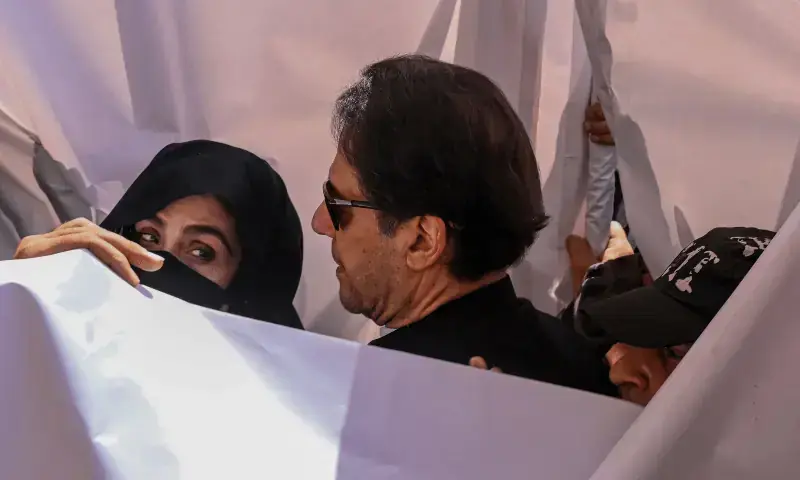
ISLAMABAD: The Islamabad High Court (IHC) on Wednesday directed prison authorities to ensure medical care and hygienic living conditions for Bushra Bibi as per prison rules, while adjourning the hearing of appeals filed by her and her husband, PTI founder Imran Khan, against their convictions in the £190 million case for seven days.
The couple is serving prison sentences in the £190 million corruption case, also known as the Al-Qadir Trust case. On January 17, 2025, an accountability court in Islamabad sentenced Imran to 14 years in prison and Bushra to seven years in the case. Both subsequently challenged their convictions before the IHC.
On Monday, Bushra had filed a fresh criminal miscellaneous application seeking the production of her complete medical record before the court and directions for her immediate transfer to a specialised hospital.
A division bench comprising Chief Justice Sardar Muhammad Sarfraz Dogar and Justice Muhammad Asif granted Barrister Salman Safdar, counsel for the PTI founder, seven days to prepare arguments on the appeals.
During the proceedings, the court also took up a fresh miscellaneous application filed on behalf of Bushra, raising concerns about her deteriorating eyesight, need for surgery, possible post-operative complications and the medical facilities available to her in prison.
After hearing arguments from her counsel, Sardar Latif Khosa, the bench directed the prison authorities to ensure cleanliness in her cell, arrange an examination by a specialist doctor from a hospital and provide all necessary medical facilities in accordance with jail rules.
The court further directed Islamabad Advocate General Naveed Hayat Malik to ensure that its order was implemented through the relevant prison authorities.
Khosa informed the court that Bushra had told her legal team that she required surgery and that there were concerns about the possible deterioration of her eyesight.
He stressed that Bushra’s health required immediate attention, particularly in view of the risk of infection following surgery.
Reading out the contents of the miscellaneous application, Khosa also referred to incidents allegedly occurring inside the prison. He told the court that seven small snakes had reportedly been found in Bushra’s cell and killed by a prison official identified as Sibtain. The area was subsequently sealed with cement, according to the application.
Khosa argued that prison conditions could expose his client to infections, making special precautions necessary, particularly if she underwent surgery.
Justice Dogar said the court had taken note of the concerns and would ensure that Bushra received all facilities permissible under prison rules.
He directed that the difficulties highlighted in the application should not be allowed to recur and assured Khosa that the former first lady was in safe hands.
Justice Dogar also recalled that health-related matters had previously been referred to the Federal Constitutional Court (FCC), but said the present application would be dealt with in accordance with the bench’s jurisdiction.
Khosa, however, maintained that the risk of infection following surgery remained a serious concern. He added that even if bail were granted, Bushra could remain in the court’s custody.
When the counsel referred to the fresh application concerning Bushra’s health, Justice Dogar reminded him that he had earlier undertaken to commence arguments on the main appeals after meeting the PTI founder.
Khosa confirmed that he and Barrister Safdar had met Imran in accordance with the court’s previous direction and had submitted their respective affidavits.
Justice Dogar subsequently directed that arguments on the appeals commence. Khosa also informed the bench that Safdar would argue Imran’s appeal, while he would represent Bushra.
Safdar requested permission to address the court and sought live broadcasting of the proceedings in the appeals, arguing that the case had attracted considerable public attention.
He said that although the bench had described the matter as a routine case at the previous hearing, proceedings in the case involving former military ruler General Pervez Musharraf had been broadcast live.
Referring to the live broadcasts of proceedings in various cases before the Supreme Court and high courts, Safdar urged the bench to allow the appeals to be broadcast live as well. He said he would submit a formal application in this regard.
The PTI founder’s sisters, Noreen Khan and Dr Uzma, were present in the courtroom, along with PTI Chairman Barrister Gohar Ali Khan and other party leaders.
National Accountability Bureau Prosecutor General Sohail Nasir, prosecutors Javed Arshad and Rafay Maqsood, and Islamabad Advocate General Naveed Hayat Malik also attended the proceedings.
Tight security arrangements were in place inside and around the IHC.
Barrister Safdar met Imran and Bushra at Adiala jail on Nov 2, 2026. This was his first meeting with Imran after seven months and with Bushra in 11 months, lasting 40 minutes.
On Nov 11, 2026, Barrister Safdar and Khosa also met Imran and Bushra at Adiala jail for nearly three hours, following IHC orders.
On Monday, both lawyers submitted affidavits to the IHC, detailing their Nov 11 meeting with the incarcerated couple at Adiala jail.
The lawyers stated in their affidavits that Bushra complained of severely impaired vision in both eyes following her previous surgical procedure. She also told them that she could see only to a limited extent while wearing spectacles and was virtually unable to see without them.
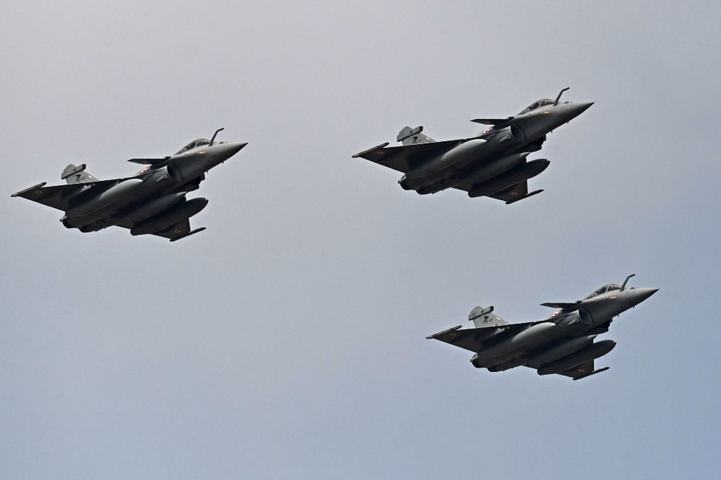
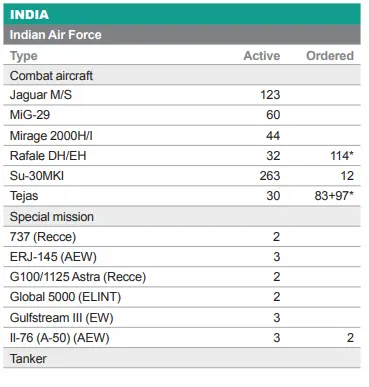
The Indian Air Force (IAF) has 32 French-made Rafale fighter jets in service, down from 36 before the May 2025 conflict with Pakistan, according to estimates published by British aviation magazine Flight International.
The figures lend credence to Islamabad’s claim that it shot down several Indian Rafale jets during the conflict.
In its annual directory of air forces around the world, Flight International listed 32 Rafales in the IAF’s active inventory.
Screengrab from Flight International’s November directory on World Air Forces shows IAF’s fleet.
The Rafale, French for a gust of wind, is a twin-jet fighter aircraft designed and built by Dassault Aviation. The French group defines it as “omnirole, able to carry out missions including in-depth strikes, nuclear deterrence, reconnaissance and anti-ship strikes”.
The aircraft has seen combat in Afghanistan, Mali, Libya, Iraq, Syria and more recently, in the Pak-India theatre.
In 2016, India had entered a formal agreement to buy 36 Rafale fighter jets from France’s Dassault for a reported $8.8 billion. More recently, the neighbouring country ordered the purchase of additional 114 Rafale fighter jets.
The May 2025 conflict between Pakistan and India was sparked by an attack on tourists in occupied Kashmir, which New Delhi, without evidence, said was backed by Pakistan. Pakistan denied involvement, with the foreign ministry having questioned the credibility of India’s account of the events, saying it was “replete with fabrications”.
Both sides used fighter jets, missiles, artillery and drones during the four-day conflict, killing dozens of people. After tit-for-tat strikes on each other’s airbases, it took American intervention on May 10 for both sides to finally reach a ceasefire.
In the immediate aftermath of the conflict, Pakistan said it shot down at least six Indian fighter jets during the conflict, including the French-made Rafale. New Delhi acknowledged “some losses” during the conflict but denied losing six jets.
At the time, a high-ranking French intelligence official had also confirmed to CNN that one Rafale fighter jet operated by the IAF was downed by Pakistan.
The development marked the first time that one of the sophisticated French-made warplanes had been lost in combat. The French official told CNN that French authorities were looking into whether more than one Rafale jet was shot down by Pakistan in the aerial engagement.
In a press briefing in May this year, the Pakistan Air Force said that the “confirmed kills” during the conflict included four Rafales, one Su-30, one MiG-29, one Mirage 2000, and a multi-role unmanned aerial system.
US President Donald Trump has also stated numerous times that several aircraft were shot down during the conflict, with his latest tally at 10 in February.
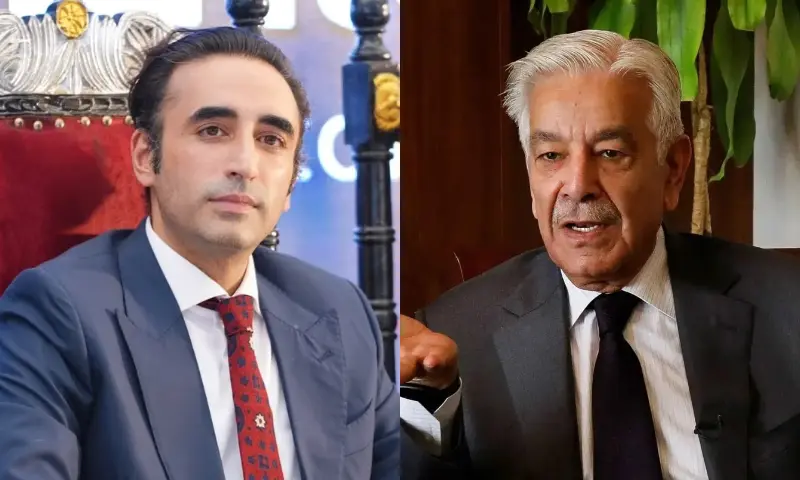
Defence Minister Khawaja Asif joined others from the ruling PML-N on Wednesday in responding to PPP Chairperson Bilawal Bhutto-Zardari following the latter’s hard-hitting speech over several issues, including new provinces, constitutional tweaks and treatment of the opposition.
“He who claims equity must come with clean hands,” Asif reminded Bilawal in a post on X, as the wrangling between coalition partners PML-N and PPP appeared to deepen.
The exchange has particularly heated up after Bilawal delivered a no-holds-barred speech the previous day that covered the question of new provinces. The Bhutto scion also expressed support for several opposition demands and questioned past decisions and actions taken by the ruling coalition.
Bilawal referred to Interior Minister Mohsin Naqvi’s recommendation of holding a referendum to decide on the creation of new administrative units and said: “In our history, a referendum has always been carried out for an undemocratic act and never a democratic one.”
The PPP chairperson also remarked that the governance system had not collapsed, but was rather “made to collapse” — seemingly reacting to Naqvi’s statement in July that the current “system” of governance had “collapsed” and needed a “reset”.
Asif began his response to Bilawal by addressing this matter.
He said: “No system can reset without public support. If you are talking about a system collapse, then all of us, as people connected to this system, must also take stock of our responsibilities.
The defence minister also appeared to throw his weight behind the proposal for holding a referendum on new province as he said that there would surely be a debate on “system reset” in Parliament, but the public too could not be “deprived of its fundamental right”.
“The pinnacle of legitimacy would be reached if the public opinion is also taken into account along with that of Parliament.”
Seemingly reacting to Bilawal’s support for the release of incarcerated former prime minister and PTI founder Imran Khan and other demands by the opposition, Asif added: “Holding politicians accountable in this country is nothing new, and no politician exempt from accountability.”
He mentioned that the PPP had been in power in Sindh for 18 years.
“Sindh has turned into paradise. The world admires the condition of Karachi,” he said, seemingly taking a jibe at the PPP, which is often criticised over the lack of development in Sindh.
Asif then said Bilawal and his party had been a “partner of the PML-N in the business of government since 2022. You get the profit and the PML-N and Pakistan suffer loss”.
“He who claims equity must come with clean hands,” Asif continued. “This is a centuries-old maxim of equity. Are your hands clean? Do you have the right to lecture or threaten?”
The defence minister said, “We have just one objective: to change the lives of the people of Pakistan so that ordinary people can live with dignity. Make public participation in governance a reality … Do not confine the people’s rights to the pages of the Constitution.”
He said after achievements on diplomatic and military fronts, now the “fight is for devolving governance to grassroots, in which public opinion and Parliament’s role are entirely democratic and constitutional. Governance is not anyone’s monopoly; Allah has granted this right to 250 million people.”
‘Zero in terms of performance’
Minister of State for Interior Tallal Chaudhry also reacted to Bilawal’s speech, saying that while the Bhutto scion presented himself as a “champion” of the Constitution and democracy, he was well versed only in theory on the subject and practically, his performance was “zero”.
He said Bilawal’s remarks the previous day were akin to picking and choosing certain provisions of the Constitution that suited him and disregarding others as unconstitutional.
Chaudhry said the PPP was currently in power in three provinces, as well as Gilgit-Baltistan. The president and Senate chairperson were also from the PPP, he further pointed out, commenting: “And then you give the impression as if you are the opposition leader, as if you are not associated with the government in any way.”
‘PPP crushed the move’
Separately, Health Minister Mustafa Kamal, whose party had also been demanding the the creation of new administrative units in the country, questioned why was the PPP worried over the creation of new provinces if its performance in the government had been good.
Addressing a press conference in Islamabad, he painted a derelict picture of Sindh and asserted that provinces should have devolved power.
He said the Muttahida Qaumi Movement-Pakistan had tried to get this done through the 26th and 27th Constitutional Amendments, “but the PPP crushed” the move.
A string of high-profile tech outages has dominated headlines in recent days after causing major travel delays, global work outages, reports of inaccessible bank accounts, and even the NSA saying Tuesday it “experienced temporary degradation” during scheduled maintenance.
Cybersecurity experts say that although the tech outages are typically not the result of cyberattacks, the widespread impact shows how deeply interconnected modern systems have become and how bad actors can take advantage in the fog of confusion.
“While we’re still waiting to understand the exact cause behind today’s NSA Net outage, the recent string of major disruptions across industries highlights how deeply interconnected our digital infrastructure has become, and how a single technical failure or software update can cascade with outsized effects across critical systems,” said Cynthia Kaiser, a former senior FBI cyber official and current senior vice president of cybersecurity firm Halcyon’s Ransomware Research Center.
The recent wave of high-profile cyber incidents and technology outages spans a wide range of events, including governments taking websites offline to address the PHP coding language vulnerabilities; the North Korean-linked $6.3 billion hack of the Binance cryptocurrency exchange; a string of food cooling system hacks in France and elsewhere in Europe that the French government attributed to Iran; the Microsoft outage; the FAA router-induced ground stop; disruptions to JPMorgan Chase systems; a brief internal outage at the NSA; and certain Apple services being temporarily inaccessible Tuesday.
President Donald Trump played down the spate of incidents, telling reporters in Manila, where he was attending the ASEAN economic conference, that things “like that happen,” and that “it’s fine” but experts say there are trends worth watching.
“We are in an era where AI is accelerating the discovery of legacy software flaws, forcing organisations to race to patch vulnerabilities before adversaries can exploit them, which inevitably creates friction and disruptions,” Kaiser said.
“Even when an outage isnt caused by a cyberattack, these moments of operational distraction leave dangerous gaps open for threat actors and opportunists to take advantage of, making it crucial for both institutions and everyday individuals to remain on high alert against social engineering and unsolicited outreach.”
As with the recent wave of website outages, when organisations responded to a vulnerability in the PHP programming language, experts say there are things the average person can do to limit their cyber exposure and protect their own data.
Use multi-factor authentication
Multi-factor authentication requires two forms of verification to access a protected site, such as a password plus a text-based code or security key. Emily Austin, principal security researcher at cybersecurity firm Censys, recommended unique passwords for individual websites, and for people to monitor any transactions.
But realistically, for situations like the PHP vulnerabilities, there really isn’t much an end user can do beyond hoping the services they rely on either don’t use PHP or have people actively working on patching, Austin said.
The PHP flaws are the latest in a series of severe software bugs made worse by increasingly capable and accessible large language models. Long-hidden flaws in widely used software, once too obscure or complex for humans to exploit, are now much easier to surface and weaponise.
Make hardware updates automatic
Dan Guido, CEO and co-founder of cybersecurity firm Trail of Bits, recommended people turn on automatic updates for their phone, computer, and home router. Companies typically issue security updates when patches are available for known vulnerabilities, so installing them promptly limits the window for bad actors.
Even so, consumers remain at the mercy of the services they rely on, Guido said.
Someone visiting a website can do everything right, like using two-factor authentication, and still have their information exposed, Guido said. You can’t patch your hospital’s website.
Most of the work falls on companies running services, Guido said. They need to deploy fixes faster and limit the damage that compromised systems can cause.
Runa Sandvik, the founder of Granitt and a digital security expert, said people need to update apps and services on their devices whenever they’re available, and to not forget about internet-connected devices around the house.
“I can see a scenario in which some people have some sort of IoT device at home that maybe doesn’t get frequent updates, maybe doesn’t get any updates at all,” Sandvik said. “It’s worth double-checking with the vendor to see if there is anything available.”
Patch, Patch, Patch
Dr. Daniel Gardham, a lecturer at the Surrey Centre for Cyber Security and the University of Surrey, said organisations must know what software they run, patch promptly and check whether they’ve already been compromised. In the AI age, attackers have the advantage, Gardham added.
Finding vulnerabilities is becoming faster and easier, but fixing them across the range of systems that rely on this software is much harder, Gardham said. How well organisations manage that gap will determine whether AI makes the internet safer or more vulnerable.
Beware of scammers
Any time a major cybersecurity threat makes the news, scammers and cybercriminals will try to take advantage, said Nic Adams, co-founder and CEO of 0rcus, a cyberkinetics company.
“When these headlines hit, check the affected company’s instructions by opening its app or typing its website address yourself,” Adams said. “An urgent message telling you to ‘secure your account’ deserves extra scrutiny.”
Your money is safe
Banks have been preparing for this moment since frontier models came out, and have “worked extremely hard to ensure there is no more low-hanging fruit for the bad guys to go after,” said Paul Benda, executive vice president of risk, fraud and cybersecurity at the American Bankers Association.
However, Benda added, “we are in a new normal” in terms of cyber threats, and consumers need to be aware, especially in the wake of the PHP vulnerabilities, when shopping with random retailers or websites “where their security is not going to be as good as your bank.”
Benda said consumers should not reuse passwords across shopping sites, and should consider using passkeys where possible, which are digital keys specific to certain websites that avoid the need to enter a password into a website and are phishing resistant.
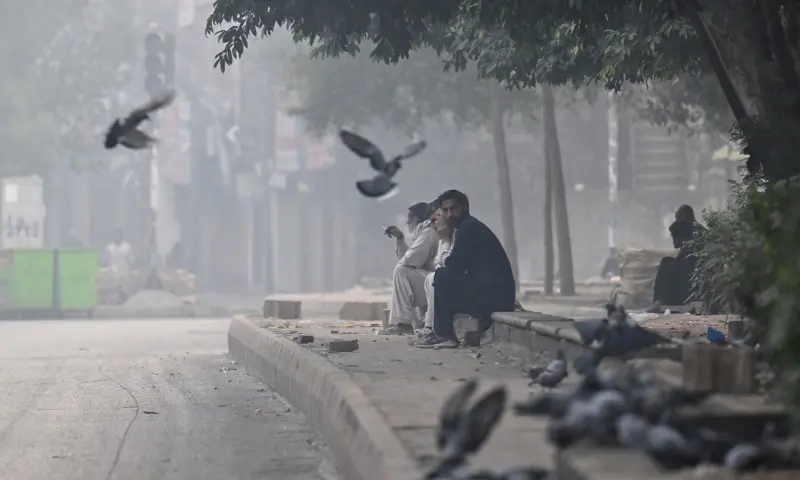
LAHORE: Lahore returned to the top of the list of the world’s most polluted major cities on Wednesday, with its Air Quality Index (AQI) reaching 339, as several other cities in Punjab also recorded hazardous levels of air pollution, according to IQAir.
The IQAir live global major city ranking for 10am to 11am on November 18 placed Lahore first, followed by Dhaka with an AQI of 221, Baghdad with 199, Tashkent with 182 and Kolkata with 178. Karachi ranked sixth, with an AQI of 174.
The situation was worse in several other parts of Punjab.
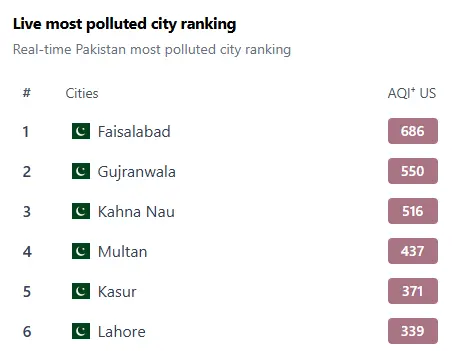
The real-time Pakistan city ranking placed Faisalabad at the top with an AQI of 686, followed by Gujranwala at 550, Kahna Nau at 516, Multan at 437, Kasur at 371 and Lahore at 339.
Khanewal recorded an AQI of 327, Sargodha 314, Sahiwal 253 and Dera Ghazi Khan 238.
Real-time Pakistan most polluted city ranking. — Screengrab via IQAir
Readings above 300 fall in the hazardous category, indicating serious health risks, particularly for children, older people and those suffering from respiratory and cardiovascular diseases.
Meanwhile, the Punjab Environment Protection Agency (EPA) has deployed senior officers from its headquarters across different divisions to directly supervise anti-stubble-burning operations, strengthen field monitoring and ensure action against crop-residue fires during the ongoing smog season.
According to the agency, the directors have been assigned to different divisions, where they are coordinating with EPA field formations, agriculture department personnel and district administrations to monitor operations, verify reported fire incidents and ensure timely responses.
EPA Director General Abdullah Nayyer Sheikh said the deployment of senior officers was intended to ensure direct supervision of anti-stubble-burning operations rather than relying solely on routine reports from field formations.
He said the officers would monitor the situation on the ground, verify reported fire incidents, identify operational gaps and ensure that detected hotspots received timely responses.
An official order issued on November 13 assigned five directors based at the headquarters to supervise operations in different divisions on November 14 and 15.
Director (P&C) Waseem Ahsan Cheema was assigned to Gujrat division, Director (L&E) Mian Ejaz Majeed to Sahiwal division, Director (MEAs) Anjum Riaz to Faisalabad division, Director (EMC) EPA Lab Lahore Noor Ahmad to Lahore division, and Director (EDH) Nazim Ayaz Alam to Gujranwala division.
The officers were directed to report violations, along with supporting evidence, through the EPA Field Operations and Stubble Burning Hotspot Districts WhatsApp groups, coordinate with district officials and relevant departments, and submit field visit reports to the director general.
According to the district-wise monitoring dashboard, updated on November 14, the agency detected 898 fire anomalies across eight districts.
It reported that 820 incidents had been attended to and 823 fires extinguished, while 96 anomalies remained pending.
A total of 67 quick response crews (QRCs) had been deployed, with an overall response rate of 91.3 per cent.
Hafizabad emerged as the largest hotspot, with 430 detected anomalies, accounting for nearly 48pc of the provincial total.
Of these, 381 had been attended to and extinguished, while 49 remained pending. Nine QRCs had been deployed in the district.
Sheikhupura recorded 172 anomalies, of which 154 had been attended to and extinguished, while 18 remained pending. The district had 22 QRCs and a reported response rate of 89.5pc.
Nankana Sahib reported 120 anomalies, of which 95 had been attended to and extinguished, while 25 remained pending. Its response rate stood at 79.2pc.
Faisalabad recorded 93 anomalies, of which 90 had been attended to and extinguished, leaving three pending. Its response rate was 96.8pc.
The dashboard also listed 70 anomalies in Kasur, two in Sargodha and 10 in Sialkot, while Gujranwala recorded one incident that remained unattended at the time of reporting.
Hafizabad, Sheikhupura and Nankana Sahib together accounted for 722 of the 898 detected anomalies, making them the major hotspots requiring continued monitoring.
Separately, motorway beat vehicle surveillance recorded 20 fire anomalies during the latest 24-hour reporting period. Of these, 13 had been attended to, while seven remained pending, giving a response rate of 65pc.
Six beat vehicles collectively covered 1,770 kilometres against their assigned route length of 598 kilometres.
Beat-1, covering the section of the M-2 between Ravi Toll Plaza and Pindi Bhattian Interchange, recorded the highest number of anomalies at 12. Five had been attended to, while seven remained pending.
Beat-5, covering the route between Kot Rada Kishan and Depalpur Bypass Road, recorded seven anomalies, all of which had been attended to. Beat-6, covering the section of the M-4 between Faisalabad’s Aminpur Interchange and Pindi Bhattian Interchange, detected one anomaly, which had also been attended to.
No anomalies were reported by Beat-2 on the M-11, Beat-3 on the M-2 and Beat-4 on the M-3 during the reporting period.
The EPA has also assigned additional environmental monitoring duties to the directors based at its headquarters.
Waseem Ahsan Cheema was directed to visit the Gujranwala Yellow Line Mass Transit Project, while Anjum Riaz was assigned to inspect the Faisalabad Mass Transit System (Metro Bus Project) for compliance with environmental regulations.
The agency said the combination of district-level fire detection, motorway surveillance and field-based response crews was aimed at identifying crop-residue fires and ensuring their timely extinguishment.