Category: dawn news

  • ‘Giving students hope for a better future’: Schools in Pakistan, UK, Nigeria among winners in global prizes

    ‘Giving students hope for a better future’: Schools in Pakistan, UK, Nigeria among winners in global prizes

    Schools in Britain, Nigeria, Brazil, Pakistan and South Korea were named winners of the World’s Best School Prizes on Thursday for work including supporting student well-being, helping underserved communities and coordinating support for children with complex learning needs.

    The winners are invited to January’s World Schools Summit in London to present their approaches to policymakers and education figures, organiser T4 Education, a global network for educators, said.

    The annual prize comes weeks after high school pupils in France blockaded schools demanding renovation of their buildings, more teachers and university reforms, a movement that broadened into protests over the cost of living, drawing in trade unionists and activists and at times turning violent.

    “Young people are simply worried about their future,” T4 Education and prizes founder Vikas Pota told Reuters.

    “What our schools are doing … especially the winning schools … (is that) they’re all giving students hope for a better future … They’re responding to what the communities want.”

    Swiss Cottage School, Development and Research Centre, a London state primary and secondary special school, won the Community Collaboration prize for bringing together different services to support pupils with complex learning needs, many from lower-income backgrounds.

    The school links education, community participation, therapy, healthcare and employability support, connecting classroom learning to the wider world.

    Slum2School Green Academy in Epe, Nigeria, won the Environmental Action prize. The charity-run kindergarten and primary school, which serves about 250 children from river communities, was recognised for its environmentally designed buildings and a model combining practical, project and play-based learning.

    The school runs on solar power and is built from natural materials such as wood and bamboo. Pupils learn about sustainable practices including water conservation, waste management and renewable energy.

    Public primary school Escola Municipal GET IV Centenario won the Overcoming Adversity prize for its hands-on learning model focused on creativity, emotional development and student leadership, serving 261 students.

    Based in Rio de Janeiro’s Complexo da Mar favela community, the school was closed for 37 days in 2024 because of local violence. It runs a “Dream Factory” program in which pupils use technology to address local problems.

    The Supporting Healthy Lives award went to TNS Beaconhouse, an independent school in Lahore with more than 1,100 students across kindergarten, primary and secondary levels, for its approach to supporting neurodivergent learners.

    Independent secondary school G-School in Seoul won the Innovation prize. Each of its nearly 70 students takes on a long-term social problem-solving project; one team persuaded 27 local businesses to install wheelchair ramps to improve accessibility.

    A separate prize decided by public vote, the Community Choice award, went to Darussafaka Egitim Kurumlari, a full-scholarship boarding school in Istanbul, for a two-track model that includes remote learning for children affected by earthquakes.

    Source: dawn
  • President, PM agree on resolving ‘all matters’ through dialogue amid rising political temperatures

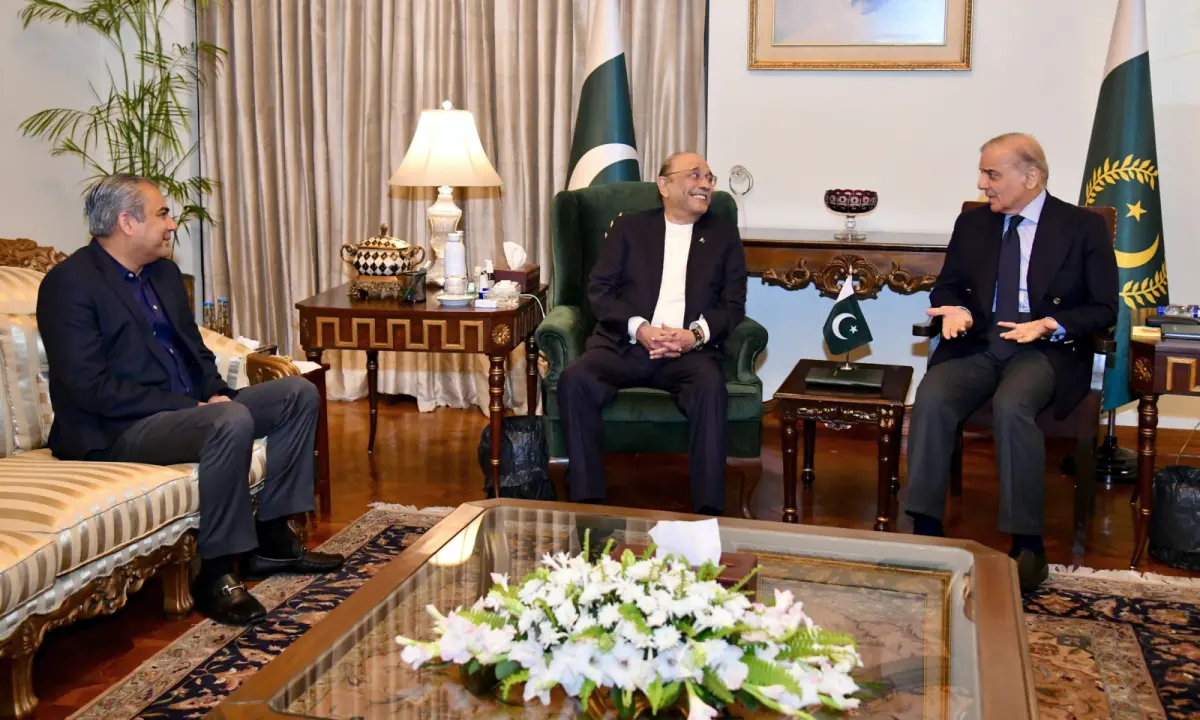
    President, PM agree on resolving ‘all matters’ through dialogue amid rising political temperatures

    President Asif Ali Zardari and Prime Minister Shehbaz Sharif have decided that all matters will be resolved through dialogue, the Presidency said on Thursday after the two leaders met in Islamabad.

    The meeting follows recent hard-hitting remarks by President Zardari’s son, PPP Chairman Bilawal Bhutto-Zardari, who questioned past decisions and actions taken by the ruling coalition — steered by PML-N and supported by PPP.

    In a statement, the Presidency said the “current situation” was discussed in Thursday’s meeting.

    Interior Minister Mohsin Naqvi, whom Bilawal made pointed remarks about, was also present at the huddle.

    The “current political situation was reviewed in detail”, while the Middle East conflict also came under discussion.

    It was decided that the leadership will “sit down together on all matters and resolve them through consultation”, the Presidency said.

    “The previous constitutional amendments were passed through mutual consultation among all allied parties,” the statement from President Zardari’s office said.

    The recent friction between coalition partners PML-N and PPP comes amid a debate over the creation of new administrative units, which was sparked by Naqvi in July when he called for a “reset” in governance.

    The PPP has consistently opposed carving out new provinces in Sindh, which it rules. The party has consistently invoked a unanimous resolution passed by the Sindh Assembly opposing the province’s division, although President Zardari has not commented on the matter publicly.

    Bilawal’s remarks on Tuesday drew a strong reaction from leaders of the PML-N, as well as the Muttahida Qaumi Movement-Pakistan (MQM-P) — another coalition ally.

    Despite months having passed since the debate began, Bilawal claimed that no one from the government had brought up the matter with him or President Zardari, even though some federal ministers have voiced their support for more provinces.

    His remarks followed the Nov 14 meeting between President Zardari and PM Shehbaz. According to official sources, the two reached an understanding on sticking to the constitutional process for any new provinces.

    Speaking at a ‘Meet the Press’ event in Karachi, the Bhutto scion expressed the fear that any “forced” attempt to carve up Sindh into new provinces would lead to bloodshed.

    He also voiced his strong opposition to a referendum on creating new provinces — as initially suggested by Naqvi and endorsed by Information Minister Attaullah Tarar in response to Bilawal’s speech.

    Bilawal even questioned whether the judiciary had the public’s confidence, particularly in the wake of the 27th Amendment, which he had strongly advocated for at the time of its passage just a year ago.

    He said that the 27th Amendment was passed with a “brute majority” rather than a mutual consensus.

    However, in a later interview, Bilawal clarified that he was not “disowning” the amendment, but rather advocating for greater consensus on such key legislation.

    As he called for a “political and democratic reset” to meet the growing economic challenges, the PPP chairman suggested some steps the government could take to restore the opposition’s confidence so the Parliament could function properly.

    Source: dawn

  • FCC sets aside high court rulings upholding infrastructure cess in Sindh, KP

    FCC sets aside high court rulings upholding infrastructure cess in Sindh, KP

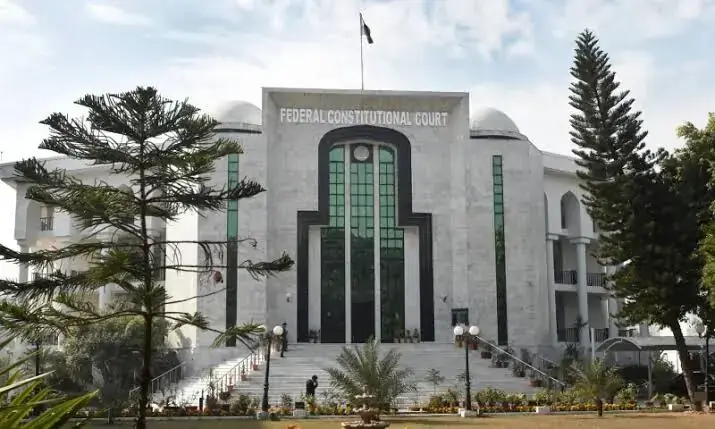
    ISLAMABAD: The Federal Constitutional Court (FCC) on Thursday set aside high court rulings upholding the infrastructure cess imposed by the Sindh and Khyber Pakhtunkhwa governments.

    The case pertained to the Sindh Development and Maintenance of Infrastructure Cess Act, 2017 and the Khyber Pakhtunkhwa Infrastructure Development Cess Act, 2022, including amendments introduced through the KP Finance Act, 2024.

    Headed by FCC Chief Justice Aminuddin Khan, a two-judge bench, also comprising Justice Aamer Farooq, had taken up a batch of 568 petitions by private petitioners challenging decisions by the Sindh High Court (SHC) and the Peshawar High Court (PHC) upholding the cesses.

    The FCC bench examined the constitutional limits of provincial taxation in relation to imports, exports, customs-related transactions and the movement of goods across provincial boundaries.

    The Sindh infrastructure cess controversy originated in 1994 and was subsequently governed by the Sindh Development and Maintenance of Infrastructure Cess Act, 2017, which provided for taxes on goods entering or leaving Sindh from or for outside the country through air or sea. On June 4, 2021, the SHC upheld the levy.

    Similarly, the KP Infrastructure Development Cess Act, 2022, imposed cess on the transportation and movement of goods in the province. Section 14 of the KP Finance Act, 2024, amended Section 3 of the 2022 Act to enhance the cess rate from one to two per cent. The PHC, through its Nov 14, 2025 judgement, dismissed 157 petitions challenging the levy and upheld its legality.

    The judgements of both high courts were subsequently challenged before the FCC. The petitioners argued that the provinces lacked constitutional authority to impose fiscal levies on imports, exports and goods falling within the federal legislative domain.

    They maintained that the impugned laws encroached upon Parliament’s exclusive legislative competence. Consequently, the provincial provisions and the high court judgements upholding them could not be sustained.

    Senior counsel Hafiz Ehsaan Ahmad Khokhar, while representing the secretary of the Revenue Division and the Federal Board of Revenue (FBR), submitted that the impugned provincial levies had to be examined in the light of Articles 141 and 142(a) of the Constitution, read with Entries 27, 43 and 59 of Part I of the Federal Legislative List (FLL) in the Fourth Schedule.

    He explained that Entry 27 covered imports and exports across customs frontiers, inter-provincial trade and commerce and trade with foreign countries, whereas Entry 43 specifically assigned customs duties, including export duties, to the federation.

    The counsel contended that under Article 142(a), Parliament had exclusive legislative competence over matters enumerated in the FLL.

    The constitutional character of a levy, he argued, must be determined by its true nature, taxable event, fiscal incidence, charging provisions and actual operation, not merely by its nomenclature as an infrastructure cess.

    A provincial levy imposing an additional fiscal burden on imported or exported goods and operating through the customs-clearance mechanism directly engaged the federal legislative domain, he said.

    He also referred to Article 163, explaining that the provincial power to impose taxes on professions, trades, callings and employments could not be extended to customs duties or other subjects constitutionally assigned to the Parliament.

    The counsel further argued that a provincial legislature could not acquire legislative competence over a federal subject merely by describing a customs-linked fiscal levy as an infrastructure cess.

    Meanwhile, the Sindh and KP governments defended their respective laws, arguing that the taxes were provincial levies intended to finance infrastructure development and road facilities.

    They maintained that it was not a customs or export duty and that the provincial assemblies were competent to legislate on such matters under Article 142(c) of the Constitution and the impugned judgements were legal.

    The additional attorney general supported the federation’s position, submitting that the provincial governments lacked legislative competence to impose levies falling within the FLL.

    After hearing the arguments, the FCC set aside the two high court judgements and declared that the legislations were beyond the legislative competence of the provinces.

    Source: dawn

  • Top UN court finds Myanmar committed state-sponsored genocide against Muslim Rohingya

    Top UN court finds Myanmar committed state-sponsored genocide against Muslim Rohingya

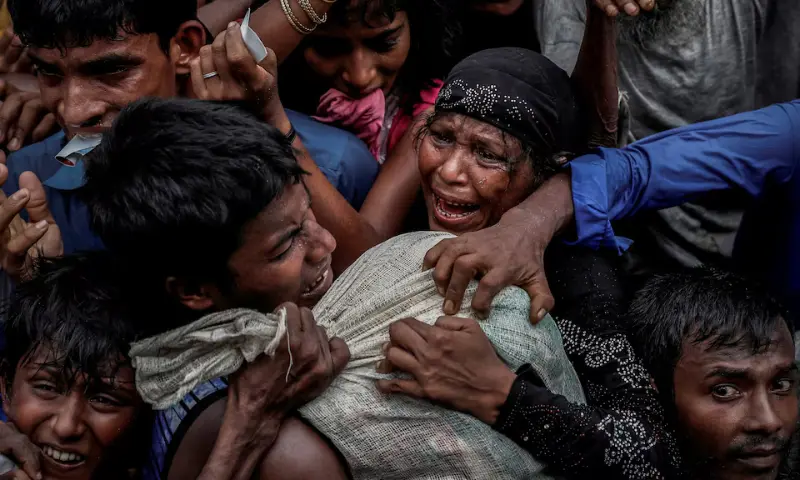
    The highest United Nations court ruled on Thursday that thousands of killings and widespread sexual violence by Myanmar’s security forces against the Rohingya Muslim minority population in 2017 amounted to state-sponsored genocide.

    The decision, seven years after the case was filed by predominantly Muslim Gambia, marked only the fourth time since the Nazi Holocaust that an international court ruled that the legal threshold to prove genocide had been met.

    It was the first time the court held a state responsible for genocide.

    “The court finds that Myanmar’s security forces killed thousands of Rohingya civilians, perpetrated widespread acts of sexual violence as well as acts of extreme violence against children and attacked fleeing Rohingya,” presiding Judge Yuji Iwasawa said in a reading of the decision.

    The panel found “that the Republic of the Union of Myanmar has committed genocide against the Rohingya group in Northern Rakhine State.”

    Myanmar’s government did not immediately respond to a request seeking comment.

    Decision is expected to influence other genocide cases

    Judges found that Myanmar’s military carried out mass executions of men and boys, committed widespread rape and sexual violence against Rohingya women and burned or razed hundreds of villages during so-called clearance operations.

    The military actively spread hate speech targeting the Rohingya population, they said. The court’s ruling is final and cannot be appealed.

    Genocide has rarely been established in international courts, largely because prosecutors must prove a specific intent to destroy, in whole or in part, a national, ethnic, racial or religious group.

    The decision by the International Court of Justice, or World Court, is expected to have repercussions far beyond Myanmar, including for South Africa’s 2023 case accusing Israel of genocide in Gaza.

    The first major decision by the court in more than a decade on the application of the 1948 Genocide Convention will be pored over by legal experts for clues to how the bench assessed state responsibility in the alleged commission of international crimes.

    Both Israel and Myanmar deny genocide and say their forces responded legitimately to attacks by armed groups.

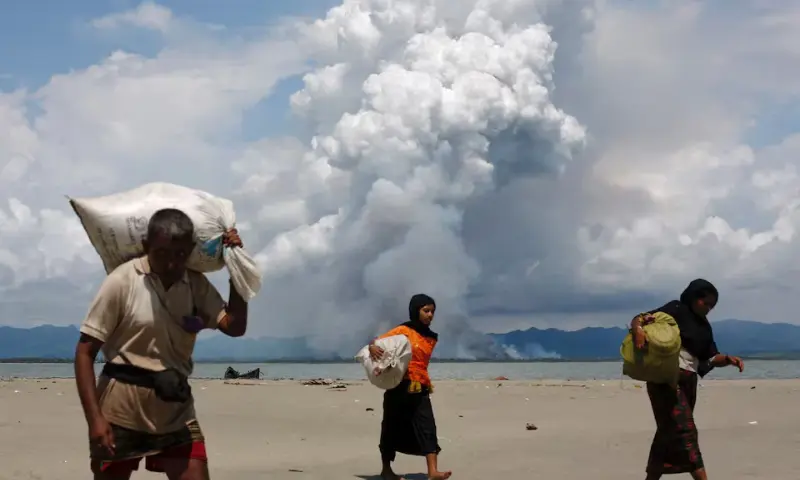
    Smoke is seen on Myanmar’s side of border as Rohingya refugees walk on the shore after crossing the Bangladesh-Myanmar border by boat through the Bay of Bengal, in Shah Porir Dwip, Bangladesh, on September 11, 2017. — Reuters
    Smoke is seen on Myanmar’s side of border as Rohingya refugees walk on the shore after crossing the Bangladesh-Myanmar border by boat through the Bay of Bengal, in Shah Porir Dwip, Bangladesh, on September 11, 2017. — Reuters

    In a major legal victory for Gambia, the court found the state responsible for genocide resulting from a military offensive that drove at least 700,000 Muslim Rohingya from Buddhist-majority Myanmar.

    A panel of 15 judges said “the only reasonable inference that can explain Myanmar’s actions is an intention to destroy a substantial part of the protected group namely the Rohingya population in Northern Rakhine state,” meeting the legal threshold for genocide.

    The court said Myanmar had an obligation to compensate the Rohingya for the violations it had committed, to be determined at a later date.

    Myanmar must also allow the “safe and dignified return to their place of residence and the reunification of families for the Rohingya displaced as a result of Myanmar’s wrongful acts,” it said.

    International courts previously only recognised genocide during the 1994 Rwanda genocide, the 1995 Srebrenica killings in Bosnia, and atrocities by Cambodia’s Khmer Rouge in the late 1970s.

    While rulings by the ICJ, which settles disputes between states and rules on alleged breaches of international treaties, are final, the court has very limited options to enforce them.

    It is distinct from the International Criminal Court, which prosecutes individuals for war crimes, crimes against ​humanity and genocide and can impose jail terms.

    Source: dawn

  • EY-led consortium signs financial advisory pact for outsourcing of Karachi, Lahore airports

    EY-led consortium signs financial advisory pact for outsourcing of Karachi, Lahore airports

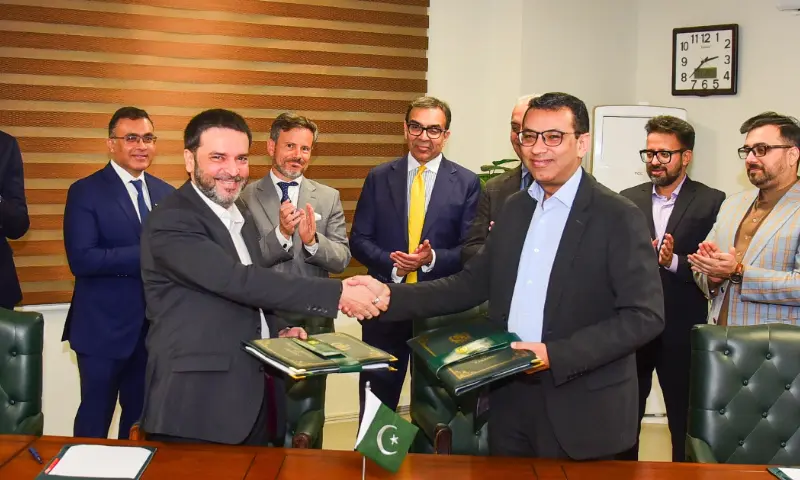
    The Privatisation Commission and a consortium led by Ernst & Young (EY) Middle East on Thursday signed a financial advisory services agreement (Fasa) for the outsourcing of Karachi and Lahore airports.

    In August, the commission had approved the appointment of a financial adviser for the outsourcing of both airports, mentioning a “consortium led by EY-Parthenon as the top-ranked interested party”.

    It also constituted a negotiation committee to finalise the Fasa with the successful consortium.

    “The Privatisation Commission and a consortium led by EY Middle East signed a Fasa today in Islamabad for the outsourcing of Jinnah International Airport, Karachi and Allama Iqbal International Airport, Lahore,” according to Thursday’s press release issued by the commission.

    “The transactions envisage bringing in private sector expertise for the operation, management, commercial development and optimisation of both airports through a concession/management contract,” the commission underlined.

    Under the Fasa, the EY Middle East-led consortium would provide “comprehensive transaction advisory services, including technical, financial, legal, environmental and commercial expertise, to support structuring and implementation of the transactions in accordance with international best practices through a transparent, competitive and market-driven process”.

    The commission termed the signing an “important milestone” in the government’s privatisation programme.

    The press release said the signing reflected the government’s commitment to “enhancing efficiency, service quality and long-term sustainability of both airports through private sector participation while ensuring transparency, competitiveness and value for the people of Pakistan”.

    Adviser to the Prime Minister on Privatisation and Privatisation Commission Chairman Muhammad Ali, along with senior officials of the commission, witnessed the signing ceremony.

    The EY team was represented by Andre Olivenca of EY International and Zeeshan Hussain, the statement added.

    In December 2022, the government, under the premiership of Shehbaz Sharif, decided to outsource the management of the Karachi, Lahore and Islamabad airports under a public-private partnership.

    Earlier this year, the outsourcing operation for these airports shifted from a government-to-government (G2G) mode to an open bidding process due to high investor interest, aiming for transparency and fair competition.

    Both Karachi and Lahore airports are expected to attract over $500 million each in fresh investment.

    In October, PM Shehbaz also approved the ex­­pansion of Allama Iqbal Inter­na­tional Airport and Jinnah International Airport to improve facilities for passengers.

    Source: dawn

  • Pakistan inch closer to victory in second Test despite Sri Lanka fightback

    Pakistan inch closer to victory in second Test despite Sri Lanka fightback

    Sri Lanka mounted a determined rearguard to stave off an innings defeat and frustrate Pakistan on the third day of the second and final Test, reaching 309-9 at stumps at the Rawalpindi Cricket Stadium on Thursday.

    The visitors, however, remain in a precarious position, with an overall lead of 82 runs and just one wicket left.

    Milan Rathnayake led the resistance with an unbeaten 60, while Kusal Mendis and Sonal Dinusha contributed half-centuries to keep Sri Lanka in the contest.

    Their effort ensured the match would continue into a fourth day, although Pakistan will believe they have done enough to remain favourites to secure victory.

    Sri Lanka added 235 runs during the day after resuming at 74-3, still trailing by 153. Pakistan had taken a commanding 227-run first-innings lead after dismissing the visitors for 98 and then making 325 in reply.

    The hosts had further strengthened their position by taking three Sri Lankan wickets before stumps on Wednesday.

    They continued to apply pressure on Thursday morning, with Aamer Jamal trapping Dhananjaya de Silva lbw for 37. The batter reviewed the decision, but the original call stood, leaving Sri Lanka at 99-4.

    Razaullah then accounted for Pasindu Sooriyabandara, who had battled for 116 deliveries to make 38.

    The right-arm fast bowler found the edge, and wicket-keeper Ghazi Ghori dived to his left to complete an impressive catch. Sri Lanka went to lunch at 166-5, with Kusal on 32 and Dinusha on 19.

    The pair provided the backbone of the recovery after the interval, putting together an 81-run partnership for the sixth wicket. Kusal, playing a patient innings, reached his 24th Test half-century, striking eight fours in his 126-ball 53.

    Pakistan finally broke the stand when Salman Ali Agha dismissed the Sri Lankan captain at 215-6. Mendis attempted to sweep the off-spinner but played the ball onto his leg stump, departing after having helped steady the innings.

    Dinusha continued to resist, finding support from Rathnayaka, who came in after Kusal’s dismissal. The pair added 53 for the seventh wicket, taking Sri Lanka past Pakistan’s first-innings total and into the lead. At tea, the visitors were 241-6, 14 runs ahead.

    The partnership ended soon after Pakistan took the second new ball, with Aamer providing the breakthrough.

    Dinusha attempted to pull a short delivery but mistimed the shot, allowing Azan Awais to take a sharp catch at midwicket. Dinusha departed for 54 from 119 balls, an innings containing seven boundaries.

    Rathnayake, meanwhile, grew increasingly assured as the tail began to fall around him.

    He reached his second Test half-century with a boundary off Razaullah in the 90th over and continued to attack when the opportunity arose. His unbeaten 60 came off 82 deliveries and included 11 fours.

    Mohammad Abbas dealt further blows to Sri Lanka’s hopes of building a substantial lead, dismissing Prabath Jayasuriya for one and Lahiru Kumara for five.

    Abbas finished with 2-54 from 33 overs, including 15 maidens, while Aamer was Pakistan’s most successful bowler with 3-67.

    Pakistan’s task was complicated by the absence of Saqib Khan, who was ruled out of further bowling after suffering a left hamstring strain on Wednesday.

    He had dismissed Lahiru Udara for seven in Sri Lanka’s second innings before leaving the field. The injury left Pakistan relying on their three available frontline fast bowlers for much of the day.

    Speaking after play, Ghazi acknowledged the impact of Saqib’s absence but praised the remaining bowlers for their efforts.

    “One of our bowlers was unfortunately injured, and that made a bit of a difference. But the other three deserve a lot of credit for the effort they put in to cover for him,” he said.

    Ghazi also recognised the responsibility shouldered by Sri Lanka’s middle order.

    “Their senior middle-order players showed responsibility on this pitch. The way [Kusal] Mendis batted, he stayed at the crease even though there were quite a few plays and misses. They put up a good performance,” he said.

    The Pakistan wicket-keeper said the hosts would need discipline with the bat when their turn came.

    “There is still a lot in the wicket for the bowlers, but you have to show a disciplined batting performance,” he said, adding that Pakistan would first look to take the remaining wicket quickly and restrict Sri Lanka to the smallest possible target.

    Dinusha, whose half-century helped revive the innings, said the visitors had been determined to respond after their first-innings collapse.

    “Credit must go to the Pakistan bowlers. They bowled really well in the first innings, and we struggled a little. But I am very happy with how our boys fought back in the second,” he said.

    Asked whether batting had become easier, Dinusha insisted that patience had been central to the recovery.

    “To be honest, it wasn’t easy. They bowled really well. We went with patience,” he said. He hoped Rathnayake could add more runs on Friday, saying another contribution from the unbeaten batter would be “very good” for Sri Lanka.

    Play ended at 4:35pm after the umpires deemed the light insufficient. Sri Lanka will resume on Friday with Rathnayake and Asitha Fernando, who is unbeaten on two.

    The visitors have gained the lead they desperately needed, but Pakistan require only one more wicket to begin a chase that could bring the series to a decisive conclusion.

    Source: dawn

  • Lahore named ECO Tourism Capital for 2027, to host year-long cultural events

    Lahore named ECO Tourism Capital for 2027, to host year-long cultural events

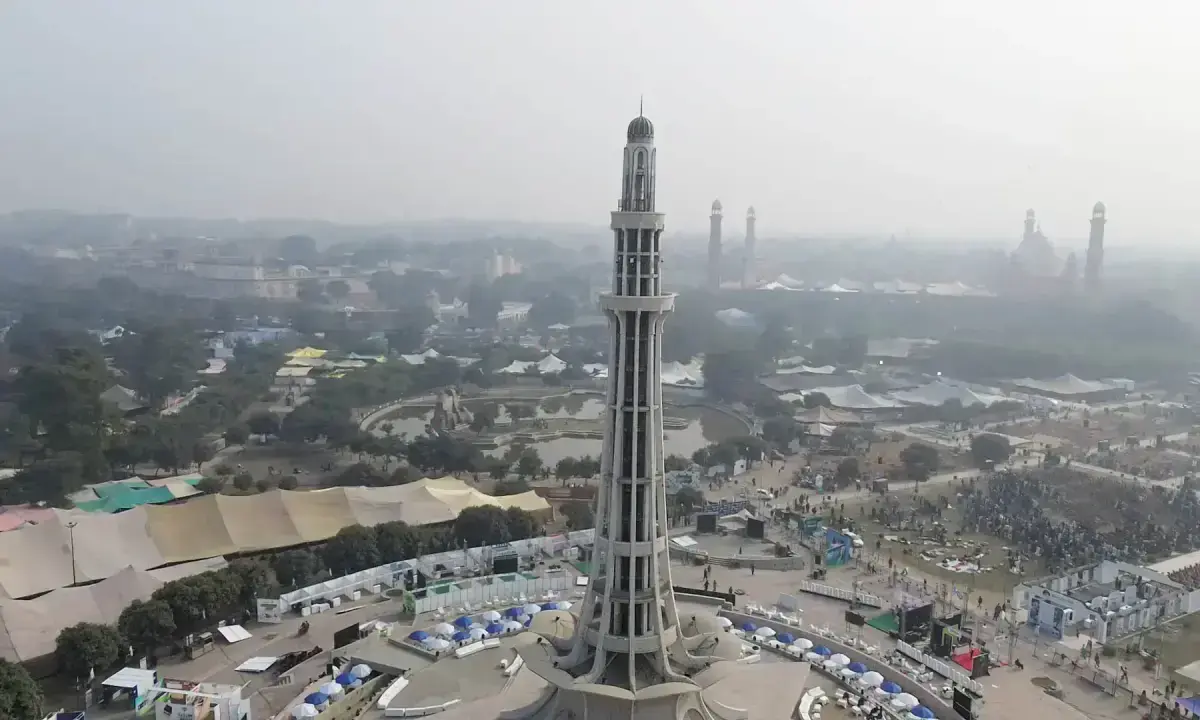
    LAHORE: Lahore has formally assumed the title of Economic Cooperation Organisation (ECO) Tourism Capital for 2027, putting Punjab’s cultural heritage and tourism potential in the spotlight of regional cooperation.

    Punjab Senior Minister Marriyum Aurangzeb told Dawn on Thursday that the official handover ceremony was held in Shusha, Azerbaijan a day earlier.

    The title was formally handed over to Lahore by ECO Secretary General Ambassador Asad Majeed Khan, with Shusha having held the designation for 2026. Punjab Tourism, Archaeology and Museums Secretary Socrat Aman Rana received the title on behalf of the provincial government.

    Aurangzeb described the recognition as an “international endorsement” of Lahore’s historical and cultural significance, providing an opportunity to showcase Punjab’s heritage, cultural diversity and tourism potential to the world.

    She said the designation would give fresh impetus to the provincial government’s efforts to promote tourism as a driver of economic growth, investment, employment generation and cultural diplomacy.

    As ECO Tourism Capital 2027, Lahore is expected to host a year-long programme of international engagements, cultural festivals, heritage celebrations and tourism promotion activities to attract visitors and delegations from across the region and beyond.

    The proposed programme includes ECO tourism engagements, international delegations and regional cooperation activities, alongside the Basant festival, Lahore Biennale and other international contemporary arts events.

    “Our objective is to make tourism a meaningful driver of economic activity, investment, employment generation and international cultural engagement,” Aurangzeb said.

    She said the recognition would strengthen Lahore’s position as a leading cultural destination and bring Punjab’s wider tourism potential into the international spotlight.

    Welcoming the designation, CM Maryam termed it a historic opportunity to introduce Punjab’s cultural and tourism assets to the international community.

    “Lahore is not merely a city; it is the living expression of centuries of history, culture, art and civilisation. Its recognition as ECO Tourism Capital 2027 is a matter of immense pride for Punjab and Pakistan,” she said in a statement.

    The chief minister said the provincial government was committed to preserving the province’s heritage, revitalising historic cities and transforming Punjab into a world-class tourism destination.

    She added that 2027 would provide an opportunity to showcase Lahore’s cultural identity, hospitality and tourism potential to the world.

    In September, Lahore was also named the Shanghai Cooperation Organisation’s (SCO) Tourism and Cultural Capital for 2026-27. The decision was announced at the 26th meeting of the SCO Council of Heads of State in the Kyrgyz capital.

    Source: dawn

  • MQM-P’s Khalid Maqbool urges courts to take notice of Bilawal’s ‘bloodshed’ remark

    MQM-P’s Khalid Maqbool urges courts to take notice of Bilawal’s ‘bloodshed’ remark

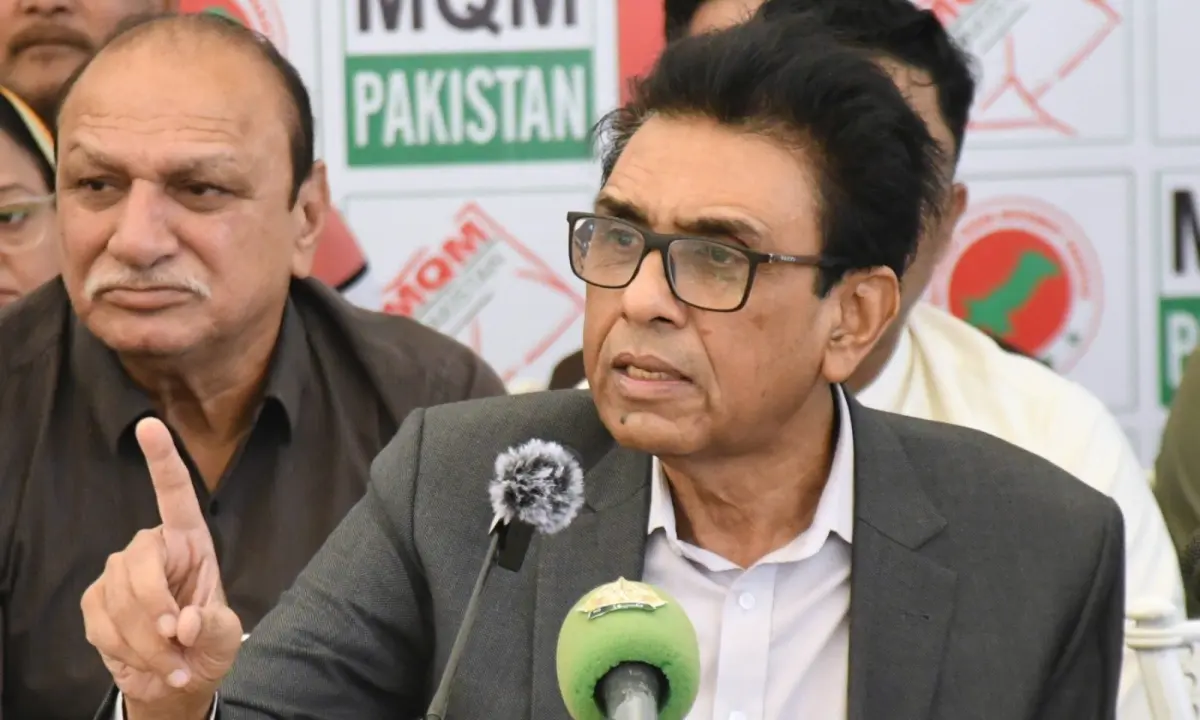
    Muttahida Qaumi Movement-Pakistan (MQM-P) chief Dr Khalid Maqbool Siddiqui on Thursday urged the courts to take notice of PPP Chairman Bilawal Bhutto-Zardari’s remark, which the latter made during a speech that covered the creation of new provinces, among other matters.

    “We talk about the garbage on Karachi’s streets, but if Sindh is divided, we will see blood flow through its streets,” Bilawal had said, calling for a “political reset” in the same address. Asked about it a day later, the PPP chief insisted he was not issuing a threat, but rather warning of the likely reaction to Sindh’s division.

    The speech drew a strong reaction from leaders of PML-N, as well as its ally MQM-P, which has been calling for the creation of new administrative units in the country, particularly Karachi.

    In a fresh rebuke of Bilawal on Thursday, Siddiqui particularly took exception to the Bhutto scion’s warning of bloodshed and said it warranted that the courts take suo motu notice.

    Speaking at a press conference in Karachi, the MQM-P convenor said his party expected to be countered with arguments, not threats, in response to its own arguments.

    “One should pause and think carefully before threatening us and the people of Sindh’s urban areas,” he said, alleging that presently, Pakistan had “feudalistic democracy” that was a far cry from democracy.

    In “feudalistic democracy”, a political worker would not transition to becoming a leader, but an individual was made a leader on the basis of their background, he explained.

    “And when the leadership emerges from dynastic and feudal backgrounds, their temperament is also feudalistic,” he commented.

    Siddiqui asserted that MQM-P had been calling for the creation of new provinces across the country and never restricted their demand to just Sindh or Karachi.

    Directly addressing Bilawal, he questioned: “If the demand was for the creation of provinces in all of Pakistan, why would there be bloodshed in just Karachi, Hyderabad, Mirpurkhas or Nawabshah? Are you threatening us?”

    He alleged that PPP’s objection to the creation of new provinces in Sindh was due to “Karachi contributing 97 per cent to the province’s budget”.

    Siddiqui then reiterated his query: “The urban areas of Sindh are waiting for an answer to the question why there would be bloodshed in these areas? And who will do it? Will you get Uzair Baloch to do it?”

    Commenting on PPP’s governance in Sindh, Siddiqui highlighted issues of low literacy and lack of development in the province.

    “Corruption happens everywhere in the world. It is called a by-product of development. But in Sindh, development is the by-product of corruption,” Siddiqui further alleged.

    He went on to point out that the PPP was not just in power in Sindh but also had governance roles in Khyber Pakhtunkhwa, Gilgit-Baltistan and Balochistan.

    “Were you able to become rulers there under democratic requirements? … We have asked Prime Minister Shehbaz Sharif about this as well?” Siddiqui questioned.

    Again, addressing Bilawal, Siddiqui said, “We respect you and we honour your mandate, but you’re using this kind of language because we had decided that we won’t fight.

    “But we will still fight the constitutional and legal battle. We will still talk in the assemblies.”

    He then again urged the courts and the federal government to take notice of Bilawal’s “threat” and asked the PPP scion to respond to the MQM-P through arguments because “threats do not work on us”.

    Source: dawn

  • Airspace ban on Indian aircraft extended till Dec 23

    Airspace ban on Indian aircraft extended till Dec 23

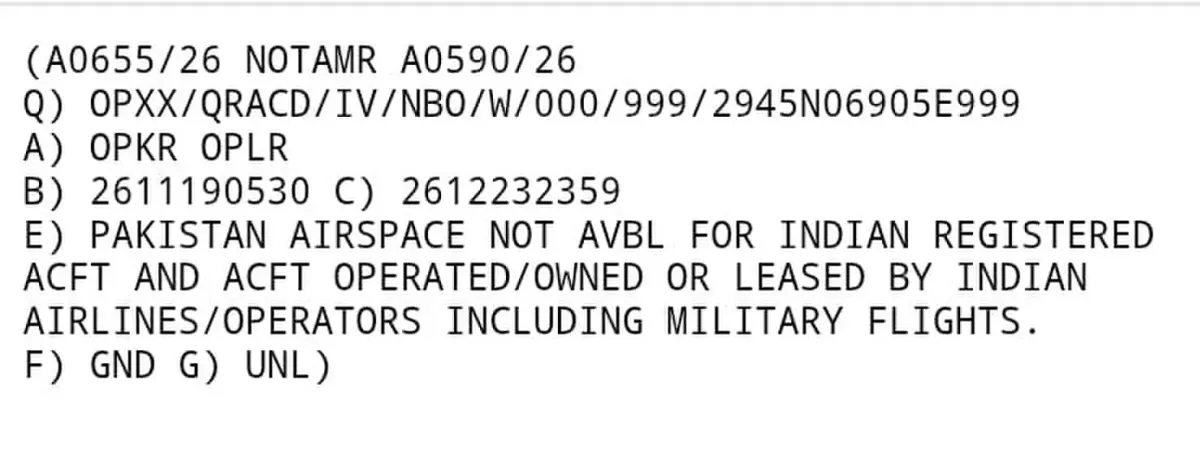
    Pakistan has extended its airspace ban on Indian aircraft until Dec 23, according to a Notice to Airmen (Notam) issued by the Pakistan Airports Authority (PAA).

    The previous extension of the ban was set to expire on Nov 24.

    “Pakistan airspace not available for Indian registered aircraft and aircraft operated/owned or leased by Indian airlines/operators, including military flights,” the Notam said.

    According to the notice, the ban will remain in place until 23:59 on Dec 23.

    Airspace ban on Indian aircraft extended till Dec 23

    The country’s airspace is divided into two flight information regions (FIRs) — Karachi and Lahore, according to a Pakistan Civil Aviation Authority (PCAA) document from 2022.

    The Notam applies to both the Karachi (OPKR) and Lahore (OPLR) FIRs.

    India and Pakistan closed their airspaces to each other’s airlines in late April 2025, when tensions between them escalated in the wake of a deadly attack in India-occupied Kashmir’s Pahalgam.

    On April 24, Pakistan’s top brass announced a series of measures, including the closure of its airspace to all India-owned or Indian-operated airlines with immediate effect, as it retaliated against New Delhi’s slew of aggressive measures against the country.

    New Delhi, without evidence, had alleged that Islamabad backed the Pahalgam attack. However, Pakistan had strongly denied any involvement and offered a neutral probe. The nuclear powers had the fiercest air battle in May, in which Pakistan said it downed seven Indian fighter jets.

    Since then, Pakistan has extended the airspace ban several times, forcing Indian carriers to use longer and costlier routes.

    For Air India, the country’s only carrier with a major international network, fuel costs rose by as much as 29 per cent and journey times by up to three hours on some long-haul routes, according to a document submitted to Indian officials last October.

    The airline, owned by Tata Group and Singapore Airlines, estimated the Pakistan airspace closure’s impact on its profit before tax at $455 million annually — a significant amount given its fiscal 2024-25 loss stood at $439m.

    Source: dawn

  • DPM Dar, Asean secretary general discuss opportunities to expand trade, investment with bloc’s member states: FO

    DPM Dar, Asean secretary general discuss opportunities to expand trade, investment with bloc’s member states: FO

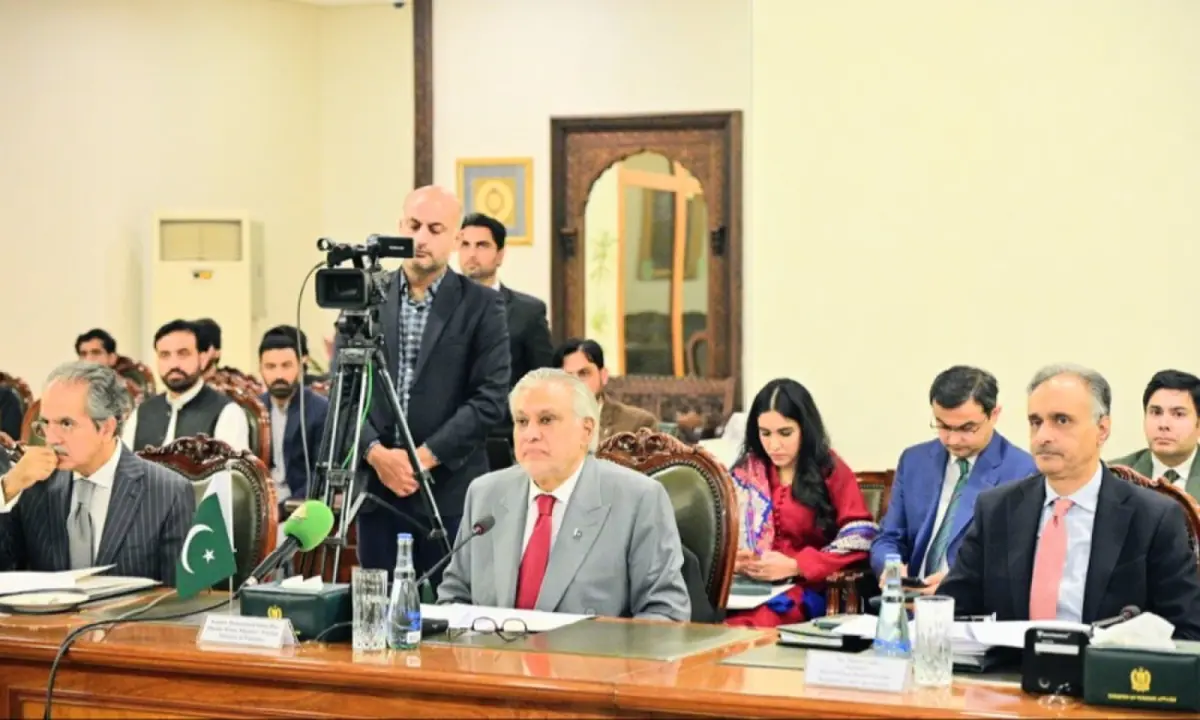
    Deputy Prime Minister and Foreign Minister Ishaq Dar and Secretary General of the Association of Southeast Asian Nations (Asean) Dr Kao Kim Hourn discussed opportunities to expand trade and investment on Thursday.

    Hourn is on a working visit to Pakistan from November 18 to 20.

    In delegation-level talks held at the Ministry of Foreign Affairs, the two sides reviewed progress under the Pakistan-Asean Sectoral Dialogue Partnership, the Foreign Office (FO) said in a post on X.

    According to the handout, the discussions between the two sides focused on expanding trade and investment, strengthening regional connectivity, and deepening cooperation in agriculture and food security.

    Collaboration on climate resilience, disaster preparedness, and digital innovation also came under discussion.

    During the talks, DPM Dar stressed the scope for closer links between the business communities of Pakistan and Asean member states as well as the significance of scholarships, student exchanges, and joint research to strengthen people-to-people ties.

    FO added that the two sides also exchanged views on regional developments and appreciated Pakistan’s “constructive role” in promoting regional peace and stability.

    DPM Dar reaffirmed Pakistan’s commitment to working closely with the Asean Secretariat and member states to advance the partnership.

    A day earlier, the FO had said Hourn’s arrival marked the first high-level visit to Pakistan from the Asean Secretariat.

    Pakistan has been an Asean Sectoral Dialogue Partner since 1993, and a member of the Asean Regional Forum since 2004, FO added.

    Asean was founded on August 8, 1967, when Indonesia, Malaysia, the Philippines, Singapore, and Thailand signed the Bangkok Declaration, setting goals for economic and other types of cooperation and regional peace and stability.

    The bloc has 11 members, including Brunei, Vietnam, Laos, Myanmar, Cambodia, and East Timor.

    “The visit underscores Pakistan and Asean’s shared commitment to deepening and diversifying cooperation,” FO said in its Wednesday statement.

    Earlier this year, Dar attended the 33rd Ministerial Meeting of the Asean Regional Forum in Manila, where he drew attention to key challenges threatening peaceful coexistence and stability across the world, listing the Kashmir dispute and India’s threats to Pakistan’s share of water among them.

    Last year, seven Asean member countries held a joint meeting with Minister for Investment Qaiser Ahmed Sheikh to explore new avenues of investment and economic cooperation with Pakistan.

    Source: dawn