Category: dawn news

  • Lahore once again ranks as world’s most polluted major city as AQI crosses 400

    Lahore once again ranks as world’s most polluted major city as AQI crosses 400

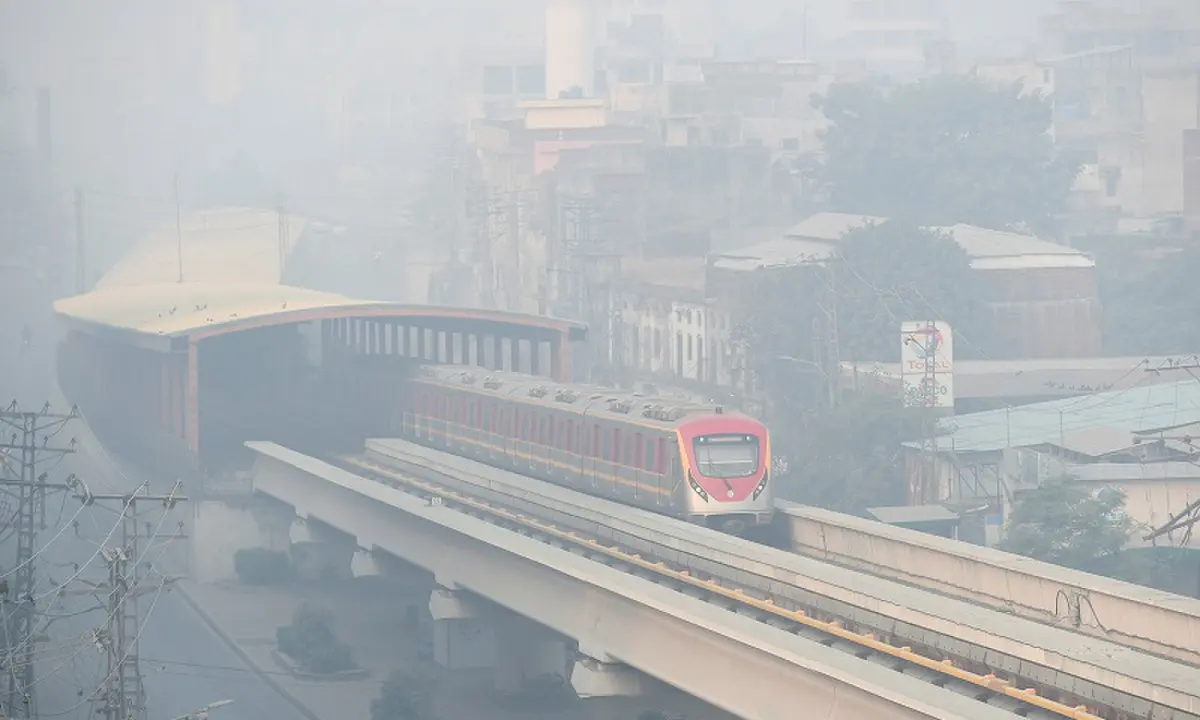
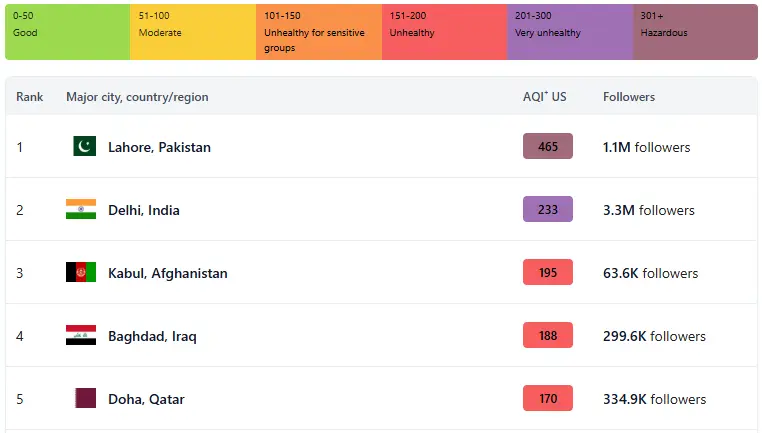
    LAHORE: Heavy smog pushed air quality in several Punjab cities into the hazardous category on Friday, with Lahore recording an hourly AQI reading of 465 between 7am and 8am, while Gujranwala and Multan registered readings of 661 and 641, respectively, according to real-time air quality data.

    Lahore’s historical hourly air quality graph classified the reading of 465 as hazardous, indicating extremely polluted conditions and serious health risks for residents.

    A separate ranking of Pakistani cities placed Gujranwala at the top with an AQI of 661, followed by Multan at 641 and Lahore at 426. Other Punjab cities also reported elevated pollution levels, including Sargodha (289), Sialkot (232), Rahim Yar Khan (228) and Bahawalpur (198).
    Lahore once again ranks as world's most polluted major city as AQI crosses 400

    The readings indicate a widespread deterioration in air quality across Punjab, with several cities experiencing hazardous pollution levels that pose serious health risks, particularly to children, elderly people and those suffering from respiratory and cardiovascular diseases.

    Residents have been advised to minimise outdoor activities, keep windows closed, wear protective masks when going outside and use air purifiers indoors. Prolonged exposure to high concentrations of fine particulate matter (PM2.5) can aggravate respiratory and cardiovascular conditions.

    The deterioration in air quality comes despite intensified enforcement operations by the Punjab Environment Protection and Climate Change Department against sources of pollution, particularly non-compliant brick kilns.

    According to departmental figures, enforcement teams conducted 84,370 inspections of brick kilns across the province between Jan 1 and Nov 18, demolishing 1,429 units, sealing 968 and registering 1,248 FIRs against violators. Fines totalling Rs178 million were also imposed.

    During the critical smog period from Sept 1 to Nov 18, the department conducted 29,999 visits, demolished 519 kilns, sealed 494 and registered 408 FIRs, besides imposing fines totalling Rs101.45m.

    In the first 18 days of November, enforcement teams conducted 7,509 visits, demolished 101 kilns, sealed 161 and registered 96 FIRs, while imposing fines totalling Rs27.6m.

    On Nov 18 alone, 552 brick kilns were inspected, 22 demolished and 19 sealed. Fourteen FIRs were registered and fines totalling Rs3.5m were imposed.

    The department has also introduced repeated inspections to monitor previously inspected kilns and identify units that resume environmentally harmful practices after initial enforcement action.

    Environment Protection and Climate Change Department Secretary Silwat Saeed has directed sustained field enforcement and coordination to address pollution at its sources, while Director General EPA Punjab Abdullah Nayyar Sheikh has maintained a zero-tolerance approach towards environmental violations.

    Meanwhile, Pakistan’s average PM2.5 concentration stood at 67.3 micrograms per cubic metre in 2025, nearly 14 times the World Health Organisation’s annual guideline of 5 micrograms per cubic metre, according to the 2025 World Air Quality Report. This concentration corresponded to an average AQI of 156, placing Pakistan among the world’s most polluted countries.

    The latest readings underline the continuing challenge of controlling air pollution in Punjab despite enforcement measures against industrial and other sources of emissions.

    Source: dawn
  • Ex-minister Liaqat Abbas Bhatti found dead in Hafizabad house, three guards booked

    Ex-minister Liaqat Abbas Bhatti found dead in Hafizabad house, three guards booked

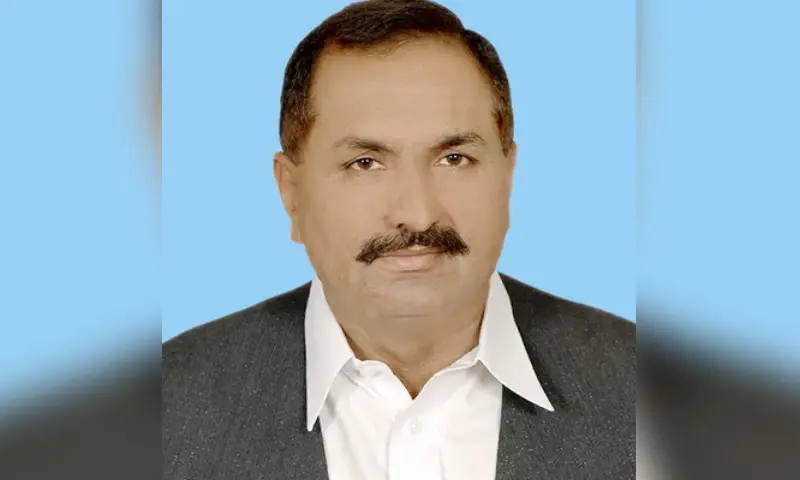
    GUJRAT: Police have booked three security guards of former federal minister Liaqat Abbas Bhatti after his dead body was found under mysterious circumstances at his house in Hafizabad city on Thursday evening with weapons, vehicles and other valuables missing from the house.

    Teams of Hafizabad Police and Punjab Forensic Science Agency (PFSA) also reached the scene soon after the incident was reported. Initial reports said two-time former MNA and former federal minister Liaqat Bhatti’s body was found on a bed in his house.

    Police said they were investigating different possibilities, including murder through asphyxiation.

    Hafizabad DPO Fawad Ahmed and other senior officials also reached the spot and the body was shifted to the Hafizabad DHQ Hospital.

    The DPO told Dawn over the phone that initial investigations revealed that Mr Bhatti was strangled to death by his three security guards, who hailed from Khyber Pakhtunkhwa.

    He said that Mr Bhatti had arrived at his house in Hafizabad three days ago from Lahore and last night when he went to sleep, his security guards killed him and also took at least three vehicles as well as weapons. He said a case was being lodged against the three suspects as per the complaint filed by the heirs. The deceased was the younger brother of renowned political figure Mehdi Bhatti, also a former MNA, whereas his niece Aneeqa Mehdi Bhatti and nephew Zameer Bhatti are the MNA and MPA from the Hafizabad district from PTI.

    Liaqat Bhatti had previously parted ways with his elder brother and contested the last two general elections against close family members.

    THREE KILLED: Three members of a family were killed when their motorbike was hit by an oil tanker near Mungowal along Gujrat-Sargodha Road on Thursday morning. Those killed in the accident were identified as Shahbaz of Sohawa Warraichan, Phalia tehsil, Mandi Bahauddin, and his grandsons – Wahab, 17, and Umair, 15.

    Published in Dawn, November 20th, 2026

    Source: dawn

  • Pakistan among 15 nations welcoming UK, Australia sanctions on Israeli settlements, hoping others follow suit

    Pakistan among 15 nations welcoming UK, Australia sanctions on Israeli settlements, hoping others follow suit

    Pakistan, along with 14 other countries, has welcomed the imposition of sanctions by the United Kingdom and Australia in response to Israeli settlement activities in the occupied Palestinian territory and expressed hope that the decisions would encourage others to follow suit.

    Britain said on Tuesday it would impose sanctions on eight Israeli construction companies involved in building settlements in ‌the occupied West Bank, as part of its effort to protect the idea of a two-state solution.

    Australia followed by imposing sanctions on three Israeli individuals and four organisations for illegal settlement expansion and ​settler violence in the West Bank on Wednesday, saying those actions were extinguishing the possibility of ‌a two-state solution.

    In a joint statement on Thursday, the foreign ministers of Pakistan, Jordan, Egypt, Saudi Arabia, Somalia, Indonesia, Qatar, the United Arab Emirates, Turkiye, Kuwait, Algeria, Niger, Palestine, Libya, and Maldives welcomed the decisions.

    They also welcomed the United Kingdom’s decision to sanction an organisation obstructing the delivery of humanitarian aid to Gaza, the statement said.

    “The ministers also expressed support for all efforts to ensure accountability, including through appropriate international measures and the imposition of sanctions on entities and individuals responsible for settlement activities, including the E1 settlement plan, as well as those that support, facilitate or implement settlement expansion and annexation policies,” it added.

    The E1 settlement project would bisect the Israeli-occupied West Bank and cut it off ​from East Jerusalem, fragmenting the land Palestinians hope will form the heart of a state.

    In the joint statement, the ministers renewed their “strongest condemnation of Israel’s continued settlement policies in the occupied Palestinian territory, particularly the ‘E1’ settlement plan and related settlement activities east of occupied East Jerusalem”.

    The statement said the ministers considered the measures by the UK and Australia to be in line with international law and relevant United Nations resolutions, including the “obligation of all states not to recognise as legal the situation arising from Israel’s unlawful occupation and not to render aid or assistance in maintaining the situation created by Israel’s occupation”.

    In this regard, they reiterated their call for Israel to rescind all measures taken in connection with settlement activities and other measures aimed at altering the geographic and demographic character of the occupied Palestinian territory.

    Moreover, they condemned the “Israeli military escalation in Gaza” and called for “the full and immediate implementation of President Trump’s Comprehensive Plan to End the Gaza Conflict, to ensure security and stability, address the humanitarian situation, facilitate reconstruction and recovery, and lay the foundations for lasting peace”.

    The ministers underscored that Gaza was an integral part of the occupied Palestinian territory and that the only viable path to achieving a just, lasting, and comprehensive peace in the territory was the “implementation of the two-state solution, through the realisation of an independent, sovereign, contiguous, and viable Palestinian State, based on the Jun 4, 1967 lines, with East Jerusalem as its capital, in accordance with international law and the relevant United Nations resolutions”.

    Sanctions

    The UK’s measures on Tuesday targeted eight companies, including Har Hevron Development Company Ltd, Hemdat Shomron Ltd and SAG. (Velvel) Construction and Development Ltd, for asset freezes and director disqualifications.

    The UK government announced the sanctions package shortly before ​the final deadlines for the E1 tender.

    On Wednesday, Australia also imposed sanctions in response to settlement activities in the West Bank, with Foreign Minister Penny Wong saying in a statement: “The sanctioned individuals and organisations have actively participated in the planning, coordination and establishment of ​new settlements, including raising funds, recruitment of volunteers and providing support to violent settlers.”

    Daniella Weiss, leader of the settler ⁠organisation Nachala and an advocate for the expulsion of Palestinians from Gaza, is among those sanctioned. ​Another sanctioned individual, Eliav Libi, has accelerated the expansion of settlements in the West Bank through his construction ​company.

    The measures prohibit Australians and Australian businesses from trading with, or providing support to, the sanctioned individuals and organisations..

    Wong also said that violence at the E1 settlement project in recent weeks had undermined the prospect of a two-state solution.

    She said she had also spoken to Israeli Foreign ​Minister Gideon Saar about Australia’s latest round of sanctions.

    “I outlined our position … I ​said we ⁠do not agree with, we oppose the settlement activities. We have had a long-standing position on this,” Wong told ABC Radio.

    Source: dawn

  • Security withdrawn from Fazl, family members

    Security withdrawn from Fazl, family members

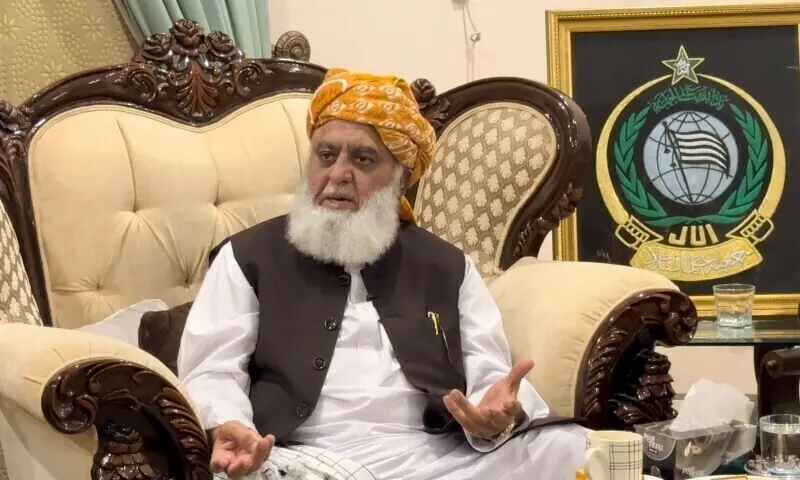
    ISLAMABAD: Police and Federal Constabulary (FC) personnel deployed to protect JUI-F chief Maulana Fazlur Rehman and other members of his family have been withdrawn from the residences they guarded in Islamabad and Dera Ismail Khan, police and party sources told Dawn on Thursday.

    JUI-F spokesman Aslam Ghouri confirmed the development to Dawn, claiming that the FC and police personnel deployed with the Maulana had been called back.

    According to him, FC and KP police officials dep­loyed at the Maulana’s homes in Dera Ismail Khan and Islamabad were simultaneously withdrawn on Wednesday evening.

    He further alleged that the Maulana’s house in Isla­mabad had been cordoned off by the capital police for some time, and security personnel had also harassed some visitors.

    He also claimed that the party’s Central Secretariat in Islamabad had also been “besieged” by police.

    An official of Islamabad police, however, said that only one police guard had been called back.

    Meanwhile, JUI-F leaders from KP alleged that security personnel deployed to protect the JUI-F chief and members of his family — including his son Asad Mehmood and brother Maulana Attaur Rehman — had also been withdrawn.

    They claimed that the personnel had been directed to report back to police lines, and some of them were even instructed to leave their posts “within 15 minutes”. There was, however, no official word from the authorities.

    Meanwhile, opposition leaders in the National Assembly and Senate, Mehmood Khan Achakzai and Allama Raja Nasir Abbas, expressed their concern over the reported withdrawal of security from the JUI-F chief, and called for restoring his detail in view of threats to the lives of JUI-F leaders.

    Separately, Islamabad police have registered a case under various sections of the Anti-Terrorism Act, the Pakistan Penal Code and the Pea­ceful Assembly and Public Order Act, 2024, against two JUI-F leaders and more than 200 unidentified wor­kers for allegedly blocking a road outside Farooq-i-Azam Masjid at Sec­­tor I-9/4 on Nov 7 when the adm­inistration asked the party leaders to call off the event, which they had arranged without obtaining an NOC.

    Those nominated in the FIR are JUI-F’s Mufti Abrar and Maulana Iftikhar Hussain. It states that the event had been organised despite imposition of Section 144 in Islam­abad. The FIR said when the participants were informed that the gathering was unlawful, the JUI-F leaders became infuriated and provoked 200 to 250 workers and refused to stop the programme.

    It alleges that the workers attacked the police contingent, pelted police personnel with stones, and damaged a police vehicle. They also blocked the road by placing hurdles, confining the residents inside the residential flats and causing panic among the locals.

    An anti-terrorism court in Isla­mabad has also issued a non-bailable arrest warrant of Mufti Abrar in connection with the case.

    Muhammad Irfan Mughal in Dera Ismail Khan also contributed to this report

    Published in Dawn, November 20th, 2026

    Source: dawn

  • Politicians blame incitement by Netanyahu for attack on mosque in Israel

    Politicians blame incitement by Netanyahu for attack on mosque in Israel

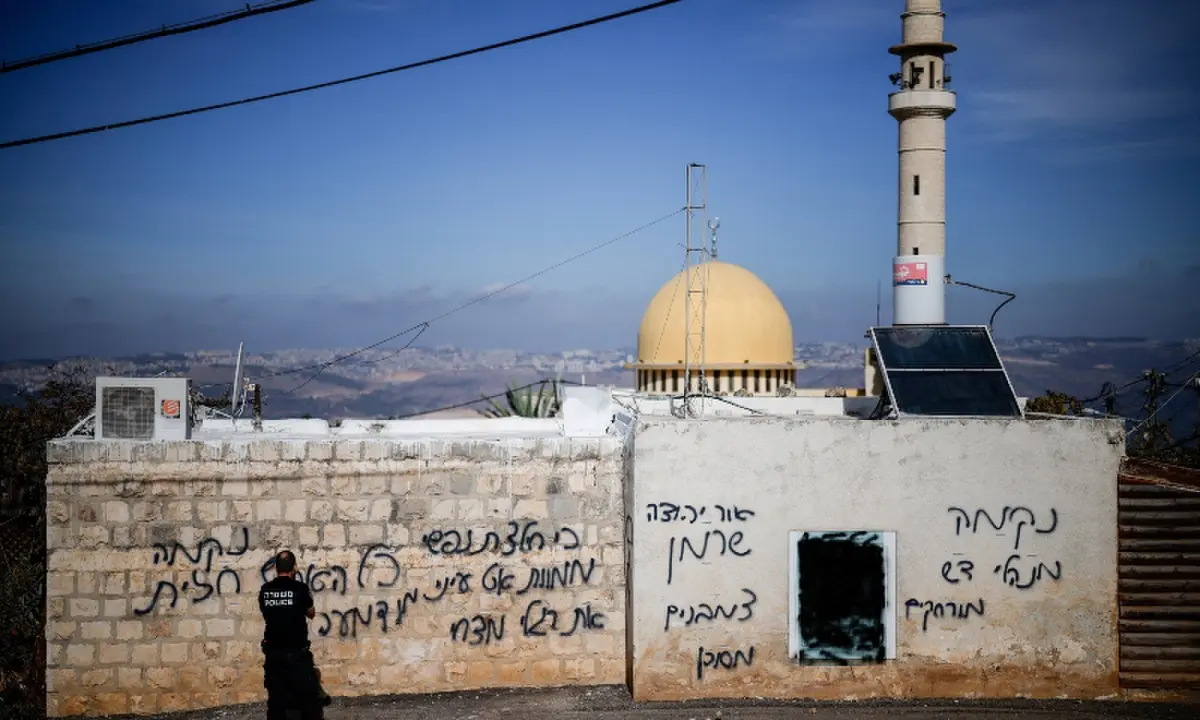
    DAHI: Police said they were investigating a suspected arson attack on a mosque in northern Israel on Thursday, which a slate of politicians blamed on “incitement” by the camp of caretaker prime minister Benjamin Netanyahu.

    The mosque fire in the Arab village of Dahi comes as Netanyahu and politicians from his bloc repeatedly level inflammatory rhetoric against Israel’s Arabs, who won unprecedented gains in elections last month.

    “An investigation has been opened into the suspected arson of a room in the lower part of a mosque in the village of Dahi and the spraying of graffiti on a nearby street,” police said in a statement.

    “Police take any attempt to harm religious symbols very seriously and will act decisively and without compromise to bring the suspects to justice.”

    The mosque’s imam, Khaled al Zoubi, said he had seen “smoke and a fire” when he arrived for prayers on Thursday. He said the mosque’s security cameras recorded “three masked individuals trying to enter the mosque but failing, then breaking the glass of a second-floor window of the mosque and throwing incendiary bottles”.

    Zoubi described the incident as a “racist attack”, but said the damage was not extensive. Photos showed graffiti reading “revenge” scrawled on the walls of buildings near the mosque. “Setting a mosque on fire is a heinous hate crime. This is not Jewish and it is not Israeli,” said Yair Lapid, a leading member of the anti-Netanyahu bloc.

    “The rampant incitement against Arab Israelis must stop,” he wrote on X, pointing to Netanyahu’s right-wing camp.

    Yair Golan, who heads the left-leaning Democrats party, described the incident as “Jewish terrorism”.

    “It is the consequence of the campaign of incitement Netanyahu and his government are waging against Arab citizens of Israel,” he said.

    The head of the Arab-majority Joint List visited the village of Dahi. “We hold Netanyahu and his entire cabinet, and all the extremists with him, responsible for translating their dangerous incitement into reality through attacks on our people,” said Youssef Jabareen.

    Arab-Israelis are descendants of Palestinians who remained after Israel’s creation in 1948 and account for 20pc of the population today. Netanyahu has repeatedly alle­ged electoral fraud by Arab-majority parties, but election authorities have rejected the claims.

    Published in Dawn, November 20th, 2026

    Source: dawn

  • Govt, JI complete talks on petroleum relief package

    Govt, JI complete talks on petroleum relief package

    • Draft proposals finalised; PM, JI chief expected to meet on 24th or 25th
    • Liaqat says govt has prepared plan for gradual reduction in petroleum levy
    • Proposed relief to cover vehicles up to 1,000cc, small farmers

    ISLAMABAD: Jamaat-i-Islami (JI) and the federal government have completed negotiations at the technical committee level, with both sides finalising draft proposals on public relief measures, JI Naib Emir Liaqat Baloch said on Thursday.

    Speaking to the media, Mr Baloch, who heads the JI negotiating committee, said the government had prepared a plan for further reduction in the petroleum levy.

    He added that the final relief package would be announced after a meeting between PM Shehbaz Sharif and JI Emir Hafiz Naeemur Rehman, scheduled for Nov 24 or 25.

    The development followed more than two months of negotiations between the government and JI over the party’s demand for abolition of the petroleum levy and relief for consumers affected by rising fuel prices.

    The two sides agreed in early September to constitute committees to examine proposals for reducing the levy and providing relief to the public.

    During the 10th round of talks on Nov 10, the government and JI agreed on the broad outlines of a proposed agreement, with a final decision to be taken at a subsequent meeting between the prime minister and the party chief.

    Mr Baloch said the government had cited its commitments to the International Monetary Fund (IMF) as constraints during the negotiations. However, a plan had been prepared to gradually reduce the petroleum levy before the next budget to the level from which it had originally been increased.

    The petroleum levy remains a major source of federal revenue. The government has budgeted approximately Rs1.677 trillion in receipts from the

    levy during the current fiscal year against a revised estimate of Rs1.498tr for 2025-26.

    Mr Baloch claimed that Jamaat-i-Islami’s campaign had secured relief of Rs146 per litre on petrol and more than Rs200 per litre on diesel. He said Rs16.36 per litre in relief had also been provided through petroleum levy arrangements.

    Earlier this month, the government announced an arrangement under which oil refineries would contribute a cumulative Rs15bn towards the petroleum levy over 30 days, providing temporary support to the fuel-pricing mechanism.

    Mr Baloch said the government had agreed to expand the prime minister’s fuel-relief programme to include owners of vehicles with engine capacities of up to 1,000cc, while farmers owning up to 12.5 acres would receive relief on fuel used in tractors. He added that separate rates would apply to locally produced and imported petroleum products.

    The JI leader said the government had accepted the party’s position on windfall profits earned by oil companies. However, he opposed replacing the petroleum levy with general sales tax, questioning why consumers should be burdened when the Federal Board of Revenue (FBR) was failing to achieve its tax collection targets.

    On the energy sector, Mr Baloch said the government had informed the party that several stay orders relating to liquefied natural gas (LNG) matters needed to be vacated. Deputy Prime Minister Ishaq Dar had also told the JI delegation that large LNG vessels had arrived, which would help bring down gas prices.

    He also announced that Jamaat-i-Islami would hold a public gathering in Quetta on Nov 22 as part of its campaign against the rising cost of living.

    Published in Dawn, November 20th, 2026

    Source: dawn

  • Silicon Valley elites ‘bankrolled’ news platform Visegrad24 publishing pro-Israel content: report

    Silicon Valley elites ‘bankrolled’ news platform Visegrad24 publishing pro-Israel content: report

    An extensive investigation by American magazine Wired revealed on Thursday how an “anti-migrant, pro-Israel propaganda machine” took form and gained traction via bankrolling by Silicon Valley elites.

    The investigative report, published by Wired on Thursday morning, detailed the rise of the Polish right-wing news media platform Visegrad24 and how its founder, Stefan Tompson, deliberately engineered a pro-Israel editorial stance to make money from influential supporters, rapidly coming to “dominate” breaking-news discussion of the conflict in Gaza on social media platform X after the attack by Hamas on Oct 7, 2023.

    The account, at the time three years old, worked “around the clock to pump out nearly 400 posts” on the attacks within three days after Oct 7: “a mix of terse news updates, soft tributes to Israeli victims, and — above all — rage-bait videos showing allegedly ‘pro-Hamas’ demonstrations in cities across the West”, the report said.

    These racked up 370 million views, launching it into the spotlight overnight as “one of the most influential” pro-Israel accounts on X.

    Dawn has not independently verified the information or internal correspondence mentioned in the Wired report.

    Texts reviewed by Wired from Tompson to an anonymous colleague 15 days after the attack indicated that the Visegrad24 founder was already wary that Israel was angling for a wider regional conflict, writing, “The Israelis do seem to be doing some vicious things.”

    Nevertheless, it revealed, “the founder reasoned a way through his qualms”, messaging the same colleague later the same day to detail his logic on arriving at an “editorial line” on Israel.

    “As Tompson saw it, V24 had been faced with ‘four options’ once the war started,” Wired reported, quoting him as follows:

    1. Say nothing;

    2. Be objective — get hated by both sides;

    3. Pro Muslim — there are 1.5 billion of them;

    4. Pro Israel — There are fewer but also they have a lot of influence and money.

    Tompson here admitted that his “goal is to fundraise off of this”, the report added, noting that he succeeded according to “an extensive trove of V24 financial records, internal communications, screenshots from group chats, and correspondence with donors”.

    Wired added that the documents it obtained were responded to by Tompson “with a blanket denial and an email from a lawyer”, and that he did not agree to an interview with the magazine when they declined to send him the questions in advance.

    “The documents […] reveal how the right kind of online influence, even when it’s strategically acquired by an entity just barely above the gutter of white nationalism, can command support from some of the most powerful people in the world,” the report read.

    According to the report, messages to the colleague in November 2023 revealed that Tompson was added to two groups “that actively push back against founders who have supported Palestine”.

    One of these, named Jewish Alliances, was described as a space to “bring together” those working to fight anti-Semitism, and the V24 founder was recommended by a general partner at Sequoia Capital, Shaun Maguire, who Wired claimed had helped to connect the Israel Defence Forces with Elon Musk’s Starlink satellite communication network.

    The other group, an informal WhatsApp thread, consisted of “hundreds of the most powerful figures from Silicon Valley, Wall Street, and Hollywood” discussing how to build support for Israel after the Oct 7 attacks, according to a Puck newsletter. These group chats engaged in activities such as buying domains with pro-Palestinian phrases to “redirect to appropriate content”, such as longlivetheintifada.com and palestineisourhome.com.

    According to Wired, “the two group chats appear to have paid off pretty handsomely for Visegrad24” in terms of fundraising, with Tompson revealing in messages to his colleague (with matching financial records) that donations were rolling in from major investment firms such as Ribbit Capital.

    Notifications from the website GiveButter, which he used to solicit contributions, show other donations “linked to email addresses associated with” presidents, co-founders, CEOs and heavyweights at various other major companies, including SimpleVenue CEO Michael Sinensky, Warby Parker founder Neil Blumenthal, Wix president Nir Zohar, Lux Capital cofounder Josh Wolfe, and deep tech venture capitalist Matt Ocko.

    The parties named either declined to comment, claimed to have no records of the donations, or declined to confirm while arguing that V24 did not count as a “far-right” group, according to the magazine.

    Nevertheless, “over a million dollars” in donations poured in for the organisation, with the magazine reporting that “much of the money, including some of the largest sums, appears to have come in through ‘donor advised funds’ — ‘dark money’ philanthropic vehicles that allow donors to hide their identities, even from the recipients of their cash”.

    These donations included $175,000 from DonorsTrust, “a fund closely aligned with the Trump administration’s priorities, often referred to as the ‘dark money ATM’ of the American right”, it said.

    Wired also reported that Tompson encouraged his colleague to “play both sides” by taking opportunities to raise funds from Saudi Arabia and the United Arab Emirates. “I do the Jewish side. You do Arabs,” he allegedly wrote.

    According to the report, V24, founded in 2020, gained traction after its “intense volume” of coverage of the Russian invasion of Ukraine — as well as “international notoriety for spreading fake news”, with many of its claims being debunked.

    It added that Tompson also denied that he was given money for the organisation by the Polish state, although Polish news outlets reported that the prime minister had tried to allocate “about $300,000” to the project in 2022 and “a bit under $600,000” in 2023, sending it to “a sports and fitness NGO” that appeared to be a “carve-out for a V24-affiliated project”.

    Later, when Israel launched an attack on Iran in 2025, V24 took a stance of “enthusiasm” for restoring the leadership of Reza Pahlavi and even posted to “influence” US President Donald Trump to join the attack, it said.

    The success of V24 saw Tompson interviewed by Michael Eisenberg in 2024, an American-born Israeli venture capitalist “often billed as an informal adviser to Israeli prime minister Benjamin Netanyahu”, it said.

    Silicon Valley elites 'bankrolled' news platform Visegrad24 publishing pro-Israel content: report

    Source: dawn

  • NCCIA claims uncovering network allegedly involved in up to Rs1tr betting, money laundering

    NCCIA claims uncovering network allegedly involved in up to Rs1tr betting, money laundering

    KARACHI: The National Cyber Crime Investigation Agency (NCCIA) on Thursday claimed to have uncovered an extensive alleged financial network involved in illegal online betting and gambling, fraudulent business operations and suspected money laundering, with an estimated transaction exposure of up to approximately Rs1 trillion.

    Speaking at a press conference at his office, Karachi NCCIA Additional Director Shahzad Akbar said the investigation was initiated after suspicious financial activities were reported through the State Bank of Pakistan (SBP), which revealed massive transactions across commercial banks, microfinance banks and digital wallets.

    Investigators identified an alleged organised network operating through online betting and gambling platforms, including 1XBet, Stake, X777, X555, 99c444, X111 and MelBet.

    The network allegedly collected gambling-related payments through digital channels, including two renowned mobile wallets, before routing the funds through multiple bank accounts, registered companies, fictitious business establishments and third-party account holders.

    “These arrangements were allegedly used to conceal the actual source, ownership and ultimate beneficiaries of the funds,” the NCCIA officer said.

    The investigation also came across suspected fraudulent sub-merchant registrations, forged identity documents, fictitious businesses and accounts allegedly operated as rented or mule accounts.

    Billions in suspicious transactions unearthed

    According to NCCIA, a detailed financial analysis revealed exceptionally high transaction volumes in accounts allegedly associated with the network:

    • Rs. 3.72 billion credited to one suspected settlement account within approximately 22 months
    • Rs. 2.43bn credited to another company account.
    • Rs. 1.97bn received through suspected rented or mule accounts.

    These transactions were found to be grossly disproportionate to the declared business activities and financial capacity of the respective account holders, the cybercrime agency said.

    The overall estimated transaction exposure may be up to approximately Rs1tr, highlighting the scale and complexity of the suspected financial network.

    In a significant financial enforcement operation, Karachi’s NCCIA secured approximately Rs1bn in suspected illicit funds across multiple financial accounts within a single day, preventing their further withdrawal, transfer or potential dissipation.

    “This action represents a major development in disrupting the financial infrastructure allegedly supporting the illegal betting and gambling network,” said the NCCIA additional director.

    Banking officials, company directors under probe

    The investigation has brought suspected banking officials, company directors, business operators, payment facilitators and account holders under scrutiny.

    According to a first information report (FIR), certain banking officials allegedly facilitated the continued operation of suspicious accounts despite anti-money laundering alerts and other warning indicators.

    “Their potential involvement and any institutional lapses are being examined through banking records, financial documentation and digital evidence,” Akbar said.

    NCCIA Karachi conducted coordinated raids at multiple premises and arrested several individuals allegedly involved in the network.

    The FIR, dated Nov 18, was registered under relevant provisions of the Prevention of Electronic Crimes Act (Peca), read with applicable provisions of the Pakistan Penal Code.

    The FIR was filed against 40 individuals and business entities, including 32 chief executive officers of companies and five suspects arrested in connection with the alleged offences.

    The NCCIA additional director claimed that most of those involved in online gambling by developing “different” apps were Chinese nationals.

    Last week, the NCCIA called for stricter regulations governing company registration and bank account verification, warning that loopholes in the existing system are being exploited by illegal call centres, online betting operators and international fraud networks to launder money and defraud victims.

    NCCIA Islamabad/Rawalpindi Additional Director Muhammad Shoaib Khan explained that fake companies were being registered through weak verification procedures, after which bank accounts opened in their names were linked to loan applications, betting and gaming portals to receive and transfer illicit funds.

    Source: dawn

  • Govt snaps petrol price reduction spree as rate raised by Re1 per litre; diesel remains unchanged

    Govt snaps petrol price reduction spree as rate raised by Re1 per litre; diesel remains unchanged

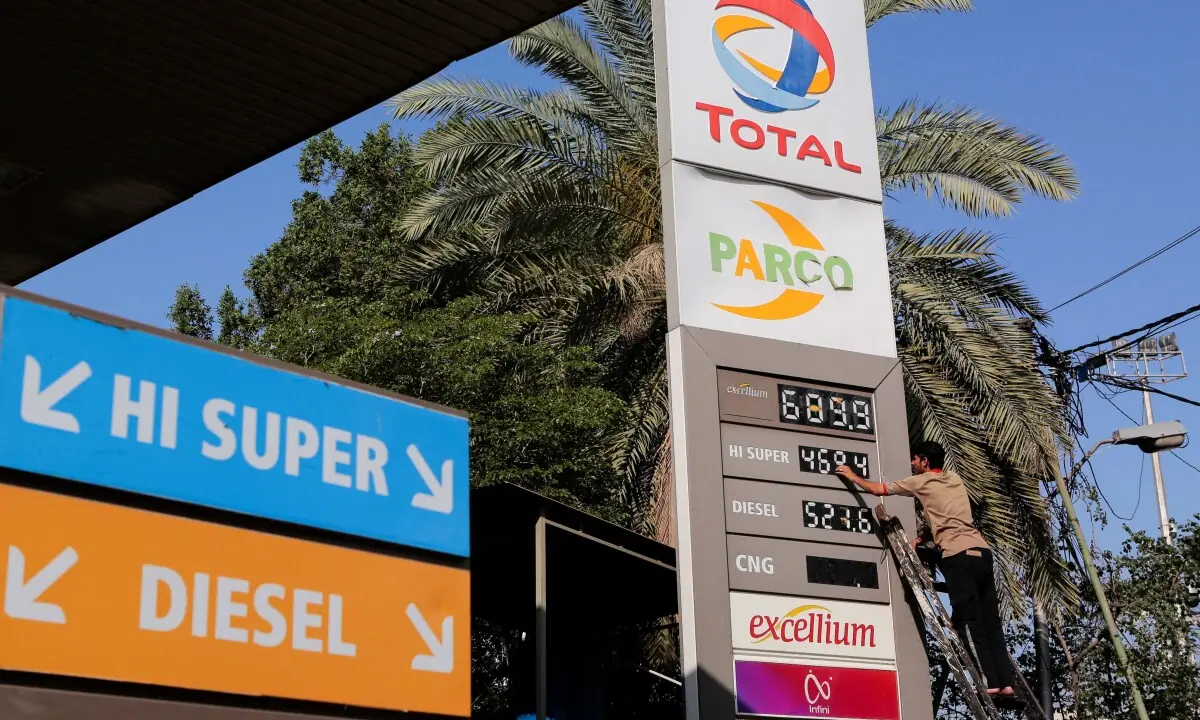
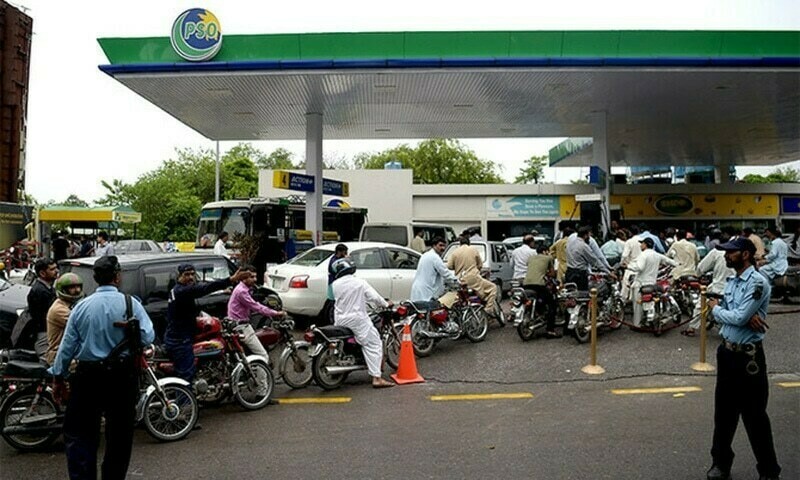
    The government on Thursday raised the price of petrol by Re1 per litre and kept that of diesel unchanged, snapping a 12-day streak of consecutive reductions in the rate of petrol.

    Following the revision, petrol will retail at Rs323 per litre and HSD at Rs355 on Nov 20 (Friday), according to a notification by the Oil and Gas Regulatory Authority (Ogra).

    Following Tuesday’s reduction of the petrol price to Rs325 per litre, Deputy Prime Minister and Foreign Minister Ishaq Dar highlighted the government’s “proactive measures including policy changes and structural reforms in petroleum policy” that had brought prices back down from their April 3 peak and provided relief through a fuel subsidy scheme.

    “The government of Pakistan remains committed to continue making all possible efforts to ease the financial burden on the common man amid global challenges,” he said.

    The government continues to levy Rs114 per litre in taxes and duties on petrol and Rs100 per litre on diesel.

    Under an arrangement announced on Nov 2, for 30 days, oil refineries will contribute to the petroleum levy by bearing a cumulative impact of Rs15 billion, according to the government. This allows a Rs14.71 reduction in the petrol price at the consumer end.

    On Sept 17, the government rolled out the Prime Minister’s Fuel Relief Scheme across the country to ease the public’s burden amid rising fuel prices due to the Middle East situation.

    The subsidy scheme applies to owners of motorcycles, rickshaws and vehicles of up to 800cc.

    Rise in fuel prices

    The price of HSD has come down from a peak of Rs520.35 recorded on April 3. Its price had started rising from Rs281 per litre after the US-Iran war broke out on Feb 28.

    The petrol price had peaked at Rs458.41 on April 3 after beginning its upward trajectory from Rs266 in the first week of March.

    Meanwhile, the government has reintroduced a raft of austerity measures in response to rising fuel prices amid the ongoing Middle East conflict. Under these measures, markets are required to close by 9pm, and fuel allocations for official vehicles have been cut by 50pc for three months.

    Since July 17, the government has been revising fuel prices on a near-daily basis due to fluctuations in international market prices following renewed hostilities between Iran and the US.

    The petroleum minister stated that the cabinet and the prime minister had decided to give Ogra the responsibility of deciding fuel prices on a daily basis based on international market trends.

    Prior to this, the government had been announcing weekly revisions to fuel prices since early March, alongside measures for the conservation of fuel amid possible oil supply disruptions due to the conflict. The federal government had also announced targeted relief measures in April to provide subsidised fuel.

    Petrol is mainly used in private transport, small vehicles, rickshaws and two-wheelers, and changes in its price affect the middle and lower-middle classes.

    Similarly, changes in diesel prices also impact the public at large, as it is mainly used in the heavy transport sector, power plants and large generators.

    Petrol and HSD are the major revenue earners, with monthly sales of about 700,000 to 800,000 tonnes, compared to just 10,000 tonnes of monthly demand for kerosene.

    Source: dawn

  • Pakistan, Qatar reaffirm commitment to strengthening bilateral relations in security, counter-terrorism: ISPR

    Pakistan, Qatar reaffirm commitment to strengthening bilateral relations in security, counter-terrorism: ISPR

    Pakistan and Qatar reaffirmed their commitment to strengthening bilateral relations in the areas of institutional cooperation, security and counter-terrorism on Thursday, the military’s media affairs wing said.

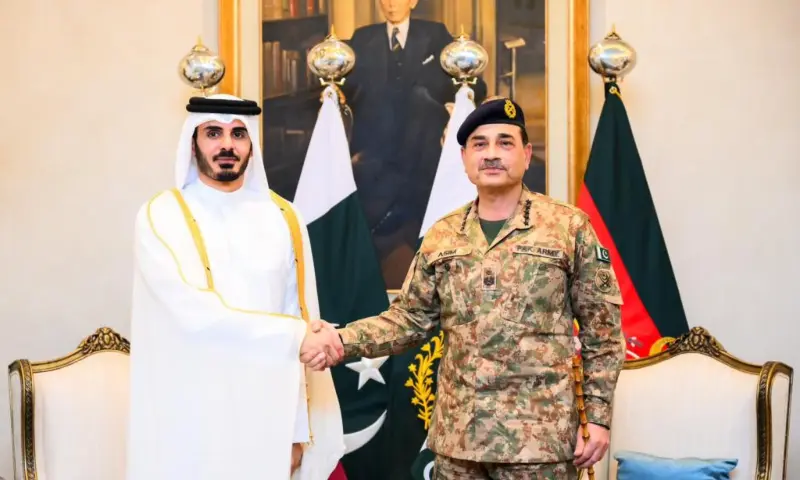
    The development cam as Chief of Defence Forces (CDF) and Chief of the Army Staff Field Marshal Asim Munir met with Qatar’s Interior Minister Sheikh Khalifa bin Hamad bin Khalifa Al Thani, who is currently visiting Pakistan, in Rawalpindi on Thursday, according to a statement by Inter-Services Public Relations (ISPR).

    During the meeting, they discussed matters of mutual interest and the evolving regional and global security situation. They also discussed avenues for the enhancement of bilateral security cooperation, ISPR said.

    “Both sides reaffirmed their commitment to further strengthening bilateral relations between the two countries, particularly in the fields of security, counter-terrorism and institutional cooperation,” the statement said.

    The visiting dignitary appreciated Pakistan’s role in promoting regional peace and stability and acknowledged the longstanding fraternal ties between the two countries, it added.

    CDF Munir reaffirmed Pakistan’s commitment to further deepen bilateral engagement with Qatar. He underscored the importance of close cooperation in addressing shared security challenges, the statement said.

    MoU signed on security cooperation

    The two countries earlier signed a memorandum of understanding (MoU) on security cooperation, along with an action plan to prevent drug smuggling.

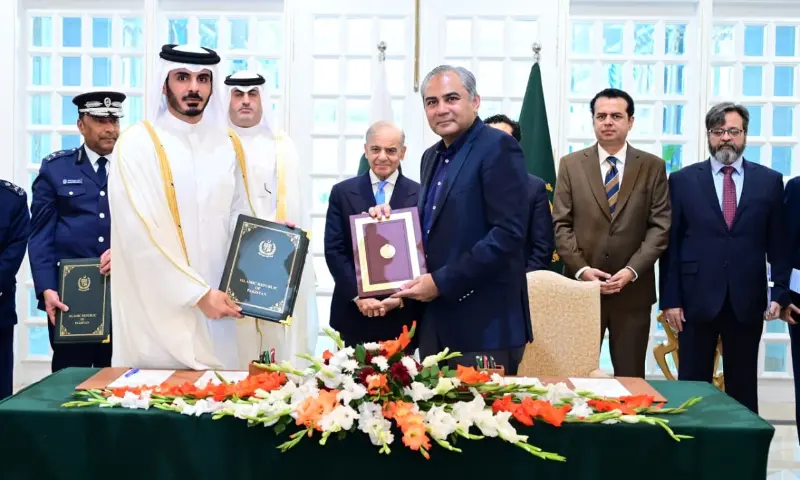
    The MoU was signed between Qatar’s Internal Security Force (Lekhwiya) and the Federal Constabulary, according to the Prime Minister’s Office (PMO).

    Interior Minister Mohsin Naqvi and Qatari counterpart Al Thani signed the documents. Prime Minister Shehbaz Sharif also witnessed the signing ceremony, the statement said.

    The PMO handout said that the premier “warmly” welcomed the visiting dignitary on “on his first visit to Pakistan and reaffirmed the longstanding brotherly relations between Pakistan and Qatar”.

    “He expressed the hope that the visit would further strengthen cooperation between the ministries of interior and relevant institutions of the two brotherly countries,” it said.

    PM Shehbaz also conveyed his greetings to the Qatari emir and thanked the country’s leadership for its “unwavering support to Pakistan”.

    “He particularly appreciated Qatar’s continued supply of liquefied natural gas, which contributes to meeting Pakistan’s energy requirements,” the statement said.

    PM Shehbaz highlighted that nearly 300,000 Pakistanis work in Qatar, where they play an important role in the country’s development and prosperity.

    He said that there were extensive opportunities to expand Pakistan-Qatar economic cooperation, particularly in trade and investment, agriculture, livestock, information technology and mining and minerals.

    The statement said that the Qatari minister thanked Pakistan for its hospitality. He also conveyed Emir Sheikh Tamim bin Hamad Al Thani’s congratulatory messages and best wishes to the prime minister.

    “He appreciated Pakistan’s role and efforts for promoting peace and stability in the region,” the statement added.

    According to a separate statement by the interior ministry, Naqvi and his counterpart also agreed to expand the scope of the exchange programme for police officers.

    The two also agreed to enhance cooperation between Qatar’s National Cyber Security Agency and the National Cyber Crime Investigation Agency.

    “A decision was made to improve coordination between the two interior ministries to enhance bilateral cooperation,” the statement said.

    It added that Qatar would also build a modern firing range at the National Police Academy. Naqvi thanked Qatar for providing the Anti-Narcotics Force with modern scanners, adding that “joint operations and information sharing” between the relevant agencies of the two countries were ongoing.

    “With joint cooperation between Pakistan and Qatar, 300 drug cases have been busted over the past four years,” Naqvi was quoted as saying.

    “We want to ensure that our territory is never used for drug smuggling,” the interior minister said.

    “Cybercrime is an international problem, and Pakistan is taking robust measures to combat it,” he added.

    Last month, in a meeting in Doha, Naqvi and the Qatari counterpart agreed to strengthen bilateral cooperation in internal security.

    Pakistan, Qatar reaffirm commitment to strengthening bilateral relations in security, counter-terrorism: ISPR

    Source: dawn