Category: dawn news

  • A good cop’s guide to reporting rape

    A good cop’s guide to reporting rape

    Case No. 9 aired in Pakistan to take drama serial audiences beyond the courtroom for the first time and into police stations, investigations and the ugly conversations that precede a trial for sexual violence. I watched how we, the police, were portrayed. And I had to ask myself the uncomfortable question: Are we really like this?

    The courtroom is not only the arena where justice is tested. The first and most decisive battle for the truth begins at the police station.

    Watching the show also made me reflect on whether investigations or the public’s understanding of how they are done is more complex than it is?

    What actually happens when a survivor of rape approaches the police? What does the law require the police to do? How is an investigation supposed to proceed? What role do medical and forensic evidence play? Most importantly, what does this process look like for a survivor who has to live through it? (For the purposes of this article the focus is on females, but protocols dwell at length on procedures for children and transgender people).

    To understand these questions, allow me to distill the complexities and convey the realities of how the system works and how it is supposed to work.

    The first information reaching a police station may be recorded in the roznamcha or station diary. This diary provides a chronological record of information received at the police station and of police activity. It is, by itself, the first trace of a complaint received. Where information discloses the commission of a cognizable offence, Section 154 of the Code of Criminal Procedure (CrPc) requires that information to be reduced to writing and formally recorded. The law also contains specific safeguards for women reporting cognizable offences, specifically sexual offences, this information has to be recorded by a police officer in the presence of a female police officer, female family member or another person with the complainant’s consent.

    The distinction is important.

    The roznamcha represents the earliest record of information reaching the police. The FIR formally sets the criminal investigation into motion. What follows is the process of evidence collection by investigation, documentation and presentation of the case in court.

    In rape cases, the early stages are significant, biological evidence may deteriorate, CCTV footage may lose its back-up, and clothing and other physical evidence may become unavailable. A medical examination may become indeterminable.

    But is a delay in reporting really fatal? No.

    One of the most persistent misconceptions is that only a genuine victim reports a rape immediately. Pakistani courts have repeatedly emphasized, however, that survivors may hesitate to go to the police because of trauma, fear, stigma, perceptions of family honour and apprehension of bringing a deeply personal matter into the public domain.

    In Mehboob Ahmed vs. the State 1999 (SCMR 1102) the Supreme Court recognized social taboos surrounding sexual offences. In Irfan Ali Sher v. The State (PLD 2020 SC) observed trauma, fear, shame and apprehension regarding a medico-legal examination may explain delayed reporting. The delay may require explanation and assessment but a delay does not determine credibility.

    Then there is the question about the interpretation of the sections of rape in criminal law.

    What does the law actually call rape?

    The Pakistan Penal Code (PPC), 1860 gives a list of crimes and their punishments across a total of 511 sections. Rape is dealt with in Section 375, defined as specified sexual acts committed in circumstances including against a person’s will, without consent or where apparent consent has been obtained through fear, deception, incapacity or other circumstances defined by law.

    At the centre of rape’s definition in Pakistan is consent.

    The law defines consent as “unequivocal voluntary agreement” communicated through words, gestures, or any form of verbal or non-verbal communications. Courts have held that physical injury is not mandatory. Absence of injuries does not disprove rape. This interpretation helps because many victims do not resist due to fear or coercion.

    This distinction matters in investigations because the question is not simply about the presence of physical injuries. The investigation officer is now bound to examine if there was free will, and unequivocal willingness to participate in the act and again whether that willingness was affected by fear, coercion, deception, incapacity or any other circumstance as recognized by Section 375.

    Then comes the deal breaker question about medical evidence.

    Does medical evidence decide the case?

    Medical and forensic evidence can be extremely important, but it is one component of a larger investigation. A medical examination can document injuries, while biological samples and DNA analysis help establish a connection between individuals and evidence. It does contribute to the investigation but is not the mere decisive factor.

    For an investigation officer, the principle is straightforward; forensic evidence can strengthen the case, but the case is not wholly dependent on forensic evidence alone. DNA analysis, biological samples and medico-legal findings significantly strengthen an investigation, but their absence does not negate a credible complaint. Courts evaluate the totality of evidence, which includes witness testimony, forensic material, and electronic evidence and surrounding circumstances of the case.

    During the course of writing this piece, I interviewed several SSOIUs in-charges across Sindh. Their experiences were deeply reflective and simultaneously profoundly distressing. Yet all of those experiences shared a common message: Sexual offences must be reported and every complaint deserves a thorough and impartial investigation.

    One investigator heading an SSOIU in Karachi recounted a case that has remained with her after the investigation concluded long ago. To protect the survivor’s identity, certain details have been withheld. The survivor was a 65-year-old widow who alleged that she had been raped by a much younger male relative. She recalled that her first interaction was not with simply a victim but an elderly woman whose frail physical condition and emotional devastation reflected the impact of the assault.

    After the registration of FIR, evidence was secured immediately. Clothing and bedding were taken into custody, biological samples were collected and all samples were sealed and forwarded for forensic examination while maintaining the chain of custody. The subsequent DNA analysis corroborated the physical evidence collected during the investigation.

    During the investigation, it was revealed that the motive behind the offence was not sexual desire or any financial dispute. What motivated the young man to rape her was a heated argument between him and his aunt that prompted him to do what he described as, “teaching her a lesson” for trying to school him. The investigator reflected that this case illustrates an uncomfortable reality that she often encounters during investigations of sexual offences; rape is often less about sexual desire than about domination, humiliation and retaliation. It is a brutal exercise of power over another human being.

    Another case shared by an SSOIU investigator highlighted one of the most concealed forms of sexual violence: incest and child sexual abuse within the family. A 16-year-old girl was repeatedly sexually assaulted by her father over several months. The abuse continued until the survivor became pregnant. Although her mother and siblings eventually became aware of what had happened, the mother chose silence over her child’s protection.

    In another painful recollection of incidents, an SSOIU In-charge narrated a case of a 28-year-old woman, who left home with her brother-in-law and was later confined in a house. During the period of her confinement, she was repeatedly subjected to sexual violence by multiple men. One day she was sexually exploited by a 50-year-old man. This continued for 16 days till she was able to contact her family for help.

    When the case was finally registered, all the accused were arrested and later convicted. Yet, the justice remained incomplete; the survivor died during the course of her trial and did not live to see her rapists held accountable.

    These are not simple incidents recorded in police registers. These are the stories that lie behind numbers of reported cases—the human experiences concealed within every reported case of rape.

    And this is where the numbers begin to matter.

    Police data from Sindh provides a troubling picture of reported rape cases:

    In 2025, 178 cases were reported across Sindh. During the first seven months of 2026, 132 cases had already been registered. The data tells us that Sindh has recorded almost three-quarters of the number of rape cases registered during the entire previous year. In 2025, Sindh recorded an average of 15 reported cases per month but in 2026 it increased to 19 on average.

    Again these figures only give us the picture of only reported cases that reached police stations. The geography of the reported cases tell us, of the 132 cases reported in 2026, Karachi accounted for 44, closely followed by the Hyderabad range at 41. Sukkur range followed with 18 cases, Shaheed Benzirabad with 14, Mirpurkhas with 11 and Larkana range with four.

    The district-wise distribution shows us a deeper picture. Karachi’s range 44 cases were unevenly distributed in the zones. South recorded 22 cases, East 12 and West 10. In other words, half of the reported cases came from district South.

    The Hyderabad range (41 cases) had a dispersed pattern. Hyderabad district recorded 10 cases, Tando Muhammad Khan and Badin recorded 8 each, Dadu and Sujawal recorded five each.

    In the Sukkur range, Khairpur recorded 11 cases, compared with six in Ghotki and one in Sukkur. Shaheed Benazirabad range recorded 14 cases, including eight in Sanghar, four in Nausheroferoz and two in Shaheed Benzirabad. Mirpurkhas Range recorded 11 cases, 5 in Umerkot, four in Tharparkar, and two in Mirpurkhas.

    Larkana recorded four cases, while no cases were recorded according to the information from Kamber, Shikarpur, Jacobabad, or Kashmore during the period.

    The data becomes more disturbing when you start counting the youngest victims. During seven months of 2026, 23 cases of rape of minor girls were reported across Sindh. A child subjected to sexual violence may face very different barriers to reporting as compared to adults.

    The number of such cases registered is only the beginning of the story.

    The institutional response to sexual violence is changing. The establishment of SSOIUs pursuant to the framework of Anti-Rape (Investigation and Trial) Act, 2021 represents a remarkable step towards specialized and survivor-centered investigation. The increase in reporting of such cases also reflects an awareness of such specialized mechanisms.

    It hardly needs mentioning that there is still a long way to go. But people should know that they can knock on the door of the law. The mechanisms that were created for these very people need to be set into motion with the act of seeking justice. No department can survive if it is not responsive to the needs of its people.

    Perhaps, It’s time to question one of the damaging messages women have been given: “Nuqsan sirf aurat ka hota hai.” Undoubtedly, Case No. 09 led to much-needed public debate on sexual violence, institutional responsibility and social attitudes for victims. But the conversation should not be confined to the Sehars of society. It is not about Shafiqs who may represent the failures or responsibilities of the police. It is also about the Manishas as portrayed in the drama who must stand for the truth and condemn what is wrong no matter the cost.

    Source: dawn
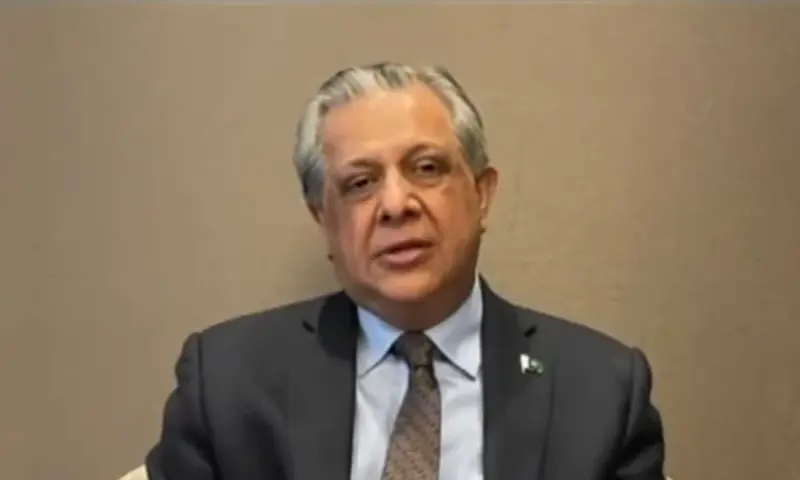
  • Corruption vulnerabilities identified in govt institutions in bid to undertake ‘self-accountability’, says law minister

    Corruption vulnerabilities identified in govt institutions in bid to undertake ‘self-accountability’, says law minister

    The federal government has identified weaknesses that could create opportunities for corruption in ten institutions through a comprehensive ‘National Risk Assessment of Corruption Vulnerabilities’ survey, Law Minister Azam Nazeer Tarar said on Friday.

    In a televised video message, Tarar maintained that the report was not a “charge sheet”. Rather, it identified weaknesses that needed to be addressed through reforms to prevent corruption and promote “merit and transparency”.

    Speaking about the assessment, Tarar said the Ministry of Law and Justice had coordinated with various agencies and institutions to prepare the report, which examined vulnerabilities across federal institutions using different indicators.

    “Let me also say that no other government has made efforts like this until today,” the minister claimed, adding that the survey would also be shared with international agencies.

    The minister detailed that ten institutions had been examined in depth because of the nature of their operations, particularly those involving finance-related matters, which, he said, presented opportunities for corruption.

    Tarar also highlighted “positive” steps taken by Prime Minister Shehbaz Sharif during his governance. He cited power generation projects and reforms in the electricity and energy sectors, saying the government, in collaboration with relevant departments, had undertaken a detailed and lengthy exercise to address various issues in the sector.

    “As a result of these reforms, the government is expected to save Rs3,500 billion in the electricity and energy sectors,” he said.

    He also recalled the privatisation of Pakistan International Airlines (PIA) last year, which Tarar said was conducted through an open auction and competitive bidding process after previous attempts failed to materialise. “You will see positive changes in that in the coming days,” he added.

    The minister also referred to the government’s plans to right-size departments deemed unnecessary. As an example, Tarar highlighted the closure of Pakistan Public Works Department (PWD), which he said faced allegations of corruption and “wastage” of money.

    “It was closed and a package finalised for its employees. Some legal amendments are pending in the Assembly,” he said, adding that the government saved billions of rupees through its closure. “Now this work will be executed through smaller institutions or provincial departments.


    More to follow.

    Source: dawn

  • Pakistan Shaheens begin Asia Cup Rising Stars title defence with 61-run win over UAE

    Pakistan Shaheens begin Asia Cup Rising Stars title defence with 61-run win over UAE

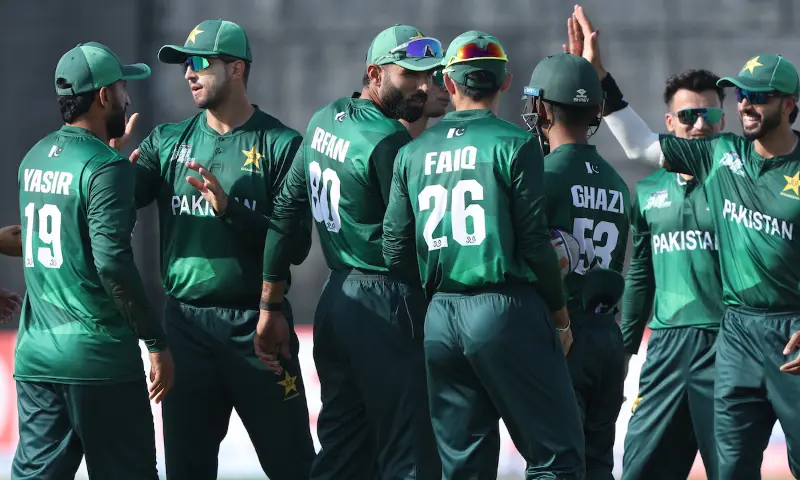
    Defending champions Pakistan Shaheens began their Asia Cup Rising Stars campaign with a convincing 61-run victory over the United Arab Emirates (UAE) in their opening Group ‘B’ fixture at the University of Doha for Science and Technology on Friday.

    Pakistan Shaheens will take on arch-rivals India in their next match on Nov 22 (Sunday).

    Batting first, Pakistan Shaheens were bowled out for 245 in 46.4 overs, with Shamyl Hussain and Maaz Sadaqat leading the scoring with half-centuries.

    Shamyl, who was named Player of the Match, struck a rapid 62 off 39 balls, hitting three fours and seven sixes. He shared an 87-run opening stand with Maaz, who contributed 53 off 63 deliveries, including three fours and two sixes.

    Captain Abdul Samad scored 39 off 49 balls, while Farhan Yousaf (28 off 38 balls) and Mohammad Imran (22 off 21 balls) made useful contributions to the total.

    For UAE, Basil Hameed was the standout bowler, claiming four wickets for 37 runs, while Awais Ali Shah and Ibrar Ahmad picked up two wickets apiece.

    In reply, UAE were dismissed for 184 in 40.5 overs as Pakistan Shaheens’ bowlers maintained control of the chase. Fast bowler Ali Raza struck early, removing three top-order batters to leave UAE struggling at 16 for three inside the first six overs.

    Mohammad Shahdad top-scored for UAE with 45 off 60 balls, including four fours and a six, while Aftab Alam made 39 and Awais Ali Shah added 32.

    Source: dawn

  • ‘We don’t want to die’: Protesters slam Claude creator Anthropic after IPO debut

    ‘We don’t want to die’: Protesters slam Claude creator Anthropic after IPO debut

    Around a hundred people braved the rain on Thursday to protest in front of Anthropic’s offices in San Francisco, the same day the artificial intelligence (AI) lab went public, to denounce its race toward ever more powerful AI models.

    “Ban RSI, we don’t want to die,” the protesters chanted.

    They were referring to recursive self-improvement (RSI) — a term the industry uses to describe building advanced AI models that can autonomously create newer versions of themselves, which critics worry will hasten doomsday scenarios.

    “Don’t invest in extinction,” one sign said.

    “These people are going to make a profit off of a technology that even they admit has a chance of eliminating life on Earth, or human life on Earth,” Tarnel Abbott, a 72-year-old retired librarian, said at Thursday’s protest.

    Another protester, Emily Tan, who travelled from Los Angeles, described the situation as “a black box.”

    “Most people in the country, even in SF, do not know what is happening,” Tan, 31, said.

    The protesters’ first demand: ban RSI.

    “There are only a few places in the world where recursive self-improvement is possible in 2027, and this office is one of them,” Jacob Coxon said.

    Coxon is a young researcher whose resignation from Anthropic, and accompanying warnings about AI safety, caused a major stir back in September.

    People in Silicon Valley admit in private that they don’t want RSI to be developed anytime soon, Coxon said.

    Anthropic, which on Thursday pulled off the largest IPO in history, says it has not yet reached the RSI stage.

    The ‘good guys’

    Critics question whether a company like Anthropic, which talks about prioritising safety over profits, can stick to its stated values while facing pressure from shareholders, who want to see growth and a return on their investment.

    “They are talking about trying to slow this down and doing pacing, but (…) they’re not, like, trying that hard,” said Tyler Tracy, 26, a researcher at an AI safety nonprofit called Redwood Research.

    Anthropic was founded by several former OpenAI employees who disagreed with its business decisions and vowed to always prioritise safety.

    “Stop the AI race,” another protest sign said.

    Daniel Kokotajlo, a former OpenAI employee, said friends at both labs answer his fears by arguing that if they don’t build it, a rival or China will, and that they are “the responsible good guys”.

    “I don’t like that answer, and that’s why I’m here protesting,” Kokotajlo said. He now heads a research organisation called the AI Futures Project.

    Many of the protesters acknowledged they still use AI tools and consider them helpful, but they feel it is advancing too quickly and without sufficient safeguards.

    A day earlier, an open letter signed by researchers, entrepreneurs, and academics accused Anthropic of not being “a safe AI company.”

    A sole counter-protester, 31-year-old activist blogger Barak Gila, stood in front of the crowd holding a sign that thanked Anthropic for building the technology and generating a sizable local economic impact.

    A demonstrator confronted him, but Gila was all smiles, even delighted at the prospect of a clash.

    “Without Anthropic, I’m gonna die for sure, right? With Anthropic, maybe I’ll live 10 years longer,” Gila said.

    “Or maybe you’ll die in like two years,” the other demonstrator responded.

    Source: dawn

  • FO rejects India’s ‘undiplomatic, irresponsible’ remarks about Pakistan’s mineral wealth

    FO rejects India’s ‘undiplomatic, irresponsible’ remarks about Pakistan’s mineral wealth

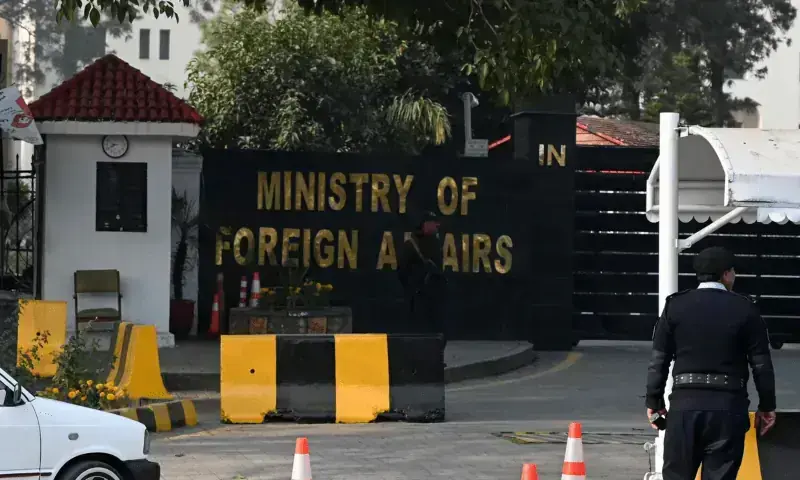
    The Foreign Office (FO) on Friday categorically rejected the “undiplomatic and irresponsible” remarks made by India at the United Nations regarding the country’s mineral wealth.

    At the UN Security Council (UNSC) Arria-formula meeting on natural resources and conflict, on Thursday India’s Permanent Representative to the UN Ambassador Parvathaneni Harish had “directly accused the Pakistan military of looting the country’s natural resources for personal gain and triggering domestic political turmoil to keep control over them”, according to Indian news agency ANI.

    The remarks had come after Pakistan raised the Indus Waters Treaty (IWT) during the meeting, which has been held in abeyance by India following the attack in occupied Kashmir’s Pahalgam that killed 26.

    In response to Harish’s remarks, Pakistan’s First Secretary Ansar Shah rejected the “frivolous and highly inappropriate remarks”.

    On Friday, the FO spokesperson was also asked about the Indian remarks, to which he rejected the “undiplomatic and irresponsible” comments.

    “Such baseless accusations merit no attention and were immediately and effectively rebutted by Pakistan’s representative during the same meeting,” he said, adding that the remarks constituted “an unacceptable interference in Pakistan’s internal affairs” and were antithetical to the UN Charter.

    In a detailed statement released shortly after, the FO said: “Such diatribe, so typical of India, can only be rubbished.”

    “Instead of addressing Pakistan’s legitimate concerns with respect to India’s hydro-terrorism, India has resorted to unsubstantiated insinuations about Pakistan’s institutions and leadership,” the statement said.

    The statement highlighted that India’s hostility towards Pakistan’s development of its mineral resources was “equally evident in its persistent efforts to undermine Pakistan’s stability”.

    “Pakistan has repeatedly raised concerns, supported by evidence, regarding India’s sponsorship and support of terrorist activities in Balochistan and Khyber Pakhtunkhwa, aimed at disrupting development and depriving local populations of the benefits of their natural resources,” the statement said.

    “India’s continuing descent into a Hindutva-inspired extremism-fascist polity, led by a religious fundamentalist regime is well known,” it added.

    “Indian accusations and distortion of facts are a futile attempt to hide its international isolation, and only aimed at distracting attention from India’s domestic situation and its weaponisation of shared resources, as evident from its illegal and unilateral action to hold the IWT in abeyance,” the statement said.

    The FO said that in August, the Court of Arbitration ruled that the treaty remains binding and fully in force and there was no legal basis for its unilateral suspension or termination.

    “India’s refusal to accept this ruling raises serious questions about its commitment to treaty obligations and international law,” it said.

    “Instead of misusing the platform of the UN for peddling lies, India will be well advised to implement its obligations under the UNSC resolutions on Jammu and Kashmir, where Indian occupation forces continue to perpetrate gross violations of human rights for decades,” it said.

    “A state that is a serial violator of UN Charter, UNSC resolutions, sovereignty of neighbouring states, and binding treaty obligations, that patronises systematic discrimination against its Muslim, Sikh, Christian, and Dalit minorities, engages in disinformation and terrorism as instruments of state policy and remains in forcible occupation of a territory whose people it denies the internationally guaranteed right to self-determination, has no standing whatsoever,” the FO remarked.

    “Instead of pointing fingers, India should introspect and change its behaviour,” it concluded.

    Source: dawn

  • Afghanistan not invited to ECO moot as Islamabad does not recognise Kabul regime: FO

    Afghanistan not invited to ECO moot as Islamabad does not recognise Kabul regime: FO

    The Foreign Office (FO) said on Friday that Afghanistan was not invited to participate in the Economic Cooperation Organisation (ECO) Council of Foreign Ministers meeting in Islamabad as Pakistan does not recognise the incumbent Afghan regime.

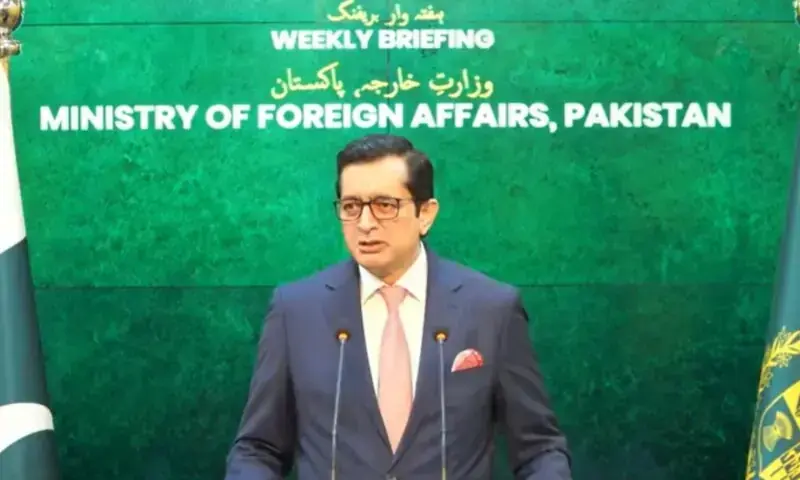
    Addressing a weekly press briefing, FO spokesperson Sajjad Haider Khan said that Afghanistan’s membership had been suspended by the ECO Secretariat.

    He added that ministerial-level participation in ECO meetings was the prerogative of the host country under the organisation’s procedures.

    “Afghanistan was not invited to join the ECO meeting in Islamabad as Pakistan has not recognised the incumbent regime,” he said.

    “Pakistan attaches great importance to strong regional cooperation, connectivity and economic integration,” the spokesperson said.

    “This commitment also informs our approach towards Afghanistan, which we want to see as a peaceful, prosperous and stable country, fully integrated within the ECO framework and at peace with itself as well as with all its neighbours,” he added.

    “At the same time, we believe that meaningful progress requires the Afghan authorities to address the legitimate security concerns of neighbouring countries, particularly the threat of terrorism emanating from Afghan soil, in the interest of sustainable regional peace, stability and development,” the spokesperson said.

    Responding to questions about the ECO’s broader agenda, the spokesperson said the adoption of the Strategic Goals of Economic Cooperation 2035 represented an important step towards strengthening the organisation’s institutional and economic frameworks.

    “The document builds on the achievements and guiding principles of the ECO Vision 2025 and provides a longer-term framework for regional integration, resilience, connectivity and sustainable prosperity,” he said.

    He said the ECO had identified practical priorities, including trade facilitation, transport and transit connectivity, energy cooperation, digital transformation, industrial development, food security, minerals and emerging technologies.

    “Pakistan has assumed the ECO chairmanship for the next two years under the theme ‘Reviving Regionalism for a Resilient ECO’. Our focus will remain on translating agreed objectives into implementable initiatives through regular ministerial meetings, effective coordination and stronger public- and private-sector participation,” the spokesperson said.

    Source: dawn

  • Short-term inflation reaches 10.41pc on costly flour

    Short-term inflation reaches 10.41pc on costly flour

    ISLAMABAD: Short-term inflation was recorded at 10.41 per cent year-on-year in the week ending on Nov 19, driven largely by wheat flour prices, according to official data released by the Pakistan Bureau of Statistics (PBS) on Friday.

    The index, comprising 51 items, whose prices are collected from 50 markets in 17 cities, is calculated weekly to track changes in the prices of essential commodities and services.

    The data showed that the prices of 23 commodities increased, while those of eight items declined. Meanwhile, the prices of 20 items remained unchanged from the previous week.

    Short-term inflation has remained in the double digits for several consecutive weeks, largely due to persistently elevated petrol and diesel prices. However, oil prices have been slowly declining for the past few days.

    During the 21 days leading up to Nov 20, petrol prices fell from Rs396.06 to Rs322 per litre, while diesel prices declined from Rs398.80 to Rs355 per litre. This represented reductions of about Rs74 and Rs43.80 per litre, respectively.

    The impact of this decline was visible in the week-on-week review. The SPI declined by 0.65pc week-on-week, reflecting a declining oil prices. This is the second consecutive week that SPI recorded a marginal decline on a WoW basis.

    Planning Minister Ahsan Iqbal has expressed concern over rising transport fares across the country and directed provincial governments to take urgent measures to reduce passenger and freight fares in line with the decline in petrol and diesel prices.

    Chairing an emergency meeting of the National Price Monitoring Committee (NPMC) on Thursday, the minister asked the provinces to issue revised fare notifications through the relevant departments and ensure strict compliance.

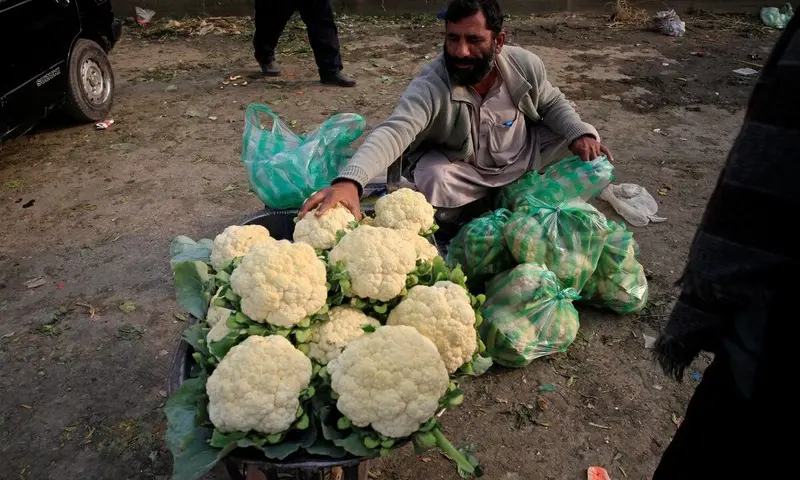
    Meanwhile, the items that recorded the highest price increases over the previous week included eggs (8.84pc), potatoes (8.07pc), wheat flour (4.42pc), chicken (3.01pc), bananas (1.74pc), georgette (1.40pc), shirting (0.76pc), garlic (0.62pc), vegetable ghee 2.5kg (0.54pc), cooked beef (0.46pc) and firewood (0.34pc).

    Items that recorded week-on-week price declines included tomatoes (30.55pc), onions (9.17pc), LPG (6.46pc), petrol (3.87pc), diesel (2.46pc), pulse moong (0.54pc), gur (0.08pc) and sugar (0.07pc).

    On an annual basis, the items that recorded the highest price increases included LPG (87.99pc), wheat flour (44.20pc), electricity for Q1 (36.30pc), diesel (24.84pc), chicken (24.35pc), onions (24.05pc), petrol (21.35pc), chilies powder (15.55pc), mutton (14.60pc), bread plain (12.35pc), beef (11.10pc) and milk fresh (8.96pc).

    In contrast, potatoes prices fell by 27.13pc, sugar (26.24pc), tomatoes (20.86pc), eggs (16.10pc), salt powder (11.03pc), pulse masoor (6.90pc), gur (6.52pc) and pulse moong (5.81pc).

    Last week, short-term inflation rose to 11.21pc year-on-year driven largely by perishable food products.

    Source: dawn

  • Bilawal wants PM Shehbaz to become first premier to complete 5-year term

    Bilawal wants PM Shehbaz to become first premier to complete 5-year term

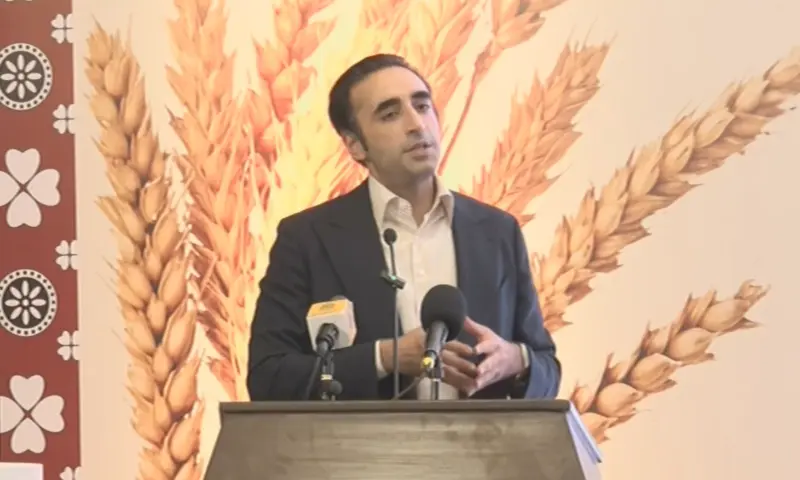
    PPP Chairman Bilawal Bhutto-Zardari said on Friday that he wanted Prime Minister Shehbaz Sharif to become the first premier to complete a five-year term in office.

    Since the country came into being in 1947, no elected prime minister has ever completed their five-year term.

    Addressing an event in Karachi, Bilawal, citing the economic crisis resulting from the US-Israeli war on Iran, called for “empowering” PM Shehbaz so that he could present a way forward to tackle the crisis.

    “My objective is that I want to strengthen the hand of the prime minister [..] usually politicians create difficulties or plot his fall and secure the seat for themselves. I will not do that […] I am saying that I want Shehbaz Sharif to be the first prime minister […] to complete a five-year term,” Bilawal said.

    Bilawal noted that the prime minister had not been “given the chance” to focus on the economic issues so far.

    “What can he do? Whenever he [PM Shehbaz] makes a plan, some federal minister objects and presents their own agenda to divert the topic at hand.”

    The PPP chairman insisted he wanted the premier to complete his term as he foresaw difficulties ahead for the country.

    “I am saying this because I know that there is no consideration for the people of Pakistan. Whether one province is created or a 1,000, the only worry the public has is having access to meals twice a day,” Bilawal said, recalling his party’s slogan of ‘roti, kapra, makan’ as primary concerns for the public.

    Bilawal reiterated that the premier’s “hand should be strengthened” so he can draw attention to the economic issues facing the country. In that regard, he also underscored the need for a “national effort”.

    “While I am praying for the success of the prime minister, I also believe that if we are to face the real issues of the country, one or two political parties alone cannot achieve this. It has to be a national effort,” Bilawal said.

    He added that it did not matter whether the government “liked” Jamiat Ulema-i-Islam-Fazl (JUI-F) chief Maulana Fazlur Rehman or PTI founder Imran Khan, who Bilawal said had President Asif Ali Zardari and his sister Faryal Talpur “imprisoned.”

    Bilawal asserted that he would not do politics “based on ego and personal vendettas” as he believed that it was not “more important than national interest”.

    He called on the government to engage the opposition, particularly the PTI, in dealing with the country’s issues.

    “My political differences with Khan sahib and his own mistakes aside, his party still has a majority representation in the opposition. And if we have to face these issues collectively then we will have to engage them, entice them and request them to play their role in [parliamentary] committees,” the PPP chairman said.

    Bilawal added that the PPP would continue to work as per its “ideology and others may follow suit should they wish”.

    “We cannot force someone, but it is my right to present my stance, and it is the prime minister’s right to decide whether he wants to take into account my suggestion,” he said.

    Bilawal claimed that the PPP’s sole focus was to draw attention to the public’s grievances and expressed the hope to succeed in doing so.

    The development comes amid renewed tensions between coalition partners, the PPP and the PML-N, triggered by a hard-hitting speech delivered earlier this week by Bilawal.

    In the no-holds-barred address, Bilawal had warned against new provinces, constitutional tweaks, criticised the treatment of the opposition and past decisions taken by the ruling coalition.

    Bilawal had also warned against “political revenge” in politics. “What a weird country this is; since 1947, whoever becomes the prime minister goes to jail, whoever gets out of jail goes to sit in the Prime Minister’s House,” he remarked.

    The PPP chairman had referred to Interior Minister Mohsin Naqvi’s recommendation of holding a referendum to decide on the creation of new administrative units and said: “In our history, a referendum has always been carried out for an undemocratic act and never a democratic one.”

    He also remarked that the governance system had not collapsed, but was rather “made to collapse” — seemingly reacting to Naqvi’s statement in July that the current “system” of governance had “collapsed” and needed a “reset”.

    In the aftermath, Defence Minister Khawaja Asif and other leaders from the ruling PML-N criticised the Bhutto scion for his remarks.

    Despite this, Bilawal went on a media blitz on Wednesday, articulating the PPP’s grouse with the federal government and questioned many of its past decisions. This led to PM Shehbaz and Naqvi going to meet his father, President Asif Ali Zardari.

    According to the brief official readout issued by the Presidency, the three men reviewed the current political situation, and resolved that all pending issues would be resolved through dialogue and discussion.

    While leaders from both parties remained tight-lipped over what transpired during the meeting, observers termed it an attempt at ‘damage control’ or ‘mending fences’ after Bilawal adopted a decidedly aggressive tone against the ruling PML-N.

    Source: dawn

  • Police foil major terror attack in KP’s Lakki Marwat, claim suspected suicide bomber killed

    Police foil major terror attack in KP’s Lakki Marwat, claim suspected suicide bomber killed

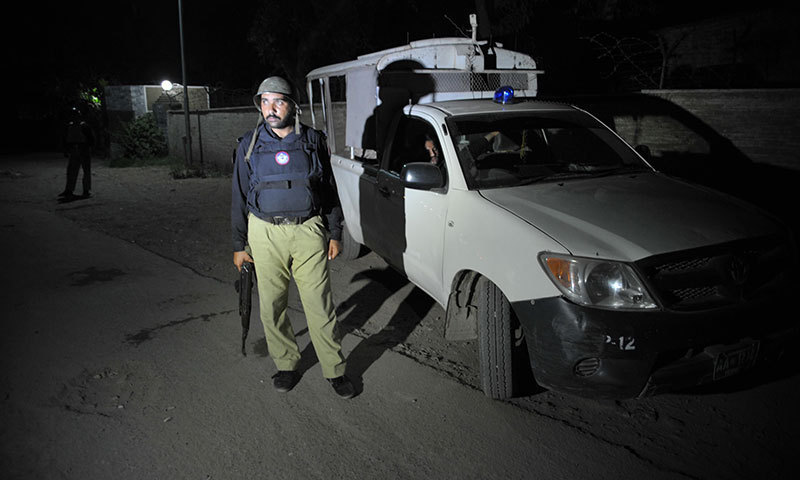
    Khyber Pakhtunkhwa Police said on Friday that they had foiled a major terrorist attack in Lakki Marwat district and killed a suspected “Afghan-origin” suicide bomber, according to a statement.

    In a press release, police said the operation was carried out within the jurisdiction of Bargi Police Station in Lakki Marwat.

    The police claimed that they had been receiving intelligence for some time about a Mazda truck allegedly carrying a large-scale improvised explosive device (IED) intended to cause widespread destruction.

    Acting on the intelligence, Lakki Marwat police intensified their operations and increased patrolling and the number of checkpoints, the press release added.

    “The vehicle in question was spotted today within the jurisdiction of Bargi Police Station, prompting local police to take immediate action,” the statement said, alleging that “one suicide attacker was killed during the operation”.

    Following reports of the encounter, personnel from the Counter-Terrorism Department (CTD), local police and the Quick Response Force (QRF) reached the scene and launched an extensive operation, it added.

    The press release added that bomb disposal teams had also arrived at the scene and begun inspecting the vehicle.

    “A large quantity of explosives was found in drums inside the vehicle,” it said.

    The police statement said the deceased suicide bomber was believed to be an Afghan national, adding that the identification process was underway.

    Khyber Pakhtunkhwa Inspector General of Police Zulfiqar Hameed praised Lakki Marwat Police for foiling a major tragedy through timely action.

    “By thwarting the nefarious designs of Fitna al-Khawarij, our brave personnel have saved dozens of precious lives,” IGP Hameed said in a statement.

    “The brave personnel of Khyber Pakhtunkhwa Police remain steadfast in protecting the public. We will not rest until Fitna al-Khawarij is made an example of,” he added.

    The state uses the term Fitna-al-Khawarij for the banned Tehreek-i-Taliban Pakistan (TTP).

    On Nov 14, the police foiled a terrorist attack on Kingar Pul Police Checkpost in Bannu district, eliminating four terrorists in retaliation.

    Source: dawn

  • Two Pakistani schools earn global recognition at World’s Best School Prizes 2026

    Two Pakistani schools earn global recognition at World’s Best School Prizes 2026

    Two Pakistani schools — a private institution in Lahore and a government-run high school in Hyderabad — have earned international recognition after being named among the leading institutions in their respective categories at the World’s Best School Prizes 2026, organised by T4 Education.

    T4 Education is an international organisation that recognises outstanding educational institutions from around the world. The World’s Best School Prizes are regarded as among the most prestigious global awards in education. The prizes recognise schools across five categories: Community Collaboration, Environmental Action, Innovation, Overcoming Adversity and Supporting Healthy Lives.

    This year, thousands of public and private schools from around the world submitted applications. Following an extensive evaluation process, an international panel of experts selected the winners in each category.

    Pakistan was represented by two schools in the global competition: TNS Beaconhouse in Lahore, and Govt Girls High School Tando Mir Ghulam Hussain in Hyderabad.

    The TNS Beaconhouse was announced as the winner of the “Supporting Healthy Lives” category.

    The school has more than 1,100 students across kindergarten, primary and secondary levels and was recognised for its approach to supporting neurodivergent learners.

    “TNS Beaconhouse, an independent kindergarten, primary and secondary school in Lahore, Pakistan, is challenging one of the country’s most deeply rooted educational barriers by reimagining how mainstream schools include neurodivergent learners through a wellbeing-led design that puts confidence, inclusion and agency first,” said the organisation.

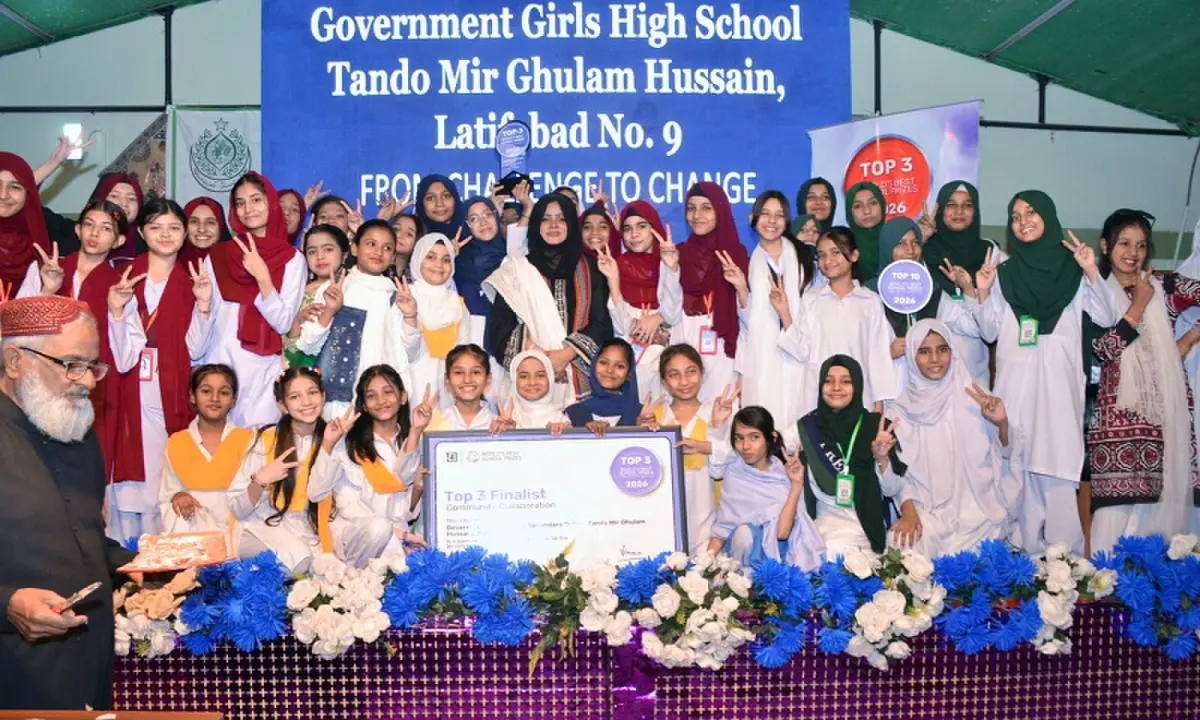
    The United Kingdom’s Swiss Cottage School, Development and Research Centre, won the “Community Collaboration” category, while Hyderabad’s Govt Girls High School Tando Mir Ghulam Hussain secured a place among the world’s top three schools in the same category.

    On its website, T4 Education recognised the Hyderabad girls’ school for “spearheading a revolutionary learning model that empowers vulnerable and working girls who are unable to attend full school hours to continue learning without stepping away from the social realities that shape their lives”.

    It said that the school was located in an underprivileged area where access to education was limited and girls were expected to contribute to household income or take on household responsibilities.

    “Recognising that fixed schedules, rigid policies and a standardised curriculum of conventional approaches only deepen exclusion, the school has redesigned its structure to fit the lived reality of its students through a flexible, context-responsive model that prioritises continuity of learning over compliance,” it said.

    T4 Education added that the school had employed a dual-shift system, allowing students to attend school either in the morning or the evening, with girls who work or support their families during the day being able to attend in the afternoon.

    “In a community where education for girls has historically been undervalued, the school has invested heavily in building trust with families,” it added.

    Teachers also conduct home visits for counselling sessions to help parents recognise the value of long-term education for their daughters.

    “By involving families, the deeply rooted beliefs of early marriage and placing work over learning are being consistently challenged, and there has been a noticeable shift in the perception of gender value across the community.”

    T4 Education said that within one year, school enrolment had increased by 90 per cent and attendance had improved by 80pc.

    “Girls who once struggled to attend regularly are now actively participating in class, speaking confidently, and engaging with learning,” it added.

    Furthermore, parents were now increasingly supportive of girls’ education with 80pc prioritising education over child labour.

    Source: dawn