Category: dawn news

  • Musadik Malik holds separate meetings with Iranian, Tajik officials on SCO forum sidelines

    Musadik Malik holds separate meetings with Iranian, Tajik officials on SCO forum sidelines

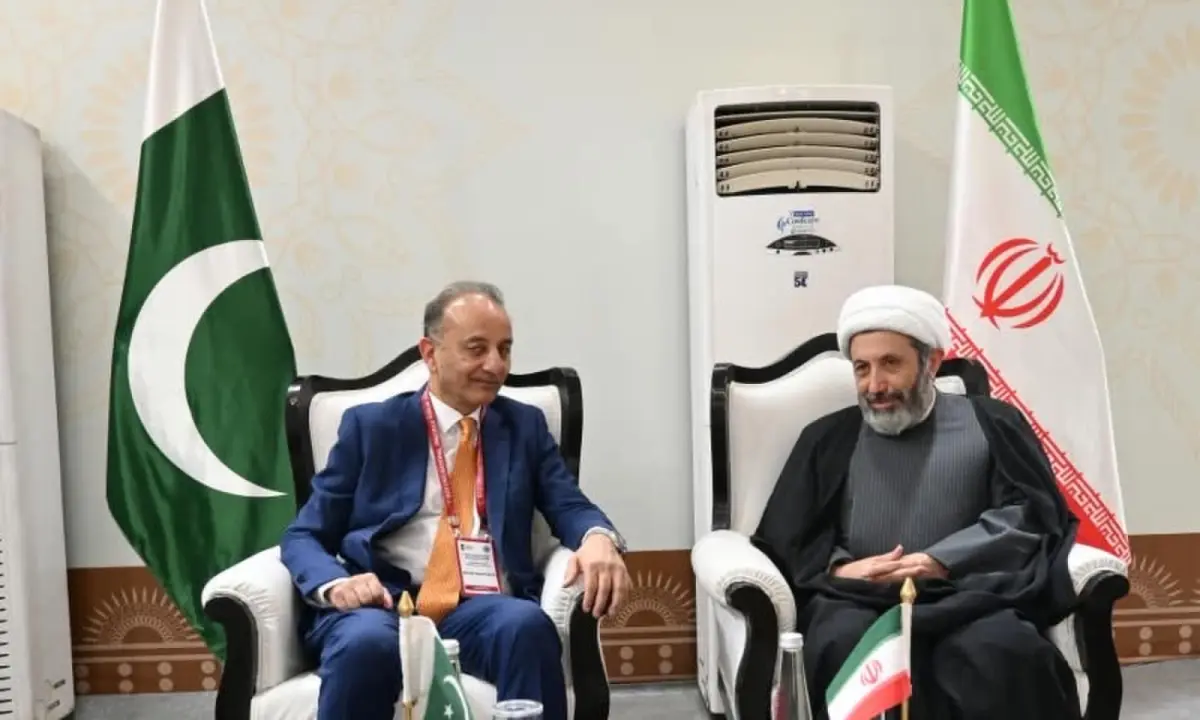
    Federal Minister for Climate Change Musadik Malik, who is in New Delhi to attend the Shanghai Cooperation Organisation (SCO) Civilisational Dialogue Forum, held separate bilateral meetings with his counterparts from Tajikistan and Iran on the sidelines of the event, the Pakistan High Commission in India said on Saturday.

    Dr Malik arrived at Purana Qila in New Delhi for the second day of the inaugural SCO Civilisational Dialogue Forum, according to a post shared by his office earlier in the day.

    Dr Malik met Tajikistan’s Minister of Culture, Sattoriyon Amonzoda, and underscored the strong historical and cultural ties between the two countries.

    He reaffirmed Pakistan’s resolve to further strengthen these multifaceted ties, particularly through greater people-to-people exchanges.

    In a separate meeting with President of Iran’s Islamic Culture and Relations Organisation Mohammad Mahdi Imanipour, Dr Malik underscored the deep-rooted historical and cultural bonds between Pakistan and Iran.

    He reaffirmed Pakistan’s firm commitment to further expanding these fraternal ties across all spheres, the high commission said.

    A day earlier, after arriving in New Delhi, Dr Malik had described the forum as a “tremendous opportunity” for multilateral dialogue, saying that cultures and civilisations transcended geographical boundaries.

    Speaking to Indian news agency ANI, he had said the gathering offered an opportunity to discuss shared history, geography, cultures and civilisations.

    The visit marks the first by a Pakistani minister to India since Bilawal Bhutto-Zardari attended the SCO meeting in Goa in May 2023. It comes two years after India’s External Affairs Minister Subrahmanyam Jaishankar visited Islamabad for an SCO meeting.

    Pakistan currently holds the rotating chairmanship of the SCO Council of Heads of State for the 2026-27 term and is scheduled to host the organisation’s summit in Islamabad in August 2027.

    Source: dawn

  • Chinaman or doosra

    Chinaman or doosra

    IT is well-nigh impossible to be so dependent on and enamoured of our dear friend China and not try to emulate it. Two huge economies share long land borders with us; both got their start around the same time as us, and both lapped us many times over in terms of economic development by any objective, empirical measures. Put yourselves in the decision-makers’ boots, and you too would, at least from time to time, wonder how to take their model and make it your own.

    One among these giants practices the same multiparty system as we do — though both are far from perfecting it — but it happens to be the designated, permanent ‘arch-foe,’ and we would rather drown than accept a lifeline, real or metaphorical, from it.

    The other is our ‘all-weather friend,’ and though its political and governance model is completely different, the powers that be would be tempted to emulate it for two reasons. One, centralised command makes it much easier to make tough decisions; two, it would give them more power. ‘We-know-best’ has become a mantra for overriding opposing arguments in determining the national interest and priorities.

    Let us digress a little and see how much China we knowingly or unknowingly have in our lives, which could make the desire to copy them seem natural. As tea drinkers, though not totallers, we face one question countless times daily: “chini?” Whether our response is a technical one-half spoon or no sugar, we hardly ever stop to consider why refined sugar is called chini. Whether served in inexpensive pottery or fine porcelain, all non-metal drinkware is called chinaware.

    China’s embrace of globalisation, especially through exports, helped millions around the world afford everyday goods and appliances of varying quality at competitive prices. Without belabouring the point, from EVs to restaurants to Chinatowns to alleged spy femme fatales, China is everywhere.

    The Chinese have internalised their 5,000 years of history.

    Borrowing from China’s experience is more complex than it appears; just as its products are famous for their copy-1, 2, 3 varieties, there are many Chinas as well. Recently, a social media clip shows an Afghan answering a Westerner’s question about how he views the world, saying, “This world is China, the real world is the afterlife.” Illusory, fake, a copy — take your pick of what he meant by ‘China.’

    With the world’s greatest civilisations as neighbours, it’s hard to explain why we didn’t replicate their worldly successes. One obvious reason is that, though we are heirs to the great Indus civilisation, we chose to swap it for a faith-oriented identity, severing all ties to our Indus roots. An aversion to our true antecedents also explains why we fail to industrialise and become industrious; we try to mess up anything with ‘Indus’ in it.

    It seems we may now be tempted to emulate the Chinese political system that produced one of the greatest military-industrial powers. The outlines of a new political order are already discernible, leaving less room for dissent. Chairman Mao’s famous ‘Let a hundred flowers bloom…’ did not have to specify whether they had to come from the same nursery.

    In our haste to put things right, let’s not forget that the Chinese, among other things, are masters at biding their time because they have internalised their 5,000 years of history, whereas we have actively disowned ours. Even after unprecedented economic and military development, the Chinese waited for the Hong Kong lease to expire; Taiwan rankles them, but they take no rash action there either. They focused on putting their house in order before venturing into global affairs. Amid all the talk about a systemic reset, more provinces, constit­utional amendm­e­nts, and a referendum to assess the public will, we sho­­uld not forget that the Communist Party of China and its defence fo­­rces coalesced aro­und a people’s liberation movement. Our institutions are a colonial legacy.

    I love the Chinese for a variety of reasons; not least among them is their resistance to cricket. Nations that are not cricket-crazy, ie South Korea, Japan, Vietnam, Thailand, Singapore, Hong Kong, Taiwan, Turkiye, Russia, and Germany, etc, have all overcome challenges and hardship.

    It is strange, then, that an odd term in cricket refers to a chinaman. In a 1933 Test match between England and the West Indies, an English batter, Walter Robins, was stumped by a surprise delivery from Ellis Achong, a West Indian left-arm spinner of Chinese descent. As is their wont, the Englishman could not walk off the ground without a racial slur: “fancy being done by a bloody Chinaman.” We, the batters — read: battered — need to be vigilant, as, in addition to the chinaman, ambidextrous spinners also have a doosra in their repertoire.

    The writer is a poet. His latest publication is a collection of satire essays titled Rindana.

    shahzadsharjeel1@gmail.com

    Published in Dawn, November 21st, 2026

    Source: dawn
  • FBI, US Agriculture Department breached by hackers: reports

    FBI, US Agriculture Department breached by hackers: reports

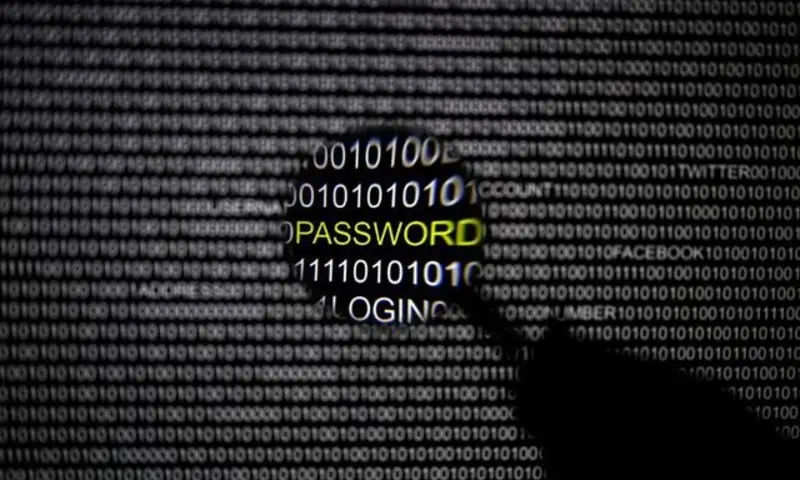
    The US Agriculture Department and the Federal Bureau of Investigation (FBI) were breached by hackers in cyberattacks, US media reported on Saturday, as concerns deepened over the recent spate of tech outages at key American institutions.

    The incidents were first reported by NBC News and CNN, respectively, and it remained unclear whether they were related and who was responsible.

    Major outages in recent weeks have disrupted travel, communications and e-commerce for countless users across the United States, even affecting a top-secret network at the National Security Agency.

    US President Donald Trump has sought to calm the public and urged people to “relax”, while officials said the various outages were not linked to criminal activity.

    The US Department of Agriculture (USDA) told employees that a system used to facilitate payments to farmers was targeted in a cyberattack, NBC reported on Friday, citing two former USDA officials.

    The hackers may use the payments system as a backdoor to access more sensitive material, the former officials told NBC.

    The USDA deals with “a bunch of scary biologic issues” and “if an adversary or a competitor were to have access to that same information… they could use our own research against us,” a former official was quoted as saying.

    CNN said separately on Friday that the FBI was hacked for the second time since September.

    The federal agency was investigating an intrusion of the National Crime Information Centre (NCIC) by apparent hackers, CNN reported, citing two people briefed on the probe.

    The NCIC has a nationwide criminal information database linking federal, state and local law enforcement and is used to share information on warrants and background checks.

    “Every day, officers across the country rely on NCIC to identify wanted fugitives, check for outstanding warrants, and access information that can directly impact officer and public safety,” a former FBI official told CNN.

    The former official expressed concerns that hackers “could compromise the accuracy of the information that officers rely on.”

    AFP has contacted the FBI and USDA for comment.

    The newly uncovered breaches at the FBI and USDA were described as hacks, which are different from outages like the ones that afflicted Microsoft Outlook and the Federal Aviation Administration.

    In September, a hacking group known as ShinyHunters targeted sensitive employee personal data from an FBI jobs website.

    The White House fired cybersecurity chief Sean Cairncross this week as criticism mounted over the string of major outages.

    Source: dawn

  • Wall Street ends sharply lower on AI selloff, S&P 500, Dow in correction

    Wall Street ends sharply lower on AI selloff, S&P 500, Dow in correction

    US stocks extended their rout on Friday, and the S&P ​500 and the Dow both confirmed corrections after Anthropic’s momentous debut fell flat, exacerbating worries about the AI trade that has driven this year’s stock market rally.

    All three major US equity ‌indexes ended sharply lower. The Dow and the S&P 500 are now more than 10 per cent below their record closing highs, confirming both indexes have entered a correction.

    The bellwether S&P 500 notched its seventh consecutive drop, its longest losing streak since February 2020.

    The S&P 500 and the Dow logged their largest weekly percentage losses since April 2025, when US President Donald Trump announced his market-rattling “liberation day” tariff package.

    The Nasdaq’s weekly drop was its largest since March 2020. The tech-heavy index has dipped into negative ​territory for the year.

    “This is clearly a challenging day for capital markets, and as we head into a Friday close, it appears to be accelerating to a certain ​degree,” said Bill Northey, senior investment director at US Bank Wealth Management in Billings, Montana.

    “But as we step back and evaluate fundamentals and ⁠sentiment, sentiment is clearly winning the day today.”

    “Sentiment is always the more powerful force in the immediate space, whereas fundamentals tend to win out over time,” Northey added, referring to economic ​strength and solid corporate earnings, among other things.

    Anthropic’s supersized debut as a publicly held company, which was intended to raise as much as $2 trillion in market cap, failed to catch ​fire on Thursday, closing 17.1pc above its $83 offer price as enthusiasm for the stock faded throughout the session.

    In its second day as a publicly held company, Anthropic’s shares fell 9.1pc; Nvidia’s shares tumbled 13.8pc.

    The Anthropic IPO, combined with Nvidia’s quarterly earnings report, failed to dispel fears over risks associated with artificial intelligence and the massive expenditures on the nascent technology.

    “Nvidia reported what might have been one of the greatest quarters in corporate ​earnings history; they did everything right,” said Chuck Carlson, chief executive officer at Horizon Investment Services in Hammond, Indiana.

    “A lot of people, myself included, were looking to the Anthropic debut to ​some extent as a clearing event, and it wasn’t.”

    The Philadelphia SE Semiconductor Index, which has powered much of the broader stock market’s gains in recent months, was up as much as 106.6pc in ‌mid-June. That ⁠lustre has faded, with the index’s year-to-date advance having shrunk to 18.7pc.

    Among hyperscalers, Amazon fell 3.9pc, while Meta dropped 5.9pc.

    Neocloud firm CoreWeave fell 12.1pc and its peer Nebius slid 16.1pc.

    The Dow Jones Industrial Average fell 949.73 points, or 1.93pc, to 48,147.33; the S&P 50 lost 265.41 points, or 3.70pc, to 6,910.42 and the Nasdaq Composite lost 1,261.47 points, or 5.28pc, to 22,617.73.

    The CBOE Market Volatility Index, often referred to as Wall Street’s “fear gauge,” rose to its highest close since April 7, 2025.

    Source: dawn

  • Countries open path towards ‘killer robots’ pact

    Countries open path towards ‘killer robots’ pact

    Countries agreed on Saturday to open a path towards finding an international agreement on regulating lethal autonomous weapons systems, though campaigners seeking to stop so-called killer robots were disappointed by the “watered-down” outcome.

    After five days of gruelling talks at the United Nations, which ran into overtime, states agreed to open the door to building some form of pact over the next two years.

    However, with warfare undergoing a radical transformation, spurred by artificial intelligence, non-governmental organisations wanted far swifter, legally binding rules on handing power over human life and death to autonomous machines.

    Talks at the United Nations’ Review Conference of the Convention on Conventional Weapons (CCW) in Geneva stretched well into the early hours of Saturday.

    The 128 countries party to the CCW “agreed to launch the elaboration of an international instrument on lethal autonomous weapons systems, which should be conducted over the next two years”, conference president Julien Thoni told reporters afterwards.

    The process to get there had been tricky, with countries at odds and full consensus required for any decision.

    While a majority of states went in favour of a legally binding agreement, countries that have the technology, including the United States and Russia, are reluctant to have their hands tied.

    The process ahead should flesh out “which weapons can be forbidden according to international humanitarian law, and which is not forbidden but can be regulated”, Thoni told AFP.

    The Swiss diplomat said some countries had objected to the word negotiate, but had settled on elaborate instead.

    Campaign groups said the outcome fell well short of expectations.

    “States adopted a watered-down mandate that fails to chart a clear path towards a legally binding instrument,” said the Stop Killer Robots (SKR) coalition.

    “Autonomous weapons technology, including AI in the targeting cycle, is being deployed on the battlefield,” said Nicole van Rooijen, SKR’s executive director.

    “Delaying the creation of a legally binding instrument puts civilians and humanity at risk,” Verity Coyle, the deputy director for arms at Human Rights Watch, branded the outcome “disappointing”.

    “It does not provide the urgent action needed to agree new rules — but the technology is racing ahead,” she said.

    Source: dawn

  • Yemen’s Houthis launch strikes after Saudi coalition’s ‘special operation’

    Yemen’s Houthis launch strikes after Saudi coalition’s ‘special operation’

    Yemen’s Houthis launched strikes on the Saudi capital Riyadh on Saturday, after vowing reprisals for a “special operation” by the Saudi-led coalition fighting them.

    Saudi Arabia has been battling a surge in attacks since fighting reignited in neighbouring Yemen’s civil war this summer, where Riyadh backs the internationally recognised government against the Houthis.

    An AFP journalist reported hearing two explosions shortly after authorities issued an alert, later lifted, saying the city was “under a hostile aerial threat”.

    The coalition later said it had “intercepted and destroyed” three Houthi ballistic missiles headed for the capital.

    The Houthis said on that they were striking targets across Saudi Arabia, including in Riyadh.

    The strikes came after the Houthis vowed revenge for the coalition’s attack on the Red Sea port city of Hodeida and other targets on Friday.

    The “special operation” hit smuggling and weapons-transporting operations in Hodeida, the coalition said.

    It also involved attacks on Sanaa, Saada and Taiz governorates, marking an uptick in violence after months of hostilities.

    The Houthis had vowed to hit the Saudi city of Jeddah and other Red Sea ports if Hodeida was attacked, while warning airlines that Saudi airspace was “unsafe”. The group also threatened Riyadh’s financial district and a power station in Al-Shuqaiq.

    ‘Special operation’ –

    Coalition spokesman Turki al-Malki said its forces had “targeted operational capabilities at Hodeida port that were used in smuggling operations and the transport of weapons and ballistic missiles”.

    The coalition also hit “military targets” in Sanaa, including missile and drone facilities and a supply depot, he said on X.

    The Houthis claimed coalition strikes had killed 41 people in the previous 24 hours. Yemen’s Saudi-backed armed forces said dozens of airstrikes and drone attacks, as well as hundreds of artillery attacks, killed or wounded 193 Houthi fighters.

    These figures were impossible to verify independently.

    Two ballistic missiles were intercepted over the Jizan region near the Yemen border, the coalition spokesman said, with debris falling in Al-Shuqaiq.

    The Houthi military spokesman said the group had targeted Al-Shuqaiq power station and Jizan port with “accurate and direct” strikes that caused “extensive damage”.

    Images of a damaged power station in Mocha after a coalition air raid were broadcast by the Houthis’ Al-Masirah television.

    The coalition strikes came after a Houthi attack struck a tower in Riyadh’s financial district, the latest high-profile blow against the world’s top oil exporter.

    Witnesses told AFP that Riyadh’s tallest skyscraper, housing Saudi Arabia’s sovereign wealth fund, was damaged.

    ‘Airspace is unsafe’ –

    After the coalition warned civilians to evacuate Hodeida port, the Houthis responded by threatening to hit Jeddah and other ports on the Saudi Red Sea coast.

    The Houthis’ Humanitarian Operations Coordination Centre sent emails to shipping companies and other bodies using Jeddah port, warning them to evacuate.

    The group warned “all airlines that Saudi airspace is unsafe, as it will be the theatre of our operations in the coming hours, except for the holy airspace over Makkah and Madina”.

    They also told people to avoid Riyadh’s King Abdullah Financial District, whose offices were evacuated weeks ago, calling it a “military target”.

    The two sides have exchanged attacks since a four-year truce in Yemen’s civil war collapsed in July.

    Early on Friday, the Houthis accused the Saudis of striking a civilian boat, killing 19 people.

    Yemen’s Saudi-backed government forces withdrew from areas near the Red Sea’s Bab al-Mandab strait this month, ceding territory to the Houthis, who launched a sweeping offensive in September.

    The group has now advanced close to Aden, the interim capital of the internationally recognised government which fled the Houthis’ takeover of Sanaa in 2014.

    The coalition intervened against the Houthis in early 2015, in a conflict that left hundreds of thousands dead and created one of the world’s worst humanitarian crises.

    The United Nations expressed concern on Friday over the ongoing attacks.

    Source: dawn

  • Cummins wins Cricket Australia’s ‘unanimous support’ to remain Test captain

    Cummins wins Cricket Australia’s ‘unanimous support’ to remain Test captain

    Cricket Australia threw its “unanimous support” behind Pat Cummins to remain Test captain Saturday, rejecting any suggestion his integrity had been compromised by the lingering “Sandpapergate” scandal.

    Cummins has been under huge pressure since Usman Khawaja claimed the whole team knew about the plot to alter the ball in a Test at Cape Town in 2018.

    He strenuously denied being aware of what was going on in a press conference last week, but his position was undermined when Cameron Bancroft backed Khawaja’s version of events.

    Only then-captain Steve Smith, his deputy David Warner and Bancroft – who used the sandpaper – were found to be responsible by a Cricket Australia probe.

    With speculation over Cummins’ future rampant and a home four-Test series against New Zealand next month, CA moved to stamp out any further discussion about the 33-year-old’s fate after meeting him to check on his welfare.

    It came after Josh Hazlewood earlier Saturday suggested he could quit if any action was taken against his long-time bowling partner.

    CA expressed “its unanimous support for Pat Cummins as captain” following a board meeting.

    “We are absolutely determined to steward Australian cricket through this very difficult time with diligence and patience and to listen and learn,” said chairman David Boon.

    “We’ve expressed our support to Pat and our concern for everyone impacted by the events of the 2018 tour of South Africa.

    “We have learned from that experience and are proud of the team and the culture Pat and other leaders in the team have fostered over the past eight years and unequivocally reject any implication that Pat’s integrity has been compromised.”

    The retired Khawaja reignited the controversy in his autobiography, alleging the whole team was in the know, and he was strongly backed by close friend Warner.

    After Cummins’ denials, Bancroft dropped a bomb in a newspaper column by also claiming “it was the whole team” while saying he felt “angry and betrayed” by the Test skipper.

    Cricket Australia has ruled out reopening its investigation but instead set up a forum for players to share their experiences about 2018.

    Great leader

    Cummins said being captain “carries with it an awesome responsibility. I have and never will take that lightly”.

    “David and Todd (Greenberg) have a very tough job navigating cricket through all of this and I commend them for reaching out to me and to many of the players and staff from 2018,” he added.

    “I support the forum 100 per cent. I will be there. All of the players and staff I have spoken with are very keen to go and to have their say.

    “There will be a lot of difficult conversations but that is what’s needed. Otherwise, from this point, captaining the Australian team in Perth (at the first Test) will be my focus and priority.”

    Hazlewood threw his support behind Cummins earlier Saturday and made a veiled threat to call it a day if he was removed as captain.

    He reiterated that the bowling group at the time, which also included Mitchell Starc and Nathan Lyon, were not part of the plan.

    They jointly released a statement in 2021 denying any involvement.

    “I want to back Pat and everything he said in his press conference last week, everything he’s done for the last five or six years in particular as captain,” Hazlewood told the Sydney Daily Telegraph in his first comments since the story blew up.

    “He’s a great leader. If you went around and asked everyone in the team, you’d hear the same response.”

    Asked if he would consider quitting in protest if Cummins was removed, Hazlewood said: “I think I’d have to be put in that position to make a decision, but you’d have to think about it, yeah.”

    Starc has also reinforced that he knew nothing in recent days. Lyon and Smith have yet to comment.

    Source: dawn

  • Internet provider expects submarine cable repairs to be completed by Dec 6

    Internet provider expects submarine cable repairs to be completed by Dec 6

    Internet service provider Transworld Associates has said repair work on an affected international submarine cable is expected to be completed by December 6, with users likely to experience slower internet speeds during peak hours until the work is finished.

    In an email to customers, the company said repair operations were actively underway and that the tentative timeline for completion was Dec 6.

    “Further to our earlier notice on November 18, 2026, repair operations for the affected international submarine cable system are actively underway,” the company said.

    Transworld said it had also scheduled a maintenance window during which its technical teams would address the existing cable issue. It added that alternative routing arrangements had been made to maintain connectivity during the maintenance activity.

    The development follows an earlier announcement by the Pakistan Telecommunication Authority (PTA) that a fault had been reported in the SEA-ME-WE 5 (SMW5) international submarine cable system, approximately 11 kilometres from Pakistan’s coast.

    The regulator warned that the fault could cause intermittent connectivity issues and a decline in service quality for some internet users.

    The PTA had said Transworld Associates was coordinating with the SMW5 consortium to identify the fault and determine the estimated time for restoration.

    Meanwhile, internet traffic was being rerouted through alternative international links to minimise disruption and maintain service continuity, the regulator had added.

    Internet monitoring organisation NetBlocks had also reported a decline in connectivity in Pakistan, saying the incident was consistent with a fault in the SMW5 international subsea cable system.

    Submarine cables are a critical part of international telecommunications infrastructure, carrying data between countries and continents. Faults in these systems can affect internet speeds and connectivity, particularly when traffic has to be redirected through alternative routes.

    Currently, seven submarine cables provide internet connectivity to Pakistan: Asia-Africa-Europe 1 (AAE-1), South East Asia-Middle East-West Europe 4 (SMW4) and India-Middle East-Western Europe (IMEWE), operated by PTCL; and South-East Asia-Middle East-Western Europe 6 (SEA-ME-WE 6), South East Asia-Middle East-West Europe 5 (SMW5) and Transworld Associates 1 (TWA-1), operated by Transworld Associates.

    Cyber Internet Services operates the seventh cable named Pak­istan and East Africa Connecting Europe (PEACE).

    In July this year, a fault in the same SMW5 cable system had caused widespread connectivity issues in Pakistan. The PTA subsequently announced that the fault had been repaired on July 3, following its detection on July 1.

    Source: dawn

  • Magistrate indicts anchorperson Iqrarul Hassan for cyberterrorism

    Magistrate indicts anchorperson Iqrarul Hassan for cyberterrorism

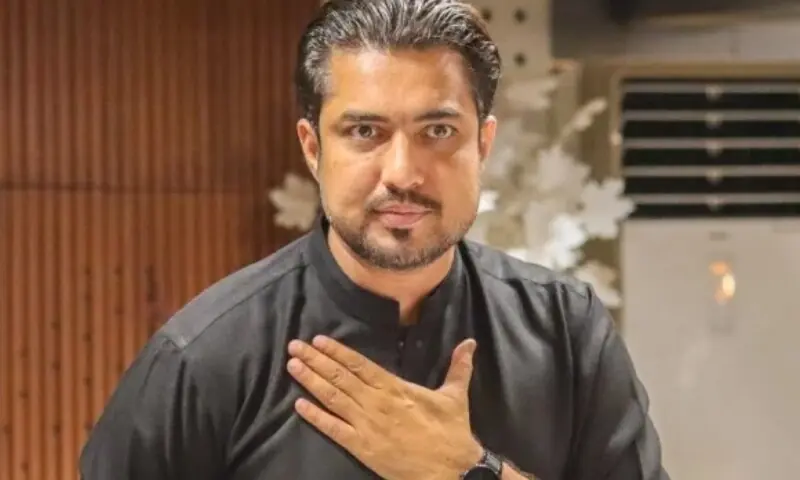
    KARACHI: A judicial magistrate (East) on Friday framed charges against anchorperson Iqrarul Hassan in a case pertaining to cyberterrorism and the alleged dissemination of anti-state, false and defamatory content on his official social media accounts.

    Last month, Mr Hassan was arrested by National Cyber Crime Investigation Agency (NCCIA) at his home in Lahore in connection with a case registered in Karachi under multiple provisions of the Prevention of Electronic Crimes Act (Peca).

    When the hearing began on Friday, the magistrate read out the charges against Mr Hassan. However, he pleaded not guilty and opted to contest the case.

    The court adjourned the hearing till December 9 and summoned prosecution witnesses to record their statements.

    His lawyer Advocate Ahmad Masood told reporters that he filed an application seeking the return of digital devices seized by the NCCIA at the time of Mr Hassan’s arrest.

    In the application, the counsel submitted that the investigation had been completed and there was no further need to retain the seized devices, which were still in the custody of the NCCIA.

    Mr Hassan also spoke to the media and expressed hope that he would get justice from the court.

    The NCCIA had registered a case against Mr Hassan for offences under Sections 9 (glorification of an offence), 10 (cyberterrorism), 20 (offences against dignity of a natural person), 24 (cyberstalking) and 26-A (punishment for false and fake information) of Peca.

    According to the FIR, Mr Hassan has allegedly represented “lawful measures as controversial with the intent to instigate and incite the general public at large against the state and lawfully constituted authorities”.

    “The accused instigated a substantial following, including the general public, on the platforms. The content was published/ posted/ broadcasted in an open, publicly accessible manner, without restriction, so as to reach and influence the public at large throughout Pakistan and abroad. The said content also wrongly glorifies the accused convicted by the honourable courts, and the statements made by the accused are prejudicial to the integrity and solidarity of the federation,” it added.

    Published in Dawn, November 21st, 2026

    Source: dawn

  • Mobile phone explosion: Panicked passengers shatter windowpanes, door of e-bus in Bahawalpur

    Mobile phone explosion: Panicked passengers shatter windowpanes, door of e-bus in Bahawalpur

    BAHAWALPUR: Passengers travelling in an e-Green Bus got panicked here on Friday, with some of them shattering its windowpanes and door glass, and some others jumping out of the moving vehicle, after a mobile phone exploded in the bus near Dring Stadium.

    According to witnesses, an e-Green Bus (BP-11) was going from Lodhran to Dera Bakha, packed with male and female passengers. As it reached near Dring Stadium, a student occupying a rear seat attempted to connect his mobile phone to a charging port in the bus.

    As soon as he connected the charger’s wire to the port, the mobile phone exploded, filling the bus with smoke, they say.

    This created panic among the passengers, with some of them jumping out of the moving vehicle in confusion, thinking a fire had erupted. A few others shattered some windowpanes to ventilate the smoke.

    Because of the stampede-like situation in the bus, some of the passengers suffered minor injuries, the witnesses say.

    The concerned transport company’s management, however, denied any fire incident, though admitting that a mobile phone exploded “due to short circuiting” in the bus, causing smoke It claimed that on noticing the smoke, the driver immediately halted the bus and opened itsdoors for ventilation.

    The management also admitted that due to confusion and panic, passengers shattered four windowpanes, while a woman smashed the bus’ glass door in a bid to exit the vehicle.

    Published in Dawn, November 21st, 2026

    Source: dawn