Category: dawn news

  • CCD’s school bag inspections in Punjab spark criticism on social media

    CCD’s school bag inspections in Punjab spark criticism on social media

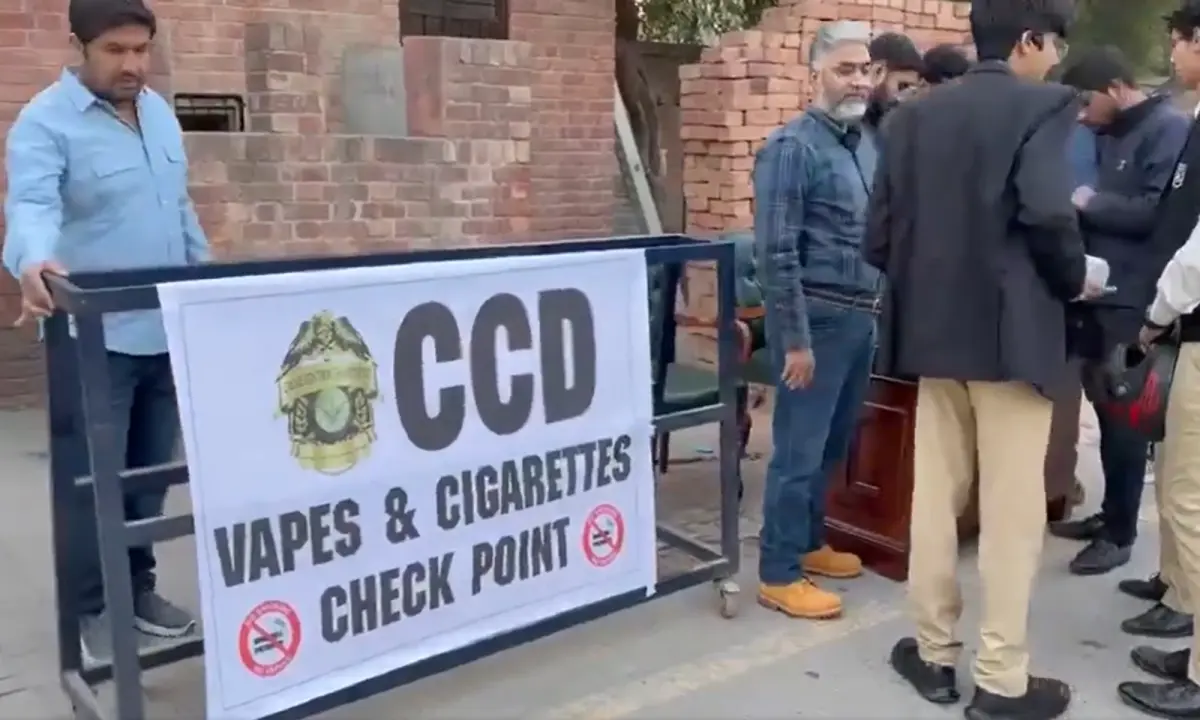
    LAHORE: Punjab’s Crime Control Department (CCD) has started checking students’ school bags outside educational institutions for cigarettes, vapes and other intoxicating substances, drawing criticism from social media users over the involvement of law enforcement personnel in disciplining students.

    After the CCD set up a checking point outside a college in Lahore on Friday, it issued a press release on Saturday announcing a special campaign across educational institutions in Punjab to protect children from drugs, cigarettes, vapes and other intoxicating substances.

    A video of the department’s checkpoint set up on Friday to search students’ bags for any cigarettes and vapes was widely circulated on social media.

    The move prompted a debate, with some social media users supporting the initiative as a measure to protect young people from drugs, while others questioned its legality, ethics and implications for students’ rights.

    The CCD, established last year, has often been criticised by human rights advocates and civil society members for a high number of casualties among suspects. The Human Rights Commission of Pakistan (HRCP) has accused it of “extrajudicial killings”, which the department denies.

    According to the press release by a CCD spokesperson, special checking desks have been established outside educational institutions, where students’ bags were searched to ensure that no intoxicating substances were taken inside, knowingly or unknowingly.

    Students were also being briefed about the harmful effects of smoking and vaping, the spokesperson said, adding that the campaign aimed to prevent drug use in educational institutions and raise awareness about its physical, psychological, educational and social consequences.

    He said parents and teachers had a key role in protecting children from substance abuse and urged them to monitor their activities and habits. This was also underscored by CCD on its Facebook page.

    The department also appealed to the public to identify shopkeepers selling cigarettes and vapes to children, warning that cases would be registered against those suspected to be involved and they would be arrested in accordance with the law.

    The spokesperson insisted that the initiative was part of efforts to encourage healthy lifestyles, maintain a safe educational environment and achieve the goal of a drug-free Punjab.

    While the CCD asserted that parents welcomed the campaign, some internet users questioned the need to involve the law enforcement department in scrutinising students when teachers and parents could do the same.

    Criticising the initiative, human rights lawyer Asad Jamal said on X that the Punjab government believed that every problem could be addressed through increased securitisation of public life.

    “Today, it’s bags, tomorrow students will be bodily searched. Unconstitutional, unethical and unacceptable,” he wrote.

    Former Punjab minister Arslan Khalid also questioned the presence of police personnel outside educational institutions, saying schools should not rely on police to discipline children.

    “Parents and teachers are enough to teach discipline to the children. I will never want my children to have their school bags checked by police,” he posted on X.

    In a reply to anchorperson Iqrarul Hassan, who voiced his support for the move, Khalid asked, “How is it a reasonable decision to allow police officers who regularly deal with hardened criminals, whose language and behaviour we are all familiar with, and who have no training in dealing with schoolchildren, to search our innocent children every day?

    “If a child does something wrong, then a teacher or a father knows how to deal with them.”

    Writer Ammara Ahmed wrote, “Virtue signalling by Punjab government has no end.”

    In his post, Hassan linked it to the growing use of ice (crystal methamphetamine) and other drugs in educational institutions.

    The TV personality said that as a father, he felt reassured by the measure, adding that although such steps would not be desirable under ideal circumstances, they had become necessary in view of the growing drug menace.

    Television anchor Iqra Haris also termed it a “much-needed step”.

    In June this year, Karachi’s South Zone police prepared an anti-drug policy in collaboration with the heads of 22 universities and schools to counter the growing threat of narcotics and vaping products.

    Under the policy, anti-drug committees were to be formed in educational institutes, comprising heads of institutions, teachers, parents and law enforcers.

    Source: dawn
  • India’s Congress warns of more protests against Meta after clashes with police outside its offices

    India’s Congress warns of more protests against Meta after clashes with police outside its offices

    The youth wing of India’s main opposition Congress party on Saturday warned of more protests against Meta’s removal of some accounts and posts of its members, a day after clashing with police outside the US firm’s India offices.

    Meta declined to comment on Friday’s unprecedented protests, which marked an escalation by the influential political group in the company’s biggest market by users.

    Debate is growing in India about potential risks to free speech from the increasingly strict efforts of Prime Minister Narendra Modi’s government to remove social media content it objects to.

    Modi’s government says it orders content to be taken down only if it breaches local laws, can harm public safety or national security.

    Congress has long accused Meta and other social media platforms of curbing dissent online by removing party accounts, favouring Modi’s government.

    Meta has said it restricts content in India to comply with local laws.

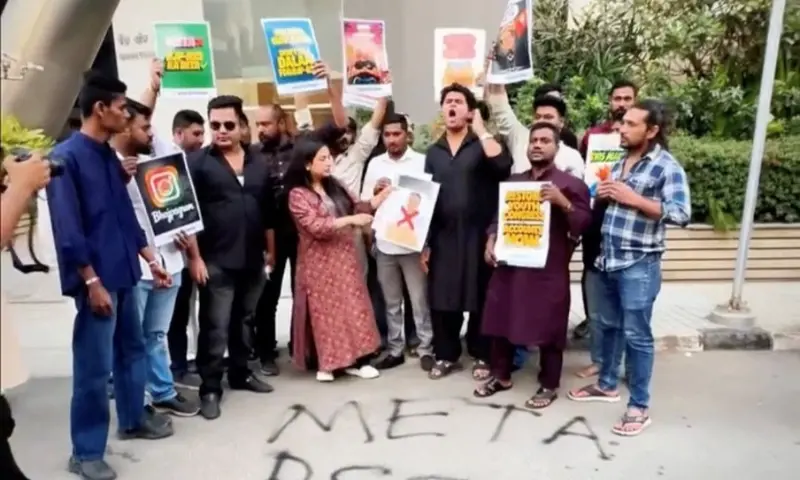
    In Hyderabad on Friday, protesters carrying placards chanted slogans as they stormed into the building that houses Meta’s offices, smashing plants to the ground and clashing with police, according to footage released by the Indian Youth Congress’ X account.

    Another video showed Congress workers spray-painting anti-Meta slogans on walls outside the building that houses its Mumbai office, clashing with security guards who tried to stop them.

    In Gurugram near New Delhi, Congress workers chanted slogans and held banners reading “restore youth Congress accounts”, official online posts showed.

    The Indian Youth Congress posted warnings on X that it would “storm your offices across the country and stage protests” unless Instagram accounts of its leaders are restored.

    On Saturday, the Congress wing posted a video of its workers putting up a banner in central Delhi taking a dig at Meta’s Mark Zuckerberg, referring to him as “Mark BJPberg” to allege the company’s favouritism towards Modi’s Bharatiya Janata Party.

    India’s IT ministry did not immediately respond to requests for comment.

    Modi’s party accuses congress of vandalism

    Telangana opposition politician K.T. Rama Rao criticised Congress workers over what he called vandalism at Meta’s Hyderabad office, saying it had undermined the city’s reputation as a safe destination for businesses.

    Pradeep Bhandari, a national spokesperson for Modi’s ruling party, criticised Congress’ actions on Saturday, saying they had “not only vandalised and destroyed Meta’s office in Hyderabad” but were also “flaunting it on social media”.

    “This is Congress Model: Vandalise offices of Private companies,” he wrote.

    Two such accounts were restored after Friday’s protests, but thousands of accounts of journalists, creators and influencers critical of the government remain restricted, Manu Jain, who is in charge of social media for the youth group, told Reuters on Saturday.

    Meta must explain how its algorithms restrict posts and must restore accounts taken down on government orders, he added.

    Reporters Without Borders has said the removal of journalistic content from social media has been on the rise in India this year, and free speech activists say a new government rule gives social media companies hardly any time to review and decide on takedown requests.

    In February, Modi’s government ordered social media companies to take down unlawful content within three hours of being notified about it, tightening an earlier 36-hour timeline.

    Meta disclosures show that it restricted more than 5.4 million posts or accounts in India under local laws in the first half of 2026, second only to Indonesia and up from about 70,000 in the whole of 2025.

    “The large majority of these items included instances where we were obligated to proactively restrict content … based on local law requirements,” Meta said.

    Source: dawn

  • Capt Safdar seeks Rs10bn in damages from Advocate Mian Dawood over ‘defamatory’ remarks

    Capt Safdar seeks Rs10bn in damages from Advocate Mian Dawood over ‘defamatory’ remarks

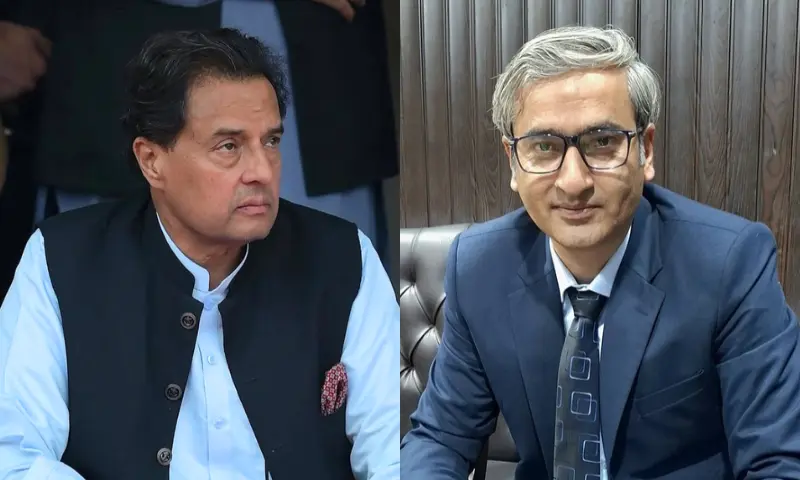
    LAHORE: Punjab Chief Minister Maryam Nawaz’s spouse and former MNA, retired Capt Muhammad Safdar, has served a legal notice to Advocate Mian Dawood, demanding an unconditional public apology, retraction of allegedly defamatory remarks, removal of videos and Rs10 billion in damages.

    The notice, dated Nov 20, was issued through a Rawalpindi-based lawyer, Majad Ali Butt, under Section 10 of the Punjab Defamation Act 2024.

    Advocate Dawood confirmed to Dawn that he had received the legal notice. He said an appropriate response would be sent to Safdar after examining the notice.

    According to the notice, the dispute arose from Safdar’s public demand that former president of the Supreme Court Bar Association (SCBA), Ahsan Bhoon, produce his LLB degree, a matter it says is already before the Supreme Court and the Pakistan Bar Council (PBC).

    Last month, PBC declared that the degrees of Bhoon and its other elected members were genuine.

    The notice claimed that Safdar had said he would apologise if Bhoon’s degree proved genuine and that Advocate Dawood, an “unrelated third party”, responded with malice.

    The notice cited three pieces of content, including a two-minute video uploaded on Sept 24 on YouTube, a news channel interview aired on Oct 29 and a video statement made after the SCBA elections held last month.

    It argued that free speech cannot become a “licence for vulgar abuse”, and that Dawood was expected to show restraint.

    The notice demanded that the lawyer publish, within 14 days, an apology on the same platforms and in leading English and Urdu newspapers, retract the statements, have the videos removed, pay Rs10bn and refrain from repeating the remarks.

    Failing that, Safdar would approach the Special Tribunal under the Defamation Act, the notice warned.

    In late September, Safdar called for verification of the degrees of prominent lawyers, including Bhoon, a close associate of Law Minister Azam Nazeer Tarar.

    His remarks also came ahead of the SCBA elections. Bhoon heads the Independent Group, also known as the Asma Jahangir Group. Safdar had announced the formation of his own group, the Quaid-i-Azam Muhammad Ali Jinnah Group.

    Subsequently, Bhoon filed a Rs5 billion defamation suit against Safdar over remarks questioning the authenticity of his LLB degree. The Punjab Defamation Tribunal had admitted the suit for hearing and issued a notice to Safdar.

    Meanwhile, the retired Captain had moved a complaint with the Judicial Commission of Pakistan to seek verification of Bhoon’s educational qualifications. Days later, PBC said that the returning officers (ROs) for its 2020 and 2025 elections had gotten the elected members’ degrees verified from their respective universities before notifying them as the council’s members.

    Source: dawn

  • EU proposes tax on Big Tech to boost budget

    EU proposes tax on Big Tech to boost budget

    The European Union (EU) put forward plans on Saturday to tax the world’s biggest digital companies to fund its next budget, as it seeks to bridge divisions among member states over the bloc’s long-term funding.

    European Council President Antonio Costa unveiled a new spending proposal that slashes by €204 billion ($224bn) a plan initially put forward by the European Commission, which some countries had slammed as too onerous.

    “I believe this proposal can bring us closer to a final agreement,” Costa told a press conference in Brussels.

    But the draft immediately drew criticism both from so-called “frugal” EU members led by Germany and those like France opposing large cuts.

    German Chancellor Friedrich Merz said the budget’s “overall size remains too high”, noting that “virtually all” member states had to consolidate public finances at home.

    French President Emmanuel Macron’s office instead slammed the proposal as “disappointing”, notably for what concerned income support for farmers.

    EU nations have been squabbling over the size of the next budget, with Germany leading calls for major cuts after the commission last year proposed a €2-trillion budget for the 2028-2034 period.

    Digital tax

    Costa, who represents the EU’s 27 states, is seeking to reach a deal by the end of the year balancing contributions from member states with new sources of revenue for the bloc.

    Among these could be a tax on digital firms, which the draft Costa presented on Saturday says will concern companies with an annual turnover for digital activities of at least €50 million in the EU as well as a global turnover of more than €750m.

    They would be subjected to “an annual contribution corresponding to 3 per cent of the annual net turnover from online advertising, digital intermediation services and user-generated data”, according to documents shared by the council.

    The plan is likely to provoke United States President Donald Trump’s ire since his administration has reacted angrily to EU fines and moves against Big Tech under its content and competition rules in recent years.

    “This tax is in no way directed against any particular company or country,” Costa said of the levy, which replaces a charge on large companies envisaged by the commission.

    The draft also includes plans for a levy on electronic waste and higher tobacco taxes. Costa said the EU will explore a tax on crypto assets and to gain revenue from radio spectrum auctions.

    Overall, the council estimates the EU’s “own resources” could generate about 60 billion euros in revenue each year.

    Parliament threat

    The draft will be at the centre of fraught talks when EU leaders meet in Brussels next week.

    Costa is pushing for a deal in December, amid EU fears that a delay would push talks into a fraught election year in 2027, with worries about what potential eurosceptic victories in France and elsewhere would mean for future dealmaking.

    Once EU states find an agreement, they will have to negotiate with parliament — a task that also promises to be difficult.

    “President Costa’s proposal is simply unacceptable. The Council is fixated on cuts when Europe needs ambition and resources to tackle its mounting challenges,” key budget lawmaker Siegfried Muresan warned.

    Costa does not only have to contend with the frugals’ demands.

    France, the second-biggest EU economy and a net contributor to the budget, argues the bloc needs sufficient means to match the rising challenges it faces.

    Meanwhile, 17 countries from southern, central and eastern Europe have formed a group known as the “Friends of Cohesion” and are pushing for greater funding to support agriculture and regional development.

    “We are still a long way from a compromise,” Jessica Rosencrantz, Europe Minister of Sweden, which is with Germany among five nations pushing to cut back national contributions, wrote on X.

    Source: dawn

  • Interior minister meets JI chief in Lahore, discusses country’s ‘overall situation’

    Interior minister meets JI chief in Lahore, discusses country’s ‘overall situation’

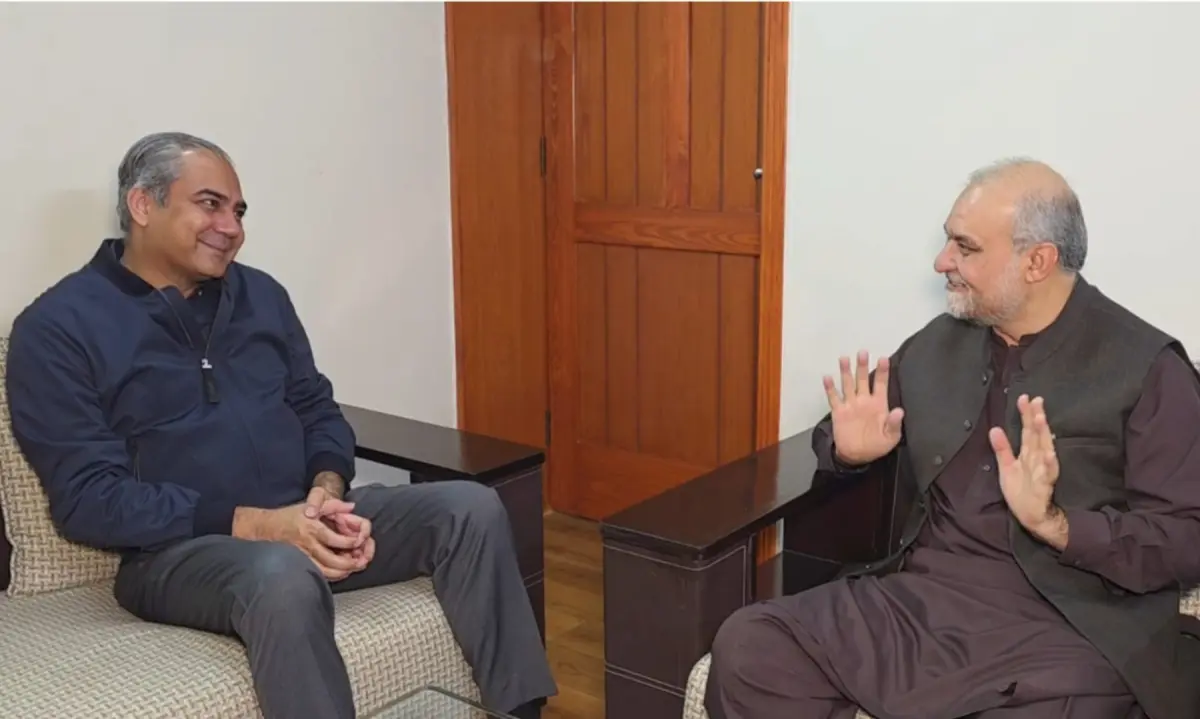
    Interior Minister Mohsin Naqvi on Saturday met with Jamaat-i-Islami chief Hafiz Naeemur Rehman in Lahore, where both discussed the “overall situation” in the country as well as challenges facing the public.

    In a statement, the interior ministry said Naqvi and Rehman also exchanged views on law and order measures during the “important” meeting. Both sides agreed to continue consultations in the future.

    “Everyone must play their effective role in addressing the challenges facing the country,” the ministry quoted Naqvi as saying.

    Meanwhile, the JI chief reiterated his party’s demand that providing relief to the public should be the government’s top priority.

    According to a press release issued by JI, Rehman said the government should also take measures to improve law and order.

    However, he added that people were not only facing law and order challenges but also bearing the brunt of poverty, inflation, and other economic difficulties, which required immediate government action.

    Rehman highlighted that the “continuous increase” in the prices of flour, sugar, cooking oil, pulses, and other essential commodities had made life extremely difficult for ordinary citizens.

    Weekly inflation was recorded at 10.41 per cent year-on-year in the week ending on Nov 19, driven largely by wheat flour prices, according to official data released by the Pakistan Bureau of Statistics.

    The JI chief also called attention towards exorbitant electricity and gas bills, which have severely burdened middle- and lower-income people.

    Rehman contended that salaried employees and the working class had become unable to meet household expenses on their limited incomes, adding that children’s education and healthcare were also increasingly becoming unaffordable for ordinary citizens.

    The JI chief noted that increases in petrol and diesel prices, and consequently transport fares, were directly burdening the public.

    While he acknowledged that the public has received some relief through a reduction in petrol prices, Rehman stated that JI’s struggle was aimed at the complete abolition of the petroleum levy and urged the government to take concrete measures in this regard.

    ‎The JI chief demanded that the government effectively control the prices of essential commodities, provide genuine relief in electricity and gas bills, and take strict action against hoarders and profiteers.

    ‎He maintained that the people needed practical relief rather than mere announcements, and that the government should shift the burden onto the privileged class instead of placing it on the public.

    The JI has been demanding for over two months that the Centre abolish petroleum levies, as fuel prices have skyrocketed due to conflicts in the Middle East since March.

    When Prime Minister Shehbaz Sharif and Rehman met in October, they agreed to form a joint committee to recommend proposals for expanding the fuel relief scheme and for a phased reduction in the petroleum levy for the next budget.

    Earlier this week, both sides completed negotiations at the technical committee level, finalising draft proposals on public relief measures, JI said.

    Source: dawn

  • US court hands Indian national Nikhil Gupta 20 years for Sikh murder plot

    US court hands Indian national Nikhil Gupta 20 years for Sikh murder plot

    WASHINGTON: An Indian national has been sentenced to 235 months in prison for his role in a plot allegedly directed by an Indian government official to assassinate a US-based Sikh nationalist leader on American soil, the US Department of Justice (DOJ) announced on Friday.

    Nikhil Gupta, 55, also known as Nick, was sentenced by US District Judge Victor Marrero in the Southern District of New York after pleading guilty in February 2026 to murder-for-hire, conspiracy to commit murder-for-hire and conspiracy to commit money laundering.

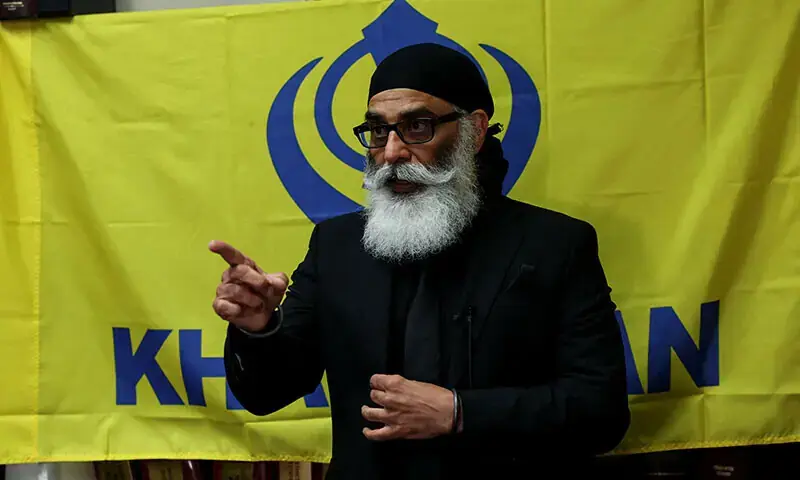
    The case involved an alleged conspiracy to kill Gurpatwant Singh Pannun, a US and Canadian citizen, attorney and political activist who advocates the creation of an independent Sikh homeland, Khalistan, in India.

    According to the DOJ, Gupta worked with Vikash Yadav, a co-defendant and Indian government employee, to organise the 2023 assassination. Yadav was employed by India’s cabinet secretariat that houses the country’s foreign intelligence service, the Research and Analysis Wing (RAW).

    Additional details emerging from the court proceedings indicate that Gupta arranged a $15,000 advance payment to a person he believed was a hired assassin. The individual was actually an undercover US law enforcement officer.

    Gupta and Yadav had discussed paying $100,000 for the assassination. Gupta also supplied information about Pannun to the supposed hitman to facilitate the killing.

    Prosecutors said Yadav provided personal data of Pannun, including his home address, phone numbers and details of his daily movements. Gupta allegedly passed this information to the undercover operative and kept Yadav informed about the progress of the operation.

    The plot was foiled by US agencies before Pannun could be killed.

    Prosecution sought 24 years

    Prosecutors had sought 293 months, citing his alleged role in a foreign-directed plot to assassinate Pannun, while the defence requested 144 months, citing his lack of a criminal record, alcohol dependence and personal circumstances.

    During the hearing, Gupta apologised to Pannun, affected communities and his family, expressing regret for abandoning Mahatma Gandhi’s principle of non-violence.

    Pannun thanked US authorities for prosecuting the case and reaffirmed his commitment to Sikh independence.

    The case has also been linked to the June 2023 killing of Sikh nationalist leader Hardeep Singh Nijjar in Canada, though Gupta’s defence denied his involvement in Nijjar’s assassination.

    Prosecutors had identified Indian official Yadav as the alleged director of the operation. He remains in India despite a US arrest warrant issued in October 2024, as India denies role in assassination plots.

    Published in Dawn, November 21st, 2026

    Source: dawn

  • Democrats won big in the US midterms. Now what?

    Democrats won big in the US midterms. Now what?

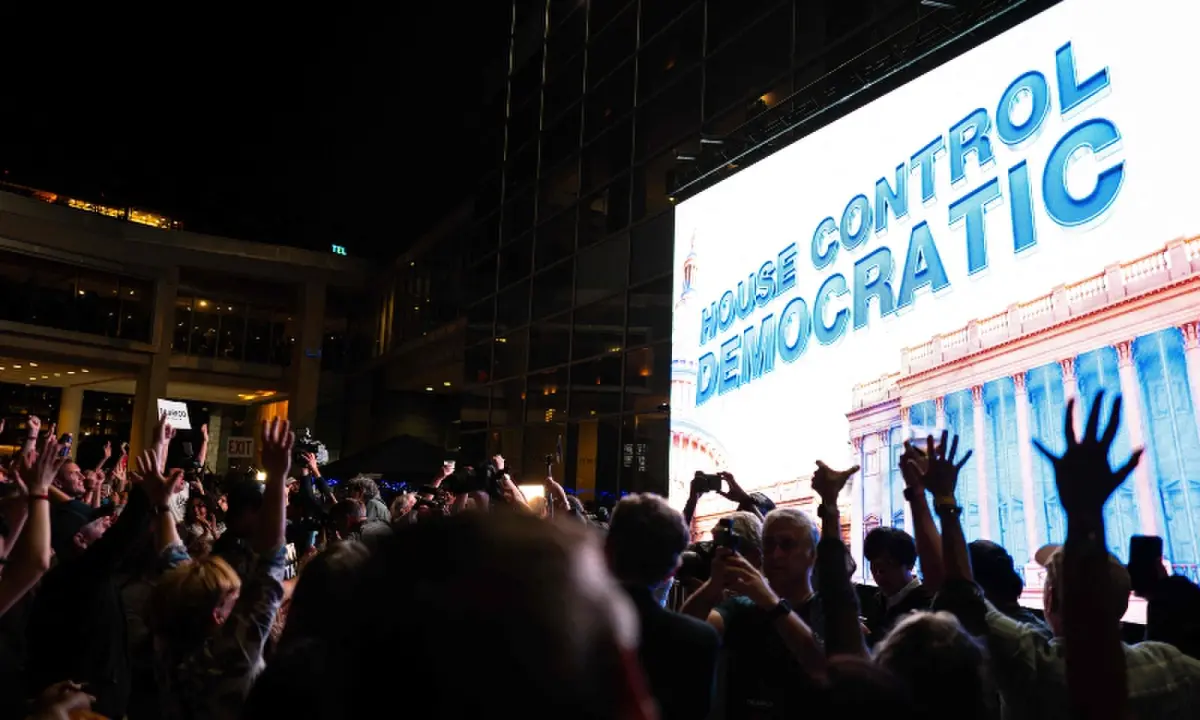
    Democrats basking in their Nov 3 election wins will soon unveil an ambitious legislative agenda for the first 100 days and beyond, in a test of progressives’ influence and Republicans’ willingness to cooperate, as they take control of the US Congress on Jan 3.

    That agenda is likely to be unveiled in ​early December once a Senate leadership race is settled.

    It will mark a thunderous reversal of the past two years, when US President Donald Trump’s Republicans ruled the Senate and House of Representatives. ‌With their narrow majorities, they rammed through major tax cuts skewed toward the rich and stood by as Trump grabbed their powers over tariffs and spending.

    Democrats’ new majorities in Congress are anything but narrow.

    With a 56-44 majority in the Senate, they are four votes short of the 60 votes needed to advance most legislation. In the House, their 257-172 force could grow beyond an 85-vote margin once a handful of races are settled.

    “This is a realignment,” said Democratic Senator Raphael Warnock of Georgia in a post-election interview with reporters.

    But in a ​warning to Democrats, veteran Republican Senator John Boozman of Arkansas said in an interview that despite his party’s losses across the United States, Trump remains “a powerful force” and “I don’t see any of his vetoes ​getting overridden” by Congress during his remaining two years in office.

    Aggressive agenda

    For months, Democrats have been plotting a House-Senate coordinated attack to undo Trump’s major accomplishments, according to ⁠lawmakers and aides.

    With the high cost of living the top concern voiced by voters, Democratic leaders are going after the low-hanging fruit that also would help unite their party’s progressives and moderates.

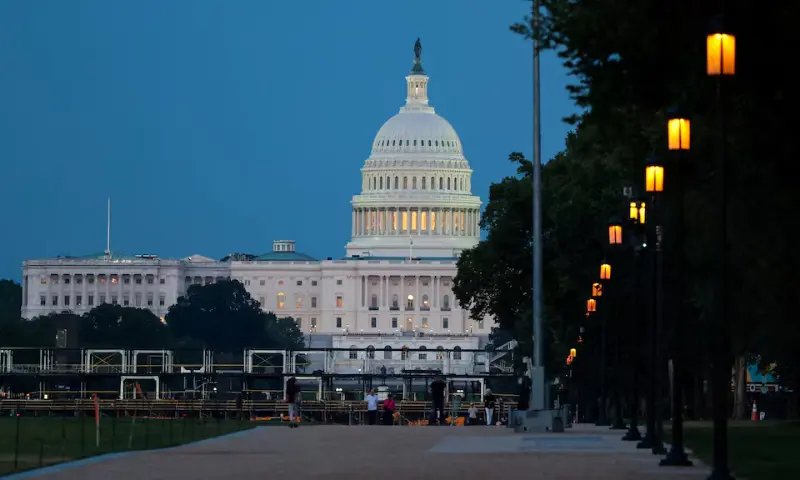
    The US Capitol, as viewed from the National Mall, at blue hour in Washington, DC, US, on Sept 1, 2026. — Reuters/File
    The US Capitol, as viewed from the National Mall, at blue hour in Washington, DC, US, on Sept 1, 2026. — Reuters/File

    Early votes are expected on legislation ​handcuffing Trump’s ability to wage war on Iran without Congress’ approval, which would help lower gasoline prices. Reversing Republicans’ deep cuts to Medicaid and SNAP food stamp programmes would begin helping the poor meet healthcare and grocery costs.

    Meanwhile, ​progressives have urged raising the federal minimum wage, which is unchanged since 2009 at $7.25 per hour. Some are pushing for $20 to $25.

    And in response to voter disgust over Washington ethics breaches, one of the first bills Democrats are expected to present is one barring lawmakers from insider trading in stocks.

    Republicans face a bind: joining Democrats could anger Trump unless he backs measures, while stonewalling could anger voters.

    “I think there’s a real understanding in Congress that things like healthcare, the really exorbitant premiums, you know, that people are having to ​pay” must be addressed, said Boozman, who was one of the Republicans who supported around $1 trillion in cuts to Medicare, Medicaid and Obamacare programmes enacted last year.

    Boozman is one of the senators who would be up for ​re-election in 2028 and potentially open to cooperating with Democrats, although he said he would seek guidance from Trump.

    ‘We need more democracy’

    Newly elected progressives, who are growing in numbers in state and local offices, have a far deeper agenda for the next ‌two years, such as cutting off aid to Israel and placing a moratorium on new AI data centres.

    Their to-do list also includes revamping campaign finance rules, raising taxes on the rich, writing comprehensive immigration reform and mitigating the effects of climate change.

    The incoming class of members of Congress averages about eight years younger than now in the House and 14 years younger in the Senate, according to government figures.

    “We’d have to actually confront monopoly power, whether it’s in tech or whether it’s in the utility or other major industries,” said Democratic Representative-elect William Lawrence, 36, who flipped a Republican-held seat in Michigan.

    “There’s a lot of talk about protecting democracy. We need more democracy in the economy,” Lawrence said.

    Other complex issues, ​ranging from comprehensive immigration reform and universal healthcare to ​more aggressive enforcement of environmental laws, also populate ⁠an already-crowded Democratic wish list.

    Retiring Democratic Senator Dick Durbin of Illinois said he has talked to colleagues about the need next year to tackle outdated laws governing work visas, the path to citizenship for migrants who lack papers and long-term border security steps, without some of the extreme deportation practices of the Trump administration.

    “With the numbers that we ​have, we have to try to press forward, try to make a bipartisan 60 votes in the Senate” on comprehensive immigration legislation, Durbin said in a ​hallway interview.

    Immigration, Medicare for all priorities

    For ⁠years, many Republicans have argued Congress should hold off on sweeping immigration reforms until the southern US border is secured. Trump maintains that he has now accomplished that.

    In 2013, a bipartisan immigration reform bill passed the Senate by a vote of 68-32, only to be killed by the Republican-controlled House at the time.

    Meanwhile, moderate Democrats, who outnumber progressives in Congress, have largely shied away from the universal healthcare “Medicare for All” idea progressives demand. But in recent months, it has been showing ⁠signs of gaining ​traction with more politicians and voters.

    Senator Bernie Sanders has a proposal to phase in universal coverage over four years, beginning with lowering ​the Medicare eligibility age to 55, expanding dental, vision and hearing benefits, and guaranteeing coverage for all children.

    Democratic Representative Chellie Pingree of Maine, first elected in 2008, expects to chair a House panel overseeing federal environmental spending in January.

    “I think people are deeply worried about the rollback ​of clean air, clean water standards, climate change issues, also just the toxins in our environment,” Pingree said, hinting at her 2027 subcommittee agenda.

    Source: dawn

  • After nearly three-month delay, police submit charge sheet in Hina Javed murder case

    After nearly three-month delay, police submit charge sheet in Hina Javed murder case

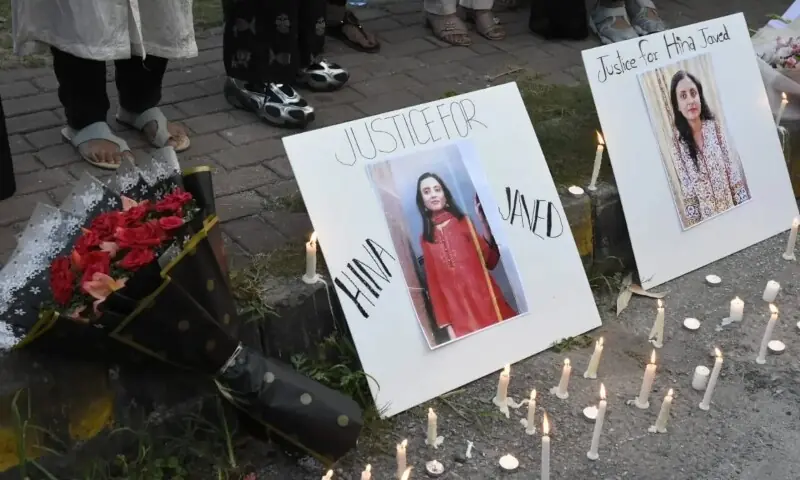
    RAWALPINDI: After a delay of nearly three months, police have completed their investigation into the murder of Hina Javed and submitted the charge sheet to the court, Rawalpindi City Police Officer Sardar Ghias Gul told the media on Saturday.

    Hina, a 45-year-old digital media executive, was found dead at her residence in Rawalpindi in August, with police noting signs of torture. Her husband and their domestic worker were arrested as Hina’s family accused them of murdering her, while her father-in-law was questioned as part of the investigation.

    The senior police official said the charge sheet had been submitted for further legal proceedings.

    Acknowledging shortcomings in police prosecution, he said the release of suspects could be prevented by appointing the right people to the right positions.

    Under the law, police are required to submit the charge sheet in a murder case within 15 days of the suspect being remanded to judicial custody.

    The case

    The victim’s body was discovered in the washroom with signs of torture, including a strangulation mark around her neck, an injury below her right lip, and bleeding from her nose. The Rawalpindi police chief ruled out suicide, stating it was a murder.

    Her brother, Fahad Javed, filed a First Information Report (FIR) alleging that his sister was murdered by her husband, father-in-law, and their domestic servant.

    The police arrested Hina’s husband and their domestic servant, Zeeshan, in connection with the murder. Her father-in-law was also questioned as part of the investigation. Both the husband and the domestic servant were sent on judicial remand.

    Forensic evidence played a significant role in the investigation. DNA analysis reports indicated that DNA samples from Hina’s domestic servant matched postmortem swabs collected from her body. His DNA profile also matched other samples from the crime scene.

    The report also stated that Hina’s husband’s DNA matched samples collected from multiple items at the crime scene. A Y-STR profile from the victim’s clothes showed a mixture of DNA from at least three individuals, and her husband, father-in-law, and domestic servant could not be excluded as contributors.

    Hina’s family repeatedly expressed mistrust in the Rawalpindi police investigation. The family claimed to have proof of evidence tampering by the husband’s brother, who allegedly cleaned the accused’s room, tampered with evidence, and colluded with the police. They have demanded the formation of a special judicial commission to ensure a transparent investigation and requested that DNA and forensic reports be shared with them.

    In response to concerns, the Punjab government formed a three-member high-powered committee to review the investigation. The National Assembly Standing Committee on Interior and Narcotics Control has also summoned top police officials, including the Punjab IGP, to brief it on the investigation’s latest developments.

    Punjab Chief Minister Maryam Nawaz noted that “DNA test results and polygraph test suggest that the murder and rape were committed by the servant; however the investigation is ongoing”.

    On Oct 29, First Lade Aseefa Bhutto Zardari also met with Hina’s family at the Parliament and called for the family’s demand of a judicial commission to be “given due consideration”.

    Source: dawn

  • FM Dar calls for multilateralism, says bloc or unilateral politics will not work

    FM Dar calls for multilateralism, says bloc or unilateral politics will not work

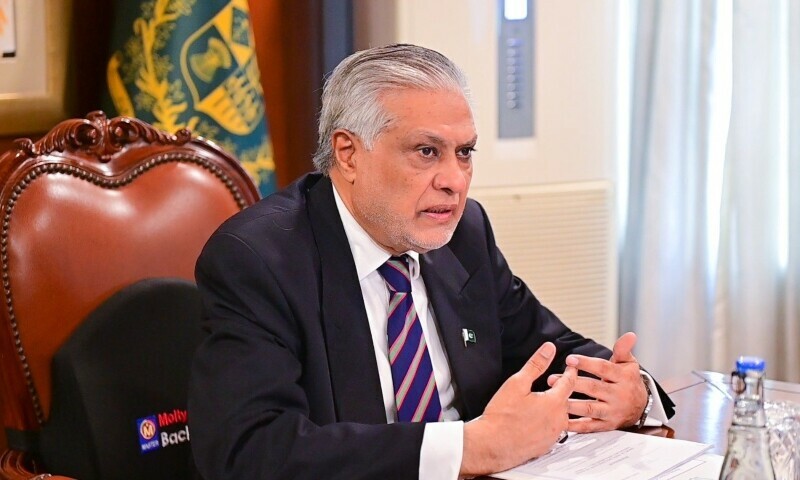
    Deputy Prime Minister and Foreign Minister Ishaq Dar stressed the importance of multilateralism, saying bloc politics and unilateralism would not work.

    In an interview with Euronews, the foreign minister said Pakistan’s foreign policy was very clear: it was independent.

    “We believe in multilateralism,” FM Dar said, emphasising that even in the current environment, countries needed to work “double hard” to support it.

    “Bloc politics or unilateral politics will not work,” he added.

    Dar recalled that during Pakistan’s three-day presidency of a UN Security Council moot, the theme had been multilateralism and the peaceful settlement of disputes.

    He also highlighted Pakistan’s role in the ongoing conflict between the United States and Iran.

    “Pakistan believes that diplomacy and dialogue are the only way forward, even amid the extreme conflicts taking place in various parts of the world.

    “The more effort is put into dialogue and diplomacy, the more likely a solution will emerge,” he said.

    On mediation efforts between the US and Iran, FM Dar said Pakistan was the first country to condemn Israel’s attack on Iran on February 28.

    The foreign minister said he had called his Iranian counterpart the following day, urging him to exercise restraint and refrain from retaliating against the attack.

    However, he clarified that his message was not to target other Middle Eastern or Gulf countries, expressing regret that they were subsequently attacked.

    He maintained that Iranian officials had told Pakistan they were targeting only American military bases and not those countries.

    FM Dar also hailed the direct talks between the US and Iran, hosted by Islamabad after 47 years.

    The foreign minister said that even during the previous round of indirect talks between the US and Iran in Oman, it had been agreed that Pakistan must be present if direct talks were held.

    Dar also hailed the June 18 signing of the Islamabad Memorandum of Understanding between the US and Iran, but regretted the subsequent violations.

    “Pakistan hasn’t given up. We are still working hard. We continue to persuade both parties to respect and honour what they signed on June 18,” he said.

    Dar also called for the free movement of vessels through all sea routes, stressing that this was a “must”.

    “Sooner or later — I hope sooner — we will achieve that objective because the world cannot afford [continued disruption],” he said.

    He said disruptions to energy supply chains and rising prices were creating difficulties for people across countries.

    However, he praised the government for providing fuel subsidies to low-income groups.

    The foreign minister said it was “high time” that regional peace was achieved through an agreed mechanism.

    “We all have to see the new security architecture,” he added.

    On Pakistan’s economic potential and management, the deputy prime minister said there was a need to unlock the country’s potential, adding that the recent Pakistan Minerals Investment Forum was part of these efforts.

    “Our total external debt is $130 billion, while the estimated potential of our mineral resources and rare earth materials is between $6 trillion and $10 trillion.”

    “We have the potential and the capacity to match it. It’s a matter of time,” he said.

    Responding to a question about Pakistan’s relations with Afghanistan, Dar said, “[…] nobody wishes for Afghanistan to be a stable, economically viable and prosperous country more than Pakistan does.”

    Following last October’s major terrorist attacks, Pakistan shared what Dar described as credible evidence with international institutions, pointing to Afghanistan as the source of the attacks and alleging that they were sponsored by other countries.

    He added that the Afghan administration had provided no verifiable evidence that it had taken concrete action to curb terrorism.

    “We are on the front line. We have lost 100,000 people and Rs150 billion from our economy.

    “We genuinely want terrorism to be eradicated and eliminated,” he said.


    More to follow

    Source: dawn

  • Rizwan, Shan, Saim among notable omissions as PCB awards contracts to 38 players

    Rizwan, Shan, Saim among notable omissions as PCB awards contracts to 38 players

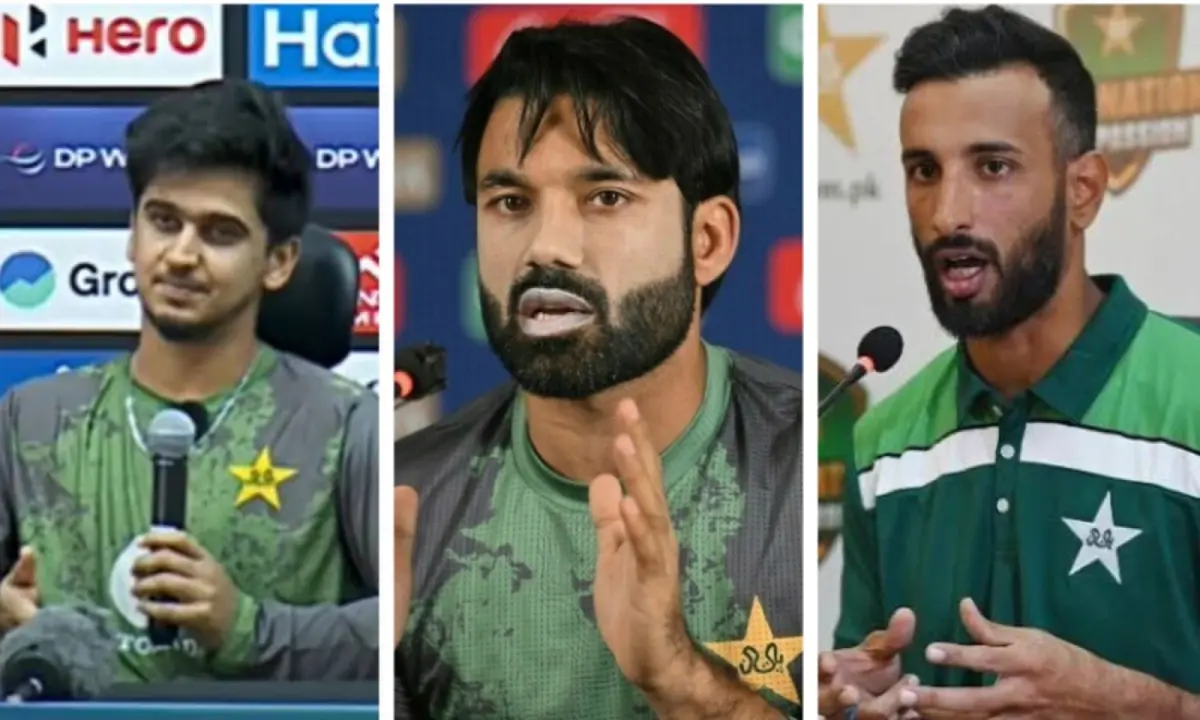
    Former captain Mohammad Rizwan, Shan Masood and Saim Ayub were among the notable omissions as the Pakistan Cricket Board (PCB) on Saturday announced central contracts for 38 men’s cricketers under a revamped, format-based structure that places greater emphasis on specialised roles and the development of emerging talent.

    The contracts, effective from Nov 1, 2026 to June 30, 2027, mark a departure from the traditional A-to-D grading system, replacing salary-based rankings with five tracks based on players’ format commitments.

    The new list includes eight more players than the previous cycle, while 19 cricketers have been placed in the newly introduced development category.

    Besides Rizwan, Shan and Saim, the notable omissions include Hasan Ali, Abdullah Shafique, Mohammad Haris, Mohammad Nawaz, Noman Ali, Hussain Talat, Khurram Shahzad, Abbas Afridi and Mohammad Wasim Jnr. The players had been without central contracts since their previous agreements expired in June.

    Announcing the list at Gaddafi Stadium, member of the selection committee and director of high performance Aaqib Javed said the restructuring followed consultations involving selectors and the coaching staff to identify players expected to feature in particular formats over the coming months.

    “The idea was to award central contracts to players who are currently playing across all three formats, as well as those whom the selectors and head coach believe are likely to feature in a particular format by the end of June next year,” Aaqib said.

    Head coach Mike Hesson said the model was intended to give players greater clarity about their roles and allow the management to plan their preparation accordingly. He noted that several Pakistan players were still in the development phase after recently breaking into international cricket.

    The five tracks comprise AB for Test and ODI players, A for Test specialists, BC for ODI and T20I cricketers, C for T20I players and D for developing talent. Babar Azam and Salman Ali Agha are the only two players contracted for both Tests and ODIs, while no player has received a contract covering all three formats.

    Aaqib clarified that the categories would not restrict players from appearing in other formats or participating in franchise leagues.

    Players on Test-only contracts, however, would be encouraged to prioritise four-day cricket if taking up additional playing commitments. He cited Babar’s participation in the International League T20 as an example of a commitment unaffected by the new arrangement.

    He also stressed that central contracts did not guarantee selection, saying players outside the list, including Rizwan, remained eligible for national duty.

    The PCB has increased players’ financial remuneration, although Aaqib did not disclose the percentage. Existing incentives include doubled match fees for victories against higher-ranked opponents and half the Test match fee for contracted players appearing in domestic four-day cricket. Fitness testing and domestic participation will also form part of players’ contractual obligations.

    The development category includes several players who have recently made an impression in first-class cricket and earned opportunities in the national side.

    Tayyab Arif, Mohammad Taha, Ghazi Ghori and Saqib Khan, for instance, featured in Pakistan’s recent Test series against Sri Lanka, which the hosts won 1-0 on Friday. Saqib claimed nine wickets across the two matches, while Ghazi scored a half-century in the second Test.

    Hesson said Pakistan were also working towards narrowing their selection pool to around 20 players through multi-team matches in Multan and upcoming domestic competitions, including the ODI Cup.

    On Shaheen Shah Afridi’s absence from the Test-specialist category, Hesson welcomed the fast bowler’s return to consistent first-class cricket and said discussions had taken place about his red-ball involvement. Shaheen has instead been contracted for ODIs and T20Is.

    Players awarded central contracts

    Test and ODI: Babar Azam, Salman Ali Agha.

    Test: Azan Awais, Mohammad Abbas, Sajid Khan, Saud Shakeel.

    ODI and T20I: Abrar Ahmed, Arafat Minhas, Fakhar Zaman, Faheem Ashraf, Haris Rauf, Shaheen Shah Afridi.

    T20I: Hasan Nawaz, Maaz Sadaqat, Mohammad Salman Mirza, Naseem Shah, Sahibzada Farhan, Shadab Khan, Usman Tariq.

    Development: Abdul Samad, Abdullah Fazal, Ahmed Daniyal, Ali Raza, Farhan Yousaf, Hunain Shah, Mohammad Taha, Mohammad Tayyab Arif, Muhammad Ghazi Ghori, Muhammad Imran Randhawa, Razaullah, Saad Baig, Saad Masood, Sameer Minhas, Saqib Khan, Shahzaib Khan, Shamyl Hussain, Sufyan Moqim, Ubaid Shah.

    Source: dawn