Category: dawn news

  • Forensic evidence points to servant in Hina Javaid murder as probe clears husband

    Forensic evidence points to servant in Hina Javaid murder as probe clears husband

    • After nearly three-month delay, police submit charge sheet in high-profile murder case
    • According to the DNA analysis report, Hina Javaid was reportedly sexually assaulted after being murdered by her domestic servant

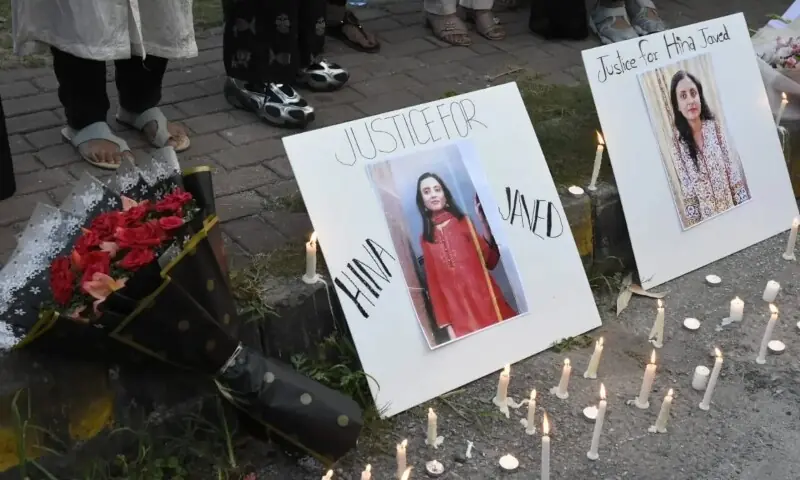
    RAWALPINDI: Rawalpindi police have completed their investigation into the high-profile murder of digital media executive Hina Javaid, who was found dead with signs of torture and strangulation at her husband’s apartment in Lal Kurti in August. The police submitted the challan to the court after about three months.

    The development was disclosed by newly appointed City Police Officer (CPO) Rawalpindi Sardar Ghias Gul during his first interaction with media persons on Saturday.

    Hina Javaid was murdered on August 20, 2026, at her husband’s house, and her domestic servant has been identified as the main suspect in the case following a forensic DNA match and a report by a high-level inquiry committee.

    Hina Javaid’s husband and his father have been cleared of any involvement in the murder by the police investigation, as no evidence linking them to the crime has been found.

    At one point during the course of investigation, Punjab Chief Minister Maryam Nawaz noted that “DNA test results and polygraph test suggest that the murder and rape were committed by the servant.”

    However, he said the investigation was ongoing. On Oct 29, First Lady Aseefa Bhutto Zardari also met with Hina’s family at the Parliament and called for the family’s demand for a judicial commission to be “given due consideration”.

    Although Hina Javaid’s husband and her father-in-law were named in the initial FIR registered on murder charges, they were given a clean chit in the police investigation. However, Hina’s husband was arrested, while her father-in-law was only questioned by the police.

    It will be up to the court to decide whether Hina’s husband and father-in-law had any link to her murder. The police are required to submit a challan in a murder case within 15 days after a suspect is sent to judicial remand.

    Meanwhile, Hina’s family had expressed dissatisfaction over the police investigation and demanded a judicial inquiry.

    The family claimed to have proof of evidence tampering by the husband’s brother, who allegedly cleaned the accused’s room, tampered with evidence, and colluded with the police.

    The police have already added Section 376 of the Pakistan Penal Code (rape) to the case following the forensic DNA findings.

    CPO Sardar Ghias Gul told media persons that the challan had been submitted to the court for legal proceedings. He also acknowledged shortcomings in police prosecution, which result in the release of criminals, and said these would be addressed by appointing the right people to the right positions.

    The Punjab government had constituted a three-member high-powered committee to review the investigation into the murder case, in which her husband and a domestic servant had been placed on judicial remand at Adiala Jail.

    As part of the investigation, the committee also visited the crime scene, questioned the deceased woman’s husband and the domestic servant in jail, and met members of her family.

    The committee comprises Additional Inspector General of the Crime Control Department (CCD) Sohail Chattha, DIG Lahore Shoaib Khurram Janbaz and SSP Investigation Rawalpindi Saifullah.

    Published in Dawn, November 22nd, 2026

    Source: dawn
  • Portuguese foreign minister due in Islamabad today

    Portuguese foreign minister due in Islamabad today

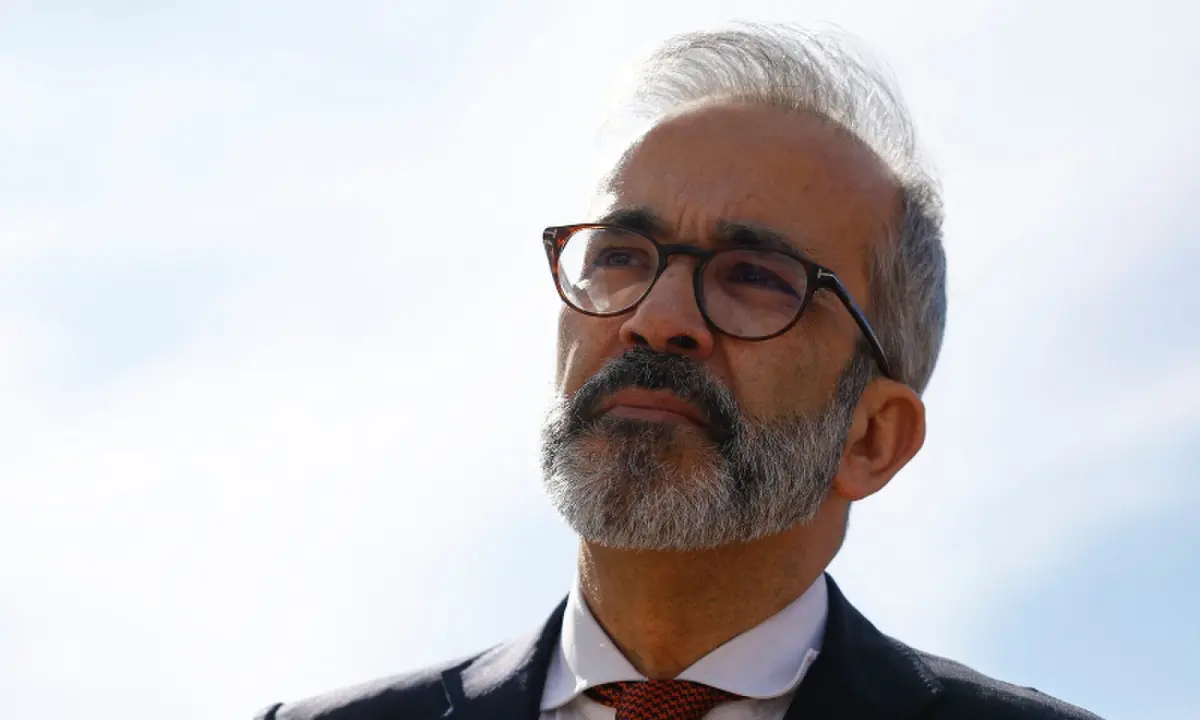
    ISLAMABAD: Minister of State and Foreign Affairs of the Portuguese Republic, Paulo Rangel, will undertake an official visit to Pakistan from Nov 22 to 23, at the invitation of Deputy Prime Minister and Foreign Minister Senator Mohammad Ishaq Dar.

    The visit comes as Pakistan and Portugal mark the 77th anniversary of their diplomatic relations, established on Nov 7, 1949.

    The deputy prime minister and foreign minister will hold a one-on-one meeting with his Portuguese counterpart, followed by delegation-level talks. They will also hold a joint press stakeout, the Foreign Office spokesperson said.

    The two leaders will review bilateral relations and discuss ways to expand trade and investment. “The visit will also feature a Pakistan-Portugal Business Forum. Companies from both countries will hold business-to-business meetings to explore commercial partnerships and investment opportunities in agri-food, renewable energy, pharmaceuticals, information technology and textiles,” the spokesperson added.

    Foreign Minister Rangel’s visit will provide an opportunity to build on the longstanding ties between Pakistan and Portugal and to broaden bilateral cooperation across diverse sectors.

    Published in Dawn, November 22nd, 2026

    Source: dawn

  • Legislative scrutiny

    Legislative scrutiny

    PAKISTAN’S parliament and the provincial assemblies have an elaborate infrastructure of parliamentary oversight and scrutiny of the executive. There are more than 200 parliamentary committees in the six houses, including 35 in the National Assembly, 45 in the Senate, 45 in the provincial assembly of Punjab, 34 in Sindh, 38 in Khyber Pakhtunkhwa and 15 in Balochistan.

    Each committee comprises 20 to 30 members varying from house to house. These members elect a committee chair in their first meeting; the chair is entitled to two personal staffers, a chauffeur-driven and fully maintained official car and an exclusive office. The committee members and the chair are entitled to travel and daily allowances for the days of the meeting and two days before and after the meeting. All this is paid for from the taxpayers’ pocket and is fully justified in view of the work assigned to these committees. Unlike the British parliamentary committees, which meet only during the plenary sessions of parliament and therefore do not incur any extra travel or daily allowance cost, parliamentary committees in Pakistan mostly meet when the legislature is in recess and hence, extra travel and daily allowances are to be paid separately.

    The Indian parliament has adopted another measure and constituted joint committees of the Lok Sabha (equivalent to our National Assembly) and the Rajya Sabha (like Pakistan’s Senate), which not only speeds up scrutiny in the committees, but results in some savings as well. In Pakistan, we have independent and separate committees both for the National Assembly and the Senate. Although the Indian joint committees system is efficient, it deprives parliament of a double layer of scrutiny which is available in Pakistan.

    The problem arises when important bills are summarily processed within days or even hours.

    In all systems of governance, whether presidential like the US, parliamentary like the UK and Pakistan, the parliaments — whatever name these are known as — rely on the committees to do most of the substantive work, especially the oversight of the executive, which primarily includes scrutiny of legislation. In any work which requires detailed scrutiny like the annual budget, a constitutional amendment, ordinary legislation or, as in the case of the US, confirmation of senior appointees in the executive and judiciary, committees play a pivotal role. It is not practical to do such work in plenary.

    Rules of almost all the legislatures in Pakistan provide that each legislation, after it is introduced in the plenary, will be referred to the relevant committee for detailed deliberations and scrutiny. In extraordinary circumstances, the plenary has the authority to suspend the rule and consider the legislation in the plenary without referring it to the committee concerned. One of the criteria by which the quality of democracy and effectiveness of legislative oversight in a country is assessed is the percentage of legislation which is not referred to the committees; the higher the percentage, the less democratic and effective the country and the legislature are considered. An associated criterion is the time taken and the number of meetings held to scrutinise the legislation in a committee. If legislation is referred to a committee to fulfil a formality and the committee returns it to the plenary in a day or two, it reflects very negatively on the democratic credentials of the parliament.

    As far as the number of bills passed by the legislatures is concerned, Pakistan has a reasonably good record. In the National Assembly, an average of 50 bills have been passed per year during the past four assemblies. The problem arises when the bills, especially the most important ones like constitutional amendments, are summarily processed within a couple of days, and sometimes within hours. For example, a record 279 bills were passed during the previous 15th National Assembly (2018-2023), which is the highest compared to the previous three assemblies starting from 2002.

    Although legislative activity had increased, the way these bills were passed without debate and scrutiny of the committees was widely criticised by legislators, media and political commentators. The coalition government passed 73 bills in the last session alone within 21 days. Almost half the bills (36) were not referred to the standing committees concerned and rushed through the plenary without a meaningful debate.

    The current 16th National Assembly has so far passed 162 bills in its 32 months of existence. The National Assembly data shown on its official website does not indicate the statistics about the bills referred to the committees or otherwise. Transparency demands that this particular information should be available to citizens and media. In the absence of such data, time-consuming research needs to be undertaken bill by bill to know the extent to which the standing committees were involved in the legislative process.

    According to analysis carried out by Pildat, 39 per cent of the bills passed by the current assembly so far were not referred to the committees and instead, the rules were suspended to pass the bill in the plenary directly. This translates to 48 (38pc) government bills and 15 (42pc) private members’ bills. This, by no means, is a good record.

    The situation becomes even more disappointing when we see that such important legislation such as the 26th and 27th Constitutional Amendments — which have had far-reaching impact on state institutions like the judiciary and the armed forces — are passed within a couple of days. The 26th Amendment was introduced in the Senate on Oct 20, 2024 and was passed the same day. The National Assembly passed it the next day and the president gave his assent later in the day. It was notified in the Gazette later in the evening. Such important legislation was wrapped up in two days. The 27th Amendment was also passed with the same hurry.

    Laws decide the fate of a nation for a long time. It is about time our legislative leadership gave more time to the committees and the plenary to improve the quality of legislation.

    The writer is president of Pakistan-based think tank, Pildat.

    president@pildat.org

    X: @ABMPildat

    Published in Dawn, November 22nd, 2026

    Source: dawn
  • Fresh elections?

    Fresh elections?

    PREVIOUSLY, the line separating the ruling parties and the opposition was quite clearly defined. Very quickly, it has become rather blurred.

    The possibility of an administrative restructuring of the state apparatus seems to have jolted the status quo. The past week saw things come almost to a head between the PML-N and the PPP after the PPP chairman minced no words in spelling out his party’s opposition to any move to split the provinces. In response, several PML-N leaders took a defiant tone while expressing direct or indirect support for the idea of new provinces. In the political backdrop was the JUI-F’s recent, rather ugly run-in with the government, as well as the curious, if rather minor, turnabout in the PTI’s fortunes that triggered speculation over a possible ‘deal’.

    Over the course of the week, the PPP seemed to be in two minds about the future. On the one hand, Bilawal Bhutto-Zardari floated the idea of a fresh election within six months instead of a referendum on new provinces. Later, he said he wants Prime Minister Shehbaz Sharif to be the first prime minister to complete a five-year term.

    Mr Bhutto-Zardari also conceded at one point that neither a referendum nor a fresh election could be held before electoral reforms. Clearly, while he has some ideas, he does not have a viable way out of the current conundrum. On the other hand, the PML-N’s parliamentary affairs minister insisted that a referendum “will happen” and that his party would make every effort to bring the PPP round to the idea. The defence minister also echoed that sentiment, while the information minister backed a referendum if the public also supported it. The PM has yet to make his position publicly known.

    Elsewhere, the PTI’s chief whip said recently that he backed a referendum to gauge public opinion on new provinces, but added that the final decision will rest with the party’s jailed founder. The party chairman, on the other hand, said it was premature to comment on the idea. Either the PTI itself is unsure about its options, or is deliberately maintaining strategic ambiguity to gain some leverage. From a different perspective, the political parties that control most of the votes in parliament are engaged in a Mexican standoff. They cannot decide the country’s future like this. Given where things stand, a fresh election may seem like a good idea. Perhaps, instead of endlessly debating the idea of new provinces, all efforts should be directed at making possible an election that is free, fair and conducted without any interference. The referendum can be made part of the same exercise. Whichever party wins the election should then be bound to implement the public’s will. This seems to be the best way forward.

    Published in Dawn, November 22nd, 2026

    Source: dawn

  • Summonses for India’s security czar, ex-spymaster sent to Delhi court

    Summonses for India’s security czar, ex-spymaster sent to Delhi court

    WASHINGTON: A US federal court has sent legal summonses for Indian National Security Adviser Ajit Doval and former Research and Analysis Wing (R&AW) chief Samant Goel to three district courts in New Delhi, seeking assistance in serving them in a civil lawsuit alleging Indian government conspiracy to assassinate Sikh nationalist leader Gurpatwant Singh Pannun.

    US District Judge Katherine Polk Failla authorised the transmission of the legal documents through the Indian judicial system, after earlier attempts to serve them through India’s designated central authority and diplomatic channels failed.

    The summonses were sent by FedEx on Friday to Patiala House, Dwarka and Tis Hazari court complexes under provisions of the 1965 Hague Convention and India’s Code of Civil Procedure. The Patiala House district court was requested to facilitate service on Doval, while the Dwarka and Tis Hazari courts were approached in connection with Goel.

    US district judge allows alternative way after previous attempts failed in Pannun case

    The lawsuit, filed in September 2024, alleges that Indian officials conspired to arrange Pannun’s assassination in New York. It names the Indian government, Doval, Goel, former R&AW officer Vikram Yadav, Indian national Nikhil Gupta and 50 unidentified individuals as defendants. Pannun is seeking damages, alleging that the defendants conspired to arrange his assassination in retaliation for his advocacy of an independent Sikh state of Khalistan.

    The legal route was considered after the Indian Ministry of Law and Justice, the country’s designated central authority for processing foreign requests under the Hague Convention, returned the documents. The authority stated that the summonses did not fall within the specified categories.

    The US judge, however, held that the Indian authority’s brief response did not establish that the Hague Convention was inapplicable to the case. She concluded that Article 19 nevertheless permitted the use of India’s domestic judicial procedures.

    Previous attempts to serve Doval personally during his visits to the United States had also failed, according to court filings. Pannun’s lawyers told the court that security personnel had prevented them from delivering the documents on three occasions.

    While rejecting the lawsuit, India’s External Affairs Ministry spokesperson Randhir Jaiswal reiterated New Delhi’s position, saying: “I have said earlier that we reject such baseless lawsuits.”

    Earlier on Nov 10, Jaiswal had described the allegations against senior Indian officials as fabricated and malicious and maintained that requests for serving judicial documents in India could only be routed through the Ministry of Law and Justice.

    The case has acquired renewed significance following the conviction and sentencing of Gupta in a separate US criminal proceeding on Friday. The federal court in New York sentenced Gupta to nearly 20 years in prison after he pleaded guilty in February 2026 to participating in a murder-for-hire conspiracy targeting Pannun.

    According to US prosecutors, Yadav, an Indian government employee associated with the Cabinet Secretariat that houses India’s intelligence service, had recruited Gupta in 2023 to arrange Pannun’s killing in New York.

    Prosecutors said Yadav agreed to pay $100,000 for the assassination, with $15,000 delivered as an advance payment. Gupta was arrested in the Czech Republic in June 2023 and extradited to the United States in 2024.

    Yadav has also been charged in the criminal case but remains outside US custody.

    Published in Dawn, November 22nd, 2026

    Source: dawn

  • Punjab land reforms project reaches 90pc progress

    Punjab land reforms project reaches 90pc progress

    ISLAMABAD: The World Bank-fin­a­n­ced Punjab Urban Land Systems Enhan­cement (Pulse) project has achieved 90 per cent physical progress, recording 69.9 million land rights in its information system against a target of 50.7 million, with 31pc registered in women’s names.

    According to the project’s progress report, all activities are expected to be completed by its closing date in June 2027.

    Updated digital cadastral maps now cover around 86pc of Punjab, while about 31 million person-based land records have been converted into parcel-based records.

    Of the province’s 6,014 revenue villages (mauzas), 5,805 have been digitised and notified, 27 have been submitted for notification and work remains in 182.

    World Bank-funded scheme digitises 5,805 revenue villages, with completion targeted for June 2027

    The project covers more than 24.4m landowners. Under its mass partition initiative, 495,163 of the 1,747,071 eligible jointly owned land holdings have been divided, creating around 1.18m new parcels. Of these, 94,833 have been registered in women’s names. The Green Property Certificate survey has received 46,626 applications, completed 37,272 field assessments, approved 23,280 cases and issued 54,694 certificates.

    The project has also filled 346 positions across its management units. As of October, disbursements stood at around $91.84m, or 61.8pc of the total credit, the report said.

    Approved in 2022 with financing of $150m, the project aims to establish a unified land registry linked to digital cadastral maps, forming the basis of a comprehensive land administration system covering urban and rural areas of Punjab.

    Growing urban challenges

    The province has a population of around 110m, of which 36.7pc lives in urban areas. Urban growth is largely driven by migration from rural areas, with 60pc of recent migrants to Punjab’s urban centres coming from rural areas.

    The report identifies several environmental and social challenges in urban and peri-urban areas, including air pollution, contaminated drinking water, untreated wastewater, inadequate solid waste collection and disposal, and the expansion of cities over prime agricultural land.

    It also highlights public health probl­e­ms, particularly water-borne diseases, unequal access to basic services, weak tra­nsparency and accountability, and low public satisfaction with service delivery. Government agencies lack up-to-date information about public land that could be used for housing and other developm­ent projects. Land acquisition can take up to five years on average, it says.

    Published in Dawn, November 22nd, 2026

    Source: dawn
  • 4 guards of Sardar Khetran held after body recovered from Barkhan property

    4 guards of Sardar Khetran held after body recovered from Barkhan property

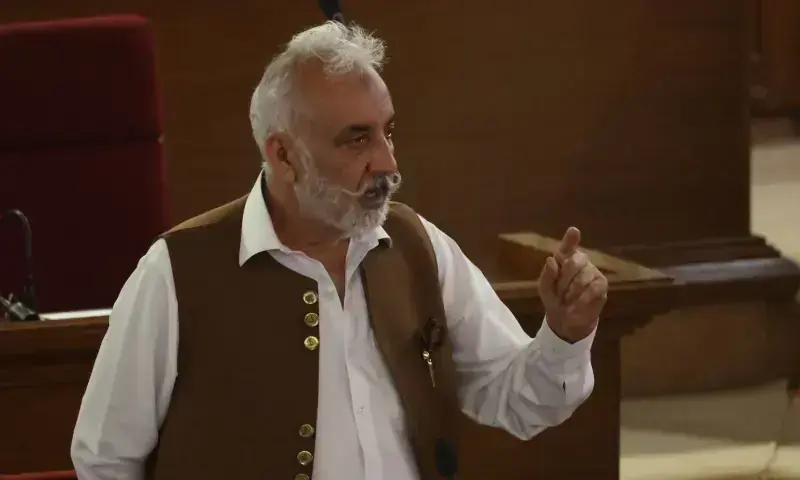
    QUETTA: Police said on Sunday they have detained four guards of former Balochistan minister Sardar Abdul Rehman Khetran following the reported recovery of a body from his property in Barkhan district.

    A separate case has also been registered against the PML-N MPA and his two sons over the alleged murder, kidnapping and illegal confinement of one of his former guards in a private jail.

    According to Koh-Suleman Deputy Inspector General (DIG) Ayaz Baloch, the four security guards were taken into custody during a search operation at Khetran’s fortified residence in Haji Kot on Nov 20. Weapons were also recovered from their possession, he said.

    The operation followed the arrest of an employee responsible for managing Khetran’s land, whose identification reportedly helped police locate the burial sites.

    Two decomposed bodies were recovered from a graveyard in the Tumnai area, around 40 kilometres from Barkhan, on Nov 19, police said. A third body was recovered during excavation at Khetran’s residence the following day.

    Police have shifted the three bodies to Quetta for DNA testing. Khetran has rejected the allegations, describing the police action as “politically motivated”.

    On Nov 18, Barkhan police registered a case against Khetran; his two sons, Islam Shah and Abdul Rauf; and three other accomplices on charges of murder, kidnapping and illegal confinement.

    The first information report, seen by Dawn, was registered on the complaint of Pyara Khan Bugti, father of Khetran’s former guards, Sahib Din Bugti and Qamar Din.

    The FIR invoked sections 34 (common intention), 302 (intentional murder), 342 (punishment for wrongful confinement), 343 (wrongful confinement for three or more days), 364 (kidnapping or abducting in order to murder), 365 (abducting with intent secretly and wrongfully to confine person), 368 (wrongfully concealing or keeping in confinement, kidnapped or abducted person) and 506 (punishment for criminal intimidation) of the Pakistan Penal Code (PPC).

    The father alleged that his two sons were taken to a private jail four years ago, with Khetran saying that a man, accompanied by his brother and son-in-law, had complained against the brothers.

    The father claimed that Qamar Din was released by Khetran a year ago, but he later found out through “people and the media” that Sahib Din was allegedly murdered.

    He also accused the MPA of threatening him against reporting the matter to the police.

    In July, Khetran was removed from his position as Balo­chistan’s minister for public health engineering.

    Sources had said differences had emerged between Chief Minister Sarfraz Bugti and Khetran over several issues, with the rift reportedly deepening over time.

    In Feb 2023, Khetran had been arrested after three corpses — of a woman and two young men — were discovered in a well near the minister’s residence in Barkhan, sparking protests over illegal prisons.

    Khan Muhammad Marri, a former guard of Khetran, had said the bodies were of his wife Granaz and two sons, alleging they were kept in private jails. However, a postmortem examination determined the body belonged to a young woman, not his wife. A DNA report confirmed that the two other bodies were of Marri’s sons.

    Shortly later, Granaz was recovered along with her 17-year-old daughter and a son, while three other sons were recovered from near Dera Bugti. A police surgeon had said evidence showed the teenage daughter was not only tortured but also sexually abused.

    Source: dawn

  • Afghan tradition keeps grapes fresh for winter treat

    Afghan tradition keeps grapes fresh for winter treat

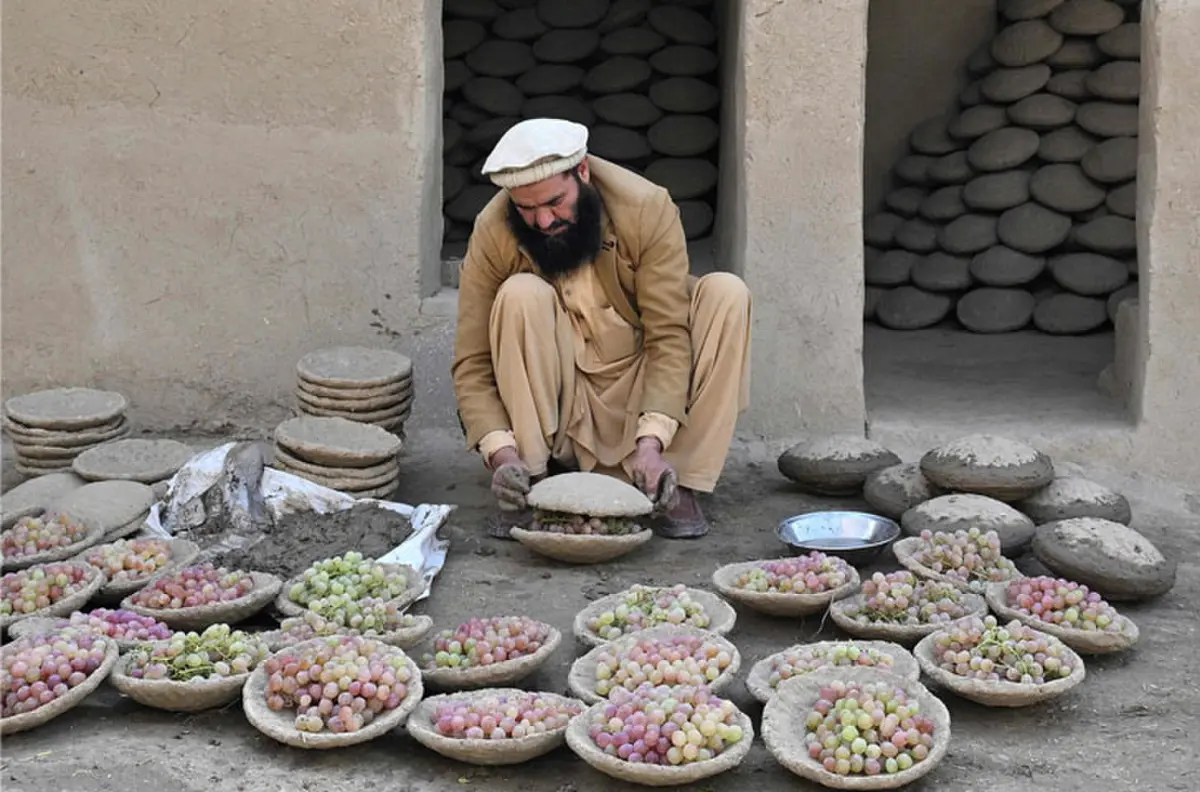
    KALAKAN: On the outskirts of Afghanistan’s frenetic capital Kabul, Muhammad Saber Shojaei is carrying out a centuries-old task of preserving fistfuls of grapes to be eaten when winter bites.

    Crouched in front of dozens of Kanginas, clay-and-straw discs containing grapes, Shojaei recalls his father, who taught him the technique.

    “I remember the old days, when we sat together around the Sandali (stove), eating Kangina grapes and enjoying those happy moments,” said the 47-year-old from Kalakan district.

    Carefully putting a bunch of grapes in one of the discs, Shojaei added a second disc on top and sealed the disc with mud before placing it in a dark storage room.

    “In this way, Kanginas can keep grapes fresh from now until the spring,” said the farmer.

    During harvest season, grapes for sale can be seen bundled in big plastic bags as they’re taken to markets further afield.

    But such abundance comes with problems in Afghanistan, where cold storage to keep produce fresh is severely limited and the export route to Pakistan has been cut off by cross-border conflict.

    Labour-intensive and fragile, Kanginas cannot overcome large-scale storage or trade problems.

    But in the depths of winter, Afghans living near the vineyards can buy them along the roadside or in nearby markets, and farming families can crack them open and enjoy fresh grapes.

    Gulagha Frotan, a community leader in Kalakan, said people wait until snow or rain to enjoy them.

    Published in Dawn, November 21st, 2026

    Source: dawn

  • Presidential ordinance withdraws most privileges of KP MPAs, including protection against preventive detention

    Presidential ordinance withdraws most privileges of KP MPAs, including protection against preventive detention

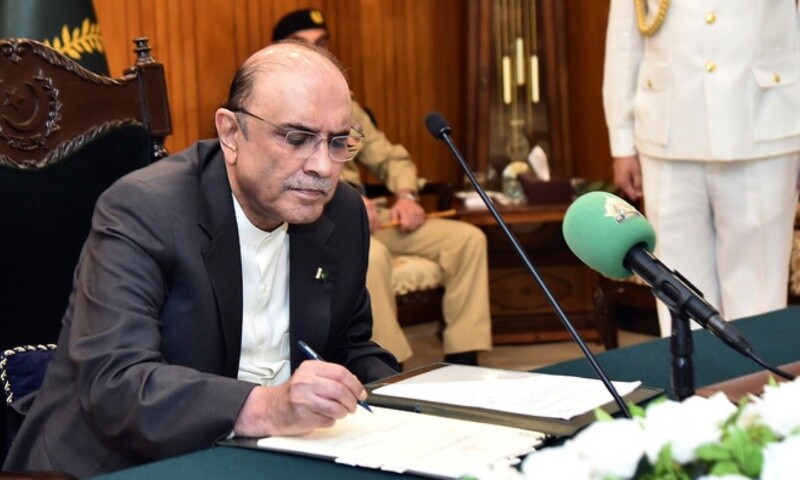
    PESHAWAR: President Asif Ali Zardari has promulgated five ordinances, doing away with most of the “privileges” of the Khyber Pakhtunkhwa lawmakers, including protection against “preventive detention” and providing a legal framework for special initiatives in the designated 12 districts and other districts in the province.

    With the imposition of emergency in KP on Oct 11, an Area Representative and Development Council (ARDC) was formed to oversee 12 districts that were deemed to face intense security challenges, including the merged districts.

    Two of the ordinances envisage setting up an executive committee with wide-ranging powers to oversee special initiatives, including developmental schemes, in the 12 designated districts and the rest of the province, respectively.

    The committee will have powers to identify and recommend the executing agency for special initiatives in the designated and other districts, including military formations.

    In a statement on Saturday, President Zardari’s office confirmed he had promulgated five ordinances pertaining to KP. Of these, the following four had been published in the Official Gazette on Nov 19 after their promulgation:

    • Khyber Pakhtunkhwa Societies (Registration) (Amendment) Ordinance, 2026;
    • Khyber Pakhtunkhwa Special Initiative Ordinance, 2026 (specific districts);
    • Khyber Pakhtunkhwa Special Initiative Ordinance, 2026 (other districts);
    • Khyber Pakhtunkhwa Provincial Assembly (Powers, Immunities and Privileges) Ordinance, 2026 (XI of 2026).

    The fifth was the Khyber Pakhtunkhwa Speaker and Deputy Speaker (Salaries, Allowances and Privileges) Ordinance 2026.

    Through the amendment ordinance related to privileges of MPAs, drastic changes have been made in the KP Provincial Assembly (Powers, Immunities and Privileges) Act 2026, as 21 of its 40 sections have been omitted, including those providing protection to the MPAs against “preventive detentions” and offences related to “breach” of privileges.

    The schedule of offences related to “breach of privileges” of the Assembly, its members and committees has also been omitted, thus leaving them without significant privileges.

    It may be mentioned that Sohail Afridi — whose role as the chief minister was rendered non-functional due to governor’s rule — Speaker Babar Saleem Swati and other lawmakers have been in “preventive detention” since emergency was imposed, according to police.

    KP Governor Faisal Karim Kundi also said last month that they had been placed under house arrest.

    The important provisions omitted through the ordinance include sections 5 (attendance of MPA detained or arrested), 6 (members not liable to civil or criminal action), 10 (preventive detention), 11 (permission of speaker before arrest, detention, etc. of a member), 15 (power to summon), 22 (power to arrest), 31 (breach of privilege), 32 (breach of privilege to be an offence) and 34 (cognisance of offence).

    Special initiative ordinances

    The two ordinances relate to special initiatives in the 12 designated districts and the remaining districts in the province, respectively.

    Both the ordinances provide for the establishment of an executive committee comprising a chairman, vice chairman and other such members as nominated by the prime minister, in case of designated district, and by the governor of the province, in case of the remaining districts.

    For the designated districts, the Area Development Secretariat shall serve as secretariat of the executive committee, whereas for the other districts, the planning and development department shall serve as the secretariat of the committee.

    Under the new laws, “special initiative” includes any work, developmental scheme, rehabilitation or reconstruction work, procurement of goods and human resources, consulting or non-consulting services or any other activity involving expenditure of public funds as determined by the executive committee.

    The executive committee, in both the ordinances, has extensive powers including:

    • Identify an initiative as a special initiative of urgent or emergent nature;
    • Scrutinise and approve proposals, concept papers and PC-Is for the special initiatives;
    • Grant anticipatory approval for the initiatives, proposals, concept papers and PC-Is of the special initiatives;
    • Identify and recommend the executing agency, including military organisations and formations, for the execution of the special initiatives;
    • Provide a mechanism for the monitoring and evaluation of the special initiatives, including third-party monitoring and evaluation;
    • Review progress of the special initiatives;
    • Constitute committees or designate persons to carry out functions assigned to them by the executive committee;
    • Perform any other act to carry out the purposes of the ordinance.

    The ordinances provide that the executive committee should meet at least once a month or as and when required.

    The decisions of the committee shall be made on the basis of majority vote of its members, and in case of a tie, the chairman shall have the casting vote.

    The chairman is also empowered to co-opt any other member or technical expert, to offer advice to the committee, as required.

    Both the ordinances have overriding effect on other laws, including the KP Public Procurement Regulatory Authority Act 2012 and the KP Public Private Partnership Act 2020.

    Moreover, no civil court shall have jurisdiction in relation to an act done, order passed, and any proceedings done under the ordinances.

    Madressah registrations

    Through the KP Societies (Registration) (Amendment) Ordinance, 2026, a sub-section 1-A has been included in Section 21, dealing with the registration of “religious madressahs”.

    The newly included provision provides that madressahs which are or may be registered with the Directorate General of Religious Education, Ministry of Federal Education and Professional Training, shall not be required to be registered under the Act (Societies Registration Act).

    Source: dawn

  • Security forces kill 15 terrorists in Balochistan’s Mastung district: state media

    Security forces kill 15 terrorists in Balochistan’s Mastung district: state media

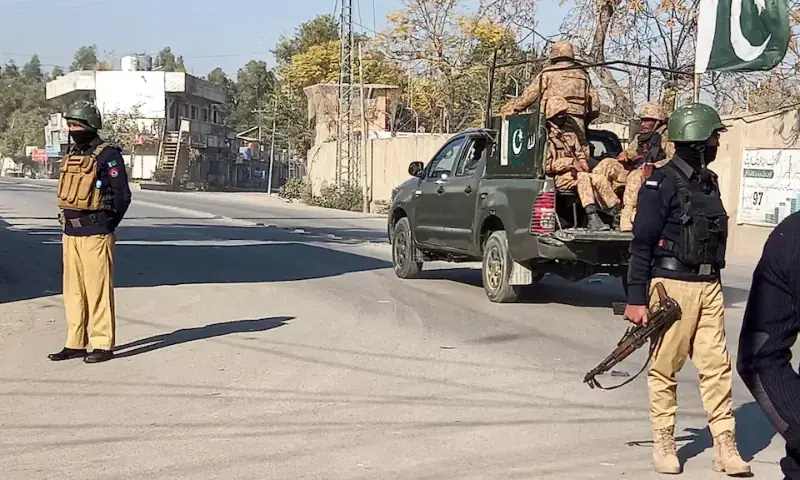
    Security forces have killed 15 terrorists during two separate operations in Balochistan’s Mastung district, state media reported on Saturday.

    According to security sources cited by Radio Pakistan, five terrorists were killed in the first operation, while 10 others were eliminated in the second one. Both were conducted against Fitna al Hindustan under ‘Operation Raddul Fitna 3’, which began in August.

    The state has designated outlawed Balochistan-based groups as Fitna al Hindustan to highlight India’s role in terrorism and destabilisation across Pakistan.

    Furthermore, several terrorist hideouts were destroyed during the operations, while a large cache of weapons and ammunition was also recovered, according to the report. It added that security forces also cleared the areas of Killi Pasand Khan, Musa Khan, Khorasani, and Kaftari of terrorists.

    Security forces remain committed to eradicating terrorism from Balochistan, and operations will continue until the last terrorist is eliminated, security sources asserted.

    Pakistan has seen a surge in terrorism, especially in Khyber Pakhtunkhwa and Balochistan, since the banned Tehreek-i-Taliban Pakistan ended its ceasefire deal with the government in November 2022, vowing to increase attacks.

    Last week, four troops, including a major, were martyred while 24 terrorists were killed in multiple intelligence-based operations (IBOs) in Balochistan and KP’s North Waziristan.

    On Nov 1, a soldier was martyred while 17 terrorists were killed in two IBOs in Balochistan’s Kachhi and Kharan districts.

    However, according to Pakistan Institute for Conflict and Security Studies, Pakistan recorded fewer militant attacks from Nov 6 to 12, but fatalities and injuries increased sharply, “highlighting the changing intensity and continued volatility of militant threat across the country”.

    KP remained the principal centre of violence, accounting for 16 attacks and 44 fatalities. Balochistan recorded 13 attacks, resulting in eight deaths and 19 injuries, while the former tribal districts witnessed a “substantial” reduction in attacks.

    Source: dawn