Category: dawn news

  • ADB invests in Pakistan-based B2B fintech company Neem

    ADB invests in Pakistan-based B2B fintech company Neem

    ISLAMABAD: The Asian Development Bank (ADB) on Monday said it invested an undisclosed amount in Neem, a Pakistan-based B2B fintech company that helps businesses receive, manage, and pay out money digitally.

    In a statement, the Manila-based lending agency said its investment will flow through ADB Ventures, the venture capital arm of the ADB.

    The seed investment will support Neem’s product development, help expand its team, and accelerate the onboarding of enterprise and merchant clients across Pakistan, the ADB said.

    Pakistan has made strong progress in digitising consumer payments, with the State Bank of Pakistan (SBP)’s instant payment system, Raast, and mobile wallets bringing millions of people onto digital rails. Business payments, however, have not kept pace.

    According to SBP, an estimated 71 per cent of retail transaction value is still settled in cash, and companies looking to go digital must integrate separately with banks, wallets, payroll providers and reconciliation tools, a process that can be slow, costly, and hard to scale.

    Neem aims to close this gap by giving businesses a single platform to manage how money comes in, how it is tracked, and how it is paid out. Its API-first system combines collections, disbursements, a programmable ledger and finance workflows, and connects directly with a company’s existing operating systems to automate settlement and reconciliation in real time.

    Neem currently serves more than 70 enterprise clients across logistics, utilities, insurance, manufacturing and retail.

    “Pakistan is laying a strong foundation for digital payments, and the next step is ensuring that businesses of all sizes can fully benefit from this progress,” said Emma Fan, ADB Country Director for Pakistan.

    “Neem is helping enterprises move away from cash and fragmented systems toward payment solutions that are faster, more transparent and easier to manage.”

    The impact extends well beyond the enterprises Neem serves directly. As businesses digitise their payments, the suppliers, small merchants and gig workers they pay are brought into the formal financial system.

    Neem’s solutions are built to meet the payment needs of businesses of every size, including women-owned businesses and micro-entrepreneurs, so access to modern financial infrastructure is not limited to large enterprises.

    As part of its lending portfolio, Neem also gives employees responsible access to wages they have already earned. The offering focuses on blue-collar workers in industries that employ large workforces across Pakistan and helps reduce reliance on informal borrowing.

    ADB Ventures invests in early-stage technology companies building solutions that address the most pressing challenges across Asia and the Pacific, with a focus on sectors including financial technology, agricultural technology, climate resilience and inclusive growth.

    Source: dawn

  • Trump hosts gala for meme coin investors as his token plunges to record lows

    Trump hosts gala for meme coin investors as his token plunges to record lows

    US President Donald Trump has made hundreds of millions from his $TRUMP meme coin, but at a Sunday dinner for the token’s biggest holders, he said his motive for supporting the cryptocurrency was to boost the economic competitiveness of the United States.

    “I’m doing it for the United States… If we don’t do it, China’s going to do it,” Trump told attendees at his golf club outside Washington.

    It was the third time Trump had held a gala for the top owners of his meme coin, which once soared as high as $75 but has fallen to a record low of under $1.

    The private dinner this year was more low-key than the initial event last year, attendees said, with a smaller crowd and far less money at stake this time. Attendees qualified for the dinner based on their time-weighted holdings of the $TRUMP coin from Sept 30 to Nov 16.

    Organisers indicated that 185 crypto wallets met the criteria for Sunday’s dinner, although the leaderboard on the $TRUMP coin club website listed just 130 wallets when the contest concluded on Nov 16.

    Together, those listed wallets only held $8.6 million — a shadow of the $148 million listed for the dinner in May 2025, which was ​attended by 220 wealthy crypto investors.

    Sunday’s participants stood in the rain as they waited to enter the Trump National club in Sterling, Virginia. Attendees described the scene inside as subdued.

    It was a far different atmosphere from the first gala, when tuxedo-clad contest winners pulled up to the club in luxury sports cars, and protesters chanted and stomped outside the club as the presidential Marine One helicopter descended.

    The May 2025 event’s biggest $TRUMP holder was China-born crypto billionaire Justin Sun, who had $18.5m of the token. This time, there was no Sun at the event signing autographs.

    Attendees were able to dine on grilled filet mignon and pan-seared halibut while hearing speeches from the likes of Kevin O’Leary of Shark Tank television show and NBA veteran Tristan Thompson.

    According to the contest’s website, the top 29 winners would join a VIP reception with the president and receive a gift bag with Trump swag. The top four also would get an 18-karat gold Trump-branded watch.

    Morten Christensen, founder of cryptocurrency platform Airdrop Alert, said he qualified for the top 29 with $41,000 of time-weighted $TRUMP holdings by using a hedging strategy — buying and selling the token using perpetual futures — that ensured he did not lose any money.

    But he was denied a VIP band at the event, Christensen said.

    “I asked like five people from the staff” and was told to email customer support, he said on Sunday night.

    “Obviously, no one is going to reply right now,” said Christensen, who added that he was kicked out of the event around 7pm for “sharing with the press.”

    He waited outside in the rain for his sister, who was still inside.

    The Trump Meme Coin project and the White House did not respond to requests for comment.

    Meme coin tumbles

    More than half of the digital wallets publicly listed on the contest leaderboard for Sunday’s dinner are tied directly to crypto exchanges that bar US-based users, indicating they are linked to foreign nationals, according to an analysis of blockchain data prepared for Reuters by the nonpartisan, nonprofit consumer advocacy group Public Citizen.

    The Trump family’s other crypto-connected equities and ventures have also fallen in value to record lows. Together, outside investors in their five main crypto and crypto-linked projects have lost more than $5 billion, according to a Reuters analysis.

    But the $TRUMP token has earned the Trump family itself at least $635 million, according to the presidents June financial disclosure statement. In total, the Trumps had earned at least $2.3 billion through April from their four main crypto ventures, including the meme coin.

    The president’s stake in a fifth crypto-linked venture, Trump Media & Technology Group, is worth about $430m.

    Source: dawn

  • Bad COP, worse COP: What’s next after climate talks fail?

    Bad COP, worse COP: What’s next after climate talks fail?

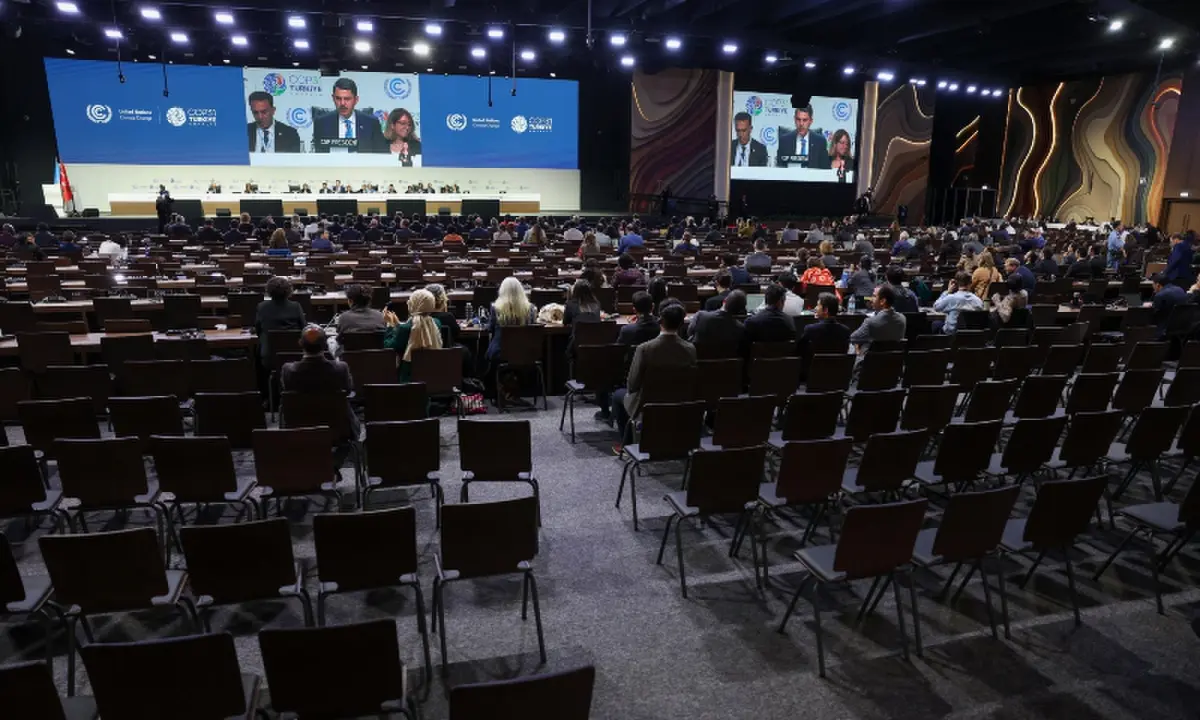
    The collapse of marathon climate talks in Turkey has renewed questions about reform of their consensus requirement, and galvanised calls for legal action and ambitious side agreements between like-minded countries.

    The “conference of the parties” talks, better known as COP31, ended without agreement and two days over schedule on Sunday, as countries deadlocked on fossil fuels, finance, science and carbon-removing technologies.

    It was an ignominious end for an unusual dual-presidency shared by Australia and Turkey, and negotiations chair Chris Bowen, who is Australia’s climate minister, said it was “very disappointing”.

    For many observers, the outcome was the inevitable result of a process that has regularly been hamstrung by its insistence on consensus.

    “Decision-making that requires every country to agree on every comma is not fit for a climate emergency,” said Nikki Reisch, director of the Center of International Environmental Law’s climate and energy programme.

    Bowen identified the same issue.

    “The fundamental root of the problem is that when COP was created, for reasons I understand, it was made consensus only,” he said.

    “That’s a very tough ask.”

    ‘Significant reform’

    Sunday’s collapse has renewed calls for a reform to that consensus-based process, in which any one country, or a small minority, can nix progress.

    “It has been clear for years that the COP process is in need of significant reform,” wrote former US vice-president Al Gore on X.

    He urged a “reinvigorated multilateral process that reflects the latest science and represents the will of the majority of the world.”

    But as Bowen noted, “you also need consensus to change consensus” — in other words, all countries would have to agree those reforms.

    He described that as a “particular challenge”, although others might characterise it as simply impossible.

    The COP31 talks deadlocked over multiple issues, notably whether the so-called cover decision would mention phasing out planet-warming fossil fuels.

    Several countries refused a deal without that mention, while others including Saudi Arabia were vehemently opposed to its inclusion.

    There were other serious fault lines, including the timing of scientific work from the Intergovernmental Panel on Climate Change, and language on carbon capture, a technology championed by the fossil fuel industry but criticised by some as costly and ineffective.

    Crucially for developing countries, there was also no progress on finance — the money badly needed to help countries transition energy systems and adapt to the natural disasters climate change is already worsening.

    “The fundamental problem for globally agreed climate policy is more starkly obvious than ever: fossil fuel powers will not agree to have their resource wealth devalued, and rich countries won’t provide enough climate finance to the developing world,” said Frank Jotzo, professor of environmental and climate change economics at the Australian National University.

    ‘Doesn’t replace COP’

    Other COPs have ended in failure before, including most recently in 2009.

    But for all the forum’s failings, most agree that the COP process remains important for its unique format, bringing together virtually every country in the world and offering equal billing to all.

    As a result, few suggest the process should be abandoned, but there are growing calls for alternatives to advance climate change action, including legal suits.

    That route is already being pursued, most notably with an International Court of Justice advisory opinion that confirmed states have a binding legal obligation to combat climate change.

    “If the negotiations are not delivering what individual states need, then they’ll certainly consider turning to the ICJ and other international courts,” said Harj Narulla, an international lawyer who advised the Solomon Islands at COP31.

    Others expect growing interest in agreements made outside the COP process, like the Santa Marta initiative, bringing together countries committed to phasing out fossil fuels.

    The process grew out of the COP30 meeting in Brazil, where interested nations sought to bypass a lack of consensus on the issue.

    Members held talks earlier this year, and agreed some first steps, including an expert scientific panel to advise on pathways.

    These “plurilateral processes are growing,” said Jotzo, and more are needed, including on carbon removal technologies and finance for adaptation.

    Bowen too said he sees the Santa Marta process becoming “increasingly important.”

    “Doesn’t replace COP. It’s just another way of doing it,” he added.

    Source: dawn

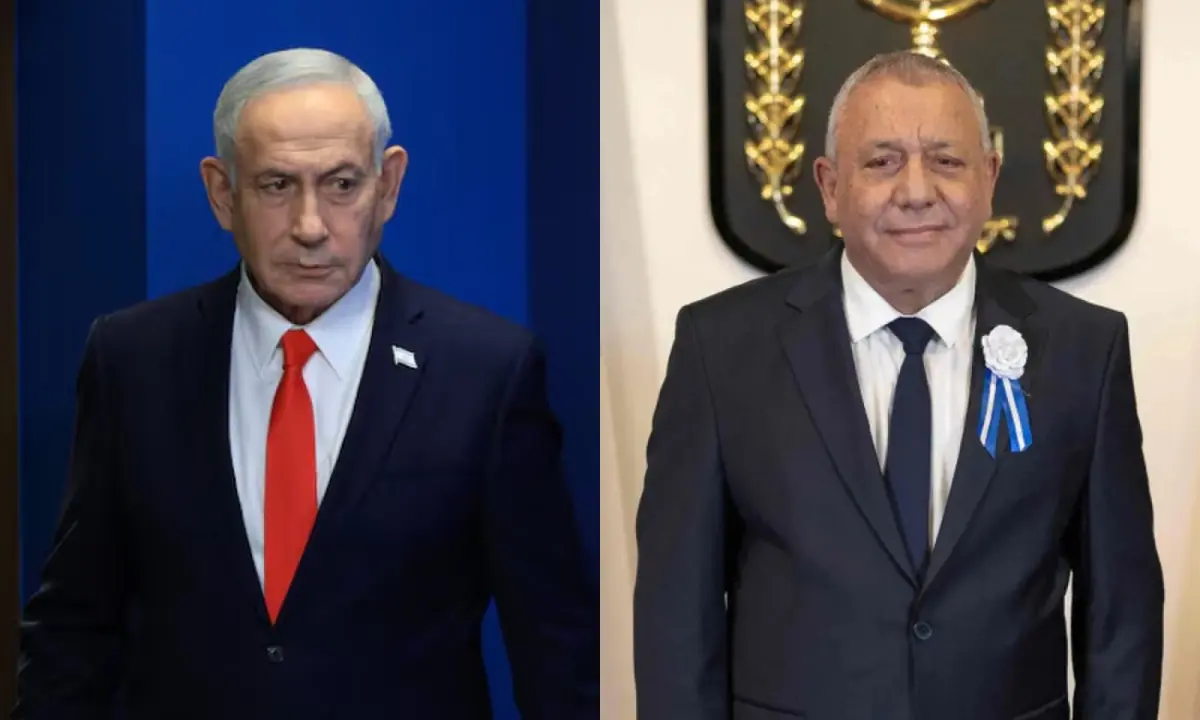
  • Netanyahu and Eisenkot’s parties resume talks to form coalition govt in Israel

    Netanyahu and Eisenkot’s parties resume talks to form coalition govt in Israel

    HERZLIYA: The parties of caretaker Israeli prime minister Benjamin Netanyahu and his rival Gadi Eisenkot launched a new round of talks on Sunday over whether to form a coalition government, with Netanyahu’s party insisting on keeping his main policies.

    Delegations from Eisenkot’s Yashar party and Netanyahu’s Likud began their confab at a hotel in Herzliya, near Tel Aviv, a journalist on the scene said, following a first round of talks last Sunday.

    A former army chief of staff, Eisenkot has until Dec 6 to form a government, with the possibility of a 14-day extension, after October elections failed to give either camp an absolute majority.

    His 48-member bloc, which needs 61 lawmakers to reach a majority, remains divided over whether to build a coalition through an alliance with ultra-Orthodox parties, a rapprochement with Arab parties, or a national unity government with Likud.

    Netanyahu is pushing for a national unity government, which could see a rotation of the premiership between the two men, a mechanism already tried in Israel. Such an arrangement could allow Netanyahu to keep his political protection against the corruption charges he faces, as well as continue to oppose the creation of an independent commission of inquiry into the security failures that preceded the Hamas raid of Oct 7, 2023.

    But that prospect runs up against Eisenkot’s refusal to serve in a cabinet led by Netanyahu, against whom he centred his campaign. His ally Naftali Bennett, a former prime minister, also reiterated on Saturday his refusal to join a coalition with “Netanyahu or his bloc, under any circumstances”.

    National ‘unity’?

    On Saturday, Yashar presented the resumption of talks as “a genuine commitment to forming the broadest possible government”, saying that Eisenkot had asked his representatives to explore all options. But Likud immediately laid down several conditions for its participation in a unity government, a formula backed by Netanyahu.

    Among other things, it demands an end to “all personal attacks and incitement to hatred” targeting the outgoing prime minister and his government. It also called for bringing together “all the parties that support the existence of the State of Israel as the nation-state of the Jewish people”, without the participation of Arab parties.

    Netanyahu and his allies regularly target Arab parties, which secured a record 19 seats in the legislature and are opposed to Netanyahu remaining in power. Likud is also demanding agreement on several major policy positions, notably rejecting the creation of a Palestinian state, maintaining Israeli control over territories in Syria, Lebanon and the Gaza Strip, and a compromise on conscription of ultra-Orthodox Jews, a particularly sensitive issue in Israel.

    On Friday, Eisenkot warned that he would not allow the talks to drag on, saying he was ready to submit to parliament an “emergency national government”.

    Although he did not spell out how, his statements suggest a two-stage plan: the swift formation of a minority government based on the core opposition parties, and then broadening it.

    A minority Eisenkot government could receive support from the 19 Ar­­­­ab party lawmakers but Eisen­kot’s right-wing ally Avigdor Liber­man rejects working with them and instead advocates an alliance with ultra-Orthodox Jewish parties.

    Published in Dawn, November 23rd, 2026

    Source: dawn

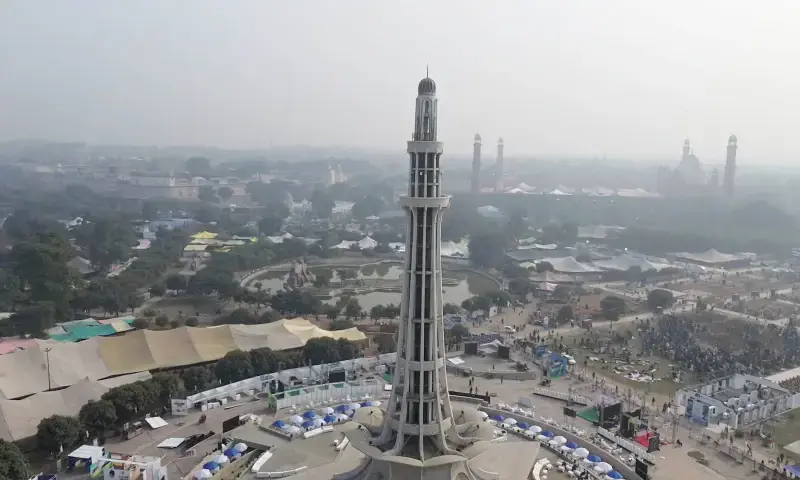
  • Lahore ranked after Islamabad, ahead of major cities in safety perception index

    Lahore ranked after Islamabad, ahead of major cities in safety perception index

    LAHORE: Lahore has scored ahead of several major international cities, including New York, Paris and New Delhi but lower than Islamabad in the recent Numbeo’s 2026 Mid-Year Crime and Safety Index with safety and crime indexes at 63.8 and 36.2 respectively.

    A report in this regard was presented to Punjab Inspector General of Police (IGP) Abdul Kareem during his visit to the Lahore Police Lines, Qilla Gujjar Singh here on Sunday, where he held a high-level meeting on the crime situation in the city.

    Capital City Police Officer (CCPO) Bilal Siddique Kamyana, DIGs Faisal Kamran, Zeshan Raza, all the SSPs, SPs and other senior police officers were present. A senior official told this reporter that the meeting discussed various other key issues including criteria of posting the station house officers (SHOs), deteriorating response time of police on helpline 15 calls, shortage of Dolphin Force bikes and mishandling of some cases, such as a police raid at the residence of Attorney General for Pakistan (AGP) Mansoor Usman Awan.

    During the session, he said, the DIG operations presented Numbeo’s report which has placed Lahore in the “Low” to “Moderate” crime range based on user-submitted perception surveys.

    “Lahore scores lower on crime than Karachi (Crime Index 57.8–57.9) and Rawalpindi (51.8), while Islamabad scores lower on crime (30.8–31.1)”, said Mr Kamran while quoting the report. He added that the provincial capital also scored lower on crime than many major Western cities.

    “These figures are based on visitors’ perception on this website,” he said, adding that a total of 380 cities of the world were included in the surveys.

    IGP holds high-level meeting and discusses posting of SHOs, deteriorating response on helpline 15, shortage of Dolphin Force bikes, mishandling of cases

    The CCPO told the meeting that Lahore was the only city in Punjab without any no-go area, major land-grabbing mafia, gangsters or hooligans as the police had eradicated them to bring peace in the city. He told the meeting that the crime situation of the city had improved significantly during the last four years.During the meeting, the official said, the IGP expressed displeasure over the deteriorating response time of the police on 15 calls, saying that it had dropped to 22pc across the province. He declared it a matter of serious concern and said that as per reports, the callers were being asked to reach police stations to file their reports.

    The official said that DIG operations clarified that the response time of the police in Lahore was recorded 66pc. However, Abdul Kareem declared the response time of the Lahore police at 15 ‘still insufficient’ as Lahore police possessed significantly more resources than those in other cities.

    The official said that Mr Kamran cited shortage of bikes for Dolphin Force as a major reason for low response time. He further elaborated that the Dolphin Force were patrolling on bikes of various police stations as a makeshift arrangement.

    Mr Kareem revealed that Punjab Chief Minister Maryam Nawaz had approved procurement of new bikes for the provincial police at a cost of Rs300 millions with Lahore Police getting as many as 300-400 bikes by December.

    According to the insider, the IGP said that inspectors were complaining that they were not being considered for SHO posts in the provincial capital. He said that they were worried that a majority of junior officials, sub-inspectors, were serving as SHOs.

    In response to these complaints, the DIG operations said that two-thirds of SHOs were sub-inspectors and it was meant to produce a pool of trained officials for sensitive jobs.

    About the complaints of missing women, the DIG investigation told the IGP that out of thousands of such cases, less than 100 were yet to be traced.

    Published in Dawn, November 23rd, 2026

    Source: dawn

  • The US & India

    The US & India

    A CRITICAL look at US-India relations is essential to understand US-Pakistan ties. It might help dispel a long-held public perception in Pakistan that US-India relations have somehow been a function of the ups and downs in US-Pakistan ties. And that in establishing the extraordinary relationship with India in the last couple of decades Washington has finally “chosen” India over Pakistan.

    The foreign policy establishment acknowledges the cyclic nature of US-Pakistan relations. But uplifted by the recent fissures in US-India ties, charmed by President Trump’s compliments, infused by an enduring faith in the US-Pakistan alliance, and confident of Pakistan’s coveted geopolitical salience, it remains ever optimistic that Washington would come back, and relations would be rekindled to their “halcyon” days.

    Both the public and official views need revision, based as they are on faulty assumptions that consider the two relationships as competitive and comparable. That is why one keeps hearing successive Pakistan leaders asking the US to treat the two countries equally, and arguing at home that Pakistan needs to keep a balance in relations with China and the US. This is an erroneous view.

    Indians forget Washington’s critical help in many areas.

    The problem is Pakistan cannot wean itself away from the pride of having been a preferred ally of the US once upon a time. But this notion refers to a world of the Cold War days in which the US had a single interest in South Asia, which Pakistan was capable and India was unwilling to advance. That South Asia is no more.

    There is a new world out there. Its complexity and disorder present a multiplicity of security and strategic challenges, its globalised economy offers exceptional opportunities, and its uncertainty compels countries to hedge, expand, and diversify their partnerships. In this world, India and Pakistan would both have roles for the US, though relations with Pakistan would be transactional and of limited bandwidth, and with India strategic and broad-based. These are two different relations, and neither derives from the strength or weakness of the other, or is based on “choosing” one over the other.

    Coming to US-India ties, beneath the trade dispute and H1-B visa frictions US-India strategic cooperation and economic relations continue to thrive. There is substantial collaboration on defence production, space, AI, and maritime security.

    In a recent piece, Sameer Lalwani of the Carnegie Endowment pointed out that trade rose to its highest level of $240 billion last year. And the new 10-year framework for the US-India Major Defence Partnership calls for advanced exercises and closer defence-industrial ties. Major US tech companies pledged nearly $68bn towards AI infrastructure investments in India last year. Micron, a leading semiconductor firm, opened its first assembly and test facility in India early this year. And recently Applied Materials and Lam Research announced investments in India’s semiconductor industry.

    Prime Minister Modi bruised President Trump’s ego by not acknowledging his role in the 2025 India-Pakistan ceasefire. But this has not impacted the substance of relations. Trump has not reversed ties; he has simply put a brake on them.

    As for tariffs, these have indeed caused strains but they are not India-specific; they are being applied across the board as Trump’s economic instrument and geopolitical weapon. The reality is he would not allow countries to become economic competitors and geopolitical rivals with America’s help and at its expense. US Deputy Assistant Secretary of State Christopher Landau said in his speech at the Rai­sina Dialogue ear­­ly this year that the US would not repeat mistakes made with China with India.

    India was so pa­­­mpered by Pre­­sident Biden and Trump in his first term that it came to have a sense of entitlement. Now it is complaining about losing its extra-special status.

    Indians forget Washington’s critical help in many areas. The US, for instance, has long supported Indian indigenous technology development. GE engines have been central to India’s domestic fighter jet industry. India’s first indigenous fighter aircraft Tejas relied on an F-16 testbed, and its development of a fifth-generation fighter relies on US wind tunnels.

    From Pakistan’s standpoint, what is im­­p­ortant is that US-India differences have not impinged on India’s importance for Wash­in­­gton in the US-China strategic competition. And it will likely endure. Any occasi­o­nal adjustment in it will not bring dividends for US-Pakistan ties. We need to delink the two relationships in our analysis.

    The bottom line: the US will continue to engage both India and Pakistan as there are no alternatives to each relationship. The alternative to India is India, and the alternative to Pakistan remains Pakistan.

    The writer, a former ambassador, is adjunct professor at Georgetown University.

    Published in Dawn, November 23rd, 2026

    Source: dawn

  • Problems and prescriptions

    Problems and prescriptions

    THE upward trajectory of the Real Effective Exchange Rate (REER) reading, which clocked in at 110 in October 2026, is a frequent subject of debate among economic commentators. Some argue that it shows the currency is being ‘artificially managed’, as was the case in past such episodes which usually preceded painful adjustments. Others have pointed out that the REER is just one indicator among several to assess the position of an economy’s health.

    An excellent piece by Dr Ishrat Husain on these pages lays out the latter’s position quite categorically: “REER has a legitimate but limited purpose. It measures changes in the nominal exchange rate adjusted for relative price movements against trading partners. But an index reading of 100, based on a selected base year, doesn’t establish an optimal exchange rate. Nor does a deviation from 100 automatically signal overvaluation or undervaluation. REER says little about balance-of-payments sustainability, foreign exchange availability from non-trade sources or exporters’ ability to compete through quality, technology, productivity, and delivery.”

    Knowledgeable experts will continue to weigh in on this issue, but it is worth looking at the exchange rate from the economy’s current vantage point. A minor current account surplus, a primary (fiscal) surplus, monthly central bank purchases, not sales, of dollars from the open market, increasing reserves, and a very narrow spread between the interbank and open market rate suggest there is nothing immediately scandalous about the current rate.

    The PKR’s value is where it is because the inflow of dollars has been robust on account of some export growth plus significant remittance inflows, positive real interest rates, selective administrative checks on imports, and the dollar’s own position against other currencies.

    FDI’s future looks uncertain under geopolitical fracturing and tariffs are loudly back on the menu.

    Taking a slightly broader timeframe, what is also clear is that at its existing level of productivity the Pakistani economy’s current rate of sustainable growth — ie growth that doesn’t blow up the external sector and/or cause domestic inflation — is around 4pc. Of this, 2.5pc is attributable to natural population growth, and the remaining is what the economy contributes by way of actual productivity.

    It is with this bleak baseline condition that many experts push for a gradual, enforced devaluation of the currency as a policy position. The argument here is that this downward flexibility is an important ingredient, among others, for export competitiveness. Given the government’s stated position of catalysing export-led growth, enforced depreciation along with import liberalisation appears to be the logical path to take.

    This prescription can be found with near-universal frequency in government documents, multilateral donor/lender documents, and in expert/technocratic commentary at any point over the last two decades. The fact that it is never acted upon in full is a political economy question. The government, in practice, prioritises some societal segments over others (importers over exporters), picks some objectives over others at different times (stabilisation versus growth), and chooses to inflict pain on some rather than others (who gets rents versus whose subsidies get taken away).

    But there is another cloud looming on the horizon of this prescription. What if the country has missed the boat of beneficial global trade integration altogether?

    The strategy of economic development of much of the Third World/Global South since the mid-20th century has gone through three phases: protectionist import-substituting industrialisation from the 1950s to the 1970s; structural adjustment and market-led liberalisation (starting in the 1980s); and dreams of integrating into global value chains (GVCs) through export-led strategies (from the 1990s onwards).

    Pakistan repeatedly pays homage to the third approach, but success remains limited at best. It has achieved reasonable integration in textiles and a few other sectors, but has little else to boast about. The wide range of conflicts that characterise its political economy have constrained baseline productivity to such a large extent that the country possesses or makes little of note that the world wants. Its natural advantage in cheap labour has been undone by poor human capital formation and other burdens, such as its energy sector and struggles with political violence. As a result, its industrial base remains shallow and growth remains anaemic.

    In the current moment, the prospects for favourable integration look even dimmer. If AI and robotics development continues at pace, the marginal cost of labour across the world will fall further. Why then would integrating Pakistan’s cheap and mostly unskilled labour into any value chain, at any level of sophistication, make sense?

    Bluntly put, where the world produces the things it consumes has already been decided to a very large extent. China is the factory of the world, and those economies functionally integrated with China’s factors (its South-East Asian partners) have a future in global trade. The rest of the developing world mostly does not.

    Simultaneously, we’re witnessing increased insistence on new domestically oriented industrial policies, which prioritise re-industrialisation and on-shoring. FDI’s future looks uncertain under geopolitical fracturing and tariffs are loudly back on the menu of policy options to protect industrial employment. This means that an emerging multipolar world order might see economic delinking rather than greater integration.

    All of this is to say that while the benefits of export-led growth are well known, the world in which export-led growth is possible for Pakistan may no longer exist. If this admittedly pessimistic reading is correct, does our current conversation have any space for a different type of economic strategy to shake off this anaemic 4pc per annum baseline? Do we, in effect, have a backup answer for how Pakistani labour and Pakistani capital can be productively combined to generate employment, reduce poverty, and improve human flourishing?

    The writer teaches politics and sociology at LUMS.

    X: @umairjav

    Published in Dawn, November 23rd, 2026

    Source: dawn

  • A lopsided arrangement for KP?

    A lopsided arrangement for KP?

    • Since the imposition of governor’s rule, KP has committed Rs157bn a year to the Centre, a contribution the ousted PTI government had withheld
    • While Rs17.7bn has already been deducted from KP’s NFC share, the PM’s recently announced Rs160bn package for the province has yet to take shape

    ONE of the most significant developments during the first 43 days of emergency and governor’s rule in Khyber Pakhtunkhwa was the signing of a memorandum of understanding (MoU) with the federal government, which commits the province to an estimated annual cash grant of Rs157bn.

    The amount forms part of the Rs1.035 trillion in financial contributions sought by the federal government from the four provinces for national economic initiatives. Islamabad had been pressing for these contributions, but the dysfunctional chief minister, Sohail Afridi, had made KP’s contribution conditional on a meeting with his imprisoned party founder Imran Khan – a demand the federal government refused to entertain.

    The interim administration’s signing of the MoU has effectively provided formal cover for Rs17.7bn already deducted at source by the federal government from KP’s share under the National Finance Commission (NFC) award during the July-October 2026 period. With the agreement now in place, the federal government has secured KP’s contribution for the current fiscal year, marking one of the major financial outcomes of governor’s rule.

    While the province’s contribution to the Centre has been settled, little is clear about what flows the other way: the details of the prime minister’s Rs160bn package for KP, the funding gap in the merged districts and how federal resources will be divided between the two administrative structures created under governor’s rule.

    The Rs160bn question

    Prime Minister Shehbaz Sharif announced Rs160bn for the province on Oct 22, with 70pc earmarked for the Area Development Secretariat (ADS), the new administrative unit for 12 districts. A senior official of the KP Finance Department said the provincial government had since received no formal word, nor any details regarding the proposed package.

    It remains unclear whether the package represents fresh funding or includes the Rs150bn already allocated for the newly merged districts (NMDs) in FY2026-27. The mechanism for releasing and distributing the funds has also not been explained. Adviser on Information Samar Haroon Bilour said 70pc of the announced resources would go to the 12 ADS districts and the remaining 30pc to the other 24 districts.

    But instead of providing additional financial assistance, the official claimed, the federal government had deducted more than Rs17bn from the province’s NFC share within four months.

    He maintained that KP had already generated a fiscal surplus in line with commitments made under the IMF programme and that, despite the deductions, the province had faced no significant pressure on the cash flows required to meet its current expenditure.

    “This shows that KP has maintained fiscal discipline and is not facing any shortage of funds,” the official said.

    Parallel set-ups?

    On Oct 30, the KP government issued a notification transferring the functions of designated officers to the ADS, while financial authority remained with the provincial Finance Department. The 12 districts have been placed under an additional chief secretary (ACS) acting as administrator, while the remaining 24 fall under Governor Faisal Kareem Kundi and his 11-member advisory council. Despite the creation of two parallel administrative structures, there is little clarity on how federal funds will be allocated between them.

    Under the five-page notification, the KP Human Resource Management Department transferred administrative control over designated officers and staff of 32 directorates and major institutions to the ADS. These officers now report to the respective ADS secretaries. However, the arrangement falls short of establishing a fully autonomous administration, as no independent directorates have been created, while the provincial chief secretary and Human Resource Management Department retain key powers over personnel transfers.

    Financial arrangements also remain under the KP Finance Department, which will handle budget allocations and financial authorisations in consultation with the ADS. The notification thus separates administrative functions without fully transferring financial, legal and personnel authority to the new secretariat.

    Former KP finance adviser Muzzammil Aslam, who oversaw the provincial Finance Department for two and a half years, said the status of the new administrative unit was still unclear. “If it is under federal government control, then definitely the provincial financial management needs adjustment,” he said.

    Former KP finance minister Taimur Jhagra said appointing an ACS and establishing a separate secretariat would make little difference, particularly when the new secretariat was based in Peshawar rather than in the area it was meant to administer. He said Prime Minister Shehbaz had still given no clarity on whether he was investing a single extra rupee of federal money in KP, even in the name of governor’s rule.

    Former KP home and tribal affairs secretary Dr Akhtar Ali Shah questioned the rationale for creating a parallel administrative structure, recalling that the federal government had exercised direct control over the tribal areas through designated officials under the Frontier Crimes Regulation (FCR), yet the law and order situation had continued to deteriorate. “It is well documented that a political agent in Waziristan could not even travel by car,” he said, referring to the security situation in 2006, when a parallel system of authority had emerged.

    Dr Shah questioned how another administrative structure would improve security when direct federal control had failed to prevent the killing of tribal chiefs. “If history is any guide, then listen to it,” he said, describing the new arrangement as an attempt to reinvent the wheel.

    The ousted PTI government had also claimed to have initiated work in June 2024, during the tenure of former chief minister Ali Amin Gandapur, on a separate administrative secretariat covering 11 districts across Kohat, Bannu and Dera Ismail Khan divisions, including the relevant merged districts.

    Ms Bilour credited Prime Minister Shehbaz with establishing the ADS. She acknowledged that the concept may have originated under the PTI government but maintained that the prime minister had implemented it.

    Transfers and liabilities

    The administrative division has brought KP’s unresolved financial arrangements into sharper focus. Since the 2018 merger, the province has maintained separate budgetary provisions for settled districts and the NMDs, whose expenditure continues to depend heavily on federal transfers.

    For FY2026-27, the federal government allocated Rs95bn for current expenditure and Rs55bn for development under the Annual Development Programme (ADP) and Accelerated Implementation Programme (AIP), totalling Rs150bn. However, the financing shortfall is estimated at Rs80bn to Rs100bn, which the province will meet from resources allocated to settled districts, a senior KP Finance Department official told Dawn.

    The official said development allocations for the NMDs declined from Rs69bn in FY24 to Rs52bn in FY25 before rising to Rs55bn in FY26. Current expenditure allocations increased from Rs72bn in FY25 to Rs80bn in FY26 and Rs95bn in FY27.

    According to the official, the NMDs’ estimated 2.5pc share under the NFC arrangement would amount to around Rs300bn. However, the absence of a dedicated allocation had deprived the tribal districts of these resources, a grievance repeatedly raised with Islamabad.

    Dr Shah argued that while security operations could restore the writ of the state, adequate fiscal transfers were necessary to strengthen state capacity. According to him, KP’s existing 14.62pc share under the NFC award was determined before the merger, when the population, area, poverty and development needs of the former tribal districts were not included in the province’s calculations. He said the province’s share should have increased to 19.46pc following the merger, but the additional resources had not been provided.

    Ms Bilour said the NMDs’ financial share and outstanding federal liabilities were discussed during the prime minister’s meeting at Governor House, where he directed the formation of federal and provincial committees to reconcile the claims.

    Mr Jhagra, however, doubted that the province would benefit. He argued that KP already contributed to the federation in four ways. “The rest of Pakistan benefits from our cheap hydro-energy, and from our oil and gas. Then, KP is leaving a Rs220 billion surplus. Then, it is giving Rs130bn on top of that to the Centre by force, for strategic spending,” he said.

    He added that, with a reduced NFC share based on the 1998 census, the Centre used KP’s NFC share to finance current and development expenditure in ex-Fata areas. “The federal grants for ex-Fata are short of current expenditure alone by Rs50bn. Shehbaz Sharif has solved none of this. So how will anything change?” he asked. Mr Jhagra also called for the restoration of trade with Afghanistan and Central Asia, saying it was in the interests of Pakistan and particularly of KP.

    According to Mr Aslam, KP currently receives 14.62pc of the divisible pool, 1pc for the war on terror and Rs150bn (current and development) for the merged areas from the federal government, and is expected to generate Rs182bn from its own sources. “Any deviation or amount withheld of federal resources will definitely change the budgetary estimates. The current NFC will be under question as well,” he said, adding that the merged areas had been deprived of an NFC share since the merger.

    On the IMF programme, Mr Aslam said it closely tracks provincial spending on health and education and, on the revenue side, the agricultural income tax. “So definitely, a lot of federal and provincial deliberation [is] required to ensure programme compliance,” he said. He added that resource allocation needed political consensus within KP, which would require legislation through a functioning provincial assembly.

    Revenue distribution

    Another unresolved issue concerns the distribution of provincial revenues, particularly oil and gas royalties and mineral receipts. A Finance Department official said a substantial share of KP’s oil and gas royalties originated from Kohat and Karak, while mineral royalties generated around Rs16bn, largely from the NMDs and Malakand region.

    The question is whether the ADS will receive a defined share of these revenues or continue to depend on transfers through the provincial financial system.

    Financial experts warned that dividing administrative authority without clearly defining revenue and expenditure responsibilities could complicate budget preparation and execution. Officials fear that reconciling existing liabilities, revenue entitlements and spending obligations will take time, potentially affecting development projects, public services and provincial finances.

    With Islamabad already facing fiscal constraints, it remains uncertain whether the federal government can sustain the new arrangement through additional funding or whether the burden will continue to fall on KP’s existing resources.

    Security spending: charge sheet against PTI

    The charge sheet against the ousted PTI government was lengthy, but three allegations stood out: failure to act against undocumented Afghan nationals, inadequate funding for security operations and persistent governance problems in the former tribal districts. However, official financial records and subsequent administrative decisions raise questions about the grounds for federal intervention.

    A Finance Department official said KP had provided Rs31bn for temporarily displaced persons (TDPs) in four districts over the past two years. Until 2022, Islamabad had provided Rs17bn annually for TDPs before discontinuing the allocation. Since 2024, the province has also been spending Rs400m monthly on displaced families living in camps at Bakakhel, the official said.

    Finance Department documents put KP’s security budget at Rs191bn, or approximately 8.8pc of the provincial budget.

    “The federal government criticises the KP government for not supporting security operations in the province,” the official said, arguing that expenditure on security and displaced families presented a different picture.

    Dr Shah, who also served as additional inspector general of KP police, rejected claims that the provincial government had neglected policing. He said the police force had expanded from 32,000 to 82,000 personnel between 2006 and the launch of Operation Zarb-i-Azb in 2014, and had since increased to 125,000. The expansion, he said, required substantial investment in recruitment, training, equipment and infrastructure.

    “It is wrong to say that the provincial government has done nothing on the policing front,” he said, pointing to the establishment of new police stations, police lines and the provision of modern weapons. These investments, he added, were financed from provincial resources.

    Instead of providing the promised financial resources to improve infrastructure and strengthen institutions in the merged districts, he said, the federal government had opted to establish another parallel administrative structure.

    The governor’s record

    Apart from the MoU, the governor’s most visible measures so far have included an anti-encroachment campaign in 24 districts and action against rickshaw drivers in Peshawar.

    Ms Bilour rejected claims that the advisory council had failed to address the allegations. She cited an unprecedented compensation package for police personnel killed in the line of duty, alongside the provision of armoured vehicles, ambulances and other security equipment.

    Defending the anti-encroachment drive, she said removing illegal structures and improving cleanliness were necessary to restore Peshawar’s appearance, with similar measures planned for other cities.

    Ms Bilour said the governor’s administration had six months to implement its agenda. Deputy commissioners were directed to set a November 1 deadline for undocumented Afghan nationals to leave voluntarily, and enforcement action against those who remained is continuing.

    She had also said the Area Representative and Development Council (ARDC) would soon formulate a plan for security operations in the designated districts. No such plan has been officially issued so far.

    Published in Dawn, November 23rd, 2026

    Source: dawn
  • PTV asked to disclose details of foreign trips at public expense

    PTV asked to disclose details of foreign trips at public expense

    ISLAMABAD: The Pakistan Information Commission (PIC) has directed Pakistan Television Corporation (PTV) to disclose details of foreign trips undertaken by its officials at public expense since January 2025, ruling that information about the utilisation of public funds cannot be withheld merely by declaring it confidential or sensitive.

    Allowing an appeal filed by journalist and Right to Information (RTI) activist Saddia Mazhar, the commission directed PTV’s managing director to provide the complete information sought in her request within 10 days of receiving the order, with a copy to be submitted to the commission.

    The order was signed by Information Com­m­issioner Ijaz Hassan Awan and Chief Information Commissioner Shoaib Ahmad Siddiqui.

    Ms Mazhar had submitted an information request on June 21, 2026, seeking details of PTV officials and other officers who had travelled abroad at public expense to cover or attend various events from January 2025 onwards.

    She specifically sought the names of the officials concerned, the composition of teams deputed for foreign assignments, the nature of their assignments and the expenditure incurred by the government or PTV.

    Journalist seeks names of officials, assignments, expenditure since January last year

    However, PTV resisted disclosure, maintaining that the information formed part of the corporation’s official and confidential records.

    In its written response submitted to the commission on Aug 25, 2026, the state-owned broadcaster argued that disclosure could involve matters relating to official deployments, security considerations, operational arrangements and other sensitive aspects of high-level official engagements.

    PTV also invoked exemptions under Section 16(d)(ii) and (iii) of the Right of Access to Information Act, 2017, requesting the commission to allow it to withhold the information.

    The corporation maintained that its officials were deputed on foreign tours for official assignments, including coverage of prime ministerial visits, high-level government engagements, international conferences and other important meetings. It said specific teams were allocated according to the nature and requirements of these engagements.

    Ms Mazhar challenged PTV’s position, arguing in her rejoinder that the information concerned public expenditure and did not fall within the exemptions invoked by the broadcaster. She maintained that the records constituted public information under the RTI law.

    After hearing the arguments and examining the available record and relevant legal provisions, the commission rejected PTV’s objections.

    In its order, the commission observed that the requested information fell within the ambit of Sections 5(g) and 6(b) of the Right of Access to Information Act, 2017, as it related to expenditure incurred on foreign tours by officials from the allocated budget of a public body.

    “Such information pertains to the utilisation of public funds and, therefore, constitutes public information subject to disclosure under the Act,” the order stated.

    The commission also rejected PTV’s argument concerning the potential impact of disclosure on its financial interests and commercial activities, observing that the corporation had failed to establish how providing the information would damage its financial interests or adversely affect its lawful commercial activities.

    It also observed that merely describing information as confidential or sensitive, without establishing the applicability of the relevant exemption under the law, was insufficient grounds for withholding it.

    Published in Dawn, November 23rd, 2026

    Source: dawn
  • OBITUARY: The last of the Mohicans

    OBITUARY: The last of the Mohicans

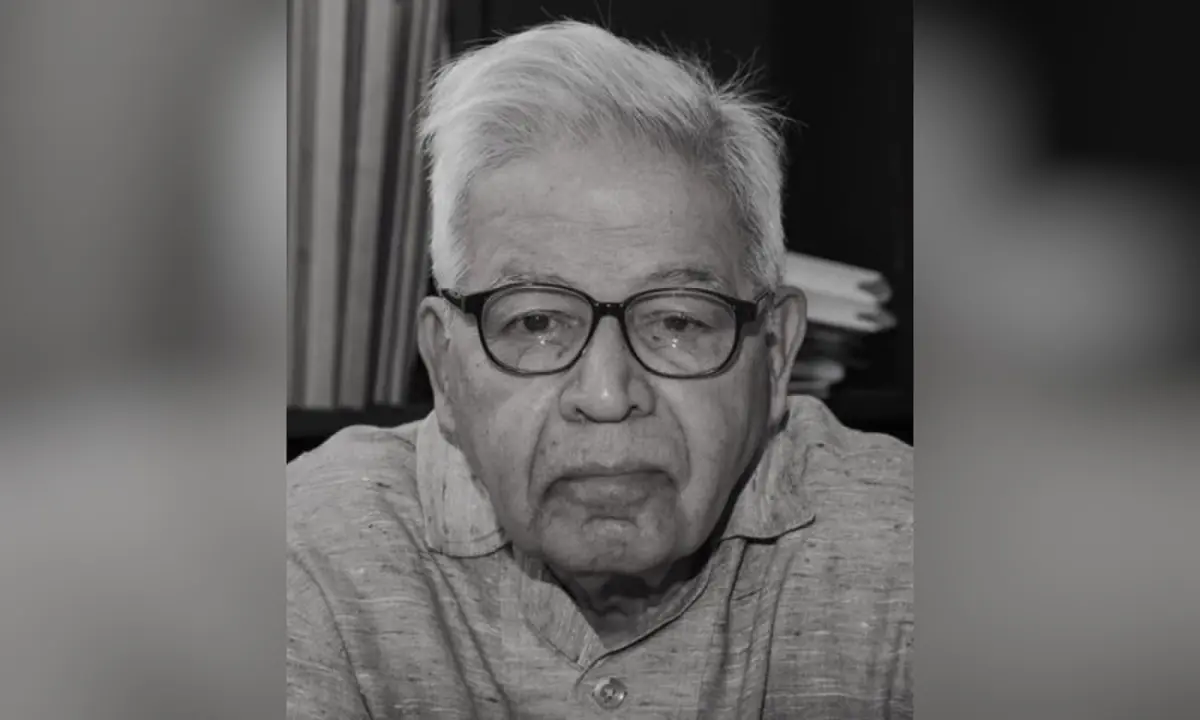
    HUSAIN Naqi was undoubtedly one of the most courageous and outspoken journalists this country ever produced.

    His honesty, integrity and truthfulness were never in question. Throughout his life, both as a journalist and human rights activist, he remained fully engaged in raising his voice for just causes and underserved communities. Freedom of expression and issues affecting the disenfranchised segments of society were particularly dear to him.

    His unflinching commitment to advocating people’s causes brought him hardship, unemployment and even imprisonment, but nothing deterred Naqi. Dissent was a duty and compromise was not a word that was part of his dictionary.

    As the sun rose on Sunday, the news arrived that he was no more. It was a one-line message from his son, Akbar, in Lahore. I must confess I was not prepared for the sad tidings. We had been in regular contact for most of our relationship, but in recent days I had been less proactive about reaching out, mainly due to my own lethargy.

    Even though Naqi’s championing of just causes brought him personal hardship, compromise was not a word that was part of his dictionary

    Not Naqi, though. On Saturday, just hours before his death, he attended a book launch organised by the Human Rights Commission of Pakistan (HRCP), meeting fellow journalists, lawyers and human rights activists. Unf­or­tunately, he suffered a heart attack later that evening and passed away in hospital in the early hours of Sunday at the age of 88.

    A large number of his comrades, journalists, rights defenders, political figures and members of civil society attended his funeral, held at the Jamia Al-Muntazir in Model Town, Lahore.

    Student politics

    Born in 1936 into a large household headed by a prominent lawyer in Lucknow, he received his early education in his hometown. His family wanted him to pursue engineering, which took him to Aligarh, but his destiny lay elsewhere.

    In the mid-1950s he moved to Pakistan, marking the beginning of his long journey of fighting for just causes.

    After being elected vice president of the Karachi University Students’ Union from the platform of the left-wing National Students Federation, his first confrontation with university authorities came when he took up the cause of victimised students from Balochistan.

    Dr I.H. Qureshi was the vice chancellor at the time. The ideological differences between the two were sharp, ultimately resulting in his expulsion from the university, which, according to him, was not such a bad deal.

    He also campaigned for better educational facilities, safe transport for female students, timely examinations and the restoration of student unions. He strongly believed that student unions helped develop democratic attitudes and taught young people to respect differences.

    Naqi’s involvement in student politics came at a volatile time, when students were agitating against the despotic policies of the state. Conscious of the prevailing political climate, Naqi found himself among contemporaries such as Mairaj Mohammad Khan, Fatehyab Ali Khan, Ali Mukhtar Rizvi, Johar Husain and many others, who would galvanise the country’s politics in later years.

    Foray into journalism

    His expulsion from university propelled Naqi towards the world of journalism. His fight against obscurantist forces continued. Having weathered many challenges, he eventually moved to Lahore, where he became deeply involved with the city’s politicians and intellectuals.

    He joined Pakistan Press International (PPI), eventually becoming its bureau chief, but later parted ways with the organisation rather than compromise his principles.

    Despite being an urbanite from Oudh, he comfortably adjusted to life in the heartland of Punjab, launching what many consider to be the first proper Punjabi daily newspaper, Sajan.

    During a long and illustrious career, he remained associated with several newspapers and publications, including The News, Frontier Post, Frontier Guardian, Daily Star etc.

    Guided by the philosophy that one must continue to fight, even when standing alone, he also brought out Punjab Punch, a weekly newspaper.

    Naqi was also committed to organising journalists and defending their professional rights. As a trade unionist, he believed that press freedom could not be secured without protecting the rights, dignity and independence of media workers. He remained associated with journalists’ struggles against censorship, restrictions on freedom of expression and the misuse of authority.

    For young journalists and rights activists, Naqi was more than a senior colleague, he was a mentor who encouraged them to question official narratives, develop independent opinions and never surrender their professional integrity.

    Sherry Rehman, mourning his loss, recalled how many young journalists had learnt at his desk and walked in rallies under his leadership. She described him as a person who spoke truth to power but never encouraged hatred, instead defending the right to disagree with dignity and respect.

    Decades of activism

    After retiring from active journalism, he joined the illustrious I.A. Rehman at the HRCP, where he continued to work energetically for the causes he held dear for around three decades.

    He played a part in many campaigns for democracy, civil liberties, minority rights, freedom of expression and the protection of vulnerable communities. Even though his act­­ivism brought him imprisonment and pre­ssure from the authorities, it failed to weaken his determination to speak against injustice.

    In a statement condoling his demise, HRCP summed it up thus: “One of the strongest voices for people’s rights and democracy in Pakistan has gone silent”.

    Naqi’s demise marks the end of an era. In a sense, he was among the last of a generation of journalists and public intellectuals for whom speaking truth to power was not mer­ely a professional obligation, but a way of life.

    At a time when independent journalism, freedom of expression and democratic space continue to face challenges, the life and work of Husain Naqi serves as a reminder that these freedoms should not be taken for gra­nted; they have to be defended through courage, commitment and collective struggle.

    Amjad Mahmood in Lahore also contributed to this report

    Published in Dawn, November 23rd, 2026

    Source: dawn