Category: dawn news

  • Pakistan, Malaysia reaffirm commitment to strengthening bilateral defence ties: ISPR

    Pakistan, Malaysia reaffirm commitment to strengthening bilateral defence ties: ISPR

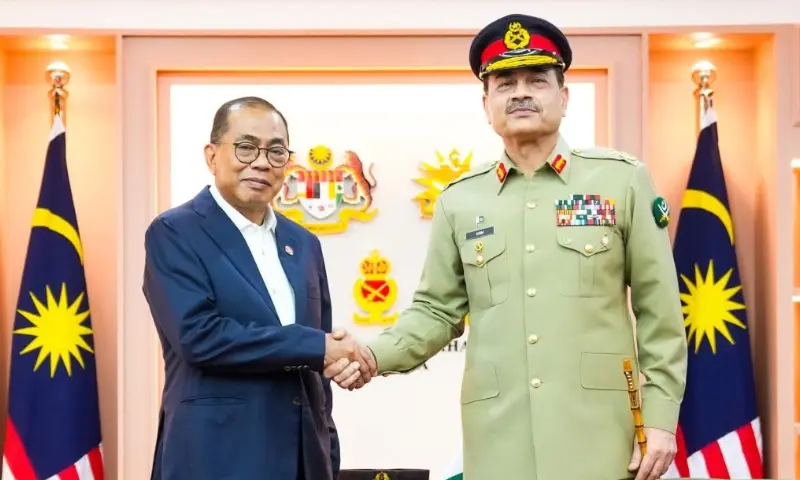
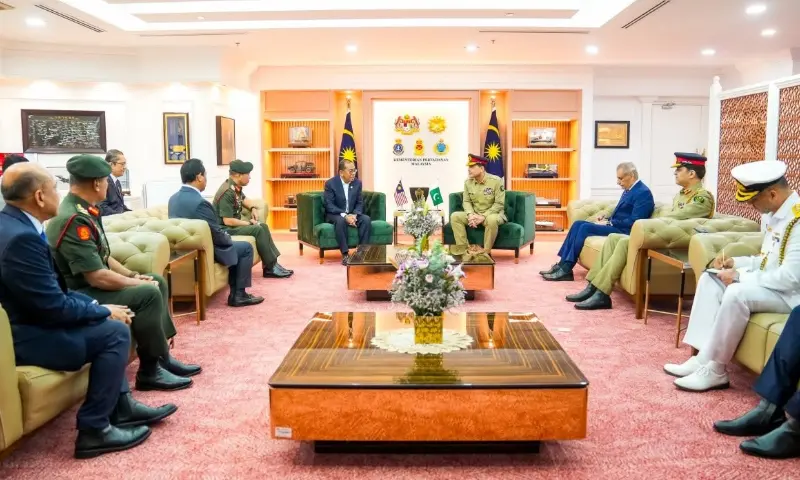
    Chief of Defence Forces (CDF) and Chief of the Army Staff Field Marshal Asim Munir and Malaysian Prime Minister Anwar Ibrahim on Monday reaffirmed their shared commitment to strengthening bilateral defence ties, the military’s media affairs wing said.

    The development came as CDF Munir undertook an official visit to Malaysia, where he called on PM Ibrahim in Putrajaya, Inter-Services Public Relations (ISPR) said in a statement.

    It said that the visit was aimed at further strengthening bilateral defence and military cooperation between the two countries.

    “The meeting focused on bilateral relations, defence and security cooperation, and evolving regional and global security dynamics.

    “Both leaders exchanged views on matters of mutual interest and underscored the importance of sustained engagement to promote regional peace, stability and security,” ISPR said.

    According to the statement, the Malaysian premier “warmly welcomed” CDF Munir and acknowledged the “longstanding bonds of friendship, mutual trust and cooperation between Pakistan and Malaysia”.

    “He reaffirmed Malaysia’s commitment to further strengthening bilateral relations, particularly in the fields of defence and security,” it stated.

    Meanwhile, CDF Munir appreciated Malaysia’s constructive role in promoting peace and stability in Southeast Asia and reiterated Pakistan’s resolve to further deepen defence cooperation and institutional linkages between the Armed Forces of both countries, the statement said.

    “Both sides reaffirmed their shared commitment to strengthening bilateral defence ties through regular high-level exchanges, enhanced military cooperation and sustained dialogue on regional and international security issues,” the ISPR said.

    The statement added that CDF Munir also held a meeting with Malaysian Defence Minister Mohamed Khaled bin Nordin.

    “Both sides discussed matters of mutual interest, with particular emphasis on expanding bilateral defence cooperation, strengthening military-to-military engagements and exploring new avenues of collaboration between the armed forces of the two countries,” it said.

    Upon arrival at the Ministry of Defence in Kuala Lumpur, CDF Munir was accorded a ceremonial guard of honour, it said. The statement added that Malaysian Chief of Defence Force General Tan Sri Haji Malek Razak Sulaiman, along with the chiefs of the Malaysian Army, Royal Malaysian Navy and Royal Malaysian Air Force, were present on the occasion.

    The ISPR said that CDF Munir would also visit the National Defence Studies Centre, where a formal ceremony would be held to induct him as the 21st member of its prestigious Hall of Fame.
    Pakistan, Malaysia reaffirm commitment to strengthening bilateral defence ties: ISPR

    Source: dawn

  • MQM-P to deliberate on PPP’s request to postpone Nov 29 Karachi rally, says Farooq Sattar

    MQM-P to deliberate on PPP’s request to postpone Nov 29 Karachi rally, says Farooq Sattar

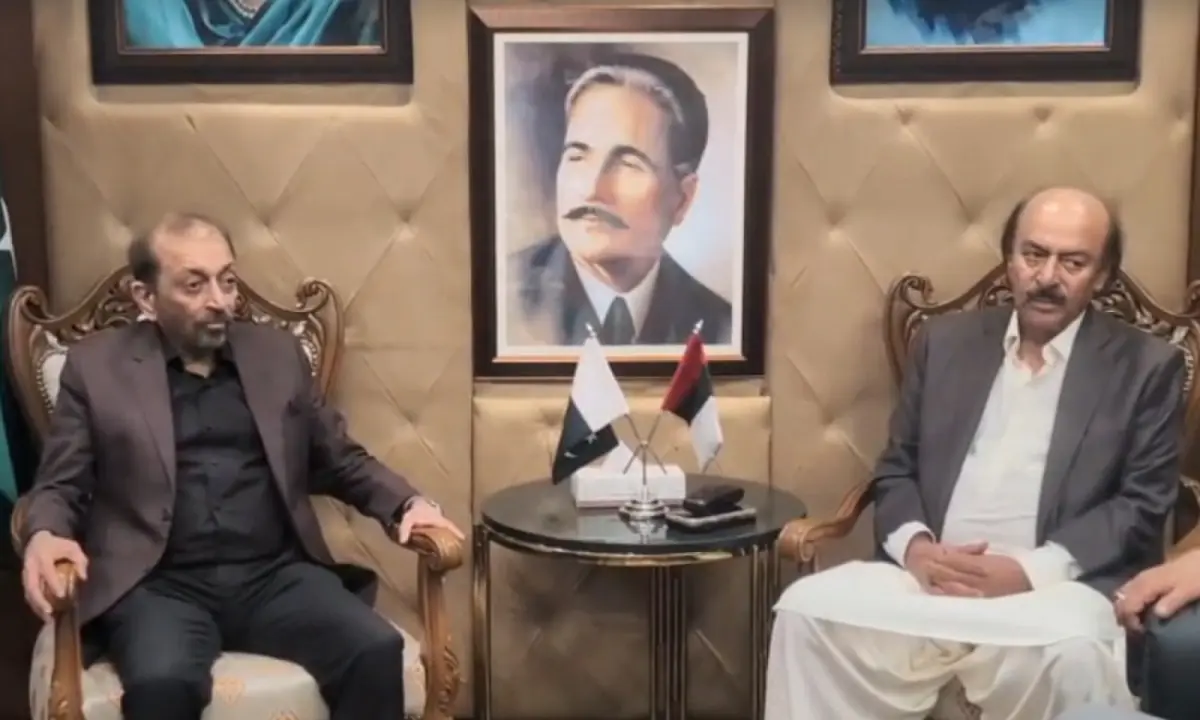
    Muttahida Qaumi Movement-Pakistan (MQM-P) leader Dr Farooq Sattar said on Monday that the party would deliberate on a PPP request to postpone its Nov 29 rally in Karachi, being held in support of new provinces.

    MQM-P had earlier this month announced the rally on Sharea Faisal as part of the party’s campaign for new administrative units. However, Sindh Taraqqi-pasand Party (STP) had also announced its own gathering against new provinces on Sharea Faisal on the same day.

    Last week, MQM-P leader Mustafa Kamal had hinted that his party would not hold its planned rally as it does not want any confrontation. STP chief Dr Qadir Magsi on Saturday refused to postpone his party’s rally.

    Speaking to the media after a meeting between the two parties at the Sindh Assembly, Sattar said the PPP had clarified that it was not opposed to any political or democratic gathering, public meeting or rally.

    “They said that if you choose another date, we will extend our cooperation and permission will also be granted. However, our wish is that you postpone the rally scheduled for Nov 29,” he said.

    Sattar said the PPP’s concern was that no one should take advantage of the prevailing situation.

    “Given the current atmosphere, where many people are saying many things, people’s sentiments should not be hurt, no one should be offended, and a situation should not arise that could later become a major challenge for the government,” he added.

    “We told them we will deliberate on this,” he said; however, he pointed out that postponing closer to the date would be a “difficult decision”.

    Earlier, a delegation of the PPP arrived at the Sindh Assembly to meet the MQM-P leadership.

    The PPP delegation comprised Sindh Home Minister Ziaul Hassan Lanjar, Local Government Minister Nasir Hussain Shah, Nisar Khuhro and Waqar Mehdi.

    From the MQM-P side, Sattar, Leader of the Opposition in the Sindh Assembly, Ali Khurshidi and members of the provincial assembly participated in the meeting.

    The two sides discussed the prevailing political situation in the province and matters of mutual interest.

    Monday’s meeting came amid tensions between the two parties over the MQM-P’s demand for the creation of new provinces.

    Last week, the local government minister had rejected the demand, saying it reflected the MQM-P’s political frustration and failure to regain public support. He urged the party to stand with the people of Sindh in protecting the province’s unity rather than calling for its division.

    His remarks came after Kamal called for the creation of new provinces, saying December would be crucial for major decisions on the issue. He had also said a referendum would be held on the establishment of new provinces.

    The MQM-P has repeatedly criticised the PPP-led Sindh government over its handling of Karachi’s affairs, including the city’s population count and allocation of resources.

    The disagreement intensified after PPP Chairman Bilawal Bhutto-Zardari warned that dividing Sindh could lead to bloodshed on its streets. His remarks, made during a speech in which he also called for a “political reset”, drew criticism from MQM-P leaders and other political parties.

    MQM-P chief Dr Khalid Maqbool Siddiqui subsequently urged the courts and the federal government to take notice of Bilawal’s remarks, saying his party expected to be countered with arguments rather than threats. He maintained that the MQM-P’s demand for new provinces was not limited to Sindh or Karachi but extended to the entire country.

    Siddiqui also questioned the PPP’s opposition to the creation of new provinces, alleging that Karachi’s contribution to Sindh’s budget was behind the party’s resistance. He said the MQM-P would continue its constitutional and legal struggle through the assemblies.

    Bilawal, however, later clarified that his remarks were not a threat but a warning about the possible reaction to any attempt to divide Sindh.

    Source: dawn

  • Bilawal calls for restoring supremacy of Parliament and trust in judiciary, electoral system

    Bilawal calls for restoring supremacy of Parliament and trust in judiciary, electoral system

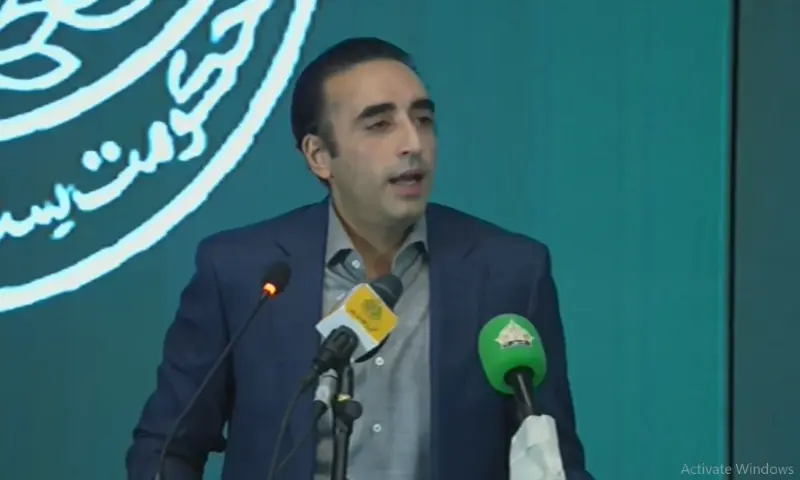
    PPP Chairman Bilawal Bhutto-Zardari on Monday called for restoring the supremacy of the Parliament as well as trust in the judiciary and the electoral system.

    He made the remarks while addressing an event to mark the launch of the Sindh Youth Card.

    “To restore the trust of Pakistan’s youth, if any reset is to take place, it must be a democratic reset,” the party leader said.

    “If a democratic reset happens, then the people’s stake will remain, and through that reset, we must restore the supremacy of our Parliament. We must restore confidence in our judiciary, and the election system we have, we must restore trust in it now.”


    More to follow

    Source: dawn

  • Analysis: Myanmar genocide judgment may bolster Gaza case against Israel

    Analysis: Myanmar genocide judgment may bolster Gaza case against Israel

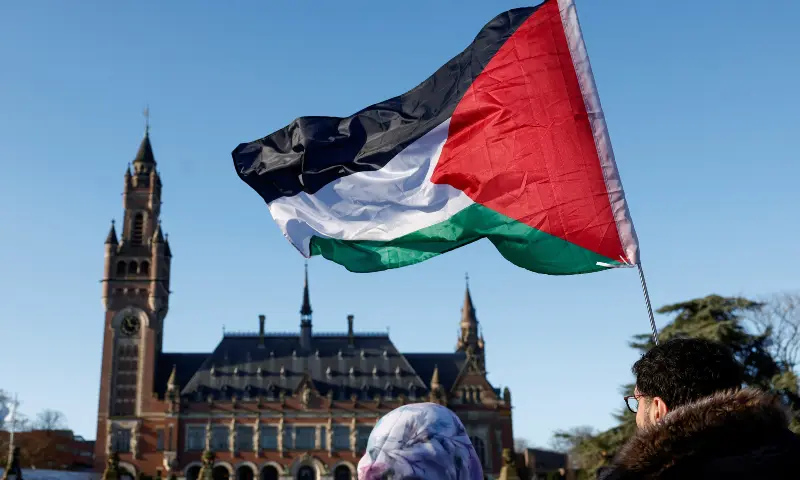
    The International Court of Justice’s landmark ruling that Myanmar committed genocide against the Rohingya will strengthen South Africa’s genocide case against Israel over the war on Gaza, legal experts said, establishing a precedent that genocidal intent can coexist with a military objective.

    While the conflicts in Gaza and Myanmar are legally distinct, both cases before the World Court are based on allegations that states breached their obligations under the 1948 Genocide Convention.

    On Thursday, the court found that Myanmar had violated the convention on multiple grounds stemming from mistreatment of the Muslim Rohingya minority by the armed forces.

    South Africa, which has brought a genocide case against Israel over its conduct in Gaza, welcomed the judgment.

    Foreign Minister Ronald Lamola said it set an important precedent by establishing for the first time that a state had committed genocide.

    He said it was of “great significance” to the case against Israel, which is not expected to be argued until 2029.

    Both Myanmar and Israel have defended the actions of their armed forces as legitimate responses to insurgencies.

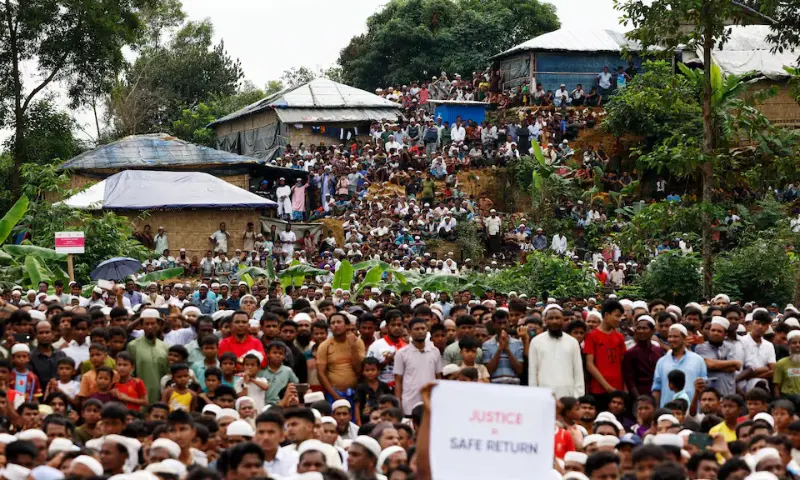
    But a majority of nine judges on the 15-member bench found that around 10,000 killings, including of children, the razing of homes, widespread sexual violence and the forced exodus of more than 700,000 people in 2017 amounted to state-sponsored genocide.

    The ruling also handed other major legal victories to Gambia, which brought the case seven years ago on behalf of Muslim-majority countries.

    The judges found that Myanmar had failed in its obligation to prevent genocide and said it must facilitate the return of Rohingya refugees and pay unspecified reparations.

    The court also adopted conclusions from UN fact-finding reports, including one stating that mass deaths and rapes showed genocidal intent.

    Important precedent

    Israeli legal scholar Yuval Shany said the ruling could broaden the arguments available to South Africa in its case against Israel.

    He said the court maintained a requirement that genocidal intent be the “only reasonable inference,” but expanded the contextual factors it can consider beyond a pattern of conduct, to include the scale and systematic nature of acts and the history of persecution.

    The approach “gives South Africa more avenues to argue for genocide” in Gaza, Shany said.

    Proving genocide is notoriously difficult because it requires establishing an “intent to destroy, in whole or in part, a national, ethnical, racial or religious group, as such.”

    Five criminal acts can constitute genocide: killing members of a group, causing them serious bodily or mental harm, creating conditions calculated to destroy them, preventing births, or forcibly transferring children to ​other groups.

    Lamola said South Africa would study the judgment carefully with a view to demonstrating, as the court had in the Rohingya case, that a state’s actions, including ethnic cleansing, the killing of children, sexual violence and destruction of civilian infrastructure, can fall within the definition of genocide.

    Targeting of children, women

    Another aspect of the ruling that could resonate in the Israel case was the court’s emphasis on the systematic nature and scale of the crimes committed in Myanmar, said Marieke de Hoon, professor of international criminal law at the University of Amsterdam.

    South Africa alleges that Israel’s military operations created conditions intended to prevent births and disproportionately affected women and children in Gaza.

    In its filing to the ICJ, it said an estimated 70 per cent of those killed were non-combatants. Israel rejects those allegations and says its operations have been conducted in accordance with international law.

    “Arguments that a military intent or military objective would erase the idea that there could be a genocide intent are now rejected by the court,” said De Hoon.

    She said the judges found that some acts, including attacks on children and women and sexual violence, could not be explained by military objectives alone, leaving genocide as the only reasonable inference.

    The Hague Initiative for International Cooperation (Thinc), a think tank funded by pro-Israeli groups, said the judgment would fundamentally alter how courts assess allegations of genocide by imposing a “lower threshold for proving genocidal intent, with serious consequences for Western militaries engaged in confronting terror”, such as after Hamas’s Oct 7, 2023 attack on Israel.

    It is “not only a verdict in a particular case but a template”, Thinc’s director, Andrew Tucker, wrote in a reaction.

    “Its propositions will be used in future cases: that genocidal intent may coexist with legitimate military objectives…that UN reports compiled without access can carry decisive weight; and that a state can breach the duty to prevent genocide without any finding that genocide occurred.”

    While the World Court judgment unequivocally found Myanmar responsible for genocide, proving the crime in court remains difficult, said Richard Horsey, senior adviser for Asia at the International Crisis Group.

    “The ICJ has never before found that a state committed genocide. The legal bar is extremely high, but what this case shows is that it is surmountable,” he said.

    Analysis: Myanmar genocide judgment may bolster Gaza case against Israel

    Source: dawn

  • Capitalising on Middle East conflict

    Capitalising on Middle East conflict

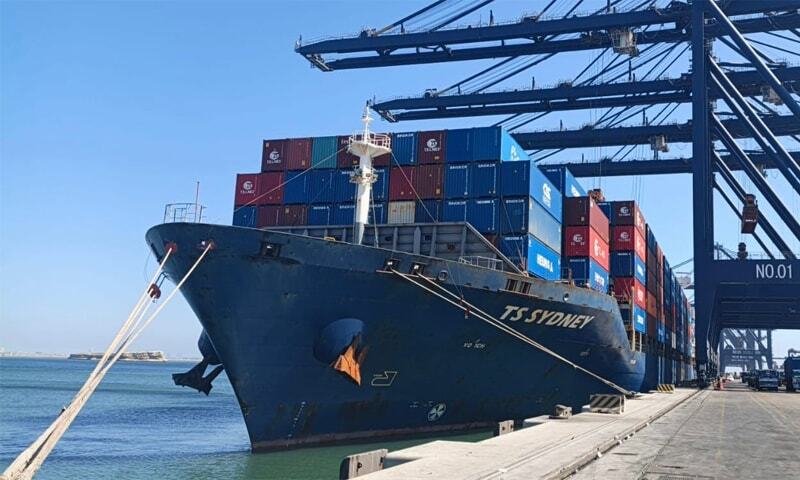
    Rarely does a government in Pakistan respond swiftly and purposefully to a crisis by bringing public and private stakeholders together, building consensus and implementing corrective measures. The US-Iran conflict presented such an opportunity, forcing Pakistan to protect its maritime supply chains while opening new possibilities for its ports and shipping industry.

    The prime minister constituted two committees to address the emerging challenges. This article focuses on the committee headed by Federal Minister for Maritime Affairs Muhammad Junaid Anwar Chaudhry, of which the writer was a member. Its mandate is to protect maritime trade flows and energy supplies while identifying opportunities arising from disruptions to regional shipping.

    The committee met regularly, sometimes daily, to address operational bottlenecks and develop a coordinated response. It helped maintain oil supplies and secure some liquefied natural gas (LNG) cargoes from Qatar despite force majeure following attacks on its production facilities and disruption of the Strait of Hormuz.

    One of its earliest initiatives followed an approach by the Pakistan Ship’s Agents Association (PSAA), which pointed out that disruption at major regional transshipment hubs offered Pakistan an opportunity to attract cargo previously routed through competing ports. Despite having a transshipment policy for more than two decades, Pakistan had failed to attract significant business because of restrictive customs procedures and uncompetitive port charges.

    US-Iran conflict is pushing Pakistan to protect its maritime supply chains and opening new possibilities for its ports and shipping industry

    The committee engaged customs authorities to remove these impediments. Rules were amended to allow transshipment cargo to be stored at off-dock terminals, easing pressure on congested on-dock facilities. The requirement for mandatory scanning of all containers moving to off-dock terminals was also replaced with a risk-based non-intrusive inspection system. Customs procedures were further revised to accommodate non-containerised break-bulk and roll-on/roll-off cargo.

    New feeder shipping services to Gulf and Red Sea ports were also encouraged to maintain outlets for Pakistani imports and exports amid disruption to established shipping routes.

    Another significant achievement came on July 29, when the Joint War Committee of Lloyd’s London formally stated that war-risk insurance premiums for vessels calling at Pakistani ports would no longer be automatically triggered by their classification under listed areas. This is expected to reduce shipping costs and improve the commercial attractiveness of Karachi, Port Qasim and Gwadar, removing a reputational disadvantage that had affected Pakistan’s ports for more than a decade.

    The committee also addressed the longstanding problem of auctioned containers occupying valuable port space. Customs authorities allowed these containers to be shifted to licensed off-dock facilities, freeing terminal capacity, facilitating faster cargo handling and enabling shipping lines to redeploy their containers for fresh business.

    Another breakthrough was permission for less-than-container-load (LCL) transshipment. This involves importing smaller consignments, consolidating or deconsolidating cargo, undertaking value addition and re-exporting it. Pakistan has long sought to develop this business along the lines of Jebel Ali. One major US-based shipping company has already selected Pakistan over India for its LCL transshipment operations.

    Gwadar Port also witnessed a notable increase in activity, receiving more than a dozen vessels carrying around 200,000 tonnes of transshipment cargo, including steel plates, machinery and fertiliser, within three months. This exceeded the vessel and cargo activity recorded during the preceding three years. Five additional vessels conducted anchorage operations.

    To improve competitiveness, reduced port and terminal tariffs were introduced for transshipment cargo, with concessions linked to the proportion of such cargo handled. A Far Eastern shipping company has consequently expressed interest in shifting its transshipment operations from India’s Mundra Port to Karachi.

    The committee also took up complaints about excessive and retrospective war-risk and emergency conflict surcharges imposed by shipping companies, including on cargo that had sailed before the conflict began. Customs authorities directed shipping lines and their agents to ensure transparency, disclose charges in advance and refrain from unjustified retrospective levies. A mechanism was established for affected importers and exporters to submit documentary evidence for scrutiny.

    Importantly, revised customs procedures will allow consignees to choose between on-dock and off-dock terminals for cargo clearance. This will enable cargo to be moved directly to off-dock facilities, where shipping containers can be emptied and returned promptly, reducing detention and demurrage costs while improving port turnaround times.

    The committee’s recommendations were subsequently submitted to the prime minister, who constituted the National Coordination and Management Council to coordinate decisions concerning the economic, trade and energy consequences of the Middle East conflict.

    The next phase offers further opportunities. The Ministry of Maritime Affairs and Port Qasim Authority are working on a proposed automobile import and re-export zone where used vehicles could be imported, refurbished and exported. Much of this business is currently conducted in Dubai and Sharjah, often by Pakistani operators. A proposed energy city at Port Qasim or another suitable location could also provide strategic petroleum storage outside the Strait of Hormuz. International energy companies have reportedly expressed interest.

    The potential economic gains extend beyond port revenues to shipping, logistics, storage, transportation and employment. Each transshipment container handled in Pakistan could generate an estimated $150 in associated economic activity. An additional throughput of 500,000 twenty-foot equivalent units (TEUs) is achievable within one to three years, rising to one million within five years.

    The crisis has demonstrated that trade facilitation is essential to Pakistan’s economic competitiveness. A trade facilitation board is expected to examine remaining bottlenecks in cargo clearance and logistics costs. Sustaining these gains, however, will require consistent policies, institutional coordination and a lasting commitment to removing regulatory friction.

    The writer is chairman Pakistan Ship’s Agents Association and former board member of KPT, PQA and GPIA

    Published in Dawn, The Business and Finance Weekly, November 23rd, 2026

    Source: dawn

  • 7 killed, 2 injured as stone-laden truck overturns onto mini-truck in Bahawalpur

    7 killed, 2 injured as stone-laden truck overturns onto mini-truck in Bahawalpur

    LAHORE: Seven people were killed and two others were injured when a stone-laden truck hit a mini-truck and overturned onto it in Bahawalpur’s Uch Sharif early on Monday morning, an official and Rescue 1122 said.

    Bahawalpur District Police Officer (DPO) Rana Abdul Wahab told Dawn that the mini-truck, travelling from Dera Ghazi Khan to Khairpur Tamewali, was carrying 16 people and stopped along a highway due to fog.

    “The driver was cleaning the windscreen of the stationary vehicle when another truck, laden with stones, hit it and turned over onto it,” the DPO said.

    According to the official, the driver of the stone-laden truck, which was also travelling from Dera Ghazi Khan, had lost control of the vehicle.

    Passengers in the mini-truck were left trapped, he said.

    A Rescue 1122 statement said the passengers were trapped under the truck and the stones, and an excavator was used to clear the stones.

    The DPO said police and rescue personnel were able to rescue nine people while seven died because of injuries.

    According to Rescue 1122, two people have been injured among those rescued.

    DPO Wahab said the driver of the stone-laden truck had fled the scene after the accident. “However, police have identified him and registered a case at Dhoorkot police station. Raids are being conducted to arrest the suspect,” the DPO said.

    Earlier this month, a collision between a passenger bus and truck claimed the lives of 11 people and left 33 others injured near Pakpattan.

    On Oct 21, ten people were killed and 44 others injured when a passenger bus overturned after hitting a road divider on the Indus Highway in Rajanpur district’s Rojhan tehsil.

    On Oct 19, a road accident on Multan’s Bosan Road claimed the lives of five men in their 20s after their speeding Toyota Corolla hit a road divider before crashing into the wall of a nearby plot and catching fire.

    Source: dawn

  • India to give $1.62bn economic package to flood-hit Nepal

    India to give $1.62bn economic package to flood-hit Nepal

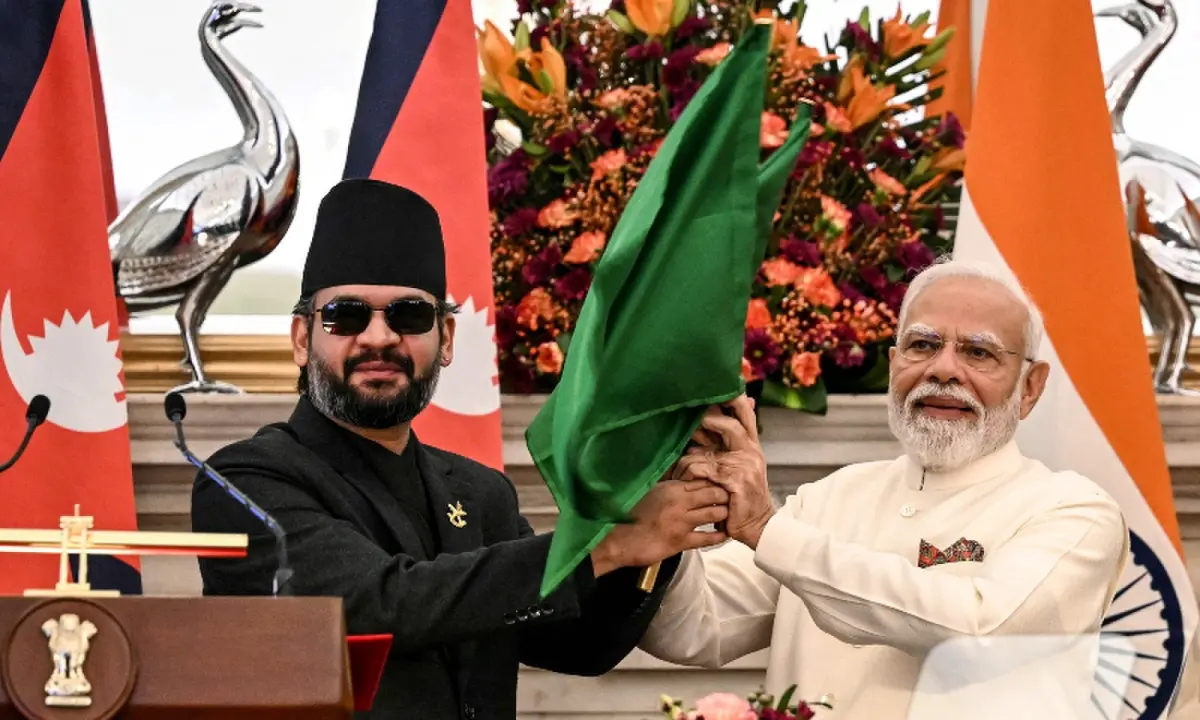
    India will give Nepal an economic package worth 240 billion Nepalese rupees ($1.62bn), Indian Prime Minister Narendra Modi said on Monday, after talks with his Nepali counterpart Balendra Shah in New Delhi.

    Shah is in the Indian capital for a two-day visit, his first bilateral trip since coming to power in March, and in the aftermath of the devastating Himalayan flood in August that killed some 1,500 people, with another 5,200 missing and presumed dead.

    “Today, to give fresh impetus to Nepal’s reconstruction and long-term development, we are announcing a development cooperation package worth 24,000 crore (240 billion) Nepalese rupees,” Modi said, addressing the media after the talks, with Shah standing beside him.

    “Our commitment will be to help affected families get their lives back on track, create new opportunities and further strengthen Nepal’s capacity to deal with future disasters,” Modi said.

    Shah thanked India for consistently acting as a first responder for Nepal “in times of natural disasters and difficult hours”.

    “I warmly welcome Indian investors to Nepal to partner in the economic prosperity of our two countries in the coming days,” he said, and invited Modi to visit the Himalayan nation.

    The two countries signed agreements to boost their economic relationship and Modi and Shah jointly opened a train link connecting the two countries.

    The August 26 flood, caused by a glacier collapse on Nepal’s border with China, sent a mass of mud and rock crashing into the Trishuli river.

    The resulting flood washed away villages, snapped highways, bridges and power lines, and buried homes in the mud in the impoverished country that is wedged between Asian giants India and China.

    Nepal and India enjoy longstanding cultural, economic and people-to-people ties with an open border allowing hundreds of thousands of Nepalis to live and work in India.

    New Delhi was the first to respond after the August flood, sending several plane-loads of aid to restore communication links that were severed in the mountains.

    Source: dawn

  • Shujaat, Naqvi discuss creation of new provinces, devolution of power in Lahore meeting

    Shujaat, Naqvi discuss creation of new provinces, devolution of power in Lahore meeting

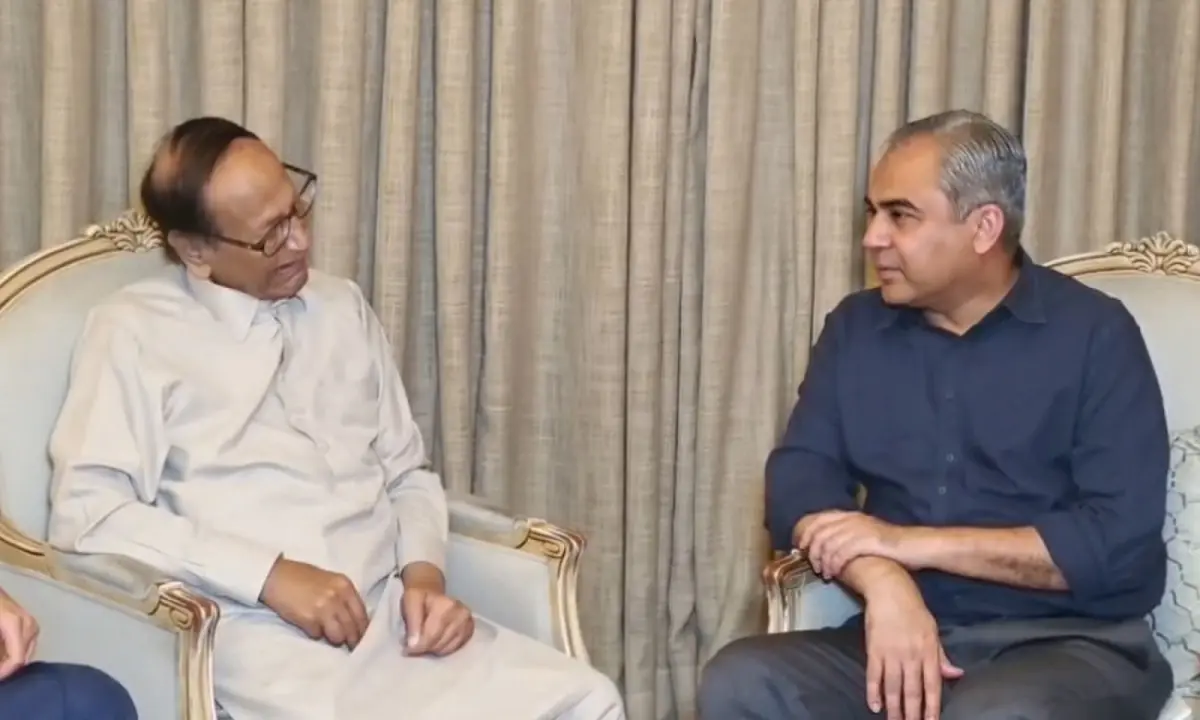
    LAHORE: The debate over the creation of new provinces and devolution of powers came under discussion on Monday when Interior Minister Mohsin Naqvi met Pakistan Muslim League-Quaid (PML-Q) chief Chaudhry Shujaat Hussain at his residence in Lahore.

    The meeting comes amid an ongoing political debate over the creation of new provinces, with several political leaders pushing for a nationwide referendum to settle the matter.

    It was sparked by Naqvi’s July remarks, wherein he called for the formation of new administrative units in the country, saying the current “system” of governance had “collapsed” and needed a “reset”.

    In Monday’s meeting, the two leaders discussed the overall political situation, measures to maintain law and order and the need to transfer power to the grassroots level, according to a statement issued by the interior ministry after the meeting.

    During the discussion, Shujaat said the question of creating new provinces was directly linked to public convenience, good governance, administrative efficiency and the country’s future.

    “Strengthening existing administrative units and making them more empowered can also be an effective way to address governance-related challenges. The biggest stakeholders of Pakistan are its ordinary people,” Shujaat was quoted as saying, adding that decisions should be made in accordance with the aspirations of the people.

    “If we do not take steps in the right direction today, tomorrow will not forgive us,” he remarked.

    Naqvi said it was imperative to take all decisions in accordance with the wishes of the people of Pakistan. The interior minister also briefed the PML-Q leader on the government’s counterterrorism and peacekeeping measures in Balochistan and Khyber Pakhtunkhwa.

    Minister for Overseas Pakistanis Chaudhry Salik Hussain and Punjab Minister for Industries Chaudhry Shafay Hussain were also present at the meeting.

    The meeting comes as Parliamentary Affairs Minister Tariq Fazal Chaudhry insisted last week that a referendum on the formation of new provinces “will happen” amid the debate on new provinces.

    In his remarks on Friday, Chaudhry had maintained that the PML-N would undertake “every last effort” to convince the PPP.

    “A referendum is neither non-constitutional nor undemocratic; the public’s opinion can be sought on any important matter,” he had said.

    Chaudhry’s remarks came after PPP Chairman Bilawal Bhutto-Zardari delivered a no-holds-barred speech earlier last week that covered the question of new provinces.

    Bilawal had expressed his opposition to the creation of provinces and the idea of holding a referendum for such a move in his speech. He cautioned that any “forced” attempt to divide provinces, particularly in Sindh, could lead to bloodshed.

    However, the federal government maintains that a referendum is a legal and constitutional method of gauging public opinion on new provinces and that no political party should have reservations regarding it.

    Source: dawn

  • Ukraine claims strikes on two Russian boats off Libya

    Ukraine claims strikes on two Russian boats off Libya

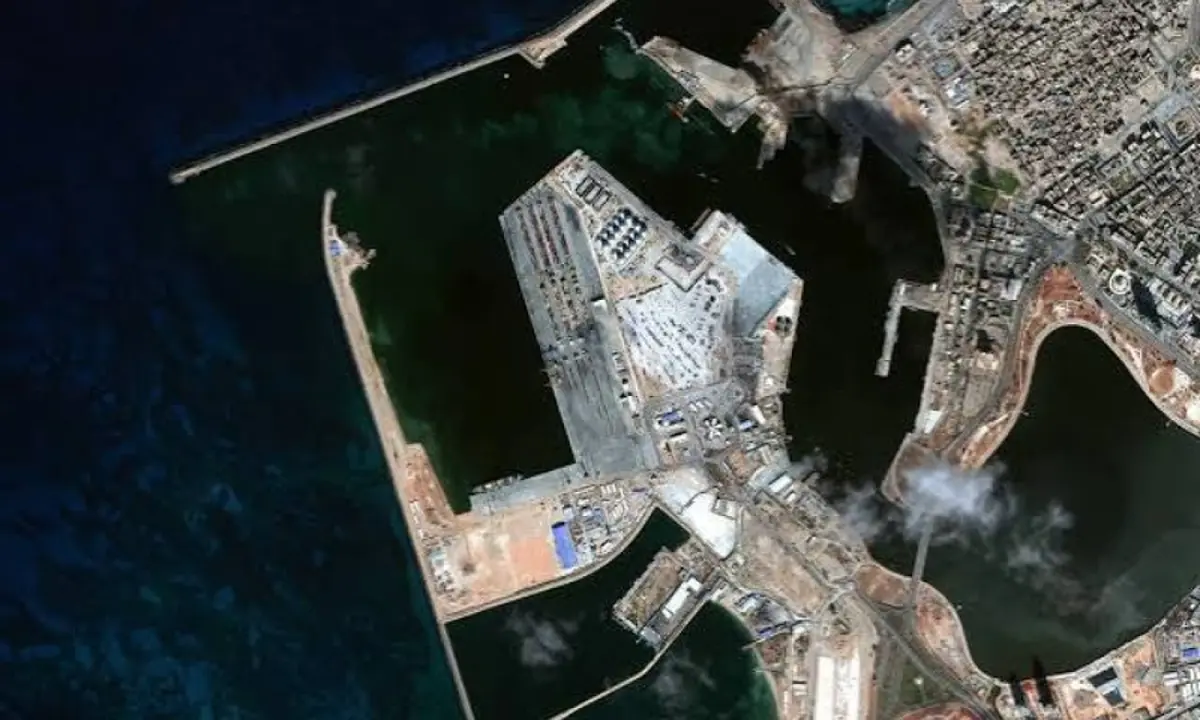
    President Volodymyr Zelensky on Monday said Ukraine was behind strikes on two Russian vessels off Libya, adding that one of them sank in the latest spillover from Moscow’s war with Kyiv.

    The attacks on Sunday near the Libyan port of Benghazi come at a time when Ukraine has stepped up its strikes against Russia far from the frontlines.

    But the United Nations condemned the strikes, warning against the prospect of a country still divided after the Libyan civil war becoming “a battleground for foreign conflicts”.

    “It all took place off the coast of Libya. Our warriors deployed seven Ukrainian-made naval drones. Despite all the enemy’s efforts to counter the attack, the Russian corvette Merkury was sunk,” Zelensky wrote on X.

    The Ukrainian leader claimed the Merkury was “one of their newest ships, commissioned in 2023, during the full-scale war”.

    “Our second target was the Russian dry cargo vessel MV ANGARA, which the enemy used to transport weapons. Result: target hit,” he added.

    A Ka-27 combat helicopter was also destroyed in the strike on the Merkury, Zelensky said.

    Sunday’s strikes came after a drone hit a Russian cargo ship in the eastern Baltic Sea on Saturday, close to the waters of Finland, whose border guard said the strike was Ukrainian.

    The UN mission in Libya expressed “serious concern” over the attacks, calling for “an immediate, independent and transparent investigation”.

    “Libya cannot afford, and must not become a battleground for foreign conflicts,” the UNSMIL wrote on X.

    UN calls for probe into attacks

    The United Nations called for an independent investigation into the drone attacks, expressing concern over the potential spillover of the Ukraine war into Libya.

    Authorities said all crew members had been rescued and were receiving treatment for minor injuries. They said a merchant vessel had been targeted by explosive-laden sea drones off Benghazi but did not identify its country of origin. Reports said the second ship was sailing under a Maltese flag.

    Libya Alhadath television later reported that naval and air force units had intercepted more than 12 explosive-laden sea drones off Benghazi.

    Libya’s eastern administration did not identify those responsible for the attack but said the country was “not a party to the Russian-Ukrainian war”.

    Meanwhile, Ukraine said on Monday that Russian strikes had killed at least 12 people in its Kyiv region, including in a block of flats and at a supermarket.

    The conflict, which began with Moscow’s full-scale invasion of Ukraine in 2022, has killed hundreds of thousands of people and displaced millions.

    ‘Shadow fleet’

    Earlier reports said a fire broke out inside an ammunition depot at a naval base, but authorities in Libya’s east said later “the explosion occurred on board a Russian ship docked in the port”.“It is suspected that the ship was attacked by drones,” an official statement said.

    “The ship was en route back to Russia and its stop was for refuelling and resupply.” The eastern administration said it would launch a joint investigation with Russia.

    The rival UN-recognised government in Tripoli said in a statement it was alarmed by “risks posed by involving civilian ports and facilities in activities linked to external conflicts”.

    In March, a Russian liquefied natural gas carrier sank off the Libyan coast following an attack, which Russian President Vladimir Putin blamed on Ukraine. The vessel was part of Russia’s so-called “shadow fleet” of tankers that carry its oil and gas around the world, skirting Western restrictions.

    Ukraine has at times admitted to attacking Moscow’s shadow fleet, including in the Mediterranean last December.

    The Tripoli government said it rejected any attempt to turn Libya into “an arena for international conflicts” and the use of its territory “for any military or logistical activities that could jeopardise” national security or sovereignty.

    Libya has been beset by violence and instability since the overthrow of longtime ruler Muammar Gaddafi in 2011.

    It remains divided between the government in Tripoli led by Prime Minister Abdulhamid Dbeibah and a rival administration in the east backed by military commander Khalifa Haftar.

    Source: dawn

  • In meeting with Dar, Portugese foreign minister reaffirms commitment to bolster Islamabad-Lisbon ties

    In meeting with Dar, Portugese foreign minister reaffirms commitment to bolster Islamabad-Lisbon ties

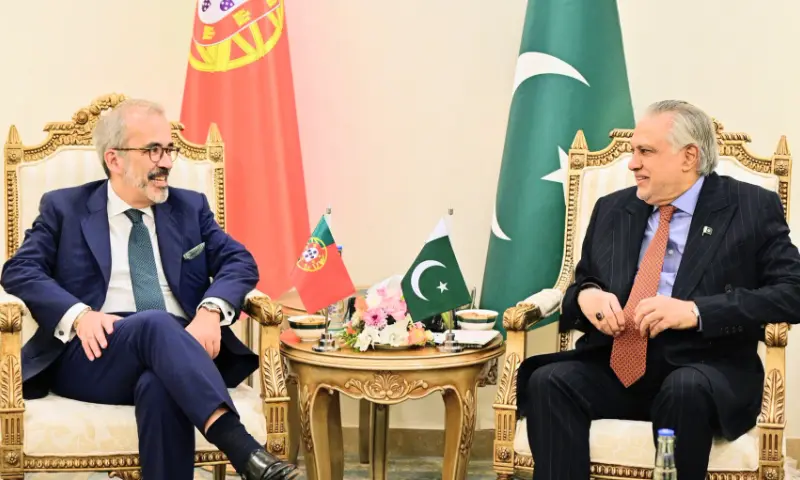
    Portuguese Minister of State and Foreign Affairs Paulo Rangel reaffirmed on Monday his country’s commitment to further strengthening bilateral relations with Pakistan, a statement by the Foreign Office (FO) said.

    Rangel made these remarks during a meeting with Deputy Prime Minister and Foreign Minister Ishaq Dar at the FO in Islamabad, where the Portuguese minister arrived on Sunday on a two-day visit.

    In today’s meeting, Rangel and Dar reviewed the “longstanding and friendly relations between Pakistan and Portugal as the two countries mark 77 years of diplomatic relations”, the FO statement said.

    It added that DPM Dar stressed the importance of enhanced diplomatic engagement, parliamentary exchanges and regular consultations through existing bilateral mechanisms.

    For his part, Rangel reaffirmed Portugal’s commitment to further strengthening bilateral ties, thanked Pakistan for its support at the United Nations and appreciated the contribution of the Pakistani diaspora in Portugal to promoting closer ties between the two countries, the statement said.

    “Both leaders also exchanged views on regional developments and discussed cooperation at the UN and within the European Union framework,” it said.

    Moreover, Rangel appreciated Pakistan’s “constructive role in promoting regional peace and stability”, the statement said, adding that the two leaders also emphasised the importance of dialogue, diplomacy and effective multilateralism in addressing shared challenges.

    During his time in Pakistan, Rangel is also scheduled to hold delegation-level talks with DPM Dar. He is accompanied by a business delegation for the inaugural Pakistan-Portugal Business Forum.

    The FO earlier said the visit would also feature a Pakistan-Portugal Business Forum, and companies from both countries would hold business-to-business meetings to explore commercial partnerships and investment opportunities in agri-food, renewable energy, pharmaceuticals, information technology and textiles.

    Following his arrival on Sunday, Rangel praised Pakistan’s peace efforts in recent months during the US-Israeli war on Iran.

    “The world needs you. We have been seeing in the very recent months that the role of Pakistan is decisive for global peace, so we count on you to help all the peoples of the world, reaching peace and prosperity,” he said while speaking to state-run Pakistan TV.

    Source: dawn