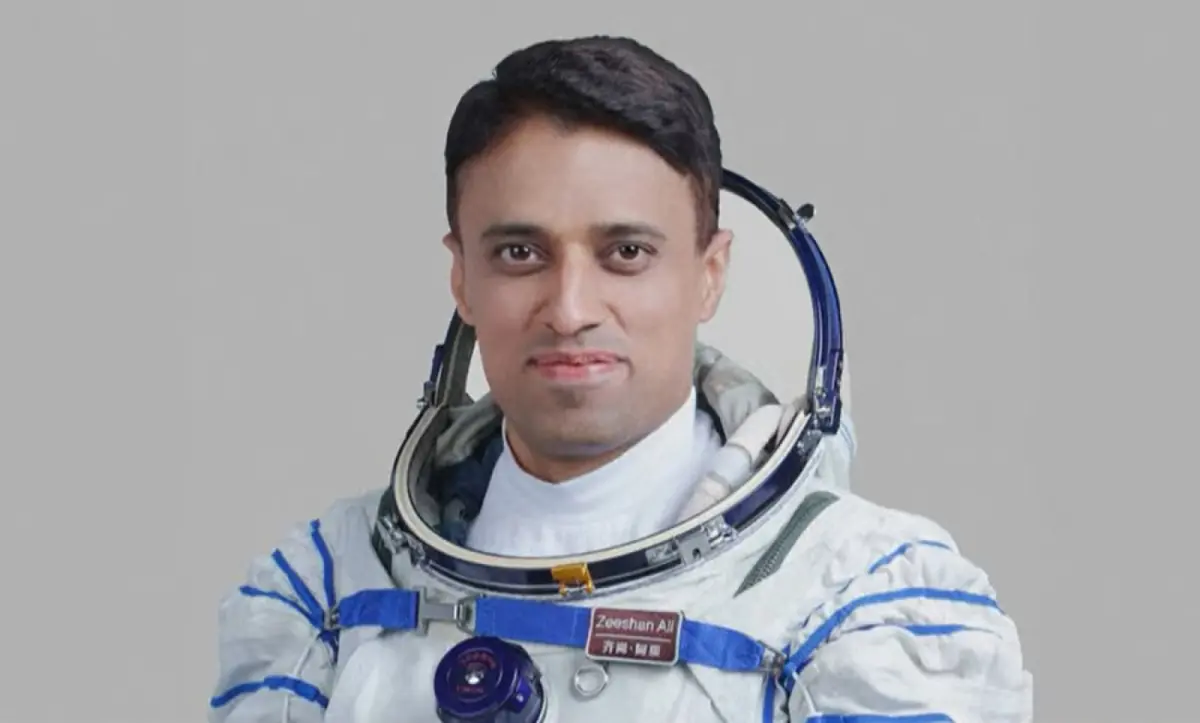
China’s Shenzhou-24 mission is scheduled to launch on November 25, carrying Pakistan’s first astronaut, Muhammad Zeeshan Ali, aboard the spacecraft, announced the China Manned Space Agency (CMSA).
The Pakistani astronaut, a payload specialist, will join a short orbital flight before returning with the Shenzhou-23 spaceship, which docked at the Tiangong space station in May, according to the CMSA.
Chinese astronauts Tang Hongbo and Wu Yi are part of the three-member mission, according to the CMSA.
The crewed spaceship is scheduled to be launched at 8:18 am (Beijing Time) Wednesday from the Jiuquan Satellite Launch Center in northwest China.
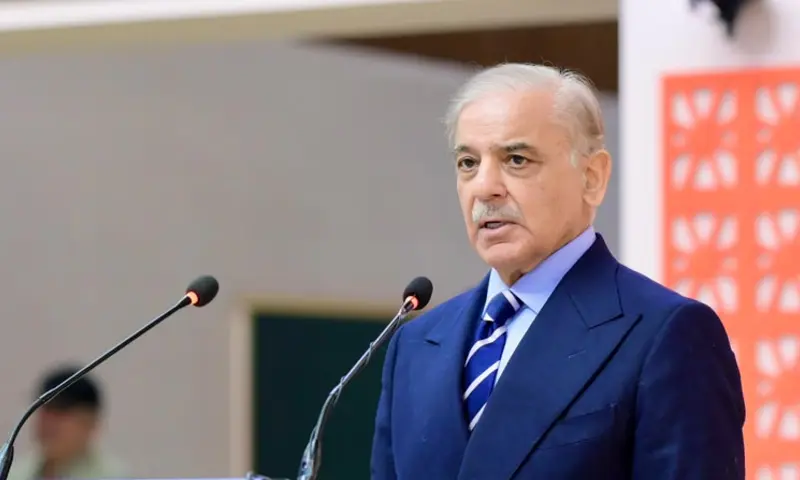
Prime Minister Shehbaz Sharif met the two in April, and congratulated them on their selection. He said the space mission was a “matter of pride for the entire nation” and further commended their “round-the-clock efforts” in achieving the milestone.
PM Shehbaz hoped that the space mission would “add new dimensions to the brotherly relationship between Pakistan and China”.
Beijing has invested heavily in its space programme in recent years — catching up with its main rival the United States — and aims to land astronauts on the Moon by 2030.
Pakistan is a natural partner, given the country’s decades-long, “all-weather” friendship. China is Pakistan’s largest trading partner and a major foreign investor.
In February 2025, Suparco and CMSA signed a cooperation agreement. Under the pact, two Pakistanis were to train in China, with one joining a mission on the Tiangong space station operated by Beijing.
China has been barred from participating in the International Space Station since 2011, when the US prohibited Nasa from collaborating with Chinese space agencies. Since then, Beijing has sought to build partnerships with other countries — including Pakistan — in its expanding space programme.
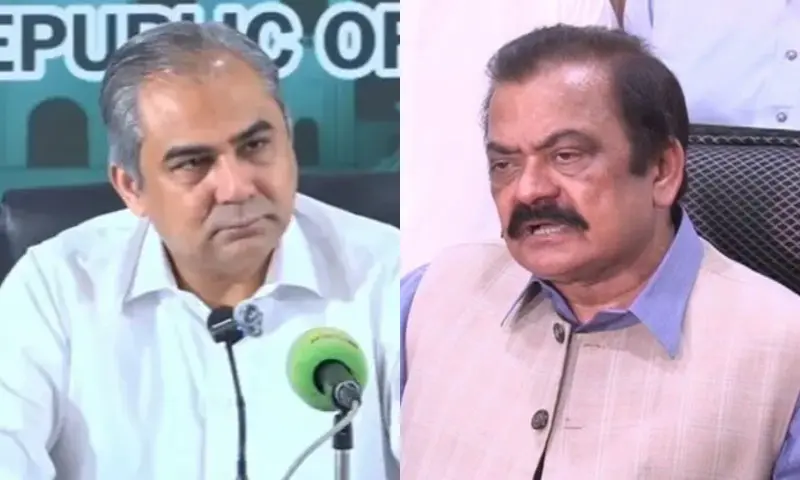
PML-N Senator Rana Sanaullah on Monday said Interior Minister Mohsin Naqvi “complicated” the matter of creating new provinces by making an “irrelevant speech at an irrelevant forum”.
In his fresh remarks, Sanaullah stood by his criticism of the interior minister’s choice to start the debate on provinces while addressing the Pakistan Economic Summit in Islamabad in July. Naqvi had whipped up a political storm by calling for creating new administrative units in the country to “reset” the current “system” of governance.
Following recent remarks by his predecessor, Naqvi, without naming Sanaullah, warned, “The day I comment on this minister, he will not be able to show his face.”
Subsequently, appearing on Geo News programme ‘Aaj Shahzeb Khanzada Kay Sath’ on Monday, Sanaullah said it was his right as a colleague and as a political worker to express his opinion on Naqvi’s work.
Sanaullah, also the prime minister’s political adviser, contended that Naqvi’s decision to make the remarks at the business forum “complicated this issue, and today this matter is in such a state that it has become extremely controversial”.
“And now if it comes to Parliament, it will arrive in a controversial state,” the senior politician observed, affirming that his party will make all possible efforts to build a consensus.
“There should have been a very healthy discussion on this issue. [But] he chose the wrong method, the wrong procedure, the wrong forum, and then made such a speech right at its inception that the whole system collapsed,” Sanaullah said, observing that those remarks had diverted attention away from the actual debate of new provinces.
In a notable observation, Sanaullah seemed to back PPP Chairman Bilawal Bhutto-Zardari’s stance that the system was “made to collapse”.
Asked about his comments from a couple of months ago, Sanaullah said: “No, this is not a personal matter. When he said that the system has collapsed, I do not accept this notion. I believe that the system has not failed. The system did not collapse; it has been made to fail; it has been collapsed.
“In making it fail, politicians have played a part, political parties have played a part, the establishment has played a part, our worthy judges and the judiciary have played a part, bureaucratic circles have played a part. All of them, we together, all of us together have made it fail. There is no flaw in the system, nor has it collapsed on its own; it has been made to collapse.”
The PML-N leader clarified that it was his “version”, adding: “If someone has another version, that’s fine, let them hold it, but I also have full right to present my stance and speak about it.”
Sanaullah maintained that he never commented on Naqvi’s “personality and thoughts” and never will.
“Is he Quaid-i-Azam that for two and a half to three years, I have supposedly been commenting on his personality and thoughts, and it just doesn’t seem to end?” he quipped.
“Whenever I have expressed an opinion, I have done so while keeping his respect and honour in mind. I have never addressed him as anything less than the worthy interior minister,” Sanaullah said, reusing the term from his previous interview.
Upon the programme host asking if he meant “worthy” — following chatter on social media about Sanaullah’s remark — the PML-N leader responded in the affirmative: “Definitely, worthy as in English.”
Expressing his opinion on Naqvi’s July speech, Sanaullah said the interior minister made “completely irrelevant remarks regarding the prime minister”.
He claimed that later, Naqvi also made indirect remarks about the military chief: “Field Marshal is a national asset and a national hero; [but] attributing this kind of talk to him indirectly, that he is a red line and that he does not want to cross it, so I objected to these things.”
The PML-N leader reiterated his stance that the matter of creating new provinces has to come before the Parliament sooner or later.
The PM’s adviser stressed the importance of building consensus among political parties, expressing hope that an agreement could be reached when the matter is debated in the Senate and the National Assembly.
Responding to Naqvi’s reported remarks from a day earlier, Sanaullah questioned what the need was to be “so short-tempered” and issue “threats”.
Asked about other federal representatives, including Khawaja Asif, Tariq Fazal Chaudhry and Tallal Chaudhry, voicing their support for new provinces, Sanaullah said each minister was entitled to their opinion.
“Nothing has been achieved from [discussing] this at forums and seminars, apart from making this issue controversial,” the PML-N senator said.
Sanaullah also commented on Bilawal’s stance that neither he nor his father, President Asif Ali Zardari, had been approached by the government about the matter after the debate began.
“Then what have you (Naqvi) been doing for four months? At the place where you are present all the time, and he (President Zardari) is your benefactor as well and he holds you so dear; if you could not even take him on board, then this is your total failure,” he asserted.
Asked whether his calling Naqvi a “son” of President Zardari was a personal comment, Sanaullah said, “I have personally heard, with these very ears of mine, Zardari sahib say more than once that ‘Mohsin is my son’.”
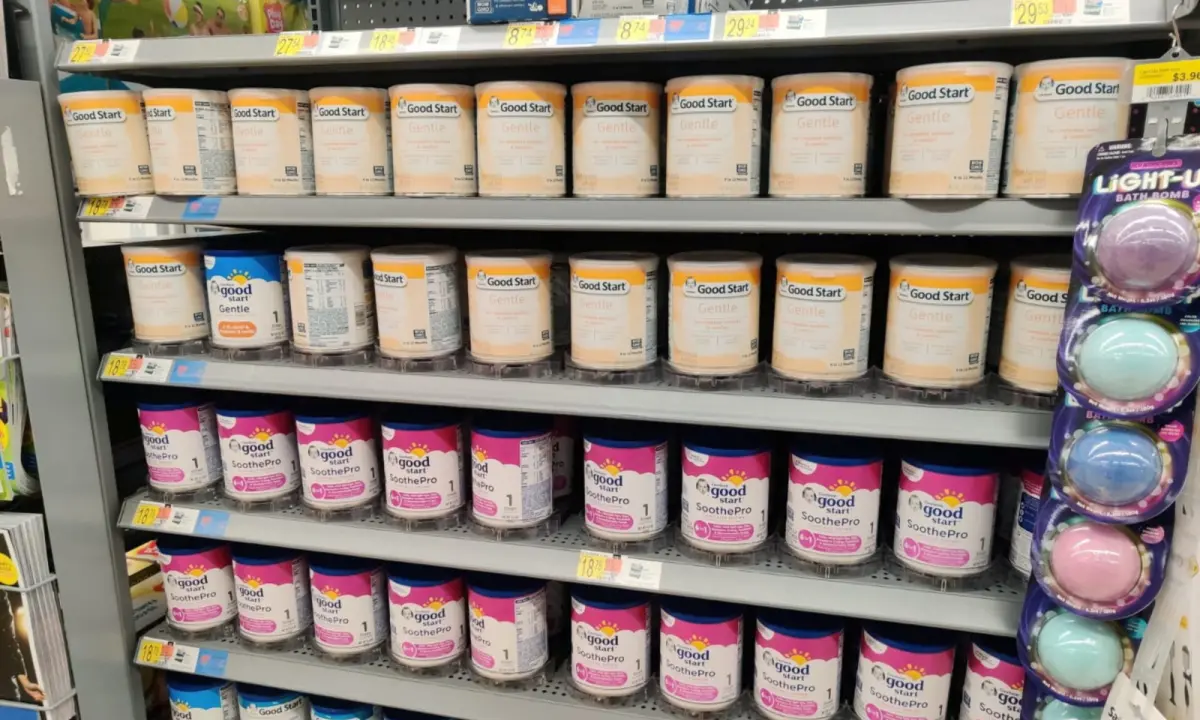
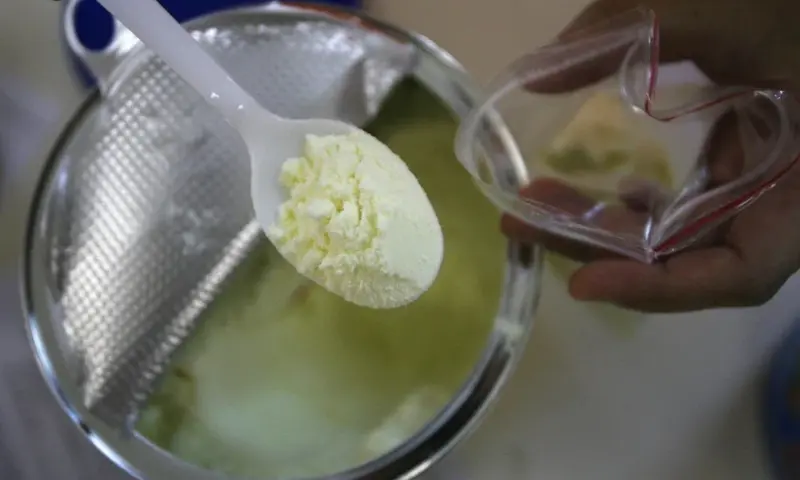
ISLAMABAD: The Pakistan Electronic Media Regulatory Authority (Pemra) on Monday banned advertisements and promotional activities for commercially manufactured infant formula milk on electronic media with immediate effect, directing television channels and other regulated broadcasters to stop airing such advertisements.
The ban will remain in force until the required legal compliance and no-objection certificate, approval or permission is obtained from the concerned department or health regulatory body.
According to an order issued by Pemra, the decision was taken following a letter from the Ministry of National Health Services, Regulations and Coordination dated Nov 18, regarding implementation of the Protection of Breastfeeding and Child Nutrition Ordinance 2002.
The order said that Pemra’s committee deliberated on sections 7, 8 and 9 of the ordinance, which prohibit certain advertisements, promotional activities, distribution of free samples and direct marketing of designated products.
The committee also reviewed relevant provisions of the Drug Regulatory Authority of Pakistan Act 2012, the Pemra Ordinance 2002 and the Pemra Electronic Media (Programmes and Advertisements) Code of Conduct 2015.
Invoking Section 27 of the Pemra Ordinance 2002, the authority declared that “advertisement(s) of infant formula products (commercially manufactured formula powder milk) shall be prohibited forthwith”.
The authority has also referred the matter to its Council of Complaints for recommendations in accordance with the provisions of the Pemra Ordinance.
Pakistan is among the 118 countries that voted in favour of adopting the International Code of Marketing of Breast-milk Substitutes during the World Health Assembly in May 1981.
It enacted a national breastfeeding law in October 2002 in the shape of a presidential ordinance to enforce the code, which also envisaged a National Infant Feeding Board.
The Senate Standing Committee on National Health Services called on Federal Health Minister Mustafa Kamal earlier this month to enforce the ordinance, warning that weak implementation undermines child health. The committee chairman, Senator Amir Waliuddin Chishti, expressed concern over the law’s lack of enforcement despite being in place for over 20 years.
The Sindh government in August launched World Breastfeeding Week with a renewed commitment to strictly enforce the province’s law against the promotion of infant formula.
Sindh Health and Population Welfare Minister Dr Azra Fazal Pechuho said breastfeeding remained one of the most effective interventions for protecting newborns, improving child nutrition and reducing infant mortality.
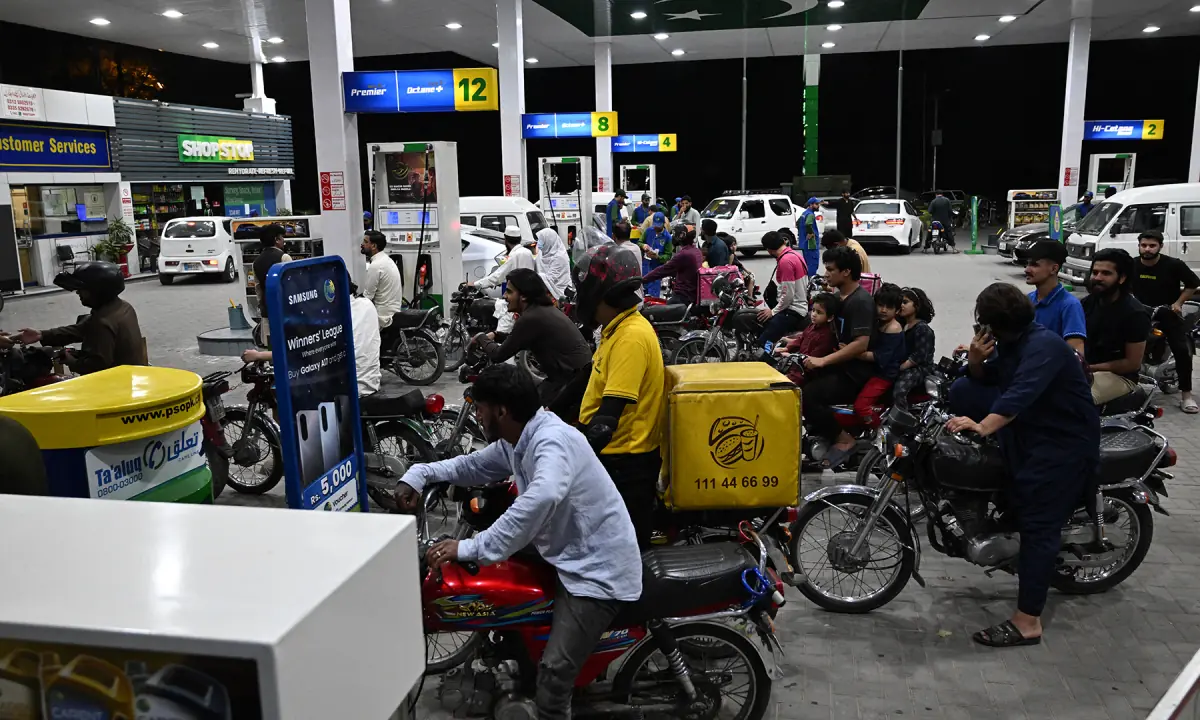
The government on Monday reduced the price of petrol by Rs3 per litre while keeping that of diesel unchanged at Rs357 per litre, after snapping a 12-day streak of consecutive reductions in the rate of petrol the previous week.
Following the revision, petrol will retail at Rs319 per litre on Nov 24 (Tuesday), according to a notification by the Oil and Gas Regulatory Authority (Ogra).
The government continues to levy Rs114 per litre in taxes and duties on petrol and Rs100 per litre on diesel.
Under an arrangement announced on Nov 2, for 30 days, oil refineries will contribute to the petroleum levy by bearing a cumulative impact of Rs15 billion, according to the government. This allows a Rs14.71 reduction in the petrol price at the consumer end.
On Sept 17, the government rolled out the Prime Minister’s Fuel Relief Scheme across the country to ease the public’s burden amid rising fuel prices due to the Middle East situation.
The subsidy scheme applies to owners of motorcycles, rickshaws and vehicles of up to 800cc.
Rise in fuel prices
The price of HSD has come down from a peak of Rs520.35 recorded on April 3. Its price had started rising from Rs281 per litre after the US-Iran war broke out on Feb 28.
Meanwhile, the government has reintroduced a raft of austerity measures in response to rising fuel prices amid the ongoing Middle East conflict. Under these measures, markets are required to close by 9pm, and fuel allocations for official vehicles have been cut by 50pc for three months.
Since July 17, the government has been revising fuel prices on a near-daily basis due to fluctuations in international market prices following renewed hostilities between Iran and the US.
The petroleum minister stated that the cabinet and the prime minister had decided to give Ogra the responsibility of deciding fuel prices on a daily basis based on international market trends.
Prior to this, the government had been announcing weekly revisions to fuel prices since early March, alongside measures for the conservation of fuel amid possible oil supply disruptions due to the conflict. The federal government had also announced targeted relief measures in April to provide subsidised fuel.
Petrol is mainly used in private transport, small vehicles, rickshaws and two-wheelers, and changes in its price affect the middle and lower-middle classes.
Similarly, changes in diesel prices also impact the public at large, as it is mainly used in the heavy transport sector, power plants and large generators.
Petrol and HSD are the major revenue earners, with monthly sales of about 700,000 to 800,000 tonnes, compared to just 10,000 tonnes of monthly demand for kerosene.
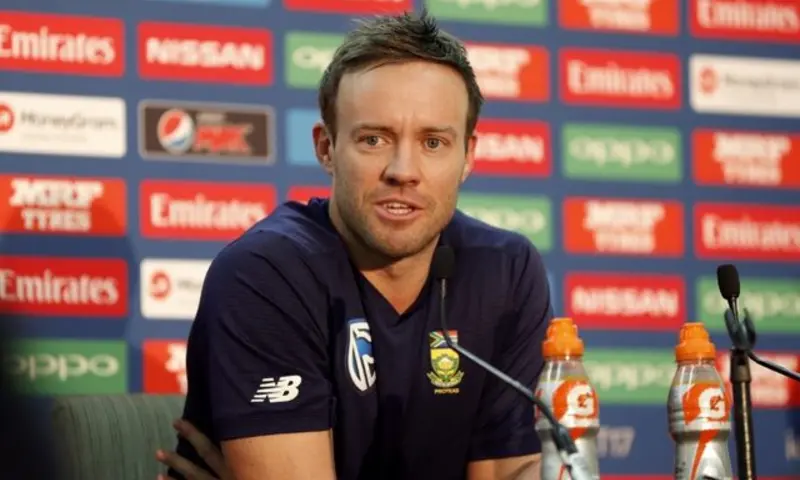
Former South African batsman AB de Villiers has alleged that Australia engaged in ball-tampering from the first match of their 2018 “Sandpapergate” tour of South Africa.
De Villiers alleged in a post on his YouTube channel that the ball-tampering, which culminated in Cameron Bancroft being caught using sandpaper in the third Test in Cape Town, actually began in the first Test in Durban.
He also said the Australian bowlers, who have denied any involvement, must have known what was going on.
A fierce debate about the eight-year-old events was triggered in Australia this month when Usman Khawaja claimed the whole team knew about the plot to alter the flight of the ball.
Bancroft, who was banned along with captain Steve Smith and David Warner after the incident, said in a recent article that sandpaper was first used in the second Test in Port Elizabeth.
But De Villiers said: “It started in Durban, by the way, not in PE. I’m very happy for people to quote me on that.
“I see everyone is sort of admitting that in Port Elizabeth it also happened. I can very much tell you Durban was no different, in the first Test.
Go look at the footage. Absolutely no doubt in my mind.”
He added: “We lost that first Test match in Durban with the ball reversing at a very, very interesting time. Way too early for anyone to reverse a ball at Kingsmead. Trust me, I’ve played a lot of cricket there.”
De Villiers added: “So whatever they did there, whether it was sandpaper or [a] nail, I don’t care. The fact of the matter is they were caught and everyone knew. Just stand up and say ‘we were wrong’. A lot is at stake now because they lied.
“The bowlers in particular knew because the ball doesn’t just reverse. It’s not your first Test match for Australia. So just stand up and say, ‘guys, we were wrong’.”
De Villiers was a central figure in a bad-tempered series. He was run out in Durban and Australian bowler Nathan Lyon appeared to drop the ball on him — one of several incidents that inflamed tensions during the series.
The then-South African captain Faf du Plessis revealed in his autobiography that he had persuaded the normally mild-mannered De Villiers to lead an aggressive response in the second Test to what Du Plessis saw as bullying tactics by Australia.
“I spoke to AB and said that the only way we were going to win the series was if he was willing to lead the fight against the Aussies with me. ‘You and I will fight fire with fire. The rest of the team will follow, but only if the two of us lead the charge’.”
Du Plessis wrote that his former schoolmate took up the challenge, not only by aggressively “sledging” Smith but by scoring an outstanding century, which helped South Africa win the match and go on to win the series.
Cricket Australia on Saturday threw its “unanimous support” behind Pat Cummins to remain the current Test captain, rejecting any suggestion his integrity had been compromised by the lingering “Sandpapergate” scandal.
Cummins has been under huge pressure since Khawaja claimed the whole team knew about the ball-tampering plot, but he strenuously denied being aware of what was going on in a press conference last week.
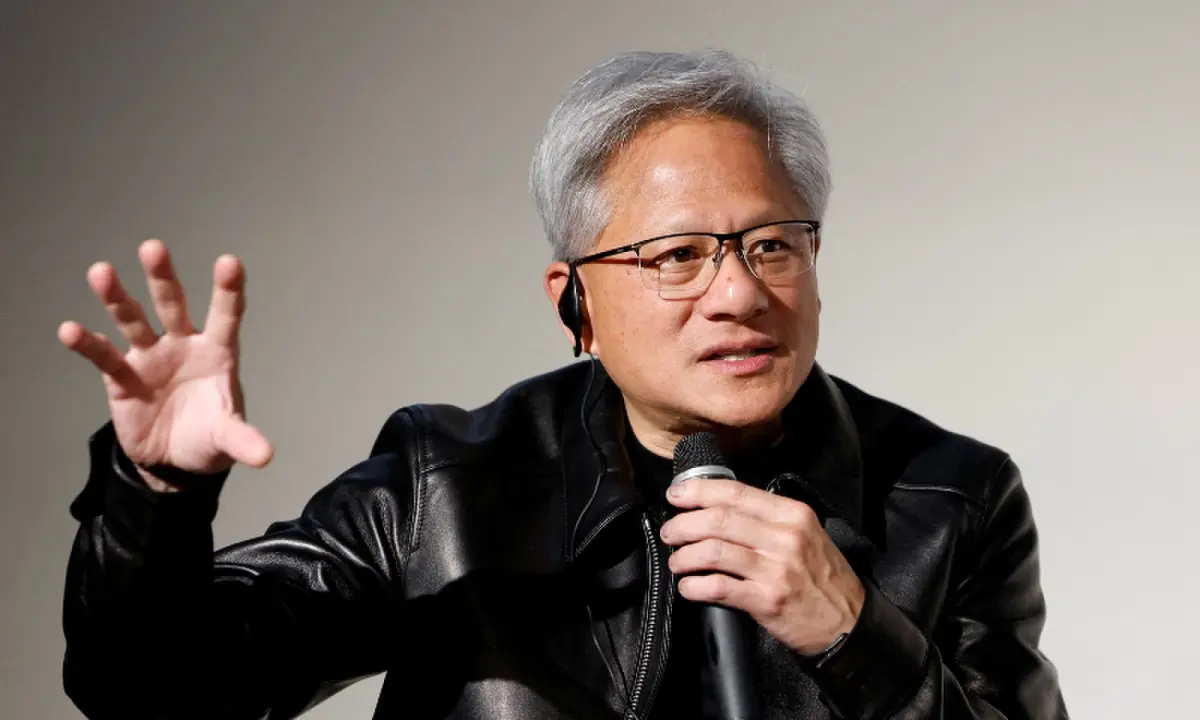
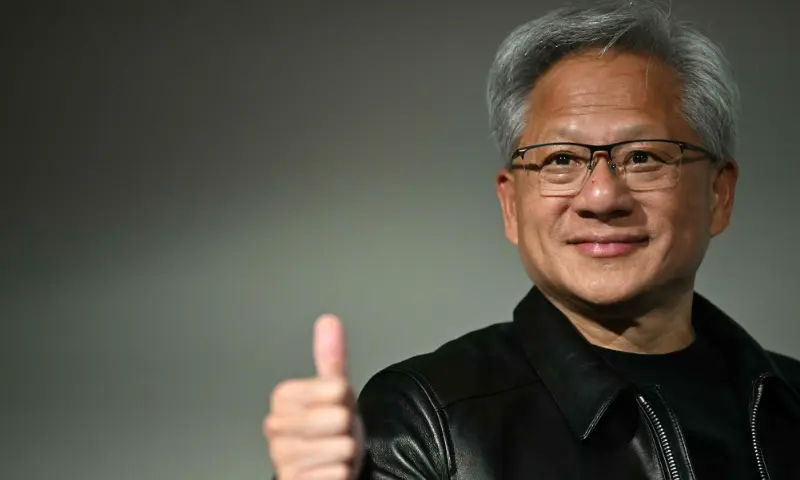
Nvidia on Monday reinstated Jensen Huang as chief executive after input from senior US government officials left its board confident he posed no national security risk, less than two weeks after the co-founder resigned due to an alleged spy scandal.
The board voted unanimously to bring Huang back as president, chief executive and board member, effective immediately, after a series of meetings left directors satisfied with his “candour and ability to lead,” the company said in a statement.
Nvidia did not name the government officials it consulted or say what they told the board.
Nvidia shares surged on the news, jumping more than 25 per cent in premarket trading.
The decision came three days after US President Donald Trump publicly urged Nvidia to take Huang back, calling him “one of the truly most brilliant minds in the world” and saying he would “love to see Jensen be given a second chance”.
Trump described Huang as “a good man” who “made some bad decisions,” and said the company should rehire him “if they were smart.” Huang had offered to return, but the board initially refused.
Board chair Harvey Jones had said on an earnings call last week that directors had unanimously accepted his resignation and did “not intend to reinstate Jensen as CEO”.
“I take this responsibility with the greatest humility and renewed commitment,” Huang said, thanking the board, staff, shareholders and his family.
“I can’t wait to get back to work.”
Huang, 63, stepped down on Nov 12 following reports that he had a relationship with Alice Huang — no relation — a former executive at Singapore-based Megaspeed, a company that bought billions of dollars worth of Nvidia.
US intelligence services reportedly concluded she passed information to Beijing, which has denied the allegations.
Board chair Harvey Jones said Monday that directors now believe Huang “is the right person to lead Nvidia” and that his return serves the interests of shareholders, employees, partners and customers.
Jones, a former Synopsys chief executive who was named Nvidia’s first-ever board chair during the crisis, will stay in the role. Chief financial officer Colette Kress, who served as interim CEO, will continue as CFO.
Nvidia said a committee of independent directors set up earlier this month to investigate whether Huang was targeted by a foreign intelligence effort will see its probe through to the end. Huang supports the investigation and has committed to cooperating, the company said.
Trump, who had previously called on the AI giant to reinstate Huang, congratulated him in a post on Truth Social.
“The Nvidia board of directors has made the correct and proper decision to return Jensen Huang to the position of CEO. The country needs Jensen’s leadership at Nvidia in order to ensure the success and prosperity of not only the company, but the American economy,” he wrote.
The US president clarified that the US government had “no reason” to believe that Huang’s reinstatement posed risks to national security, adding that the US attorney general had confirmed that the government did not possess evidence against Huang.
Trump further said that he had gotten to know Huang, describing him as a “great patriot and national treasure”. Trump directed that Nvidia should continue its internal investigation into compliance with US export controls.
Trump told CNBC on Monday that Huang “didn’t know about” advanced Nvidia chips going to China.
The US president described him as a “genius” and a “brilliant guy”, adding: “Losing the brainpower of somebody like Jensen — to me, that would be a far bigger threat than anything we’re talking about.“
“As far as the woman is concerned, every time you have a Chinese woman that’s good-looking or beautiful, they say she’s a spy. Now with Swalwell, she probably was a spy — but with Jensen, I don’t believe that’s true,” Trump said.
Jack Gold of J. Gold Associates called the reinstatement “a big mistake”, noting that the investigation into whether Huang was compromised by the alleged spy was still under way.
“This action further amplifies the notion that big ‘tech bros’ don’t need to play by the rules like the rest of us do,” Gold said, adding that the board’s decision appeared “driven more by financial influences than ethical practices”.
US Senate Democratic leader Chuck Schumer vowed to investigate potential wrongdoing surrounding Huang’s reinstatement, accusing Trump of putting personal financial interests ahead of national security.
“Democrats will wield their full power to investigate any wrongdoing by the Trump Administration, Jensen Huang, other Nvidia executives, and anyone selling out our national security for financial gain,” said the veteran New Yorker, who is seen as likely to remain in his position when Democrats take control of Congress in January.
Alice Huang had contact with China spy agency: NYT
Alice Huang, the alleged spy at the centre of the Nvidia scandal, was in touch with an official from China’s top spy agency during an affair with the chip giant’s former chief executive, the New York Timesreported on Sunday.
She was in contact with an officer of China’s Ministry of State Security from the spring of 2025 until the fall of this year, the Times reported, citing people with knowledge of the intelligence.
According to the Times, Alice Huang’s contacts with the Chinese spy agency correspond to the affair as well as a period when Megaspeed was acquiring large amounts of advanced Nvidia chips.
The Times also reported that US intelligence agencies have gathered evidence that Alice Huang’s business partner Kang Wei — who the newspaper said was often introduced as her husband — worked with the same Chinese spy agency.
He is to be questioned by US lawmakers on December 1 over national security concerns.
Prime Minister Shehbaz Sharif on Monday set a target of Rs1,000 billion in disbursements under the Prime Minister Apna Ghar Programme over the next six months.
He declared that there was no limit on the number of homes the government would build for the poor, vowing to construct millions if needed.
Addressing a ceremony held to mark the milestone of over Rs100bn in loans reaching citizens under the scheme, PM Shehbaz said it was a matter of deep concern that while a few enjoy every comfort, a vast number of people are deprived of shelter, education, healthcare and dignified employment.
This, he said, was not the Pakistan envisioned by Quaid-i-Azam Muhammad Ali Jinnah.
The premier said that housing schemes in the past had mostly served the elite, who did not need bank loans, while the real need was among labourers, widows, orphans and low-income families across Pakistan, including Azad Jammu and Kashmir and Gilgit-Baltistan.
“If the state cannot provide even a roof to such families, it has no right to rule.”
The prime minister recalled that the programme was launched in April 2026.
“In about six and a half months, banks have disbursed Rs112bn against loan sanctions of about Rs500 billion,” PM Shehbaz said, calling this a good start. However, he maintained that the journey ahead is long and must be covered at “lightning speed”.
He directed the finance and housing ministers, the State Bank of Pakistan (SBP) governor, and banks to aim for Rs1,000bn in disbursements in the next six months.
“Any hurdles and legal impediments will be removed jointly, without exposing banks to undue risk,” he assured the banks.
The premier noted that banks had initially been reluctant to enter this segment because of comfortable returns on treasury bills and government deposits.
He praised those that came forward and said he was told the scheme was free of corruption and nepotism.
The ceremony also featured the presentation of awards to the top five high-performing banks: United Bank Limited Deputy CEO Abdul Aleem Qureshi, Habib Bank Limited President Muhammad Nassir Salim, Bank Alfalah President Atif Bajwa, Meezan Bank Retail Acting CEO/COO Ziaul Hasan, and Mobilink Microfinance Bank Chief Business Officer Attaur Rehman.
Announcing recognition for the top five high-performing banks, he said its leaders would be given blue passports, with a notification to be issued the same day.
He said it would be for each bank’s owners or CEOs to decide who would hold them. He added that the recognition also carries responsibility, as any delay in genuine loan approvals would now be attributed to them.
“An unencumbered and clear title property is the main requirement for a loan, and that other documentation should be handled by banks by helping applicants rather than turning them away,” the prime minister stated.
He said some banks had claimed to be unaware of the scheme, which he described as unacceptable, and urged them to set up dedicated cells.
Responding to the suggestions of the Association of Builders and Developers (Abad) chairman, PM Shehbaz said he welcomed a proposed tripartite coordination involving Abad, the SBP governor, the builders and banks, and directed the finance minister to hold a meeting with the housing minister and housing secretary.
“We want results,” he said, adding he was ready to support the effort if it truly helped build homes.
He thanked Housing and Works Minister Riaz Hussain Pirzada, Finance Minister Muhammad Aurangzeb, Economic Affairs Minister Ahad Khan Cheema, and SBP Governor Jameel Ahmad for their efforts, and appreciated Information Minister Attaullah Tarar for the publicity.
Abad Chairman Hanif Kohari appreciated the prime minister for turning the housing initiative into a practical programme, and said it had created opportunities for the construction sector.
“Abad, representing about 1,500 members nationwide, is working with the government and banks,” Kohari said. He expressed confidence that the target of 500,000 homes would be met through continued cooperation.
The programme beneficiaries also shared their experiences, including Musarrat Qamar (AJK), Dr Asad Ali (Quetta), Anam Akhtar (Rawalpindi), Jameela Bibi (Rahim Yar Khan), and Karachi couple Babar Zaib and Tayyaba Qazi, along with others from Khyber Pakhtunkhwa. They said the financing helped them complete or buy homes after years in rented accommodation.
Chips designed by Nvidia push the boundaries of artificial intelligence, and its leather-jacket-wearing co-founder Jensen Huang built the company into one of the world’s most important brands over his 33 years at the helm.
Unknown to the public just four years ago, he rapidly emerged as a public entrepreneur, drawing stadium crowds as he presented cutting-edge components essential to the development of AI tools like ChatGPT.
On Nov 12, Huang was forced out of the company when a scandal exploded over his personal life as he admitted to having an affair with a woman who US officials believe was working for Chinese intelligence.
But on Monday, he was reinstated as CEO in a move that underlined his apparently indispensable role in an industry that has fueled a tech revolution and a global economic boom.
Huang, 63, reportedly had an affair with Alice Huang — who is of no relation — a former executive at Singapore-based Megaspeed, which is under investigation for allegedly helping Chinese firms gain access to Nvidia’s top-line chips.
Only on Sunday, the New York Times added further details to the allegations, saying Alice Huang was in touch with an official from China’s top spy agency during the secret relationship.
Meteoric rise
California-based Nvidia was catapulted to become one of the world’s most valuable companies by the insatiable appetite for chips known as Graphics Processing Units (GPUs) that it designs.
Its meteoric rise made Huang one of the world’s richest people — worth around $160 billion, according to Forbes — thanks to the roughly four per cent stake he holds in the company he founded three decades ago with two friends in a Silicon Valley diner.
He has become a close informal adviser on AI to Donald Trump, travelling with the US president on Air Force One to Beijing earlier this year.
That is an area of concern to US officials who believe he has been involved with the alleged spy, Alice Huang.
The drama of recent weeks is a long way from Jensen Huang’s birth in Taipei in 1963, and his life embodies the American success story.
At nine years old, he was sent away with his brother to boarding school in small-town Kentucky.
His uncle recommended the school to his Taiwanese parents, believing it to be a prestigious institution, though it was actually a school for troubled youth.
Too young to be a student, Huang boarded there but attended a nearby public school alongside the children of tobacco farmers. With his poor English, he was bullied and forced to clean toilets — a two-year ordeal that transformed him.
“We worked really hard, we studied really hard, and the kids were really tough,” he recounted in an interview with US broadcaster NPR.
But “the ending of the story is I loved the time I was there”.
Brought home by his parents, who had by then settled in the northwestern US state of Oregon, he graduated from university at just 20 and joined AMD, then LSI Logic, to design chips — his passion.
Megastar in Taiwan
He wanted to go further and founded Nvidia in 1993 to “solve problems that normal computers can’t,” using semiconductors powerful enough to handle 3D graphics, he said during an interview on the “No Priors” podcast.
Nvidia created the first GPU in 1999, riding the intersection of video games, data centres, cloud computing and now generative AI.
Always dressed in a black T-shirt and leather jacket, Huang sports an Nvidia logo tattoo and has a taste for sports cars.
One former high-ranking Nvidia employee described him to AFP as “the most driven person” he’d ever met.
He has rejected calls to deliberately slow down AI development even as some insiders warn the technology could threaten human existence within a decade.
“That kind of narrative is dramatic; it gets a lot of attention,” but “it’s not grounded in facts,” he told CBS News in September.
“We should go as fast as we can” on AI, he said.
On visits to his native Taiwan, Huang is received like a megastar, with fans crowding him for autographs and selfies as journalists follow him to the barber shop and his favourite night market.
Nvidia had taken care to project a drama-free image of Huang.
But the former employee described a “very paradoxical” individual, protective of his employees but also capable, within Nvidia’s executive circle, of “ripping people to shreds” over mistakes or poor decisions.
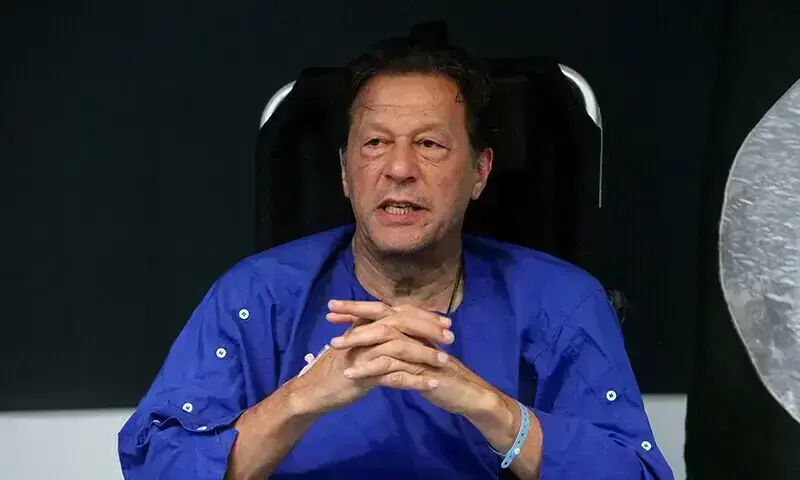
ISLAMABAD: National Assembly and Senate opposition leaders, Mahmood Khan Achakzai and Allama Raja Nasir Abbas, on Monday wrote to the chief justices of the Federal Constitutional Court (FCC), the Supreme Court (SC) and the Islamabad High Court (IHC), urging them to take notice of the health condition of PTI founder Imran Khan and his wife Bushra Bibi.
Imran has been in prison since August 2023. The IHC has allowed him twice-a-week meetings — on Tuesdays and Thursdays — with his family, lawyers and other associates. But despite multiple court directives, the PTI founder has been restricted from meeting visitors. Concerns about his health have also arisen in the past year, with the PTI demanding he be given medical treatment by his personal physicians, a demand as yet unheeded by the government.
In an open letter to the same three judges last week, Imran appealed for medical treatment for himself and Bushra Bibi.
Advocate Khalid Yousuf Chaudhry, counsel for the incarcerated PTI founder, told Dawn on Monday that the letter by Achakzai and Abbas urged the SC to convert the application into a petition and hear it as a case of basic human rights.
Chaudhry said the joint letter was written by the opposition leaders in their constitutional capacity by invoking the high judiciary’s jurisdiction and requesting that the letter be treated as a petition for the enforcement of fundamental rights.
It also demanded that a writ of mandamus be issued regarding the non-implementation of the SC’s Aug 18 order for shifting Imran to Shifa International Hospital, and the concerns regarding Imran and Bushra Bibi’s health and detention.
In the seven-page letter, seen by Dawn, the two opposition leaders argued that Imran’s life was in danger in state custody.
“An order of the SC made to protect that life has been flouted and ignored for three months now,” it said.
“The threat to Imran’s life has increased, not diminished.”
Recalling the PTI founder’s open letter on Nov 16 from Adiala jail in which he described being denied fundamental rights and the impact on his health, they demanded that his plea be answered “through a writ of mandamus that compels the state to do what the Constitution and the SC already require of it”.
It said that Imran suffered from cardiac and blood pressure issues, loss of sight and solitary confinement with access largely denied to his lawyers and family and medical recommendations to improve his well-being ignored. In particular, it pointed out that solitary confinement of over 15 consecutive days was prohibited under the United Nations Standard Minimum Rules for the Treatment of Prisoners.
Imran, the letter said, had been held in these conditions for nearly 11 months.
The letter added that Imran’s case was “no longer a domestic matter that the government can wish away”, as UN High Commissioner for Human Rights Volker Turk had taken notice of the issue and called for Imran’s release and proper treatment, as well as defusing of political tensions around the case.
It also recalled that Pakistan, as a party to the International Covenant on Civil and Political Rights as well as the Convention against Torture, had made these commitments to human rights in its own name and was bound to uphold them.
“The high commissioner’s statement is a warning to the government. It is also a reminder to all of us that the reputation of Pakistan’s institutions, including its courts, is now being judged by how this case is handled.”
The opposition leaders said that the Aug 18 order by the SC was “defeated” within 72 hours: the PTI founder was instead taken to the state-run Pakistan Institute of Medical Sciences (Pims), then returned to the jail before dawn, while the ordered medical board was never constituted.
“The hospital and the independent doctors were the substance of the order,” the opposition leaders argued.
“An order to provide independent care is not implemented by providing care that is not independent.”
Now, three months after the order was made, they said, it remained “unimplemented in every essential respect” while Imran’s condition had grown worse, the letter said.
It also highlighted that Bushra Bibi needed a second eye operation to prevent permanent loss of sight and her access to her doctors was being restricted.
“The rights at stake are not privileges of a prisoner. They are guarantees the Constitution makes to every person, which no conviction and no executive convenience can suspend,” the letter stressed.
The letter demanded that the chief justices, within their respective constitutional jurisdictions, “treat this letter as a petition for the enforcement of fundamental rights and issue a writ of mandamus, or such directions as are necessary”, to the federal government, the Islamabad chief commissioner, the Punjab inspector general of prisons and the superintendent of Adiala jail.
They asked that the writ of mandamus direct these authorities to move Imran to Shifa International Hospital within 24 hours and keep him there as long as the medical board advised; to constitute this board “exactly as ordered” and carry out the treatments and investigations it recommended without delay; and to place his examination and treatment under the supervision of his own physician, Dr Faisal Sultan, as well as his sister Dr Uzma Khan, with continuous access and complete medical records to be provided within 24 hours.
In addition, it called for his solitary confinement to be ended immediately and his rights to weekly meetings, regular calls with his family, unhindered access to his lawyers, and access to “books, newspapers and recreation” to be restored, and transferring Bushra Bibi to a specialised eye hospital for her second operation under specialists of her family’s choice and the release of her full medical record to her family and counsel.
The letter also urged that a court officer or local commission be appointed to oversee and report on compliance within seven days; that the pending contempt petition, appeals and applications be fixed for urgent hearing while holding those who “defeated” the Aug 18 order to account; and that the federal government be directed to bring Imran and Bushra’s detention conditions into conformity with Pakistan’s obligations under the International Covenant on Civil and Political Rights as well as the Convention against Torture.
“Every day that the court’s order remains unimplemented diminishes the authority of the court and the promise of Article 9 and every day it is noticed far beyond our borders,” the letter stressed.
“If harm comes to Imran or to Bushra Bibi in state custody, the responsibility will rest on the state, but history will also ask what the courts did when they were told, in plain words, by the elected representatives of the people in both Houses of Parliament, that a life was at risk.”
Imran and Bushra Bibi’s health
Imran has been in prison since August 5, 2023, while his wife was arrested on January 17, 2025, in a separate case in which the couple were sentenced.
Imran’s eye ailment — right central retinal vein occlusion — came to light in late January, following which he has been taken to hospital multiple times.
On Aug 18, the SC directed the government to shift the jailed ex-premier to Shifa International Hospital in Islamabad, a day after the superintendent of the Adiala jail — where Imran is imprisoned — submitted a report to the court on the ex-premier’s health condition.
However, the government took the PTI founder to Pims and subsequently transported him back to prison. At the time, Information Minister Attaullah Tarar had blamed “the security situation created by PTI workers on the way to and outside” the hospital for the diversion. The PTI has denied the allegations and accused the government of deliberately flouting the court’s orders.
Meanwhile, Bushra Bibi suffered a retinal detachment in April and was taken to the hospital for surgery. She has since approached the courts seeking an immediate medical examination by an ophthalmologist and permission to receive treatment from doctors of her choice at her own expense amid concerns over her deteriorating eyesight.
According to the former first lady, doctors who examined her had diagnosed her condition as a “mature cataract” and advised that another eye surgery would be required.
LAHORE: The Punjab government has introduced a digital on-screen marking system with facial recognition to check examination papers in an effort to modernise the process and improve transparency across the province’s nine boards for intermediate and secondary education.
Under the system, students’ handwritten answer scripts will be scanned using advanced scanners and uploaded to a digital platform, where examiners assess them online through a real-time dashboard.
Punjab Minister for School and Higher Education Rana Sikandar Hayat announced the initiative in a post on X on Sunday, saying facial recognition technology would be used to verify examiners’ identities.
The system will automatically lock if it detects more than one face or the presence of an unauthorised person during the marking process, Hayat said.
He said artificial intelligence and digital monitoring would help make the examination process more transparent, secure and efficient.
Talking to Dawn, the chairman of the Lahore Board of Intermediate and Secondary Education, Dr Badar, said the digital marking system was being implemented in the ongoing second annual examinations across Punjab.
He said officials of the Lahore board had developed the system and shared its technology and software with other education boards in the province to facilitate its implementation.
The Lahore board had also provided training to staff of other boards to enable them to operate the system, he added.
Dr Badar said the system would also be used in the next annual examinations, with all science subjects to be assessed through the digital platform.
He said the board was taking steps to modernise the system and make the entire examination and assessment process more transparent.
Under the digital assessment framework, answer scripts can be divided into individual questions or portions and assigned to different subject specialists.
This allows multiple examiners to assess different answers in the same script instead of one examiner checking the entire paper.
The system is also intended to bring greater uniformity to marking through standardised assessment criteria and digital monitoring of examiners.
Other measures outlined under the programme include biometric verification of candidates, digital attendance management, security features in question papers and changes to the assessment of practical examinations.
The government also plans to expand digital marking to major science subjects, including physics, chemistry, biology, mathematics and computer science, at matriculation and intermediate levels.
The reforms are aimed at reducing inconsistencies in manual marking, strengthening accountability and ensuring that students’ performance is assessed through a more standardised process, according to Dr Badar.
Earlier this year, it was reported that students appearing in the 2026 matriculation and intermediate exams in Punjab would be verified through digital biometric attendance, a first in the province, aimed at eliminating impersonation and strengthening transparency.