Category: dawn news

  • Huang’s Nvidia return sparks relief for battered AI trade, but questions remain

    Huang’s Nvidia return sparks relief for battered AI trade, but questions remain

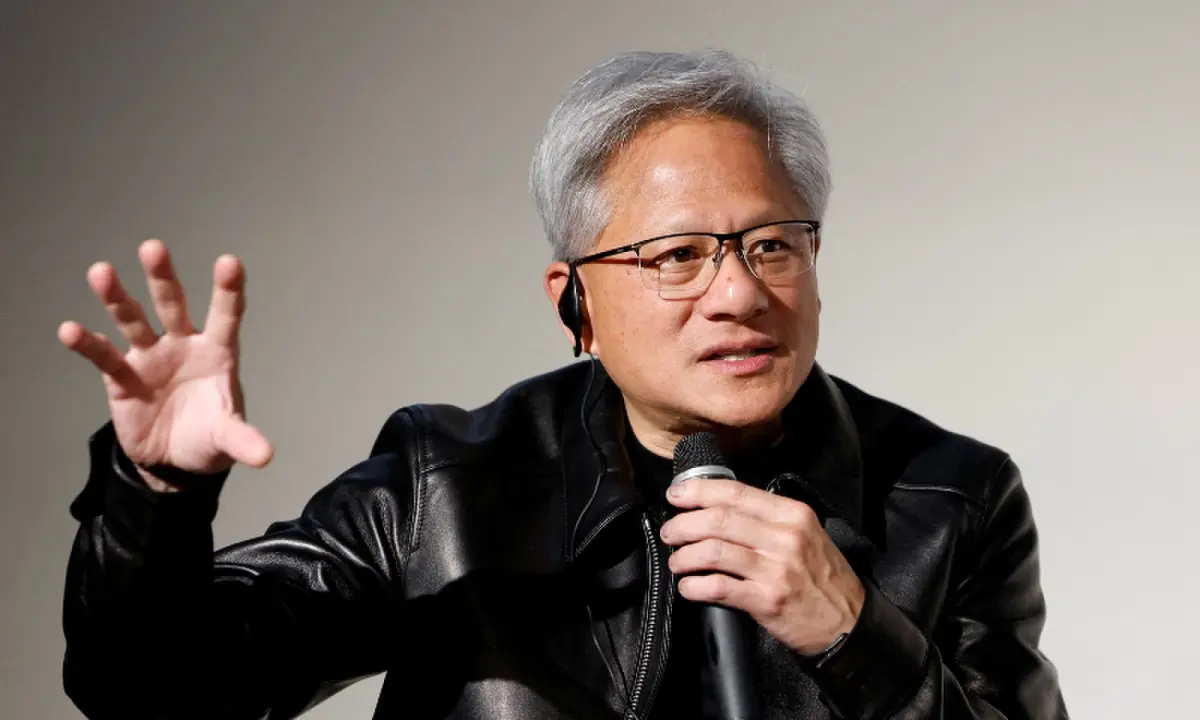
    The stunning return of Nvidia CEO Jensen Huang brought a sigh of relief from investors in the battered AI trade, one worth trillions of dollars, as some took it as a cue that the AI boom and the man in the middle of it were too big to fail.

    Huang’s reinstatement atop the semiconductor giant halted a slide in technology shares that had sent the benchmark S&P 500 into a correction, though there was also some caution that his second coming may raise new risks for the company and industry.

    The abrupt reversal by Nvidia’s board came after Huang’s departure earlier this month, following revelations of extramarital affairs, rattled investors. Concerns flared not only about Nvidia but also about the health of the AI ecosystem, which the chip company has nurtured as a lender and investor for its biggest customers.

    “You’ve basically had this perfect storm of uncertainty that has created a crisis of confidence,” said King Lip, chief strategist at BakerAvenue Wealth Management in San Francisco.

    “This Nvidia fallout was one of those pieces of… uncertainty. So this removes a pretty significant one with Jensen coming back.”

    Shares of Nvidia soared more than 31 per cent on Monday, adding more than $950 billion in market value and cutting its year-to-date losses by two-thirds in a single session.

    Companies across the AI industry rallied sharply, with the Nasdaq 100 jumping nearly 7pc. In Asia, production partners of Nvidia led large gains, with Taiwan’s TSMC and Foxconn jumping by their daily limit of 10pc on Tuesday.

    “The initial reaction… is a big collective sigh of relief,” said Thomas Urano, co-chief investment officer at Sage Advisory in Austin, Texas.

    “Maybe Jensen… puts confidence back in the AI trade.”

    Many investors had worried about the extent to which Nvidia’s massive value was tied up in Huang, who was credited with foreseeing technology shifts that put Nvidia’s advanced chips at the heart of the AI boom and drove soaring profits.

    “To try to replace Jensen was something that nobody could feel comfortable that they are going to find somebody to automatically fill his shoes,” said Tom Plumb, portfolio manager of the Plumb Balanced Fund in Madison, Wisconsin.

    “But to have the visionary who was able to attract some of the most talented people in the industry… its certainly very, very positive for the company.”

    Questions remain

    Nvidia has been tied to an array of companies involved in the sprawling AI buildout. It bought shares in data centre operator CoreWeave, South Korean internet and cloud service provider Naver and more besides.

    Those stocks rose on news of Huang’s return, but not enough to recover losses logged since his resignation, suggesting investors are still nervous about the outlook for Nvidia’s financing of customers and the broader AI trade.

    Huang’s return may also raise regulatory issues and pose questions about the board’s independence.

    President Donald Trump, who said he secured the deal to bring back Huang, told CNBC that the stock market reaction to Huang’s resignation “probably” factored into his decision to push for the reinstatement, although his view of the long-term benefit of having Huang at the helm of the company was the bigger weight.

    Separately, Trump said the US had no reason to believe Huang’s return posed a security risk. Huang will likely face questions from Congress next week about his relationship with an alleged Chinese spy.

    The California attorney general’s office said that Huang’s reinstatement did not diminish the need for a probe into what Nvidia told investors about its China ties. Nvidia’s head office is in California.

    “The CEO question has been resolved, but the governance and geopolitical questions have not,” said Yang Wang, principal analyst at Counterpoint Research in London.

    Chinese AI-related shares made much smaller gains than other markets in Asia on Tuesday, with Hong Kong’s Artificial Intelligence index flat and traders pointing to risks that authorities intensify scrutiny of Nvidia’s exposure to China.

    And broader questions about AI funding, profitability, regulation and public resistance to data centre developments that had dogged the market before Nvidia’s leadership crisis were likely to persist.

    “We very well may see more selling pressure after this relief rally runs its course,” said James St. Aubin, chief investment officer at Ocean Park Asset Management in Santa Monica, California.

    “Jensen’s return doesn’t answer the big questions investors were grappling with.

    Source: dawn
  • Collision between bus, truck kills 11 in UAE

    Collision between bus, truck kills 11 in UAE

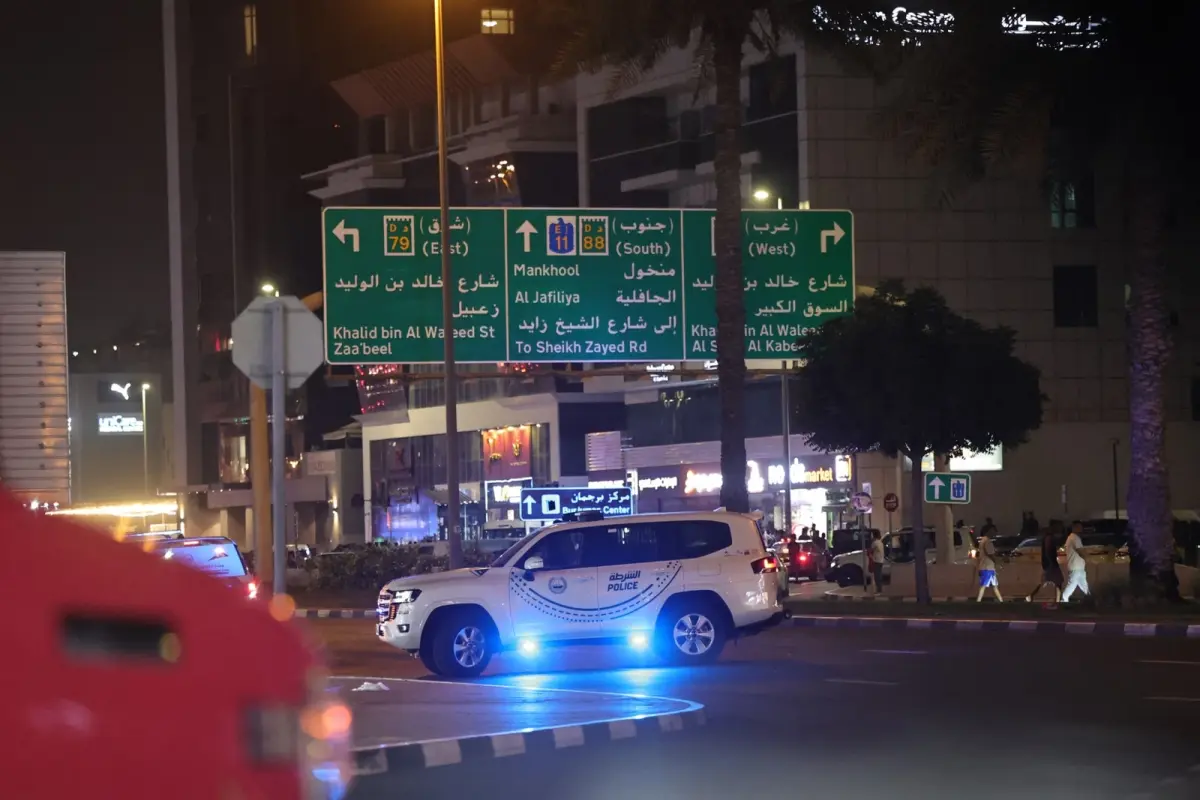
    Eleven people were killed when a bus and a truck collided in Ras Al Khaimah in the United Arab Emirates (UAE), authorities in the Gulf nation said on Tuesday.

    “Investigations into the circumstances and causes of the accident are ongoing,” the Ministry of Interior stated on its X account.

    According to the ministry, emergency teams were dispatched to the accident site immediately after receiving the report. They launched rescue and emergency response operations in coordination with ambulance services, Civil Defence and other relevant authorities.

    The response also included securing the scene and managing traffic, it added.

    The ministry said the findings of the investigation would be announced once it had been completed.

    It also expressed condolences to the families of the deceased, praying for mercy and forgiveness for the victims and patience and strength for their loved ones.

    The ministry urged the public to exercise caution, rely on official sources for information and refrain from circulating rumours or unverified reports about the accident.

    It is the second major road accident to occur in the UAE this month.

    On November 12, a multi-vehicle pile-up in Fujairah killed 14 people and left 30 others injured after a truck driver lost control of his vehicle and struck several other vehicles.

    Source: dawn

  • The missing link

    The missing link

    RULERS who don’t bring power closer to people via strong local bodies want us to believe that they will now bring power closer to people via more provinces. So, the false idea of making many provinces as a cure for our many ills is back with a bang.

    Months after it first emerged, the bang is still more noise than a clarion call of reason. I have seen three key reports against it, but none in its favour.

    Support — strong on rhetoric but weak on evidence — comes mainly from ministers and friendly analysts. One minister cites Afghanistan’s 34 units. That’s odd as Afghanistan helps us avoid the blushes of being last in South Asia on key governance metrics. It’s a unitary state whose units lack legislative powers and elected bodies. We have 150-plus stronger units (districts) which have elected bodies, at least as per the law.

    Some cite unitary France’s 18 units. They too lack legislative powers. Counting them is easier than proving they cause its progress. It has democracy and civilian sway, unlike us. These key parts of the causal chain are not cited in our French politics lessons.

    Rulers also ignore the proven merits of local bodies. These offer no instant cure. But with higher democracy and civilian sway present, they bring power closer to people globally. And when the two aren’t in place, nothing usually does that. But they remain our missing link between power and the powerless.

    Most of us don’t have elected local bodies, they being absent in Gilgit-Baltistan, Quetta, Punjab and Islamabad and now KP due to emergency rule. Even when and where they exist, they are too weak to fix problems.

    Provinces often delay their elections for long but dissolve them early. Elections are often held on non-party basis; local officials often lack a public mandate, as in Punjab, and seats for weak groups are often hogged by elites. Citizens have little say in what they do, little recourse when they fail and little voice in how they spend money. Uneven council sizes and missing tiers weaken them further. Local tasks are split among local bodies and many higher-level agencies. Local heads often lack effective control as vague supervisory powers allow interference from above. Weak coordination and capacity gaps further hamper them. Such split and bureaucratic control is high in Islamabad, Sindh and Punjab.

    The setups closest to the people have the least powers.

    Provinces first make voters wait for local bodies. They later make local bodies wait for cash. They only spend about five per cent of our total state funds, much lower than in many similar states. They depend heavily on provincial funds and can’t legally and practically collect much cash locally. For example, over 95pc of their funds come from such transfers in Sindh. It is often hard to see how provinces divide money across districts, but easy to see that favoured districts get more cash per head.

    So, the setups closest to the people have the least powers. Would rulers who have kept local bodies so weak for so long empower new provinces? Their new capitals may be closer, but still out of reach of the masses.

    The aim behind dividing provinces may be to make them powerless like local bodies and actually move power away from the people. What provinces have done to local bodies, the centre may now do to the provinces. So, the masses will have one more government level between them and real power.

    Deep divisions within a setup held together tightly by its strong fear of PTI and its weak mandate make the division of provinces dicey. Bilawal Bhutto-Zardari’s diatribes exposing its electoral misdeeds and warning against forcing matters via a referendum emitted shockwaves. Our new troi­­ka — the president, prime minister and interior minister — representing all key parts of the hybrid regime, soon agreed on talks. Perhaps those fond of force have shelved it, for now.

    The PPP was largely mum when judges, the opposition and activists faced abuses. It has reacted strongly, now that it’s at the receiving end of the stick. Even though it opposes the idea for the wrong reason — the fear of losing the golden goose of Karachi — the right reasons do exist.

    PML-N supports this latest demand of powerful quarters via ministers, but the Sharifs stay mum. Perhaps it wants strong promises of extended patronage before giving top-level support. But it, too, may be forced to speak up when it eventually faces problems.

    While our hybrid rulers continue to play self-serving games, a nuclear-armed state of nearly 250 million inches closer to multifaceted crises given their misrule. Uninterrupted democracy and civilian sway are the only way to avoid doom.

    The writer has a PhD degree in political economy from the University of California, Berkeley, and 25 years of grassroots to senior-level experience across 50 countries.

    murtazaniaz@yahoo.com

    X: @NiazMurtaza2

    Published in Dawn, November 24th, 2026

    Source: dawn

  • Delaying the inevitable

    Delaying the inevitable

    THE PPP is worried, very worried. Since the talk of the new provinces began, it has been the only party (in government) to take the ‘rumours’ seriously, in public as well as otherwise; the Noonies would rather ignore the matter. It struck back with vehement rejections and heated speeches in Sindh.

    And then last week, Bilawal Bhutto-Zardari took the proverbial bull by the horns. At a speech at the Karachi Press Club, not only did he push back against the idea of new provinces, he also created shock and awe by what he said on other issues. He questioned the award of the reserved seats of PTI to other parties; he expressed concern over the state of the judiciary and even alleged the 27th Amendment had been passed by force. He then also called Imran Khan a political prisoner and said both the PTI head and Maulana Fazlur Rehman needed to be wooed rather than pushed away.

    The speech did not go down well, it seems. Within minutes, Atta Tarar, the information minister of the federal government that is yet to own the new provinces officially was on television, to criticise BBZ. Others followed suit, though neither the prime minister nor anyone from the Sharif family spoke up. And no one was willing to spare BBZ.

    The next day came a number of interviews in which it seemed at times that the PPP chairman was walking back on his earlier harshness. For instance, when asked to explain his comments on the 27th Amendment, BBZ argued that he meant it was passed by brute majority of the government. Then he called Mohsin Naqvi ‘bhai’ after having described him as the minister of everything a day before.

    Some feel the PPP, since the meeting with the president, has accepted the inevitable.

    But the explanations didn’t prove enough; soon came the news that the prime minister and interior minister met Asif Ali Zardari, the president, and the press release after their interaction said that any future amendments would be passed with consensus as had happened in the past. Released by the presidency, this press release provided a stamp of legitimacy to the 26th and 27th Amendments, and a contradiction of what BBZ had said.

    This is not the first time it has appeared to outsiders that BBZ has been put in his place by his father, but the frequency with which this happens is now more a case of the father and son playing good cop/bad cop as have the Sharif brothers for decades. That it ends up making the son seem mercurial doesn’t seem to bother the party.

    Since then, the war of words between the government and the PPP has dialled down a wee bit on television, but on social media, it continues unabated. And the culprits are not just the anonymous accounts. A senior cabinet member such as Khawaja Asif has posted provocatively on X, leading to angry reactions from senior PPP leaders.

    However, the ceasefire hasn’t put an end to the larger ‘debate’ on new provinces. And neither has it really clarified the position of the parties in power on the matter.

    For instance, some feel the PPP, since the meeting with the president, has now, like the N, accepted the inevitable. After all, no one thinks the N in Lahore is too happy with the idea but it realises the futility of pushing back. This is lent credence by the statements of Rana Sanaullah, who continues to insist the proposal has not been discussed by the government. But it is perhaps too simple to assume an easy capitulation despite what the country continues to be ‘told’.

    Journalists with sources and contacts in the highest echelons of power continue to inform us that new provinces are as real as climate change. With their access to the hallowed halls of power, they are privy to some information on how the provinces may go forward, despite the resistance from the PPP.

    The first step is a referendum. That Atta Tarar defended this idea in his video talk that followed BBZ’s press conference means there is some truth to the matter; since then Rana Sana has also agreed that a referendum might be the way forward.

    In addition, a story in The News has also explained the referendum votes will not be counted nationally but provincially. The Constitution also allows parliament to lay down the procedure “for the holding of a referendum and the compiling and the consolidation of the result of a referendum” in Article 48.

    Obviously, some Doubting Thomases continue to point out that a referendum cannot override the need for the provincial assemblies to pass a resolution in favour of new provinces with a two-thirds majority. And while it continues to be a hurdle, some experts, such as Malik Ahmed Khan, the Punjab Assembly speaker, are of the view that once the people have spoken, it should be given more weight than the voice of the representatives of the people. Perhaps he knows how this will translate legally and constitutionally, but it does seem to suggest that the hurdles have been or are being worked out.

    But this is what one side is telling us at a time when hybridity afflicts us. And the parties’ disquiet is not entirely hidden. The PPP is more vocal but the N remains coy. And till they are on board the hybrid train, they will have a say. In parliament, in creating a consensus and so on.

    It seems that at the moment, their instinct might be to stretch the process out by debating the finer points of the question and how it will be conducted. Consider that in a recent speech BBZ emphasised the need to focus on the economy instead of creating new problems. Beyond that, can this issue strike another blow to the hybrid system? Most probably.

    The writer is a journalist.

    Published in Dawn, November 24th, 2026

    Source: dawn

  • LHC rejects US-Indian origin citizen’s plea for Pakistan Origin Card

    LHC rejects US-Indian origin citizen’s plea for Pakistan Origin Card

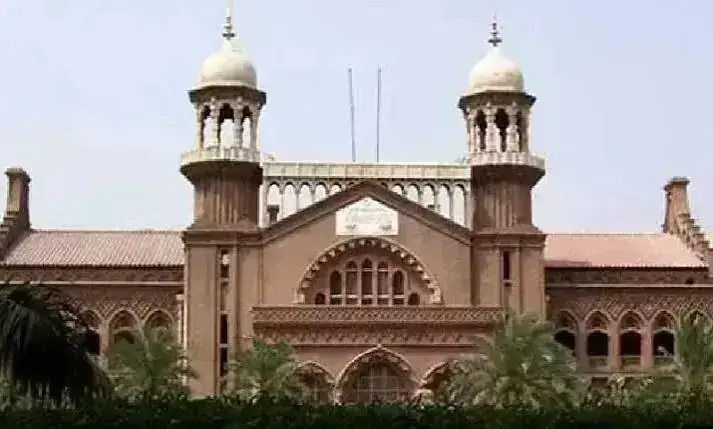
    LAHORE: Dismissing a petition by an American citizen of Indian origin, the Lahore High Court (LHC) has ruled that marriage to a Pakistani citizen does not create an automatic right to seek a Pakistan Origin Card (POC).

    The petition says Dr Talha Muadh Ghulam Jilani, formerly Dr Jaysinha Shamrao Shinde, embraced Islam in 1990 and renounced Indian nationality before taking American citizenship in 2007.

    He approached the National Database and Registration Authority (Nadra) for a POC in May 2021 and was told in 2022 that his case had gone for ground verification.

    After earlier petitions in the LHC, Nadra rejected his representation in January 2023.

    Says marriage to a Pakistani doesn’t create an automatic right to seek Pakistan Origin Card

    A request for relaxation was declined by the authority, which he challenged before the court.

    A counsel for Jilani and his wife argued that Rule 4(5) of the Nadra (Pakistan Origin Card) Rules, 2002 covers a foreign spouse of a Pakistani. He said Indian origin is not a bar and that a 2013 Interior Ministry policy cannot add conditions to the statutory provisions.

    He also cited Article 35 of the Constitution, which requires the State to protect marriage and family.

    However, a law officer for the government supported the impugned decision, saying the provision of relaxation was discretionary.

    He said the 2013 policy provided a uniform mechanism for enhanced scrutiny of applicants belonging to List-B countries, including India and Afghanistan, in view of legitimate national-security considerations.

    In his judgement, Justice Muhammad Ajmal Zahid held that a POC is not citizenship but a facilitation document.

    He noted that marriage under Rule 4(5) establishes threshold eligibility but not an entitlement as final issuance remains contingent upon mandatory verification and subject to Nadra’s statutory authority to refuse a card on grounds of national security or public interest.

    The judge drew a distinction between Indian origin and Indian nationality.

    He said statutory eligibility must be determined on the basis of the legal status prescribed by the rules and not merely by reference to ethnic origin, ancestry or an unverified assertion regarding nationality.

    The judge observed that the petitioner’s renunciation certificate had not been independently verified.

    The judge held that the 2013 policy was an executive instruction that cannot override the rules or create a disqualification, though it may serve as a mechanism for enhanced security checks.

    The judge found the policy rationally linked to national security.

    He said an adverse security input is not an automatic disqualification and the competent authority must form its own opinion.

    Justice Zahid declared that the petitioners failed to demonstrate that the competent authority acted without jurisdiction or reached its conclusion through mala fide exercise of power.

    Addressing the petitioners’ argument of relaxation, the judge stated that the law lets the federal government relax the bar in “special and extraordinary circumstances”.

    He maintained that the discretion vested in the government is subject to judicial review on recognised grounds of illegality, arbitrariness and mala fides, but relaxation cannot be claimed as a matter of right.

    The judge said the petitioners identified no special circumstance beyond the marriage.

    Finding no jurisdictional defect or mala fide in the impugned decisions, Justice Zahid dismissed the petition.

    Published in Dawn, November 24th, 2026

    Source: dawn

  • Used phone import surge hits industry

    Used phone import surge hits industry

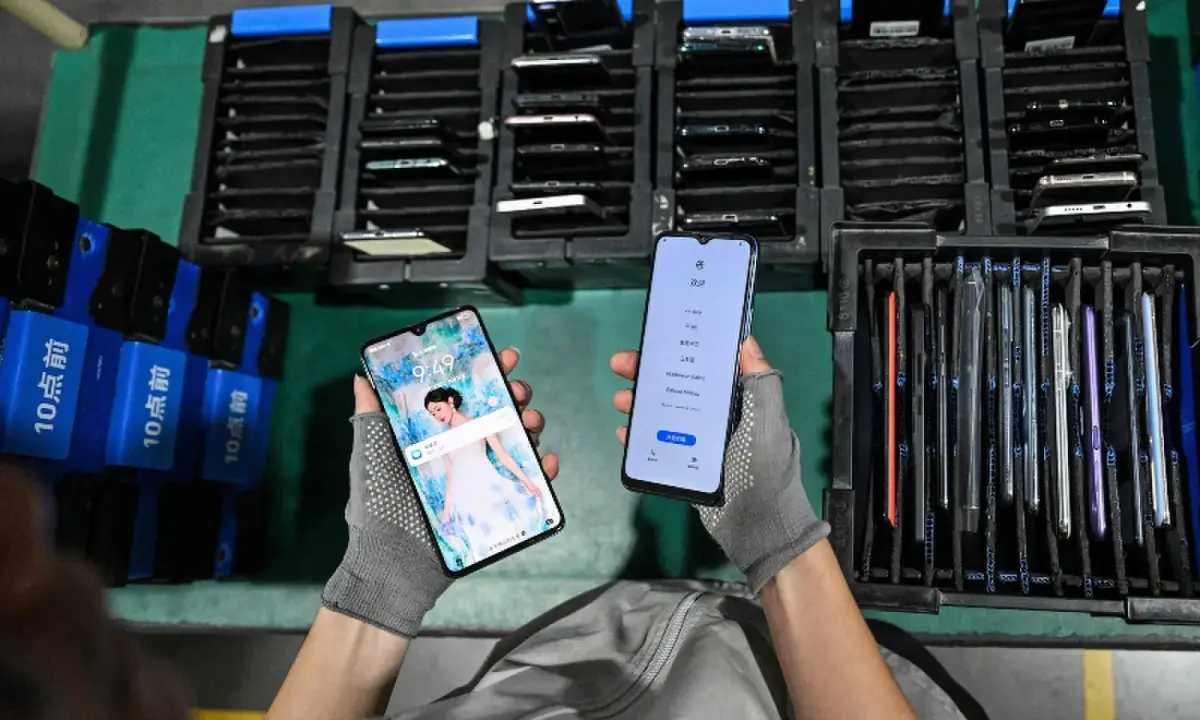
    ISLAMABAD: Imports of used smartphones surged from 1,434 units in July to 98,383 in October, as the duty gap between locally manufactured phones and imports narrowed.

    The country recorded 150,133 arrivals, including 51,750 new smartphones valued at $71.7 million in October, compared with 18,431 smartphones valued at $17.8m in July.

    The Pakistan Mobile Phone Manufacturers Associ­ation (PMPMA), in a letter, has raised concerns with the Ministry of Industries and Production and the FBR about the development, noting that the most alarming issue is the sharp increase in used smartphone imports. A delegation from the association is scheduled to meet with authorities in the capital in the coming days to discuss the matter.

    The association stresses that this is having a clearly negative impact on local smartphone assembly as production fell from 906,711 units in July to 752,870 units in October.

    PMPMA Chairman Abdul Rehman told Dawn on Monday that the surge in CBU imports is driven by two factors: narrowed import tariff gaps, which have fuelled the ‘khepia’ business, and a downward revision in FBR taxes on imported phone sets.

    He explained that the tariff gap between completely built-up smartphones and CKD kits for locally assembled smartphones has narrowed sharply, to around 11pc for a $100 phone and 14pc for a $200 phone.

    “The $100-$200 category is the largest-selling phone segment, and the 11pc and 14pc gap has nearly disappeared as bulk importers use methods such as under-invoicing, leaving little room for the country’s regulated manufacturers,” he said.

    Mr Rehman added that another factor driving the influx of used phones was a downward revision in FBR valuations under the Device Identification, Registration and Blocking System (DIRBS), allowing cheap imported smartphones to be registered with the PTA. Imported completely built-up units (CBUs) have captured 41.8pc of the country’s smartphone market in just a few months.

    The association has said that the mobile manufacturing industry has complained about reverse cascading for the past three years, making it impossible to localise parts such as chargers, batteries, cables, and motherboard assemblies.

    A charger can currently be imported duty-free as part of a CKD kit, but the cumulative duty on importing its raw materials and subcomponents is nearly 20pc.

    Published in Dawn, November 24th, 2026

    Source: dawn

  • Petroleum dealers warn of another strike over unmet demands

    Petroleum dealers warn of another strike over unmet demands

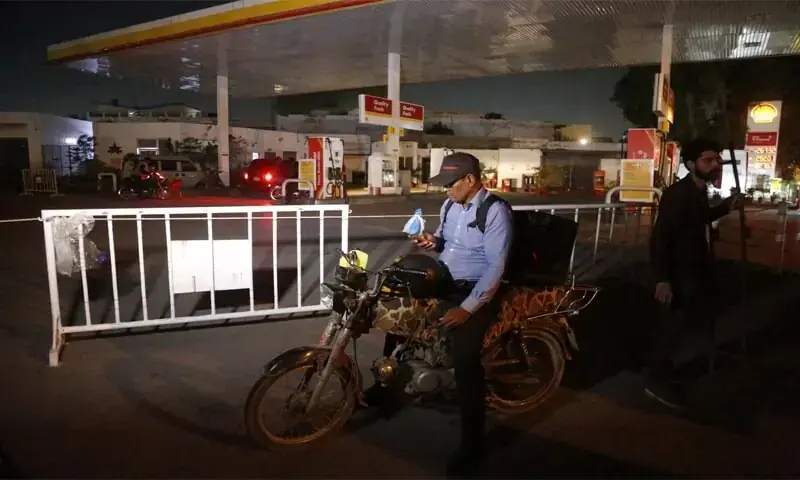
    KARACHI: The Paki­stan Petroleum Dealers Association (PPDA) on Monday warned that dealers would shut their petrol pumps unless the government fixes fuel prices for 30 days at a time, giving it 15 days to resolve the issue.

    This is the latest of several strike calls by fuel retailers this year; on each previous occasion, the call was withdrawn after the government stepped in. This time too, dealers say, the issues they raised earlier remain unresolved.

    At a joint press conference held at the Karachi Press Club, PPDA Chair­man Malik Khuda Bakhsh, Vice Chairmen Tariq Hassan and Anwar Kamal, Sindh Region President Ameer Khan, and Karachi Region President Saeed Khan said that daily changes to fuel prices were quickly draining pump owners’ working capital.

    They said that if capital ran out, pumps would run dry, which could lead to a law and order situation.

    They demanded that the dealers’ margin be raised immediately to 8pc of the retail price. They also claimed that refineries had cut supplies of petrol and diesel, and that one refinery had stopped supplying diesel altogether. According to the dealers, they collectively deposit Rs5.74 billion into the national exchequer every day.

    Asked about earlier strike calls that were withdrawn after government intervention, Mr Bakhsh said this time was different. He said several issues raised with the government had stayed unresolved since the US-Iran war had changed market dynamics. With the war’s intensity now subsiding and prices falling, he said, the government should take notice of the association’s concerns.

    The dealers’ first strike threat came in March this year, soon after the Mideast conflict broke out.

    At the time, it wanted the dealers’ margin raised from 2.59pc to 8pc, after a Rs55 per litre increase in diesel and petrol prices. However, the association — then led by Abdul Sami Khan — had postponed their plans on the eve of the strike, citing the fragile situation caused by the Middle East war, which could disrupt oil supply chains.

    The daily pricing system the dealers are opposing was introduced in July. At the time, Petroleum Minister Ali Pervaiz Malik announced that fuel prices would be fixed daily because of volatility in international markets, with Ogra publishing prices on its website every day.

    On July 22, the All Pakistan Petroleum Pump Owners Association — a separate body — deferred its nationwide strike call for two weeks after negotiations with the petroleum minister.

    The association said they were told in writing that daily pricing would run for two weeks on a trial basis and could be reversed to monthly or fortnightly fixing if it caused significant difficulty.

    However, the daily pricing regime has stayed in place since then.

    In August too, the PPDA issued a 72-hour strike ultimatum, but backed down after the petroleum minister told a PPDA delegation that the government would continue the daily price-fixing mechanism, rejecting the dealers’ demand for monthly pricing. He said he could not commit to the 15-day timeline because the prime minister had the authority to make such decisions.

    The next day, the Economic Coordination Committee of the federal cabinet approved a 15.5 per cent increase in dealers’ margins on petrol and high-speed diesel. The margin rose by Rs1.34 per litre, from Rs8.64 to Rs9.98, with effect from Sept 1. Resultantly, the PPDA then called off its strike.

    But the ECC did not accept the dealers’ main demand. Official sources said that setting the margin at 8pc of the retail price would have meant about Rs26 per litre on petrol and Rs30 on diesel at prices at that time.

    The latest pain point came in September, when the PM’s fuel subsidy scheme was rolled out, without much clarity on how pump owners would be compensated. However, that issue was settled through a mechanism managed by the State Bank of Pakistan.

    In recent days, fuel prices have been falling. From Rs369.60 per litre on Nov 4, petrol is now down to Rs322, as of today. Mr Bakhsh said the daily price adjustments had become unbearable for dealers and warned that if the situation continued, they would face severe financial difficulties, forcing pumps to close and causing serious inconvenience to the public.

    He urged the government to scrap the 24-hour pricing system and bring in a 30-day mechanism, along the same lines as refineries and oil marketing companies enjoyed.

    While the authority to set petroleum prices should stay with the government, he insisted that dealers be taken into confidence before prices are deregulated, adding that no petroleum-related policy should be made without consulting them.

    Published in Dawn, November 24th, 2026

    Source: dawn

  • Plan to split gas firms lands on PM’s table

    Plan to split gas firms lands on PM’s table

    • Framework proposes breaking up both companies into six to eight entities
    • Separate transmission, distribution and sales businesses envisaged to create competitive gas market; IMF backs reforms
    • Over Rs3tr in gas circular debt to be shifted to special purpose vehicle; domestic tariffs may rise

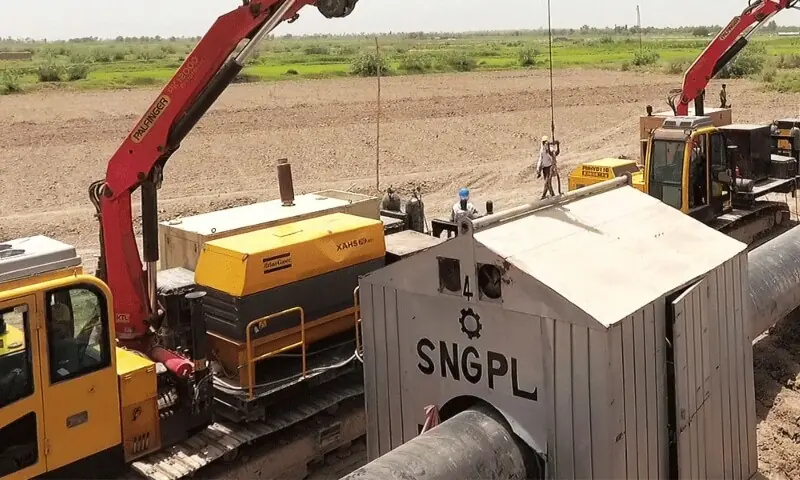
    ISLAMABAD: The government has finalised a plan to unbundle the two Sui gas companies into six to eight smaller entities, separating their transmission, distribution, and sales businesses to transform gas monopolies into a “competitive gas market” with the ultimate obje­ctive of achieving “energy security, price rationality, and an efficient, investment-friendly economy”.

    Top petroleum division sources told journalists during a background briefing that a summary containing the reform framework had been submitted to Prime Minister Shehbaz Sharif for in-principle clearance and guidance on whether formal endorsement should be sou­ght from the federal cabinet, the Council of Common Inte­rests (CCI) or parliament.

    The plan has been finalised with technical support from the World Bank, KPMG and Wood Mackenzie.

    It makes a departure from an earlier PML-N led botched attempt in 2016-17 to create four provincial distribution gas companies and a transmission company.

    The prime minister’s “authorisation” is required to engage transaction advisers, who would help implement the plan and guide the government through the remaining constitutional, legal, regulatory and financial requirements within five to six months.

    The sources said the Inte­rn­a­tional Monetary Fund (IMF) was on board, as its cle­a­rance was necessary un­­d­er the ongoing programme and the related gas circular debt management plan.

    “We will be rolling out the transformation plan into the implementation stage by the fourth quarter of 2027,” a top official said.

    More than Rs3 trillion in gas circular debt would be parked in a special purpose vehicle (SPV), following the model of the Power Holding Company Limited in the electricity sector. The SPV would be funded through a debt-servicing surcharge in consumer tariffs.

    “The central structural reform is the legal and operational separation of the Sui companies’ transportation and distribution activities from their gas supply and marketing activities — the separation of molecules from pipes,” said the summary, a copy of which was seen by Dawn.

    It said the separation would end the conflict of interest that allowed Sui Northern Gas Pipelines Limited (SNGPL) and Sui Southern Gas Company Limited (SSGCL) to act both as network operators obliged to give all users access and as gas suppliers with an interest in shutting out rivals.

    The petroleum division has proposed at least four gas sales entities, with two competitive gas supply (CGS) companies for commercial and industrial consumers and two regulated gas supply (RGS) entities serving domestic consumers.

    The Sui companies would be required to free up 20 per cent of their supply and consumer portfolios for the CGS companies in the first year, followed by 10pc in each of the next two years to allow private participants to compete in the market.

    With 60pc chunk offloaded, the price regulation in the competitive regime would come to an end.

    The financial projections, based on the companies’ FY2025 accounts, show that transportation and CGS businesses would be profitable from the outset, while the RGS segment serving residential consumers would incur losses. To address the issue, the government would gradually raise gas prices, reduce the number of domestic billing slabs from 12 to one and provide direct subsidies to vulnerable consumers in the protected category through the social safety net.

    In SNGPL’s case, the transportation and CGS segments are projected to earn after-tax profits of Rs24bn and Rs36bn, respectively, while the RGS segment would post an after-tax loss of Rs158bn, with gas costs of Rs322bn far exceeding sales revenue of Rs224bn.

    Domestic consumers currently pay an average of Rs1,268 per million cubic feet (MCF), against a break-even price of Rs2,152 per MCF — a “69.8pc increase required to reach break-even at the profit-before-tax level”. If prices are not raised, a subsidy of Rs150bn would be needed.

    Commercial and industrial consumers, by contrast, pay an average of Rs2,893 per MCF against a break-even price of Rs2,737, leaving room for a 5.4pc price reduction.

    For SSGCL, the projections allocate the cheapest gas from low-cost fields (Rs328 to Rs876 per MCF) to the RGS segment — the most favourable scenario for domestic supply. Even so, the segment would incur an after-tax loss of Rs59bn, and its average sale price of Rs732 per MCF would need an 82.7pc increase to reach the break-even price of Rs1,337.

    SSGCL’s transportation and CGS segments would earn after-tax profits of Rs27.4bn and Rs19.6bn, respectively, with room for a 7.4pc cut in CGS prices.

    The modelling concludes that the RGS segment remains structurally loss-making under any gas-cost allocation scenario because domestic tariffs are well below cost-recovery levels.

    The plan seeks total capital expenditure of Rs736bn for SNGPL over six years, from FY2027 to FY2032, including a peak requirement of Rs165bn in 2030 for system augmentation and loss reduction. A similar requirement of Rs390bn has been estimated for SSGCL.

    To meet these requirements, the plan proposes introducing a multi-year tariff based on the regulatory asset base methodology, following the model used by K-Electric.

    Published in Dawn, November 24th, 2026

    Source: dawn

  • Walkout over withdrawal of Fazl’s security

    Walkout over withdrawal of Fazl’s security

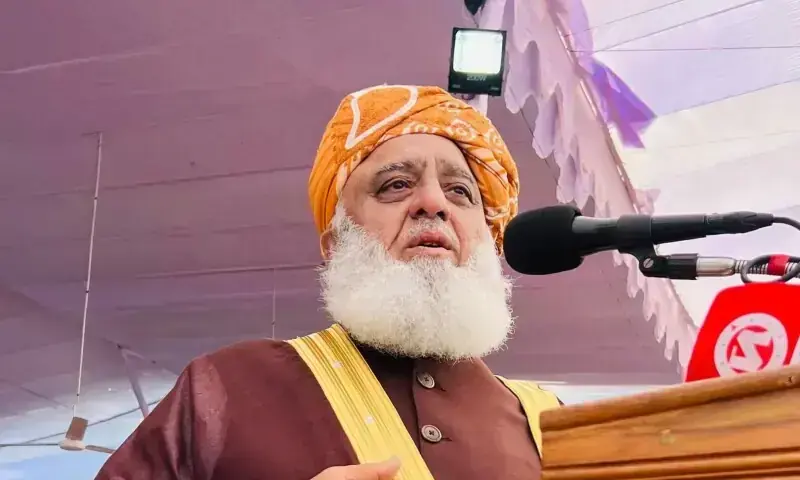
    QUETTA: Opposition members in the Balochistan Assembly staged a walkout on Monday to protest against the withdrawal of security guards provided to JUI-F chief Maulana Fazlur Rehman. They later returned to the house after provincial ministers intervened and persuaded them to end their protest.

    The assembly session was presided over by a member of the Panel of Chairmen Dr Ashok Kumar. Immediately after the session began, JUI-F MPA Zahid Reki rose on a point of order and drew the attention of the chair and members to the withdrawal of security provided to his party chief. He pointed out that the Maulana had already survived two assassination attempts.

    Condemning the decision, Mr Reki warned that Prime Minister Shehbaz Sharif would be held responsible if any harm came to his leader. He then staged a walkout from the assembly.

    National Party chief Dr Abdul Malik Baloch also expressed concern over the situation, saying that what was happening to the JUI-F was regrettable. He announced that National Party members would also walk out in protest.

    JUI-F, NP members return to Balochistan Assembly after ministers intervene

    Home Minister Ziaullah Langove said he was unaware of the details surrounding the withdrawal of the Maulana’s security. However, he described the JUI-F chief as a seasoned and astute politician.

    He said the country was passing through a critical period and that security institutions continued to protect it while citizens slept at night. He added that it was inappropriate to make statements against institutions that were making sacrifices for national security.

    Provincial Minister Noor Muhammad Dummar also highlighted the sacrifices of the country’s forces, saying that regardless of how influential a political leader might be, making statements against security institutions was inappropriate.

    Following assurances and efforts by provincial ministers, the protesting opposition members returned to the assembly.

    Two bills passed During the session, Provincial Minister Bakht Muhammad Kakar presented the Balochistan Fisheries and Aquaculture Bill, which had already been approved by the relevant standing committee. The house subsequently passed the bill.

    Similarly, Parliamentary Secretary Wali Muhammad Noorzai presented the Balochistan Non-Formal Education Bill, which was also passed.

    The Balochistan Assembly session was later adjourned until 3pm on Dec 8.

    Published in Dawn, November 24th, 2026

    Source: dawn

  • Islamabad hosts meeting of IAEA nuclear security network

    Islamabad hosts meeting of IAEA nuclear security network

    • Gathering returns to capital after a decade; conference draws 68 delegates from 49 countries
    • IAEA chief hails platform for turning nuclear theory into practice
    • PNRA head stresses human resource development

    ISLAMABAD: Pakistan on Mon­day opened the 2026 annual meeting of the International Network for Nuclear Security Training and Support Centres (NSSC Network), bringing together roughly 68 delegates from 49 countries to bolster global nuclear security cooperation.

    Held at the Pakistan Centre of Excellence for Nuclear Security (PCENS) in collaboration with the International Atomic Energy Agen­­cy (IAEA), the four-day conference gathers policymakers, regulators, academics, and technical experts to share best practices and address emerging security challenges.

    The summit marks the network’s return to Islamabad a decade after Pakistan hosted the 2016 gathering — the first annual meeting ever held outside IAEA headquarters in Vienna.

    In a video address, IAEA Director General Rafael Mariano Grossi thanked Pakistan for hosting the event once again and praised the network for uniting national centres into a global community of practice.

    “The NSSC Network plays an active and crucial role in turning nuclear security from theory into effective practice,” Grossi said. “That is especially important as more and more countries turn to nuclear power and other nuclear applications for everything from electricity and heat to medicine and hardier crops.”

    Delivering the keynote speech, Additional Foreign Secretary Am­­b­assador Khalil Hussain Hashmi reaffirmed Pakistan’s commitment to nuclear security and its longstanding partnership with the UN nuclear watchdog. He said the mee­­ting’s return to Islamabad after 10 years reflects the network’s growing global reach and relevance.

    Effective nuclear security relies on strong national institutions, skilled professionals and sustained international cooperation, Hashmi said, as he reaffirmed the IAEA’s central role in the global security framework.

    Pakistan Nuclear Regulatory Authority (PNRA) Chairman Zia Hussain Shah, who formally inaugurated the gathering, tied lasting security gains to investing in specialised training.

    He highlighted the importance of human resource development in strengthening nuclear security and acknowledged the NSSC Network’s contribution to developing professional competencies and promoting international knowledge-sharing.

    Shah noted that the Network has evolved into a valuable global platform for sustainable nuclear security capacity building, with Pakis­tan actively contributing to its obj­ectives through its national institutions.

    Following the opening session, diplomats and IAEA representatives toured the PCENS laboratories, commending the facility’s advanced training infrastructure.

    The conference runs through Thursday, Nov 26. Alongside technical sessions and working group discussions, delegates are scheduled to visit the National Institute of Safety and Security and the Pakistan Institute of Engineering and Applied Sciences to further international technical exchanges.

    Published in Dawn, November 24th, 2026

    Source: dawn