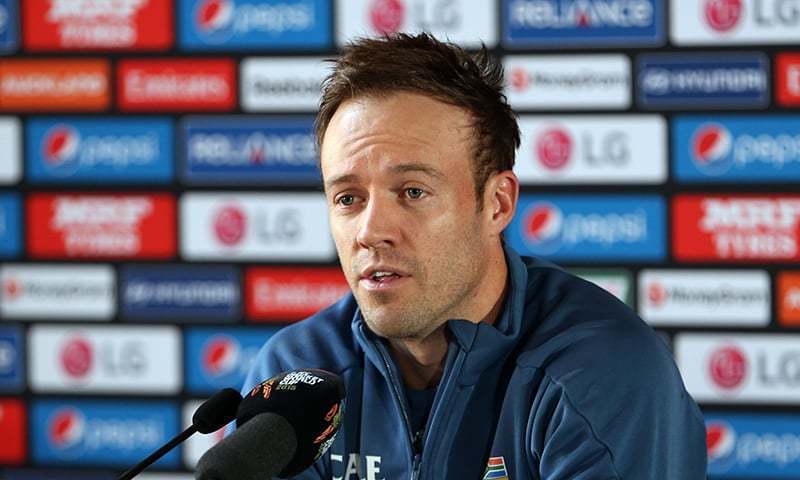
Former South Africa captain AB de Villiers said lessons must be learnt from the 2018 ball-tampering scandal involving Australia but urged the sport to move on from “Sandpapergate”.
The debate was reignited this year after Australia batter Usman Khawaja alleged in his book that knowledge of the plan to use sandpaper on the ball in the test series in South Africa extended beyond the three players who were punished, Cameron Bancroft, David Warner and Steve Smith.
“Let’s not blow it out of proportion. Let’s move on now. But also we need to take learning from that,” De Villiers told reporters during a virtual roundtable organised by Test Twenty20, a new format of cricket played across genders using both red and white balls.
“A mistake was made. We can’t hide from that fact. And I think it affects the whole cricketing world, not just Australia,” De Villiers said.
“We all want the game to be in a good position, right? But let’s remember these things have happened in the past as well and we found a way to move on.
“So let’s now move on and the youngsters take responsibility to bring great energy and great integrity into the game of cricket.”
Australia won the opening test in Durban before South Africa claimed the next three matches to seal a 3-1 series victory.
Reverse swing under threat
De Villiers scored an unbeaten century to guide South Africa to victory in the second test in Port Elizabeth and was at the crease when Bancroft was caught on camera using sandpaper on the ball during the third game in Cape Town.
“As long as the players don’t step over the line, we all know where that line is,” De Villiers said.
“Sometimes it’s a little bit grey, and that’s where the administrators come in. They need to clear it up completely and find a way for reverse swing to survive and still be around for many years to come.
“I feel it’s part and parcel of the game, and it’s great for the bowlers to have that. It really speeds the game up.”
ISLAMABAD: The Asian Development Bank (ADB) on Wednesday approved a $250 million policy-based loan to help Pakistan strengthen its public-private partnership (PPP) system and advance a pipeline of bankable and sustainable projects that can attract private capital and support the country’s economic growth.
In a statement, the Manila-based lending agency said the financing will support reforms to help the government prepare market-ready projects, particularly high-quality, cost-efficient infrastructure, and improve fiscal risk management.
“Rigorous project appraisal, transparent disclosure, and sound management of fiscal risks are essential to translate Pakistan’s PPP pipeline into sustainable infrastructure investment,” ADB Country Director for Pakistan Emma Fan was quoted as saying.
Fan added that the programme demonstrated ADB’s commitment to supporting the Pakistani government in strengthening public investment and financial management, improving infrastructure development, and mobilising greater private sector investment through PPPs.
The ‘Promoting Sustainable Public-Private Partnerships Programme’ builds on the first phase approved in 2024, which strengthened the legal and policy frameworks for PPPs, the statement said.
It added that under the second phase, the government had taken steps to bring federal PPP and privatisation functions together under a unified platform.
It said that the programme also supported dedicated PPP units in four line ministries and agencies and a national framework for monitoring and disclosing PPP-related fiscal liabilities.
With support from ADB, the government approved a medium-term PPP pipeline for 2026-2030, the statement said.
The ‘National PPP and Investment Knowledge Hub’ will provide training and tools to federal institutions, while provincial governments will also be able to benefit from its knowledge resources and peer learning activities, the statement added.
“The programme integrates inclusivity and resilience into PPP planning and procurement,” it said.
The programme is supported by $1.1 million in technical assistance from ADB’s Technical Assistance Special Fund and $950,000 from the Asia Pacific Project Preparation Facility.
“This support has strengthened institutional and project-preparation capacity for federal PPPs, including through professional certification, knowledge exchange, and the development of fiscal risk assessment tools,” the statement concluded.
On Monday, the ADB said it invested an undisclosed amount in Neem, a Pakistan-based B2B fintech company that helps businesses receive, manage, and pay out money digitally.
At least one person was killed on Wednesday after a six-storey building under construction collapsed near Karachi’s Baloch Colony, as rescue teams continued searching the rubble for people feared trapped.
A Rescue 1122 spokesperson said teams have recovered one body and rescued one person alive from the rubble. An urban search and rescue team is present at the site, the spokesperson added.
Edhi Foundation said its ambulances and rescue teams had been dispatched to the incident site.
Sindh Inspector General of Police Javed Alam Odho directed police officials to immediately reach the site of the building collapse and assist in rescue operations, according to a statement issued by the police spokesperson.
He directed officials to ensure close coordination with Rescue 1122, the fire brigade and other relevant agencies, and take necessary measures to secure the site, remove obstacles to rescue efforts and maintain the flow of traffic.
The IG also ordered that all available resources be used to rescue people potentially trapped under the rubble and that assistance be provided to ensure the injured receive immediate medical attention.
He directed the traffic police to clear roads, maintain an uninterrupted flow of traffic and make arrangements for alternative routes.
Relevant police officials were also instructed to personally supervise rescue operations and provide regular updates on the situation, the statement said.
ISLAMABAD: Maldivian, the national airline of the Maldives, will soon start direct flights to Pakistan in a bid to boost tourism, trade and people-to-people contacts between the two countries, it emerged on Wednesday,
The announcement was made during a meeting of the Maldives Tourism and Civil Aviation Minister Mohamed Ameen with Interior Minister Mohsin Naqvi and Minister of State for Interior, Tallal Chaudry, as per a statement issued by the ministry.
An official launch date and flight schedule have not been announced yet.
“Direct flights will make travel to Maldives much easier for Pakistani citizens,” Naqvi said at the meeting.
He said Pakistani citizens have a “deep interest” in tourism and direct flights would facilitate Pakistani tourists in the Maldives. Well-known Pakistani cricketers, artists and other celebrities will travel to the Maldives on the first direct flight, the meeting was told.
“Pakistani celebrities are extremely popular in Maldives; their arrival will promote tourism,” the Maldivian minister said.
Pakistan and the Maldives also agreed to enhance cooperation in tourism, sports, health, trade, manpower and other sectors, the statement said.
The Maldives minister praised Islamabad’s modern infrastructure and cleanliness system during the meeting.
“I am extremely happy to see Islamabad’s rapid development, beauty and natural scenery,” he was quoted as saying during the meeting.
“Islamabad truly holds great potential as a tourism capital city.”
Naqvi added that the Pakistan Cricket Board (PCB) was working on a proposed project to build a cricket stadium in the Maldives.
A cricket academy will also be established along with the stadium, which will provide training opportunities to youth, the statement quoted the interior minister as saying.
The Maldives would also welcome manpower from Pakistan, Ameen said, adding that there were vast opportunities for imports of construction material, medicines and other goods from Pakistan, as per the statement.
Naqvi was quoted as saying that he was looking forward to the Maldivian interior minister’s visit to Pakistan.
Pakistan and the Maldives celebrated the 60th anniversary of their diplomatic relations, established in 1966, in October.
To mark the anniversary, Maldivian President Dr Mohamed Muizzu travelled to Islamabad on a three-day visit last month, marking the first by a Maldivian president to Pakistan in 11 years.
During President Muizzu’s visit, Prime Minister Shehbaz Sharif said he had issued instructions for direct flights between Pakistan and the Maldives.
On the occasion, PM Shehbaz had said, “I want to say that connectivity is very important. We don’t have direct flights from Malé to Islamabad or Karachi, so this air link is very important.
“I have already given instructions to our ministry of civil aviation to prepare a quick feasibility [study], be it Pakistan International Airlines, or any other airline in Pakistan, to find the ways and means to take the first flight comprising tourists [and the] business community to Malé,” he announced.
The premier said he had been informed by President Muizzu that Muizzu had given instructions “to his airline to work out a quick plan to start flights from [the] Maldives to Pakistan”.
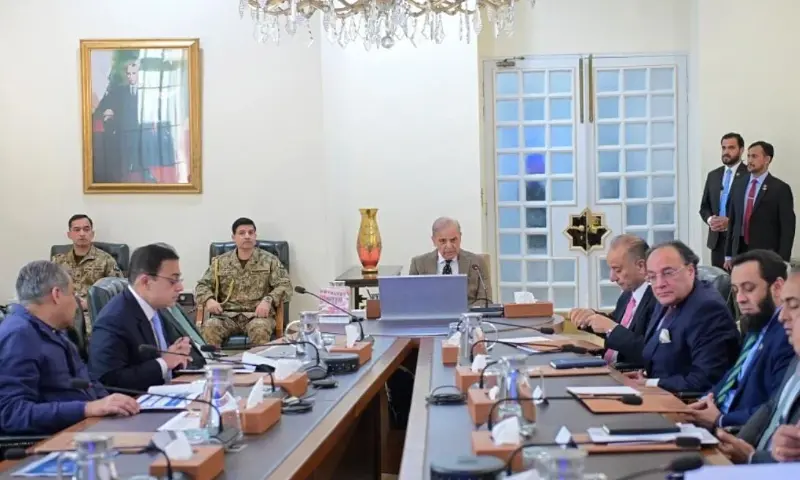
ISLAMABAD: Prime Minister Shehbaz Sharif on Wednesday ordered the modernisation of the system to prevent cybercrime in the country and approved the restructuring of the National Cyber Crime Investigation Agency (NCCIA).
A meeting, presided over by the premier, was held to review the NCCIA’s performance, administrative structure and future strategy.
Speaking at the meeting, the prime minister said efforts to prevent and investigate cybercrime should be modernised in line with contemporary requirements.
“Protecting the public from cybercrime is among the government’s top priorities,” the prime minister said. “Restructuring of the NCCIA should be expedited to transform it into an effective, proactive and modern institution.”
The premier directed the appointment of information technology (IT) and artificial intelligence (AI) experts at the NCCIA and all its subordinate offices. “The NCCIA should recruit the best available workforce strictly on merit,” he said.
The prime minister said the agency’s restructuring should focus on the use of AI and modern technologies. He added that all available resources should be utilised to resolve pending cybercrime cases.
He also ordered the formation of a committee comprising Federal Ministers Mohsin Naqvi, Azam Nazeer Tarar, Muhammad Aurangzeb and Shaza Fatima Khawaja to review the reform proposals submitted by the NCCIA.
The committee will submit its recommendations to the prime minister by the end of this week.
The meeting was informed that a proposal had been made to transform the NCCIA into a national-level Pakistan Cyber Police, with recruitment based strictly on merit. A dedicated system for national security in relation to cybercrime has also become operational.
The meeting was further told that all possible measures were being taken under the existing system to resolve cybercrime cases.
The NCCIA’s performance, administrative structure and future strategy were also reviewed.
Federal Ministers Azam Nazeer Tarar, Musadik Malik, Ahsan Khan Cheema, Muhammad Aurangzeb and Mohsin Naqvi attended the meeting.
Minister of State for Interior Tallal Chaudhry, Minister of State for Finance Bilal Azhar Kiani and senior officials of relevant institutions were also present.
On Friday, NCCIA claimed to have uncovered an extensive alleged financial network involved in illegal online gambling, fraudulent business operations and suspected money laundering, with an estimated transaction exposure of up to Rs1 trillion.
Earlier this month, the agency called for stricter regulations governing company registration and bank account verification, warning that loopholes in the existing system are being exploited by illegal call centres, online betting operators and international fraud networks to launder money and defraud victims.
Earlier this month, Naqvi sought the premier’s help in addressing the acute shortage of staff in the NCCIA.
ISLAMABAD: Pakistan and China agreed on Wednesday to pursue government-to-government (G2G) arrangements for Chinese investment in Pakistan’s petrol and liquefied petroleum gas (LPG) storage and terminal facilities, according to a Petroleum Division statement.
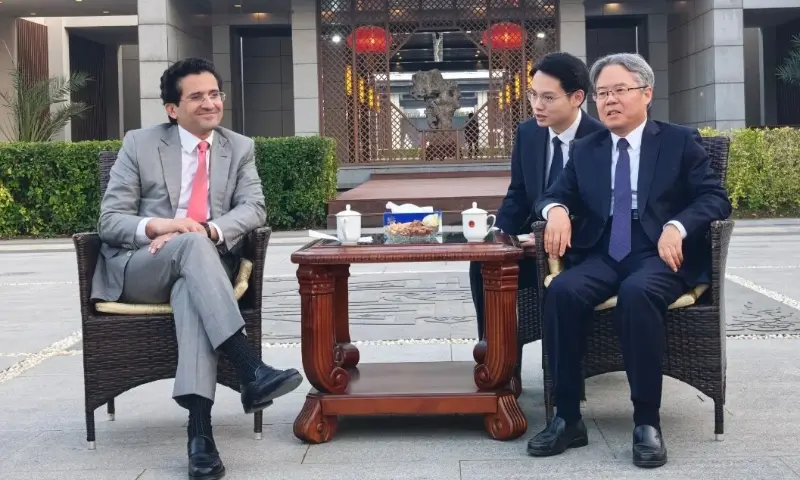
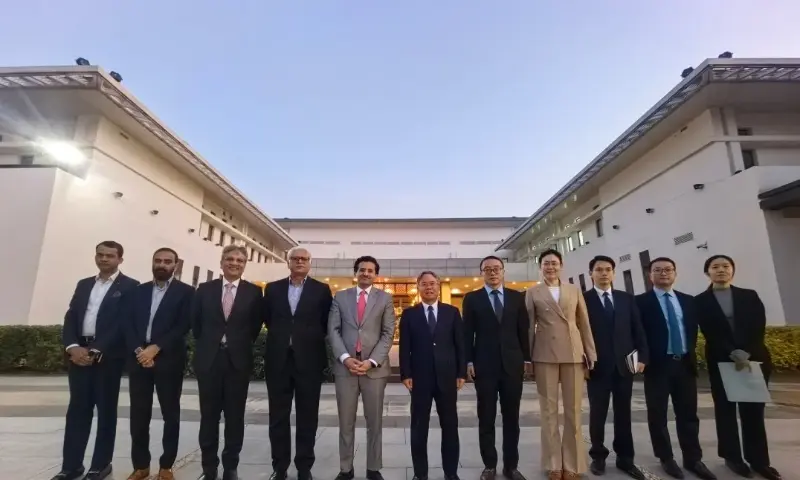
Petroleum Minister Ali Pervaiz Malik and Pakistan State Oil (PSO) Chief Executive Officer Jawwad Ahmed Cheema met Chinese ambassador to Pakistan, Jiang Zaidong, and his commercial team, said the statement.
The two sides explored transformative investment opportunities and agreed on concrete steps to deepen bilateral cooperation across Pakistan’s energy and mining sectors.
Both sides identified two G2G priorities for early action: an LPG plant with associated storage and terminal facilities to expand domestic supply, improve access to cleaner fuel and ease peak-season shortages; and the import of motor gasoline (MoGas), including sourcing, storage and logistics, to strengthen fuel security and ensure a reliable supply at competitive prices.
Both initiatives are expected to deliver early results, with tangible benefits for consumers and the wider economy, the statement said.
To ensure tangible progress, both sides also agreed to constitute a joint commercial team comprising representatives from Pakistan and China.
The team will evaluate identified opportunities, engage prospective companies, assess investment and partnership models, and develop a structured roadmap for mutually beneficial projects across upstream, offshore and downstream operations, including the G2G LPG plant and MoGas import arrangements, as well as minerals and mining.
The minister also encouraged the Chinese side to advance investment across upstream, offshore, minerals, mining and downstream energy infrastructure, building on President Xi’s priorities announced at Apec 2026 in Shenzhen.
Moreover, Malik congratulated Pakistan Air Force Wing Commander Muhammad Zeeshan Ali on his historic participation in China’s Shenzhou-24 space mission from the Jiuquan Satellite Launch Center.
The minister commended the “landmark” achievement that made Wing Commander Muhammad Zeeshan Ali the first Pakistani in orbit and the first foreign visitor to China’s Tiangong space station, describing it as a “proud moment” for Pakistan and a testament to the enduring friendship and growing scientific and technological cooperation between Pakistan and China.
The engagement comes days after China hosted the 33rd Apec Economic Leaders’ Meeting in Shenzhen on November 18 and 19, 2026, held under the theme “Building an Asia-Pacific Community to Prosper Together” with openness, innovation and cooperation as its priorities.
The Pakistan-China energy partnership reflects that same vision: open markets that welcome new investors, innovation through Chinese technology and industrial expertise, and practical cooperation that connects Pakistan’s resources with the wider region’s growth.
The meeting covered a broad spectrum of collaboration, including upstream oil and gas exploration, offshore development, mineral exploration, mining and the establishment of strategic energy infrastructure.
Particular emphasis was placed on unlocking investment potential in Balochistan and on emerging offshore opportunities, including the development of integrated offshore hubs.
The discussions also covered the entry and expansion of Chinese downstream companies in Pakistan through strategic partnerships with PSO.
Opportunities in petroleum storage, terminals and wider downstream infrastructure were discussed, positioning PSO as the key commercial partner for Chinese investment in Pakistan’s downstream energy ecosystem.
The engagement will also bring together leading national energy companies, including OGDCL, and Chinese upstream and downstream enterprises to build commercially viable partnerships across the energy value chain, according to a Petroleum Division statement.
The minister highlighted the government’s resolve to transform Pakistan’s investment landscape through progressive deregulation of the petroleum sector, investor-friendly policies, streamlined import and export procedures, and improved security arrangements.
He assured the Chinese delegation of the government’s commitment to facilitating investors, protecting their investments and providing an enabling environment for long-term business operations.
“Pakistan offers immense untapped potential across its energy and natural resources sectors. Our priority is to translate this potential into concrete investments, industrial growth and sustainable economic opportunities,” the minister was quoted as saying.
Malik further added: “We are committed to creating a transparent, facilitative and secure investment environment, while opening our energy market to greater participation and competition. China’s technological strength, industrial expertise and investment capacity, combined with Pakistan’s resource potential, present an exceptional opportunity to build partnerships that deliver lasting value for both nations.”
The minister added that the country wants to move “decisively” from discussions to implementation.
The discussions also encompassed strengthening bilateral trade through more efficient import and export policies, streamlined procedures and enhanced institutional and commercial coordination to facilitate investment, technology transfer and cross-border business.
Ambassador Jiang Zaidong reaffirmed China’s continued support for Pakistan and assured full cooperation and coordination through the Chinese Embassy and its commercial team.
He welcomed the proposed engagement framework and expressed China’s keen interest in exploring investment opportunities and strengthening business-to-business linkages between the two countries.
Building on the strength of an all-weather friendship, both countries are poised to turn shared ambitions into lasting economic gains, the statement concluded.
China’s Shenzhou-24 spacecraft, carrying 40-year-old Pakistani astronaut Zeeshan Ali, successfully docked with the Tiangong space station three hours and 38 minutes after liftoff on Wednesday.
Below is a selection of pictures from the departure ceremony before launch at the Jiuquan Satellite Launch Centre to the spacecraft docking at the space station.
The three crew members of China’s Shenzhou-24 spacecraft Wu Yi (C), Tang Hongbo (R) and Pakistani astronaut Muhammad Zeeshan Ali (L) wave during a departure ceremony before launch at the Jiuquan Satellite Launch Centre on November 25, 2026. —AFP
People attend the see-off ceremony before the Shenzhou-24 spaceflight mission to China’s Tiangong space station, at Jiuquan Satellite Launch Centre on November 25, 2026. —Reuters
A screen displaying Pakistani astronaut Muhammad Zeeshan Ali showing the launch of the Shenzhou-24 spacecraft mission to China’s Tiangong space station, as people watch at the Pakistan Space and Upper Atmosphere Research Commission (SUPARCO) headquarters in Islamabad on November 25, 2026. —Reuters
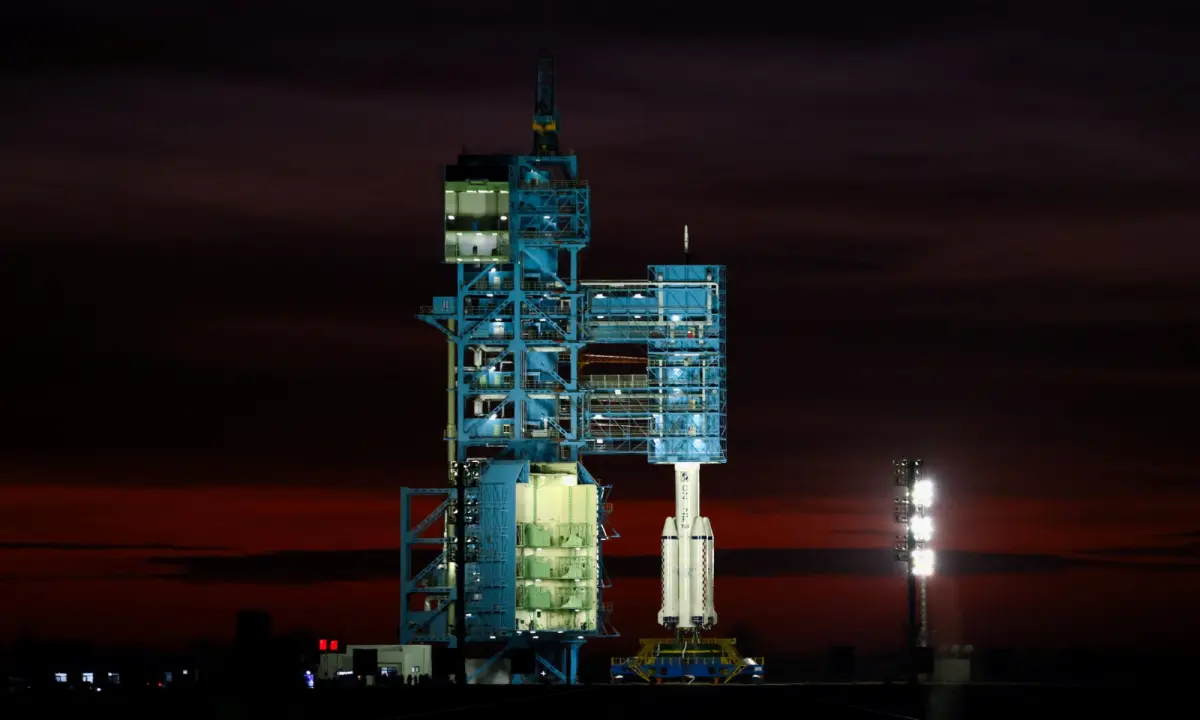
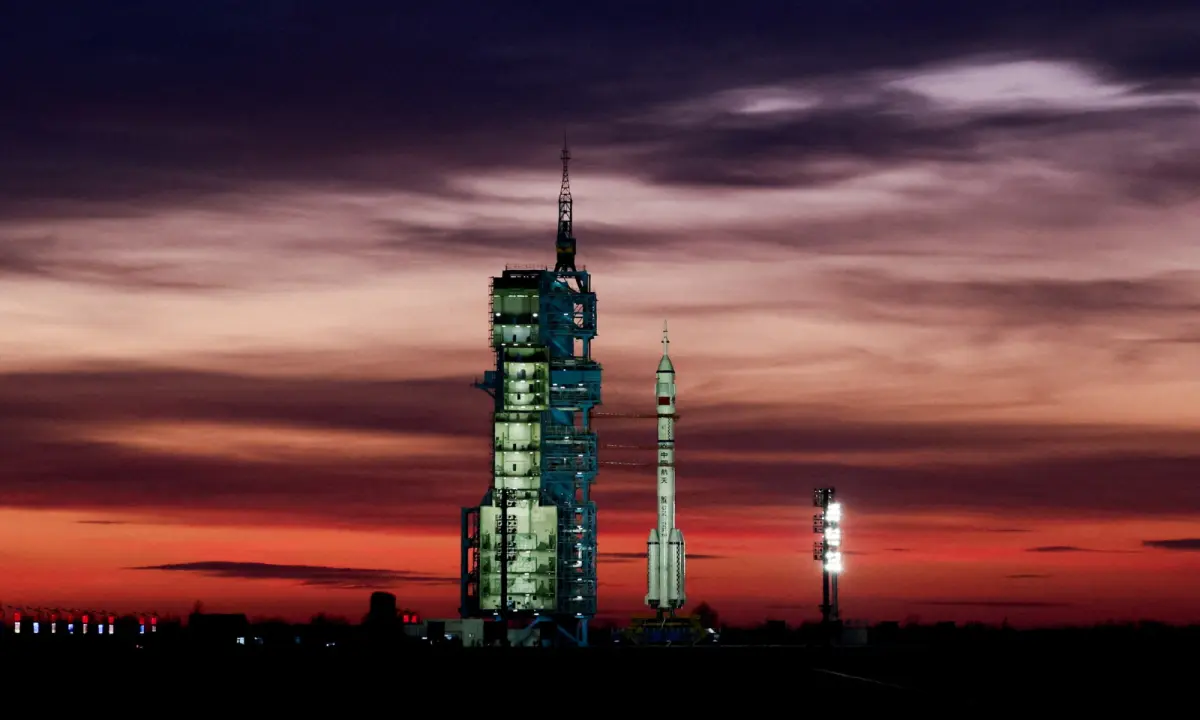
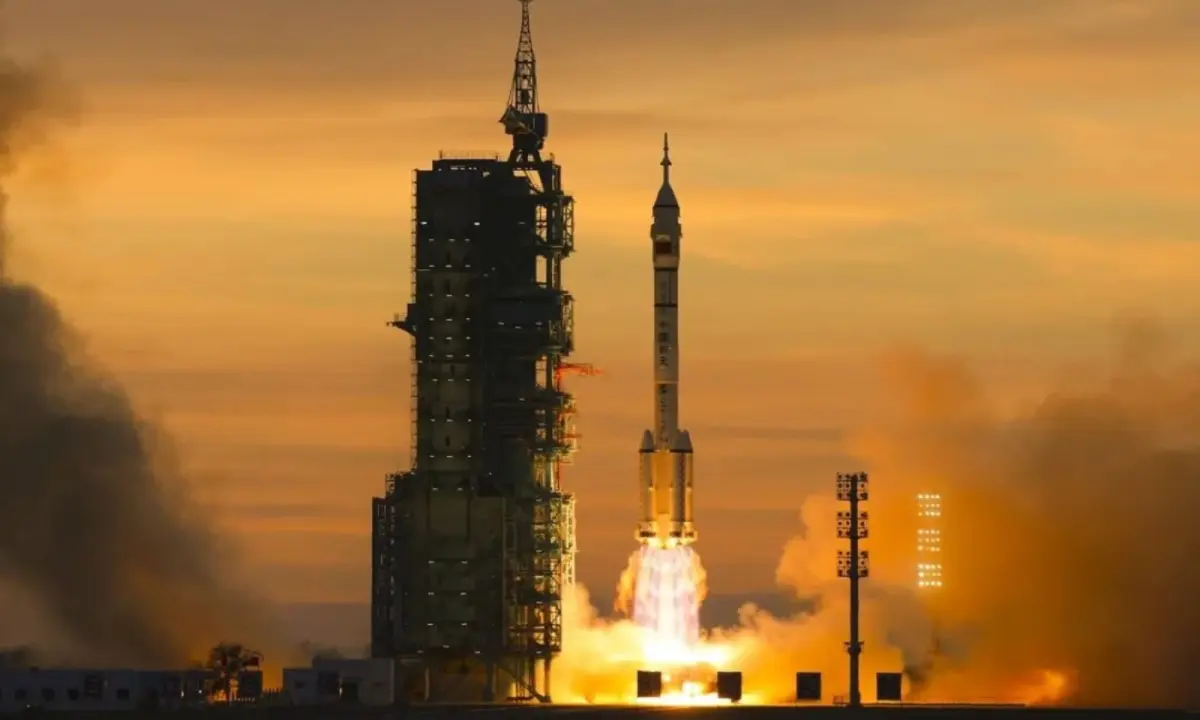
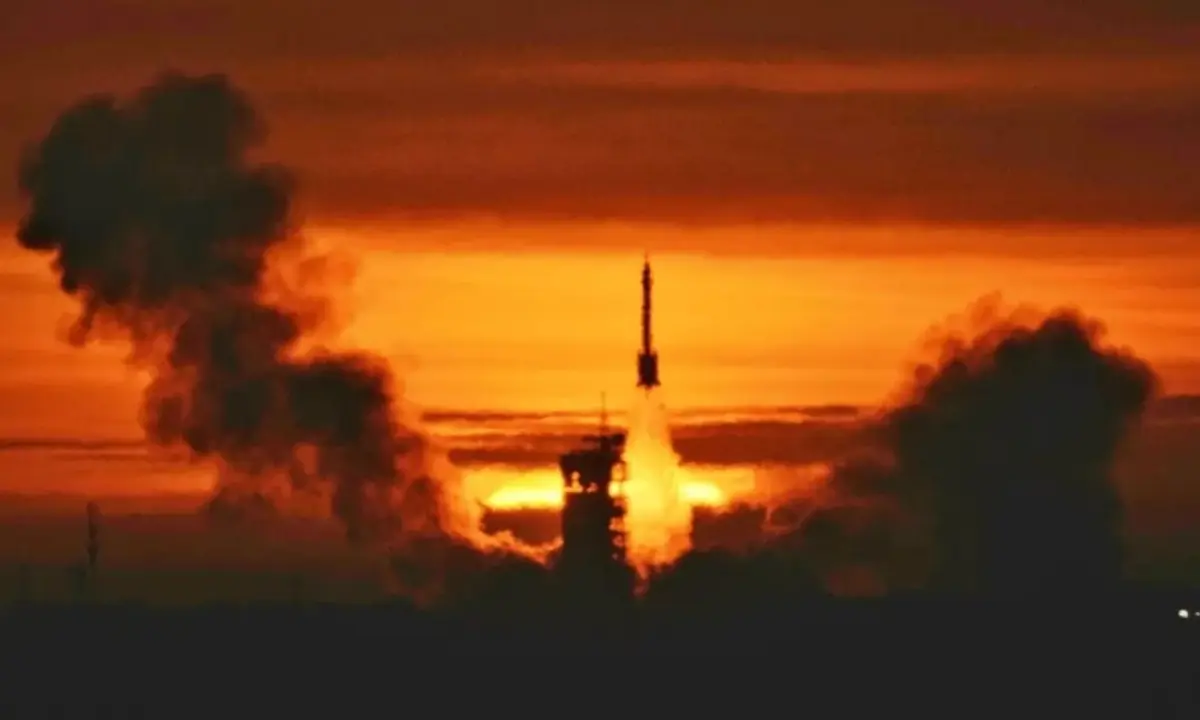
A Long March 2-F rocket carrying the Shenzhou-24 spacecraft with Chinese astronauts Tang Hongbo, Wu Yi and Pakistani astronaut Muhammad Zeeshan Ali, before it blasts off to China’s Tiangong space station from the launchpad at the Jiuquan Satellite Launch Centre on November 25, 2026. —Reuters
A Long March 2-F rocket carrying the Shenzhou-24 spacecraft with Chinese astronauts Tang Hongbo, Wu Yi and Pakistani astronaut Muhammad Zeeshan Ali, before it blasts off to China’s Tiangong space station from the launchpad at the Jiuquan Satellite Launch Centre on November 25, 2026. —Reuters
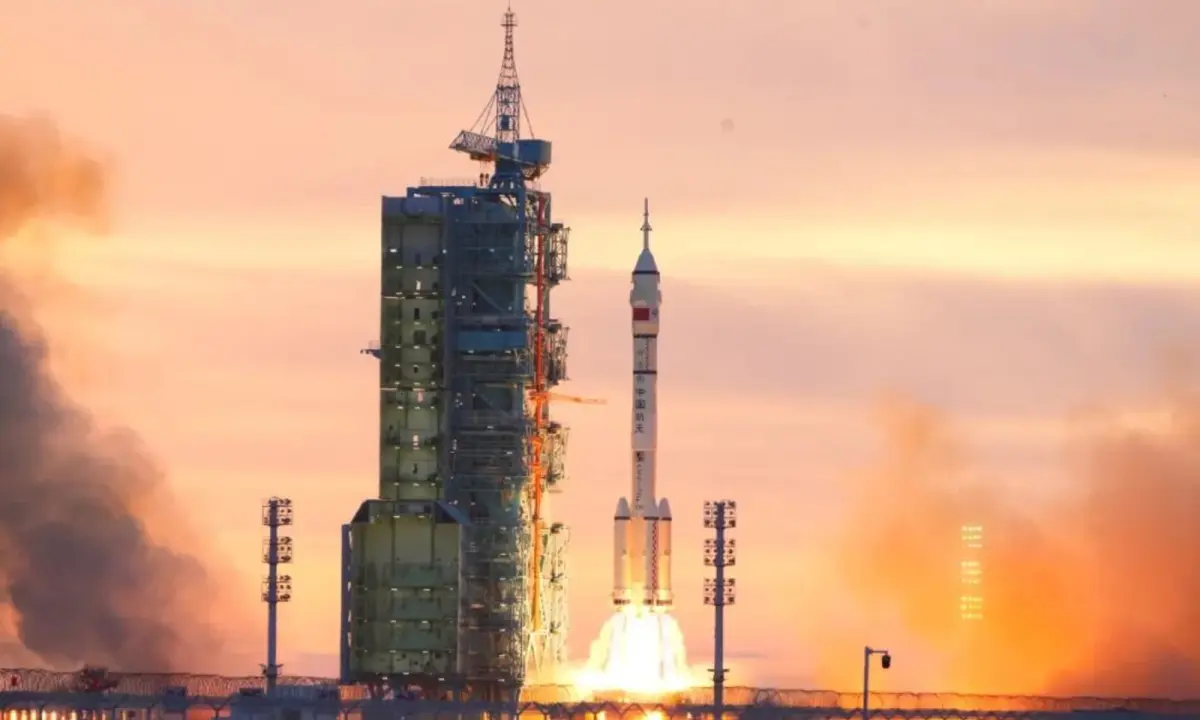
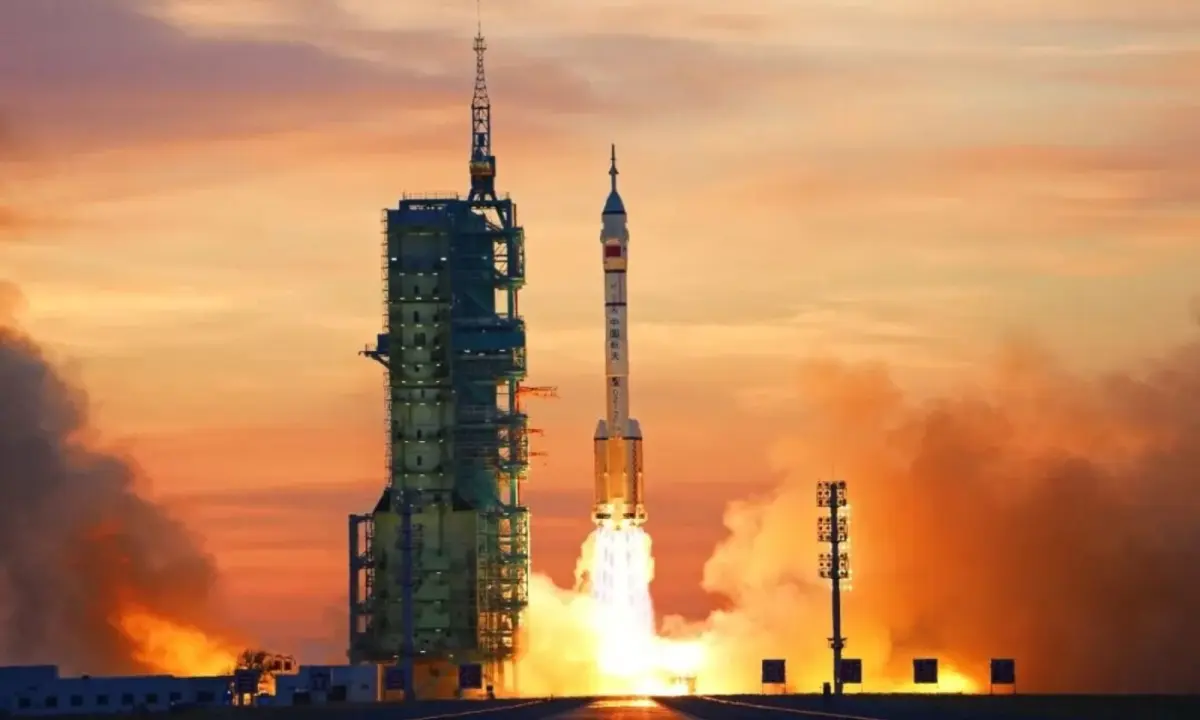
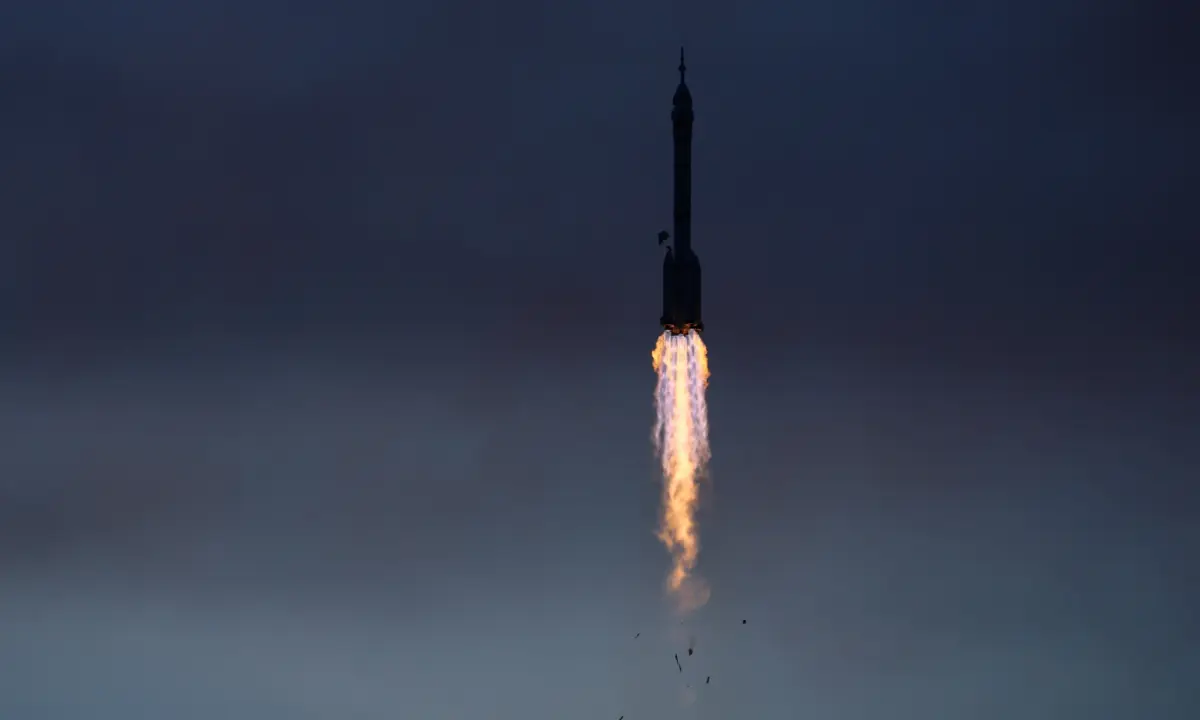
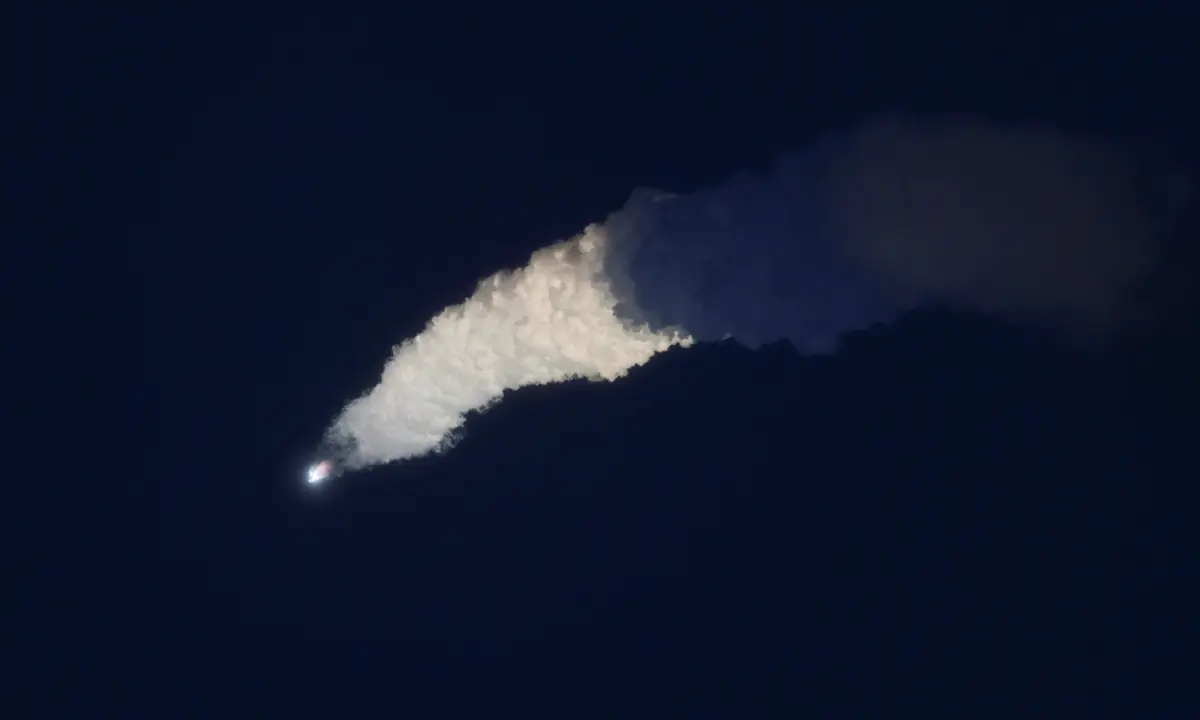
A Long March 2F Y24 rocket carrying the Shenzhou-24 spacecraft with Chinese astronauts Tang Hongbo, Wu Yi and Pakistani astronaut Muhammad Zeeshan Ali, blasts off to China’s Tiangong space station from the launchpad at the Jiuquan Satellite Launch Centre on November 25, 2026. —X/@CNSpaceflight
A Long March 2-F rocket carrying the Shenzhou-24 spacecraft with Chinese astronauts Tang Hongbo, Wu Yi and Pakistani astronaut Muhammad Zeeshan Ali, blasts off to China’s Tiangong space station from the launchpad at the Jiuquan Satellite Launch Centre on November 25, 2026. —X/@CNSpaceflight
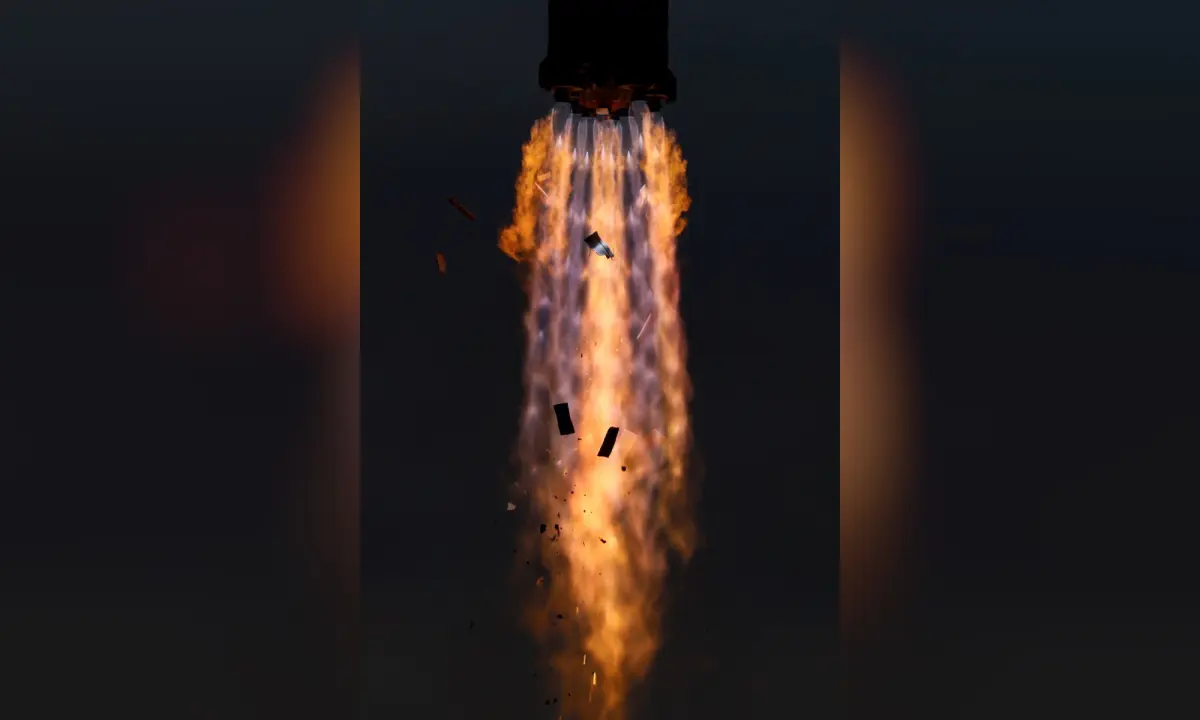
A Long March 2-F rocket carrying the Shenzhou-24 spacecraft with Chinese astronauts Tang Hongbo, Wu Yi and Pakistani astronaut Muhammad Zeeshan Ali, blasts off to China’s Tiangong space station from the launchpad at the Jiuquan Satellite Launch Centre on November 25, 2026. —X/@CNSpaceflight
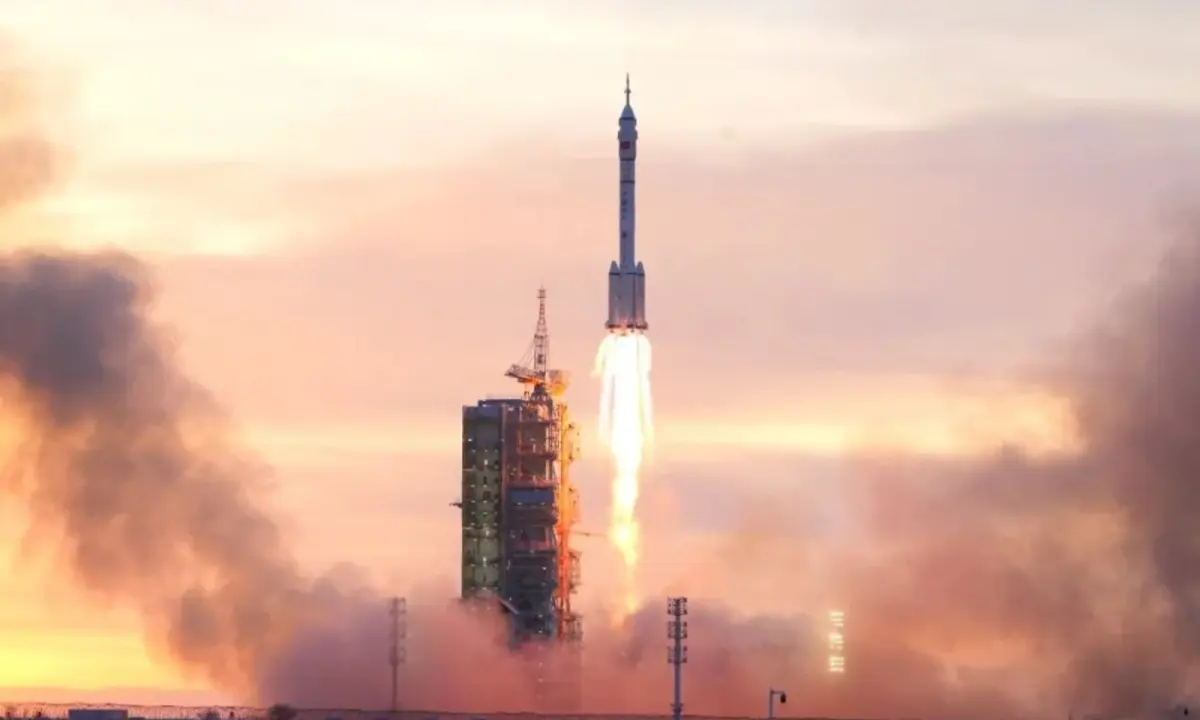
A Long March 2-F rocket carrying the Shenzhou-24 spacecraft, with a crew of two Chinese and one Pakistani astronauts, lifts off from the Jiuquan Satellite Launch Centre on November 25, 2026. —CNS via AFP
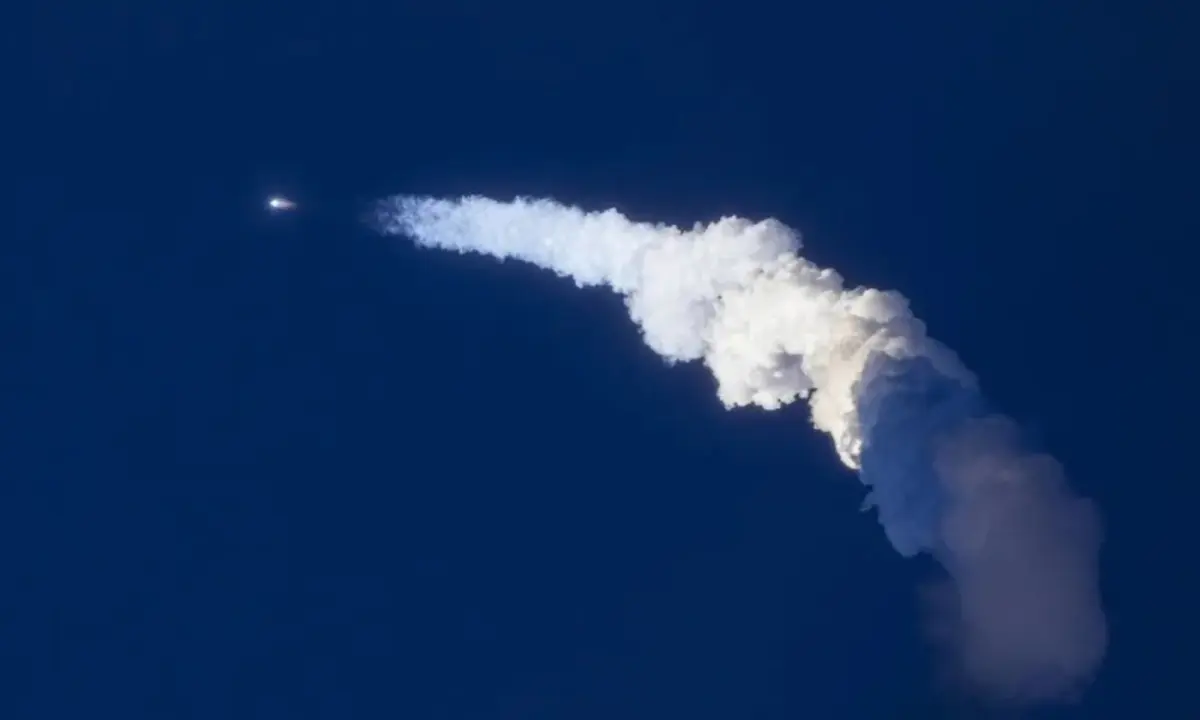
A Long March 2-F rocket carrying the Shenzhou-24 spacecraft with Chinese astronauts Tang Hongbo, Wu Yi and Pakistani astronaut Muhammad Zeeshan Ali, blasts off to China’s Tiangong space station from the launchpad at the Jiuquan Satellite Launch Centre on November 25, 2026. —X/@CNSpaceflight
A Long March 2-F rocket carrying the Shenzhou-24 spacecraft with Chinese astronauts Tang Hongbo, Wu Yi and Pakistani astronaut Muhammad Zeeshan Ali, blasts off to China’s Tiangong space station from the launchpad at the Jiuquan Satellite Launch Centre on November 25, 2026. —X/@CNSpaceflight
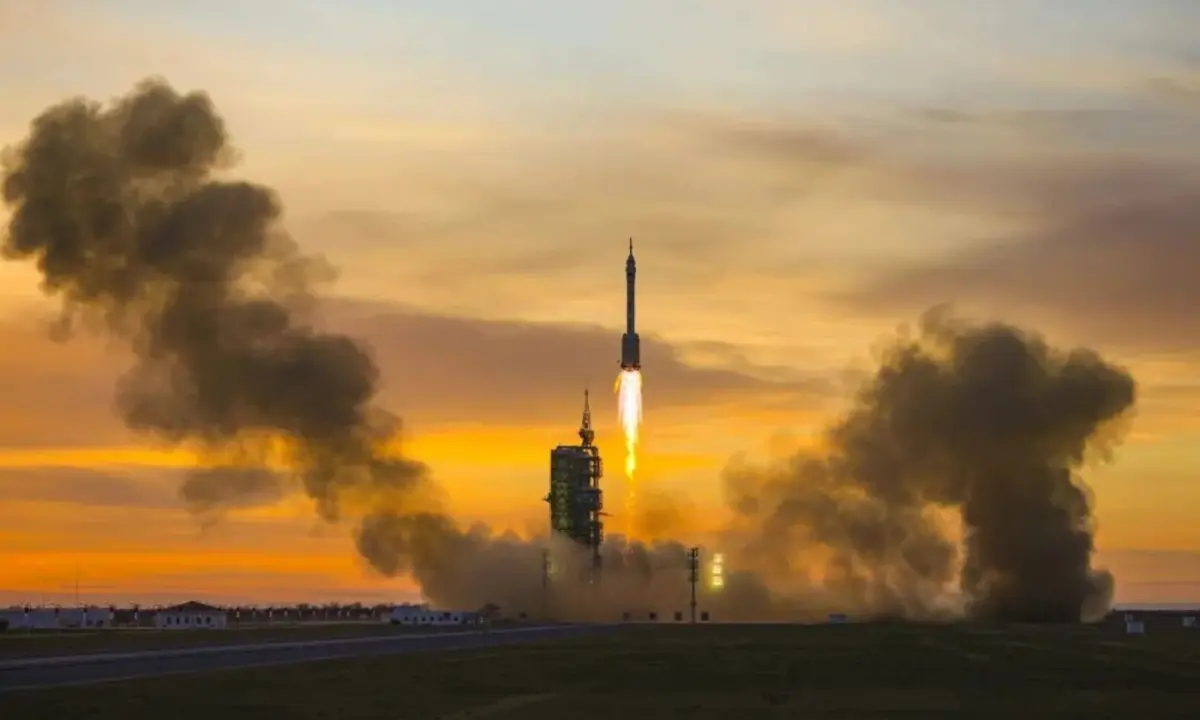
A Long March 2-F rocket carrying the Shenzhou-24 spacecraft with Chinese astronauts Tang Hongbo, Wu Yi and Pakistani astronaut Muhammad Zeeshan Ali, blasts off to China’s Tiangong space station from the launchpad at the Jiuquan Satellite Launch Centre on November 25, 2026. —X/@CNSpaceflight
A Long March 2-F rocket carrying the Shenzhou-24 spacecraft with Chinese astronauts Tang Hongbo, Wu Yi and Pakistani astronaut Muhammad Zeeshan Ali, blasts off to China’s Tiangong space station from the launchpad at the Jiuquan Satellite Launch Centre on November 25, 2026. —X/@CNSpaceflight
A Long March 2-F rocket carrying the Shenzhou-24 spacecraft with Chinese astronauts Tang Hongbo, Wu Yi and Pakistani astronaut Muhammad Zeeshan Ali, blasts off to China’s Tiangong space station from the launchpad at the Jiuquan Satellite Launch Centre on November 25, 2026. —Reuters
A Long March 2F Y24 rocket carrying the Shenzhou-24 spacecraft with Chinese astronauts Tang Hongbo, Wu Yi and Pakistani astronaut Muhammad Zeeshan Ali, blasts off to China’s Tiangong space station from the launchpad at the Jiuquan Satellite Launch Centre on November 25, 2026. —Reuters
A Long March 2-F rocket carrying the Shenzhou-24 spacecraft with Chinese astronauts Tang Hongbo, Wu Yi and Pakistani astronaut Muhammad Zeeshan Ali, blasts off to China’s Tiangong space station from the launchpad at the Jiuquan Satellite Launch Centre on November 25, 2026. —X/@CNSpaceflight
A Long March 2-F Y24 rocket carrying the Shenzhou-24 spacecraft with Chinese astronauts Tang Hongbo, Wu Yi and Pakistani astronaut Muhammad Zeeshan Ali, blasts off to China’s Tiangong space station from the launchpad at the Jiuquan Satellite Launch Centre on November 25, 2026. —Reuters
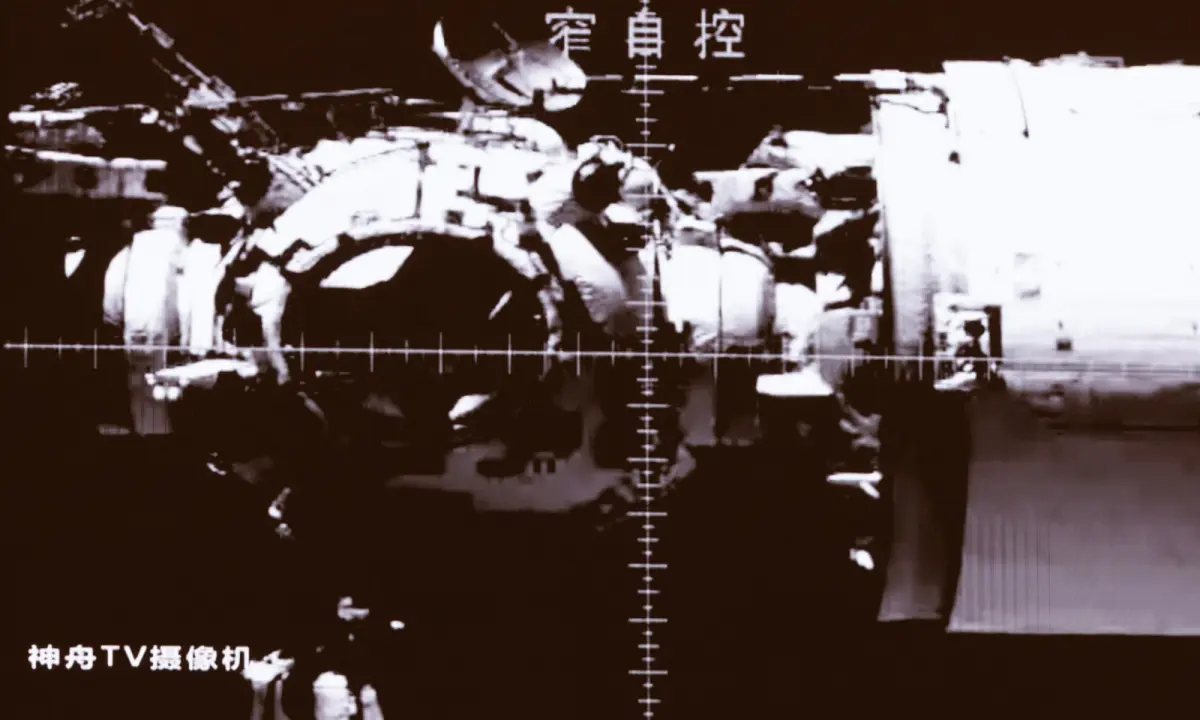
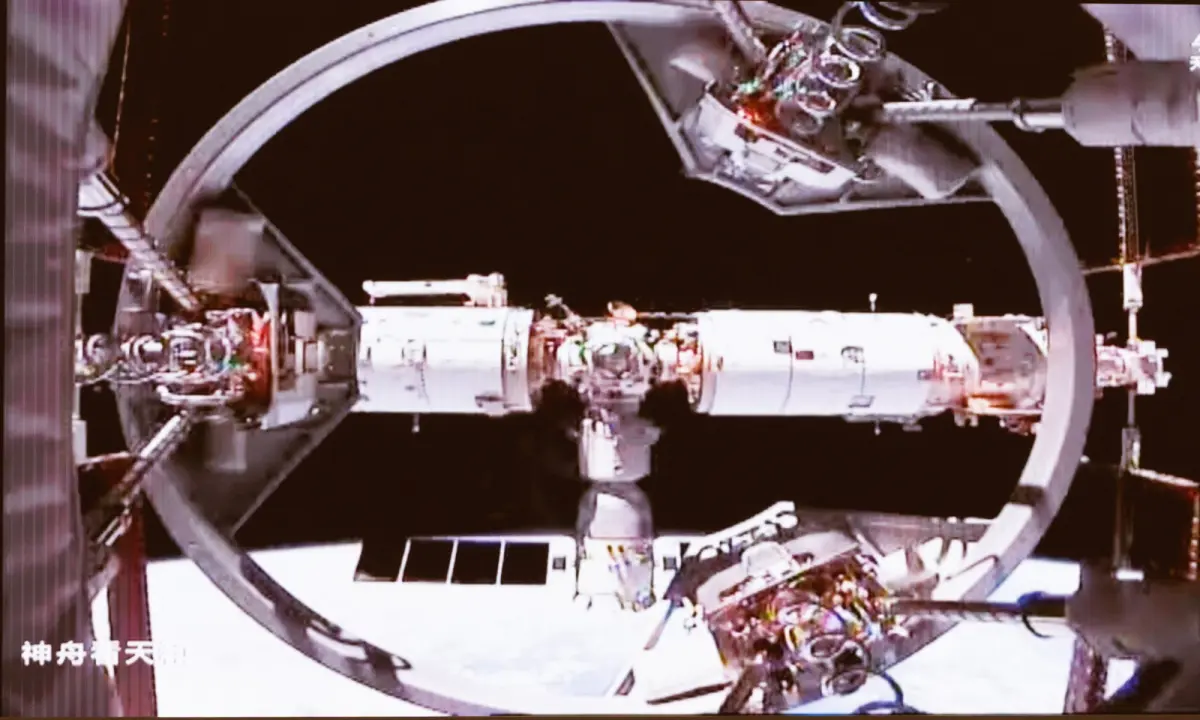
Shenzhou-24 docks with China’s Tiangong space Station forward port at 03:56 UTC, around 3 hours and 38 minutes after liftoff. —X/@CNSpaceflight
Shenzhou-24 docks with China’s Tiangong space Station forward port at 03:56 UTC, around 3 hours and 38 minutes after liftoff. —X/@CNSpaceflight
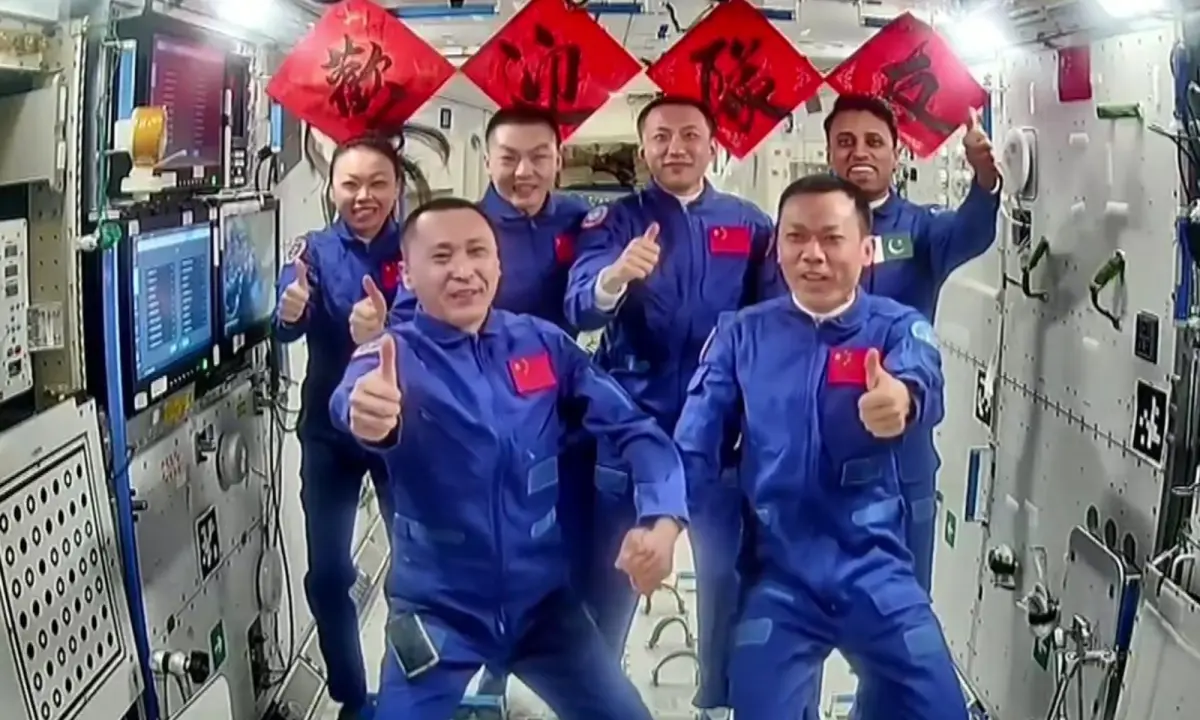
Group photo of Shenzhou-23 and Shenzhou-24 crew after the spacecraft docked at China’s Tiangong space station. —X/@CNSpaceflight
Header image: A Long March 2-F rocket carrying the Shenzhou-24 spacecraft with Chinese astronauts Tang Hongbo, Wu Yi and Pakistani astronaut Muhammad Zeeshan Ali, blasts off to China’s Tiangong space station from the launchpad at the Jiuquan Satellite Launch Centre on November 25, 2026. —X/@CNSpaceflight
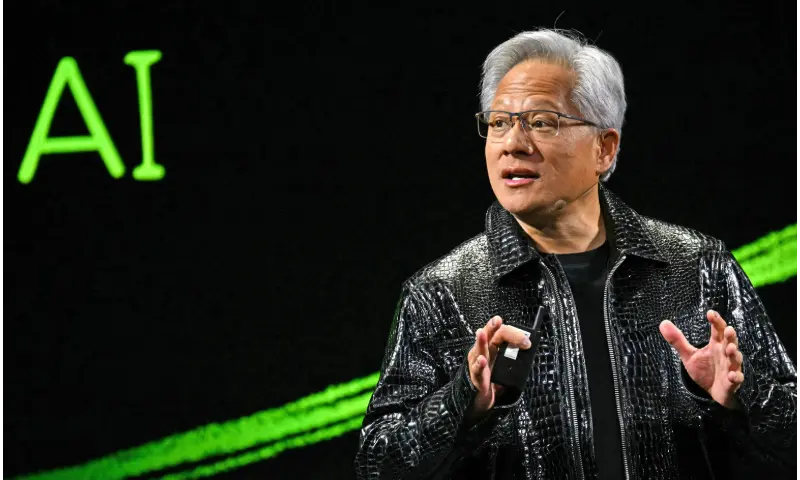
Jensen Huang’s return to Nvidia was a shot in the arm for the Taiwan stock market, with investors and tech players heaving a sigh of relief.
But observers say it will not be business as usual for Taiwan’s tech industry, as manufacturers will now have to tread carefully around the geopolitics of the AI supply chain.
Huang, a Taiwanese-American, was reinstated as Nvidia’s chief executive on Nov 23, 11 days after he resigned over a scandal linked to an alleged Chinese spy.
Taiwan’s stock market was hit hard. Taiwan Premier Cho Jung-tai met on Nov 23 executives from tech companies and financial firms to discuss ways to stabilise the stock market, after Taiwanese shares plunged almost 18 per cent, their worst week since 1991.
After news broke that Huang was back, Nvidia shares soared 31.5pc, while Taiwan’s main index TAIEX jumped 9pc.
Hsu Ching Sheng, who owns Nvidia shares, said he was so excited after seeing the late-night news that he could not sleep.
“It’s been a real roller coaster lately – going from initial disbelief… to holding on to the firm belief that (Nvidia shares) would bounce back,” the 26-year-old personal trainer told The Straits Times.
“Jensen Huang’s return is definitely a huge plus for the Taiwan stock market. Everyone knows he’s a staunch supporter of Taiwan’s supply chain… it’s fair to say he’s a major driving force behind the Taiwan stock market.”
Huang’s resignation from Nvidia, the company he co-founded and had run for 33 years, came after he admitted to infidelity. He was linked to Alice Huang, a woman US officials suspect of links to Chinese intelligence.
‘Stand with Jensen’
Calls for the “godfather of AI” to return soon began and a “Stand with Jensen” petition was backed by more than 200,000 signatures, including that of tech tycoon Elon Musk.
Last week, the Taipei 101 skyscraper even lit up with messages such as “Taiwan loves Jensen” and “Taiwan AI co-create the future”, organised by prominent figures from Taiwan’s technology industry.
The 63-year-old was reinstated after lobbying from US President Donald Trump, who said he spoke to Nvidia’s board directly to press for Huang’s return.
Chang Ruay-shiung, honorary chair professor of National Taipei University of Business (NTUB), said Huang has played a major role in building Nvidia’s technological advantage, corporate culture and global business relationships.
“Finding someone who can replace him at this stage of the AI race would be extremely difficult,” he told The Straits Times.
Nvidia had issued a press release reaffirming its support for Taiwan’s supply chain, but it would be hard to replace Huang’s personal relationships with Taiwanese suppliers.
The Nvidia CEO has made a habit of publicly thanking his Taiwanese suppliers, and is known for hosting “trillion-dollar dinners” with their bosses, named after the combined market value of the firms at the table.
Lien Hsien-ming, president of Chung-Hua Institute of Economic Research, said that Huang did not encourage aggressive price-cutting among suppliers and did not squeeze their margins.
“We can say that Jensen Huang was friendlier to Taiwan (than other US tech firms),” he said. “He prefers to collaborate to build up the supply chain.”
Saga not over yet
NTUB’s Chang noted that Huang’s return to Nvidia will not be the end of the controversy, as the US’s investigation into the loopholes that allowed advanced Nvidia chips to be routed to China remains unfinished.
While the affair captured headlines, Alice Huang is just one thread of a US probe into a cross-border network of server makers, AI data centres and shell companies that allegedly moved export-banned Nvidia chips into China.
Under US export rules, Nvidia’s most advanced AI chips cannot be shipped to China without a US licence, and re-exporting them from other countries without one is also a violation.
In its Nov 23 statement, the Nvidia board said it has formed a National Security and Export Control Committee made up of independent directors to oversee trade compliance and national security risks. Nvidia also has a new job opening – a chief compliance officer to oversee compliance across the firm.
Huang, who apparently had 60 executives reporting directly to him, is expected to face more checks and balances going forward.
Taiwan manufacturers and suppliers are also likely to face greater responsibility for identifying the final customers and tracking where their products are used, said analysts.
“Taiwanese companies may consequently face higher compliance costs, longer approval procedures and greater legal risks. But they will benefit from the so-called non-red supply chain,” said Chang, referring to supply chains that exclude Chinese companies.
“In the future, export control compliance will become an important part of the competitiveness of Taiwan’s semiconductor industry.”
Lien of the Chung-Hua Institute of Economic Research said smaller companies that cannot meet compliance costs may be in trouble.
“Now, you have to be very careful. If you are caught, the consequences will be grave. The fines for (violating) national security regulations can be huge,” he said.
NTUB’s Chang said Huang’s return has ended Nvidia’s immediate leadership crisis, but the whole saga has opened a much larger debate about the relationship between technology companies, government power and national security.
“Taiwan, given its central role in the global semiconductor industry, cannot afford to ignore that debate,” he said.
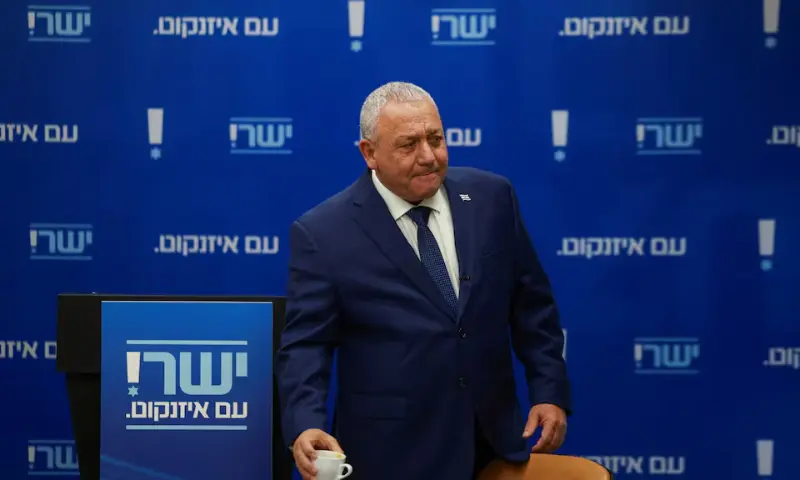
Israel’s Yashar party, led by former military chief Gadi Eisenkot, said on Tuesday it agreed to sign a coalition pact with a right-wing opposition party as it seeks to form a government following last month’s election.
Yashar said that Eisenkot had met with Avigdor Lieberman, head of the Israel Our Home party, earlier on Tuesday and they agreed on a deal afterward, the first such alliance since the election.
Israel’s parliament was sworn in on Nov 10 without a new government, after the election on Oct 27 stripped Prime Minister Benjamin Netanyahu of his majority but left others with no clear path to power.
President Isaac Herzog has tasked Eisenkot with forming a government, while Netanyahu remains caretaker prime minister.
Netanyahu’s right-wing Likud’s alliance with far-right and ultra-Orthodox parties outperformed election expectations but still lost its majority. It now holds 53 of the Knesset’s 120 seats.
Eisenkot’s centre-right Yashar party and patchwork coalition partners — including Lieberman — hold just 48 seats.
But they have potential allies in the parties representing Israel’s Arab minority, which hold 19 seats and are aligned with Eisenkot in their vehement opposition to Netanyahu.
The agreement between Eisenkot, whose party won 21 parliament seats, and Lieberman, whose party won 7, was something of a surprise, since Lieberman had been vocal about his opposition to forming a government with support from Arab parties as well as to a unity government with Netanyahu.
Lieberman has also said his main goal is to oust Netanyahu from power.
Eisenkot has until Dec 6 to form a government under a 28-day mandate, but he could ask for a 14-day extension.
If he fails, Netanyahu would get a shot. If no one is able to form a government, another election will be held next year.
Talks are also ongoing between Eisenkot, some of his “change bloc” partners and Likud on forming a unity government.
The left-wing Democrats party, which won 8 parliament seats, separately said it was suspending talks with Eisenkot because of progress in his talks with Netanyahu’s Likud on a possible unity government and given the deadlock in negotiations to form a ‘change government.’
Yair Golan, head of the Democrats, has said he prefers a government without Netanyahu but with Arab parties.
Shamma Abu Hussein is possibly the last person in her village of refugees to have lived in historic Palestine.
Living in Egypt, she has watched three generations of her family grow up in legal limbo.
She was among the hundreds of thousands who fled or were expelled during the creation of the State of Israel in 1948, whose descendants number in the millions.
Now she fears that the effects of the Gaza war and rhetoric from Israeli ministers calling for Gazans to be expelled means history is repeating itself.
“After all the suffering they’ve endured,” the 90-year-old said, “they now want to uproot them from their homes.”
“I remember what I went through,” she told AFP from a low-slung brick house in Geziret Fadel, a village tucked among the fields and irrigation canals of Egypt’s Sharqiya province, about an hour northeast of Cairo.
She was recalling her family’s flight from Beersheba, now in southern Israel, where they lived before fleeing the hostilities that accompanied Israel’s creation, which Palestinians remember as the Nakba, or catastrophe.
One evening, as flames lit up the sky, elders rushed the children onto camels and into the desert, where Abu Hussein’s family trudged for days without food or water until reaching Egypt, losing her mother along the way.
The settlement where they eventually found refuge has grown into a community of around 4,000 Palestinians.
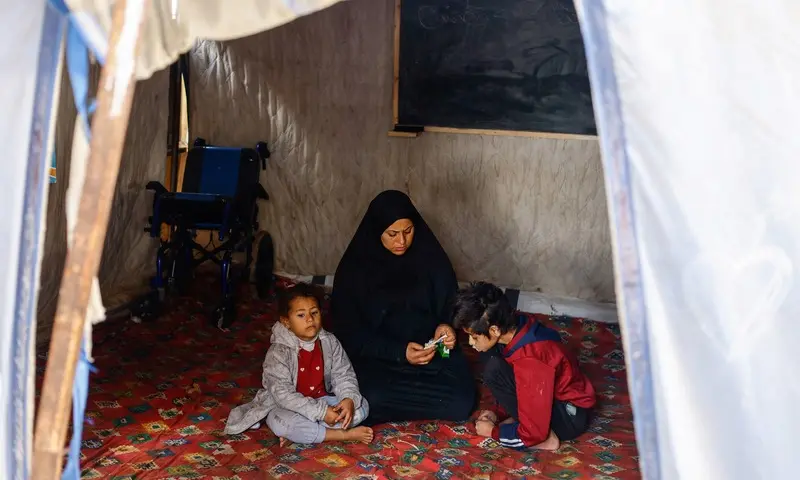
Many have spent their entire lives in Egypt, yet they say they face bureaucratic hurdles to access education, healthcare and other public services because they are treated as foreigners rather than citizens.
Generations in limbo
Inside her home, the wiry Abu Hussein sat on a worn sofa, a faded Bedouin tattoo tracing her chin.
Around her, dozens of grandchildren and great-grandchildren crowded the doorway and walls, filling in names and dates blurred by nearly a century of life.
Outside stretched a maze of narrow alleys and unfinished houses, with open sewers running through the village’s dirt lanes.
Residents spoke less about returning to their ancestral home than about education, employment and stability.
“I was born in Egypt. My father was born in Egypt. My children were born in Egypt,” said Selmi Soliman al-Namouli, a 63-year-old agricultural labourer and father of 10.
“But when it comes to paperwork, I am treated as a foreigner.”
Namouli said residency renewals, paid for in US dollars, school fees and other administrative costs placed such a heavy burden on his family that he could not afford to send his bright daughter, Asmaa, to university.
His nephew, Farid Khaled al-Namouli, 25, also gave up on higher education.
“When I reached preparatory school, I started to love education and wanted to continue,” he said. “But I kept running into obstacles with the paperwork.”
He left school and found work in a clothing shop in the village, where many residents never completed their education.
‘Ongoing Nakba’
The Namoulis are far from alone, according to Lubnah Shomali of the Palestinian refugee rights organisation BADIL, who said Palestinians across Egypt face similar challenges.
Researchers estimate that around 50,000 Palestinians displaced by earlier conflicts were living in Egypt before the latest Gaza war. Since the conflict began, more than 100,000 more have arrived.
The UN agency for Palestinian refugees, UNRWA, counts 3.5 million registered in Jordan, Syria and Lebanon.
The Gaza war has revived fears of another Nakba, but Shomali said Palestinians were already living through one.
“The most apt description of the situation for Palestinians is an ongoing Nakba because the displacement continues,” she told AFP, adding that generations of Palestinians have been trapped in a “coercive environment” that limits access to education, healthcare and other basic rights.
Egyptian officials have repeatedly said that Egypt has provided medical care and education to Palestinian refugees and has opposed any attempt to permanently displace them from their land.
Palestinians in Egypt once enjoyed access to education and employment largely on a par with Egyptian citizens under former president Gamal Abdel Nasser.
But after Egypt’s 1978 peace treaty with Israel and the assassination of culture minister Yusuf Sibai by members of the Palestinian group Abu Nidal, the regulations were tightened.
Right of return
Moreover, unlike in Jordan, Syria and Lebanon, where UNRWA offers schooling, the agency has never operated in Egypt, said Dawn Chatty, an emeritus professor of anthropology and forced migration at the University of Oxford.
“Education is what gave Palestinians hope,” Chatty told AFP.
“It allowed many refugees elsewhere in the region to find work abroad and support their families through remittances. But in Egypt, that did not happen.”
Successive Egyptian governments have also rejected naturalising Palestinians, arguing it could undermine their right of return, a position Shomali disputed.
The Egyptian foreign ministry did not respond to an AFP request for comment.
Despite the life she built in Egypt, Abu Hussein has never abandoned the idea of returning home.
“We had a good life back home,” she said. “If everyone here goes back, I’ll go with them.”