Category: dawn news

  • Death toll from Baloch Colony building collapse in Karachi rises to six

    Death toll from Baloch Colony building collapse in Karachi rises to six

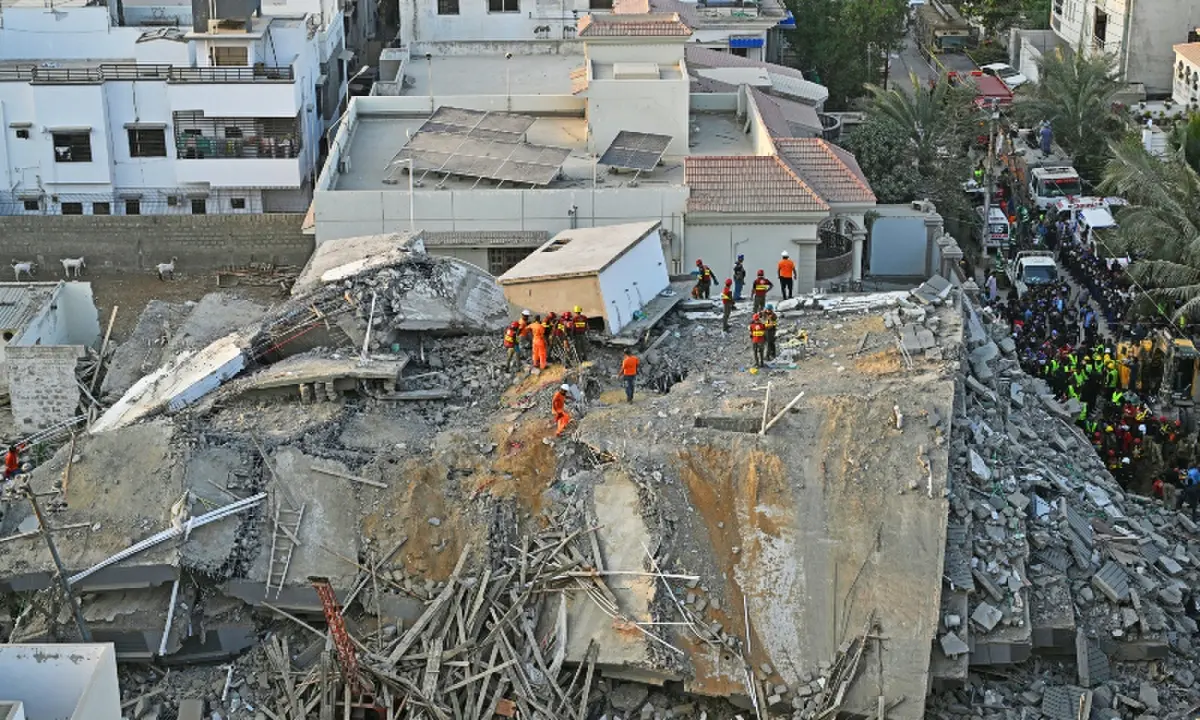
    KARACHI: Death toll from the collapse of an under-construction six-storey building near Karachi’s Baloch Colony area rose to six on Friday after rescue workers recovered two more bodies from the rubble.

    On Wednesday, three people were killed and 14 others injured when an under-construction building — reportedly being constructed illegally on a residential plot — collapsed. Another body was recovered on Thursday, taking the death toll to four.

    A Rescue 1122 spokesperson said the operation to recover bodies was underway.

    “Rescue 1122 has located the bodies of more people trapped beneath the rubble,” the spokesperson added.

    Sindh Local Government Secretary Waseem Shamshad, who also served as director general of the Sindh Building Control Authority (SBCA), was removed from both posts on Thursday on the directives of Chief Minister Murad Ali Shah following the incident.

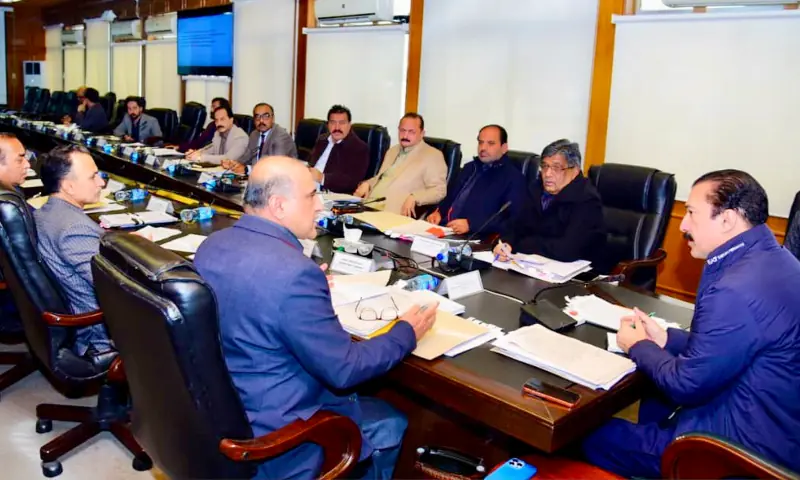
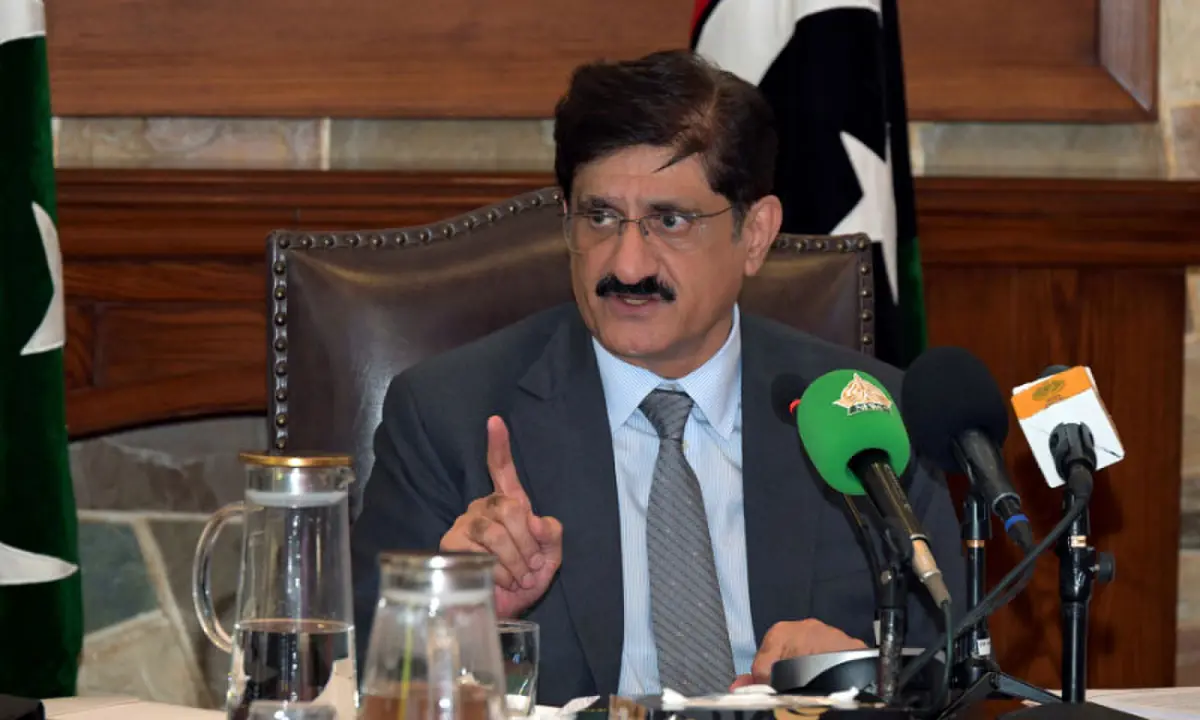
    The CM ordered sweeping action over the incident while chairing a high-level meeting, further issuing directives for the removal of East Deputy Commissioner Nasrullah Abbasi, as well as Senior Superintendent of Police (SSP) East Zubair Sheikh over “negligence”, a statement issued by the CM Office said.

    In addition to the removal of the three officials, CM Murad further issued directives for the suspension of 16 SBCA officials and the initiation of an inquiry against them.

    He directed the police to “immediately” arrest the building’s owner, Salman Tahir, and the builder, Zeeshan.

    Moreover, he instructed that the building’s architect and structural engineer be included in the incident’s investigation to determine whether the construction complied with approved plans, building regulations and safety standards.

    14 ‘illegal’ buildings in KAEHS to be demolished

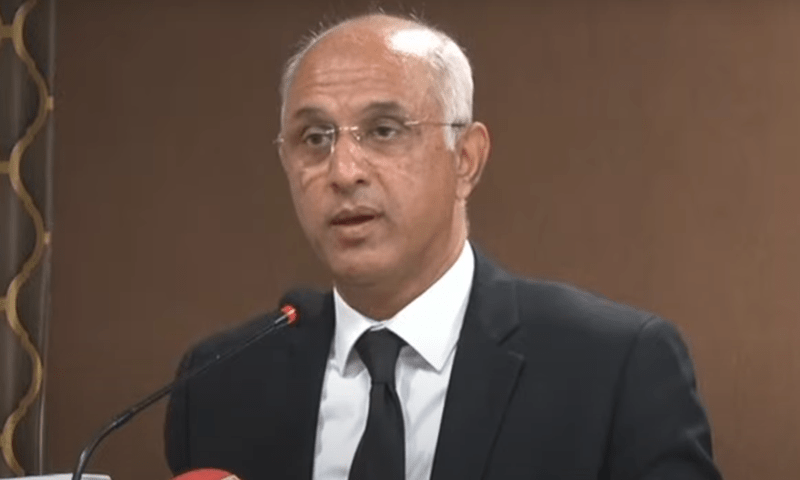
    The KDA’s Additional Deputy DG Farhan Kaiser visited the site on Thursday and told the media that their first priority was to remove the debris. He said that under the directions of the Sindh CM and LG minister, “illegal buildings” were being sealed across the metropolis.

    He said that so far, 14 buildings had been sealed in the KAEHS after the building collapse and would be demolished in a second phase of the operation.

    Kaiser added that it was the responsibility of the residents to report illegal buildings in their respective areas, and vowed to take action against the builders and owners of these buildings.

    Members of the Chief Minister Inspection Team (CMIT) Bilal Memon and Anwar Shar visited the scene and collected samples of the material used in the construction of the building for investigation purposes.

    Rehabilitation secretary Rafiq Mustafa Shaikh, SBCA DG Abid Saleem, Rescue 1122 DG Brig. (retd) Wajid Sibghatullah Mahar and Rescue 1122 COO Dr. Abid Jalaluddin Shaikh also visited the site and supervised the rescue operation.

    FIR registered

    A first information report (FIR) of the incident was registered at the Tipu Sultan police station on Wednesday, on the complaint of an official of the Sindh Local Government Department.

    The FIR, seen by Dawn, invoked Sections 302 (intentional murder), 119 (public servant concealing design to commit offence), 427 (mischief causing damage), 337-H(1) (hurt caused by rash or negligent act), 109 (abetment) and 34 (acts done by several persons in furtherance of common intention) of the Pakistan Penal Code.

    The building’s four owners — including Salman Tahir whose arrest the Sindh CM has ordered — its builder, architect, structural engineer and its contractors have been nominated in the FIR.

    According to the FIR, the complainant alleged that poor-quality material was being used in the construction of the building. He claimed that the suspects, in collusion with the officials of various government departments, had been involved in constructing additional structures and not complying with the building’s approved plan.

    This was why the building collapsed around 1pm, the complainant alleged.

    Police have arrested four of the suspects, including one of the owners, Saad Tahir, and three contractors, who were produced before the judicial magistrate (south) today.

    The judge granted police five-day physical remand of the suspects.

    Source: dawn

  • Woman hurt in acid attack in North Karachi

    Woman hurt in acid attack in North Karachi

    KARACHI: A woman social worker was injured in an acid attack in North Karachi, officials said on Thursday.

    Central SSP Dr Mohammed Imran Khan told Dawn that the woman, identified as Nazia Mohammed Ali, 38, was riding a motorcycle and passing by a public school in Sector 11-C 2 in North Karachi when a man attacked her with acid and fled.

    She suffered burns and was taken to hospital for treatment.

    As per initial investigation, the woman disclosed that she is a social worker and lives along with her family/husband in government quarters in Sector 11-A of North Karachi.

    She named Tabish Ali as the person who threw acid on her, stating that a few days ago she had recorded a statement against his father in a court of law.

    She believed that due to her statement in court, the man threw acid on her when she was going on her motorbike towards Nagan Chowrangi.

    The senior officer said owing to wearing a helmet and a jacket, the victim managed to avoid serious wounds and received minor injuries on her back.

    Later, the police carried out a raid and arrested suspect Tabish.

    Published in Dawn, November 27th, 2026

    Source: dawn

  • Big fat wedding in India draws 400,000 guests

    Big fat wedding in India draws 400,000 guests

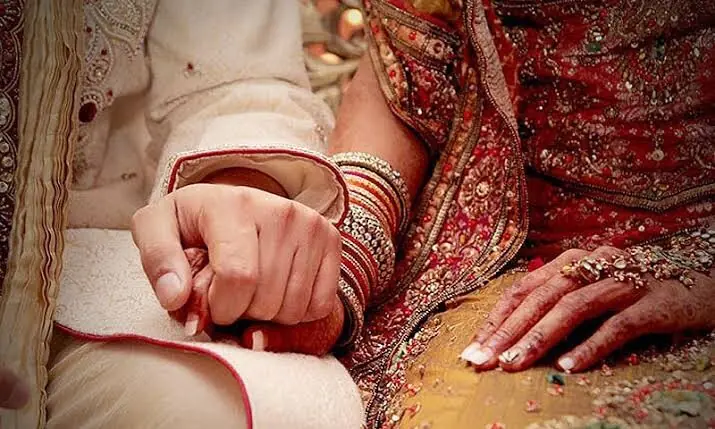
    PATNA: Some 400,000 guests attended a wedding hosted by a politician in India’s poorest state, choking roads and sending spectators scrambling up electricity pylons for a glimpse of the lavish celebrations.

    Anant Singh, a six-time lawmaker who faces dozens of criminal cases including murder charges, invited villagers, political allies and VIPs to his daughter’s wedding in the eastern state of Bihar on Wednesday.

    The scale was staggering even by the standards of India’s famed extravagant weddings that last for days.

    Guests were treated to 500,000 pieces of traditional sweets and a vegetarian feast prepared by an army of 500 chefs and cooks, Singh’s confidant Munna Singh said.

    The event in Anant Singh’s native village of Nadawan drew such huge crowds that roads leading to the venue ground to a standstill. One politician, unable to force his way through the traffic chaos, abandoned his car and rode a tractor across farm fields to reach the venue, the Times of India reported.

    Organisers built five helipads to ferry in VIP guests, with each helicopter touchdown whipping up clouds of dust that swept through crowds of curious onlookers.

    Images published by the Press Trust of India news agency showed thousands jostling for a glimpse of the sprawling venue, while others perched precariously atop trees and electricity towers. Organisers were forced to postpone a horse race as part of the celebrations after some 100,000 people turned up to watch the spectacle involving 200 horses.

    Elaborate flower arrangements featuring blooms imported from China and a fireworks display also enthralled guests. The bride arrived in a luxury BMW, while the groom travelled in a convoy of around 200 cars.

    More than 10 million weddings take place in India every year, feeding an industry estimated to be worth $40-$50 billion, according to KPMG.

    Published in Dawn, November 27th, 2026

    Source: dawn

  • Constitutional liability

    Constitutional liability

    EVERY out-of-school child is a living reminder to the state of its constitutional commitment, and these reminders have been increasing since the inception of Pakistan. Now these living reminders have crossed 25 million.

    Seventy-nine years after independence, Pakistan is still struggling to fulfil one of the most fundamental responsibilities of a modern state, ensuring that every child receives an education. A nuclear state has produced generations without an education system capable of accommodating them.

    Pakistan’s failure to educate its children is not a recent phenomenon, nor did the constitutional responsibility of the state begin with Article 25-A in 2010. The commitment dates back to the country’s early constitutional history. The 1956 Constitution explicitly recognised the state’s responsibility to eliminate illiteracy and provide free and compulsory primary education. The 1962 Constitution retained this commitment. The 1973 Constitution went further through Article 37(b), requiring the state to remove illiteracy and provide free and compulsory secondary education within the minimum possible period.

    The insertion of Article 25-A through the 18th Constitutional Amendment in 2010 was therefore not the beginning of the state’s educational responsibility. It was an attempt to transform a longstanding constitutional aspiration into an enforceable fundamental right. Yet, decades of constitutional commitments have failed to produce universal educational access.

    From the promise of compulsory primary education in 1956 to the guarantee of education for every child aged 5-16 in 2010, the state has repeatedly renewed its commitment without ensuring its fulfilment.

    Every child denied education represents lost human capital.

    The question is why, despite repeated constitutional commitments, successive governments have failed to ensure that every child has access to a school. It seems every government has also failed to realise that every child denied education represents lost human capital and another potential victim of intergenerational poverty.

    A country cannot build a knowledge economy, strengthen democratic institutions, or achieve sustainable development while leaving millions of its children disconnected from education and the opportunities that accompany it. The children are not the liability. The liability is created by a system that allows millions of children to grow up without education, skills, opportunities, or meaningful participation in society.

    Unesco data indicates that Pakistan has a substantially higher proportion of primary-school-age children out of school compared with India, Bangladesh, Nepal, Bhutan, the Maldives, and Sri Lanka. While these countries have made considerable progress in expanding educational access, Pakistan continues to struggle with millions of children excluded from the education system.

    This regional disparity suggests that the crisis is not merely a consequence of poverty or population growth, but also reflects persistent failures of educational planning, governance, investment and political commitment.

    Bringing over 25m out-of-school children into the education system is not merely a matter of an enrolment campaign. It requires an enormous expansion of educational infrastructure, human resources and recurring public expenditure.

    Assuming 40 students per classroom, Pakistan would need approximately 628,750 classrooms to accommodate these children. At an illustrative staffing ratio of 1.2 teachers per classroom, the country would require approximately 754,500 additional teachers. If these teachers were recruited at the initial BPS-14 pay of Rs27,060 per mon­th, the annual salary bill alone would be roughly Rs245 billion. This estim­ate covers basic salaries only, excludes allowances, pensi­o­­ns, and teacher tr­­a­ining. The capital cost of constructing schools with basic amenities, as well as recurring administrative expenditure, would certainly be a substantially higher fiscal commitment.

    The scale of the challenge is enormous, so is the cost of inaction. Pakistan’s reported education expenditure of Rs962bn in FY2024-25 was already insufficient to meet the needs of its existing education system. The question is therefore not simply how much it would cost to educate the excluded children, but why a country that has constitutionally guaranteed education to every child has failed to develop a sustainable financing mechanism to fulfil that guarantee.

    A constitutional right cannot remain confined to the pages of a constitution, nor can the state continue to measure its educational achievements through policies announced, schools inaugurated, or budgets allocated. The real measure of its commitment must be the child sitting in a classroom, learning to read, write, think, and participate in society.

    The writer is a social development practitioner.

    Published in Dawn, November 27th, 2026

    Source: dawn

  • Opposition disarray

    THE PTI on Wednesday distanced itself from Mahmood Khan Achakzai’s proposal for a national government and his demand for political and constitutional reforms. The party has not issued a formal reaction, but its leaders have made its stance clear in background conversations with the media.

    This shows the alliance chief did not consult other parties before making the proposal public.

    A similar disconnect between the PTI and other member parties of the TTAP surfaced a couple of months ago, when the PTI gave a call for a protest march on Islamabad.

    Speaking at a conference in Lahore, Mr Achakzai also stressed constitutional supremacy, parliamentary sovereignty and the restoration of democracy. His concerns about worsening insecurity in KP, Balochistan and AJK deserve serious attention. These problems will not be solved by unilateral decisions or political expediency.

    However, the demand for a national government appears premature and offers no clear way out of political uncertainty. Replacing the present setup with an arrangement whose mandate and duration remain undefined could deepen existing divisions.

    More concerning is the opposition alliance’s lack of coordination, which has again exposed its differences. Opposition parties need to settle whether their leaders speak for the alliance or only for their own parties. Contradicting one another in public weakens their credibility.

    A coalition that cannot agree on a public position will struggle to offer a credible alternative programme. The opposition would be better off using the rest of the parliamentary term to press the government on issues that bear directly on democratic governance. These issues include protection of civil liberties, curbs on freedom of expression and the matter of political prisoners. The restoration of normal democratic administration in KP also requires attention.

    Moreover, both sides of the aisle need to begin working out arrangements to ensure free, fair and credible elections when the present government’s term ends. That requires agreement on electoral safeguards, the neutrality of state institutions and an environment in which parties can compete without intimidation.

    Calls for constitutional supremacy will carry little weight unless political parties show their own commitment to parliamentary democracy. Sustained engagement in parliament would help the opposition build public confidence, and it should not squander that chance on premature demands for another political arrangement.

    The government would do well to reckon with the cost of poor governance, heavy-handed treatment of the opposition and other sections of society, and a weak economic record. Left unaddressed, these issues will hand its critics ample ammunition for more agitation.

    Published in Dawn, November 27th, 2026

    Source: dawn

  • Islamabad set to host 2-day Makkah Defence Alliance meeting; Yemen conflict also on agenda

    Islamabad set to host 2-day Makkah Defence Alliance meeting; Yemen conflict also on agenda

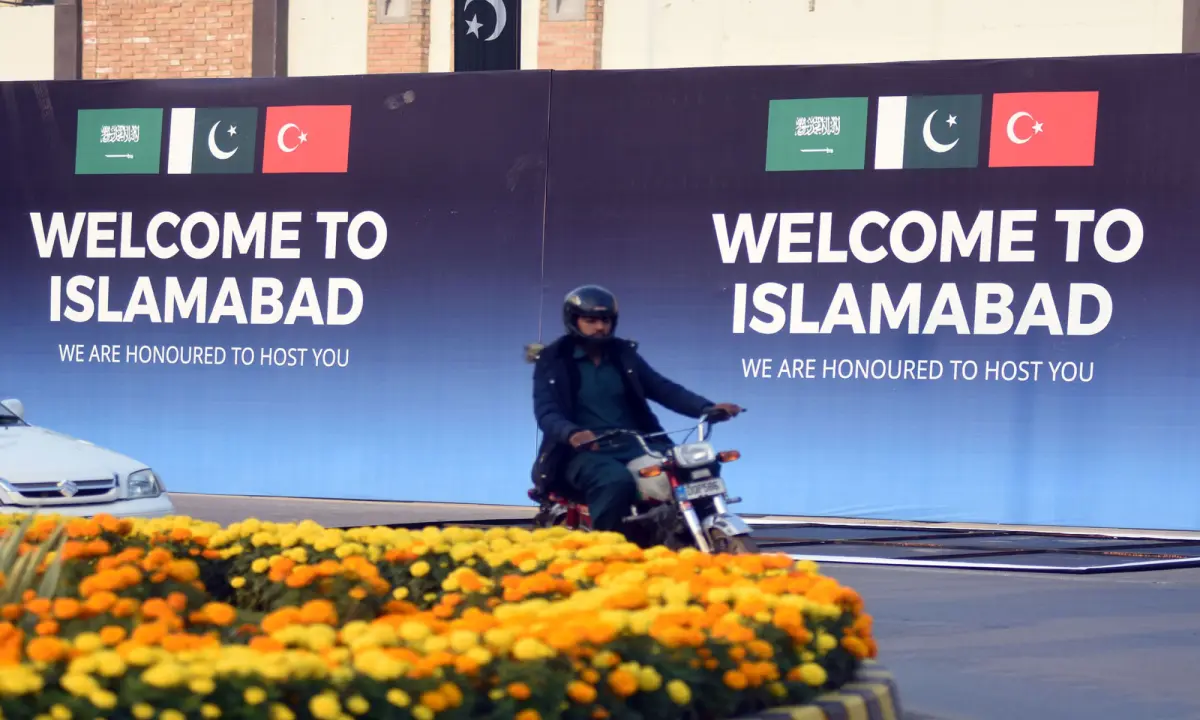
    Pakistan is set to host a two-day meeting of the tripartite Makkah Defence Alliance’s top decision-making body from today, with discussions also expected to feature the conflict between Saudi Arabia and Houthi fighters in Yemen.

    The third session of the Strategic Political and Defence Committee (SPDC) is set to be held in Islamabad, where authorities have announced a public holiday today and imposed special movement restrictions in view of the high-level gathering. A local holiday has also been announced in Rawalpindi.

    The Islamabad meeting is also expected to focus on finalising standard operating procedures (SOPs), establishing an implementation mechanism and defining coordination between the three countries’ political, defence and military institutions, a Pakistani official said.

    Defence Minister Khawaja Asif said on Thursday that the foreign and defence ministers of Saudi Arabia, Turkiye and Pakistan would participate in the meeting and the “continuous turmoil south of Saudi Arabia will obviously be one agenda point in the meeting”.

    “It is very important,” he remarked.

    Saudi Arabia has faced repeated attacks by Yemen’s Ansar Allah movement, commonly known as the Houthis, targeting cities, oil facilities and shipping since fighting in Yemen’s civil war intensified in July.

    “Any threat to Saudi Arabia is a threat to Pakistan and Turkiye according to the pact, which is absolutely clear,” Asif said.

    The alliance

    The three countries signed the Makkah Joint Defence Agreement on Aug 7. The pact provides that an armed attack on any one member will be considered an attack on all, obliging the other two to extend assistance through available means, including military support.

    The SPDC, which brings together the foreign and defence ministers and chiefs of defence staff of the three countries, is the alliance’s principal decision-making forum.

    A permanent secretariat has been established in Riyadh to coordinate its work, with Pakistan’s retired Lt Gen Nauman Mahmood appointed as its first secretary general for a three-year term. A working committee comprising officials from member countries is also functioning.

    Turkiye’s ratification of the agreement has completed the accession process for all three member states, but the alliance’s institutional and operational framework remains at what Asif described as a “nascent stage”.

    “Initially, we need to have frequent meetings to steer what is being formulated, in a way that in the next couple of months we have everything in place so that we can move forward,” the defence minister said.

    The alliance has yet to publicly define its doctrine, the composition of forces, command arrangements or procedures governing a collective military response.

    An emergency SPDC meeting in Riyadh on Oct 5 had called for moving towards practical implementation of collective defence commitments, including arrangements for the rapid deployment of agreed forces and capabilities, subject to national laws.

    Wider regional tensions

    The alliance’s formation also comes against the backdrop of wider regional tensions involving Iran, the United States and Israel.

    While the three members share an interest in strengthening regional deterrence, their differing strategic priorities make it important to define the alliance’s scope without allowing it to become an instrument for wider military confrontation.

    Asif declined to comment on how the alliance would respond to a direct Iranian attack on Saudi Arabia, but identified Israel as a possible threat to other countries in the region.

    “The possibility of some conflict, or aggression from the Israeli side exists, so we need to close our ranks, the countries of this region,” he said.

    Managing relations with Iran will be particularly important for Pakistan, which has sought to preserve diplomatic engagement with Tehran while deepening defence cooperation with Saudi Arabia and Turkiye.

    A meeting in Tehran involving representatives of the three countries and Iranian officials, held on Pakistan’s initiative, reflected efforts to keep channels of communication open between the two sides.

    Pakistan brokered a June accord that led to a brief halt in fighting between the US and Iran and laid out a roadmap for reopening the Strait of Hormuz and negotiations on Tehran’s nuclear programme.

    However, the truce collapsed, with Washington and Tehran accusing each other of violating the agreement, prompting months of shuttle diplomacy led principally by Qatar and Pakistan.

    Asif said Pakistan had played “a very, very constructive role” between Washington and Tehran, but the outcome of ongoing mediation was “still fragile” and peace was “not yet embedded in a way people were expecting”.

    Recent Pakistani military deployments, including JF-17 aircraft, drones and air defence systems such as the HQ-9, were made under bilateral cooperation predating the alliance, a security source said, adding that these existing arrangements would now become part of the trilateral framework.

    Meanwhile, Turkiye has stressed the defensive character of the agreement and remained cautious about involvement in combat operations in Yemen.

    Source: dawn

  • AJK rolls out Rs15bn 100-day action plan

    AJK rolls out Rs15bn 100-day action plan

    • Programme focuses on health, education, transport and tourism; long-term projects extend beyond timeframe
    • 70 mobile hospital units, 75 electric buses and five Daanish Schools among key initiatives
    • PM Gillani says govt exploring options to complete stalled Jagran-II hydropower project

    MUZAFFARABAD: The PML-N-led Azad Jammu and Kashmir (AJK) government on Thursday unveiled a Rs15 billion, 100-day action plan, pro­mising improvements in health­care, education, transport, tou­rism and civic infrastructure.

    At a press briefing, five cabinet members outlined immediate initiatives as well as long-term projects extending bey­ond six months.

    Health and Population Wel­fare Minister Dr Mustafa Bas­hir Abbasi said the package aimed to accelerate development and provide basic amenities at the grassroots level. Under the Sehat Karwan initiative, 70 mobile hospital units would serve remote areas, while the Essential Medicines Programme would ensure the availability of life-saving drugs, emergency care and dialysis facilities at major hospitals.

    He said the government would also establish 20 model basic health units (BHUs) and 10 model rural health centres (RHCs), besides setting up operating theatres and nursery units at tehsil headquarters. District and divisional hospitals would be upgraded.

    Longer-term healthcare projects incl­uded catheterisation laboratories in Kotli, Rawal­akot and Bhimber, stroke centres in Muzaffarabad, Kotli and Mir­pur, and the Muhammad Nawaz Sharif Modern Cardiac Hospital in Bagh.

    Education and jobs

    Education Minister Sardar Umair Naeem said out-of-school children would be enrolled and provided free education under the Darsgah project. A cellular biometric attendance system, designed to work without internet connectivity, would also be introduced to curb absenteeism.

    The plan included constructing five Daanish Schools across AJK and establishing a Daanish University in Muzaf­farabad. The government would also launch scholarship progra­mmes, distribute 5,000 laptops on merit in the first phase of the AJK Laptop Progra­mme and offer interest-free loans under the Naujawan Rozgar Scheme.

    An Asaan Karobar initiative would introduce a one-window operation and regulatory reforms to facilitate investors.

    Transport and civic facilities

    Minister for Forests and Wildlife Waqar Ahmad Noor said 75 electric buses would be introduced in seven AJK cities under the Kashmir Express Service.

    Road resurfacing in Poonch, Bhimber and Kotli was also planned. Rescue 1122 units were being established in Neelum and Bagh.

    The Suthra Kashmir campaign would be launched across all 10 district headquarters, alongside urban beautification projects in Muzaffarabad, Mirpur and Rawalakot.

    Longer-term civic projects included landfill sites across the three divisions, a slaughterhouse and fruit and vegetable market in Muzaffarabad, and an urban drainage and flood protection scheme in the capital.

    Mr Noor said the AJK One Portal would bring e-stamping, e-tendering, e-procurement and e-payment services together on a single platform, complemented by a Prime Minister’s Complaint Cell.

    Tourism schemes

    Minister for Industries, Commerce and Tourism Chaudhry Abdul Rehman Arain said the Discover AJK and Clean Tourism Azad Kashmir initiatives would focus on eco-tourism, hiking and adventure trails. The government also planned to revamp 26 guest houses and 32 tuck shops under a public-private partnership and build highway rest areas along the Kohala-Muzaffarabad and Azad Pattan-Rawalakot roads.

    Other initiatives included interest-free housing loans for homeless people under the Apna Ghar scheme, mass weddings for deserving women through the Dhee Rani programme, and extensive tree plantation along highways under the Sarsabz Shahrah drive.

    Jagran-II project

    Separately, Prime Minister Iftikhar Gillani told the AJK Legislative Assembly that his government was exploring options to complete the 48-megawatt Jagran-II hydropower project in Neelum Valley, where work has remained stalled due to multiple factors.

    Responding to a call-attention notice by PPP lawmaker Mian Abdul Waheed, he said 93 per cent of the project had been completed, with only 7pc of the work remaining.

    He attributed the delay to the Covid-19 pandemic, activities of the now-proscribed Joint Awami Action Committee (JAAC) and Operation Bunyanun Marsoos, during which the Chinese contractor suspended work and demobilised its workforce.

    The company was now reluctant to return to the site, he said, adding that the government had held discussions with relevant institutions to find a way forward. Electrical equipment was already available at the site, while negotiations on outstanding matters were underway.

    Mr Gillani said completion of the project remained among the government’s priorities and would boost electricity generation and revenue for AJK.

    Published in Dawn, November 27th, 2026

    Source: dawn

  • Amid talk of new provinces, Sindh CM announces consultations on local govt empowerment

    Amid talk of new provinces, Sindh CM announces consultations on local govt empowerment

    • Forms body to meet opposition; says next local govt elections to be held on time

    KARACHI: Chief Minister Syed Murad Ali Shah on Thursday announced a comprehensive consultation process for a new local government law and formed a two-member ministerial committee to hold talks with all stakeholders and submit its report within three months.

    The announcement comes against the backdrop of talk of creating new provinces and administrative units across the country, including in Sindh — a demand that the Pakistan Peoples Party has been vociferously opposing.

    Addressing a press conference at the CM House, the chief minister said that the aim was to strengthen local bodies, give them greater autonomy and improve their financial and administrative capacity.

    Flanked by provincial ministers Sharjeel Memon, Nasir Shah, Saeed Ghani and Ziaul Hassan Lanjar and Karachi Mayor Murtaza Wahab, the chief minister added that the committee would consult political parties, civil society and other relevant stakeholders.

    The committee comprising ministers Syed Nasir Hussain Shah and Ziaul Hassan Lanjar would start work next week, contact all stakeholders and present its recommendations following comprehensive consultations within three months, he added.

    “The proposed legislation will be made through amendments to the existing local government law, while the next local government elections will be held on time,” he added.

    The chief minister said that the province had held elections even in difficult political and security conditions.

    “We want to make local bodies more empowered. How they will be empowered will be decided through consultation with all stakeholders,” he said, adding that the government also wanted to strengthen the finances of local councils through the Provincial Finance Commission.

    Answering a question about a proposed referendum for the creation of new provinces, the chief minister said that no one had spoken to him on the matter, nor had he been asked to initiate any such process.

    “The Sindh Assembly has already rejected proposals to create new provinces within Sindh’s boundaries by a two-thirds majority,” he added.

    Published in Dawn, November 27th, 2026

    Source: dawn

  • 26th, 27th Amendments sparked judicial conflict: ex-IHC judge

    26th, 27th Amendments sparked judicial conflict: ex-IHC judge

    • Kayani calls for parliamentary intervention to resolve judicial conflict
    • Urges authorities not to issue notices to media under Peca

    ISLAMABAD: Former Islam­abad High Court (IHC) judge reti­red Justice Mohsin Akhtar Kayani has said that the 26th and 27th Constitutional Amendments have triggered a conflict between two superior courts, warning that the disregard for established judicial precedents and the creation of new ones have further complicated the constitutional and legal framework.

    Speaking at a seminar titled ‘Personal Safety and Justice in a Digital World’, organised by the Institute of Regional Studies in Islamabad, Justice Kayani said that the issues arising from the Nadia Sarwar case before the Federal Constitutional Court (FCC) could only be addressed through parliament.

    He said the current state of the Constitution was evident to everyone, yet people remained silent despite being aware of what was happening.

    “The 26th and 27th amendments have given rise to a conflict between two superior courts,” he said, adding that established judicial precedents were being disregarded and new, problematic precedents were being set.

    He said parliament was the appropriate forum for resolving conflicts between the superior courts, emphasising that legislation was its prerogative, while the interpretation of the Constitution was the responsibility of the courts.

    He urged lawmakers to debate legal matters in parliament before introducing legislation to ensure that parliamentarians fully understood the laws being enacted and their implications.

    The former judge also questioned the growing use of laws regulating online expression, particularly the Prevention of Electronic Crimes Act (Peca), saying that journalists, members of parliament and lawyers were among those affected by the legislation.

    He urged the authorities not to issue notices to media organisations under Section 26-A merely for publishing news reports.

    “For God’s sake, do not issue notices to the media under Section 26-A. It should not be the case that the moment the media reports a story, a notice is im-mediately issued against them,”

    he said, stressing the need to protect journalists.

    He questioned the effectiveness of establishing new agencies to enforce such laws, remarking that authorities often created new agencies only to appoint the same officers under different uniforms.

    He also pointed out that several terms associated with online harassment remained poorly understood, adding that those for whom the legislation was intended had neither been properly consulted nor adequately informed about its provisions.

    Published in Dawn, November 27th, 2026

    Source: dawn

  • AJK govt removes Rawalakot mayor over ‘anti-state’ allegations

    AJK govt removes Rawalakot mayor over ‘anti-state’ allegations

    MUZAFFARABAD: The Azad Jammu and Kashmir (AJK) government on Thursday removed Rawalakot Mayor Abdul Naeem Khan from office and terminated his membership of the municipal corporation over his alleged “involvement in anti-state activities”.

    A notification issued by the Local Government and Rural Development Department said the action was taken under Section 23(2) of the Local Government Act, 1990.

    According to a separate notification by the AJK Home Department, dated Nov 15, Khan’s name was among those placed on the Fourth Schedule under Section 16 of the AJK Anti-Terrorism Act.

    The notification, listing at least 28 names, cited a decision of a cabinet meeting held on June 5, adding that the AJK president approved placing “activists” of the proscribed Joint Awami Action Committee (JAAC) on the Fourth Schedule.

    Khan, who reportedly belongs to the Jammu Kashmir Peoples Party (JKPP), was elected mayor in 2023.

    Before his election, he had headed a faction of the Rawalakot traders’ body with JAAC leader Umar Nazir Kashmiri serving as his deputy. After Khan became the mayor, Kashmiri was made the president of the traders’ forum.

    The region has witnessed violence-marred protests over the past few months, particularly in June and July, with reports of sporadic unrest in recent weeks. At the root of the tensions was JAAC’s demand to abolish the 12 refugee seats in the AJK Legislative Assembly.

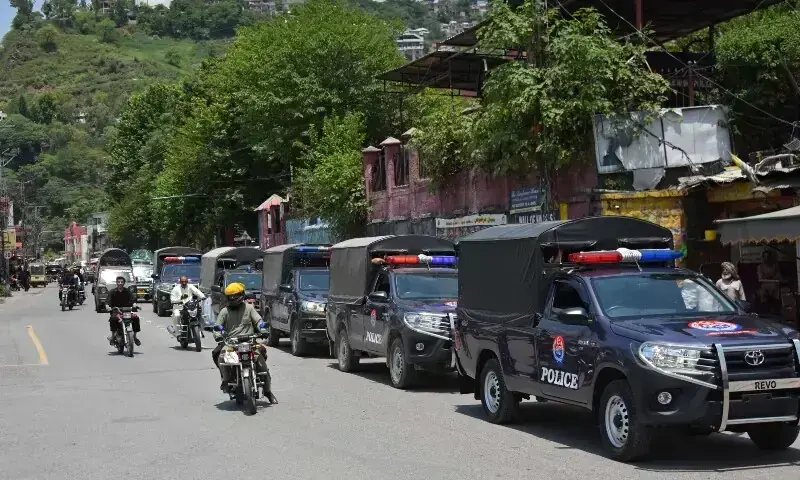
    Rawalakot of Poonch district witnessed multiple protests in June and July, with clashes between demonstrators and law enforcement personnel on at least two occasions.

    On June 5, following the announcement of the JAAC’s June 9 strike, the then-PPP-led AJK government declared the committee a proscribed organisation and placed it under the First Schedule of the local ATA.

    The federal government had accused militant elements “pu­r­­s­u­ing a foreign age­nda and backed by Indian funding” of fomenting the unrest in AJK.

    On Wednesday, the AJK Legislative Assembly offered to reopen negotiations with JAAC, subject to the disbandment of armed groups, surrender of those allegedly involved in serious crimes and an unequivocal commitment to pursue demands through constitutional and democratic means.

    Registration of 14 private schools in Poonch cancelled

    Separately, the AJK Elementary and Secondary Education Department has approved the cancellation of registration of 14 private educational institutions across Poonch district, including Rawalakot, Hajira, Jandali and Thorar.

    An order issued by the department on Thursday said the decision had been approved by the chairman of the AJK Private Educational Institutions Regulatory Authority (Peira) under Rule 8(3) of the Private Educational Institutions (Registration, Regulation and Promotion) Rules, 2015.

    The action was taken on the basis of reports alleging that the institutions had been involved in activities contrary to the integrity and solidarity of the state, the order said.

    Of the 14 institutions, seven are located in Rawalakot and its adjoining areas, three in Hajira, and two each in Thorar and Jandali.

    Copies of the order have been forwarded to relevant departmental authorities, the Poonch divisional commissioner, the chairman of the Federal Board, the chairman of the AJK Board of Intermediate and Secondary Education, Mirpur, and education officials in Poonch division.

    Previously, the registration of 10 private schools was cancelled on similar grounds.

    Source: dawn