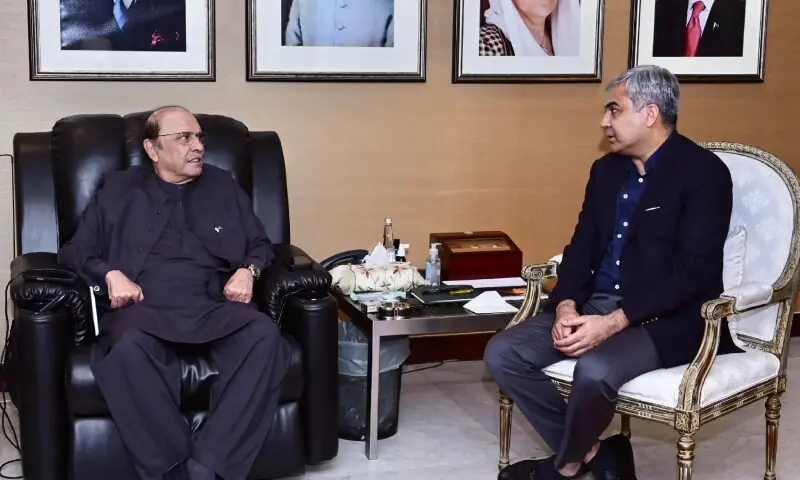
The President House said on Friday refuted media reports about yesterday’s meeting between President Asif Ali Zardari and Interior Minister Mohsin Naqvi, saying that discussions focused on national security and regional situation.
The clarification comes after several media reports emerged claiming that Naqvi and the president had discussed the formation of new provinces during a meeting in Nawabshah on Thursday night. No official handout was issued about the meeting.
“There is no truth to media reports suggesting that matters concerning the provinces were discussed during the interior minister’s meeting with the president,” the President House said in a statement.
“Matters concerning national security and the regional situation were discussed during the meeting. However, no discussion took place on matters related to provinces,” the statement added.
The security czar has whipped up a political storm over the past few months since he called for the formation of new administrative units in the country, saying the current “system” of governance had “collapsed” and needed a “reset”.
Earlier this week, Naqvi reaffirmed his stance on the creation of new provinces or administrative units. He suggested that political parties should hold a referendum to gauge the public’s opinion on this matter, terming it the “solution” to the ongoing debate.
However, the PPP, which rules Sindh and is also an ally of the PML-N government at the Centre along with MQM-P, has strongly opposed the suggested move for new provinces.
In September, the Sindh Assembly adopted a resolution rejecting all attempts to divide the province or create new administrative units, with the CM Murad declaring that “there will be no compromise on Sindh’s geographical unity”.
Meanwhile, PPP Chairman Bilawal Bhutto-Zardari has called for a “full stop” on the debate surrounding new provinces and also a “political reset”, wherein all political parties must unite for the sake of the country rather than indulge in “unnecessary debates”.
In his remarks on Thursday, Naqvi contended that he and Bilawal were “nearly on the same page”.
“He [Bilawal] said that political matters are about to be reset, while my suggestion is that overall matters are about to be reset,” Naqvi said.
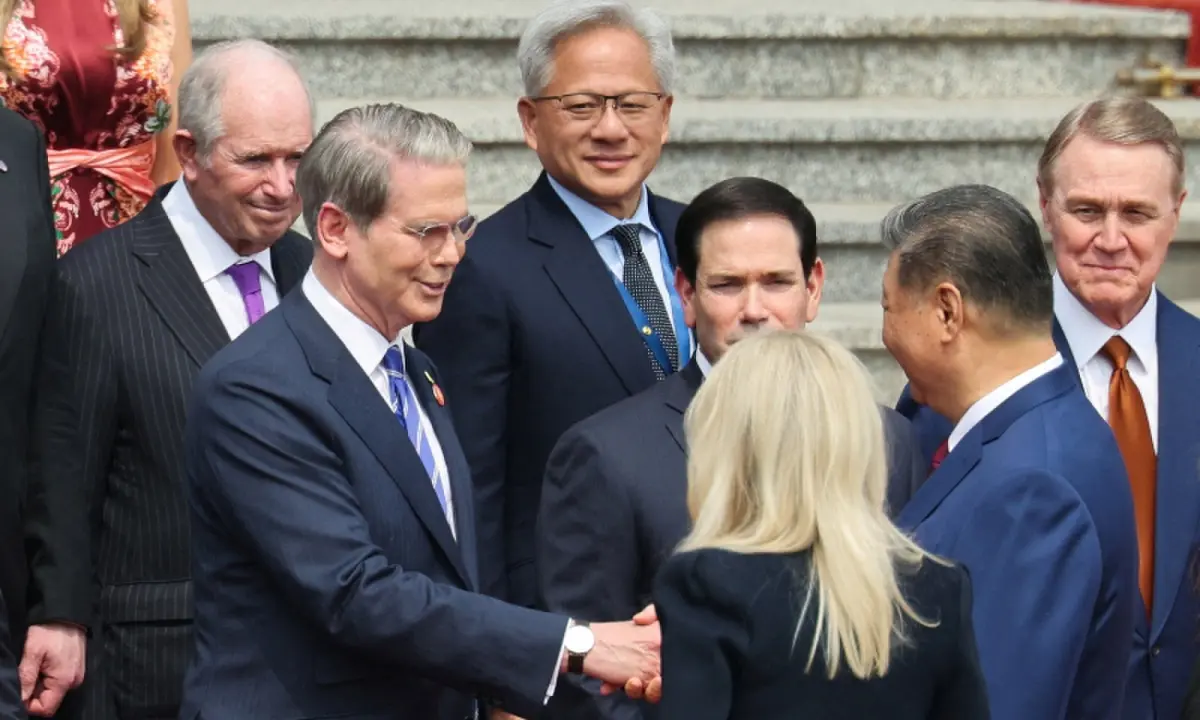
US Treasury Secretary Scott Bessent on Friday blamed the Commerce Department for failing to blacklist Megaspeed, the Singapore company at the centre of a scandal that prompted Nvidia chief executive Jensen Huang to resign.
Speaking on CNBC, Bessent said Treasury, the Defence Department, the US Trade Representative’s office and the State Department had backed adding Megaspeed to Washington’s trade blacklist, “for months”.
“But Commerce has the pen,” Bessent said. “You will have to ask them about their internal processes.”
He said he was “frustrated” because President Donald Trump “made it very clear that China should not receive any Nvidia chips above H100s”.
“Any leakage is very frustrating because it hurts our great companies, and in the AI race gives the Chinese an advantage,” he said.
The remarks are a rare public rebuke of one cabinet department by another. Commerce is led by Secretary Howard Lutnick.
Megaspeed is suspected of helping Chinese firms get around US export controls by buying Nvidia chips for its data centres in Southeast Asia and routing them to China. The company reportedly traded more than $4 billion worth of Nvidia chips over two years.
Its former director Alice Huang was this week identified in US media as an alleged Chinese intelligence asset who had a relationship with Jensen Huang. The two are not related. Beijing has denied the spying allegations.
Jensen Huang acknowledged an extramarital affair in a November 8 letter to Nvidia employees that did not name the woman involved and resigned his position on Thursday. Nvidia’s board has said it will investigate, and three US Congress committee chairs have asked him to attend a closed-door briefing on November 18.
Bessent said coverage of the affair had focused too much on Huang’s private life.
“The story thus far has been on Jensen Huang’s personal foibles,” he said. “The real story here should be: Did Nvidia know their client, and was there a robust effort at Nvidia to make sure that there was no leakage?”
He questioned whether Nvidia had been selling to “what were obviously pass-through shell companies”.
“I think it’s important that anyone at the company there be held accountable for that,” Bessent said, adding that there was “a lot of leakage in the system” and that the administration was “constantly working to close that down”.
Old-school technology including telephones, faxes and Bluetooth limited the damage for some people on Friday as a worldwide outage of Microsoft’s Outlook left millions without email.
The prolonged disruption, which also hit Microsoft Teams and Copilot, affected some of the world’s biggest institutions, from bankers and traders to shipping firms.
While most reported their core systems were still running, trading and administrative work slowed in places in the latest reminder of how much of the world’s commerce, public services and communications run on a handful of technology providers.
“The pressure is mounting to invest in contingency plans and test whether those backups actually work when needed,” said PP Foresight analyst Paolo Pescatore, adding that firms needed multiple providers for key services like communication and data storage.
Microsoft, which says on its website that more than 430 million people use its 365 services, blamed server problems and said it was not aware of any malicious activity.
The disruption comes weeks after attacks on the industrial systems that keep supermarket food cold and shows how a single point of failure, whether a technical fault, cyberattack or even an extreme weather event, can disrupt everyday business.
In its latest update on Friday, Microsoft said it was seeing signs of stabilisation after implementing fixes more broadly to attain a persistent recovery of services.
European exchange operator Euronext, which runs bourses in Paris, Brussels, Lisbon, Amsterdam, Oslo, Athens and Milan, told listed companies to pick up the phone.
“We have ensured that the team has sufficient capacity to manage the situation and handle the additional workload,” a spokesperson said, adding that Euronext was verifying the identity of callers to protect confidentiality and integrity.
Aviva, which reported earnings on Friday, said it had put backup plans in place, including sending out alternative phone numbers for earnings calls and using Bluetooth to transfer recordings because email was down.
The British insurer tested a similar-scale outage of its most critical technology systems about two weeks ago, CEO Amanda Blanc told Reuters.
Shipping group Maersk asked customers to call with anything urgent and urged them to verify any unexpected communications about the outage with their local representative.
Fax machines return in Taipei
In Taiwan, the outage disrupted fund management at securities firms, life insurers and investment trust companies, people familiar with the situation said.
At another financial firm, trades such as purchases and sales of short-term bills, which are normally confirmed by email, had to be confirmed by fax instead, one of the people said.
Foreign banks and financial institutions in Taiwan were hit especially hard, a trader said, because much of their data is emailed to overseas headquarters through Microsoft’s systems.
In Britain, HSBC and Barclays activated internal incident teams to assess the impact, people within the banks told Reuters. While email systems were down, most client services were unaffected.
HSBC reminded staff not to use unauthorised channels such as personal email or WhatsApp to get around the outage, one said.
Two trading professionals said they observed lower trading volumes in some markets on Friday that they attributed to difficulties in executing trades.
Caitlin Egen of Control Risks said that big global firms usually had contingency plans, but when key services went down abruptly it was still a “wake-up call”.
“For a lot of businesses this morning, it’s probably been chaos trying to figure out how to even get in touch with people,” she said.
The delegation from the Barrick Mining Corporation on Friday expressed strong interest in investing in the establishment of mineral processing industries in Karachi and Gwadar.
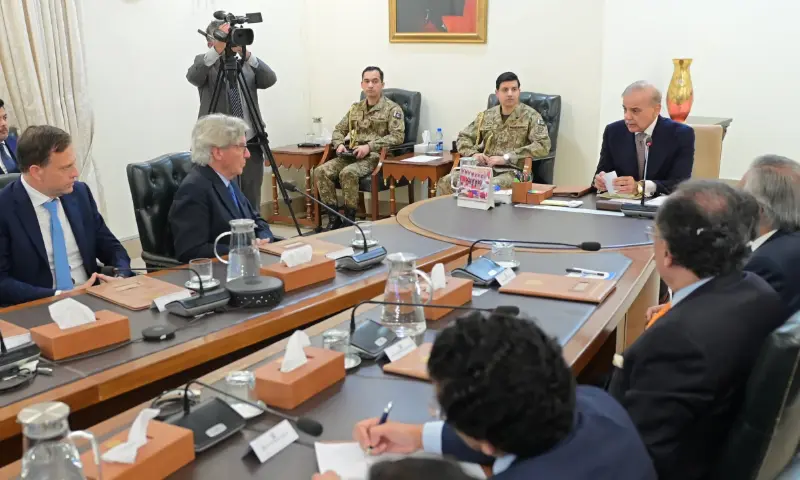
The development came as the delegation, led by Chairman John Thornton, held a meeting with Prime Minister Shehbaz Sharif in Islamabad, a statement by the Prime Minister’s Office (PMO) said on X.
According to the PMO, the visiting delegation described the decision by the prime minister and the government to hold a minerals conference as an important step towards mineral development in Pakistan.
“The delegation expressed strong interest in investing in the establishment of mineral processing industries in Karachi and Gwadar,” the statement added.
It quoted the premier as saying that Pakistan was a country rich in natural resources and mineral wealth. He said that harnessing these resources to develop the province and improve the prosperity of its people was the government’s top priority.
“Major projects such as Reko Diq will create new opportunities for employment, skills development and economic growth for the people of Balochistan,” PM Shehbaz said.
Pakistan was committed to putting its vast mineral resources to use and creating new opportunities for global investment, he added.
The prime minister further said that the Reko Diq project was an important milestone for investment in Pakistan’s mineral sector and was of key importance to the country’s economic future.
“The success of the Reko Diq project will set a benchmark for future mineral investment in Pakistan,” PM Shehbaz said, adding that to develop the mineral sector, the government of Pakistan was creating a favourable environment based on “trade, investment, infrastructure and modern technology”.
“The Reko Diq project is an important milestone for investment in Pakistan’s mineral sector, and that its success will also serve as a model for future projects,” he said.
During the meeting, the prime minister said that Balochistan was rich in natural resources and mineral wealth and that these resources could be harnessed effectively to develop the province, improve the prosperity of its people and increase employment opportunities.
“Ensuring that the people of Balochistan directly share in the benefits of mineral projects, creating employment and skills development opportunities for local young people, and developing surrounding communities are among the government’s priorities.”
The prime minister also welcomed Barrick Mining Corporation’s participation in the Pakistan Minerals Investment Forum 2026, the statement said.
The meeting also discussed policy, regulatory and infrastructure frameworks conducive to the mineral sector in Pakistan, the statement said.
It added that the prime minister also expressed a desire to draw on Barrick’s expertise and experience to develop Pakistan’s mineral sector beyond Reko Diq.
The Reko Diq mine, one of the world’s largest underdeveloped copper-gold deposits, is hoped to generate $70bn in free cash flow and $90bn in operating cash flow.
Canadian mining titan Barrick Mining (formerly Gold) Corporation and the federal and Balochistan governments own the project jointly.
According to government sources and industry insiders, production at the Reko Diq copper-gold project could be delayed by two years to 2030, pending improved security in Balochistan and de-escalation in the Middle East crisis.
Another delegation meets PM Shehbaz
Separately, Ivanhoe Mines’ founder and executive co-chairman Robert Friedland also met with the premier, with the latter asserting that Pakistan was rich in mineral resources and that the government was committed to working with global partners to harness the country’s vast reserves of copper, gold and other critical minerals.
According to a statement by the PMO, designating Pakistan a “priority destination” for mineral investment reflects growing confidence among global investors in the country mineral potential and investment climate.
PM Shehbaz also welcomed Ivanhoe Mines’ interest in Pakistan and its cooperation with local partners. Furthermore, per the statement, the PM said the exchange of MoUs at the Pakistan Minerals Investment Forum was a “welcome” development.
“Creating a conducive environment for investment in the minerals sector is among the government’s priorities. Ivanhoe Mines will be provided full facilitation through the Special Investment Facilitation Council,” the statement read.
The delegation also praised the premier’s leadership and efforts to promote regional peace and stability as well as economic reforms, according to the statement.
It quoted the premier as saying that Pakistan has “vast” reserves of copper, gold and critical minerals, “which could be harnessed to boost the national economy and improve public prosperity”.
The meeting was attended by Deputy Prime Minister and Foreign Minister Ishaq Dar, federal Ministers Muhammad Aurangzeb and Ali Pervaiz Malik, Special Assistants Tariq Fatemi and Lieutenant General (Retd.) Muhammad Zafar Iqbal, and other senior officials.
“The entire conversation around climate change was, ‘Pakistan…it’s Pakistan now, but the world next,’ 23-year-old Maryam Jamali recalls. “But no one from those communities was present at COP.”
Co-founder of Madat Balochistan, a women and indigenous-led grassroots organisation dedicated to rehabilitating communities affected by climate change, Jamali became a climate activist during the catastrophic floods of 2022. As her family and community members faced its devastation, Jamali used phone calls to coordinate relief efforts in Sindh and Balochistan. It soon became apparent to her, however, that her work was akin to putting a bandaid on a gunshot wound. The communities at the forefront of climate disasters could not just be passive recipients of reactive relief work, she realized. They should have the leverage to determine what prevention, recovery and rehabilitation means for them before catastrophe strikes their homes and fields.
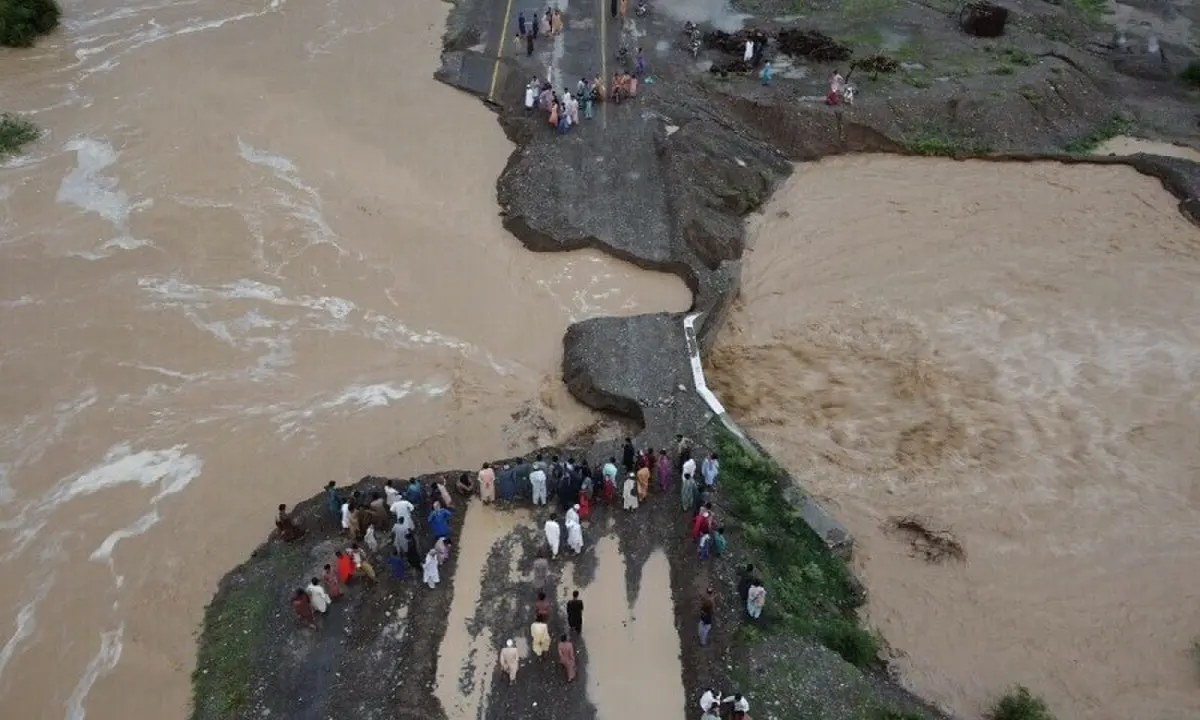
A view of a crossing flooded after rains in Lasbela district.
Moved by her experience, Jamali decided to apply for participation in the 27th edition of United Nations Framework Convention on Climate Change (UNFCCC) COP, scheduled to be held in Sharm el-Sheikh, Egypt in November that year. It proved to be a challenge and she soon realized, she wasn’t experientially equipped enough to navigate the bureaucratic process and international networks that could support her accreditation and funding.
She didn’t give up. She applied for COP28, and then, again, for COP29. On this attempt, she managed to secure a conference badge with the help of a friend through a sponsoring organisation. COP29 took place in Baku, Azerbaijan and Jamali soon ran into a funding issue. She turned to online fundraising for support, but of the USD 2500 required at the time for the trip, Jamali was only able to raise USD 2000 (approximately PKR 555,600 in 2024).
Jamali is not the only one who ran into this wall. Aitzaz Roonjha is an 18-year-old climate activist from Lasbela, Balochistan. He began work in 2022 by joining WANG (We Are New Generation), a youth-led organisation, which worked on flood relief and recovery in Balochistan.
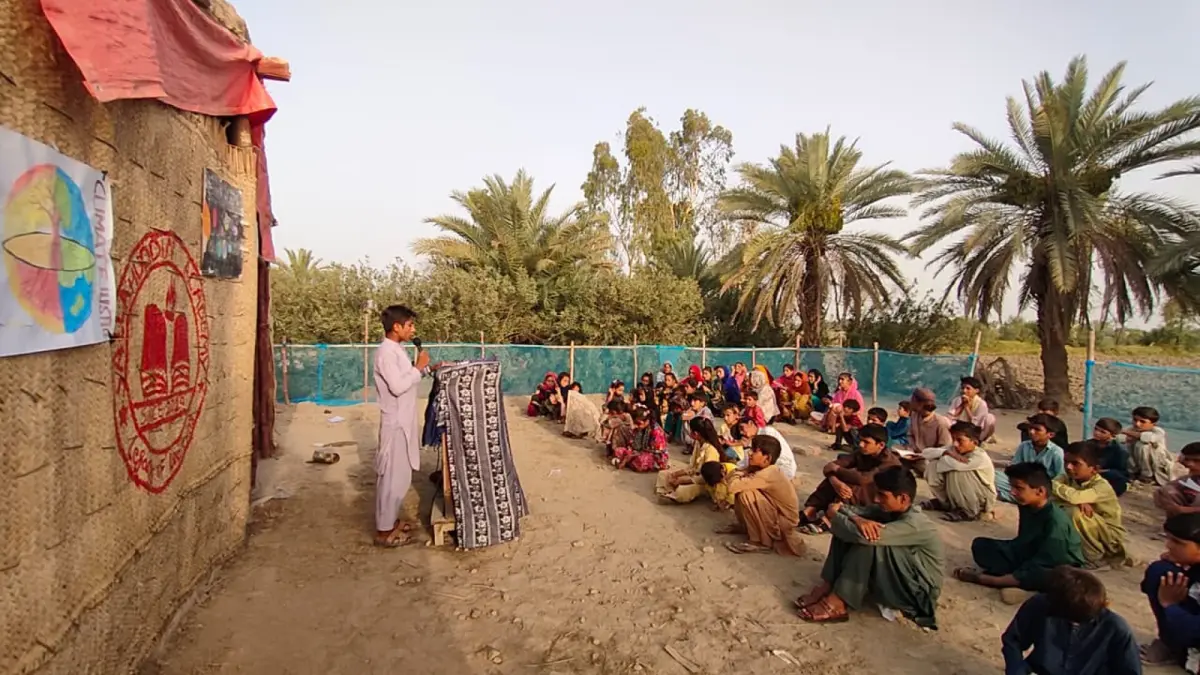
Madat Balochistan holds al camp to raise awareness about climate change in affected communites.
Last year, Roonjha applied and was selected to attend COP30, but he couldn’t make it because the selection did not include financial assistance. He reached out to many organisations and international groups he had worked with previously but couldn’t secure enough funding to cover travel, accommodation, and visa costs.
And travel costs are not the only problem. Attending international climate conferences, Jamali says, often hinges on personal connections and organisational affiliations. “It’s a very, very secretive process,” she says.
She noted that activists from major cities and more privileged, urban backgrounds managed to gain greater access to these international forums than people who are practically on the frontlines of climate catastrophes. “These climate forums are inaccessible to working class people or actual climate affectees who are experiencing climate change on the ground,” she says.
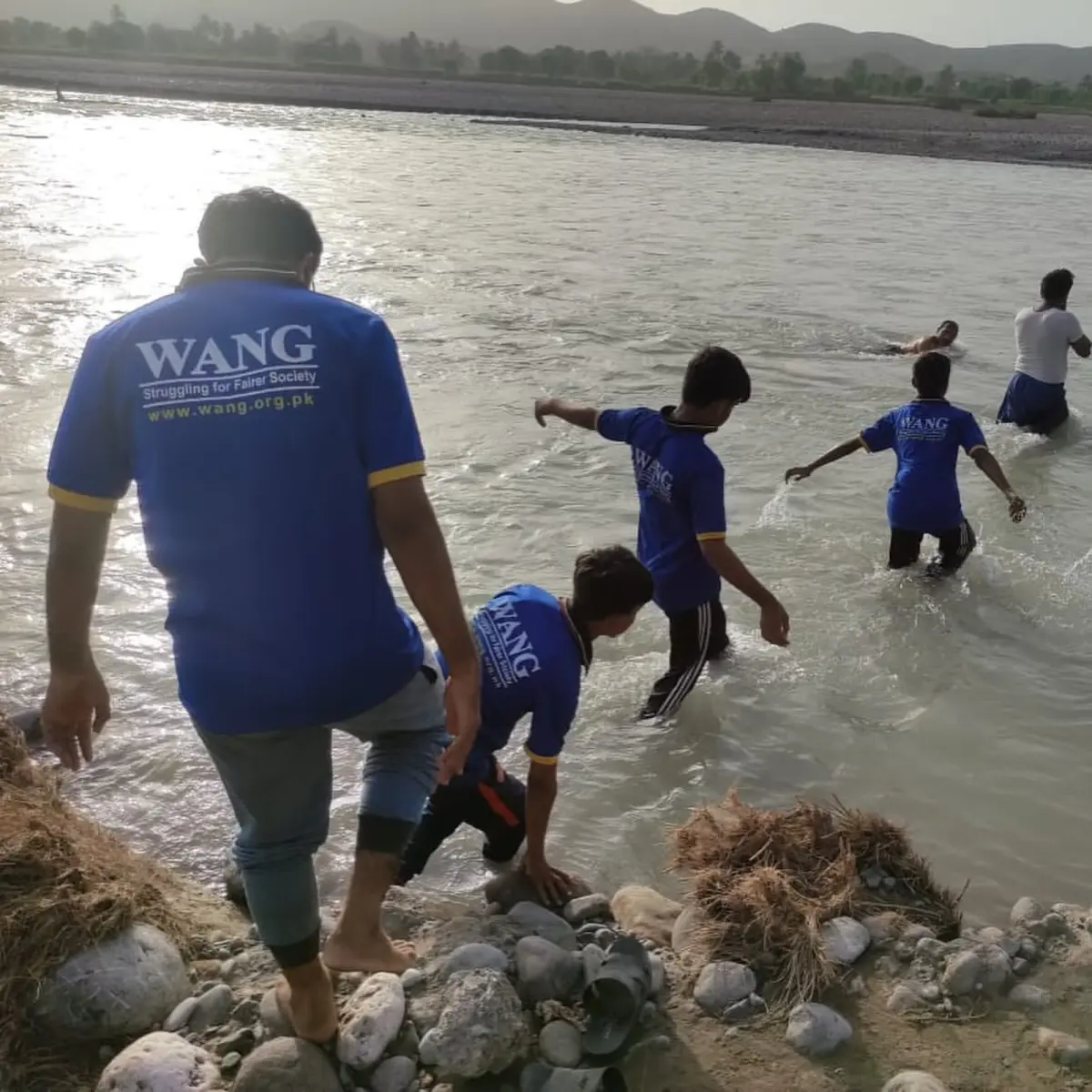
Volunteers from WANG engaged in relief work
Roonjha says WANG provided a foundation for his work through which he gained hands-on experience, began pursuing further opportunities, and earned recognition. “Even with my experience in climate work and the backing of an organization, I still couldn’t make it to the COP,” he says. “Aspiring to attend COP and actually being able to attend COP are two very different things.”
The money and the badge
Many young climate activists work in an individual capacity in their communities since structural funding is hard to come by, so they have to rely on more recognized climate organizations to access major forums like COP.
Durlabh Ashok, founding director of Climate Forward Pakistan (CFP), a leading youth-led climate organisation that sends delegations to COP every year, says the organisation offers limited financial assistance to its delegates. It supports delegates through subsidised accommodation, accreditation assistance, and speaking opportunities, while delegates are normally supposed to pay for their own travel, meal, and other expenses.
“We don’t want to operate as a grant-driven organisation because that inevitably gives us inherent clout over funding decisions,” Ashok says.
However, the model leaves delegates responsible for taking the financial obligations of the participation. Applicants may be ascertained on the basis of their climate related work and the familiarity with the UNFCCC procedure, but they must also showcase that they can fund their participation either on their own or through sponsorship.
Climate activists from underrepresented communities often deal with additional impediments of participation. A person with years of grassroots experience supporting climate-hit communities which are on the frontlines of climate disasters find it difficult to access the networks of these organisations compared to their counterparts operating from more urban settings.
This year, for example, of the cohort selected by CFP, only one activist from Balochistan made the cut.
While admitting the challenge, Ashok says that CFP seeks to keep the COP route accessible by providing necessary documentation to delegates in order to approach potential sponsors while assisting them with logistical arrangements, including visas and accreditation.
There is no restriction on paper, just between the lines
There is no explicit requirement under UNFCCC rules for climate activists to come from an urban or privileged background. For NGO observers, participation generally takes place through organisations that have been conferred observer status, which then nominate delegates within their allocated quotas. Travel, meal and accommodation are not particular requirements for securing observer status, but they still can determine whether a nominated delegate can turn their formal selection into actual participation.
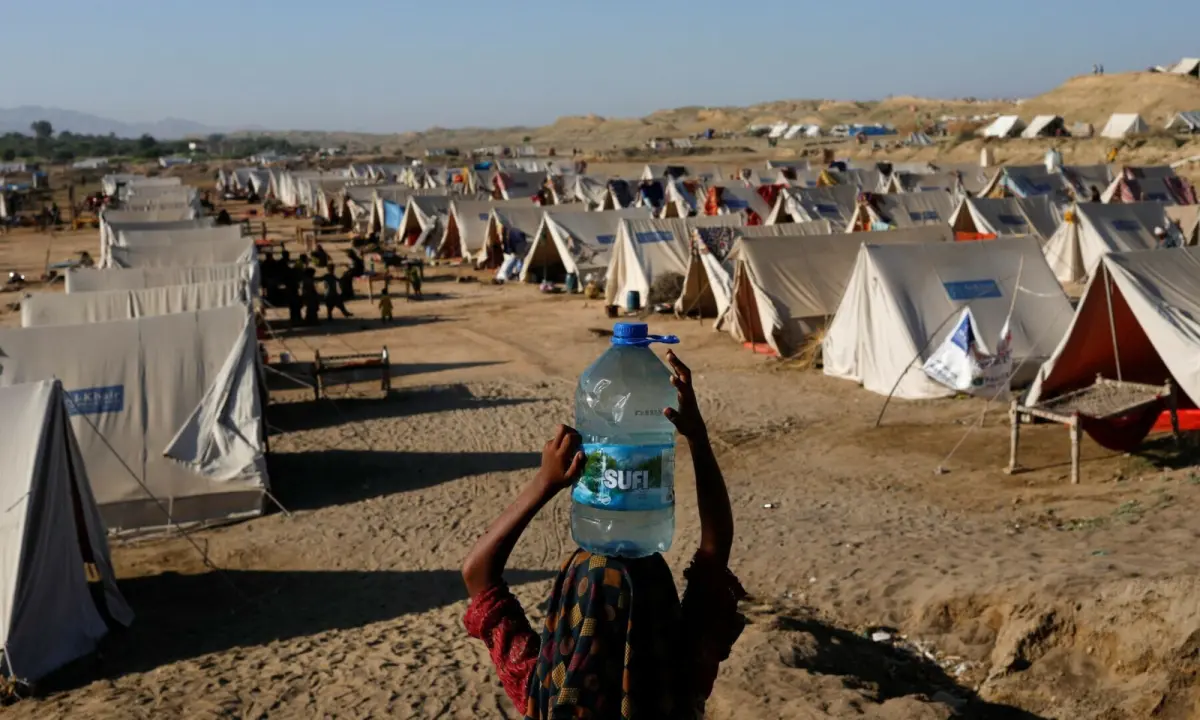
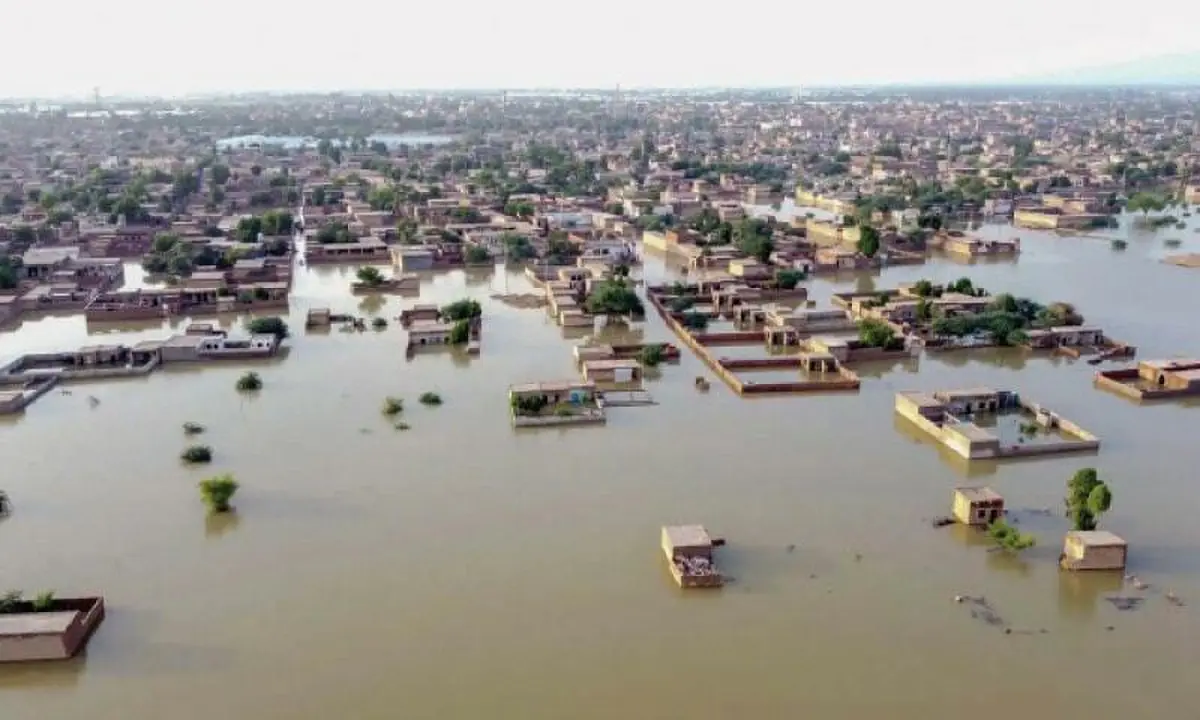
An aerial view shows a flooded residential area in Balochistan province.
The UNFCCC has also noted concerns regarding geographical diversity and representation in observer participation. The UNFCCC has admitted the financial obstacles confronted by observer organisations from marginalized communities and developing countries and has planned to explore ways to facilitate broader participation. Currently, there is no specific funds generally available to observer organisations as compared to the Trust Fund for Participation that provides financial assistance only to the representatives of developing country Parties.
Even those who eventually make it to the COP as representatives of observer status do not have the same negotiating impactful role as country negotiators. Observer organisations can participate in supplementary events, deliberations, campaignings, networkings, while official negotiations come within the domain of Country Parties.
You’ve made it! Now what?
But, suppose, a young climate activist somehow jumps through all the hoops: they arrange the funds, navigate the system, get accreditation, and manage to reach the conference, what happens then?
Irfan Azad succeeded in making it to the climate conference in 2025.
His climate works started during the 2022 floods. He collected donations, coordinated relief efforts and ran volunteer medical camps. After a survey of over 1,000 homes, he started to focus on and set up Salahuddin Academy in his village, Goth Salahauddin Pandrani in Jaffarabad District, for 100 children.
He began to wonder and question why communities are continuously vulnerable to similar disasters such as major floods in 2008, 2010, 2012 and then 2022 even after taking big pledges every year in global climate summits.
He was selected to attend COP30 through Climate Forward Pakistan (CFP), however, he was required to submit $2,200 (approximately PKR 620,448 at the time) for the trip. Jamali, who had managed to collect a sizable amount in her previous fundraising efforts, was happy to add to Azad’s pool.
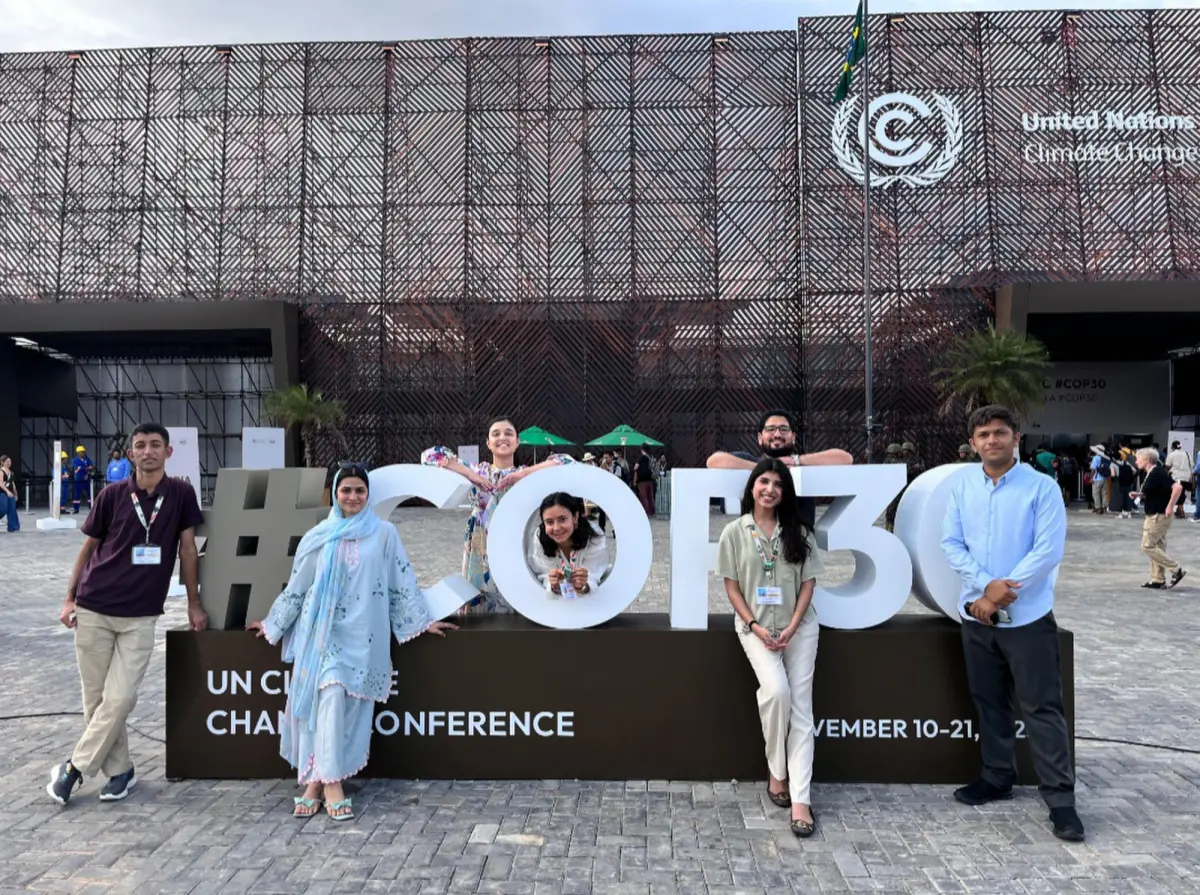
Azad with other members of his cohort at COP30 held in Brazil.
“I arrived in Brazil with meagre cash, no ATM card and limited preparation in order to navigate an unfamiliar language and a foreign country,” he says. Azad initially had access to the Green Zone — a space managed by UNFCC which is open to the general public— while receiving entry to the Blue Zone — where the formal negotiations take place under the management of the host country — only during the final days of the conference.
Azad spent much of his time talking with global indigenous communities in the Green Zone and hearing about their experiences regarding climate change, while climate negotiations went on among world leaders, disconnected from the affectees right outside their door. To Azad, it became obvious that even being in the room did not guarantee a seat at the table.
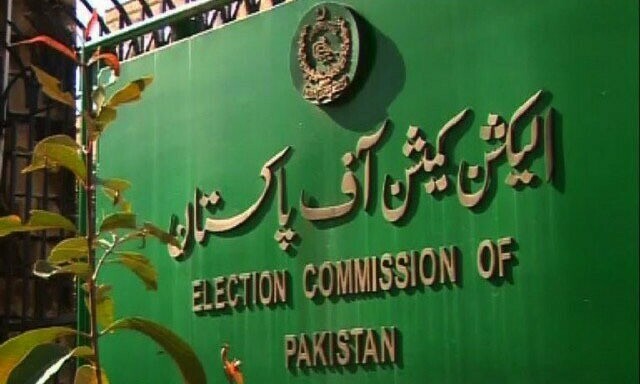
ISLAMABAD: The Election Commission of Pakistan (ECP) has given the Prime Minister’s Office (PMO) a fortnight to submit the federal government’s formal written request for local government elections in cantonment boards, warning that it would be constrained to pass appropriate orders if no response was received, it emerged on Friday.
Cantonment boards last held LG elections in 2015 and 2021. Previously, the ECP said delimitation in all cantonments had been completed, but it was awaiting formal request and response from the Ministry of Defence, to which it had written several letters and also sent a letter to the prime minister without response.
The direction was issued in an order passed on November 10 by a five-member ECP bench headed by Chief Election Commissioner Sikandar Sultan Raja. The order, available on the commission’s website, came during proceedings on the delay in holding local government elections in 42 cantonment boards across the country.
The commission noted that the terms of the local governments in the cantonment boards had expired on April 11. Under Section 219(4) of the Elections Act, 2017, the ECP is required to hold local government elections within 120 days of the expiry of their terms. Accordingly, the elections were due by August 8.
The ECP had issued a schedule for delimitation of wards in 42 cantonment boards on January 11, with the final delimitation list published on April 20, as per the order.
A consultative meeting was held on April 15 with the additional secretary of the Ministry of Defence and the director general of the Military Lands and Cantonments Department (ML&CD) to discuss the election schedule and obtain the federal government’s formal request under Section 19-D(2) of the Cantonments Act, 1924, the order stated.
The commission had directed the defence ministry to initiate a summary for obtaining the federal government’s request and forward it to the ECP.
It subsequently wrote to the defence secretary on May 14 and June 16, with a reminder on June 3, seeking the required document, the order read. CEC Raja also wrote to the prime minister on July 16, seeking his intervention to ensure the submission of the formal request, it added.
However, the federal government did not furnish the document, prompting the ECP to take up the matter on July 21.
Representatives of the defence ministry and ML&CD expressed their readiness to facilitate the elections, while the commission directed them to pursue the matter with the PMO and report back on progress.
The ECP said it continued to seek updates through letters and reminders issued between July 31 and October 9, but the required request remained pending.
At a hearing on Oct 28, the legal adviser representing the respondents sought a two-week adjournment, citing the senior leadership’s engagement in important national and international affairs. The commission allowed the request and fixed the next hearing for Nov 10.
At Tuesday’s hearing, Brigadier (retired) Falak Naz, who is the legal adviser to the defence ministry, and Additional Director General of ML&CD Khalil Ahmad Rana told the commission that the ministry was ready to hold the elections, but the matter remained pending with the PMO.
They said the defence ministry had already forwarded the requisite request to the federal government and that there had been no delay on its part. However, no response had been received. They sought further time to pursue the matter.
Meanwhile, the special secretary (policy) informed the commission that all necessary arrangements for the elections had been completed and requested it to pass an appropriate order.
After examining the record and hearing the parties, the ECP observed that it had made repeated efforts through correspondence, reminders, meetings and hearings, but the federal government had yet to fulfil the requirement under Section 19-D(2) of the Cantonments Act.
The commission said both it and the defence ministry were ready to conduct the elections, adding that ministry representatives had confirmed that the matter was pending with the PMO.
It noted that Articles 140-A and 219(d) of the Constitution, read with Section 219 of the Elections Act, 2017, placed an obligation on the ECP to hold local government elections in the provinces, Islamabad and cantonment boards.
The commission directed its office to once again approach the PMO through a formal letter, seeking submission of the federal government’s written request within a fortnight.
It warned that failure to receive a response within the stipulated period would leave it with no option but to pass appropriate orders.
The ECP also directed its office to take follow-up action and relist the matter after three weeks.
Of the 42 cantonments across the country, 20 are located in Punjab — Rawalpindi, Chaklala, Taxila, Wah, Attock, Kamra, Sanjwal, Jhelum, Mangla, Kharian, Murree Hills, Sargodha, Shorkot, Gujranwala, Sialkot, Lahore, Walton, Okara, Multan and Bahawalpur.
Khyber Pakhtunkhwa has 11 cantonments — Peshawar, Nowshera, Cherat, Risalpur, Mardan, Kohat, Bannu, Dera Ismail Khan, Abbottabad, Havelian and Murree Gallies. Sindh has eight cantonments — Pano Aqil, Hyderabad, Karachi, Clifton, Manora, Malir, Faisal and Korangi Creek.
And, in Balochistan, there are three cantonments— Quetta, Loralai and Zhob.
ISLAMABAD: Short-term inflation rose to 11.21 per cent year-on-year in the week ending on Nov 12, driven largely by perishable food products, according to official data released by the Pakistan Bureau of Statistics (PBS) on Friday.
The index, comprising 51 items, whose prices are collected from 50 markets in 17 cities, is calculated weekly to track changes in the prices of essential commodities and services.
The data showed that of the 51 essential items monitored during the week, the prices of 19 commodities (37.25pc) increased, while those of 9 items (17.65pc) declined. Meanwhile, the prices of 23 items (45.10pc) remained unchanged from the previous week.
Short-term inflation has remained in the double digits for several consecutive weeks, largely on the back of persistent increases in petroleum and diesel prices. However, the oil prices have been slowly declining for the past three consecutive days.
The impact of this decline will be visible in the next review. However, the unprecedented increase in the LPG price caused short-term inflation to rise.
The Sensitive Price Index (SPI), which tracks short-term inflation, slightly declined by 0.46pc week-on-week, reflecting price fluctuations in both food and non-food items.
The surge in energy costs is not only fuelling inflationary pressures, but also indirectly boosting sales tax collections through higher prices of goods and services.
This is an example of cost-push inflation, in which rising energy costs lead to increases in food prices. As a result, households are facing mounting pressure from higher consumer prices.
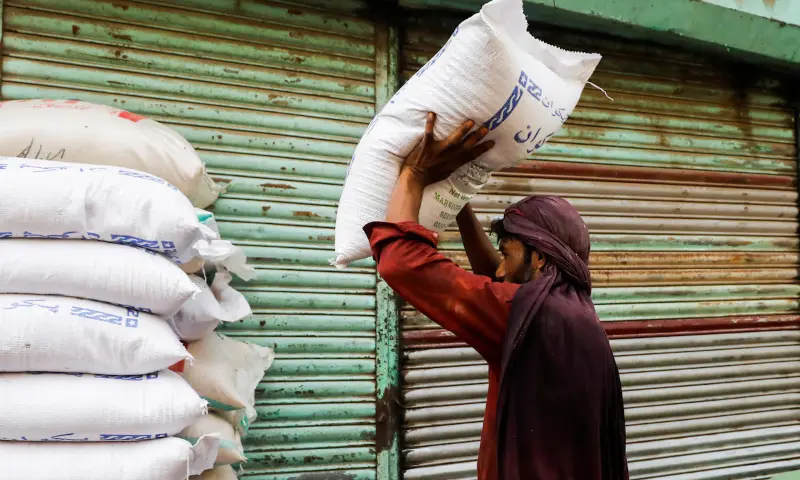
The items that recorded the highest price increases over the previous week included tomatoes (12.06pc), eggs (5.98pc), potatoes (2.42pc), garlic (1.76pc), chicken (1.32pc), firewood (1.10pc), wheat flour (0.94pc), pulse masoor (0.64pc), beef (0.47pc), and LPG (0.30pc).
The items that recorded week-on-week price declines included petrol (7.42pc), diesel (6.10pc), onions (1.70pc), bananas (1.03pc), gur (0.59pc), sugar (0.43pc), powdered milk (0.36pc), pulse moong (0.32pc) and pulse gram (0.08pc).
On an annual basis, the items that recorded the highest price increases included LPG (111.35pc), tomatoes (78.94pc), electricity for Q1 (52.38pc), wheat flour (36.14pc), diesel (30.77pc), petrol (26.23pc), onions (19.67pc), chilies powder (15.55pc), mutton (14.67pc), bread plain (12.35pc), beef (11.30pc) and chicken (10.98pc).
In contrast, potato prices fell by 36.41pc, followed by sugar (24.54pc), eggs (23.29pc), salt powder (12.51pc), pulse masoor (7.21pc), pulse moong (6.83pc), gur (6.63pc) and bananas (3.35pc).
Last week, short-term inflation rose to 12.31pc year-on-year driven largely by LPG and perishable food products.
ISLAMABAD: The Islamabad High Court (IHC) on Friday suspended the upcoming local government elections in the federal capital, putting the Election Commission of Pakistan’s (ECP) latest election schedule on hold until the next hearing.
He argued that the polls, scheduled for Dec 20, could not be held until the legal status of the existing constituency delimitation was conclusively determined.
A single-member bench comprising Justice Umair Majeed Malik granted the interim relief while hearing the writ petition on Friday.
“Operation of the impugned order dated Oct 21, 2026, and the impugned election schedule dated Oct 21, 2026, as revised by the Election Commission, shall remain suspended until the next date of hearing,” the court order read.
The court also issued notices to the respondents, directing them to submit their reports and para-wise comments before the next hearing, scheduled for Nov 26, 2026.
Advocate Barrister Qazi Adil Aziz appeared for the petitioner, along with Malik Talha and Muhammad Yaseen Iqbal.
They argued that under Articles 140-A(2), 218(3) and 219(d) of the Constitution, the ECP was “duty-bound to hold local government elections honestly, justly, fairly and in accordance with the law”.
The counsel contended that the election programme had become legally compromised due to legislative changes between the original Islamabad Capital Territory Local Government Act, 2015 (LG Act 2015), and the subsequent Islamabad Capital Territory Local Government Ordinance, 2026 (LG Ordinance 2026).
According to the petition, the LG Act 2015 provided for one Metropolitan Corporation and 125 Union Councils, each divided into nine wards. The delimitation process for this structure began in December 2024, and an election programme was issued on Dec 26, 2025, but was subsequently withdrawn.
Meanwhile, the LG Ordinance 2026 altered the capital’s local government structure by introducing three Town Corporations, changing the process for constituting and delimiting Union Councils, removing the nine-ward structure and providing for delimitation on the basis of census blocks. Consequently, the number of Union Councils increased from 125 to 130.
The counsel submitted that the ECP subsequently issued revised delimitation timelines on Aug 25, 2026, and completed the process with the publication of the final list of 130 Union Councils on Oct 14, 2026.
However, after a single 120-day extension, the LG Ordinance 2026 ceased to have effect under Article 89 of the Constitution, resulting in the revival of the original LG Act 2015. At this point, the counsel argued, the ECP suddenly issued the impugned order and election schedule to conduct polls under the original LG Act 2015.
The petitioner’s counsel contended that the impugned order did not address the delimitation of the 125 Union Councils, their nine wards or the Metropolitan Corporation under the revived law. They argued that the delimitation carried out under the amended law could not serve as the basis for elections under the revived LG Act 2015.
They therefore maintained that fresh delimitation and preparation of electoral rolls in accordance with the LG Act 2015 and the Elections Act, 2017, were necessary before the elections could lawfully be held.
The counsel further argued that holding elections without completing the required delimitation would violate Article 218(3) of the Constitution and the electoral framework under the LG Act 2015 and the Elections Act, besides resulting in unnecessary expenditure of public funds.
After hearing the initial arguments, the court observed that the points raised required consideration and suspended the operation of the ECP’s order and election schedule until the next hearing, scheduled for Nov 26.
On Thursday, Chief Election Commissioner CEC Sikandar Sultan Raja accused the federal government of trying to sabotage the local government elections in Islamabad.
The local government elections in Islamabad have faced numerous delays and postponements since the term of the last local government expired in February 2021.
The ECP has issued multiple schedules, only to cancel them later for various reasons, including legislative changes and court orders.
The delimitation of constituencies and union councils was carried out six times, while the election schedule was issued four times.
The ECP had decided that, since the local government law enacted in 2015 was still in force, elections would be held under the Act. This meant polls would be held in 50 constituencies, after which the mayor and deputy mayors would be elected.
After the completion of various stages of the electoral process, it had decided that polling would be held on Dec 20. The ECP had reserved four days, from December 21 to 24, for the consolidation of results.
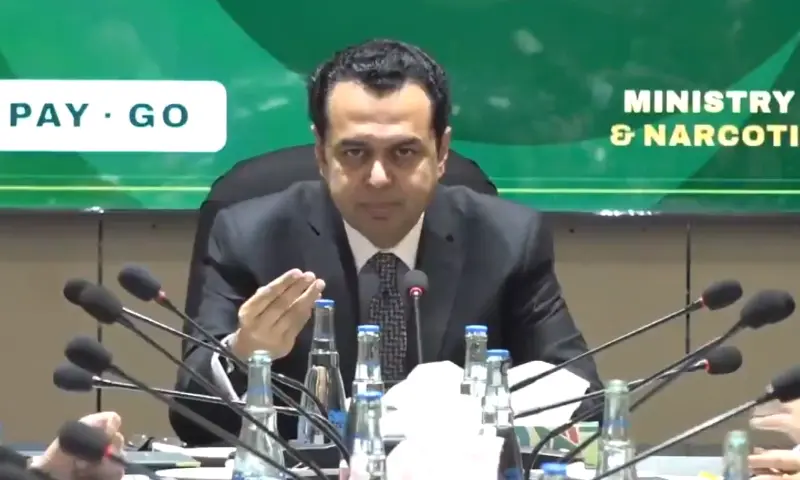
ISLAMABAD: The government has decided to make the federal capital the country’s first fully cashless city, setting Dec 31 as the deadline for the transition.
The decision was taken at an important meeting on the Cashless Capital project chaired by State Minister for Interior Tallal Chaudry, in Islamabad on Friday, according to an official statement by the Ministry of Interior on X.
Speaking on the occasion, Chaudhry said consultation and suggestions from all stakeholders were important for the success of the project, the statement said.
“The implementation of the project is under way at a fast pace on the special instructions of Prime Minister Shehbaz Sharif and Interior Minister Mohsin Naqvi,” Chaudhry was quoted as saying.
Naqvi had promised the prime minister that Islamabad would be made Pakistan’s first cashless city and the world’s first cashless capital, the state minister added.
“After Nov 30, no cash payment will be accepted in any department of the Islamabad Capital Territory administration and the Capital Development Authority (CDA),” Chaudhry stated.
“The target is to bring all merchants in Islamabad into the cashless system by Dec 31,” he said.
He said the cashless system would improve financial transparency, tax monitoring and the transaction system, adding that 26,000 merchants in Islamabad had already been connected to the digital payments system.
“Digital payment facilities will be provided at every level, from street vendors to major business centres,” the state minister affirmed.
“All relevant institutions will work together to make Islamabad a modern digital city.”
According to the statement, CDA Chairman Sohail Ashraf, representatives of the banking sector and other senior officials attended the meeting.
Representatives of the banking sector appreciated the government’s Cashless Islamabad initiative and assured full cooperation for its success, it added.
The prime minister has repeatedly emphasised the need to implement digital transaction systems across the country, insisting that it is vital to bring transparency to the economy.
In a meeting last week, PM Shehbaz also directed authorities to prepare a “clear roadmap and time-bound targets” for establishing a 100 per cent digital payments system in the country.
“Promoting a cashless economy is one of the government’s top priorities, with its positive results already beginning to emerge,” PM Shehbaz said.
He was also apprised that the work on the digitisation of payments in all federal and provincial government institutions was progressing rapidly, and payments in “most institutions” would be fully digitised by December 2026.
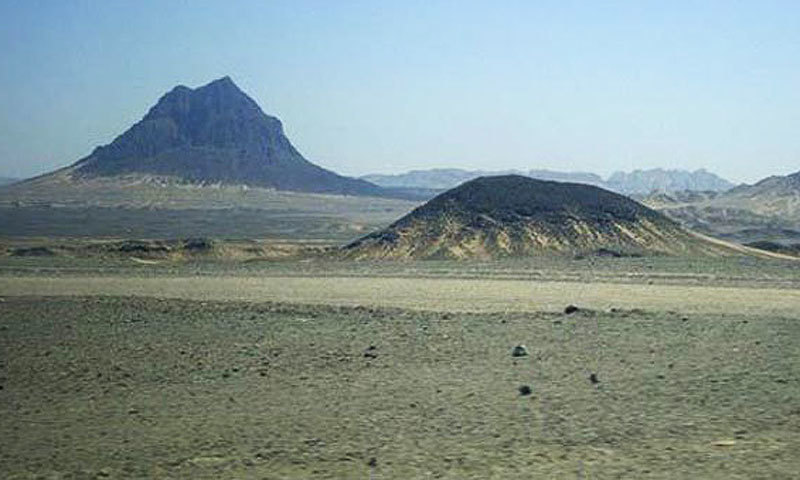
ISLAMABAD: Mining company National Resources Limited (NRL) on Friday announced that it had identified copper and gold deposits at eight sites in Balochistan’s Chagai district, following nearly 25,000 metres of drilling that yielded encouraging results.
The company is now moving towards its first estimate of the area’s mineral resources.
One of the drill holes revealed a 295-metre stretch of mineral deposits containing 0.43 per cent copper and 0.13 grams of gold per tonne. Within this, a 132-metre section showed a higher copper concentration of 0.83pc, National Resources Limited Chairman Muhammad Ali Tabba told the Pakistan Minerals Investment Forum 2026.
The discoveries cover an area of 5.6 square kilometres in Darigwan, adjoining the company’s earlier discovery at the Tang Kaur copper-gold site. Tabba said further exploration at the exploration licence EL214 was expected to help establish the size of the mineral deposits, subject to the completion of exploration work and a formal assessment of the resources.
A joint venture between Fatima Fertilisers, Liberty Mills and Lucky Cement Ltd, NRL holds five exploration licences in Balochistan. These comprise two copper-gold projects, one lead-zinc project and two antimony projects, with exploration work under way.
NRL plans to begin environmental, hydrogeological, metallurgical and geotechnical studies in 2027, with the aim of completing a bankable feasibility study by the end of the decade.
Tabba reaffirmed NRL’s previously announced commitment of $100 million to mineral exploration in Pakistan and invited domestic and international investors and service providers to explore emerging opportunities.
Although preliminary resource estimates have been prepared by an independent consultant, the company is withholding their release pending compliance with international reporting requirements. NRL is working towards completing its maiden mineral resource estimate in line with international standards.
The company has also partnered with the Lahore University of Management Sciences (LUMS) to develop a predictive artificial intelligence model aimed at accelerating exploration, using geological modelling and data gathered through its drilling programme.
“Our ambition is to build a world-class mineral exploration platform and contribute to an integrated mineral value chain, spanning discovery, mining, processing and further value addition,” Tabba said.
He said the programme was helping develop local expertise, with Baloch geologists working alongside international consultants and Pakistani contractors carrying out inclined drilling.
The company’s technical workforce is almost entirely local, supporting its ambition to build domestic expertise that could also contribute to international exploration projects.
Alongside its exploration programme, NRL is supporting education and community development through the newly established Chagai Foundation. Tabba urged industrialists, investors and corporate partners to contribute to its vision of “Enabling Balochistan”.
“The people of Balochistan must share in the opportunities created by their mineral wealth,” he said.