Category: dawn news

  • Petrol price reduced by Rs3 per litre, diesel remains unchanged

    Petrol price reduced by Rs3 per litre, diesel remains unchanged

    The government on Tuesday reduced the price of petrol by Rs3 per litre, marking the eleventh consecutive decrease in the rate, but left the price of high-speed diesel unchanged.

    Following the revision, petrol will retail at Rs325 per litre, while HSD will remain at Rs358 on Nov 18 (Wednesday), according to a notification by the Oil and Gas Regulatory Authority (Ogra).

    The government continues to levy Rs114 per litre in taxes and duties on petrol and Rs100 per litre on diesel.

    Under an arrangement announced on Nov 2, for 30 days, oil refineries will contribute to the petroleum levy by bearing a cumulative impact of Rs15 billion, according to the government. This allows a Rs14.71 reduction in the petrol price at the consumer end.

    On Sept 17, the government rolled out the Prime Minister’s Fuel Relief Scheme across the country to ease the public’s burden amid rising fuel prices due to the Middle East situation.

    The subsidy scheme applies to owners of motorcycles, rickshaws and vehicles of up to 800cc.

    Rise in fuel prices

    The price of HSD has come down from a peak of Rs520.35 recorded on April 3. Its price had started rising from Rs281 per litre after the US-Iran war broke out on Feb 28.

    The petrol price had peaked at Rs458.41 on April 3 after beginning its upward trajectory from Rs266 in the first week of March.

    Meanwhile, the government has reintroduced a raft of austerity measures in response to rising fuel prices amid the ongoing Middle East conflict. Under these measures, markets are required to close by 9pm, and fuel allocations for official vehicles have been cut by 50pc for three months.

    Since July 17, the government has been revising fuel prices on a near-daily basis due to fluctuations in international market prices following renewed hostilities between Iran and the US.

    The petroleum minister stated that the cabinet and the prime minister had decided to give Ogra the responsibility of deciding fuel prices on a daily basis based on international market trends.

    Prior to this, the government had been announcing weekly revisions to fuel prices since early March, alongside measures for the conservation of fuel amid possible oil supply disruptions due to the conflict. The federal government had also announced targeted relief measures in April to provide subsidised fuel.

    Petrol is mainly used in private transport, small vehicles, rickshaws and two-wheelers, and changes in its price affect the middle and lower-middle classes.

    Similarly, changes in diesel prices also impact the public at large, as it is mainly used in the heavy transport sector, power plants and large generators.

    Petrol and HSD are the major revenue earners, with monthly sales of about 700,000 to 800,000 tonnes, compared to just 10,000 tonnes of monthly demand for kerosene.

    Source: dawn
  • Rs24bn additional QTA proposed by Discos draws protest from industrial consumers

    Rs24bn additional QTA proposed by Discos draws protest from industrial consumers

    ISLAMABAD: Industrial consumers on Tuesday protested over a Rs24 billion additional quarterly tariff burden proposed by power companies due to higher capacity charges, variable operation and maintenance (O&M) costs and the impact of system losses, resulting in an estimated tariff impact of around Rs1.30 per unit for three months.

    A brief intervention from the power division, represented by the chief financial officer (CFO) of the Power Planning and Monitoring Company (PPMC), Naveed Qaisar, was the request at a public hearing that the additional quarterly tariff adjustment (QTA) be applied beginning in the Dec 1, 2026 billing and ending in February 2027.

    The hearing was presided over by National Electric Power Regulatory Authority (Nepra) members Amina Ahmed, Maqsood Anwar Khan and Ghulamullah Shaikh, on the request of 11 distribution companies (Discos) to seek approval for charging the additional QTA for the July-September 2026 period. Once approved, the additional QTA would also be applicable to K-Electric under a government decision in place since 2023.

    Two industrial interveners — Amir Shaikh and Rehan Javed — expressed serious concern over Rs39bn additional capacity payment claims for the quarter against the pre-approved references built into the base tariff, besides the Rs5.6bn impact on variable O&M and Rs7.8bn impact of system losses in monthly fuel charges.

    Amir Shaikh, from Lahore, said QTAs normally stay negative when fuel cost adjustments (FCAs) are higher than charges to consumers in respective months. This time, however, the industry faced a double shock — positive FCAs throughout the quarter followed by positive QTAs — while the industrial output had gone out on the premise of lower QTAs.

    He said the major reason appeared to be units sold to selective consumers under the incremental consumption package (ICP) at an unrealistic cost of Rs10 cheaper than normal tariffs, which translated into a higher QTA for all consumers — despite the government’s promise that the impact of the ICP would not be charged to consumers except for ICP beneficiaries.

    “This is like rubbing salt into our wounds. It is shocking that the QTA has gone up,” he said.

    Javed, from Karachi, noted the Discos claimed Rs29.25bn of negative impact of the ICP on industrial consumers, saying it was actually an additional burden from all consumers. A series of questions he raised over the data provided by Discos remained unanswered and Nepra did not press for responses either.

    Javed alleged that the Discos had counted the wrong units and measured against FY2023-24, instead of references set for this year under the notified tariff.

    “The ‘relief’ shown (the ICP of Rs29.25bn) is not relief received; it hides a cost other consumers pay,” he said, adding that this was not legally covered by any Nepra decision as all consumers were being forced to fill a Rs15 per unit delta.

    He contended that when every Disco was claiming to have sold more units than the reference, the capacity cost should have reduced. “Why, then, is the capacity claim going up? Is the benefit of the higher sales being lost because of ICP units?”

    He demanded to defer the incremental units amount in the QTA claim until the full data, as demanded in March and September 2026, had been filed.

    Cumulatively, all 11 Discos reported that capacity charges during the July-September period had increased by Rs39bn, which also included the impact of system losses on the monthly fuel cost and variable operation and maintenance costs.

    Seven out of the 11 Discos demanded additional recovery of about Rs37bn on account of capacity charges, variable O&M charges and the impact of T&D losses on monthly FCA. However, a significant portion was offset by negative adjustments of Rs13bn from four other Discos.

    The highest additional claims came from Islamabad Electric (Rs10.833bn), followed by Rs10.46bn from Faisalabad and Rs7bn from Peshawar Electric. Tribal Electric led with a negative adjustment of Rs5.8bn, followed by Rs4.1bn by Quetta and Rs1.95bn by Hyderabad Electric.

    In line with policy guidelines issued by the federal government for uniform quarterly adjustments, the QTA determined for Discos for the third quarter of CY2026 will also apply to K-Electric consumers once Nepra issues its judgment.

    Under the tariff mechanism, changes in fuel cost are passed on to consumers only on a monthly basis through an automatic mechanism, while QTA, on account of variation in power purchase price, capacity charges, variable operation and maintenance costs, use of system charges and including the impact of transmission and distribution losses, is built into the base tariff by the federal government.

    Source: dawn

  • Tarar says referendum ‘legal and constitutional’ method of gauging public opinion on new provinces

    Tarar says referendum ‘legal and constitutional’ method of gauging public opinion on new provinces

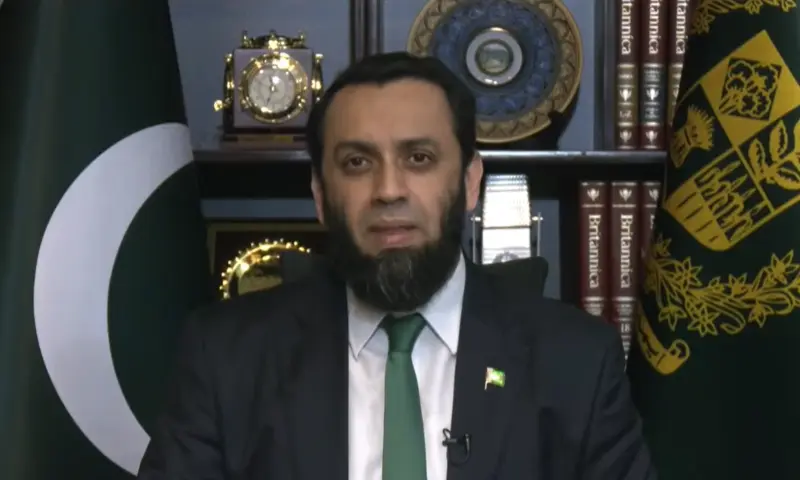
    Information Minister Attaullah Tarar said on Tuesday that a referendum was a legal and constitutional method of gauging public opinion on new provinces, adding that no political party should have reservations regarding it.

    He made the comments in televised remarks following a hard-hitting speech by PPP Chairman Bilawal Bhutto-Zardari. The minister said that there was an ongoing debate in the country regarding “good governance”.

    “The public wants a good government that is accountable … You and all of us have been part of this system for decades. Today, we cannot separate ourselves from the weaknesses of the system,” he said.

    He said that to “enjoy the perks” being in power and also do opposition amounted to having a “double standard”. He said that the reason behind the PPP chairman’s remarks was the ongoing debate regarding provinces.

    “And this debate is raging among the masses. Will you silence the people? Will you stop them from talking about improving governance? This debate will happen in Parliament and outside it,” he said.

    The minister added that the people could not be stopped from talking about something that was for their benefit.

    “Democratic and political processes demand that this debate be done by the people … What is the problem with going to the public? You and I are not going to decide what the people want. They are the ones who will decide,” he said.

    “No political party should have reservations in going to the public. When public opinion comes forward … referendum is part of the Constitution. It is a legal and constitutional process. The people are the final decision-makers and good governance is the charter of every political party,” he said.

    The minister said that the people appointed public representatives, not the other way round.

    “The people are the ultimate decision-makers. If the people of Pakistan and Sindh was more provinces, then make them; otherwise, don’t,” he said. Tarar said that instead of making the issue of smaller administrative units smaller, they should be viewed through the lens of development.

    “Will you deprive the people of their rights just because referendums were previously used in a non-democratic manner?” he asked.

    “Look, we are part of the same government. Come and sit down [with us] so we can make decision for the betterment of the people and the country. [Let] this decision be based on public opinion. And a referendum is an excellent way of gauging public opinion, so what’s the harm?”


    More to follow

    Source: dawn

  • 8 Pakistan Bar Council members call on judiciary to take note of Imran’s plea for medical treatment

    8 Pakistan Bar Council members call on judiciary to take note of Imran’s plea for medical treatment

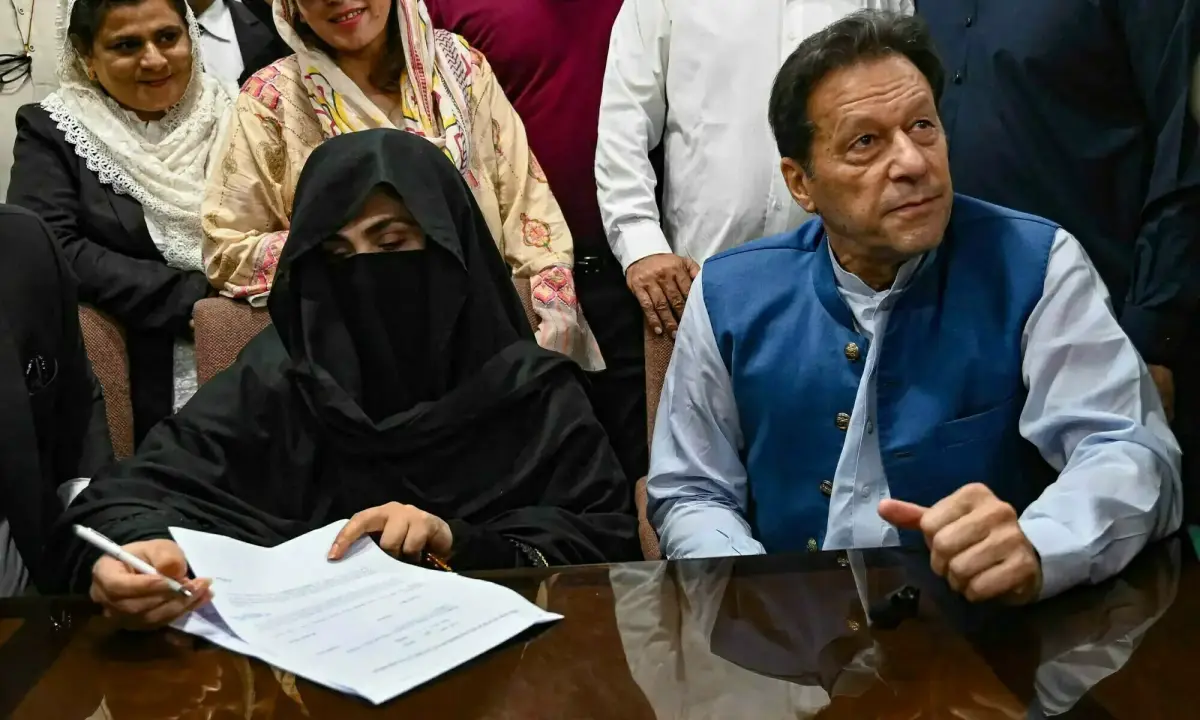
    ISLAMABAD: Eight members of the Pakistan Bar Council (PBC) on Tuesday called upon the judiciary to ensure implementation of the Supreme Court’s (SC) order directing incarcerated ex-premier Imran Khan’s transfer to Shifa International Hospital for medical treatment.

    On Aug 18, a three-member SC bench had directed the government to shift Imran to SIH within the next two days as it heard several petitions concerning his health. However, the government took the PTI founder to the government-run Pakistan Institute of Medical Sciences for a check-up and then transported him back to prison.

    On Monday, in an open letter to the chief justices of the Federal Constitutional Court (FCC), the SC and the Islamabad High Court (IHC), Imran appealed for medical treatment for himself and Bushra Bibi. He also said that he would only be able to prove his innocence in the various cases against him “if I stay alive”.

    In a statement issued on Tuesday, eight members of the PBC said: “We call upon the judiciary to take up the former prime minister’s plea immediately and to save his and his wife’s lives by ensuring that court orders are implemented, that proper medical treatment is provided and that due process and a fair trial are guaranteed as mandated by the Constitution.”

    The statement was signed by Abid Shahid Zuberi, Muhammad Maqsood Buttar, Shafqat Mehmood Chauhan, Abdul Sattar Khan, Munir Ahmed Kakar, Salman Akram Raja, Salahuddin Ahmed and Qazi Muhammad Arshad.

    The PBC members urged the government and its agencies to implement court orders and ensure that both Imran and his wife received proper medical treatment in accordance with the law and the Constitution. The statement warned that the government and its agencies would be solely responsible for “imperilling” the lives and liberty of the couple.

    “We the undersigned reserve our right to initiate legal proceedings to protect the life, liberty, and constitutional and legal rights of Imran and Bushra Bibi,” the statement said.

    The statement also condemned “in the strongest terms” the alleged unlawful and unconstitutional treatment meted out to Imran and his wife, adding that the situation was endangering their lives, liberty and dignity.

    “[Imran’s] letter reveals that the former prime minister and his wife have been denied their constitutional and human rights through trumped-up and false cases and that they are incarcerated in violation of the law, the jail manual and the prison rules,” the statement asserted.

    The statement further added that Imran and Bushra Bibi were convicted in false cases and their appeals against these convictions had not been heard.

    “Even their bail applications have not been fixed for hearing,” it said.

    The statement further highlighted that Imran had been kept in solitary confinement and denied due medical treatment and access to his legal team and family members, jeopardising his and his wife’s health.

    The statement also alleged that his sisters had been detained arbitrarily and unlawfully, while the SC’s Aug 18 order had been openly flouted by the government and its agencies in violation of the law and the Constitution.

    “Every person in Pakistan is guaranteed the right to life and liberty under Article 9, and the right to due process and a fair trial under Article 10-A of the Constitution,” the statement said.

    “These rights have been denied to Imran, his wife, his family and his party members,” it said.

    “As patriotic Pakistanis who believe in the rule of law, we are ashamed to read Imran’s plea for implementation of the SC’s orders and for the proper medical treatment that has been denied to him and his wife,” the statement said.

    Moreover, the Democratic Alliance, a confederation of lawyers led by former PBC vice chairman Abid Saqi, expressed grave alarm over what it described as the deteriorating health and unlawful detention conditions of Imran and his family members.

    In a statement, the alliance asked the judiciary to take immediate notice of the matter and enforce its orders concerning medical treatment and access to family members.

    It also called on the government to end Imran’s solitary confinement, provide him with comprehensive medical treatment and release family members held without cause.

    The alliance’s statement further urged the international community and human rights organisations to take urgent cognisance of the “grave” situation.

    “The life of a former prime minister and his family hang in the balance. Justice delayed is justice denied. The Democratic Alliance demands that the rule of law and human dignity prevail before it is too late,” the statement said.

    Separately, the Human Rights Commission of Pakistan also expressed “deep concern” at what it called the state’s treatment of political prisoners, urging authorities to uphold their fundamental rights, irrespective of political affiliation.

    Referring to the allegations Imran made in his letter, the HRCP said they required urgent and independent examination.

    “HRCP stresses that violations of political prisoners’ fundamental freedoms are not a matter of personalities or political affiliations; they constitute an assault on the rule of law,” the commission said.

    “Every prisoner is entitled to humane treatment, adequate healthcare, access to family and lawyers, and a fair trial. All relevant court orders must be implemented and allegations of mistreatment independently investigated,” it added.

    Source: dawn

  • ‘Under the bus’: Feuds grip Trump’s White House after midterms

    ‘Under the bus’: Feuds grip Trump’s White House after midterms

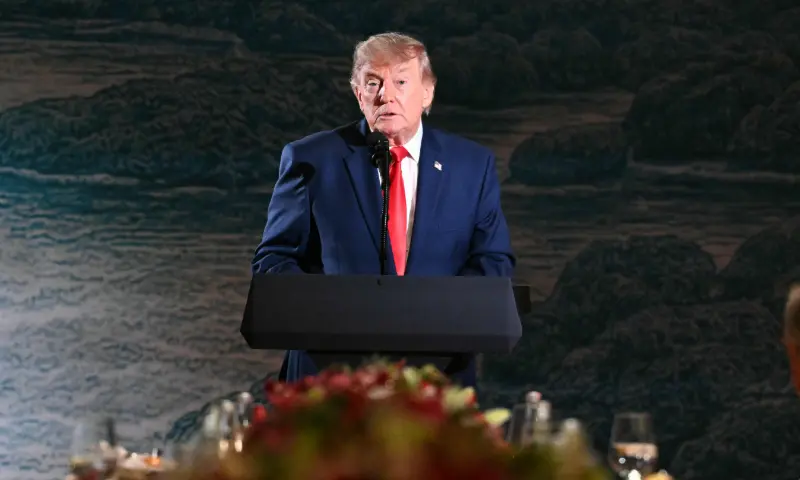
    From feuding officials stuck together on Air Force One to uncomfortable press conferences, rifts in President Donald Trump’s White House have spilt into the open after the US midterm elections.

    Disagreements over China, AI and Iran have flared up, while personal rivalries in the West Wing that were bottled up for the first half of Trump’s second term have started to boil over.

    Most public of all is the feud between Treasury Secretary Scott Bessent and Commerce Secretary Howard Lutnick, over the scandal involving an alleged Chinese spy that forced Nvidia’s Jensen Huang to resign.

    Bessent delivered an astonishing slap-down in an interview on CNBC on Friday when he openly rebuked Lutnick’s department for failing to blacklist Megaspeed, a company formerly linked to Huang’s lover that was accused of shifting vital Nvidia chips to China.

    “Bessent just threw Lutnick under the bus, ran over him, backed up, and ran over him again,” Washington Post analyst Josh Rogin wrote on X.

    The squabbling pair were then forced to spend nearly 20 awkward hours together in the presidential jet as Trump travelled to Asia.

    On the ground in Manila on Tuesday, Lutnick and Bessent studiously ignored each other despite being seated side by side while Trump signed a trade deal with Thailand.

    ‘Two different views’

    Trump played down the row and denied that he planned to fire Lutnick. Yet at the same time he admitted a rift at the heart of his administration’s China policy just days before a summit with Chinese President Xi Jinping in Shenzhen.

    “They’re fine. They have two different views,” Trump told an AFP reporter as he left the White House on Monday when asked about Bessent and Lutnick’s relationship.

    “One wants to be friendly with China, and one wants to have a blow-up with China.”

    The White House denied any disunity.

    “President Trump has assembled the most talented and impressive cabinet in history and they are doing an excellent job carrying out the President’s agenda. Efforts by the legacy media to sow internal division is a distraction that will not work,” White House spokesman Davis Ingle said in a statement to AFP.

    “All agencies across this administration have and will continue to be in lockstep with President Trump’s mission to deliver results for the American people.”

    The midterms have already claimed their first scalp in the West Wing, after Trump named immigration hardliner Stephen Miller to replace so-called “ice maiden” Susie Wiles as his chief of staff.

    And there has been jockeying for position as speculation swirls about who could be next.

    ‘Besties’

    An example came on Friday as Trump’s administration struggled to get to grips with a mass air travel shutdown.

    The White House put Transportation Secretary Sean Duffy and Homeland Security chief Markwayne Mullin at the podium in front of reporters — but their double act did not entirely go to plan.

    Duffy appeared to shake his head and gently nudge his colleague’s elbow when Mullin said that new “patches” were overwhelming old equipment — contradicting the transport chief’s assertion that it was only the ageing gear that was to blame.

    The Iran war has also been a source of tension.

    Vice President JD Vance said the day after the midterms that “the reason we lost is the war,” apparently seeking to distance himself from the conflict ahead of a possible presidential run in 2028.

    Trump denied Vance’s comments had affected their relationship. Yet he told reporters on Nov 8 that “a lot of people didn’t like his comments” — before adding: “But not me.” Pentagon chief Pete Hegseth, who has fought off an impeachment bid for now over the Iran war, also subtly sought to distance himself from Vance’s comments.

    “I respect the vice president greatly, and I’m certainly not going to engage in any finger-pointing,” Hegseth said last week, before adding that the Iran war was “not necessarily popular, but it may have been necessary.”

    Still, it’s not all knives out at the White House.

    Miller, the new chief of staff, and Secretary of State Marco Rubio have struck up an “unlikely alliance” after being foes during Trump’s first term, the Wall Street Journal reported.

    Miller’s wife, Katie, told the paper that the two men were now “besties”.

    Source: dawn

  • PTA finalises licensing framework for ‘sky-high’ internet, telecommunication services

    PTA finalises licensing framework for ‘sky-high’ internet, telecommunication services

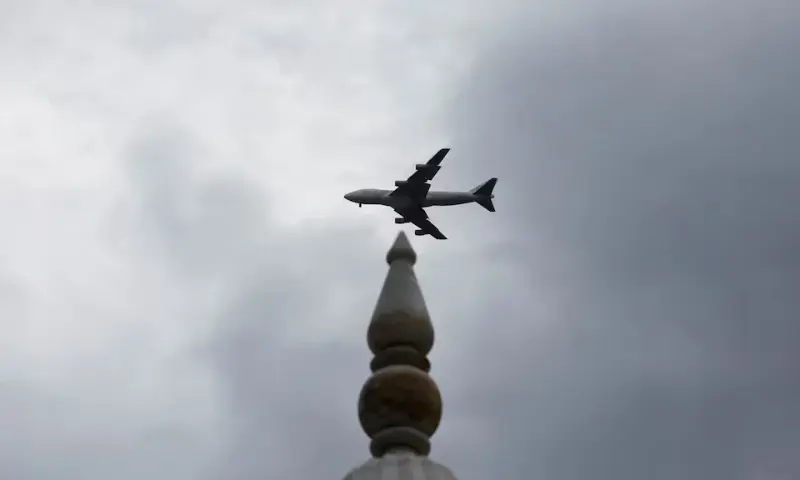
    The Pakistan Telecommunication Authority (PTA) said on Tuesday that it had finalised a licensing framework for satellite-based in-flight telecommunication services, “paving way for internet connectivity and other digital services aboard aircraft”.

    “Under the framework, licensed in-flight telecommunication services providers would be able to use satellites to offer connectivity to Pakistani-registered aircraft, subject to registration with the Pakistan Space Activities Regulatory Board and compliance with PTA’s licensing requirements,” the authority said in a press release on Tuesday.

    It added that transit aircraft passing through Pakistani airspace would require a no-objection certificate from the authority, subject to applicable compliance requirements.

    It said that the introduction of in-flight telecommunication services would “enhance passenger experience through seamless in-flight internet connectivity, enabling access to digital services, entertainment, personal communication and work-related activities”.

    It added that the initiative would further strengthen the authority’s efforts to expand digital connectivity in Pakistan by “extending telecommunication services beyond terrestrial networks and enabling seamless connectivity during air travel”.

    Source: dawn

  • UK sanctions Israeli firms helping build West Bank settlements

    UK sanctions Israeli firms helping build West Bank settlements

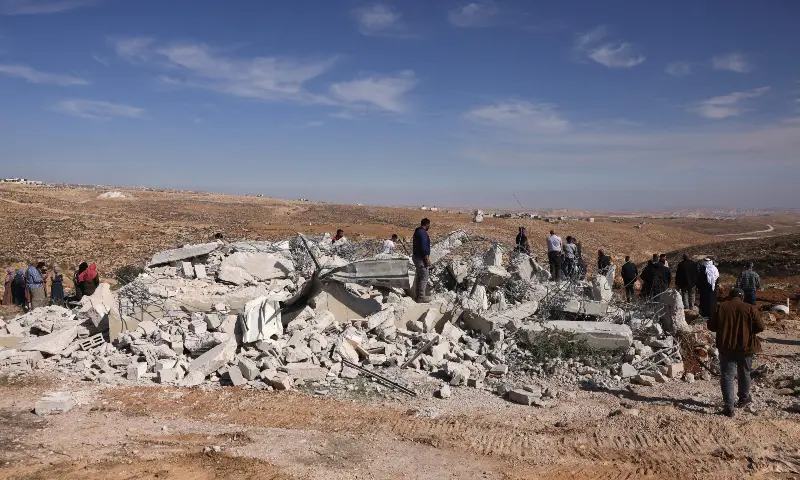
    Britain on Tuesday announced a slew of sanctions against eight Israeli companies helping to plan and build West Bank settlements, in a bid to halt new construction.

    “Do not bid, do not build, and do not profit from the destruction of the two-state solution,” foreign minister Ed Miliband urged Israeli companies.

    European leaders have already condemned plans to construct more than 1,200 homes in the occupied West Bank which were put out to tender in August.

    And the UN secretary general has said the E1 project posed an “existential threat” to a contiguous Palestinian state.

    The UK’s Foreign Office said Tuesday’s “sanctions target construction and property development firms involved in settlement expansion”.

    “The UK has taken firm action against eight construction and property development firms which will disrupt their flows of finance and ability to support further construction in the West Bank,” it added in a statement.

    The move comes amid heavy criticism of Israel for blocking desperately needed supplies of tents and timber into the devastated Gaza Strip which has been hit by heavy flooding.

    Heavy rain earlier this month swept away tens of thousands of tents in the ravaged Palestinian territory, where virtually the entire population has been displaced at least once, according to Hamas-led authorities in Gaza.

    The Foreign Office, citing the UN, said “over 150,000 tents and 300,000 tarpaulins that humanitarian partners and donors purchased are outside Gaza ready to go in but are being held by the Israeli authorities”.

    It said the floods had led to “nearly 4,000 households left without shelter and 1.4 million people living in tents or makeshift shelters”.

    And it accused Israeli authorities of blocking “timber from entering, leaving no emergency shelter kits available in Gaza”.

    The UK’s Foreign Office also sanctioned Israeli activist group Tzav 9 on Tuesday for blocking aid deliveries into Gaza.

    “We will not stand by while those blocking desperately needed aid deepen the intolerable suffering of civilians in Gaza,” Miliband said.

    The sanctions result in asset freezes for the companies and group as well as director disqualifications.

    One of the blacklisted Israeli companies, real estate developer Harey Zahav, sparked controversy in 2023 when it posted a slogan on social media voicing hopes of returning settlers to Gaza.

    It has gained a reputation for constructing wildcat settler outposts in the occupied West Bank without Israeli government authorisation.

    Source: dawn

  • Pakistan discusses avenues for enhancing bilateral defence cooperation with UK, Turkiye

    Pakistan discusses avenues for enhancing bilateral defence cooperation with UK, Turkiye

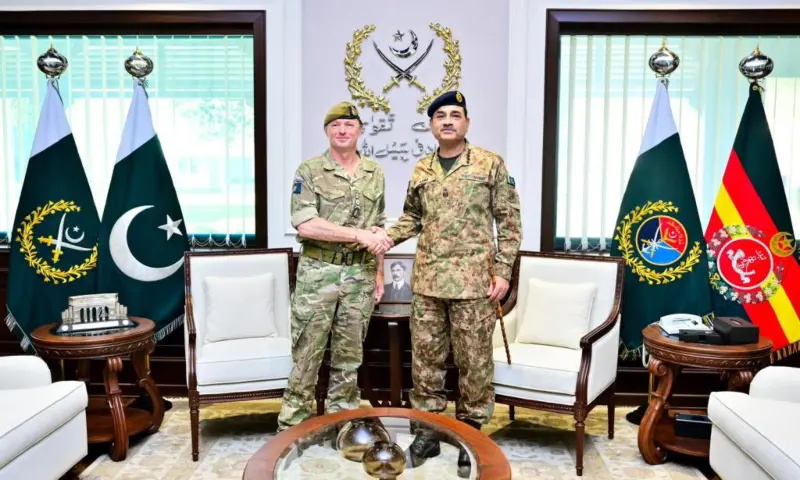
    Chief of Defence Forces (CDF) and Chief of the Army Staff Field Marshal Asim Munir discussed avenues for enhancing defence cooperation with both the United Kingdom and Turkiye, in separate meetings with the British army chief and the Turkish air chief in Rawalpindi, Inter-Services Public Relations (ISPR) said on Tuesday.

    According to the military’s media wing, a high-level delegation from the UK, led by Chief of General Staff General Sir Charles Roland Vincent Walker, called on the CDF at General Headquarters (GHQ).

    The visiting official was presented with a Guard of Honour by a smartly turned-out Pakistan Army contingent upon arrival.

    “Matters of mutual interest, the prevailing regional security environment and avenues for enhancing bilateral defence and security cooperation” were discussed in the meeting, the ISPR said. The CDF underscored Pakistan’s commitment to further expanding defence ties with the UK.

    “Both sides expressed satisfaction over the longstanding, cordial relations between Pakistan and the United Kingdom and reaffirmed their commitment to further strengthening bilateral military-to-military cooperation,” it added.

    The visiting dignitary, in turn, appreciated the “professionalism and operational preparedness” of Pakistan’s armed forces, acknowledging their contributions towards peace and stability in the region.

    According to the statement, the visit reflected the shared resolve of Pakistan and the UK to deepen defence cooperation and strengthen bilateral military ties.

    Separately, Commander of the Turkish Air Force General Rafet Dalkıran also called on the CDF at GHQ, where matters of mutual interest, regional security dynamics and avenues to enhance bilateral defence cooperation were discussed, the military said.

    CDF Munir highlighted the “deep-rooted historical, cultural and strategic ties between the two countries “and appreciated the strong defence partnership between their armed forces.

    The visiting dignitary reciprocated the strengthening of bilateral defence ties, appreciated the professionalism of the Pakistan Armed Forces and acknowledged the country’s contributions to regional peace and stability, the ISPR added.

    Earlier this month, Pakistan and the UK also agreed to strengthen security cooperation when Interior Minister Mohsin Naqvi held delegation-level talks with visiting British Security Minister Dan Jarvis in Islamabad, focusing on counterterrorism, narcotics trafficking, cybercrime and illegal immigration.

    They also held their annual bilateral dialogue on counter-terrorism in Islamabad, in which they reviewed ongoing bilateral and multilateral counter-terrorism cooperation and reaffirmed their shared commitment to combating terrorism in all its forms.

    Pakistan and Turkiye, meanwhile, are co-signatories to multiple defence agreements, including the Makkah Defence Pact signed in August this year with Saudi Arabia, as well as the multilateral Badr defence cooperation pact in October alongside Qatar and Indonesia.

    In addition, Pakistan and Turkiye are part of the Regional Four (R4) Group along with Saudi Arabia and Egypt, which emerged in March and has met several times since then.

    Source: dawn

  • Pakistan, Sri Lanka docked WTC points for slow over-rates in first Test

    Pakistan, Sri Lanka docked WTC points for slow over-rates in first Test

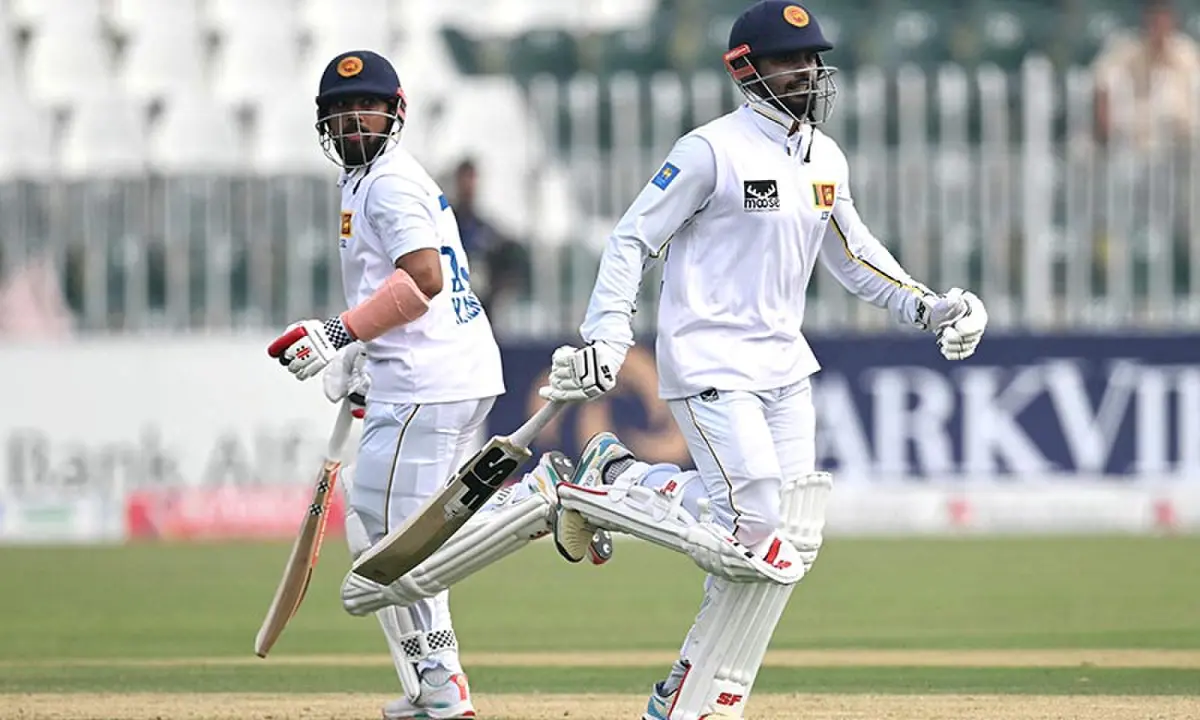
    Pakistan and Sri Lanka have been penalised for maintaining slow over-rates in the drawn first Test of their two-match ICC World Test Championship (WTC) series, with Pakistan losing five points and Sri Lanka suffering a 15-point deduction.

    Match referee Dean Cosker of the ICC International Panel imposed the sanctions after Pakistan were found five overs short of the required rate and Sri Lanka 15 overs behind, after time allowances were taken into account.

    Under the ICC Code of Conduct, players are fined five per cent of their match fees for every over their side falls short, subject to a maximum penalty of 50 per cent. Consequently, Pakistan were fined 25 per cent of their match fees, while Sri Lanka received the maximum 50 per cent fine.

    Captains Babar Azam and Kusal Mendis pleaded guilty to the offences and accepted the sanctions, avoiding formal hearings. The charges were brought by on-field umpires Adrian Holdstock and Rod Tucker, third umpire Allahuddien Paleker and fourth umpire Faisal Afridi.

    The penalties have further dented both teams’ positions in the 2025-27 WTC cycle. Pakistan, who had moved to nine points with a points percentage of 7.50 following the Rawalpindi draw, have slipped to four points and approximately 3.33 per cent after the deduction.

    Sri Lanka, meanwhile, have dropped from 28 points and a percentage of 33.33 to approximately 15.48 per cent, falling to eighth place in the nine-team standings.

    The latest penalty adds to Pakistan’s growing problems with over-rate violations in the current WTC cycle. The team had already incurred a 19-point deduction for previous offences, including an 11-point penalty following the third Test against England at Edgbaston in September.

    Repeated sanctions have significantly undermined Pakistan’s campaign, leaving them with little realistic prospect of qualifying for the WTC final. Their poor results, combined with successive over-rate penalties, have further complicated their position in the competition.

    The second Test between Pakistan and Sri Lanka began in Rawalpindi on Tuesday, giving both sides another opportunity to improve their standings. However, the points deducted following the opening match will remain a setback for the remainder of the championship cycle.

    Source: dawn

  • Autopsy reveals multiple injuries on teenage domestic worker found dead at FIA official’s residence in Islamabad

    Autopsy reveals multiple injuries on teenage domestic worker found dead at FIA official’s residence in Islamabad

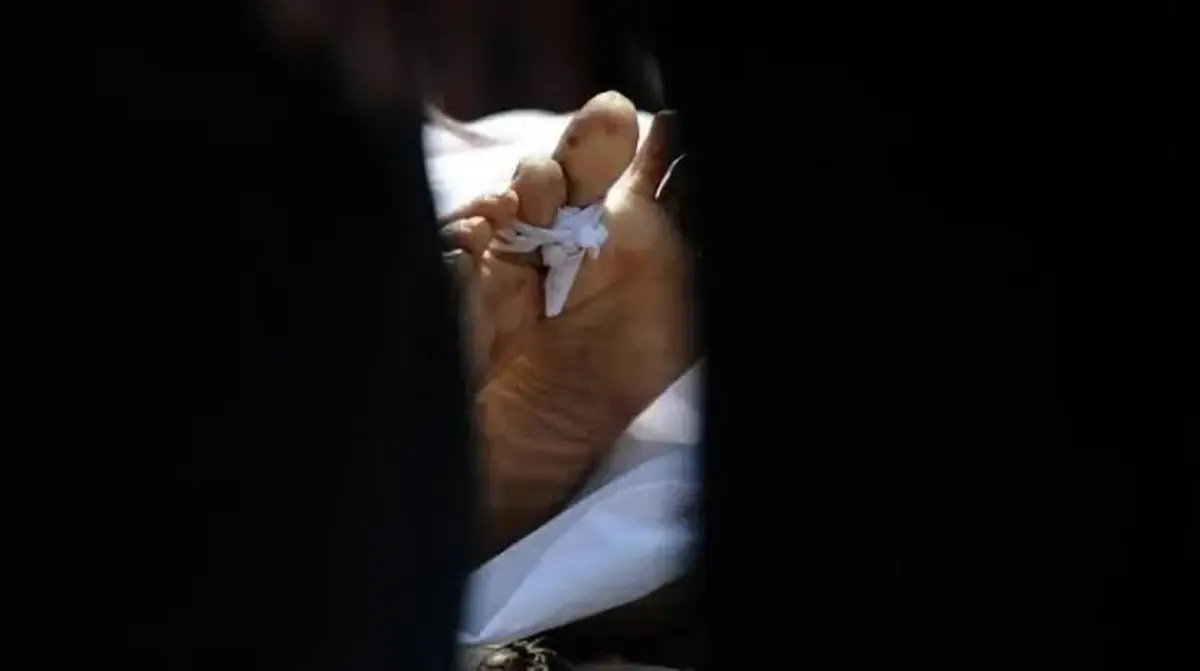
    ISLAMABAD: The autopsy report of a 13-year-old domestic worker, who was found dead at the official residence of a senior Federal Investigation Agency (FIA) official on Sunday night, suggests that she had been subjected to repeated physical assaults.

    According to the first information report (FIR), the girl, identified as Fatima Asghar, allegedly died due to physical torture and violence. The suspects are the FIA official’s dual-national wife and a Qari who worked as a servant at his Islamabad residence.

    The autopsy report stated that the deceased had died from repeated physical assaults that caused grievous injuries and severe inflammation, leading to thromboembolism (blockage of a blood vessel by a blood clot) and cardiopulmonary arrest (cessation of heart and breathing functions).

    “All injuries were inflicted before death and were sufficient to cause death in the ordinary course of life,” it added

    The autopsy report documented 20 injuries on the girl’s body, all of which were suspected to have been caused by physical assault. These included swelling on the left side of the head near the temple, a blood clot on the right side of the head, a bald patch on the right side of the scalp, two old, healed scars on the right cheek, swelling and skin loss on the left cheek, a bruise on the left shoulder and a wound on the left arm.

    Other injuries included swelling and bruising on the left wrist, the back of the left hand and the second and third fingers; a scar between the thumb and index finger of the right hand; a scar on the outer side of the right arm; and swelling and bruising on the right hand, including the second and third fingers.

    The report also noted multiple old, linear dark marks on the right side of the chest and lower abdomen, as well as an old, unhealed burn mark on the left side of the back near the shoulder blade.

    Old burn scars on the back, a thickened scar on the right upper thigh, darkened and swollen skin around both knees and the left thigh, swelling in the knee joint and a non-healing wound on the outer side of the left knee were also found.

    The examination also revealed extensive swelling across the head, extending from the left temple to the back of the head, along with internal bleeding attributed to physical assault. A separate blood clot was also found on the right side of the head.

    The report said samples of the heart, lungs, liver, blood and stomach contents, along with other specimens, whole-body X-rays and a brain CT scan, had been handed over to the police for examination and analysis.

    Meanwhile, First Lady Bibi Asifa Bhutto Zardari expressed sorrow over Fatima’s death, saying that no child should be subjected to violence, abuse or exploitation.

    In a statement, she pointed out that Islamabad’s child employment law, enacted four years ago, prohibited the employment of children of Fatima’s age as domestic workers, even with parental consent. She stressed that the law must be enforced in letter and spirit to prevent the exploitation of children.

    Asifa called for a thorough, impartial and transparent investigation into the circumstances surrounding Fatima’s death and urged that those found responsible be brought to justice in accordance with the law.

    She also emphasised the need for collective efforts to protect vulnerable children, particularly those working in domestic settings, from abuse and exploitation.

    The suspects were arrested on Sunday after an FIR was registered against them under Section 302 (intentional murder) of the Pakistan Penal Code at Shams Colony police station.

    In the FIR, Fatima’s father, a resident of Rahim Yar Khan, said his daughter was a seminary student and was residing with close relatives at Police Lines Headquarters in Islamabad’s H-11 sector. He said he was informed in the morning that she had suddenly fallen ill and was taken to a hospital, where she died.

    An Islamabad police officer said Fatima had been working as a domestic help at the official’s residence for a couple of years, dating back to when he was serving in the capital police.

    Source: dawn