Category: Brecorder

  • Nishat Mills downplays US tariff benefit: report

    Nishat Mills downplays US tariff benefit: report

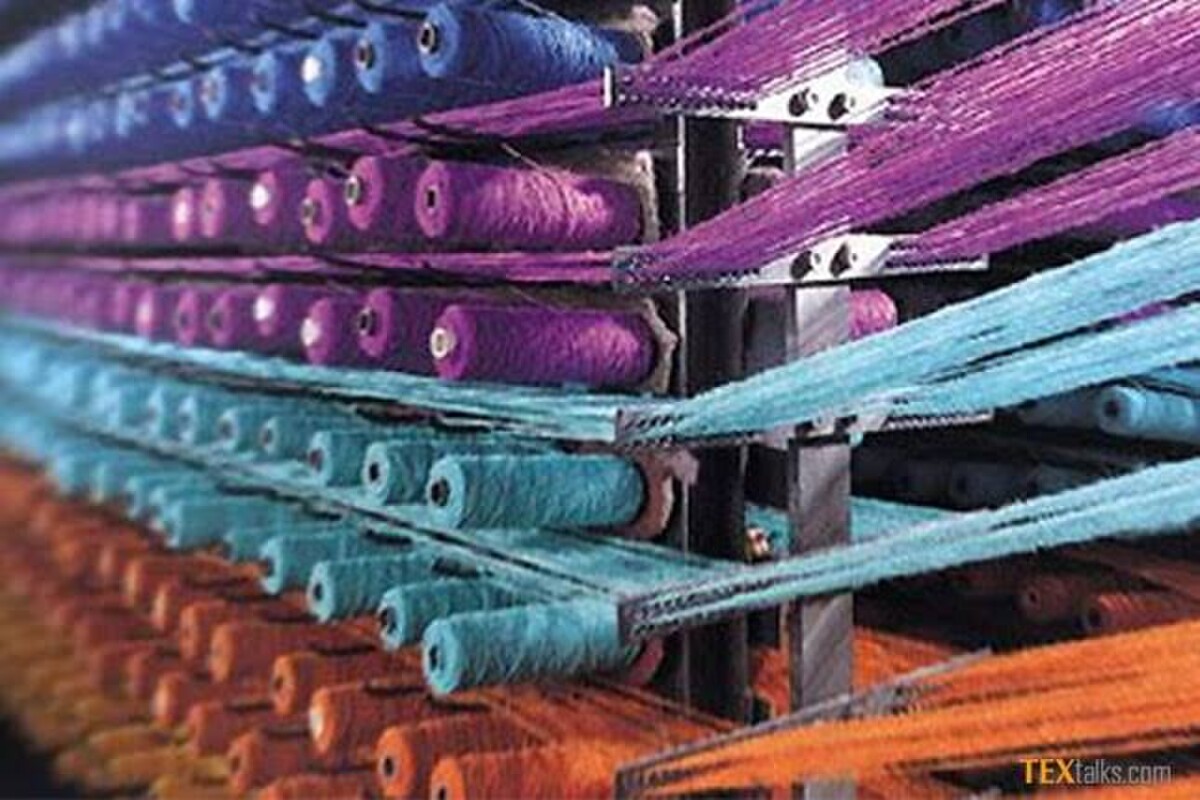
    The management of Nishat Mills Ltd (NML), one of Pakistan’s largest textile exporters, said benefits from lower US tariffs on Pakistan will be limited because most of its exports go to Europe.

    The company’s management said this during a corporate briefing session on Friday, according to a research note from Topline Securities.

    “Regarding US tariffs, management noted that Pakistan faces comparatively lower tariffs, which may provide some relative benefit to the country.

    “However, the benefit is expected to remain limited, given that a substantial portion of NML’s exports is directed towards Europe, supported by GSP+ status.

    “Meanwhile, exports to the US account for around 16-20% of the company’s total exports, with the ultimate impact dependent on how buyers reallocate orders among competing countries,” read the report.

    Days ago, the US unveiled proposed tariffs on 14 major economies, including the European Union and China, following a months-long probe into alleged excess production.

    These duties were proposed to combat what the US calls structural excess industrial capacity, where countries promote production divorced from market demand.

    Analysts say that the move is part of Trump’s push to remake global trade by encouraging countries to buy US products or produce goods within the US.

    The targeted economies include China, the European Union, India, Bangladesh, Cambodia, Indonesia, Japan, South Korea, Malaysia, Singapore, Switzerland, Taiwan, Thailand, and Vietnam.

    Meanwhile, NML, during its corporate briefing session, said that going forward, home textiles and garments, particularly value-added products, were expected to perform relatively better.

    “Management believes that the textile sector is likely to remain resilient during 2027,” read the report.

    Nishat Mills Limited (NML) is the flagship company of Nishat Group, established in 1951. It is one of Pakistan’s largest vertically integrated companies, engaged in spinning, weaving, printing, dyeing, bleaching, stitching, and the apparel business.

    NML deals in yarn, linen, and other products made from raw cotton and synthetic fibre. The company is also involved in generating and supplying electricity.

    Source: brecorder

  • Karachi building collapse death toll rises to six; 13 remain missing

    Karachi building collapse death toll rises to six; 13 remain missing

    The death toll from the collapse of an under-construction building in Karachi’s Administrative Employees Cooperative Society has risen to six, while 14 people have been injured and 13 others remain missing, Aaj News reported on Friday, citing rescue officials.

    Rescue teams have so far recovered six bodies and pulled 14 injured people from the rubble. Search and rescue operations are continuing to locate those still trapped beneath the debris.

    Officials said the operation was being carried out with extreme caution, with rescuers relying mainly on manual methods rather than heavy machinery. They said the use of heavy equipment could damage bodies trapped under the debris and increase the risk of the remaining structure collapsing.

    According to rescue officials, the building had started shaking shortly before it came down. Workers were carrying out construction work on the fifth floor when the structure suddenly collapsed with a loud, explosion-like sound, trapping several people under the rubble.

    The incident occurred in Block 4 of the Administrative Employees Cooperative Society near Baloch Colony on Wednesday. The upper floors of the building, constructed on a 600-square-yard plot, collapsed.

    Source: brecorder

  • Pakistan seeks zero-tariff access for goods in talks with China

    Pakistan seeks zero-tariff access for goods in talks with China

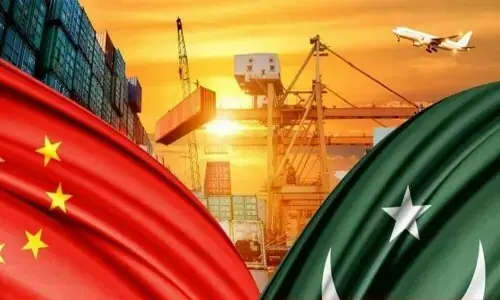
    Pakistan has asked China for preferential, zero-tariff access for its goods to lift annual exports to China from about $3 billion to $20-25 billion, Planning Minister Ahsan Iqbal said after meeting a senior Chinese Communist Party official.

    According to a statement, Iqbal raised the request with Liu Haixing, Minister of the International Department of the CPC Central Committee (IDCPC), on November 26, pointing to tariff concessions China has extended to African countries as a possible model.

    Iqbal sought the department’s support for preferential, zero-tariff access to the Chinese market for Pakistani goods, with the aim of increasing Pakistan’s annual exports to China from about $3 billion to $20–25 billion.

    Iqbal followed up on a proposal discussed on 3 November and previously raised by Prime Minister Shehbaz Sharif with Chinese President Xi Jinping.

    He pointed to tariff concessions China has extended to African countries as a possible model for improving the competitiveness of Pakistani exports in a market that imports nearly $3 trillion in goods annually.

    According to a statement, the minister also sought support for a proposed Pakistan–China Knowledge Corridor that would help about 10,000 Pakistani scholars pursue doctoral studies and specialised research over ten years.

    The proposal envisages scholarships, partnerships with leading Chinese universities and co-financing, with priority fields including artificial intelligence, engineering, advanced manufacturing, modern agriculture, biotechnology and mineral sciences.

    Turning to the second phase of the China–Pakistan Economic Corridor (CPEC), the federal minister highlighted industrial and agricultural cooperation, business partnerships, technology transfer, minerals and green development as priorities.

    He said the first phase had attracted about $25 billion in investment, added more than 8,000 megawatts of generating capacity and delivered 888 kilometres of highways and motorways, while creating an estimated 236,000 direct and indirect jobs. He linked the next phase to Pakistan’s URAAN development programme and China’s 15th Five-Year Plan, underscoring the importance of policy continuity.

    Iqbal reaffirmed Pakistan’s commitment to the security of Chinese personnel and projects and requested updates on the market access and Knowledge Corridor proposals.

    Source: brecorder

  • Making waves: Pakistani woman breaking jet ski barriers

    Making waves: Pakistani woman breaking jet ski barriers

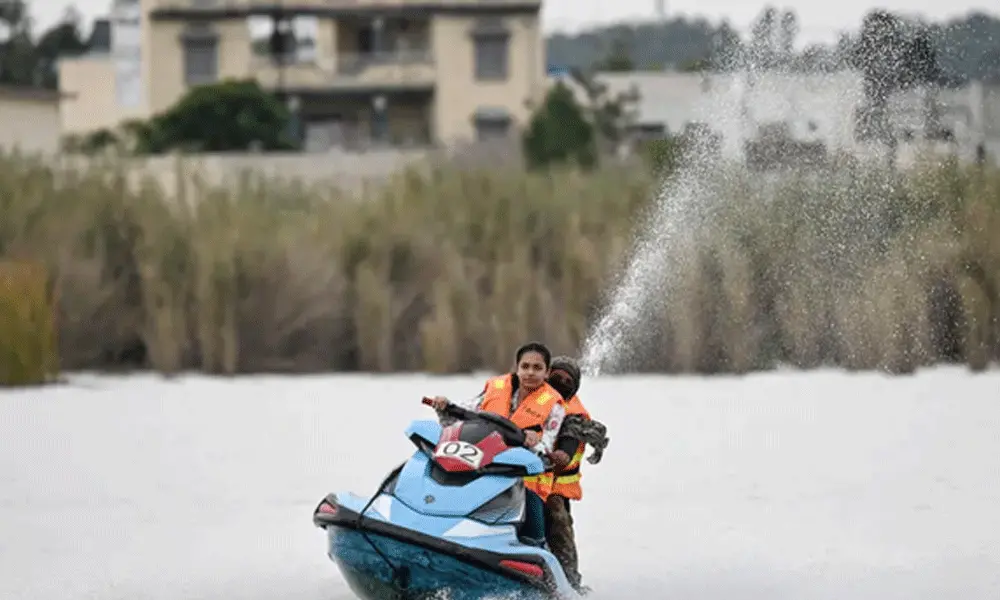
    KALLAR KAHAR: Gliding across the waters of Kallar Kahar Lake, Pakistani instructor Farhat Jabeen grips the handlebars of her jet ski, executing sharp turns and sending spray flying into the air.

    Jabeen has emerged as a jet ski pioneer in Pakistan, where water sports are typically dominated by men.

    Conservative social customs in the country also discourage women from sitting behind male riders on the small, jet-propelled water scooter.

    Clinging on and nestled in front of her, a woman passenger looked thrilled as Jabeen deftly manoeuvred the jet ski.

    “A woman should be brave,” Jabeen, 35, told AFP on the shores of the scenic lake, 125 kilometres (78 miles) south of Pakistan’s capital, Islamabad.

    The mother-of-four has spent the past two years taking women on jet ski tours, as well as riding with other instructors.

    Jabeen’s arrival has been transformative for women travellers and thrill-seekers like Qamar-un-Nisa, who only gave her first name.

    “Appointing a female instructor is a very admirable step,” said the 50-year-old school principal, who was visiting the lake with her students.

    “Her skill was excellent. I really enjoyed it a lot,” she added after a ride with Jabeen.

    Jabeen told AFP that she was “a little afraid” when she started the job.

    “It was very difficult when I first came here for this job. Many objections were raised about me,” she said.

    “Some said ‘You’re a woman, how will you work among men?’” she added.

    Under the guidance of a senior instructor, Jabeen spent a month mastering the jet ski’s controls and safety procedures.

    She works up to 11 hours a day now, inspecting boat engines, cleaning equipment, and stitching damaged life jackets before embarking on dozens of rides.

    ‘Nothing to be afraid of’

    Despite the busy schedule, Jabeen said she is enjoying the work.

    “When I go home and meet my children in the evening, when I see them, all my tiredness goes away,” she added.

    Jabeen’s appointment by regional tourism authorities as a jet ski guide has unlocked recreational access for women visitors, said instructor Tariq Mahmood.

    Ever since Jabeen joined, “it has become completely easy for us to send women to ride” with her, he told AFP.

    Her arrival has removed barriers for women visitors, said Muhammad Abbas Ashraf, manager of Kallar Kahar’s Tourism Development Corporation.

    “When we first introduced the jet skis, women who visited here faced difficulties, because we could not have them sit with us and ride,” he told AFP.

    Jabeen encouraged women to be “brave” and not be afraid of seeking out employment.

    “Women should step out of the house and do some kind of work,” she said.

    “There is nothing to be afraid of,” she added.

    Source: brecorder

  • Iron ore heads for third weekly loss on weak China demand

    Iron ore heads for third weekly loss on weak China demand

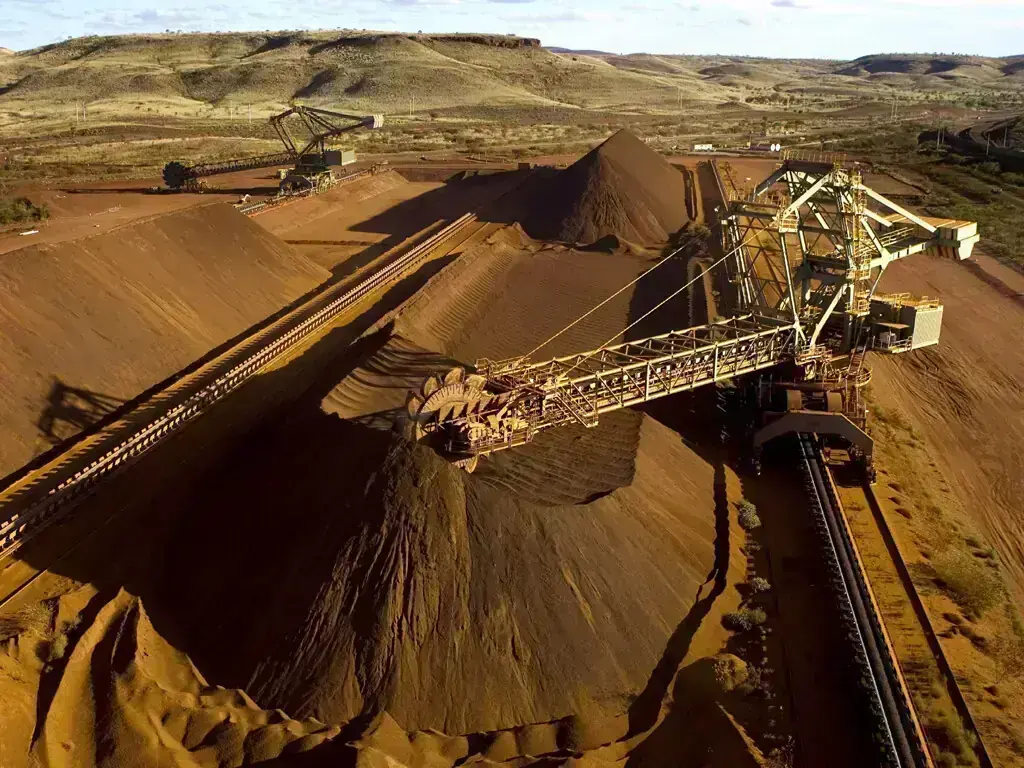
    Iron ore prices fell on Friday to their lowest in more than a week and were on track for a third straight weekly loss, as weakening demand in top consumer China and expectations of higher supply dampened investors sentiment.

    The most-traded iron ore contract on China’s Dalian Commodity Exchange (DCE) slid 1.13% to 654 yuan ($98.20) a metric ton, as of 0155 GMT.

    It hit its weakest level since November 18 at 645.5 yuan earlier in the session.

    The benchmark January iron ore on the Singapore Exchange declined 1.5% to $87.95 a ton, as of 0145 GMT, after earlier touching its lowest level since November 18 at $87.5.

    For the week, Dalian iron ore has lost 0.3% so far and the Singapore benchmark is down 0.11%. Hot metal output, a gauge of iron ore demand, continued to fall and portside stocks rose, adding pressure on iron ore prices, analysts at broker Everbright Futures said in a note.

    Average daily hot metal output fell for a seventh straight week, dropping 1% from the previous week to an eight-month low of 2.27 million tons as of November 26, data from consultancy Mysteel showed.

    That compared with a 0.3% weekly decline in the previous period.

    Expectations of higher supply also weighed on iron ore prices, as miners may ramp up shipments towards year-end to meet quarterly and annual targets.

    “It’s hard to see an obvious improvement in domestic demand in the medium term; global iron ore shipments may rise further,” said analysts at broker Yongan Futures.

    Other steelmaking ingredients gained ground, with coking coal and coke rising 1.57% and 1.51%, respectively.

    Steel benchmarks on the Shanghai Futures Exchange advanced. Rebar ticked up 0.29%, hot-rolled coil nudged up 0.09%, and stainless steel rose 1.47%.

    Source: brecorder

  • Japan’s Nikkei extends weekly gain as investors scoop up battered AI shares

    Japan’s Nikkei extends weekly gain as investors scoop up battered AI shares

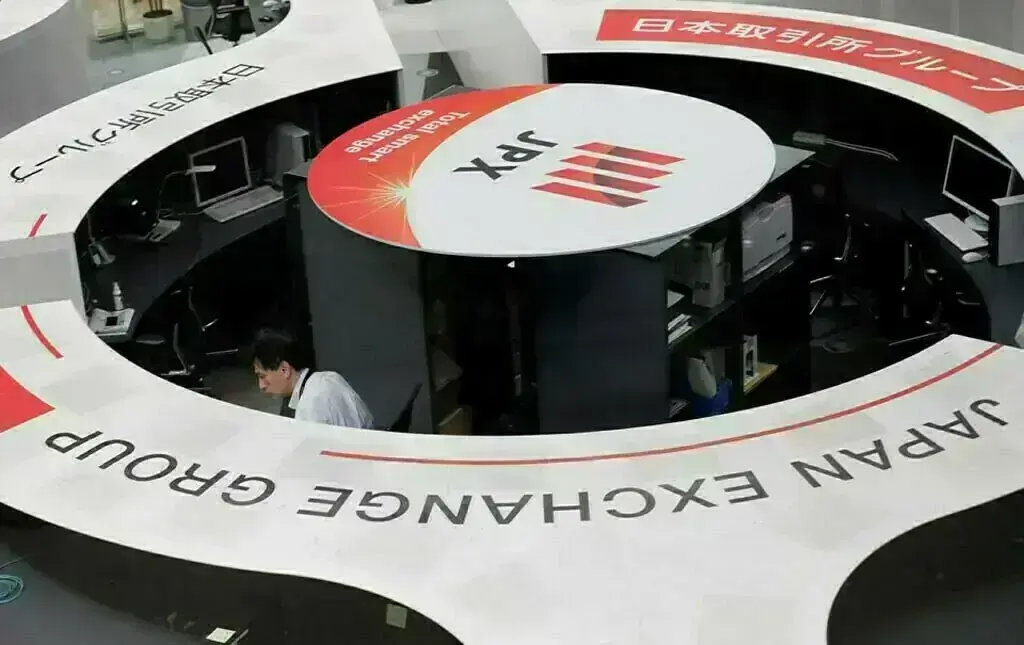
    TOKYO: Japan’s Nikkei share average rose on Friday, extending its weekly gain, as investors scooped up recently battered AI-related stocks and domestic-focused shares found buyers amid market volatility.

    The benchmark Nikkei 225 climbed 0.83% to 57,976.69 in morning trade and was poised for a 2.7% advance for the week. The broader Topix gained 1.21% to 3,795.68.

    Trading cues were slim, with US markets closed overnight for the Thanksgiving holiday.

    The Nikkei has firmed in recent days after plunging 7.7% last week, when concerns mounted over the cost of AI infrastructure and potential restrictions on international chip sales.

    “Big moves are unlikely in Japan today with the US market closed,” Monex Securities analyst Yoshitaka Araya said in a note.

    “A slightly firmer start is expected, but the rebound will likely be limited because the Nikkei has been in a correction recently.” On the domestic front, annual core inflation in Tokyo accelerated in November at the fastest pace in 16 months, bolstering the case for a Bank of Japan interest rate hike as soon as next month.

    Markets remained fragile after the Trump administration proposed country-specific tariffs on goods from 14 major trading partners. Middle East tensions also escalated, with Yemen’s Houthis saying they had struck Saudi Arabia’s largest oil refinery and Iran saying mines had hit ships in the Strait of Hormuz.

    “Share prices have remained firm recently, particularly in sectors other than AI-related ones, such as defensive sectors and domestic demand sectors,” said Maki Sawada, an equities strategist at Nomura Securities.

    “This is due to the fact that Japanese companies are expected to see increased profits in fiscal 2026.”

    Shares in Japan Tobacco climbed 4.27% following a report it was considering partnering on a takeover of British cigarette maker Imperial Brands.

    Market breadth was overwhelmingly positive, with 179 of the Nikkei’s 225 constituents advancing and 43 declining.

    The largest percentage gainers in the index were Socionext, up 7.75%, followed by Furukawa Electric, 7.65% higher, and Kioxia Holdings, which gained 7%.

    The largest losers were Recruit Holdings, down 3.97%, followed by Dentsu Group, 2.75% lower, and Capcom, which lost 2.26%.

    Source: brecorder

  • Malaysian palm oil rises on Dalian strength, eyes weekly gain

    Malaysian palm oil rises on Dalian strength, eyes weekly gain

    JAKARTA: Malaysian palm oil futures rose on Friday, supported by gains in rival vegetable oils and a technical rebound from recent lows, with the benchmark contract on track for a weekly gain.

    The benchmark palm oil contract for February delivery on the Bursa Malaysia Derivatives Exchange added 41 ringgit, or 0.96%, to 4,333 ringgit ($1,052.98) a metric ton during by the midday break.

    The futures have booked a 2.75% weekly gain so far.

    “The futures’ increase is mainly driven by technical rebound after the recent double bottom while tracking Dalian performance,” a Kuala Lumpur-based trader said.

    Palm oil tracks the price movements of rival edible oils as it competes for a share of the global vegetable oils market Dalian’s most-active soyoil contract rose 1.19%, while its palm oil contract added 1.72%.

    The Chicago Board of Trade is on a modified Thanksgiving holiday schedule, with an early close on Friday.

    State export monitoring firm Danantara Sumberdaya Indonesia (DSI) is still evaluating the final fee it will charge for its services, the company’s chief executive said on Friday.

    Palm oil group GAPKI said on Thursday, DSI has proposed a service fee of 0.5% of the value of palm oil exports.

    Crude palm oil prices are expected to stay above 4,100 ringgit per metric ton in December, as supply risks emerge heading into 2027, the Malaysian Palm Oil Council said on Wednesday.

    Exports of Malaysian palm oil products for November 1 to 25 fell 9.3% from October 1 to 25, independent inspection company AmSpec Agri Malaysia said, while cargo surveyor Intertek Testing Services estimated a 4% drop.

    The ringgit MYR=, palm’s currency of trade, weakened 0.05% against the dollar, making the commodity slightly cheaper for buyers holding foreign currencies.

    Palm oil may rise to 4,372 ringgit per metric ton, the peak of a wave b, Reuters technical analyst Wang Tao said.

    Source: brecorder

  • Oil on track to snap 3-week losing streak over supply fears

    Oil on track to snap 3-week losing streak over supply fears

    SINGAPORE: Oil prices rose slightly on Friday and are on track to snap a three-week losing streak as ongoing attacks on tankers in the Strait of Hormuz and Saudi energy infrastructure heightened concerns over oil supply from the conflict-hit Middle East.

    Brent crude futures rose 4 cents to $96.61 a barrel by 0450 GMT, after gaining nearly $2 on Thursday to settle at their highest since November 6.

    US West Texas Intermediate crude futures were at $85.78 a barrel, up $2.10, or 2.5%, from their close on Wednesday.

    There was no settlement for WTI on Thursday due to the Thanksgiving holiday in the US.

    “We think Brent can still push above USD100/bbl without another major escalation in the Middle East, but that increasingly requires evidence of constrained deliverable supply,” ANZ analysts Brian Martin and Daniel Hynes said in a note.

    Prices slipped in previous weeks on relief that US President Donald Trump did not step up military action on Iran after the midterm elections.

    However, Iran has continued to attack ships transiting the Hormuz strait, disrupting oil exports, while Yemeni Houthis have struck Saudi infrastructure.

    “Recovering Gulf exports and easing geopolitical risk support lower oil prices in 2027. However, depleted inventories, persistent shipping risks and slow refinery repairs leave the market exposed,” OCBC analyst Sim Moh Siong said in a note.

    Saudi Aramco’s Jazan refinery temporarily halted some operations after a projectile struck the facility on Thursday, killing a Nepalese worker and wounding several others, Saudi Arabia’s Energy Ministry said in a statement.

    The strike was the Houthis’ latest blow against key Saudi facilities, a day after the group claimed attacks on Ras Tanura, the kingdom’s largest refinery and a major crude export hub, and the Red Sea ports of Jeddah and Jazan, amid escalating hostilities between the two sides.

    Given the disruption from the Iran war, OPEC+ is likely to maintain its oil output targets for at least the first quarter of 2027 at a meeting on Sunday, two sources said.

    Meanwhile, Ukraine has intensified drone attacks on Russian oil refineries since the end of October, with the latest incident causing a fire at the Slavyansk ECO refinery in Russia’s southern Krasnodar region.

    Separately, fires disrupted activity at Thailand’s Bangchak refinery and Venezuela’s Amuay refinery on Thursday.

    Source: brecorder

  • India-US trade deal is nearing completion, minister says

    India-US trade deal is nearing completion, minister says

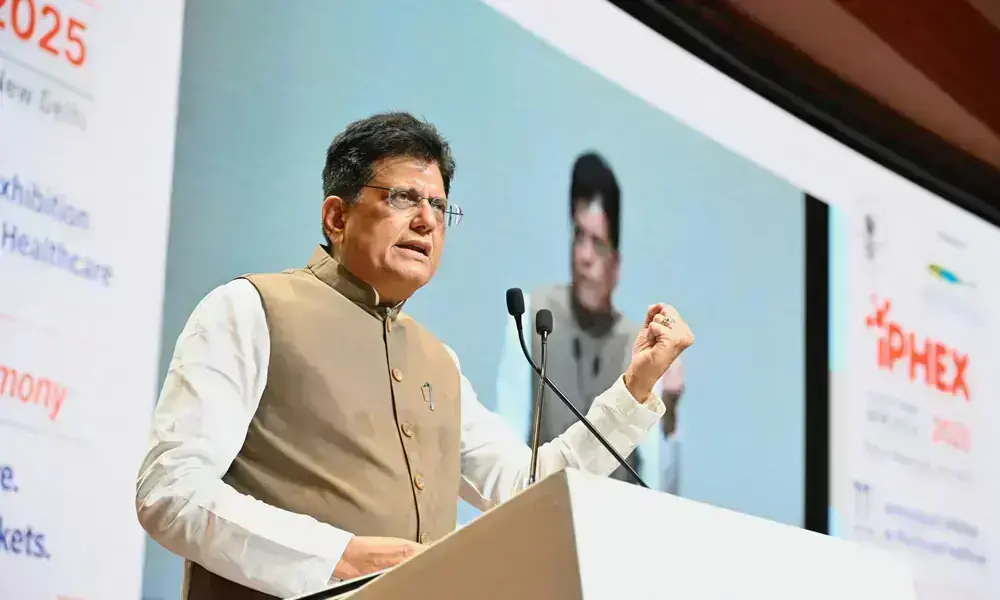
    MUMBAI: India and the United States are close to wrapping up a long-anticipated trade deal, Trade Minister Piyush Goyal said on Friday, signalling progress in talks as both sides seek to avert higher US tariffs on Indian imports.

    The comments came after US Trade Representative Jamieson Greer said on Wednesday Washington would cap tariffs on Indian imports at 17% if an agreement was reached, averting a rise to 25%.

    “The US trade deal is close to culmination,” Goyal told an industry conference in an online speech.

    “The process and pathway, which was always something which held back finalising the deal, is now taking some shape.”

    India’s trade minister in talks with shipping ministry, companies to tackle stuck cargoes

    India’s trade ministry has said it was examining the USTR notice, adding that New Delhi had told Washington during the trade investigation that India did not have structural excess capacity in any industry.

    India had engaged “constructively” in the capacity investigation, the ministry had said earlier, calling for trade-related concerns to be tackled in the trade pact talks.

    Source: brecorder

  • PSX: stocks slip lower, KSE-100 down nearly 200 points

    PSX: stocks slip lower, KSE-100 down nearly 200 points

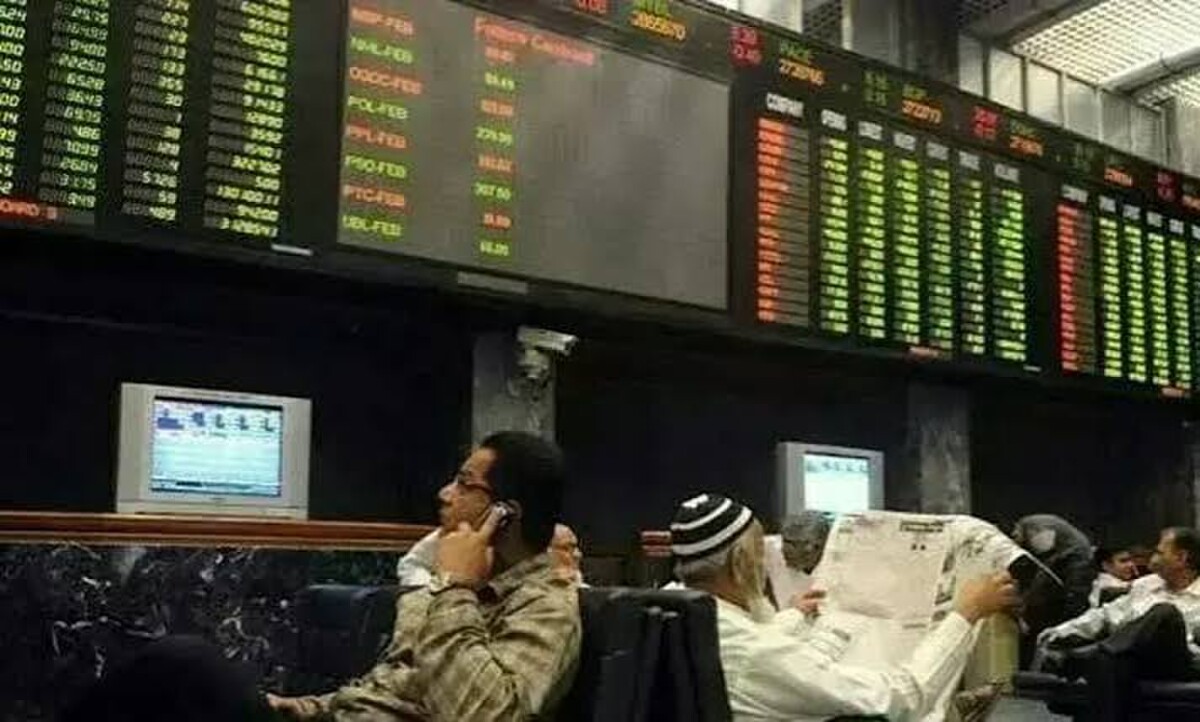
    Negative sentiment prevailed at the Pakistan Stock Exchange (PSX), with the benchmark KSE-100 Index shedding nearly 200 points in the opening minutes of trading on Friday.

    At 9:30am, the benchmark index hovered at 177,895.43, down 165.25 points, or 0.09%.

    Selling was in key sectors, including automobile assemblers, cement, commercial banks, oil and gas exploration and power generation. Index-heavy stocks, including HUBCO, MARI, OGDC, MCB, MEBL, NBP and UBL, traded in the green.

    “We expect the market to remain volatile, as rising global oil prices, ongoing geopolitical tensions and rollover week activity are likely to keep investor sentiment cautious,” said Ismail Iqbal Securities in its note on Friday.

    On Thursday, PSX closed marginally lower as thin global liquidity, geopolitical uncertainty and rollover-week profit-taking kept investors cautious, with selling in heavyweight stocks offsetting selective buying. The benchmark KSE-100 Index slipped by 60.56 points or 0.03% to close at 178,060.69 points.

    Globally, Asian shares were set to end a bruising month on a steadier note as a holiday lull offered some respite from AI jitters, while the ​dollar reigned supreme, riding a wave of safe-haven demand and rate hike bets towards a third month of gains.

    Oil prices were headed ‌for the first weekly rise in four on renewed concerns about supply disruptions. Brent crude futures slipped 0.4% on Friday to $96.14 a barrel, but were still up 3.9% for the week. For the month, they were down 18%.

    Wall Street was closed on Thursday for the Thanksgiving holiday, but in Asia, S&P 500 futures were up 0.8%, and Nasdaq futures were 1% higher.

    Japan’s ​Nikkei rose 0.7% to bring its gains for the week to 2.7%, clawing back only a fraction of its 8.4% loss for the month. Data ​showed on Friday that core inflation in Tokyo hit a 16-month high in November, bolstering the case for an interest ⁠rate hike from the Bank of Japan as soon as next month.

    MSCI’s broadest index of Asia-Pacific shares outside Japan edged up 0.5% to end the week ​1.9% higher. It was still down 8.2% for the month.

    Shares in South Korea rallied 2%, and China’s blue chips slipped 0.2%, after hitting the lowest level since ​June 2025 a day earlier.

    This is an intraday update

    Source: brecorder