Category: Brecorder

  • Pakistan vows to deepen cooperation with IAEA on nuclear security

    Pakistan vows to deepen cooperation with IAEA on nuclear security

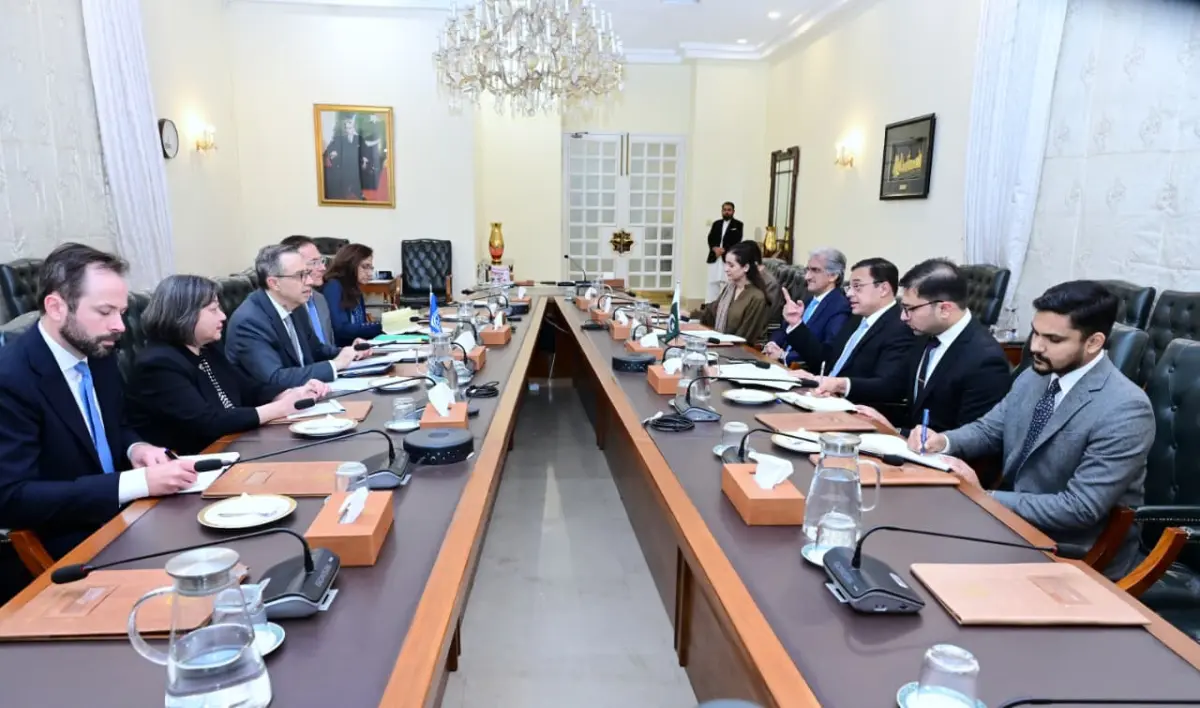
    Pakistan has reaffirmed its commitment to strengthening international cooperation in nuclear security as the 15th Annual Meeting of the International Network for Nuclear Security Training and Support Centres (NSSC Network), organised in collaboration with the International Atomic Energy Agency (IAEA), concluded in Islamabad.

    The four-day meeting, held from November 23 to 26, brought together international delegates and nuclear security experts to discuss emerging challenges, institutional sustainability, human resource development and future cooperation in nuclear security training, the Foreign Office said in a press release on Friday.

    The meeting opened at the Pakistan Centre of Excellence for Nuclear Security (PCENS), where senior officials from Pakistan and the IAEA delivered opening remarks. A commemorative plaque was also unveiled to mark 10 years since Pakistan hosted the NSSC Network’s annual meeting for the first time in 2016.

    On the second day, a special event was held at the Pakistan Nuclear Regulatory Authority (PNRA) headquarters to mark 20 years of Pakistan-IAEA cooperation in nuclear security.

    The event featured an exhibition of indigenous nuclear security technologies developed by Pakistan’s national industry, providing local technology developers an opportunity to engage with IAEA representatives and international delegates.

    The contributions of PCENS and the National Institute of Safety and Security (NISAS), an IAEA Collaborating Centre, were also highlighted, particularly in professional training, research and capacity building.

    As part of the programme, delegates visited the Pakistan Institute of Engineering and Applied Sciences (PIEAS) in Islamabad, where they were briefed on the country’s capabilities in nuclear engineering, research, education and training.

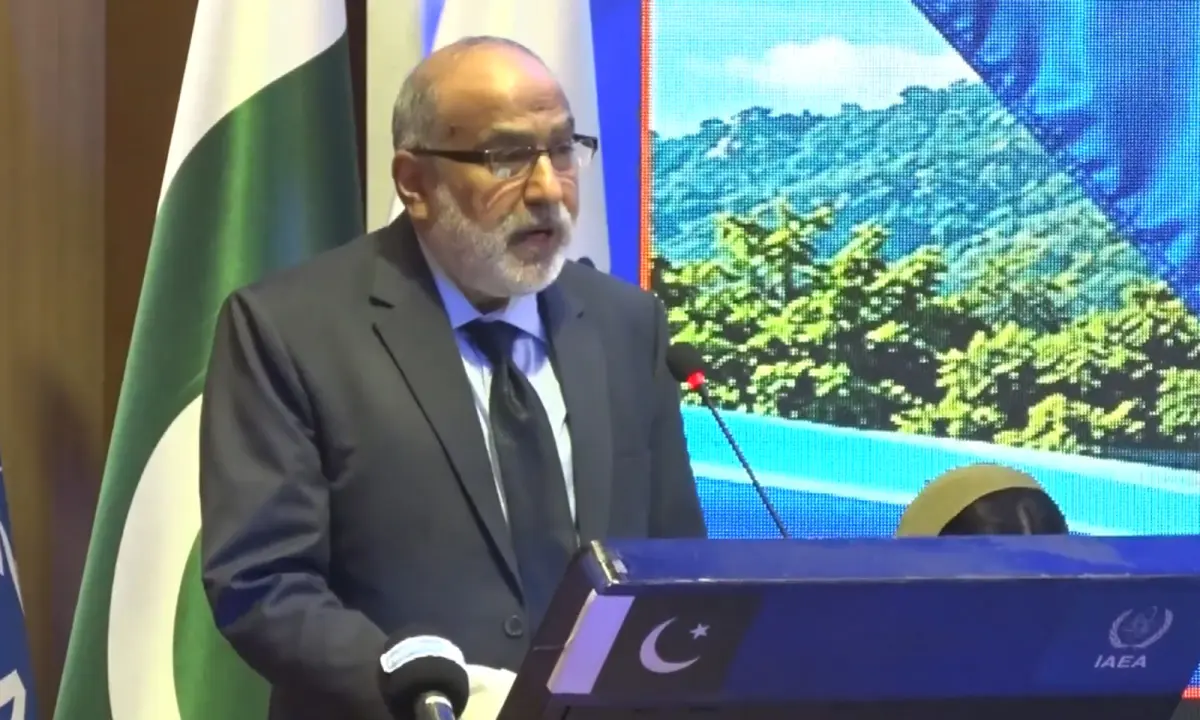
    Addressing the concluding session, the chairman of the Pakistan Atomic Energy Commission (PAEC) stressed the need for sustained international cooperation to strengthen nuclear security.

    He said Pakistan’s hosting of the NSSC Network’s annual meeting for the second time, a decade after organising the first such meeting outside Vienna, reflected its continued commitment to international nuclear security efforts.

    He reaffirmed Pakistan’s resolve to further strengthen cooperation with the IAEA and international partners to promote sustainable nuclear security.

    Source: brecorder

  • Downfall of Shanghai Party chief opens route to pinnacle of politics

    Downfall of Shanghai Party chief opens route to pinnacle of politics

    BEIJING: The abrupt downfall of the top Communist Party official in China’s commercial hub of Shanghai this week opened a rare path to one of the country’s most prestigious regional posts ahead of a major national leadership reshuffle next year.

    Chen Jining, Shanghai’s party secretary since 2022 and once seen as a rising political star who studied and worked in Britain for a decade, occupied a post briefly held by President Xi Jinping two decades ago, just before his own meteoric rise.

    But in an unexpected announcement on Tuesday, the anti-graft watchdog said he was being investigated for “suspected serious violations of discipline and laws,” sending shock waves through political circles.

    “I think one of the golden rules in Chinese politics, now and in the past, is never ever be in a position where you look like you might be a potential successor to the top job,” said academic Kerry Brown at King’s College London.

    The financial hub’s top job, outranking the mayoralty, has been one of the most prominent positions in China’s leadership pipeline to the Communist Party’s highest decision-making body, the Politburo Standing Committee, which now has seven members.

    Shanghai has long been among the most reliable of proving grounds among the key municipalities, provinces, or central party institutions entrusted to officials considered suitable for central leadership roles before their elevation.

    Eight of the city’s 10 most recent party bosses went on to join the Politburo Standing Committee. Two, Jiang Zemin and Xi Jinping, became China’s paramount leader, while two others, Zhu Rongji and Li Qiang, became premier.

    By contrast, over the same period, Beijing, the capital, has yielded no paramount leader and propelled fewer than a handful of its party chiefs into the Politburo Standing Committee.

    Chen’s investigation, and the near certainty of his eventual ouster, offer a political springboard for another promising candidate.

    “It may well be that the greatest issue was that so many were talking about him being a potential heir apparent,” said Brown, director of the Lau China Institute at KCL.

    Another Chen, another Xi?

    In nearly 40 years, just two Shanghai party bosses failed to make the cut: Chen Jining and Chen Liangyu.

    In 2006, when high-profile graft purges were still seen as exceptional rather than part of a systemic campaign, Chen

     Liangyu was brought down in a pension fund corruption case before being sentenced to 18 years in prison.

    Then Shanghai mayor Han Zheng, who is now vice president, stepped in as acting party secretary for a few months before Xi took the post in March 2007.

    Xi stayed in Shanghai for only seven months before leaping directly to the Politburo Standing Committee in a highly unusual promotion at a once-every-five-year party congress in October.

    He capped that rise by becoming China’s paramount leader at the next party congress in 2012.

    The vacancy left by the investigation of Chen Jining this week echoes the precedent of 20 years ago, just as the party prepares to reshuffle top leaders at next year’s congress, where Xi is widely expected to secure five more years as China’s leader.

    But the historical parallels might end there, analysts say.

    As promotion trajectories become more complex and less predictable, Daria Impiombato, a senior analyst at Berlin-based think tank MERICS, said, “The path forward for whoever takes Chen Jining’s spot is not set in stone.”

    With the supreme military command still depleted following purges of top generals, Impiombato added, “Xi hasn’t shown any hesitation in leaving gaping holes in his leadership until his plans have fully played out.”

    The precedent from 2006 could be an uncomfortable portent for whoever governs Shanghai next, as the post offers prestige and visibility, but also fuels speculation about ambitions beyond it.

    With many once tipped as candidates for the top job now sidelined, except possibly Xi’s predecessor Hu Jintao, Brown said, “It seems to never end well.”

    Officials likely to win in the end are those who “are doing everything they can to be low-profile, effective and non-threatening”, he added.

    Current Shanghai Mayor Zhu Zhongming, a 54-year-old appointed in September after the resignation of predecessor Gong Zheng, is now the city’s highest-ranking active official.

    Source: brecorder

  • Hackers breach US Air Force flagship Cloud One computing platform

    Hackers breach US Air Force flagship Cloud One computing platform

    WASHINGTON: Hackers have breached the US Air Force’s flagship cloud computing platform, three people familiar with the matter told Reuters, in a development that could jeopardize a vast swathe of sensitive tactical, personnel and logistics data.

    The intrusion at Cloud One was discovered within the past month or so during work to upgrade the system, two of the people said, adding that the discovery has led to disruption across the platform. Reuters could not establish the identity of the hackers, the full scope of the intrusion or whether any data had been stolen.

    In a statement to Reuters, the Air Force said it “does not comment on the security posture, vulnerabilities or operational status of specific networks and systems. We continuously take prudent measures to protect Department (of the Air Force) information, systems and mission capabilities.”

    A one-stop shop

    Initiated in 2017, Cloud One was meant to serve as a one-stop shop for the Air Force’s IT needs, combining the resources of four operators — Microsoft, Amazon, Oracle and Alphabet — to power scores of applications including ones that manage personnel data and pay or logistics and maintenance.

    Among them are the Air Force’s Cloud-Based Command and Control, which collates air defense radar and other data feeds from across North America, and the Theater Integrated Combat Munitions System, which tracks bombs and missiles across more than 200 US Air Force locations around the world.

    SAIC was the prime contractor for Cloud One until 2025, when Leidos took over. SAIC did not respond to a request seeking comment. Leidos referred questions to the Air Force.

    Cloud One is among the US military’s biggest cloud platforms, according to two of the sources.

    “A breach here is a big deal,” one of the sources said.

    Investigators have called in Cyber Command, the US military’s cyber force, to assess the damage, one of the sources said.

    Cyber Command did not respond to requests for comment.

    A range of disruption

    The discovery of the hack led to a range of disruption. Two of the sources, along with a fourth person familiar with the matter, said that efforts to migrate back-office applications to Cloud One, a longstanding military priority, have been paused.

    Updates to applications already running on Cloud One were blocked, leaving Air Force personnel unable to apply fixes just as a new batch of serious software vulnerabilities has been disclosed across the technology industry. A fifth source said that some users had their administrator rights revoked.

    All five sources spoke on condition of anonymity.

    One source said that the cyber intruders exploited a software vulnerability to reach the control plane. That person likened the control plane to a universal remote, as intruders in theory could leverage their access to check the operational status of military aircraft or the movement of spare parts, though it was unclear whether the hackers did so in this case.

    Reuters could not identify the specific vulnerability exploited by the hackers.

    String of hacks

    News of the breach comes amid heightened anxiety over AI-powered intrusions, a particularly serious problem for cloud-based networks because of the ability of AI models to swiftly detect weaknesses across wide surface areas.

    The US government already has been dealing with the fallout from at least six other recently disclosed cyber incidents, including two at the FBI, a previous hack of Pentagon data, a recent leak of Department of Homeland Security personnel information, a breach affecting at least two spy agencies and a hack at the Treasury Department.

    Cloud One has long been in the crosshairs of hackers.

    In a 2023 commentary carried by the online publication FedScoop, Cloud One’s leadership touted what they called a “100% success rate” in beating back what they said was a “staggering” number of attempts to penetrate the platform.

    “There is no room for error when it comes to security,” Cloud One’s leadership wrote.

    Source: brecorder

  • ADB approves $468mn to boost Pakistan’s agriculture

    ADB approves $468mn to boost Pakistan’s agriculture

    The Asian Development Bank (ADB) has approved two loans totaling $468 million to improve water and agriculture management in Pakistan’s provinces, strengthening community resilience to shocks related to the changing climate, boosting rural livelihoods, and enhancing food security for about 728,000 people.

    A $208 million concessional loan for the Khyber Pakhtunkhwa Resilient Irrigated Agriculture Livelihoods Development Project will help scale up agricultural productivity and increase incomes for smallholder farmers in Nowshera, Swabi, and Upper Chitral districts through resilient irrigation systems and modern agricultural technologies. Additionally, the project will provide livelihoods training for women, while supporting measures to increase the role of women in water governance, the development bank said in a statement on Friday.

    A $260 million concessional loan for the Integrated Hill Torrent Management Project will help mitigate flash flood risks and enhance floodwater harvesting in hilly areas of Punjab.

    “These projects will significantly contribute to strengthening food security, while responding to growing environmental pressures and the impacts of the changing climate,” said ADB Country Director for Pakistan Emma Fan. “Resilient water management infrastructure and sustainable farming practices are vital for the economic potential of rural communities in these two provinces.”

    The project in Khyber Pakhtunkhwa will construct and rehabilitate irrigation systems to be more resilient to disasters. It will introduce modern water management practices, provide capacity-building activities for farmers, and promote smart agricultural technologies.

    The project in Punjab will bolster flood resilience by building critical water management infrastructure for water retention, drainage, and flood protection. It will also promote sustainable agricultural practices including spate irrigation, as well as nature-based solutions that use floodwater as a resource to improve community water access, recharge aquifers, and restore ecosystems.

    ADB said the projects will not only safeguard communities from the adverse impacts of natural hazards, advance provincial disaster preparedness, but also increase agricultural yields, create more jobs, and provide a reliable water source for agriculture, community consumption, and ecosystem restoration.

    ADB is a leading multilateral development bank supporting sustainable, inclusive, and resilient growth across Asia and the Pacific.

    Source: brecorder

  • Ismail Industries expands solar capacity to 18 MW with Hub project

    Ismail Industries expands solar capacity to 18 MW with Hub project

    Ismail Industries Ltd, a Pakistani confectioner, is developing a 5.6-megawatt solar park at its Hub facility, integrated with a 10-megawatt-hour battery energy storage system.

    The listed company disclosed the development in a notice to the Pakistan Stock Exchange (PSX) on Friday.

    “The project incorporates Sungrow’s advanced liquid-cooled battery energy storage technology, offering round-trip efficiency of up to 92% and designed to support reliable operation under extreme ambient temperatures,” the company said.

    It will also include an advanced microgrid control system to coordinate solar generation, battery storage and other captive energy sources to optimise performance and improve reliability.

    “Upon completion, it increases the annual solar electricity generation, bringing the company’s total renewable energy capacity to approximately ~18 MW and further reducing reliance on fossil fuels.

    “The company plans to further increase its solar power generation capacity by another 4 MW till June 2027,” it said, adding that the project represents the company’s decarbonisation journey.

    Several companies in Pakistan are adopting solar power to mitigate rising fuel costs, enhance operational efficiency, and contribute to environmental sustainability.

    Panther Tyres Limited commissioned a 2.5 MW solar power system at its manufacturing facility. Dewan Cement Limited commissioned a 6 MW solar power system at its manufacturing facility in Karachi.

    Meanwhile, Ismail Industries is engaged in the manufacturing and trading of sugar, confectionery items, biscuits, potato chips, cast polypropylene (CPP), and biaxially oriented polyethene terephthalate (BOPET) film.

    These products are sold under the brands Candyland, Bisconni, Snackcity, and Astro Films, respectively.

    Source: brecorder

  • Gold price in Pakistan jumps Rs11,500 per tola

    Gold price in Pakistan jumps Rs11,500 per tola

    Gold prices in Pakistan increased on Friday in line with their gain in the international market. In the local market, gold price per tola reached Rs390,136 after a gain of Rs11,500 during the day.

    Similarly, 10-gram gold was sold at 334,478 after it increased by Rs9,859, according to rates shared by the All-Pakistan Gems and Jewellers Sarafa Association (APGJSA).

    On Thursday, gold price per tola reached Rs378,636 after a gain of Rs4,700 during the day.

    The international rate of gold was up by $115 to reach $3,676 per ounce.

    Meanwhile, the price of silver increased by Rs277 to reach Rs4,906 per tola.

    Source: brecorder

  • Rupee records gain against US dollar

    Rupee records gain against US dollar

    The Pakistani rupee strengthened against the US dollar, appreciating 0.01% in the inter-bank market on Friday.

    The local unit closed the day at 276.42, a gain of Re0.03 against the greenback.

    On Thursday, the local unit closed at 276.45.

    Globally, the US dollar hovered below a 22-month peak in holiday-thinned trading on Friday, with traders looking to equity markets for clues on ​direction as doubts about the AI trade triggers heightened volatility.

    The dollar ‌index, which measures the currency against a basket of six peers, was steady at 103.81, at the end of a week that saw it pop to the highest level ​since March of last year at 104.53 on Monday only to erase ​those gains a day later. For the week, the index ⁠is currently flat.

    The US currency edged up 0.1% to 159.355 yen early ​in Friday’s Asian session, and also strengthened slightly to 0.83455 Swiss franc.

    The euro ​was little changed at $1.0964, and sterling eased slightly to $1.3099.

    The risk-sensitive Aussie dollar weakened a touch to $0.6631, after dipping to a one-year low of $0.6559 on Wednesday.

    The US currency has been supported by expectations for Federal Reserve policy tightening, with traders seeing a quarter-point interest rate hike on December 9 as a near ​certainty, according to ​CME Group’s FedWatch ⁠tool.

    Oil prices, a key indicator of currency parity, rose slightly on Friday and are on track to snap a three-week losing streak as ongoing attacks on tankers in the Strait of Hormuz and Saudi energy infrastructure heightened concerns over oil supply from the conflict-hit Middle East.

    Brent crude futures rose 4 cents to $96.61 a barrel by 0450 GMT, after gaining nearly $2 on Thursday to settle at their highest since November 6.

    US West Texas Intermediate crude futures were at $85.78 a barrel, up $2.10, or 2.5%, from their close on Wednesday.

    There was no settlement for WTI on Thursday due to the Thanksgiving holiday in the US.

    Source: brecorder

  • PM urges easing of SME lending; use export data, cash flow as collateral

    PM urges easing of SME lending; use export data, cash flow as collateral

    Prime Minister Shehbaz Sharif on Friday directed banks and regulators to make it easier for small and medium enterprises (SMEs) to access credit.

    Chairing a meeting regarding SME financing, the prime minister directed authorities that the procedure for obtaining loans for SMEs be further simplified and that effective guidance and support be provided for their access to financial resources, preparation of business documents and availing opportunities in the export sector.

    “SMEs are the backbone of the economy and facilitating them will boost economic activity, employment and business opportunities,” he said during the meeting.

    The prime minister said SMEs whose export data is available on Pakistan Single Window, or which are part of the supply chain through Exim Insurance and digital invoicing, should be considered for lending on the basis of that record as collateral.

    He said SMEs’ cash flow should also be considered as an alternative measure to collateral for lending.

    PM Shehbaz directed a review of prudential regulations related to bank lending for SMEs and said banks’ access to relevant data held with government institutions should be ensured to accelerate SME lending.

    He said banks should not only provide loans to SMEs but also assist in the issuance of letters of credit (LCs) and the provision of bank guarantees.

    The meeting was informed that banks are taking steps to enhance their institutional capacity to speed up SME lending. Banks expressed commitment to achieving the target of providing Rs2,000 billion in loans to SMEs by June 2028 and increasing the number of SME borrowers to 775,000.

    Source: brecorder

  • Is Namira Salim or Zeeshan Ali the real first Pakistani astronaut?

    Is Namira Salim or Zeeshan Ali the real first Pakistani astronaut?

    Pakistan has a new astronaut to celebrate, but the arrival of Muhammad Zeeshan Ali at China’s Tiangong space station has reignited a debate over who actually deserves the title of the country’s first astronaut.

    Ali made history on November 25, 2026, when he travelled aboard China’s Shenzhou-24 mission, becoming the first Pakistani to enter Earth’s orbit and the first foreign national to visit China’s Tiangong space station. He is also the first Pakistani selected to participate in China’s crewed space programme.

    But there is a complication: a Pakistani had already travelled to space three years earlier.

    That person is Namira Salim, who flew aboard Virgin Galactic’s commercial Galactic 04 mission on October 6, 2023. The Karachi-born adventurer became the first Pakistani to travel to space, reaching an altitude of approximately 87.4 kilometres before returning to Earth.

    Salim has now pushed back against the use of the title ‘Pakistan’s first astronaut’ for Ali, maintaining that she was officially recognised by the Pakistani government as the country’s first astronaut in 2006.

    Speaking to Independent Urdu, she said the Ministry of Information and Broadcasting had introduced her to the country under that title after she became one of Virgin Galactic’s founding astronauts. She bought her ticket in 2006, but it took nearly 18 years for the commercial spaceflight programme to become operational.

    She has welcomed Ali’s achievement but argues that her own milestone should not be overlooked.

    “First Pakistani astronaut is Namira Salim, that’s me,” she said, while acknowledging that it was a positive development that Pakistan had finally kicked off its human space flight programme in cooperation with China, which would not be as expensive.

    “A plethora of people dream of going into space, may their dream come true. I have set this example [of going into space] and will keep doing so and if my work benefits others then it is the biggest reward for me.”

    To a query, she said, “If the government overlooks this [feat] and ignores efforts of a private citizen, then it’s its own problem.”

    Salim said the government of Pakistan had launched her in 2006 as a first Pakistani astronaut and she reached space after 18 years as the company of which she had bought tickets took this long to complete the test flights and other procedures to launch private space flight in the US.

    “I want to clarify here that even though I live outside Pakistan but I have no other passport than Pakistani,” she said, maintaining that even the interim government had recognised her in 2023.

    So, what’s the difference between the two?

    The answer lies in the type of spaceflight they undertook.

    Salim travelled on a suborbital flight. Virgin Galactic’s spacecraft was carried to a high altitude by a mothership before being released and firing its rocket engine. It travelled beyond the recognised US boundary of space, gave its passengers a few minutes of weightlessness, and then returned to Earth.

    However, it did not enter Earth’s orbit.

    Ali, on the other hand, travelled aboard a rocket-powered spacecraft that entered orbit around Earth before docking with China’s Tiangong space station. He is participating in scientific experiments and space station activities as a payload specialist, alongside Chinese astronauts.

    In simple terms, Salim travelled into space and came back, while Ali travelled into orbit and reached a space station.

    There is also an interesting technical detail: where exactly does space begin?

    There is no universally agreed boundary. The US recognises 50 miles (approximately 80.5 kilometres) above Earth as the boundary of space. The Fédération Aéronautique Internationale (FAI), which governs international aeronautical and astronautical records, uses the Kármán line at 100 kilometres.

    Salim’s flight reached 87.4 kilometres. This means it crossed the US-recognised boundary but did not reach the internationally used 100-kilometre Kármán line.

    Ali’s orbital flight, meanwhile, took him well beyond both thresholds.

    So, is Namira Salim Pakistan’s first astronaut or is that title now Muhammad Zeeshan Ali’s?

    The most accurate distinction is that Salim was the first Pakistani to travel to space, while Ali is the first Pakistani to enter Earth’s orbit and visit a space station.

    They are two different milestones, both historic for Pakistan. The debate perhaps says as much about how we define an astronaut as it does about who deserves the title.

    Source: brecorder

  • Pakistan, IFC discuss affordable housing, PPPs, DISCO privatisation

    Pakistan, IFC discuss affordable housing, PPPs, DISCO privatisation

    Pakistan and the International Finance Corporation, the World Bank’s private sector arm, discussed expanding cooperation in housing finance, public-private partnerships, power distribution privatisation and agriculture.

    The development came during a meeting between Federal Minister for Economic Affairs Ahad Khan Cheema and Imad N. Fakhoury, Regional Vice President for the Middle East and Central Asia at the IFC, to discuss ways to strengthen cooperation.

    During the meeting, Cheema appreciated the significant expansion of IFC’s portfolio in Pakistan and its growing engagement with the government. He expressed satisfaction with the recent momentum in engagement and emphasised the importance of building on it to mobilise greater private investment in support of Pakistan’s development priorities.

    The discussions covered priority areas, including housing finance, public-private partnerships, privatisation of distribution companies (DISCOs), agriculture and access to finance for micro, small and medium enterprises (MSMEs). The minister highlighted the importance of IFC’s support in strengthening long-term housing finance, expanding access to affordable housing and facilitating financing for developers.

    Cheema appreciated IFC’s engagement with the Public-Private Partnership Authority (P3A) on developing a bankable federal PPP pipeline and strengthening the regulatory framework.

    Discussions also covered IFC’s support for the privatisation of DISCOs, including assistance with the privatisation process and post-privatisation arrangements.

    Cooperation in agriculture, including modern storage, value-chain financing and electronic warehouse receipts, was also discussed, with a focus on improving farmers’ access to finance. The minister further highlighted the importance of expanding access to finance for MSMEs, while ensuring that financing delivers tangible benefits for businesses and supports employment generation.

    Fakhoury appreciated the government’s engagement and reaffirmed IFC’s commitment to supporting Pakistan’s priorities. He briefed the minister on IFC’s ongoing and proposed initiatives in housing finance, PPPs, DISCOs, agriculture and MSME financing.

    He assured that IFC would continue working closely with the relevant government stakeholders to advance these areas.

    Source: brecorder