Microsoft services such as Outlook and Teams were disrupted for about 10 hours on Friday as the tech giant struggled to fix issues with some servers, hitting businesses and government agencies globally that use the popular platforms.
In its latest update, Microsoft said efforts to improve serviceability were not progressing as expected.
“Were identifying alternate workstreams that can be applied to increase capacity in the face of sustained traffic management imbalances,” it said.
Downdetector, which tracks outages by collating status reports from a number of sources, showed more than 25,000 reports of Outlook problems in the US at 9:30 p.m. ET (0230 GMT). It also showed outages for several Microsoft services in the Asia-Pacific region, including India, Australia and Japan, early Friday local time.
At its peak, Downdetector showed more than 130,000 reports of Outlook problems in the US around 1 p.m. ET on Thursday.
In a service health notice, Microsoft said features of Microsoft 365 services that depended on Exchange Online and email were affected, while elements that did not rely on Exchange Online remained functional. Exchange Online is the company’s cloud-based messaging platform that delivers email, calendar, contacts, and tasks.
Impact on email systems
Australian Home Affairs and Cyber Security Minister Tony Burke said that Microsoft believed it was not dealing with a cyberattack.
“They believe they are dealing in some ways similar to what we saw with respect to CrowdStrike where there is an update that has gone awry,” Burke said at a press conference.
“The impact that they are dealing with … is very much on email systems,” the minister added.
Australia’s spy agency and federal police were among organisations caught up in the outage on Friday.
The CrowdStrike malfunction of 2024 was one of the largest internet disruptions, hobbling technology systems in hospitals, banks, and airports, highlighting the vulnerability of the world’s interconnected technologies.
The US House of Representatives said the outage impacted its users and its engineers were working with Microsoft.
The company had earlier in the day pointed to a number of servers being unexpectedly unavailable and said it was not driven by an increase in traffic.
Microsoft had then said the restored servers remained stable so far and that it was shifting traffic to alternate routes wherever possible while streamlining the process to bring the remaining impacted servers back online.
“As capacity is restored, users may experience a gradual recovery as their clients reconnect,” Microsoft said in a previous statement. At 6 p.m. ET (2300 GMT), Microsoft had said it observed limited recovery as users gradually reconnected.
Businesses feel the impact
OpenAI said it was investigating an issue with Microsoft connectors in which new connections may be broken and tools are not working as expected.
Anthropic said it had identified an issue with an upstream provider affecting its Microsoft 365 connector.
Microsoft last month reported an outage of its Azure cloud platform that impacted the tech giant’s suite of productivity software, and a range of industries worldwide.
Electric truck maker Workhorse Group, which was expected to report third-quarter results on November 12, rescheduled it to November 16 citing business disruptions caused by the global Microsoft outage.
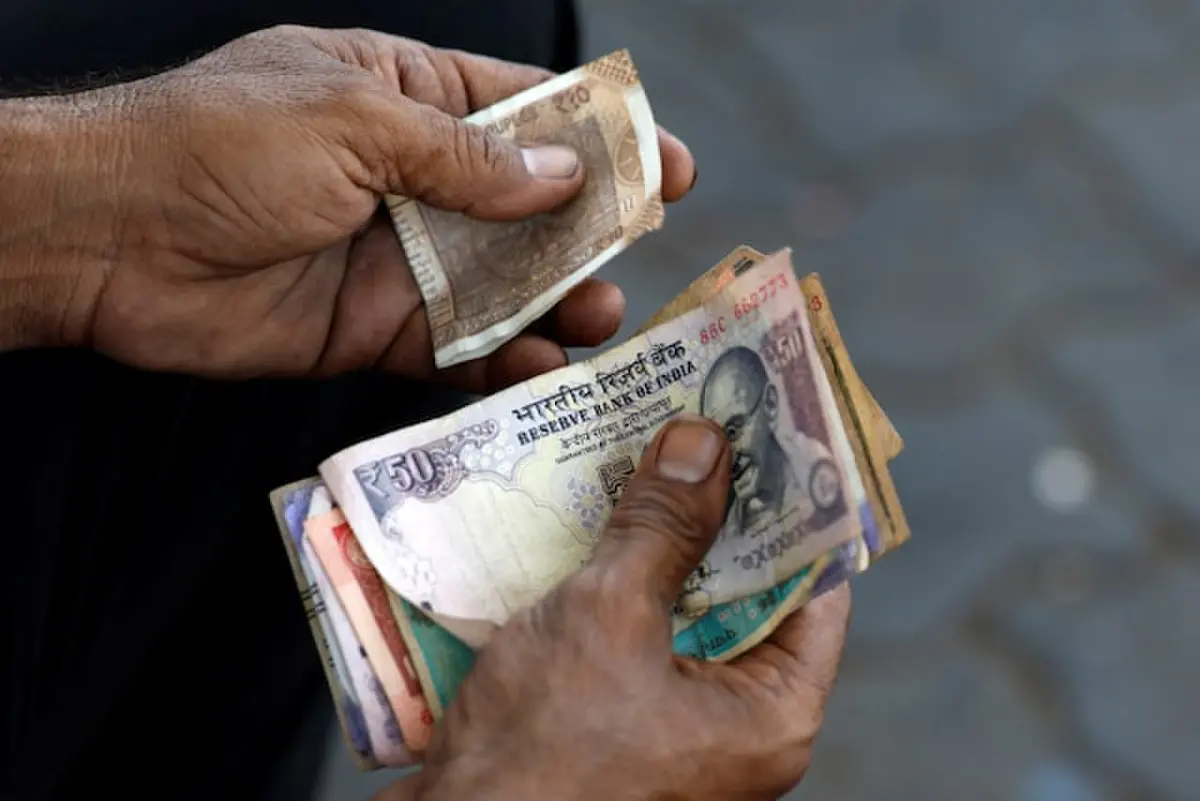
The Indian rupee is expected to open weaker than the 94-per-dollar mark and remain under pressure, after falling below it on Thursday in its biggest daily decline in nearly three weeks.
The external backdrop is turning less favourable for the rupee, which has now faced resistance at the 94-per-dollar mark for three straight sessions.
Brent crude, which had fallen below $90 a barrel earlier this week, climbed to $96, after fresh attacks on Saudi energy infrastructure and disruptions to shipping through the Strait of Hormuz.
Meanwhile, the 10-year US Treasury yield rose well above the 5% mark after President Donald Trump said the United States did not need a deal with Iran.
US Treasury yields have climbed sharply in recent sessions after higher-than-expected US inflation data strengthened expectations of further Federal Reserve rate hikes.
Markets are fully pricing in a 25-basis-point Fed rate hike in December, with a small probability of a larger 50-basis-point increase.
The worries over oil prices and US Treasury yields come at a time when the rupee’s recovery is already facing resistance.
Thursday’s session offered evidence of that, with the currency climbing to an intraday high of 93.60 before coming under pressure and slipping past the 94-per-dollar mark.
Bankers said the rupee’s inability to extend its rally in recent days despite robust equity inflows has fuelled speculation that the Reserve Bank of India may be buying dollars, while oil companies could be returning to the spot market to meet their dollar requirements.
WASHINGTON/SAN FRANCISCO: Colette Kress spent years as the one Nvidia executive willing to check CEO Jensen Huang’s enormous, often risky ambitions. As he drove the chipmaker deeper into multibillion-dollar AI investments, she pushed back, according to two people familiar with the matter on Thursday.
Now the 59-year-old finance chief has been handed the top job on an interim basis, while Nvidia searches for a permanent successor. Huang on Thursday stepped downfrom the company he co-founded and ran for three decades in a cloud of scandal, leaving Nvidia to navigate its first leadership transition without the architect of its rise.
Through their conflicts, Kress served as an important counterweight to Huang, whose success afforded him great latitude on key decisions, the two sources said. Months before news that Huang had a relationship with a woman suspected of being a Chinese spy, some on Wall Street were questioning whether his appetite for risk was sound and if the deals he struck were feeding an increasingly circular AI economy.
Kress and her staff clashed with Huang and the company’s sales team over the massive and risky financing deals that fed into what some Wall Street critics deemed a circular AI economy, including investments in OpenAI and AI infrastructure companies such as Lambda, according to one of the people familiar with the matter.
A proposed $250 billion plan to support an OpenAI data center project in Ohio was ultimately pared to $120 billion.
“I think it’s unlikely anyone but Jensen is going to invest in his own customers as aggressively,” said a third source, a venture capital investor. Huang has pushed Nvidia to offer financing to startups, the person said.
Kress the pragmatist
People who know her describe Kress as a calming contrast to Huang’s often confrontational style. Kress joined Nvidia in 2013 after a long career at other tech industry giants including Microsoft, Cisco and Texas Instruments.
“Colette is a pragmatist,” said a fourth source familiar with the matter. She can project calm and help stabilize markets while the search is ongoing, the person said, adding that Kress had been on recent calls to reassure customers and suppliers as the tumult inside the company unfolded.
Under her leadership, Nvidia is likely to “approach DC more like other tech companies do, by trying to build capital and make friends,” instead of picking “a fight over export controls” the way it did under Huang’s leadership, the person said.
But many investors, analysts and industry sources who spoke to Reuters questioned whether a finance executive could preserve the technological risk-taking that turned Nvidia into an AI chips powerhouse.
“Putting (Kress) in the interim role makes sense to keep the markets calm, but I don’t think she is the long-term visionary that Nvidia needs to continue its current trajectory,” said Anshel Sag, principal analyst at Moor Insights and Strategy.
Nvidia shares slumped 14% to their lowest in nearly 16 months on Thursday after the company said Huang would step down, but pared losses to close down 4.3%.
Whether Kress will keep the CEO role permanently is yet to be decided. But other names have surfaced, including Nvidia executive Ian Buck, who helped launch AI on Nvidia chips and led development of the CUDA software system. AMD CEO Lisa Su as well as Arm boss Rene Haas have also been speculated as potential candidates.
What did Kress know?
Questions are also swirling about how much Kress knew about Nvidia’s chip sales and Huang’s affairs. China has denied the spying allegations. Reuters was not able to contact Alice Huang for comment.
A fifth source said Kress knew about his relationship with Kimberly Powell, Nvidia’s vice president of healthcare, who reported to him. Nvidia and Powell did not immediately respond to requests for comment.
Sunny Cheung, an analyst at the Washington-based Jamestown Foundation, said Kress could face congressional questions about the company’s oversight of chip sales involving Chinese military-linked institutions and Southeast Asian intermediaries.
In a 2023 interview with an Israeli publication, Kress credited her two young sons with urging her to join Nvidia in 2013 because they knew its chips from their video games.
She became a billionaire in 2025 based on the value of her Nvidia equity, according to media reports, and Forbes said her net worth of $1.2 billion in mid-2026 put her in 32nd place on its list of America’s richest self-made women.
Kress, who holds an undergraduate degree in finance and an MBA, was also named among the 50 most powerful women in business on rankings compiled by Fortune and Forbes magazines in recent years.
“Trust takes years to build, seconds to break, and forever to repair.” Anonymous
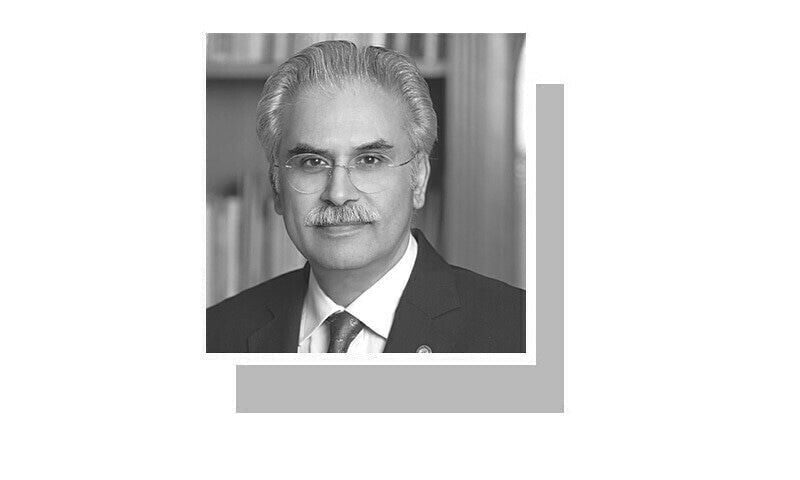
THIS observation aptly describes Pakistan’s relationship with one of its most important international health partners.
Since 2003, the Global Fund to Fight AIDS, Tuberculosis and Malaria has disbursed more than $1.1 billion to Pakistan’s HIV, tuberculosis and malaria programmes. In August 2020, however, it invoked its Additional Safeguard Policy (ASP) on Pakistan.
Behind this bureaucratic terminology lies an extraordinary decision: the Global Fund no longer had sufficient confidence in the country’s arrangements for managing its grants and implementing disease-control programmes.
More than six years later, this decision deserves serious public scrutiny.
Established in 2002, the Global Fund is one of the most successful innovations in international health financing. It mobilises resources to support countries fighting these three diseases and has helped save an estimated 72 million lives globally. Pakistan has been a significant beneficiary.
The Global Fund normally operates through a partnership model in which national stakeholders identify priorities, nominate implementing organisations and oversee grants through a Country Coordinating Mechanism (CCM). The underlying philosophy is country ownership: international resources should strengthen national institutions, not substitute for them.
The Global Fund’s observations point to serious weaknesses in governance & institutional accountability.
In 2004, the Global Fund Board adopted ASP to address situations where normal funding arrangements could not adequately protect its investments. It permits oversight and direct involvement in selecting principal recipients and implementing partners. In effect, decisions normally taken by national institutions can be assumed by the international financing agency.
This is an exceptional, temporary arrangement, reflecting serious concerns about governance, institutional capacity, accountability or programme implementation. Since its introduction, it has been invoked in around 30 countries but revoked in only three: Cuba, Myanmar and Côte d’Ivoire. This shows that entering ASP is easier than exiting it.
Why was Pakistan placed under ASP? The answer lies in a candid letter dated Aug 6, 2020, from the Global Fund to the Pakistan government.
It expressed serious dissatisfaction with Pakistan’s response to HIV and TB, noting stagnating or declining TB notifications and an almost unchecked increase in HIV incidence. Significantly, it stated that public-sector principal recipients had failed to translate domestic and external financing into effective programmes.
The letter specifically criticised the performance of the Common Management Unit (CMU), responsible for coordinating the three disease programmes, and identified inadequate leadership in managing challenges arising from devolution.
These observations point to serious weaknesses in governance, leadership, coordination and institutional accountability. Consider this: Between 2020 and 2022, Pakistan changed the national coordinator of the CMU 10 times in three years. Many appointments were political.
The epidemiological consequences are equally troubling. While many states have reduced new HIV infections, Pakistan has moved in the opposite direction. According to WHO and UNAIDS estimates reported in Dec 2025, annual new infections increased from approximately 16,000 in 2010 to 48,000 in 2024 — a 200pc increase.
ASP’s implications extend beyond these programmes. For a country seeking international investment, development assistance and credibility in global institutions, its inability to demonstrate satisfactory governance of externally financed health programmes sends a deeply damaging message.
But ASP should not be viewed merely as an international embarrassment. Its more serious implication is the erosion of national ownership. When external partners increasingly determine arrangements, domestic institutions risk becoming less accountable for results.
Pakistan must therefore develop a credible, time-bound roadmap for exiting ASP.
The Aug 2020 letter identified the conditions for its revocation: timely provincial budget disbursements for HIV and TB; satisfactory programme performance and financial risk management; demonstrated political commitment; compliance with audit recommendations, etc.
These are not unreasonable demands.
Federal and provincial governments must jointly establish a high-level mechanism to monitor progress against each condition through independently verifiable indicators.
Civil society and affected communities must also be meaningfully engaged.
There is another dimension requiring urgent attention: financial sustainability.
For over two decades, Pakistan has depended heavily on the Global Fund for essential components of its HIV, TB and malaria responses. In 2024, 90pc of HIV financing came from the Fund. This assistance has been invaluable. But indefinite dependence on external financing is neither desirable nor realistic, particularly as international development assistance comes under increasing pressure.
Pakistan needs a carefully planned transition towards greater domestic financial responsibility. This does not mean abruptly replacing Global Fund resources or imposing unaffordable obligations on provincial governments overnight.
The FCDO-financed, Oxford Policy Management-implemented Global Fund Accelerator Programme is providing valuable analytical support and recommendations. Federal and provincial governments must make optimal use of this opportunity.
They should negotiate a gradual increase in domestic financing. Public financing should progressively assume responsibility for recurrent expenditures, while increasingly covering medicines and prevention services.
Crucially, exiting ASP and transitioning from donor dependence are related but distinct processes.
The Global Fund has stood by Pakistan through successive health emergencies and institutional challenges. Its continued engagement, even after invoking ASP, demonstrates that its objective is not to abandon Pakistan but to protect investments and improve results. Pakistan must respond with the seriousness this partnership deserves.
Ultimately, the most compelling argument for reform is not the restoration of international prestige. It is the right of millions of Pakistanis to effective prevention, diagnosis and treatment. The real achievement will be transforming a constrained partnership into a confident, accountable and genuinely country-owned response to three preventable and treatable diseases.
The writer is a former health minister, adjunct professor of health systems and population health, president of Pakistan Association of Lifestyle Medicine and convener of Lok Sehat.
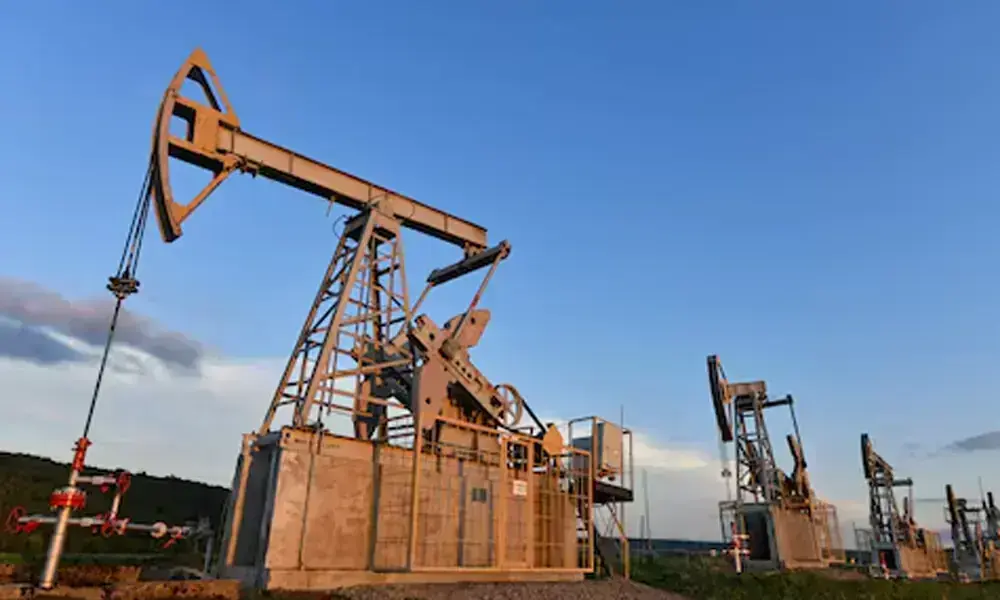
Brent futures were little changed, down 1 cent at $95.41 a barrel at 0242 GMT. West Texas Intermediate (WTI) declined by 20 cents, or 0.25%, to $88.52 a barrel.
Friday’s declines reversed two days of gains amid a volatile trading week with earlier hopes for a rapprochement of the US-Israel war against Iran, now in its ninth month, offset by strikes on Saudi Arabian infrastructure by Yemen’s Houthis and attacks on tankers transporting crude out of the Gulf.
Despite the swings in prices amid the inconclusive war, Brent is set for a 2.4% drop this week, after plunging 16% the previous week, while WTI is set for a 2.5% decline, after dropping 13% previously.
Prices slipped on Friday after US President Donald Trump said on Truth Social a deal with Iran was not necessary to end the war, indicating he will stick with the blockade on oil shipments and trade and economic sanctions.
The overall decline in prices over the past two weeks reflects a good assessment of the risks to the market, said Chris Brankin, global advisor for Melbourne-based brokerage MiTrade.
“I think the oil market is priced to perfection at this point,” he said, adding that prices have bounced back a bit but without much conviction on the part of traders, which shows they are following closely what is happening in the Middle East.
Despite the easing prices, risks remain for oil shipments out of the Strait of Hormuz, the key waterway for crude exports from the main Middle East producers.
On Thursday, Iran’s military said four oil tankers were hit by explosions in the Strait of Hormuz after ignoring warnings. Reuters could not immediately verify the Iranian accounts.
That same day, Yemen’s Houthis said they had attacked a pumping station on the Saudi East-West oil pipeline; an oil facility in the Saudi Red Sea city of Yanbu; and an Aramco building in the capital Riyadh.
Also pressuring prices, US crude and fuel inventories rose last week, driven by softer refined products demand and a jump in oil imports, the Energy Information Administration said on Thursday.
Crude inventories rose by 4.7 million barrels to 414.4 million barrels in the week ended November 6, the EIA said, compared with analysts’ expectations in a Reuters poll for a 1.1 million-barrel draw.
PAKISTAN’S newly announced Auto Policy 2026-31 promises cheaper vehicles, higher localisation, exports, employment, improved safety and cleaner transportation. These are worthy objectives. But can they be achieved simultaneously in an industry constrained by limited scale, proliferating makes and models, and the absence of competitive upstream steel, petrochemical and aluminium industries?
More importantly, does the policy risk undermining one of the few enduring achievements of decades of automotive protection: the engineering capabilities developed by component manufacturers, with applications in agriculture, defence and other industries?
The policy deserves credit for recognising that protection has not delivered internationally competitive vehicles. Gradual tariff reductions, export targets and electric-vehicle incentives signal change. But reducing tariffs without addressing high energy, taxation and financing costs risks weakening domestic manufacturers before they become competitive.
Previous auto policies have produced an insufficiently recognised benefit: the engineering capabilities developed by component manufacturers. Guided by international assemblers, Pakistani firms have acquired expertise in precision machining, sheet-metal pressing, plastic moulding, rubber products, glass, wiring and numerous other components. Industrial clusters around Port Qasim, Lahore-Sheikhupura and elsewhere demonstrate capabilities extending beyond automobiles. Losing them would erode an industrial foundation that Pakistan needs for manufacturing diversification and import substitution.
Competition among brands is desirable, but proliferation of incompatible platforms undermines supplier competitiveness.
Support for technological upgrading, testing and certification is welcome. However, indiscriminate tariff reductions could expose these firms to overseas competitors operating at vastly greater scale, before domestic cost disadvantages are addressed.
Protection should neither be indefinite nor unconditional. A differentiated, time-bound approach should preserve engineering capabilities with demonstrable competitive potential, linking support to productivity, quality, scale and exports.
Mandatory localisation targets require scrutiny. Components manufactured locally using imported steel, polymers, machinery and tooling cannot reasonably be counted as entirely indigenous. Pakistan lacks integrated automotive-grade steel, petrochemical and aluminium supply chains. The appropriate measure is domestic value addition after deducting imported inputs, including those embedded in locally purchased components.
Higher local procurement does not necessarily deliver equivalent foreign-exchange savings. Policy must measure genuine indigenous value addition, technological upgrading and net foreign-exchange contribution separately.
Pakistan’s limited vehicle market is increasingly divided among manufacturers, models and variants. Each additional platform can require separate moulds, dies and tooling. Small production runs raise costs and discourage sophisticated manufacturing.
Competition among brands is desirable, but proliferation of incompatible platforms undermines supplier competitiveness. Common components, platform sharing, contract manufacturing and supplier consolidation should be encouraged.
Pakistan’s motorcycle industry offers an instructive parallel. Standardised designs, large volumes, extensive vendor networks and a substantial replacement market have enabled component manufacturers to develop capabilities while making transportation accessible to millions.
Cars require more demanding standards and higher tooling investment, but the lessons of affordability, standardisation and scale remain relevant.
Pakistan should encourage one or more safe, fuel-efficient, affordable small-car platforms through collaboration with established international manufacturers. Shared components and higher volumes could support meaningful domestic value addition, strengthen vendors and eventually create export opportunities.
Encouraging electric vehicles is appropriate, particularly motorcycles, three-wheelers, small cars and public transport. However, concessional imports of completely built-up vehicles and completely knocked-down kits may accelerate adoption without developing domestic engineering capabilities. The transition should include a roadmap enabling existing component manufacturers to enter EV supply chains.
The policy envisages approximately $6 billion in cumulative automotive exports over five years. But who will buy these vehicles?
Complete-vehicle exports depend on foreign principals allocating production and overseas markets to Pakistani operations. Such decisions are scale-dependent and cannot be mandated. Potential African and other markets present additional challenges. Pakistan generally lacks preferential trade agreements with these destinations, leaving its vehicles exposed to tariffs while competing against established Asian manufacturers.
Export incentives introduce another risk. WTO rules restrict subsidies contingent on export performance, while importing countries can impose countervailing duties following investigations establishing subsidisation and injury.
Export targets need identifiable customers, commercial commitments, market access and demonstrated net foreign-exchange earnings.
The proposed Automotive Development Levy, expected to raise Rs232bn over five years, raises another question. Pakistan’s experience with the Export Development Fund offers a cautionary lesson. Financed through a levy on exports, it supported various initiatives, but its effectiveness in delivering sustained competitiveness remains debatable. The government’s subsequent decision to review its utilisation, audit its accounts and abolish the surcharge raises legitimate questions about establishing another dedicated levy.
Public funding for shared testing facilities, technology transfer and skills development has merit. But taxing consumers to subsidise exports that remain uncompetitive risks replacing tariff protection with another permanent support mechanism.
Ultimately, Pakistan must distinguish between assembling vehicles, manufacturing competitive components and providing affordable mobility. These are related but different objectives.
The writer is a former CEO of Unilever Pakistan and the Pakistan Business Council.
ISLAMABAD: Mobilink Bank has signed a Sale Purchase Agreement (SPA) to acquire 82.51 percent shareholding in Apna Microfinance Bank Limited (Apna Bank), subject to applicable legal and regulatory approvals.
The proposed acquisition is an extension of Mobilink Bank’s “Growth with Purpose” strategy, reflecting our commitment to responsible growth, financial inclusion, and a stronger, more resilient banking ecosystem. The transaction reinforces Mobilink Bank’s position as a trusted leader in the banking sector. The transaction is aimed at safeguarding the interests of Apna Bank’s depositors, preserving stakeholders’ confidence, and creating a stronger institutional foundation for sustainable growth. It also underscores Mobilink Bank’s commitment to contributing meaningfully to the stability, resilience, and continued evolution Pakistan’s financial sector.
Upon completion of the transaction, Apna Bank’s customers will become part of a larger, financially resilient institution, with continued access to their accounts and services throughout the transaction. They will benefit from Mobilink Bank’s broader nationwide presence, Islamic Banking offerings, and access to an expanded digital financial services ecosystem powered by JazzCash, creating a more secure, convenient, and future-ready banking experience.
“We have been building the foundation of a comprehensive financial services ecosystem for Pakistan, from JazzCash’s extensive reach in payments to JazzSure Insurance (formerly TPL Insurance) and FikrFree’s modern insurance offerings in a market where insurance penetration remains considerably low, and now Mobilink Bank, which extends that same ambition into banking for agriculture and micro-enterprises. Each of these businesses complements the others, and together they bring us closer to a Pakistan where every citizen, regardless of where they live or how they earn a living, has access to the financial tools they need to grow,“ said Aamir Ibrahim, Chairman, Mobilink Bank and CEO, JazzWorld.
Speaking on the SPA signing, Haaris M Chaudhary, President and CEO of Mobilink Bank, said, “Mobilink Bank has built strong digital capabilities, scale and customer reach over time. As a customer-first organisation, our focus is to ensure continuity for Apna Bank customers and make their transition into a larger, more future-ready institution as seamless as possible, supported by close coordination across teams throughout the process.”
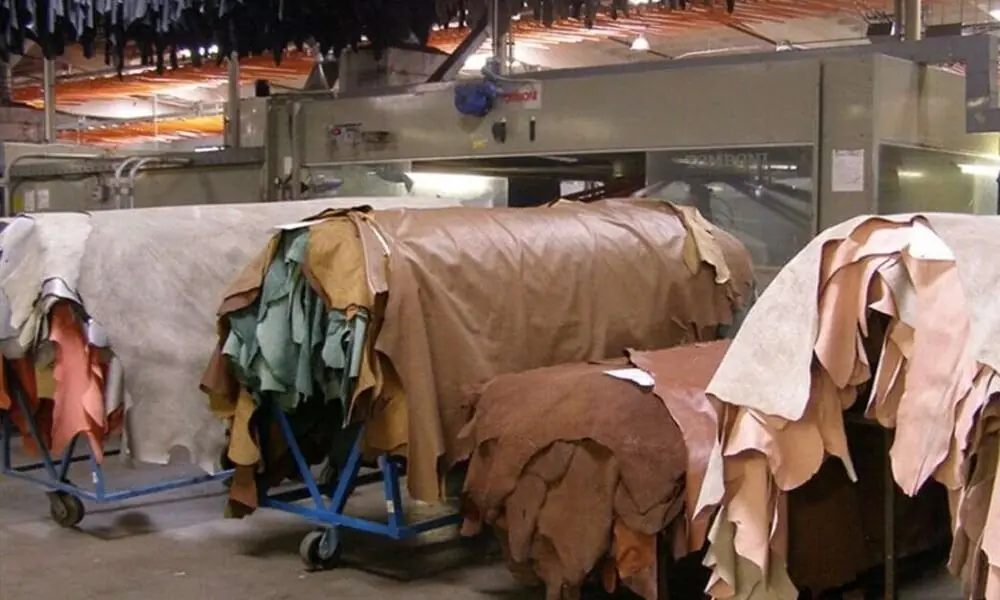
LAHORE: Pakistan’s leather industry is facing a shortage of raw materials, with industry representatives urging the Punjab government to establish organised slaughterhouses and make the wastewater treatment plant in Kasur operational to address key challenges confronting the sector.
The issues were discussed during a meeting between Provincial Minister for Industries and Commerce, Chaudhry Shafay Hussain, and a delegation of the Pakistan Tanners Association (PTA), led by its Chairman Malik Muhammad Azam, on Thursday.
The PTA chairman informed the minister that the shortage of raw materials was a major challenge for the leather industry and could be addressed through the establishment of organised slaughterhouses. The delegation also sought government cooperation to make the wastewater treatment plant in Kasur operational.
Speaking on the occasion, Chaudhry Shafay said the leather industry was one of the country’s major industrial sectors, with considerable potential to enhance exports. He assured the delegation that the industry’s problems would be addressed on a priority basis.
He stressed that ensuring a pollution-free environment for future generations was a shared responsibility, urging the industry to strictly comply with environmental protection standards and ensure the installation of wastewater treatment plants.
The minister also highlighted government financing facilities available to businesses, saying that interest-free loans of up to Rs30 million were being provided under the second phase of the Chief Minister’s Asaan Karobar Finance Scheme.
He added that the Industries, Commerce and Investment Department had launched a major programme to promote exports and accelerate industrial development, under which loans of up to Rs500 million were being offered on easy terms. Under the industrial development programme, businesses could also obtain interest-free loans of up to Rs100 million.
He urged the Association to benefit from the government’s interest-free and easy financing schemes, adding that applications could be submitted online through the Bank of Punjab’s website.
Chaudhry Shafay further proposed that the leather industry could enter into an agreement with the Skills Development Department to meet its requirements for skilled manpower.
Speaking on the occasion, Malik Muhammad Azam said the Pakistan Tanners Association planned to establish business centres in Azerbaijan, Uzbekistan and Kazakhstan to strengthen trade links and explore new business opportunities.
The delegation included Chaudhry Tahir, Muhammad Aslam, Rana Adnan and others.
Director of Punjab Small Industries Corporation, Sabih Zaka, and other relevant officials were also present.
KARACHI: Pasban Democratic Party Karachi President Abdul Hakim Quaid has said that the government is squeezing the blood of the public through utility bills.
He said, the public does not have access to electricity, but electricity is constantly becoming more expensive. Now the same is the case with gas. Due to the unavailability of gas, LPG is being sold at double the price, but the government is not ready to take any steps to correct it. What is the logic of increasing the price from backdated? Is OGRA not even capable of protecting public interests and fulfilling its responsibility of determining prices correctly?
He said, sending heavy bills despite the lack of electricity and doubling LPG prices due to gas shortage is a complete injustice to the people. The lack of gas has made it difficult for the poor to cook, while the government and related institutions are silent spectators to the huge increase in LPG prices.
He said government institutions run by public taxes are protecting the interests of companies instead of providing relief to the people. It is imperative to activate consumer courts in Pakistan.
Abdul Hakim Quaid demanded that immediate notice be taken of the illegal increase in utility prices and backdated recoveries. Gas supply should be ensured and LPG prices should be brought in line with the purchasing power of the people.
THE poisonous smog blanketing Punjab is an immediate threat to public health, but it also points to a larger environmental crisis that Pakistan can no longer address through piecemeal measures. Lahore’s air quality index stood at a hazardous 358 on Wednesday, while other cities struggled under the same toxic haze.
Punjab’s government says better monitoring and enforcement have brought improvements over previous years. That is welcome, but the air remains dangerous. While pollution from India compounds the problem, Pakistan must also confront domestic emissions.
Moreover, smog is not the country’s only warning. Our climate crises are deeply interconnected. Repeated floods, punishing heatwaves and mounting water stress show how exposed Pakistan is to climate shocks, and how urgently it needs lasting solutions.
At COP31, PM Shehbaz Sharif outlined a cleaner energy future that deserves support. He pointed to nearly 22 gigawatts of rooftop solar capacity added in two years, much of it driven by households seeking relief from expensive electricity.
Pakistan has backed a pledge to increase electricity’s share of energy use to 35pc by 2035 and aims for electric vehicles to account for 30pc of new vehicle sales by 2030. These shifts could help reduce fossil-fuel dependence and, especially through cleaner transport, cut harmful emissions. But an energy transition is not, by itself, a climate policy.
Pakistan also needs to protect communities from floods and extreme heat, safeguard water supplies and adapt agriculture to changing conditions. The PM rightly called for concessional finance and affordable technology. Rich industrialised countries bear much of the responsibility for global warming and must help vulnerable nations cope. Yet appeals for international climate justice must run alongside serious action at home.
That action requires more than ambitious targets or seasonal restrictions. Authorities must enforce vehicle and industrial emission standards, expand public transport, support farmers in ending crop burning and make clean technology accessible beyond affluent households. Cities must be better prepared for floods and extreme weather, while rural communities need help coping with rising temperatures and water shortages.
Federal and provincial governments must work together and ensure that environmental regulations are properly enforced. Businesses, too, must reduce their environmental impact, while citizens have a responsibility to conserve resources, avoid polluting their surroundings and demand action from the state.
None of this will be easy in a country facing serious fiscal constraints. But the cost of delay is already being paid in illness, damaged livelihoods and repeated disruption. Pakistan cannot afford to confront its climate crises one disaster, one season and one international summit at a time.