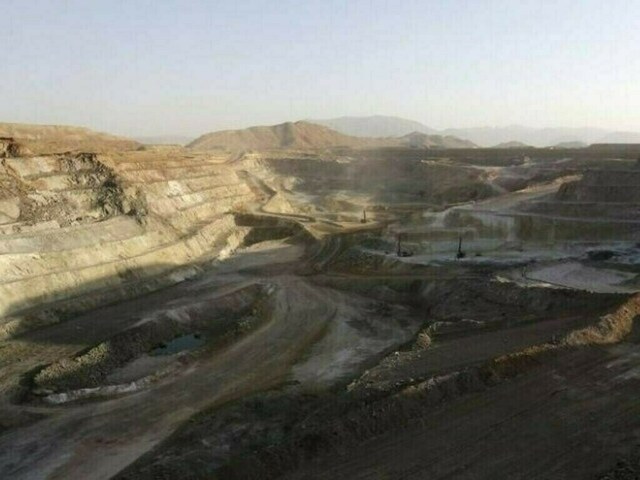
Mari Energies Limited, one of Pakistan’s largest E&P companies, has announced a significant copper-gold discovery at its East Siah Diq (ESD-1) target in Chagai district, Balochistan, through its wholly owned subsidiary Mari Minerals (Private) Limited.
The company disclosed the development in a notice to the Pakistan Stock Exchange on Friday.
“The discovery area under discussion is located approximately 50km east of the Reko Diq copper-gold mine development project and 25km northwest of Nokkundi in the Koh-i-Sultan area adjacent to the Siah Diq Project,” the company said.
Mari Minerals, which holds multiple exploration licenses in Chagai, has completed approximately 25,000 metres of exploration drilling at ESD-1 in two phases.
Based on the results to date, the company said ESD-1 is a new porphyry copper discovery.
“Further drilling, geological interpretation, metallurgical test work, resource estimation and technical studies will be required before the scale, grade continuity, economic significance and development potential of mineralisation can be determined,” the company said.
The technical information was reviewed and approved by John Mortimer, PhD, of JM Geoscience Pty Ltd, who has over 40 years of relevant experience, including porphyry copper exploration, said the company.
Mari Minerals (Private) Limited, formerly known as Mari Mining Company (Pvt) Limited (MMC), is a wholly-owned subsidiary of Mari Energies Limited (previously Mari Petroleum Company Limited). It was established in July 2023 with the purpose of undertaking mineral mining projects in Pakistan and contributing to the growth of the country’s mineral mining sector.
A day ago, Mari Minerals inked an agreement with mining giant Ivanhoe Atlantic for the exploration of copper and gold deposits in Chagai, Balochistan.
Under the agreement, the two companies intend to undertake exploration activities to assess the region’s mineral potential and identify opportunities for the development of its copper-gold resources.
With the end of the year, smog season is back in Punjab in full force. For the past week, the air quality in Lahore, the provincial capital, has consistently been ranked the worst in the world. A recent report also stated that Lahore’s average PM2.5 concentration — the amount of fine particulate matter — was eight times the World Health Organisation’s (WHO) guidelines.
Smog has consistently been a problem in Punjab and the provincial government has cracked down on activities contributing to the phenomenon. One of these steps involves the emission testing certification of vehicles.
Speaking to Dawn, Environment Protection Agency (EPA) spokesperson Sajid Bashir said that last year, the department conducted emission testing of vehicles, under which approximately 300,000 were tested.
“However, since vehicle emission testing falls within the mandate of the transport department, the project has now been referred back to the department, which is operating it through the Private Vehicle Inspection and Certification System (PVICS),” he said.
According to the provincial transport department’s website, the system’s primary purpose is “to ensure road safety by systematically verifying that vehicles meet strict mechanical and environmental fitness standards”.
Here is a guide for ensuring that your vehicle is not contributing to the devastating smog currently descending over Punjab.
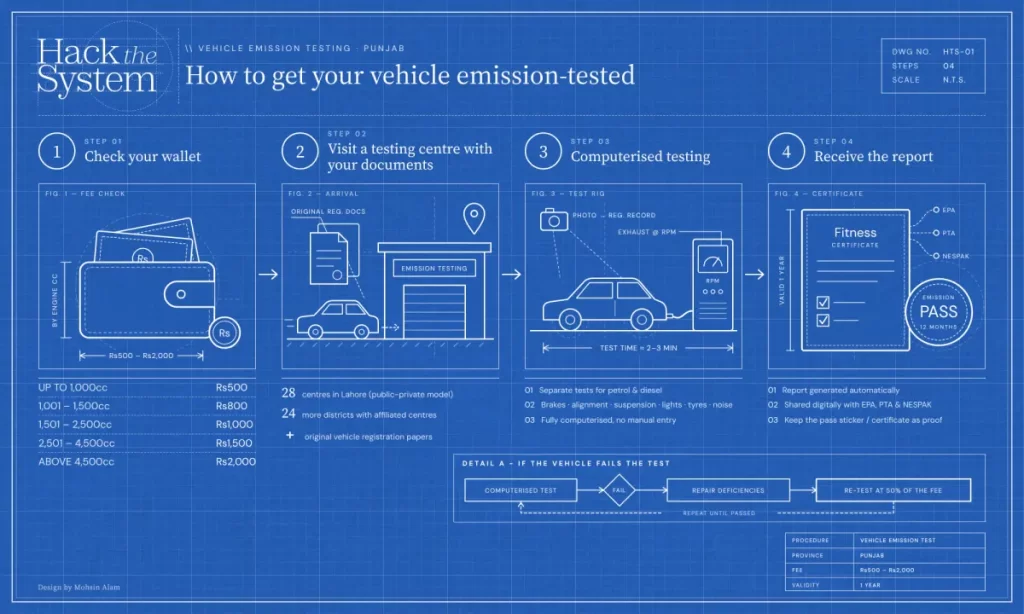
Step 1: Check your vehicle, wallet and your documents
First of all, you should check whether you actually need the certificate. Under the information provided by the provincial transport authority, motor car owners are exempt based on their engine capacity and date of manufacture: 1,000cc, exempt for five years from the date of manufacture; 1,001cc to 2,000cc, exempt for six years from the date of manufacture; and above 2,000cc, exempt for seven years from the date of manufacture
Meanwhile, the remaining vehicle owners in Punjab will have to pay between Rs500 and Rs2,000 for emission testing, with the fee determined by engine capacity.
The notified fee schedule sets Rs500 for vehicles with engines of up to 1,000cc, Rs800 for those above 1,000cc and up to 1,500cc, Rs1,000 for vehicles above 1,500cc and up to 2,500cc, Rs1,500 for those above 2,500cc and up to 4,500cc, and Rs2,000 for vehicles with engines exceeding 4,500cc.
Citizens are also required to bring their vehicle’s original registration documents for the testing process. And it is always a good idea to have your original Computerised National Identity Card (CNIC) with you.
Step 2: Visit an authorised emission-testing centre
Vehicle owners are required to take their vehicles to an authorised testing centre with the necessary documentation.
The Punjab government has established 28 vehicle emission-testing centres in Lahore under a public-private partnership model.
Affiliated centres are also located in Sheikhupura, Rawalpindi, Attock, Bahawalpur, Dera Ghazi Khan, Gujranwala, Rahim Yar Khan, Sahiwal, Sargodha, Gujrat, Mandi Bahauddin, Toba Tek Singh, Mianwali, Vehari, Lodhran, Chiniot, Nankana Sahib, Khanewal, Muzaffargarh, Chakwal, Hafizabad, Pakpattan, Layyah and Jhang.
Location
Contact number
CM Services Ltd., Rangers Filling Station
0321-3665366
CM Services Ltd., Gulberg II
0321-3665366
CM Services Ltd., CSD Bedian Road
0321-3665366
Zain Autozone Total Pump Raiwind Road
0322-2223220
CM Services Fortress Stadium
0333-6914001
Auto Aeon Sagiyan
0322-4975297
CM Services QS Galleria
0333-6914001
Auto Aeon Wapda Town
0300-8633772
Auto Aeon Band Road
0300-8633772
Auto Aeon Bahria
0321-4579497
Auto Aeon Queens Road
0364-6517777
Auto Aeon Nawab Pur
0343-6508567
Zoom Marketing Oils-Sabzazar
0321-1001118
Zoom Marketing Oils-Chanab
0321-1001118
Zoom Marketing Oils-MM Alam
0321-1001118
Zoom Marketing Oils-Shadman
0321-1001118
Auto Aeon Begum Pura
0315-7098080
Auto Aeon Zaib Centre Canal Road
0301-4440504
Zain Autozone Pvt Ltd
0325-4304612
Auto Aeon Choburgi
0300-8633772
Autosure Araiyan Raiwind Road
0300-2074959
Autosure PSO PIA Road
0300-2025687
Autosure
0300-2025687
Longsight Motors
0300-4698909
Auto Aeon Valencia
0300-2025687
Step 3: Computerised testing
At the centre, the officials will enter the vehicle’s registration details into the system. A photograph of the vehicle is also taken and linked to the registration record.
The vehicle is then connected to the emission testing equipment. Separate testing procedures are used for petrol and diesel vehicles; the machines measure exhaust emissions at different engine speeds, recorded in revolutions per minute.
The complete testing process takes approximately two to three minutes. The inspection is computerised, with no manual intervention in recording or generating the test results.
The computerised inspection equipment is used to assess the vehicle’s roadworthiness and compliance with applicable safety and environmental standards.
The tests cover braking performance, wheel alignment, suspension, headlights, tyres, mechanical condition, exhaust emissions and noise levels.
A vehicle meeting the prescribed standards is then issued a fitness certificate.
What happens if your vehicle fails the test?
If the vehicle fails the test, the owner must rectify the identified deficiencies. After the necessary repairs, the vehicle must be reassessed.
However, this time, motorists are only required to pay half of the prescribed testing fee.
Step 3: Receive the report
The machine automatically generates a test report once the inspection is completed. The digital report is then shared with the EPA, Punjab Transport Authority and National Engineering Services Pakistan.
Vehicles meeting the prescribed emission standards are issued a pass sticker/certificate. The certificate remains valid for one year, according to the policy information provided.
Owners should retain the certificate or sticker as proof of compliance.
Keep in mind
The Punjab government had initially set Oct 15 as the deadline for vehicle emission testing. However, the deadline was later extended to Nov 15 and has now been pushed to Dec 31.
Remember, vehicles that fail to obtain an emission certificate may face challans and fines for non-compliance after the deadline.
Citizens should also check whether their vehicles require a separate fitness certificate; the emission certificate and vehicle fitness certificate are two separate requirements.
Public service and goods transport vehicles must obtain a statutory fitness certificate under the Punjab Motor Vehicle Ordinance, 1965, and Motor Vehicles Rules, 1969.
Meanwhile, commercial vehicles are required to undergo a fitness inspection every six months; an emission-test pass does not replace the statutory fitness certificate.
Matt Henry took six wickets and Will Young struck a century as New Zealand thrashed a ragged India by 244 runs in the fourth ODI at Mount Maunganui on Friday.
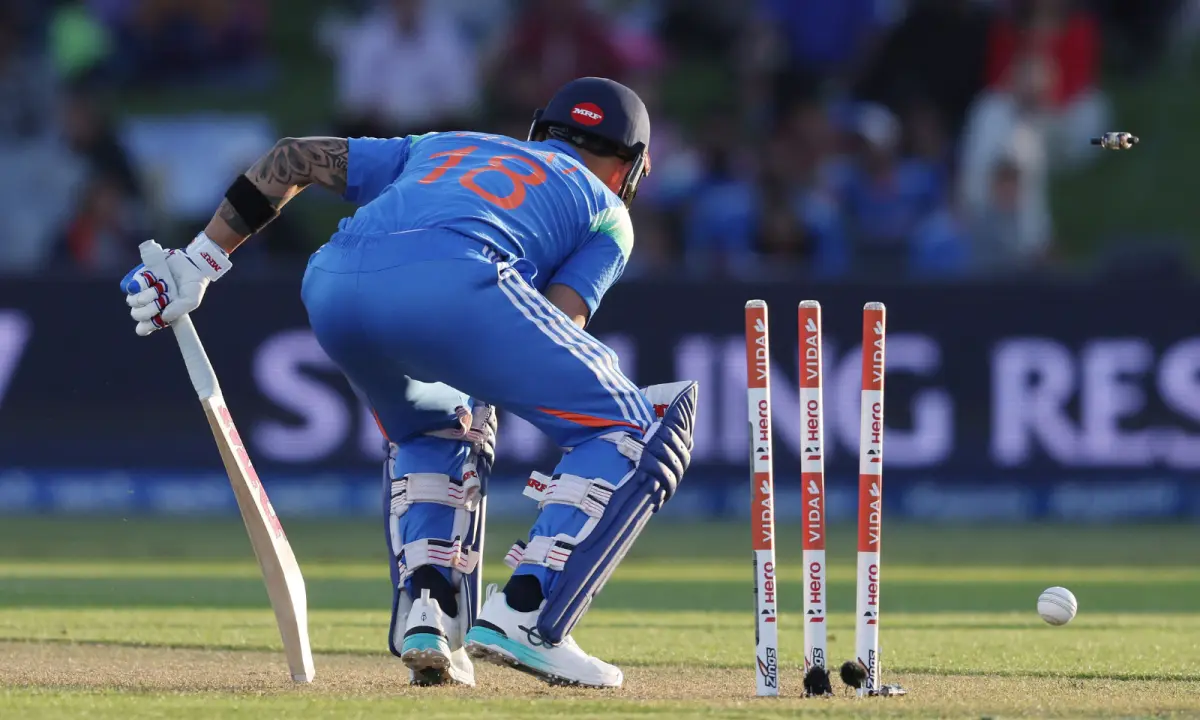
Henry removed Rohit Sharma, Virat Kohli and Shreyas Iyer all without scoring in the first over of India’s chase to tear the top order apart with the visitors needing a massive 334 for victory.
New Zealand made 333 all out in the last over after being asked to bat, Young punishing two simple drops by Indian fielders to bring up his fifth ODI hundred.
India never stood a chance of chasing the total after Henry’s heavenly opening over.
Rohit edged his first ball to slip, Kohli was bowled facing his fourth ball, and then Iyer was pegged on his back leg to fall lbw.
India’s rebuild never happened, Ishan Kishan top-scoring with just 27 as India were rolled for 89.
Henry ended with 6-27 and Matthew Fisher took 3-31.
New Zealand’s imposing total came off the back of Young’s 125 from 108 balls, including 14 fours and four sixes.
Young and Tim Seifert combined for an 85-run opening partnership.
While Young rode his early luck – dropped twice in two balls when on five in the second over, first by slip Rohit and then by wicketkeeper Kishan – Seifert played the aggressor with a brisk 39-ball 50.
When Seifert fell for 58, Nick Kelly and Dean Foxcroft soon followed playing reckless shots.
Young found better support in Finn Allen, the pair putting on 90 runs in just 65 balls as they seized on wayward Indian bowling.
Young’s first 50 came from 49 balls, and his second from just 39 balls as he hit regular boundaries through the middle overs.
Allen made 41 from 30 deliveries, including five fours and two sixes.
Axar Patel took 2-39 from 10 overs as India pulled the innings back late, while Auqib Nabi had 2-59 and Gurnoor Brar 2-69.
India lead the five-match series 2-1 with a game to play this Sunday at Mount Maunganui.
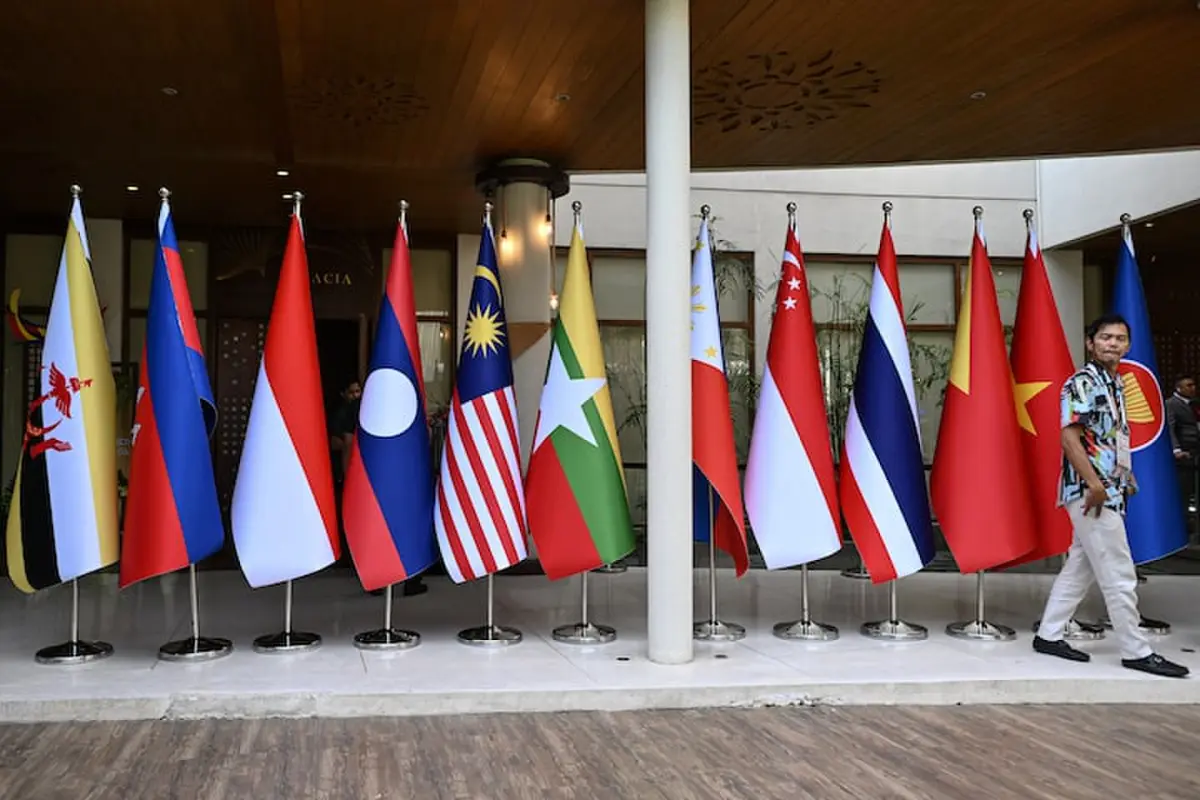
BANGKOK: ASEAN is under increasing pressure at its upcoming summit to ease a five-year ban on Myanmar’s military-backed leaders attending high-level meetings, after Thailand and several other members stepped up engagement despite the country’s ongoing civil war.
Leaders of the Association of Southeast Asian Nations are set to review their decision to exclude Myanmar when they meet in Manila from November 15 to November 17.
Myanmar has been in turmoil since 2021, when then-military chief Min Aung Hlaing ousted the elected government in a coup, unleashing armed conflict across much of the country that has killed more than 100,000 people.
Its political leadership has been barred from ASEAN summits and foreign ministers’ meetings over its failure to implement the Five-Point Consensus, a peace plan agreed after the coup.
But nearly half the bloc’s 11 members have stepped up bilateral engagement since elections in December and January, won overwhelmingly by the military-backed Union Solidarity and Development Party in the absence of any viable opposition.
Laos, Thailand, Vietnam, Cambodia and Malaysia have this year welcomed Min Aung Hlaing on official visits.
Malaysian Prime Minister Anwar Ibrahim pledged in October to work towards Myanmar’s reintegration into the bloc.
Thailand is now openly calling for restrictions to be eased.
“For Thailand, we believe that the next step is to have the Foreign Minister of Myanmar participate in the ASEAN meetings at the level of Foreign Minister,” Thai Foreign Minister Sihasak Phuangketkeow told reporters after visiting Myanmar on Thursday.
He hoped sufficient progress would allow a decision on Myanmar’s participation by Thailand’s chairmanship in 2028 at the latest.
Engaging policymakers would help convey ASEAN’s concerns directly to decision-makers, he said, while stressing that the decision rested with the bloc’s foreign ministers.
Separate diplomatic tracks
Analysts say the shifting approaches put pressure on the Five-Point Consensus, which calls for an end to violence, inclusive dialogue, humanitarian assistance and mediation by an envoy able to meet all parties.
Leaders will issue a negotiated document reviewing its implementation at the upcoming ASEAN summit, Dominic Xavier Imperial, a spokesperson for the Philippines, said on Friday.
“I think the Five-Point Consensus now has been overtaken by events,” said Thitinan Pongsudhirak, a political scientist at Bangkok’s Chulalongkorn University.
Civil war continues, millions remain displaced and efforts to bring the warring parties into dialogue have yet to produce a breakthrough.
Aung San Suu Kyi, the country’s civilian leader and a Nobel Peace Prize winner, has been detained since the coup.
She was moved to house arrest in April, following the military-engineered election, but while a Red Cross official was allowed to meet her in August, no foreign leader or envoy has been able to despite requests.
Thailand has repeatedly offered to facilitate talks between Myanmar’s government and ethnic armed groups along its border.
Sihasak said Myanmar had agreed in principle to send a delegation to any talks, but gave no date.
Philippine Foreign Secretary Theresa Lazaro, ASEAN’s special envoy, visited Myanmar on a humanitarian mission in October.
But the envoy’s role, which changes each year with ASEAN’s rotating chairmanship, is also under scrutiny.
“Myanmar’s been keen to do away with the Special Envoy entirely,” said a Southeast Asian diplomat who declined to be named, adding that ongoing discussions had also covered appointing a permanent envoy.
“But if no consensus on either of these approaches, then the status quo will remain,” the diplomat said.
Testing ASEAN unity
Thailand’s assertive engagement reflects the country’s concerns over fighting spilling across its long land border with Myanmar, alongside trade, migrant workers and energy cooperation.
But Thitinan said Bangkok’s “calibrated re-engagement” had pressured other capitals to follow suit, leaving Singapore, next year’s chair, to reconcile divergent approaches.
“It should not have been a blank cheque; it should not have been an open-ended reception and recognition,” he said, advocating conditions including political prisoner releases, humanitarian access and an end to military airstrikes.
Human Rights Watch has urged ASEAN to maintain restrictions and increase pressure on the military to end abuses and pursue a transition to civilian rule.
Warmer bilateral ties do not automatically change ASEAN policy, however, said Simon Tay, chairman of the Singapore Institute of International Affairs.
The consensus remains unless members collectively agree otherwise.
“There is room for both good cop and bad cop within ASEAN, provided these different approaches remain within the 5PC framework,” he said.
“Otherwise, Myanmar could simply play one against the other.”
Tay advocates interim goals including regular access to Aung San Suu Kyi, reduced violence and humanitarian aid.
“ASEAN can be pragmatic without being premature,” he said.
“Political acceptance should follow progress, not precede it.”
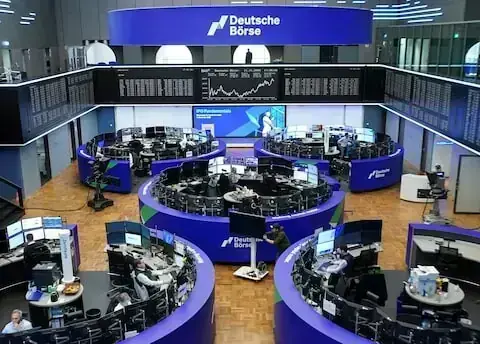
European shares opened lower on Friday, retreating from record highs hit in the previous session, while uncertainty over the outlook for the AI trade rippled through global markets following Jensen Huang’s abrupt resignation as Nvidia’s CEO.
Investors were worried about what Huang’s resignation following revelations of extramarital affairs would mean for future AI development that has underpinned much of the global economy, given that he was a key personality in a web of deals that financed the flourishing trade.
The STOXX 600 was down 0.2% at 662.64 points at 0808 GMT, with personal and household goods leading sectoral declines with a 1% drop.
Goldman Sachs raised its 12-month target for the STOXX 600 to 700 points from 695. European equities have also been supported by robust earnings this quarter.
Given Europe’s smaller exposure to AI-linked stocks, the STOXX 600 index breached record-high levels for the first time since August earlier this week and is up over 2% for the week, its strongest gain since June.
In comparison, its US peer, the S&P 500, is more than 3% away from all-time highs.
On Friday, chip stocks such as Siltronic and Aixtron were down over 1% each, while AI equipment makers such as Schneider Electric and Legrand were marginally lower. The broader tech sector lost 0.6%.
On the earnings front, Cartier owner Richemontfell 7% after reporting a 13% growth in sales in the three months ending in September, slower than the 20% growth rate in the previous quarter.
National Resources Limited (NRL), a 100% Pakistani privately-owned mineral exploration company, has identified copper and gold mineralisation across at least eight porphyry discoveries in Balochistan’s Chagai district, with nearly 25,000 metres of drilling delivering encouraging results as the company advances towards its first mineral resource estimate.
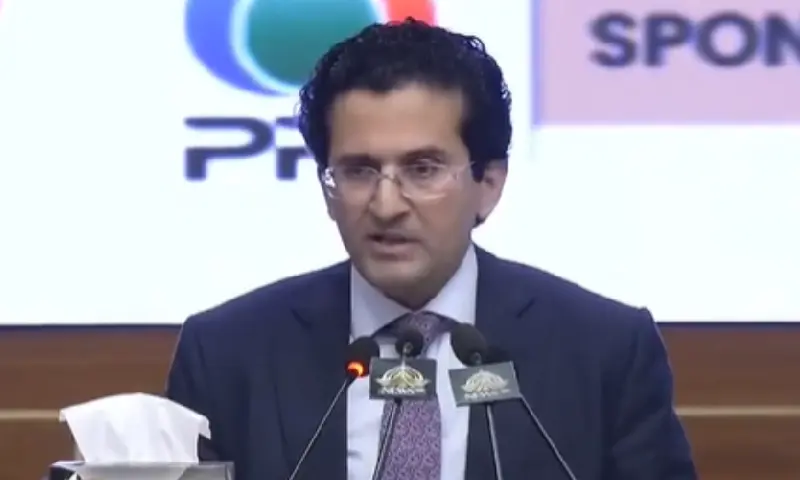
According to a statement, one drill hole returned 295 metres of continuous mineralisation grading 0.43% copper and 0.13 grams per tonne of gold, including a 132-metre interval grading 0.83% copper, Chairman Muhammad Ali Tabba told the Pakistan Minerals Investment Forum 2026.
The discoveries span 5.6 square kilometres in Darigwan, adjoining NRL’s earlier discovery at the Tang Kaur copper-gold porphyry system. Tabba said further investigations at exploration licence EL214 were expected to establish substantial resources, subject to completion of exploration and formal resource estimation.
A joint venture between Fatima Fertilisers, Liberty Mills, and Lucky Cement Ltd, NRL holds five exploration licences in Balochistan, comprising two copper-gold projects, one lead-zinc project and two antimony projects, with exploration work ongoing.
As per the statement, NRL plans to initiate environmental, hydrogeological, metallurgical, and geotechnical studies in 2027, with the aim of completing a bankable feasibility study by the end of the decade.
Tabba reaffirmed NRL’s previously announced $100 million commitment to mineral exploration in Pakistan and invited domestic and international investors and service providers to discuss emerging opportunities.
While preliminary resource estimates have been prepared by a separate consultant, the company is withholding their public release pending compliance with international reporting requirements. NRL is progressing towards its maiden mineral resource estimate in accordance with international standards.
The company has also initiated the development of a predictive artificial intelligence model with Lahore University of Management Sciences to help accelerate exploration, building on geological modelling and data gathered through its drilling programme.
“Our ambition is to build a world-class mineral exploration platform and contribute to an integrated mineral value chain, from discovery and mining to processing and onward value addition,” Tabba said.
Tabba said the programme was developing local expertise, with Baloch geologists working alongside international consultants and Pakistani contractors undertaking inclined drilling. The company’s technical workforce is almost entirely indigenous, supporting its ambition to build domestic capabilities that could also serve international exploration projects.
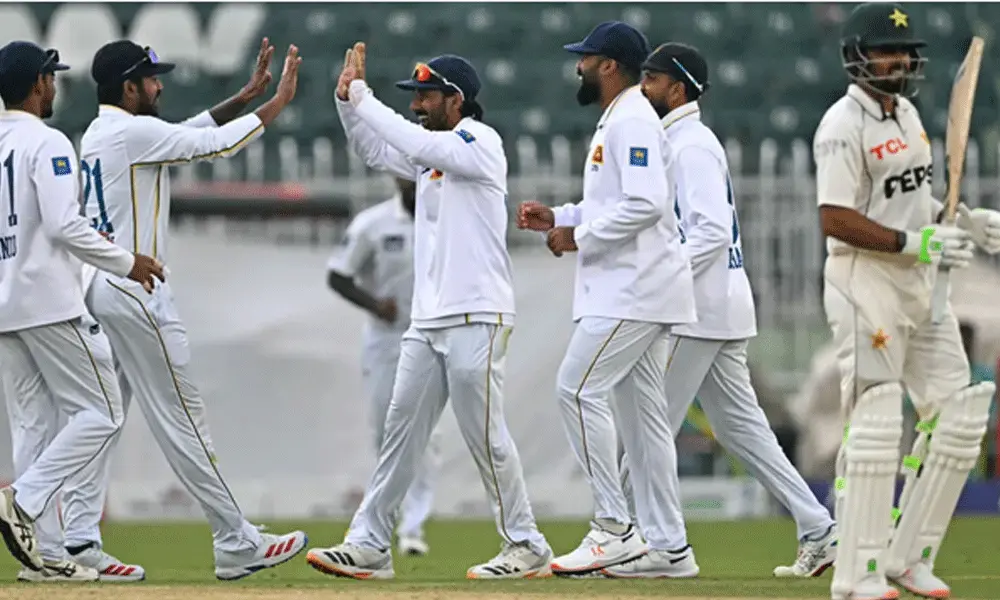
RAWALPINDI: Babar Azam’s century drought continued as Sri Lanka pushed hard for victory over Pakistan in the weather-hit first Test in Rawalpindi on Friday.
The tourists took four wickets in bad light in the morning as Pakistan reached 151-5 at lunch on the fifth and final day, leading by 139 runs with five wickets in hand.
At the break Saud Shakeel was unbeaten on 23 and Ghazi Ghori seven not out after a 20-minute break due to bad light halted Sri Lanka’s push for a 1-0 lead in the two-match series.
Azam fell to a leg-side trap, handing the short square-leg fielder a simple catch off fast bowler Milan Rathnayaka for 34, making it a 42nd innings without a Test century.
Salman Agha too fell in the same manner off Rathnayaka for 13, leaving Pakistan struggling on 125-5.
Earlier, Sri Lanka struck with the first ball of the day when Lahiru Kumara dismissed Azan Awais for 22 at Pakistan’s overnight total of 57.
Next over Asitha Fernando made it 57-3 with Mohammad Taha caught behind for 24.
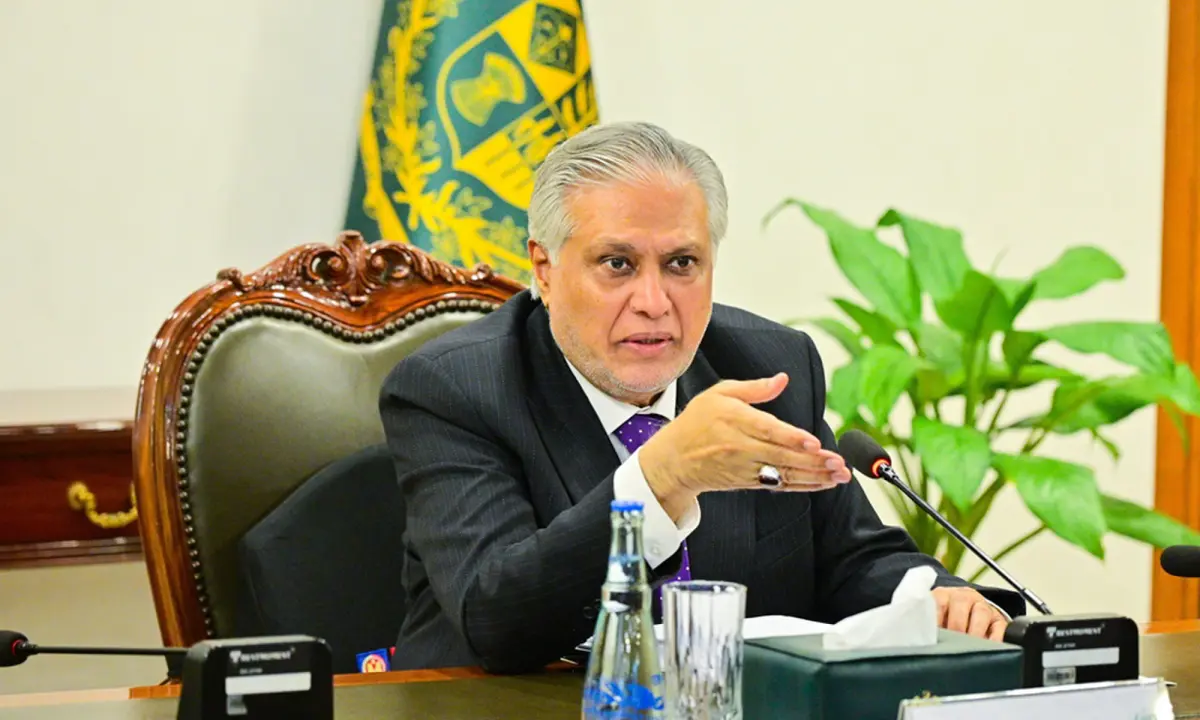
Deputy Prime Minister and Foreign Minister Senator Mohammad Ishaq Dar on Friday called for sustained efforts and closer coordination among government institutions to ensure effective implementation of austerity measures and achieve lasting savings.
He made these remarks while chairing a meeting of the Committee for Monitoring and Implementation of Conservation and Additional Austerity Measures at the Ministry of Foreign Affairs, according to a Foreign Office statement.
The meeting reviewed progress on the implementation of previously taken decisions, with a focus on expenditure management and conservation of resources across ministries and divisions.
Dar stressed the need for continued efforts to curb avoidable expenditure and improve administrative efficiency. He said close coordination and consistent follow-up were essential to achieving the objectives of the government’s austerity drive.
He also underscored the shared responsibility of all relevant institutions in ensuring that the measures translated into sustainable savings.
The meeting was attended by the minister for Information Technology and Telecommunication, Special Assistant to the Prime Minister Tariq Bajwa, secretaries of the Cabinet, Law and Justice, Information and Broadcasting, and Federal Education and Professional Training, as well as senior representatives from the provinces, Azad Jammu and Kashmir, Gilgit-Baltistan and relevant ministries.
Petroleum Minister Ali Pervaiz Malik said on Friday that Pakistan’s exploration efforts were increasingly focused on minerals that were of strategic importance to global investors.
He was addressing the Pakistan Minerals Investment Forum 2026 (PMIF26) in Islamabad, where delegations, exhibitors and attendees have arrived from across the world to attend the event.
As the two-day event opened on Thursday, Pakistan showcased its vast mineral resources, ranging from coal and salt to gold and critical minerals, to attract international investment, promising predictable, investor-friendly policies, institutional support and security.
In continuation of the pitch, Malik told the investors that Pakistan’s exploration efforts were being complemented with “modern geochemical and geophysical surveys, exploratory drilling, and upgrading of our geoscience advanced research laboratories with sophisticated analytical technologies”.
Here, he particularly mentioned the exploration of copper and gold in Chagai and western Balochistan to lithium, tin and tungsten in Gilgit-Baltistan and antimony and base metals in Khyber Pakhtunkhwa.
He said Pakistan had been exporting raw ore and importing the finished products to meet its requirements for a long time.
“We are now advancing copper smelting to capture more of the value chain from the mine to the finished metal,” he added.
The minister said Pakistan was also strengthening the scientific foundation of its mineral sector through the Geological Survey of Pakistan.
“The government’s accelerated geological mapping programme, including detailed surveys at a scale of 1:50,000, is helping identify mineral prospects across the country.”
The minister further said that through international technical cooperation, including the UK Pakistan Geoscience Capacity Building Programme, “we are strengthening expertise in digital mapping, airborne surveys and mineral assessment”.
“We are also digitising decades of geological information to give investors greater access to reliable data, reduce exploration uncertainty, and enable informed investment decisions,” he continued.
The petroleum minister highlighted that discovering a mineral deposit was only the initial stage and a commercially viable mine required, electricity water, roads, railways and access to international markets.
“That is why infrastructure development is aligned with our mineral ambitions,” he explained. In this context, he described the planned upgrade of the Rohri-Nokundi railway corridor, connectivity to Port Qasim and the development of supporting infrastructure around Reko Diq as “important steps” towards connecting Pakistan’s mineral-rich regions with the global markets around the world.
He said, “Our objective is very clear: to build not just individual mines, but an integrated, competitive and sustainable mineral industry.
“Where it is commercially and technically viable, we want investment to support processing, refining, downstream industry, technology transfer and integration into the global value chains.
“We want this industry to build Pakistani capability as it grows through technical skills, vocational training, engineering services, a stronger base for Pakistani suppliers and real career opportunities for young people, including women entering the sector for the first time.”
But, he contended, not of this would hold together without the communities in our producing regions. “Projects that earn the trust of the communities around them are, in our experience, the projects that actually get built and sustain.”
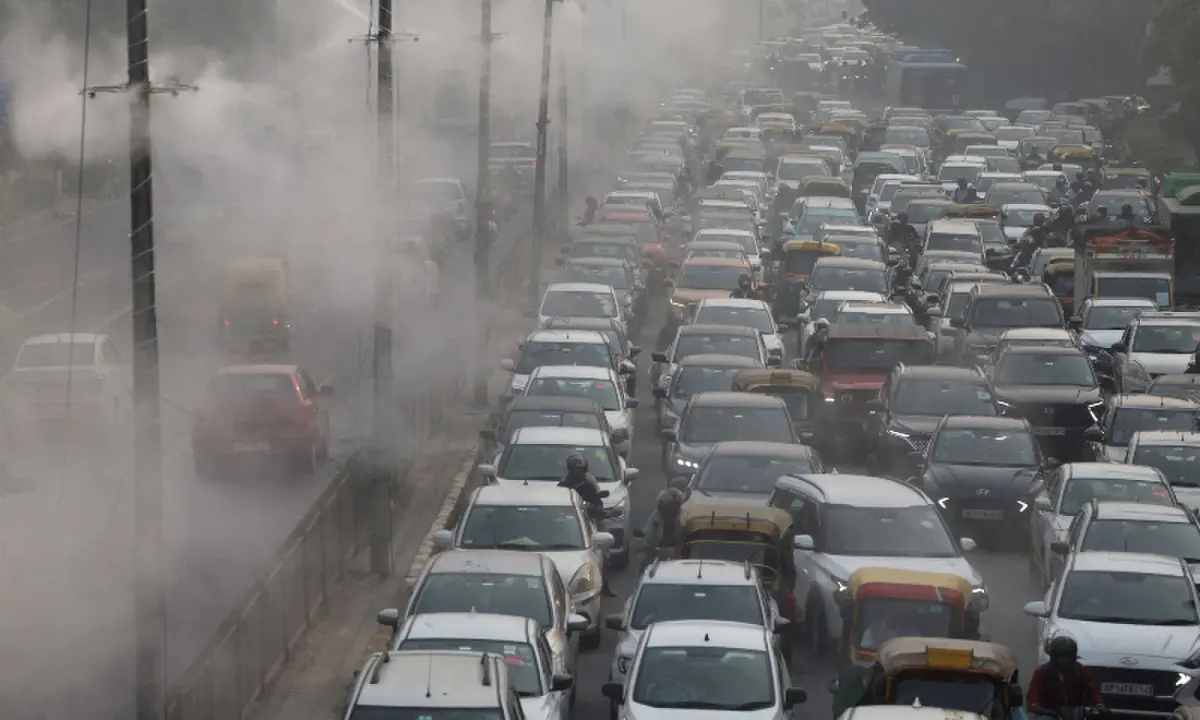
India’s capital, Delhi, overtook Lahore to become the world’s most polluted city on Friday, with air quality reaching hazardous levels and visibility dropping as smog blanketed the city of 20 million people.
Earlier, Delhi’s air quality index (AQI) stood at 334, categorised as “hazardous”, making it the most polluted major city globally, according to Swiss air quality monitoring group IQAir, which measures pollution levels based on the concentration of pollutants. An AQI reading of up to 50 is considered good, indicating little or no health risk.
India’s official Central Pollution Control Board (CPCB), meanwhile, recorded a higher AQI of 403 in Delhi and classified the air quality as “severe”.
The difference between the Swiss and Indian readings is due to the different AQI scales and methodologies used to calculate and classify air pollution levels.
According to IQAir’s hourly readings, Delhi’s AQI had dropped to 208 by 11am PKT. At the time, Lahore was ranked seventh among the world’s most polluted major cities, with an AQI of 155.
In Delhi, cars and motorcycles emerged from dense smog, which also appeared to obscure street lights on the city’s main roads, videos from news agency ANI showed.
Pollution is a seasonal problem in many parts of northern Pakistan and India, as the cold, heavy air of winter traps vehicle emissions, construction dust and smoke from agricultural burning.
Friday’s readings marked a drop in Lahore’s pollution levels after the city had ranked as the most polluted major city in the world for several days in a row.
Earlier this week, Lahore’s average PM2.5 concentration was eight times the World Health Organisation’s (WHO) guideline value, according to a report by the Pakistan Air Quality Initiative (PAQI).
The report, released on Tuesday, said the number of likely crop-residue fires in Punjab, Pakistan, remained almost unchanged from the corresponding period last year.
Lahore’s average PM2.5 concentration stood at 126 micrograms per cubic metre during the period, exceeding the 24-hour National Environmental Quality Standards (NEQS) on all 40 days for which valid data were available. The average was 11pc lower than in the corresponding period in 2025.
Satellite instruments detected 18,825 fires across Punjab, Pakistan, 89 per cent of which were classified as likely crop-residue burning. The highest daily count was recorded on Nov 1, with 1,102 detections.
The 24-hour National Environmental Quality Standards (NEQS) were exceeded on all 40 days for which valid data were available. The average concentration was 11pc lower than during the corresponding period in 2025.
However, the report cautioned that the association did not establish the precise contribution of crop-residue burning to urban pollution, as stagnant weather conditions and reduced atmospheric dispersion also contributed to the accumulation of pollutants.