Author: Theph

  • India’s Pant clears fitness test ahead of New Zealand Tests

    India’s Pant clears fitness test ahead of New Zealand Tests

    India wicketkeeper-batter Rishabh Pant has passed a fitness Test and left to join ‌the national team in New Zealand for a two-Test series, ​media reports said on ​Thursday.

    The 29-year-old, who last played ⁠for India in August, was ​sidelined with a left-side strain. ​He was named in India’s squad last month pending a fitness clearance ​at the Indian cricket ​board’s (BCCI) Centre of Excellence, where he underwent ‌rehabilitation.

    On ⁠Thursday, Pant posted a picture of an airplane wing in an Instagram story, with ​emojis ​indicating he ⁠was flying to New Zealand, where India are ​playing a five-match one-day ​international ⁠series.

    Beardman takes six on debut as England crash to 131

    Local media reports said Pant would be available for ⁠selection ​for the first ​Test starting Wednesday.

    Source: brecorder

  • Democratic US Senator Chris Van Hollen announces run for US Senate majority leader, challenging Schumer

    Democratic US Senator Chris Van Hollen announces run for US Senate majority leader, challenging Schumer

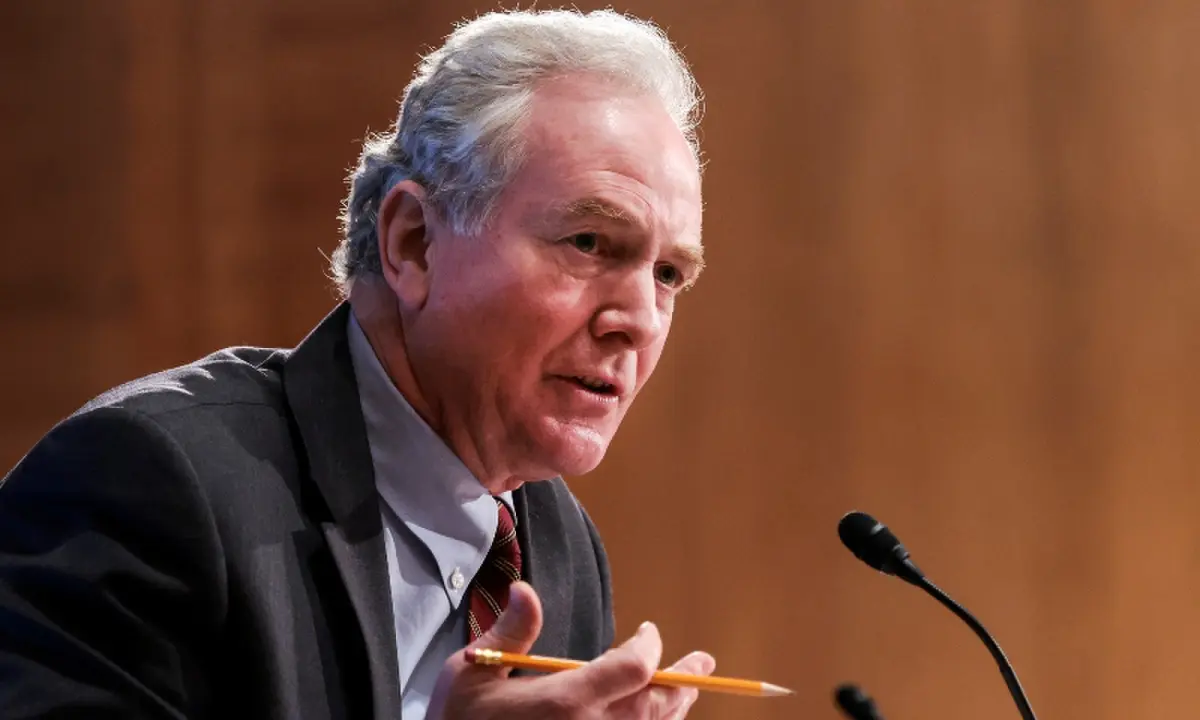
    Democratic US Senator Chris Van Hollen said on Thursday he would run for Senate majority leader, challenging Chuck Schumer, who has led the Democrats in the Senate since 2017, after the Democratic Party won a majority in the chamber in the midterm elections.

    Schumer, who is expected to retain his party’s leadership in the chamber but previously predicted not having a challenger, released his own statement on Thursday saying he had the votes to continue as the Democratic leader in the Senate.

    The closed-door secret-ballot vote will take place next month.

    Van Hollen, a Maryland Democrat, said that in the midterm elections, in which Democrats also secured a majority in the House of Representatives, voters called for “a change from the status quo that isn’t working for working people.”

    “It’s now on us to meet this moment, and to do that we need new leadership,” Van Hollen said.

    “That is why I’m running for Senate Majority Leader.”

    The 67-year-old told MSNOW in an interview that he had the support of more than 10 of the 55 Democratic senators who are known to be voting, but acknowledged he was the “underdog” in the race against the 75-year-old Schumer.

    Senator-elect Abdul El-Sayed of Michigan and Senator Bernie Sanders of Vermont, an independent who caucuses with Democrats, said they would support Van Hollen, who has been a US senator for nearly a decade and spent 14 years before that in the House of Representatives.

    At a press conference earlier this week, Sanders and Democratic US Senator Elissa Slotkin of Michigan called for new leadership.

    Van Hollen, who has hinted at a possible 2028 presidential campaign, has said Democrats need to simultaneously advance multiple goals, including holding President Donald Trump’s administration accountable for “gross corruption,” trying to end the US-Israeli war on Iran and uniting behind an aggressive economic agenda targeted at working-class Americans.

    On the foreign policy front, he has been critical of Israel’s occupation of Palestinian territories and its military assault on Gaza while advocating against deepening defense ties with the US ally.

    “I have the votes to continue serving as Democratic Leader,” Schumer said in his statement.

    “I welcome any discussion about the future of our caucus and the important work ahead.” A few new senators-elect have said they would not support Schumer, a Democrat from New York.

    “Midterms are a referendum on the party in power, but I also think this was a plea for a new kind of politics,” Van Hollen said last week, telling Reuters that Democrats should not be overly cautious in going after corporations, billionaires and special interests that voters blame for making their lives harder.

    Following the midterm elections, Democrats will hold at least 55 seats in the Senate, with Republicans holding 44.

    The race for a seat from Alaska has not yet been called, with the Democratic candidate holding a 2.2 per cent lead over the Republican, with 88pc of the votes counted as of late Thursday.

    Hollen was born in Karachi. According to his biography on Maryland Manual Online — a website run by the Maryland state government — he was born in the port city in 1959.

    Van Hollen himself spoke of his “special connection” with Pakistan in a clip released on the country’s Independence Day last year.

    “I am proud to join you in celebrating Pakistan’s 79th Independence Day. I am fortunate to have a special connection with Pakistan, having been born in Karachi as the son of an American foreign service officer.

    He has been a member of the US Senate since January 2017. Previously, he had also been a member of the US House of Representatives from 2003 to 2017.

    Source: dawn

  • Australian shares retreat as oil surges, banks and miners weigh

    Australian shares retreat as oil surges, banks and miners weigh

    Australian shares extended their decline for a second day on Friday, as most sectors traded in negative territory with banks and miners shedding the most, while investor sentiment was hampered by resurgent geopolitical tensions.

    The S&P/ASX 200 was down 0.5% at 9,101.70 by 2321 GMT.

    The index ended 0.1% lower on Friday, but was on pace to book a third consecutive weekly gain with a roughly 1% jump.

    Earlier this week, Australian markets rallied alongside their global peers when oil prices hit multi-month lows after US President Donald Trump downplayed the likelihood of renewed strikes on Iran.

    However, escalating attacks on energy infrastructure in top crude producer Saudi Arabia and shipping disruptions at the Strait of Hormuz lifted oil prices on the day.

    That renewed inflationary pressures, which have rattled world economies since the start of the Iran war earlier this year.

    Yields on short-term government bonds, which typically move in tandem with central bank rate expectations, advanced on Friday, with the 1-year yield up at 4.966%.

    On the economic front, investors will be looking out for monthly employment figures due next week.

    Australian shares tick down as miners slip, banks limit losses

    Mining stocks tracked lower base metal prices to fall 0.9%, with BHP and Rio Tinto slipping 0.6% and 0.9%, respectively.

    The sector was, however, poised for a 1.8% weekly rise.

    Financials fell 0.6% after all “Big Four” banks traded in the red, with the sub-index on track to log its second consecutive weekly loss.

    Technology stocks slipped 1.2% to mirror overnight losses in the tech-heavy Nasdaq Composite.

    US markets were pressured by a drop in AI chipmaker Nvidia following CEO Jensen Huang’s resignation.

    Energy stocks were among the few outliers to jump 1.1%. Shares of Woodside Energy and Santos added more than 1% each.

    In New Zealand, the S&P/NZX 50 fell 0.3% to 14,210.10, retreating from a record high on Thursday. The index was, however, poised for a 1.4% weekly advance.

    Source: brecorder

  • How can carbon credits add up to 20% to revenues of green projects in Pakistan?

    How can carbon credits add up to 20% to revenues of green projects in Pakistan?

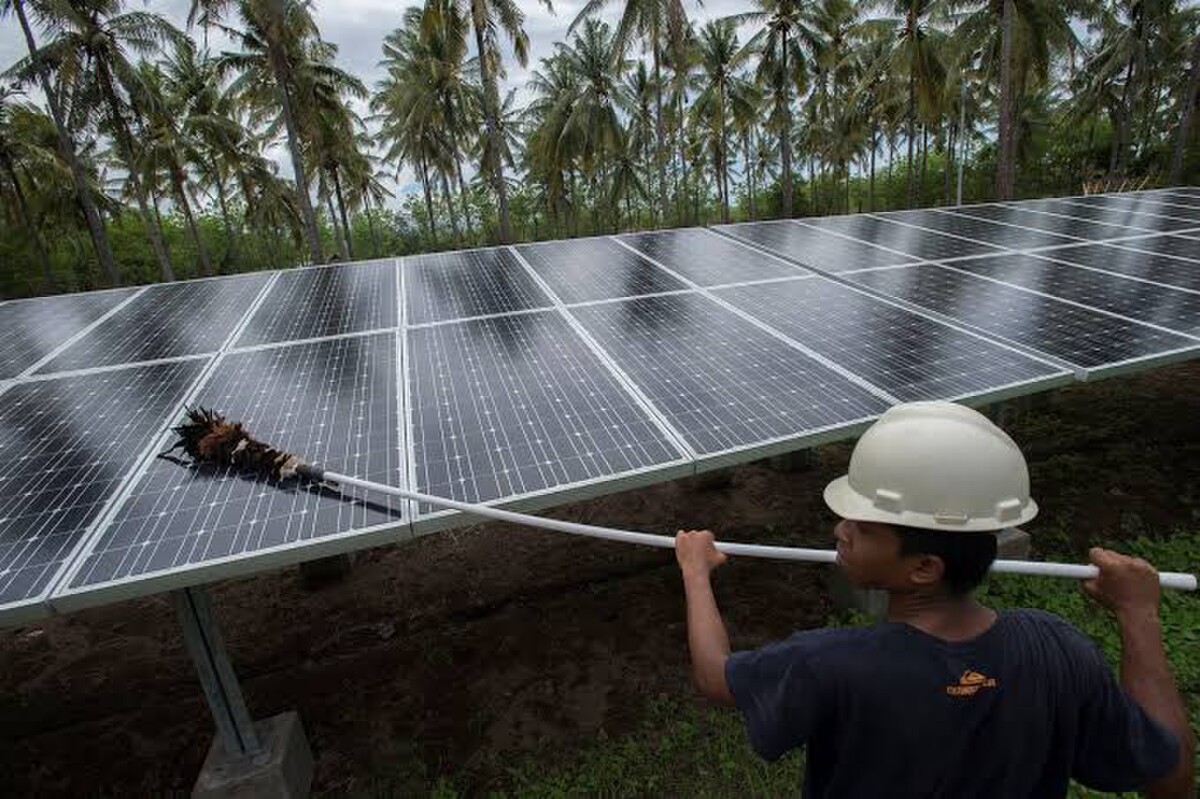
    Carbon credits could generate additional revenues equivalent to 10% to 20% of project earnings for qualifying low-carbon investments in Pakistan, offering ventures an additional source of income from renewable energy, electric vehicles, battery storage and agriculture, the chief executive of climate finance firm Resources Future said.

    Carbon credits, also known as carbon offsets, are tradable certificates representing the reduction or removal of one tonne of carbon dioxide equivalent (CO2e) from the atmosphere. They allow businesses and other entities to compensate for their greenhouse gas emissions by supporting projects that reduce or remove emissions elsewhere, including afforestation, mangrove restoration and renewable energy initiatives.

    Such credits are issued following certification and verification under recognised standards, with international organisations such as Verra and Gold Standard playing a key role in assessing projects and ensuring the credibility of emissions reductions.

    Pakistan is developing its carbon market as part of efforts to meet its climate commitments, attract green investment and transition towards a low-carbon economy. The country’s carbon market became operational in early 2025 following the approval of federal guidelines under Article 6 of the Paris Agreement, which provides a framework for international cooperation on emissions reduction.

    “Anything which is a low-carbon project can essentially get you carbon credits,” said Khurram Lalani, director and chief executive of Resources Future, in an interview with Business Recorder.

    “Think about carbon credits as a commodity, like gold, silver or copper. Carbon credits are also a commodity.”

    Lalani said carbon credits could provide an additional monetisation stream for businesses already investing in environmentally friendly projects, helping them recover operating and maintenance costs while improving overall project economics.

    “If you are investing anyway, you can consider this as the cherry on top. This is not the whole cake, but a cherry on top.”

    He estimated that carbon credits could contribute an additional 10% to 15% in revenues for qualifying projects, with the potential to reach 20% in some cases.

    “If you have a Rs10 billion project, you are not going to earn Rs10 billion on Rs10 billion. But what it does is that it will give you enough potential to substantiate your topline with 10 to 15% of revenues, in general,” he said.

    “Your OPEX, your operations, your O&M costs, at least recover from these things.”

    Lalani said the opportunity extended beyond conventional renewable energy investments to electric vehicles, battery energy storage systems (BESS), biodiesel manufacturing, forestry and agriculture.

    “We have our own agroforestry project which is around mango restoration,” he said.

    Solar and wind projects, for instance, could generate carbon credits by displacing electricity produced through diesel, furnace oil and natural gas, while electric vehicles (EV) could qualify by replacing petrol-powered transport.

    “Think about your EVs, electric vehicles. They displace petrol. That’s a low-carbon project; you can earn carbon credits,” Lalani said.

    “Anything which displaces or sequesters carbon can be converted into a project that can earn carbon credits.”

    He said Resources Future was working with project developers involved in battery energy storage systems and electric vehicle projects, including businesses importing electric buses and manufacturing electric motorcycles.

    The firm has also supported a large biodiesel manufacturing facility under construction in Pakistan, which has applied for carbon credits, he said.

    “We are helping them out. The idea is that there can be two revenue streams for example, if you sell biodiesel, the project sponsors of biodiesel can also monetise with carbon credits. Hence, carbon credits essentially gives you another monetisation rail on which you can do monetisation,” he said.

    Despite the potential, Pakistan has been slower than regional competitors in developing carbon credit projects and attracting private investment, he said.

    “Pakistan has not been very active when it comes to carbon credit projects, but I think there are reasons for that as well.”

    Comparing Pakistan with India, China and Bangladesh, Lalani said businesses in those countries had developed a better understanding of carbon credits as a monetisation opportunity.

    “In Pakistan, generally, that capacity does not exist, where our industrialists will be able to understand exactly what carbon credits are.”

    He attributed the gap partly to limited awareness and technical expertise among local businesses, as well as a reluctance to invest in unfamiliar opportunities.

    “In Pakistan, the risk-taking ability is not very prominent, whereas foreign businesses are generally more keen to invest in something new because they understand that there is risk, but there are also returns.

    “In Pakistan, we have been very much focused on the existing business opportunities, and we don’t really consider moving in a new direction, where there is a little more cost incurred. But the Pakistani market is opening up and is going to flourish also,” he said.

    Another obstacle has been the cost of developing carbon credit projects, which requires technical documentation, independent verification and registration with international carbon credit registries.

    Lalani said a typical carbon credit project could cost around $100,000 to develop.

    “If you hire an outside consultant from Europe, you would essentially incur, just in the consulting fees, around $200,000 to $250,000,” he said.

    “What we have done is that we have been able to bring that cost down to less than $100,000.”

    He said businesses should consider carbon credit development expenses as part of the overall investment cost of low-carbon projects rather than treating them as a separate commercial venture.

    “If you are investing in a project worth Rs10 billion or a project worth Rs5 billion, if you add $100,000 to it to make a carbon credit project, the marginal cost is not that much, but the marginal revenue is quite big.”

    “Hence, it should be a natural proposition. What we have seen in India, what we have seen in China, the industrialists there, whatever low carbon project they design, they automatically go for carbon credits,” he said.

    Carbon credits generated through Pakistani projects are generally sold to global buyers, as the market remains largely international, Lalani said.

    He added that domestic banks had yet to develop dedicated financing products based on carbon credits, with the local banking sector still at an early stage of understanding the market.

    “Banks do not take a view on carbon credits. I have not come across any such product,” he said.

    Talking about the evolving international climate rules, Lalani cited the example of the European Union, saying that a very broad-based change was coming into the region under CBAM [Carbon Border Adjustment Mechanism].

    “It means that in Pakistan, any products with high carbon intensity, when they are exported to European countries. Europe will impose a carbon tax because of the carbon intensity of your products. So this will have a huge impact on Pakistani textile companies,” he said.

    The CBAM is a carbon pricing policy that places a fair price on carbon emitted during the production of carbon-intensive goods imported into the European Union.

    “The way to go about CBAM is… Either the textile companies will pay a carbon tax in Europe, or they should have offsets here. They should be the owners of carbon credits. So that they can show that they have mitigated their carbon emissions,” said Lalani.

    He said Pakistan needed stronger private-sector capacity and a more developed regulatory framework to attract international investors, who could choose to finance projects in competing markets such as India, Indonesia, China and Malaysia.

    “Somehow we have not been able to operationalise the policy. The policy framework is there, but the rules are not there, and the associated guidelines are not there,” he said.

    “The government needs to speed up, expedite that process. Make sure the rules are out there, so it gives enough clarity to everyone involved.”

    He also called for greater capacity building among industrialists, financial institutions and investors, alongside the operationalisation of a climate change fund at the federal level to channel funding towards low-carbon projects.

    “Pakistan’s potential is limitless. The only thing is that we need to really come up with a framework that can essentially help the private sector take the next step and also go for carbon credits as a monetisation opportunity,” Lalani said.

    “The mobilisation that has happened in India, the mobilisation that has happened in China, the mobilisation that has happened in Bangladesh – is Pakistan comes nowhere near.”

    “We have to take a long-term view on this. Think of it as a monetisation opportunity. And try and create good high-integrity projects for carbon markets,” Lalani concluded.

    Source: brecorder

  • Japan’s Nikkei on track for best week in 5 months despite Nvidia turmoil

    Japan’s Nikkei on track for best week in 5 months despite Nvidia turmoil

    TOKYO: Japan’s Nikkei share average was on track for its best week in five months on Friday, rebounding from a sharp drop the previous week as upbeat earnings and renewed AI optimism lifted sentiment, despite turmoil surrounding chipmaker Nvidia.

    The Nikkei was up 1.25% at 61,576.91, as of 0140 GMT, putting the index on track to finish the week with a 7.3% weekly gain, its biggest since the week of June 15.

    The broader Topix advanced 0.63% to 3,962.08 and was headed for a weekly gain of about 7%, its strongest since mid-August 2024.

    Semiconductor stocks led the Nikkei’s advance, with Advantest gaining 5.9%, Tokyo Electron rising 3% and Kioxia adding 2.9%.

    The gains came despite a selloff in Nvidia shares overnight, which dragged US stocks lower.

    However, rival chipmakers Broadcom and Alphabet rose, suggesting investor optimism about the broader AI sector remained intact.

    “The rise in semiconductor- and AI-related shares, which had been under pressure for a relatively long period, appears to have been a factor behind this week’s gains in the Nikkei average and Topix,” said Maki Sawada, equities strategist at Nomura Securities.

    Reports surrounding Nvidia CEO Jensen Huang’s departure have also raised questions about the company’s future direction and the implications for US chip export policy and access to the Chinese market.

    Japanese shares had already weakened in the previous session amid concerns over the Nvidia developments, helping set the stage for Friday’s recovery, Sawada said.

    The market breadth was positive, with 138 advancers in the Nikkei 225, against 82 decliners and 5 unchanged stocks.

    Banking shares on the Tokyo bourses gained 1%, tracking a rise in US Treasury yields amid speculation about potential US rate hikes.

    Japan’s three largest banks were due to report earnings later in the day.

    The largest percentage gainers in the index were Amada Co up 9.46%, followed by Socionext gaining 6.77% and Trend Micro up by 6.61%.

    The largest losers were Terumo, down 7.39%, followed by Haseko, trading 6.12% lower, and Mercari , which lost 3.68%.

    Source: brecorder

  • Security forces kill 43 terrorists during IBOs in KP’s Mir Ali, Orakzai

    Security forces kill 43 terrorists during IBOs in KP’s Mir Ali, Orakzai

    Security forces killed 43 terrorists during intelligence-based operations (IBOs) in Khyber Pakhtunkhwa’s Mir Ali and Orakzai areas, said a statement by the military’s media wing on Friday.

    The Inter-Services Public Relations (ISPR), in a breakdown of the casualties, said 35 terrorists were killed in Mir Ali, North Waziristan district, while eight others were killed in Orakzai Agency.

    “In a determined effort to eliminate terrorist threats and dismantle the khwarij networks, security forces are conducting a series of intelligence-based operations in Khyber Pakhtunkhwa province. These operations have been further expanded to the areas of Mir Ali and Orakzai,” said ISPR.

    Elaborating further, the military’s media wing said that “intense and fierce exchanges of fire” took place, dealing a “significant blow” to the networks operated by the khwarij in the areas.

    Fitna al Khawarij is a term the state uses for terrorists belonging to the banned Tehreek-i-Taliban Pakistan.

    A large cache of weapons, ammunition and explosives, including homemade explosives and improvised explosive devices (IEDs), was also recovered during sanitisation, the military’s media wing said, adding that the recoveries had thwarted the “nefarious designs” of the terrorists to use the materials in terrorist activities.

    The ISPR further said that sanitisation operations continue in the areas to “eliminate holed up khwarij”.

    More to follow

    Source: dawn

  • ESA’s Euclid telescope maps over 900 million galaxies

    ESA’s Euclid telescope maps over 900 million galaxies

    PARIS: The European Space Agency has released its first big collection of data from the orbiting Euclid telescope’s mission to map the universe’s large-scale structure, including observations of more than 900 million galaxies, as scientists investigate the puzzling cosmic components dark matter and dark energy.

    The data unveiled on Thursday covered a survey of the sky equal to about 9,500 times the size of the moon as viewed from Earth. The mission’s goal is to complete the largest-ever three-dimensional atlas of the cosmos, spanning more than a third of the sky, in 2031.

    Thursday’s release encompassed around 13 months of Euclid observations, totalling an enormous 1.7 petabytes 1.7 million gigabytes of data. “It marks a major milestone for ESA’s Euclid mission and for everyone involved,” said astrophysicist Valeria Pettorino, ESA’s Euclid project scientist.

    Euclid, launched from Florida in 2023, is gathering data on how the universe has expanded and how its structure has formed over time while amassing information about the nature of dark energy and dark matter and the role of gravity on large scales.

    “Euclid will not just take images of galaxies in the sky, in two dimensions, but will also measure their distance, the third dimension. This will tell us where galaxies are in space and time, across 10 billion years, and in all directions beyond our galactic plane,” Pettorino said.

    “Galaxies cluster along filaments, surrounded by empty space, and form a network that we call the cosmic web. Euclid will reconstruct the cosmic web and how it has grown over time. This is important because the exact configuration of the cosmic web, how many clusters or voids are there, how fast it changed, depend on the properties of dark energy and dark matter,” Pettorino said. The universe’s contents include ordinary matter as well as dark matter and dark energy.

    Ordinary matter stars, planets, gas, dust and all the familiar stuff on Earth represents about 5pc of the contents. Dark matter, known from the gravitational effects it exerts on galactic scales, is invisible material that may make up about 27pc of the cosmos. Dark energy, thought to be responsible for the accelerated expansion of the universe, may account for 68pc. Dark matter and dark energy do not emit or absorb light and cannot be directly observed.

    Gravitational lensing

    Previous Euclid data releases covered only a few days of observations. The newly released dataset includes more than a year of data and still spans only 14pc of the total sky area Euclid is due to survey in visible and near-infrared light over six years. This data release will be completed next year with the first results on dark energy and dark matter.

    Light travelling toward Earth from faraway galaxies can be bent and distorted by normal matter and dark matter in the foreground, an effect called gravitational lensing. Thus, the nearer galaxy’s gravity warps the light coming from the one behind.

    Published in Dawn, November 13th, 2026

    Source: dawn

  • PSX: volatility at bourse, KSE-100 trades marginally higher

    PSX: volatility at bourse, KSE-100 trades marginally higher

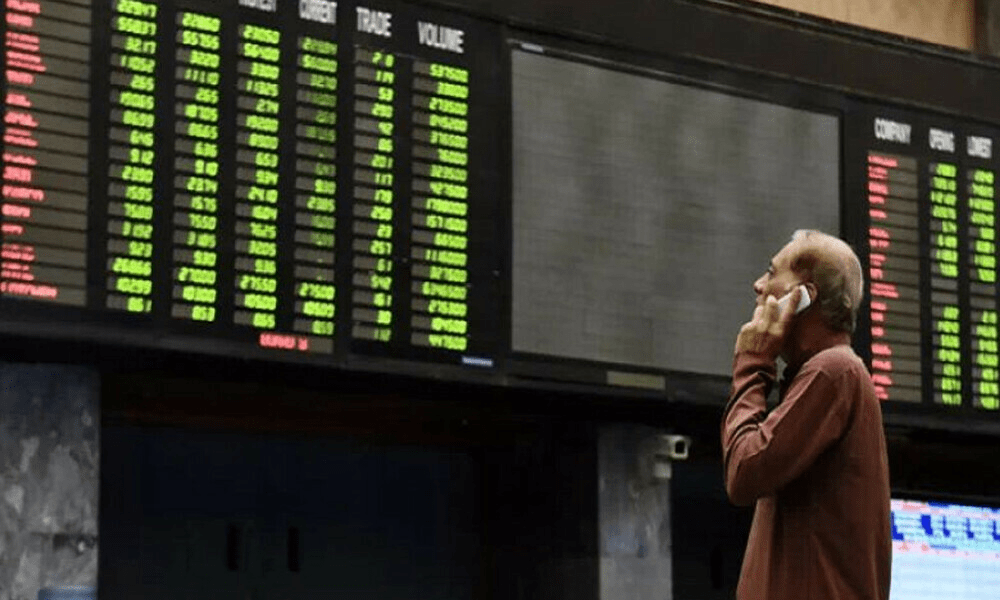
    The Pakistan Stock Exchange (PSX) saw volatility during the opening minutes of trading on Friday, with the benchmark KSE-100 Index trading marginally higher.

    At 10am, the benchmark index was hovering at 177,506.80, up 133.04 points or 0.08%.

    Buying was observed in key sectors, including commercial banks, oil and gas exploration companies, OMCs and refineries. Index-heavy stocks, including ARL, PRL, MARI, POL, PSO, SSGC, HBL, MCB, NBP and UBL, traded in the green.

    On Thursday, PSX witnessed a volatile session as the market reversed its early gains and closed sharply lower. Renewed selling pressure after midday wiped out the gains, amid investor caution over domestic political uncertainty.

    The KSE-100 Index declined by 1,710.04 points, or 0.95%, to close at 177,373.76 points.

    Globally, stocks in Asia were on steadier footing on Friday after a turbulent week dominated by ​revelations of extramarital affairs involving Nvidia CEO Jensen Huang that culminated in his resignation, in a blow to the global AI boom he helped advance.

    US Treasury ‌yields climbed, with the 2-year yield hitting a one-month high, lifting the dollar as investors weighed the prospect of an outsized 50-basis-point rate hike by the Federal Reserve next month.

    Huang stepped down on Thursday after reports of the affair, including one involving a suspected Chinese spy, which plunged the chipmaker into crisis and sent shockwaves through the AI industry.

    His exit could have far-reaching consequences for US chip export policy and the broader AI ​industry and supply chain, given Huang’s push to preserve access to the Chinese market as well as his close ties with US President Donald Trump.

    Nvidia shares fell 3% in extended trading, while those of its customers, including South ​Korea’s Naver, extended declines on Friday, with Naver down 2.75%.

    MSCI’s broadest index of Asia-Pacific shares outside Japan was up 0.26%, reversing some of its 1.3% fall ​from the previous session. South Korea’s Kospi rose 2.35% while Japan’s Nikkei added 1.4%.

    The recovery in global equities also follows last week’s market meltdown sparked by the Republicans’ electoral ​drubbing, which stoked fears that tighter regulation could slow the AI infrastructure buildout that has helped send stocks to record highs this year.

    Nasdaq futures and S&P 500 futures rose more than 0.2% each, while ‌EUROSTOXX 50 ⁠futures fell 0.37%.

    This is an intraday update

    Source: brecorder

  • OECD report reveals migration to developed countries is dwindling

    OECD report reveals migration to developed countries is dwindling

    PARIS: Migration to developed countries dwindled for a second year in a row in 2025, down 1.6pc compared to the previous year, according to an OECD report published on Thursday.

    While still experiencing high numbers, the 38 Organisation for Economic Cooperation and Development (OECD) countries recorded 6.1 million new permanent immigrants in 2025, compared to 6.2m the previous year.

    There has been a backlash in many Western countries against the arrival of irregular migrants fleeing conflict, authoritarian rule and economic hardship in their home countries.

    Legal humanitarian migration dropped “sharply” by 26pc in 2025 compared with 2024, the report found. Labour migration increased by 13pc.

    Permanent migration fell 14pc in US, 19pc in Canada and 32pc in UK last year

    While 2025 marked an overall decline in migration, the number of permanent immigrants settling for the long term was up 12pc compared with 2019.

    Three countries recorded a notable spike in permanent migrants in 2025.

    Portugal saw a 139pc increase to 313,600 individuals, resulting from approvals of a backlog of pending residency permits. Spain saw a 25pc increase to 460,500 people, notably after having broadened its residency policies.

    Italy saw a 45pc increase to 248,800 people, largely attributed to a flux of family and labour migration.

    Other countries saw significant declines in permanent migrants.

    The United States saw a 14pc drop, although it still leads OECD countries, recording more than 1.2m permanent migrants in 2025.

    Canada saw a 19pc decrease to 393,800 people, and the United Kingdom a 32pc decline to 295,800 people.

    Asylum seekers down

    India remained the leading country of origin for migratory flows to the OECD in 2024, ahead of China and Colombia, according to the latest available figures.

    The 1.1m asylum applications in 2025 marked a 22pc decrease to OECD countries, excluding the United States, compared with the previous year, although remaining about 10pc higher than 2019 figures.

    Men continue to account for the majority of migratory flows to OECD countries.

    According to the latest available data from 2024, women accounted for about 46pc of new immigrants.

    The OECD countries that admitted significantly more women than men were the United States and Ireland with 54pc female immigrants, Sweden with 53pc, and Israel, Chile, Australia and New Zealand with 52pc.

    Migration poses an opportunity to boost long-term productivity in many countries, particularly in the face of ageing populations, the OECD noted.

    “With the OECD working-age population set to decrease by 8pc by 2060, pushing overall growth downwards, reviving productivity growth is key to maintaining living standards,” said Mark Pearson, the OECD’s acting director of Employment, Labour and Social Affairs.

    Published in Dawn, November 13th, 2026

    Source: dawn

  • Two arrested after pet lioness kills farmhouse worker in Lahore’s Kahna

    Two arrested after pet lioness kills farmhouse worker in Lahore’s Kahna

    LAHORE: A farmhouse owner and a TikToker were arrested on Thursday after a 19-year-old farmhouse employee was killed by a pet lioness in the farmhouse in the Kahna area on Thursday.

    A spokesperson for the office of the deputy inspector general (DIG) of police identified the arrested suspects as farmhouse owner Fayyaz and TikToker Nauman.

    The spokesperson said Nauman had visited the farmhouse to make a TikTok video when the lioness allegedly went out of control and attacked Talha, a farm employee, leaving him critically injured. Talha was shifted to a private hospital where he died during treatment.

    Police investigations revealed that an attempt had allegedly been made to conceal the circumstances of the incident by describing it as a dog attack. However, an inquiry established that the victim had been attacked by a lioness.

    The animal was confiscated by the wildlife department while the victim’s body was shifted to a morgue for postmortem.

    A case was registered against the suspects.

    Police are also investigating whether the farmhouse had a valid permit to keep the lioness and had taken safety arrangements.

    DIG Operations Faisal Kamran said an attempt to conceal the facts and all aspects of possible negligence would be investigated.

    He said human life could not be put at risk in the name of entertainment or personal interests, adding that making TikTok videos could not take precedence over human life.

    Published in Dawn, November 13th, 2026

    Source: dawn