Author: Theph

  • Work in full swing to plug crater at Tarbela project site

    Work in full swing to plug crater at Tarbela project site

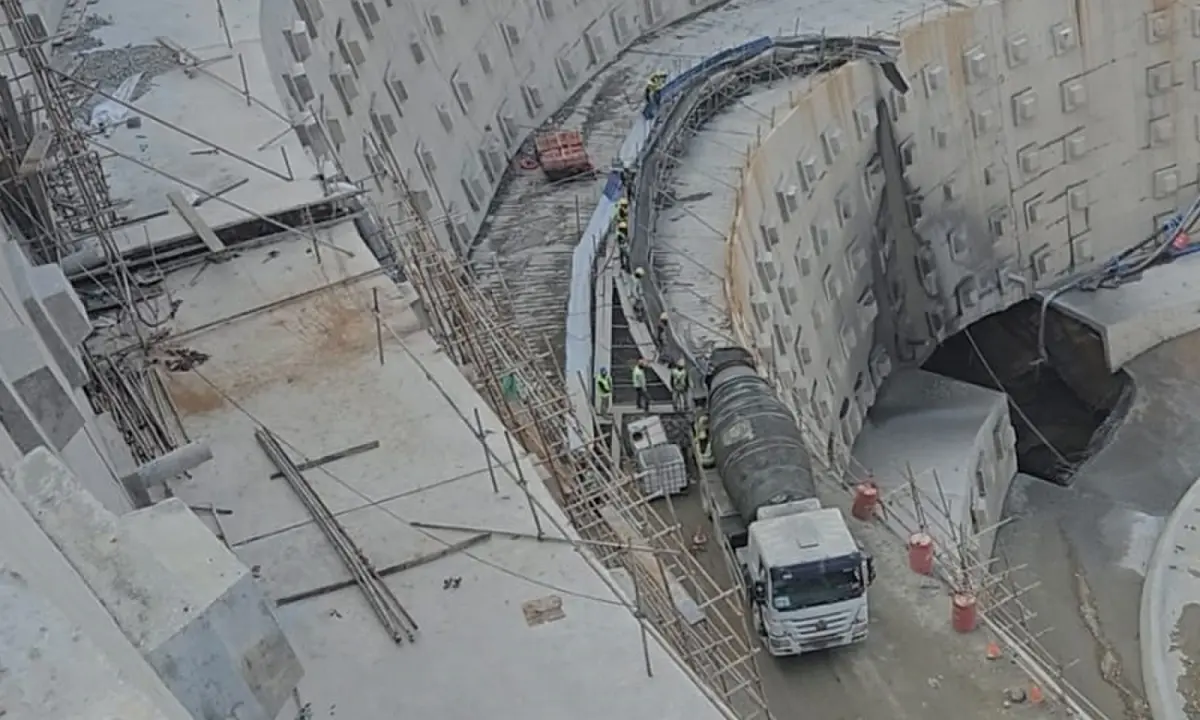
    HARIPUR: The civil work, meant to plug the crater caused by the collapse of a weak rock mass in the intake pit area of the Tarbela Dam 5th Extension Hydropower Project (T-5), is in full swing.

    Engineers and project workers are busy round the clock to ensure the project is commissioned according to schedule, according to an official source at the project site.

    On Monday morning, a weak rock mass collapsed during excavation of the 2nd Bench Connecting Tunnel, causing water from the intake pit to enter the tunnel and the powerhouse area of the T-5 project, said an official handout.

    It added that all workers engaged in routine activities were immediately evacuated safely.

    Official sources and Haripur district administration said water from the intake pit had been completely drained; no further water was entering the downstream work sites, and dewatering of the under-construction powerhouse had started.

    They said the rock mass collapse caused no damage to the main tunnel, the under-construction powerhouse, the tailrace culvert or the switchyard.

    Likely to be completed within a week

    A source at the project site said that following the immediate dewatering of the intake pit, the consultants, contractors and Wapda team initially assessed the incident before starting the concrete work to plug the hole, which continued until this report was filed.

    “The project staff has shifted its focus from routine work to the incident site and is busy 24/7 plugging the hole,” he said.

    The source said dewatering of the under-construction powerhouse was under way using heavy-duty pumping machines.

    He said completion of the civil work to fill the hole with concrete and dewatering of the powerhouse were likely within a week, facilitating the project staff’s return to work.

    “Reports are being compiled every six hours for submission to stakeholders by teams from the seismology and geology departments, contractors, consultants and Wapda officials,” he said.

    The source said the initial incident report had already been submitted to the Wapda chairman and the Ministry of Water Resources.

    He added that the final report assessing the causes and losses was likely to be submitted to the Prime Minister’s Office, the Ministry of Water Resources and other stakeholders in the next few days.

    The source said geologists from Wapda and the contractors, who had compiled the initial assessment report, denied any disruption or damage to the tunnel before or after the incident.

    He added that the plug, which would be used to divert water from the intake pit to the tunnel, was also 100 pc intact.

    “Only a weak rock mass situated some distance behind the plug somehow got damaged, but there was no human error or engineering flaw involved,” he claimed.

    This correspondent WhatsApped questions to general manager of T-5 project Umair Manan about the timeline for completion of civil work, dewatering of the under-construction powerhouse and the detailed assessment report.

    He responded with a brief statement: “The time is too soon to answer your queries. Hope for the best from Allah Almighty, Ameen.”

    When contacted, general secretary of the Awami Labour Union at the Tarbela Extension Projects 4 and 5 Aslam Adil said work to fill the hole in the intake pit and dewater the powerhouse continued day and night without interruption.

    He said the majority of the 3,000 workers engaged in the T-5 project had been asked to stay home until further notice.

    “Currently, the contractors have called only dumper and crane operators to work,” he said.

    Published in Dawn, November 13th, 2026

    Source: dawn
  • Police ban private jirgas in Peshawar

    Police ban private jirgas in Peshawar

    • Wedding halls, hotels warned against hosting such gatherings
    • CCPO cites gun culture, clashes and hefty charges as reasons behind instructions

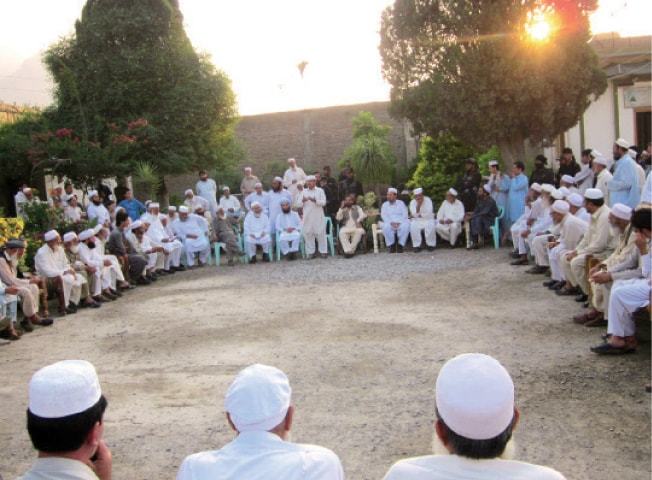
    PESHAWAR: Police have imposed a ban on private jirgas (informal dispute-resolution gatherings) and warned wedding halls and other venues against allowing such meetings on their premises, cautioning that violations would invite legal action.

    According to senior police officials, the decision was taken following a number of complaints and several incidents reported during private jirgas.

    The complaints and incidents highlighted problems associated with such gatherings, prompting the police to impose the ban, they said.

    They said that with Dispute Resolution Committees (DRCs) already in place and actively resolving disputes under police supervision, there was no need for private individuals to form their own groups and hold jirgas. They added that no one could exert influence over the DRCs, which operated independently.

    They also said that although the holding of private jirgas had previously been discouraged and people had been asked to refrain from organising them, the department was now compelled to impose a formal ban.

    When contacted, Capital City Police Officer (CCPO) Dr Mian Saeed Ahmad confirmed the development.

    “One of the most important reasons identified by locals for taking action against private jirgas is that they promote gun culture. Besides, the parties are asked to deposit hefty amounts as surety,” he told Dawn, adding that such gatherings often ended in clashes between the disputing parties, sometimes at the venue itself.

    The CCPO said the government had already established DRCs, whose members were known to the public and whose activities were monitored by the police. He added that the committees did not charge the parties for resolving their disputes.

    “Private jirga members charge both parties for their services. Such jirgas are held at hotels and restaurants, where lavish meals are served, placing an additional financial burden on the parties, who are also required to pay the bills,” he said, adding that if a body was already in place to resolve disputes free of charge, there was no need for private groups.

    The CCPO said that in several cases, the police had arrested those involved, recovered the money and returned it to the disputing parties.

    He added that such disputes were often resolved under the threat of firearms, as jirga members first asked both parties to authorise them to decide the matter. Once a verdict was announced, both sides were bound to accept it.

    He said the DRCs provided an alternative mechanism for dispute resolution, but private jirgas had turned into commercial enterprises, with many jirga members eventually becoming involved in land grabbing.

    “We have made it clear to everyone. We will not only take action against jirga members but also against those who provide them space to hold such gatherings,” the CCPO said.

    Published in Dawn, November 13th, 2026

    Source: dawn

  • Ahsan calls for shift from rote learning to critical thinking, creativity

    ISLAMABAD – Federal Minister for Planning, Development and Special Initiatives Professor Ahsan Iqbal on Thursday called for a fundamental transformation of the education system, urging a shift from rote learning to critical thinking, creativity, inquiry and experiential learning to prepare students for the demands of the future.

    Source: Nation

  • Police arrest 5 accused after firing outside Jand court

    ATTOCK – Timely action by Police foiled a firing incident outside the Jand court, and all five accused involved in the firing were arrested on the spot.

    Source: Nation

  • Man gets death for committing murder over personal grievances in 2025

    Rawalpindi – An additional district and sessions judge (ADSJ) here on Thursday handed down death sentence to a man for committing murder over personal grievances in the area of Chaklala police station in June last year.

    Source: Nation

  • DEA directs private schools to seek prior permission for student tours, excursions

    Rawalpindi – District Education Authority (DEA) Rawalpindi here on Tuesday issued a comprehensive set of standardized guidelines for educational tours and outdoor excursions across all private educational institutions in the district.

    Source: Nation

  • High-level committee to trace ‘missing vehicles’ becomes dysfunctional

    ISLAMABAD – A high level committee constituted to trace and recover government vehicles allegedly being retained and misused by officers without proper allocation has become dysfunctional after transfer of its chairman from CDA.

    Source: Nation

  • Nvidia PE falls to 14-year low, but CEO exit and AI worries cloud the bargain

    Nvidia PE falls to 14-year low, but CEO exit and AI worries cloud the bargain

    By one of Wall Street’s favorite metrics, Nvidia shares look like a bargain.

    Following a steep drop from its October 6 record high, Nvidia’s stock is trading at the equivalent of 12 times expected earnings. That’s its lowest valuation since 2012, when the chipmaker was competing with Advanced Micro Devices to dominate the market for videogame graphics cards while struggling to find a foothold in tablets and other mobile devices.

    The stock was down more than 5% on Thursday after CEO Jensen Huang resigned, and is down about 12% this week amid a scandal over reports of his extramarital affairs, including one with a woman alleged to be a Chinese spy.

    READ ALSO: Nvidia CEO Jensen Huang resigns in big blow to AI boom

    Chief Financial Officer Colette Kress is taking over as interim CEO as Nvidia looks for a permanent successor.

    But concern about leadership is not the only thing that has troubled investors. Nvidia, whose GPUs have fueled the AI boom, is now down over 30% from its record, in large part due to worries about a potential slowdown in the buildout of AI data centers.

    “This is a key-person event, not a demand event. Nobody is canceling GPU orders because the CEO resigned. Historically, stocks take time to find a bottom after an abrupt CEO exit while the market works through the investigations and the search,” said Erik Kratz, co-head of wealth and chief investment officer at Arena Private Wealth in Chicago.

    Nvidia reports quarterly earnings on Tuesday, with investors watching whether its sharp growth can survive without Huang.

    Investors favor stocks with low price-to-earnings ratios, or PEs, but a low multiple can also reflect doubts that expected earnings will materialize.

    While Nvidia’s share price has slumped in recent weeks, analysts so far have maintained forecasts for strong profit growth, expecting demand for Nvidia’s chips to continue to outpace supply. That could change after Nvidia posts its quarterly results.

    Analysts on average expect Nvidia to report a 92% surge in October-quarter revenue and a net profit of over $60 billion, an 89% increase, year over year, according to LSEG data. Investors will be keen to hear what Kress says about Nvidia’s outlook, which may matter even more than the results themselves.

    Source: brecorder

  • Petrol price slashed by Rs3, HSD’s by Rs4

    Petrol price slashed by Rs3, HSD’s by Rs4

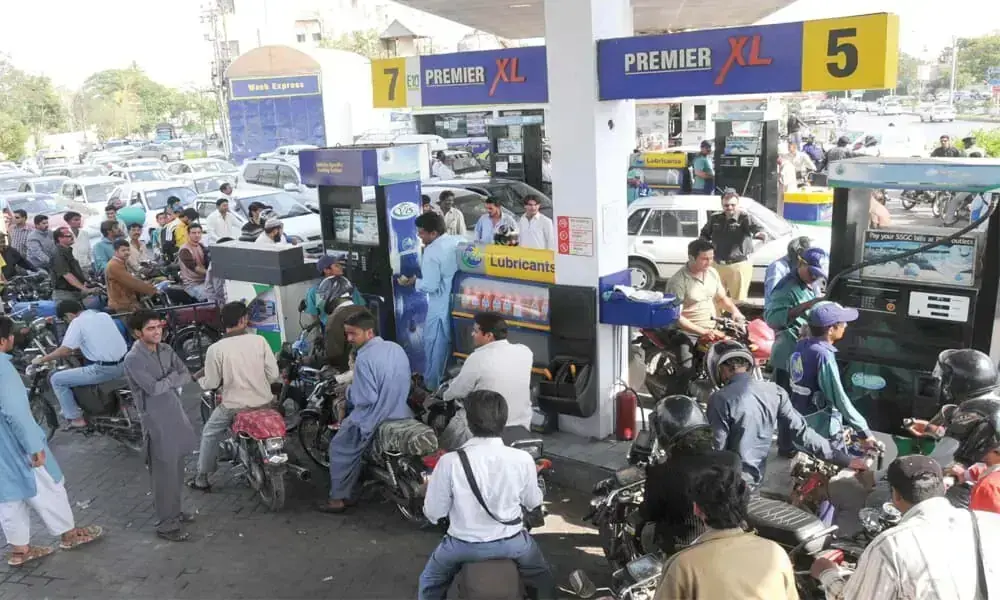
    ISLAMABAD: Consumers will see slight relief at the pump stations starting November 13 following a reduction in petroleum prices. The ex-depot price of petrol has been slashed by Rs3 per litre, bringing the retail rate down from Rs335 to Rs332. Similarly, the price of High-Speed Diesel (HSD) has been decreased by Rs4 per litre, adjusting the rate from Rs364 to Rs360.

    The regulator attributed these adjustments to global developments alongside changes in Platts pricing, premiums, and incidental costs. International benchmark prices of petrol decreased to USD 91.64 per bbl from USD 93.55 per bbl, however, premium including freight increased USD 28.76 per bbl, while HSD benchmark prices decreased to USD 94.16 per barrel from USD 96.33 per bbl.

    The ex-refinery price of petrol has decreased to Rs237.31 from Rs240.65 per litre. While the ex-refinery cost of HSD decreased to Rs252.08 per litre (previously Rs255.88).

    Government levies and fixed profit margins for petrol and HSD remain unchanged. Both fuels carry a Petroleum Levy of Rs80 per litre, a Climate Support Levy of Rs5 per litre, and profit margins of Rs9.98 per litre for dealers and Rs7.87 per litre for oil marketing companies. The Inland Freight Equalisation Margin (IFEM) is fixed at Rs8.17 per litre for petrol, and Rs5.10 per litre for HSD.

    Copyright Business Recorder, 2026

    Source: brecorder

  • FCC reserves judgment in provincial cess case

    FCC reserves judgment in provincial cess case

    ISLAMABAD: The Federal Constitutional Court (FCC) on Thursday reserved its judgment on the Sindh and Khyber Pakhtunkhwa Development and Infrastructure Cess imposed by the two provinces to develop and maintain infrastructure for the smooth and safe transportation of goods by road.

    A two-member bench, headed by Chief Justice Amin-ud-Din Khan, on Thursday, heard the arguments of the KP government and petitioners’ counsels. The lawyers of the Sindh government and of the Sindh taxpayers had completed their submission on Wednesday.

    During the proceedings, the Attorney General for Pakistan (AGP) argued that the legislative competence to regulate imports and exports across customs frontiers and to impose customs duties, including export duties, vests exclusively in Parliament under Article 142(a), read with Entries 27 and 43 of Part I of the Federal Legislative List contained in the Fourth Schedule, and not with Provincial Assemblies of Sindh and KP.

    READ ALSO: FCC urged to declare SIDC unconstitutional

    Senior counsel Hafiz Ehsaan Ahmad Khokhar, representing Secretary, Revenue Division/Federal Board of Revenue (FBR), supported and adopted the constitutional position advanced by the AGP.

    He contended that the constitutional validity of these levies must be determined by their true nature, charging provisions, taxable event, incidence, and actual operation, rather than their nomenclature or declared infrastructure-development purpose.

    He submitted that where the cess operation imposes an additional fiscal burden on international imports or exports through the customs-clearance mechanism, its legislative competence must be examined against the exclusive federal domain under Entries 27 and 43, read with Articles 142 and 163. The involvement of federal customs authorities and the imposition of the cess as a condition of customs clearance further raise questions concerning the constitutional limits of provincial legislation, federal customs administration and Article 151 of the Constitution.

    Isaac Ali Qazi, on behalf of the KP petitioners, argued that although Section 3 of the Khyber Pakhtunkhwa Infrastructure Development Cess Act, 2022 (as amended by the Finance Act, 2024) purports to levy the cess on “transportation, carriage or movement” of goods, the levy is in fact attracted on goods exported out of the Province, quantified at 2 percent of the value determined under the Customs Act, 1969, and collected at the export stage.

    He contended that duties of customs, including export duties, fall exclusively within the legislative competence of the Federation under Entry 43 of the Federal Legislative List. Import and export across customs frontiers is likewise reserved under Entry 27. He said the Provincial Assembly has no power to legislate in this occupied field under Article 142(c) of the Constitution. Where a provincial law substantially invades a federal field, it is ultra vires notwithstanding incidental references to provincial subjects.

    Isaac emphasised that Section 18(2) of the Customs Act, 1969 categorically provides that “No export duty shall be levied on the goods exported from Pakistan.” However, sub-section (3) permits the federal government to impose a regulatory duty by notification. However, no such power is available to a province.

    He maintained that the impugned cess, being ad valorem and collected at the point of export, operates as an export duty. It is therefore prohibited even at the federal level and is wholly beyond provincial competence. A province cannot do indirectly what the Federation itself is prohibited from doing directly under the parent federal statute.

    Isaac submitted that under the General Agreement on Tariffs and Trade (GATT), 1994, the destination principle requires that domestic taxes are not exported with the goods. Exports are to be zero-rated or fully relieved of domestic consumption taxes. This principle is reflected in the 1970 GATT Working Party Report on Border Tax Adjustments and in Footnote 1 to Article 1.1(a)(1)(ii) of the Agreement on Subsidies and Countervailing Measures.

    Pakistan has given statutory effect to this principle through Section 4 of the Sales Tax Act, 1990, which zero-rates goods exported. A provincial ad valorem cess that travels with the exported goods undermines this federal scheme and is inconsistent with Pakistan’s obligations as a Member of the WTO. International obligations, when incorporated into domestic law, must be given effect by the courts.

    Even if the levy is styled as a “cess” or “fee” for infrastructure, it must satisfy the tests of primary object, remote quid pro quo, and proportionality. These tests were authoritatively laid down by this Court in M/s Khurshid Soap and Chemical Industries (Pvt.) Ltd. v. Federation of Pakistan (PLD 2020 SC 641).

    The counsel argued that a flat 2 percent charge on the customs value of the goods has no rational nexus with the actual use of infrastructure, which depends on weight, volume, distance, and type of vehicle. There is neither a dedicated fund nor any demonstrated correlation between the amount collected and the infrastructure utilised by the particular consignment. The levy therefore fails the proportionality test and is confiscatory in nature.

    He contended that Article 151(3) prohibits a Provincial Assembly from making any law that restricts the export of goods from the Province or that discriminates between goods manufactured or produced in the Province and similar goods not so manufactured or produced.

    The present levy increases the cost of goods exported from Khyber Pakhtunkhwa as compared to identical goods exported from other provinces, thereby creating a fiscal barrier prohibited by Article 151.

    Article 151 must be given a purposive interpretation so as to ensure economic unity of the Federation. A provincial levy that burdens only goods exported from one province, while identical goods from other provinces remain free of such charge, is discriminatory and violative of the freedom of trade guaranteed by Article 151.

    Copyright Business Recorder, 2026

    Source: brecorder