Author: Theph

  • AML Act, 2010: SBP raises CTR reporting threshold

    AML Act, 2010: SBP raises CTR reporting threshold

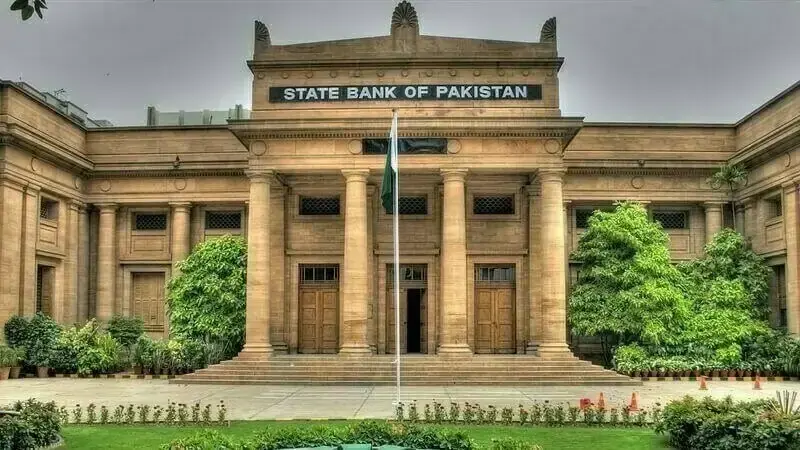
    KARACHI: Following the directives of the federal government, the State Bank of Pakistan (SBP) on Thursday increased the minimum threshold for reporting Currency Transaction Reports (CTR) to the Financial Monitoring Unit (FMU) of SBP to Rs3 million with immediate effect under the Anti-Money Laundering Act, 2010.

    SBP Regulated Entities (REs) are required to file Suspicious Transaction (STR) and Currency Transaction Reports (CTR) with Financial Monitoring Unit under Section 7 of the e Anti-Money Laundering Act 2010.

    The threshold was previously set at Rs2 million in January 2015. It has now been increased by Rs1 million to Rs3 million for reporting CTRs to the FMU.

    READ ALSO: Pakistan reviews AML-CFT framework, approves key regulatory changes

    In a circular letter issued by the SBP, it has informed banks and other relevant institutions about the revised threshold in accordance with the Ministry of Finance notification No. 3(40) AML/2025-P-002-0001 dated November 11, 2026.

    “The CTR threshold has been increased to Rs3 million as the minimum amount for reporting CTR to the FMU with immediate effect,” the SBP said.

    According to the notification issued by the Minister of Finance, the National Executive Committee on Anti-Money Laundering and Combating the Financing of Terrorism (AML/CFT), exercising its powers under Section 2(xi) of the Anti-Money Laundering Act, 2010, has notified Rs3 million as the minimum amount for reporting CTRs to the FMU.

    The notification modifies the Finance Division’s earlier SRO 73(I)/2015 dated January 21, 2015, which prescribed the previous reporting threshold of Rs2 million.

    The SBP has directed the all banks and financial institutions to ensure compliance with the requirements outlined in the latest notification.

    It may be mentioned here that, SBP Regulated Entities shall maintain all necessary records of transactions, both domestic and international, including the results of any analysis undertaken (e.g. inquiries to establish the background and purpose of complex, unusual large transactions) and will also keep and maintain all record related to STRs and CTRs filed by it for a minimum period of ten years from completion of the transaction.

    Copyright Business Recorder, 2026

    Source: brecorder

  • Vulnerable nations: PM for grant-based climate finance

    Vulnerable nations: PM for grant-based climate finance

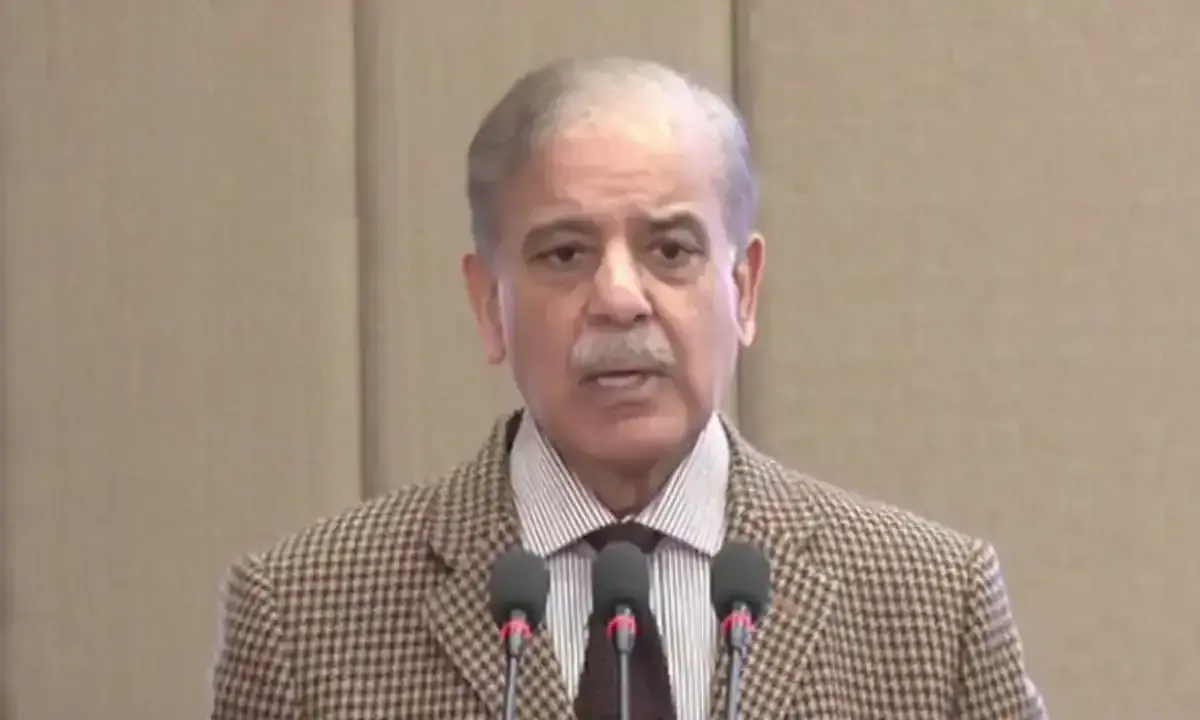
    ANTALYA: Prime Minister Shehbaz Sharif on Thursday called for grant-based climate financing, including public-private partnerships, and a significant increase in resilience and adaptation funds to help climate-vulnerable countries cope with the growing impacts of climate change.

    In his national statement at the Antalya Leaders Summit of the 31st UN Climate Change Conference (COP31), he stressed that vulnerable nations need timely assistance and financial support that did not add to their debt burden.

    The prime minister said resilience and adaptation funds were essentially survival funds, particularly for struggling economies facing increasingly devastating climate disasters.

    READ ALSO: Transitioning towards clean energy: PM outlines country’s roadmap

    Highlighting Pakistan’s experience with climate-induced disasters, the prime minister recalled the devastating floods of 2022, when one-third of the country was submerged, affecting 33 million people, claiming more than 1,700 lives and causing economic losses exceeding USD 30 billion.

    Referring to the August 2025 flash floods in Buner, he shared the heartbreaking story of a young man who was just two days away from his wedding when floodwaters swept through his village, turning a home prepared for celebration into a house of mourning.

    He said the tragedy reflected the plight of millions across Pakistan and the developing world, who had contributed the least to climate change but were bearing its heaviest consequences.

    Recalling his warning at the United Nations four years ago that what happened in Pakistan would not remain confined to the country, the prime minister said the warning had unfortunately become a reality.

    “Climate change knows no borders. No nation can face it alone. Solidarity must mean action,” he said.

    The prime minister expressed gratitude to Türkiye, particularly President Recep Tayyip Erdogan, First Lady Emine Erdogan and the Turkish people, for their support to Pakistan during the devastating floods of 2010 and 2022. He also thanked Türkiye for hosting COP31 and acknowledged Australia’s valuable role as President of Negotiations.

    Highlighting Pakistan’s efforts towards clean energy, he said the country had added more than 20 gigawatts of distributed solar capacity in just two years, while clean sources now accounted for nearly 55 per cent of its energy mix.

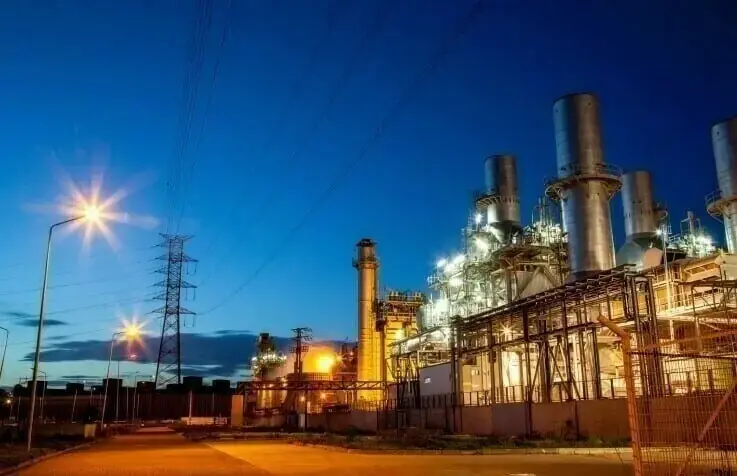
    He also referred to Pakistan’s progress in nuclear energy, saying that on his way to Antalya, he witnessed the dome placement of the Chashma-5 Nuclear Power Plant, which, once commissioned, will add 1,200 megawatts of clean, emission-free electricity.

    He said Pakistan was also advancing electric mobility and had set a target of reducing projected emissions by up to 50 percent by 2035.

    Emphasising the importance of water security, the prime minister declared that water must never be weaponised and stressed that no country should be allowed to endanger the lives and livelihoods of downstream populations. He also called for water-sharing agreements to be honoured in letter and spirit.

    The prime minister urged world leaders to translate their commitments into meaningful action, saying the success of COP31 should be measured not by promises but by the families protected, resources delivered and sustained action taken to safeguard the planet.

    Source: brecorder

  • Power sector: gas output and use of RLNG slump

    Power sector: gas output and use of RLNG slump

    ISLAMABAD: Pakistan’s indigenous natural gas production declined by 8 percent in FY25, while consumption of imported Regasified Liquefied Natural Gas (RLNG) in the power sector plunged by 24 percent as expanding distributed solar generation displaced expensive fuel-based electricity, according to Renewables First’s Pakistan Energy Market Review.

    The report highlights how increasing adoption of rooftop and other distributed solar systems is reshaping Pakistan’s energy consumption patterns, reducing dependence on imported fossil fuels and generating substantial foreign exchange savings, while exposing structural weaknesses in the country’s energy statistics.

    Local natural gas production declined by 8 percent year-on-year in FY25 after a brief period of stability during FY23-FY24, continuing the downward trajectory of indigenous supplies. The decline reflects depletion of mature gas fields and limited exploration activity, which have constrained replacement supplies.

    READ ALSO: RLNG consumption in power sector: Govt constitutes panel to craft operational plan

    Excess RLNG availability during FY25 also resulted in curtailment of domestic gas production, further reducing indigenous output.

    LNG imports declined by 4 percent year-on-year to 8.7 million tonnes of oil equivalent (Mtoe) in FY25, slightly below the five-year average of 9 Mtoe, as rising solar adoption reduced RLNG-fired power generation.

    Lower power sector offtake resulted in surplus contracted LNG volumes, leading to cargo deferrals and diversions to international markets.

    Power sector natural gas demand declined by 17 percent year-on-year as distributed solar reduced grid electricity demand and RLNG-fired power plants remained lower on the economic merit order, limiting their utilisation.

    RLNG consumption in the power sector contracted by 24 percent year-on-year in FY25, reflecting continued growth in distributed solar among residential and industrial consumers.

    The persistent shortage of domestic gas and the government’s objective of diverting surplus LNG towards industries increased RLNG consumption in other sectors by 54 percent year-on-year in FY25.

    RLNG held in gas pipelines increased by 23 percent year-on-year, raising line-pack pressure, curtailing indigenous gas production and contributing to excess cargo diversion.

    Natural gas consumption in the domestic sector declined by 10 percent year-on-year in FY25, reaching its lowest level during the review period amid government interventions, curtailed supplies and higher tariffs.

    Industrial gas consumption, however, increased by 3.6 percent year-on-year, supported by improved industrial activity. Export-oriented industries and cement production were the principal drivers, although annual demand remained the second-highest since FY20.

    According to Renewables First, distributed solar has emerged as a missing component in Pakistan’s official energy statistics, resulting in an incomplete assessment of the country’s energy supply, consumption and economic transformation.

    Official figures show primary energy supply increased by only 1.6 percent in FY25, while reported energy consumption grew by 8 percent. However, these statistics do not account for energy generated through rooftop and other distributed solar systems.

    By incorporating distributed solar into national energy statistics, the analysis presents a more comprehensive picture of Pakistan’s energy landscape, showing that energy supply and consumption have both expanded steadily alongside economic activity.

    The report estimates that distributed solar has helped Pakistan avoid approximately $15 billion in fossil fuel imports by FY26, substantially reducing pressure on foreign exchange reserves.

    Imported fossil fuels accounted for approximately 34 Mtoe, or 41 percent of Pakistan’s primary energy supply in FY25, compared with 37 percent in FY24. This growing dependence is exposing the economy to international price volatility and supply disruptions.

    Between FY20 and FY26, a substantial portion of Pakistan’s energy import expenditure went towards fuels that are less efficient, both economically and physically, than renewable technologies available for substitution.

    Solar panels and inverters are increasingly replacing imported RLNG and coal used for power generation, converting a one-time equipment import into long-term savings through reduced fuel requirements.

    The report estimates that solar capacity and inverters imported at a cost of $8.9 billion up to FY26 have helped Pakistan avoid nearly $14.7 billion in fossil fuel imports.

    A further investment of $4.57 billion in future inverter replacements is projected to avoid an additional $109 billion in fossil fuel imports between FY27 and FY50.

    This brings cumulative savings to approximately $124 billion over FY17-FY50, equivalent to $9.23 in avoided fossil fuel imports for every dollar invested, even without assuming inflation or increases in RLNG and coal import prices.

    The report estimates that every dollar Pakistan spends on importing solar panels and inverters saves approximately nine dollars in fossil fuel imports over the equipment’s lifetime. Solar panels and inverters displace imported RLNG and coal that would otherwise be consumed for power generation, transforming a one-time equipment import into sustained reductions in the country’s fuel import bill.

    Oil supplies increased by 15 percent year-on-year in FY25, accounting for 24 percent of total primary energy supply, largely driven by transportation requirements.

    Domestic crude oil production declined by 12 percent year-on-year, despite a 10.5 percent increase in annual crude supplies. The persistent decline reflects depletion of mature fields, weak reserve replacement and limited upstream investment.

    Crude oil imports increased by 20 percent year-on-year in FY25 to meet refinery requirements as domestic production declined. Imported crude now accounts for 77 percent of local refinery requirements, making refinery operations increasingly dependent on external supplies.

    Petroleum consumption in the power sector plunged by 77 percent year-on-year in FY25, reflecting the continued transition away from expensive oil-fired generation through plant retirements and greater reliance on distributed solar.

    Meanwhile, industrial oil demand increased by 3.2 percent year-on-year to 1.14 Mtoe in FY25, reflecting stronger manufacturing activity and higher industrial fuel requirements.

    Indigenous coal production declined by 3 percent year-on-year in FY25, marking its first annual reduction since FY15. Consequently, its share of national coal supply fell by six percentage points.

    The decline reflects operational constraints and lower output from mature coalfields, slowing the growth of domestic coal supplies.

    Coal imports increased from 3.6 Mtoe in FY24 to 4.6 Mtoe in FY25 to meet rising demand from power generation, brick kilns and other industrial consumers.

    However, expanding Thar lignite production and government plans to shift existing coal-fired power plants towards domestic coal could limit future import growth, keeping volumes below previous peaks.

    Coal consumption in the power sector remained unchanged overall, although it declined by 9 percent year-on-year in FY25, reflecting changes in plant dispatch and utilisation.

    Growing reliance on domestic lignite for power generation is expected to sustain the fuel’s role in Pakistan’s energy mix in coming years.

    The report identifies the domestic sector as the leading segment in distributed solar adoption, with an electrification rate of 48 percent. Nearly half of its annual energy demand continues to rely on natural gas, indicating considerable scope for further electrification.

    Industrial electrification increased from 20 percent to 25 percent between FY23 and FY25, driven by growing solar adoption among industrial consumers.

    Agriculture’s reliance on grid electricity declined for the third consecutive year as rising electricity tariffs accelerated solar electrification, which increased by 80 percent year-on-year in FY25.

    However, official statistics classify agricultural high-speed diesel (HSD) consumption under transportation, leaving diesel displacement from solarised tubewells unaccounted for in reported electrification rates.

    The transportation sector remains the largest consumer of oil products and the least electrified segment of the economy, highlighting the need for accelerated electrification to reduce dependence on imported petroleum products.

    Copyright Business Recorder, 2026

    Source: brecorder
  • 11 killed, 2 injured as passenger van plunges into river in GB’s Ghizer: police

    11 killed, 2 injured as passenger van plunges into river in GB’s Ghizer: police

    GILGIT: Eleven people were killed and two injured when a passenger vehicle plunged into a river in Gilgit-Baltistan’s Ghizer district on Thursday.

    According to local police, a passenger van was en route to Ghizer’s Yasin Valley from Gilgit on Thursday evening when the driver lost control near Morkah Bridge, causing the van to plunge into the Yasin river.

    Police initially said rescue teams retrieved the bodies of 10 passengers, including two women. They also rescued three injured passengers, including a child, who were taken to the Gupis Civil Hospital for treatment.

    In an update, police said the death toll had risen to 11, including an infant, while two were injured.

    Police said the deceased and injured were residents of Yasin Valley, adding that an investigation was under way to identify the cause of the incident.

    GB Chief Minister Amjad Hussain expressed deep grief and sorrow over the loss of lives in the accident.

    He directed the district administration, rescue agencies, and relevant health department officials to ensure the injured were immediately transported to nearby hospitals and to utilise all available resources to provide the best possible medical facilities.

    He also instructed the administration to ensure that no negligence occurred during rescue operations, and that the medical treatment and care of the injured were carefully monitored.

    Expressing heartfelt condolences and sympathies to the bereaved families, Hussain said the loss of human lives in the tragic accident was “deeply distressing”.

    He prayed for eternal peace for the deceased and strength to their families to bear the loss, while hoping for the speedy recovery of the injured.

    Three people were killed and 13 others injured in a collision between a coach and a motorcycle in Khyber Pakhtunkhwa’s Dera Ismail Khan on Wednesday, according to Rescue 1122.

    Last week, eight people were killed and 30 others injured when a passenger bus travelling from Gilgit to Islamabad collided with a dumper truck near the Havelian Interchange on the Hazara Motorway.

    The day before, a collision between a passenger bus and a truck claimed the lives of 11 people and left 33 others injured near Punjab’s Pakpattan.

    11 killed, 2 injured as passenger van plunges into river in GB's Ghizer: police

    Source: dawn

  • 3 terrorists killed, 2 civilians dead as attack on Mastung post repelled: state media

    3 terrorists killed, 2 civilians dead as attack on Mastung post repelled: state media

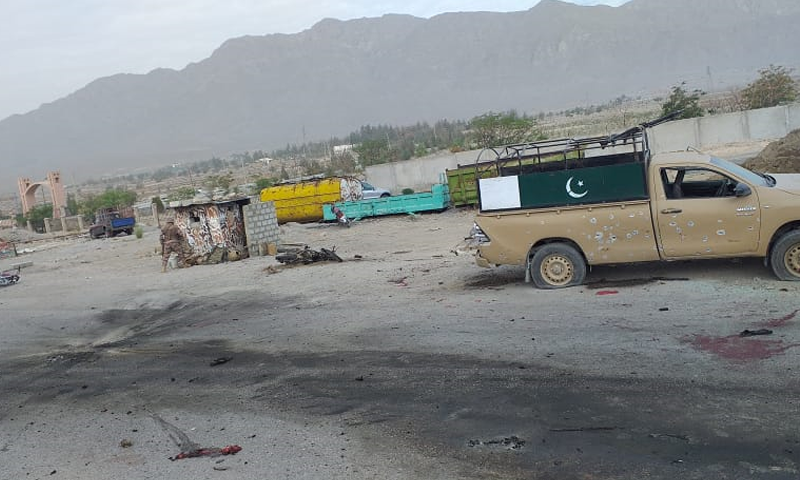
    Security forces killed three terrorists on the N-25 highway in Balochistan’s Mastung district while repelling an attack on Kandawa Post, state broadcaster Radio Pakistan reported on Thursday, citing police.

    According to a spokesperson for Balochistan Police, terrorists belonging to Fitna al Hindustan attempted a “cowardly attack at Kandawa Post on National Highway N-25 using an explosives-laden vehicle”.

    The state has designated Balochistan-based terrorist groups as Fitna al-Hindustan to highlight India’s alleged role in terrorism and destabilisation across Pakistan.

    Security forces repulsed the attack through timely and effective action, the police statement said.

    However, two civilians lost their lives in the incident, while at least 13 others were injured, according to a list of names in the police statement.

    Three Frontier Corps personnel were also injured in the incident, the statement added. “The explosion caused damage to nearby houses and a mosque.”

    In the ensuing retaliatory operation, three terrorists were killed, the police said.

    The injured people were taken to medical centres for treatment.

    “The attack demonstrates that these terrorists have no connection with the people of Balochistan,” the police stressed.

    “Operations against elements seeking to undermine peace, development, and prosperity in Balochistan will continue, and the protection of the lives and property of the people will be ensured under all circumstances,” it affirmed.

    Balochistan has witnessed an increase in terrorist activities in recent years, prompting security forces to intensify counter-terrorism operations.

    Earlier this month, a soldier was martyred and 17 terrorists were killed in two intelligence-based operations (IBOs) in Balochistan’s Kachhi and Kharan districts, Inter-Services Public Relations (ISPR) said.

    In early October, security forces killed five terrorists belonging to Fitna al-Hindustan in Mastung, Pakistan TV reported.

    Pakistan witnessed a significant improvement in several key security indicators during October, with terrorist attacks declining by 37 per cent compared with September, according to the Pakistan Institute for Conflict and Security Studies (PICSS).

    Balochistan recorded one of the most significant improvements, with terrorist attacks declining by 46pc, from 132 in September to 71 in October.

    Source: dawn

  • The economics of ‘log kya kaheinge’

    The economics of ‘log kya kaheinge’

    In Pakistan, few questions carry as much economic weight as four seemingly harmless words: ‘log kya kaheinge’ (what will people say).

    It is usually treated as a cultural cliché, something parents say when a daughter wants to marry differently, a family considers a modest wedding, or someone chooses a career that does not fit conventional expectations. However, behind the phrase lies an economic force that is rarely examined: the pressure to spend, earn, own, and live in ways that signal social standing.

    In other words, log kya kaheinge? can influence not just what Pakistanis think, but what they buy.

    Consider the wedding. A family may know that spending several million rupees on a wedding is financially imprudent. Yet reducing the number of functions, inviting fewer guests or choosing a simpler venue can feel socially costly. The economic calculation is no longer simply “Can we afford this?” It becomes “What will people think if we do not?”

    This is where consumption becomes a form of social signalling. A wedding is not only a celebration; it can become a public display of status. The venue, décor, clothes, jewellery, photography, guest list, and number of events all communicate something about the family. The same logic applies to cars, homes, schools, holidays, and even restaurants.

    Economists have long recognised that consumption can serve purposes beyond satisfying basic needs. People consume partly to signal wealth, taste or social position. In Pakistan, the pressure can be particularly visible because communities are often closely connected and social comparisons are difficult to escape. Relatives, neighbours, colleagues, and social media provide an almost continuous audience.

    The result is a curious contradiction. A household may be financially constrained while simultaneously feeling compelled to maintain an appearance of financial comfort.

    The same phenomenon can influence career decisions. A young person may choose medicine, engineering, law or another traditionally prestigious profession despite having different interests, because certain careers carry greater social approval. Conversely, someone may hesitate to pursue a less conventional but potentially rewarding path because explaining it to relatives feels harder than following the expected route.

    There is an economic cost to such decisions.

    When people allocate money towards status rather than utility, the opportunity cost can be substantial. Money spent on an elaborate wedding cannot simultaneously be invested, used to purchase a home, fund further education or provide financial security. A larger house in a prestigious neighbourhood may come with years of additional debt. An expensive car may consume income that could otherwise build savings.

    This does not mean that every expensive purchase is irrational. People derive genuine pleasure from celebrations, beautiful homes, good clothes and comfortable cars. The economic problem emerges when the primary motivation is not what the household actually values, but the anticipated judgement of others.

    Social media has amplified this pressure. Previously, comparison might have been limited to one’s neighbourhood or extended family. Today, people are exposed to carefully curated versions of hundreds of other people’s lives. Weddings become productions for Instagram; holidays become visual evidence of success; homes and wardrobes become content.

    The consequence is what might be called aspirational inflation: as visible standards rise, ordinary consumption can begin to feel inadequate.

    Yet, there is another side to the economics of log kya kaheinge? Social expectations can also constrain consumption. Families may avoid spending on things they genuinely value because those choices are considered unconventional. People may remain in unsuitable careers or relationships because leaving would invite criticism. These decisions have economic consequences too, because they affect labour-market participation, mobility and the allocation of human capital.

    The phrase, therefore, operates at two levels. It can encourage people to spend more than they otherwise would, while simultaneously discouraging them from making choices that might improve their long-term economic wellbeing.

    The solution is not to declare status-conscious consumption irrational or to suggest that social expectations can simply be ignored. Humans are social beings, and reputation has real value. The more useful question is whether the price of maintaining that reputation is worth paying.

    For households, that may mean asking a deceptively simple question before making a major financial decision: If nobody else were going to see this, would we still choose it?

    If the answer is no, the expenditure deserves a second look.

    Pakistan’s financial pressures are often discussed in terms of inflation, interest rates, exchange rates, taxes and declining purchasing power. These are undeniably important. However, household economics is also shaped by something far less measurable: the desire to keep up with everyone else.

    Perhaps log kya kaheinge? should therefore be understood not merely as a question of social approval, but as a line item in the invisible household budget. And sometimes, it may be the most expensive one.


    The article does not necessarily reflect the opinion of Business Recorder or its owners.

    Source: brecorder

  • Govt cuts petrol price by Rs3, diesel by Rs4 per litre

    Govt cuts petrol price by Rs3, diesel by Rs4 per litre

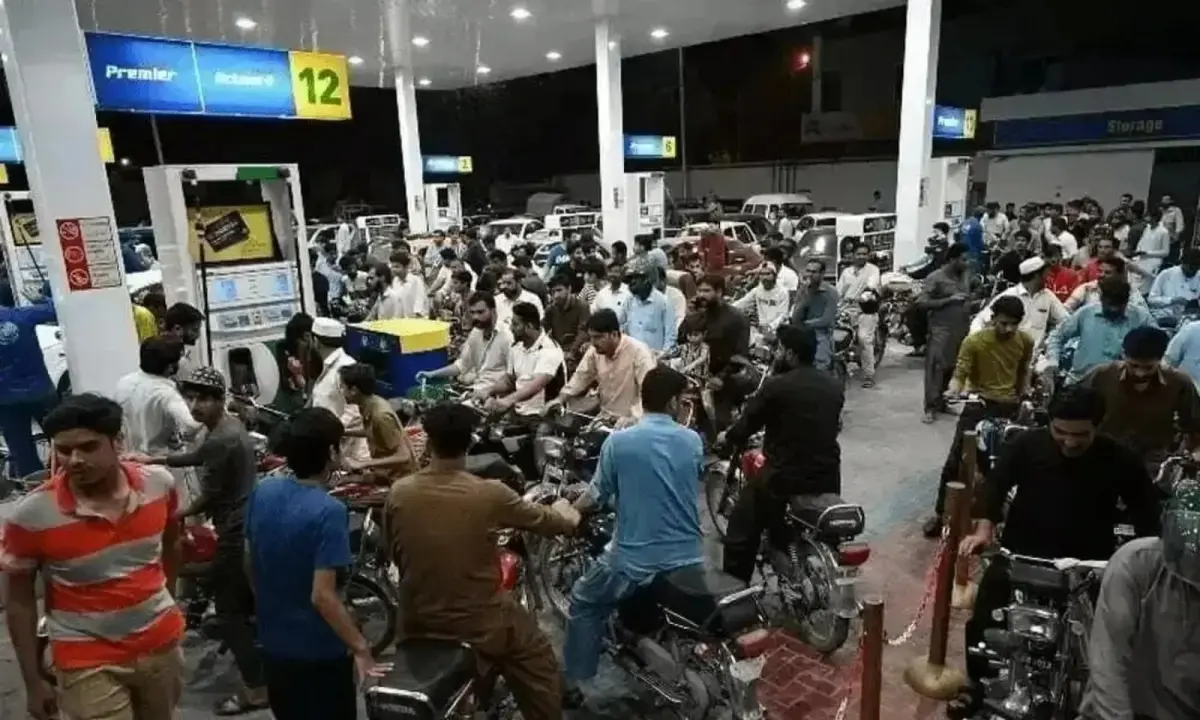
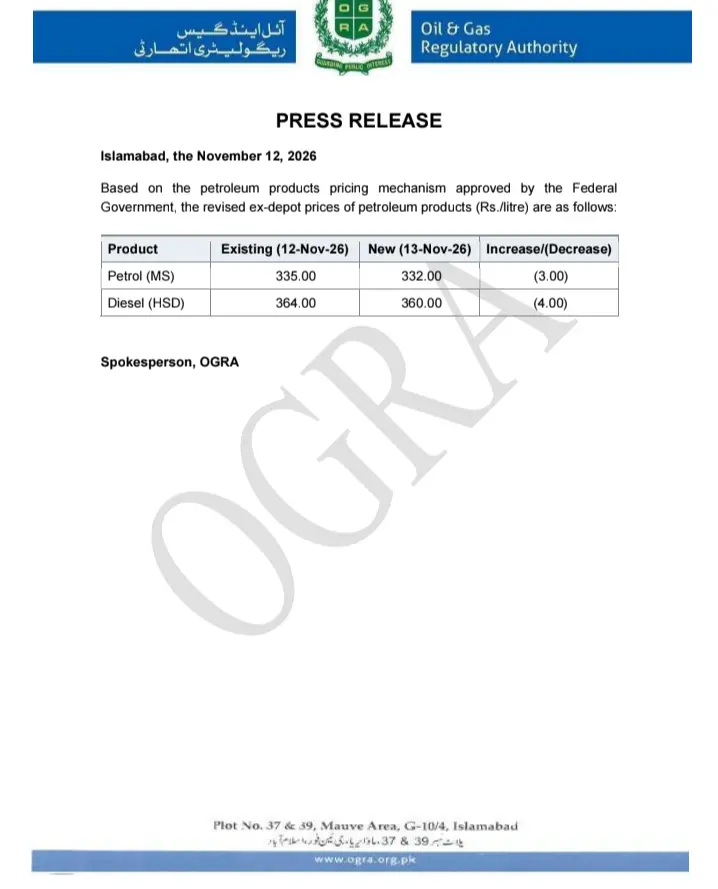
    Pakistan government on Thursday reduced the price of petrol by Rs3 to Rs332 per litre, and the price of high-speed diesel (HSD) by Rs4 to Rs360 per litre, effective Friday, November 13, 2026.

    In its press release, the Oil and Gas Regulatory Authority (OGRA) said the prices were worked out under the petroleum products pricing mechanism approved by the federal government.

    Govt cuts petrol price by Rs3, diesel by Rs4 per litre

    The new prices are effective for Friday, November 13.

    On Wednesday, the government reduced the price of petrol by Rs3 to Rs335 per litre and the price of HSD by Rs7 to Rs364 per litre.

    Globally, oil prices edged higher on Thursday after earlier losses, as persistent geopolitical tensions in the Middle East and Russia offset pressure from rising crude output.

    Brent futures were up 65 cents at $93.40 a barrel at 1425 GMT. US West Texas Intermediate crude was up 1 cent to $86.54; both contracts fell more than $1 per barrel in early Asian trading. They were also headed for a weekly fall.

    Source: brecorder

  • Who is Nvidia interim CEO Colette Kress?

    Who is Nvidia interim CEO Colette Kress?

    Nvidia finance chief Colette Kress is set to take over as interim CEO from Jensen Huang, the company said on Thursday, putting her in charge of the chipmaker whose processors power the world’s most advanced supercomputers and AI data centers.

    The appointment comes after the board ousted co-founder and CEO Jensen Huang amid reports of two extramarital affairs, one with a woman alleged to be a Chinese spy.

    Here are five facts about Kress:

    CFO since 2013

    Kress joined Nvidia in September 2013 as executive vice president and chief financial officer and has held the post since. She has appeared alongside Jensen Huang on the company’s quarterly earnings calls.

    Nvidia’s revenue was $4.13 billion in the fiscal year she joined and $215.9 billion in fiscal 2026.

    Career before Nvidia

    Before Nvidia, Kress spent eight years in finance roles at Texas Instruments, then worked at Microsoft from 1997 to 2010. At Microsoft, she became chief financial officer of the Server and Tools division in 2006, with responsibility for its financial strategy, planning and reporting.

    Also read: Nvidia CEO Jensen Huang resigns in big blow to AI boom

    She moved to Cisco in 2010 as senior vice president and chief financial officer of its Business Technology and Operations Finance organization, where she was responsible for financial strategy and business development. She left for Nvidia in 2013.

    Education and experience

    Kress holds a bachelor of science degree in finance from the University of Arizona and a master of business administration degree from Southern Methodist University, according to Nvidia’s annual report filed with the US Securities and Exchange Commission.

    She joined Nvidia after nearly 25 years in finance roles at major technology companies, Fortune reported in 2024. She told Fortune Nvidia was the smallest company she had worked for when she started there in 2013.

    Contract terms

    Executive officers at Nvidia are employed at will and have no individual employment, severance or change-in-control agreements, according to the company’s proxy statement. Nvidia has said in earlier filings that many of its peer companies offer such agreements.

    Regulatory filings show Kress’ pay includes restricted stock units, including a March 2026 award that vests over four years.

    Wealth

    Forbes ranks Kress No. 32 on its 2026 list of America’s richest self-made women. Her shares in the chip firm were valued at roughly $750 million, as of Wednesday’s close, down from more than $1 billion at the stock’s peak last month.

    Source: brecorder

  • High-speed diesel price dips by Rs4 per litre, petrol by Rs3

    High-speed diesel price dips by Rs4 per litre, petrol by Rs3

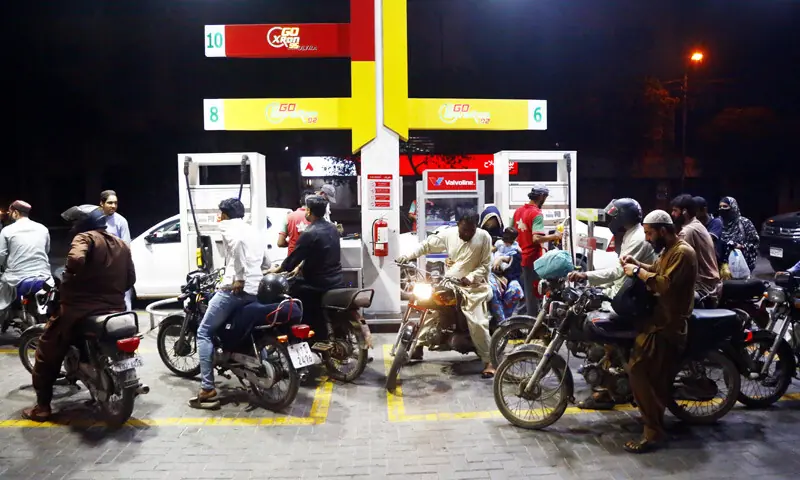
    The government on Thursday reduced the price of petrol by Rs3 per litre and that of high-speed diesel (HSD) by Rs4, marking the eighth consecutive decrease.

    Following the revision, petrol will retail at Rs332 per litre, while HSD will cost Rs360 on Nov 13 (Friday), according to a notification by the Oil and Gas Regulatory Authority (Ogra).

    The government continues to levy Rs114 per litre in taxes and duties on petrol and Rs100 per litre on diesel.

    Under an arrangement announced on Nov 2, for 30 days, oil refineries will contribute to the petroleum levy by bearing a cumulative impact of Rs15 billion, according to the government. This allows a Rs14.71 reduction in the petrol price at the consumer end.

    On Sept 17, the government rolled out the Prime Minister’s Fuel Relief Scheme across the country to ease the public’s burden amid rising fuel prices due to the Middle East situation.

    The subsidy scheme applies to owners of motorcycles, rickshaws and vehicles of up to 800cc.

    Oil prices edged higher on Thursday after earlier losses, as persistent geopolitical tensions in the Middle East and Russia offset pressure from rising crude output.

    Brent futures were up 65 cents at $93.40 a barrel at 7:25pm PKT. US West Texas Intermediate crude was up 1 cent to $86.54; both contracts fell more than $1 per barrel in early Asian trading. They were also headed for a weekly fall.

    Rise in fuel prices

    The price of HSD has come down from a peak of Rs520.35 recorded on April 3. Its price had started rising from Rs281 per litre after the US-Iran war broke out on Feb 28.

    The petrol price had peaked at Rs458.41 on April 3 after beginning its upward trajectory from Rs266 in the first week of March.

    Meanwhile, the government has reintroduced a raft of austerity measures in response to rising fuel prices amid the ongoing Middle East conflict. Under these measures, markets are required to close by 9pm, and fuel allocations for official vehicles have been cut by 50pc for three months.

    Since July 17, the government has been revising fuel prices on a near-daily basis due to fluctuations in international market prices following renewed hostilities between Iran and the US.

    The petroleum minister stated that the cabinet and the prime minister had decided to give Ogra the responsibility of deciding fuel prices on a daily basis based on international market trends.

    Prior to this, the government had been announcing weekly revisions to fuel prices since early March, alongside measures for the conservation of fuel amid possible oil supply disruptions due to the conflict. The federal government had also announced targeted relief measures in April to provide subsidised fuel.

    Petrol is mainly used in private transport, small vehicles, rickshaws and two-wheelers, and changes in its price affect the middle and lower-middle classes.

    Similarly, changes in diesel prices also impact the public at large, as it is mainly used in the heavy transport sector, power plants and large generators.

    Petrol and HSD are the major revenue earners, with monthly sales of about 700,000 to 800,000 tonnes, compared to just 10,000 tonnes of monthly demand for kerosene.


    Additional input from AFP

    Source: dawn

  • Naqvi says referendum best way to decide on new provinces

    Naqvi says referendum best way to decide on new provinces

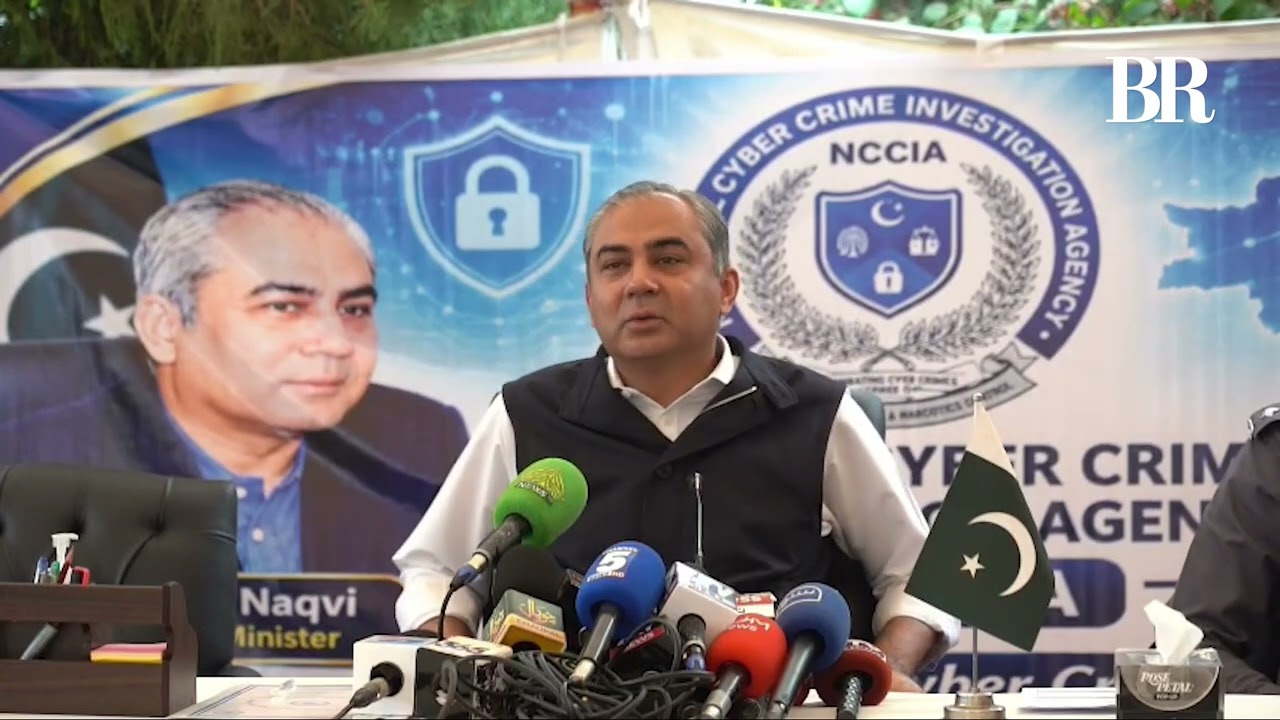
    Interior Minister Mohsin Naqvi has proposed holding a referendum to seek public opinion on the creation of new provinces, saying all political parties have the right to express their views on the matter.

    Addressing a press conference at the National Cyber Crime Investigation Agency (NCCIA) Lahore office, the minister said the proposal should not be pursued if people opposed the creation of new provinces. However, if they supported it, new provinces should be established accordingly, he added.

    “The best solution is to seek the people’s opinion through a referendum,” Naqvi said.

    The debate over creating new provinces in Pakistan has resurfaced amid calls for administrative restructuring, decentralisation of power and improved governance.

    The issue gained renewed momentum in July 2026 after Naqvi called for the creation of additional administrative units, arguing that structural reforms were needed to address governance challenges.

    Responding to a question about the political situation, he said all political parties, including the Pakistan Tehreek-e-Insaf (PTI), were entitled to their legal rights, and any relief granted by courts would be available to them.

    The minister said various rumours had been circulating over the past couple of days about possible political developments, but there had been no extraordinary change in the situation.

    Speaking about corruption, the minister said it existed across the country and must be acknowledged and addressed through evidence-based action. He said the government was also taking action against corruption within public sector institutions, disclosing that the NCCIA had arrested a Grade-17 government officer, while five major cases involving public sector institutions were under investigation.

    Responding to a question about inappropriate content being circulated by social media bloggers, he urged people to avoid promoting such material and said action would be taken in accordance with the law.

    Rejecting reports of differences among coalition partners, Mohsin Naqvi said the Pakistan Peoples Party, Pakistan Muslim League-Nawaz, and other allied parties were important partners in the government.

    All major decisions would be taken through consensus, and efforts would be made to prevent differences being portrayed as divisions within the coalition, he added.

    Meanwhile, the minister announced that the facility to lodge cybercrime complaints through NADRA’s Pak ID platform would be launched soon. The initiative would ensure that every complaint was digitally recorded, enabling authorities to track its progress and monitor the action taken, he added.

    He said a meeting with the prime minister was scheduled for next week to brief him on the NCCIA’s resources and requirements. Highlighting the shortage of staff, he said the agency had only 61 personnel, ranging from drivers and constables to the Director Punjab, for a population of 140 million.

    Naqvi disclosed that the NCCIA had uncovered a major gang involved in facilitating approximately 5,000 Pakistanis to pass examinations of international educational institutions through fraudulent means.

    He said action would be taken against the network as well as the 5,000 Pakistanis who had obtained undue benefits through the scheme. He termed it a major scam whose timely detection had prevented potential damage to Pakistan’s interests.

    The minister further said the National Centre for Missing and Child Abuse had arrested 15 individuals during the previous month for their alleged involvement in child exploitation and the distribution of pornographic content in Punjab, particularly Lahore. The suspects were reportedly connected with various international websites.

    He added that several other cases, including an FBI-related case, a call centre case and a child exploitation case, had also been resolved.

    Source: brecorder