The CSE All-Share index settled 0.6% lower at 22,024.18 points.
Hatton National Bank and Richard Pieris were among the biggest drags on the index, losing 1.9% and 6.2%, respectively.
Trading volume jumped to 100.7 million shares from 87.1 million shares in the previous session.
The equity market’s turnover rose to 3.23 billion Sri Lankan rupees ($9.71 million) from 2.98 billion rupees in the previous session, according to exchange data.
Foreign investors were net buyers, purchasing stocks worth 56.7 million rupees, while domestic investors were net sellers, offloading shares worth 3.21 billion rupees, the data showed.
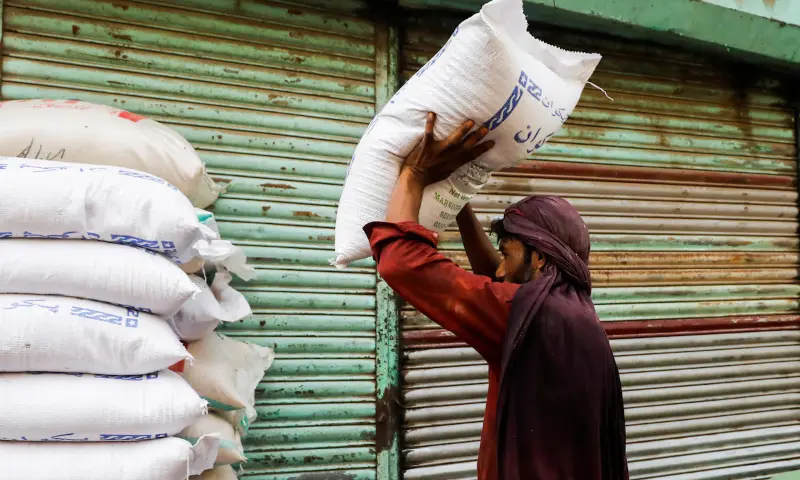
ISLAMABAD: Short-term inflation rose to 11.21 per cent year-on-year in the week ending on Nov 12, driven largely by perishable food products, according to official data released by the Pakistan Bureau of Statistics (PBS) on Friday.
The index, comprising 51 items, whose prices are collected from 50 markets in 17 cities, is calculated weekly to track changes in the prices of essential commodities and services.
The data showed that of the 51 essential items monitored during the week, the prices of 19 commodities (37.25pc) increased, while those of 9 items (17.65pc) declined. Meanwhile, the prices of 23 items (45.10pc) remained unchanged from the previous week.
Short-term inflation has remained in the double digits for several consecutive weeks, largely on the back of persistent increases in petroleum and diesel prices. However, the oil prices have been slowly declining for the past three consecutive days.
The impact of this decline will be visible in the next review. However, the unprecedented increase in the LPG price caused short-term inflation to rise.
The Sensitive Price Index (SPI), which tracks short-term inflation, slightly declined by 0.46pc week-on-week, reflecting price fluctuations in both food and non-food items.
The surge in energy costs is not only fuelling inflationary pressures, but also indirectly boosting sales tax collections through higher prices of goods and services.
This is an example of cost-push inflation, in which rising energy costs lead to increases in food prices. As a result, households are facing mounting pressure from higher consumer prices.
The items that recorded the highest price increases over the previous week included tomatoes (12.06pc), eggs (5.98pc), potatoes (2.42pc), garlic (1.76pc), chicken (1.32pc), firewood (1.10pc), wheat flour (0.94pc), pulse masoor (0.64pc), beef (0.47pc), and LPG (0.30pc).
The items that recorded week-on-week price declines included petrol (7.42pc), diesel (6.10pc), onions (1.70pc), bananas (1.03pc), gur (0.59pc), sugar (0.43pc), powdered milk (0.36pc), pulse moong (0.32pc) and pulse gram (0.08pc).
On an annual basis, the items that recorded the highest price increases included LPG (111.35pc), tomatoes (78.94pc), electricity for Q1 (52.38pc), wheat flour (36.14pc), diesel (30.77pc), petrol (26.23pc), onions (19.67pc), chilies powder (15.55pc), mutton (14.67pc), bread plain (12.35pc), beef (11.30pc) and chicken (10.98pc).
In contrast, potato prices fell by 36.41pc, followed by sugar (24.54pc), eggs (23.29pc), salt powder (12.51pc), pulse masoor (7.21pc), pulse moong (6.83pc), gur (6.63pc) and bananas (3.35pc).
Last week, short-term inflation rose to 12.31pc year-on-year driven largely by LPG and perishable food products.
Microsoft’s Outlook, Teams and Copilot were still down on Friday as one of the company’s worst outages stretched beyond 12 hours, disrupting communications for businesses and governments worldwide.
Microsoft blamed server problems for the outage and said it was not aware of any malicious activity. It said in its latest update on Friday that it was seeing signs of stabilization after implementing fixes more broadly to attain a persistent recovery of services.
The disruption hit government agencies in Australia, Japan, and the United States, and caused disruptions at trading firms, delays to companies publishing their results and airlines warning customers of delayed communication.
Trades had to be confirmed by fax
In Europe, stock exchange operator Euronext said its listing teams were experiencing email communication issues, while Britain’s insurer Aviva said it was putting backup plans in place for its earnings calls. Danish shipping company Maersk warned customers of delays to emails and updates.
US AI companies OpenAI and Anthropic said they had faced issues with Microsoft connectors, while Indian airlines IndiGo, Akasa Air and Air India said their email support services were impacted.
The outage also disrupted fund management at Taiwanese securities firms, life insurers, and investment trust companies. One of the companies went as far as cancelling a bond repurchase transaction, a source familiar with the situation told Reuters.
Another Taiwanese financial company resorted to using fax to confirm trades, a second source said.
In the US, electric truck maker Workhorse Group rescheduled its results on Thursday to November 16, while Switzerland’s Richemont briefly delayed its first half results announcement on Friday.
Disruptions could hurt Microsoft over time
It is the second disruption to hit Microsoft’s 365 services this year.
Josh Gilbert, a market analyst at trading platform eToro, said investors would likely deal with the outage for now because few customers can walk away from the Microsoft ecosystem overnight.
“The bigger worry is that this isn’t the first 365 outage this year, and if reliability starts to look like a recurring problem, it hands every IT department a reason to think twice before putting even more of their business in one provider’s hands,” he said.
Microsoft faced an outage with its 365 services in January this year and also in October last year. Last month, it reported an outage of its Azure cloud platform that impacted its suite of productivity software, and a range of industries worldwide.
Impact on email systems
Australian Cyber Security Minister Tony Burke said that Microsoft believed it was not dealing with a cyberattack.
“The impact that they are dealing with … is very much on email systems,” the minister added.
Australia’s spy agency and federal police were among organizations caught up in the outage on Friday.
The US House of Representatives said the outage impacted its users and its engineers were working with Microsoft, while Japanese Deputy Chief Cabinet Secretary Masanao Ozaki told reporters that the outage was affecting the government’s information system infrastructure.
In a service health notice, Microsoft said features of Microsoft 365 services that depended on Exchange Online and email were affected, while elements that did not rely on Exchange Online remained functional. Exchange Online is the company’s cloud-based messaging platform that delivers email, calendar, contacts, and tasks.
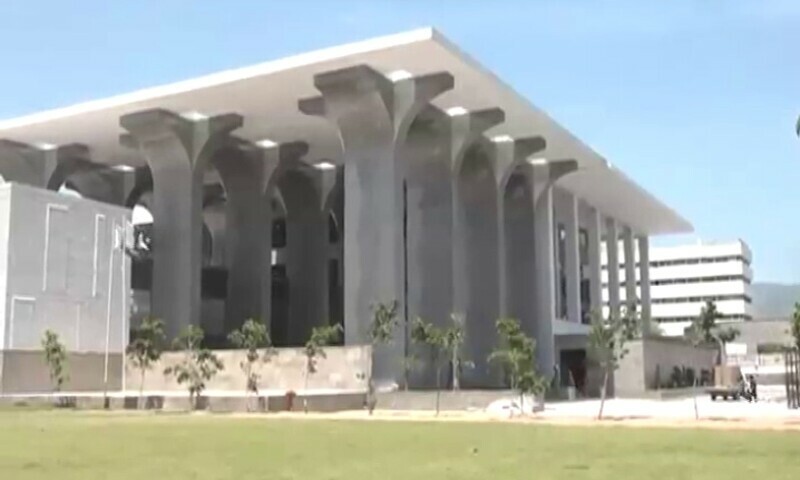
ISLAMABAD: The Islamabad High Court (IHC) on Friday suspended the upcoming local government elections in the federal capital, putting the Election Commission of Pakistan’s (ECP) latest election schedule on hold until the next hearing.
He argued that the polls, scheduled for Dec 20, could not be held until the legal status of the existing constituency delimitation was conclusively determined.
A single-member bench comprising Justice Umair Majeed Malik granted the interim relief while hearing the writ petition on Friday.
“Operation of the impugned order dated Oct 21, 2026, and the impugned election schedule dated Oct 21, 2026, as revised by the Election Commission, shall remain suspended until the next date of hearing,” the court order read.
The court also issued notices to the respondents, directing them to submit their reports and para-wise comments before the next hearing, scheduled for Nov 26, 2026.
Advocate Barrister Qazi Adil Aziz appeared for the petitioner, along with Malik Talha and Muhammad Yaseen Iqbal.
They argued that under Articles 140-A(2), 218(3) and 219(d) of the Constitution, the ECP was “duty-bound to hold local government elections honestly, justly, fairly and in accordance with the law”.
The counsel contended that the election programme had become legally compromised due to legislative changes between the original Islamabad Capital Territory Local Government Act, 2015 (LG Act 2015), and the subsequent Islamabad Capital Territory Local Government Ordinance, 2026 (LG Ordinance 2026).
According to the petition, the LG Act 2015 provided for one Metropolitan Corporation and 125 Union Councils, each divided into nine wards. The delimitation process for this structure began in December 2024, and an election programme was issued on Dec 26, 2025, but was subsequently withdrawn.
Meanwhile, the LG Ordinance 2026 altered the capital’s local government structure by introducing three Town Corporations, changing the process for constituting and delimiting Union Councils, removing the nine-ward structure and providing for delimitation on the basis of census blocks. Consequently, the number of Union Councils increased from 125 to 130.
The counsel submitted that the ECP subsequently issued revised delimitation timelines on Aug 25, 2026, and completed the process with the publication of the final list of 130 Union Councils on Oct 14, 2026.
However, after a single 120-day extension, the LG Ordinance 2026 ceased to have effect under Article 89 of the Constitution, resulting in the revival of the original LG Act 2015. At this point, the counsel argued, the ECP suddenly issued the impugned order and election schedule to conduct polls under the original LG Act 2015.
The petitioner’s counsel contended that the impugned order did not address the delimitation of the 125 Union Councils, their nine wards or the Metropolitan Corporation under the revived law. They argued that the delimitation carried out under the amended law could not serve as the basis for elections under the revived LG Act 2015.
They therefore maintained that fresh delimitation and preparation of electoral rolls in accordance with the LG Act 2015 and the Elections Act, 2017, were necessary before the elections could lawfully be held.
The counsel further argued that holding elections without completing the required delimitation would violate Article 218(3) of the Constitution and the electoral framework under the LG Act 2015 and the Elections Act, besides resulting in unnecessary expenditure of public funds.
After hearing the initial arguments, the court observed that the points raised required consideration and suspended the operation of the ECP’s order and election schedule until the next hearing, scheduled for Nov 26.
On Thursday, Chief Election Commissioner CEC Sikandar Sultan Raja accused the federal government of trying to sabotage the local government elections in Islamabad.
The local government elections in Islamabad have faced numerous delays and postponements since the term of the last local government expired in February 2021.
The ECP has issued multiple schedules, only to cancel them later for various reasons, including legislative changes and court orders.
The delimitation of constituencies and union councils was carried out six times, while the election schedule was issued four times.
The ECP had decided that, since the local government law enacted in 2015 was still in force, elections would be held under the Act. This meant polls would be held in 50 constituencies, after which the mayor and deputy mayors would be elected.
After the completion of various stages of the electoral process, it had decided that polling would be held on Dec 20. The ECP had reserved four days, from December 21 to 24, for the consolidation of results.
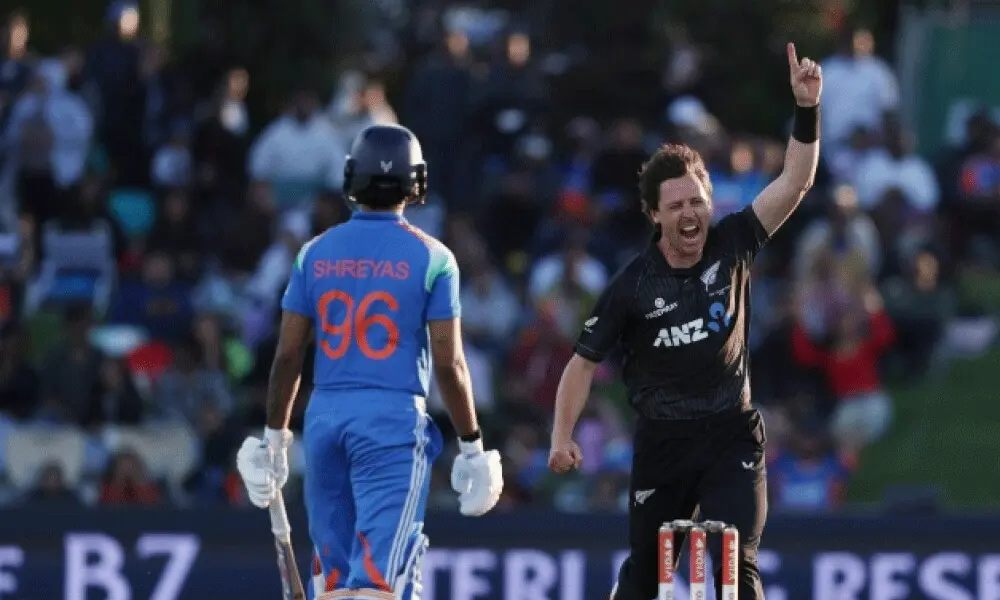
MOUNT MAUNGANUI: Matt Henry produced a scintillating opening over to remove Rohit Sharma, Virat Kohli and Shreyas Iyer all without scoring as New Zealand thrashed a ragged India by 244 runs in the fourth ODI at Mount Maunganui on Friday.
The fast bowler took a career-best 6-27 and Will Young struck a century as the hosts pulled the series back to 2-1 down with a game to play this Sunday.
Henry tore India’s much-vaunted top order apart with the visitors, needing a massive 334 for victory, rolled for just 89.
New Zealand made 333 all out in the last over after being asked to bat, Young punishing two simple drops by Indian fielders to bring up his fifth ODI hundred.
India never stood a chance of chasing the total after Henry’s heavenly opening over.
Rohit edged his first ball to slip, Kohli was bowled facing his fourth ball, and then Iyer was pegged on his back leg to fall lbw.
India’s rebuild never happened, Ishan Kishan top-scoring with just 27.
“It’s quite funny isn’t it, the wind was quite strong so it was about keeping things simple,” Henry said of his incredible spell.
“A bit of luck as well. It was about trying to hit the strings, be as simple as possible, and when it moves sharply like that in the first over it’s pretty tough.”
Henry was returning to the Black Caps after a head clash with Devon Conway in training last week which concussed the batter and kept Henry out of the first three games.
“It wasn’t ideal,” Henry said of the head clash, “But thankfully we’re doing alright now.”
New Zealand’s imposing total came off the back of Young’s 125 from 108 balls, including 14 fours and four sixes.
Young and Tim Seifert combined for an 85-run opening partnership.
While Young rode his early luck – dropped twice in two balls when on five in the second over, first by slip Rohit and then by wicketkeeper Kishan – Seifert played the aggressor with a brisk 39-ball 50.
When Seifert fell for 58, Nick Kelly and Dean Foxcroft soon followed playing reckless shots.
Young found better support in Finn Allen, the pair putting on 90 runs in just 65 balls as they seized on wayward Indian bowling.
Young’s first 50 came from 49 balls, and his second from just 39 balls as he hit regular boundaries through the middle overs.
Allen made 41 from 30 deliveries, including five fours and two sixes.
“We tried almost everything,” India captain Iyer said of the bowling performance.
“We thought the wicket was pretty tough to bat on. A couple of dropped catches, but that happens.”
Axar Patel took 2-39 from 10 overs as India pulled the innings back late, while Auqib Nabi had 2-59 and Gurnoor Brar 2-69.
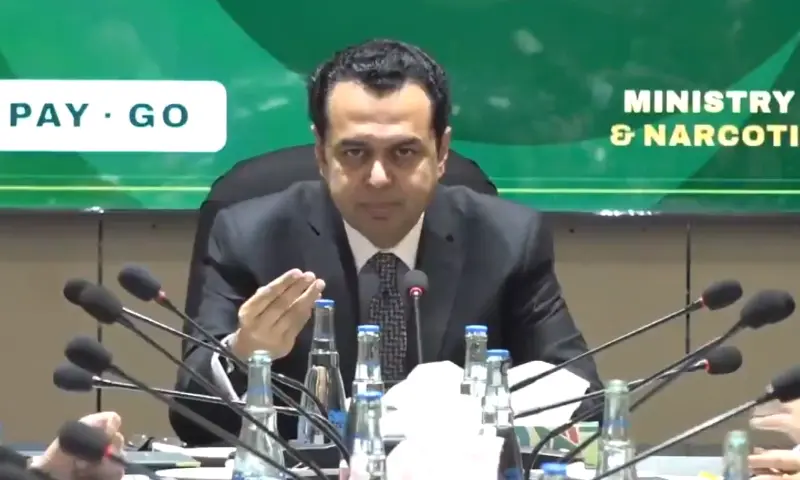
ISLAMABAD: The government has decided to make the federal capital the country’s first fully cashless city, setting Dec 31 as the deadline for the transition.
The decision was taken at an important meeting on the Cashless Capital project chaired by State Minister for Interior Tallal Chaudry, in Islamabad on Friday, according to an official statement by the Ministry of Interior on X.
Speaking on the occasion, Chaudhry said consultation and suggestions from all stakeholders were important for the success of the project, the statement said.
“The implementation of the project is under way at a fast pace on the special instructions of Prime Minister Shehbaz Sharif and Interior Minister Mohsin Naqvi,” Chaudhry was quoted as saying.
Naqvi had promised the prime minister that Islamabad would be made Pakistan’s first cashless city and the world’s first cashless capital, the state minister added.
“After Nov 30, no cash payment will be accepted in any department of the Islamabad Capital Territory administration and the Capital Development Authority (CDA),” Chaudhry stated.
“The target is to bring all merchants in Islamabad into the cashless system by Dec 31,” he said.
He said the cashless system would improve financial transparency, tax monitoring and the transaction system, adding that 26,000 merchants in Islamabad had already been connected to the digital payments system.
“Digital payment facilities will be provided at every level, from street vendors to major business centres,” the state minister affirmed.
“All relevant institutions will work together to make Islamabad a modern digital city.”
According to the statement, CDA Chairman Sohail Ashraf, representatives of the banking sector and other senior officials attended the meeting.
Representatives of the banking sector appreciated the government’s Cashless Islamabad initiative and assured full cooperation for its success, it added.
The prime minister has repeatedly emphasised the need to implement digital transaction systems across the country, insisting that it is vital to bring transparency to the economy.
In a meeting last week, PM Shehbaz also directed authorities to prepare a “clear roadmap and time-bound targets” for establishing a 100 per cent digital payments system in the country.
“Promoting a cashless economy is one of the government’s top priorities, with its positive results already beginning to emerge,” PM Shehbaz said.
He was also apprised that the work on the digitisation of payments in all federal and provincial government institutions was progressing rapidly, and payments in “most institutions” would be fully digitised by December 2026.
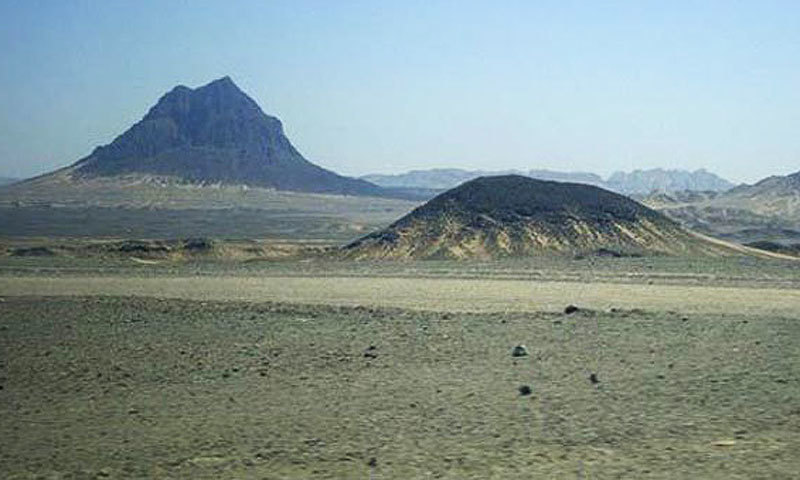
ISLAMABAD: Mining company National Resources Limited (NRL) on Friday announced that it had identified copper and gold deposits at eight sites in Balochistan’s Chagai district, following nearly 25,000 metres of drilling that yielded encouraging results.
The company is now moving towards its first estimate of the area’s mineral resources.
One of the drill holes revealed a 295-metre stretch of mineral deposits containing 0.43 per cent copper and 0.13 grams of gold per tonne. Within this, a 132-metre section showed a higher copper concentration of 0.83pc, National Resources Limited Chairman Muhammad Ali Tabba told the Pakistan Minerals Investment Forum 2026.
The discoveries cover an area of 5.6 square kilometres in Darigwan, adjoining the company’s earlier discovery at the Tang Kaur copper-gold site. Tabba said further exploration at the exploration licence EL214 was expected to help establish the size of the mineral deposits, subject to the completion of exploration work and a formal assessment of the resources.
A joint venture between Fatima Fertilisers, Liberty Mills and Lucky Cement Ltd, NRL holds five exploration licences in Balochistan. These comprise two copper-gold projects, one lead-zinc project and two antimony projects, with exploration work under way.
NRL plans to begin environmental, hydrogeological, metallurgical and geotechnical studies in 2027, with the aim of completing a bankable feasibility study by the end of the decade.
Tabba reaffirmed NRL’s previously announced commitment of $100 million to mineral exploration in Pakistan and invited domestic and international investors and service providers to explore emerging opportunities.
Although preliminary resource estimates have been prepared by an independent consultant, the company is withholding their release pending compliance with international reporting requirements. NRL is working towards completing its maiden mineral resource estimate in line with international standards.
The company has also partnered with the Lahore University of Management Sciences (LUMS) to develop a predictive artificial intelligence model aimed at accelerating exploration, using geological modelling and data gathered through its drilling programme.
“Our ambition is to build a world-class mineral exploration platform and contribute to an integrated mineral value chain, spanning discovery, mining, processing and further value addition,” Tabba said.
He said the programme was helping develop local expertise, with Baloch geologists working alongside international consultants and Pakistani contractors carrying out inclined drilling.
The company’s technical workforce is almost entirely local, supporting its ambition to build domestic expertise that could also contribute to international exploration projects.
Alongside its exploration programme, NRL is supporting education and community development through the newly established Chagai Foundation. Tabba urged industrialists, investors and corporate partners to contribute to its vision of “Enabling Balochistan”.
“The people of Balochistan must share in the opportunities created by their mineral wealth,” he said.
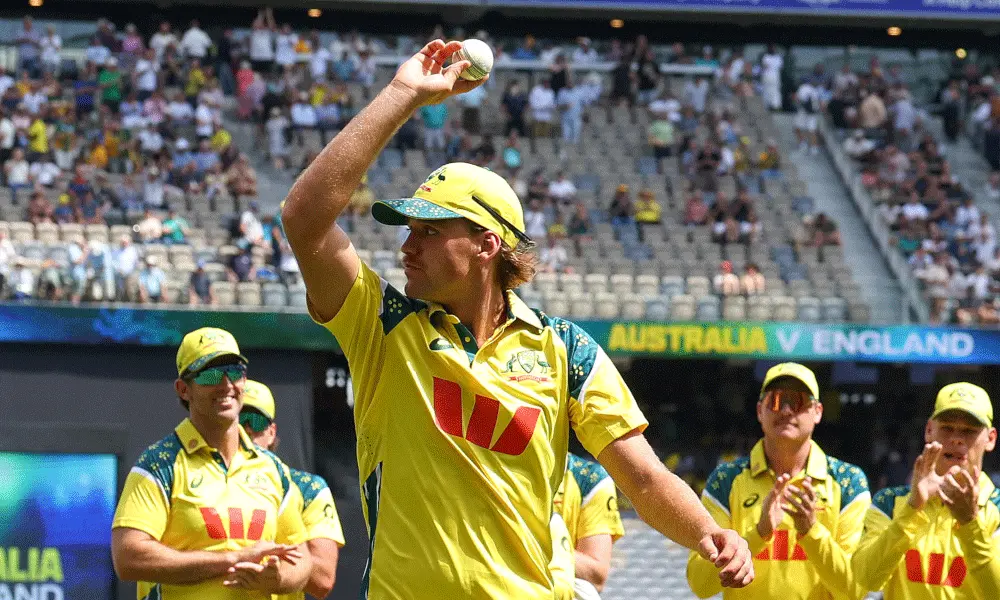
PERTH: Mahli Beardman took 6-24 on debut before Mitchell Marsh smashed a 29-ball 50 as Australia crushed England by seven wickets in the first ODI in Perth on Friday.
After Marsh won the toss and chose to bowl, 21-year-old Beardman tore through the England batting as the visitors slumped to be all out for 131 off just 33.4 overs.
Marsh then put the game beyond doubt with a devastating half-century, hitting four boundaries and clearing the fence another four times to the delight of his home crowd.
Earlier, Beardman bowled with real pace and aggression to record the best ODI bowling figures by an Australian on debut.
Marsh said Beardman was one of a number of young pace bowlers ready to step up when the ageing trio of Pat Cummins, Mitchell Starc and Josh Hazlewood retired.
“It’s a fantastic start to his career,” Marsh said.
“It’s a glimpse into the future. There’s some really good young talent around the country and hopefully we see them get an opportunity at some stage.”
Beardman tore through the England upper order, most of whom fell to poor shots, playing at balls they didn’t need to.
He was well supported by left-armer Spencer Johnson, who took 3-42 as England fell apart on the drop-in wicket at Optus Stadium.
“We’ve spoken a lot about adaptability and how we want to adapt to different surfaces,” England captain Harry Brook said.
“We prepared really well, we knew certain shots weren’t going to work on this wicket, but the Australian attack bowled extremely well.
“They put the ball in the right areas and we didn’t execute our skills well enough.”
The three-match ODI series got off to a low-key start, with most eyes on the Sandpapergate ball-tampering scandal following the launch of former Australian opener Usman Khawaja’s autobiography.
England openers Ben Duckett and Tom Banton were relatively untroubled, taking the score to 24 off five overs until Duckett slashed at a Johnson delivery outside off-stump and edged to Jack Edwards at backward point.
The visitors then lost 7-41 as the England batsmen failed to come to terms with the seam and swing from Beardman and Johnson.
At 65-8 they were in danger of being bowled out below 100 but a partnership from Will Jacks and Gus Atkinson saved them from complete humiliation.
Jacks was caught first ball after the drinks break for 25 and when Beardman claimed Jofra Archer, Atkinson was left as top scorer with 29 not out from 32 balls.
England got the perfect start when Atkinson bowled Travis Head first ball, but Marsh had other ideas and launched an all-out assault on Archer and Atkinson.
Cooper Connolly chipped in with 27 before Josh Inglis (23) and Matt Renshaw (26) saw Australia home.
The two teams head to Adelaide for the second match on Sunday.
Babar Azam’s century drought continued as Sri Lanka pushed hard for victory over Pakistan in the weather-hit first Test in Rawalpindi on Friday.
The tourists took four wickets in bad light in the morning as Pakistan reached 151-5 at lunch on the fifth and final day, leading by 139 runs with five wickets in hand.
At the break Saud Shakeel was unbeaten on 23 and Ghazi Ghori seven not out after a 20-minute break due to bad light halted Sri Lanka’s push for a 1-0 lead in the two-match series.
Babar fell to a leg-side trap, handing the short square-leg fielder a simple catch off fast bowler Milan Rathnayaka for 34, making it a 42nd innings without a Test century.
Salman Ali Agha too fell in the same manner off Rathnayaka for 13, leaving Pakistan struggling on 125-5.
Earlier, Sri Lanka struck with the first ball of the day when Lahiru Kumara dismissed Azan Awais for 22 at Pakistan’s overnight total of 57.
Next over Asitha Fernando made it 57-3 with Mohammad Taha caught behind for 24.
Sri Lanka could have had Azam on 22 but Kamindu Mendis spilled a simple chance off Fernando as the Pakistan skipper failed to get an advantage.
Babar hit six fours and added 50 for the fourth wicket with Saud before playing a loose shot.
Oil and the US dollar are closely connected through global trade, inflation, monetary policy, and risk sentiment. But that relationship is not as straightforward as assuming higher oil prices automatically mean a stronger or weaker dollar. For me, the more useful question is what is driving oil’s movement and how the same shock affects interest-rate expectations, yields, and demand for the US dollar.
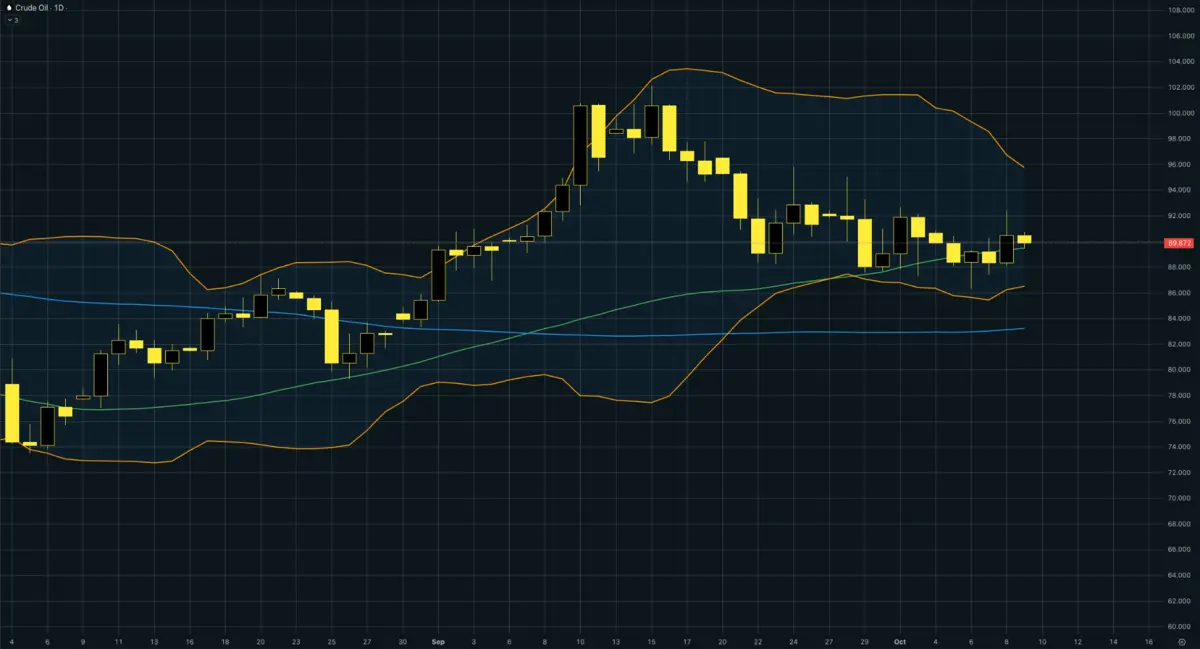
This distinction becomes important during geopolitical disruptions and supply shocks, when oil can move rapidly while FX, bonds, and equities simultaneously reprice the broader macroeconomic implications. WTI has recently shown this volatility, with prices moving above 100 USD in early September to the mid-80s, before rebounding to 90 USD in October.
The dollar layer behind oil
Crude benchmarks such as Brent and WTI are predominantly priced in US dollars, creating a direct currency component in energy costs for buyers outside the United States. If oil rises from 80 USD to 100 USD per barrel while the exchange rate remains unchanged, an importer faces roughly the same percentage increase in local-currency terms. If the dollar appreciates at the same time, however, the importer’s effective energy cost increases.
I see the dollar as an additional transmission channel for oil shocks rather than another market that happens to correlate with crude. Therefore, it is also important to distinguish dollar pricing from dollar dominance. The fact that oil is priced in dollars reflects the currency’s established role in global commodity and financial markets. But dollar-denominated oil does not mean that every oil shock creates additional demand for USD.
When an oil shock can support the dollar
A supply disruption can create a chain reaction that extends well beyond the energy market. Higher crude prices can feed directly into headline inflation and indirectly increase transportation, production, and other input costs. If markets expect these pressures to persist, inflation expectations can rise, and central banks may be expected to maintain restrictive policies for longer. This is where I start looking closely at interest-rate markets; for example, if an oil shock causes US rate expectations to rise relative to those of other major economies, Treasury yields can increase, and the dollar can strengthen. The transmission can therefore look like this:
A major geopolitical disruption can encourage investors to reduce exposure to riskier assets and increase demand for liquid dollar-denominated assets. At the same time, higher energy costs can put additional pressure on energy-importing economies and their currencies.
However, I wouldn’t assume this reaction will always persist. If the oil shock becomes large enough to materially damage global or US growth, markets may eventually shift their focus from inflation towards recession risks. Expectations of monetary easing could then increase, pushing Treasury yields lower and weakening the dollar even while oil remains elevated.
That is one of the most important distinctions I make when analysing an energy shock: the initial reaction and the medium-term macro reaction do not necessarily have to be the same.
When a stronger dollar amplifies the oil shock
This relationship is important to predominantly energy-importing economies. When the dollar appreciates, dollar-priced oil becomes more expensive in local-currency terms. This means an energy importer can face significantly greater inflationary pressure even if the dollar price of crude does not increase further.
According to the US Energy Information Administration, Brent crude rose 59% between June 2021 and May 2022 when calculated in US dollars. But it increased 86% in euro terms, partly because of the stronger dollar.
When I look at oil and FX together, this is one of the effects I want to capture. The headline oil price tells me what is happening in the commodity market, while the currency tells me how that move is being transmitted to individual economies.
When the relationship breaks down
I find the exceptions to the oil-dollar relationship particularly useful because they prevent me from relying on a static correlation. Imagine a supply disruption pushes crude significantly higher while US economic data deteriorate and markets increase expectations for Federal Reserve easing. Oil could keep rising because of the physical supply deficit, while the dollar falls because US rate expectations and Treasury yields decrease.
The same divergence can occur when geopolitical risk is concentrated around oil supply without creating a broader flight to liquidity. In that situation, crude can rally strongly while the dollar response remains limited. However, the reverse can also happen: a stronger dollar places downward pressure on dollar-denominated commodities even when underlying oil fundamentals remain supportive.
For me, the key is identifying which is the dominant driver. Is the market responding primarily to supply, demand, inflation, interest rates, or risk sentiment?
What I watch during an oil shock
When oil starts moving sharply, I prefer to monitor several markets together rather than relying on crude alone to get a better picture of what is actually happening in the market.
Brent and WTI help me identify whether the initial move is driven by physical supply, demand expectations, inventories, or geopolitical risk.
DXY and major FX pairs tell me whether dollar strength is reinforcing or offsetting the commodity move. EURUSD can be particularly useful when assessing how changes in USD valuation affect European energy costs.
US Treasury yields help me understand how markets are repricing monetary policy. If oil and yields rise together, inflation concerns may be dominating. If oil rises while yields fall, markets may increasingly focus on the shock’s implications for growth.
Inflation expectations and economic data help me determine whether higher energy prices are becoming a broader inflation problem rather than remaining isolated within the energy sector.
Central-bank communication and rate expectations are critical because the monetary-policy response can ultimately determine the dollar’s direction.
Risk sentiment across equities, credit, and emerging-market currencies helps me assess whether the oil move is becoming part of a wider risk-off event.
The question I want to answer is not simply whether oil is bullish or bearish. I want to know whether the shock is changing relative interest rates, growth expectations, and global risk positioning in a way that supports or undermines the dollar.
What this means for traders
Periods of geopolitical tension, unexpected supply disruptions, and major economic releases can cause FX, commodities, bonds, and equities to reprice simultaneously. That makes cross-asset analysis particularly valuable, but it also means that trading conditions can change rapidly.
When I trade or analyse both FX and commodities, I consider execution conditions alongside the market thesis. Spreads and liquidity can change during periods of elevated volatility, so conditions observed during a normal session should not automatically be assumed during a major market event. This is where the broker, like Exness, fits into the analytical process without replacing it.
The platform doesn’t remove volatility or determine whether an analysis is correct. Its role is more practical, keeping the related markets in view while CFD traders interpret the shock, assess the available conditions, and decide whether acting still makes sense.
Oil shocks are never only about oil
When I analyse an energy shock, I see the oil move as the starting point rather than the complete story. The broader market impact depends on how that shock feeds into inflation expectations, monetary policy, yields, currencies and risk sentiment.
A supply-driven oil rally with higher US yields, stronger inflation expectations, and broad USD demand represents a very different environment from an oil rally accompanied by falling yields, weaker growth expectations, and a softer dollar.
Oil can trigger the shock, but the dollar, rates, and risk sentiment often determine how far that shock travels through global markets.
Footnotes
The opinions in this article are personal to the people quoted; they do not represent those of Exness.
This article does not constitute investment advice. Past performance is not indicative of future results. The information, data, prices, and market conditions presented in this article are accurate as of the publication date and may change over time. Your capital is at risk. Please trade responsibly.