Author: Theph

  • Sindh govt to set up Labour Registration Helpdesk at SITE

    Sindh govt to set up Labour Registration Helpdesk at SITE

    In a move aimed at simplifying worker registration and improving industrial labour services, the Sindh Labour Department will set up a dedicated ‘Labour Registration Helpdesk’ at the SITE Association of Industry every Tuesday and Thursday, Secretary Labour Sajid Jamal Abro announced during his visit to the association on the suggestion of SAI president, Abdul Hadi.

    He was accompanied by the SESSI Commissioner, Director Labour Sindh, Joint Director Labour and other senior officials.

    Responding to a query from a participant, Abro urged industrialists to report any officer demanding money for registration and invited association members to utilise the S-BOSS platform for the process.

    In healthcare, the secretary said efforts were under way to upgrade services at the Kulsumbai Valika Social Security S.I.T.E. Hospital under a public-private partnership model. He assured that a “notable change” in service delivery would soon be visible and invited association members to revisit the hospital to witness the improvements.

    Referring to the HIV outbreak at Valika Hospital last year, Abro said a number of actions had been taken against those found responsible. A committee had been formed under the Chief Secretary Sindh, while an endowment fund of Rs2 billion had been created. Families of affected children are being paid Rs40,000 per month to meet their daily expenses, and this financial assistance will continue for years.

    Earlier, in his welcome address, SAI president Abdul Hadi expressed confidence that the Secretary Labour, being an experienced professional, would help resolve issues faced by association members relating to the Labour Department. He said the five departments falling under the Labour and Human Resources Department should be clubbed together to achieve the goal of ease of doing business. He also pointed out that the Labour Department was conducting two inspections annually instead of one and sought an update on reforms at Kulsumbai Valika Hospital and the HIV outbreak issue.

    Patron Saleem Parekh said there was a possibility of massive layoffs in industries due to non-friendly business conditions and suggested preparing to face the situation. He demanded a one-year contribution amnesty for industries, adding that industries were also being affected by trade accords and labour union activities. He stressed the need to jointly work out solutions to address these issues.

    Senior member Majyd Aziz highlighted the anti-export activities of labour leaders and expressed concern that they were also being given representation in different committees. He suggested identifying gaps, allowing time for correction and imposing penalties only as a last resort.

    Former SAI president Riaz Uddin stressed the need to reform the tripartite labour committee through improved representation, pointing out that the existing representation was inappropriate and the understanding of the nominees was also sub-par.

    Chairman of the Labour Committee Khalid Riaz said that despite substantial collections in SESSI contributions, no amount was being spent on improving healthcare services at Valika Hospital, SITE. He requested the Secretary Labour Sindh to direct the SESSI Commissioner to share the organisation’s audit reports with industry representatives.

    Advisor of the Labour Committee Abdul Kadir Bilwani suggested to spend 25% of the total SESSI contribution collection from SITE on the improvement of the hospital so as to attract other industries to get registered with SESSI.

    The meeting was attended by Riaz Uddin, Ahmed Azeem Alvi, Ahmed Zulfiqar Chaudhry, Muhammad Hussain Moosani, Muhammad Riaz Dhedhi, Muhammad Tahir Goreja, Muhammad Rizwan Lakhany, Junaid-ur-Rehman, Azeem Motiwala and others. Senior vice president Muhammad Farhan Ashrafi proposed a vote of thanks. As a gesture of goodwill, the association’s shield and a bouquet were presented to the chief guest.

    Source: brecorder
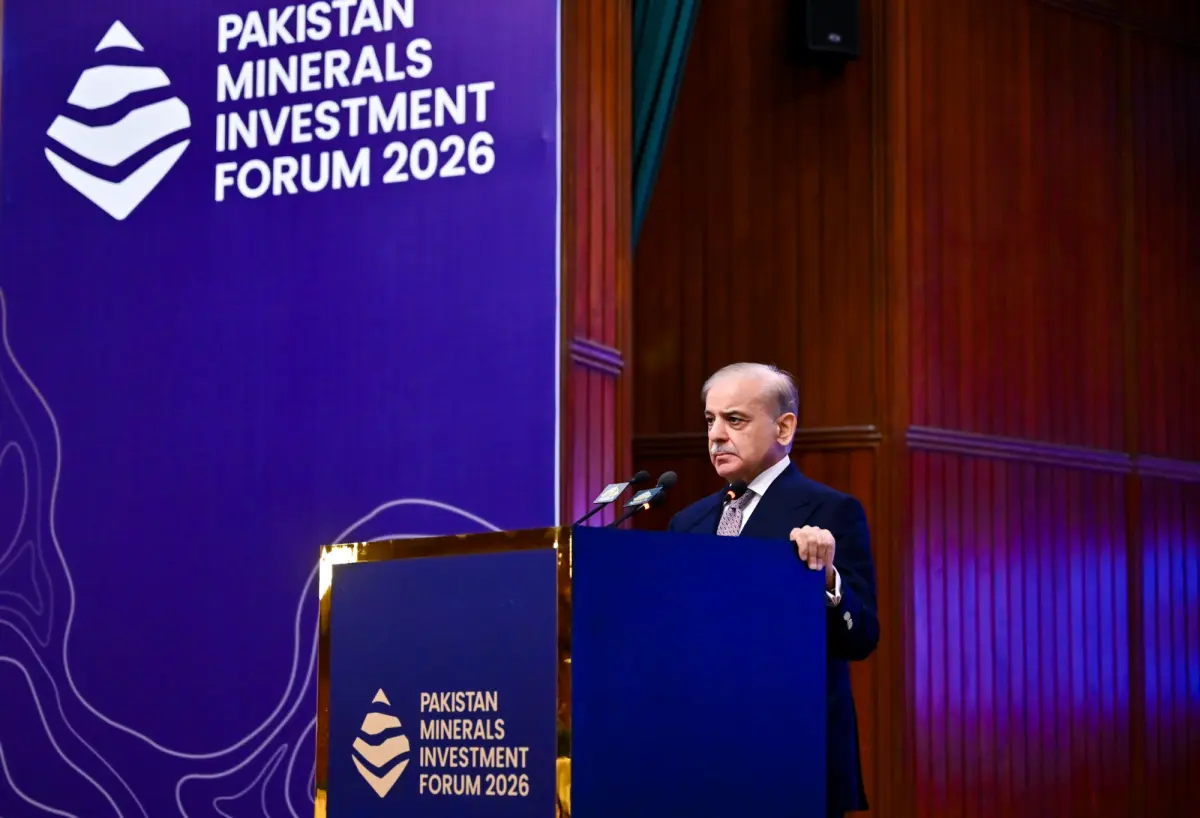
  • PM Shehbaz invites investors to explore Pakistan’s mineral potential

    PM Shehbaz invites investors to explore Pakistan’s mineral potential

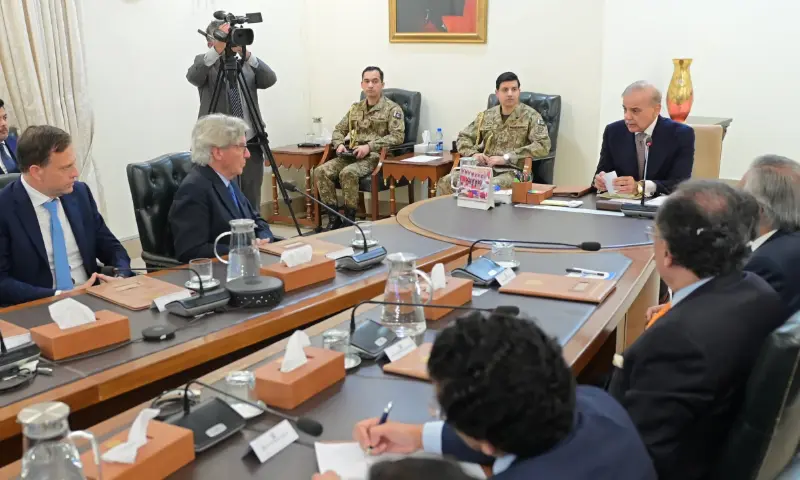
    Prime Minister Shehbaz Sharif invited on Friday international investors to explore Pakistan’s mineral potential and establish processing and manufacturing industries in the country.

    He was addressing the Pakistan Minerals Investment Forum 2026 in Islamabad.

    The prime minister stressed that Pakistan must move beyond exporting raw minerals towards value addition and industrial development. He said his message to international investors was clear: “mine in Pakistan, process in Pakistan, manufacture in Pakistan and then export to the rest of the world”, state-run Radio Pakistan reported.

    The prime minister said Pakistan wanted to establish refineries, smelters, cable, and conductor factories and other industries to ensure value addition to its mineral resources.

    Referring to the Reko Diq project, PM Shehbaz said one of the largest untapped copper and gold deposits in the world was being developed, with production expected to commence in 2028.

    The prime minister appreciated Barrick’s continued confidence in Pakistan and referred to Goldman Sachs’ assessment that Pakistan could become the sixth-largest economy in the world by 2075. However, he expressed confidence that the country can achieve the milestone before 2050.

    Regarding facilitating international investors, he said every investor expected a level playing field, transparent rules, quick decision-making, consistency in policies, and strong institutions.

    He said the government was simplifying procedures, eliminating red tape, cutting inordinate delays, and ensuring complete transparency in awarding licences and contracts.

    He said the National Mineral Data Cell and digitisation of geological records would enable investors to know what lies beneath the ground before making investments.

    The prime minister assured that the federal and provincial governments would work in unison to provide investors all necessary support and assistance.

    He said the safety and protection of investors’ manpower, valuable assets and supply routes were the paramount responsibility of the government.

    PM Shehbaz also invited investors to bring directly to him any files held up due to bureaucratic delays or cumbersome procedures, assuring them that he would personally ensure their movement at lightning speed.

    Highlighting Pakistan’s human resource potential, the prime minister said the country’s real wealth was not only in its mountains but also in its young people.

    He described Pakistan’s youth as educated, resilient, and brave, with the potential to convert the country’s natural wealth into national progress and prosperity.

    The premier urged international investors to establish skilled training centres and vocational institutes, ensure technology transfer, and promote local suppliers.

    He said the initiatives would enable Pakistani youth to become skilled professionals, innovators, and entrepreneurs.

    The prime minister emphasised that every investment in mining must translate into local jobs, local businesses and opportunities for local contractors, as well as schools, clinics, clean drinking water and a better life for communities.

    He said the government would work with provincial governments and investors to ensure that people living nearest to mining sites become the main beneficiaries of these economic activities.

    PM Shehbaz further stressed that development and environmental protection must go hand in hand.

    He said Pakistan would pursue responsible mining in line with the highest international standards, deploying state-of-the-art technology while protecting water resources, workers’ health and safety and the land itself.

    He reiterated that the federal government, provincial governments, and all national institutions would stand firmly with investors at every step.

    Renewing his invitation to international investors to visit Pakistan, the prime minister assured them of the country’s hospitality and full support.

    Source: brecorder

  • Fed’s Collins says more rate hikes are coming, reports

    Fed’s Collins says more rate hikes are coming, reports

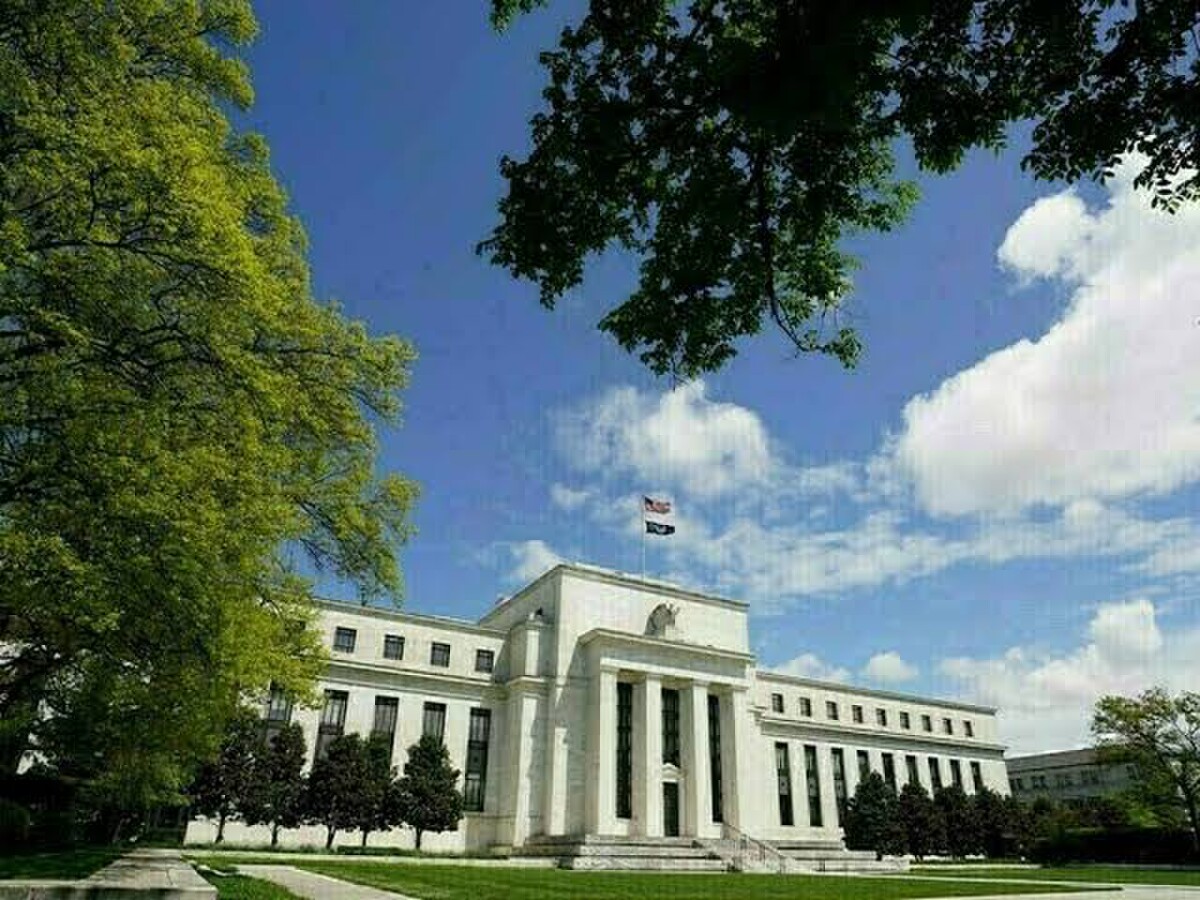
    NEW YORK: Boston Federal Reserve President Susan Collins said on Friday that tighter monetary policy is coming because of high inflation, in comments that suggested the US central bank may have to raise interest rates more than she initially expected.

    “I think it’s clear the direction that monetary policy needs to go and I would think that soon some additional firming, tightening of policy is appropriate,” Collins said in an interview with Bloomberg Television.

    Given that recent inflation data has not been particularly friendly and shows signs that rising price pressures are broadening in the economy, Collins said, “I think it may be that a bit of a tighter policy path than I had penciled in a couple of months ago might be appropriate.”

    The Fed is widely expected to raise its benchmark interest rate, currently in the 3.75%-4.00% range, at its December 8-9 policy meeting. Traders and investors expect a quarter-percentage-point hike at that meeting, although Fed Governor Christopher Waller earlier this week suggested the possibility of a half-percentage-point move.

    Fed seen sticking to December rate hike after jobs data

    Financial markets also expect another Fed rate hike in January.

    “I don’t want to get ahead in terms of how high we should go or how fast,” Collins said, adding that her “best-case scenario” is for “a careful adjustment of policy.” She acknowledged, however, that “there are scenarios where I might think about that somewhat differently.”

    Collins spoke to Bloomberg Television while attending a housing conference hosted by her regional Fed bank.

    In opening remarks for the event, Collins said delivering price stability is key to a healthy housing sector even if tighter monetary policy means some near-term pain for the sector.

    She also said in her interview that financial markets appear to be functioning well.

    Source: brecorder

  • Turkiye, Qatar sign defence agreement: Turkish presidency

    Turkiye, Qatar sign defence agreement: Turkish presidency

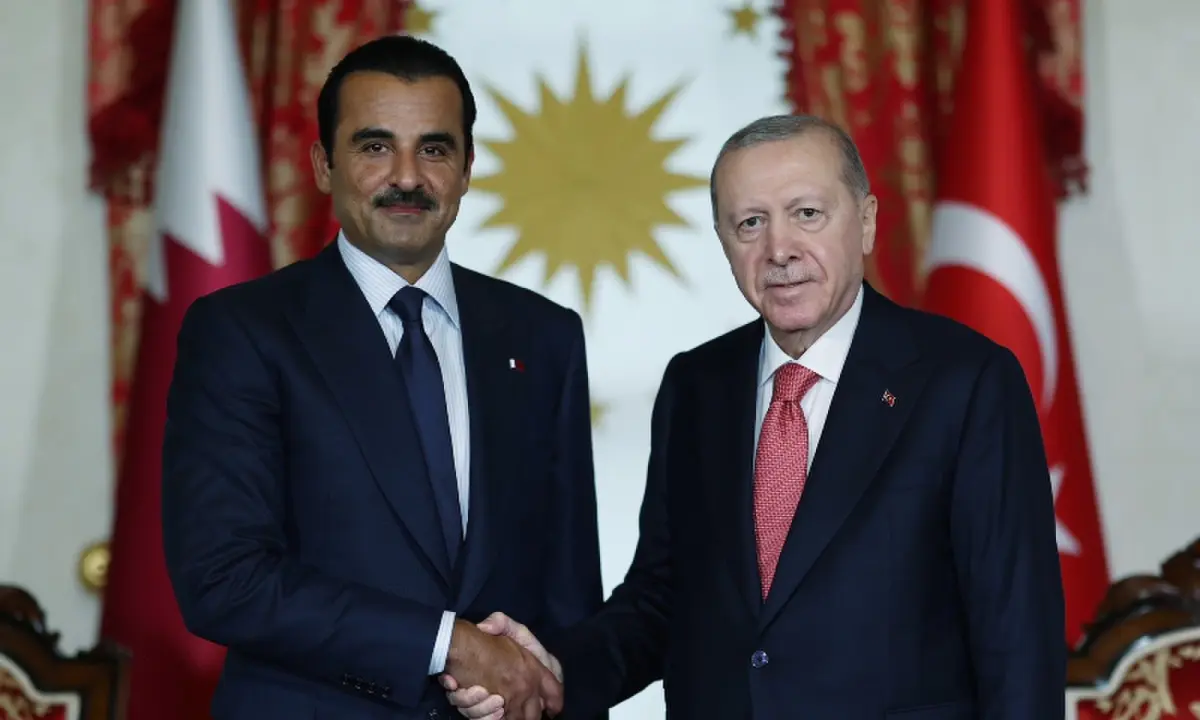
    Turkiye and Qatar signed a defence agreement on Friday that President Recep Tayyip Erdogan said would further strengthen ties between the regional allies, his office said.

    The announcement came after Erdogan met Qatari Emir Sheikh Tamim bin Hamad Al Thani in Istanbul.

    Qatar’s ruler travelled to Istanbul after attending the United Nations COP31 climate summit in southern Turkiye.

    “A mutual defence agreement signed by Turkiye and Qatar today will add a new dimension to the brotherly ties between the two countries,” Erdogan said during the meeting, according to a statement from his office.

    The statement gave no further details about the contents of the agreement.

    Erdogan also said Turkiye and Qatar would expand cooperation in the defence industry.

    The two countries would continue working together “to prevent a renewed outbreak of war in the Gulf region and to promote dialogue and peace”, he said.

    The leaders also discussed Israel’s attacks on Gaza and the humanitarian situation in the Palestinian territory, efforts towards normalisation in Syria and the latest developments in Libya, the statement added.

    In August, Turkiye, Saudi Arabia and Pakistan signed a joint defence agreement in Makkah, bringing together the Sunni Muslim US allies at a time of conflict across the region.

    Turkiye’s parliament ratified the Makkah Joint Defence Agreement last week, clearing the way for Ankara to send military support to Saudi Arabia, which has been struggling to fend off attacks by Yemen’s Houthis.

    Under the agreement, signed by the three regional powers in August, an attack on one party constitutes an attack on all.

    Source: dawn

  • German envoy warns Russia-Ukraine war threatens peace beyond Europe

    German envoy warns Russia-Ukraine war threatens peace beyond Europe

    German Consul General in Karachi Thomas Schultze expressed concern over the Russia-Ukraine war, saying it had undermined hopes for a more peaceful world and threatened peace beyond Europe.

    However, he said, historical reconciliation between Germany and France and the establishment of the European Union demonstrated that former adversaries could become friends, with lasting peace and economic cooperation benefiting all.

    Addressing a reception hosted by the German Consulate General in Karachi, Schultze said Germany and Pakistan were celebrating 75 years of diplomatic relations, highlighting the longstanding partnership between the two countries based on reliability, trust, and sustainability.

    He said bilateral trade between Germany and Pakistan had increased from approximately one billion euros in 1990 to 3.7 billion euros in 2025, nearly four times higher. Meanwhile, Pakistan’s trade with the European Union had risen from around $2.3 billion to almost $14 billion during the same period, making the EU Pakistan’s largest export partner, followed by the United States with $11.5 billion.

    He noted that Pakistan enjoyed a trade surplus of almost $6 billion with the European Union.

    Schultze said the EU, comprising 27 member states and a population of approximately 450 million, was the world’s second-largest economy, while Germany ranked third globally.

    Highlighting the historical links between Germany and Pakistan, he recalled the establishment of the Indo-European telegraph line in 1870, which connected Europe with Karachi and Bombay, with Siemens playing a key role in its development. Siemens established its first local office in Lahore in 1922, he added.

    He said Germany and the European Union had remained reliable partners for Pakistan for decades, with German importers purchasing Pakistani textiles, leather goods, sporting articles, surgical instruments and IT services.

    Similarly, Pakistani companies trusted German machinery because of its reliability and the availability of spare parts, even for older equipment, he said, adding that these commercial relationships had also developed into long-standing friendships between family-owned small and medium enterprises (SMEs) in both countries.

    Referring to people-to-people relations, Schultze highlighted the historical association of Pakistan’s national poet and philosopher, Allama Muhammad Iqbal, with Germany. He said Iqbal had studied and lived in Heidelberg and Munich in 1907, where his experiences along the River Neckar inspired his famous Urdu poem ‘Aik Shaam’, included in Bang-e-Dara.

    He also mentioned the contribution of German-born Dr Ruth Pfau, who devoted more than 55 years of her life to fighting leprosy in Pakistan. She established the Marie Adelaide Leprosy Centre in Karachi, which developed into a nationwide network of 157 clinics. The World Health Organisation declared leprosy under control in Pakistan in 1996, he said.

    On development cooperation, Schultze said economic and development cooperation between Pakistan and Germany dated back to 1961, with Germany having allocated approximately $4.3 billion in assistance to Pakistan since then.

    The assistance had focused on climate, energy, sustainable development, vocational training and health, he added.

    He also referred to the October visit of President Asif Ali Zardari and Sindh Chief Minister Syed Murad Ali Shah to Germany, saying it highlighted the strength of bilateral relations. The German Agency for International Cooperation (GIZ) had been active across Pakistan and was expected to further expand its activities in Sindh following the visit to Berlin, he added.

    Recalling German President Frank-Walter Steinmeier’s message on the occasion of the Day of German Unity, Schultze said the German president had called for courage, solidarity, and renewal.

    He said these values were also needed to address global and regional challenges, particularly in Pakistan, stressing the need for renewed commitment to peace and stability.

    The German diplomat also highlighted the growing importance of sustainable production and environmental responsibility, saying renewable energy and water treatment were no longer merely sustainable options but were becoming economic necessities.

    He said the German Consulate had incorporated sustainability into the reception, with electric vehicles displayed at the venue and giveaways produced by a local company using local raw materials. He also highlighted recycling as an opportunity for Pakistan’s industry to become more competitive and sustainable.

    Source: brecorder

  • President House says matters related to provinces did not come under discussion during Zardari, Naqvi meeting

    President House says matters related to provinces did not come under discussion during Zardari, Naqvi meeting

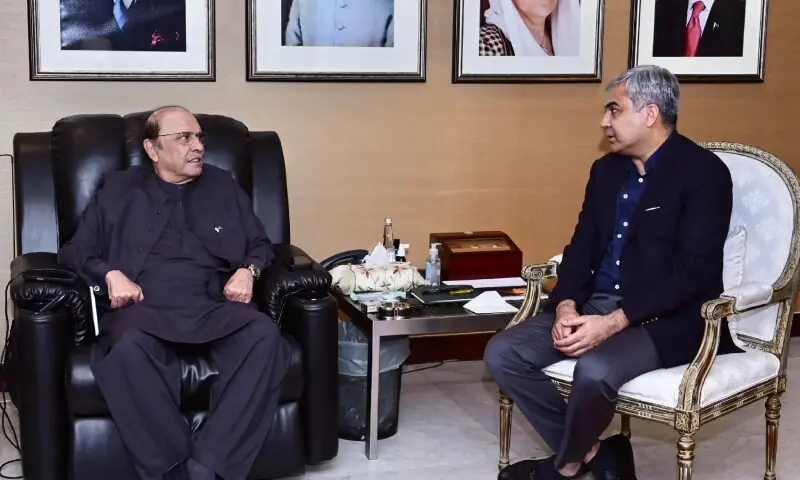
    The President House said on Friday refuted media reports about yesterday’s meeting between President Asif Ali Zardari and Interior Minister Mohsin Naqvi, saying that discussions focused on national security and regional situation.

    The clarification comes after several media reports emerged claiming that Naqvi and the president had discussed the formation of new provinces during a meeting in Nawabshah on Thursday night. No official handout was issued about the meeting.

    “There is no truth to media reports suggesting that matters concerning the provinces were discussed during the interior minister’s meeting with the president,” the President House said in a statement.

    “Matters concerning national security and the regional situation were discussed during the meeting. However, no discussion took place on matters related to provinces,” the statement added.

    The security czar has whipped up a political storm over the past few months since he called for the formation of new administrative units in the country, saying the current “system” of governance had “collapsed” and needed a “reset”.

    Earlier this week, Naqvi reaffirmed his stance on the creation of new provinces or administrative units. He suggested that political parties should hold a referendum to gauge the public’s opinion on this matter, terming it the “solution” to the ongoing debate.

    However, the PPP, which rules Sindh and is also an ally of the PML-N government at the Centre along with MQM-P, has strongly opposed the suggested move for new provinces.

    In September, the Sindh Assembly adopted a resolution rejecting all attempts to divide the province or create new administrative units, with the CM Murad declaring that “there will be no compromise on Sindh’s geographical unity”.

    Meanwhile, PPP Chairman Bilawal Bhutto-Zardari has called for a “full stop” on the debate surrounding new provinces and also a “political reset”, wherein all political parties must unite for the sake of the country rather than indulge in “unnecessary debates”.

    In his remarks on Thursday, Naqvi contended that he and Bilawal were “nearly on the same page”.

    “He [Bilawal] said that political matters are about to be reset, while my suggestion is that overall matters are about to be reset,” Naqvi said.

    Source: dawn

  • US Treasury chief blames Commerce Dept for failure in Nvidia scandal

    US Treasury chief blames Commerce Dept for failure in Nvidia scandal

    US Treasury Secretary Scott Bessent on Friday blamed the Commerce Department for failing to blacklist Megaspeed, the Singapore company at the centre of a scandal that prompted Nvidia chief executive Jensen Huang to resign.

    Speaking on CNBC, Bessent said Treasury, the Defence Department, the US Trade Representative’s office and the State Department had backed adding Megaspeed to Washington’s trade blacklist, “for months”.

    “But Commerce has the pen,” Bessent said. “You will have to ask them about their internal processes.”

    He said he was “frustrated” because President Donald Trump “made it very clear that China should not receive any Nvidia chips above H100s”.

    “Any leakage is very frustrating because it hurts our great companies, and in the AI race gives the Chinese an advantage,” he said.

    The remarks are a rare public rebuke of one cabinet department by another.
    Commerce is led by Secretary Howard Lutnick.

    Megaspeed is suspected of helping Chinese firms get around US export controls by buying Nvidia chips for its data centres in Southeast Asia and routing them to China. The company reportedly traded more than $4 billion worth of Nvidia chips over two years.

    Its former director Alice Huang was this week identified in US media as an alleged Chinese intelligence asset who had a relationship with Jensen Huang. The two are not related. Beijing has denied the spying allegations.

    Jensen Huang acknowledged an extramarital affair in a November 8 letter to Nvidia employees that did not name the woman involved and resigned his position on Thursday. Nvidia’s board has said it will investigate, and three US Congress committee chairs have asked him to attend a closed-door briefing on November 18.

    Bessent said coverage of the affair had focused too much on Huang’s private life.

    “The story thus far has been on Jensen Huang’s personal foibles,” he said. “The real story here should be: Did Nvidia know their client, and was there a robust effort at Nvidia to make sure that there was no leakage?”

    He questioned whether Nvidia had been selling to “what were obviously pass-through shell companies”.

    “I think it’s important that anyone at the company there be held accountable for that,” Bessent said, adding that there was “a lot of leakage in the system” and that the administration was “constantly working to close that down”.

    Source: dawn

  • Faxes, phones and Bluetooth: Microsoft outage forces businesses to find fixes

    Faxes, phones and Bluetooth: Microsoft outage forces businesses to find fixes

    Old-school technology including telephones, faxes and Bluetooth limited the damage for some people on Friday as a worldwide outage of Microsoft’s Outlook left millions without email.

    The prolonged disruption, which also hit Microsoft Teams and Copilot, affected some of the world’s biggest institutions, from bankers and traders to shipping firms.

    While most reported their core systems were still running, trading and administrative work slowed in places in the latest reminder of how much of the world’s commerce, public services and communications run on a handful of technology providers.

    “The pressure is mounting to invest in contingency plans and test whether those backups actually work when needed,” said PP Foresight analyst Paolo Pescatore, adding that firms needed multiple providers for key services like communication and data storage.

    Microsoft, which says on its website that more than 430 million people use its 365 services, blamed server problems and said it was not aware of any malicious activity.

    The disruption comes weeks after attacks on the industrial systems that keep supermarket food cold and shows how a single point of failure, whether a technical fault, cyberattack or even an extreme weather event, can disrupt everyday business.

    In its latest update on Friday, Microsoft said it was seeing signs of stabilisation after implementing fixes more broadly to attain a persistent recovery of services.

    European exchange operator Euronext, which runs bourses in Paris, Brussels, Lisbon, Amsterdam, Oslo, Athens and Milan, told listed companies to pick up the phone.

    “We have ensured that the team has sufficient capacity to manage the situation and handle the additional workload,” a spokesperson said, adding that Euronext was verifying the identity of callers to protect confidentiality and integrity.

    Aviva, which reported earnings on Friday, said it had put backup plans in place, including sending out alternative phone numbers for earnings calls and using Bluetooth to transfer recordings because email was down.

    The British insurer tested a similar-scale outage of its most critical technology systems about two weeks ago, CEO Amanda Blanc told Reuters.

    Shipping group Maersk asked customers to call with anything urgent and urged them to verify any unexpected communications about the outage with their local representative.

    Fax machines return in Taipei

    In Taiwan, the outage disrupted fund management at securities firms, life insurers and investment trust companies, people familiar with the situation said.

    At another financial firm, trades such as purchases and sales of short-term bills, which are normally confirmed by email, had to be confirmed by fax instead, one of the people said.

    Foreign banks and financial institutions in Taiwan were hit especially hard, a trader said, because much of their data is emailed to overseas headquarters through Microsoft’s systems.

    In Britain, HSBC and Barclays activated internal incident teams to assess the impact, people within the banks told Reuters. While email systems were down, most client services were unaffected.

    HSBC reminded staff not to use unauthorised channels such as personal email or WhatsApp to get around the outage, one said.

    Two trading professionals said they observed lower trading volumes in some markets on Friday that they attributed to difficulties in executing trades.

    Caitlin Egen of Control Risks said that big global firms usually had contingency plans, but when key services went down abruptly it was still a “wake-up call”.

    “For a lot of businesses this morning, it’s probably been chaos trying to figure out how to even get in touch with people,” she said.

    Source: dawn

  • Barrick Mining expresses interest in mineral processing industries in Karachi, Gwadar

    Barrick Mining expresses interest in mineral processing industries in Karachi, Gwadar

    The delegation from the Barrick Mining Corporation on Friday expressed strong interest in investing in the establishment of mineral processing industries in Karachi and Gwadar.

    The development came as the delegation, led by Chairman John Thornton, held a meeting with Prime Minister Shehbaz Sharif in Islamabad, a statement by the Prime Minister’s Office (PMO) said on X.

    According to the PMO, the visiting delegation described the decision by the prime minister and the government to hold a minerals conference as an important step towards mineral development in Pakistan.

    “The delegation expressed strong interest in investing in the establishment of mineral processing industries in Karachi and Gwadar,” the statement added.

    It quoted the premier as saying that Pakistan was a country rich in natural resources and mineral wealth. He said that harnessing these resources to develop the province and improve the prosperity of its people was the government’s top priority.

    “Major projects such as Reko Diq will create new opportunities for employment, skills development and economic growth for the people of Balochistan,” PM Shehbaz said.

    Pakistan was committed to putting its vast mineral resources to use and creating new opportunities for global investment, he added.

    The prime minister further said that the Reko Diq project was an important milestone for investment in Pakistan’s mineral sector and was of key importance to the country’s economic future.

    “The success of the Reko Diq project will set a benchmark for future mineral investment in Pakistan,” PM Shehbaz said, adding that to develop the mineral sector, the government of Pakistan was creating a favourable environment based on “trade, investment, infrastructure and modern technology”.

    “The Reko Diq project is an important milestone for investment in Pakistan’s mineral sector, and that its success will also serve as a model for future projects,” he said.

    During the meeting, the prime minister said that Balochistan was rich in natural resources and mineral wealth and that these resources could be harnessed effectively to develop the province, improve the prosperity of its people and increase employment opportunities.

    “Ensuring that the people of Balochistan directly share in the benefits of mineral projects, creating employment and skills development opportunities for local young people, and developing surrounding communities are among the government’s priorities.”

    The prime minister also welcomed Barrick Mining Corporation’s participation in the Pakistan Minerals Investment Forum 2026, the statement said.

    The meeting also discussed policy, regulatory and infrastructure frameworks conducive to the mineral sector in Pakistan, the statement said.

    It added that the prime minister also expressed a desire to draw on Barrick’s expertise and experience to develop Pakistan’s mineral sector beyond Reko Diq.

    The Reko Diq mine, one of the world’s largest underdeveloped copper-gold deposits, is hoped to generate $70bn in free cash flow and $90bn in operating cash flow.

    Canadian mining titan Barrick Mining (formerly Gold) Corporation and the federal and Balochistan governments own the project jointly.

    According to government sources and industry insiders, production at the Reko Diq copper-gold project could be delayed by two years to 2030, pending improved security in Balochistan and de-escalation in the Middle East crisis.

    Another delegation meets PM Shehbaz

    Separately, Ivanhoe Mines’ founder and executive co-chairman Robert Friedland also met with the premier, with the latter asserting that Pakistan was rich in mineral resources and that the government was committed to working with global partners to harness the country’s vast reserves of copper, gold and other critical minerals.

    According to a statement by the PMO, designating Pakistan a “priority destination” for mineral investment reflects growing confidence among global investors in the country mineral potential and investment climate.

    PM Shehbaz also welcomed Ivanhoe Mines’ interest in Pakistan and its cooperation with local partners. Furthermore, per the statement, the PM said the exchange of MoUs at the Pakistan Minerals Investment Forum was a “welcome” development.

    “Creating a conducive environment for investment in the minerals sector is among the government’s priorities. Ivanhoe Mines will be provided full facilitation through the Special Investment Facilitation Council,” the statement read.

    The delegation also praised the premier’s leadership and efforts to promote regional peace and stability as well as economic reforms, according to the statement.

    It quoted the premier as saying that Pakistan has “vast” reserves of copper, gold and critical minerals, “which could be harnessed to boost the national economy and improve public prosperity”.

    The meeting was attended by Deputy Prime Minister and Foreign Minister Ishaq Dar, federal Ministers Muhammad Aurangzeb and Ali Pervaiz Malik, Special Assistants Tariq Fatemi and Lieutenant General (Retd.) Muhammad Zafar Iqbal, and other senior officials.

    Source: dawn

  • Saudi civil defence says danger passed in Jazan

    Saudi civil defence says danger passed in Jazan

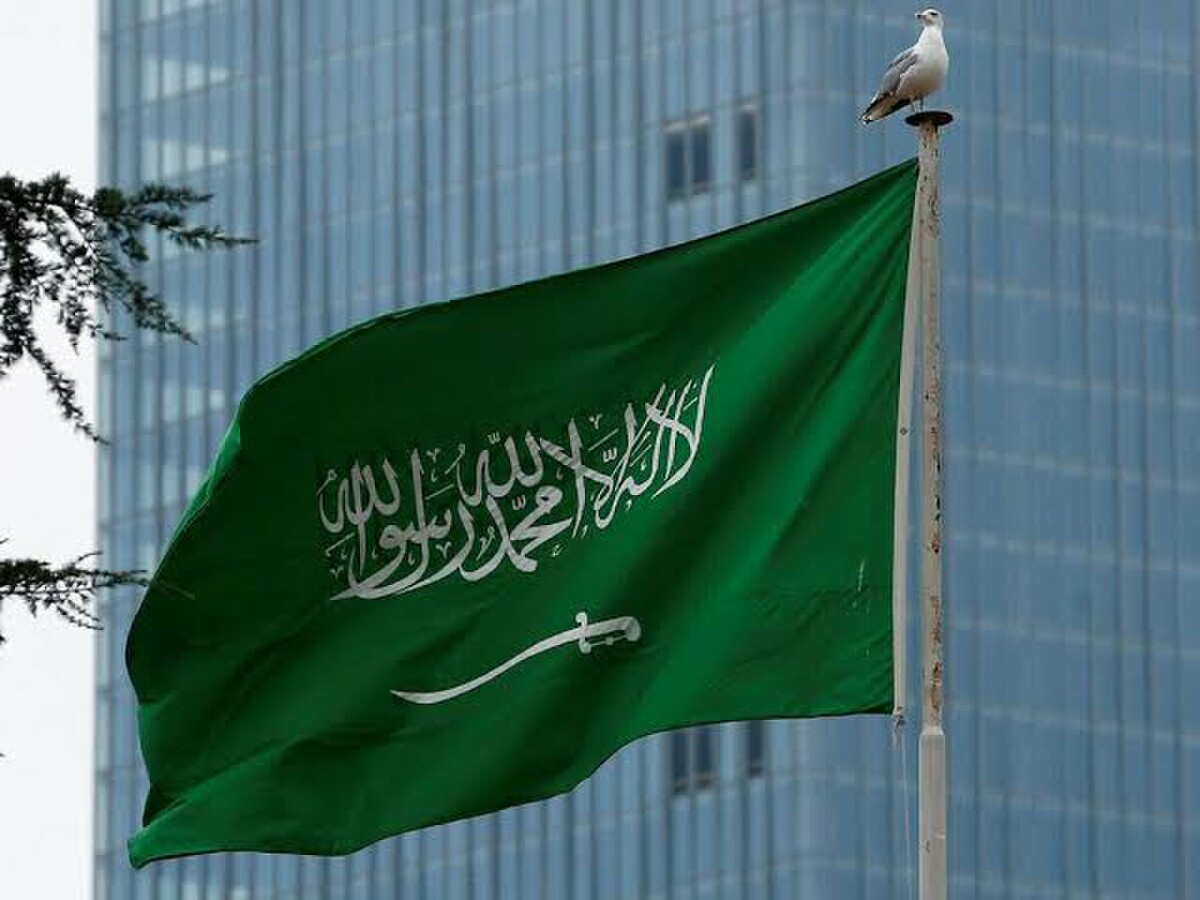
    The Saudi Arabia’s civil defence sent out on Friday an all-clear notice for the southwestern province of Jazan, minutes after warning earlier of potential danger in the area.

    Jazan is home to a Saudi Aramco refinery with a capacity of 400,000 barrels of crude oil per day.

    Southern Saudi Arabia, which borders Yemen, has come under repeated missile and drone attacks by Yemen’s Houthis targeting military installations and energy infrastructure, including Jazan’s oil refinery.

    Saudi-led coalition says it intercepts two Houthi missiles fired towards Riyadh

    Source: brecorder