
Blog

  • Hitler’s ‘retreat’ sparks debate over Germany’s past and present

    Hitler’s ‘retreat’ sparks debate over Germany’s past and present

    PERCHED on a ridge high in the German Alps lie the burned-out ruins of a mountain house frequented by Adolf Hitler, which is now at the heart of an intense debate about Germany’s Nazi past.

    Called The Eagle’s Nest, or Kehlsteinhaus in German, the retreat was built by the Nazis in 1938. After World War II it was classified as a historical monument.

    But after it was gutted in a suspected arson attack last month, some believe it is time for the site to be completely destroyed, so it can shed the mantle of its Nazi past, BBC News reported.

    Others, however, want it either partially or completely rebuilt, wary of the risk of turning it into a lightning rod for neo-Nazi elements at a time when Germany is witnessing the resurgence of the far-right.

    Before it was burned down on Oct 23, the Eagle’s Nest had been a popular tourist attraction, owned by the state of Bavaria and operating for many years as a restaurant.

    Visitors would take a bus and then ride the original brass and mirror-panelled lift through the mountain to the Kehlsteinhaus to savour the magnificent views above the town of Berchtesgaden.

    Unlike Hitler’s nearby summer residence, the Berghof, which was bombed in World War II and demolished in 1952, the Eagle’s Nest survived the war.

    In the 1990s, amid concerns that the site did not do enough to confront the crimes of the Nazi past, a museum, the Obersalzberg Documentation Centre, was opened close by.

    Although the Eagle’s Nest itself was “largely destroyed” by the

    fire, according to police, the documentation centre survived unscathed.

    The authorities have not commented on a possible motive, but a 33-year-old man with a history of mental illness has been detained on suspicion of arson.

    According to BBC News, some feel that this is an opportune moment to allow the site to fade into history.

    “It’s been torched now. It’s been destroyed. I think they should just clear away the rubble and leave the mountain as it should be in its natural state,” said Prof Sir Richard J. Evans, a specialist in Nazi Germany at the University of Cambridge.

    That has happened with “quite a few other Nazi sites”, he argued, including the bunker in Berlin where Hitler killed himself.

    But Bavaria’s authorities take a different view about the site’s future. Both the state’s interior minister, Joachim Herrmann, and its minister for the arts, Markus Blume, have spoken out in favour of rebuilding the Kehlsteinhaus.

    Germany and Austria have long struggled to deal with the fraught legacy of buildings and sites connected to the Nazi era.

    With the recent rise of the far-right AfD and the Austrian Freedom Party, the debate over Erinnerungskultur (Culture of Remembrance) has taken on a new urgency.

    A row broke out recently in Germany when AfD and conservative CDU councillors in a town in Saxony decided to ban “stumbling stones” memorials – embedded small brass plaques in the streets – to victims of the Nazis.

    In Austria over the summer, a police station was opened in the house where Hitler was born in Braunau am Inn. It followed years of controversy about how the house should be used.

    The Austrian government said the police presence would help prevent neo-Nazi ‘pilgrims’. But others want the site to become a centre of responsibility, actively confronting the Nazi past.

    Published in Dawn, November 9th, 2026

    Source: dawn
  • Antalya agenda

    WHEN COP31 opens in Antalya today, governments will have to show that years of climate negotiations have produced more than ambitious targets and promises of financial help. Geopolitical tensions, an energy crisis, and strained finances in rich countries have dampened hopes of a breakthrough. The absence of an official US delegation after Washington’s withdrawal from the Paris Agreement has worsened matters.

    Meanwhile, the climate crisis is advancing faster than efforts to contain it. A new UN report warns that even if countries fulfil existing climate pledges, global temperatures could rise by 2.6°C this century.

    For Pakistan, already exposed to floods, extreme heat, and erratic rainfall, the question is what it can realistically secure from the talks.

    At COP29, developed countries committed to mobilising $300bn annually for developing nations by 2035. COP30 called for progress towards a broader goal of $1.3tr a year and for adaptation finance to be tripled by 2035. But promises of more money mean little if vulnerable states cannot access it.

    For Pakistan, the priority should be to secure easier access to climate funds, more grants rather than debt-creating loans, and clear deadlines for financial contributions. It should seek support for practical measures to protect homes from flooding, secure water supplies, and improve early warning systems. By joining forces with other vulnerable countries, Pakistan could strengthen calls for better glacier monitoring, flood protection, and affordable climate technology.

    Its latest climate plan aims to cut projected emissions by 50pc by 2035, with 17 percentage points unconditional and the remaining 33 reliant on international support. This gives Pakistan grounds to seek investment in cleaner energy, transport, and agriculture. But it must also pursue reforms at home, while pressing for stronger global action to reduce emissions.

    Pakistan’s preparations for COP31 offer an opportunity to put these priorities into practice. Its planned pavilion sessions in Antalya cover disaster preparedness, solar electrification, local adaptation, and climate investment projects. These discussions should lead to partnerships and investment proposals. Islamabad should identify priority projects and report publicly on commitments secured and money received. Provincial governments must be involved, as irrigation, land use, drainage, and emergency services are largely their responsibility. Local communities should help determine which projects receive priority funding.

    Pakistan must also address problems that international aid alone cannot solve, including construction on floodplains and poor enforcement of environmental rules.

    COP31 may produce modest advances rather than a sweeping agreement. But Pakistan can still make progress by presenting workable proposals and showing that the assistance it receives will benefit those most at risk.

    Published in Dawn, November 9th, 2026

    Source: dawn
  • Heatwaves in Punjab threaten agriculture, food security: UN

    Heatwaves in Punjab threaten agriculture, food security: UN

    • Report says fruit yields plunge 50pc; heat stress spreads livestock disease, cuts milk output
    • Shrinking incomes, food spoilage limit rural families’ healthy diets
    • Women bear brunt of crisis due to heavy outdoor labour; preterm birth risk jumps 26pc in severe weather

    ISLAMABAD: Increasingly frequent and severe heatwaves in Punjab’s rain-fed rural areas are disrupting agricultural production, reducing household incomes and worsening food insecurity, particularly among women and vulnerable communities, according to a report by United Nations (UN) agencies.

    The assessment “Extreme Heat and Agriculture”, was published jointly by the UN Food and Agriculture Organisation (FAO) and the World Meteorological Organization (WMO).

    It warns that rising temperatures have emerged as one of the most serious and acute hazards facing global food production, threatening the livelihoods of billions of people while inflicting immediate economic and nutritional damage on vulnerable farming communities.

    “The effects of extreme heat on production are stark, as heat wav­es have led to significant declines in crop yields,” the report said.

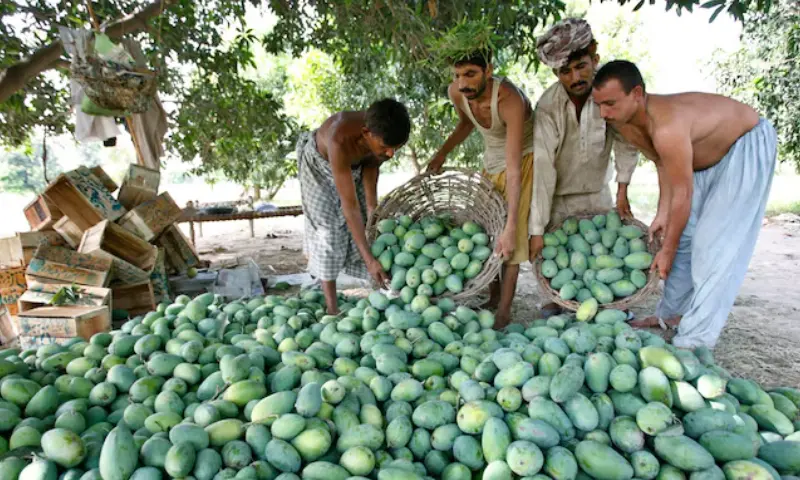
    In the high-rainfall zones of Punjab, fruit productivity has fallen by as much as 50 per cent, the agencies found.

    Livestock operations across the region are also severely affected. Large ruminants produce less milk under heat stress, and small ruminants face increased outbreaks of foot-and-mouth disease, the report said.

    For rural families dependent on farming, the loss of agricultural output directly translates into reduced household income and diminishes their ability to purchase basic food staples.

    The crisis is compounded by the accelerated spoilage of vegetables, dairy products and other perishable goods in extreme temperatures. That widespread spoilage further reduces local food availability and drives up market prices.

    As a result, rural families face a double burden. They produce less diverse and nutritious food for their own consumption while simultaneously losing the agricultural income they rely on to purchase food from markets. “This double burden severely limits their access to healthy diets,” the report said.

    Although entire communities are affected, women generally bear a disproportionate share of the burden, the UN agencies found. Women in Punjab play an essential role in agricultural activities, including harvesting, collecting water and carrying out physically demanding household responsibilities.

    This exposes them to high temperatures for extended periods, increasing their risk of heat-related illnesses and other health complications.

    Those health risks are particularly acute for pregnant and lactating women, who have greater nutritional and dietary needs that are often the first to be compromised during periods of household food scarcity.

    Research cited in the report indicates that each 1°C rise in temperature is associated with a 4pc increase in the likelihood of preterm birth. During heat waves, the risk of preterm birth jumps to 26pc, according to the report.

    Additional social inequalities exacerbate women’s vulnerabilities to extreme heat. Despite their critical role in farming, women often lack ownership of land and other assets, necessary to access credit and financial services that could aid adaptation.

    With limited access to climate information and early warning systems, they are often less prepared to respond to heat events.

    Rural women’s coping strategies, such as reducing their own food intake to prioritise other family members, which can further compromise their health and resilience, reflect broader patterns of gender discrimination that amplify their vulnerability in times of climate crisis, the report said.

    Beyond the localised crisis in Punjab, the FAO and the WMO warned that extreme heat is acting as a powerful risk multiplier with direct and indirect impacts across all agricultural subsectors worldwide.

    Rising temperatures amplify existing environmental hazards such as drought, heighten the risk of destructive wildfires and create complex compound impacts.

    Those converging threats endanger not only global agricultural production, but also the physical health of agricultural workers who labour on the front lines of the growing climate threat.

    The fingerprints of extreme heat on agriculture are already visible worldwide, and the analysis of scientific evidence confirms that heat is driving significant productivity losses.

    Under high-emission scenarios, nearly half the world’s cattle could be exposed to dangerous heat by 2100, with annual losses nearing $40bn, although under a low-emission scenario, impacts from livestock exposure to extreme heat are reduced by nearly two-thirds.

    In aquatic systems, marine heatwaves have already caused repeated mass mortality events and are forcing entire fish stocks to migrate in search of cooler water. Fruit and nut trees and natural forests are also subject to production losses and the growing risk of more frequent and intense wildfires.

    Together, those global agricultural losses create a dangerous environmental feedback loop, the report concluded. When heat-driven shortfalls in crop and livestock production prompt farmers to clear additional land for agricultural expansion to compensate for lost yields, the resulting land-use changes increase greenhouse gas emissions — fuelling further climate change.

    Published in Dawn, November 9th, 2026

    Source: dawn
  • Khyber Pakhtunkhwa, Gilgit-Baltistan agree to settle old boundary disputes

    Khyber Pakhtunkhwa, Gilgit-Baltistan agree to settle old boundary disputes

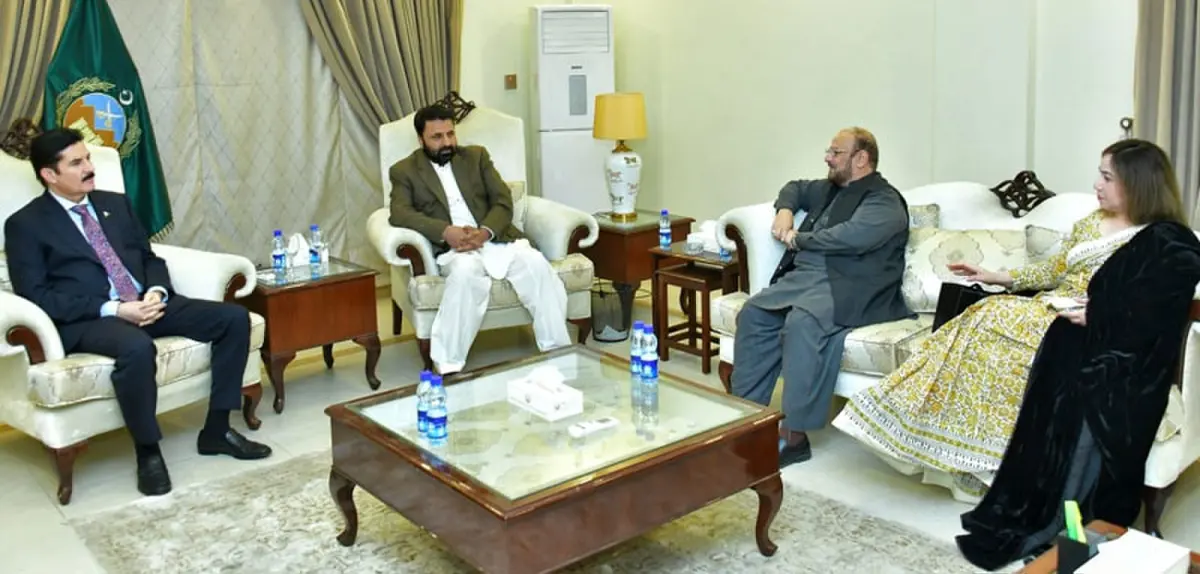
     KP Governor Faisal Karim Kundi and GB Chief Minister Amjad Hussain meet in Islamabad.—Dawn
    KP Governor Faisal Karim Kundi and GB Chief Minister Amjad Hussain meet in Islamabad.—Dawn

    GILGIT/MANSEHRA: In a move towards resolving decades-old territorial issues, Gilgit-Baltistan Chief Minister Amjad Hussain and Khyber Pakhtunkhwa Governor Faisal Karim Kundi have agreed to initiate negotiations to settle boundary disputes between the two regions, including those involving Shandur Top, Babusar Top and areas surrounding the Diamer-Bhasha and Dassu dams.

    The agreement came during a meeting between the two leaders in Islamabad on Sunday, where they discussed matters of mutual interest, including territorial disputes, improved air connectivity to Gilgit-Baltistan and the training of relevant officials.

    According to a statement issued by the GB Chief Minister’s Secre­tariat, both leaders agreed that the boundary disputes would be taken up by the chief secretaries of the two regions, before being referred to their respective political leadership for deliberations.

    South Air offers to operate flights to northern areas

    The initiative aims to resolve disputes involving villages along the KP-GB boundary through mutual understanding and amicable negotiations.

    An official attending the meeting told Dawn that the two sides had agreed to pursue a peaceful settlement of the long-standing disputes, which have repeatedly triggered tensions and violent clashes between communities living along the disputed territories.

    Disputes between KP and GB persist over several strategically important areas, including Shandur Top, Babusar Top and parts of Kohistan.

    Shandur Top, home to the world’s highest polo ground at around 12,500 feet, is claimed by both provinces, with the matter under consideration by a provincial boundary commission.

    Babusar Top, linking Man­sehra with Diamer through Kaghan Valley, is another contested area whose ownership and juri­sdiction remain unresolved by the federal government. The dispute has also surfaced in land acquisition and compensation claims, prompting the Peshawar High Court to direct the NHA and KP government to clear outstanding payments to landowners whose properties were acquired in 2001 for road expansion.

    Another major dispute concerns the Harban tribe of Kohistan and the Thor tribe of Diamer over an eight-kilometre stretch near the Diamer-Bhasha Dam. A 2014 clash over the land claimed the lives of five people and left 15 injured.

    A 24-member jirga defused the decades-old dispute in 2022, paving the way for official demarcation and compensation payments to affected Kohistan settlers.

    However, other territorial and ownership questions, including those concerning areas near the Dassu Dam and Babusar Top, have continued to complicate relations between communities on both sides of the provincial boundary.

    Air connectivity

    Apart from territorial matters, the Islamabad meeting also focused on improving air connectivity between Gilgit and Islamabad, where passengers have long faced difficulties because of limited flight operations and frequent cancellations.

    At present, PIA operates a 44-seat ATR aircraft on the Islamabad-Gilgit route. The limited seating capacity, coupled with weather-related cancellations, has made air travel particularly difficult for patients, tourists and government officials who depend on the service.

    The operational limitations of Gilgit airport, which cannot accommodate larger aircraft, further restrict travel options.

    During the meeting, representatives of the private airline South Air also held discussions with the GB chief minister regarding the introduction of additional air services.

    According to an official source, it was agreed that aircraft would be acquired on lease against a guarantee provided by the GB government, while South Air would operate flights under a joint-venture arrangement.

    The proposed service is expected to introduce weather-compliant aircraft on the Isla­mabad-Gilgit route, potentially improving the reliability of air travel for residents and visitors.

    Published in Dawn, November 9th, 2026

    Source: dawn

  • Minister supports creation of up to 12 provinces

    Minister supports creation of up to 12 provinces

    • Khawaja Asif says new units should be created on administrative grounds, not linguistic, ethnic or political lines
    • Calls for transfer of powers, resources from provincial capitals to local institutions
    • MQM-P renews demand for new administrative units; calls for ending ‘deprivation’ of urban Sindh

    SIALKOT / KARACHI: As a debate around the possible creation of new administrative units rages in the country, another federal minister on Sunday voiced his support for the proposal, but warned against carving out units on linguistic, ethnic or political lines.

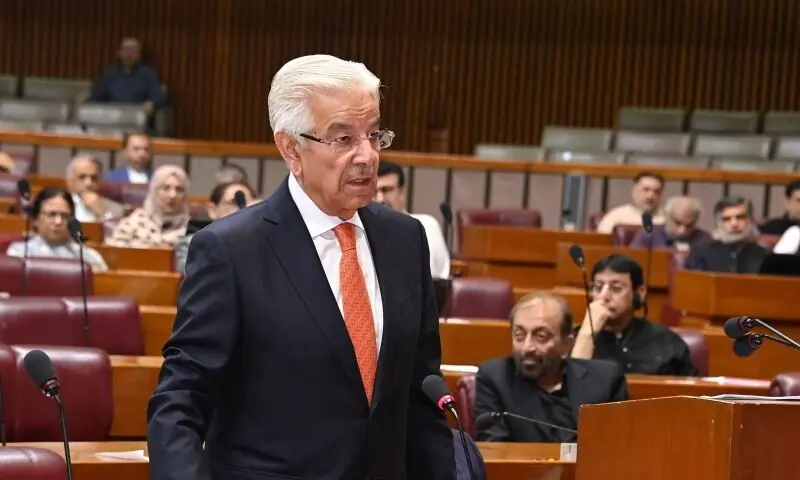
    Outspoken Defence Minister Khawaja Asif, who has previously voiced his support for the suggestion — first put forward by his cabinet colleague Mohsin Naqvi — said that the existing concentration of authority in provincial capitals was preventing government services and resources from reaching people at the local level.

    Speaking to Geo News, Mr Asif said the idea of creating new provinces had been debated for the past two months, stressing that the country could have as many as 12 if the exercise was driven by administrative needs rather than linguistic, ethnic or political considerations.

    He argued that Pakistan’s growing population called for smaller administrative units capable of delivering public services more effectively, adding that decision-making should not be confined to provincial capitals such as Lahore, Karachi, Quetta and Peshawar.

    Stressing the need to bring administrative authority closer to the people, Mr Asif also questioned the existing arrangement for distributing financial resources, insisting that funds provided by the federal government remained largely under the control of provincial administrations, instead of reaching local government institutions.

    He maintained that local bodies, which were supposed to benefit from these resources, continued to depend on provincial governments for funds and authority.

    The minister also urged political leaders to change their attitude towards the exercise of power, saying that as politicians, there was a temptation to exercise all the power themselves.

    Public representatives must remember that their authority was entrusted to them by the people, he said.

    Referring to past administrative arrangements, Mr Asif recalled the One Unit scheme, under which the provinces of West Pakistan were merged into a single administrative unit before the arrangement was eventually abolished.

    He also pointed to Afghanistan, saying the number of its provinces had increased from around eight or 10 to more than 30.

    The defence minister’s remarks come amid reports of a plan to divide Pakistan into 12 provinces through a possible 28th Constitutional Amendment, with a nationwide referendum also being contemplated.

    Media reports suggested that the proposed restructuring could involve dividing Punjab into four provinces, KP and Balochistan into three each, and Sindh into two.

    MQM-P renews demand

    Meanwhile, the Muttahida Qaumi Mov­e­ment-Pakistan (MQM-P) on Sunday vowed to mobilise its entire organisational network and parliamentary leadership for the upcoming local government elections eyeing a “historic win”, while renewing its demand for the creation of new administrative units in Sindh to ensure the devolution of powers and resources to the grassroots level.

    The resolve was expressed at a high-level meeting of the party’s political and administrative leadership, chaired by MQM-P Convener and Federal Minister Dr Khalid Maqbool Siddiqui at its Bahadurabad headquarters.

    According to a press release, the meeting discussed a strategy to address the long-standing grievances of urban Sindh, accelerate Karachi’s development and prepare for upcoming political and local government contests.

    The party leadership stressed that the establishment of new administrative units was essential to empower people at the grassroots level and ensure the equitable provision of basic municipal services.

    It maintained that the devolution of authority and resources to lower tiers of government was necessary to address the administrative and civic challenges facing urban centres.

    Dr Siddiqui directed parliamentarians and organisational departments to become actively involved at the neighbourhood level and mobilise workers and residents across the city ahead of the local government elections.

    Speaking at the meeting, Dr Siddiqui said ending the deprivation of urban Sindh, establishing new administrative units and winning the local government elections were among the party’s foremost priorities.

    “The reconstruction and development of Karachi and other major urban centres of Sindh, transparent utilisation of public funds and the protection of citizens’ fundamental rights remained at the heart of the party’s political agenda,” a statement issued after the meeting quoted him as saying.

    He added that no political or administrative obstacle would be allowed to stand in the way of public welfare and development.

    The meeting also underscored the party’s determination to “restore the rightful representation of urban communities in local governance through electoral success and a stronger grassroots organisational presence”.

    Imran Ayub in Karachi also contributed to this report
    Published in Dawn, November 9th, 2026

    Source: dawn

  • ‘Godzilla Minus Zero’ powers $31m in historic Box Office launch against subdued ‘Cat in the Hat’

    ‘Godzilla Minus Zero’ powers $31m in historic Box Office launch against subdued ‘Cat in the Hat’

    Los Angeles – Godzilla Minus Zero is king of the box office in its opening weekend as the sequel feature tallies the biggest launch in its distributor’s history with nearly three times the debut of predecessor Godzilla Minus One.

    Source: Nation

  • Pakistani delegation visits Beijing, discusses bilateral ties, CPEC future

    LAHORE/BEIJING – A Pakistani delegation comprising foreign affairs expert Muhammad Mehdi and officials from Balochistan has visited China at the invitation of the Chinese government to explore opportunities for strengthening bilateral cooperation, particularly in trade, port development and the China-Pakistan Economic Corridor (CPEC).

    Source: Nation

  • CM felicitates Hindu community on Diwali

    LAHORE – Punjab Chief Minister Maryam Nawaz Sharif on Sunday extended heartfelt greetings to the Hindu community on the occasion of Diwali, paying tribute to their contributions toward national progress and prosperity.

    Source: Nation

  • Aurangzeb Khichi stresses need to connect youth with Iqbal’s philosophy

    LAHORE – Federal Minister for National Heritage and Culture Aurangzeb Khan Khichi has stressed the importance of connecting the younger generation with Allama Iqbal’s message at every level and under all circumstances to achieve true success.

    Source: Nation

  • PFC chief stresses establishing strategic oil, gas reserves

    LAHORE – Pakistan Furniture Council (PFC) Chief Executive Officer Mian Kashif Ashfaq on Sunday stressed the urgent need to establish strategic oil and natural gas storage facilities on a priority basis to ensure uninterrupted energy supplies to industries amid prevailing geopolitical tensions in the Middle East.

    Source: Nation