Blog

  • Oil steadies after Trump signals restraint on Iran, Hormuz risks persist

    Oil steadies after Trump signals restraint on Iran, Hormuz risks persist

    NEW DELHI/PERTH: Oil prices were steady on Monday after US ‌President Donald Trump downplayed the likelihood of new strikes on Iran, though attacks on ships near the Strait of Hormuz kept supply concerns in focus.

    Brent inched up 3 cents to $98.35 a barrel by 0427 GMT, ​while US West Texas Intermediate rose 0.5% to $91.30 a barrel.

    Brent fell 16% last week, ​the steepest weekly drop since the start of the COVID pandemic.

    “Despite the ⁠recent optimism surrounding a potential diplomatic breakthrough, the underlying geopolitical risks remain elevated, and the ​possibility of renewed military escalation cannot be ruled out,” said Sugandha Sachdeva, founder of SS ​WealthStreet, a New Delhi-based research firm.

    “The market appears to be pricing in a relatively optimistic scenario of de-escalation, even though a comprehensive agreement between Washington and Tehran has yet to materialise,” she said.

    Iran says five tankers and tugboat caught fire in Hormuz

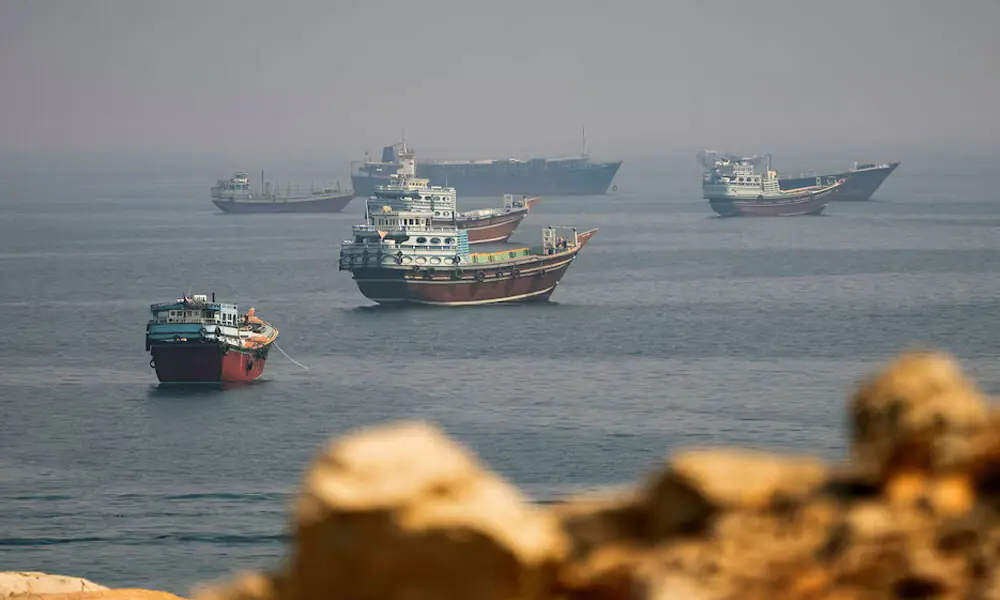
    Trump said on Sunday ​he was highly unlikely to order fresh attacks on Iran as long as talks to ​end the conflict progress, even as both countries reported that shipping had been hit in or near ‌the Strait ⁠of Hormuz.

    He had hinted at renewing attacks on Iran after last week’s US midterm elections, but there has been no sign of a large-scale US military operation. Iran has said it would respond by striking US and Israeli targets.

    Tim Waterer, chief analyst at KCM Trade, called ​Trump’s comments “more measured” but ​said “the market is ⁠still waiting to see whether the midterms have produced a lasting shift in Trump’s approach to the conflict, or whether this is just ​another temporary change in tone.”

    Oil is headed for a glut again as ​recovering Middle ⁠Eastern oil flows, rising production from other countries and weak demand have pushed global supply above consumption, JPMorgan said in a report on Friday, estimating a surplus of 1.1 million barrels per day ⁠in September, ​widening to 1.4 million bpd in October.

    Separately the Houthis claimed ​responsibility for an attack on Saudi Aramco’s offices in the capital Riyadh on Sunday that left windows blown out ​but no reported casualties.

    Source: brecorder

  • Bahawalpur college principal booked for raping teenager

    Bahawalpur college principal booked for raping teenager

    BAHAWALPUR: The Musafirkhana police booked the principal of a private college for the alleged rape of a first-year student in mauza Khanpur Mirchan. No arrest has been made so far in the case.

    According to the complaint, the father of the victim (17), she was waiting at the college gate to leave for home on Nov 3 when the principal took her into the office and allegedly raped her.

    He claimed that when his daughter returned home, she narrated her ordeal. He further claimed that his biradari prevented him from lodging a complaint with the police but he filed the complaint.

    When contacted, a Musafir Khana police official said that the case was under investigation. The victim’s parents had appealed to the Punjab chief minister to direct the police for immediate action and arrest the suspect.

    Published in Dawn, November 9th, 2026

    Source: dawn

  • Iran says no unauthorised vessels transited Strait of Hormuz overnight after navigation aids destroyed

    Iran says no unauthorised vessels transited Strait of Hormuz overnight after navigation aids destroyed

    DUBAI: Navigational ​aid systems ‌in the south ​of ​the Strait of ⁠Hormuz ​were destroyed ​and no unauthorised vessels ​transited ​the maritime route ‌overnight, ⁠an unnamed Revolutionary Guards ​Navy ​official ⁠told Iranian ​state ​media ⁠on Monday.

    Iran says 3 tankers caught fire in Hormuz

    Source: brecorder

  • ANZ misses some expectations, warns capital competition to keep rates higher

    ANZ misses some expectations, warns capital competition to keep rates higher

    SYDNEY: ANZ fell short of expectations for net interest margin and net ​interest income on Monday, dragging on its share price, as its ‌CEO warned that global competition for capital from AI and other sectors would keep interest rates higher for longer.

    Australia’s fourth-largest lender by market capitalisation posted a 31% surge in cash profit of ​A$7.6 billion ($5.2 billion) for the year ended September 30, in line with ​a Visible Alpha consensus.

    But the bank’s net interest margin, a key ⁠measure of profitability, fell to 1.53% from 1.55% in 2025, hurt by competition across ​most divisions and the timing of the Reserve Bank of Australia’s rate changes. Net ​interest income of A$9 billion in the second half was also about 2% below analysts’ expectations.

    ANZ shares were down 4.2% in afternoon trade, while the S&P/ASX200 was flat.

    Chief Executive Nuno Matos said ​a “supercycle of investment” around the world was creating global economic consequences.

    Developed-economy governments, he ​said, were comfortable running budget deficits which meant they were increasingly taking on debt at a ‌time when ⁠major corporates were also hiking borrowing.

    “Renewables, defence and AI compete for long-term capital which means they compete with the administrations with governments for long term capital,” Matos told reporters.

    ANZ Bank wins approval for sub-branch in Shanghai free trade zone

    “We are in a world that from a funding perspective with so much ​projects going on is ​in a tough ⁠situation which is creating inflation and high rates.”

    ANZ is projecting Australia’s economy will grow 1.6% next year, which compares with 1.1% ​expected for this year, but Matos also said that the ​economy would ⁠be able to weather “a benign environment”.

    ANZ’s operating expenses declined 14% in 2026 due to lower restructuring expenses and the absence of the Australian Securities and Investments Commission settlement amount.

    Its Australian ⁠retail division’s ​annual cash profit climbed to A$1.71 billion from ​A$771 million last year, lifted by higher home loan volumes.

    Source: brecorder

  • Bangladesh’s external debt increases almost threefold in decade

    Bangladesh’s external debt increases almost threefold in decade

    Bangladesh’s foreign debt has almost tripled in 10 years, a steeper rise than in any other South Asian country except the Maldives, according to the World Bank.

    Even so, the country has a lower debt burden relative to export earnings than Pakistan, Sri Lanka and Bhutan. However, its burden is higher than that of India and Nepal.

    According to the World Bank’s International Debt Report 2026, Bangladesh’s total foreign debt stood at $113 billion at the end of 2025, up from about $38 billion in 2015. That is the third-largest stock in South Asia.For every $100 in annual earnings, Bangladesh carries $210 in total debt and pays back $16 annually.

    Economists say the indicators are manageable for now, but Bangladesh could face repayment trouble if borrowing keeps growing at this pace and the money is not put to proper use.

    In the South Asia region, India holds the largest external debt stock at $764 billion, up 59pc in a decade. Pakistan follows at $135 billion, almost double the level of 10 years ago.

    In Sri Lanka, foreign loans rose 31pc to $57 billion. External debt rose 186.5pc to $11 billion in Nepal and 57pc to $3.3 billion in Bhutan. The Maldives recorded a more than fourfold increase to $4.7 billion.

    Repayments take 16pc of exports

    Debt servicing took 16pc of Bangladesh’s export earnings in 2025, 3.1 percentage points less than the year before. That is the share of export income spent on repaying principal and interest on foreign loans, and a falling ratio is a positive sign of repayment capacity.

    Even so, it remains above India and the South Asian average of 10pc, though below Sri Lanka at 26pc and Bhutan at 19pc. Measured against gross national income (GNI), servicing costs are low. At 2pc, Bangladesh matches India and the regional benchmark, against 5pc in Sri Lanka and 6pc in Bhutan.

    The country’s debt-to-GNI ratio, which is external debt as a percentage of the national income, stands at 24pc. It is a manageable level but slightly above the South Asian aggregate of 21pc. The ratio is 20pc in India, 41pc in Pakistan and 54pc in Sri Lanka. Set against what the country earns from exports, the debt looks heavier.

    External debt stands at 210pc of Bangladesh’s annual exports, more than twice what the country earns each year from foreign trade and other income.

    That is far above India at 83pc and the South Asian aggregate of 95pc, but below Pakistan at 324pc, Bhutan at 301pc and Sri Lanka at 272pc.

    Warning on borrowing

    Zahid Hussain, a former lead economist at the World Bank’s Dhaka office, said Bangladesh still does better than Pakistan and Sri Lanka on these indicators but trails India. “If foreign debt keeps growing at the current pace, it would not be surprising if Bangladesh eventually faced a situation similar to Sri Lanka’s,” said the economist.

    “If you are not prudent about the types of debt you take and how you use the borrowed funds, becoming another Sri Lanka is only a matter of time.” He said comparing Bangladesh with Pakistan is difficult, given Pakistan’s particular geopolitical and strategic situation.

    Zahid said exports matter because the debt-to-GDP ratio shows very little about a country’s ability to repay. A large economy is not enough; it also needs adequate liquidity, which is why the export ratio is important.

    On this measure, Bangladesh is also vulnerable because its export base is small and heavily dependent on a single product category. Its exports as a share of GDP are among the lowest, he said.

    “Remittances add to foreign currency earnings, but even counting them India stays far ahead because its remittance income is much higher. Sri Lanka, similarly, receives large numbers of tourists and earns substantial foreign currency from tourism,” he added.

    Costlier loans ahead

    Prof Mustafizur Rahman, a distinguished fellow at local think tank Centre for Policy Dialogue (CPD), said the debt-to-GDP and debt-to-export ratios are rising gradually, but the most important indicator is the ratio of net exports to debt servicing.

    He said that about 85pc of export earnings come from readymade garments, where domestic value addition is 60-65pc. The ratios would therefore be significantly higher if net exports were used.

    Recent loans carry relatively high interest rates and shorter repayment and grace periods, so the ratios will rise rapidly in the coming years, said Mustafizur, as Bangladesh already faces growing debt pressure. Government debt servicing was $4.9 billion in the last fiscal year and is projected to reach $7.6 billion by 2029, as interest rates climb while grace and repayment periods shrink. The interest rate in Japan, for example, has risen from below 1pc in 2021 to above 3pc, he said.

    He said Bangladesh needs to raise exports and domestic value addition, improve domestic resource mobilisation and reduce its reliance on foreign borrowing to finance the Annual Development Programme.

    “Global financing conditions are tightening. Bangladesh will still need foreign loans, but should negotiate better terms and secure more concessional financing,” he said, adding, “It could also consider raising funds through bond issuance.”

    According to the World Bank report, foreign debt of developing countries rose 5.5pc to a record $9.4 trillion in 2025, the fastest growth since 2021 and about four times the average pace of 2022-24.

    Debt-service pressure remained severe amid elevated global interest rates. Low and middle-income countries paid $1.4 trillion in principal and interest in 2025, up 1.9pc and the fifth consecutive annual rise.

    Between 2022 and 2025, developing countries paid $436 billion more in debt service than they received in new financing.—The Daily Star/

    Published in Dawn, November 9th, 2026

    Source: dawn

  • Cryptocurrencies slide to two-month lows after US midterms

    Cryptocurrencies slide to two-month lows after US midterms

    SYDNEY: Cryptocurrencies fell sharply in late Sunday ​trade, with bitcoin and ‌ether touching their lowest levels for more than ​two months, as investors ​fretted a Democratic Party-controlled ⁠US Congress will toughen ​regulation on the asset ​class.

    Bitcoin , the oldest and largest cryptocurrency by market capitalisation, fell ​by more than ​2% to $73,708, the lowest price since ‌August. ⁠Ether fell about 5% to $2,223, also the lowest since August.

    Binance says customers pulled net $4.7 billion after hack as crypto world weighs risk

    Crypto markets have ​been ​shaken ⁠in recent sessions by a $6 billion ​heist at Binance, ​the ⁠world’s biggest exchange, and the election to office ⁠of ​high-profile critics in ​last week’s US midterms.

    Source: brecorder

  • Iqbal and the Pakistani dream: fact or fiction?

    Iqbal and the Pakistani dream: fact or fiction?

    Visiting Srinagar once, Indian essayist Pankaj Mishra found Iqbal in a rather unexpected place. Or, at least, in an unlikely heart.

    For most Indians, Mishra notes, Iqbal was simply the “misguided instigator of the movement for Pakistan.” But then Mishra met Mohammad Ishaq Khan, a historian of Islam in Kashmir. By his very nature, Dr. Khan held politics at arm’s length; his writing focused on faith’s quieter, more contemplative hues.

    And yet when this gentle scholar found himself at Iqbal’s tomb in Lahore, he was overcome. “I couldn’t control myself. Tears started pouring from my eyes.”

    Concluded Mishra, “The idea of Iqbal as the man who had brought a hope of redemption to the Muslims of the subcontinent survived, and—this is what struck me—still had the power, many decades later, of moving even someone like Dr. Khan, committed to the intellectual life, to tears.”

    That is, perhaps, the starting point: the debate over what Iqbal proposed in terms of Muslim statehood, reignited recently by social media, is secondary to how he made those Muslims actually feel—that after such protracted loss, there could yet be salvation. Or, as the poet himself put it, Sabaq phir parh sadaqat ka, adalat ka, shujaat ka / Liya jaye ga tujh se kaam dunya ki imamat ka.

    But while most already know Iqbal to be the answer to something inwards—to a crisis of the spirit—the material world stakes as much of a claim. Because, for the authors of the Pakistan project, it wasn’t quite enough that he set the youth’s hearts on fire; it was also necessary that the prestige of his name attach itself to the idea of Pakistan. An intellectual genesis requires, well, intellectuals, and few were more moving than the Allama.

    Nor did it hurt that the man was born, raised, and closely tied to the Punjab, a land both vital to, and late to join, the country’s creation. Geniuses were needed in Pakistan proper; otherwise it would be just too unbearably ironic that firebrands in UP, a place still stuck in India, would get to monopolise the origin story.

    Dreams of Pakistan: misreading Iqbal’s Allahabad address

    This is why Iqbal’s famous Muslim League presidential address, delivered in Allahabad in 1930, is a gift to Pakistan Studies. His core statement is as follows:

    “I would like to see Punjab, North-West Frontier Province, Sindh and Baluchistan amalgamated into a single state. Self-government within the British Empire, or without the British Empire, the formation of a consolidated North-West Indian Muslim state appears to me to be the final destiny of the Muslims, at least of North-West India.”

    For most nationalist histories, this is a watershed: the dream of Pakistan, put forward by the poet of the east for the first time—separate statehood from India (and, even more convenient, no awkward references to a Bengal that would require excising after 1971).

    But none of this is borne out by the record. For starters, separate statehood was not floated by Iqbal first: right-wing activist Murtaza Ahmad Khan Maikash wrote it up in a four-part-series in Lahore’s daily Inqilab in 1928, premised on the same four provinces that make up Pakistan today. A similar proposal by Malerkotla nawab Zulfiqar Ali Khan followed a year later.

    Second, a separate country wasn’t, in fact, floated by Iqbal at all—at least, not in 1930. He did wish for ‘Punjab, North-West Frontier Province, Sindh, and Balochistan’ to be ‘amalgamated into a single state,’ but, as he mentioned elsewhere in the same speech, the plan was to work “within the body-politic of India.”

    When Iqbal said “state”, it was in the lowercase Indian fashion, as a province. Son Javid Iqbal confirms in his book Islam and Pakistan’s Identity that this was for a “Muslim India within India, as the word ‘state’ used by Iqbal, only implied the grant of full autonomy…”

    The poet clarified as much in his letter published in The Times on 12 October 1931: “I do not put forward a demand for a Moslem State outside the British Empire.” His view was that “Muslim provinces…would be the bulwark of India…against the hungry generations of the Asiatic highlands.” He wrote again of Hindu-Muslim ties in 1931, “…I cannot allow myself to believe…that all human efforts directed to uniting the two communities are doomed to failure.”

    For those still unconvinced, Iqbal put all doubts to rest in 1934, writing to friend Edward John Thompson his refusal to own “the scheme called Pakistan”:

    “You have made one mistake which I hasten to point as I consider it rather serious. You call me a protagonist of the scheme called Pakistan. Now Pakistan is not my scheme. The one that I suggested in my address is the creation of a Muslim Province i.e.; a province having an overwhelming population of Muslims in the North-West of India. This new province will be, according to my scheme, a part of the proposed Indian Federation. Pakistan scheme proposes a separate federation of Muslim Provinces directly related to England as a separate dominion. This scheme originated in Cambridge.”

    Iqbal signed off, “The authors of this scheme believe that we Muslim Round Tablers have sacrificed the Muslim nation on the altar of the Hindu or so-called Indian Nationalism.”

    Denying the Allama outright

    To those wary of state myths, a close reading of Iqbal’s address in 1930, and his own denials in 1931 and 1934, are enough to knock him off the pedestal of pro-Pakistan visionary.

    To be fair to the sceptics, the version taught in state textbooks is indeed wrong: Iqbal did not mean separate statehood in 1930; we know this because he literally said, over the next three years, that he meant nothing of the sort. His Allahabad address did not spell the dream of Pakistan; that we teach schoolchildren otherwise is a distortion of history.

    After all, as Iqbal himself implied, the seasoned politicians that found themselves at the Round Table had little in common with their critics. While Rahmat Ali and the angry young men of Cambridge were calling for a Pakistan that stood severed, the Round Tablers—Iqbal, Jinnah, and Zafrulla Khan—wanted Muslim security inside a federal India, secured by strong provinces and a weak centre.

    That’s why, at least up to 1934, Iqbal kept a safe distance from ‘the scheme of Pakistan’. Future foreign minister Zafrulla Khan went further and scoffed that it was “chimerical and impracticable”; that it was “a student’s scheme” with “nothing in it”. Jinnah was more generous, telling Rahmat and his friends, “My dear boys, don’t be in a hurry; let the waters flow and they will find their own level.”

    To say Iqbal thereby doesn’t figure in Pakistan’s genesis, however, is unkind. Firstly, because the waters did find their level: the Iqbal-sceptics play up his early denials without ever mentioning how his thoughts evolved on the subject: his final stance is best measured by his letter to Jinnah in 1937, which we will come to in a moment.

    Second, the Iqbal-sceptics also skip over the context: Muslim nationalist thought had not breached the frontier of separate statehood in 1930; not to any serious reception anyway. Jinnah himself was a decade out from calling for another country. When that did happen in Lahore in 1940, it was because two years of humiliation under Congress rule had offered a preview to formerly pro-union Muslims of what lay in store. They responded accordingly.

    Journey to separation: Iqbal’s 1937 letter to Jinnah

    By the time of the Lahore Resolution, however, Iqbal was gone. Pakistan’s national poet died in 1938—all of two years before the Muslim League’s major bid for separation, and before a hostile press helped dub that bid ‘Pakistan’.

    But not before the Allama’s remarkable mind had grasped the nature of the change; it’s why his politics would travel quite some distance from his initial Round Table position of the early 1930s. Hence, also, the irony: where he ultimately landed was far closer to the same Cambridge kids he had once distinguished himself from not too long ago.

    That Iqbal’s ideas underwent a slow-burn radicalisation in the last years of his life—as opposed to a sudden Damascus moment—is plain. “It is obvious,” he wrote of the rising Nehru, “that the Indian nationalist whose political idealism has practically killed his sense for fact, is intolerant of the birth of a desire for self-determination in the heart of North-West Indian Islam.”

    The resulting nationalism, wrote Iqbal, “can mean nothing but mutual bitterness and even oppression.” This lends a certain tenor to his crucial letter of 21 June 1937. “We are actually living in a state of civil war which, but for the police and military, would become universal in no time,” he warned Jinnah.

    But if a “storm” was coming to northwest India, Iqbal wrote, Jinnah was the only Muslim “to whom the community has a right to look up for safe guidance.” And, in a big departure from his Allahabad address, Iqbal now declared that the “idea of a single Indian federation is completely hopeless.”

    What, then, was the cure? As he wrote to Jinnah, “A separate federation of Muslim provinces…is the only course by which we can secure a peaceful India and save Muslims from the domination of non-Muslims. Why should not the Muslims…be considered a nation entitled to self-determination…?”

    Over seven years, Iqbal the federalist had become Iqbal the separatist. Three years later, Muhammad Ali Jinnah stood before an exultant crowd in Lahore and joined him.

    A reason to fight

    Like the lawyer he placed his dying hopes in, Iqbal is too often painted in absolute shades. Yet as we have seen, he was neither the first-ever-dreamer of Pakistan in 1930, nor was he its rejectionist by the close of his life in 1938.

    But then, at the risk of repetition, the whole debate is secondary. Because, compared to the common sense of the Quaid, Iqbal stirred something visceral in the young Muslim. No dense political theory, including Iqbal’s own, could replicate the primal forces his poetry unleashed: a gasp for dignity that could only ever find its most cogent expression in the birth of Pakistan. Perhaps it was the waters finding their level again.

    Nor did they ebb, even after 1947. “What Iqbal means to me”—and it can only ever be the ‘me’—Nietzschean, confessional, boundless—is a subculture of its own in this country. Iqbal didn’t dream up Pakistan so much as he provided a basis for the Pakistani dream: a voyage of self-discovery; a reason to fight. Without him, Muslim nationalism would have remained a pair of broken wings.

    And most everyone knew it. Jinnah said he would take Iqbal’s works over “the rulership of the Muslim state”. Ayatollah Khamenei called his young theocracy “the embodiment of Iqbal’s dream”, and anguished that the Iran before it was unfit for the poet to set foot in. Imran Khan, driven to despair by his mother’s death, sought out Iqbal as “a philosophy of action”—”that human beings were the makers of their own destiny.” All told, Iqbal was sui generis: the same sentiment that caused liberal intellectuals like Mohammad Ishaq Khan to weep at his tomb drove doctrinaire radicals like Khadim Hussain Rizvi to rage through police barricades.

    Bear in mind, also, that most of the above were inheriting a world that had spun far beyond Iqbal’s. But the poet was, like everyone else, of his time, and the spiritual upheaval he caused can best be gauged by the record of those years. For one contemporary in 1935, the 24-year-old Malik Ghulam Nabi, Iqbal’s masterpiece, Bal-e-Jibreel (Gabriel’s Wing), landed like thunder from the sky; a cry for freedom like none before. “It beat back our holy men…it knocked down the pseudo-socialists, it mocked the colonizers, it inspired the poor to stand on their own feet…those once ashamed of calling themselves Mussalmans now claimed it with heart-bursting pride.”

    Ghulam Nabi knew, because he was one of them. “As a student, I called myself G. N. Malik…Hindu friends made this out to be Gopal Narain or, in the Sikh tarang, Guru Nanak…it was Iqbal’s aihsaan that we were able to do away with this inferiority complex, and openly announce we were Muslims.” (Malik Ghulam Nabi would go on to join the freedom movement; his daughter-in-law, Dr. Yasmin Rashid, remains in prison.)

    That is, at its simplest, what Iqbal meant to so many. “The fate of the world has been principally decided by minorities,” he said once. “…Character is the invisible force which determines the destinies of nations, and an intense character is not possible in a majority.”

    And as the anxieties of a minority became those of a civilisation, it could only fall to Iqbal—a man of extraordinary contradictions—to become its poet-saint.

    Source: dawn
  • Bumpy road to export-led growth

    Bumpy road to export-led growth

    In an unusual public expression of dissatisfaction, Prime Minister Shehbaz Sharif has voiced displeasure with exporters’ performance despite what he described as ‘several incentives’ extended to them in the last federal budget.

    His remarks raise questions not only about the effectiveness of government support but also about the commitments, if any, made by beneficiary industries to increase exports in return. The problem reflects a persistent failure to distinguish between export promotion, export-led growth and export-led industrial transformation. The first seeks to increase foreign sales of existing products, the second makes exports a driver of economic expansion, while the third requires sustained investment in technology, productivity and higher value manufacturing. Export-led growth is a favourite phrase for politicians to use in their policy statements without consistently translating it into industrial development.

    Official data and reports showed Pakistan’s policies have largely focused on export promotion through subsidies and concessions to established industries. The Commerce Ministry’s Rs25 billion subsidy package for rice exports and similar demands from the textile sector illustrate this approach. The history is full of rebates, concessions and cash subsidies to suppress prices of commodities. The underlying question is whether economic policymakers and influential industrial groups have prioritised short-term export incentives over investment in competitive industries. Despite merchandise exports averaging around $2.5bn a month, Planning Minister Ahsan

    Iqbal announced targets of $60bn in May 2025 and $63bn in August 2026, both to be achieved within five years.

    Since Independence, industrial development has relied heavily on import substitution, encouraging production for a protected domestic market

    Official statements have also envisaged $100bn in exports by 2035. However, annual merchandise exports have remained between $30bn and $32bn in recent years, exposing the gap between official ambitions and productive capacity. The World Bank’s October 2026 Pakistan Development Update, titled Attaining Escape Velocity, calls for continued tariff liberalisation, improved export standards and greater access to export financing to strengthen competitiveness. The bank’s historical data shows that exports of goods and services declined from a peak of 17.3pc of GDP in 1992 to around 10pc in 2025, indicating that exports have failed to keep pace with economic expansion. Former commerce minister Humayun Akhtar Khan attributed this declining share to a shrinking industrial base and stagnant productivity caused by inadequate technological upgrading. He said Pakistan’s competitors were producing cheaper, more competitive goods by adopting modern technology, while domestic industries continued to lag behind.

    “The exchange rate no longer has any meaningful link with export growth,” Mr Khan said, calling for a focused industrial policy to reverse de-industrialisation and expand production capacity.

    The IMF’s 2024 Article IV consultation report provides further evidence of limited industrial diversification. It noted that Pakistan ranked 85th on the Economic Complexity Index in 2022, unchanged from its position in 2000, with exports heavily concentrated in textiles and agricultural products. The ranking suggests limited progress in developing more sophisticated export products. The experience of East Asian economies offers a contrast. According to the World Bank’s 1993 study, The East Asian Miracle, countries such as South Korea and Taiwan combined export expansion with industrial investment, technological upgrading and productivity growth. Their experience illustrates how export promotion can contribute to industrial transformation rather than merely increasing foreign sales of existing products. Pakistan followed a different course. Since independence, industrial development has relied heavily on import substitution, encouraging production for a protected domestic market. Subsequent export promotion measures emphasised subsidies without consistently improving industrial productivity, while investment increasingly favoured services, particularly real estate.

    The Planning Commission’s Annual Plan 2024–25 highlighted this imbalance, reporting that manufacturing accounted for only 10pc of private investment, compared with 21pc for real estate activities and 30pc for agriculture. It also observed that manufacturing’s investment share was declining. The trend continued in FY25. According to the State Bank of Pakistan’s Annual Report 2025, private investment in manufacturing declined for the fourth consecutive year, while overall private investment increased modestly, mainly in services. The bank also reported that increased fixed investment financing largely supported efficiency improvements and infrastructure upgrades, with relatively few industries borrowing to expand production capacity. Compounding these weaknesses is the absence of a coherent national industrial policy.

    The Ministry of Industries and Production has largely pursued sector-specific policies for automobiles, mobile phones and other industries, encouraging domestic production under substantial tariff protection. Former ambassador to the World Trade Organisation Dr Manzoor Ahmed identified excessive tariff protection as a major constraint on export competitiveness. However, he considered the government’s new five-year tariff policy a step towards encouraging industrialisation and exports.

    Citing the automobile industry, Dr Ahmed said Suzuki had closed its manufacturing plants in Thailand as the country moved towards electric vehicles, while Pakistan’s three major automobile manufacturers continued to enjoy excessive protection. He urged Pakistan to learn from Indonesia and Thailand, which had moved away from such protection, and adopted technological upgrading to remain competitive in international markets.

    Dr Ahmed stressed that technological upgrading was essential for export competitiveness. Pakistan, he said, needed to follow changes in global manufacturing and technology rather than remain dependent on protected domestic industries. Pakistan’s export difficulties, therefore, extend beyond high energy costs, exchange rate instability, taxation and market access. Unlike East Asian economies, which linked industrial support to productivity and export performance, Pakistan has continued to protect established industries without consistently requiring technological advancement or international competitiveness. Unless industrial policy and investment incentives are linked to measurable improvements in productivity, domestic value addition, technological upgrading and export performance, ambitious targets may continue to outpace the economy’s capacity to deliver.

    Published in Dawn, The Business and Finance Weekly, November 9th, 2026

    Source: dawn

  • A shifting cycle

    A shifting cycle

    PAKISTAN’S 2024 election results marked the end of a political cycle that began in the early 2000s. Less often noted is that this cycle expired at roughly the same moment as the global order which framed it. Signs of political and cultural realignment are now fully emergent, and their trajectory passes through events of the past 25 years — the ‘war on terror’ and its effects on Muslim societies, the financial crisis alongside growth in Asian economies, and increased migration to Western countries.

    The Pakistani domestic cycle is best characterised as an unsuccessful attempt to achieve a political settlement, under the garb of federalised (and electoral) constitutional rule. Its participants were the traditional parties PML-N and PPP, and their core constituents, sections of liberal civil society and private news media, and some segments of the judiciary. Its opposition came from entities excluded from or antagonised by that brief lived system of patronage: the PTI, the upwardly mobile urban classes, and the military establishment and its aligned factions among the media. The latter coalition won out over the last 10 years. In winning, it stumbled upon its own internal contradictions, which are now playing out as the present crisis.

    This cycle, however, was always nested inside something larger. Its vocabulary of rights, its civil society, and much of its international support came from a global dispensation; NGO work here was intellectually and financially sustained by Western aid largesse in the context of the war on terror. Once the external scaffolding weakened, the undoing at home proved swift.

    That scaffolding is what we commonly dub the neoliberal world order. Characterised by deregulation in markets, and trade and financial liberalisation, these prescriptions were macroeconomic orthodoxy for nearly four decades. They represented the response of the capitalist class to the stagflation crisis of the 1970s in Western economies, dismantling the political power of labour by making offshoring easier, and restoring the power of capital through financialisation. The recipe would remain incomplete without access to new labour, product, and capital markets, which is why it came packaged as IMF-run ‘structural adjustment’ for countries in the Global South.

    The Pakistani domestic cycle is best characterised as an unsuccessful attempt to achieve a political settlement.

    What did these four decades of liberalisation deliver? Growth for some countries (East Asia, parts of Latin America), stagnation and deindustrialisation for most others, astronomical returns for owners of finance capital, and heightened inequality nearly everywhere. Since 2008, populations in the West have rightly soured on this misfiring orthodoxy, and that resentment has gradually made its way into how decision-makers think about their economies. Free markets are no longer considered orthodoxy (at least in rhetoric).

    The unravelling of the old order extends beyond economics. Liberal democracy was presented as a core value, supposedly maintained by the US globally. Its use as a cynical foreign policy stick had already made many in the world wary. Elsewhere, the appeal of some authoritarian systems is growing. Sociologist Cihan Tugal points to Turkiye under Erdogan and the AKP, which has used state welfare, economic intervention, and centralised politics to contain opposition over two decades. Key political and establishment figures in countries like Pakistan now routinely view limits on democracy as necessary for economic progress.

    Does this reordering then offer Pakistan an opening? Statist nationalists see the country’s expanded role in regional geopolitical affairs as both a vindication of its military-led governing structure and a route to its destined status as a regional power. On the face of it, both shifts work in the country’s favour. As a state with strong military capabilities, both nuclear and conventional, Pakistan can extract material concessions from regional powers looking for a security patron after the US winds down its position. And for a country long locked into IMF programmes, escaping some elements of neoliberal economic orthodoxy is a necessity.

    The real question is: can it? Here the answer goes back to how the global is refracted into the local via the domestic arrangements that actually exist on the ground. Can the rentier/ patronage economy be turned productive? Can those with outsized claims on the exchequer be reined in? The task rests with a state overwhelmed by a military-bureaucratic establishment that has turned its primary logic into one of extraction via authoritarian decree rather than service delivery. More importantly, this is a state of viceregal origin, incapable of the mass mobilisation and disciplining that engendered effective capacity in Korea or China. It is held together instead by the distribution of rents, internally to its cadres and kin, and externally to a narrow sliver of the population.

    The traditional parties that might have steered this moment have proven completely unable to do so. Their mode of politics rested on narrow patronage relations with socially dominant segments in Punjab and Sindh, and in exchange for temporary respite they outsourced Fata, Balochistan, judicial independence, electoral competition, and even large parts of governance to the militarised logic of establishment control. Most of all, they have ignored the emergent reality of the upwardly mobile, digitally resourceful urban middle classes and inflation-weary masses, leaving the field wide open for multiple types of resentment.

    However, resentment on its own is insufficient to lead society anywhere. The arduous task for those still committed to broad-based material uplift lies in reworking the state into something attentive to the collective good and capable of mobilising society for it. This is not a reworking that will be handed to progressives with any ease. In fact, in the absence of viable progressive movements to project some notion of universal justice, the militarisation of the region and the turn to narrow, sectional resentment is a recipe for further marginalisation of the already vulnerable.

    The writer teaches politics and sociology at Lums.

    X: @umairjav

    Published in Dawn, November 9th, 2026

    Source: dawn

  • Nvidia probes whether CEO Huang was target of foreign spying as he admits affair

    Nvidia probes whether CEO Huang was target of foreign spying as he admits affair

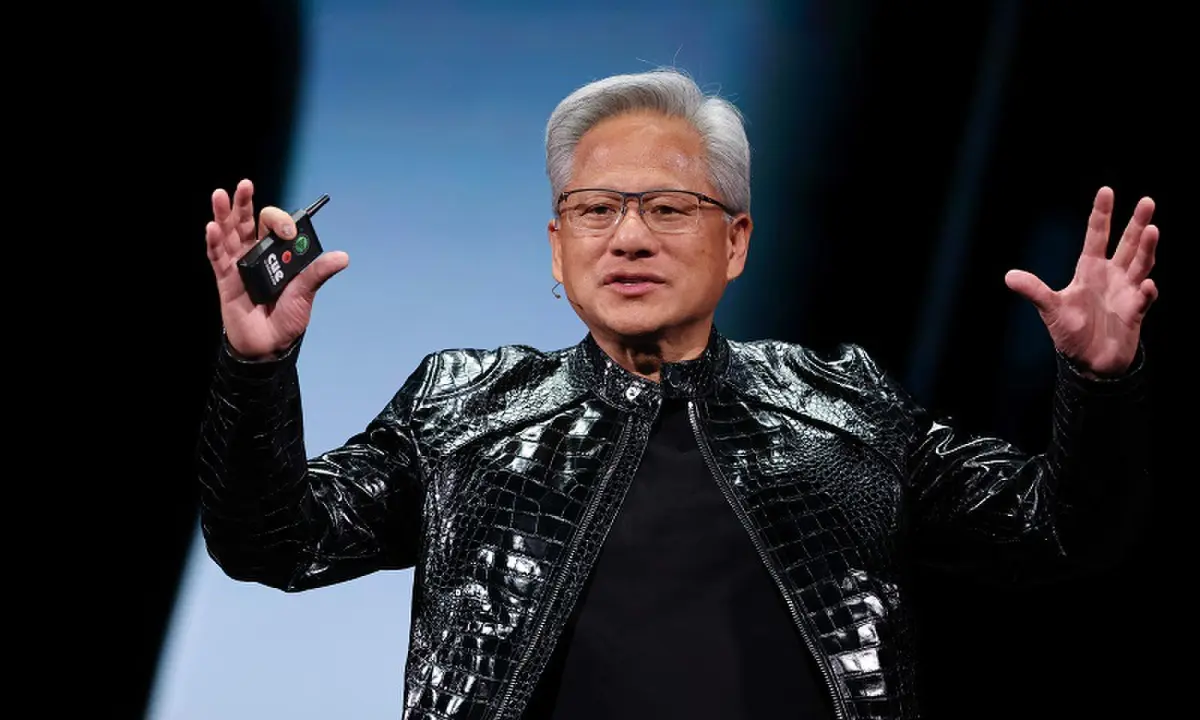
    Nvidia said on Monday its board was probing whether CEO Jensen Huang had been the target of a foreign intelligence effort, after a media report alleged he had a close relationship with a Chinese businesswoman who passed information to Beijing.

    Huang said in a message to employees that he had been unfaithful to his wife and took “full responsibility” for his actions, while Nvidia said the CEO was committed to continuing to lead the company without interruption.

    The developments are likely to pressure the chipmaker’s stock, which has already fallen sharply amid worries about the AI boom’s sustainability, and may also raise questions about Huang’s future at the helm of the company he co-founded, analysts said.

    The New York Times reported last month that Huang had a relationship with Alice Huang, an unrelated former executive of Singapore-based company Megaspeed, who US authorities investigated and concluded was a Chinese intelligence asset.

    US authorities have scrutinised Megaspeed, which buys AI chips from Nvidia, over suspicions it helped Beijing gain access to advanced AI chips that are barred from shipment to China.

    “The NVIDIA Board is initiating an independent investigation in light of recent reporting that founder and CEO Jensen Huang has been the target of a foreign intelligence effort. A committee of independent directors, assisted by outside independent counsel, will oversee the investigation,” Nvidia said.

    The company said on Sunday that while its board had no reason to believe that either US national security or Nvidia secrets were compromised, its inquiry would examine all available information.

    The board has confidence in the CEO and his leadership team, Nvidia said, adding that Huang fully supports the review and has committed to cooperating with it.

    US President Donald Trump said on Sunday he had not spoken to Huang about the allegations, but called him a fine person. “I hope everything’s fine. He’s done such an incredible job,” he added.

    When asked if he believed he should have acted on intelligence when he was briefed about it, Trump said: “No, I don’t think so. I think he’s an honorable guy. I think he probably has an excuse for it. You have to hear it.”

    The New York Times had reported that Trump was briefed about the intelligence findings roughly a year ago and chose not to do anything with the information.

    US Secretary of State Marco Rubio declined to comment on Huang when asked by reporters earlier in the evening.

    Chinas foreign ministry did not immediately respond to a Reuters request for comment.

    Huang said on Sunday that he was “committed to protecting Nvidia and supporting America’s national security.”

    Megaspeed did not respond immediately to a request for comment outside business hours.

    Piling pressure on Nvidia

    The investigation adds to pressure on Nvidia at a time investors are already pulling back amid uncertainty over the sustainability of the booming AI market that made the chipmaker one of the world’s most valuable companies.

    The $4.5 trillion chipmaker’s shares have given up all their gains this year amid a broader tech market rout triggered by worries over the pace of AI spending.

    Huang, who has led Nvidia for more than three decades, has been central to its rise to become a dominant supplier of AI chips.

    “There is clearly risk that Jensen could be removed as CEO depending on the Board investigation and this will add risk to the stock as he is so important to the Nvidia story and strategy globally,” said Dan Ives, partner and senior managing director at Yorkville Ives & Co.

    “This is a black eye moment for Jensen and will spark multiple congressional inquiries at a minimum and will create an overhang on the stock,” Ives said, adding that the news would also increase scrutiny about selling chips to China.

    Huang admitted to having been unfaithful to his wife, saying, “My actions hurt her and our children. There is no excuse for what I did. I am deeply sorry.”

    Addressing his colleagues, board, partners and shareholders, Huang said: “My responsibility is to serve you and be worthy of your trust. I have fallen short of that responsibility. I am fully committed to NVIDIA and will work to earn back your confidence.”

    In late October, he had told Bloomberg News that his relationship and interactions with Alice Huang were related to Megaspeed and were “completely normal and not unusual”.

    Josh Gilbert, lead analyst at trading platform eToro, said Huang’s fingerprints were on every part of the company’s rise, so any doubt over his position would matter to shareholders.

    “While the investigation is likely to dent sentiment, it won’t alter anything long-term unless it leads to a change at the top, at which point it becomes a completely different ball game,” Gilbert added.

    Top Republican lawmakers in the US House of Representatives had already called on Huang to brief Congress this month about the New York Times report.

    The report raises “significant national security concerns regarding (China’s) access to sensitive US technology and information,” the lawmakers said in a letter dated November 4.

    “It is vital that Congress determines the extent to which US national security has been placed at risk,” they added.
    US export controls since 2022 have sought to restrict China’s access to advanced Nvidia chips and the equipment needed to make them.

    Source: dawn