Blog

  • Saudi-led coalition intercepts two Houthi missiles fired towards Riyadh

    Saudi-led coalition intercepts two Houthi missiles fired towards Riyadh

    The Saudi-led coalition fighting Yemen’s Houthis said it ​intercepted and destroyed two ballistic missiles fired ‌by the Houthis group towards Riyadh on Sunday, after loud booms were heard in the Saudi capital.

    Saudi Civil Defence had ​issued an alert in the Riyadh region ​shortly before the booms, a Reuters witness said. ⁠Authorities later announced that the risk of danger ​had passed.

    Later, the coalition said it intercepted and destroyed ​two cruise missiles in Riyadh and the southern region.

    Fighting between the sides has shattered a 2022 UN-brokered truce, after Saudi ​Arabia led a coalition of Arab states into ​Yemen in 2015 to restore the internationally recognised government following the ‌Houthis’ ⁠seizure of the capital Sanaa.

    Two explosions heard in Riyadh following alert

    The renewed fighting has become a front in the wider Middle East war triggered by US and Israeli attacks on Iran in ​February.

    The Houthis ​have targeted ⁠Saudi airports, ports and oil facilities with missiles and drones since hostilities resumed ​in July, while Saudi Arabia has carried ​out ⁠airstrikes against Houthi targets in Yemen.

    The latest incident comes a day after Yemen’s Houthi-run health ministry said Saudi ⁠airstrikes ​killed at least 33 people near ​Sanaa. Saudi authorities said they were investigating.

    Source: brecorder

  • Hamza Zahoor’s unbeaten century guides Pakistan U-19 to thrilling win over India

    Hamza Zahoor’s unbeaten century guides Pakistan U-19 to thrilling win over India

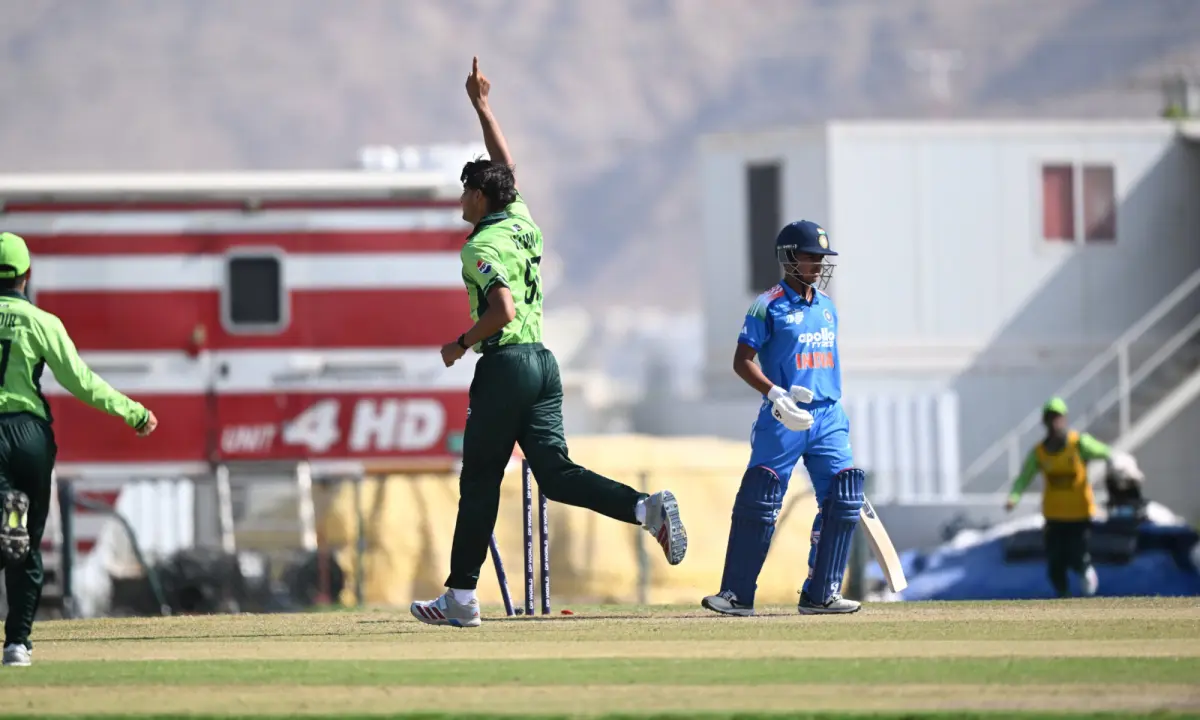
    Hamza Zahoor produced a match-winning unbeaten century as Pakistan Under-19 defeated arch-rivals India by three wickets in a thrilling Group ‘A’ encounter of the ACC Men’s Under-19 Asia Cup at the Al Amerat Cricket Ground in Muscat on Sunday.

    Chasing 209, Pakistan reached the target in 48.1 overs, finishing on 211 for seven, with Hamza holding his nerve under pressure to steer his side home.

    The wicket-keeper-batter remained unbeaten on 100 off 108 balls, striking 10 fours and three sixes, and was named Player of the Match.

    Pakistan’s chase, however, was far from straightforward as India’s bowlers made early inroads to reduce them to 61 for five. Hamza then joined Hasnain Abbas Dar, who contributed 38, to revive the innings with a crucial partnership.

    With wickets falling at the other end, Hamza showed remarkable composure, combining caution with timely aggression to keep Pakistan on course. He eventually guided the lower order across the finish line with 11 balls to spare, completing a memorable century in the process.

    Earlier, India, after electing to bat, were bowled out for 208 in 46.3 overs. Their innings got off to a disastrous start when captain and opener Lakshya Rajesh Raichandani was dismissed for a duck off the second ball.

    India slipped further to 22 for three, leaving their middle order under considerable pressure.

    Arjun Rajput then mounted a spirited recovery with an outstanding 107 off 85 deliveries, hitting 11 fours and five sixes.

    However, the right-hander received little support from the other end as Pakistan’s bowlers maintained pressure and regularly picked up wickets to restrict India to a modest total.

    Ali Raza, Rizwanullah and Niqab Shafiq shared the spoils with three wickets apiece, while Mohammad Sayyam claimed one.

    The victory takes Pakistan to the top of Group ‘A’ with four points from two matches, having registered back-to-back wins.

    India, meanwhile, have two points from as many games, with one victory and one defeat.

    Both teams have one group fixture remaining, with the top two sides advancing to the semi-finals.

    Source: dawn

  • Hodge hits 140 as West Indies build lead over Bangladesh

    Hodge hits 140 as West Indies build lead over Bangladesh

    SYLHET: Kavem Hodge hit an unbeaten 140 to extend West Indies’ lead to 315 on the fourth day of the second Test against Bangladesh in Sylhet on Sunday.

    West Indies reached 345-3 in their second innings when bad light halted play, with Hodge hitting 17 fours and a six off 189 balls and Amir Jangoo also unbeaten on 20.

    Hodge, who scored his third Test century and passed his previous highest score, was backed by opener Brandon King, who made 61, and debutant Kevin Wickham, who scored 78 for his second half-century of the match.

    West Indies resumed the day on 7-0, trailing by 23 runs.

    King and Joshua Da Silva put on 85 for the opening wicket, before Taijul Islam trapped Da Silva lbw for 36.

    King continued to attack, reaching his half-century off 62 balls.

    He was dropped by Towhid Hridoy on 56 off Taijul before Mehidy Hasan Miraz dismissed him for 61 off 84 balls, caught by Najmul Hossain Shanto at first slip.

    West Indies went to lunch on 128-2, with Hodge and Wickham at the crease and their lead at 98.

    ‘Chaseable’

    Hodge reached his half-century off 78 balls, while Wickham needed 68 deliveries to bring up his second fifty of the match. The pair took West Indies to tea at 259-2, with their lead extended to 229.

    Hodge completed his century after the break, reaching the milestone off 142 balls with 11 fours and a six.

    Hodge said he was pleased to contribute after failing to convert a start in the first Test in Dhaka, adding that the West Indies would assess conditions before deciding when to declare.

    “It’s always nice to contribute to the team,” he said. “We just have to come tomorrow and assess … play it by ear and keep going moment by moment.”

    Taijul broke their 165-run partnership, dismissing Wickham for a career-best 78 off 107 balls after he chipped the ball back to the bowler. West Indies were 284-3 when Wickham departed.

    Bangladesh missed another chance to remove Hodge when captain Shanto dropped him off Nayeem Hasan on 117.

    Jangoo, who scored a century in the first innings, joined Hodge and helped push the West Indies lead beyond 300.

    Hridoy was confident Bangladesh had a strong chance on the final day, saying the pitch remained good for batting.

    “If we can get a good start, 350 is chaseable, in my opinion,” he said. “But as I said, the start is very important.”

    Source: brecorder

  • By-polls in Gujranwala’s NA-77, Sahiwal’s PP-203 conclude

    By-polls in Gujranwala’s NA-77, Sahiwal’s PP-203 conclude

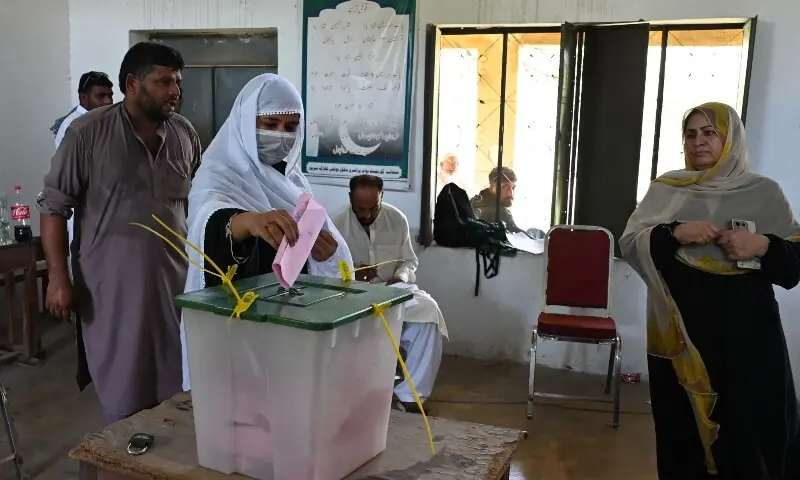
    Polling for by-elections in two Punjab constituencies — Gujranwala’s NA-77 and Sahiwal’s PP-203 — concluded on Sunday.

    Both seats had fallen vacant after the deaths of their respective lawmakers in September. Polling began at 8am and continued till 5pm, with those present inside the polling stations at that time allowed to cast their votes.

    NA-77 fell vacant following the death of five-time MNA Chaudhry Mehmood Bashir Virk on Sept 11 after a prolonged illness. His son, Rashid Basheer Virk, is among the candidates contesting the by-election.

    Rashid and 17 other candidates have filed nomination papers to contest the constituency, but opposition parties, including the PTI, PPP and Jamaat-i-Islami (JI), have not opted for the by-election.

    While the polling was under way, notices, copies of which are available with Dawn, were issued to Punjab MPA Qudsia Batool, MNA Saira Afzal Tarar and Parliamentary Secretary for Information and Culture Shazia Rizwan for alleged violation of the Code of Conduct after reports emerged on social media that the three had visited various polling stations within NA-77, a statement issued by the office of the provincial election commissioner said.

    Notices were also issued over alleged violations of the Code of Conduct to MNA Syeda Nosheen Iftikhar and MPA Hina Arshad Warraich for allegedly visiting polling stations.

    The officials were directed to appear at the Election Complex in Gujranwala for an explanation at 3pm.

    Chief Election Commissioner Sikander Sultan Raja also visited the provincial election chief’s office, where he was briefed on the polling process in both constituencies, the Election Commission of Pakistan (ECP) said.

    Meanwhile, PML-N leader and Punjab Information Minister Azma Bokhari claimed in a post on X that supporters of Markazi Muslim League (PMML) candidate Qazi Ibrahim Gujjar were caught “openly stamping ballots” with the election commission staff present.

    On Saturday, ECP took notice of an alleged violation of the Code of Conduct by Information Minister Attaullah Tarar during by-election campaigning in NA-77.

    According to the ECP, the minister visited the constituency by helicopter and addressed a campaign event for Rashid, violating a provision in the Code of Conduct, which bars public office holders from participating in campaign activities.

    The commission has sought a report from the district monitoring officer and the district returning officer to inquire into the matter. It has also directed the minister to appear before the commission in person.

    The ECP also said that the result of the constituency could be withheld until a final decision is made on the matter.

    PP-203

    In Sahiwal’s PP-203, the by-poll was held following the death of PML-N MPA Chaudhry Muhammad Hanif Jutt. This is the second time that a by-election was held in the constituency after the 2024 general elections.

    The seat was initially won by independent candidate Rai Murtaza Iqbal, backed by the PTI, with 55,874 votes against Jutt, who polled 35,163 votes.

    However, Iqbal, along with four other PTI-backed parliamentarians, was disqualified and denotified by the ECP following their conviction by an anti-terrorism court in Faisalabad on July 31.

    Subsequently, the ECP scheduled a by-election for Nov 23, 2025, which was won by Jutt with 46,820 votes. His closest rival, independent candidate Falik Sher, secured 10,975 votes.

    Jutt died of cardiac arrest on Sept 17 this year, necessitating Sunday’s by-election in the constituency.

    Around 1,370 polling personnel, including 574 women and 796 men, were deputed at 185 polling stations across the constituency.

    Meanwhile, District Police Officer Usman Tipu said 1,100 personnel had been deployed to ensure security during the by-election.

    A total of 185 polling stations had been established in the constituency, including 11 in Category A, 37 in Category B and 137 in Category C.

    A comprehensive traffic management plan had also been devised, with more than 65 personnel assigned duties.

    Source: dawn

  • SAFF Championship: Pakistan cruise past Maldives 3-0, close in on semi-final spot

    SAFF Championship: Pakistan cruise past Maldives 3-0, close in on semi-final spot

    Pakistan revived their semi-final hopes in the SAFF Championship with a commanding 3-0 victory over Maldives in their second Group B fixture at the National Football Stadium in Dhaka on Sunday.

    A first-half brace from Najeebullah Bettani, alongside an early penalty converted by McKeal Aroon Abdullah, helped Pakistan register their first victory of the tournament and put themselves in a strong position to qualify for the last four.

    Pakistan made an aggressive start and took the lead in the fourth minute when they were awarded a penalty.

    McKeal Abdullah stepped up and calmly converted from the spot to give the Green Shirts an early advantage.

    Pakistan continued to press forward and doubled their lead through Najeebullah, who produced a well-timed finish after Junaid Shah delivered an excellent cross from the left.

    Najeebullah made a perfectly timed run into the box, got ahead of his marker and poked the ball home.

    The forward then completed his brace with a superb individual effort. With Pakistan defending deep in their own half, the ball was cleared upfield, where Najeebullah brought it under control on the right before unleashing a powerful strike past the helpless Maldives goalkeeper.

    Pakistan’s three-goal advantage at half-time reflected their attacking efficiency, with the side making the most of their opportunities to put the contest beyond their opponents.

    Despite enjoying slightly more possession, Maldives struggled to translate it into meaningful attacking opportunities.

    Pakistan, meanwhile, were more threatening in front of goal, registering 15 shots, including five on target, compared to Maldives’ seven attempts, only one of which tested the goalkeeper.

    Both sides pushed for more goals after the interval, but neither could find the breakthrough as the second half ended goalless, leaving Pakistan with a convincing 3-0 victory.

    The result marked a significant response from Pakistan following their 3-2 defeat against arch-rivals India in their opening Group B encounter on November 5.

    Pakistan had trailed 3-0 at half-time in that match before producing a spirited late comeback.

    Najeebullah and Alamgir Ghazi scored in stoppage time to reduce the deficit, but India held on to secure all three points.

    The 2026 SAFF Championship, running from Nov 5 to 17 in Bangladesh, features six participating teams divided into two groups. Group ‘B’ comprises Pakistan, India and Maldives, while hosts Bangladesh, Sri Lanka and Bhutan are in Group ‘A’.

    The top two teams from each group will advance to the semi-finals.

    With their victory over Maldives, Pakistan have moved into a stronger position in the qualification race but must now wait for the outcome of the remaining Group ‘B’ fixture between India and Maldives, scheduled for Nov 11.

    Maldives will need a substantial victory over India to overtake Pakistan in the group standings and secure qualification.

    Otherwise, Pakistan and India will progress to the semi-finals.

    For Pakistan, the emphatic win provides a timely boost after their opening defeat and puts them within touching distance of a place in the last four.

    Source: dawn

  • Aramco skyscraper damaged as Riyadh financial district targeted

    Aramco skyscraper damaged as Riyadh financial district targeted

    An Aramco building in Riyadh was targeted in an “attempted attack”, the Saudi energy ministry said on Sunday, with eyewitnesses telling AFP the skyscraper sustained damage, after the Saudi-led coalition fighting Houthis said it had intercepted missiles launched by the group.

    Aramco facilities and infrastructure have been repeatedly struck by the Houthis rebels in Yemen in recent months, with tankers, refineries, storage areas and the company headquarters all targeted by the group.

    The energy ministry said in a statement that “an administrative building belonging to Saudi Aramco in Riyadh was subjected to an attempted attack today”.

    “The incident resulted in falling shrapnel that caused minor damage to the building, with no injuries or fatalities reported, thankfully.”

    “Aramco tower in KAFD has been targeted, that’s the sure thing,” an eyewitness told AFP, referring to the King Abdullah Financial District. Two other witnesses confirmed seeing damage to the building.

    The Houthis seized the Yemeni capital Sanaa in 2014.

    A 2022 truce that had paused fighting in the long-running conflict fell apart in July, and Saudi Arabia has since traded blows with the Houthis, who have struck Saudi airports, energy infrastructure and military sites.

    KAFD is one of the most visible manifestations of the kingdom’s ongoing economic and social reforms drive, with towering glass skyscrapers, high-end retail outlets and green spaces dotting the area.

    The area is home to some of the kingdom’s biggest homegrown companies and blue-chip international firms like Goldman Sachs.

    The headquarters of the kingdom’s influential sovereign wealth fund — the Public Investment Fund — and the Saudi stock exchange are also located in the heart of the district.

    Targeting the area, which is also home to residential housing and a large metro station with heavy commuter traffic during the morning rush hour, would mark a major escalation in the kingdom’s fight with the Houthis.

    Loud explosions heard

    The attack came hours after the kingdom’s education ministry announced, late on Saturday, the return of in-person schooling after weeks of remote learning in Riyadh following an earlier wave of strikes.

    Coalition spokesperson Turki al-Malki, in a Sunday morning social media post, said that “air defences intercepted and destroyed two ballistic missiles launched by the Houthi terrorist militia towards Riyadh”, as loud explosions were heard in the Saudi capital.

    The kingdom has been pressing allies for help as it comes under daily fire from the Houthis that recently seized swathes of the Red Sea coastline from the Yemeni government.

    A strike on Riyadh’s international airport in October left 13 people dead in the worst attack on the kingdom since 2015.

    Islamabad, which has two mutual defence pacts with Riyadh, has condemned Houthi attacks multiple times, terming them a grave violation of the kingdom’s sovereignty.

    Pakistan and Riyadh have signed two defence pacts aimed at collective deterrence, the Strategic Mutual Defence Agreement between the two and the Makkah Joint Defence Agreement that also includes Turkiye.

    Under the Makkah Defence Alliance, Pakistani, Saudi and Turkish leaders met in Riyadh and agreed to deploy military forces and capabilities rapidly in the kingdom.

    Pakistan is providing “whatever support is needed” to defend Saudi Arabia amid the Houthi attacks, the military’s spokesperson Lieutenant General Ahmed Sharif Chaudhry said in mid-October.

    However, the Inter-Services Public Relations (ISPR) director general also clarified that all members of the Makkah Defence Alliance were “absolutely clear […] that this alliance has no offensive intent; it is purely defensive”.

    The United Nations says more than 1,600 people have been killed and more than 300,000 displaced since fighting resumed in impoverished Yemen.

    The fragile 2022 truce fell apart after the Houthis allowed an Iranian plane to land in Yemen’s capital Sanaa in defiance of Saudi control over Yemeni airspace, setting off a spate of attacks.

    Later, the Houthis declared a maritime blockade of Saudi Arabia and began hitting its ships, territory and oil facilities, before seizing Yemen’s entire Red Sea coast in a lightning campaign.

    Source: dawn

  • PM Shehbaz meets Nawaz Sharif, discusses political and economic situation

    PM Shehbaz meets Nawaz Sharif, discusses political and economic situation

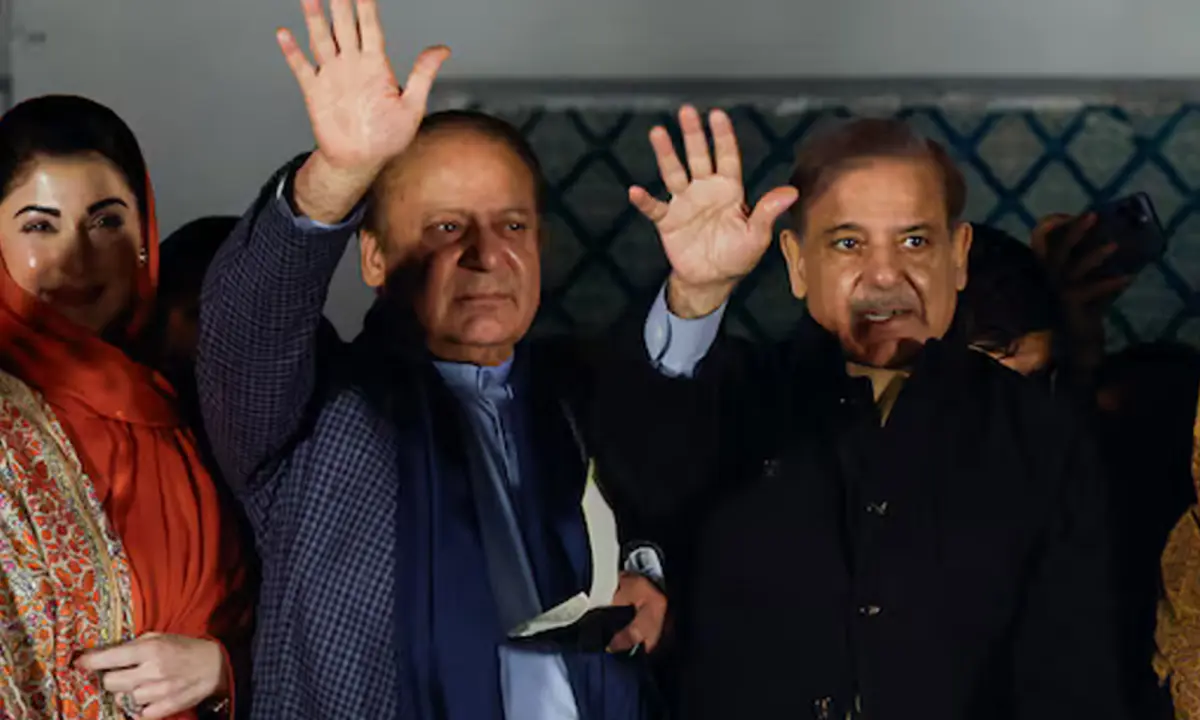
    Prime Minister Shehbaz Sharif on Sunday met Pakistan Muslim League-Nawaz (PML-N) President Nawaz Sharif at Jati Umra in Lahore to discuss the country’s political situation, economic affairs and other key issues.

    According to a statement issued by the Prime Minister’s Office, Shehbaz briefed Nawaz on the law and order situation in Khyber Pakhtunkhwa and recent government initiatives aimed at promoting the province’s development and prosperity.

    The prime minister also updated the PML-N leader on ongoing government reforms, particularly economic reforms, the challenges facing the country and measures being taken to address them.

    The two leaders held detailed discussions on national political affairs and steps to improve the economy.

    Deputy Prime Minister and Foreign Minister Senator Ishaq Dar and Punjab Chief Minister Maryam Nawaz Sharif also attended the meeting.

    Source: brecorder

  • Babar Azam says new Pakistan Test squad ready to fight against Sri Lanka

    Babar Azam says new Pakistan Test squad ready to fight against Sri Lanka

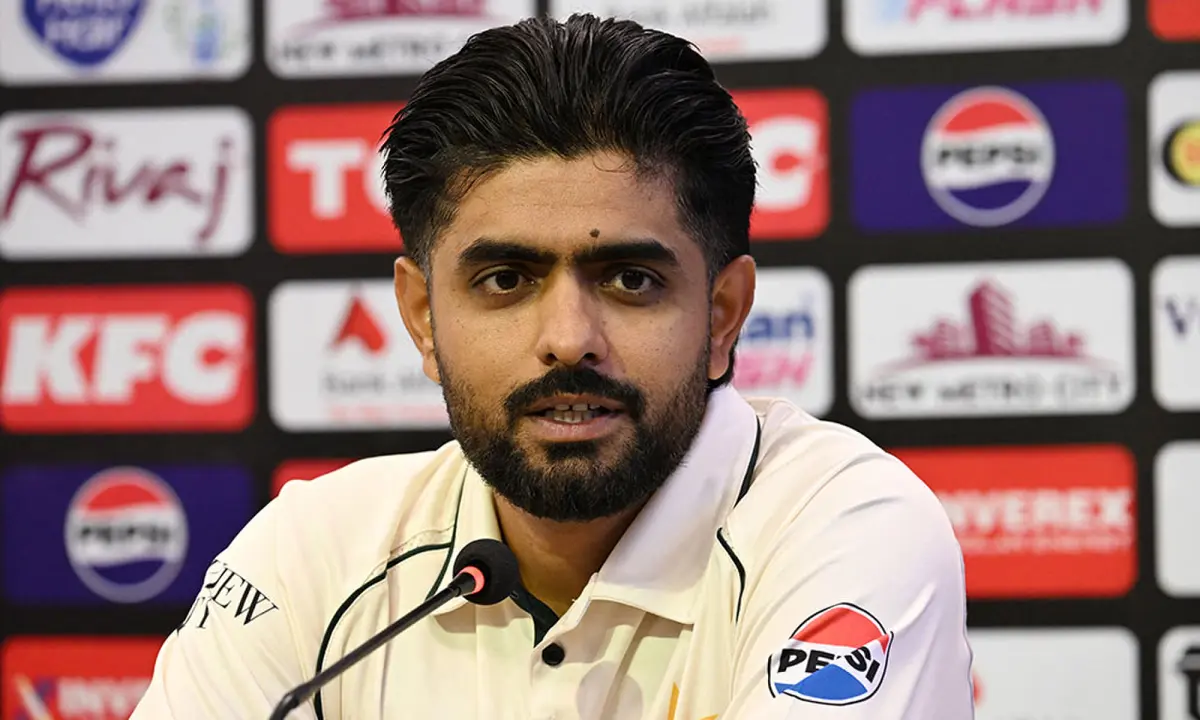
    RAWALPINDI: Captain Babar Azam hopes an overhauled Pakistan can make a fresh start in the first Test against Sri Lanka that begins in Rawalpindi on Monday after their disastrous series against England.

    The two-match series is Pakistan’s first since their 3-0 whitewash in England, where seven players were sent home after the second Test.

    Head coach Sarfaraz Ahmed and bowling coach Umar Gul were also sacked in a September overhaul, with white-ball coach Mike Hesson brought in to the Test set-up.

    Only Salman Agha and Aamer Jamal have been recalled from the seven players sent home, with five of the 11 who played in the final Test at Edgbaston also dropped.

    Senior wicketkeeper-batter Mohammad Rizwan, former skipper Shan Masood and the spin duo of Sajid Khan and Noman Ali all missed out.

    Batters Mohammad Taha, Saad Baig, Tayyab Arif and Sameer Minhas, along with pace bowlers Saqib Khan and Ali Shabbir, were all included for the first time.

    “During the England series we had planned to give new players a chance, so I am ready to fight with these young players,” Azam said on Sunday.

    He also hopes to revive his batting form after 40 Test innings without a century, his last Test ton coming against New Zealand in Karachi in December 2022.

    “I have played a few domestic matches and think that the more I play I will improve, so I am confident,” said Azam, who was reappointed skipper in July.

    The two-match series is part of the World Test Championship’s fourth cycle, with Pakistan ninth and last and Sri Lanka seventh. The second Test begins in Lahore on November 17.

    Sri Lanka are also undergoing a Test reboot, with white-ball skipper Kusal Mendis taking over as captain from Dhananjaya de Silva last month.

    “It’s exciting and I am happy to lead the side,” said Mendis.

    “We have an experienced batting line-up, so we are ready for the challenge.”

    Squads

    Pakistan: Babar Azam (captain), Aamer Jamal, Ali Shabbir, Arafat Minhas, Azan Awais, Saud Shakeel, Mohammad Abbas, Ghazi Ghori, Mohammad Suleman, Mohammad Taha, Tayyab Arif, Razaullah, Saad Baig, Salman Agha, Sameer Minhas, Saqib Khan

    Sri Lanka: Kusal Mendis (captain), Lahiru Udara, Pasindu Sooriyabandara, Dinesh Chandimal, Kamindu Mendis, Sonal Dinusha, Dhananjaya de Silva, Anjala Bandara, Keshara Nuwantha, Prabath Jayasuriya, Milan Rathnayaka, Lahiru Kumara, Asitha Fernando, Dilshan Madushanka, Eshan Malinga

    Umpires: Adrian Holdstock (RSA) and Rodney Tucker (AUS)

    TV umpire: Allahuddien Palekar (RSA)

    Match referee: Dean Cosker (ENG)

    Source: brecorder

  • US launches task force to disrupt land transit routes into Iran

    US launches task force to disrupt land transit routes into Iran

    WASHINGTON: The US military has announced it will create a 20-member task force to find ways to disrupt land routes into Iran that it says are used for shipments of weapons and illicit materials.

    The restrictions would expand on a US naval blockade of Iranian ports during the two countries’ eight-month war, in which Tehran has also restricted passage through the critical Strait of Hormuz trade route, choking global energy supplies.

    The task force’s work “will further constrain Iran’s ability to finance terrorism, rebuild weapons factories, and replenish their military,” US Central Command chief Brad Cooper said in a statement posted on X on Saturday.

    The team of both civilian and military personnel based in Florida would coordinate with US government agencies on “preventing the movement of advanced weapons systems, dual-use technologies, sanctioned materials, and illegal revenue streams across Iran’s land borders and the Caspian Sea,” the statement added.

    The United States imposed a blockade on Iranian ports early in the war in response to Tehran seeking to limit traffic through the strategic Strait of Hormuz, where around a fifth of global oil trade normally passes.

    That blockade has halted around $25 billion in crude oil exports from Iran, according to the US Central Command.

    Source: brecorder

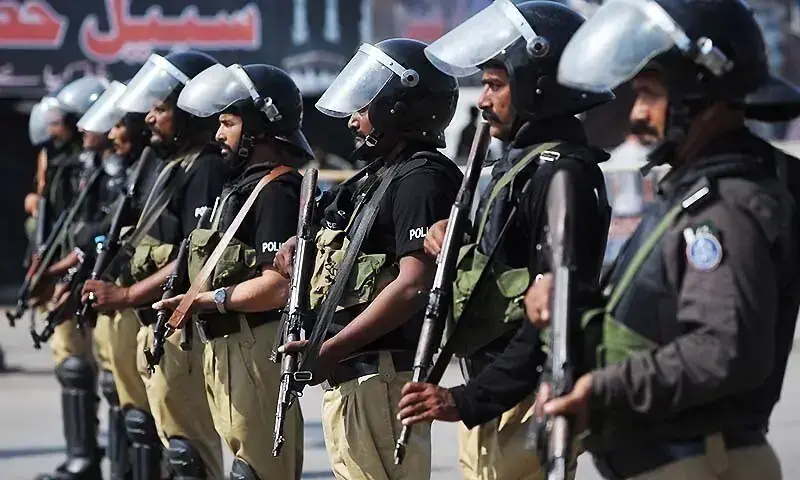
  • KP plans to set up faceless ATCs, spend Rs70bn on CTD and police in a year as part of initiatives against terrorism

    KP plans to set up faceless ATCs, spend Rs70bn on CTD and police in a year as part of initiatives against terrorism

    The administrative setup in Khyber Pakhtunkhwa plans to establish faceless anti-terrorism courts in the province as part of its initiatives to strengthen the fight against terrorism, according to a briefing by the officials televised on Sunday.

    KP Governor Faisal Karim Kundi was also present at the briefing, where KP Secretary Home Amjad Ali Khan outlined several measures planned to step up the fight against terrorism and explained that witnesses in terrorism cases feared coming forward.

    “So, we have recently sent the amendment to set up faceless anti-terrorism courts. Through this, not just the protection of witnesses, but that of prosecutors and judges will also be ensured,” he said.

    Moreover, he said the administrative setup planned to spend Rs70 billion on the Counter-Terrorism Department and police in a year, in order to increase their capacity.

    Talking about dealing with terrorism in the policy domain, Khan noted that in the past there had been a “lack of political ownership” in the fight against terrorism in the province.

    “Our armed forces and law enforcement agencies are making sacrifices in the war against terrorism; however, [..] the provincial government was not taking ownership for them.”

    The Centre imposed governor’s rule and emergency in KP on October 11, citing the PTI-led provincial government’s “deliberate disengagement” from the fight against terrorism.

    Khan stressed the need for a “close liaison” on terrorism between the public, political leadership, and security forces. He further recalled that despite the Centre formulating an Afghan policy, “actions continued to be taken in the province contrary to that policy, leading to confusion among the people.”

    He also noted that there was “propaganda against the security forces in attempts to sabotage the counterterrorism efforts in the province”.

    The official then spoke of the “insufficient funding” for civil law enforcement agencies, including police and CTD, particularly in the merged districts, where he said only 3.2 per cent of the budget was allocated for security.

    He highlighted a shortage of over 10,000 personnel in the police, while also noting the lack of security infrastructure.

    “Along with that, in the merged districts, most of the dependence regarding the police force is on former ex-Fata Khasadaars and Levies,” he said, adding that the police personnel did not receive adequate training.

    He further highlighted inadequate counter-drone protection, for which the available system was at a capacity of 12pc, noting that terrorists were using drone technology as well, “due to which we are suffering considerable losses”.

    He also highlighted the lack of adequate SWAT teams.

    “Because of these issues [..] we have suffered significant losses over the past two or three years in which 1,003 personnel of the armed forces were martyred, 627 police personnel, and 808 civilian casualties occurred,” he stated.

    Referring to the Centre’s Rs160bn package for uplift of KP, Khan said that the provincial set-up and the federal government were on the same page, expressing hope that “its effects will be seen in the coming days”.

    He went on to outline plans to strengthen police capacity in the province, including fortifying sensitive police stations and check posts, extending the Safe City project, and establishing anti-drone systems in Dera Ismail Khan, Lakki Marwat, and Bannu as well as functionalising District Nerve Centres in ten districts.

    Updated information will be available to LEAs from the centres, he added.

    Under the legal interventions in policing, the official said that faceless ATC courts will be set up.

    “Witnesses in terrorism cases are afraid to come forward due to their identity. So we have recently sent the amendment for these faceless courts. Through this measure, witnesses, prosecutors, and judges will have their protection ensured,” he stated.

    Detailing the technical abilities of the police, the official said that satellite communication systems were being set up in areas with no prior communication system.

    He added that the provincial administration was also deploying AI tools for social media monitoring to counter terrorists’ narrative.

    Khan also stressed the need for increased public outreach, including strengthening District Dispute Resolution Councils as well as establishing tribal liaison committees.

    “Regular jirgas will be held with notables, regular interaction will occur with the public, and community mobilisation will take place,” he stated.

    He also outlined plans for police to be trained in modern technology such as anti-drone systems and sniping. He also recalled the provincial setup’s decision to revise packages for martyred police personnel.

    Khan continued: “Kinetic operations will be scaled up so that militancy can be eliminated. In this regard, intelligence-based operations will be enhanced, area sanitisation will be carried out [..], terrorist facilitators will be arrested, and re-verification will also be carried out for people on the fourth schedule to ensure none of them is providing facilitation or support to terrorists.

    He also added that the Rapid Response Force will be mobilised. Khan added that the provincial administration also planned to increase the number of police check posts.

    He announced that the government was spending Rs70bn on CTD and police annually.

    “In this regard, the police are being given Rs59.8bn, of which Rs33.4bn will be for their infrastructure and Rs26.4bn will be for procurement, while Rs10.3bn is being given to the CTD, of which Rs5.4bn is for infrastructure, and Rs4.9bn for procurement.”

    He added that police surveillance capacity — at 15pc presently — will be increased to 60pc, while for CTD it will be enhanced by 70pc.

    “The police’s counter-aerial threat capacity, which is currently at 1pc, will be taken up to 50pc. Our air strike capability is currently at 18pc and will be increased to 50pc, as well as night fighting capacity, with vehicle armour capacity of the police to be improved by 45pc,” the official said.

    He added that “jammer availability was at 40pc but will be increased to 50pc while counter-drone capability — at 52pc presently — will be increased to 60pc.”

    Protective gear and vehicle availability will be improved as well, while specialised training will be held in collaboration with the Pakistan Armed Forces.

    The official also announced action against smuggling, narcotics, extortion and non-custom-paid vehicles.

    “The purpose of all these measures is to provide a safe and secure environment to the people of KP where they can spend their lives, according to their codes and traditions,” Khan concluded.

    Since the imposition of the governor’s rule in KP, the provincial administration has vowed to steer the province towards development and eliminate terrorism. Chairing his first apex committee meeting after taking charge of the province, governor Kundi promised to equip police and CTD with resources.

    “Whatever weapons you want, whatever you need, we will get them to you. We will not compromise on our police officers and personnel. We will equip them well,” Kundi had said at the meeting.

    Last month, he also announced an increase in the compensation packages for police officers martyred or injured in the line of duty.

    Governor Kundi calls for ownership of war against terrorism

    Speaking at the occasion, Governor Kundi said the provincial government’s priority was to restore peace and strengthen the police force, stressing that development would follow once security was ensured.

    He said the police were at the forefront of the war against terrorism and needed to be adequately equipped to carry out their responsibilities. “Until we strengthen and facilitate (the police), how will they fight using just one Kalashnikov and a few bullets?” Kundi asked.

    While the government had announced compensation packages for the families of police martyrs and was working on improving police salaries, it would also provide the force with weapons, ammunition and other resources, Kundi stressed during his speech.

    “We talk a lot about merged districts, but as far as I know, not a single police line has been created in our merged districts, our former Fata. Look at their police stations, check posts, and facilities,” Kundi highlighted, adding that the government had directed the chief secretary and additional chief secretary to prepare a comprehensive package in this regard.

    He said the plan also included solarising and equipping police facilities.

    The governor pointed out the “lack of political ownership” previously with regard to the war against terrorism in the province.

    “When something happened here, voices always came from the assemblies saying that this is ‘not our war’. We don’t own it,” Kundi said.

    He questioned what the families of martyrs would say when political leaders did not take ownership of the war. “For whom did the martyr make this sacrifice? Was it for this soil, this country, or was it made under a specific agenda?” he asserted.

    “If I have a gunman who is there for my protection, and I say that I don’t even own this gunman, how will he protect me?” Kundi asked rhetorically.

    According to the governor, not owning the war indicated a lack of coordination.

    Kundi referred to the security situation in parts of KP, adding that political leaders, including a former chief minister and JUI-F’s Maulana Fazlur Rehman, had acknowledged difficulties in moving freely in certain areas.

    “If intelligence-based operations do not take place and the police and security forces do not conduct operations, how will these problems be resolved?” he asked.

    Kundi said the current set-up’s stance was “clear” and that decisions and policies would be made in Islamabad rather than “Kabul, Kandahar or Jalalabad”.

    The governor alleged that Afghanistan was facilitating India and Israel in using its territory against Pakistan. He referred to reports of drones entering Pakistan, saying some had crossed the border but were intercepted by Pakistani forces. He then criticised the lack of response by the previous government to statements by Afghan ministers threatening to take over Peshawar.

    Kundi said Pakistan had repeatedly raised its concerns about Afghan soil being used to facilitate terrorism at international forums through the Foreign Office and the deputy prime minister and foreign minister, but Kabul had not budged an inch on addressing the issue.

    “It is very clear that whoever does not accept our state, Constitution and laws cannot be engaged in dialogue. Anyone who takes up arms against the state cannot be offered dialogue; they will be responded to accordingly,” Kundi asserted.

    During his speech, the governor stressed the importance of winning public trust, recalling that the province began its journey towards peace in 2008, when it was grappling with suicide bombings, target killings, kidnappings for ransom, among other problems.

    He said public support had been crucial to previous military operations and would remain essential to counterterrorism efforts.

    “You saw we cleared Swat; the world’s largest displacement occurred at that time, and we rehabilitated the people. People supported us for the operation.”

    Reiterating that the government had a zero-tolerance policy towards terrorism, Kundi said the fight against it remained its foremost priority, with development coming afterwards. “You can build roads, large underpasses and even turn the city into a garden, but what is the point if the people themselves are not safe?” he said.

    He stressed that people needed to be assured that their children could go to school, college and playgrounds and return safely, while family members could travel to work or conduct business without fear. The governor also called for greater engagement of the province’s large youth population through “positive activities”.

    Source: dawn