Category: dawn news

  • Trump nominates Natalie Baker for US ambassador to Pakistan

    Trump nominates Natalie Baker for US ambassador to Pakistan

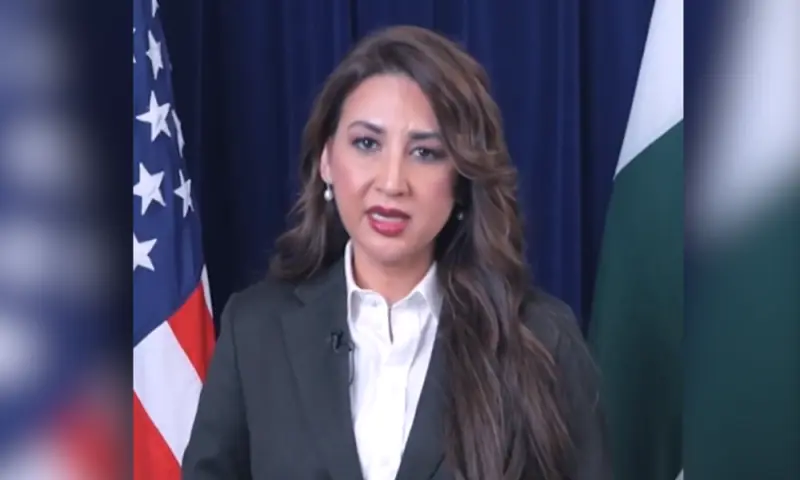
    US President Donald Trump has nominated Natalie Baker, the current charge d’affaires at the US embassy in Islamabad, to be the ambassador to Pakistan, according to a statement by the White House.

    The nomination has been submitted to the US Senate, whose foreign relations committee will review it. If approved by the committee, the nomination will proceed to a vote by the full Senate.

    Baker would be appointed as the US ambassador to Pakistan following the Senate’s confirmation.

    Baker assumed the role of charge d’affaires at the US embassy in Islamabad in January 2025, following the departure of then-ambassador Donald Armin Blome.

    She arrived in Islamabad as deputy chief of mission in August 2024, according to details available on the embassy’s website. Prior to that, she served as the deputy chief of mission at the US embassy in Doha from Aug 2021 to July 2024.

    Baker was also deployed as the deputy chief of mission and charge d’affaires of the US Mission to Libya, deputy director of the Iran Regional Presence Office at the US consulate in Dubai and economic counsellor at the US embassy in Kuwait. She also served as the director of the Office of North African Affairs in the Us State Department’s Near Eastern Affairs Bureau.

    “From 2009-2011, Natalie served as the political and cconomic counsellor in Libya, as the bilateral relationship was normalising after a nearly 30-year pause.  She remained in Libya until the Libyan Revolution forced the embassy to evacuate in February 2011,” the website says.

    Source: dawn

  • Trump sets off bedlam in White House briefing room with UFC chief Dana White, who rejects politics

    Trump sets off bedlam in White House briefing room with UFC chief Dana White, who rejects politics

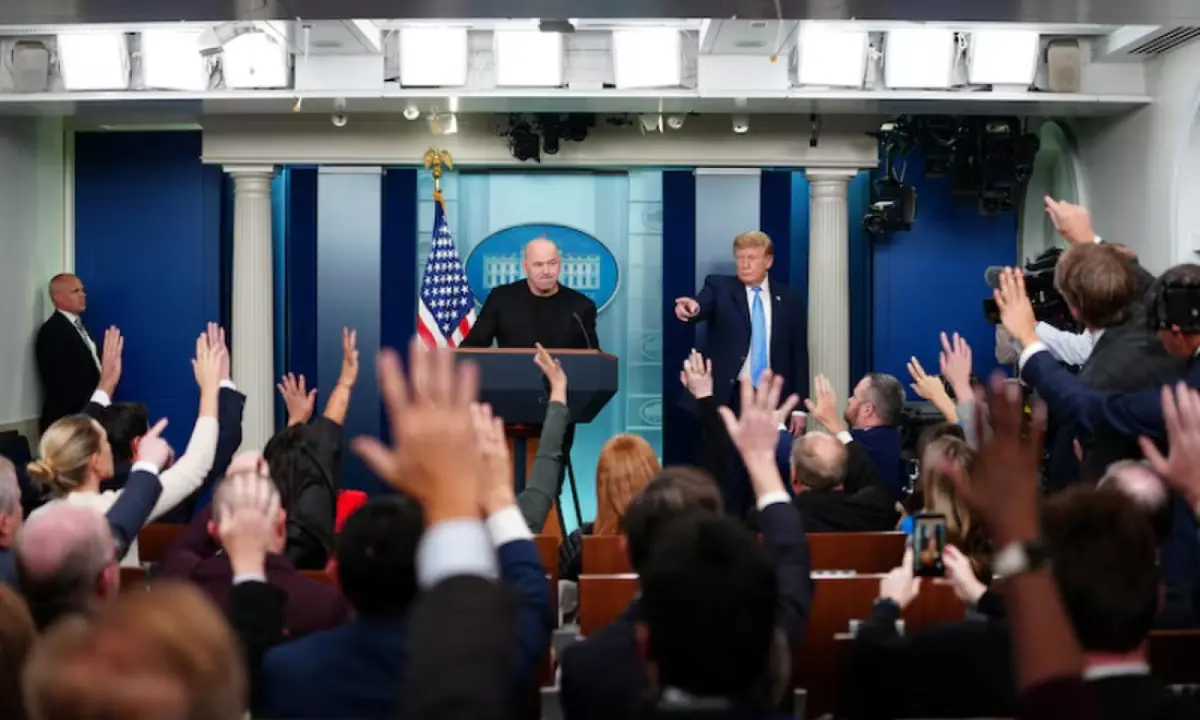
    President Donald Trump set off a scramble in the White House press briefing room on Monday with an appearance so sudden that aides had no time to place the presidential seal on the podium.

    The cause of the sudden bedlam? Trump was eager to show off UFC CEO Dana White, a close friend more comfortable with watching fighters bash each other in the Octagon than mixing it up with reporters.

    After heavy Republican losses in the midterm elections less than a week ago, Trump announced on Saturday that he had offered the White House press secretary job to White. Trump said on Sunday he was just teasing, but White came to the White House anyway to see the president.

    “Everyone please take a seat in the briefing room RIGHT NOW,” was a press assistant’s urgent instruction for reporters over the loudspeaker.

    The announcement set off a stampede among the press corps with TV technicians plugging in cables and setting up microphones. The spot on the podium where the presidential seal would normally hang was left vacant.

    w“Dana is really very unique. The only problem is he’ll talk for a little while and then he’s going to beat the hell out of you,” Trump joked.

    Trump announced that a UFC fight this weekend at Madison Square Garden will feature “the two greatest women fighters of all time.” “How would I do against one of them?” Trump asked White. “Would I do well?” “I don’t think so,” White said.

    White, who organised a series of UFC bouts on the White House grounds in June, made clear he had no desire to tussle with reporters.

    “I have zero political aspirations,” said White, while nonetheless taking a few questions.

    In his first four years in office, Trump was a regular presence in the White House briefing room, but now, nearly halfway through his second term, he takes questions in other places. He has talked about moving the press corps out of the West Wing to a “less obnoxious location.” But there was no talk of that on Monday. After Trump took questions on Iran, Ukraine, Defence Secretary Pete Hegseth, Nvidia CEO Jensen Huang and other topics, he turned back to White.

    “Would you like to be press secretary of the United States of America?” said Trump. “Would you like that, or do you just want to stay with that ridiculous UFC?” “Thanks for the offer, sir,” said White. “I do not want to be in politics.”

    Source: dawn

  • Two years in, women leaving top roles in Trump admin

    Two years in, women leaving top roles in Trump admin

    The abrupt exit of White House Chief of Staff Susie Wiles, one day after Republicans were stomped in midterm elections, adds her to a growing list of women who have departed top roles in President Donald Trump’s administration since the year began.

    At the beginning of his second term, the 80-year-old Republican boasted that he was “thrilled to say that we have more women in our cabinet than any Republican president in the history of our country.”

    At that point, there were eight women in top roles, out of more than 20 such positions.

    Eighteen months later, there are only three left: Agriculture Secretary Brooke Rollins, Education Secretary Linda McMahon and Kelly Loeffler, who heads the Small Business Administration.

    Half the women were pushed out over three months in the spring.

    First went Homeland Security Secretary Kristi Noem, who became the face of Trump’s violent anti-immigration offensive.

    She was followed by Trump’s top federal prosecutor Pam Bondi, Labor Secretary Lori Chavez-DeRemer and Tulsi Gabbard, director of national intelligence.

    Most recently, one day after Republicans lost in the midterms, Wiles announced her departure.

    Double standard

    “Is he out of women?” Democrat Alexandria Ocasio-Cortez said last spring, after being asked who would be next to meet that fate.

    “Trump only seems to have the capability to fire female secretaries,” the congresswoman said, adding: “If you’re a man in the Trump administration, it seems that they reward misconduct.”

    For Trump, a former beauty pageant organiser, women are about appearances, Colorado State University professor Karrin Vasby Anderson told AFP.

    “Trump hires and appoints women who he thinks will make him look good. The minute they don’t, they are gone,” she said.

    “He continues to defend (Defense Secretary) Pete Hegseth, despite the fact that nearly everyone agrees that the Iran war has been a catastrophe,” Anderson said.

    “I think it’s telling that the men he defends most vociferously are those who promote a particular kind of sexist MAGA masculinity. It’s clear that Trump feels comfortable surrounding himself with that type of man.”

    Trump has stood by men in his administration despite national outcry against chief of staff Stephen Miller’s vocal support for the violent immigration policy and the taint of scandal dogging FBI Director Kash Patel over allegations of a taxpayer-funded slush fund to reward loyalists and other missteps.

    Male successors

    The only man not spared was Mike Waltz, who was removed from his post as national security adviser in May 2025 after he inadvertently added a journalist to a leadership discussion group where they chatted about US strikes in Yemen.

    But Waltz rebounded quickly and was appointed to be ambassador to the United Nations soon after.

    In every case where a woman was sidelined, a man invariably replaced her.
    Todd Blanche took over Bondi’s role at the Justice Department after working as Trump’s personal lawyer.

    And Wiles — the first woman to hold the strategic position of White House chief of staff — has just been replaced by hard-right ideologue Miller, a longtime Trump loyalist.

    Anderson said Wiles was a rare hire for Trump because she was recruited for her expertise.

    But after Democratic blue wave’s crushing victory in the midterm elections, the Republican president may think “Stephen Miller will defend Trump better than Susie Wiles would.”

    Trump, however, appears to be struggling to replace one prominent female face of his presidency: Karoline Leavitt, the youngest White House press secretary ever who left her post at the end of August.

    The president jokingly called on UFC chief Dana White to take on the role instead, but the fighting executive demurred on Monday, saying: “I do not want to be in politics. “

    Source: dawn

  • PM Shehbaz to leave for Turkiye today, will address COP31 tomorrow

    PM Shehbaz to leave for Turkiye today, will address COP31 tomorrow

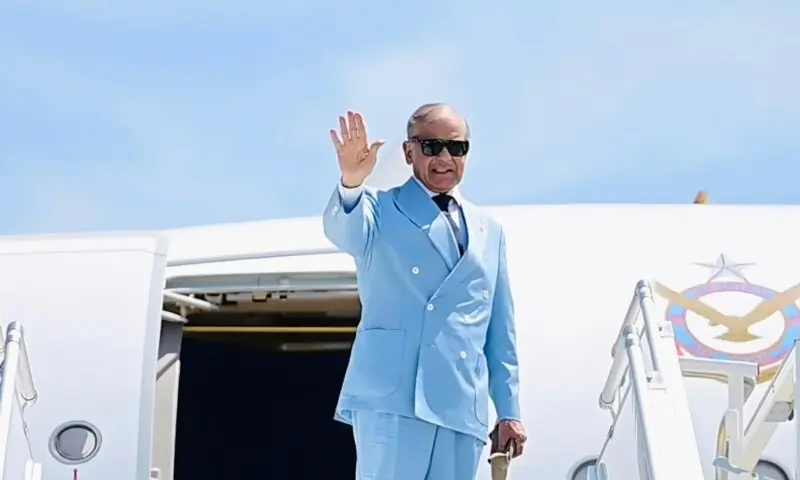
    Prime Minister Shehbaz Sharif will be undertaking a visit to Antalya in Turkiye from Nov 10-12 to participate in the Leaders’ Summit of the 31st Conference of the Parties (COP 31) to the United Nations Framework Convention on Climate Change (UNFCCC).

    According to the Foreign Office (FO), the premier will address the summit on Nov 11, during which he will urge the global community to take concrete actions to address the threat posed by climate change to the planet.

    He will highlight “Pakistan’s steps towards rapid solarisation and expansion of its renewable energy capacity, as part of its transition towards a cleaner and more resilient economy, along with its efforts to strengthen disaster preparedness and early-warning systems”, the FO statement said.

    The premier will also call for predictable, adequate and accessible climate finance for developing countries to strengthen their resilience and pursue sustainable development, it added.

    Moreover, the prime minister will attend a high-level roundtable meeting convened by the presidency of COP31 on the sidelines of the Leaders’ Summit, and hold bilateral meetings with the Turkish leadership as well as several other world leaders.

    “Prime minister’s participation in COP31 Leaders’ Summit is an expression of Pakistan’s strong support for the climate agenda, and will provide Pakistan with an opportunity to reaffirm its commitment towards working closely with the international community to address the climate crisis,” the FO statement said.

    The COP31 climate talks kicked off on Monday with an early fight over money as the UN’s chief urged world leaders to “get serious” about tackling the crisis after a year of devastating weather extremes.

    The summit comes after a year of punishing heatwaves in Europe, major wildfires in Indonesia and catastrophic floods in Nepal, with an exceptionally strong El Nino weather phenomenon fuelling more climate chaos.

    The COP31 opening ceremony opened an hour-and-a-half late without explanation.

    Negotiators had been locked in discussions late on Sunday over demands by developing nations to include items on climate finance in the official agenda.

    “This has already been a difficult start for COP31,” said Jasper Inventor, head of Greenpeace’s COP31 delegation.

    Under UN climate agreements, developed countries, which are historically responsible for most greenhouse gas emissions, have provided financial support to help developing nations adapt to climate impacts and transition to cleaner energy. But poorer countries say the sums remain insufficient.

    Inventor said developed countries were “taking a hard line” over whether to include a platform, agreed at COP30 in Brazil last year, aimed at discussing how wealthy nations should provide funds to developing nations.

    African countries are also pushing for the agenda to include discussions on the tripling of adaptation finance, which aims to help poorer nations pay for measures such as building sea walls or planting drought-resistant crops.

    But that point was not made a standalone agenda item.

    A senior European Union official warned last week that there would be “no political will” for extra funding pledges at COP31.

    Observers say few major breakthroughs are expected at COP31 as countries grapple with an oil price shock and geopolitical tensions fuelled by the US war on Iran and Russia’s conflict in Ukraine.

    As negotiators tussled in Antalya, the UN’s World Meteorological Organisation released a report indicating that 2026 has continued a streak of exceptional global temperatures, melting ice and rising sea levels.

    The EU’s climate monitor warned last week that 2026 would most likely be the second-hottest year ever recorded, while scientists say 2027 could top the chart, fuelled by El Nino.

    The long-term outlook is bleak: the UN warned in September that global temperatures were on course to exceed 1.5 degrees Celsius above preindustrial levels, breaching the most ambitious threshold set by the Paris Agreement.

    Source: dawn

  • Honey Traps: A spy’s oldest trick

    Honey Traps: A spy’s oldest trick

    AI, superchips and cyber warfare may be reshaping modern espionage, but some secrets are still won the old-fashioned way: through sex and scandal.

    The latest controversy to ripple through the tech world centres on Nvidia chief Jensen Huang and his affair with a woman accused by Washington of working for Chinese intelligence, a claim Beijing denies.

    The episode has thrust the “honey trap” back into the spotlight, reviving interest in an age-old spying tactic that turns attraction and intimacy into tools for stealing state secrets and influencing those in power.

    Seduction and blackmail

    History is packed with powerful politicians and insiders who found themselves ensnared by men and women tasked with winning their trust before extracting intelligence or gaining leverage.

    One of the most famous femme fatales in spy lore is Mata Hari, the Dutch exotic dancer executed in 1917 after being accused of spying for Germany during World War I.

    The Cold War also produced a long list of similarly colourful cases.

    In France, ambassador Maurice Dejean was recalled from Moscow in 1964 after an extramarital affair, said Clement Renault, a researcher at France’s Institute for Strategic Research (IRSEM).

    The scandal created one of former president Charles de Gaulle’s most memorable put-downs: “Alors Dejean, on couche?” (“So, Dejean, sleeping around?”).

    Another famous case, Renault said, involved the Soviet KGB blackmailing British embassy employee John Vassall with “intimate photos revealing his homosexuality, taken in Moscow”.

    In the 1980s, Israeli whistleblower Mordechai Vanunu, who revealed details of Israel’s secret nuclear programme, was lured into the hands of his kidnappers by a woman known as “Cindy”.

    She “persuaded him to join her in Rome, where he was abducted by the Mossad and taken back to Israel,” Renault explained.

    Other honey traps ran for years.

    In the 1960s, Chinese opera singer Shi Pei Pu, secretly working for Chinese intelligence, began a two-decade affair with French diplomat Bernard Boursicot, who handed over sensitive information.

    Not so glamorous

    The honey trap can take many forms.

    Some seducers are trained professionals, like East Germany’s famed “Romeo Spies” whose mission was to romance lonely West German women and gain access to important information.

    “With the shortage of eligible men — another consequence of the war (WWII) — single West German women, eager for male companionship, became frequent targets for East German male spies,” the CIA later said in a study.

    Not every honey trap looks like something out of a Hollywood film.

    Intelligence services have also used sex workers, business executives and well-connected individuals who already move in the target’s world.

    That is what makes the Nvidia allegations so intriguing.

    Alice Huang, the woman involved in the affair, “held a senior role at Megaspeed, a Singaporean firm specialising in AI computing infrastructure” that did business with Nvidia, Renault said.

    “She was allegedly recruited by (China’s) state security ministry as an agent, perfectly placed to make contact (with Jensen Huang),” Renault said.

    “What is interesting here is that a key figure in the ‘AI war’ could be caught in a relatively classic operation.” Some cases are not so subtle.

    A former member of a French security service recalled being contacted by a woman from South America who claimed she was a journalist seeking an interview with a senior security official.

    “I met her twice,” he told AFP.

    “Each time she was evasive about her work as a journalist and what the interview was actually about. But she kept telling me her marriage was unhappy and showing me photos of herself in lingerie.”

    Too good to be true

    Who deploys honey traps? According to Renault, the short answer is almost everyone.

    “Potentially all intelligence services can resort to ‘compromise’ operations and similar methods,” Renault said.

    But not all states are equally equipped to run them.

    “These missions require an extremely high level of personal and physical commitment from agents”, Renault noted.

    So authoritarian governments, he argued, “which can exert greater pressure on their citizens or are driven by strong ideologies”, may be better positioned to ask agents to make such sacrifices.

    Counter-intelligence agencies regularly warn officials that espionage rarely begins with a dramatic exchange in a dark alley.

    France’s domestic service has released a YouTube video titled: “Trapped by a foreign intelligence agency. It’s never too late to get help.” British authorities offer simpler advice.

    If someone’s interest in you seems unusually intense or “too good to be true”, then “you should be cautious”.

    Source: dawn
  • Anthropic unveils new Fable, Mythos models as competition heats up ahead of IPO

    Anthropic unveils new Fable, Mythos models as competition heats up ahead of IPO

    Anthropic on Monday unveiled two new artificial intelligence models, Claude Fable 5.2 and Claude Mythos 5.2, as the OpenAI rival seeks to strengthen its position in the fast-growing AI market ahead of its planned initial public offering (IPO).

    The company said Claude Fable 5.2 was designed for coding, reasoning and AI agent tasks, while Claude Mythos 5.2 was developed for approved cybersecurity and life-sciences research applications.

    Access to Claude Mythos 5.2 will be restricted to organisations approved through Anthropic’s verification programmes for cybersecurity and life-sciences research, while Claude Fable 5.2 will be available more broadly, the company said.

    Anthropic said the new models could generate outputs up to 30 per cent faster than their Claude 5.1 predecessors and communicate more clearly with users.

    The models are priced at $8 per million input tokens and $40 per million output tokens, lower than the prices of previous Fable and Mythos releases, according to the company.

    The launch follows Anthropic’s introduction of Claude Haiku 5.5 in October, as the AI startup expands its product portfolio ahead of a planned IPO.

    Competition in the artificial intelligence industry has intensified, with OpenAI, Alphabet’s Google and Meta Platforms rolling out new models focused on coding, reasoning and AI agents to attract developers and enterprise customers.

    Source: dawn

  • Economic ills

    Economic ills

    DESPITE an oversold stabilisation, many of our economy’s vital signs continue to falter. The economy resembles a patient out of the ICU but still in hospital.

    Since 2024, our per capita GDP growth has been near zero — sadly, South Asia’s slowest recorded pace. Even our recent growth spurts, brief and import-led, have given way to longer busts, draining reserves and sending us back to the IMF’s tough terms that extend low growth.

    Once near the region’s top performers in per capita GDP, we now risk falling to the bottom. As incomes stall, poverty rises. Our extreme poverty rate (23 per cent) is near the bottom regionally. It’s about 10 times India’s, against near parity in 2011.

    Our GDP’s composition tells a bleak tale too. It’s consumption-heavy (82pc) but investment-light (14pc) — on both counts among the region’s worst. India and China invest over 30pc of GDP, creating jobs and capacity for today and later — much better than our consumption binges. Limiting job, technology, and export growth, industry’s share has been nearly a fifth for over 50 years versus a quarter in India and Sri Lanka and a third in Bangladesh.

    Low investment causes low growth, but its origins and destinations matter too. We court foreign capital while ignoring local capital. Foreign capital must earn and save more dollars than it repatriates and create jobs and local capacity. But we get it mostly in domestic sectors, which later depletes reserves.

    Unlike our peers, we chase a few rich states for capital rather than prioritising diversified private capital. We shun creative ways to boost local savings and capital. So, we remain capital-starved — yet we quickly drain reserves and risk the haughty whims of rich states.

    Capital droughts in export sectors cause dollar and job droughts. From a peak of 17pc in 1992, exports now barely reach a tenth of our GDP — South Asia’s second-lowest share, below even Afghanistan’s. Low-quality compounds low quantity. Harvard’s Economic Complexity Index ranks us 89th among 145 states. So our exports face intense competition but return little. Exports rarely cover imports, creating large trade gaps.

    Dreary metrics mirror a sinking economy.

    Remittances partly plug the gap. But exports keep workers at home and families intact, create jobs, earn dollars, and pay taxes.

    Remittances separate families and often don’t create jobs or pay taxes directly. They frequently fuel consumption, while exports are fuelled by investment. Remittances now almost equal our exports, as it is easier to send workers abroad than goods (India earns six times as much from exports as from remittances). Even so, we often run large external deficits that lead to a crisis as booms turn into busts.

    Low growth and weak efforts leave our coffers lean. Tax revenues barely reach 11pc of GDP — which is among South Asia’s lowest. Indirect anti-poor taxes provide about half our tax target, down from about two-thirds in 2021-22. New direct taxes further burden the wallets of salaried persons and formal industry, while favoured sectors pay low taxes. Spending prioritises upkeep over uplift. Expenditure hogs over 90 paisas out of every federal budget rupee; development consoles itself with just five.

    These twin deficits force us to keep our borrowing bowl out. Our public debt-to-GDP ratio of 73pc is lower than the Japanese and Singaporean levels of over 150pc. But our repayment muscle better depicts our debt overhang.

    On the share of federal outlays spent on interest alone, we rank among the worst globally. We use debt not only to invest or meet recurrent expenses but also to beef up rese­rves. IMF debt and deposits by rich states, which impose odious economic and political conditions on us, now exceed even our highest-ever reserves. These dre­ary metrics mirror a sinking economy. Low investment and import-led growth widen the twin deficits to swell debt. Interest outlays then leave little money for growth, creating a vicious circle.

    A weak economy reflects perverse politics. Poor countries need both a developmental and a welfare state. Ours is a parasitic and apathetic state run by rapacious rulers. This isn’t a tragedy of ineptitude alone: willing rulers can easily hire merit. It’s a deliberate design by kleptocrats who may lose their wealth and power if there is real progress.

    Nor is this the tale of a few eras. Our autocracies, too, delivered short-term growth, leading to conflict and undercutting future progress. Ideas abound on how to pursue sound progress, but minds that will champion and implement them well do not. Only democracy and civilian sway will bring such minds to the helm of affairs.

    The writer has a PhD degree in political economy from the University of California, Berkeley, and 30 years of grassroots to senior-level experience across 50 countries.

    murtazaniaz@yahoo.com

    X: @NiazMurtaza2

    Published in Dawn, November 10th, 2026

    Source: dawn

  • Served by the court

    Served by the court

    LAST week, the newly established Federal Constitutional Court (FCC) gave two noteworthy judgements. Both concerned legal issues of a political nature — the kind that perhaps would have taken up considerable time and energy in the Supreme Court of the olden days, along with detailed coverage by the media. But those were different times; at present, the cases progressed quietly and the decisions came without much bang or thunder.

    In one case, the court settled an election dispute that has been going on for the past two years. Back in 2024, the JUI-F had disputed the notification of a woman to one of its reserved seats. It claimed that the woman who had been notified simply shared the first name — Sadaf — with the woman mentioned on the party’s list. The woman on the JUI-F list, Sadaf Yasmin, had decided against submitting her papers due to personal reasons; however, a woman called Sadaf Ihsan (with whom the party says it has no connection) submitted her papers and got nominated by the ECP for the seat. The JUI-F claims Ihsan impersonated Sadaf Yasmin despite having a different name and was somehow identified as the latter.

    When this was pointed out to the Election Commission of Pakistan, not only did it withdraw the announcement, but also suspended the official who issued the notification. This was reported in Dawn. But the matter didn’t end there. Sadaf Ihsan approached the Peshawar High Court (PHC) and was reinstated. The party then challenged the decision in the Supreme Court, winning reprieve for itself. Ihsan was suspended. But the relief was simply an interim order, and once the FCC was established, the file was transferred to it.

    The FCC sent the case back to the ECP, which in January this year reinstated Sadaf Ihsan in the seat. This past week, the JUI-F’s appeal against this decision was dismissed by the FCC. Ihsan is now a JUI-F MNA, while the party continues to insist that she is not a member and was never on the list submitted to the ECP. Ihsan, according to a report on the Fafen website, claims she and her family are associated with the party.

    Three cases, three judgements. But they reveal quite a lot of what the court appears to stand for.

    It now appears the decision is final and no appellate forums remain. Another interesting aspect of this case is that this seat was given to the JUI-F after the decision that deprived the PTI of reserved seats.

    In a second case, the FCC has apparently stopped the PHC from hearing cases regarding the custody or arrest of PTI workers. With the imposition of the emergency in KP and a crackdown against the party in the province, multiple cases concerning the whereabouts or bail of PTI members ended up in the PHC, which then passed an interim order preventing such detentions.

    As in many cases, bail had also been granted; the provincial government challenged them in the FCC. According to one report in Dawn, more than 60 cases in which bail had been given were challenged by the KP government in the FCC. After hearing the cases, the FCC stopped the high court from hearing these matters; its argument was that since the army has been called in, in aid of civil power, the court could no longer hear matters under Article 199, which, in layperson’s terms, is equivalent to what we once saw as the suo motu powers of the Supreme Court.

    According to one lawyer’s comment, which he posted on social media, this order means the high court can no longer entertain any writ petitions, which, according to him, is a power the courts continued to enjoy even under martial law regimes. In other words, the order limits the PHC in matters far wider than simply the arrests of and bail for PTI workers. It means the high court cannot hear any matters related to fundamental rights.

    While these two cases date back to just the past week, a third judgement is a little older. It had already been discussed in quite a bit of detail in Dawn and elsewhere. But it is still worth mentioning.

    In a recent case, the FCC seems to have provided a restricted interpretation of workplace harassment. Ignoring past precedents, which had interpreted workplace harassment more liberally, the court has now ruled that harassment is to be limited to actions of an overtly sexual nature; previously, judgements had interpreted the law to include what is defined as gender-based discrimination.

    A piece by Barrister Rida Hosain pointed out that in a previous decision, Justice Ayesha Malik had said that “reducing harassment to conduct that is sexual in nature ‘takes away the essence’ of the harassment law, and ignores that harassment is often less about sexual interest and more about reinforcing existing power dynamics”. Hosain quoted Justice Ayesha Malik as saying that the very “purpose of harassment laws is to address gender-based discrimination at the workplace and not to limit it to sexual forms of harassment”. But the FCC has now seen it differently.

    And while the decision drew criticism, it is fortunate that amendments to the law itself have provided a more wide-ranging definition. However, the ruling of the FCC does mean that complainants in incidents or cases that predate the amendment may have to prove harassment according to the FCC’s interpretation. Women lawyers in particular have discussed this issue in detail in articles and commentary that have appeared in Dawn.

    Three cases, three judgements. But they reveal quite a lot of what the FCC appears to stand for — to those of us who have little understanding of the legalese but who do keep an eye on the politics of the country — be it fundamental rights, women’s rights, or perhaps those of political parties. One can only wonder if any of the parliamentarians who voted for these courts have paid any attention to these judgements.

    The writer is a journalist.

    Published in Dawn, November 10th, 2026

    Source: dawn

  • Rs3.2m recovered in online scams; child exploiter held

    Rs3.2m recovered in online scams; child exploiter held

    ISLAMABAD: Continuing its zero-tolerance policy against cybercrime, the National Cyber Crime Investigation Agency (NCCIA) recovered Rs3.2 million in two separate online investment and trading fraud cases and arrested a suspect involved in child exploitation and blackmailing of a minor during an intensified crackdown in Rawalpindi.

    In the first case, the NCCIA recovered Rs1.8m from suspects involved in an online investment fraud in which a citizen was defrauded of over Rs2.9m through Facebook and WhatsApp.

    According to the agency, the complainant was initially contacted on Facebook through an account named Misbah Sabir and later approached on WhatsApp by a person posing as an online businessman, who persuaded him to invest money online.

    NCCIA warns citizens against fake Rs13,000 prize messages in

    The fraudsters shared a link, which, when clicked, led to the installation of an application named “Onchainus.net” on the complainant’s mobile phone. Through the app, the fraudsters allegedly defrauded him of Rs2,915,872. During the operation, the NCCIA recovered Rs1.8m.

    Further investigation is under way to identify other persons involved and ensure full recovery of the amount.

    In the second case, the NCCIA recovered Rs1.4m in an online trading and investment fraud in which a Rawalpindi resident was defrauded of over Rs21m.

    The complainant, Muhammad Arshad, son of Ameer Khan, was lured into a purported online trading scheme through a WhatsApp group named “v185-Wharton”, which offered lucrative investment opportunities and substantial profits.

    He subsequently transferred a total of Rs21,018,511 from his bank accounts to various beneficiary accounts through an app and by using an ATM card, suffering a substantial financial loss. The accused in the case is currently on physical remand.

    The NCCIA said investigation was underway to identify other members of the fraud network and ensure full recovery of the amount.

    In the third action, the agency arrested a suspect involved in child exploitation and blackmailing and recovered a mobile phone from him.

    The inquiry was initiated on the complaint of Mushtaq Khan, who reported that a suspect was involved in possessing, producing and distributing child exploitation material and blackmailing his son.

    The complainant said his son used to play online games on his mobile phone. During gaming, the accused contacted the minor and lured him with the promise of providing a gaming ID. He then called the boy to his place, where he allegedly exploited him and recorded videos of the incident to blackmail him.

    The NCCIA recovered a mobile phone from the accused. Further investigation is underway to identify other persons involved and conduct a forensic analysis of the digital evidence.

    Fake messages

    Separately, the agency warned citizens against fake messages circulating in the name of a Rs13,000 cash prize from the prime minister, saying fraudsters were attempting to loot people through bogus prize schemes.

    According to an NCCIA spok­esperson, citizens were being targeted through suspicious links sent in fake prize messages. Clicking on these links could result in the theft of personal and banking information.

    The agency advised the public not to click on unverified links, share personal or banking details with anyone, or forward such fake messages.

    Officials said the NCCIA was committed to taking strict action against those involved in child exploitation, blackmailing, online fraud and fake investment schemes, adding that no one would be spared.

    Citizens have been asked to report cybercrime incidents through helpline 1799 or at the nearest NCCIA circle.

    Published in Dawn, November 10th, 2026

    Source: dawn

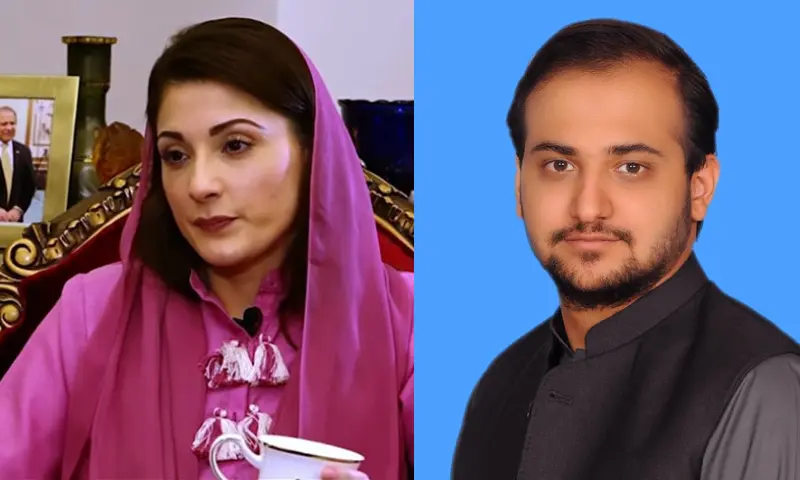
  • Another Chaudhry slams Maryam over ‘development bias’

    Another Chaudhry slams Maryam over ‘development bias’

    • Hussain Elahi seemingly backs cousin Salik’s allegations against Punjab CM
    • Azma Bokhari says CM’s hard work causing ‘considerable discomfort to certain political elements’
    • Moonis’ jibe against Chaudhry Shujaat and Chaudhry Wajahat dispels impression ‘family reunion’ is in the offing

    GUJRAT: What began as a tiff between a federal minister and a provincial chief minister has apparently re-ignited the political family feud among the Chaudhrys of Gujrat, whose various members have been drawn into the latest war of words between the two coalition partners, PML-N and PML-Q.

    The latest salvo was fired by PML-Q MNA Chaudhry Hussain Elahi, who echoed his cousin Chaudhry Salik Hussain’s criticism of Punjab Chief Minister Maryam Nawaz over alleged corruption and a discriminatory approach in the allocation of development funds for various constituencies.

    Speaking at a recent public gathering at Qila Islam Nagar near Tanda, Hussain Elahi accused the incumbent chief minister of blocking uplift funds for schemes launched during the tenure of former CM Chaudhry Parvez Elahi in 2022.

    He claimed that the provincial government had spent Rs11 billion on a plane for the chief minister, but could not release Rs3bn earmarked for the completion of ongoing development schemes in his constituency.

    He questioned whether the purchase of a plane was more important than the completion of public welfare schemes, alleging that only Lahore’s development seemed to be the rulers’ priority, while the rest of the province was being ignored.

    The tiff between the Punjab chief minister and the federal minister for overseas Pakistanis was sparked by remarks the latter made during a television appearance earlier this month, when he lavished praise on former CM Parvez Elahi and took a swipe at the incumbent provincial chief executive.

    In response, CM Maryam had challenged Chaudhry Salik Hussain to prove his claims and sent him a legal notice.

    “If you have evidence, bring it forth — otherwise I will drag you to court,” she said. She also asked him why he remained a minister in a government that he considered corrupt.

    At the time, she maintained that the PML-Q leader’s actual grouse was neither a matter of corruption nor progress. The issue, she said, was that she changed the deputy commissioner (DC) of Gujrat a few days ago whereas Salik had wanted a DC of his choice to be appointed.

    Gujrat’s problems

    Recalling CM Maryam’s legal threats, Chaudhry Hussain Elahi said: “Let me tell her that I will drag the whole Punjab government into court, the people of Gujrat are never scared of going to court.”

    He said the CM claimed to have spent Rs12bn for Gujrat city, but the people knew very well what the situation in the city was, despite these claims. A number of crucial roads in his constituency had remained dilapidated or incomplete for the last four years, he maintained.

    He alleged the whole province knew about corruption in the Suthra Punjab and Model Village projects, adding that the rulers would have to account for their misdeeds.

    Speaking on the occasion, his father Chaudhry Wajahat Hussain — the younger brother of PML-Q chief Chaudhry Shujaat — also praised the tenure of Parvez Elahi, recalling the public welfare schemes launched under his stewardship.

    Responding to these latest remarks, Punjab Information Minister Azma Bokhari said that the development initiatives being undertaken by CM Maryam’s administration across Punjab were causing “considerable discomfort to certain political elements”. Sharing a clip of Hussain’s speech on X, Ms Bokhari said that those who had failed to change the conditions of Gujrat despite holding high public office for years, were now criticising Lahore “without any shame”.

    Family ties

    The political allegiances of the Chaudhrys of Gujrat are currently split between different camps. Even though they belong to the same party, PML-Q MNA Chaudhry Wajahat Hussain and his sons Hussain and Musa Elahi are not on very good terms with the sons of party elder Chaudhry Shujaat Hussain — Salik and Shafay — both of whom have been members of the federal and provincial cabinet, respectively, for two-and-a-half years.

    Moreover, the PTI-aligned Parvez Elahi camp is also annoyed with Wajahat et al, as Musa secured the Punjab Assembly seat from Kunjah – the same seat Parvez Elahi had won at least eight times since 1985.

    In recent speeches, however, Wajahat and his sons have seemingly gone soft on their rivals, creating the impression that some sort of reconciliation was on the cards.

    However, Parvez’s son Moonis has dispelled the impression of a possible ‘family reunion’, saying that his camp would continue their “policy of social distancing” with the scions of Shujaat.

    Taking to X on Monday, Moonis directly named the Chaudhry Wajahat camp, saying that his children were “making all this noise” because his brother Chaudhry Shujaat’s children had “kept everything for themselves”, leaving them without any ministerial portfolios. “Had the PML-N also made them ministers, they too would have been sitting happily today,” he tweeted.

    Zulqernain Tahir in Lahore also contributed to this report

    Published in Dawn, November 10th, 2026

    Source: dawn