Pakistan strengthened their hold on the opening Test against Sri Lanka on Tuesday, declaring their first innings at 434 for nine before reducing the visitors to 114 for three at the close of the second day at the Rawalpindi Cricket Stadium.
Sri Lanka, who still trail by 320 runs, will resume their innings on the third day with Kamindu Mendis unbeaten on 40 and captain Dhananjaya de Silva on 22. Their resistance came after Pakistan’s pace attack made early inroads, although bad light brought an end to play after 27.1 overs.
Resuming at 281 for five, Pakistan built on their overnight position through a series of valuable contributions, with Saud Shakeel and debutant Ghazi Ghori adding 96 runs for the sixth wicket.
Saud, who had reached 57 on the opening day, continued to anchor the innings but narrowly missed out on a century, falling for 93 off 199 balls after being caught behind off Asitha Fernando.
Ghazi provided useful support with 48 before his dismissal brought debutant Arafat Minhas to the crease. Minhas made an impressive contribution, striking 52 off 72 deliveries, including nine boundaries and a six, to further strengthen Pakistan’s position.
He was eventually dismissed by Dilshan Madushanka, while Razaullah added a brisk 10 before Pakistan declared in the 107th over.
The innings was notable for the number of half-centuries, with five Pakistan batters reaching the milestone. Three of those came from debutants, as Tayyab Arif scored 57, Mohammad Taha made 51 and Minhas contributed 52. Captain Babar Azam also registered a half-century, while Shakeel’s 93 proved the highest individual score.
Fernando and Madushanka shared six wickets between them, claiming three apiece, but Sri Lanka struggled to contain Pakistan’s batting depth.
In reply, Pakistan’s fast bowlers quickly put the visitors under pressure. Mohammad Abbas provided the breakthrough by removing opener Pasindu Sooriyabandara for a duck, caught behind, before debutant Saqib Khan struck to dismiss Dinesh Chandimal for just one.
Lahiru Udara attempted to stabilise the innings with a fighting 42, but Saqib struck again, having him caught behind by Ghazi to leave Sri Lanka in further trouble.
With three wickets down, Mendis and de Silva showed greater composure, putting together an unbeaten 49-run partnership to prevent further setbacks. Mendis looked particularly assured, reaching 40, while de Silva remained not out on 22 as the pair negotiated Pakistan’s attack.
However, the fading light prevented Pakistan from making further inroads, forcing the umpires to call an early close.
Pakistan will resume on the third day firmly in control, with a substantial first-innings lead and three Sri Lankan wickets already in hand.
The visitors, meanwhile, face the difficult task of rebuilding their innings and narrowing the deficit, with Mendis and de Silva carrying the responsibility of providing the resistance needed to keep them in the contest.
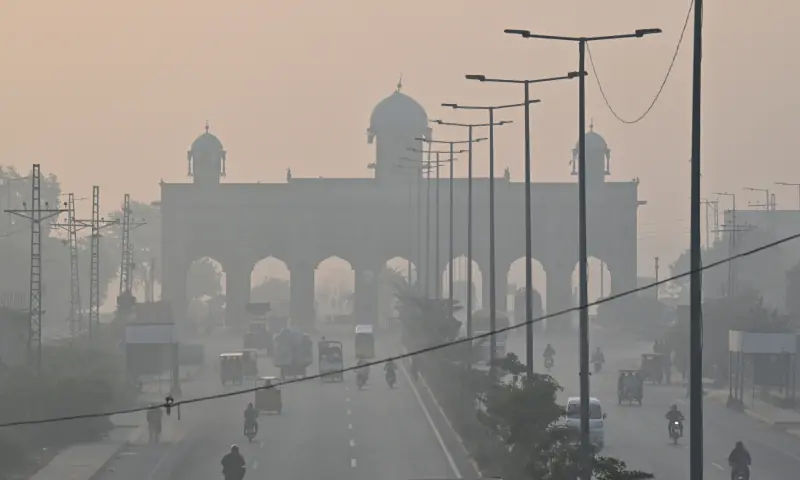
LAHORE: Satellite data detected 16,714 likely crop-residue fires in Punjab between Oct 1 and Nov 9, while Lahore’s average PM2.5 concentration was eight times the World Health Organisation’s (WHO) guideline value, according to a report by the Pakistan Air Quality Initiative (PAQI) that questioned the link between Diwali fireworks in India and the city’s pollution.
The report, released on Tuesday, said the number of likely crop-residue fires in Punjab, Pakistan, remained almost unchanged from the corresponding period last year.
Lahore’s average PM2.5 concentration stood at 126 micrograms per cubic metre during the period, exceeding the 24-hour National Environmental Quality Standards (NEQS) on all 40 days for which valid data were available. The average was 11pc lower than in the corresponding period in 2025.
Satellite instruments detected 18,825 fires across Punjab, Pakistan, 89 per cent of which were classified as likely crop-residue burning. The highest daily count was recorded on Nov 1, with 1,102 detections.
The 24-hour National Environmental Quality Standards (NEQS) were exceeded on all 40 days for which valid data were available. The average concentration was 11pc lower than during the corresponding period in 2025.
Sheikhupura recorded the highest number of fires at 2,559, followed by Jhang (2,192), Okara (2,062), Hafizabad (1,893) and Gujranwala (1,417). The five districts accounted for 54pc of the total detections.
The report found a positive correlation between upwind fire activity and PM2.5 levels in Lahore. On days when air trajectories passed over areas where burning was taking place, the average concentration reached 175 micrograms per cubic metre, compared with 93 micrograms on other days.
A similar pattern was observed in Multan, where average PM2.5 levels reached 203 micrograms on days influenced by fires, compared with 88 micrograms on other days. In Bahawalpur, the corresponding figures were 125 and 65 micrograms.
However, the report cautioned that the association did not establish the precise contribution of crop-residue burning to urban pollution, as stagnant weather conditions and reduced atmospheric dispersion also contributed to the accumulation of pollutants.
The number of likely crop-residue fires in Punjab, Pakistan, was 8pc above the 2020-2025 average, although the comparable satellite record showed a 1pc decline from 2025.
The assessment also examined whether fireworks during Diwali celebrations in India on Nov 8 had contributed to deteriorating air quality in Punjab.
It found that easterly winds carried air from Indian territory towards Pakistan during the night. Of the 48 back trajectories arriving in Lahore, Kasur and Sialkot between 9pm on Nov 8 and midnight on Nov 10, 45 had passed over Indian territory within the preceding 12 hours, most frequently near Tarn Taran, Amritsar and Jammu.
However, the report said the available evidence did not support attributing Lahore’s poor air quality after Diwali to fireworks across the border.
Lahore’s average PM2.5 concentration between 6pm on Nov 8 and 1am on Nov 10 was 234 micrograms per cubic metre, 10pc higher than the average recorded during the same hours over the preceding seven days.
In comparison, the average concentration in Kasur increased by 27pc and in Sialkot by 33pc, while Narowal recorded a 2pc decline.
The increase was greater in cities farther from the international border. Faisalabad, located 130 kilometres from the border, recorded a 40pc increase, while Multan, 180km away, also saw a 40pc rise.
The average increase in the four border cities — Lahore, Kasur, Sialkot and Narowal — was 36 micrograms per cubic metre, compared with 85 micrograms in Faisalabad and Multan.
The report noted that pollution transported from across the border would be expected to cause a greater increase in border areas than in cities farther inland. However, the observed pattern did not support that explanation.
Sialkot was an exception, recording a 37pc increase in PM2.5 during the night after Diwali, with air trajectories passing over the Jammu area.
The assessment also found that emissions from New Delhi had not reached Lahore during the period analysed. Air from Delhi entered Pakistan near Rahim Yar Khan and Bahawalpur only after 3am on Nov 10, with its closest approach to Lahore remaining 266 kilometres away.
The report said distinguishing between emissions from fireworks and smoke from agricultural fires required chemical analysis of particulate matter, including elements such as potassium, strontium and barium, which Pakistani monitoring stations did not measure.
Air quality improves
Meanwhile, the Punjab Environment Protection and Climate Change Department (EPCCD) reported an improvement in Lahore’s air quality on Monday following emergency mitigation and enforcement operations.
The city’s average air quality index (AQI) reading, recorded at 489 at 9am, fell to 232 by 3pm — a reduction of 257 points, or approximately 53pc — according to the department’s monitoring network.
Data from all 11 monitoring stations showed a decline in AQI readings during the period. Egerton Road recorded the biggest improvement, with its reading falling from 500 to 167, followed by GT Road, where the AQI dropped from 500 to 172.
DHA Phase 6, Shahdara, Barki Road and Punjab University also recorded improvements, as did Wagah Border, Gulberg III, Kahna Nau, Safari Park and Multan Road.
The department said multiple anti-smog guns had been deployed along high-traffic corridors and at dust-prone locations and pollution hotspots, while mist-sprinkling operations covered around 640 kilometres of designated routes.
The government had earlier warned of deteriorating air quality in Lahore, Kasur and adjoining border districts on Nov 9 and 10, identifying Diwali fireworks, agricultural residue burning in Indian Punjab, easterly winds and stagnant atmospheric conditions as potential contributing factors.
A special assessment issued on Nov 8 had cited 2,347 incidents of crop-residue burning in Indian Punjab up to Nov 4. Of these, 1,081 were recorded in the districts of Tarn Taran, Ferozepur and Amritsar. It had also warned that smoke from Diwali fireworks could reach Lahore within five to 13 hours, depending on wind conditions.
EPCCD Secretary Silwat Saeed said the department was responding to deteriorating air quality through coordinated enforcement, real-time environmental monitoring and targeted field interventions.
She said the department was using its monitoring infrastructure and Punjab Climate Watch data to identify pollution hotspots and direct operational teams to areas requiring immediate action.
Environment Protection Agency (EPA) Director General Abdullah Nayyar Sheikh said the department had adopted a zero-tolerance approach towards major sources of air pollution.
He said Quick Response Units were responding to satellite-detected fire anomalies and reports of crop-residue burning, with field teams being dispatched to extinguish fires and take action against those responsible.
He added that inspections of factories, brick kilns and other emission-generating units had been intensified, while anti-smog gun operations were being carried out at full capacity in Lahore.
The director general said the improvement recorded at all 11 monitoring stations was encouraging, but enforcement, surveillance and mitigation operations would continue.
The PAQI report indicated a very high number of fires in areas upwind of Lahore on Nov 10, 11 and 12, with 642, 668 and 617 fires, respectively, expected under forecast wind conditions.
Rain forecast
Separately, the Provincial Disaster Management Authority (PDMA) on Tuesday forecast rain in most districts of Punjab over the next two days, saying it was likely to reduce smog but intensify cold weather.
According to a PDMA alert issued on Tuesday, Lahore, Kasur, Sialkot, Narowal, Gujrat, Gujranwala, Hafizabad, Wazirabad and Sheikhupura are among the districts likely to receive rainfall.
Rain has also been forecast in Rawalpindi, Mianwali, Jhelum, Mandi Bahauddin, Attock, Chakwal, Khushab, Bhakkar, Sargodha, Murree and adjoining areas.
The authority also forecast strong winds, rain and isolated hailstorms in Dera Ghazi Khan, Layyah, Bhakkar, Multan and adjoining areas.
The PDMA directed commissioners and deputy commissioners across the province to remain alert and advised citizens to avoid unnecessary travel during storms and seek shelter in safe places. It also warned people against staying in open areas during thunderstorms and lightning.
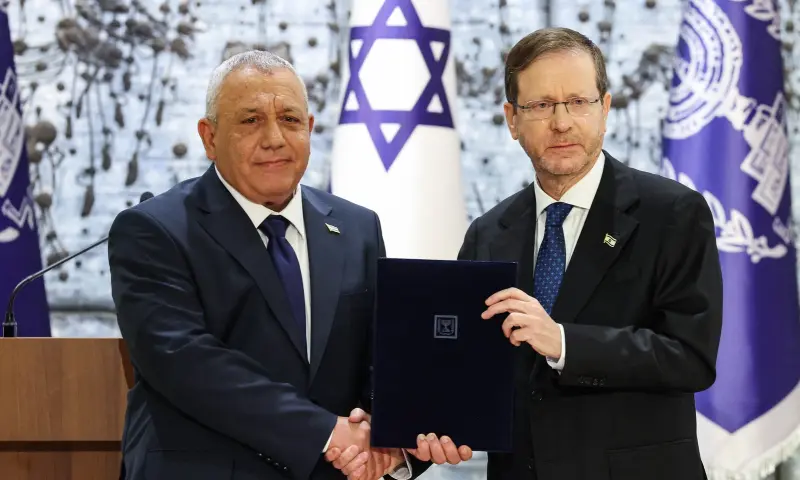
Israel’s new parliament will be sworn in on Tuesday, with Prime Minister Benjamin Netanyahu set to lose his majority even as rival Gadi Eisenkot still works to form a new government.
President Isaac Herzog will deliver a speech at 4pm (7pm PKT) for the swearing-in of the 120-seat parliament, in which neither Netanyahu’s right-wing bloc nor Eisenkot’s opposition will hold a majority.
The opposition hopes to use its newfound legislative power to move quickly on key priorities, including a commission to investigate security failures under Netanyahu that allowed the October 7, 2023 attack by Hamas, the deadliest day in Israel’s history.
Herzog on Sunday gave Eisenkot the initial mandate to form a government, starting the clock for him to cobble together a coalition within 28 days, with a possible 14-day extension.
Ahead of the parliament opening, Eisenkot’s party announced progress in naming people to seek key positions.
The opposition will put forward Matan Kahana — like Eisenkot, a former senior military figure — as speaker of the parliament, Eisenkot’s Yashar party said.
Avigdor Lieberman, a right-wing opposition leader who has played a key role in deciding who can enter the government, will be nominated as chair of the foreign affairs and defence committee.
The opposition’s choice for speaker would need to secure a larger number of votes than anyone backed by Netanyahu’s bloc, which has been trying to push back a vote on the speaker.
The newly formed government would need 61 votes to be approved to take office.
Eisenkot could secure the threshold with support from Arab-Israeli lawmakers, who secured a record number of seats on the back of anger in the minority community over Netanyahu’s hard-right government.
But Lieberman had been clear he would not allow Eisenkot to rely on Arab-Israelis to come to power. He has instead proposed an alliance with ultra-Orthodox Jews, despite his years of bitter denunciations of the community for its singular priority on maintaining an exemption from mandatory military service.
Eisenkot’s core opposition bloc has fewer seats than Netanyahu at 48, but would achieve a majority if the 19 Arab-Israeli lawmakers either enter the government or, more likely, vote for it without joining.
The two ultra-Orthodox parties, with 13 seats, could also crown Eisenkot if they ditch their long alliance with Netanyahu, who backed the exemption from military service without enshrining it fully into law.
An alliance with either group would likely be fragile. Arab-Israelis are likely to object if Eisenkot carries out another major offensive in Gaza.
Eisenkot has largely backed Netanyahu’s war decisions, although he has vowed to crack down on extremist settlers in the West Bank who have been attacking and stealing from Palestinians with virtual impunity.
IN contrast to official claims of economic stability, a series of recently released reports provide disturbing evidence of deepening poverty and a human development crisis in Pakistan.
According to the World Bank’s Pakistan Poverty and Equity brief, the national poverty rate spiralled from 22 per cent in 2018-19 to 29pc in 2024-25 — meaning that about 70 million poor people across the country live below the national poverty line. The Gini index, a measure of economic inequality, has increased from 28.4pc to 32.7pc, the highest in 25 years. The World Bank’s regional economic outlook reported that Pakistan is home to about half of the MENAAP region’s population that falls under the extremely poor category. The World Bank attributes Pakistan’s reversal in poverty reduction to economic shocks triggered by the Covid-19 pandemic, the devastating 2022 floods, high inflation, and currency depreciation.
The UNDP’s 2025 Global Multidimensional Poverty Index reported that 38.3pc of Pakistan’s population (95m people) is multidimensionally poor — deprived not just of cash but also of necessities such as healthcare and education. Another 32m people are vulnerable to multidimensional poverty. Pakistan’s poor population of 38.3pc dwarfed India’s 16.4pc and Bangladesh’s 14.9pc.
The alarming scale of deprivation was also reflected in the 2026 Global Hunger Index, which placed Pakistan 106th among 122 countries. Pakistan has the highest hunger score in South Asia. The report attributes food price inflation to declining household purchasing power and constrained access to food. It finds that undernourishment in the country climbed from ‘low’ in 2018 to ‘medium’, while child wasting has risen towards the ‘high’ threshold.
Poverty is rooted in decades of misguided public policy.
All these reports reflect the severity of the crisis. A nationally representative mental health survey (2018-22), published in the British Medical Journal, revealed distressing facts. The survey found that every third Pakistani lives with a diagnosable mental or behavioural disorder; one in five meets the criteria for post-traumatic stress disorder. A shocking 6pc reported suicidal thoughts, and more than one in 10 had depression. Such staggering rates of mental disorders have been linked to lower income and poor education, unemployment, age, and disrupted family circumstances.
Human development has remained a chronically ignored priority in Pakistan. The UNDP’s Human Development Report 2025 placed Pakistan 168th out of 193 countries appearing in the ‘low’ human development category. Except for Afghanistan, all regional countries ranked ahead of Pakistan on the Human Development Index.
Poverty is rooted in decades of misguided public policy and bad governance. Human development has been given cosmetic importance — the subject is mostly confined to official speeches and election manifestos. Although Covid-19, the floods, and broader climate change have battered the economy, human development seldom features on the government’s list of priorities.
Geopolitical and ongoing border tensions, and more recently the Gulf war shocks, have diverted resources and attention from human development to security priorities. The issue has been further compounded by internal security challenges that have held back exports and stifled foreign investment. Terrorism in two provinces and the poor law and order situation have shattered local investments. This environment has forced many foreign companies to pack up and withdraw capital from our markets.
Agriculture — for long the bedrock of the national economy and a source of food security for millions — has been systematically eroded in recent decades. Sharp increases in agri-input prices, a poorly managed water sector, rapid land degradation, and exploitative market forces have wrecked this critical sector. Soaring energy prices, an unreliable grid, and a huge tax burden, including petroleum surcharges, have made energy exorbitant for the farm sector. Crippling increases in petroleum prices have pushed up transport fares, raising the cost of the farm-to-market supply chain. The resulting food inflation has forced millions of families to compromise on their diet.
Sadly, even though poverty and hunger have emerged as an existential challenge for millions of families in Pakistan, a national focus on these issues is absent. These issues rarely find space in the national discourse — especially on electronic media, which remains abuzz with hysterical talk shows on subjects like governor’s rule and new provinces. Distracting the masses from the real issues and failing to include critical report findings will not reduce the citizens’ frustration.
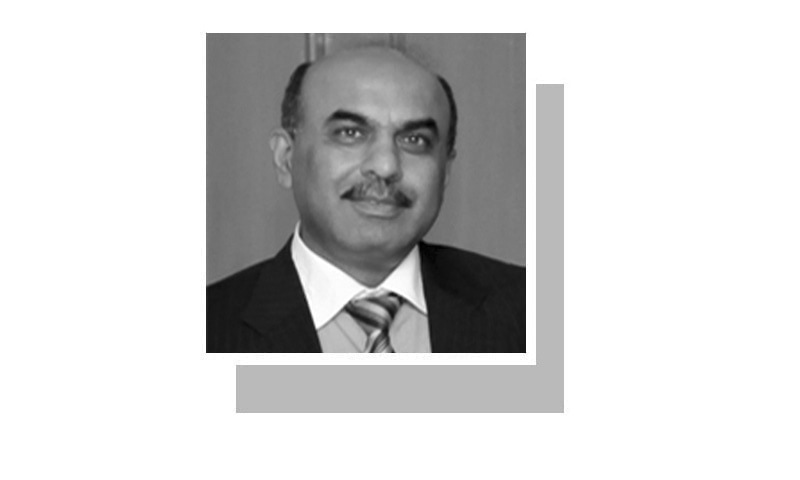
The writer is senior adviser, water governance, at the Sustainable Development Policy Institute.
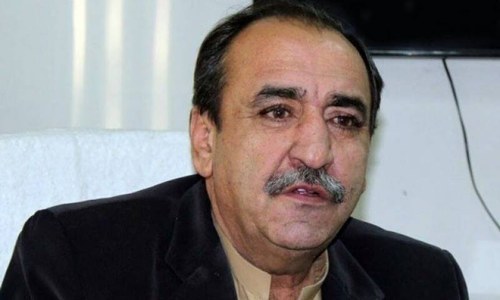
QUETTA: The Balochistan High Court on Tuesday handed former MPA Abdul Majeed Achakzai a ten-year sentence in a case regarding the death of a traffic policeman in a hit-and-run incident.
A division bench comprising Justice Muhammad Amir Nawaz Rana and Justice Abdul Qayyum Lehr allowed an appeal filed by the provincial government against Achakzai’s acquittal and set aside the local court decision dated September 4, 2020.
Achakzai was convicted under Section 320 (punishment for qatl-i-khata by rash or negligent driving) of the Pakistan Penal Code (PPC) for causing the death of Traffic Sub-Inspector Haji Attaullah.
He was also ordered to pay diyat to the legal heirs of the deceased. Furthermore, the court directed the learned Additional Sessions Judge-VI, Quetta, to issue non-bailable warrants for Achakzai’s immediate arrest.
Traffic sergeant Ataullah was killed when a fast-moving vehicle hit him at GPO Chowk in Quetta in June 2017. The ex-lawmaker was returning from the Balochistan Assembly after attending a session when the vehicle hit the traffic policeman, who was performing his duty at the place.
He suffered serious injuries and later died at the hospital.
Initially, police had registered an accident case against unidentified persons. But after the CCTV footage of the accident went viral on social media and was repeatedly shown by TV channels, Balochistan police decided to lodge a manslaughter case against the former MPA, who belongs to the Pakhtunkhwa Milli Awami Party (PkMAP).
He was granted bail by an anti-terrorism court (ATC) six months later. However, in 2020, a local court in Quetta acquitted him in the case. Subsequently, Quetta police filed an appeal filed against the acquittal.
Achakzai is a close relative of opposition leader and PkMAP chairman Mehmood Khan Achakzai. He was elected to the Balochistan Assembly twice and remained a minister in the provincial cabinet. He also served as chairman of the provincial assembly’s Public Accounts Committee.
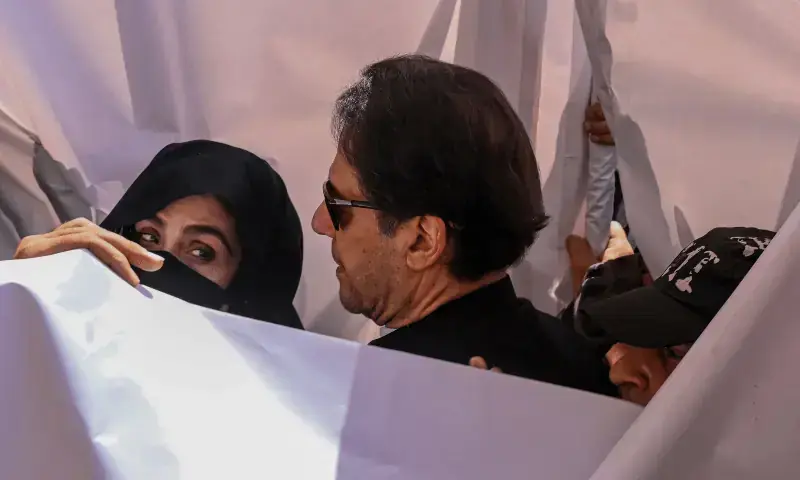
ISLAMABAD: The Islamabad High Court (IHC) on Tuesday adjourned for 10 days the hearing of appeals filed by PTI founder and former prime minister Imran Khan and his wife, Bushra Bibi, against their convictions in the £190 million reference.
The couple is serving prison sentences in the £190m corruption case, also known as the Al-Qadir Trust case. An accountability court had sentenced Imran to 14 years in prison and Bushra to seven years.
The IHC also directed the authorities to facilitate meetings between Imran and his legal team.
At the outset of the proceedings on Tuesday, Chief Justice Sardar Muhammad Sarfraz Dogar, heading a division bench, observed that he had allowed the lawyers to meet Imran and Bushra.
He recalled that on June 29, the court had specifically directed the counsel to proceed with arguments and obtained an undertaking that no adjournment would be sought.
Barrister Salman Safdar responded that the undertaking had been given by Advocate Sardar Latif Khan Khosa, who should explain his position before the court.
He said he was present to argue the appeals as well as a civil miscellaneous application seeking permission for Bushra to receive medical treatment.
Justice Dogar, however, observed that the undertaking had been furnished by Khosa and that arguments on the main appeals would commence forthwith and conclude in due course.
Khosa, however, informed the court that he had not been granted access to Imran.
Taking note of the matter, the chief justice asked Islamabad Advocate General Naveed Hayat Malik whether arrangements could be made for Khosa to meet the PTI founder within the next couple of days. The advocate general responded in the affirmative.
Justice Dogar reiterated that he wanted formal arguments in the appeals to begin.
Meanwhile, lawyer and PTI Secretary General Salman Akram Raja informed the court that he had received instructions from Imran. Justice Dogar observed that the court’s directions also formed part of the judicial record.
Barrister Safdar told the bench that he had been denied access to Imran for the past seven months and to Bushra for the past 11 months. Justice Dogar recalled that Barrister Safdar had earlier expressed his inability to argue the case due to restrictions on meetings with his clients.
The counsel further pointed out that the paper books in the appeals had yet to be received from the IHC. He said the case involved approximately 3,500 pages of documents and testimony from 35 witnesses, which required thorough examination before he could properly present his arguments.
He also apprised the court of Bushra’s medical condition, saying that she appeared deeply concerned when he met her after a gap of 11 months and that her eyes appeared to be badly infected.
Regarding Imran’s health, he said that although his eyesight had improved somewhat, his blood pressure remained unstable, putting him at risk of a brain haemorrhage.
He added that the PTI founder was more concerned about his wife’s health than his own.
Barrister Safdar said Bushra had been wearing sunglasses during their meeting and had removed them only at his insistence. He maintained that her eye condition appeared serious and required immediate attention from a specialist.
He argued that women could be granted bail on statutory grounds and that Bushra urgently needed medical treatment. He requested the court to consider granting her bail for a fortnight to enable her to receive appropriate medical care.
Advocate General Malik, however, maintained that Bushra had been provided with proper medical treatment. He argued that individuals convicted and sentenced by courts could not claim the same absolute rights as law-abiding citizens.
Justice Dogar observed that Khosa would argue the main appeals and directed the advocate general to facilitate his meeting with Imran.
Barrister Safdar also requested an opportunity to meet both Imran and Bushra, explaining that his last meeting with them had taken place after a prolonged gap.
Raja supported the request and asked the court to allow Barrister Safdar to accompany Khosa during the proposed meeting with Imran.
Justice Dogar, however, observed that the matter relating to Bushra’s medical treatment was pending before the Federal Constitutional Court (FCC) and that Barrister Safdar could pursue the issue of access to his clients before the appropriate forum.
Barrister Safdar reiterated his request that Bushra be permitted to receive medical treatment from a specialist of her own choice.
At the conclusion of the proceedings, the court directed the advocate general to arrange a meeting of at least an hour between Khosa and the PTI founder. It also directed the authorities to ensure that the paper books were prepared and made available before the next hearing.
Barrister Safdar informed the bench that he had also been instructed to argue both appeals. The court further allowed Barrister Safdar to meet Imran and Bushra before adjourning the proceedings for 10 days.
Speaking to the media outside the IHC, PTI Chairman Barrister Gohar Ali Khan said that the party had knocked on every court’s door and approached every forum to seek justice.
“It feels as though court orders in our favour were written in pencil, while those in others’ favour were written in permanent marker. Perhaps that is why no one even noticed the orders issued in our favour, let alone implemented them,” he contended.
“What is needed now is for decisions to be written not in pencil or permanent marker, but with the same pen for everyone,” he demanded, urging equal justice for every citizen.
“All of Pakistan, every political party and the public are looking to the courts for justice,” he said. He said that the courts should issue extraordinary orders in these extraordinary circumstances so that all obstacles to justice could be removed.
“We hope the court will not stop at merely issuing an order, but will also ensure that its order is implemented,” he said, talking about the most recent orders issued by the IHC.
“We also demand that the government immediately implement the court order and ensure that lawyers can meet Imran,” he urged, asserting that it was the ex-premier’s fundamental and legal right.
The £190m pound case pertains to the Al-Qadir Trust settlement, where NAB alleged that Imran and Bushra obtained billions of rupees and land worth hundreds of kanals from a real estate firm for legalising Rs50 billion that was identified and returned to the country by the United Kingdom during the PTI government.
The amount was deposited in the Supreme Court account as part of a settlement with the property tycoon.
An accountability court in Islamabad had sentenced Imran and Bushra to 14 and seven years in prison, respectively, on Jan 17, 2025, in the case. Subsequently, both had challenged their convictions before the IHC.
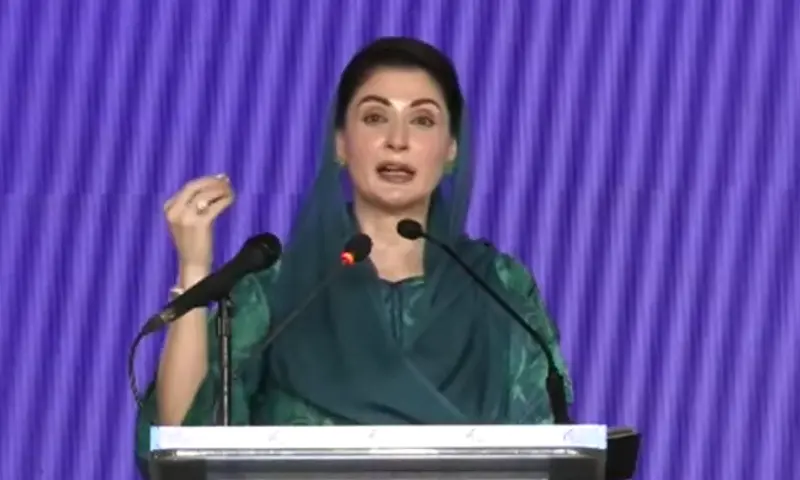
Punjab Chief Minister Maryam Nawaz on Tuesday said political narratives, allegations and criticism had a limited “shelf life”, asserting that public service and development work ultimately determined electoral success.
She was speaking at a Honhaar Scholarship and laptop distribution ceremony at Government Comprehensive High School in Jhelum.
During her address, Maryam said voters did not support political narratives but instead judged political parties by their public service record. She cited the PML-N’s victories in recent local elections in Sahiwal and Gujranwala, despite opposition parties having “joined hands” against her.
“No matter how much you talk or how many claims you make, if you have not served the people, there comes a day when you are deprived [of public support],” she said.
“If some people have objections and are levelling allegations of corruption against the Punjab government, why don’t they resign from the cabinet?” the provincial chief executive said, in an apparent reference to Minister for Overseas Pakistanis Chaudhry Salik’s recent allegations of corruption against the Punjab government.
She maintained that there had been no corruption in the development projects worth trillions of rupees launched by her government over the past three years.
Referring to the opposition’s criticism of her government, Maryam said attempts were being made to distract her as elections drew closer.
She said she was answerable to the people for the expenditure of public money, adding that she would not spare any minister or official against whom evidence of corruption or bribery was presented.
“I have not said that corruption has completely ended in Punjab,” she said.
The chief minister said she would not comment on other provinces, as their respective governments were answerable to their own populations. However, she claimed that Punjab was the only province where the chief minister pursued a new corruption case every day.
Maryam asserted that her government had broken the tradition of concentrating development spending in major cities.
She cited the expansion of the Green Bus service to cities including Jhelum, Khushab, Layyah, Bhakkar, Rahim Yar Khan, Bahawalpur and Multan, saying similar transport facilities and infrastructure were being provided across the province.
The chief minister also highlighted the establishment of Nawaz Sharif Schools of Eminence, saying they were comparable to expensive private schools.
She said the schools offered facilities such as air-conditioned classrooms, computer laboratories, artificial intelligence laboratories and science laboratories, along with qualified faculty.
Maryam also praised provincial Education Minister Rana Sikandar Hayat for his work in the education sector. She announced that 300 Nawaz Sharif Schools of Eminence would be established, with work on the initiative in Jhelum scheduled to begin on Dec 15.
She further said the government was establishing cardiac treatment facilities in 25 cities where such services had previously been unavailable. Patients visiting catheterisation laboratories (cath labs) at public hospitals would be able to receive procedures, including angiograms, angioplasty, stenting and pacemaker implantation, free of cost, she added.
She further said cancer hospitals were being established in every divisional headquarters, while the country’s first government-run cancer hospital was being built in Lahore.
US President Donald Trump took a tech tone towards Jensen Huang on Monday, saying the Nvidia CEO was “suffering greatly” and didn’t know a woman he had an affair with was an alleged Chinese spy.
Trump also danced around the question of when he personally was aware of intelligence linking the chip boss to Alice Huang, a Chinese executive who had allegedly been funnelling information to Beijing.
The US leader said he had spoken to Huang earlier on Monday “to see if he’s feeling alright,” calling the Taiwanese-born tech boss an “amazing guy”.
“I asked him that question, ‘did you have any idea that she was a spy?’ He said, ‘I had no idea that she was a spy,’ and I really believe him,” Trump told reporters at the White House.
He added: “I hope there is no problem. I believe he is suffering greatly … more so because of his family, his wife, who he loves, and his family. But he’s definitely suffering.”
Jensen Huang sent a message to Nvidia employees on Sunday in which he acknowledged having an affair and apologised to both his family and company staff.
Trump said he was not aware of the allegations when Huang accompanied him to China in May. Huang is a key figure in the AI revolution and close to the US president.
“No, I didn’t hear about it then. But a lot of people have heard about it,” Trump said.
Huang has also attended numerous White House events, including a state visit by Chinese President Xi Jinping in September.
But Trump would not specify when he was told.
“Not too long ago. We’ll look into it, I know the FBI is looking into it in terms of something else, and I think he’ll be in good shape,” Trump said.
Asked by AFP to clarify the president’s remark as to whether there is an investigation into Huang under way, the FBI declined comment Monday.
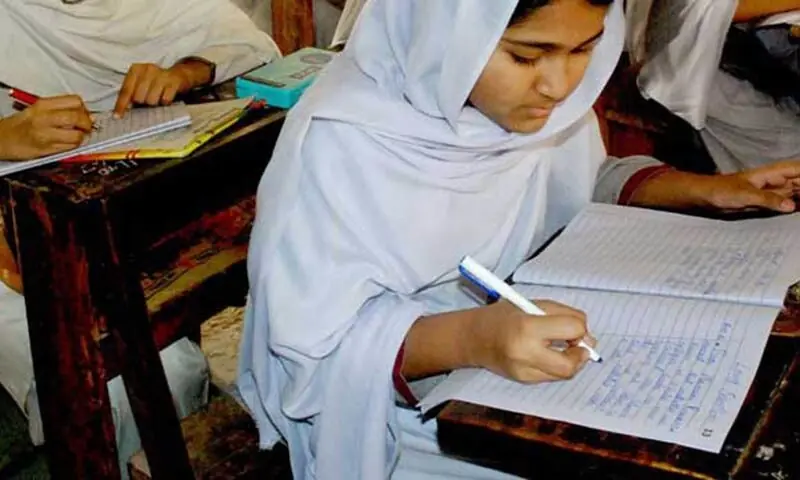
BANNU: The Board of Intermediate and Secondary Education (BISE), Bannu, has postponed the Secondary School Certificate Second Annual Examination in North Waziristan due to the security situation while a curfew has also been imposed in the district’s Mir Ali area.
The postponement of the exams was announced in a press release by the BISE on Nov 9, following the North Waziristan deputy commissioner’s instructions.
A revised schedule for the examinations would be announced later, the press release said, adding that examinations at centres set up at Cadet College Razmak and in Bakakhel tehsil would be held as per schedule.
In North Waziristan, this is the second time that these exams — scheduled to start on October 12 — have been postponed. They were initially postponed last month, not just in North Waziristan but also in Bannu, Lakki Marwat.
Meanwhile, a curfew was imposed in areas from Bobali and Mir Ali up to Isha, an official statement by the district administration said. The curfew would remain in place until the completion of an ongoing security operation in these areas.
The Bannu-Miranshah Road will also remain closed for traffic during this period.
Area Representative and Development Council member Malik Rohullah Khan said the general officer commanding north had issued instructions for the curfew. However, he added, residents had been allowed to visit markets for the purchase of essential daily-use items in Miranshah and Datta Khel on his request.
He further stated that residents wishing to travel outside North Waziristan could use the Miranshah, Isha and Razmak routes.
Khyber Pakhtunkhwa, including North Waziristan, has been facing security challenges for a long time.
Security forces conducted an intelligence-based operation in Muzak village, on the southern outskirts of Mir Ali on Monday and neutralised two terrorist hideouts, the military’s media wing said the previous day.
According to the Inter-Services Public Relations, security forces recovered a huge cache of prepared improvised explosive devices, explosive preparation material, weapons, and ammunition from hideouts, which were established inside mosques.
On Oct 8, the state media reported that the troops had killed nine terrorists in another IBO in North Waziristan.
According to statistics released by the Islamabad-based Pakistan Institute for Conflict and Security Studies, KP recorded 40 terrorist attacks in October, compared with 58 in September, representing a decline of 31pc. Fatalities from these attacks decreased from 90 to 38, a reduction of approximately 58pc, while injuries fell from 165 to 19, an improvement of 88pc.
As per the report, the erstwhile Fata region experienced a comparatively modest decline in terrorist violence. The think tank recorded 30 attacks during October, compared with 34 in September, a reduction of 12pc.
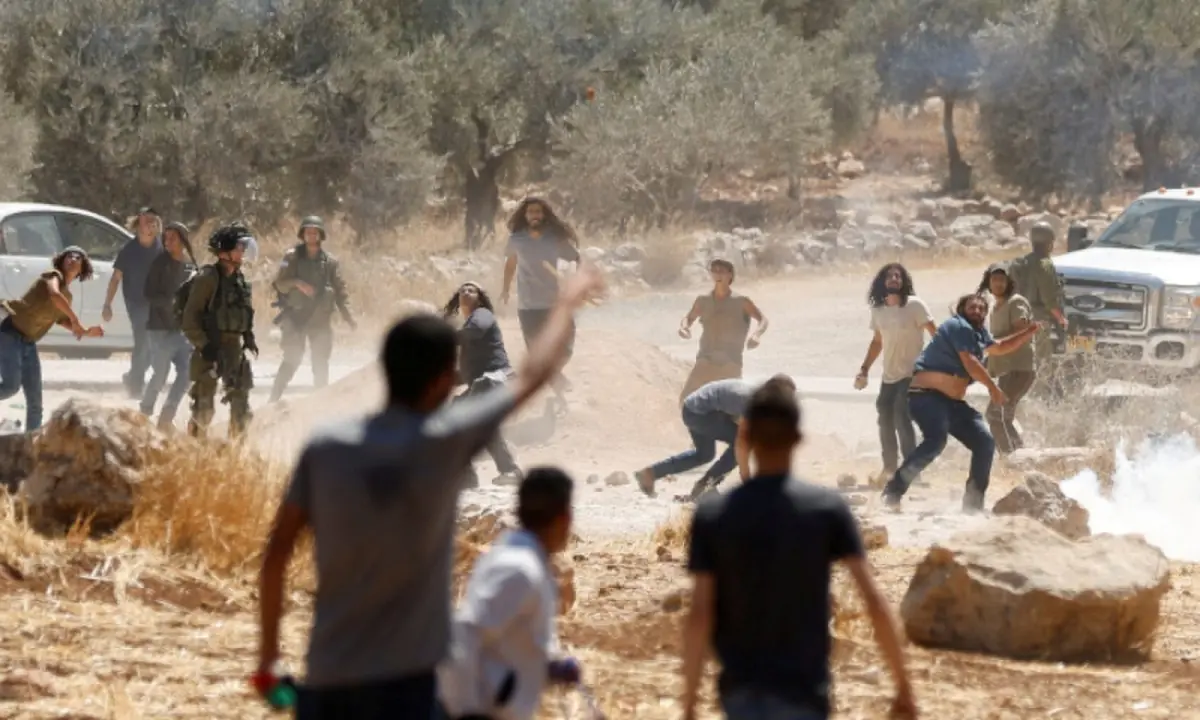
Israeli forces shot dead a 14-year-old in the occupied West Bank, Palestinian officials said, with Israel claiming it was responding to stone-throwing.
Moutaz Eyad Daghlas was killed in Burqa, northwest of Nablus, late on Monday, the Palestinian health ministry said.
The Palestine Red Crescent Society said its teams treated two people with gunshot wounds and took them to hospital, but that Israeli forces blocked access to a third wounded person and detained three volunteer paramedics.
The Israeli military, asked by AFP about the incident, alleged Tuesday it had acted to “thwart stone-hurling” in the area.
“The soldiers identified several individuals who intended to hurl stones at a highway used by Israeli vehicles. This was in an area where stones have recently been hurled at Israeli vehicles,” the military said.
“The soldiers responded by firing towards them in order to remove the threat.”
Israeli forces have routinely opened live fire on Palestinians, including minors who throw stones in the West Bank, which Israel has occupied since 1967.
The Israeli human rights group B’Tselem said Israeli forces killed at least 241 children or teenagers in the territory between the October 7, 2023, and late June this year.
Violence has increased in recent weeks, especially in the run-up to Israel’s October 27 election, before which Prime Minister Benjamin Netanyahu had sought to appeal to hardline settlers in the West Bank.
On October 23, Palestinian gunmen killed two Israeli soldiers at a checkpoint near Hebron before being killed by Israeli forces, who later responded with a major operation in the flashpoint city.
Israeli soldiers or settlers have killed at least 1,116 Palestinians in the West Bank since the start of the Gaza war, according to an AFP tally based on Palestinian Authority figures.