GAZIPUR: Before dawn each day, garment worker Shilpi Khatun cooks over a wood-fired clay stove because her family cannot afford gas, before heading to a factory in Gazipur, an industrial hub on the outskirts of Dhaka.
The 27-year-old is the sole breadwinner in a household where her husband is unemployed and her parents and in-laws depend on her wages.
Rising prices have left Khatun struggling to afford basic necessities despite five years in the garment industry, a frustration shared by thousands of Bangladesh’s garment workers who staged protests last week demanding the minimum monthly wage be raised to 30,000 taka ($242.82) from 12,500 taka.
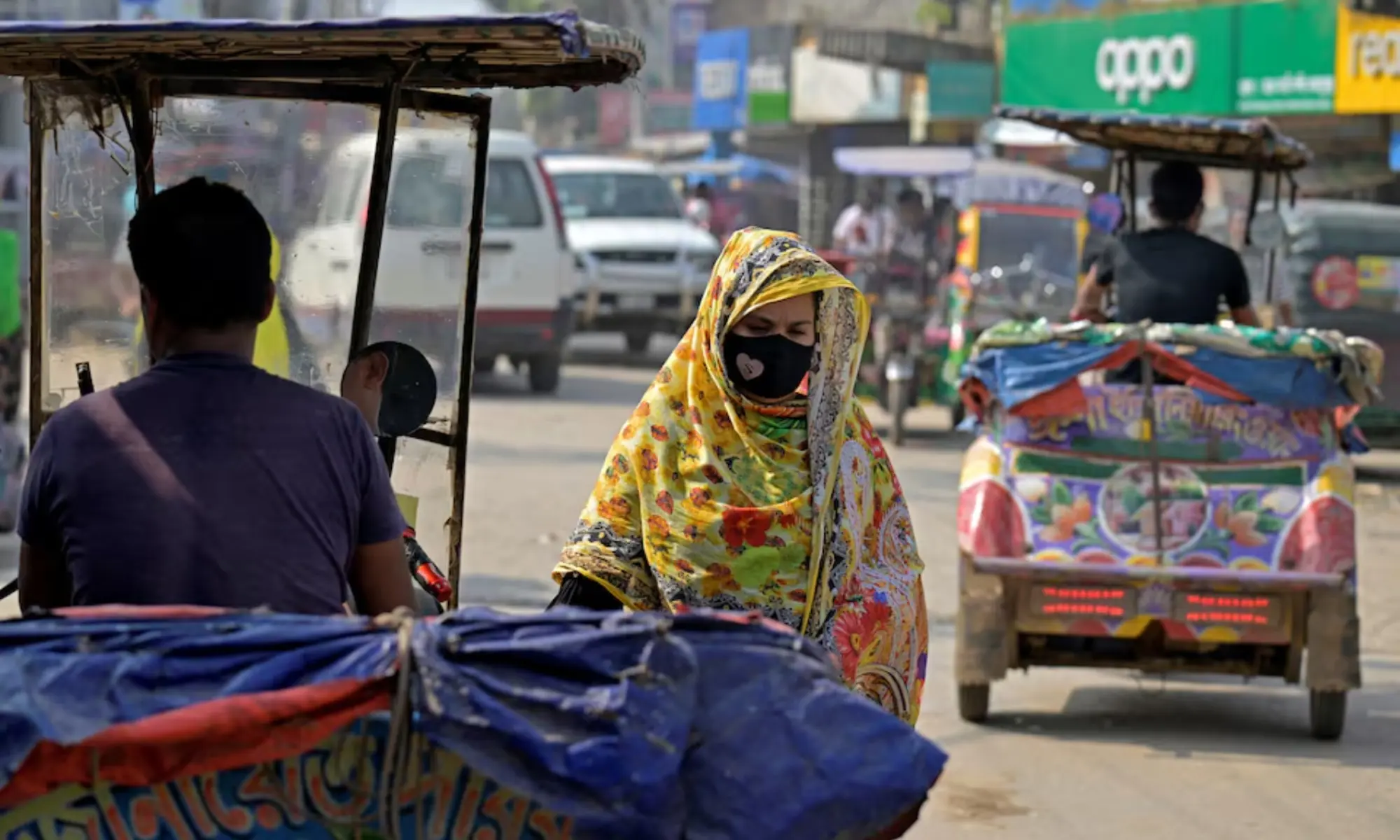
Shilpi Khatun, 27, a garment worker, walks in a busy street in Gazipur, Bangladesh on November 6, 2026. —Reuters
“Everything costs more now. Rent has doubled, food is more expensive and whatever I earn disappears before the month is over,” Khatun said as she gathered leafy greens outside her home to eat with rice for lunch.
Wage pressure mounts
Last week’s unrest, some of it violent, forced hundreds of factories to shut down as workers staged protests and clashed with police, who used tear gas and sound grenades to disperse demonstrators.
The government’s wage board agreed on November 4 to implement a revised wage structure from December, with workers set to receive their first pay under the new scale in January, but has yet to determine the size of the increase.
Low labour costs have helped make Bangladesh the world’s second-largest apparel exporter after China and a preferred manufacturing base for global brands including H&M, Zara, Gap, Primark and Walmart. The industry generates more than 80 per cent of the country’s export earnings and employs more than 4 million people.
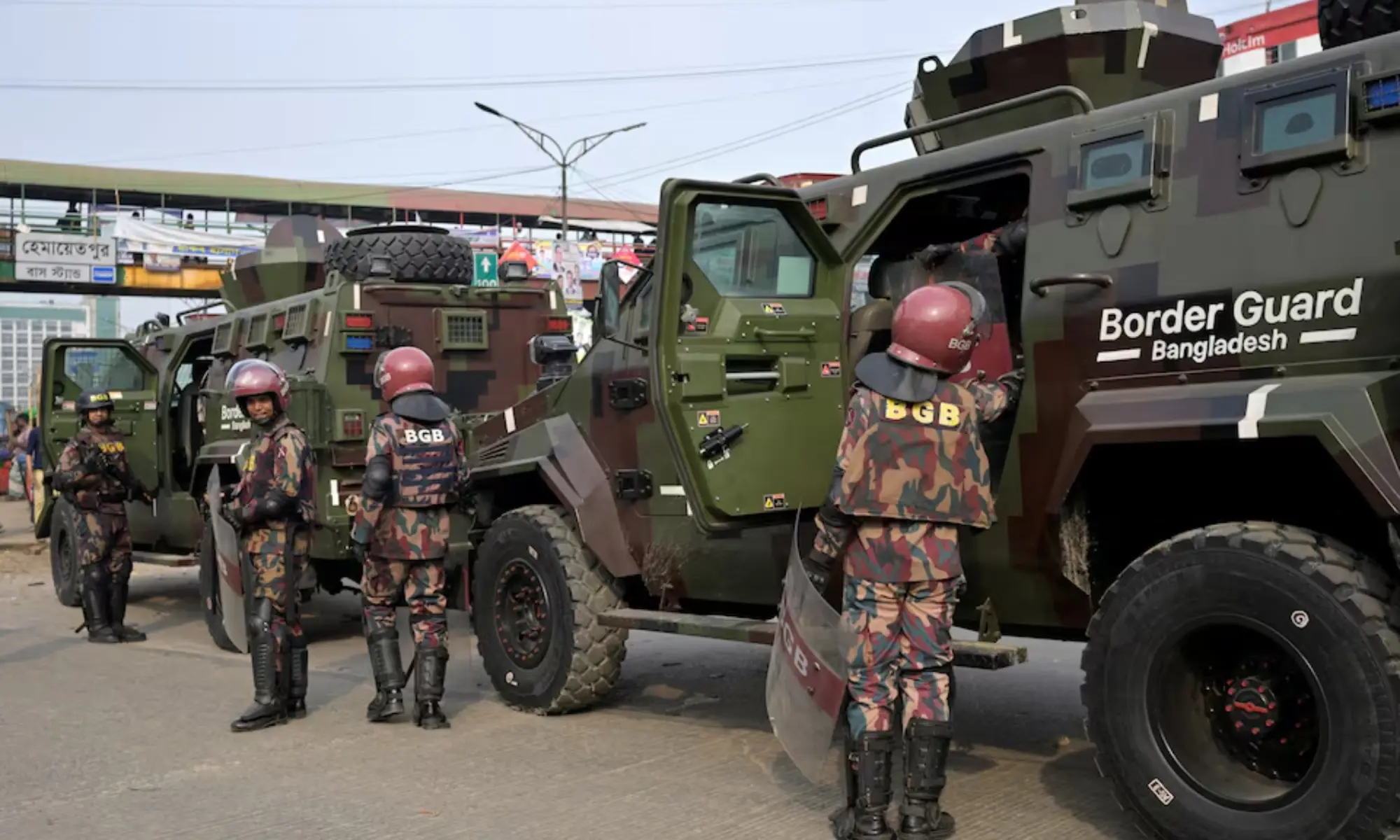
Members of the Border Guard Bangladesh (BGB) stand guard outside a garment factory in Baipail, near Dhaka, Bangladesh on November 5, 2026. —Reuters
Manufacturers, however, say a steep wage increase would erode Bangladesh’s cost advantage over rivals such as India and Vietnam and further squeeze margins already under pressure from higher energy costs.
Workers also receive a 9pc annual increment and two festival bonuses in addition to their basic wages, manufacturers say, arguing there is limited room for substantial pay increases.
Workers make stark choices
Workers like Khatun say the wage increase has not kept pace with rising prices, forcing them to make difficult choices over everyday spending.
On the hardest days, Khatun’s family survives on puffed rice, she said. Sitting in the small tin-shed room she shares with her husband, she said she had not seen a doctor in three years despite worsening health problems.
Her salary has crept up over five years but not enough to match rising costs. She now earns 13,500 taka ($108), up from 9,000 taka when she started. With overtime, she earns about 16,000 taka, but the money rarely lasts until the next payday, she said.
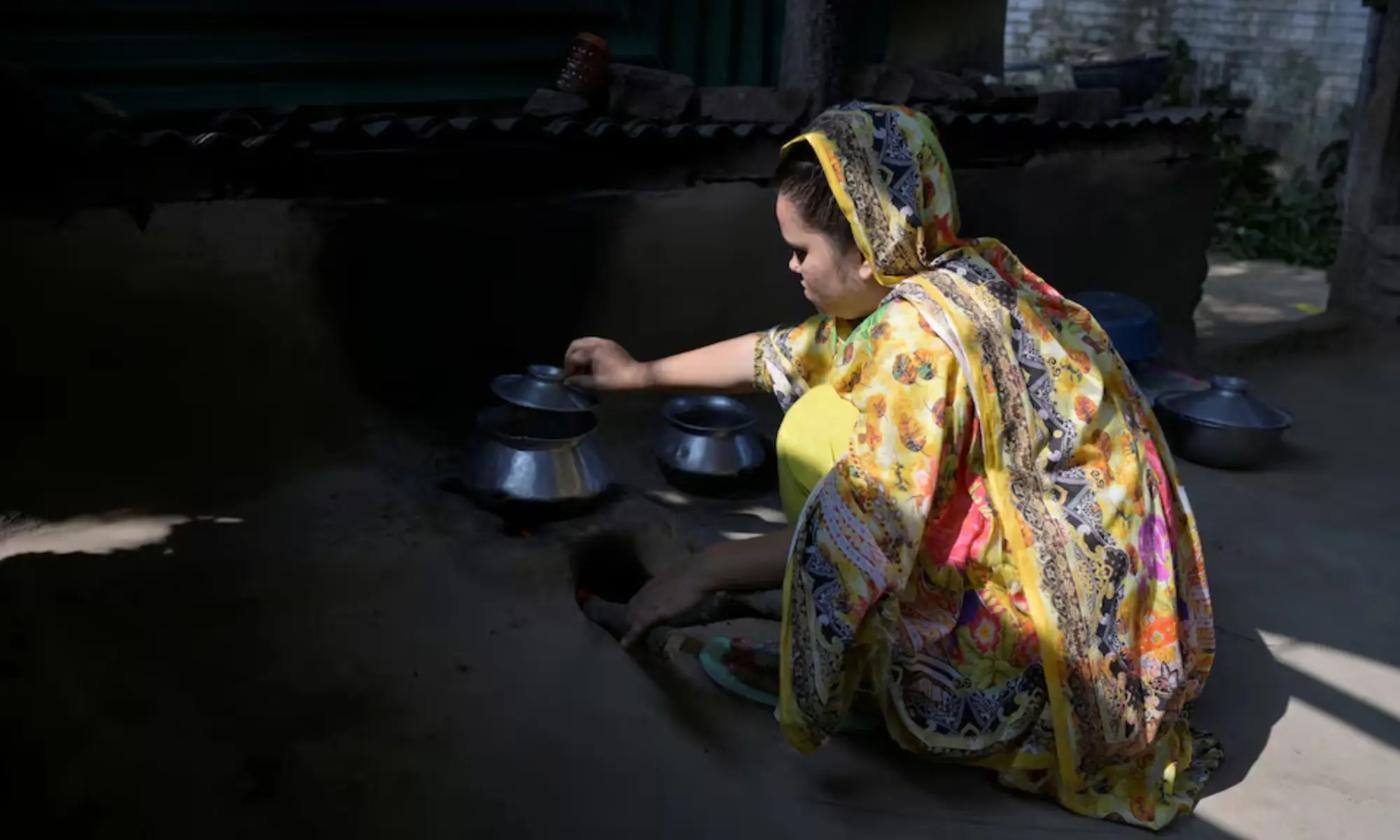
Shilpi Khatun, 27, a garment worker, cooks food in a shared kitchen area outside her one-room house in Gazipur, Bangladesh on November 6, 2026. —Reuters
Bangladesh has faced a prolonged cost-of-living squeeze since 2022, with inflation averaging around 9pc. Food prices initially drove the surge, but non-food costs have remained high.
“I think twice before buying anything, even food,” said Roksana Parveen, a 29-year old sewing operator in a factory in Ashulia on the outskirts of Dhaka.
“I know my daughters should be eating better, but I just can’t afford it.”
Parveen and her two daughters often live on little more than rice and vegetables, with meat and fish becoming luxuries beyond their reach. To cut costs, one of her daughters dropped out of school.
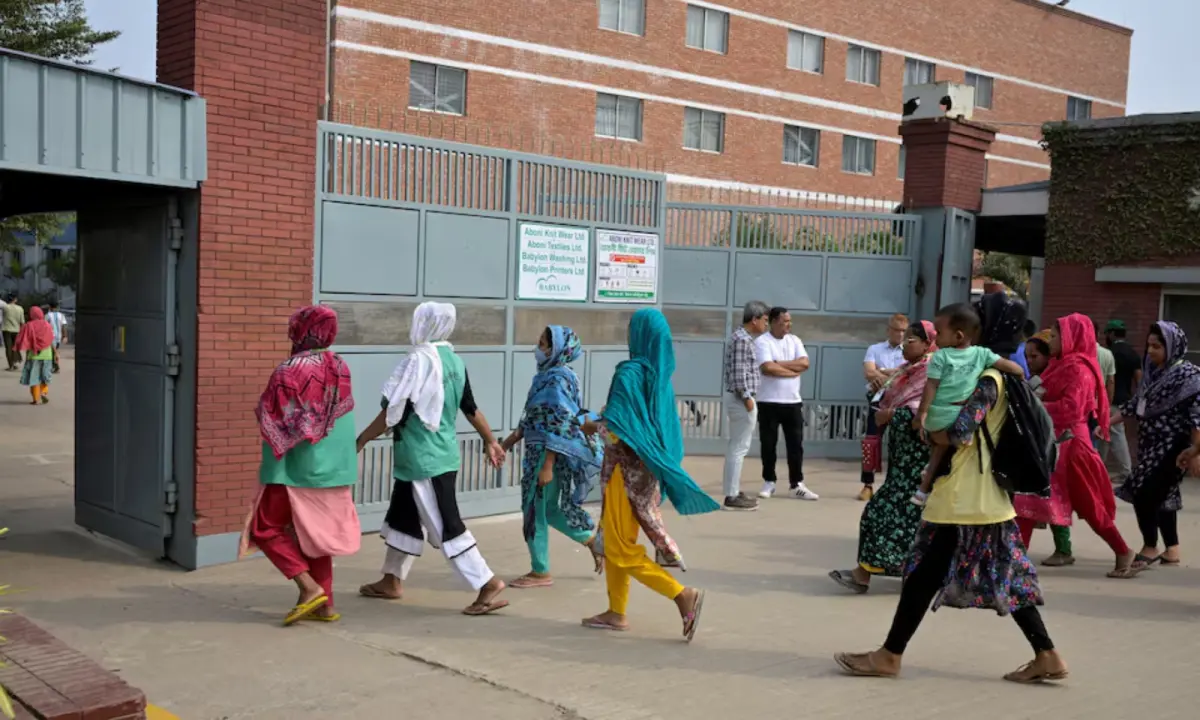
Header image: Garment workers enter a factory to begin their shift in Baipail, near Dhaka, Bangladesh on November 5, 2026. —Reuters
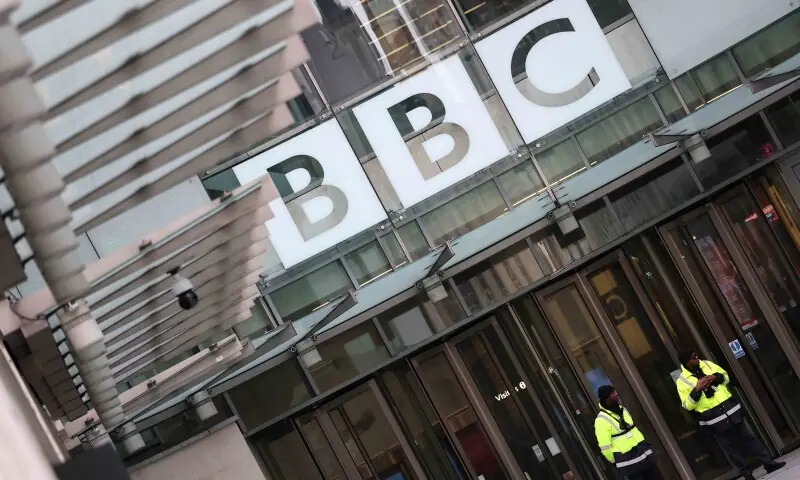
A federal judge allowed US President Donald Trump’s multi-billion dollar defamation suit against the BBC to proceed on Tuesday, rejecting a bid by the British broadcaster to dismiss the case.
Trump has accused the BBC of deceptively editing a documentary to make it seem as if he was inciting violence when he told supporters to march on the US Capitol on Jan 6, 2021.
He has sought at least $5 billion each for one claim of defamation and a separate claim under a Florida consumer protection law.
US District Judge Jeffrey T. Kuntz rejected the BBC’s bid to dismiss the defamation suit, but tossed the Florida protection law claim.
“Whether President Trump can prove these claims and establish he sustained damages at summary judgement or trial is left for another day,” Kuntz wrote in a 40-page ruling.
The BBC documentary at issue spliced together two separate sections of Trump’s speech on January 6, 2021, making it appear that he had explicitly urged supporters to attack the US Capitol.
While the BBC has apologised for the incident, which prompted the resignation of multiple senior executives, the broadcaster has denied it caused Trump any real injury.
“Given the time disparity between the two statements, the distance itself tends toward a plausible inference that BBC knew or should have known that the segment they were creating would not and could not have been a truthful statement,” Kuntz said in his ruling.
“This was not trimming around the edges but creating something different than what was stated in the speech.” Trump, in a Truth Social post, hailed the Kuntz’s ruling as “A Huge Victory.”
“We will continue fighting against, and defeating, all of those who try to deceive the American People!” he added.
Last month, the president faced a setback in the case when a magistrate judge ordered him to give a deposition by Dec 11, after the BBC claimed he was dodging their efforts to get sworn testimony.
Trump risks sanctions if he fails to attend the deposition by then, including the potential dismissal of his lawsuit, the court said.
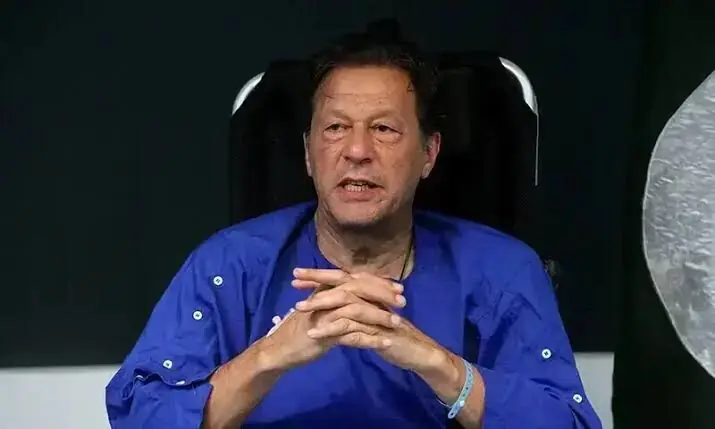
Former prime minister and PTI founder Imran Khan was brought to the Pakistan Institute of Medical Sciences (Pims) on Wednesday for tests and follow-up treatment for his eye condition, a hospital official confirmed.
“Imran Ahmed Khan Niazi was brought from Adiala jail in Rawalpindi to the Pakistan Institute of Medical Sciences (Pims) in Islamabad during the night between November 10 and 11, 2026, for a medical check-up and follow-up eye treatment on the advice of his treating ophthalmologist,” a Pims official said.
The hospital official added that, prior to the procedure, the former premier underwent a medical examination, including an ocular assessment.
“His vital parameters were found to be normal. He was clinically stable, and his general physical examination was unremarkable. After obtaining informed consent and following standard monitoring procedures, precautionary measures and clinical protocols, the ophthalmology team administered an intravitreal anti-VEGF injection,” the official said.
“He remained clinically stable before, during and after the procedure. He was discharged at around 2:30am with the necessary instructions for further care and follow-up,” he said.
The former premier’s last reported hospital visit for his eye ailment was in June.
Imran has been imprisoned since August 2023. His health has deteriorated over the course of his prison sentence, prompting outcry from members of the party.
His eye ailment — right central retinal vein occlusion — came to light in late January, following which he has been taken to hospital multiple times.
On Aug 18, the Supreme Court directed the government to shift the jailed ex-premier to Shifa International Hospital in Islamabad, a day after the superintendent of the Adiala jail — where Imran is imprisoned — submitted a report to the SC on the ex-premier’s health condition.
In the report, the jail administration said adequate healthcare facilities were being provided to the couple, with their health and well-being a priority.
However, an annexure to the report stated that Dr Akhtar Ali Bandeshah of Pims examined him on Aug 1 and noted complaints of uncontrolled and fluctuating blood pressure, palpitations, headache and restlessness. The ex-premier had attributed his symptoms and stress partly to infrequent meetings with his wife, family and social contacts, as well as the absence of newspapers and TV.
On Aug 10, the SC was informed, a medical board comprising Pims specialists also examined Imran after he complained of heaviness in the head and palpitations. It recommended a one-hour daily walk and relaxation in his prison routine, besides access to newspapers, magazines, television and books.
The board also recommended more frequent interaction with immediate family members or his spouse, saying this could help control his anxiety and blood pressure.
Subsequently, the court ordered his transfer to Shifa International Hospital.
However, the government took the PTI founder to Pims and subsequently transported him back to prison.
At the time, Information Minister Attaullah Tarar had blamed “the security situation created by PTI workers on the way to and outside” the hospital for the diversion. The PTI has denied the allegations and accused the government of deliberately flouting the court’s orders.
GROWING inequality is a serious economic and social issue. Internally, we tend to treat poverty and inequality as separate problems. They are closely connected but not identical. Poverty is about deprivation; inequality is about how income, wealth, opportunities, and economic power are distributed. An economy can grow and even reduce poverty temporarily while allowing wealth and privilege to become concentrated.
Household data underlines the problem. The consumption-based Gini coefficient increased from 28.4 in 2018 –19 to 32.7 in 2024 –25. This figure does not capture the full extent of inequality in income and wealth, because household surveys tend to underrepresent the assets and incomes of the richest households.
The distribution of income and wealth influences what people consume, what businesses produce, where investment flows, and how much a country imports. In Pakistan, a relatively small segment commands a disproportionately large share of purchasing power and assets, while much of the population struggles to meet basic needs.
A relatively small segment commands a disproportionately large share of purchasing power and assets.
The benefits of economic growth have been distributed unevenly. Expanding sectors such as banking, telecommunications, IT, energy, oil and gas require capital, technology, and specialised skills, favouring those who already possess financial resources or access to quality education. The state’s failure to provide decent education and healthcare has denied much of the population a fair opportunity to participate in these activities. Hence, economic disadvantages are passed from one generation to the next.
Equally damaging is the continued protection of selected businesses from competition through high import duties, subsidies, tax exemptions, and special regulatory concessions. Powerful business groups have resisted competition, sometimes forming cartels to influence prices and markets. Profits earned through state protection rather than efficiency reward influence instead of innovation, raise costs for consumers, and weaken competitiveness.
The tax system has reinforced these inequalities by treating similar incomes from different sources unequally. Salaried individuals face substantial income taxes, while earnings from property, capital gains, and certain commercial activities have historically enjoyed relatively favourable treatment.
The state itself has been a major contributor to wealth concentration. Valuable public land and plots have been given to officials and influential individuals, while discretionary powers over building permissions, zoning regulations, and public contracts have created opportunities for private enrichment. Rising property prices, reinforced by speculative investment and the use of real estate to park undeclared wealth, have further increased the fortunes of existing asset owners. Corruption, smuggling, tax evasion, and manipulation of import and export prices have provided additional avenues for accumulating wealth, often beyond the reach of effective taxation and accountability.
Together, these factors constitute a system in which public authority is used to transfer economic opportunities and resources to privileged groups. The consequences extend beyond unfair income distribution; they also distort how the economy allocates and uses its scarce resources.
When fortunes can be made through political connections, regulatory concessions, and protection from competition, capital and entrepreneurial talent are diverted towards securing favours rather than productive investment. It becomes more profitable to lobby for higher import duties or special exemptions than to invest in technology, improve quality, or develop export markets.
The concentration of purchasing power also shapes the structure of domestic demand and, therefore, what businesses choose to produce. Businesses often respond to this purchasing power by directing investment towards activities serving a narrow market.
Meanwhile, the limited purchasing power of the majority constrains demand for mass-consumption goods, discouraging investment in industries that could serve a broader domestic market, create jobs, and compete globally.
This distorted pattern of consumption and production also contributes to our recurring external imbalances. The concentration of disposable income generates demand for imported vehicles, electronics, luxury goods, foreign travel, and education abroad, adding to the foreign exchange needed for machinery, fuel, technology, and industrial inputs. Not all imports are undesirable. Many are essential for productivity and exports. However, our consumption and production structures generate substantial demand for foreign exchange without a corresponding capacity to earn it through competitive exports.
Remittances from overseas Pakistanis have helped bridge this gap. But however valuable these inflows, they cannot substitute indefinitely for an economy capable of financing its import requirements through its own export earnings.
Inequality is certainly not the sole cause of external deficits. Exchange rate policies, tariffs, energy costs, inflation, low productivity, and weak export competitiveness also matter. Still, the concentration of purchasing power helps explain why import demand remains substantial even when we face severe foreign exchange constraints. There is another damaging effect.
When influential groups secure tax exemptions, subsidies, and protected markets, government revenues suffer. The burden of financing an oversized, extractive state, with its extensive controls and perks and privileges, consequently falls disproportionately on salaried workers, compliant businesses, and ordinary consumers unable to escape taxation.
Public expenditure compounds the problem. Chronic underinvestment in quality education and healthcare has denied millions of children a fair start. Affluent households can purchase good private education and medical care, while poorer families depend on poor and overstretched public services. Their children’s prospects depend on family circumstances. The failure to provide equal opportunities thereby perpetuates inequality across generations.
Addressing these disparities does not mean penalising wealth creation. It means distinguishing wealth earned through enterprise, innovation, and productivity from fortunes accumulated through political connections, monopolies, and state-granted privileges. This requires a fairer tax system.
Protection must give way to competition, while discretionary allocations of public land, contracts, and regulatory concessions need to be replaced by transparent, rule-based processes. Foreign aid, remittances, and favourable global developments have provided only temporary relief, enabling successive governments to shelve tough reforms, thereby sustaining an economic structure that rewards privilege over productivity.
Unless this system of privileges and unequal opportunities is dismantled, Pakistan will remain trapped in recurring internal and external imbalances, regardless of how many stabilisation programmes it negotiates with the IMF and others.
The writer is a former governor of the State Bank.
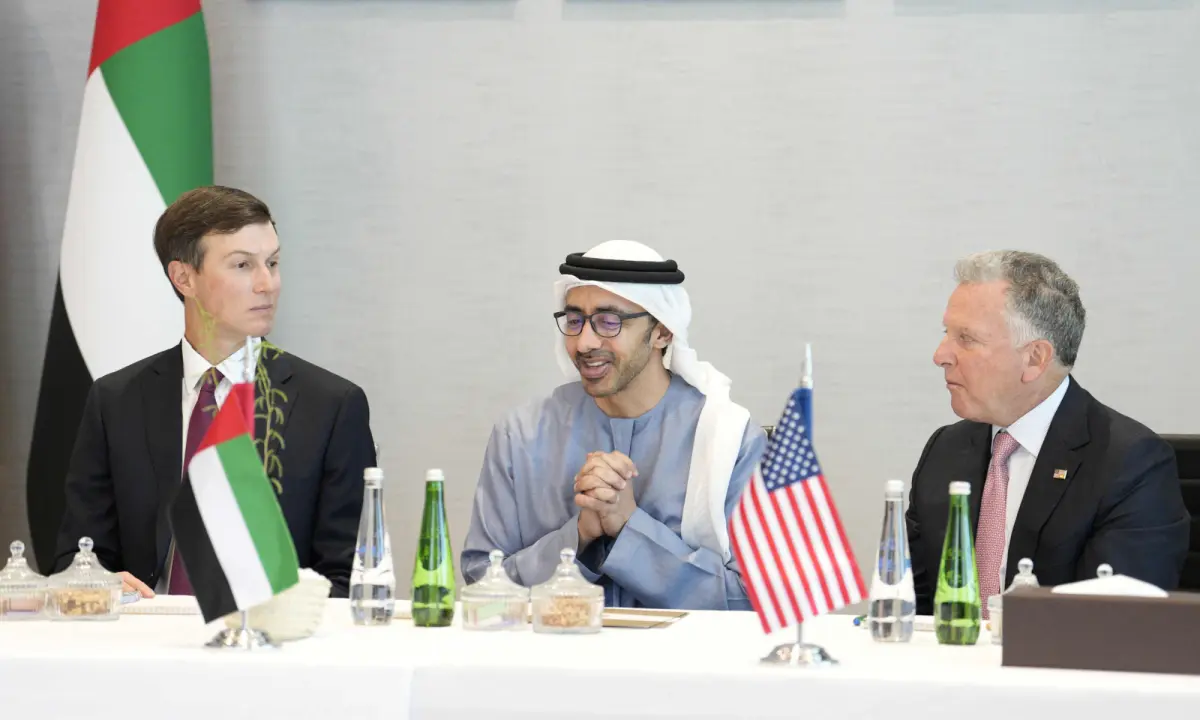
SLEAZE, bribery, and secret alliances allegedly marked Trump’s Middle East policy in his first term, and set him on the road to an illegal and unwinnable war against Iran in his second. The central characters in that sordid set of machinations were his own son-in-law and senior adviser Jared Kushner, a few Gulf rulers, and Israel’s prime minister Benjamin Netanyahu — all working towards a plan to redraw the political map of West Asia. Iran was the adversary to be contained, and it was on this that they converged: a plan to “blow up Obama’s Iran nuclear deal”.
Billions of dollars were allegedly paid to Kushner in what may be the biggest scandal in recent history — one that best defines the link between money and Trump’s conduct of his Middle East policy, and which has pushed the entire region into an intractable conflict with global consequences.
A recently published book, Princes and Thieves by investigative journalist Matthew Cole, provides startling details on how billions of dollars were allegedly transferred into accounts — managed by Kushner — by Gulf sheikhdoms, to implement a plan to break Obama’s nuclear deal with Iran and change the “political map of the Middle East”. The author supports his view of the transactions with details drawn from accounts hacked by a Western intelligence agency, though Kushner has called the allegations fabricated.
According to the author, the transfers began in 2017 and were well underway by the spring of 2018, during Trump’s first term — when Kushner served as the president’s special envoy on the Middle East. While he had very close relations with Israel, he also cultivated strong business and diplomatic connections with willing Gulf sheikhdoms to allegedly pay for influence with the Trump administration.
>A recent book details how money and corruption were leveraged to redesign the Middle East.
According to the author, “Kushner, UAE ruler Mohamed bin Zayed (MBZ), and Mohammed bin Salman (MBS) of Saudi Arabia, converged at an auspicious moment. MBS wanted to be crown prince. MBZ wanted to blow up Obama’s Iran nuclear deal, and Kushner wanted both to help him force the Palestinians into a deal that Israel would accept”. The convergence against Obama’s nuclear deal with Iran — formally the Joint Comprehensive Plan of Action (JCPOA) — brought Saudi Arabia and the UAE together on the issue.
Agreed on July 14, 2015, between Iran and the P5+1, and endorsed by Security Council Resolution 2231, the deal came into effect in January 2016. Under it, Iran capped its enrichment at 3.67 per cent, cut its centrifuge numbers and opened its nuclear facilities to IAEA inspection. In return, nuclear-related sanctions on Iran were lifted on oil exports, banking, and SWIFT access, with frozen assets to be released in stages.
But Israel, Saudi Arabia, and the UAE had strong reservations. Each opposed the JCPOA for different reasons and with different intensity; the common ground was that the agreement was too narrow and too temporary, its restrictions written to expire under sunset clauses. Israel openly campaigned against it, and the two Gulf states lobbied against it too.
For deal sceptics, Trump’s election in 2016 was good news. In May 2018, the president withdrew from the JCPOA and reimposed sanctions in phases under a “maximum pressure” campaign. The move brought the Gulf nations closer to the Trump administration. The billions alleged to have flowed into Kushner’s accounts appeared to have delivered. The book maintains that early in Trump’s first term, “MBZ and MBS offered to pay for a slush fund dedicated to helping the new administration with foreign policy goals”. Both Arab rulers saw this as part of an effort to help Trump win a second presidency.
In the same period, Kushner conceived the so-called Abraham Accords aimed at normalisation between Israel and the Arab states. He owned the file. No State Department desk, no regional bureau, no ambassador in the chain: a son-in-law with a security clearance and a direct line to the president negotiated directly with the Gulf rulers, according to the book. One goal was to sideline the question of a separate Palestinian state. The UAE, Bahrain, Morocco, and Sudan signed.
The book also reveals that during that period Kushner helped negotiate a secret warming of diplomatic relations between Israel and the UAE — the arrangement that later became public as the Abraham Accords. Cole writes that “Kushner helped negotiate an agreement by Israel to help defend the UAE against a major Iranian military attack. The UAE needed to cover the cost of that emergency defence, and its government secretly made another transfer to Israel’s Central Bank. This was something like a rainy-day defence fund. Combined, the three accounts represented a secret foreign policy negotiated by Kushner with the leaders of Israel, the UAE, and Saudi Arabia.
“Although Kushner’s position as senior adviser to the president was unpaid, he was an official government employee. Not only did his position require financial disclosure for ethics regulations, but each year he worked in the White House he had to file both a public and a confidential financial form, the Executive Branch Personnel Public Financial Disclosure Report, known as a 278e disclosure. Because he had access to classified government secrets, Kushner was required to disclose any bank account to which he had signatory — or beneficiary — access.” But apparently, the president’s son-in-law did not comply.
The writer quotes a source that Kushner “promised MBZ he’d push their agenda with Trump if they participated in a fund. He wanted normalisation with Israel so that business could take off”. For the Gulf Arab governments, money was not a problem. “The Emiratis and the Saudis do this once a year. A billion or two is nothing for them, and if it gets them what they want, it’s money well spent,” the source told the author.
The book exposes the sordid linkage between power and corruption that marked Trump’s presidency. It also lays bare the unholy alliance between Israel and the Gulf governments, formed to change the political map of the Middle East. In the end, this design has left the region more destabilised than before.
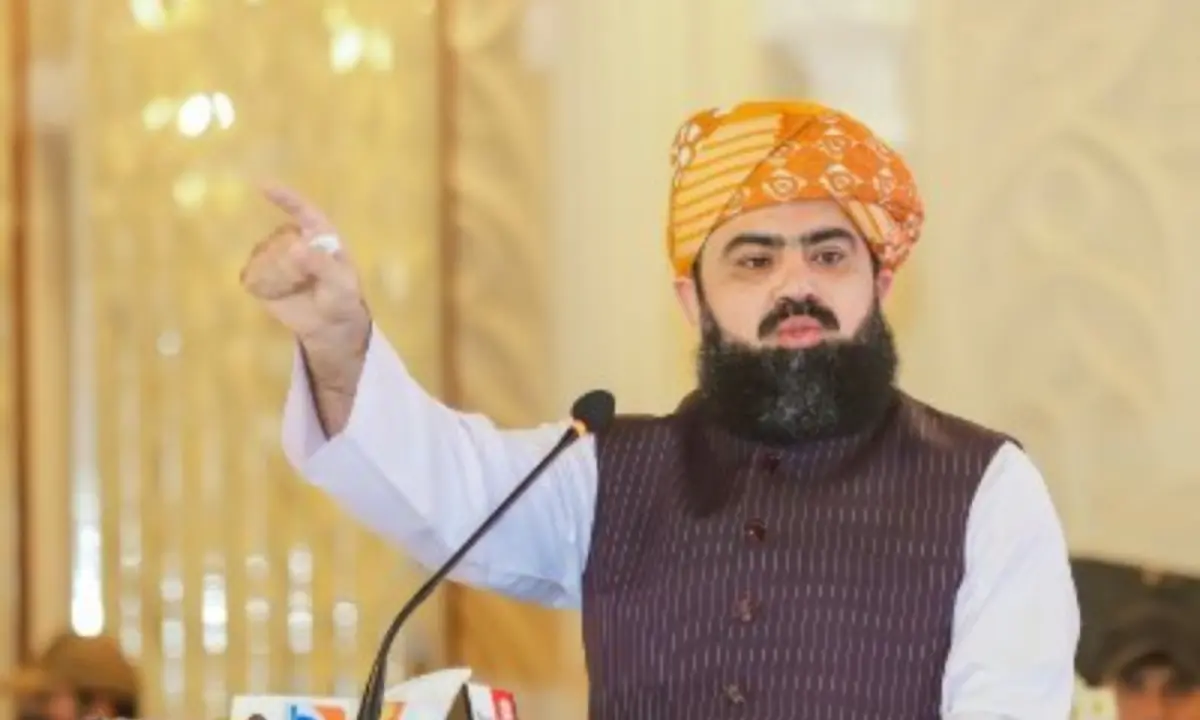
ISLAMABAD: Defying a summons from the National Accountability Bureau (NAB), Asad Mehmood, son of Jamiat Ulema-i-Islam (JUI-F) chief Maulana Fazlur Rahman, failed to appear before the anti-graft watchdog on Monday in a case concerning alleged irregularities in appointments at Pakistan Post.
NAB, meanwhile, remained tight-lipped about its next course of action. In such cases, the bureau usually issues second and third notices before taking punitive action, including arrest, if the accused continues to ignore the summons.
Mr Mehmood had been directed to appear before the investigation team at 11am on Nov 10 to explain his position on alleged irregularities in 4,252 appointments made at Pakistan Post during his tenure as federal minister in 2022-23.
When contacted, a senior NAB official declined to disclose the bureau’s future course of action, saying that under the new laws, details of investigations could not be shared with the media until the relevant court had decided the case.
According to the notice, the Establishment Division had authorised recruitment against 3,938 posts at Pakistan Post, but 4,252 people were allegedly appointed, exceeding the approved strength. Of these, 2,646 appointments were reportedly made against posts that had already been abolished, in violation of a cabinet committee’s directions.
The bureau is also examining allegations that permanent appointments were made despite a recommendation for contractual recruitment, placing an additional financial burden on Pakistan Post. The alleged political affiliations of some selected candidates are also under scrutiny.
Other allegations include the use of forged documents, recruitment of over-age candidates and violations of the domicile quota.
THE opposition alliance TTAP has hinted at another anti-government drive. Its recent talks with the JUI-F on parliamentary coordination indicate that the party’s chief Maulana Fazlur Rahman is poised to lead the campaign.
All this raises obvious questions: is the opposition seriously planning an anti-government drive? Is it actually convinced that such a movement at this time can remove the government? Will the pragmatic JUI-F chief join such an effort? At least for now, the answer may disappoint the opposition’s supporters.
The PTI is locked in a protracted battle with the government, while much of its top leadership remains behind bars. It has twice attempted to mobilise public support for a mass movement and rally people around its political objectives since the controversial February 2024 elections, but both attempts failed. It is obvious that people, particularly in Punjab and Sindh, are not ready to join any such movement at this time. Even in KP, where the PTI had been in power since 2013, the party has failed to mobilise the public.
The Jamaat-i-Islami’s drive against high petrol prices similarly failed to bring people out onto the streets.
Though the JUI-F has staunch supporters on the streets who are ready to answer their party’s call, its leader has never been one to take needless risks. His azadi march against the PTI government brought thousands of supporters to Islamabad, but failed to dislodge the Imran Khan administration. The sit-in was eventually called off without achieving its objective.
The federal government has imposed emergency measures and governor’s rule in KP, claiming they were necessary for security and administrative reasons. The opposition sees these moves as an assault on provincial autonomy.
Maulana Fazlur Rahman is actively opposing the move. The government’s response to his criticism has fuelled fears that the JUI-F could face the same crackdown as the PTI. Those concerns are not difficult to understand.
The recent actions of the Balochistan government against JUI-F Senator Kamran Murtaza on a questionable citizenship claim reinforce these fears. Yet expectations of the maulana leading another street confrontation with the government anytime soon are likely to remain wishful thinking.
Nevertheless, this consensus of politicians of different persuasions reflects a growing frustration with the government’s high-handed actions.
The lawyers’ emergence in this arena is particularly significant. The All Pakistan Lawyers Action Committee in Quetta has vowed to support Senator Murtaza and resist any attempt to undermine constitutional supremacy. There are also reports of raids on lawyers’ homes.
Although the prospects of a new anti-government movement remain remote, public discontent should not be ignored. Small, isolated protests and expressions of dissent can gradually gather momentum and develop into a much larger movement.
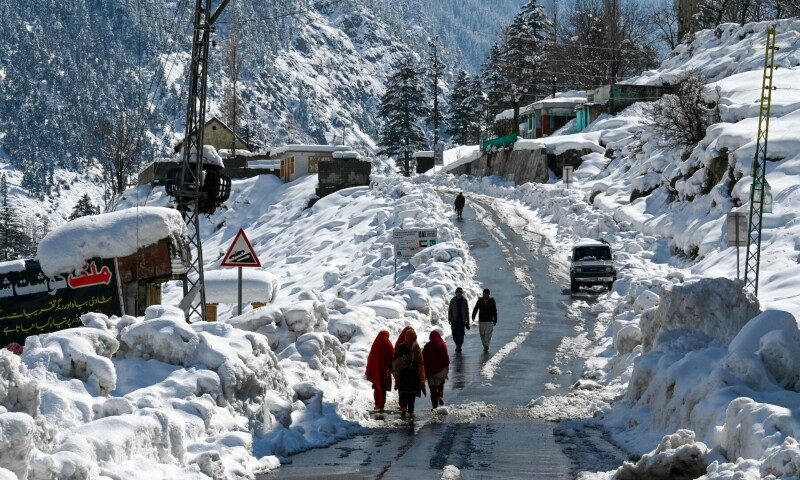
RAWALPINDI: The Pakistan Meteorological Department (PMD) has forecast rain, wind and thunderstorms, with snowfall over the hills, in the upper parts of the country over the next two to three days, urging the authorities concerned to take precautionary measures to prevent any untoward incident, particularly in hilly areas.
According to the Met Office, a shallow westerly wave is approaching the western and northern parts of the country. The system is likely to intensify on Nov 12 and may persist over the upper regions until the morning of Nov 14.
In Khyber Pakhtunkhwa, under the influence of this weather system, rain, wind and thunderstorms, accompanied by isolated heavy falls and hailstorms, are expected in Dir, Chitral, Swat, Kohistan, Shangla, Battagram, Mansehra, Abbottabad, Haripur, Buner, Malakand, Bajaur, Mohmand,
Kohat, Peshawar, Charsadda, Nowshera, Mardan, Swabi, Khyber, Orakzai, Kurram, Hangu, Lakki Marwat, Karak, Bannu, Dera Ismail Khan and Waziristan from the evening/night of Nov 10 until the morning of Nov 14, with occasional breaks. Snowfall is also likely over the mountains during this period.
In Punjab and Islamabad, light rain, wind and thunderstorms are expected in the capital city, the Potohar region, Mianwali, Khushab, Bhakkar, Sargodha, Murree and adjoining areas on Wednesday (today). More rain, wind and thunderstorms are forecast for Islamabad, Rawalpindi, Murree, Galiyat, Attock, Chakwal, Jhelum, Mandi Bahauddin, Gujrat, Gujranwala, Hafizabad, Wazirabad, Lahore, Kasur, Sheikhupura, Sialkot, Narowal, Mianwali, Khushab and Sargodha on Nov 12 and 13, with occasional breaks.
Rain, wind and thunderstorms are also expected in Dera Ghazi Khan, Layyah, Bhakkar and Multan on Nov 12. Isolated hailstorms are also likely during the period.
Snowfall over hills
Meanwhile, rain, wind and thunderstorms, accompanied by snowfall over the hills, are expected in Azad Kashmir, including Neelum Valley, Muzaffarabad, Rawalakot, Poonch, Hattian, Bagh, Haveli, Sudhanoti, Kotli, Bhimber and Mirpur, and Gilgit-Baltistan, including Diamir, Astore, Ghizer, Skardu, Hunza, Gilgit, Ghanche and Shigar, until the afternoon of Nov 14, with occasional breaks.
Dry weather
Mainly dry weather is expected to prevail across most districts of Sindh and Balochistan. However, isolated rain, wind and thunderstorms, accompanied by hailstorms, are expected in Duki, Harnai, Pishin, Sherani, Surab, Zhob, Barkhan, Musakhel, Quetta, Ziarat, Chaman, Qila Abdullah, Qila Saifullah, Kalat and Khuzdar on the night of Nov 11 and Nov 12.
Impacts and advisories
The Met Office advised farmers to plan their agricultural activities in accordance with the prevailing and forecast weather conditions.
It warned that light snowfall over high mountains and glaciers could occur during the wet spell. Foggy conditions are also likely to develop in patches over the plains following the spell.
Daytime temperatures are expected to fall by 2-4 degrees Celsius during the forecast period.
The department urged provincial and district authorities to remain vigilant and take all necessary precautionary measures to avoid any untoward incidents during the forecast period.
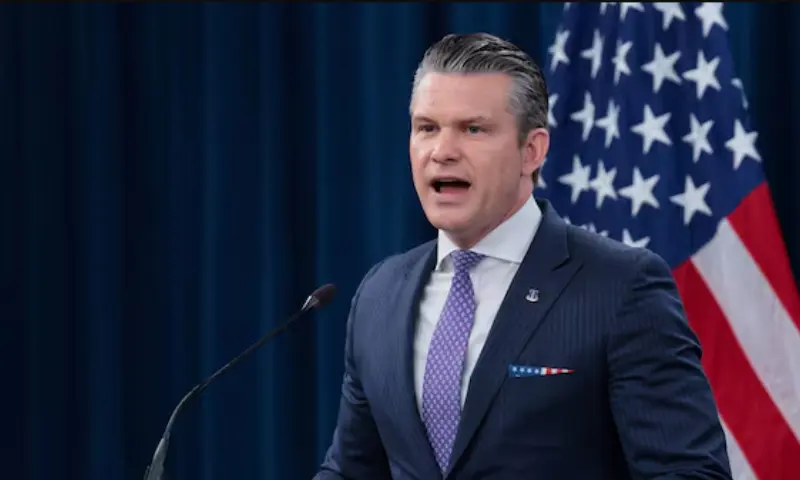
Republicans in the US House of Representatives blocked an effort on Tuesday to impeach Defence Secretary Pete Hegseth, winning a reprieve for the polarising Pentagon chief before Democrats take control of Congress next year and possibly try again.
The vote on a procedural motion came just hours after Hegseth blasted efforts to impeach him as a farce and delivered a defiant defence of his record at the helm of the US military, winning praise from US President Donald Trump.
The chamber voted 211 to 204 in favour of a motion to refer eight articles of impeachment to the Republican-led House Judiciary Committee, a move that the sponsor of the impeachment push, US Representative Thomas Massie, warned would kill it.
Massie, an outgoing Kentucky Republican, had hoped to draw votes from Republicans upset with Hegseth’s policies and wary of the unpopularity of the war on Iran, but no other Republicans joined him.
Democrats had voiced strong support for the impeachment effort. But 11 Democrats, including former House Speaker Nancy Pelosi of California, did not vote.
If eight of them had, the procedural measure would have been defeated, paving the way for a full House impeachment vote. Pelosi’s office did not immediately respond to a request for comment on why she missed the vote.
Trump cheered the results in a social media post, saying the effort to impeach Hegseth “has miserably FAILED!”
In a sign that the impeachment episode may have drawn Trump and Hegseth closer together, Trump added that Hegseth’s performance on Iran, Venezuela and other issues “led to the EXONERATION of a Great American Patriot.”
Hegseth would have been the first US defence secretary to be impeached. The last time any civilian leader of the US military was impeached was in 1876, when William Belknap held the title “secretary of war”.
Hegseth calls himself secretary of war, part of his effort to rebrand a military he said was too weak and “woke” when he took office last year. Trump cannot change the name of the Defence Department without approval from Congress.
Iran war anger
Voter anger over the war on Iran, which has settled into an effective stalemate focused on securing the Strait of Hormuz, helped Democrats win control of Congress in last week’s midterm elections.
A Reuters/Ipsos poll published on Tuesday found a majority of Americans want the newly elected Democratic-majority US Congress, which takes office in January, to act to end the war once and for all.
Although Vice President JD Vance has publicly questioned the war and blamed it for the Republicans’ midterm rout, he voiced support for Hegseth on Tuesday.
“This isn’t about Iran, this is about the fact that Pete took on the bureaucracy at the Pentagon,” Vance wrote on social media.
Before the vote, House Democratic leader Hakeem Jeffries said on Monday: “Pete Hegseth has abused his power, undermined America’s national security, and he’s the architect of the reckless and costly failed war of choice in Iran.”
Hegseth has repeatedly defended the conflict, calling Trump courageous and saying Iran’s military has been left in ruins. He also said his orders to US forces were lawful, despite Massie’s accusations of “high crimes and misdemeanours” ranging from the war itself to the US military raid in January to depose Venezuelan President Nicolas Maduro.
“History will judge the Iran war quite differently than the conventional wisdom right now,” Hegseth said on Tuesday at his first Pentagon briefing in six months.
Jeffries said he would talk to members about whether to mount a new impeachment effort in the next Congress. “We’ll have that conversation at the appropriate time,” he said.
A Democratic-led push to impeach Hegseth could be far more intense, with lawmakers calling in top brass to testify, including generals and admirals fired by Hegseth who have remained silent so far. Hegseth, who has railed against diversity efforts at the Pentagon, fired the chairman of the Joint Chiefs of Staff, who is Black, and the Navy’s top admiral, a woman, among others.
In such an effort, Democrats could also raise other issues concerning to voters including Pentagon policy toward Ukraine and the US military’s strikes on suspected drug trafficking boats in Caribbean and Pacific waters.
Some Republicans say Hegseth’s strained relations with Congress are becoming a political liability as the Trump administration seeks a huge increase in the military’s budget to $1.5 trillion from $950 billion.
Massie said he was disappointed by the vote, comparing Republicans to passengers content to go down with the Titanic.
“They know it’s a sinking ship but committed to stay on board,” he said.
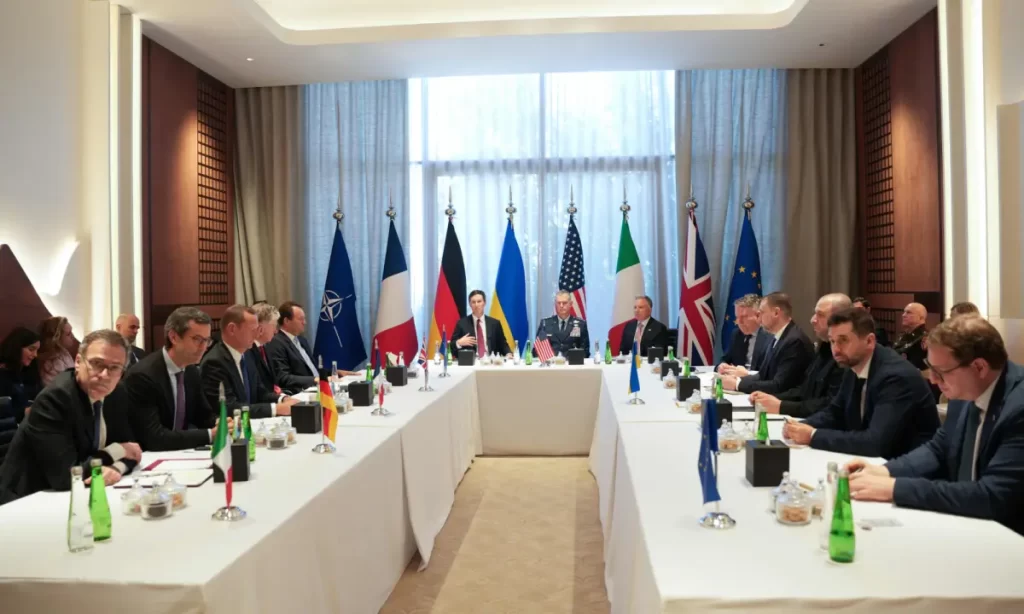
A first day of US-led talks between Ukraine and Russia in Abu Dhabi ended on Tuesday, with Washington calling for a “new” security framework, as Europe fears US President Donald Trump plans a deal with Moscow on the continent’s future.
Trump’s envoys Jared Kushner and Steve Witkoff brought together the warring sides for several hours of negotiations — the first since February — that are set to continue on Wednesday.
Kushner told delegates the United States had “narrowed the gaps” between the sides — without providing details — and hoped to move towards a “solution” to Europe’s worst conflict since World War II.
In Paris, US Secretary of State Marco Rubio hailed the talks as “very productive” and called for Europeans to be eventually included at the negotiating table “because they are part of solving this problem”.
Ukraine’s Volodymyr Zelenskyy later said the talks were “constructive and quite substantive”, saying his team reported to him that humanitarian issues and security guarantees were among what was discussed.
Speaking in Copenhagen, the Ukrainian president also said it was “time” for Europe to choose a representative for the talks.
Europe has been rattled as Trump has floated a deal with Russia on rewriting Europe’s post-war security, also worrying that Washington will force Kyiv to accept a de facto defeat.
At the Abu Dhabi talks, Trump’s son-in-law Kushner said the US hoped to “create a new framework” of security between Ukraine, Russia and Europe that will secure “decades, if not centuries, of peace”.
Moscow, which several weeks before invading Ukraine issued an ultimatum to Western countries to roll back troops from eastern Europe, had also said this was a priority.
Ukraine has warned against a “Yalta 2.0”, referring to Western leaders dividing Europe with the Soviet Union after World War II, and the EU has said security arrangements can only be discussed after a ceasefire.
“Putin wants the USSR back,” Zelensky told Danish media.
Russia, which occupies swathes of its smaller neighbour, pummelled Ukraine with more attacks overnight, cutting power to thousands as temperatures plummet.
Putin has repeatedly turned down broader ceasefire offers and vowed his troops will press on in Ukraine.
Moscow pushes security review
In a sign it is serious about reviving its demand to review Europe’s decades-old security arrangement, Russia included a diplomat — Sergei Ryabkov — who logged Moscow’s pre-invasion demand for Nato to pull back from eastern Europe.
A Russian delegation source had said that settling the war was “merely one item on the agenda” and that Moscow’s main objective was reviewing security “for the entire continent”.
Kyiv’s chief negotiator Rustem Umerov met the US envoys and European, EU and Nato officials before the negotiations.
Nato’s general in Europe, Alexus Grynkewich, is also taking part.
In a joint statement, the Europeans, Ukraine, US and Nato reaffirmed their “shared commitment to a strong post-war European security architecture”.
Ukraine pushes for truces
Umerov said Kyiv’s priorities remained securing a ceasefire and security guarantees.
“Our people are waiting to end this war,” he said.
As talks continued, Ukrainian and French foreign ministers in Paris commended US efforts to push for “partial truces”, which could serve as a “first step toward a complete and unconditional ceasefire”.
Last month, a local truce in Ukraine’s Kherson region brokered by US First Lady Melania Trump became the longest pause in fighting during the war.
Kyiv is also pushing post-war support for its army.
A senior Ukrainian source told AFP that Ukraine wanted at least 10 years of financial support to sustain an 800,000-strong army able to defend any future Russian attack.
Land issue
There is huge distrust in Ukraine towards Trump’s aims.
The US leader hinted before the talks that Kyiv might have to give up land, saying: “They’re going to end up with a little bit different shape.”
Russia’s troops have advanced westward but have not been able to seize the whole of the coveted Donetsk region, and Moscow demands Kyiv surrender the parts of the embattled area it controls.
“Allowing Russia to decide the borders of Europe will be a huge mistake,” Denmark’s Mette Frederiksen said, as she hosted Zelensky on Tuesday.
The Ukrainian leader is due to meet other Nordic leaders in Denmark and earlier spoke to Finland’s Alexander Stubb, telling him Kyiv’s negotiators are doing their “best” to ensure talks “deliver results”.
Stubb is rumoured to be one of the contenders who could represent Europe at negotiations to end the war.
The Finnish leader and Norway’s Jonas Gahr Støre held a rare phone call with Putin last month, which they called “frank and substantive”.