Category: Brecorder

  • Oil relief to revive rupee rally, US yields surge could act as brake

    Oil relief to revive rupee rally, US yields surge could act as brake

    MUMBAI: The Indian rupee is set to resume its recent rally on Wednesday, drawing support from softer oil prices, while a jump in ​US Treasury yields after inflation rose faster than expected could be ‌a dampener.

    The rupee is expected to open in the 93.70 to 93.74 range, per traders, having settled at 93.93275 to the dollar on Monday.

    Indian financial markets were shut ​on Tuesday or a local holiday.

    Brent crude slid below $90 a barrel for ​the first time since August on Tuesday after US officials played down ⁠the need for further military action against Iran, tempering fears of additional ​disruptions to Middle Eastern oil supplies.

    While prices have recovered from their lows of $92.20, ​they remain more than 6% down this week, following a decline of over 16% last week.

    Lower oil prices offer the rupee relief from one of its biggest pressure points in ​recent months. High crude prices had kept the currency under sustained pressure, driving ​up dollar demand from oil importers and prompting the Reserve Bank of India to open ‌a ⁠special window for oil refiners to meet their dollar requirements outside the market.

    The RBI’s efforts to address dollar demand, alongside a revival in foreign equity inflows, have helped the rupee recover more than 3% from its recent lows. India ​has benefited from investors ​reassessing their concentrated ⁠bets on AI-linked shares and looking to diversify into other markets.

    “For the rupee, all the right boxes are being ​ticked right now,” a currency trader at a bank said.

    However, ​after the ⁠rupee’s recent rally, the level is looking very attractive for importers, particularly with the risk from US Treasury yields coming into play, he said.

    US Treasury yields jumped on ⁠Tuesday ​after data showed that US consumer prices rose ​more than economists expected in October, leading traders to bolster bets on a larger interest rate hike ​at the Federal Reserve’s December meeting.

    Source: brecorder

  • US House blocks bid to impeach Defense Secretary Hegseth

    US House blocks bid to impeach Defense Secretary Hegseth

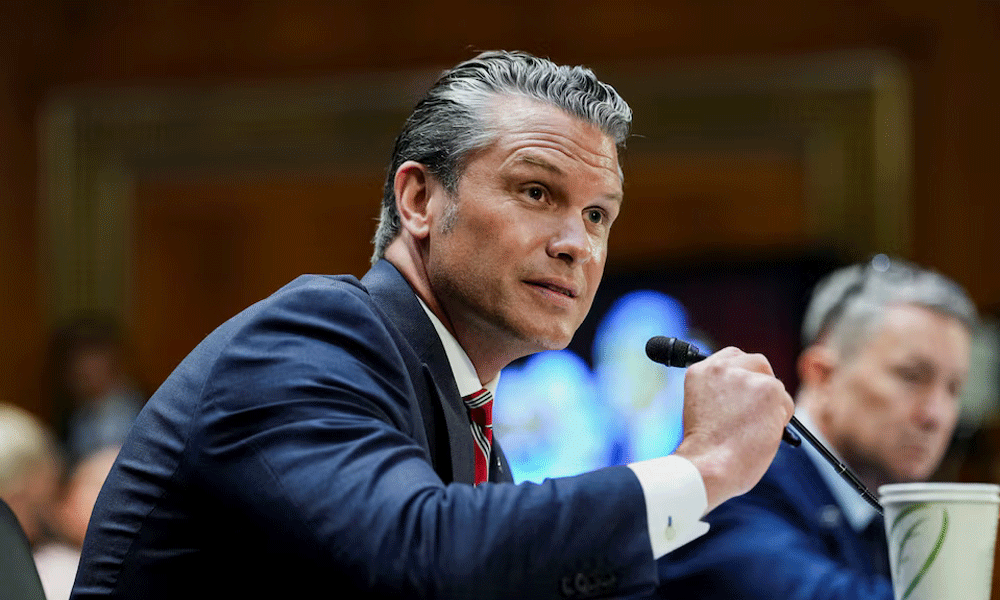
    WASHINGTON: Republicans in the US House of Representatives blocked an effort on Tuesday to impeach Defense Secretary Pete Hegseth, winning a reprieve for the polarizing Pentagon chief before Democrats take control of Congress next year and possibly try again.

    The vote on a procedural motion came just hours after Hegseth blasted efforts to impeach him as a farce and delivered a defiant defense of his record at the helm of the US military, winning praise from President Donald Trump.

    The chamber voted 211 to 204 in favor of a motion to refer eight articles of impeachment to the Republican-led House Judiciary Committee, a move that the sponsor of the impeachment push, US Representative Thomas Massie, warned would kill it.

    READ ALSO: Pentagon chief Hegseth calls moves to impeach him a farce that will fail

    Massie, an outgoing Kentucky Republican, had hoped to draw votes from Republicans upset with Hegseth’s policies and wary of the unpopularity of the Iran war, but no other Republicans joined him.

    Democrats had voiced strong support for the impeachment effort. But 11 Democrats, including former House Speaker Nancy Pelosi of California, did not vote.

    If eight of them had, the procedural measure would have been defeated, paving the way for a full House impeachment vote. Pelosi’s office did not immediately respond to a request for comment on why she missed the vote.

    Trump cheered the results in a social media post, saying the effort to impeach Hegseth “has miserably FAILED!”

    In a sign that the impeachment episode may have drawn Trump and Hegseth closer together, Trump added that Hegseth’s performance on Iran, Venezuela and other issues “led to the EXONERATION of a Great American Patriot.”

    Hegseth would have been the first US defense secretary to be impeached. The last time any civilian leader of the US military was impeached was in 1876, when William Belknap held the title “secretary of war.”

    Hegseth calls himself secretary of war, part of his effort to rebrand a military he said was too weak and “woke” when he took office last year. Trump cannot change the name of the Defense Department without approval from Congress.

    Iran war anger

    Voter anger over the Iran war, which has settled into an effective stalemate focused on securing the Strait of Hormuz, helped Democrats win control of Congress in last week’s midterm elections.

    A Reuters/Ipsos poll published on Tuesday found a majority of Americans want the newly elected Democratic-majority US Congress, which takes office in January, to act to end the war with Iran once and for all.

    Although Vice President JD Vance has publicly questioned the war and blamed it for the Republicans’ midterm rout, he voiced support for Hegseth on Tuesday.

    “This isn’t about Iran, this is about the fact that Pete took on the bureaucracy at the Pentagon,” Vance wrote on social media.

    Before the vote, House Democratic leader Hakeem Jeffries said on Monday: “Pete Hegseth has abused his power, undermined America’s national security, and he’s the architect of the reckless and costly failed war of choice in Iran.”

    Hegseth has repeatedly defended the conflict, calling Trump courageous and saying Iran’s military has been left in ruins. He also said his orders to US forces were lawful, despite Massie’s accusations of “high crimes and misdemeanors” ranging from the war itself to the US military raid in January to depose Venezuelan President Nicolas Maduro.

    “History will judge the Iran war quite differently than the conventional wisdom right now,” Hegseth said on Tuesday at his first Pentagon briefing in six months.

    Jeffries said he would talk to members about whether to mount a new impeachment effort in the next Congress. “We’ll have that conversation at the appropriate time,” he said.

    A Democratic-led push to impeach Hegseth could be far more intense, with lawmakers calling in top brass to testify, including generals and admirals fired by Hegseth who have remained silent so far. Hegseth, who has railed against diversity efforts at the Pentagon, fired the chairman of the Joint Chiefs of Staff, who is Black, and the Navy’s top admiral, a woman, among others.

    In such an effort, Democrats could also raise other issues concerning to voters including Pentagon policy toward Ukraine and the US military’s strikes on suspected drug trafficking boats in Caribbean and Pacific waters.

    Some Republicans say Hegseth’s strained relations with Congress are becoming a political liability as the Trump administration seeks a huge increase in the military’s budget to $1.5 trillion from $950 billion.

    Massie said he was disappointed by the vote, comparing Republicans to passengers content to go down with the Titanic.

    “They know it’s a sinking ship but committed to stay on board,” he said.

    Source: brecorder
  • Tharparkar’s drought cycle

    Tharparkar’s drought cycle

    EDITORIAL: The Sindh chief minister’s declaration of Tharparkar as a drought-affected district following the destruction of an estimated 85 to 90 percent of cultivated crops in the area, once again highlights the precarious existence of communities in one of the province’s most climate-vulnerable regions.

    While the relief measures that have been announced are necessary, they also underscore a deeper failure, where despite decades of familiarity with the district’s vulnerabilities, little has been done to build lasting resilience against recurring droughts.

    This is around the fifth time in the past decade that Tharparkar has faced conditions warranting such a response, yet the authorities continue to fall back on episodic relief rather than sustainable remedies. The district has long been vulnerable to low and erratic rainfall, but its people should not be expected to simply accept this as their fate while successive administrations fail to put in place durable solutions.

    The nature of the challenge is also changing. Where the region historically experienced a severe drought roughly once every seven to eight years, provincial disaster authorities’ records suggest that this interval has now shrunk to just two to three years, a trend attributed to global warming and shifting monsoon patterns.

    The challenge, moreover, is no longer simply about insufficient rainfall, but increasingly of its unpredictability, with rains either failing to arrive during the crucial sowing period or petering out just as crops approach maturity. This growing climatic uncertainty makes it all the more imperative that planning for Tharparkar addresses the longer-term resilience of its agricultural economy.

    Yet the Sindh CM declaring the region as drought-hit has ended up revealing how even the most basic of infrastructure remains lacking. His directive to restore non-functional reverse osmosis plants begs the question: why are these facilities not maintained as a matter of routine?

    Ensuring that existing water infrastructure remains functional is the bare minimum, and communities should not have to wait for a drought declaration before the machinery of government turns its attention to their access to drinking water.

    Similarly, while the proposed Naukot-Mithi pipeline could provide a more sustainable water source, why has it taken so long to advance a project addressing such a longstanding need? The bureaucratic machinery responsible for planning, executing and maintaining such schemes must answer for this persistent lack of foresight. Nor should authorities limit themselves to familiar, short-term interventions.

    Successful water conservation, rainwater harvesting and drought-resilient agricultural practices adopted globally in other arid regions must be studied and adapted to Tharparkar’s particular conditions.

    There is also a larger contradiction that cannot be ignored. The Thar coal project, which has become increasingly important to Pakistan’s energy security, generates billions of rupees in royalties.

    Yet the communities living alongside this resource remain among the country’s most impoverished. An estimated Rs50 billion in royalties was collected from the project between 2023 and 2025, but the district’s development allocation has remained a fraction of these earnings.

    The promise that Tharparkar’s natural wealth would transform the lives of its people has clearly not been fulfilled, with residents still struggling to secure something as basic as reliable drinking water.

    The government’s response cannot remain limited to providing immediate relief to Tharparkar’s people. The district needs a comprehensive, adequately funded drought-resilience strategy, with clear timelines, functioning infrastructure, accountability for administrative failures and a transparent mechanism to channel a meaningful share of its coal wealth into local development.

    Rainfall cannot be commanded at will, but preparedness, investment and competent administration are matters of choice. Tharparkar’s people have endured the vagaries of the climate for generations. They should not also have to endure the consequences of an administration that appears to rediscover their plight every time the rains fail.

    Copyright Business Recorder, 2026

    Source: brecorder

  • Widening trade deficit

    Widening trade deficit

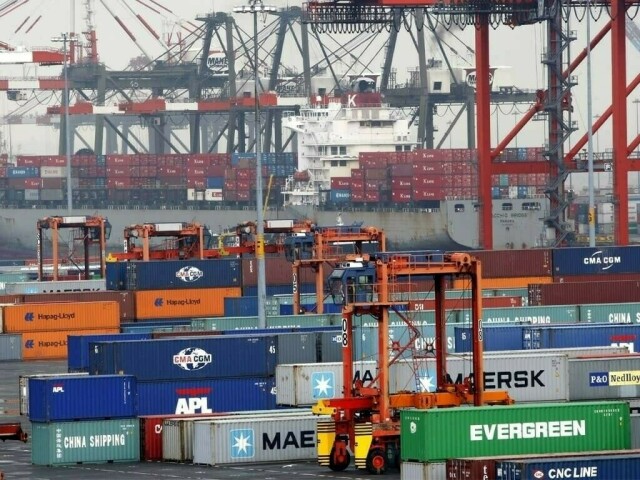
    EDITORIAL: Pakistan Bureau of Statistics data reveals that the trade deficit has widened by 15.97 percent during the first four months of the ongoing year compared to the same period the year before. Disturbingly, this indicates that the boom-bust cycle remains in operation and major changes that require structural reforms to the extent to arrest it remain pending.

    Significantly, the International Monetary Fund (IMF) in October 2024 documents titled Article IV Consultation and Request for an Extended Fund Arrangement under the Extend Fund Facility for the first time referred to the boom-bust cycle attributed to “repeated attempts to boost economic activity through fiscal and monetary stimulus (that) have not translated into durable growth, as domestic demand increased beyond Pakistan’s sustainable capacity, resulting in inflation and depletion of reserves, given a strong political preference for stable exchange rates.

    Each subsequent bust has further harmed Pakistan’s policymaking credibility and investment sentiment.” It should be of serious concern that the incumbent government is presently considering incentives once again to boost exports, which require higher raw material and semi-finished imports – a policy action that would, given the rising price of petroleum and products due to the ongoing Middle East conflict, increase imports at a much faster rate than imports thus widening the trade deficit further in months to come.

    The IMF in the aforementioned document undertook a detailed analysis by using the Discretionary Policy Indicator (DI) that measures “the use of monetary discretion by the central bank to stabilize money supply for the achievement of a desired path in inflation and growth, excluding unpredictable exogenous shocks to M2.”

    In economic theory, M2 is a measure of the money supply that includes all highly liquid assets as well as near-money assets that can be quickly converted to cash.

    The DI analysis noted as per the document cross-correlations across the main indicators as follows: (i) “a discretionary M2 impulse (DI) is associated with higher inflation; while (ii) low frequency movements in M2 (DI) are not associated with low-frequency growth directly; and (iii) the associated inflationary pressures are detrimental to growth.” The Fund’s conclusion was that these findings “underscore the merits of strengthening the role rules play in the monetary policy framework.”

    The contribution of fiscal policy in the boom-bust cycle was not highlighted in the Fund document perhaps because one of the major conditions in the ongoing programme, as in previous ones, is to meet the over-ambitious revenue targets set in the budget.

    Anecdotal surveys carried out by the Business Recorder have revealed time and again that domestic industry is subjected to considerably higher input prices relative to their competitors abroad – due to the IMF conditions on all utilities to achieve full-cost recovery, a burden that administration after administration merely passes on to hapless consumers rather than checking inefficiencies within the sector – thereby justifying exemptions (zero ratings).

    In the October 2026 third review documents relating to the ongoing programme, the Fund acknowledged that revenue gains from these interventions are likely to materialize in FY27. However, they continue to target primarily existing taxpayers—a burden that falls more heavily on the poor than the rich, as reliance remains on indirect taxes, which account for 70 percent to 75 percent of total revenue collected.

    The Fund suggested that raising C-efficiency to 35 percent (still well below peers such as Turkey, Morocco, and Indonesia) would generate roughly Rs 2.1 trillion in additional GST revenue (1.8 percent of GDP). The GST C-efficiency ratio has declined from 27.4 percent to 22.8 percent over the past ten years.

    Pakistan’s 18 percent standard GST rate is not low by regional standards; however, barely one-quarter of the theoretical base is taxed.

    A broad set of basic goods remains exempt or concessionally taxed, historical zero-rating in export sectors has narrowed the base, and the post-devolution fragmentation of GST on services has added compliance and administrative complexity through four separate provincial regimes (estimated at 1.8% of GDP on an FY2024–25 base). Because GST is an indirect tax, it helps explain why poverty levels in the country have risen to 44.7%, a figure comparable to Sub-Saharan Africa.

    Copyright Business Recorder, 2026

    Source: brecorder

  • Fertiliser under lock and key

    Fertiliser under lock and key

    EDITORIAL: The reported disruption of fertiliser supplies to Khyber Pakhtunkhwa and Balochistan, following restrictions imposed under a Ministry of Interior notification, comes at precisely the wrong moment for farmers preparing their Rabi crops. Companies are reportedly unable to dispatch an essential input during the sowing season, while the authorities appear to have left growers and suppliers waiting for a workable arrangement. For two provinces already bearing an extraordinary burden from insecurity, this is an unacceptable addition to an already formidable list of difficulties.

    The security concerns behind the restrictions cannot simply be wished away. Unauthorised movement and possible diversion of fertiliser are matters for the authorities to address, particularly in areas facing persistent militant violence. But that is exactly why the decision demands a carefully designed system of controls rather than a disruption of legitimate commercial supplies. Security agencies and civilian administrators are expected to manage competing priorities. If the response to a distribution risk is to impede distribution itself, one has to wonder what purpose the machinery of government is serving.

    There is no obvious reason why the federal and provincial governments, fertiliser manufacturers, distributors, and farming representatives cannot sit together and agree on monitored transport arrangements. Permits, verified destinations, documented consignments and checks along designated routes are among the options worth examining. Stakeholders have already proposed controlled dispatches and faster implementation of a Track and Trace System in Khyber Pakhtunkhwa, with interim permission subject to oversight. These proposals deserve prompt scrutiny and, where feasible, implementation. The authorities should explain any practical objections rather than allow an administrative impasse to become an agricultural crisis.

    Timing makes the matter particularly serious. Farmers cannot postpone the agricultural calendar to accommodate bureaucratic deliberations. Delayed access to fertiliser can upset sowing schedules, affect crop development and ultimately weaken yields. Any additional cost or uncertainty falls on growers who already have to contend with volatile input prices, constrained purchasing power and difficult operating conditions. The consequences would extend beyond individual farms to rural employment, provincial agricultural output and the wider food supply. There is far too much at stake for official inaction to be treated as a routine procedural inconvenience.

    The episode also reflects an unfortunate habit of making consequential policy decisions without first working through their effects with those expected to live with them. Had manufacturers, distributors, provincial officials and farmers been properly consulted before restrictions took effect, the problem of maintaining security while preserving legitimate supplies could have been addressed at the outset. Instead, stakeholders are now seeking urgent consultations after the disruption has reportedly occurred. This familiar sequence of restriction first, consultation later is a poor substitute for competent policymaking.

    The geographical dimension makes the apparent lack of foresight still harder to defend. Khyber Pakhtunkhwa and Balochistan have paid heavily for deteriorating security through disrupted economic activity, uncertainty, and the strain placed on everyday life. Farmers in these provinces should not find themselves doubly penalised: first by the insecurity that necessitates tighter controls, and then by controls that obstruct their ability to cultivate their land. Equal access to essential agricultural inputs is a reasonable expectation, not an exceptional concession to be negotiated each sowing season.

    The Ministry of Interior should therefore urgently clarify the scope and rationale of its notification and work with provincial authorities and the fertiliser industry to restore lawful, monitored dispatches. Any safeguards must be enforceable, proportionate, and compatible with the agricultural calendar. Allowing this situation to drag on would suggest a failure of coordination and administrative judgement at a time when both are urgently required. The government should be capable of protecting security without making farmers pay for its inability to organise a sensible solution.

    Copyright Business Recorder, 2026

    Source: brecorder

  • LG polls in Islamabad: ECP says 3,505 candidates file nomination papers

    LG polls in Islamabad: ECP says 3,505 candidates file nomination papers

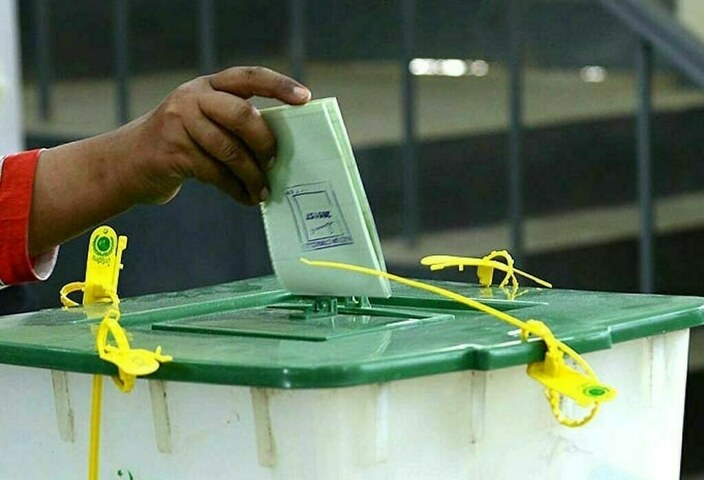
    ISLAMABAD: As many as 3,505 candidates, including 110 women, have filed nomination papers for the forthcoming Islamabad’s local government elections, the Election Commission of Pakistan (ECP) said on Tuesday.

    At a meeting chaired by Chief Election Commissioner (CEC) Sikander Sultan Raja to review preparations for the polls, the commission was informed that the first phase of the nomination process had been completed. Scrutiny of nomination papers is scheduled to begin on Wednesday (today).

    Islamabad Police told the meeting that 15,000 personnel would be deployed to maintain law and order during the electoral process, with additional personnel to be requisitioned from Punjab if needed.

    The meeting was briefed on the local government system, electoral procedures for various seats and preparations made so far.

    Officials said procurement of election materials had been completed and arrangements for printing ballot papers were in place.

    Interior Secretary Ahmad Raza Sarwar assured the commission that the ministry was coordinating with relevant institutions and would provide all possible assistance for the peaceful conduct of the elections.

    Islamabad Chief Commissioner Sohail Ashraf said returning officers had been directed to perform their duties in accordance with the Constitution, law and the ECP’s election schedule. Lists of polling stations, transport arrangements and a security plan were being finalised, he added.

    District Returning Officer (DRO) Kamran Ali Cheema said he was personally supervising the electoral process and that arrangements were being made to provide election staff with the necessary facilities, transport and security.

    The commission directed the Islamabad administration to submit its security and transport plans and ensure effective security throughout the electoral process.

    CEC Raja directed the DRO to strictly enforce the code of conduct, warning that negligence or any lapse would not be tolerated. He also asked the Regional Election Commissioner Rawalpindi and District Election Commissioner Islamabad to extend full cooperation to the administration and election officials and keep the commission informed of developments at every stage.

    Copyright Business Recorder, 2026

    Source: brecorder

  • Petroleum price relief: Govt, JI intensify consultations

    Petroleum price relief: Govt, JI intensify consultations

    ISLAMABAD: The Federal Government and Jamaat-e-Islami have intensified consultations on petroleum price relief, exploring measures to ease the financial burden on consumers, particularly low-income households.

    Deputy Prime Minister/Foreign Minister Senator Mohammad Ishaq Dar held a follow-up meeting with a delegation of Jamaat-e-Islami (JI), led by Liaquat Baloch, Tuesday to continue consultations on petroleum prices and public relief.

    The two sides held constructive discussions on measures to provide relief to consumers, particularly low-income households. There was broad agreement on the need to address public concerns through continued consultation and cooperation.

    The DPM/FM welcomed the positive spirit of the engagement. He reiterated that the Government remained focused on supporting ordinary households amid prevailing economic challenges.

    The meeting was attended by Adviser to the Prime Minister on Inter-Provincial Coordination Rana Sanaullah, Special Assistant to the Prime Minister Tariq Bajwa, Special Secretary, Petroleum Division, Additional Secretary, Finance Division, as well as members of the JI delegation, Syed Firasat Shah, Nasrullah Randhawa and Inayatullah Khan.

    Copyright Business Recorder, 2026

    Source: brecorder

  • Govt cuts petrol price by Rs8, diesel by Rs7 per litre

    Govt cuts petrol price by Rs8, diesel by Rs7 per litre

    The government on Tuesday cut the price of petrol by Rs8 per litre to Rs338 and the price of high-speed diesel (HSD) by Rs7 per litre to Rs371, effective November 11.

    The revision was announced in a press release issued by the Oil and Gas Regulatory Authority (OGRA). It said the revised ex-depot prices were set under the petroleum products pricing mechanism approved by the federal government.

    Before the change, petrol cost Rs346 per litre, and diesel cost Rs378 per litre. Those prices had been in effect since November 7.

    On Thursday, the government slashed the price of petrol by Rs6.59 per litre to Rs346 and diesel by Rs4.25 per litre to Rs378.

    Globally, oil prices slid about 2% to fresh two-month lows on Tuesday after US officials downplayed the need for additional military action against Iran, easing fears of additional Middle East supply disruptions.

    Brent futures fell $1.93, or 2.1%, to $90.64 a barrel at 10:28 a.m. ET (1528 GMT), while US West Texas Intermediate (WTI) crude fell $1.44, or 1.7%, to $85.41.

    That put both crude benchmarks on track for their lowest closes since August 28. On Monday, both contracts closed at their lowest since August 31.

    Source: brecorder

  • Pakistan Embassy in Washington marks Iqbal’s 149th birth anniversary

    Pakistan Embassy in Washington marks Iqbal’s 149th birth anniversary

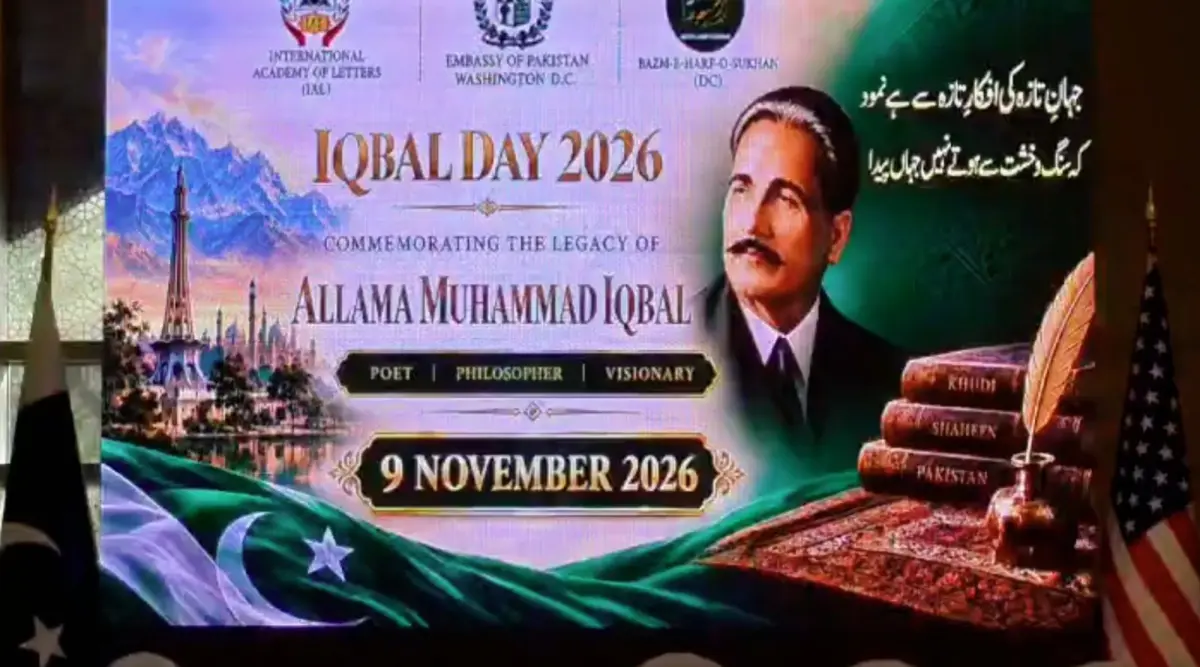
    The Embassy of Pakistan in Washington, D.C., marked the 149th birth anniversary of Allama Muhammad Iqbal with a special event featuring a poetry symposium and an exhibition of paintings by renowned artist Sadequain inspired by Iqbal’s poetry.

    The event,** held on November 9, brought together members of civil society, academics, students, media representatives and literary figures to pay tribute to Pakistan’s national poet.

    Addressing the gathering, Pakistan’s Ambassador to the United States Rizwan Saeed Sheikh said Iqbal’s vision and poetry provided the intellectual foundation for the country’s national identity and the Pakistan Movement.

    “The intellectual foundation of our national life is rooted in the thought of Iqbal, just as the leadership of the Quaid constitutes the political foundation of our national life,” he said.

    The ambassador highlighted Iqbal’s efforts to awaken the youth and the Muslim community of the subcontinent, saying his message laid the intellectual groundwork for the movement for an independent homeland.

    He also highlighted the concept of *Khudi* (selfhood), a central theme in Iqbal’s philosophy, describing it as a source of self-realisation, confidence and recognition of human dignity.

    Sheikh urged participants to pass on Iqbal’s intellectual legacy to future generations, stressing the need to draw on his ideas for academic self-reliance, guidance and fresh thinking.

    The programme also featured a panel discussion titled “The Poetry of Iqbal and the Demands of the Contemporary Era”, examining the relevance of his philosophy to present-day challenges.

    Organised in collaboration with the International Academy of Letters USA and Bazm-e-Harf-o-Sukhan, the event also included readings of official messages from the prime minister and deputy prime minister/foreign minister, followed by a musical performance based on Iqbal’s poetry.

    In his closing remarks, Ambassador Sheikh thanked the participants and underscored the importance of translating Iqbal’s philosophy into practical life.

    Source: brecorder

  • PM Shehbaz arrives in Türkiye to attend COP31 Leaders’ Summit

    PM Shehbaz arrives in Türkiye to attend COP31 Leaders’ Summit

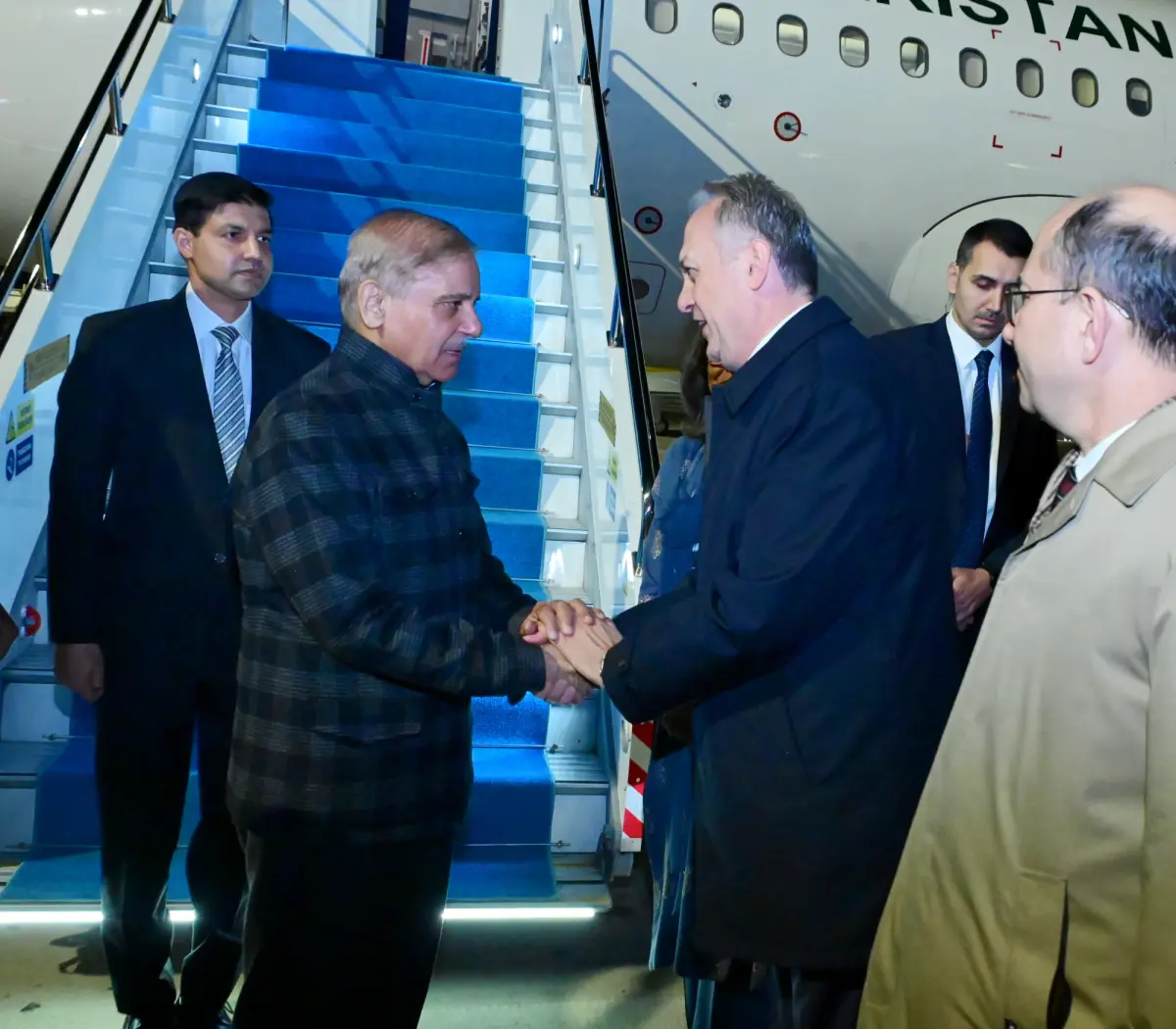
    Prime Minister Shehbaz Sharif arrived in Antalya, Türkiye, on Tuesday to participate in the Leaders’ Summit of the 31st Conference of the Parties (COP31) to the United Nations Framework Convention on Climate Change (UNFCCC).

    According to a statement issued by the Prime Minister’s Office, the premier was received upon arrival by Türkiye’s Deputy Minister of Culture and Tourism Gökhan Yazgı, Pakistan’s Ambassador-designate to Türkiye Amna Baloch and senior Turkish officials.

    During the summit, Shehbaz will highlight Pakistan’s climate priorities and call for stronger global climate action and international cooperation to address the adverse impacts of climate change.

    The prime minister will also address a high-level dialogue on clean energy transition and electrification, titled “35 by 35: Powering the Future”.

    On the sidelines of the summit, Shehbaz is scheduled to hold bilateral meetings with Turkish President Recep Tayyip Erdoğan and other world leaders to discuss matters of mutual interest and explore avenues for strengthening bilateral cooperation.

    Meanwhile, a Pakistan Pavilion has been established at the COP31 venue, where 54 events will be organised on various themes.

    Pakistan has played an active role in international climate diplomacy, including contributing to efforts that led to the establishment of the Loss and Damage Fund during COP27.

    Source: brecorder