Category: Brecorder

  • Solar boom leaves low-income households behind amid Sindh’s energy, climate challenges, experts say

    Solar boom leaves low-income households behind amid Sindh’s energy, climate challenges, experts say

    Pakistan’s rapidly expanding solar market was transforming the country’s energy landscape, but millions of low-income households risk being left behind as the high upfront cost of installations and lack of maintenance support limit access to affordable electricity, speakers warned at the Sindh Energy & Climate Conference (SECC26).

    The disparity was highlighted during a discussion on solar energy access at the two-day conference held in Karachi last week, where experts, government representatives, labour groups, and community activists examined whether the country’s growing shift towards renewable energy was benefiting those most in need or primarily serving consumers who could afford the initial investment.

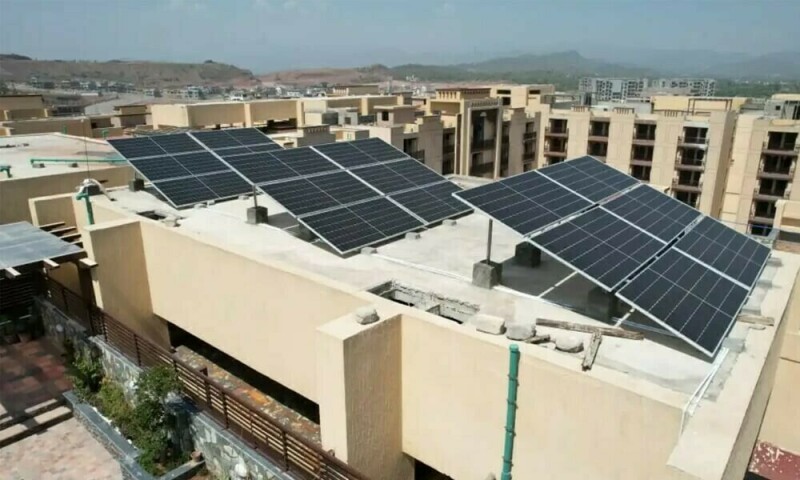
    The scale of the country’s solar expansion is striking. Dr Omais Abdur Rehman of Renewables First said during a session on solar energy access that Pakistan’s power plants had a combined capacity of approximately 45 gigawatts, while consumers had independently installed nearly 38 gigawatts of solar capacity.

    But he cautioned that the number of installations alone offered little indication of whether communities were enjoying reliable and sustainable access to electricity.

    Citing a World Bank-supported programme, he said only 33% of distributed solar systems remained operational after ten years, largely because of inadequate maintenance skills.

    “Giving solar panels is not a success. Access does not equal success,” he said.

    The problem is not limited to maintaining solar systems. For many households, the initial investment remains the biggest obstacle.

    Hussain Rizvi of the Climate Action Center presented survey findings showing that 86% of respondents in Karachi’s low-income neighbourhoods experienced between 13 and 20 hours of load-shedding. Many residents of informal settlements were also struggling with unaffordable electricity bills, despite being interested in switching to solar power through instalment-based financing.

    The divide between those benefiting from the solar transition and those being left behind was perhaps best illustrated by a garment factory worker, Muneer Ahmed. Although his factory operated on solar power, he told participants that his monthly salary of Rs30,000 to Rs40,000 made it difficult to afford a similar system for his own home.

    The contrast raised a broader question about the distribution of benefits from Pakistan’s energy transition: if businesses can turn to solar power to reduce their electricity costs, what options are available to the workers who keep those businesses running?

    Wasim Jamal, Director of Public Relations at the Sindh Employees Social Security Institution (SESSI), proposed a provincial solarisation programme linked to the Benazir Income Support Programme (BISP), suggesting an initial pilot that would provide systems costing approximately Rs150,000 per beneficiary. He also proposed developing mini-grids to extend electricity access to rural communities.

    But making solar power more accessible is only one part of a much larger challenge. As renewable energy installations increase, Pakistan must also rethink how its electricity grid operates and how surplus power can be distributed.

    Participants called for modernising existing grid infrastructure and introducing community-based electricity-sharing arrangements that would allow households and businesses to supply excess solar power to others rather than letting it go unused.

    The rapid expansion of solar technology has also brought concerns about substandard equipment and the potential accumulation of electronic waste. Speakers stressed the need for stronger quality controls, recycling facilities, and technical training, warning that an energy transition built around renewable technology must also account for what happens when equipment reaches the end of its working life.

    The national grid, they argued, would remain indispensable even as solar adoption increases, particularly as demand grows with the wider use of air conditioners, household appliances and electric vehicles.

    Speakers also highlighted the curtailment of wind power and called for investment in battery storage, flexible transmission infrastructure, and real-time data-sharing to ensure that renewable electricity generated in the country is not wasted.

    The transition is also beginning to reshape public transport. Behram Amir Memon, Managing Director of the Sindh Mass Transit Authority, said 84 electric buses were already operational, with another 1,100 planned in principle and 500 proposed through public-private partnerships. He also referred to the distribution of 1,000 pink electric scooters.

    Mehrosh Fatima of the National Energy Efficiency and Conservation Authority (NEECA) said 161 electric vehicle charging stations were operational across Pakistan, while work was under way on an integrated online portal for charging infrastructure.

    Yet the shift towards electric mobility will require more than introducing vehicles. Participants stressed the need to expand charging networks beyond major cities and develop domestic manufacturing capacity for batteries and motors.

    For Sindh, however, the climate crisis is not a distant threat tied only to future energy choices. Its effects are already being felt in workplaces, agricultural fields, and communities struggling with increasingly extreme weather.

    During a discussion on heat-related challenges, labour representatives and community activists drew attention to the risks faced by agricultural workers, women, children, and industrial labourers. Inadequate workplace ventilation, limited access to drinking water, and prolonged electricity outages were identified as major concerns.

    They called for dedicated heat-protection policies, workplace risk assessments, cooling facilities, and mandatory rest breaks for workers exposed to extreme temperatures.

    Water security added another dimension to the province’s climate challenges. At a session examining the relationship between water and energy, participants questioned the social and environmental costs of dams, barrages, and changing river flows, particularly for communities whose livelihoods depend on agriculture and fishing.

    Speakers raised concerns about inadequate compensation around hydropower projects, environmental damage and the absence of effective mechanisms through which affected communities could pursue reparations.

    The situation in parts of Badin illustrated the scale of the problem. Panelists said some communities received irrigation supplies for only five days annually, contributing to food insecurity and preventing farmers from cultivating rice this year.

    They also discussed the wider economic implications of hydropower development, particularly questioning where projects are financed through loans and repayment costs ultimately fall on electricity consumers. More equitable water distribution and meaningful consultation with affected communities, they argued, must become central to infrastructure planning.

    The question of who pays for development and who benefits from it also surfaced in discussions on international climate finance.

    Despite repeated global commitments to support climate-vulnerable countries, participants said a significant gap remained between promised funding and the resources actually reaching communities on the ground. They warned that access to finance alone would not be enough without transparent spending and accountability.

    Pakistan’s experience of repeated climate disasters, particularly the 2022 floods that caused more than $30 billion in combined damage and economic losses, underscored the urgency of the issue. Speakers called for stronger local governments, improved early-warning systems, affordable crop insurance and greater involvement of coastal and delta communities in climate adaptation planning.

    Closing the conference, Sindh Governor Nehal Hashmi argued that climate action must extend well beyond renewable energy projects and technical discussions, calling for environmental awareness to become part of everyday community life.

    He stressed that clean water, hygiene, sanitation, drainage, urban infrastructure, and marine conservation deserved greater attention in discussions about climate change, noting that environmental sustainability was closely linked to public health and the quality of life in communities.

    Drawing attention to Karachi’s coastline, Hashmi expressed concern over the condition of coastal waters and the marine environment, urging greater efforts to address pollution and protect marine ecosystems. He also pointed to the future potential of ocean-based energy, suggesting that Asian countries could increasingly explore energy generation from the sea in the coming years. However, he stressed that such opportunities would depend on protecting marine resources and improving coastal water quality.

    The Governor also raised the issue of electricity theft, particularly in urban markets and commercial areas, arguing that energy discussions should address not only increasing supply but also responsible consumption, efficient distribution, and the prevention of wastage.

    He called for stronger collaboration between government institutions and civil society organisations, describing the latter as an important link between policymakers and communities. Their understanding of local concerns, he said, could help government departments develop more practical responses to environmental and energy challenges.

    Hashmi urged the conference organisers to share their recommendations with relevant government departments and the Governor House, while calling for climate awareness campaigns to move beyond seminars and conference halls into schools, universities, and coastal communities.

    SECC26 highlighted that Sindh’s energy transition is about far more than producing more electricity or installing solar panels. Its real success will depend on whether cleaner energy becomes affordable for ordinary households, whether workers and farmers are protected from the growing pressures of climate change, and whether communities most affected by development have a voice in decisions shaping their future.

    The challenge, participants suggested, was not simply to power Sindh differently, but to build a fairer, more resilient, and sustainable province.

    Source: brecorder

  • Saudi-led coalition says it shot down Houthi missiles aimed at Riyadh

    Saudi-led coalition says it shot down Houthi missiles aimed at Riyadh

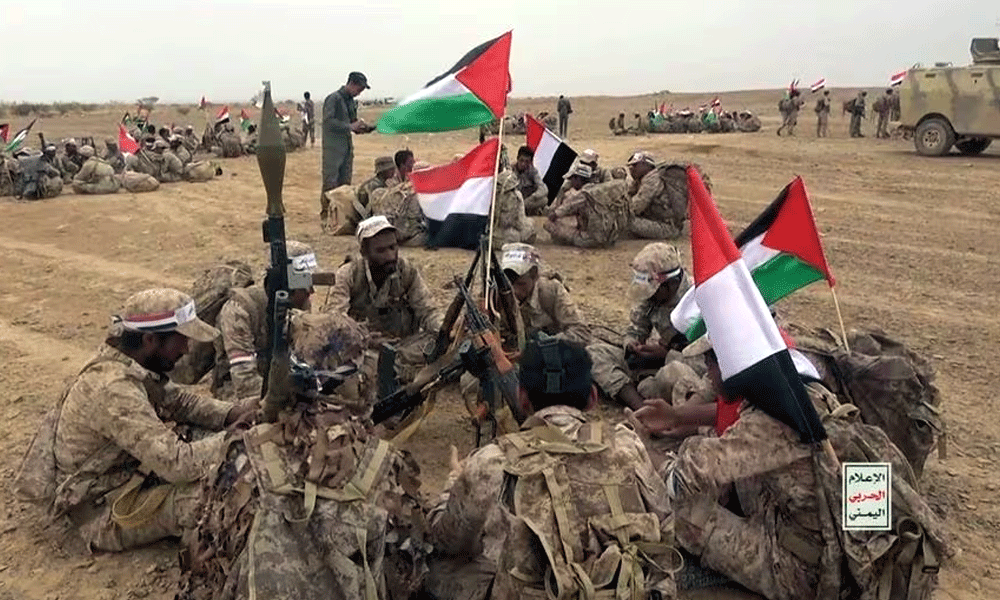
    The Saudi-led military coalition in Yemen said on Tuesday it shot down missiles fired by Yemen’s Houthis at several Saudi cities in a night of intensifying military action, while the Houthis reported Saudi airstrikes hit the Yemeni capital Sanaa.

    The coalition said it had intercepted a ballistic missile and a cruise missile fired by the Houthis towards Riyadh, as well as a ballistic missile fired towards the kingdom’s southern region and a drone ‌over the oil-rich east.

    Saudi civil defences issued alerts in the capital and the southern cities of Abha and Khamis Mushait, later saying the threats had passed.

    Houthi military spokesperson Yahya Saree said the group had hit King Khalid International Airport in Riyadh and an oil facility in Abqaiq in the east. There was no immediate comment from Saudi Arabia.

    Saudi-led coalition intercepts two Houthi missiles fired towards Riyadh

    The Saba news agency reported that Saudi Arabia carried out airstrikes on Sanaa, hitting a petrol filling station in the Jadar district north of the capital and a building belonging to the state oil company in southern Sanaa.

    Hostilities have been escalating between the Houthis and Saudi Arabia, which leads a military coalition that has backed Yemen’s internationally recognised government, driven more than a decade ago from Sanaa by the Houthis.

    Fighting has intensified since September when the Houthis advanced towards the Bab el-Mandeb Strait, a strategic shipping chokepoint at the ​southern entrance to the Red Sea. The Houthis have since stepped up strikes on ⁠Saudi airports, ports and oil facilities, while Saudi Arabia has carried out airstrikes on Houthi targets ​in Yemen.

    Syria aids Saudi Arabia with military advice and training amid Houthi attacks, sources say

    The Houthis said on Tuesday they had attacked Saudi Arabia’s vital East-West Pipeline in Riyadh Province, while denying a Saudi assertion that they had attacked the pipeline in the Medina region. Saudi state media had reported on Monday that an attack on the pipeline in the Medina region had caused a limited fire there, and that operations were not affected.

    Medina, home to one of Islam’s holiest sites, is visited by millions of Muslim pilgrims each year. The Houthis have repeatedly rejected Saudi accusations that they have targeted Makkah and Medina, Islam’s two holiest cities.

    Since conflict in the Middle East disrupted oil flows through the Strait of Hormuz, Riyadh has used its East-West Pipeline to divert about 4 million barrels per day of crude ​to Yanbu on the Red Sea, ​equivalent ⁠to about 4% of global supply.

    Source: brecorder

  • Pakistan Atomic Energy Commission completes dome placement at Chashma-5 nuclear plant

    Pakistan Atomic Energy Commission completes dome placement at Chashma-5 nuclear plant

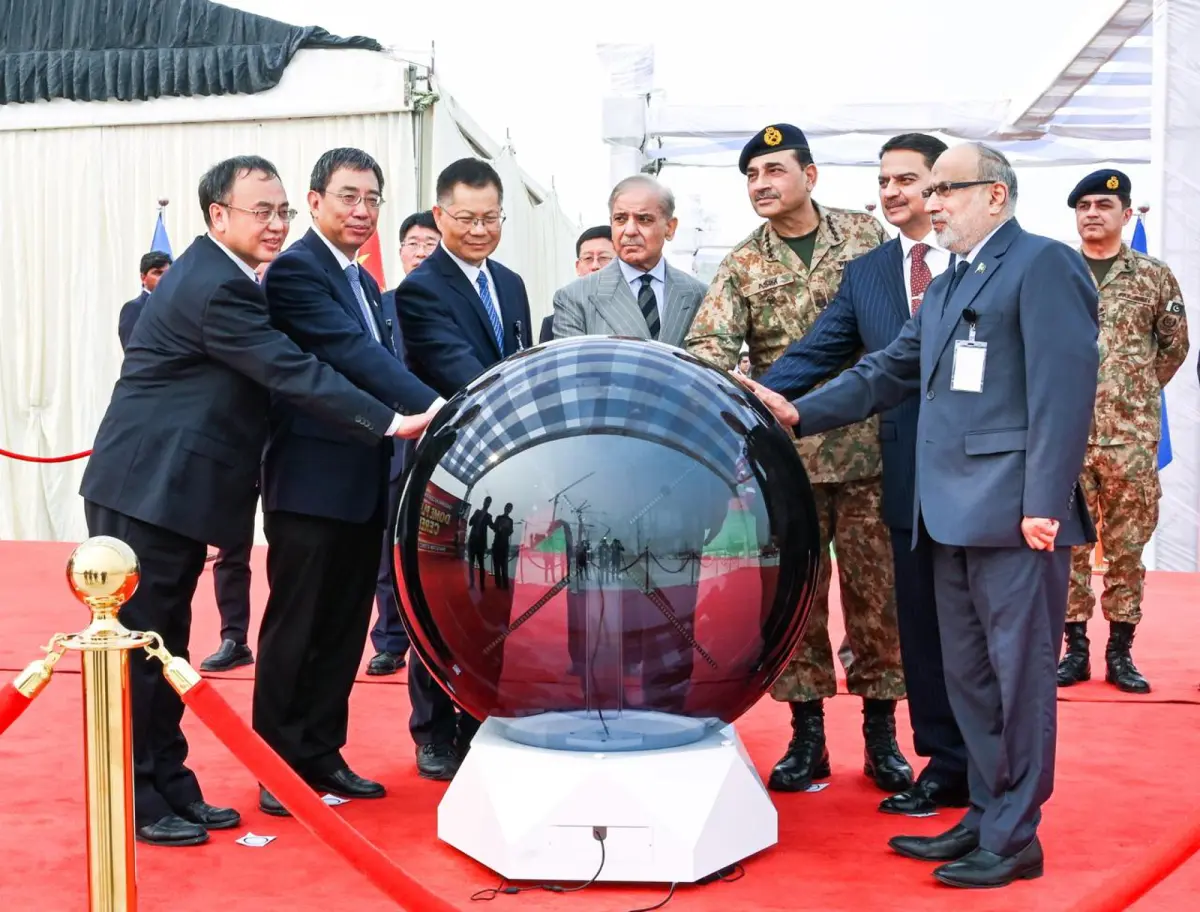
    The Pakistan Atomic Energy Commission (PAEC) had achieved a major milestone at the Chashma Nuclear Power Plant Generating Station with the successful dome placement of the Chashma-5 (C-5) Nuclear Power Plant, the Prime Minister’s Office (PMO) said on Tuesday.

    “C-5 Project is a manifestation of clean and emissions-free electricity generation in Pakistan,” Prime Minister Shehbaz Sharif said at the ceremony also attended by Field Marshal Syed Asim Munir.

    The C-5 project will have a generation capacity of 1,200 megawatts (MW). The plant is expected to commence electricity generation in September 2030.

    • Dome placement is a construction milestone in building a nuclear power plant. It refers to the installation of the large, dome-shaped roof of the reactor building, which houses the nuclear reactor and its associated equipment. In simple terms, it means the main reactor building has reached an important stage of structural completion.

    PM Shehbaz highlighted that nuclear energy accounted for around 16.6% of the country’s electricity generation despite representing only 8.6% of its installed capacity, with its share of electricity generation rising to 26% during winter.

    PAEC chairman highlighted that nuclear power continued to play an important role in Pakistan’s energy security, providing reliable and low-carbon electricity.

    “Pakistan’s nuclear power plants are safely and efficiently generating 3,530 MW of electricity and helping avoid approximately 15 million tonnes of carbon dioxide emissions annually,” he said.

    The prime minister commended Chinese partners, saying the event reaffirmed Pak-China All-Weather friendship and commitment to expanding strategic cooperation in economic, security, and development sectors.

    “We must increasingly harness our resources and human capital to build a Pakistan that is economically stronger, energy-secure and environmentally responsible,” he said.

    Once operational, Chashma-5 is expected to provide affordable, low-carbon and sustainable electricity to Pakistan’s national grid, further expanding the role of nuclear energy in the country’s power generation mix.

    China has remained a key partner in Pakistan’s civil nuclear energy programme, including the development of the Chashma nuclear power complex.

    Source: brecorder

  • Microsoft presses Trump to scuttle expected ban on Chinese data center technology

    Microsoft presses Trump to scuttle expected ban on Chinese data center technology

    WASHINGTON: Microsoft has been pressing the Trump administration to halt plans to bar Chinese imports of a key component used in AI data centers, three people familiar with the situation said.

    Reuters reported in August that the Trump administration wants to ban US imports of new models of Chinese optical transceivers, which allow data to travel over fiber-optic cables at the speed of light within data centers. The concern is that they could be used by Beijing to steal data, install malware or disrupt service at US data centers.

    Microsoft has 35 data centers under construction in the US and another 134 planned, according to Cleanview, a market intelligence company which tracks data center development. It is one of a group of companies and trade groups making the case to the Trump administration that such a ban could irreparably damage the US edge over China in the AI race by further slowing the data center rollout, the sources said.

    The cloud and software company was one of a handful of firms that met with officials from the White House Office of Science and Technology Policy and the National Security Council in September to flag the supply chain challenges that any such ban would present, two of the sources said.

    “It really threatens to arguably grind (the data center rollout) to a halt,” said John Miller, general counsel of the Information Technology Industry Council (ITI), a tech lobbying group, which has publicly urged the administration not to move forward with a ban.

    Microsoft is offering buyouts to around 60,000 employees, Business Insider reports

    He said many cloud companies have already purchased the AI chips needed for the buildout. “Those chips, without optical transceivers literally could just sit there waiting around un-utilized until you actually have the transceivers to essentially connect them together,” he added.

    Some data centers need millions of optical transceivers to connect servers, routers and switches.

    The Federal Communications Commission, which oversees the US ‌telecom industry, is working on the ban.

    The efforts by Microsoft and other firms, which have not been previously reported, show how the agency’s deliberations have set off alarms in an industry scrambling to meet surging demand for cloud and AI services despite a growing backlash by consumers over rising energy costs and water use.

    Microsoft declined to comment. The White House, the FCC and the Chinese embassy in Washington did not immediately respond to requests for comment.

    US competitors lack scale

    China boasts two-thirds of the global market foroptical transceivers, according to Counterpoint Research. Chinese firms like Eoptolink and Zhongji Innolight, which was added to the Pentagon’s list of Chinese military-backed companies, dominate global supply, counting top American hyperscalers among their customers.

    Telcos seek ‘industrial power tariff’: Investment in 5G networks, AI-ready data centres at risk

    US-based Coherent and Lumentum produce technology that competes with them but lack the scale to replace Chinese vendors, according to a report by the Foundation for American Innovation.

    ITI sent a letter to the FCC on August 13 calling on the telecoms watchdog to “refrain from adding optical transceivers” to a trade blacklist, emphasizing the “potential effects that supply disruptions could have on data center deployment and US AI leadership.”

    Morgan Stanley said in an October client note that the Trump administration was considering barring Chinese optical transceivers capable of handling 3.2 terabits of data per second, whose production is not expected to ramp up until 2028, with widespread installation expected in 2029.

    Such a threshold could avoid antagonizing US companies and Beijing while giving US optical companies time to expand production.

    The FCC has not addressed the optical transceiver issue publicly, but two of the sources said the 3.2 terabit per second threshold is under consideration.

    Lawmakers may not want to wait. In September, a bipartisan group of US lawmakers introduced legislation to bar the federal government from equipping sensitive government systems with Chinese-made optical transceivers.

    Source: brecorder

  • Pakistan U19 crush Nepal by 101 runs in Under-19 Asia Cup

    Pakistan U19 crush Nepal by 101 runs in Under-19 Asia Cup

    Pakistan Under-19 registered a comprehensive 101-run victory over Nepal in the 12th match of the Asian Cricket Council Under-19 Asia Cup 2026 in Al Amerat on Tuesday.

    Pakistan posted 275 for seven in 50 overs after being asked to bat, with Ahmed Hussain and captain Farhan Yousaf scoring half-centuries.

    Ahmed led the batting with 89 off 73 balls, striking seven fours and two sixes. Farhan made 74 off 95 deliveries, including six fours and three sixes.

    Hasnain Abbas Dar added a quick 25 off 23 balls, while Jahangir Bilal scored 22.

    Nepal’s Bipin Sharma claimed three wickets for 58 runs, while Sushil Rawal took two wickets.

    Chasing 276, Nepal struggled to build partnerships and were dismissed for 174 in 43.4 overs.

    Rohit Chand scored 37 off 54 balls, while Niraj Kumar Yadav made 29. Abhay Yadav chipped in with 23 off 16 deliveries.

    Ahmed Hussain delivered an outstanding all-round performance, taking four wickets for 35 runs to finish with match figures of 89 runs and four wickets.

    Mohammad Huzaifa and Mohammad Sayyam also claimed two wickets each as Pakistan bowled Nepal out to seal a convincing victory.

    Source: brecorder

  • Yemen’s Houthis deny attacking East-West pipeline in Medina

    Yemen’s Houthis deny attacking East-West pipeline in Medina

    Yemen’s Houthis on Tuesday denied attacking Saudi Arabia’s vital East-West pipeline in the Medina region, saying they attacked the pipeline in the capital Riyadh.

    On Monday, a Saudi Energy Ministry source said the pipeline was attacked in the Medina region and that operations were not affected, according to state media.

    Source: brecorder

  • Rupee records gain against US dollar

    Rupee records gain against US dollar

    The Pakistani rupee continued its marginal gain against the US dollar in the inter-bank market on Tuesday.

    The local unit closed the day at 276.65, a gain of Re0.01 against the greenback.

    During the previous week, the Pakistani rupee extended its marginal gain against the US dollar, appreciating 0.03% in the inter-bank market. The local unit closed at 276.66 against the greenback, a gain of Re0.09 from 276.75 it had closed at a week earlier, according to State Bank of Pakistan (SBP) data.

    Internationally, the US dollar found support following a bumpy few days and held firm in Tuesday’s Asia session while ​traders waited for US inflation data, which could push it higher if it bolsters rate hike bets.

    A tumble ‌in oil prices and gains overnight for stocks had knocked the dollar lower as investors rotated back into riskier assets.

    The trade and sentiment-sensitive Australian dollar rose by nearly 1% through Monday to sit at $0.6921 early on Tuesday and the New Zealand dollar rose even further ​to trade at $0.5624, with both steady in morning Asia trade.

    The euro jumped 0.7% overnight to $1.1220, reversing a Friday ​fall when strong US jobs data lifted the dollar and interest rate expectations, and putting ⁠the euro/dollar pair roughly into the middle of a range it has held for a month.

    The market is long ​dollars, and the dollar index has gained this year as early expectations for US interest rate cuts quickly turned to ​bets on hikes after the US-Israeli war on Iran drove up energy prices and fuelled inflation.

    A blowout October jobs report on Friday, with hiring more than twice forecasts, has markets pricing an 85% chance of a Federal Reserve rate increase next month.

    Oil prices, a key indicator of currency parity, fell on Tuesday, adding to the previous day’s losses after US President Donald Trump downplayed the need for military action against Iran “at this point”, easing fears of sustained supply disruptions in the Middle East.

    Brent crude futures declined 70 cents, or 0.75%, to $91.88 a barrel by 0246 GMT, while US West Texas Intermediate (WTI) futures fell 78 cents, or 0.90%, to $86.07 a barrel.

    Both benchmarks had fallen 1% earlier in the session.

    Source: brecorder

  • Pentagon chief Hegseth calls moves to impeach him a farce that will fail

    Pentagon chief Hegseth calls moves to impeach him a farce that will fail

    WASHINGTON: US Defense Secretary Pete Hegseth on Tuesday called moves to impeach him over abuse of power in the Iran war a farce that would fail.

    Hegseth made the comment at a news conference a day after US Representative Thomas Massie, a Kentucky Republican, introduced eight articles of impeachment against him.

    In his first Pentagon news conference since May, Hegseth said attempts to impeach President Donald Trump had failed and added: “They will fail again.”

    “This is not patriotism. This is sabotage,” he said.

    Iran war: Republican launches impeachment against Hegseth

    Referring to the Iran war, he said: “I stand beside every one of these operations. I was proud to execute them, and I would do it again tomorrow.”

    In a post on X, Massie said the House would hold a first vote on Tuesday on a procedural motion to kill the resolution.

    “If we can overcome that effort, we will proceed to a real debate and vote on the Articles of Impeachment,” he said.

    Source: brecorder

  • Financial, communications stocks lift Sri Lankan shares higher

    Financial, communications stocks lift Sri Lankan shares higher

    Sri Lankan shares closed higher on Tuesday, led by financial and communications stocks.

    The CSE All-Share index settled 2.75% higher at 22,123.39 points.

    Commercial Bank of Ceylon and Dialog Axiata were the top boost to the index, up 4.28% and 4.88%, respectively, on the day.

    Trading volume on the index rose to 249.3 million shares from 144.4 million shares in the previous session.

    The equity market’s turnover rose to 7.91 billion Sri Lankan rupees ($23.81 million) from 3.33 billion rupees in the previous session, according to exchange data.

    Foreign investors were net sellers, offloading stocks worth 1.26 billion rupees, while domestic investors were net buyers, purchasing shares worth 7.85 billion rupees, the data showed.

    Source: brecorder

  • Nvidia CEO’s affair with alleged spy aided $7.5 billion in China chip shipments, Information reports

    Nvidia CEO’s affair with alleged spy aided $7.5 billion in China chip shipments, Information reports

    Nvidia CEO Jensen Huang’s affair with a Chinese businesswoman alleged to be a spy for Beijing facilitated the shipment of at least $7.5 billion worth of the company’s chips to Chinese firms, The Information reported on Tuesday, citing two people who know her.

    Alice Huang, along with her husband and sister, built a network of companies across China and Singapore to acquire Nvidia chips, according to the report. Alice Huang and Jensen Huang are not related.

    At the center of the network was Shanghai Century Litong, a China-based company founded in June 2023 that secured preferred cloud partner status with Nvidia by October, giving it priority access to the company’s chips, The Information reported.

    Century Litong was initially linked to Alice Huang’s sister, Huang Yu, through a founding shareholder that was ultimately controlled by Huang Yu before exiting the company in 2024, according to the report

    When orders for Nvidia chips subject to US export restrictions stalled, Alice Huang used ties to Nvidia and its distributors to secure supplies, helping move about 240,000 H100, H200 and some A100 chips into China, the report said.

    Reactions to Nvidia’s probe into CEO Jensen Huang

    Century Litong rented computing capacity and operated data centers using Nvidia chips, including some barred from sale to China. Some of the chips ultimately served Alibaba, Tencent and smaller Chinese AI labs, The Information reported.

    Alice Huang also held an executive position at Singapore-registered Megaspeed, which was linked to Century Litong and has been investigated by US authorities over Nvidia chip shipments from Southeast Asia to China, the report said.

    Megaspeed obtained Nvidia chips by renting computing capacity from Southeast Asian data centers to Chinese customers or by physically shipping hardware into China. Hardware acquired by Speedmatrix, a Malaysian subsidiary established by Megaspeed in 2024, later reached Century Litong, according to The Information.

    The report said Alice Huang, also known as Huang Le, leveraged her relationship with Jensen Huang to build credibility while remaining vague about her role and avoiding a paper trail.

    Nvidia probes whether CEO Huang was target of foreign spying as he admits affair

    Nvidia did not immediately respond to a Reuters request for comment. Alibaba, Tencent, Megaspeed and Shanghai Century Litong were not immediately available for comment outside regular business hours. Reuters could not independently verify the report.

    Nvidia’s board on Sunday launched an internal investigation, while the FBI is examining whether 63-year-old Jensen Huang was targeted by a foreign intelligence operation. Huang has told employees he was unfaithful to his wife but provided no details about the relationship.

    Source: brecorder