Category: Brecorder

  • Ahsan slams calls in India to ban Pakistani content on Netflix

    Ahsan slams calls in India to ban Pakistani content on Netflix

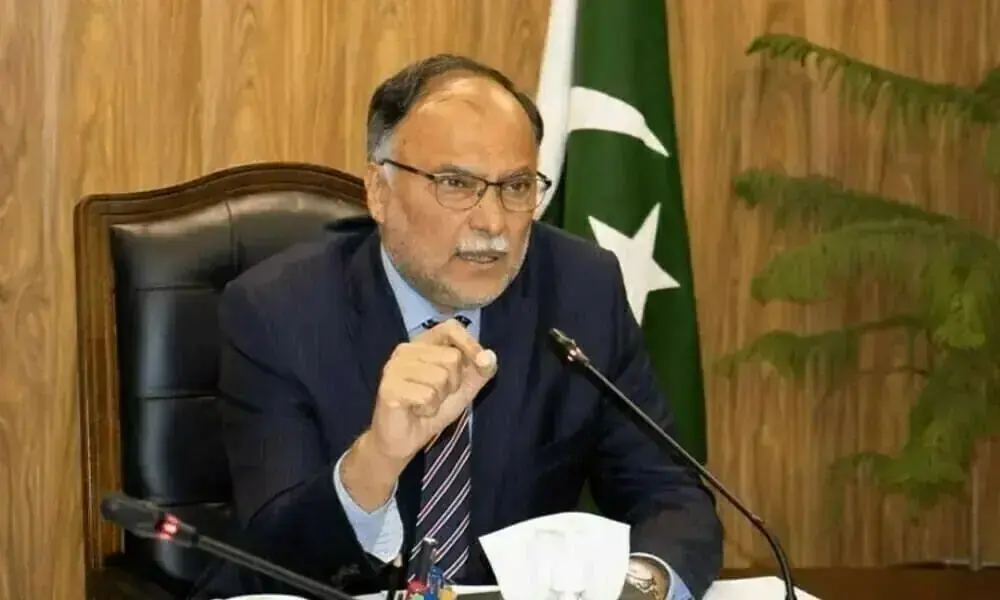
    ISLAMABAD: Federal Minister for Planning, Development and Special Initiatives Ahsan Iqbal has strongly criticised calls in India for banning Pakistani content on Netflix, drawing widespread support online for his stance that arts and entertainment should not be held hostage to political tensions.

    The minister pushed back against renewed calls in India to block Pakistani entertainment, sparking a wave of online support under the trending hashtag #GrowUpIndia.

    The minister’s remarks came in response to a formal letter sent by the All Indian Cine Workers Association (AICWA) to Indian Prime Minister Narendra Modi, demanding that Netflix block the December 4 release of Pakistan’s first original Netflix series, Jo Bachay Hain Sang Samait Lo, and impose a permanent ban on Pakistani content across Indian platforms.

    Addressing the controversy on X (formerly Twitter), Ahsan Iqbal questioned the politicisation of sports and arts, asking why a cricket match should be treated as a political threat or a television drama as a national security concern. His message resonated widely on social media, with users rallying behind the call to keep art and entertainment free from political interference.

    Beyond responding to cross-border restrictions, the minister’s stance reflects a broader, long-term policy push to transform Pakistan’s creative and cultural sector into a thriving export industry. Ahsan Iqbal has been actively promoting creative and cultural exports through structured engagements with global streaming giants, including Netflix and Disney+, while advocating for Pakistan’s inclusion in the Middle East and North Africa (MENA) content region to expand international distribution channels for local creators.

    He has also provided seed funding for the development of series on Allama Iqbal, Quaid-e-Azam Muhammad Ali Jinnah, and the heritage of the Mughal era. Furthermore, he is pursuing policy interventions aimed at bringing transformative changes to enhance Pakistan’s creative and cultural exports.

    As Pakistani dramas and films continue to attract international audiences, efforts to integrate local talent into global streaming platforms aim to ensure that stories from Pakistan reach viewers worldwide, despite regional restrictions.

    Copyright Business Recorder, 2026

    Source: brecorder

  • Petrol, diesel prices fall further by up to Rs5 per litre

    Petrol, diesel prices fall further by up to Rs5 per litre

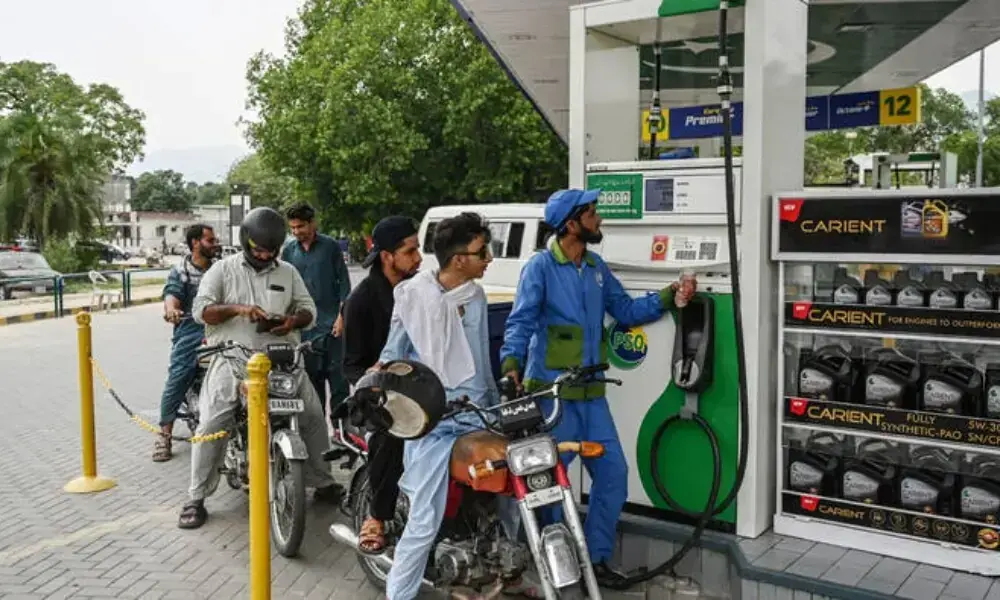
    Pakistan government reduced the price of petrol by Rs4 to Rs314 per litre and the high-speed diesel rate by Rs5 to Rs348 per litre, effective for Thursday, November 26, 2026.

    The Oil and Gas Regulatory Authority (OGRA) announced the revised ex-depot prices in a notification issued on Wednesday, saying they were worked out under the petroleum products pricing mechanism approved by the federal government.

    The new prices are effective for Thursday, November 26.

    On Tuesday, the government decreased the price of petrol by Re1 to Rs318 per litre and diesel rate by Rs4 to Rs353 per litre.

    Globally, crude oil prices rose more than 1% on Wednesday after Yemen’s Houthis said they had attacked Saudi Arabia’s largest oil refinery and traders weighed Middle East supply disruptions against the prospect of a global market surplus.

    Brent crude futures were up $1.66, or 1.82%, at $93.06 a barrel by 1448 GMT. US West Texas Intermediate crude futures climbed 92 cents, or 1.12%, to $82.97. Both benchmarks gained more than 2% on Tuesday.

    Source: brecorder

  • 1,000 days of Maryam Nawaz govt in Punjab

    1,000 days of Maryam Nawaz govt in Punjab

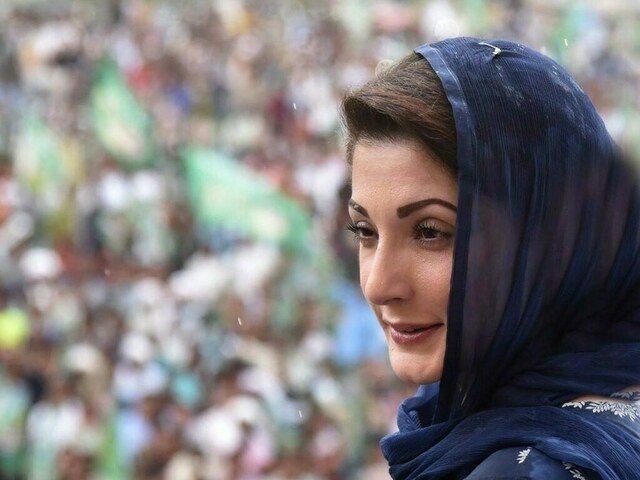
    The Maryam Nawaz government in Punjab has completed 1,000 days in office. During this period, Maryam Nawaz has delivered projects that previous governments could not accomplish even during their five-year tenures. Ultimately, it is a question of commitment and a sense of responsibility: whether those elected by the people of Punjab are able to live up to their expectations and fulfil the promises made to them.

    Soon after assuming office as Chief Minister, Maryam Nawaz launched the Ramazan Nigahban Programme in Punjab. During the first year, financial assistance was distributed to beneficiaries in cash, while in the second year, 4.5 million families received financial assistance through ATM cards under the Ramadan Nigahban Programme. Throughout the process, the dignity and self-respect of deserving and financially struggling citizens were fully protected. The cards were delivered directly to the doorsteps of the intended beneficiaries, ensuring that no one had to compromise their dignity to receive assistance.

    One of the most transformative initiatives introduced by Maryam Nawaz is the Suthra Punjab Programme. Under this initiative, an improved and comprehensive sanitation system has been introduced across Punjab, covering both urban and rural areas. The programme has created more than 120,000 new jobs, while modern machinery and equipment have been provided to strengthen the province’s waste management system. The sanitation network has been extended from major cities to smaller towns and rural settlements.

    The fundamental objective of Suthra Punjab is to establish cleanliness as a permanent public service rather than treating it as a temporary campaign or a short-term activity. Workers employed under the programme do not merely collect waste; it is also disposed of through an organised and appropriate mechanism. One of the programme’s most significant features is its complaint redressal mechanism, with a 100 per cent resolution rate for complaints registered through its helpline.

    Another landmark initiative of the Maryam Nawaz government is the Apni Chhat Apna Ghar Programme. In just 18 months, more than 220,000 houses have been constructed in Punjab under this scheme, enabling citizens to live in homes of their own with dignity and security. Recognising the success and transparency of the initiative, the United Nations presented Maryam Nawaz with its first award at a major ceremony held in Muscat last month. Maryam Nawaz dedicated the award to the people of Pakistan.

    The construction and rehabilitation of roads across Punjab is also progressing successfully. Under this initiative, work on the construction and rehabilitation of approximately 50,000 kilometres of roads has been completed. The programme covers urban roads, rural link roads, streets and roads connecting different localities and towns. The objective is not merely to improve travelling conditions but also to connect rural economies with markets, facilitate the transportation of agricultural produce, save time and reduce the difficulties faced by citizens in their daily commutes. The initiative has been named the Punjab Development Programme.

    Like other sectors, Chief Minister Maryam Nawaz has placed healthcare among her foremost priorities. Access to quality healthcare remains one of the most pressing basic needs of the public, which is why she has placed particular emphasis on transforming the health sector. Punjab has witnessed unprecedented initiatives in healthcare, with new hospitals being established in different cities.

    These include the Nawaz Sharif Cancer Hospital in Lahore, which, with a capacity of 1,000 beds, is set to become the largest hospital of its kind in the world. Its outpatient department (OPD) is already fully operational. The Jinnah Institute of Cardiology has also been established in Lahore, while new hospitals have been built in Sargodha, Murree and Sahiwal.

    In addition, Maryam Nawaz Health Clinics and catheterisation laboratories (Cath Labs) have been established in remote areas of Punjab, providing citizens with facilities that meet high standards of healthcare. Expensive medicines for cancer, tuberculosis and hepatitis are being delivered free of charge to the doorsteps of one million people across the province. More than 18,000 children have undergone free heart surgeries in Punjab.

    At present, more than 1,000 Clinics on Wheels are providing healthcare services to citizens, while Field Hospitals are also extending medical facilities to people in their neighbourhoods and communities.

    The Maryam Nawaz government has also taken significant initiatives in the education sector. For the first time in Punjab’s history, laptops and scholarships are being distributed to students on such a massive scale, with no comparable precedent in the past. For children of poor and financially struggling families, access to scholarships and laptops is nothing short of a blessing. Only parents and students who have struggled with financial constraints can truly appreciate the importance of such opportunities.

    Many talented students were previously unable to complete their education because of poverty. Recognising this challenge, Chief Minister Maryam Nawaz expanded the scholarship programme across the province. The Punjab government is distributing laptops to 112,000 students and scholarships to 120,000 students. The provision of electric bikes to students is also underway.

    Maryam Nawaz deserves credit for introducing an electric bike scheme for students for the first time. Last year, the Punjab government provided 25,000 electric bikes to students. This year, Maryam Nawaz has announced an ambitious target of distributing 100,000 electric bikes, with the programme set to be formally launched in the coming days.

    Government schools across Punjab are also being transformed into institutions that provide quality education. Improvements are being made to boundary walls, the availability of clean drinking water and toilets, better classrooms and the provision of essential facilities, including IT laboratories.

    A Milk Programme has also been launched in various districts of South Punjab. So far, more than 1.1 million children have been provided with milk and biscuits under the initiative, contributing to improvements in their physical growth and development. Provincial Education Minister Rana Sikandar is successfully leading this programme.

    Rana Sikandar is personally a dynamic and committed provincial minister. He is also overseeing the successful implementation of the Nawaz Sharif School of Eminence initiative with a strong sense of responsibility. The establishment of Schools of Eminence in Punjab represents a major transformation in the education sector. Around 150 schools have already been established under the programme, providing thousands of children with free, high-quality education. The Punjab government plans to establish a total of 300 such schools. Rana Sikandar is taking a keen personal interest in the initiative and leading its implementation.

    Similarly, an autism school has been established for children with special needs. Special Assistant Sania Ashiq is overseeing the initiative and taking a personal interest in its development and implementation.

    With Punjab’s population growing rapidly, the need for an efficient and extensive public transport system had become increasingly urgent. Recognising this requirement, Chief Minister Maryam Nawaz made public transport a priority immediately after assuming office and introduced a transformative electric bus programme across the province.

    Under this initiative, 650 electric buses are now operating in different cities of Punjab. The Chief Minister’s plan is to expand the fleet to 3,000 buses by 2027, while the target is to have 5,000 buses operating across all tehsils of Punjab within five years. Provincial Transport Minister Bilal Akbar is a hardworking minister who is successfully leading the programme.

    Agriculture is a major pillar of Punjab’s economy, with a substantial proportion of its rural population dependent on this sector. Consequently, financial assistance for farmers and the provision of modern agricultural machinery have remained among the Punjab government’s key priorities.

    Through the Kisan Card, more than one million farmers are receiving financial assistance. The government is also ensuring the timely availability of fertilisers, seeds and other essential agricultural inputs. In addition, programmes for the solarisation of tube wells and the provision of super seeders are underway.

    One of Maryam Nawaz’s most significant initiatives in the agriculture sector is the provision of Green Tractors to farmers. The Punjab government is working on a programme to provide 50,000 Green Tractors to farmers. Internship programmes for agricultural graduates and Model Agriculture Malls have also been introduced, providing farmers with access to a range of essential facilities and services under one roof.

    These initiatives in the agriculture sector have contributed to record increases in the production of wheat, rice and sugarcane across Punjab.

    Most of Maryam Nawaz’s government programmes have online application procedures. Transparency and merit are ensured throughout the process, with no room for recommendations or preferential treatment. Applicants are selected strictly on merit. Perhaps the greatest achievement of Maryam Nawaz so far is her commitment to ensuring that merit remains the guiding principle in all government initiatives.

    To encourage young people and entrepreneurs, Maryam Nawaz has launched the Asaan Karobar Programme. Under this scheme, young people and business owners can obtain loans ranging from Rs1 million to Rs30 million. Interest-free loans worth up to Rs100 billion have already been disbursed under the programme.

    Last year, Punjab experienced the largest floods in the country’s history, affecting more than 800,000 people. The scale of devastation and the number of citizens displaced or affected by the floods constituted a major humanitarian tragedy. However, Maryam Nawaz did not lose heart and ensured comprehensive financial assistance for all affected families.

    The Punjab government distributed financial assistance worth up to Rs200 billion among flood-affected people from its own resources. During this period, Maryam Nawaz faced pressure from various political circles to seek financial assistance from international organisations for the rehabilitation of flood victims. However, Maryam Nawaz, the daughter of a self-respecting father, chose to support the affected families through the province’s own resources. The resources of Punjab were spent on the people of Punjab.

    The Chief Minister also launched the E-Taxi Scheme in Punjab. Under the programme, electric vehicles have been provided to people, and these vehicles can now be seen operating on the roads. The initiative has created opportunities for unemployed individuals to earn a respectable livelihood. A significant number of women have also benefited from the scheme.

    Last year, Chief Minister Maryam Nawaz introduced a programme for the provision of solar panels to households across Punjab. Under the scheme, solar panels were distributed among 90,000 people last year. This year, Maryam Nawaz has increased the target to 100,000 beneficiaries.

    The Chief Minister’s urban beautification initiative is also progressing successfully throughout Punjab. Major markets and commercial areas in different cities are being developed and upgraded according to uniform standards. The level of development and prosperity visible in Lahore can now also be seen in Faisalabad, Sialkot, Rahim Yar Khan, Rawalpindi and Attock.

    Maryam Nawaz has ensured that no city or region is discriminated against in the distribution of development opportunities. The facilities being provided in Lahore are also being extended to other cities across Punjab.

    Punjab Information and Culture Minister Azma Bukhari has played a significant role in effectively communicating the Chief Minister’s public welfare initiatives to the media and the people. The manner in which Azma Bukhari has managed the Information and Culture Department over the past two years is unprecedented. For the first time, the Information Department has introduced a highly transparent and organised system for media payments under her leadership.

    Azma Bukhari has also introduced innovation and modernisation in the fields of information and culture. A new building for the Directorate General Public Relations (DGPR) has been established. The DGPR has also acquired its own outside broadcast (OB) van for official government events. Azma Bukhari is further working on a plan to acquire two additional OB vans.

    Meanwhile, the historic Alhamra Hall building in Lahore is undergoing extensive renovation and restoration. A new art gallery has also been established at Alhamra. These initiatives mark the first major developments of their kind since 1992.
    Secretary Information and Culture Tahir Raza Hamdani has also been working with dedication and a strong sense of responsibility over the past two years. Similarly, DGPR Farid Ahmed is performing his responsibilities effectively in line with the agenda of Punjab Information Minister Azma Bukhari.

    Chief Minister Maryam Nawaz has introduced several successful welfare initiatives, including the Himmat Card, Minority Card, Labour Card, Livestock Card and Rehmat Card, through which thousands of people across Punjab are benefiting. Thesee are just some of the initiatives launched during the first 1,000 days of the Maryam Nawaz government. During her tenure, Maryam Nawaz has introduced approximately 120 development and public welfare projects, directly benefiting the people of Punjab.
    For Maryam Nawaz, there is no room for discrimination when it comes to public welfare. She believes that the same facilities being provided to the people of Punjab should also be available to children and citizens in other provinces of Pakistan. Guided by this vision, she has extended various facilities and opportunities to children from Balochistan, Khyber Pakhtunkhwa and Gilgit. Most recently, Chief Minister Maryam Nawaz also presented the gift of electric buses to Azad Kashmir.

    This reflects a broader vision, one that is characteristic of a national leader who looks beyond provincial boundaries and believes in the collective progress of the country.
    Maryam Nawaz is more concerned about the welfare of the people of Punjab than about falsehoods, propaganda and rumours. The people of Punjab have given her the mandate, and serving them therefore remains her foremost responsibility.

    Addressing young people in her various speeches, Maryam Nawaz has repeatedly emphasised that Pakistan must always come first. She has urged the younger generation to remember that their country should be their greatest priority and that they should never listen to anyone who encourages them to stand against Pakistan. The progress and prosperity of Pakistan are only possible when its people are committed to contributing positively to the country.

    On the completion of 1,000 days of the Maryam Nawaz government in Punjab, she deserves congratulations and recognition. She has worked day and night with sincerity, dedication and honesty to serve the people of the province. This journey of public service must continue with the same commitment over the next two and a half years.

    The impact of Maryam Nawaz’s working style and delivery-oriented approach is such that people in other provinces of Pakistan are also expressing the wish that they, too, had Maryam Nawaz as their Chief Minister.

    By delivering so much in such a relatively short period, Maryam Nawaz has succeeded in winning the hearts of the people.

    Source: brecorder
  • The missing cooperative: why Pakistan’s farms stay small and costly

    The missing cooperative: why Pakistan’s farms stay small and costly

    My introduction to agriculture came through my thesis on the revenue and cost profile a farming business needs to survive in Pakistan. An investment and subsequent board role at Indus Acres, an agricultural development venture, then provided immediate lessons as its team set out to assemble land from rural communities. What they brought back to the boardroom was a pattern that repeated itself almost everywhere. Within a single community, two parcels lying side by side — same soil, same canal, same road — would be negotiated separately, by separate families, at different sizes and different rates.

    Every one of those negotiations carried its own surveys, its own title checks, its own intermediaries and its own weeks of back-and-forth. The village lost bargaining power by splitting itself up, without realising it was leaving value on the table. We lost time and money stitching the pieces back together. Multiplied across tens of thousands of villages, that inefficiency is a large part of why Pakistan’s agriculture remains small, fragmented and expensive. The missing ingredient is not land, water or labour. It is the cooperative.

    Pakistan’s first digital agricultural census, released in 2025, puts numbers to the problem. The country now has 11.7 million farms, up from 8.3 million in 2010, and the average farm has shrunk from 6.4 acres to 5.1. Some 97% of farmers own less than 12.5 acres. Close to half of all farms are split into separate pieces, and with every inheritance each plot is divided again.

    Small, scattered plots are expensive to farm. A tractor, a tubewell or a cold store cannot pay for itself on two acres. Each farmer buys inputs at retail, borrows from the arhti (agricultural commission agent) at informal rates and sells to whoever turns up at the farm gate. The middleman is not the villain he is too often portrayed to be; he is filling a gap that the farmers, acting alone, cannot.

    Pakistan is the world’s fourth-largest milk producer, with output of more than 60 million tonnes a year, and over 11 million farm families keep animals. About 95% of them have fewer than ten animals. Yet by some estimates only around 3% of the milk is processed through formal channels.

    Size also carries a price. A large, contiguous block draws a better rate per acre than the same land in scattered pieces, because it can be mechanised, irrigated and financed as one. The state has tried to fill the gap from its own land: under the Green Pakistan Initiative, the Special Investment Facilitation Council identified some 4.8 million acres of state land for corporate farming, yet by August 2024 cultivation had begun on only around 100,500 acres. Most of Pakistan’s farmland, in any case, is privately held in small pieces. Only its owners can consolidate it.

    A village land cooperative would do exactly that. The society verifies titles once, settles internal disputes before any outsider arrives, and offers a single block under a single lease, while each family keeps ownership and receives rent in proportion to its share. The investor negotiates once, at one rate, with a counterparty that can sign and be held to account. The adjacent parcels at Indus Acres would have been one negotiation at one fair price.

    Land, however, is the hardest place to start: titles are tangled and every lease is a long commitment. The lesson of pooling applies with more force, and fewer obstacles, to something farmers sell every single day: milk.

    Pakistan is the world’s fourth-largest milk producer, with output of more than 60 million tonnes a year, and over 11 million farm families keep animals. About 95% of them have fewer than ten animals. Yet by some estimates only around 3% of the milk is processed through formal channels.

    India’s dairy farmers faced the same problem in the 1940s: millions of households with two or three animals each, selling to traders who set the price. In Anand, Gujarat, they organised instead. Each village formed a society that collected milk twice a day, tested it for fat content and paid on the spot, and villages federated into district unions that owned the chilling, processing and marketing. That federation is Amul. From 1970, Operation Flood took the Amul model national. India’s milk output rose from 21.2 million tonnes in 1968-69 to about 210 million tonnes in 2020-21, making it the world’s largest producer. Amul today is owned by 3.6 million farmer members, collects around 30 million litres of milk a day and turned over about $7.8 billion in 2024-25. None of those farmers became large. What changed was that they no longer had to act small.

    Bangladesh offers a closer parallel. Milk Vita, a dairy cooperative set up in 1973 with Danish and UN support, built 32 chilling centres and 11 processing plants to collect from rural producers, and grew to around 40% of the country’s pasteurised milk market. Ironically, Bangladesh’s cooperative movement began with a Pakistani: Akhtar Hameed Khan, whose Comilla experiment started in 1959 in what was then East Pakistan. Its record also carries a warning. Many Comilla cooperatives collapsed after influential villagers captured the management, and government control smothered their independence. Any Pakistani revival has to be designed against those failures.

    Pakistan did not skip cooperatives; it discredited them. Punjab had one of the oldest cooperative movements in the subcontinent, but many societies became vehicles for subsidised credit rather than for farmers. The collapse of Punjab’s credit cooperatives in the early 1990s, amid allegations that politically connected borrowers had drawn loans they never repaid, wiped out the savings of ordinary depositors, and the word “cooperative” never recovered. Pakistan’s dairy farmers have faced the market alone ever since.

    This is not because Pakistani farmers are less capable of working together. Villages already cooperate informally on water turns, harvest labour and shared machinery. What they lack is a legal and institutional framework that makes cooperation safe, enforceable and worth the effort.

    The state has begun to tackle the supply side. The Green Corporate Livestock Initiative (GCLI), launched under the Special Investment Facilitation Council in January 2024, is working to upgrade a national herd in which around 90% of animals are low-yielding. Its laboratories in Okara are designed to produce some 500,000 sexed semen straws and 5,000 IVF embryos a year, and in July 2026 the Prime Minister launched the Pakistan Animal Identification and Traceability System, so that animals can be insured, financed and certified for premium export markets. These measures will bear fruit as higher output in the years to come. But more milk per animal does not by itself mean more money per farmer.

    Several large processors have built networks of milk collection centres across the country, but they buy from farmers one at a time. A household selling ten litres a day has no leverage over a buyer collecting thousands of litres. Pricing power sits with the purchaser, who sets the rate and the quality terms, and then captures the premium that packaging, branding and selling add. A cooperative turns that relationship around. Pool a village’s milk, then a district’s, and the farmers negotiate as a supplier of scale. They can invest in their own chilling, choose their buyers, and in time own the processing as well. That is the path Amul took.

    Scale also opens the door to value addition. A cooperative with large, steady milk volumes would naturally move up the chain into butter, ghee, yoghurt, powder and cheese. Despite all its milk, Pakistan has no large-scale formal cheese industry; a handful of artisan producers make quality cheese, but at price points that keep it a niche product. The milk is here. What is missing is an organisation with the volume and the incentive to turn it into something worth more.

    The biggest obstacle is contract enforcement. A cooperative is a bundle of promises: members promise to supply, the society promises to pay, buyers promise to take delivery at an agreed price. When a member side-sells to a collector offering a few rupees more, or a processor walks away in a glut, the cooperative needs a quick, cheap remedy. In Pakistan it has none. The courts are clogged, with a PIDE policy brief estimating that 60% to 70% of civil litigation concerns land alone, and cases routinely take years. No one builds an institution on promises that cannot be enforced within a season.

    Reviving cooperation does not need a grand scheme. It needs a handful of targeted reforms. As a first step, we need to replace colonial-era cooperative statutes with a law that treats cooperatives as member-owned businesses, not arms of the registrar. Members should elect boards, appoint professional managers and be audited independently. Secondly, allow a village land cooperative to hold leasing rights over members’ land while ownership stays with the families, with a fast-track window at the revenue department to clean up titles for the whole village at once.

    Thereafter, create special tribunals or arbitration panels with a fixed timeline, perhaps 90 days, for disputes over milk supply contracts and leases. Speed matters more than perfection. We should combine this with a cap on the voting weight of any single member, rotate office-bearers, and publish accounts to members. Comilla failed when the village elite took the chair. Finally, the government itself should provide seed capital, chilling infrastructure and training, as India’s NDDB did for dairy. It should not appoint boards or direct credit.

    Pakistan’s farmers do not need to become large to compete. India’s dairy farmers never did. They needed a way to act together, protected by rules they could trust. Every day that a village sells its milk litre by litre, or leases its land plot by plot, it leaves money on the table. The idea that could fix this was first tested on Pakistani soil, at Comilla, more than sixty years ago. It is time we brought it home.


    The article does not necessarily reflect the opinion of Business Recorder or its owners.

    Source: brecorder

  • India-UK investment treaty talks stall, pact unlikely soon, officials say

    India-UK investment treaty talks stall, pact unlikely soon, officials say

    NEW DELHI: India does not plan to aggressively pursue a bilateral investment treaty with Britain in the near term, as differences over taxation and access to international arbitration continue to stall negotiations, two senior government officials said.

    India’s reluctance comes as it seeks to negotiate investment treaties alongside trade agreements with major partners, including the European Union and Canada, to provide reciprocal protection to investors and boost confidence in cross-border investments.

    A bilateral investment treaty protects companies’ investments in each other’s countries and provides a way to resolve disputes with governments.

    British companies, including Vodafone and Cairn, have won international arbitration cases against India over retrospective tax claims and the cancellation of contracts worth billions of dollars.

    About a decade ago, India allowed treaties with over 50 countries to lapse and then designed a law that limits the protection offered to investors. That law is also under review.

    The first source, who is involved in the discussions and not authorised to speak to the media, said the talks had lost momentum and a pact was unlikely in the near term.

    New Delhi wants to preserve its sovereign right to set tax and regulatory policy, while Britain wants stronger investor protections, including easier access to international arbitration, the source said.

    The differences kept the treaty from being concluded alongside the countries’ free trade agreement, which took effect on July 15, they said.

    Emails sent to India’s trade and finance ministries seeking comment did not receive a response. The UK’s finance ministry also did not respond to a request for comment.

    The UK was India’s ninth-largest source of foreign direct investment equity inflows in 2025/26, investing more than $1 billion, according to government data.

    Officials from both countries are expected to meet in early December for the UK-India Economic and Financial Dialogue, a ministerial-level forum covering macroeconomic policy, financial regulation, taxation and climate finance, the second source said. However, the investment treaty will not be discussed there, they added.

    The dialogue, co-chaired by India’s finance minister and Britain’s Chancellor of the Exchequer, will be the first under UK Prime Minister Andy Burnham’s government. The two sides last held it in April 2025, under the previous British government.

    Separately, tensions have risen recently over India’s decision to impose a 162.5% import duty on bulk Scotch whisky, which has prompted a dispute with liquor firms including Pernod Ricard and Diageo.

    India reviews investment treaty framework

    India’s stance reflects a broader effort to limit the exposure of domestic policy decisions to international legal challenges following high-profile arbitration disputes.

    In 2015, New Delhi proposed a new treaty framework that excludes tax and prevents investors from seeking international arbitration before exhausting local remedies. It has since signed revised agreements with countries including the United Arab Emirates, Uzbekistan, Israel, Belarus and Kyrgyzstan.

    The 2015 model is now being reviewed again. India plans to retain the requirement that foreign investors exhaust local legal remedies before seeking international arbitration, though the mandatory five-year period could be shortened to two years, the second source said.

    Treaties signed with the UAE in 2024 and Israel in 2025, both now in force, allow investors to seek international arbitration after three years instead of five.

    The government is close to securing Cabinet approval for a revised model treaty that will serve as the basis for negotiations with individual countries, a senior official told reporters in September.

    India is currently negotiating free trade agreements with at least eight countries, alongside parallel investment treaty talks with many of them.

    Source: brecorder

  • India’s RBI sees broad food inflation pressures; was net dollar buyer in Sept, bulletin shows

    India’s RBI sees broad food inflation pressures; was net dollar buyer in Sept, bulletin shows

    MUMBAI: Food inflation pressures in India remain broad-based, the Reserve Bank of India said in its monthly bulletin, days before a review of monetary policy where it is widely expected to raise rates for a second consecutive time.

    Inflation rose above the central bank’s 6% target in October, driven by higher food prices.

    The RBI’s monetary policy committee will announce its next rate decision on December 4, with a Reuters poll forecasting a 25-basis-point hike from the current 5.5%. It delivered a similar-sized rate hike in October.

    “High-frequency data for November (till 19th) suggests a continuing broad-based pressure in food prices. Prices of all major cereals and pulses picked up,” the RBI said.

    “Edible oil prices recorded a broad-based increase, led by mustard oil.”

    Food prices have risen due to weak monsoon rains and will likely push food inflation into double digits, Reuters reported earlier this month.

    Data has also shown “higher generalisation of price pressures”, the central bank said.

    Growth, however, remained resilient and strong bank credit growth will likely continue to support economic activity, it said.

    GDP growth in the July-September period, data for which is due on November 30, is forecast at 7.6%.

    Net buyer in FX market

    Data included in the bulletin showed the RBI was a net buyer in the foreign exchange market for the fourth consecutive month in September, reflecting likely interventions, swap maturities and absorption of capital inflows.

    The central bank bought $6.94 billion on a net basis, with gross purchases of $82.18 billion and sales of $75.25 billion, according to data released on Wednesday in its monthly bulletin. It had purchased a net amount of $43.26 billion in August.

    The sustained buying comes as measures aimed at capital inflows drew about $143 billion, mostly from a zero-cost hedging facility for banks’ overseas FX deposits. The inflows came despite the rupee slipping 0.7% in September on elevated crude prices and surging global bond yields.

    The bank’s net outstanding forward dollar sales stood at nearly $240 billion as of end-September, compared with $200 billion at the end of August.

    The picture has shifted meaningfully since then, with Indian equities in November attracting investors fleeing an AI-driven rout in global stocks and oil prices dropping, accelerating a sharp reversal in the currency’s fortunes.

    On Wednesday, the Indian rupee rose 0.73% against the US dollar to 92.23, climbing to its highest level so far this financial year.

    Source: brecorder

  • US must respect 15% tariff ceiling for EU, European Commission says

    US must respect 15% tariff ceiling for EU, European Commission says

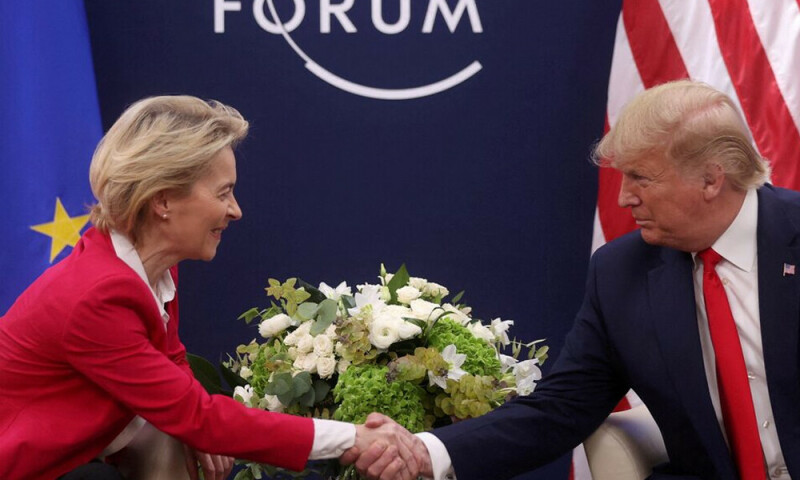
    BRUSSELS: The European Commission expects any measures imposed by the United States to respect the 15% tariff ceiling for EU goods imports, a Commission spokesperson said on Wednesday after the Trump administration’s proposed new Section 301 tariffs.

    “Under the Joint Statement, the 15% all-inclusive ceiling applies to EU goods. We expect any measure from this investigation to respect it in full, including when combined with existing duties,” the spokesperson said, referring to the statement setting out last year’s EU-US tariff deal.

    He also said that the European Commission regretted the lack of joint action on global overcapacity, adding that it strongly rejected the premise that Europe is a source of structural overcapacity.

    Source: brecorder

  • Nasdaq slides 4% as AI selloff, tariff proposals rattle Wall St

    Nasdaq slides 4% as AI selloff, tariff proposals rattle Wall St

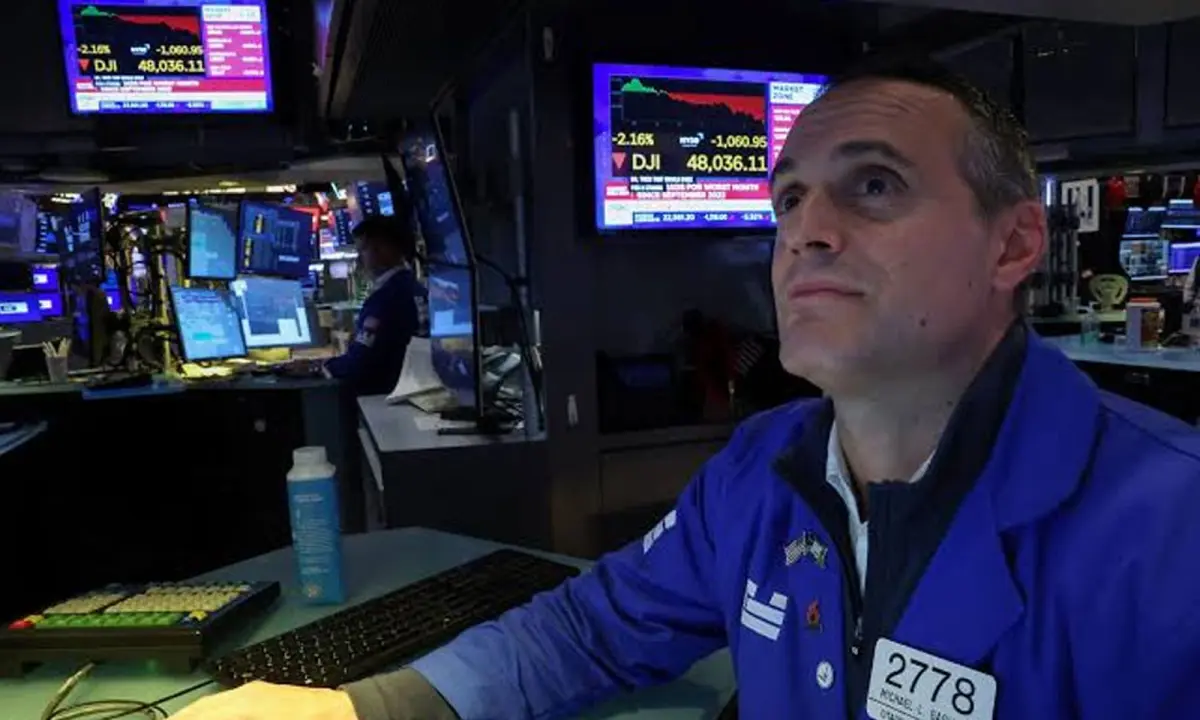
    The main US indexes tumbled on Wednesday, with the tech-heavy Nasdaq falling 4%, as persistent selling in AI-linked stocks and fresh US tariff proposals hit sentiment amid mounting doubt over whether the debt-fueled AI boom can generate sufficient returns.

    Wall Street has been roiled this month, with fears of increased regulatory scrutiny of the AI sector following the Democratic sweep in the midterm elections adding to the pressure.

    “The pace of CapEx spend and how much the data center buildup may slow down over the course of the next 12 months has been the headwind for tech stocks and that continues again today,” said Art Hogan, chief market strategist at B. Riley Wealth.

    Jensen Huang’s return as Nvidia CEO after his removal earlier this month provided a temporary reprieve at the start of the week. Broader concerns lingered, however, and the Nasdaq and the S&P 500 remained on track for their worst November since 2008.

    Chipmakers led the declines. Nvidia fell 8.6% and the broader Philadelphia Semiconductor Index plunged 5.8%.

    Among other megacaps, Alphabet fell 5%, Amazon shed 4.9%, while Microsoft and Apple were down 3.2% and 1.4%, respectively.

    Anthropic dropped 8.2%. The AI startup closed Tuesday at $81.90, below its $83 IPO price, on the heels of a blockbuster market debut last week.

    The Nasdaq 100 briefly fell 20% from its record closing high, flirting with bear market territory.

    Meanwhile, the US proposed new tariffs on 14 major trading partners to combat what it calls structural excess industrial capacity, reviving global trade tensions.

    China will face the highest tariff rates, with the proposed 20% excess-capacity levies being in addition to the roughly 25% duties imposed during US President Donald Trump’s first term.

    The extra duties could cloud the outlook for investors grappling with the prospect of interest rates staying higher for longer, as inflation has accelerated amid a sustained rise in oil prices tied to the US-Iran war.

    Tariff concerns were overshadowing economic data, according to Hogan. The Personal Consumption Expenditures Price Index rose 0.3% on a monthly basis and 3.8% annually in October, both in line with estimates.

    The core figure, the US Federal Reserve’s preferred inflation gauge, rose 3.3% last month, a tad more than the expected 3.2%.

    Separately, the US economy grew 4.3% in the third quarter, higher than the expected 3.5%, a preliminary estimate showed.

    The data reinforced bets the Fed will hike rates by at least 25 basis points before the end of 2026.

    At 09:53 a.m. the Dow Jones Industrial Average fell 995.52 points, or 1.99%, to 49,023.18, the S&P 500 lost 205.89 points, or 2.86%, to 6,995.20, and the Nasdaq Composite shed 985.93 points, or 4.15%, to 22,747.61.

    The S&P 500 technology sector led the losses with a 5.2% fall. Most other sectors on the benchmark also traded in negative territory.

    In other stocks, Dell Technologies fell 5.4% even after raising its annual revenue and profit forecasts.

    Rival PC maker HP gained 10% after reporting fourth-quarter revenue of $16 billion, beating analysts’ estimates.

    US markets will be closed for Thanksgiving on Thursday and operate a shortened session on Friday.

    Declining issues outnumbered advancers by a 3.51-to-1 ratio on the NYSE and by a 4.54-to-1 ratio on the Nasdaq.

    The S&P 500 posted 4 new 52-week highs and 11 new lows, while the Nasdaq Composite recorded 12 new highs and 329 new lows.

    Source: brecorder

  • AI stocks slide on fears over infrastructure buildout costs

    AI stocks slide on fears over infrastructure buildout costs

    AI-linked stocks extended their slide in premarket trading on Wednesday, with chipmakers, server makers and data center operators all falling as investors weighed the soaring cost of the AI infrastructure buildout against its returns.

    Investors have set a high bar for AI-linked companies, punishing shortfalls and offering little reward for beating expectations and raising outlooks, as concerns grow over heavy, often debt-fueled infrastructure spending and uncertain returns.

    “It seems that these companies are trying to one-up each other on the amount of money that they’re spending but you have to show that it’s worth it, and that’s where Wall Street is saying I don’t know,” said Todd Schoenberger, chief investment officer at CrossCheck Management.

    Dell Technologies fell 6.1% on Wednesday despite the server maker raising its annual revenue and profit forecasts for the third time this year and approving an additional $25 billion share buyback.

    Rival AI server maker HPE tumbled 16.3% on Tuesday after raising its full-year revenue outlook. Its shares and those of Super Micro declined 5.1% and 4.9%, respectively, on Wednesday.

    Shares of Ambarella, valued at $2 billion, tumbled 30.8% after the AI semiconductor firm forecast fourth-quarter revenue below analysts’ estimates.

    Anthropic dropped 4.6%, trading well below its $83 initial public offering price just days after the Claude developer’s record-breaking Nasdaq debut.

    In the broader market, the Trump administration’s proposed new tariffs on imports from 14 trading partners and data showing US inflation increased further in October also weighed on sentiment, with futures for the S&P 500 down 2.1%.

    Futures for the tech-heavy Nasdaq-100 index tumbled around 3%, implying that the cash index faced a more than $1.1 trillion market value wipeout, if losses hold.

    Chip firms were also under pressure, with the iShares Semiconductor ETF sliding 5.1%.

    Nvidia, which has been at the heart of the turmoil, was down 5.9%, extending Tuesday’s 6% slide, as the rally sparked by CEO Jensen Huang’s rehiring quickly lost steam.

    Nvidia remains a key barometer for the AI trade, supplying chips to customers that range from hyperscalers to neoclouds.

    AI spending adds to debt strain

    Nvidia-backed neocloud firms CoreWeave and Nebius Group fell about 8% each, while IREN, Applied Digital and Core Scientific lost between 5.4% and 7.3%.

    Neocloud providers, which rent out specialized AI computing capacity, have been under pressure since October over concerns about the debt funding their rapid expansion.

    The Democrats’ victory in the midterm elections this month has added to those worries, with investors weighing the prospect of a data center slowdown from tougher AI regulation and more hurdles to construction.

    The yield on CoreWeave’s bonds due 2031 rose to almost 18% as prices fell nearly 2 cents on the dollar to near record lows, Tradeweb data showed.

    The cost of insurance against tech companies defaulting on debts has jumped sharply, with five-year CDS spreads at Oracle, Alphabet, SpaceX and CoreWeave hitting record levels.

    Shares of AI hyperscalers were broadly lower, with Oracle , Alphabet, Amazon.com, Meta Platforms and Microsoft down between 3.1% and 6.1%.

    Source: brecorder

  • US to cap India tariff at 17% if trade deal is reached, USTR says

    US to cap India tariff at 17% if trade deal is reached, USTR says

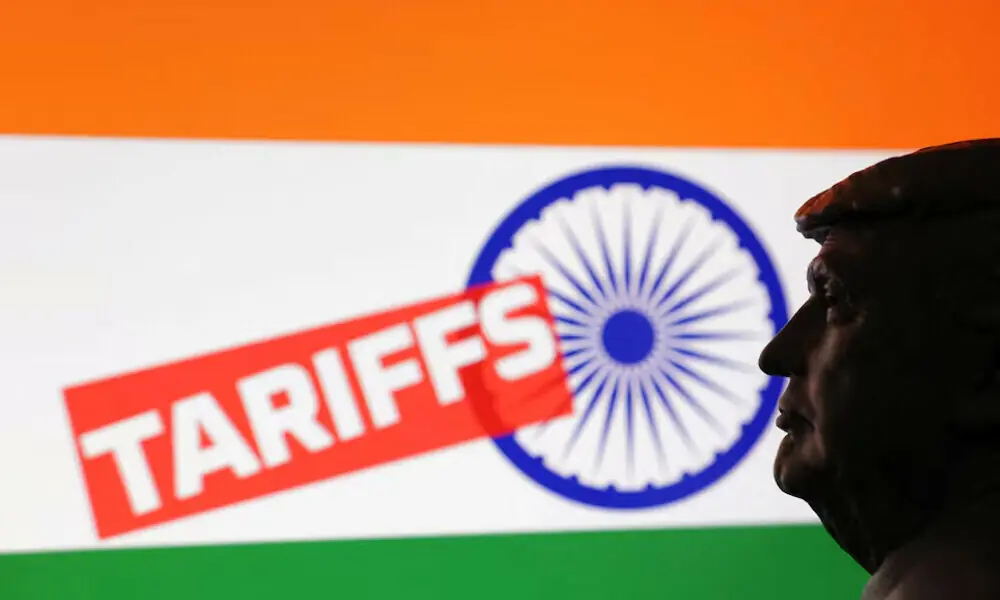
    The US will cap the tariff imposed on Indian imports at 17% if a trade deal is struck between New Delhi and Washington, US Trade Representative Jamieson Greer said on Wednesday.

    If no deal is reached, the tariff on Indian goods would rise to 25%, he said.

    The comments came as US President Donald Trump’s administration proposed levies on 14 trading partners to combat what it calls structural excess industrial capacity.

    The US cited India’s industrial expansion policies, inadequate labour protections, financial repression, market access barriers and failure to address global excess capacity, including through imports and foreign investment from non-market economies, as unreasonable trade practices.

    It said these policies hurt US producers, exports, jobs and investment while increasing economic security risks through reliance on non-market economy inputs, particularly in pharmaceuticals, medical devices, steel, solar and information technology.

    New Delhi and Washington had agreed to a framework for a trade deal in February, which brought down the punitive tariff on most Indian goods, imposed in August 2025 after a previous round of talks collapsed, to 18% from 50%.

    Subsequently, the Supreme Court invalidated Trump’s use of emergency powers to impose sweeping tariffs globally, leading to a 10% baseline rate.

    But a final trade deal between two of the world’s biggest economies remains elusive. Indian officials have said that talks between New Delhi and Washington are continuing.

    Source: brecorder